
Genitourinary Drugs Market Size and Share
Market Overview
| Study Period | 2020 - 2031 |
|---|---|
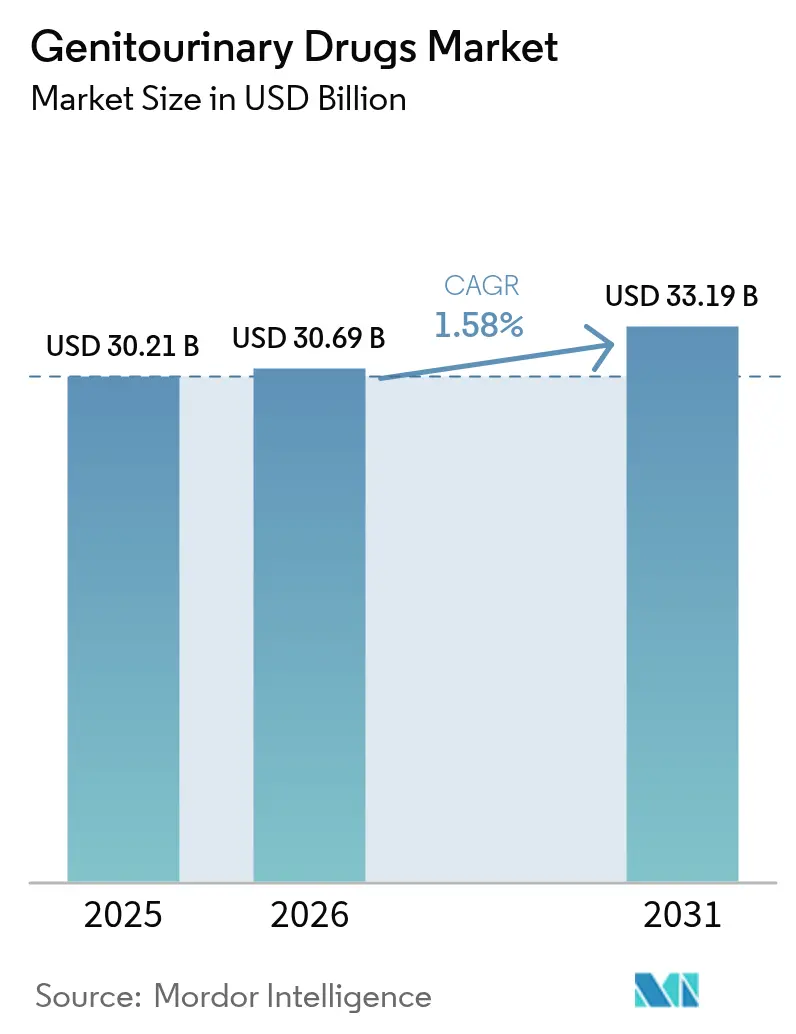
| Market Size (2026) | USD 30.69 Billion |
| Market Size (2031) | USD 33.19 Billion |
| Growth Rate (2026 - 2031) | 1.58 % |
| Fastest Growing Market | Asia Pacific |
| Largest Market | North America |
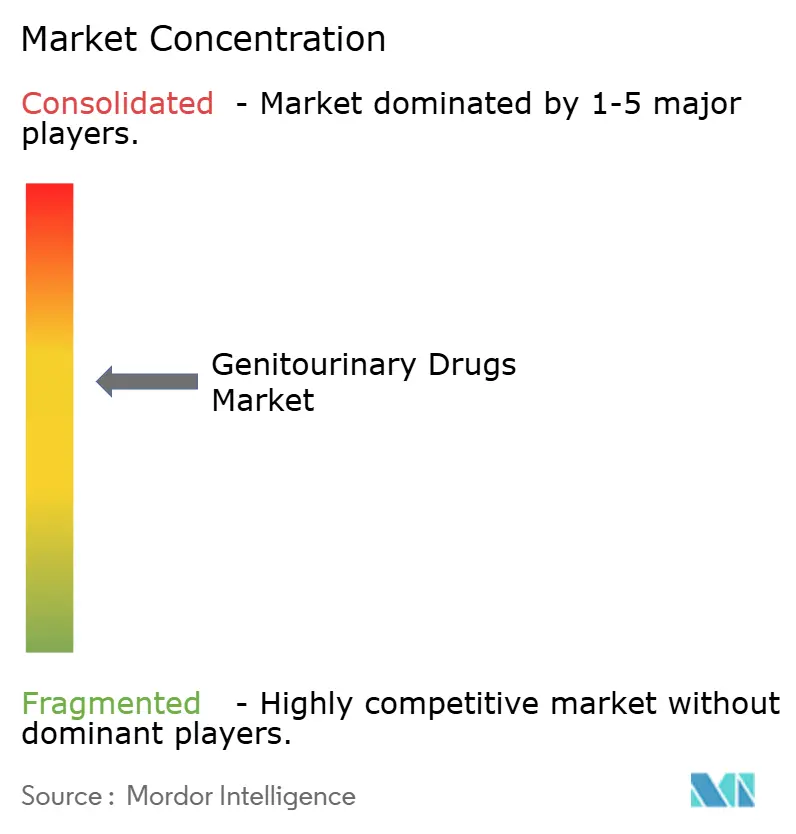
| Market Concentration | Medium |
Major Players *Disclaimer: Major Players sorted in no particular order Image © Mordor Intelligence. Reuse requires attribution under CC BY 4.0. | |
Genitourinary Drugs Market Analysis by Mordor Intelligence
genitourinary drugs market size in 2026 is estimated at USD 30.69 billion, growing from 2025 value of USD 30.21 billion with 2031 projections showing USD 33.19 billion, growing at 1.58% CAGR over 2026-2031. Ongoing demographic aging in high-income economies, rising diagnosis rates for prostate disorders and incontinence, and faster regulatory approvals for specialty therapeutics sustain demand even as volume growth remains muted. Companies protect revenues by shifting from expiring blockbusters to precision medicines, device–drug combinations, and long-acting formulations that justify premium pricing. Digital prescribing and telemedicine are broadening patient access and reshaping fulfillment economics, while innovation pipelines address unmet needs in bladder cancer, multidrug-resistant urinary tract infections, and hormone-related urological problems. Patent cliffs, antibiotic resistance, and therapy-compliance gaps temper the trajectory but do not alter the fundamental direction of the genitourinary drugs market.
Key Report Takeaways
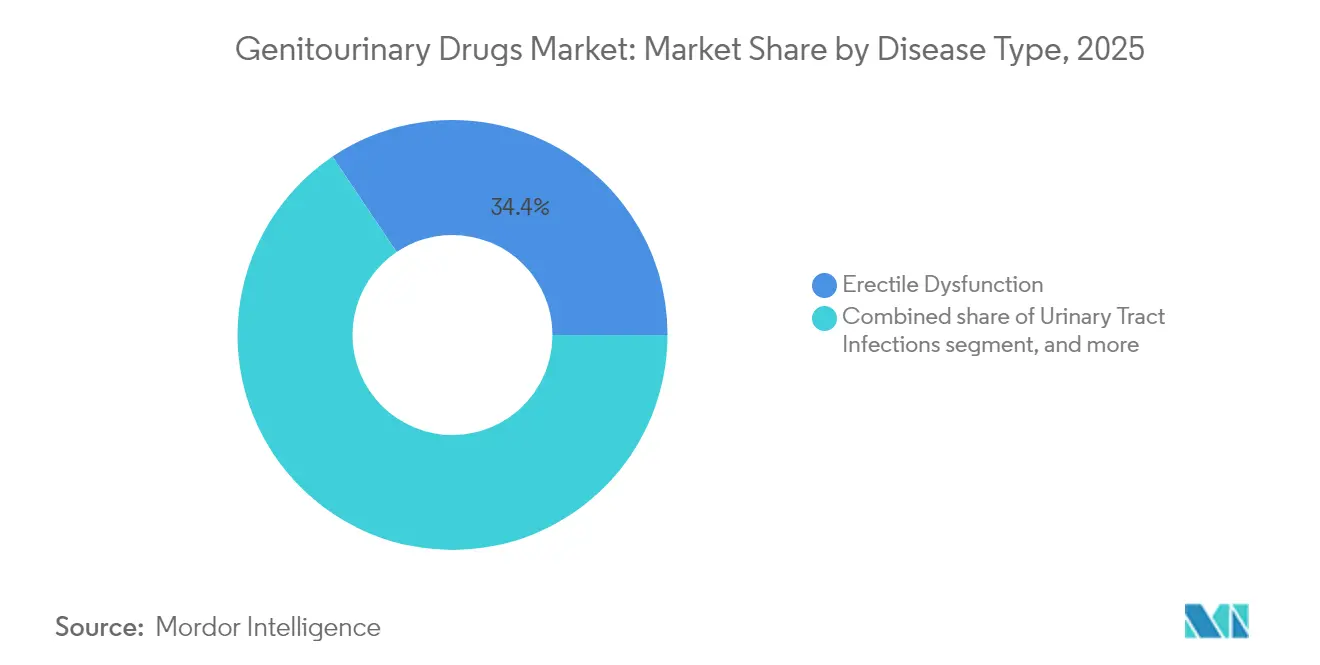
- By disease type, erectile dysfunction led with 34.42% of genitourinary drugs market share in 2025, while urinary incontinence is advancing at a 3.42% CAGR to 2031.
- By drug class, phosphodiesterase-5 inhibitors held 29.12% share of the genitourinary drugs market size in 2025; β-3 adrenergic agonists are expanding at a 3.6% CAGR through 2031.
- By route of administration, oral medicines accounted for 70.78% revenue share in 2025, whereas injectables are forecast to grow at 4.75% CAGR.
- By gender, male-focused therapeutics represented 55.26% of the genitourinary drugs market size in 2025, while female therapeutics are set to post a 4.55% CAGR.
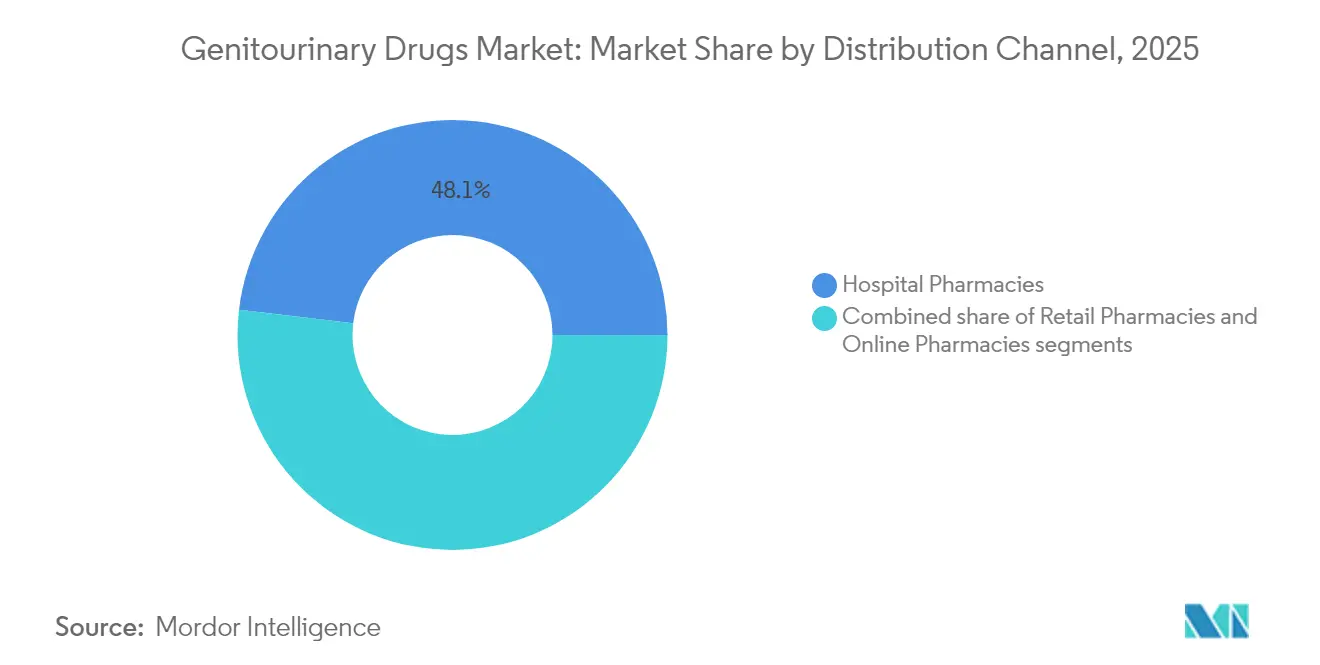
- By distribution channel, hospital pharmacies controlled 48.12% of 2025 revenues, but online pharmacies are rising at 4.14% CAGR.
- By molecule, small molecules commanded 58.21% share of the genitourinary drugs market in 2025; biologics and peptides are projected to rise at a 3.84% CAGR.
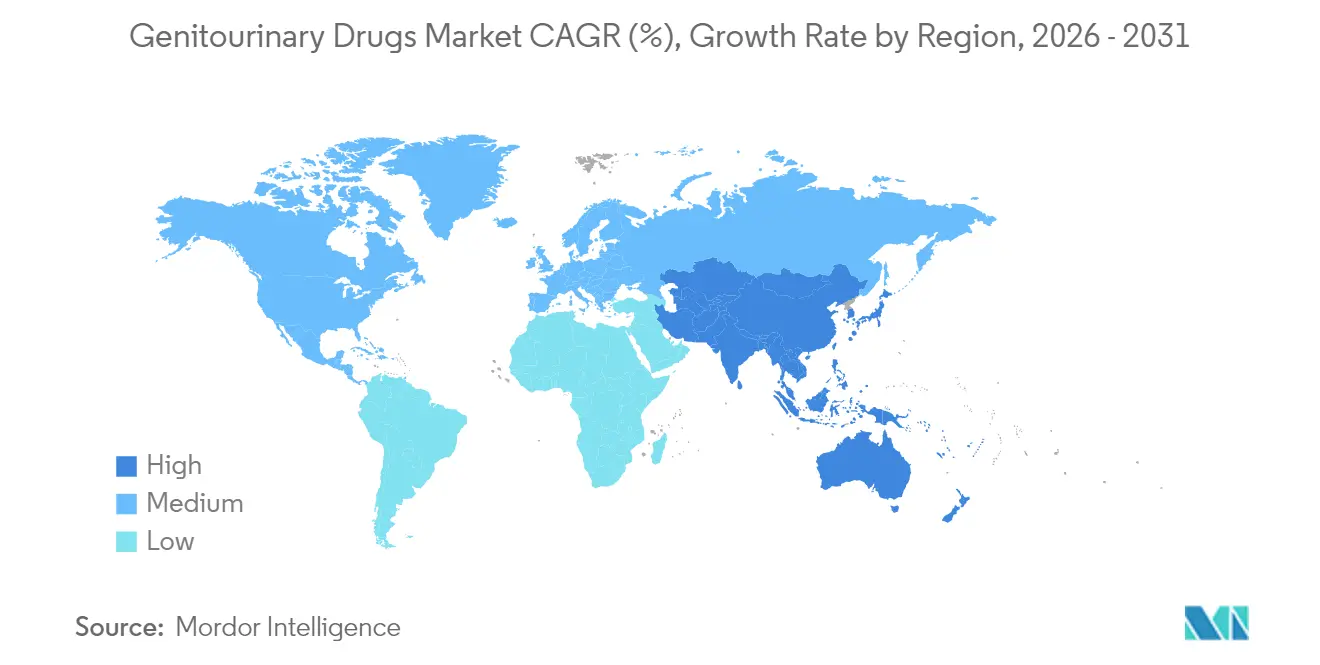
- By geography, North America held 42.10% of genitourinary drugs market share in 2025, whereas Asia-Pacific is the fastest-growing region at 2.55% CAGR.
Note: Market size and forecast figures in this report are generated using Mordor Intelligence’s proprietary estimation framework, updated with the latest available data and insights as of 2026.
Market Trends and Insights
Drivers Impact Analysis of Genitourinary Drugs Market*
| Driver | % Impact on CAGR Forecast | Geographic Relevance | Impact Timeline |
|---|---|---|---|
| Increasing prevalence of genitourinary disorders | +0.4% | North America, Europe, Japan | Long term (≥ 4 years) |
| Growing aging male population with urological issues | +0.3% | North America, Europe | Long term (≥ 4 years) |
| Rising adoption of generic PDE5 inhibitors post patent expiry | +0.2% | Global, stronger in emerging markets | Medium term (2-4 years) |
| Expanding pipeline of novel genitourinary therapeutics | +0.3% | North America, Europe, spillover to APAC | Medium term (2-4 years) |
| Microbiome-modulating urotherapeutics entering clinical trials | +0.1% | Global, pilot programs in North America & Europe | Long term (≥ 4 years) |
| Telemedicine-based sexual-health platforms boosting prescription rates | +0.2% | North America, Europe, selected APAC markets | Short term (≤ 2 years) |
| Source: Mordor Intelligence | |||
Increasing Prevalence of Genitourinary Disorders
Benign prostatic hyperplasia affects more than 50% of men aged 60–69 and up to 90% by age 85, prompting higher diagnostic and treatment rates. The FDA’s 2025 clearance of the Optilume BPH system illustrates how device-assisted interventions can improve maximum urinary flow from 7.9 mL/s to 16.4 mL/s while protecting sexual function. Urinary incontinence already impacts 25-45% of women over 65, fueling demand for β-3 adrenergic agonists that avoid anticholinergic side effects. The MyProstateScore 2.0 urine assay detects 94% of high-grade prostate cancers, reinforcing early-stage therapeutic demand[1]. Health systems increasingly classify genitourinary disorders as quality-of-life priorities, which strengthens reimbursement coverage and underpins the long-term resilience of the genitourinary drugs market.
Growing Aging Male Population with Urological Issues
Testosterone deficiency touches 20% of men over 60 and 50% above 80. In February 2025, the FDA revised testosterone labels to reflect the TRAVERSE trial, removing longstanding age-related hypogonadism warnings and easing prescriber concerns. Prostate cancer incidence doubles every decade after 50; Bayer’s Nubeqa treated nearly 100,000 patients in 2024 with an ultra-low PSA response of 42.6% versus 7.8% for placebo in the ARANOTE study. Longer lifespans coupled with higher expectations for sexual wellness elevate demand for erectile dysfunction therapies and related combination regimens, reinforcing the revenue base of the genitourinary drugs market.
Rising Adoption of Generic PDE5 Inhibitors Post Patent Expiry
Generic sildenafil captured more than 80% of major markets after Viagra’s loss of exclusivity, cutting average treatment costs and unlocking demand in price-sensitive economies. Similar dynamics shadow tadalafil as generic entries proliferate. Direct-to-consumer telehealth providers leverage these generics to offer discreet, low-cost programs that are resonating with younger cohorts. The model helped Hims & Hers exceed USD 1.48 billion in 2024 revenue. Formulation tweaks such as orally disintegrating tablets and rapid-onset films provide competitive differentiation beyond price, broadening therapeutic options in the genitourinary drugs market.
Expanding Pipeline of Novel Genitourinary Therapeutics
Johnson & Johnson’s TAR-200 intravesical gemcitabine system delivered an 82.4% complete response in BCG-unresponsive bladder cancer and received FDA Breakthrough Therapy Designation. GSK’s gepotidacin, branded Blujepa, became the first new oral antibiotic for urinary tract infections in three decades, maintaining potency against fluoroquinolone-resistant E. coli. UroGen Pharma’s UGN-102, with a June 2025 PDUFA date, targets a USD 5 billion bladder cancer opportunity. These advances point to durable innovation that offsets mature category erosion and fuels incremental value in the genitourinary drugs market.
Restraints Impact Analysis of Genitourinary Drugs Market*
| Restraints Impact Analysis | (~) % Impact on CAGR Forecast | Geographic Relevance | Impact Timeline |
|---|---|---|---|
| Lack of therapy compliance | -0.2% | Global, more acute in low-resource settings | Short term (≤ 2 years) |
| Escalating antibiotic resistance in UTI pathogens | -0.3% | Global, higher where antibiotic stewardship is weak | Medium term (2-4 years) |
| Proliferation of counterfeit erectile-dysfunction drugs | -0.2% | Global, pronounced in unregulated online channels | Short term (≤ 2 years) |
| Emerging GLP-1-related sexual dysfunction confounding treatment uptake | -0.1% | North America, Europe, expanding to APAC | Medium term (2-4 years) |
| Source: Mordor Intelligence | |||
Lack Of Therapy Compliance
Adherence rates range from 40–70% across genitourinary conditions. Overactive bladder drugs suffer from anticholinergic side effects that drive 50% discontinuation inside six months. Long-acting β-3 agonists such as vibegron offer better tolerability. Erectile dysfunction regimens face behavioral barriers tied to partner dynamics and performance anxiety. Telemedicine firms attempt to improve persistence through monthly refill services and ongoing counseling, but robust longitudinal data are still emerging. Digital reminders and implant-based delivery systems are under study to close the adherence gap and safeguard value leakage from the genitourinary drugs market.
Escalating Antibiotic Resistance In UTI Pathogens
E. coli resistance now tops 20% for trimethoprim-sulfamethoxazole and 10% for ciprofloxacin across multiple geographies. ESBL-producing organisms often require intravenous carbapenems, increasing costs and inpatient stays. The CDC links resistant UTIs to over 10,000 US hospitalizations each year[2]. Gepotidacin’s dual-target mechanism preserves efficacy against fluoroquinolone-resistant strains[3]. Experimental bacteriophage and microbiome therapies are also in development. Until such solutions scale, resistance dampens treatment success rates and imposes additional stewardship constraints on the genitourinary drugs market.
*Our forecasts treat driver/restraint impacts as directional, not additive. The impact forecasts reflect baseline growth, mix effects, and variable interactions.
Genitourinary Drugs Market Segment Analysis
By Disease Type:
Erectile Dysfunction Dominance Faces Incontinence ChallengeThe genitourinary drugs market size for erectile dysfunction stood at a leading 34.42% share in 2025, benefiting from telemedicine penetration and generic PDE5 affordability. Yet growth is slowing as the segment approaches therapeutic saturation and faces emerging GLP-1-induced dysfunction complications. Urinary incontinence, with a 3.42% CAGR outlook, is narrowing the gap as aging populations and improved diagnosis accelerate demand for β-3 agonists and minimally invasive device–drug hybrids.
Urinary tract infection therapeutics retain stable revenue streams despite resistance issues, while prostate cancer drugs capture premium pricing through precision androgen-receptor targeting. Bladder cancer interventions such as TAR-200 demonstrate how localized delivery can redefine outcomes, drawing R&D investment toward high-risk, non-muscle-invasive disease niches. Together, these shifts recalibrate portfolio priorities within the genitourinary drugs market.

By Drug Class:
PDE5 Inhibitors Lead Despite β-3 Agonist InnovationPhosphodiesterase-5 inhibitors contributed 29.12% of genitourinary drugs market revenue in 2025, upheld by broad clinical familiarity and strong oral preference. Patent expiries, however, compress price points and spur a migration toward differentiated formulations and combination therapies. β-3 adrenergic agonists, growing at 3.6% CAGR, are winning share in overactive bladder by limiting anticholinergic adverse events.
Hormone therapies gain momentum after the FDA’s labeling clarification, while α-blocker/5α-reductase inhibitor fixed-dose regimens improve adherence. Neurokinin antagonists and microbiome-modulating agents populate early pipelines, highlighting diversification themes that support the long-term expansion of the genitourinary drugs market.
By Route Of Administration:
Injectable Growth Challenges Oral DominanceOral products commanded 70.78% of 2025 revenue, anchored in erectile dysfunction, overactive bladder, and antimicrobial therapies. Convenience, privacy, and self-administration secure continued primacy. Nonetheless, injectables are forecast to post a 4.75% CAGR as depot testosterone, on-demand GnRH antagonists, and intravesical oncology products scale.
Johnson & Johnson’s TAR-200 underscores the therapeutic gain from localized, sustained drug exposure. Transdermal patches and topical gels add non-invasive options, whereas nanogel carriers from the University of Colorado promise higher tissue penetration. Collectively, these modalities extend choice and cement patient-centric care as a core differentiator in the genitourinary drugs market.
By Gender:
Male Market Size Contrasts Female Growth AccelerationMen accounted for 55.26% of 2025 sales, propelled by entrenched erectile dysfunction and prostate cancer lines that lend scale to the genitourinary drugs market size. Bayer’s Nubeqa blockbuster trajectory exemplifies the revenue heft of precision oncology. Women, however, are fueling the fastest category growth at 4.55% CAGR as industry focus finally addresses overactive bladder, recurrent UTIs, and menopausal urogenital atrophy.
Higher female UTI incidence—and new agents like gepotidacin—creates upside, as do hormone-based treatments that concurrently address vasomotor and genitourinary symptoms. Telehealth providers split service lines by gender, lowering access barriers and normalizing care-seeking, which will gradually rebalance the genitourinary drugs market.
By Distribution Channel:
Hospital Pharmacies Lead as Online SurgesHospital pharmacies retained 48.12% of 2025 turnover thanks to oncology infusions and controlled-distribution hormone therapies. Yet online pharmacies, rising at 4.14% CAGR, are redefining convenience and privacy for sensitive indications. Discrete packaging, auto-refills, and integrated teleconsultations reduce friction points and convert stigma-affected patients into consistent users.
Retail outlets face intensified margin pressure from generics and must compete on in-store clinical services. Regulatory harmonization around e-prescribing, especially in Europe and North America, will determine the extent to which digital channels cannibalize institutional dispensing within the genitourinary drugs market.
By Molecule Type:
Small-Molecule Dominance Faces Biologics InnovationSmall molecules held 58.21% share of 2025 revenue due to cost-effective synthesis, oral bioavailability, and robust generic ecosystems. Genitourinary drugs market share leadership persists, but biologics and peptides are pacing at a 3.84% CAGR. Checkpoint inhibitors, antibody–drug conjugates, and depot peptide formulations meet complex urological needs that small molecules rarely solve.
Biosimilar pathways remain longer and costlier than generic filings, protecting originator economics for an extended period. At the same time, antibody-drug conjugates and engineered peptides blur category lines, indicating a future roadmap where precise targeting coexists with affordability imperatives in the genitourinary drugs market.
Geography Analysis
North America Genitourinary Drugs Market
North America generated 42.10% of 2025 revenue, leveraging mature reimbursement systems and pioneering telehealth penetration. FDA fast-track pathways enable swift uptake of innovations such as TAR-200, and patient demand is reinforced by demographic aging and high prostate-cancer screening rates. Generic PDE5 erosion tempers pricing but expands volume, stabilizing overall regional growth for the genitourinary drugs market.
APAC Genitourinary Drugs Market
Asia-Pacific, advancing at 2.55% CAGR, benefits from expanding insurance coverage, urbanization, and policy reforms that shorten the regulatory lag behind Western approvals. China’s centralized procurement lowers costs yet enlarges access, while Japan’s super-aging society propels incontinence and BPH therapeutics. India’s generics expertise supplies both domestic and export demand, strengthening regional self-sufficiency. Although pricing pressure is intense, absolute patient volumes position the region as a long-run growth engine for the genitourinary drugs market.
Europe Genitourinary Drugs Market
Europe delivers consistent though slower expansion. EMA centralization simplifies submissions, and countries such as Germany sustain premium prices for novel agents like vibegron. Nonetheless, austerity measures in certain markets and fragmented national reimbursement rules complicate launch sequencing. Eastern Europe offers incremental upside as healthcare modernization aligns with EU standards. Brexit forces isolated UK filings, marginally raising costs but not altering demand fundamentals for the genitourinary drugs market.
Regulatory Landscape
Regulation in the genitourinary drugs market continues to be shaped by major agency pathways that speed specialty and oncology product uptake, alongside post-approval evidence requirements. In the United States, FDA actions across 2024-2026 include approvals relevant to urology and nephrology, including Orlynvah for uncomplicated UTIs in adult women in 2024 and the accelerated approval of Trutakna (atacicept-vymj) for primary IgA nephropathy in July 2026. Together, these steps reinforce the role of expedited routes for niche, high-need indications.
In Europe, EMA changes are affecting lifecycle management and variation filings, with the revised variations framework applicable from January 2025 and a stability-testing guideline for variations effective 15 January 2026. In the United States, supply-side policy risk intensified in April 2026 with Proclamation 11020 under Section 232, which introduced a 100% tariff on imports of patented pharmaceuticals and certain ingredients. The proclamation also set defined pathways to 0% tariffs through 2029 tied to onshoring and pricing arrangements, which raises compliance, sourcing, and manufacturing-location considerations for branded GU portfolios and their API supply chains.
Competitive Landscape
The competitive field shows moderate consolidation. Bayer, Johnson & Johnson, GSK, and AstraZeneca leverage deep pipelines and global footprints to hedge patent expiries. Bayer’s Q1 2025 report highlighted 81% Nubeqa sales growth and 89% Kerendia growth, offsetting Xarelto’s decline. Johnson & Johnson’s 82.4% TAR-200 response rate exemplifies breakthrough outcomes that command premium pricing. GSK’s Blujepa introduces a new antibiotic class after a 30-year drought, underscoring first-in-class advantage.
Strategic moves include Boston Scientific’s USD 3.7 billion Axonics acquisition, adding sacral neuromodulation expertise to manage incontinence. Ferring’s USD 500 million royalty deal spreads risk while securing prostate oncology upside. Generic challengers employ formulation innovation to stand out, and biosimilar entrants prepare to chip away at mature biologics. Digital alliances with telemedicine firms provide direct-to-consumer distribution muscles that traditional detailing cannot match. Overall, firms that combine innovative science with digitally enabled market access are positioned to outperform in the genitourinary drugs market.
Genitourinary Drugs Industry Leaders
-
Pfizer Inc.
-
Eli Lilly and Company
-
Bayer AG
-
Merck & Co., Inc.
-
Novartis AG
- *Disclaimer: Major Players sorted in no particular order
Genitourinary Drugs Market Companies Covered in this Report
- Pfizer
- Eli Lilly and Company
- Bayer
- Merck
- Novartis
- GlaxoSmithKline
- Cipla
- Viatris
- Roche
- Melinta Therapeutics
- Camber Pharmaceuticals
- Astellas Pharma
- Teva Pharmaceutical Industries
- Sun Pharmaceuticals Industries
- Endo International
- Boston Scientific
- Abbvie
- Johnson & Johnson
- Aspen Pharmacare
Market Opportunities and Future Outlook
A key opportunity area is earlier-line and earlier-stage genitourinary oncology regimens that use combination strategies and premium modalities. FDA actions in 2026 show momentum in bladder and kidney cancers, including the July 2026 approval of PADCEV (enfortumab vedotin-ejfv) plus Keytruda as neoadjuvant and adjuvant therapy for muscle-invasive bladder cancer regardless of cisplatin eligibility, and the June 2026 approval of KEYTRUDA plus WELIREG for adjuvant treatment in renal cell carcinoma at intermediate-high or high risk of recurrence. These labels expand addressable treated populations and support continued investment in localized delivery systems and combination backbones already reflected in GU pipelines.
Manufacturing and supply-chain resilience is another practical whitespace as the route-of-administration mix shifts beyond oral therapies, especially for complex injectables and biologics. In 2026, Evonik announced a USD 100 million upgrade at its Tippecanoe Labs facility in Indiana to expand drug substance CDMO services, while Celltrion announced a 1.2265 trillion won investment to expand capacity at Songdo plants 4 and 5 to 180,000 liters. These capacity expansions support availability for biologics and peptides across GU-related care pathways, including oncology and renal disease, and they align with channel shifts toward digitally enabled prescribing and dispensing that are already changing access and fulfillment economics in sensitive genitourinary indications.
Recent Industry Developments in Genitourinary Drugs Market
- July 2026: The US FDA approved PADCEV (enfortumab vedotin-ejfv) in combination with Keytruda (pembrolizumab), including the Keytruda QLEX formulation, as neoadjuvant and adjuvant treatment for adults with muscle-invasive bladder cancer regardless of cisplatin eligibility. The expanded perioperative label moves an antibody-drug conjugate plus PD-1 inhibitor regimen earlier in the care pathway, raising competitive stakes for bladder-cancer portfolios and companion commercialization capabilities.
- June 2025: UroGen Pharma reported positive 18-month data for UGN-102 in recurrent low-grade bladder cancer ahead of its mid-June FDA PDUFA date. The update reinforced clinical momentum around localized bladder delivery approaches that aim to reduce recurrence and improve convenience versus repeated procedural interventions.
- March 2024: The US FDA approved Orlynvah (sulopenem etzadroxil and probenecid) for uncomplicated urinary tract infections in adult women. The approval added a new oral option in a high-volume indication where resistance pressures influence prescribing and stewardship, supporting continued differentiation around efficacy against resistant pathogens and outpatient convenience.
Genitourinary Drugs Market Report Scope and Research Methodology
Market Definition and Coverage
This market covers prescription medicines used to prevent, diagnose, or treat common genitourinary conditions affecting the urinary tract and reproductive system, measured as manufacturer-level revenue in USD across major regions.
Scope exclusions: This sizing excludes medical devices, purely diagnostic services, and surgical procedures that are not sold as drug therapies.
Segments Covered in This Report
- By Disease Type
- Erectile Dysfunction
- Urinary Tract Infections
- Urinary Incontinence
- Gonorrhoea
- Genital Herpes
- Glomerulonephritis
- Chronic Renal Failure
- Other Disease Types
- By Drug Class
- Hormonal Therapy
- Phosphodiesterase-5 Inhibitors
- ?-Blockers & 5-? Reductase Inhibitors
- Uterine Relaxants & Stimulants
- Urinary Antispasmodics
- Urinary pH Modifiers
- Miscellaneous Genitourinary Agents
- By Route Of Administration
- Oral
- Injectable
- Topical / Transdermal
- Vaginal / Rectal Suppository
- By Gender
- Male
- Female
- By Distribution Channel
- Hospital Pharmacies
- Retail Pharmacies
- Online Pharmacies
- By Molecule Type
- Small-Molecule Drugs
- Biologics & Peptides
- Geography
- North America
- United States
- Canada
- Mexico
- South America
- Brazil
- Argentina
- Rest of South America
- Europe
- Germany
- United Kingdom
- France
- Italy
- Spain
- Russia
- Rest of Europe
- APAC
- China
- Japan
- India
- Australia
- South Korea
- Rest of APAC
- Middle East and Africa
- GCC
- South Africa
- Rest of Middle East and Africa
- North America
Data Sources, Market Sizing, and Validation
Desk Research
Desk work starts by building the disease and therapy map for genitourinary care, then aligning it to what is actually prescribed and reimbursed in key countries. We rely on public, non-paywalled sources such as the US FDA drug labels and approvals database, the US CDC and NIH publications, WHO health statistics, and OECD health data for utilization and health system context. When infection burden or resistance trends influence demand, we check peer-reviewed journals and public surveillance summaries to keep assumptions realistic.
To translate that context into a usable market model, we also review company annual reports, investor presentations, and major press releases for portfolio mix, patent loss timelines, and pricing commentary. Where needed, patent databases are used to understand loss of exclusivity timing, and a subscription database for company financials and news helps validate revenue direction and major deal impacts without depending on any single disclosure. This list is illustrative only, and many other public sources were also consulted for collection, cross-checking, and clarification.
Primary Interviews and Surveys
Primary work is used to pressure-test the desk assumptions with urologists, gynecologists, infectious disease clinicians, hospital pharmacists, payers, and distribution-side experts who track prescription shifts. We also speak with people closer to manufacturing and commercialization to validate therapy uptake, generic substitution behavior, and channel mix across APAC, EMEA, and the Americas.
Distribution of primary research fieldwork respondents
| Company type | Respondent position | Region |
|---|---|---|
| Top tier: 25% | CXOs: 12% | APAC: 42% |
| Mid tier: 57% | Functional/Unit leaders: 36% | EMEA: 33% |
| Smaller Players: 18% | Managers: 52% | Americas: 25% |
Market-Sizing & Forecasting
Sizing is built using a top-down structure where epidemiology signals and treated-patient pathways are translated into therapy demand across major indications, then converted into value using realistic price and mix assumptions. To keep totals grounded, we corroborate outputs with selective bottom-up approximations such as sampled brand sales builds, channel checks by pharmacy type, and sanity checks on volume times average therapy cost for high-share conditions.
Inputs that matter in this market include prevalence and diagnosed pool for urinary incontinence and overactive bladder, urinary tract infection incidence and recurrence patterns, prostate and bladder cancer treatment intensity, and the pace of generic erosion for mature molecules. We also track route of administration mix and distribution channel split, because hospital pharmacies and retail or online channels can shift value even when total treated volume is stable. When data is thin for smaller countries, we bridge gaps using regional analogs tied to healthcare spend, diagnosis rates, and access to reimbursed therapies, then validate those bridges in follow-up expert calls.
For forecasting, scenario analysis is used with a simple set of drivers, and the results are cross-checked against expert consensus on pricing pressure, pipeline cadence, and access changes. When the main drivers move in different directions, which happens often in this space, the final forecast is the one that still matches observed prescription behavior and expected loss of exclusivity timing.
Data Validation & Update Cycle
Validation happens in layers so the model does not depend on one data stream. We run variance checks across regions and indications, compare implied spend per treated patient against published healthcare benchmarks, and then re-check any outliers after currency conversion or price-mix updates. When a number looks off, we trace the assumption back to its driver and either adjust it or verify through a re-contact with a relevant expert.
Before sign-off, the work is reviewed by another analyst to confirm definitions, math consistency, and whether the story matches the data. The report is refreshed annually, and interim updates are triggered when material events occur, such as major approvals, sudden generic entries, or large reimbursement changes. Right before delivery, we do a final pass so the market view reflects the latest public signals.
Mordor Intelligence's Genitourinary Drugs Market Size Versus Other Published Estimates
Different published market sizes can vary even when they appear to measure the same scope, because therapy boundaries and base years are not always aligned. Currency timing, generic substitution treatment, and whether channel sales are counted at list price or closer to realized value can also widen the gap.
The benchmark table shows a spread that is mainly explained by what is counted as genitourinary drug revenue and the year used for the starting point. In Mordor Intelligence's model, the 2026 value is built around prescription drug revenue across core genitourinary indications and channel mix, rather than older base-year totals that can understate recent pricing and mix shifts in hospital and online dispensing.
Benchmark comparison
| Source | Market Size | Gaps in Research Methodology |
|---|---|---|
| Mordor Intelligence | USD 30.69 B (2026) | |
| Global Consultancy A | USD 29.39 B (2023) | Uses an earlier base year, and the definition is indication-led without clear alignment to channel-level mix shifts that can lift value even when volumes grow slowly. |
| Industry Publisher B | USD 30.04 B (2025) | Anchors the model in 2025 and extends a long forecast window, which can smooth near-term pricing and generic erosion effects and lead to a different starting value. |
Reading the three figures together, the main takeaway is that base-year choice and therapy scope drive most of the difference, more than the growth rate itself. Our approach stays traceable because the market is rebuilt from treated demand signals and then checked against practical pricing and channel realities before the final number is locked.
Key Questions Answered in the Report
What is the current size of the genitourinary drugs market?
The market stands at USD 30.69 billion in 2026 and is projected to reach USD 33.19 billion by 2031.
Which disease area holds the largest share within the genitourinary drugs market?
Erectile dysfunction leads with 34.42% share in 2025, supported by widespread telehealth prescribing and generic PDE5 availability.
Which drug class is growing the fastest?
Β-3 adrenergic agonists for overactive bladder are expanding at a 3.6% CAGR through 2031.
How are online pharmacies influencing market growth?
Online pharmacies are forecast to grow at 4.14% CAGR by offering discreet, cost-effective access, particularly for erectile dysfunction and incontinence treatments.
Why is Asia-Pacific the fastest-growing region?
Healthcare reforms, large aging populations, and increasing insurance coverage drive a 2.55% CAGR across Asia-Pacific.
What novel therapies could reshape the market in the near term?
Johnson & Johnson’s TAR-200 for bladder cancer and GSK’s gepotidacin for antibiotic-resistant UTIs represent high-impact innovations expected to gain traction after 2025.