
First-Party Fraud Detection Market Size and Share
Market Overview
| Study Period | 2020 - 2031 |
|---|---|
| Market Size (2026) | USD 5.71 Billion |
| Market Size (2031) | USD 15.03 Billion |
| Growth Rate (2026 - 2031) | 21.34 % |
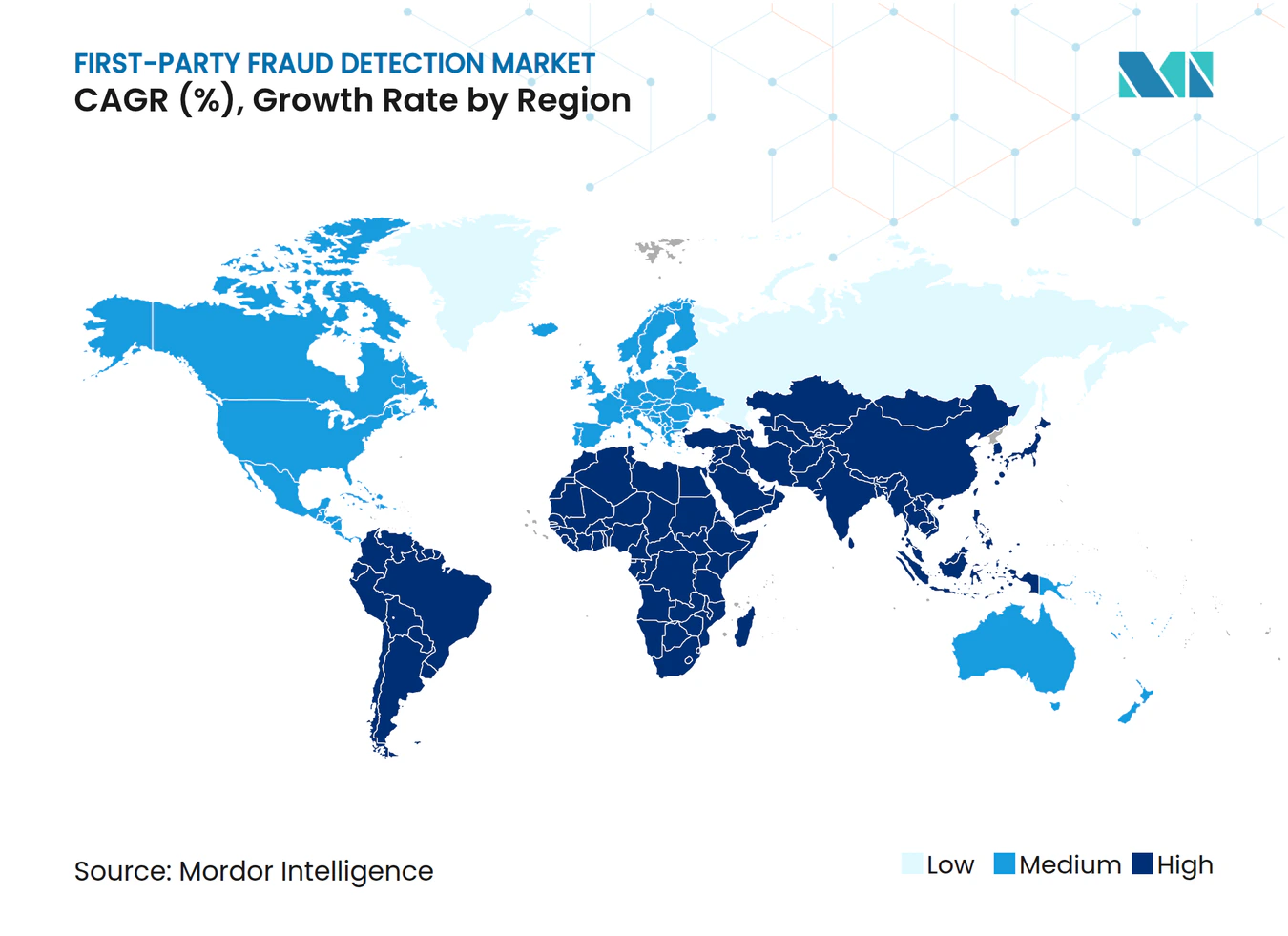
| Fastest Growing Market | Asia-Pacific |
| Largest Market | North America |
| Market Concentration | Low |
Major Players *Disclaimer: Major Players sorted in no particular order Image © Mordor Intelligence. Reuse requires attribution under CC BY 4.0. | |
First-Party Fraud Detection Market Analysis by Mordor Intelligence
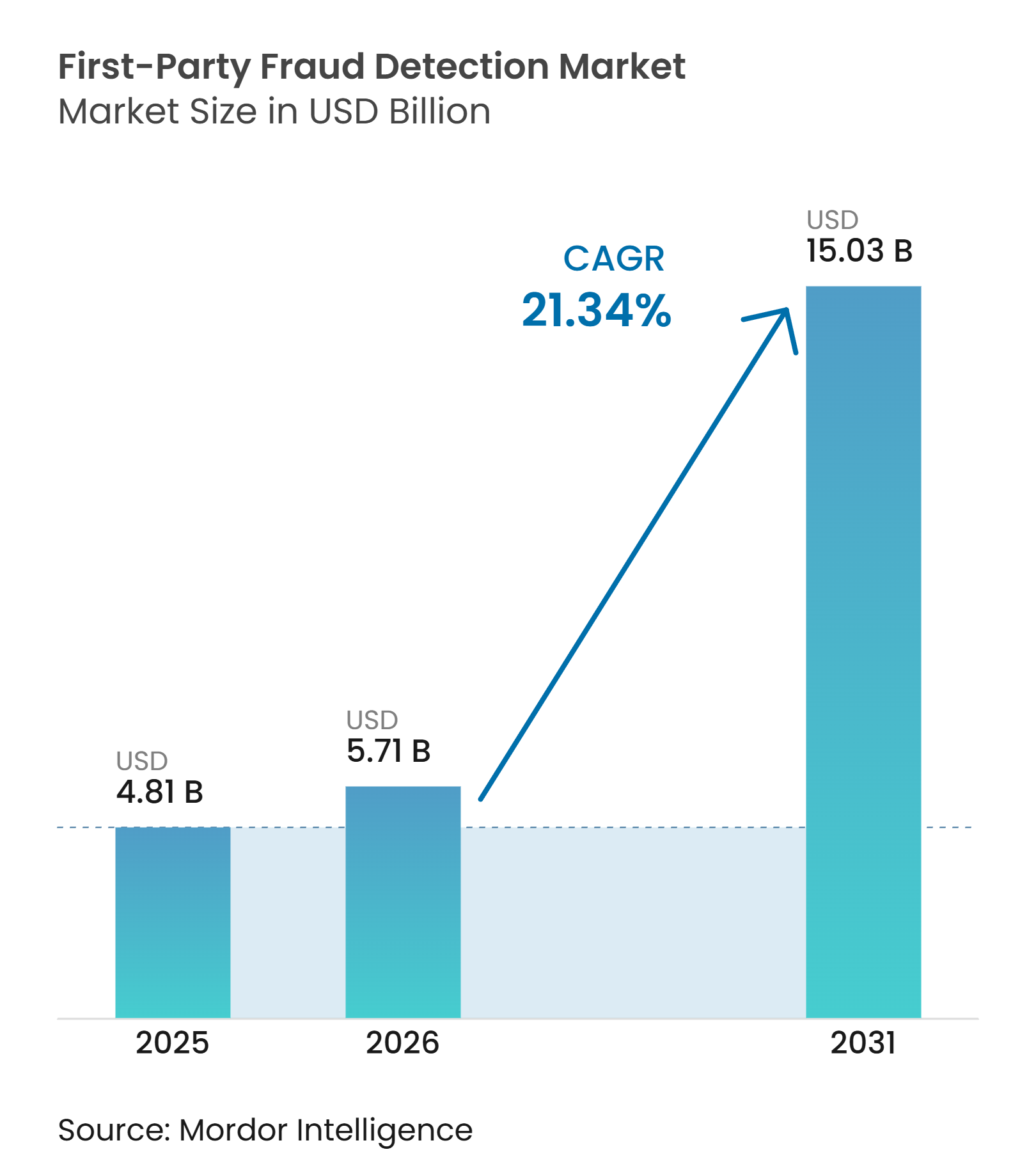
The First-Party Fraud Detection Market size is expected to increase from USD 4.81 billion in 2025 to USD 5.71 billion in 2026 and reach USD 15.03 billion by 2031, growing at a CAGR of 21.34% over 2026-2031. Organizations are moving budgets from perimeter controls toward behavioral analysis and dispute intelligence platforms that can assess disputes, identities, and transaction context before a loss becomes final. First-party fraud involves verified account holders using their own identities, which makes it different from fraud involving stolen credentials and complicates efforts to distinguish deliberate abuse from a genuine customer dispute. This distinction limits the value of rule-based controls, which may not see the broader customer history, and supports demand for dedicated detection tools that assess behavior across the relationship. The First-Party Fraud Detection Market is being shaped by more digital commerce, higher dispute costs, shared data networks, and AI-enabled evidence manipulation. Large buyers often use multiple vendors across their fraud, credit, payment, and dispute workflows, limiting single-vendor lock-in. Consortium analytics remains an opening for providers serving mid-sized firms that lack extensive internal records or the scale to build their own shared data assets.
Key Report Takeaways
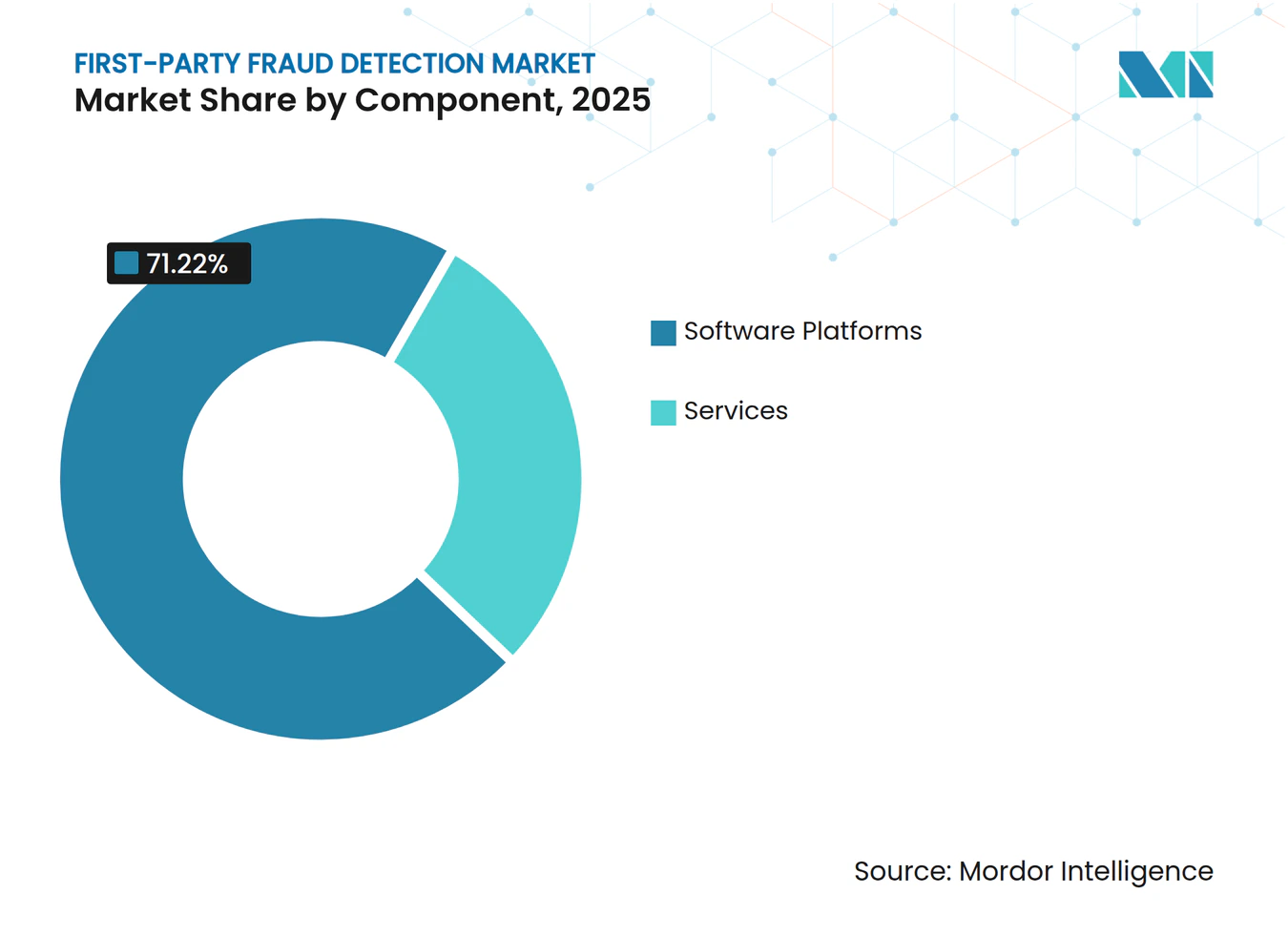
- By component, software platforms held 71.22% of the First-Party Fraud Detection Market share in 2025, while services are projected to expand at a 23.31% CAGR through 2031.
- By deployment, cloud held 68.19% of the First-Party Fraud Detection Market revenue in 2025, while hybrid deployment is expected to expand at a 22.71% CAGR through 2031.
- By organization size, large enterprises accounted for 70.41% of the First-Party Fraud Detection Market revenue in 2025, while SMEs are projected to grow at a 23.02% CAGR through 2031.
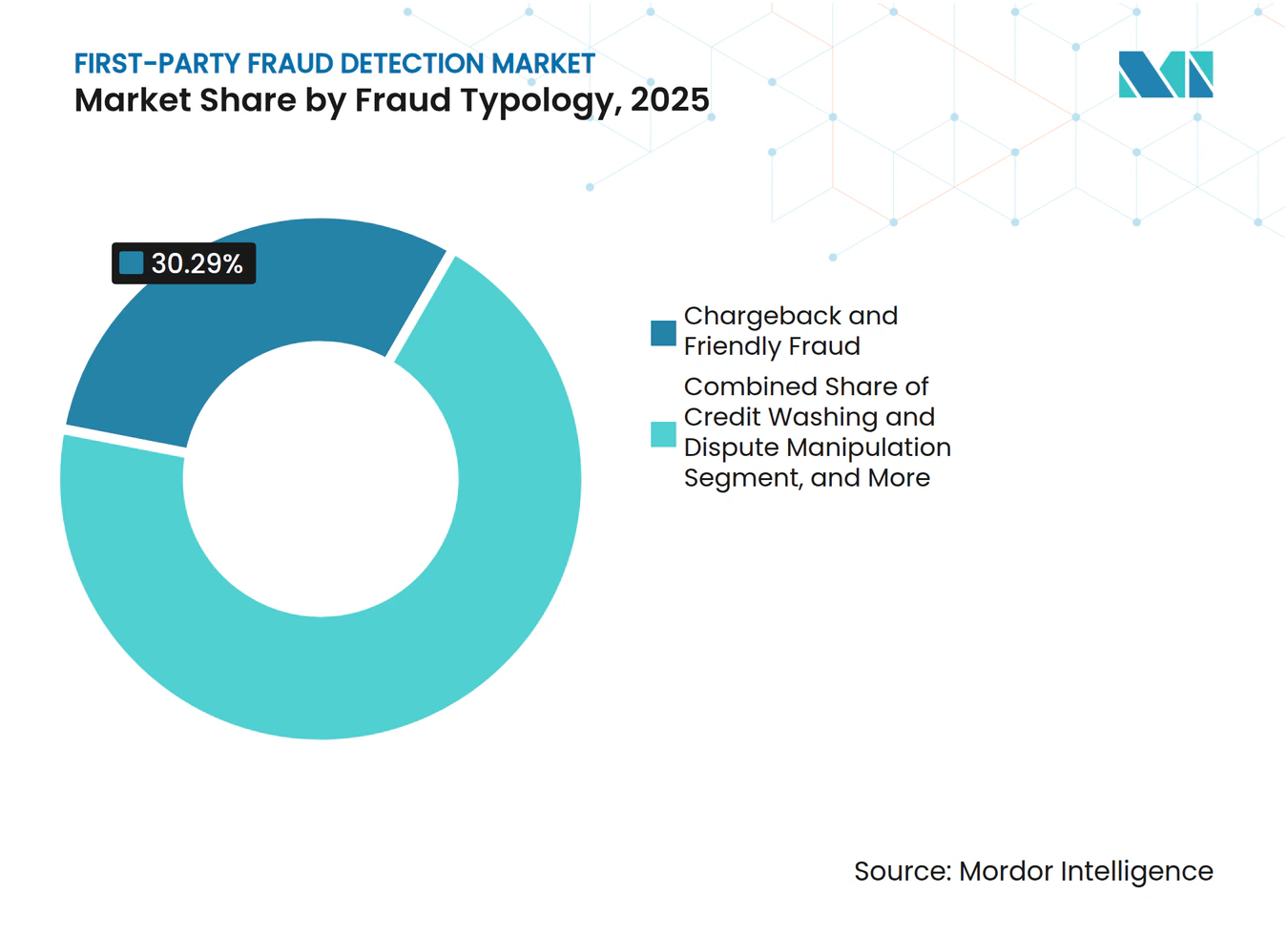
- By fraud typology, chargeback and friendly fraud accounted for 30.29% of First-Party Fraud Detection Market spending in 2025, while promotion, coupon, loyalty, and referral abuse are expected to expand at a 22.05% CAGR through 2031.
- By industry vertical, BFSI accounted for 27.66% of First-Party Fraud Detection Market spending in 2025, while retail and e-commerce are projected to expand at a 21.78% CAGR through 2031.
- By geography, North America held 36.12% of the First-Party Fraud Detection Market revenue in 2025, while Asia-Pacific is expected to expand at a 22.36% CAGR through 2031.
Note: Market size and forecast figures in this report are generated using Mordor Intelligence’s proprietary estimation framework, updated with the latest available data and insights as of 2026.
Market Trends and Insights
Drivers Impact Analysis of First-Party Fraud Detection Market*
| Driver | (~) % Impact on CAGR Forecast | Geographic Relevance | Impact Timeline |
|---|---|---|---|
| Growth in Card-Not-Present Commerce and Digital Payments | +4.2% | Global, with peak intensity in North America, Europe, and Asia-Pacific e-commerce corridors | Short term (≤ 2 years) |
| Rising Chargeback and Dispute Management Costs | +3.8% | Global, with the highest operational cost burden in North America and Western Europe | Short term (≤ 2 years) |
| Stronger Issuer-Merchant Collaboration and Scheme Data Networks | +3.1% | North America and EU core markets, with spillover to Asia-Pacific and South America | Medium term (2-4 years) |
| AI-Enabled Behavioral and Consortium Analytics | +2.9% | Global, with the fastest technology uptake in North America and Asia-Pacific fintech corridors | Medium term (2-4 years) |
| Cross-Merchant Identity Graphs for Coordinated Abuse Rings | +2.2% | North America and EU primarily, with emerging use in Southeast Asia and Gulf states | Long term (≥ 4 years) |
| Real-Time Policy Enforcement Before Value Is Issued | +1.8% | Global, with early gains in Singapore, Australia, and the United Kingdom | Medium term (2-4 years) |
| Source: Mordor Intelligence | |||
Growth in Card-Not-Present Commerce and Digital Payments
Card-not-present commerce has become a major setting for first-party fraud because transactions can be completed without the physical cardholder interaction that supports traditional verification. Mastercard reported that card-not-present transactions represented 63% of global merchant volume, while disputes in this channel remained difficult to challenge because delivery evidence can be limited for digital purchases and other remotely fulfilled orders. The European Central Bank recorded 17.06 million fraudulent card transactions in the EU and the European Economic Area during 2024, with card-not-present activity the main channel, as low-value exemptions can limit the need for strong customer authentication. Signifyd reported that fraud pressure in North America rose 33% year over year in the first 4 months of 2026, while AI-powered card-testing attacks increased 175%. Subscription and digital goods merchants face a particularly difficult position because their low-cost goods and limited physical delivery records can make an individual dispute uneconomic to contest through a lengthy response process. The First-Party Fraud Detection Market, therefore, favors tools that validate payment methods, assess devices, and score behavior before merchants deliver value.
Rising Chargeback and Dispute Management Costs
Chargeback costs are drawing closer attention from senior management because direct losses, fees, internal handling, and portfolio penalties can accumulate across large volumes of customer disputes. Mastercard projected the global chargeback value at USD 36.9 billion in 2026 and USD 46.1 billion by 2029. The same source placed the all-in average cost of a dispute at USD 128, including USD 82 in internal costs and USD 46 in third-party fees. Large merchants with annual revenue of USD 1 billion or more reported an internal cost per chargeback of USD 151.88, nearly twice the average across the wider merchant base. LexisNexis found that each USD 1 lost to fraud costs North American retailers USD 5.13 after fees, lost inventory, and operating costs. Visa tightened its merchant excessive threshold under the Visa Acquirer Monitoring Program from 2.2% to 1.5% in April 2026 across North America, Canada, the EU, and Asia-Pacific, raising the cost of weak dispute controls.[1] These conditions are shifting chargeback management from a back-office responsibility to a revenue-protection priority in the First-Party Fraud Detection Market, with greater value placed on controls that prevent disputes before they post.
Stronger Issuer-Merchant Collaboration and Scheme Data Networks
Scheme data-sharing programs are strengthening the position of vendors with issuer and merchant connections, as those vendors can combine transaction, device, delivery, and purchase-history signals to inform dispute decisions. Mastercard expanded its First-Party Trust program in June 2025 from the United States to Canada, South America, the Caribbean, and Asia-Pacific. The program exchanges purchase history, device details, location, and delivery information to distinguish first-party fraud from valid disputes, giving issuers a more complete basis for evaluating a contested transaction. Visa CE 3.0 also places weight on documented transaction histories when merchants provide compelling evidence. LexisNexis reported that cross-organization collaboration increased fraud detection rates by 43%. Merchants that use these programs can build stronger evidence for disputes and improve their portfolio ratios, while non-enrolled peers may face weaker documentation when responding to claims. Providers with ready scheme connectivity can therefore gain an implementation advantage over stand-alone analytics suppliers in the First-Party Fraud Detection Market.
AI-Enabled Behavioral and Consortium Analytics
Behavioral analytics and consortium scoring are central to the technology direction of the First-Party Fraud Detection Market because they leverage activity patterns not captured by static rules or isolated account reviews. Feedzai introduced IQ Score in June 2026, leveraging intelligence from a USD 9 trillion transaction network via a single API to make consortium-based risk scoring available without an extensive deployment project. The offering gives institutions of different sizes access to network-derived risk signals without a full infrastructure replacement. Consortium scoring can help newer lenders and SMEs assess behavior before they have accumulated extensive internal transaction histories. This approach uses cross-institutional behavioral patterns rather than relying solely on an individual firm's records, helping providers address the cold-start challenge faced by new lenders and smaller merchants. It also expands the value of shared intelligence as more participants add transaction information and fraud outcomes to the network.
Restraints Impact Analysis of First-Party Fraud Detection Market*
| Restraint | (~) % Impact on CAGR Forecast | Geographic Relevance | Impact Timeline |
|---|---|---|---|
| False Positives and Customer Friction | -1.8% | Global, most acute in high-volume retail and subscription verticals in North America and Europe | Short term (≤ 2 years) |
| Fragmented Legacy-System Integration | -1.5% | North America and Europe among incumbent financial institutions, with partial mitigation in Asia-Pacific | Medium term (2-4 years) |
| Privacy Constraints on Cross-Entity Data Sharing | -1.2% | EU under GDPR and emerging Asia-Pacific privacy regimes, with spillover to cross-border consortium initiatives | Medium term (2-4 years) |
| Adversarial Adaptation to Dispute and Refund Controls | -0.9% | Global, accelerating in North America and Western Europe | Long term (≥ 4 years) |
| Source: Mordor Intelligence | |||
False Positives and Customer Friction
False positives can slow adoption because an incorrect decline creates an immediate revenue loss and can undermine customer experience, particularly in high-frequency online purchase environments. Adyen found that static controls incorrectly rejected up to 10% of legitimate customers at checkout, and 50% of enterprises reported rising false-decline rates, making approval quality as important as the ability to stop fraud. Nearly 70% of surveyed enterprises expected fraud and abuse to constrain revenue growth during the following 12-24 months. Tighter controls may reduce disputes, but they can also increase the number of good customers who are rejected, while looser controls can expose merchants to more coordinated abuse. Travel and hospitality operators and digital goods and gaming providers reported particularly strong revenue concerns because legitimate repeat customers can resemble fraudulent users in transaction data. Providers that maintain low false-positive rates without reducing detection quality are better positioned in the First-Party Fraud Detection Market.
Fragmented Legacy-System Integration
Legacy technology fragmentation delays implementation at established financial institutions because fraud operations, dispute management, and credit risk often rely on separate systems and incompatible customer records. Dispute management, fraud operations, and credit risk often operate in separate systems, even though first-party fraud spans onboarding, authorization, and post-purchase disputes. Adyen reported that 58% of enterprises faced rising manual review costs when case information was divided across systems. NICE Actimize found that real-time linkage between onboarding data and payment activity was only partly mature across European banks, leaving many institutions reliant on batch-based or retrospective detection processes. Vendors with single-API overlays and pre-built connectors can reduce deployment disruption by linking core banking, payment gateway, and case management systems without a full replacement program. This favors suppliers with established integration libraries over newer providers that lack banking-grade connections in the First-Party Fraud Detection Market.
*Our forecasts treat driver/restraint impacts as directional, not additive. The impact forecasts reflect baseline growth, mix effects, and variable interactions.
First-Party Fraud Detection Market Segment Analysis
By Component:
Software Platforms Lead While Managed Services AccelerateSoftware platforms held 71.22% of revenue in 2025. Decisioning engines, behavioral analytics modules, and case management tools are central to daily fraud operations, where teams need to assess suspicious behavior, route cases, and document decisions across channels. These platforms are often difficult to replace once companies have trained models and configured rule libraries. Workflow connections can also make a platform more embedded in existing operating processes. Services are projected to grow at a 23.31% CAGR from 2026 to 2031. Demand is supported by managed investigations, representment outsourcing, VAMP compliance support, and AI model governance, especially when internal teams cannot maintain specialist staff across each function.
Experian reported that pilot testing of Transaction Forensics reduced false positives by 80% and total alert volumes by 50%. AI can automate elements of chargeback evidence preparation and expand the range of managed services without requiring a proportional increase in specialist headcount per additional case. Mid-sized firms often need specialist support but do not maintain internal model management teams. For those buyers, managed services provide access to detection capabilities without requiring the development of proprietary behavioral systems. Vendors are increasingly packaging services as continuous-learning retainers rather than one-time projects. This can make service revenue more predictable while maintaining customer involvement after implementation in the First-Party Fraud Detection Market.


By Deployment:
Cloud Leads While Hybrid Use ExpandsCloud deployment accounted for 68.19% of the First-Party Fraud Detection Market size in 2025. The position reflects infrastructure efficiency and the need to continuously ingest signals from multiple merchants, so that consortium models can remain current as new patterns of abuse emerge. Cloud-native APIs can also reduce the time it takes for merchants and fintechs to connect to intelligence networks, enabling organizations to start using external risk signals without lengthy infrastructure work. On-premises systems remain relevant for central banks, regulated financial institutions, and government-linked organizations with strict data residency requirements. Hybrid deployment is projected to expand at a 22.71% CAGR from 2026 to 2031. The model lets institutions process sensitive cardholder data locally while using cloud-based consortium analytics for wider pattern recognition.
The First-Party Fraud Detection Market is seeing hybrid architecture become a compliance choice rather than only a technology preference. The Bank of France reported elevated card-not-present fraud on non-SCA-exempt international transactions in its January 2026 report covering the first half of 2025. Regulatory expectations for stronger authentication can influence where institutions process information and how they connect to analytic services, particularly when sensitive cardholder data is subject to local controls. Hybrid systems address this requirement without fully separating institutions from external risk signals, which is important when fraud patterns cross merchants, payment methods, and regional borders. They also allow firms to preserve existing sensitive-data controls during adoption. This structure is particularly relevant where cross-entity analytics and local data rules must operate together in the First-Party Fraud Detection Market.
By Organization Size:
Large Enterprises Lead While SME Spending RisesLarge enterprises held 70.41% of the First-Party Fraud Detection Market share in 2025. Their exposure is high because they operate large subscription programs, loyalty schemes, BNPL offerings, and marketplaces, in which the same customer identity can appear across multiple products and transactions. Mastercard reported an average internal cost per chargeback of USD 151.88 among enterprises with annual revenue of USD 1 billion or more. These companies also have multi-channel customer activity that can make abuse more difficult to identify. SMEs are projected to grow at a 23.02% CAGR from 2026 to 2031 as consumption-priced fraud detection APIs become more widely available and reduce the minimum transaction volume required to access advanced tools.
SMEs face many of the same attack types as larger companies, but they may have less internal audit capacity, fewer analysts, and less historical data to maintain their own risk models. The Association of Certified Fraud Examiners noted this gap in its 2026 review of fraud risks affecting small and medium-sized enterprises. Feedzai stated that IQ Score was designed to provide institutions of all sizes with network-level intelligence without a full platform replacement. As providers add SME customers, their shared networks can gain more behavioral data and fraud outcomes, improving the detection quality available to other participants in the same network. SMEs may favor networks with broader coverage because they can more effectively identify unfamiliar abuse patterns. This preference supports competition based on both network reach and model capability.
By Fraud Typology:
Chargeback Fraud Leads While Promotion and Loyalty Abuse Grows FastestChargebacks and friendly fraud accounted for 30.29% of typology spending in 2025. Mastercard projected the global chargeback value at USD 36.9 billion in 2026 and noted that first-party fraud accounted for 45% of total dispute volume. Refund, return, and claims abuse is receiving more attention from retail and e-commerce companies because it can occur after a valid purchase and may not resemble payment-card fraud at the time of authorization. The Merchant Risk Council reported that refund and policy abuse displaced payment fraud as the top reported threat for merchants in 2026. Application misrepresentation, first-payment default, bust-out abuse, credit washing, and multi-account abuse also require spending on detection. Promotion, coupon, loyalty, and referral abuse are projected to grow at a 22.05% CAGR from 2026 to 2031 as merchants face increased misuse of customer acquisition offers and recurring promotional incentives.
The growth in promotion and loyalty abuse links marketing programs more closely to fraud controls because acquisition offers, free trials, referral programs, and loyalty multipliers can be exploited at scale. Free trials, referral bonuses, and loyalty multipliers can be exploited before a campaign reaches intended customers. Organizations are therefore assessing abuse risk during campaign design instead of only after launch. Providers that simulate policy outcomes before launch can support this process. Real-time enforcement can then stop coordinated use of promotions after the campaign begins, reducing the risk that repeated accounts extract value before the business identifies the pattern. These capabilities can direct some marketing-related spending toward the First-Party Fraud Detection Market.


By Industry Vertical:
BFSI Anchors Demand While Retail and E-Commerce AdvancesBFSI held 27.66% of vertical spending in 2025. The sector faces application fraud, bust-out credit abuse, and card-scheme dispute obligations. Banks and insurers also need to monitor customers across payment, digital banking, and lending channels, where first-party misconduct can begin at origination and become visible only after later activity. Retail and e-commerce are projected to expand at a 21.78% CAGR from 2026 to 2031. The Merchant Risk Council identified refund and policy abuse as the leading reported threat among merchants in 2026.
Travel and hospitality face high exposure because individual chargeback amounts can be significant, making it more difficult for merchants to absorb the economics of each disputed booking or purchased service. Mastercard reported an average chargeback of USD 128 across merchants, making dispute prevention important for higher-value transactions.[2] IT and telecommunications providers are exposed to first-payment default on handset contracts and abuse of promotional data plans. Gaming and gambling providers manage multi-account activity and credit washing tied to welcome bonuses. Healthcare, life sciences, media, entertainment, and other sectors are adding detection capabilities to address insurance claims and subscription abuse. Unified decisioning can assess risk at origination, observe behavior across the customer lifecycle, and identify dispute risk before a chargeback is filed.
Geography Analysis
North America First-Party Fraud Detection Market
North America held 36.12% of global revenue in 2025, giving the First-Party Fraud Detection Market a strong installed base in the region. Dense card-not-present commerce and a large digital-subscription customer base support this position. Signifyd reported that North American fraud pressure rose 33% year over year in the first 4 months of 2026. Mastercard projected 141.1 million annual chargeback events in North America by 2029, 17% above 2025 levels. Visa's 1.5% merchant excessive threshold is also encouraging merchants and acquirers to use pre-dispute controls that can deflect potential claims before they affect portfolio monitoring metrics.
Europe First-Party Fraud Detection Market
PSD2 strong customer authentication requirements shape Europe's payment environment. The European Central Bank recorded 19.6 million fraudulent payment transactions in the EU and European Economic Area during 2024, a 10% year-over-year increase.[3] Card-not-present fraud remained the leading channel despite stronger authentication, leaving merchants and financial institutions with continuing exposure to disputes involving remote transactions. UK Finance reported unauthorized fraud losses of GBP 703.4 million (USD 884 million) in 2025, down 5% in value, while case volumes rose 11%. Germany, the United Kingdom, and France remain the largest country markets in the region, while mid-tier markets are increasingly evaluating behavioral verification tools alongside established authentication controls. The Nordics and Benelux are adopting behavioral verification tools more widely.
APAC, South America and MEA First-Party Fraud Detection Market
Asia-Pacific is projected to grow at a 22.36% CAGR from 2026 to 2031. India's Unified Payments Interface processed 16.73 billion transactions in fiscal 2025, creating a large base of disputable digital payments. LexisNexis reported that Asia-Pacific's fraud attack rate reached 1.7%, up 12% year over year, while first-party fraud accounted for 38.3% of reported fraud types in the region. Mastercard projected a 50% increase in chargeback events for Asia-Pacific by 2029. South America, the Middle East, and Africa are smaller contributors, but digital financial infrastructure investment is expanding in Brazil, Saudi Arabia, and the UAE, creating a broader base for payment monitoring and fraud controls.
Competitive Landscape
Market Concentration
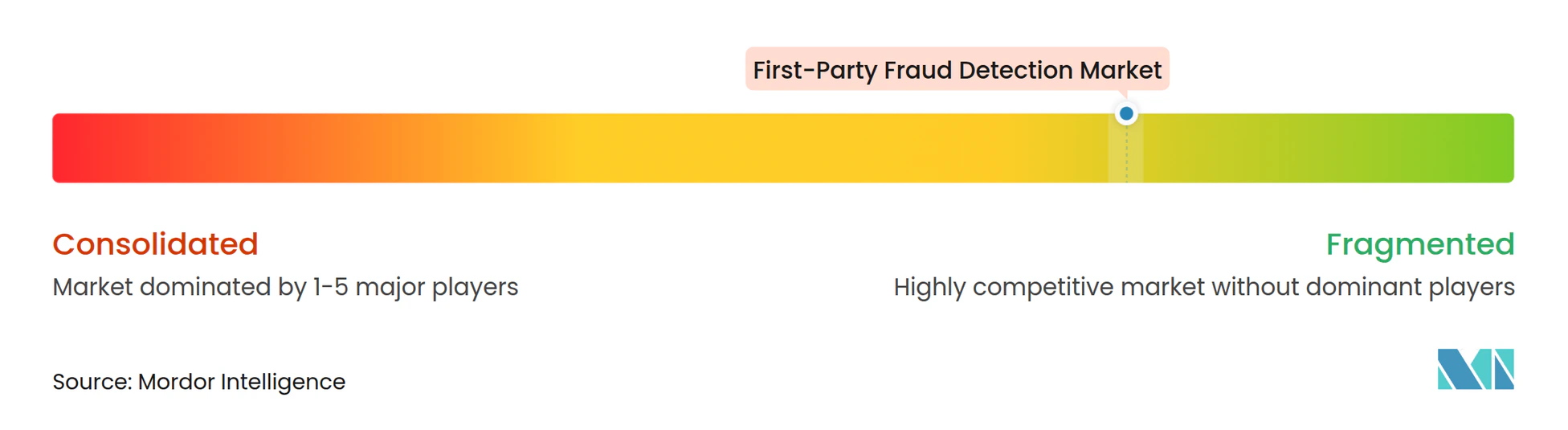
The First-Party Fraud Detection Market has moderate concentration at the platform layer and greater fragmentation among point solutions. Credit bureaus, payment networks, and integrated analytics providers serve large enterprises through proprietary data and scheme integrations. AI-native vendors compete through model performance, API access, and faster deployment. These suppliers often focus on mid-market and SME customers that may not fit incumbent pricing models. Companies are expanding transaction networks, building vertical-specific fraud controls, and combining multiple signals in a unified decisioning layer.
Socure raised USD 156 million at a USD 5.2 billion valuation and acquired Fravity in August 2026. The company is integrating automated fraud, risk, and compliance investigation capabilities into its RiskOS platform, reflecting a wider competitive focus on reducing manual investigation workloads and prioritizing the highest-risk cases. This move supports the use of automated case prioritization, in which repeated high-risk identities account for a disproportionate share of fraud events. Feedzai launched IQ Score in June 2026 through a single API based on a USD 9 trillion transaction network. The product is intended to extend consortium intelligence to banks without replacing their existing infrastructure, addressing a practical barrier for institutions that cannot undertake a large-scale technology replacement. Mastercard also expanded First-Party Trust into Canada, South America, the Caribbean, and Asia-Pacific during June 2025.
The need for usable dispute evidence and unified fraud, credit, and dispute operations also shapes competition in the First-Party Fraud Detection Market. Providers that support cross-merchant intelligence can address gaps faced by mid-market firms, which may lack the historical transaction data, specialized staff, and internal systems available to large enterprises. Automated workflow tools can direct higher-risk identities for specialist review and reduce case-handling costs. Privacy-preserving methods may allow consortium participants to share model information without disclosing raw transaction data, easing a major obstacle to cross-border collaboration under privacy rules. This is relevant to institutions operating under the GDPR and subject to cross-border data restrictions. Behavioral biometrics and graph-based entity resolution are also becoming areas of product differentiation across the First-Party Fraud Detection Market.
First-Party Fraud Detection Industry Leaders
-
LexisNexis Risk Solutions Inc.
-
IBM Corporation
-
Oracle Corporation
-
SAP SE
-
Visa Inc.
- *Disclaimer: Major Players sorted in no particular order
First-Party Fraud Detection Market Companies Covered in this Report
- Experian Information Solutions, Inc.
- LexisNexis Risk Solutions Inc.
- Mastercard Incorporated
- Visa Inc.
- Socure, Inc.
- Sift Science, Inc.
- SardineAI Corp.
- Featurespace Limited
- ACI Worldwide, Inc.
- NICE Ltd.
- SAS Institute Inc.
- Fiserv, Inc.
- Signifyd, Inc.
- DataVisor, Inc.
- Equifax Inc.
- IBM Corporation
- Oracle Corporation
- SAP SE
- Kount, Inc.
- Stripe, Inc.
Recent Industry Developments in First-Party Fraud Detection Market
- September 2026: Visa enhanced its A2A Protect fraud-prevention platform with a unified fraud score and the first in-market integration of Featurespace technology following its acquisition of the company. A major European bank using the upgraded solution detected or prevented more than 50% additional fraud while cutting unnecessary alerts by more than 40%. It demonstrated a 75% increase in fraud detection in the first 6 months of deployment, establishing Visa as a direct competitor in account-to-account fraud analytics.
- August 2026: Socure raised USD 156 million at a USD 5.2 billion valuation, led by Summit Partners with participation from Goldman Sachs Alternatives, Wells Fargo, and DocuSign, and simultaneously acquired Fravity, an agentic AI platform that automates fraud, risk, and compliance investigations. Fravity's capabilities are being integrated into Socure's RiskOS platform as RiskOS_Agents, reducing cost per case by 80% across early deployments and case resolution times by 5x in pilot testing.
- June 2026: Feedzai launched IQ Score, an AI-native fraud risk scoring solution available on AWS Marketplace and drawing on insights from a USD 9 trillion global transaction network. The single-API product extends enterprise-grade consortium fraud detection to banks of all sizes without requiring infrastructure replacement, directly addressing the mid-market detection gap.
- March 2026: BioCatch launched DeviceIQ, a comprehensive device identification and intelligence product that redefines how banks evaluate device risk in the AI era. More than 30 of the world's largest 100 banks are deployed on BioCatch solutions, which analyze more than 17 billion user sessions per month and protect more than 660 million individuals.
Global First-Party Fraud Detection Market Report Scope
The First-Party Fraud Detection Market comprises software platforms and services that enable organizations to identify, assess, prevent, and investigate fraud committed by legitimate customers who intentionally or unintentionally misuse products, services, payment mechanisms, promotional programs, lending facilities, or account privileges. These solutions leverage analytics, machine learning, behavioral intelligence, identity analytics, device intelligence, network analysis, and fraud-risk scoring to detect chargeback abuse, application misrepresentation, claims fraud, loyalty abuse, account-linked fraud, credit abuse, and other forms of first-party fraud while minimizing revenue leakage and operational losses.
The First-Party Fraud Detection Market Report is Segmented by Component (Software Platforms, and Services), Deployment (Cloud, On-Premises, and Hybrid), Organization Size (Large Enterprises, and Small and Medium-Sized Enterprises), Fraud Typology (Chargeback and Friendly Fraud, Refund, Return and Claims Abuse, Promotion, Coupon, Loyalty and Referral Abuse, Application Misrepresentation and First-Payment Default, Bust-Out and Intentional Credit Abuse, Credit Washing and Dispute Manipulation, and Multi-Account and Account-Linked Abuse), Industry Vertical (Banking, Financial Services, and Insurance [BFSI], Retail and E-Commerce, IT and Telecommunication, Healthcare and Life Sciences, Media and Entertainment, and Other Industry Verticals), and Geography (North America, South America, Europe, Asia-Pacific, and Middle East and Africa). The Market Forecasts are Provided in Terms of Value (USD).
Segmentation Overview
| Software Platforms |
| Services |
| Cloud |
| On-Premises |
| Hybrid |
| Large Enterprises |
| Small and Medium-Sized Enterprises |
| Chargeback and Friendly Fraud |
| Refund, Return and Claims Abuse |
| Promotion, Coupon, Loyalty and Referral Abuse |
| Application Misrepresentation and First-Payment Default |
| Bust-Out and Intentional Credit Abuse |
| Credit Washing and Dispute Manipulation |
| Multi-Account and Account-Linked Abuse |
| Banking, Financial Services, and Insurance (BFSI) |
| Retail and E-Commerce |
| IT and Telecommunication |
| Healthcare and Life Sciences |
| Media and Entertainment |
| Other Industry Verticals |
| North America | United States | |
| Canada | ||
| South America | Brazil | |
| Mexico | ||
| Rest of South America | ||
| Europe | Germany | |
| United Kingdom | ||
| France | ||
| Italy | ||
| Rest of Europe | ||
| Asia-Pacific | China | |
| Japan | ||
| India | ||
| South Korea | ||
| Rest of Asia-Pacific | ||
| Middle East and Africa | Middle East | Saudi Arabia |
| United Arab Emirates | ||
| Rest of Middle East | ||
| Africa | South Africa | |
| Rest of Africa | ||
| By Component | Software Platforms | ||
| Services | |||
| By Deployment | Cloud | ||
| On-Premises | |||
| Hybrid | |||
| By Organization Size | Large Enterprises | ||
| Small and Medium-Sized Enterprises | |||
| By Fraud Typology | Chargeback and Friendly Fraud | ||
| Refund, Return and Claims Abuse | |||
| Promotion, Coupon, Loyalty and Referral Abuse | |||
| Application Misrepresentation and First-Payment Default | |||
| Bust-Out and Intentional Credit Abuse | |||
| Credit Washing and Dispute Manipulation | |||
| Multi-Account and Account-Linked Abuse | |||
| By Industry Vertical | Banking, Financial Services, and Insurance (BFSI) | ||
| Retail and E-Commerce | |||
| IT and Telecommunication | |||
| Healthcare and Life Sciences | |||
| Media and Entertainment | |||
| Other Industry Verticals | |||
| By Geography | North America | United States | |
| Canada | |||
| South America | Brazil | ||
| Mexico | |||
| Rest of South America | |||
| Europe | Germany | ||
| United Kingdom | |||
| France | |||
| Italy | |||
| Rest of Europe | |||
| Asia-Pacific | China | ||
| Japan | |||
| India | |||
| South Korea | |||
| Rest of Asia-Pacific | |||
| Middle East and Africa | Middle East | Saudi Arabia | |
| United Arab Emirates | |||
| Rest of Middle East | |||
| Africa | South Africa | ||
| Rest of Africa | |||
Key Questions Answered in the Report
What is the size of the First-Party Fraud Detection Market?
The First-Party Fraud Detection Market is expected to reach USD 5.71 billion in 2026 and USD 15.03 billion by 2031, at a 21.34% CAGR. The estimates are stated in value terms in USD.
What is first-party fraud detection?
It identifies misuse by verified account holders who use their own identity to make false claims, abuse refunds, or evade payment obligations. The detection process can examine customer behavior, transaction context, and dispute history.
Which component leads first-party fraud detection spending?
Software platforms led with 71.22% of revenue in 2025, supported by decisioning engines, behavioral analytics, and case management tools. These systems are often embedded in routine investigation and decision workflows.
Which deployment model is expanding fastest?
Hybrid deployment is projected to grow at a 22.71% CAGR through 2031 as regulated institutions combine local processing with cloud analytics. It can keep sensitive information within existing control environments.
Which organizations are increasing spending most rapidly?
SMEs are projected to grow at a 23.02% CAGR through 2031 as API-based tools make network intelligence more accessible. This model reduces the need for a full infrastructure replacement.
Which region is projected to grow fastest?
Asia-Pacific is projected to grow at a 22.36% CAGR through 2031, supported by rising digital payment activity and fraud control investment. India and Southeast Asia are important drivers of this regional demand.