
FFPE Tissue Samples Market Size and Share
Market Overview
| Study Period | 2019 - 2030 |
|---|---|
| Market Size (2025) | USD 1.68 Billion |
| Market Size (2030) | USD 2.26 Billion |
| Growth Rate (2025 - 2030) | 6.15 % |
| Fastest Growing Market | Asia Pacific |
| Largest Market | North America |
| Market Concentration | Medium |
Major Players *Disclaimer: Major Players sorted in no particular order Image © Mordor Intelligence. Reuse requires attribution under CC BY 4.0. | |
FFPE Tissue Samples Market Analysis by Mordor Intelligence
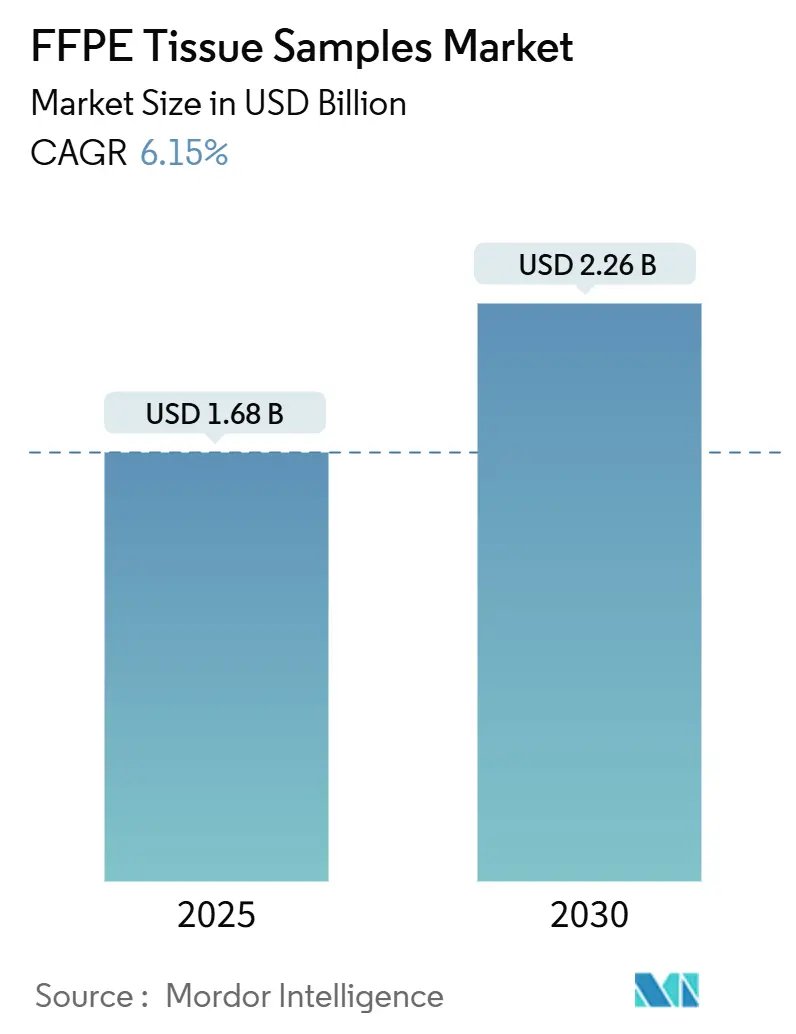
The FFPE tissue samples market size is valued at USD 1.68 billion in 2025 and is forecast to reach USD 2.26 billion by 2030, reflecting a 6.15% CAGR during the period. The expansion of the FFPE tissue samples market is propelled by the shift from routine histology toward integrated multi-omics, wider adoption of spatial transcriptomics, and stronger regulatory support for tissue-based companion diagnostics. Artificial intelligence now links archived blocks with high-resolution molecular maps, turning decades-old samples into precise research assets. Service providers have streamlined nucleic acid extraction workflows, boosting throughput for pharmaceutical pipelines and decentralized trials. Regional growth patterns show Asia-Pacific catching up with established North American infrastructure as cancer screening programs multiply. Meanwhile, the competitive landscape remains fragmented, opening room for vertical integration moves by technology suppliers and biobanks.
Key Report Takeaways
- By tissue type, human tissues led with 84.36% of FFPE tissue samples market share in 2024, while animal tissues are projected to expand at a 10.89% CAGR through 2030.
- By cancer type, breast cancer specimens accounted for 22.37% of the FFPE tissue samples market size in 2024, whereas rare and other cancers are advancing at an 8.36% CAGR to 2030.
- By application, cancer research held 44.57% of the FFPE tissue samples market size in 2024 and biomarker research is growing at 9.66% CAGR through 2030.
- By end user, pharmaceutical and biotechnology firms represented 36.52% demand in 2024, while contract research organizations are recording the highest projected CAGR at 8.36% to 2030.
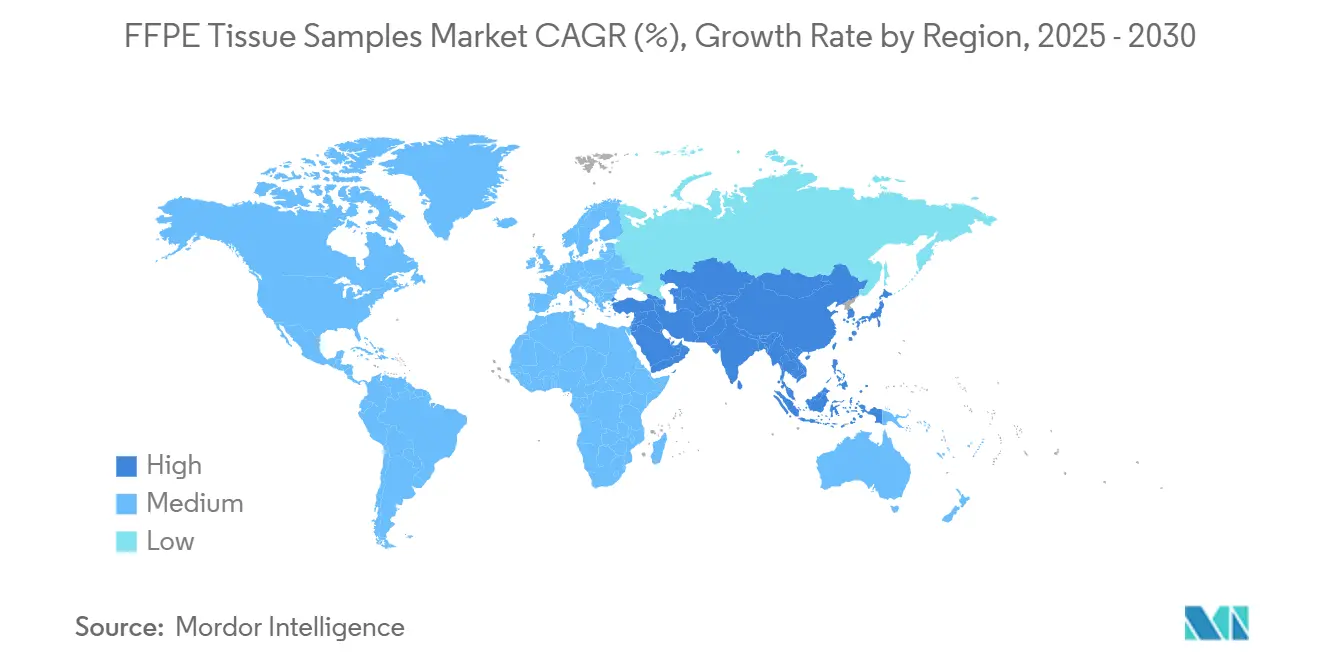
- By geography, North America commanded 38.57% FFPE tissue samples market share in 2024; Asia-Pacific is the fastest-growing region at 8.81% CAGR through 2030.
Note: Market size and forecast figures in this report are generated using Mordor Intelligence’s proprietary estimation framework, updated with the latest available data and insights as of January 2026.
Market Trends and Insights
Drivers Impact Analysis of FFPE Tissue Samples Market*
| Driver | (~) % Impact on CAGR Forecast | Geographic Relevance | Impact Timeline |
|---|---|---|---|
| Growing biobank networks & international sample-sharing collaborations | +1.2% | North America, Europe | Medium term (2-4 years) |
| Rise of AI-driven multi-omics needing archived FFPE tissues | +1.8% | North America, Europe, expanding Asia-Pacific | Short term (≤ 2 years) |
| Expansion of companion diagnostics for oncology drugs | +1.5% | Global, led by North America | Short term (≤ 2 years) |
| Surge in decentralized clinical trials using archived samples | +0.9% | North America, Europe, Asia-Pacific | Medium term (2-4 years) |
| Increasing national cancer screening programs in emerging markets | +0.7% | Asia-Pacific, Latin America | Long term (≥ 4 years) |
| Commercialization of spatial transcriptomics platforms | +1.3% | Global | Short term (≤ 2 years) |
| Source: Mordor Intelligence | |||
Growing biobank networks & international sample-sharing collaborations
Large cooperative repositories now provide millions of well-annotated specimens that single institutions could never assemble. The Cooperative Human Tissue Network alone has distributed more than 1.35 million samples, while the Danish PATHOLIFE cohort links pathology data from over 3 million individuals.[1]National Institutes of Health, “Cooperative Human Tissue Network (CHTN; UM1 Clinical Trial Not Allowed),” National Institutes of Health, nih.gov Cross-border sharing is becoming easier inside Europe under the 2027 Substances of Human Origin regulation, yet compliance workloads are increasing for global studies. Blockchain-based consent tools are in pilot use to monitor chain-of-custody in real time, improving transparency and protecting donors.[2]William Sanchez, “Decentralized Biobanking Apps for Patient Tracking of Biospecimen Research,” JMIR Bioinformatics and Biotechnology, jmir.org These networks strengthen the FFPE tissue samples market by boosting specimen diversity and enabling larger-scale discovery programs.
Rise of AI-driven multi-omics needing archived FFPE tissues
Spatial platforms such as Visium HD and Xenium now reach micrometer resolution and profile thousands of genes in fixed blocks within days. AI workflows like STEP integrate transcriptomic layers to reveal tumor micro-domains that were invisible in conventional pathology.[3]Lounan Li, “STEP: Spatial Transcriptomics Embedding Procedure for Multi-Scale Biological Heterogeneities Revelation in Multiple Samples,” bioRxiv, biorxiv.org Commercial entrants including NanoString and Vizgen continue to reduce per-sample sequencing costs, broadening access for mid-tier laboratories. As a result, archived blocks are re-used for fresh discovery studies, deepening the FFPE tissue samples market.
Expansion of companion diagnostics for oncology drugs
The FDA cleared several tissue-based tests in 2024, among them TruSight Oncology Comprehensive covering 517 genes and expanded PATHWAY HER2 claims in biliary cancer. Guidance on tissue-agnostic drug development emphasizes validated assays across multiple tumors, pushing demand for high-integrity blocks. Breakthrough designations for AI-enabled pathology, such as Ventana’s TROP2 assay, add momentum. Pharmaceutical pipelines thus secure larger specimen inventories, reinforcing the FFPE tissue samples market.
Surge in decentralized clinical trials using archived samples
Regulators now accept remote data collection and at-home sampling under 2024 FDA guidance on decentralized studies. CROs respond by integrating cloud portals, blockchain tracking, and ambient-temperature shipping kits. Archived FFPE blocks are repurposed to verify eligibility in umbrella trials without repeated biopsies, shortening recruitment timelines. Real-time digital oversight builds sponsor confidence in sample integrity, boosting CRO demand across the FFPE tissue samples market.
Restraints Impact Analysis of FFPE Tissue Samples Market*
| Restraint | (~) % Impact on CAGR Forecast | Geographic Relevance | Impact Timeline |
|---|---|---|---|
| Cross-border biospecimen export restrictions tightening | -0.8% | Global, focus on US & EU | Short term (≤ 2 years) |
| Batch-to-batch variability from legacy fixation protocols | -0.6% | Global | Medium term (2-4 years) |
| Rising litigation over consent & privacy for legacy tissues | -0.4% | North America, Europe | Long term (≥ 4 years) |
| High cost of ultra-long-term cold storage compliance | -0.5% | Global | Medium term (2-4 years) |
| Source: Mordor Intelligence | |||
Cross-border biospecimen export restrictions tightening
New U.S. policies ban overseas processing of clinical samples, while Europe introduces stricter quality rules under the Substances of Human Origin regulation. Multinational studies now budget extra for regional labs and legal reviews. Digital consent platforms help mitigate compliance risk, yet shipment delays still slow collaborative projects. These hurdles temper near-term expansion in the FFPE tissue samples market.
Batch-to-batch variability from legacy fixation protocols
Decades-old samples often used non-standard fixatives, leading to RNA degradation and inconsistent biomarker readouts. Quality programs such as NordiQC show variable pass rates across laboratories. DV200 metrics and automated processors improve new collections, but legacy variance still complicates multi-site trials. Reanalysis costs weigh on the FFPE tissue samples market.
*Our forecasts treat driver/restraint impacts as directional, not additive. The impact forecasts reflect baseline growth, mix effects, and variable interactions.
FFPE Tissue Samples Market Segment Analysis
By Tissue Type:
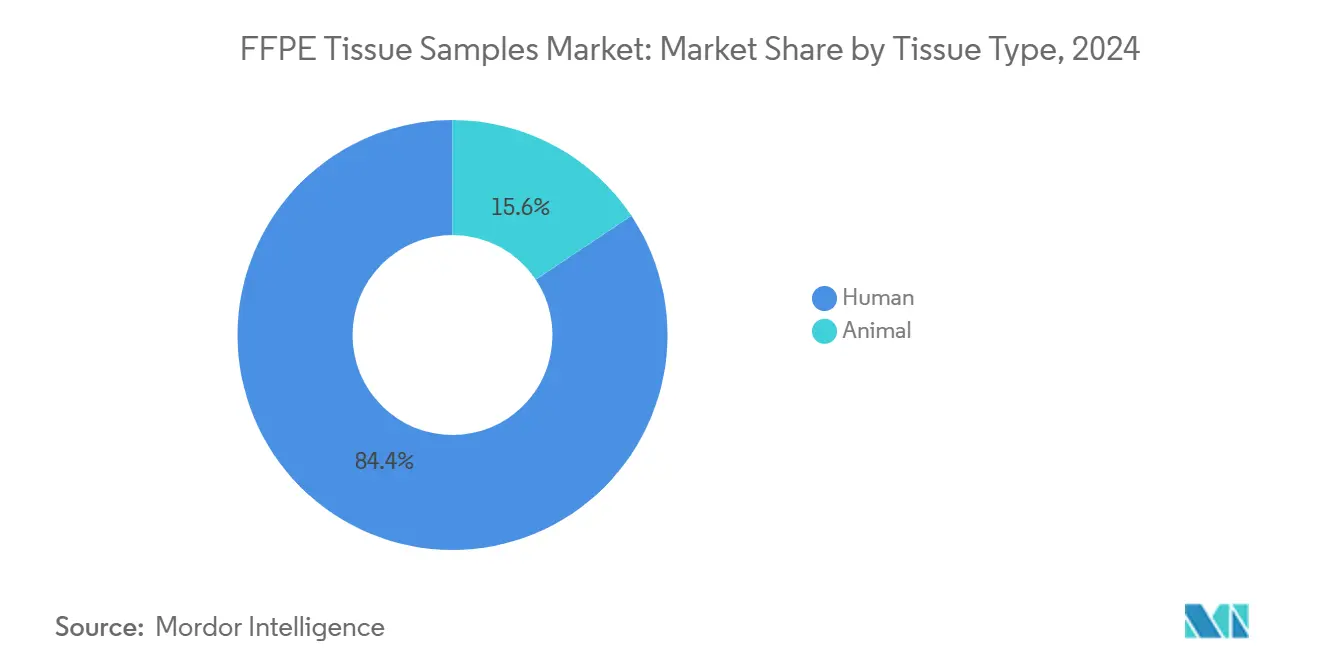
Preclinical models boost animal collectionsThe FFPE tissue samples market size for human specimens remained dominant at USD 1.42 billion in 2024, representing 84.36% of the global total. Regulatory submissions and diagnostic validation keep demand high, yet preclinical pipelines are now elevating animal blocks. Animal tissues are forecast to grow at a 10.89% CAGR, supported by xenograft studies and reversible FixNCut protocols that preserve single-cell fidelity.
Researchers add rodent, canine, and porcine models to examine tumor micro-environments before human trials. Optimized decalcification improves bone analyses, while multi-omics methods bridge species gaps. These advances widen the FFPE tissue samples market by enabling translational insights without immediate human material.



By Cancer Type:
Rare tumors accelerate repository breadthBreast cancer retained 22.37% FFPE tissue samples market share in 2024 as screening programs maintain high block inflow. Pipeline incentives for orphan indications now lift demand for cholangiocarcinoma, sarcoma, and pediatric tumors, driving an 8.36% CAGR for the “other/rare” category.
Tissue-agnostic drug guidance encourages screening for genomic alterations across tumor types, shifting the focus from site-specific to mutation-specific repositories. Single-cell RNA studies identify niche cell states in archived blocks, validating storage value for precision trials. Together, these trends broaden the FFPE tissue samples market footprint.
By Application:
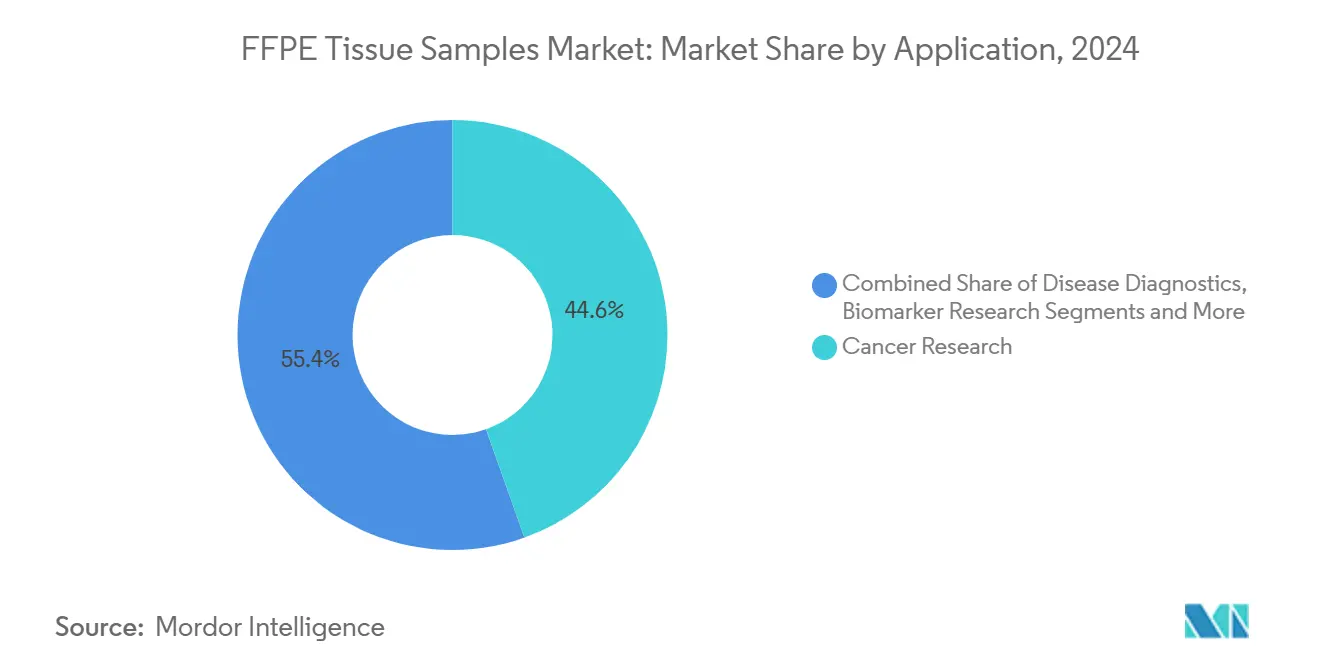
Biomarker discovery gains momentumOncology research still anchors 44.57% of the FFPE tissue samples market size in 2024, yet biomarker discovery now records a 9.66% CAGR thanks to multiplex proteomics and AI analytics.
Pharma partners tap standardized atlases such as the Human Tumor Atlas Network for benchmark data. Advances in multiplex immunofluorescence generate spatial protein maps inside FFPE blocks, meeting regulatory expectations for companion tests. These shifts tighten the link between assay development and archived inventory, reinforcing the FFPE tissue samples market.
By End User:
Outsourcing wave lifts CRO demandPharmaceutical and biotech companies accounted for 36.52% revenue in 2024, using in-house banks to support registrational studies. Contract research organizations are expanding at 8.36% CAGR, riding the decentralized trial boom and offering turnkey biospecimen logistics.
Services include blockchain tracking, global IRB coordination, and rapid DNA/RNA extraction. Partnerships such as Bio-Rad with Oncocyte show how CROs integrate diagnostics into full-service packages. This outsourcing trend strengthens the FFPE tissue samples market by improving scalability for sponsors.
Geography Analysis
North America FFPE Tissue Samples Market
North America continues to anchor the FFPE tissue samples market, backed by established cooperatives such as the CHTN that streamline access to well-annotated blocks. FDA guidance for decentralized trials and tissue-agnostic drugs further boosts domestic demand. Yet tightening U.S. export policies could slow collaborative research, pushing universities to create regional sequencing hubs.
APAC and Europe FFPE Tissue Samples Market
Asia-Pacific is the fastest-growing zone as government screening drives new repositories and multinational sponsors place trials closer to large patient pools. Local labs adopt spatial transcriptomics, reducing dependence on imported platforms and enlarging the FFPE tissue samples market. European collections remain extensive, yet compliance work rises ahead of the 2027 SOHO regulation, leading some institutions to partner with commercial storage vendors to offset costs.
LATAM and Africa FFPE Tissue Samples Market
In Latin America and parts of Africa, mobile lung and cervical screening projects gather samples in underserved regions, seeding new biobanks and creating translational research data sets. Decentralized consent apps gain traction, aligning these markets with global privacy norms. Collectively, these shifts expand the global FFPE tissue samples market footprint.

Competitive Landscape
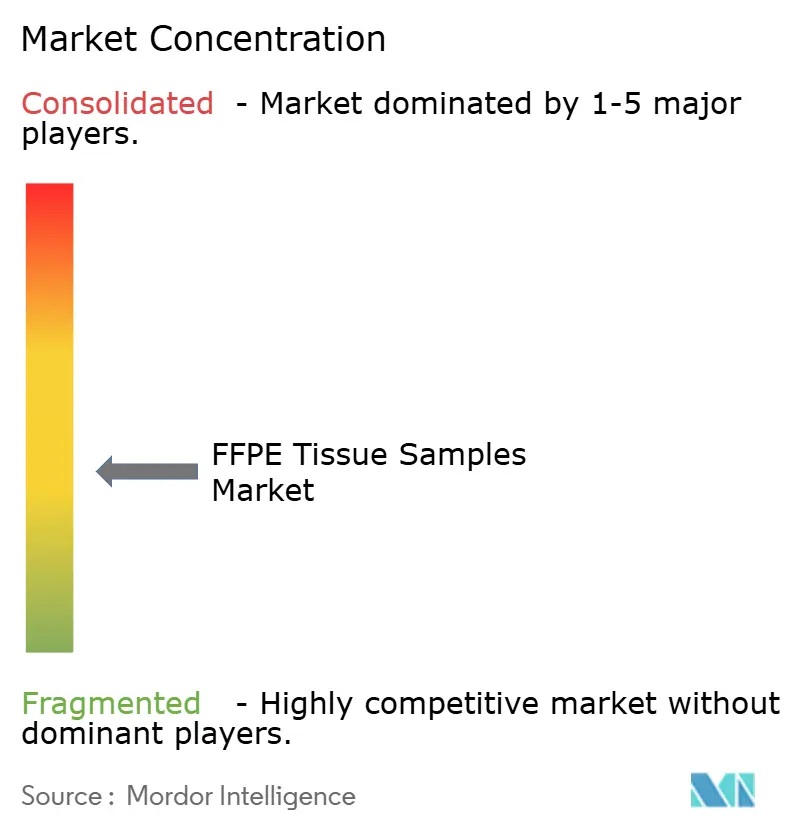
The FFPE tissue samples market shows moderate fragmentation across tissue vendors, instrumentation giants, and data-driven platform companies. Thermo Fisher Scientific and Bio-Rad dominate extraction reagents and sequencing workflows, while suppliers such as US Biomax and Precision for Medicine trade on catalog depth.
M&A momentum illustrates an integration push. Quanterix acquired Akoya Biosciences to link ultra-sensitive protein detection with high-plex tissue imaging, targeting USD 40 million cost synergies by 2026. Ovation.io joined with PD Theranostics, adding a 1.6 million-sample biobank to its data platform. Leica Microsystems invested in digital pathology to stay relevant as AI pipelines mature.
Emerging competitors focus on spatial biology, with 10x Genomics, NanoString, and Vizgen racing to improve resolution and throughput. Blockchain-enabled sample tracking offers a new niche for software start-ups partnering with CROs. Overall, buyer interest in end-to-end solutions signals further consolidation ahead.
FFPE Tissue Samples Industry Leaders
Thermo Fisher Scientific Inc.
OriGene Technologies, Inc.
Bio-Rad Laboratories Inc.
AMS Biotechnology (Europe) Ltd.
Danaher Corporation
- *Disclaimer: Major Players sorted in no particular order
FFPE Tissue Samples Market Companies Covered in this Report
- Thermo Fisher Scientific
- OriGene Technologies
- BioChain Institute
- Bio-Rad Laboratories
- AMS Biotechnology (Europe) Ltd.
- ProteoGenex Inc.
- Novus Biologicals LLC
- Tissue Solutions Ltd.
- Danaher
- iSpecimen Inc.
- Indivumed GmbH
- Asterand Bioscience Global Inc.
- Precision for Medicine
- Agilent Technologies
- Merck
- Abcam
- GeneTex Inc.
- Trinity Biotech plc
- Creative Bioarray

Recent Industry Developments in FFPE Tissue Samples Market
- July 2025: : 10x Genomics and A*STAR GIS launch TISHUMAP to interrogate thousands of archived blocks using Xenium plus AI.
- July 2025: Covaris and Hamilton unveil an automated truXTRAC FFPE SMART nucleic acid extraction workflow.
- January 2025: Quanterix acquires Akoya Biosciences to integrate protein and tissue biomarker detection with projected USD 40 million annual synergies by 2026.


Global FFPE Tissue Samples Market Report Scope
| Human Tissues |
| Animal Tissues |
| Breast Cancer |
| Lung Cancer |
| Colorectal Cancer |
| Prostate Cancer |
| Ovarian Cancer |
| Other / Rare Cancers |
| Cancer Research |
| Disease Diagnostics |
| Drug Discovery & Development |
| Biomarker Research |
| Others |
| Pharmaceutical & Biotechnology Companies |
| Contract Research Organizations (CROs) |
| Academic & Research Institutes |
| Hospitals & Clinical Laboratories |
| Biobanks |
| North America | United States |
| Canada | |
| Mexico | |
| Europe | Germany |
| United Kingdom | |
| France | |
| Italy | |
| Spain | |
| Rest of Europe | |
| Asia-Pacific | China |
| Japan | |
| India | |
| Australia | |
| South Korea | |
| Rest of Asia-Pacific | |
| Middle East and Africa | GCC |
| South Africa | |
| Rest of Middle East and Africa | |
| South America | Brazil |
| Argentina | |
| Rest of South America |
| By Tissue Type | Human Tissues | |
| Animal Tissues | ||
| By Cancer Type | Breast Cancer | |
| Lung Cancer | ||
| Colorectal Cancer | ||
| Prostate Cancer | ||
| Ovarian Cancer | ||
| Other / Rare Cancers | ||
| By Application | Cancer Research | |
| Disease Diagnostics | ||
| Drug Discovery & Development | ||
| Biomarker Research | ||
| Others | ||
| By End User | Pharmaceutical & Biotechnology Companies | |
| Contract Research Organizations (CROs) | ||
| Academic & Research Institutes | ||
| Hospitals & Clinical Laboratories | ||
| Biobanks | ||
| By Geography | North America | United States |
| Canada | ||
| Mexico | ||
| Europe | Germany | |
| United Kingdom | ||
| France | ||
| Italy | ||
| Spain | ||
| Rest of Europe | ||
| Asia-Pacific | China | |
| Japan | ||
| India | ||
| Australia | ||
| South Korea | ||
| Rest of Asia-Pacific | ||
| Middle East and Africa | GCC | |
| South Africa | ||
| Rest of Middle East and Africa | ||
| South America | Brazil | |
| Argentina | ||
| Rest of South America | ||


Key Questions Answered in the Report
What is the current value of the FFPE tissue samples market?
The FFPE tissue samples market size stands at USD 1.68 billion in 2025 and is projected to reach USD 2.26 billion by 2030.
Which region is expanding the quickest for FFPE blocks?
Asia-Pacific is leading growth with an 8.81% CAGR through 2030, driven by new cancer screening programs and clinical trials.
How are AI tools changing the use of archived tissue blocks?
AI combined with spatial transcriptomics turns old FFPE blocks into high-resolution molecular maps, supporting precision medicine studies.
Why are CROs gaining share in biospecimen services?
Decentralized clinical trials push sponsors to outsource sample logistics and analysis, lifting CRO demand at an 8.36% CAGR.
What is the main restraint limiting global sample movement?
Tighter cross-border regulations in the United States and Europe raise compliance costs and slow international specimen transfers.
Which application segment is growing fastest?
Biomarker research is advancing at a 9.66% CAGR as drug developers prioritize predictive assays for patient stratification.
Page last updated on:


 Your data is secure and never sold or shared.


