
Fallopian Tube Cancer Market Size and Share
Market Overview
| Study Period | 2020 - 2031 |
|---|---|
| Market Size (2026) | USD 1.59 Billion |
| Market Size (2031) | USD 2.32 Billion |
| Growth Rate (2026 - 2031) | 7.76 % |
| Fastest Growing Market | Asia-Pacific |
| Largest Market | North America |
| Market Concentration | Medium |
Major Players *Disclaimer: Major Players sorted in no particular order Image © Mordor Intelligence. Reuse requires attribution under CC BY 4.0. | |
Fallopian Tube Cancer Market Analysis by Mordor Intelligence
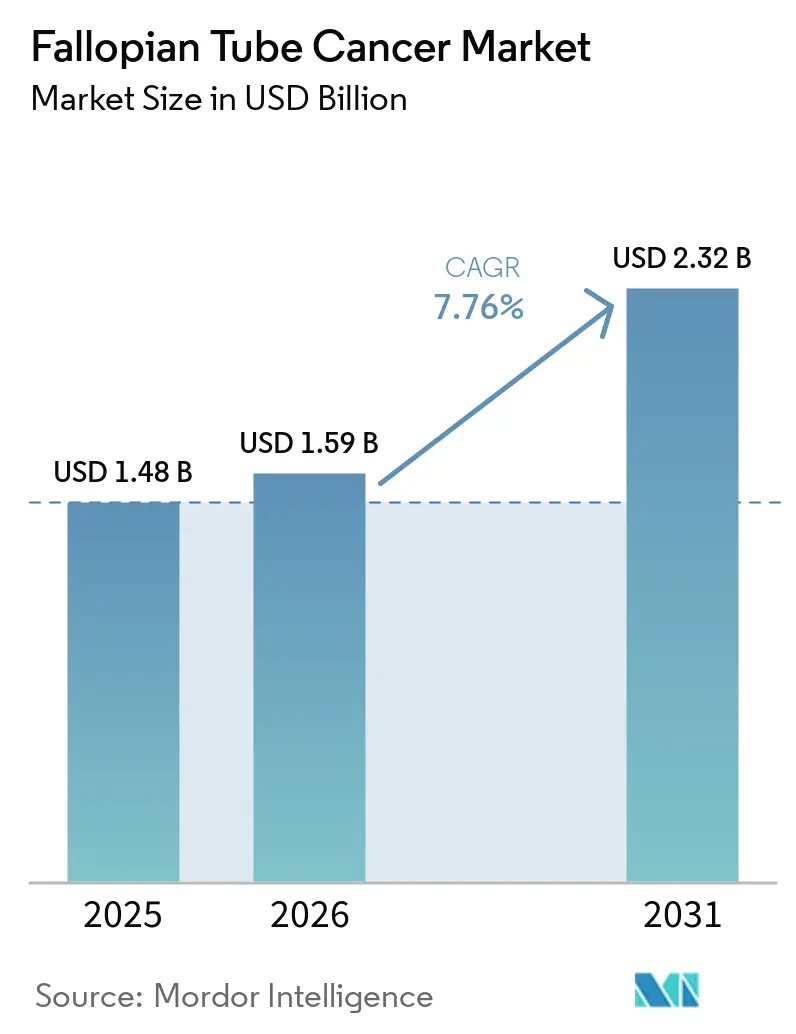
The Fallopian Tube Cancer Market size is expected to increase from USD 1.48 billion in 2025 to USD 1.59 billion in 2026 and reach USD 2.32 billion by 2031, growing at a CAGR of 7.76% over 2026-2031.
The fallopian tube cancer market is expanding as precision oncology protocols become more established and pathology classification more often recognizes a fallopian tube origin in high-grade serous disease. This change can increase the recognized treated population and improve the visibility of patients whose disease was previously grouped within broader ovarian cancer categories. Biomarker-selected treatment is becoming more central to clinical decisions, which links diagnostic testing more closely with therapy access, reimbursement discussions, and patient selection for clinical trials. Antibody-drug conjugates and PARP inhibitors are widening treatment options, while surgery and chemotherapy remain central to initial care and continue to account for much of the current treatment pathway. The fallopian tube cancer market also benefits when health systems establish testing requirements and reimbursement routes for eligible patients, because molecular results are increasingly needed before a targeted treatment can be considered. Limited disease-specific evidence, delayed diagnosis, high maintenance treatment costs, and uneven access to specialized pathology and gynecologic oncology services may slow adoption in several countries, particularly where health systems lack broad drug subsidy programs, reliable molecular testing capacity, or referral networks for complex gynecologic cancers and specialist treatment facilities.
Key Report Takeaways
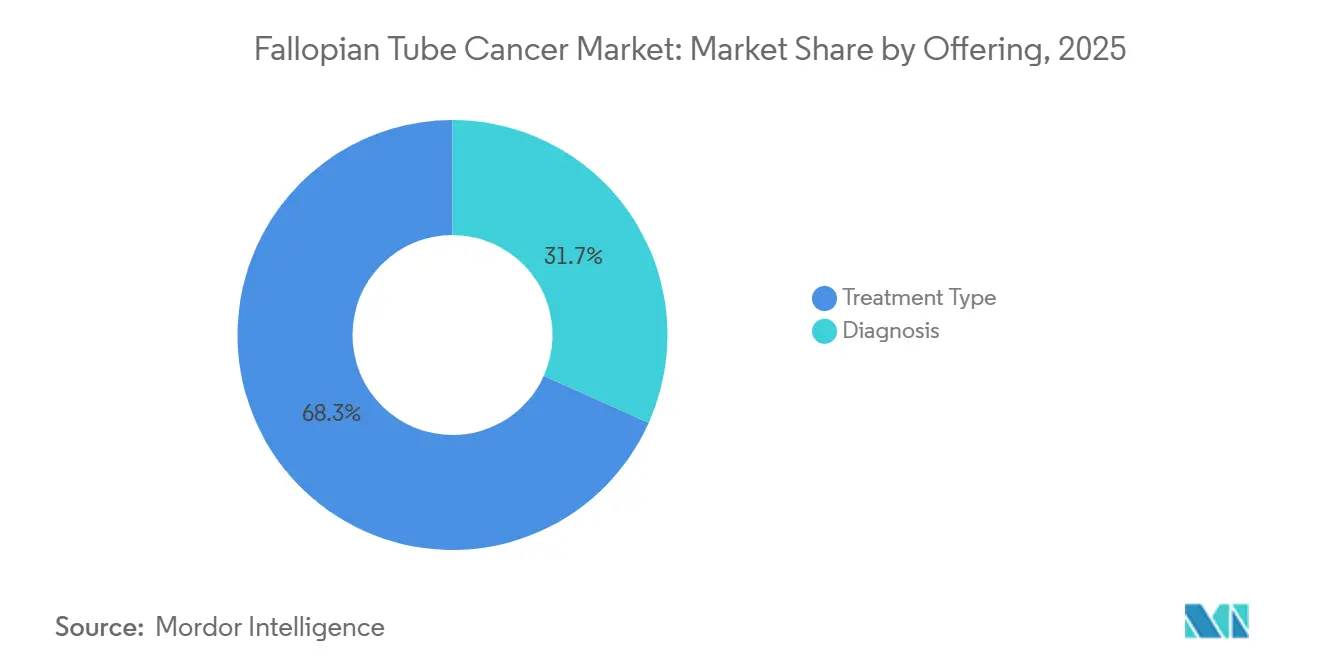
- By offering, treatment held 68.31% of the share of the fallopian tube cancer market in 2025, while diagnosis is projected to grow at a CAGR of 8.88% through 2031.
- By disease stage, Stage I held 45.24% of the share of the fallopian tube cancer market in 2025, while Stage II is projected to grow at a CAGR of 9.22% through 2031.
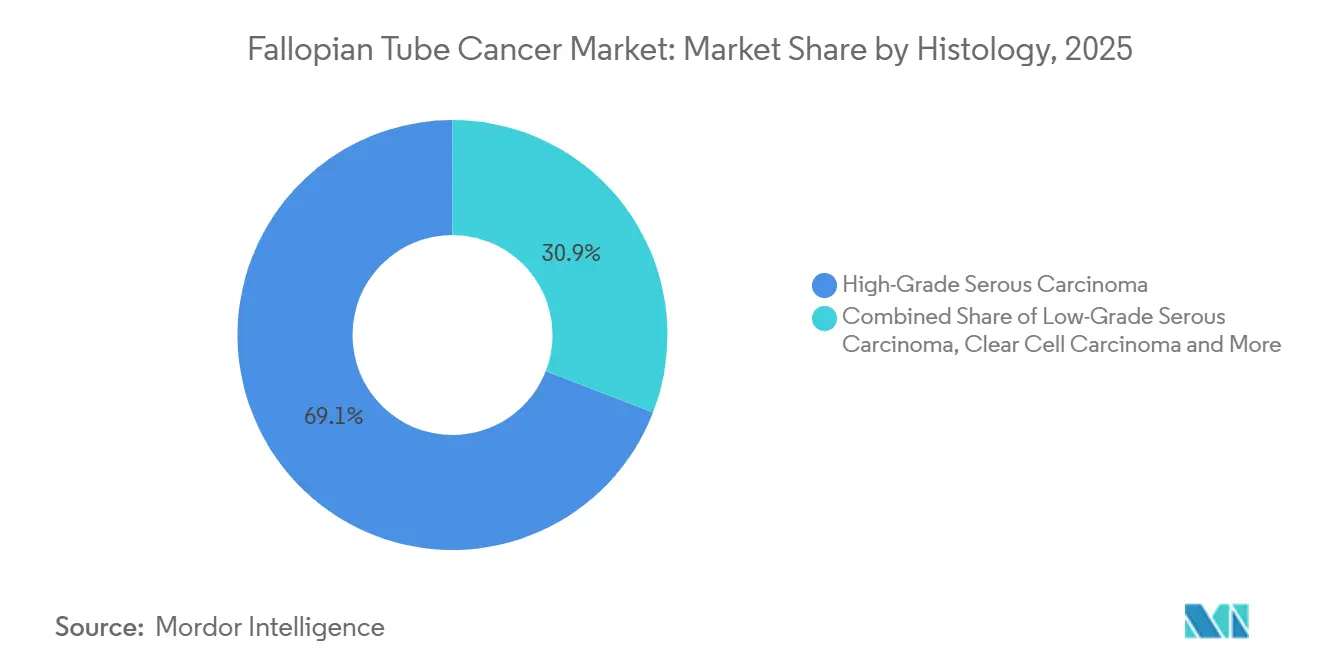
- By histology, High-Grade Serous Carcinoma held 69.14% of the share of the fallopian tube cancer market in 2025 and is projected to grow at a CAGR of 9.82% through 2031.
- By end user, hospitals held 52.64% of the share of the fallopian tube cancer market in 2025, while specialty clinics are projected to grow at a CAGR of 9.35% through 2031.
- By geography, North America held 38.61% of revenue in 2025, while Asia-Pacific is projected to grow at a CAGR of 9.25% through 2031.
Note: Market size and forecast figures in this report are generated using Mordor Intelligence’s proprietary estimation framework, updated with the latest available data and insights as of January 2026.
Global Fallopian Tube Cancer Market Trends and Insights
Drivers Impact Analysis*
| Driver | (~) % Impact on CAGR Forecast | Geographic Relevance | Impact Timeline |
|---|---|---|---|
| Rising Biomarker-Guided Treatment Adoption | +1.5% | Global, with the highest concentration in North America and Western Europe | Medium term (2-4 years) |
| Expansion of PARP Inhibitor Maintenance Therapy | +1.2% | North America, the EU, APAC, including Japan, South Korea, and Australia | Medium term (2-4 years) |
| Increasing Use of Antibody-Drug Conjugates | +1.8% | North America and the EU core, with spillover to APAC and MEA | Short term (≤ 2 years) |
| Greater Integration of Genetic and Molecular Testing | +1.0% | Global, with early adoption in North America and the EU, and faster uptake in APAC | Medium term (2-4 years) |
| Expanding Oncology Infrastructure in Asia-Pacific and Western Asia | +0.9% | APAC core, including India, China, and South Korea, with GCC spillover | Long term (≥ 4 years) |
| Reclassification of High-Grade Serous Tumors Originating in the Fimbrial End | +0.6% | Global, especially academic oncology centers | Short term (≤ 2 years) |
| Source: Mordor Intelligence | |||
Increasing Use of Antibody-Drug Conjugates
The U.S. Food and Drug Administration gave full approval to mirvetuximab soravtansine on March 22, 2024, for FRα-positive, platinum-resistant epithelial ovarian, fallopian tube, and primary peritoneal cancer. The MIRASOL Phase 3 trial reported median overall survival of 16.5 months with mirvetuximab soravtansine and 12.7 months with chemotherapy, with a hazard ratio of 0.67 and a p-value of 0.0046. The trial also reported an objective response rate of 42% for the drug and 16% for chemotherapy. AbbVie received a positive CHMP opinion for ELAHERE in September 2024, supporting a route to broader European access. Daiichi Sankyo and AstraZeneca dosed the first patient in the DESTINY-Ovarian01 Phase 3 trial in December 2025, studying trastuzumab deruxtecan plus bevacizumab as first-line maintenance for HER2-expressing epithelial ovarian cancer, which includes fallopian tube cancer. The fallopian tube cancer market could therefore see treatment spending shift toward targeted regimens as these programs move through clinical development, especially when first-line maintenance studies establish an earlier role for antibody-drug conjugates and extend their use beyond the platinum-resistant setting. The pipeline also includes agents directed at TROP-2, NaPi2b, and B7-H4, which are being studied in trials that recruit patients with fallopian tube cancer. These programs seek to serve patients whose tumors are not suited to FRα-directed treatment, expanding the range of targets under evaluation.
Rising Biomarker-Guided Treatment Adoption
Biomarker selection has become part of routine treatment planning for many patients with epithelial ovarian and fallopian tube cancers. The ASCO guideline recommends germline sequencing of BRCA1 and BRCA2 through a multigene panel at diagnosis for all patients with epithelial ovarian cancer, including fallopian tube cancer. CMS Quality Measure #507 calls for germline genetic testing within 6 months of a fallopian tube cancer diagnosis as part of physician performance assessment. The NCCN framework also supports mirvetuximab soravtansine for appropriate patients with platinum-resistant disease and high FRα expression. These requirements make companion diagnostics important to access and prescribing, rather than a separate step after treatment selection. Better patient classification can also make clinical trial enrollment more precise, create more useful data for later targeted therapy programs, and support diagnosis growth within the fallopian tube cancer market as molecular results guide treatment eligibility. This feedback loop connects laboratory testing, treatment selection, and clinical development, rather than treating each activity as an isolated part of care.
Expansion of PARP Inhibitor Maintenance Therapy
PARP inhibitors have an established maintenance role after platinum-based treatment for advanced ovarian and fallopian tube cancer. GSK reported that niraparib plus dostarlimab met the primary progression-free survival endpoint in the FIRST-ENGOT-OV44 Phase 3 trial in first-line advanced ovarian cancer. The PRIMA final analysis showed a 5-year progression-free survival rate of 35% with niraparib and 16% with placebo in the HRD-positive population[1]González-Martín, A., et al., “Niraparib First-Line Maintenance Therapy in Patients with Newly Diagnosed Advanced Ovarian Cancer: Final Overall Survival Results from the PRIMA/ENGOT-OV26/GOG-3012 Trial,” Penn State University Research Repository, pure.psu.edu.. NICE recommended niraparib in February 2026 for routine maintenance use after first-line platinum-based chemotherapy in advanced epithelial high-grade ovarian, fallopian tube, and peritoneal cancer. Fuzuloparib reported a median progression-free survival of 29.9 months compared with 11.1 months for placebo in a final analysis reported in November 2024, with a hazard ratio of 0.58. These results support continued maintenance treatment adoption, although the fallopian tube cancer market remains dependent on appropriate patient selection and reimbursement. The overall survival result in unselected populations remains relevant to payer decisions because high crossover can complicate the interpretation of long-term outcomes. This places greater emphasis on HRD status and other biomarkers when health systems decide which patients should receive continued treatment. The same process supports the need for companion diagnostics alongside maintenance medicines.
Greater Integration of Genetic and Molecular Testing
International clinical guidance supports genetic counseling and germline testing for women with fallopian tube carcinoma regardless of age or family history. This increases the need for germline BRCA1 and BRCA2 testing, somatic testing, and broader genomic profiling. The ASCO guideline includes BRCA1, BRCA2, RAD51C, RAD51D, BRIP1, and mismatch repair genes in the recommended multigene testing approach. A 2025 Nature Communications study profiled more than 100 human fallopian tubes using whole-genome bisulfite sequencing and proteomics, refining understanding of molecular changes before loss of heterozygosity. Blue Shield of California treats germline BRCA1 and BRCA2 testing as medically necessary for patients with advanced fallopian tube cancer under its medical policy. The fallopian tube cancer market benefits because testing is tied to therapy eligibility and remains relevant even when treatment competition changes. Genetic counseling, germline testing, and tumor profiling create a durable diagnostic need across the care pathway. This need applies before the first treatment, at recurrence, and when clinicians review potential options for maintenance therapy. The diagnostic role is therefore less dependent on one medicine or one treatment class than therapy revenue alone.
Restraints Impact Analysis*
| Restraint | (~) % Impact on CAGR Forecast | Geographic Relevance | Impact Timeline |
|---|---|---|---|
| Low Disease Awareness and Delayed Diagnosis | -0.8% | Global, most pronounced in South America, MEA, and lower-income APAC countries | Short term (≤ 2 years) |
| Limited Evidence Specific to Primary Fallopian Tube Cancer | -0.5% | Global, with reimbursement effects in the EU and the UK | Medium term (2-4 years) |
| High Cost of Long-Term Precision Oncology | -0.7% | Global, most acute where universal coverage or drug subsidies are limited | Medium term (2-4 years) |
| Scarcity of Specialized Pathology and Gynecologic Oncology Services | -0.4% | MEA, South America, lower-income APAC, and Eastern Europe | Long term (≥ 4 years) |
| Source: Mordor Intelligence | |||
Low Disease Awareness and Delayed Diagnosis
Fallopian tube carcinoma is difficult to identify before surgery because its symptoms can resemble ovarian tumors, adnexal masses, and benign pelvic disease. This uncertainty may delay therapeutic intervention and lead to diagnosis after the disease has advanced. There is no reliable population screening test for fallopian tube cancer, which limits the ability to detect microscopic disease at an early stage. The lack of a standard early detection pathway can restrict curative-intent surgery volumes and leave more patients needing complex treatment. Provider misconceptions about the need for universal testing also remain a barrier to consistent genetic testing in community oncology settings. The fallopian tube cancer market is affected when patients reach specialized services late or do not receive the testing that could identify therapy options.
High Cost of Long-Term Precision Oncology
Long-term maintenance therapy with PARP inhibitors and antibody-drug conjugates can create a substantial cost burden for patients and healthcare systems. Mirvetuximab soravtansine requires FRα companion diagnostic testing and is administered every 3 weeks until disease progression or unacceptable toxicity. PARP inhibitor maintenance can continue for 24 months or longer, adding drug acquisition, monitoring, and clinical management costs. A 2026 Gynecologic Oncology study documented safety management needs, including thrombocytopenia-related dose modifications, among patients receiving first-line maintenance niraparib[2]“Real-World Safety Profile and Clinical Management of Patients with Epithelial Ovarian Cancer Who Received First-Line Maintenance Niraparib Therapy: Final Results from the 1NSPIRE Chart Review Study,” Gynecologic Oncology, doi.org.. The limited overall survival benefit in unselected populations can lead payers to focus reimbursement on biomarker-confirmed groups. Health technology assessments, therefore, require manufacturers to demonstrate durable clinical value before access is broadened. This approach can reduce the reimbursable patient pool in parts of the fallopian tube cancer market.
*Our forecasts treat driver/restraint impacts as directional, not additive. The impact forecasts reflect baseline growth, mix effects, and variable interactions.
Segment Analysis
By Offering: Diagnostics Accelerate as Therapeutic Options Broaden
Treatment accounted for 68.31% of the fallopian tube cancer market size by 2025. Surgery and platinum-based chemotherapy remained the foundation of initial management, while targeted therapy and immunotherapy were used in maintenance or recurrent settings. The diagnosis sub-segment is forecast to grow at a CAGR of 8.88% from 2026 to 2031. Molecular and genomic testing are becoming prerequisites for patients who may receive targeted therapies. The fallopian tube cancer industry is therefore seeing a larger role for testing before treatment decisions are made.
Antibody-drug conjugates and targeted therapies are changing the treatment mix even while chemotherapy retains the greatest treatment volume. NCCN materials include a Category 2B recommendation for trastuzumab deruxtecan in HER2-positive platinum-sensitive ovarian cancer, providing a clinical framework relevant to fallopian tube cancer. Germline and somatic testing are increasingly used alongside comprehensive genomic profiling. Imaging with MRI and PET remains relevant for presurgical staging. A 2025 case report found that transvaginal sonography identified an early-stage fallopian tube carcinosarcoma that enhanced CT had missed. The connection between therapeutic approvals and required companion diagnostics supports the faster growth of diagnosis in the fallopian tube cancer market.


By Disease Stage: Stage I Leads but Stage II Shows the Fastest Expansion
Stage I accounted for 45.24% of the fallopian tube cancer market share by disease stage in 2025. Its position reflects the number of surgically managed patients whose disease can be addressed with cytoreductive surgery. Earlier diagnosis can be prompted by watery vaginal discharge associated with the hydrops tubae profluens triad. Stage II is forecast to expand at a CAGR of 9.22% from 2026 to 2031. Reclassification of high-grade serous tumors to a fallopian tube origin increases recognition of Stage II cases that may previously have been coded as advanced ovarian cancer.
Perioperative chemotherapy is also being used more often in Stage II disease. Stage III remains the most treatment-intensive stage because patients commonly need combination regimens and maintenance PARP inhibitor therapy. Stage IV has the lowest incidence but can generate high per-patient treatment costs because of salvage regimens and antibody-drug conjugate protocols. The evidence base still draws heavily on FIGO systems originally developed for ovarian carcinoma. This shared framework helps clinicians classify disease, but restricts stage-specific natural history data for primary fallopian tube carcinoma. Updated FIGO criteria apply to a unified ovarian, fallopian tube, and peritoneal classification, which affects how the fallopian tube cancer market is tracked by stage[3]“Cancer of the Ovary, Fallopian Tube, and Peritoneum: 2025 Update,” International Journal of Gynecology and Obstetrics, doi.org..
By Histology: High-Grade Serous Carcinoma Dominates Across Both Share and Growth
High-Grade Serous Carcinoma held 69.14% of the share of the fallopian tube cancer market in 2025. The subtype is the predominant form of fallopian tube cancer and shares clinical and molecular features with BRCA-associated pelvic serous carcinomas. It is also forecast to grow at a CAGR of 9.82% from 2026 to 2031. This combination reflects the effects of diagnostic reclassification and broader biomarker-guided treatment coverage. The fallopian tube cancer industry is centered on this histology because it is most directly connected to current BRCA and FRα testing pathways.
Low-Grade Serous Carcinoma, Endometrioid Carcinoma, Clear Cell Carcinoma, Mucinous Carcinoma, and Carcinosarcoma together represented just over 30% of the histology base. Their molecular profiles can limit the use of BRCA-targeted and FRα-targeted treatments. Low-Grade Serous Carcinoma is linked to MEK pathway activation, which limits the role of PARP inhibitors and creates a need for MEK inhibitor approaches. Carcinosarcoma is associated with the poorest prognosis among the listed subtypes. A 2025 Phase 1/2 publication reported preliminary activity for DB-1305/BNT325 in solid tumors that included ovarian and fallopian tube cancer. Specialized pathology review remains important, including use of the SEE-FIM protocol for high-risk specimens.

By End User: Hospitals Anchor Volume; Specialty Clinics Lead Growth
Hospitals held 52.64% of end-user revenue in the fallopian tube cancer market size in 2025. Their position reflects access to surgery, infusion units, pathology laboratories, and multidisciplinary tumor boards. Cancer specialty centers also treat a significant share of high-acuity patients who require complex cytoreductive surgery or clinical trial enrollment. Specialty clinics are forecast to grow at a CAGR of 9.35% from 2026 to 2031. Oral PARP inhibitors and potential lower-complexity antibody-drug conjugate delivery support a move toward outpatient care.
Ambulatory Surgical Centers have an emerging role in early-stage surgical management as minimally invasive laparoscopic staging becomes more common in Stage I and Stage II disease. Outpatient care also offers a cost-containment route for payers and integrated health systems. AbbVie began a Phase 2 neoadjuvant study of mirvetuximab soravtansine in November 2025 for newly diagnosed FRα-expressing advanced-stage serous epithelial ovarian, fallopian tube, or primary peritoneal cancer. The study examines a pathway in which antibody-drug conjugate treatment could precede surgery. GSK began a Phase IV niraparib study in India in April 2025 for patients with advanced or relapsed ovarian and fallopian tube cancer. These studies can inform use across specialty clinics and regional cancer centers in the fallopian tube cancer market.
Geography Analysis
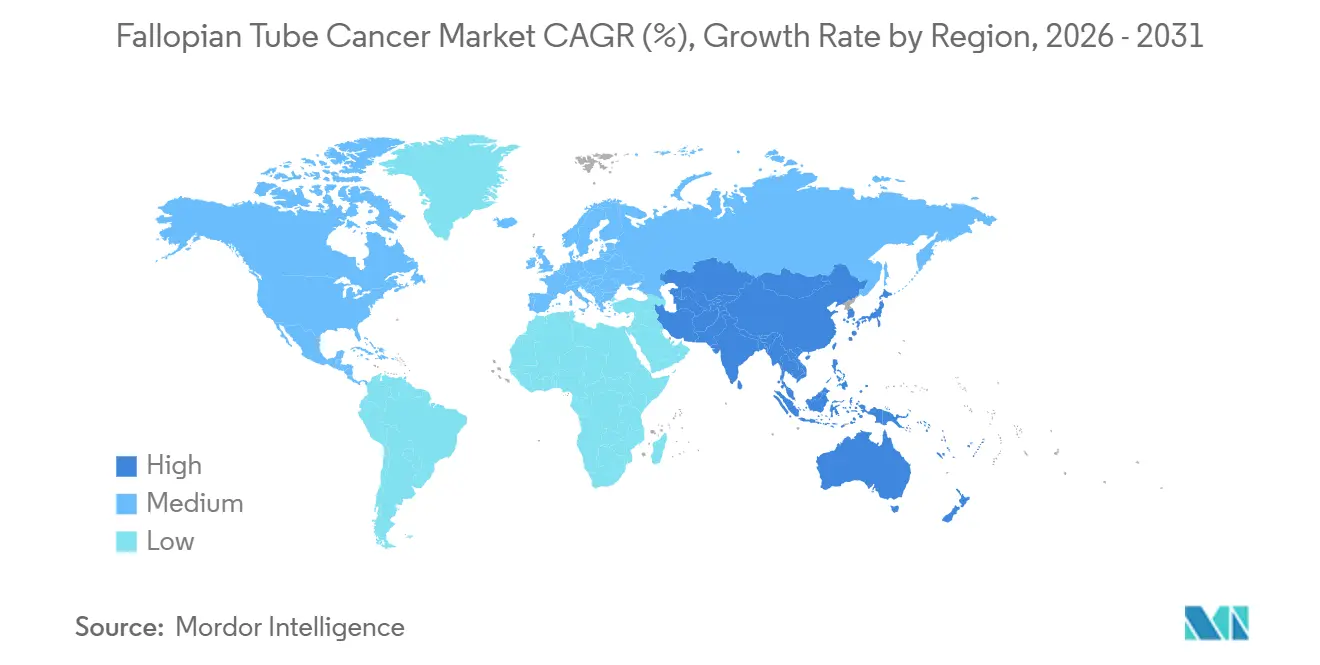
North America held 38.61% of the global fallopian tube cancer market share in 2025. The region benefits from established regulation, high per-patient treatment spending, and extensive clinical trial activity. The United States remains the largest national setting because the FDA approved mirvetuximab soravtansine in March 2024, and CMS Quality Measure #507 supports genetic testing within 6 months of diagnosis. ASCO guidance and NCCN frameworks support multigene workup at diagnosis. Mexico remains less developed because formulary delays and lower oncology spending limit access to the biomarker-guided therapy and PARP inhibitors.
Europe follows North America in absolute contribution to the fallopian tube cancer market, with Germany, the United Kingdom, and France accounting for the largest national shares. The CHMP delivered a positive opinion on mirvetuximab soravtansine in September 2024, supporting potential EU-wide access. NICE recommended niraparib for routine NHS use in February 2026 after first-line platinum-based chemotherapy for advanced fallopian tube cancer. Asia-Pacific is the fastest-growing regional part of the fallopian tube cancer market, with a projected CAGR of 9.25% from 2026 to 2031. India, China, South Korea, and the Philippines are increasing oncology capacity, while China’s drug approval acceleration and reimbursement inclusion remain important near-term factors.
Middle East and Africa and South America are smaller but relevant parts of the fallopian tube cancer market. GCC countries and Brazil account for a disproportionate share of oncology spending within their regions. Cancer registries and private oncology networks are expanding in the GCC, although the absence of population-wide screening means many patients still present at Stage III or Stage IV. South Africa has the most developed oncology setting in Africa, but pathology capacity constrains timely molecular testing and accurate histological subtyping. Brazil is relevant to maintenance PARP inhibitor adoption because GSK began a Phase IV niraparib study there within its wider program. Argentina and the rest of South America remain behind on diagnostic infrastructure, but are improving access to platinum-based chemotherapy through public procurement programs.

Competitive Landscape
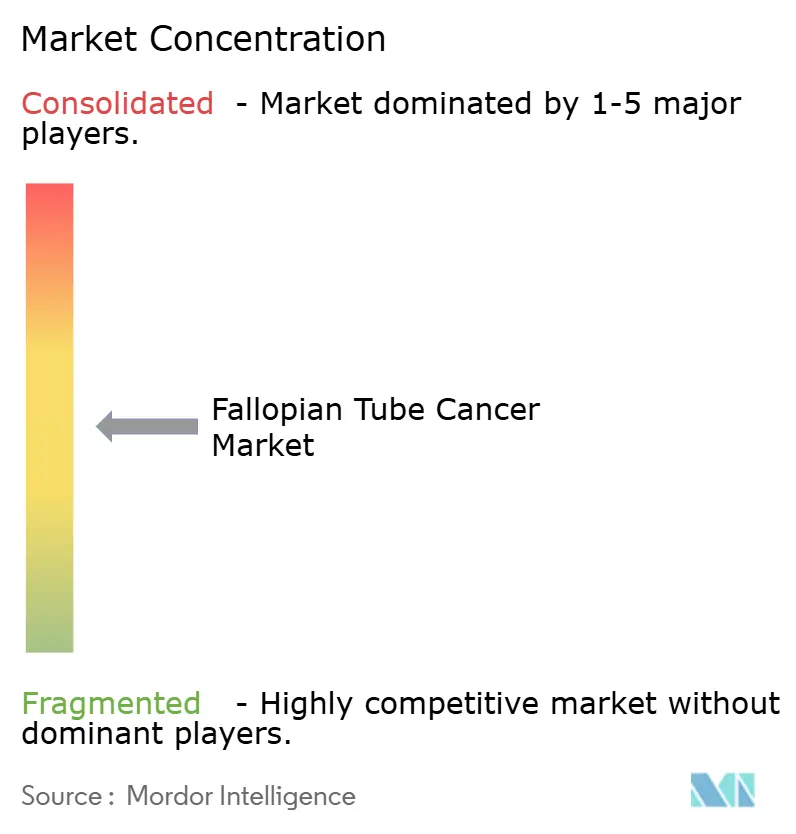
The fallopian tube cancer market is moderately consolidated among large pharmaceutical companies with broad gynecologic oncology portfolios. AstraZeneca, AbbVie, GSK, Merck, and Daiichi Sankyo lead therapeutic development activity. AbbVie’s acquisition of ImmunoGen placed mirvetuximab soravtansine within a larger commercial platform. The medicine has regulatory access or a potential access route across North America, the EU, Canada, and selected Asia-Pacific settings. This move illustrates how acquisitions can expand the reach of a targeted oncology asset.
The central competitive opportunity is earlier-line therapy, where no antibody-drug conjugate is approved for fallopian tube cancer as first-line maintenance. Daiichi Sankyo and AstraZeneca initiated DESTINY-Ovarian01 in December 2025 to evaluate trastuzumab deruxtecan plus bevacizumab in this setting. AbbVie also initiated its Phase 2 neoadjuvant mirvetuximab soravtansine study in November 2025. GSK is evaluating niraparib with dostarlimab after the combination met the FIRST trial’s primary progression-free survival endpoint. These programs show that developers are pursuing combinations and earlier treatment use rather than relying only on later-line treatment.
Diagnostics companies are also important to competition in the fallopian tube cancer market because treatment eligibility depends on molecular results. Myriad Genetics markets MyChoice CDx as an FDA-approved companion diagnostic for HRD status in the niraparib setting. New antibody-drug conjugate developers are seeking targets beyond FRα, including TROP-2, NaPi2b, and B7-H4. These programs aim to address limits created by heterogeneous FRα expression. Competition is therefore increasing among established drug makers, specialized developers, and testing providers, even though the leading therapeutic companies remain influential.
Fallopian Tube Cancer Industry Leaders
AstraZeneca PLC
GSK plc
F. Hoffmann-La Roche Ltd.
Merck & Co., Inc.
AbbVie Inc.
- *Disclaimer: Major Players sorted in no particular order

Recent Industry Developments
- July 2026: Singapore Cancer Center Inc. expanded operations into Cebu, Philippines, launching a dedicated infusion and ambulatory treatment unit, an oncology pharmacy, and a molecular laboratory. The facility was designated an official Roche Access Program site, providing structured patient access to Roche's innovative cancer medicines in a region where affordability had previously constrained uptake.
- February 2026: The Food and Drug Administration approved pembrolizumab, Keytruda, and pembrolizumab and berahyaluronidase alfa-pmph, Keytruda Qlex, in combination with paclitaxel, with or without bevacizumab, for adult patients with platinum-resistant epithelial ovarian, fallopian tube, or primary peritoneal carcinoma whose tumors express PD-L1, CPS≥1, as determined by an FDA-authorized test, and who have received 1 or 2 prior systemic treatment regimens.


Global Fallopian Tube Cancer Market Report Scope
As per the scope of the report, fallopian tube cancer, also known as primary fallopian tube carcinoma, is a rare type of gynecologic cancer that originates in the fallopian tubes. It involves malignant growth of cells lining the inner surface of the fallopian tubes, which are part of the female reproductive system responsible for transporting eggs from the ovaries to the uterus. This cancer can present with symptoms similar to ovarian cancer and is often diagnosed at an advanced stage.
The fallopian tube cancer market is segmented by offering into treatment type, including surgery, chemotherapy, targeted therapy, immunotherapy, hormonal therapy, radiation therapy, and combination regimens; diagnosis, including ultrasound, computed tomography, magnetic resonance imaging, positron emission tomography, biopsy and histopathology, CA-125 blood testing, germline and somatic genetic testing, and comprehensive genomic profiling; disease stage, including Stage I, Stage II, Stage III, and Stage IV; histology, including high-grade serous carcinoma, low-grade serous carcinoma, endometrioid carcinoma, clear cell carcinoma, mucinous carcinoma, and carcinosarcoma; end user, including hospitals, cancer specialty centers, specialty clinics, ambulatory surgical centers, and other end users; and geography, including North America, Europe, Asia-Pacific, the Middle East and Africa, and South America. The market report also covers the estimated market sizes and trends for 17 countries across major regions globally. For each segment, the market size and forecast are provided in terms of value (USD).
| By Treatment Type | Surgery |
| Chemotherapy | |
| Targeted Therapy | |
| Immunotherapy | |
| Hormonal Therapy | |
| Radiation Therapy | |
| Combination Regimens | |
| By Diagnosis | Ultrasound |
| Computed Tomography | |
| Magnetic Resonance Imaging | |
| Positron Emission Tomography | |
| Biopsy and Histopathology | |
| CA-125 Blood Testing | |
| Germline and Somatic Genetic Testing | |
| Comprehensive Genomic Profiling |
| Stage I |
| Stage II |
| Stage III |
| Stage IV |
| High-Grade Serous Carcinoma |
| Low-Grade Serous Carcinoma |
| Endometrioid Carcinoma |
| Clear Cell Carcinoma |
| Mucinous Carcinoma |
| Carcinosarcoma |
| Hospitals |
| Cancer Specialty Centers |
| Specialty Clinics |
| Ambulatory Surgical Centers |
| Other End Users |
| North America | United States |
| Canada | |
| Mexico | |
| Europe | Germany |
| United Kingdom | |
| France | |
| Italy | |
| Spain | |
| Rest of Europe | |
| Asia-Pacific | China |
| Japan | |
| India | |
| Australia | |
| South Korea | |
| Rest of Asia-Pacific | |
| Middle East and Africa | GCC |
| South Africa | |
| Rest of Middle East and Africa | |
| South America | Brazil |
| Argentina | |
| Rest of South America |
| By Offering | By Treatment Type | Surgery |
| Chemotherapy | ||
| Targeted Therapy | ||
| Immunotherapy | ||
| Hormonal Therapy | ||
| Radiation Therapy | ||
| Combination Regimens | ||
| By Diagnosis | Ultrasound | |
| Computed Tomography | ||
| Magnetic Resonance Imaging | ||
| Positron Emission Tomography | ||
| Biopsy and Histopathology | ||
| CA-125 Blood Testing | ||
| Germline and Somatic Genetic Testing | ||
| Comprehensive Genomic Profiling | ||
| By Disease Stage | Stage I | |
| Stage II | ||
| Stage III | ||
| Stage IV | ||
| By Histology | High-Grade Serous Carcinoma | |
| Low-Grade Serous Carcinoma | ||
| Endometrioid Carcinoma | ||
| Clear Cell Carcinoma | ||
| Mucinous Carcinoma | ||
| Carcinosarcoma | ||
| By End User | Hospitals | |
| Cancer Specialty Centers | ||
| Specialty Clinics | ||
| Ambulatory Surgical Centers | ||
| Other End Users | ||
| By Geography | North America | United States |
| Canada | ||
| Mexico | ||
| Europe | Germany | |
| United Kingdom | ||
| France | ||
| Italy | ||
| Spain | ||
| Rest of Europe | ||
| Asia-Pacific | China | |
| Japan | ||
| India | ||
| Australia | ||
| South Korea | ||
| Rest of Asia-Pacific | ||
| Middle East and Africa | GCC | |
| South Africa | ||
| Rest of Middle East and Africa | ||
| South America | Brazil | |
| Argentina | ||
| Rest of South America | ||


Key Questions Answered in the Report
What is driving growth in fallopian tube cancer treatment?
Biomarker-guided treatment, genetic testing, PARP inhibitor maintenance therapy, and antibody-drug conjugate development support demand. These developments connect diagnostic results more directly with treatment selection and can expand access to targeted regimens for eligible patients.
How large is the fallopian tube cancer market in 2026?
The value is estimated at USD 1.59 billion in 2026 and is forecast to reach USD 2.32 billion by 2031 at a CAGR of 7.76%. The estimate reflects a growing need for diagnosis and treatment within precision oncology pathways.
Which offering has the largest revenue contribution?
Treatment held 68.31% in 2025 because surgery and chemotherapy remain core parts of patient management. Targeted therapies, immunotherapy, and maintenance regimens are added according to disease status, biomarker results, and the clinical treatment pathway.
Which offering is growing the fastest?
Diagnosis is projected to grow at a CAGR of 8.88% through 2031 as molecular testing becomes more important for therapy eligibility. Germline testing, somatic testing, and genomic profiling can help identify patients for biomarker-selected care.
Which region is expanding the fastest?
Asia-Pacific is projected to grow at a CAGR of 9.25% from 2026 to 2031, supported by investment in oncology infrastructure. Growth is linked to activity in India, China, South Korea, and the Philippines, as access to innovative cancer medicines develops.
Why are genetic tests important in fallopian tube cancer care?
BRCA and related testing can identify patients who may qualify for PARP inhibitors and other biomarker-selected treatments. Testing also supports genetic counseling, clinical trial matching, and the selection of a suitable treatment strategy at diagnosis or recurrence.
Page last updated on:





