
Market Overview
| Study Period | 2021 - 2031 |
|---|---|
| Forecast Data Period | 2026 - 2031 |
| Base Year Market Size (2025) | USD 35.09 Billion |
| Market Size (2026) | USD 36.24 Billion |
| Market Size (2031) | USD 42.59 Billion |
| Growth Rate (2026 - 2031) | 3.29 % |
| Market Concentration | Medium |
Major Players *Disclaimer: Major Players sorted in no particular order Image © Mordor Intelligence. Reuse requires attribution under CC BY 4.0. | |
Europe Athletic Footwear Market Analysis by Mordor Intelligence
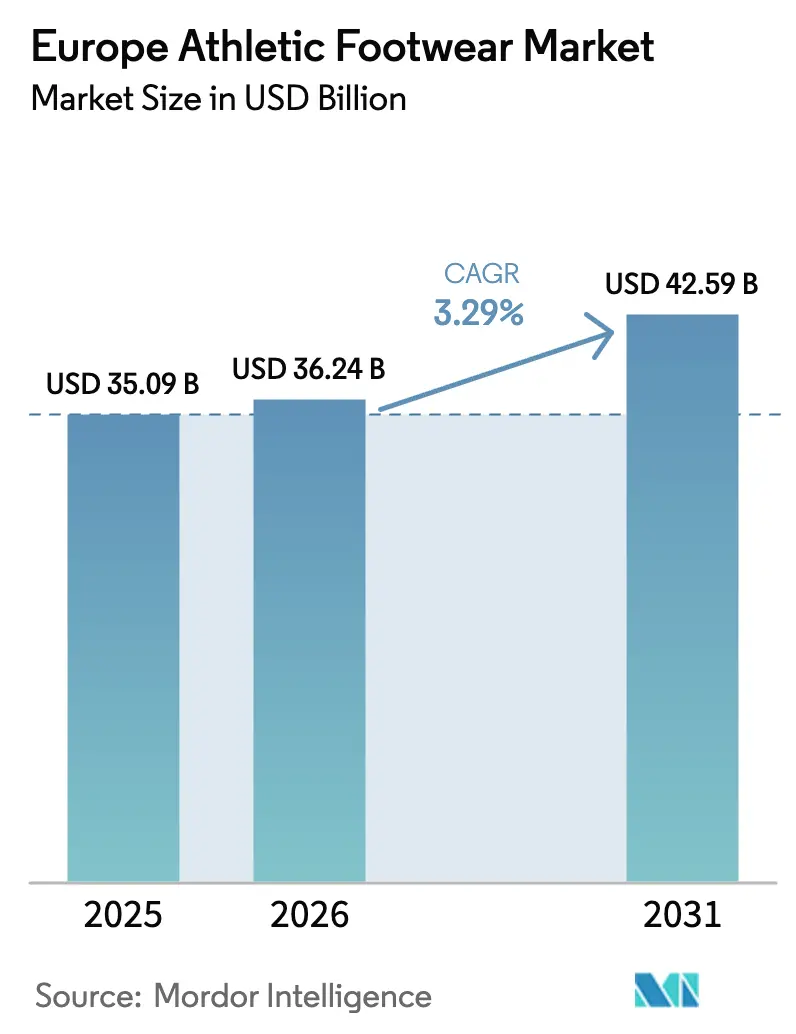
The Europe athletic footwear market size is expected to grow from USD 35.09 billion in 2025 to USD 36.24 billion in 2026 and is forecast to reach USD 42.59 billion by 2031 at 3.29% CAGR over 2026-2031. The region’s steady growth reflects a mature yet resilient consumer base that continues to embrace performance innovation, gender-inclusive product lines, and omnichannel shopping habits. Stability prevails despite inflationary pressures because brands are widening price ladders, introducing sustainable materials, and leveraging digital engagement to keep purchase intent high. Women’s sports participation, marathon tourism, and outdoor recreation are redefining demand patterns, while premiumization encourages consumers to trade up for comfort, durability, and eco-friendly credentials. Competitive intensity remains elevated as global brands, niche innovators, and powerful retailers all vie for share, but technological advances in cushioning foams, carbon plates, and bio-based polymers provide clear levers for differentiation in the Europe athletic footwear market.
Key Report Takeaways
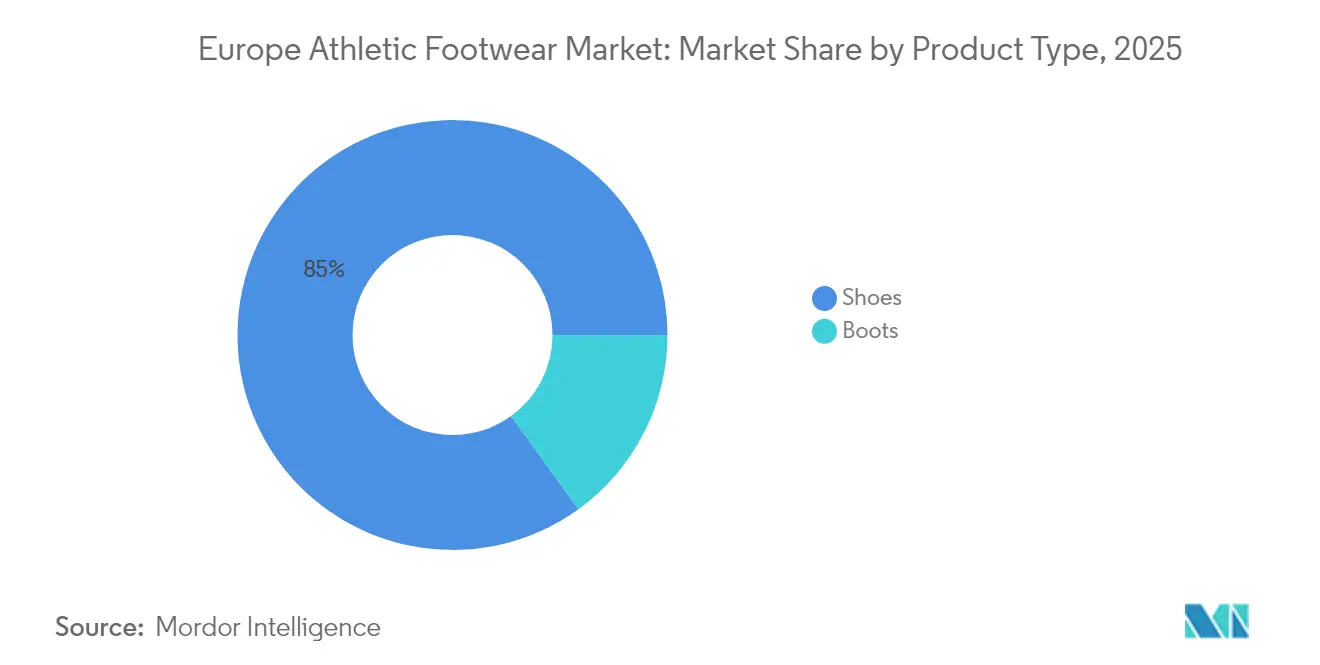
- By product type, shoes led with 84.96% revenue share in 2025, while boots are projected to expand at a 4.65% CAGR through 2031.
- By activity, sports shoes accounted for 47.10% of the Europe athletic footwear market share in 2025; running shoes are set to grow at a 4.43% CAGR.
- By end user, men commanded 63.10% share in 2025, whereas women’s footwear is forecast to accelerate at a 4.90% CAGR.
- By category, mass offerings captured 61.85% of the Europe athletic footwear market size in 2025 and premium lines are poised for a 4.18% CAGR.
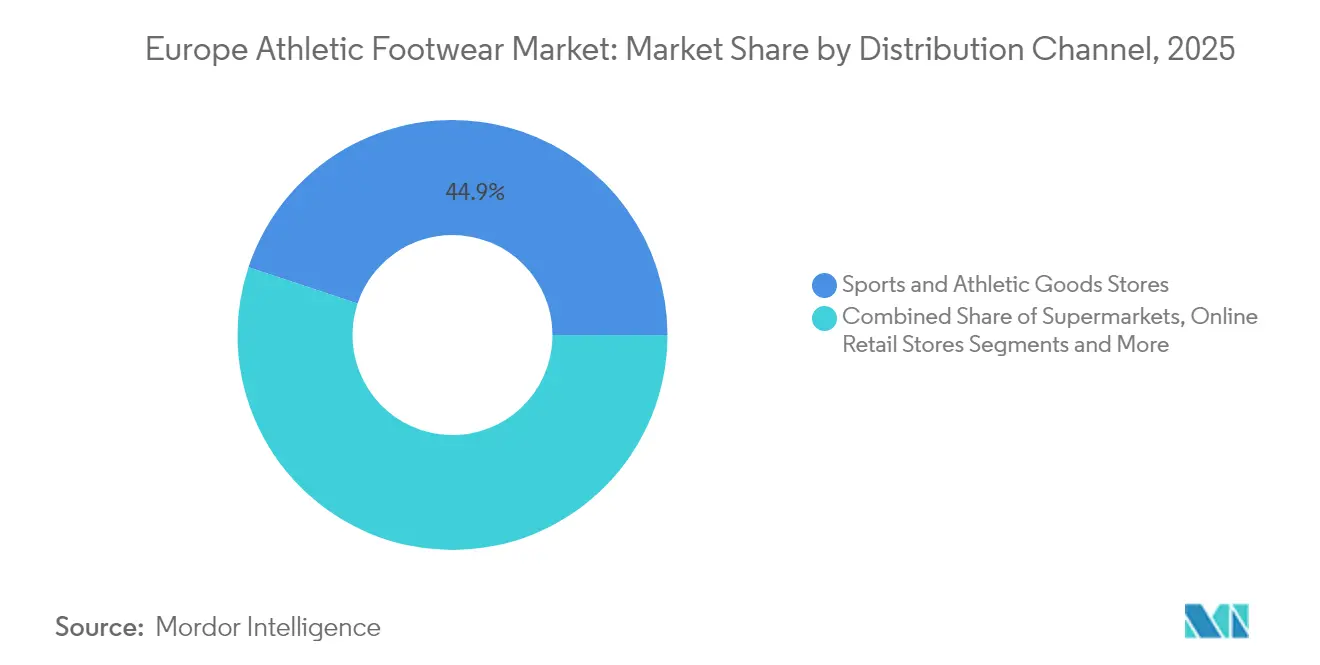
- By distribution channel, sports and athletic goods stores held 44.90% share in 2025, with online retail climbing at a market-leading 5.92% CAGR.
- By geography, the United Kingdom represented 19.10% of regional sales in 2025 and the Netherlands is on pace for a 4.28% CAGR to 2031.
Note: Market size and forecast figures in this report are generated using Mordor Intelligence’s proprietary estimation framework, updated with the latest available data and insights as of 2026.
Market Trends and Insights
Drivers Impact Analysis of Europe Athletic Footwear Market*
| Driver | (~) % Impact on CAGR Forecast | Geographic Relevance | Impact Timeline |
|---|---|---|---|
| Significant growth in women sports participation rate | +0.8% | Regional, with strongest gains in United Kingdom, France, Netherlands | Medium term (2-4 years) |
| Influence of social media platforms and celebrity endorsements | +0.6% | Regional, concentrated in urban markets across major European countries | Short term (≤ 2 years) |
| Increasing participation in organized sports events, marathons, and outdoor activities | +0.7% | Europe-wide, with peak impact in Germany, United Kingdom, Austria | Medium term (2-4 years) |
| Technological advancements in footwear materials for better comfort, durability, and performance | +0.5% | Europe-wide, specifically with Research and Development centers in Germany, Netherlands | Long term (≥ 4 years) |
| Strong presence and investments by major international brands | +0.4% | Europe-wide, concentrated in major retail markets | Short term (≤ 2 years) |
| Product personalization trends attracting consumers seeking customized footwear | +0.3% | Premium markets in Germany, United Kingdom, France, Netherlands | Long term (≥ 4 years) |
| Source: Mordor Intelligence | |||
Significant growth in women sports participation rate
A significant rise in women’s participation in sports is emerging as a key driver for the Europe athletic footwear market, with growing engagement in activities such as running, fitness training, yoga, and team sports fueling higher demand for performance-oriented and stylish footwear tailored to female consumers. According to Sport England, from November 2023 to November 2024, more than 18.1 million women in England engaged in sports or physical activities, highlighting the strong momentum behind this trend [1]. The increasing focus on health and wellness, coupled with government initiatives and grassroots programs promoting female sports participation, is further accelerating market expansion. Moreover, the influence of prominent female athletes, social media fitness influencers, and the ongoing popularity of athleisure wear are encouraging women to invest in high-quality athletic footwear that blends comfort, durability, and fashion appeal, thereby strengthening the market’s growth outlook.
Influence of social media platforms and celebrity endorsements
The growing influence of social media platforms and celebrity endorsements is a key driver of the Europe athletic footwear market. According to Eurostat, in 2024, 97% of people in the EU aged 16–29 years reported using the internet every day, compared with 88% of the total population, highlighting the strong digital engagement among younger consumers [2]. This highly connected demographic is extensively exposed to promotional campaigns, product launches, and lifestyle content across social media platforms such as Instagram, TikTok, and YouTube, where athletes, fitness influencers, and celebrities frequently endorse leading athletic footwear brands. Such visibility not only strengthens brand recognition but also fosters aspirational purchasing behavior, positioning sports shoes as both performance-driven necessities and fashion-forward lifestyle products. As a result, digital influence and celebrity-driven marketing continue to shape consumer preferences and significantly boost market demand across Europe.
Increasing participation in organized sports events, marathons, and outdoor activities
Increasing participation in organized sports events, marathons, and outdoor activities is a major driver of the Europe athletic footwear market. In 2024, the BMW-Berlin Marathon stood out as Germany’s biggest marathon, with nearly 54,000 finishers, highlighting the massive scale and popularity of such sporting events [3]. Similarly, the Haspa Marathon Hamburg attracted around 11,200 participants, making it the second-largest in the country. These large-scale events not only underscore the growing enthusiasm for running and endurance sports but also directly contribute to higher demand for athletic footwear that ensures durability, comfort, and performance. As marathons, community runs, and outdoor recreational activities expand in scale and visibility, consumers are increasingly investing in premium sports footwear, thereby accelerating market growth across the region.
Technological advancements in footwear materials for better comfort, durability, and performance
Technological advancements in footwear materials are emerging as a significant driver of the Europe athletic footwear market, as consumers increasingly seek products that deliver superior comfort, durability, and performance. Leading brands are investing in innovative materials such as lightweight engineered mesh for breathability, advanced foams and cushioning systems for enhanced shock absorption, and sustainable fabrics made from recycled plastics and bio-based materials to align with rising eco-consciousness. The integration of technologies like carbon-fiber plates for energy return and adaptive midsoles that respond to individual running styles is redefining performance standards, particularly in high-intensity sports and marathon running. Additionally, antimicrobial linings, water-resistant coatings, and improved outsole traction materials are further enhancing product functionality, making modern athletic footwear suitable for a wide range of indoor and outdoor activities. This continuous innovation not only drives consumer preference for premium, technologically advanced shoes but also enables brands to differentiate themselves in a highly competitive market, thereby accelerating overall growth in the region.
Restraints Impact Analysis of Europe Athletic Footwear Market*
| Restraint | (~) % Impact on CAGR Forecast | Geographic Relevance | Impact Timeline |
|---|---|---|---|
| Proliferation of counterfeit products | -0.4% | Regional, with highest impact in Eastern Europe, Southern Europe | Short term (≤ 2 years) |
| High competition leading to price wars and reduced profit margins | -0.3% | Europe-wide, most intense in Germany, United Kingdom, France | Short term (≤ 2 years) |
| Limited penetration in some Eastern European and emerging markets | -0.2% | Eastern Europe, particularly Romania, Bulgaria, emerging CEE markets | Medium term (2-4 years) |
| Concerns over sustainability and sourcing | -0.2% | Europe-wide, driven by regulatory compliance requirements | Long term (≥ 4 years) |
| Source: Mordor Intelligence | |||
Proliferation of counterfeit products
The proliferation of counterfeit products poses a significant restraint to the Europe athletic footwear market, undermining both brand reputation and consumer trust. The growing availability of fake athletic shoes, often sold at lower prices through unregulated online marketplaces, street vendors, and unauthorized retail channels, directly impacts the sales of genuine products from well-established brands. These counterfeit items typically lack the advanced materials, durability, and performance benefits of authentic footwear, leading to consumer dissatisfaction and, in some cases, risk of injuries. Moreover, the widespread presence of counterfeit products dilutes brand value, reduces profit margins, and creates unfair competition for legitimate players investing heavily in innovation, quality, and marketing. Despite ongoing government regulations and brand-led initiatives to curb illegal trade through stricter intellectual property enforcement and awareness campaigns, the challenge remains prevalent, making counterfeiting a persistent barrier to the sustainable growth of the athletic footwear market in Europe.
High competition leading to price wars and reduced profit margins
High competition leading to price wars and reduced profit margins is a major restraint for the Europe athletic footwear market. The region is home to numerous global and regional players, all striving to capture market share through aggressive pricing strategies, frequent product launches, and extensive promotional campaigns. While this competitive environment benefits consumers by providing a wide variety of choices and affordable options, it creates significant pressure on brands to maintain profitability. Companies are often forced to cut prices or offer heavy discounts to stay competitive, which erodes margins and limits the resources available for research, development, and innovation. Additionally, with rising raw material and production costs, sustaining profitability in the face of price-driven competition becomes increasingly challenging. Premium players, in particular, struggle to differentiate themselves in a crowded market where cost-sensitive consumers are lured by affordable alternatives from fast-fashion retailers and emerging local brands. As a result, intense competition and the resulting price wars threaten long-term profitability and pose a considerable barrier to sustainable market growth.
*Our forecasts treat driver/restraint impacts as directional, not additive. The impact forecasts reflect baseline growth, mix effects, and variable interactions.
Europe Athletic Footwear Market Segment Analysis
By Product Type:
Shoes Dominance Faces Boot InnovationThe shoes segment dominates the Europe athletic footwear market, commanding an overwhelming 84.96% share in 2025. This strong presence is largely attributed to the segment’s broad versatility, as shoes are widely worn across multiple sports disciplines as well as for everyday casual and athletic purposes. They offer consumers both performance and style, making them equally relevant for professional athletes and fitness enthusiasts, as well as those seeking comfortable fashion choices. The growing trend of athleisure has further fueled this demand, as shoes seamlessly blend functionality with lifestyle appeal. Additionally, continuous innovation in cushioning technologies, lightweight materials, and sustainable designs has reinforced consumer interest in this segment. With their ability to cater to almost every consumer demographic, shoes remain the primary revenue driver in the European athletic footwear industry and are expected to maintain their dominance throughout the forecast period.
In contrast, the boots segment, though currently representing a smaller share of the market, exhibits the fastest growth potential. Forecasted to expand at a CAGR of 4.65% through 2031, this growth is being driven by the rise in adventure sports, trekking, hiking, and other outdoor activities gaining popularity across Europe. Consumers are increasingly investing in footwear that combines durability and comfort with enhanced protection in rugged environments, which makes boots an appealing choice. Innovations in water resistance, breathability, and material strength are also contributing to their expanding adoption. Furthermore, the shift toward active outdoor lifestyles among younger consumers and tourists is amplifying demand in this category. Although the segment lags behind shoes in market size, its accelerating growth underscores its emerging importance within the overall European athletic footwear market.

By Activity:
Running Shoes Outpace Sports Shoes GrowthSports shoes retained the leading position in the Europe athletic footwear market in 2025, accounting for a substantial 47.10% share. Their dominance stems from their ability to serve a diverse set of activities, ranging from professional team sports to general fitness and training purposes. This versatility makes them a preferred choice among both athletes and recreational users who value performance, comfort, and durability. The category continues to be supported by innovation in lightweight materials, advanced traction designs, and cushioning technologies that enhance athletic performance. Additionally, the rising popularity of multi-purpose athletic footwear, which seamlessly transitions from sports to casual settings, has further reinforced demand in this segment. With strong consumer acceptance across age groups and sports categories, sports shoes remain the backbone of revenue generation in the European athletic footwear market and are positioned to sustain their leadership in the years ahead.
Running shoes, on the other hand, stand out as the fastest-growing segment in the market, with a promising CAGR of 4.43% projected through 2031. This growth significantly exceeds the overall market’s expansion rate and underscores the impact of evolving health and fitness trends in Europe. The surge in marathon and recreational running participation, along with increasing awareness of the benefits of an active lifestyle, has positioned running shoes as a priority purchase for many consumers. Manufacturers are responding with designs that emphasize enhanced cushioning, flexibility, energy return, and lightweight construction tailored to diverse running needs. The segment also benefits from endorsements by fitness influencers and global sporting events, which continually promote running as an accessible and rewarding activity. Although running shoes currently trail sports shoes in overall market size, their strong momentum signals long-term growth and an expanding role in shaping the future of European athletic footwear demand.
By End User:
Women's Segment Drives Growth AccelerationMen’s athletic footwear continues to dominate the European market, capturing a commanding 63.10% share in 2025. This leadership position is rooted in the segment’s historical development, where product innovation and marketing efforts have traditionally targeted male consumers. Higher sports participation rates among men, especially in team sports and competitive athletics, have reinforced steady demand for performance-focused footwear. Established global brands maintain strong portfolios catered specifically to male athletes, offering a wide variety of designs that emphasize durability, advanced cushioning, and style. Additionally, cultural associations of masculinity with sports and outdoor activities have long contributed to the segment’s dominance. While the men’s category faces maturity in several sub-markets, it continues to hold the largest revenue share and serves as a foundation for the region’s athletic footwear industry.
In contrast, the women’s athletic footwear segment has emerged as the fastest-growing category, with a projected CAGR of 4.90% through 2031, well above the overall industry rate. This momentum reflects a clear demographic transformation as women increasingly engage in fitness routines, sports participation, and active lifestyle choices across Europe. Athletic footwear brands are responding by expanding women-specific product lines that combine performance with style, ensuring greater appeal across both functional and fashion-driven use cases. The rising influence of wellness culture, coupled with social media-driven fitness trends, is fueling purchases of running shoes, training footwear, and athleisure-oriented designs tailored for women. Furthermore, growing advocacy for gender inclusivity in sports has strengthened female consumer confidence in investing in high-performance athletic footwear. Although the women’s segment currently represents a smaller share than men’s, its rapid growth trajectory highlights the shifting dynamics of consumer demand and positions it as a critical driver of future market expansion.
By Category:
Premium Segment Capitalizes on Quality DemandMass market products hold the dominant position in the Europe athletic footwear industry, capturing 61.85% of the market share in 2025. This leadership underscores the importance of affordability and accessibility in shaping consumer preferences, particularly in a region where price sensitivity remains strong. The segment benefits from widespread acceptance among budget-conscious consumers who prioritize value and functionality without compromising on fundamental performance. The mass footwear market often appeals to a broad demographic, ranging from school-aged athletes to adults seeking multipurpose sports shoes. Retail expansion through supermarkets, hypermarkets, and online channels has further bolstered accessibility, ensuring mass products remain widely available and affordable. As a result, this category continues to anchor overall industry revenues and is expected to maintain its commanding presence through sustained consumer reliance on cost-effective offerings.
In contrast, the premium segment represents the fastest-growing category, with a forecast CAGR of 4.18% through 2031 that outpaces the broader market. This growth highlights a clear shift in consumer attitudes, where quality, innovation, and sustainability are prioritized over price alone. Increasing demand for technologically advanced footwear—featuring performance-enhancing designs, eco-friendly materials, and fashion-forward elements—is fueling expansion within this segment. Consumers, particularly younger professionals and high-income groups, are increasingly willing to pay more for shoes that align with both athletic needs and lifestyle aspirations. The influence of brand prestige, celebrity endorsements, and unique collaborations also plays a significant role in elevating the appeal of premium products. Although the segment’s overall market share remains smaller compared to mass market offerings, its strong growth trajectory reflects evolving consumer preferences and positions it as a crucial engine for future value-driven expansion in Europe’s athletic footwear market.
By Distribution Channel:
Online Retail Transforms Shopping PatternsSports and athletic goods stores retained the largest share of distribution in the Europe athletic footwear market, accounting for 44.90% in 2025. Their prominence is driven by the specialized services they provide, including expert product fitting, personalized performance consultation, and access to premium and brand-exclusive collections. Consumers continue to view these outlets as trusted destinations where professional guidance ensures they purchase the most suitable footwear for specific sporting needs. Strong partnerships with leading athletic footwear brands reinforce their role as vital distribution channels, offering the latest product launches and innovation-driven assortments. The in-store experience, emphasizing trial, comfort checks, and technical support, further enhances consumer confidence and loyalty. Despite intensifying competition from digital platforms, sports and athletic goods stores remain the cornerstone of athletic footwear distribution, particularly for performance-focused buyers seeking assurance of quality and functionality.
Online retail stores, however, represent the fastest-growing distribution channel in the European athletic footwear market, expanding at a robust CAGR of 5.92% through 2031. This growth rate nearly doubles that of the overall market, highlighting the transformative shift in consumer purchasing behavior toward digital platforms. Online channels offer unmatched convenience, wider product assortments, and competitive pricing, drawing in both budget-conscious and tech-savvy consumers. Features such as virtual try-on tools, AI-driven personalization, and fast delivery services are further accelerating the adoption of e-commerce. Additionally, the integration of exclusive online launches, influencer collaborations, and omnichannel strategies is strengthening consumer engagement with brands through digital mediums. While physical retail maintains a strong presence, the rapid ascent of e-commerce signals a fundamental restructuring of distribution dynamics and establishes online channels as a critical engine for future growth.
Geography Analysis
Western Europe Athletic Footwear Market
Western European markets, with their deep-rooted sports cultures and high disposable incomes, are witnessing a steady growth in athletic footwear adoption. In 2025, the United Kingdom commands a 19.10% share of the market, solidifying its status as Europe's top destination for athletic footwear. This dominance is bolstered by the nation's fervent football culture, government investments in sports infrastructure, and a consumer base eager to splurge on premium athletic products. Additionally, the growing trend of athleisure, where consumers integrate athletic footwear into everyday fashion, further drives market growth in this region. Meanwhile, Germany and France, with their diverse sports participation and strong retail networks, cater to both the mass market and premium segments. The increasing focus on product innovation, such as lightweight and performance-enhancing footwear, is also contributing to the growth of the athletic footwear market in Western Europe.
Netherlands Athletic Footwear Market
The Netherlands is on an upward trajectory, boasting an impressive 4.28% CAGR projected through 2031. This growth can be attributed to savvy market development strategies by international brands and a surge in sports participation, especially among the youth, who are increasingly shaping athletic footwear consumption trends. Furthermore, the Dutch government's initiatives to promote physical activity and sports participation have created a favorable environment for market expansion. These efforts, combined with the rising popularity of sustainable and eco-friendly footwear options, are influencing consumer preferences and driving demand in the Netherlands. The growing presence of local and regional players offering customized and affordable athletic footwear is also playing a significant role in the market's development.
Central and Eastern Europe Athletic Footwear Market
In Central and Eastern Europe, the landscape is evolving. Expanding retail infrastructures, rising disposable incomes, and a shift in consumer preferences towards branded athletic footwear are all contributing to a complex yet promising growth scenario. Moreover, the increasing penetration of e-commerce platforms in these regions is making branded athletic footwear more accessible to a broader consumer base. This digital transformation, coupled with growing awareness of fitness and health, is expected to further accelerate market growth in Central and Eastern Europe over the forecast period. Additionally, the rising influence of Western fashion trends and the growing popularity of international sports events are encouraging consumers in these regions to invest in branded athletic footwear, further driving market expansion.
Regulatory Landscape
The European athletic footwear market operates under an increasingly prescriptive EU sustainability and consumer-information framework for textiles and footwear. On 25 June 2025, the European Commission finalized Product Environmental Footprint Category Rules (PEFCR) for apparel and footwear, establishing a standardized lifecycle-impact methodology that can support environmental claims and enable more consistent comparisons of product footprints across brands and retailers.
In parallel, the Ecodesign for Sustainable Products Regulation (ESPR) is shaping product design and circularity compliance through requirements related to durability, reusability, and recyclability, with Digital Product Passport (DPP) requirements being prepared via delegated acts and supporting studies. A key near-term compliance trigger is the EU ban on the destruction of unsold footwear for large companies, applying from 19 July 2026, which pushes brands and retailers to strengthen sell-through, re-commerce, donation, and take-back pathways to reduce non-compliant inventory disposal.
Competitive Landscape
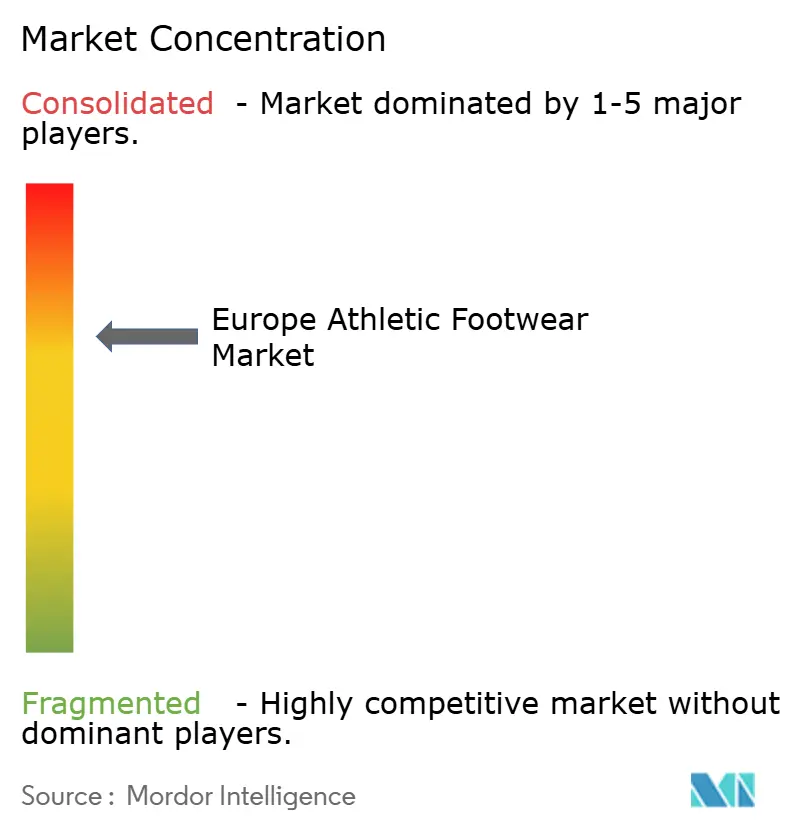
With a concentration score of 7, the European athletic footwear market showcases a balanced landscape. This score highlights a fragmentation level that allows both established giants and emerging specialists to carve out their niches using distinct positioning strategies. Industry titans like Nike, Adidas, and PUMA bolster their dominance through vast retail networks, high-profile endorsements, and relentless product innovation. However, they now contend with mounting challenges from direct-to-consumer brands and niche performance firms, both honing in on targeted consumer segments. Additionally, the rise of e-commerce platforms has further intensified competition, enabling smaller players to reach broader audiences without the need for extensive physical retail infrastructure.
In today's market, technology isn't just an add-on; it's a pivotal differentiator. Brands are channeling significant investments into material innovations, personalized offerings, and sustainable practices. These efforts not only justify premium price tags but also foster deep consumer loyalty. A case in point: Nike's debut of the AirImagination AI platform, enabling bespoke Air Max designs. This move underscores how industry frontrunners harness AI and historical assets, crafting unique consumer experiences that pose a challenge for smaller players to match. Furthermore, advancements in wearable technology, such as smart insoles and connected footwear, are reshaping consumer expectations and driving innovation across the market.
Consumer preferences in the European athletic footwear market are also evolving, with a growing emphasis on sustainability and ethical production practices. Leading brands are responding by incorporating recycled materials, reducing carbon footprints, and adopting transparent supply chain practices. These initiatives not only align with consumer values but also serve as a competitive advantage in a market increasingly driven by environmental consciousness. Meanwhile, emerging players are leveraging their agility to introduce eco-friendly products at a faster pace, further intensifying the competition. The interplay between established brands and new entrants continues to shape the market dynamics, making sustainability a key battleground for differentiation.
Europe Athletic Footwear Industry Leaders
-
Adidas AG
-
Puma SE
-
New Balance Athletics Inc.
-
Nike, Inc.
-
ASICS Corporation
- *Disclaimer: Major Players sorted in no particular order
Europe Athletic Footwear Market Companies Covered in this Report
- Adidas AG
- Nike, Inc.
- Puma SE
- Under Armour Inc.
- New Balance Athletics, Inc.
- ASICS Corporation
- Skechers USA, Inc.
- VF Corporation
- Decathlon S.A
- Wolverine World Wide, Inc.
- Amer Sports Corporation
- Lululemon Athletica
- Lotto Sport Italia
- Stefanel S.p.A
- Hanesbrands Inc.
- Mizuno Corporation
- Pentland Group
- Columbia Sportswear Co.
- Oberalp AG
- Fila Holdings Corp.
Market Opportunities and Future Outlook
Circularity compliance is creating opportunities for services and operating models that reduce unsold inventory and improve end-of-life recovery, particularly ahead of the EU ban on destroying unsold footwear for large companies from 19 July 2026. Brands and retailers with large European footprints have an immediate incentive to expand recommerce, outlet optimization, donation partnerships, and take-back programs, while logistics providers and platform operators can monetize reverse logistics, refurbishment, and grading capabilities that keep products in use rather than written off.
Standardized environmental measurement and circular product design is also opening demand for auditable product data, materials traceability, and scalable recycling inputs as the European Commission finalized PEFCR for apparel and footwear on 25 June 2025 and advances ESPR-linked requirements, including Digital Product Passport readiness work. Reported brand activity in circularity and resource-use management, including adidas and PUMA disclosures aligned to EU sustainability reporting, suggests leading suppliers are already allocating operational attention to resource-use and circular economy initiatives, which leaves room for component makers and material innovators to document footprint improvements and recycled content credibly at SKU level.
Recent Industry Developments in Europe Athletic Footwear Market
- April 2026: Adidas AG - Reported Q1 2026 results showing 6% revenue growth in Europe and launched the Supernova Rise Adaptive running shoe for individuals with disabilities. The quarterly performance reinforces Europe as a growth engine, and the product launch expands inclusive performance offerings. The action strengthens Adidas EU market positioning through renewed emphasis on accessible innovation.
- February 2026: PUMA SE - Designated 2026 as transition year with inventory reduction, streamlined distribution, and a product strategy centered on Football (World Cup 2026), Running (NITRO), and the HYROX partnership. The realignment narrows focus to core growth segments in Europe and improves supply chain efficiency.
- January 2026: New Balance Athletics, Inc. - New Balance Germany assumed direct distribution responsibility for the brand in Austria. The change tightens market control and may enhance margins in Austria.
Europe Athletic Footwear Market Report Scope and Research Methodology
Market Definition and Coverage
For this study, the Europe athletic footwear market covers sport and sport-inspired shoes designed for athletic activities and everyday active use, and it is measured in value terms across Europe.
Scope exclusions: This sizing excludes non-athletic fashion footwear and work or safety footwear that is mainly bought for occupational protection.
Segments Covered in This Report
- By Product Type
- Shoes
- Boots
- By Activity
- Running Shoes
- Sports Shoes
- Adventure Sports Shoes
- Other Product Types
- By End User
- Men
- Women
- Kids/Children
- By Category
- Mass
- Premium
- By Distribution Channel
- Sports and Athletic Goods Stores
- Supermarkets/Hypermarkets
- Online Retail Stores
- Other Distribution Channels
- By Geography
- Germany
- United Kingdom
- France
- Italy
- Spain
- Russia
- Netherlands
- Belgium
- Poland
- Sweden
- Rest of Europe
Data Sources, Market Sizing, and Validation
Desk Research
Desk research was used to map the demand environment for athletic footwear in Europe and to set practical guardrails for pricing and volume trends. We used public statistics and trade sources such as Eurostat household consumption indicators, UN Comtrade trade flows for relevant footwear categories, and national statistical agencies for population and income context. This helped us understand where spending power and participation are shifting across European countries.
On the industry side, we reviewed company annual reports, investor presentations, and audited filings to understand brand mix, channel focus, and the share tied to Europe. We then used trade association updates and reputable press coverage to track launches and retail moves. For cross-checking, paid subscriptions for company financials and intelligence, shipment-level import and export records, and global news and financials were referenced to validate directionally consistent signals. The sources listed here are illustrative, and we also consulted other public documents and datasets during data collection, validation, and research clarification.
Primary Interviews and Surveys
Primary work focused on getting practical checks on what is really selling, how pricing is changing, and which channels are gaining share across Europe. Our discussions covered footwear brands, contract manufacturers, distributors and retailers, and specialists who track sports participation and consumer demand. These inputs helped fill gaps that are not visible in public datasets and were then used to refine model assumptions.
Distribution of primary research fieldwork respondents
| Company type | Respondent position |
|---|---|
| Top tier: 27% | CXOs: 17% |
| Mid tier: 53% | Functional/Unit leaders: 40% |
| Smaller Players: 20% | Managers: 43% |
Market-Sizing & Forecasting
Market sizing starts with a top-down build where consumer spend patterns and trade activity are reconstructed into an athletic-footwear demand pool for Europe, and then filtered through category splits and channel dynamics. To keep the totals realistic, we corroborate the output using selective bottom-up checks, like sampled average selling price (ASP) by category multiplied by implied volumes, plus channel checks from retailers and distributors.
Key inputs used in the model include participation trends in running and outdoor activities, premium versus mass mix shifts, ASP progression by material and feature upgrades, the share of sales moving to online channels, and seasonality around major sports and holiday periods. Where direct volume signals are thinner for smaller countries, we used proxy indicators like income levels, urban population share, and cross-border trade patterns, and then adjusted with primary feedback so outliers did not pass through unchecked. For forecasting, we ran scenario analysis around inflation and discretionary spend sensitivity, and then anchored the chosen path to expert consensus on expected pricing and mix changes over 2026 to 2031.
Data Validation & Update Cycle
Validation is done through triangulation across independent signals, followed by structured variance checks at country, channel, and category levels. We look for breaks in trend, such as sudden ASP jumps or volume drops that do not align with trade flows, participation shifts, or reported company commentary, and we review those flags before sign-off.
An analyst review is used so assumptions, calculations, and outputs are double-checked for consistency and math accuracy. When large differences appear versus earlier versions or new public data releases, we re-approach primary contacts to confirm whether the change is real or data-related. Reports are refreshed annually, with interim updates when material events occur, and a final pre-delivery sweep is completed so clients receive the latest view.
Mordor Intelligence's Europe Athletic Footwear Market Size Measured Against Other Published Estimates
Published market sizes for Europe athletic footwear often vary because each publisher makes different calls on what counts as athletic, how premiumization affects pricing, and how online sales are treated in the value build. Timing also affects results since exchange rates, inflation, and retail discounting can move the numbers even when unit demand stays stable.
The main gap comes from scope choices, where lifestyle sneakers bought mainly for casual wear are kept outside the total, and in Mordor Intelligence the value is counted only when the product is positioned for sports and active use and then validated through channel checks and pricing reality tests. Differences are also driven by how ASPs are trended, for example whether discounting is treated as temporary noise or as a lasting reset, and by how often assumptions are refreshed using recent channel and trade signals.
Benchmark comparison
| Source | Market Size | Gaps in Research Methodology |
|---|---|---|
| Mordor Intelligence | USD 36.24 B (2026) | |
| Trade Journal A | USD 39.10 B (2026) | Uses a wider footwear definition that likely blends in casual lifestyle sneakers beyond athletic use, and applies a smoother ASP curve that can understate discounting cycles in mature European markets. |
| Industry Association B | USD 33.80 B (2026) | Leans on member-reported sales that can miss smaller cross-border online sellers and some private-label activity, which can compress the final value for Europe. |
The spread across published values mainly tracks back to what is included in the athletic scope and how pricing is modeled through promotions and mix shifts. Our approach keeps the estimate traceable to clear demand signals, channel structure, and repeatable pricing logic, so the final number can be explained and stress-tested with practical checks.
Key Questions Answered in the Report
How big is the Europe athletic footwear market in 2026?
The market is valued at USD 36.24 billion in 2026, with a forecast to reach USD 42.59 billion by 2031.
Which product type is growing fastest within European athletic footwear?
Boots are set to rise at a 4.65% CAGR through 2031, driven by adventure sports and outdoor recreation.
Why are women’s athletic shoes gaining share so quickly?
Increased female sports participation and targeted government funding are pushing women’s footwear toward a 4.90% CAGR.
What channel is expanding sales faster than others?
Online retail stores are climbing at a 5.92% CAGR as mobile shopping, size-matching AI, and quick delivery gain traction.
Which country offers the highest growth opportunity?
The Netherlands leads with a 4.28% CAGR thanks to strong club sports culture and high digital adoption.