
Market Overview
| Study Period | 2021 - 2031 |
|---|---|
| Forecast Data Period | 2026 - 2031 |
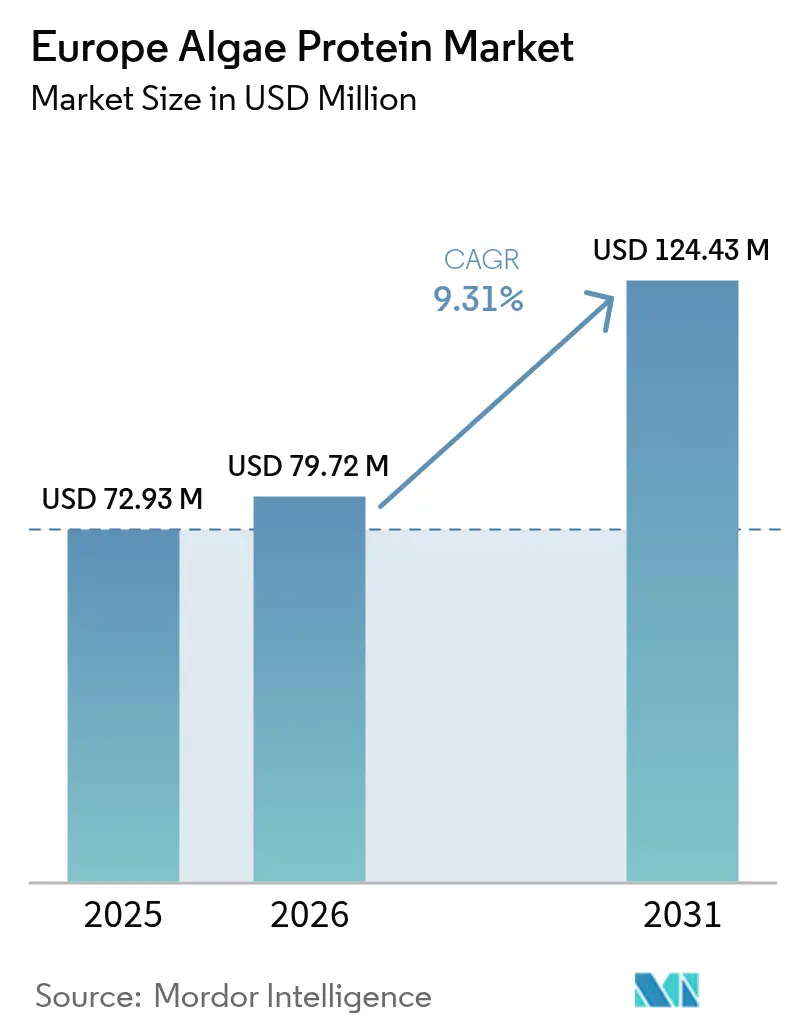
| Base Year Market Size (2025) | USD 72.93 Million |
| Market Size (2026) | USD 79.72 Million |
| Market Size (2031) | USD 124.43 Million |
| Growth Rate (2026 - 2031) | 9.31 % |
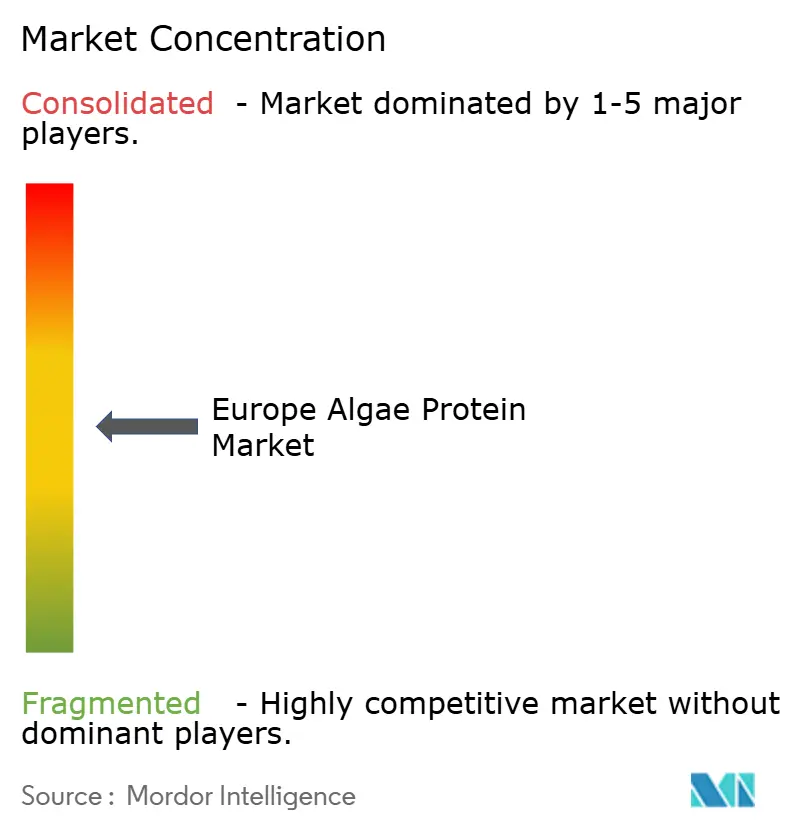
| Market Concentration | Medium |
Major Players *Disclaimer: Major Players sorted in no particular order Image © Mordor Intelligence. Reuse requires attribution under CC BY 4.0. | |
Europe Algae Protein Market Analysis by Mordor Intelligence
The European algae protein market size in 2026 is estimated at USD 79.72 million, growing from 2025 value of USD 72.93 million with 2031 projections showing USD 124.43 million, growing at 9.31% CAGR over 2026-2031. In February 2024, the European Commission approved more than 20 algae species for food use, reducing commercial timelines and industry costs [1]. This regulatory nod is propelling the adoption of algae protein across diverse sectors. Meanwhile, innovations in photobioreactor designs and cell-wall disruption methods are further driving down production expenses. As consumers increasingly gravitate towards low-carbon diets, demand for algae protein is surging, especially in bakery items, dairy alternatives, and meat substitutes. This trend is prompting manufacturers to integrate algae protein into a wide array of products, from foods and beverages to supplements and dairy alternatives. Germany, with its robust ingredient manufacturing base, leads regional sales, while Spain, benefiting from Mediterranean cultivation, showcases the most rapid growth.
Key Report Takeaways
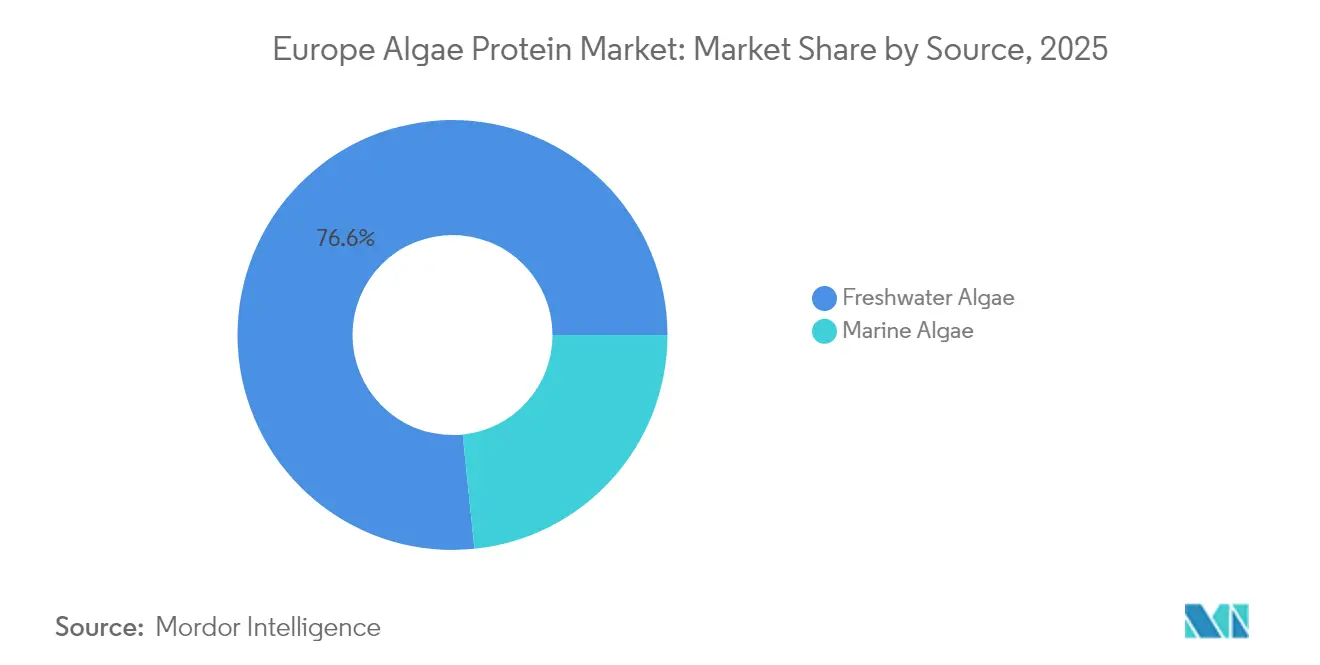
- By source, freshwater algae led with 76.63% of the European algae protein market share in 2025; marine algae is projected to grow at a 9.96% CAGR through 2031.
- By type, spirulina held 56.02% revenue share in 2025, while chlorella is expected to expand at a 10.08% CAGR by 2031.
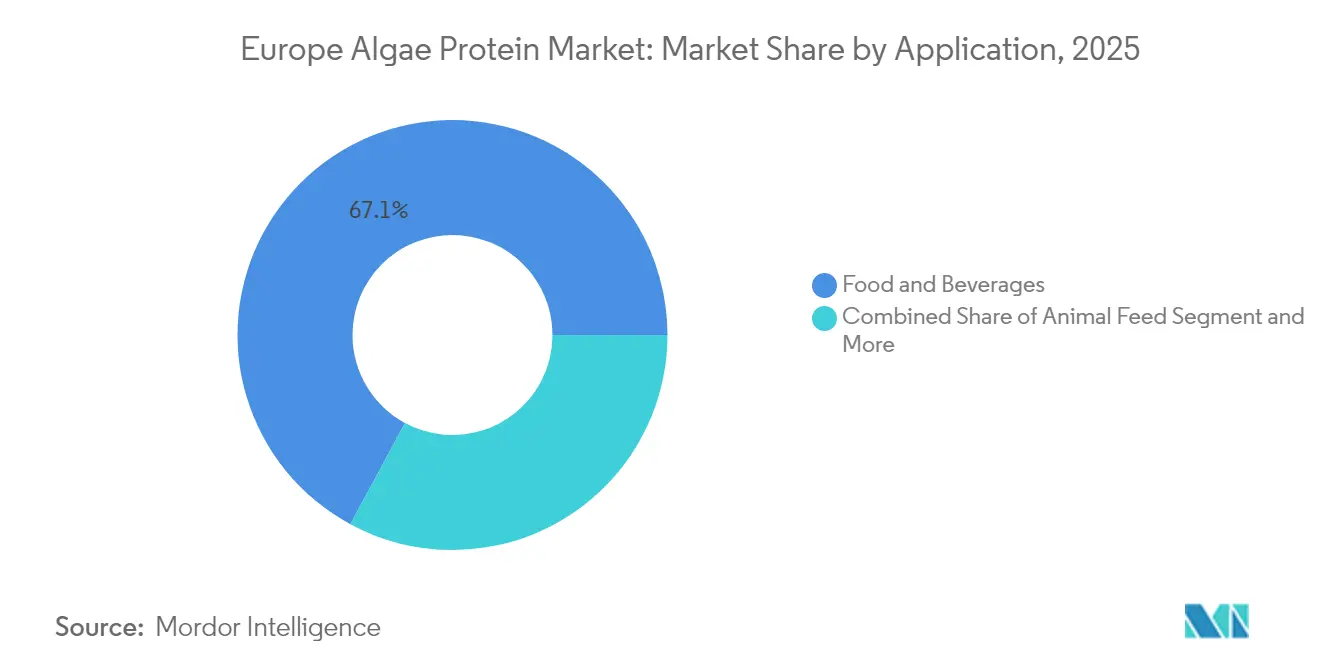
- By application, food and beverage accounted for 67.12% of the European algae protein market size in 2025 and is forecast to advance at a 10.28% CAGR.
- By geography, Germany commanded an 18.05% share of the European algae protein market size in 2025; Spain is set to register a 9.56% CAGR by 2031.
Note: Market size and forecast figures in this report are generated using Mordor Intelligence’s proprietary estimation framework, updated with the latest available data and insights as of 2026.
Europe Algae Protein Market Trends and Insights
Drivers Impact Analysis*
| Driver | (~) % Impact on CAGR Forecast | Geographic Relevance | Impact Timeline |
|---|---|---|---|
| High demand for plant-based food and supplement | +2.1% | Germany, Netherlands, France | Medium term (2-4 years) |
| Technological advancements in algae cultivation | +1.8% | Netherlands, Denmark, Germany | Long term (≥ 4 years) |
| Expansion in functional foods and nutraceuticals | +1.5% | Germany, France, Spain | Medium term (2-4 years) |
| Rising adoption of sustainable proteins | +1.3% | European Union-wide, strongest in Nordic countries | Long term (≥ 4 years) |
| Regulatory approvals for novel food ingredients | +1.0% | European Union-wide regulatory harmonization | Short term (≤ 2 years) |
| Rise of vegan sports-nutrition powders | +0.8% | Germany, United KIngdom, Netherlands | Medium term (2-4 years) |
| Source: Mordor Intelligence | |||
High demand for plant-based food and supplements
Europe's surging appetite for plant-based foods and supplements is propelling the algae protein market, with applications spanning various industries. As consumers pivot towards sustainable, allergen-free, and nutrient-dense substitutes for animal protein, algae, especially spirulina and chlorella, are emerging as favorites. These algae boast a rich profile, packed with protein, essential amino acids, vitamins, and antioxidants. This rising preference dovetails with Europe's overarching sustainability and climate objectives, given that algae demand significantly less land, water, and energy than conventional crops or livestock. Furthermore, a surge in investments in alternative protein sources across Europe bolsters this market's expansion. Highlighting this trend, the Good Food Institute reported investments in alternative proteins in Germany amounted to EUR 134 million in 2024 [2]. Reflecting this burgeoning demand, the food and beverage sector is weaving algae protein into an array of products, from meat alternatives and protein bars to dairy-free yogurts, snacks, and beverages, tapping into the expanding vegan and flexitarian demographic.
Technological advancements in algae cultivation
The algae protein market is expanding through innovations in cultivation methods that focus on increasing yields, reducing production costs, and scaling operations. The implementation of closed-loop photobioreactor systems represents a significant technological advancement. These systems provide controlled environments that optimize light exposure, CO₂ levels, and nutrient distribution, resulting in higher biomass productivity compared to traditional open pond methods. The compact design of these systems enables efficient production for food, animal feed, and nutraceutical applications. In Germany, CellDEG GmbH's ultra-high-density thin-layer PBRs, with membrane-mediated CO₂ delivery, achieve impressive biomass concentrations over 30 g/L and daily productivity of around 10 g/L. Moreover, techniques in genetic engineering and strain selection have led to the cultivation of high-protein microalgae, such as Chlorella and Spirulina, boasting enhanced nutritional profiles and quicker growth. The rise of artificial intelligence (AI) and sensor-based monitoring further refines this process, enabling real-time adjustments for peak efficiency. Such advancements bolster the appeal of algae protein, making it a preferred choice over traditional proteins and paving the way for its broader acceptance in European food, aquafeed, and nutraceutical markets.
Expansion in functional foods and nutraceuticals
European consumers prioritize health, making them receptive to algae proteins, particularly those derived from Chlorella and Spirulina. These algae are packed with essential amino acids, antioxidants, omega-3 fatty acids, and bioactive compounds. As the demand for functional foods, known for their immune-boosting, anti-inflammatory, and detoxifying benefits, grows, these algae-based ingredients find their way into protein bars, smoothies, supplements, and fortified drinks. The market's expansion is further fueled by a surge in companies venturing into food supplement production. This momentum is bolstered by the European Union's regulatory endorsement of clean-label and novel foods, streamlining the introduction of algae-based products with health claims. Moreover, Europe's vegan and flexitarian movements, coupled with rising concerns over the environmental impact of animal protein, spotlight algae as a sustainable, low-carbon protein alternative.
Rising adoption of sustainable proteins
In Europe, the algae protein market is gaining momentum, driven by a collective push from consumers, manufacturers, and policymakers toward sustainable and eco-friendly alternatives to traditional proteins. Algae proteins stand out for their sustainability: they demand far less land, water, and energy than conventional crops or livestock. Moreover, advanced production systems, such as closed-loop photobioreactors, can harness waste CO₂ and reclaimed water, further minimizing their environmental footprint. With growing awareness of climate change and biodiversity concerns, European consumers are gravitating towards proteins that champion a low-carbon, circular economy, positioning algae as a prime contender. Highlighting this trend, a 2024 survey by the Food Standards Agency revealed that about 27% of respondents in England, Wales, and Northern Ireland expressed significant concern over sustainable food production [3]. On the regulatory front, both governments and the EU are championing sustainable protein innovations. Initiatives like the Farm to Fork Strategy and the European Green Deal underscore the importance of alternative protein development and bolster funding for algae-centric research. This backing has catalyzed a surge in investments and product innovations, spanning from meat substitutes and dairy alternatives to functional food ingredients, all integrating algae protein for its sustainability and nutritional benefits.
Restraints Impact Analysis*
| Restraint | (~) % Impact on CAGR Forecast | Geographic Relevance | Impact Timeline |
|---|---|---|---|
| Sensory acceptance gap such as odor, flavor, and texture | -1.7% | European Wide-wide, particularly Northern Europe | Medium term (2-4 years) |
| High production costs | -1.4% | Germany, Netherlands, France | Long term (≥ 4 years) |
| Limited consumer awareness | -1.1% | Eastern Europe, Southern Europe | Short term (≤ 2 years) |
| Competition from more established plant protein sources | -0.9% | Germany, France, United Kingdom | Medium term (2-4 years) |
| Source: Mordor Intelligence | |||
Sensory acceptance gap such as odor, flavor and texture
The sensory characteristics of algae protein present significant barriers to consumer acceptance, particularly its earthy, marine-like odor, bitter or grassy taste, and chalky or gritty texture. These attributes are particularly problematic in beverages, snacks, and dairy alternatives. European consumers generally prefer milder, neutral protein sources such as soy or pea, making the adoption of algae protein challenging in the functional food and sports nutrition markets, where taste and texture directly impact consumer repurchase decisions. European food technology companies are investing in solutions including deodorization technologies, microencapsulation, and blending techniques to address these sensory issues. However, these methods show variable results and increase production costs. Despite the technological advances, the persistent sensory issues continue to limit algae protein's integration into mainstream food products, affecting its growth in the European protein market.
High production costs
Algae offer sustainability and nutritional benefits, but converting them into protein-rich ingredients requires expensive technologies, including photobioreactors, controlled harvesting, and energy-intensive drying and extraction processes. These high costs result in more expensive algae protein compared to established plant proteins like soy or pea, limiting its market competitiveness. For instance, CellDEG employs high-density thin-layer photobioreactors, requiring significant capital investment in construction and maintenance. While their technology improves biomass yield, its complexity increases energy and operational costs, impacting overall production expenses. Additionally, strict quality control requirements, specialized infrastructure needs, and skilled workforce demands further increase costs. The financial impact is heightened by current production facilities' limited scale, preventing them from achieving the economies of scale that traditional protein producers benefit from. As a result, manufacturers transfer these costs to consumers, restricting algae protein primarily to premium and niche markets. Without technological advancements and improved scale efficiencies to reduce production costs, algae protein's high price point will continue to hinder its broader adoption in European markets.
*Our forecasts treat driver/restraint impacts as directional, not additive. The impact forecasts reflect baseline growth, mix effects, and variable interactions.
Segment Analysis
By Source: Freshwater species dominates while marine algae gains momentum
Freshwater species dominated the European algae protein market with 76.63% share in 2025, primarily through spirulina and chlorella cultivation. Marine microalgae, including Nannochloropsis, are growing at a 9.96% CAGR, driven by European Union authorization of edible seaweeds and increased demand for bioactive polysaccharides. In controlled freshwater environments such as ponds and photobioreactors, species like Spirulina and Chlorella thrive under carefully managed conditions, including nutrient levels, temperature, and light exposure. This controlled cultivation has established freshwater algae as a primary source for commercial protein products, supported by established supply chains and regulatory frameworks in Europe.
Marine algae, including seaweed and microalgae, are emerging as significant protein sources. Their nutritional composition features bioactive compounds like omega-3 fatty acids, antioxidants, and polysaccharides, making them valuable for functional foods and nutraceutical applications. Marine species cultivation in coastal or offshore locations offers scalability benefits and reduces freshwater usage, aligning with European environmental priorities. Advancements in farming and processing techniques are improving yields and product quality. These developments position marine algae to expand their market presence, complementing freshwater algae production and contributing to the growth of Europe's algae protein market.

By Type: Chlorella accelerates despite spirulina leadership
Spirulina held a 56.02% share of the European algae protein market in 2025, supported by its complete amino acid profile and prominence in sports nutrition products. Chlorella is experiencing faster growth, with a projected CAGR of 10.08%. Spirulina contains 65-70% protein concentration and includes essential amino acids, B-vitamins, and antioxidants such as phycocyanin. Its versatility in various food applications, including dietary supplements, smoothies, and energy bars, has strengthened its position in European health food products. Additionally, Spirulina's cultivation in controlled freshwater environments produces high biomass, making it more cost-effective and scalable compared to other algae varieties.
Chlorella is gaining prominence in Europe due to technological advancements in processing that address its limitations. With protein content comparable to Spirulina and higher chlorophyll levels, Chlorella is increasingly used in clean-label and vegan products for its detoxification and immune system benefits. For instance, Allmicroalgae – Natural Products S.A. produces premium Chlorella vulgaris strains in photobioreactors, achieving protein concentrations above 60%. Their processing techniques enhance digestibility and reduce the natural bitter taste, expanding their applications in food products and supplements.
By Application: Food and Beverage drives dual leadership
Food and beverage manufacturers dominated the European algae protein market with a 67.12% share in 2025, with growth projected at a CAGR of 10.28% through 2031. European consumers increasingly seek plant-based, high-protein, and clean-label products, making algae protein an attractive option due to its complete amino acid profile, natural origin, and reduced environmental footprint compared to animal and other plant proteins. In March 2025, the European Algae Biomass Association, through EU4Algae Fora, implemented a "Protocol to Apply for a Novel Food Dossier" to simplify the regulatory process for algae-based foods within the EU's Novel Food framework. This regulatory advancement has enhanced the integration of algae protein into functional foods, including protein bars, meal replacements, snacks, and dairy alternatives.
Furthermore, food manufacturers are harnessing advancements in flavor masking, encapsulation, and texturizing technologies. These innovations have addressed past challenges related to the taste and texture of algae protein, enhancing its appeal and versatility in processed and ready-to-eat items. With the European Union's backing on novel foods and the rising recognition of algae as a sustainable protein, requiring minimal land and water, its integration into food and beverage offerings is gaining momentum.
Geography Analysis
Germany held an 18.05% share of Europe's algae protein market in 2025, supported by its established ingredient supply chains and substantial public funding for alternative proteins. Spain, projected to grow at a 9.56% CAGR during 2026-2031, benefits from its outdoor pond systems with low energy requirements. Germany's research institutions and startups specializing in alternative proteins, particularly algae, receive support through government sustainability programs and EUropean Union funding for advancement in biotechnology, food innovation, and sustainable agriculture. In May 2025, six Fraunhofer Institutes (IME, IVV, IGB, and others) launched 'FutureProteins', implementing specialized photobioreactor systems for continuous algae cultivation throughout the year. The initiative develops new food products, including burgers, milk alternatives, and seaweed beer, by combining algae with plant and fungal proteins while focusing on integrated production and processing.
The Netherlands has emerged as a pivotal scale-up hub. Here, modular photobioreactors, set up in repurposed greenhouse bays, facilitate year-round algae cultivation under controlled lighting. Additionally, Rotterdam's port logistics ensure swift distribution across Europe. Corbion's strategic equity investments further bolster the market position of smaller Dutch innovators.
Spain is emerging as a key player in Europe's algae protein market. The country's climate, particularly in coastal and southern regions, provides optimal conditions for large-scale algae cultivation. Spanish companies are increasing their algae farming operations across marine and freshwater species, supported by government and EU funding initiatives focused on circular bioeconomy and aquaculture development. In a significant development, Spanish biotech startup Microalgas Future established Europe's largest microalgae R&D and production facility in Navarra. The project, with initial funding of EUR 4 million and a planned total investment of EUR 30 million, will span 50,000 m². The facility aims to produce 60 t/year of spirulina, along with haematococcus and Schizochytrium biomass for food, cosmetics, and omega-3 markets. This facility demonstrates Spain's growing influence in the algae protein industry. The country's position is further strengthened by increasing algae incorporation in Mediterranean diets, expanding export-focused production, and growing investments in food technology.
Regulatory Landscape
In the European Union, most algae-derived proteins and algae-based ingredients used in foods and supplements fall under the Novel Food framework (Regulation (EU) 2015/2283), which requires EFSA safety assessment and EU authorization prior to commercialization through inclusion in the Union list of novel foods. In February 2024, the European Commission approved more than 20 algae species for food use, which reduced commercialization timelines for companies moving from pilot-scale supply to branded food and supplement launches.
Regulatory implementation continues to expand through ingredient-specific authorizations and specification updates, supporting clearer compliance pathways for suppliers and end users. In April 2024, Commission Implementing Regulation (EU) 2024/1046 authorized beta-glucan from Euglena gracilis microalgae as a novel food, while Commission Implementing Regulation (EU) 2024/1026 updated specifications for astaxanthin-rich oleoresin from Haematococcus pluvialis. Separately, the EU Algae Initiative (COM(2022) 592) assigns the European Commission and CEN a role in developing standardized testing, quantification, and extraction methods for algae ingredients and contaminants by end-2026, reinforcing harmonized quality and safety benchmarks across member states.
Value Chain Analysis
The Europe algae protein value chain covers strain development and inoculum preparation, cultivation (open ponds and closed photobioreactors), harvesting and dewatering, drying or wet-biomass handling, cell-wall disruption and extraction, and formulation into food and supplement-grade ingredients (powders, concentrates, and texturized inputs). A noticeable share of industry activity is concentrated among integrated cultivator-processors, including Aliga Microalgae, Algenfarm Kloetze, and A4F, which combine cultivation with downstream processing to control quality and meet food-grade specifications. Specialty ingredient processors in clusters across Belgium, the Netherlands, Germany, and Denmark focus on purification, drying, and application tailoring.
Upstream inputs include CO2, nutrients, energy, and water, along with photobioreactor hardware. Midstream constraints center on high-cost drying and extraction steps, sensory management, and consistent specification control for food applications. Europe also operates as a technology and processing hub with some meaningful reliance on imported biomass for large-scale operations, creating sensitivity to logistics and input-cost volatility. Sector coordination and pipeline development are supported by EU4Algae (launched 2022, 1,200+ members), and capacity-building projects such as BIG-ALGAE target macroalgae productivity and extraction of proteins and polysaccharides to strengthen local feedstock availability for European processors.
Competitive Landscape
The European algae protein market structure is moderately fragmented, providing opportunities for new entrants. Companies like Corbion and Roquette have adopted vertical integration strategies, controlling operations from photobioreactors to downstream texturizing processes. This integration encompasses cultivation, harvesting, extraction, and protein isolation steps. This strategy allows these companies to maintain quality control across the supply chain. Additionally, it helps them achieve cost efficiencies and strengthen their competitive position in the market.
Companies are forming strategic partnerships to increase production capacity and enhance market presence. These collaborations often involve sharing technological expertise, research facilities, and distribution networks. MicroHarvest's continuous-harvest system at its Hamburg demonstration plant, which processes 10 tons daily, demonstrates the focus on operational efficiency and cost reduction. The system incorporates advanced monitoring systems, automated harvesting mechanisms, and quality control protocols to maintain consistent production standards.
Research and development efforts concentrate on improving product quality and reducing production costs. The increase in patents for vortex photobioreactors, enzymatic dechlorophyllization, and high-pressure homogenization indicates the industry's efforts to commercialize algae protein production. These technological advancements aim to address challenges in protein extraction efficiency, taste profile enhancement, and scalability of production processes. Companies are also investing in developing specialized strains of microalgae with higher protein content and improved nutritional profiles.
Europe Algae Protein Industry Leaders
-
Corbion Biotech, Inc.
-
Roquette Klotze GmbH & Co. KG
-
Phycom BV
-
Duplaco BV
-
Algama Foods
- *Disclaimer: Major Players sorted in no particular order
Market Opportunities and Future Outlook
Regulatory throughput and standardization efforts are creating room for a broader set of authorized algae-derived ingredients, along with more predictable specifications for buyers. The February 2024 European Commission approval of more than 20 algae species for food use, alongside the Novel Food pathway under Regulation (EU) 2015/2283 and ingredient-specific actions such as the April 2024 authorization of beta-glucan from Euglena gracilis (Implementing Regulation (EU) 2024/1046), supports product developers seeking to move beyond supplements into mainstream food matrices. On the industry side, the European Algae Biomass Association, through EU4Algae Fora, introduced a Protocol to Apply for a Novel Food Dossier in March 2025, aligning with the market need for faster and more repeatable dossier preparation as new algae protein formats reach food and beverage manufacturers.
A second opportunity track is coming from EU-backed scale-up and cost-down programs that address processing bottlenecks rather than cultivation alone, supporting commercial volumes and more competitive unit economics for food and beverage use (the largest application segment). CleanAlgae2Value (Oct 2025 to Sep 2029) is developing Micro-Algae Biorefinery Upgrade Modules (MABUM) for cost-effective extraction of proteins and oils, while MULTIPLY (project update in April 2026) and ALLIANCE (active from 2025) focus on standardizing biorefinery processes and expanding multi-product, solvent-free processing routes. BIG-ALGAE (launched May 2026) is also focused on European macroalgae productivity and downstream extraction, supporting a more local feedstock base for processors supplying protein ingredients into bakery, dairy-alternative, and meat-alternative formulations.
Recent Industry Developments
- June 2026: Corbion released an updated life cycle assessment for its algae-derived omega-3 DHA portfolio, reporting an 18-23% lower climate change impact versus its 2021 data. The disclosure strengthens supplier differentiation for algae-based ingredients in Europe where food brands increasingly request quantified sustainability credentials for formulation and procurement decisions.
- July 2025: Corbion secured Chinese regulatory approvals for algae-derived Omega-3 DHA products for both human and animal nutrition. The approvals expand the companys global market access and support scale economics that can influence pricing, capacity utilization, and ingredient availability for European customers.
- December 2024: Algenuity opened its European commercial headquarters in Rotterdam to expand its footprint in European biotech and food-tech markets while keeping R&D in the United Kingdom. Locating commercial operations in a major logistics and distribution hub supports faster customer servicing across Europe and strengthens routes to market for algae-based ingredient portfolios.
Research Methodology Framework and Report Scope
Market Definition and Coverage
This market covers revenue generated from algae-derived protein ingredients and finished protein products sold across Europe for human nutrition and animal feed uses, counted at the point of sale in the value chain and reported in USD.
Scope exclusions: We exclude non-protein algae extracts (for example pigments, omega-3 oils, and hydrocolloids) and algae biomass sold mainly for energy or fertilizer use.
Segmentation Overview
- By Source
- Freshwater Algae
- Marine Algae
- By Type
- Spirulina
- Chlorella
- Others
- By Application
- Food and Beverages
- Bakery
- Dairy and Dairy Alternative Products
- Meat/Poultry/Seafood and Meat Alternative Products
- Sport/Performance Nutrition
- Elderly Nutrition and Medical Nutrition
- Animal Feed
- Food and Beverages
- By Geography
- United Kingdom
- Germany
- France
- Italy
- Netherlands
- Spain
- Rest of Europe
Data Sources, Market Sizing, and Validation
Desk Research
Desk research was used to set the factual base and avoid building the model only from opinions. We reviewed public statistics and regulatory references such as Eurostat for trade and manufacturing signals, EFSA and the EU Novel Food Catalogue for approval context, and FAOSTAT where relevant for feed and agriculture linkages. We also checked patent databases to understand commercialization pace, and peer-reviewed journals for protein yield, cultivation methods, and processing loss assumptions.
Along with that, we used company filings, investor presentations, and reputable press to map product positioning and the likely split of demand between human nutrition and feed. Public association websites and conference proceedings helped cross-check what volumes and capacities are realistically being discussed in Europe. The desk sources mentioned above are illustrative and not exhaustive, since many other references were used to collect, validate, and clarify data points during the study.
Primary Interviews and Surveys
Primary work was used to test pricing and adoption assumptions that are not fully visible in public sources, especially for spirulina and chlorella products across food, sports nutrition, medical nutrition, and feed. We spoke with ingredient suppliers, processors, distributors, and downstream buyers, and the discussions were spread across major European consuming and production countries so that regional differences were captured. Where answers did not align, we re-checked the underlying driver, for example realized price per kg of protein rather than list price, before finalizing the model.
Distribution of primary research fieldwork respondents
| Company type | Respondent position |
|---|---|
| Top tier: 25% | CXOs: 12% |
| Mid tier: 57% | Functional/Unit leaders: 37% |
| Smaller Players: 18% | Managers: 51% |
Market-Sizing & Forecasting
The market size is built using a top-down approach where Europe demand is reconstructed from a defined application pool and then filtered through penetration and usage intensity for algae protein. In practice, the model starts from end-use demand cues in food and beverage, sports nutrition, elderly and medical nutrition, and animal feed, and then applies algae protein inclusion rates validated through interviews.
To keep totals realistic, we corroborated outputs with selective bottom-up approximations, such as sampled supplier revenue checks, channel checks in key countries, and price per kg of protein multiplied by estimated volumes for a few well-tracked sub-applications. Key inputs used in the model include product mix between spirulina and chlorella, average protein content assumptions by type, import and export movements for algae-based ingredients, realized pricing by application, which varies materially between feed and human nutrition, and country-level adoption momentum in formulated foods and supplements. When bottom-up information was missing for smaller niches, we handled the gap by using conservative penetration ranges and then tightening them based on expert feedback.
For forecasting, scenario analysis was used because the market is still developing and outcomes depend on a few clear drivers such as regulatory clarity, capacity additions, and price normalization as scale improves. The final forecast path was chosen after checking that implied volume growth and ASP changes remained consistent with what market participants expect over the next few years.
Data Validation & Update Cycle
Validation is done in steps so that one optimistic assumption does not cascade across the full model. We compare the derived market totals against independent signals, such as trade direction, reported capacity expansions, and implied consumption per key application, and then we run variance checks at country and application levels. Any outliers are reviewed again, and in some cases respondents are re-contacted to confirm whether the variance is driven by a one-time contract, a temporary price spike, or a scope mismatch.
Before sign-off, the model and assumptions go through an internal analyst review so calculation logic and unit conversions are checked end to end. Reports are refreshed annually, and interim updates are made when material events occur, such as major regulatory changes or notable supply additions. Right before delivery, a final pass is completed so the numbers reflect the most recent public updates and validated market feedback.
Mordor Intelligence's Europe Algae Protein Market Size Measured Against Other Published Estimates
Published estimates for Europe algae protein can look far apart because the category boundary is not consistent, and because pricing is treated differently between ingredient-grade protein and finished nutrition products. Differences also show up when one source uses a different base year or converts currencies using a different point-in-time rate, which can swing the market by a noticeable amount.
In this study, the refresh cadence and the timing of USD conversion are aligned to the same base year, and the ASP logic is tied back to realized pricing checks by application. For that reason, the 2025 figure from Mordor Intelligence lands below some broader revenue-based views that appear to include more finished product value.
Benchmark comparison
| Source | Market Size | Gaps in Research Methodology |
|---|---|---|
| Mordor Intelligence | USD 72.93 M (2025) | |
| Global Consultancy A | USD 238.40 M (2024) | Uses an earlier base year and is presented as revenue, which can blend ingredient sales with higher-value finished products, and the currency timing can differ from a single-year conversion. |
| Industry Publisher B | USD 1.04 B (2025) | The scale suggests a much wider scope boundary, likely counting adjacent algae-based nutrition and supplement revenues beyond protein-focused pricing, with limited visibility on how volume and ASP were validated. |
The table shows that most of the spread comes from scope and pricing choices, not small differences in growth expectations. When the market is kept specific to algae protein and then linked to clear demand pools, realistic inclusion rates, and application-level pricing checks, the resulting size is easier to trace, review, and update in a repeatable way.
Key Questions Answered in the Report
What is the current size of the Europe algae protein market?
The market stands at USD 79.72 million in 2026 and is projected to hit USD 124.43 million by 2031.
Which country leads sales?
Germany leads with an 18.05% share, supported by robust food-processing capabilities and strong R&D infrastructure.
What segment grows the fastest?
Food and beverage applications grow the quickest at a 10.28% CAGR, reflecting wider use in meat substitutes, bakery and dairy-alternative products.
Why are marine algae gaining traction?
European Union regulatory clearance for seaweed species and their richer portfolio of bioactives such as fucoidan are driving a 9.96% CAGR for marine algae.