
Emphysema Treatment Market Size and Share
Market Overview
| Study Period | 2020 - 2031 |
|---|---|
| Market Size (2026) | USD 5.41 Billion |
| Market Size (2031) | USD 6.84 Billion |
| Growth Rate (2026 - 2031) | 4.80 % |
| Fastest Growing Market | Asia-Pacific |
| Largest Market | North America |
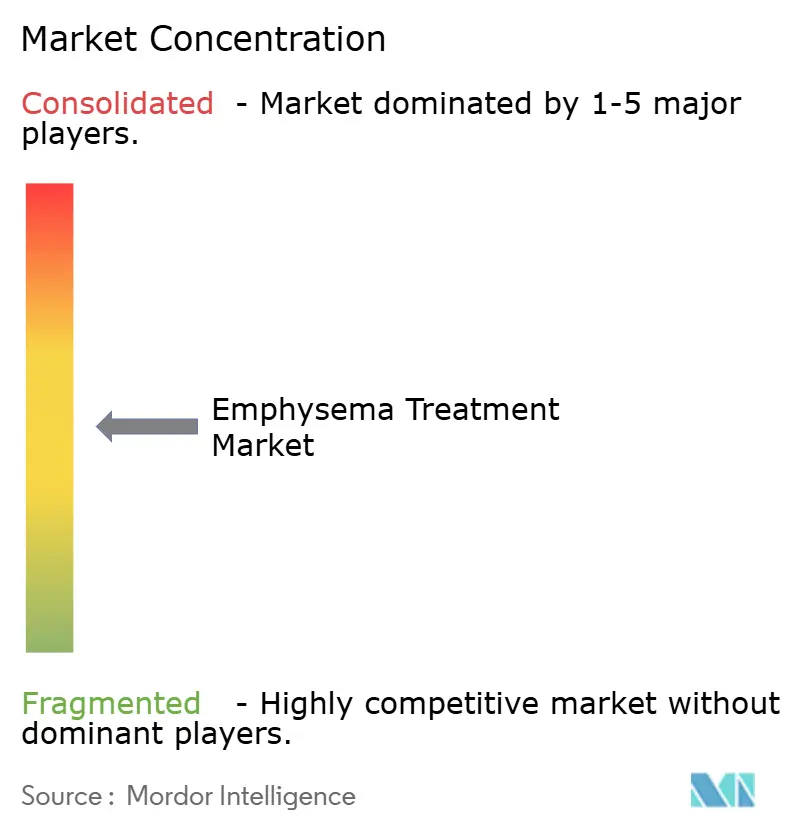
| Market Concentration | Medium |
Major Players *Disclaimer: Major Players sorted in no particular order Image © Mordor Intelligence. Reuse requires attribution under CC BY 4.0. | |
Emphysema Treatment Market Analysis by Mordor Intelligence
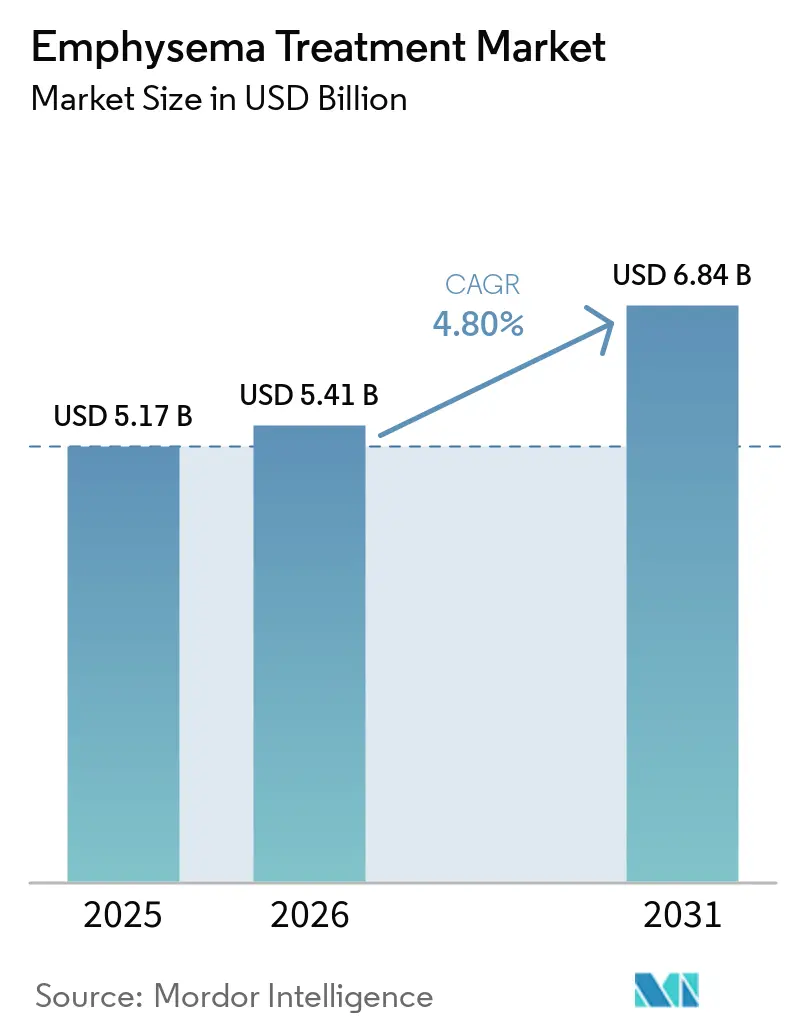
The Emphysema Treatment Market size is expected to grow from USD 5.17 billion in 2025 to USD 5.41 billion in 2026 and is forecast to reach USD 6.84 billion by 2031 at 4.80% CAGR over 2026-2031.
The emphysema treatment market includes medicines, oxygen therapy, bronchoscopic interventions, and surgical lung volume reduction procedures. Treatment is increasingly tailored to disease phenotypes, particularly for patients with eosinophilic COPD who have not responded adequately to standard maintenance therapy. U.S. approvals of ensifentrine, dupilumab, and mepolizumab between June 2024 and May 2025 reshaped treatment selection and specialist prescribing patterns. Device companies use quantitative CT analysis to identify patients who may benefit from bronchoscopic lung volume reduction, while reimbursement remains a constraint as coverage policies across Europe and Asia-Pacific have not always kept pace with clinical approvals.
Key Report Takeaways
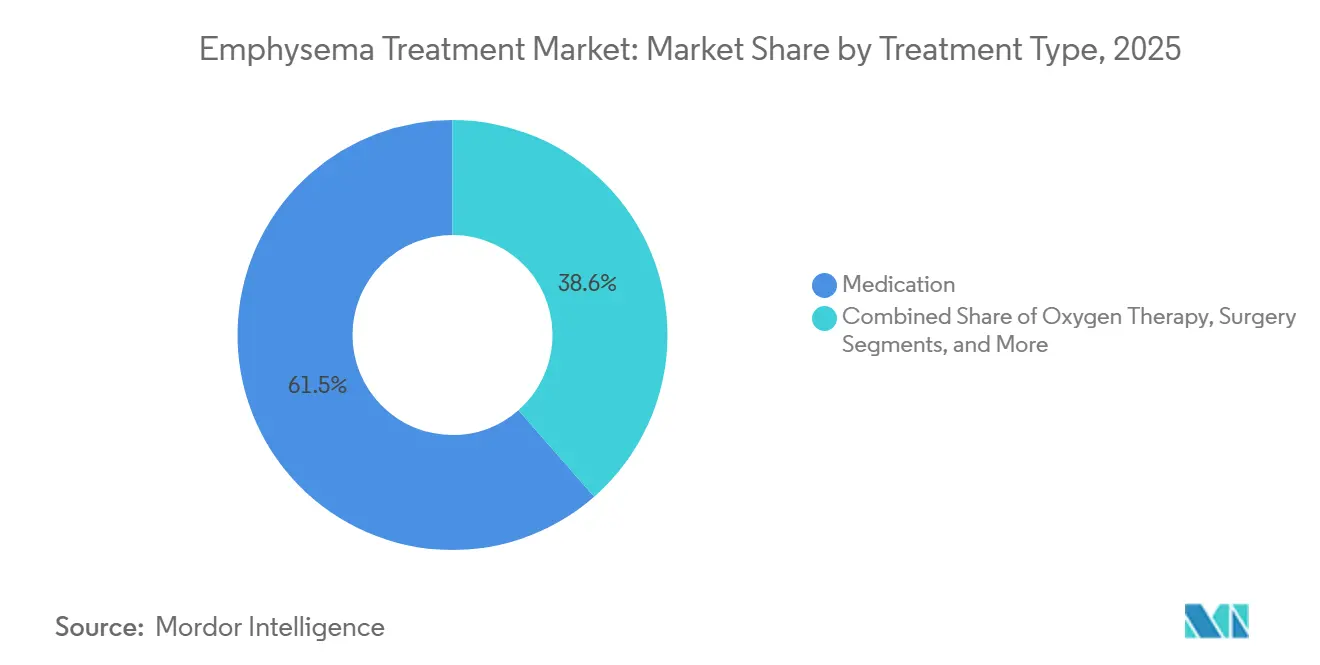
- By treatment type, medication held 61.45% of the emphysema treatment market share in 2025, while surgery is projected to grow at a CAGR of 5.22% through 2031.
- By emphysema phenotype, centriacinar emphysema held 58.34% of revenue in 2025, while panacinar emphysema is projected to grow at a CAGR of 7.56% through 2031.
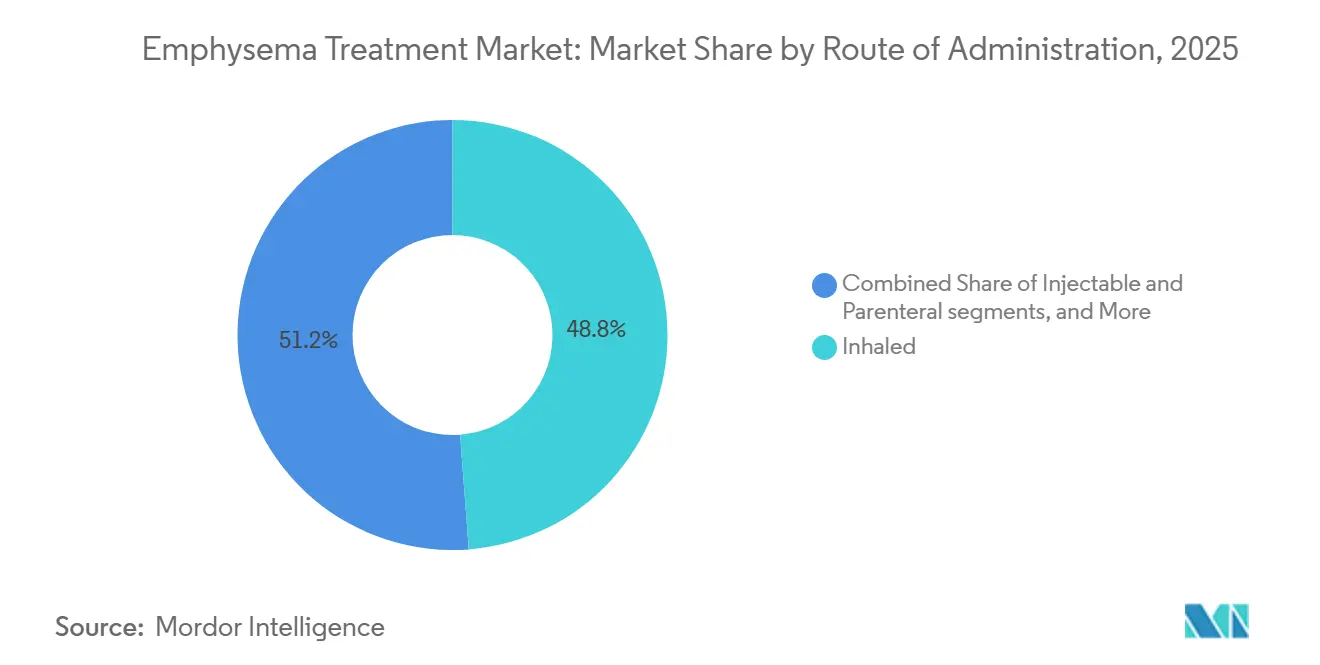
- By route of administration, inhaled therapies held 48.79% of revenue in 2025, while oral therapies are projected to grow at a CAGR of 6.98% through 2031.
- By end user, hospitals and clinics held 61.23% of revenue in 2025, while specialty pulmonary centers are projected to grow at a CAGR of 6.20% through 2031.
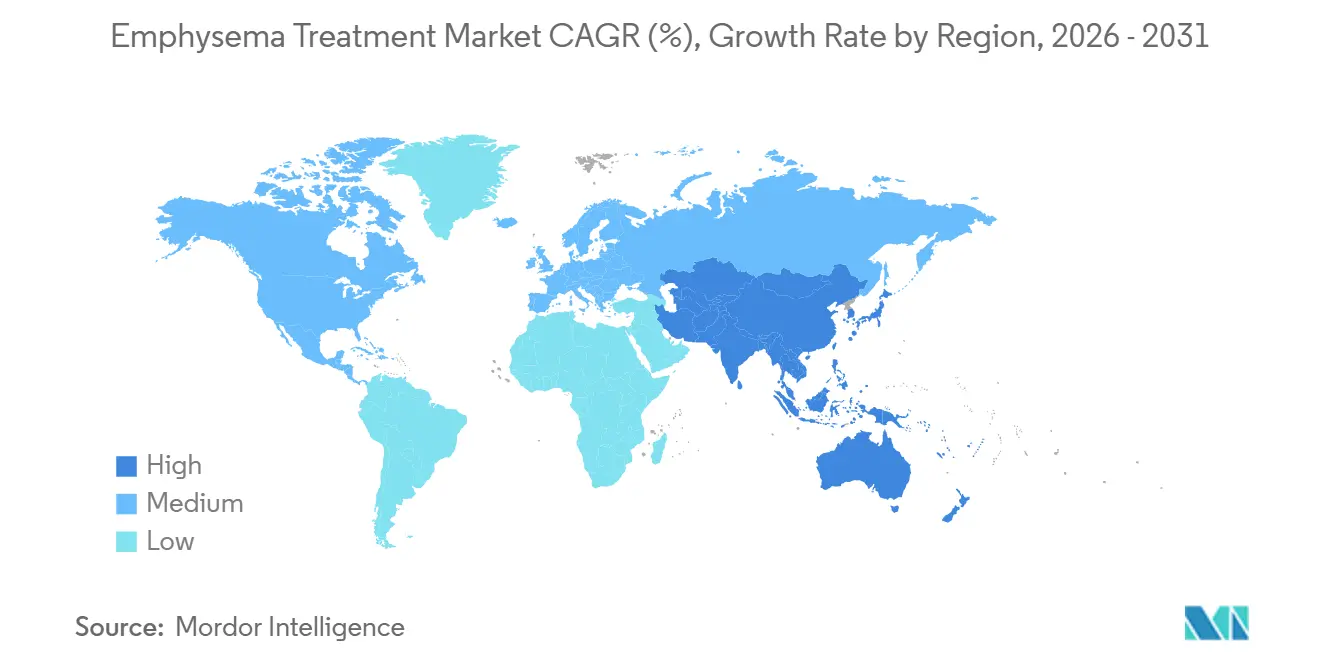
- By geography, North America held 40.34% share in 2025, while the Asia-Pacific is projected to grow at a 6.45% CAGR through 2031.
Note: Market size and forecast figures in this report are generated using Mordor Intelligence’s proprietary estimation framework, updated with the latest available data and insights as of January 2026.
Market Trends and Insights
Drivers Impact Analysis of Emphysema Treatment Market*
| DRIVER | (~) % IMPACT ON CAGR FORECAST | GEOGRAPHIC RELEVANCE | IMPACT TIMELINE |
|---|---|---|---|
| Rising COPD and emphysema diagnoses | +1.1% | Global, with the highest incremental burden in China, India, and Sub-Saharan Africa | Short term (≤ 2 years) |
| Expansion of minimally invasive lung-volume reduction | +0.9% | North America, Western Europe, Japan, and early-stage Asia-Pacific | Medium term (2-4 years) |
| Growth of home-based oxygen and pulmonary rehabilitation | +0.7% | North America, the EU, and Australia | Medium term (2-4 years) |
| Novel anti-inflammatory and PDE3/4 therapies | +1.0% | United States, EU, and Japan, with wider Asia-Pacific reimbursement pending | Short term (≤ 2 years) |
| Earlier CT-based phenotyping and patient referral | +0.5% | North America and the EU | Medium term (2-4 years) |
| Remote monitoring and adherence-linked care pathways | +0.4% | North America, the EU, Australia, and urban Asia-Pacific | Long term (≥ 4 years) |
| Source: Mordor Intelligence | |||
Rising COPD and Emphysema Diagnosis Fuels a Durable Treatment Pipeline
Global COPD prevalence reached 213.4 million cases in 2024, causing 3.7 million deaths annually and ranking among the leading causes of death worldwide. In 2024, only 12% of surveyed residents in China had undergone pulmonary function testing, while India had 55 million people with COPD and accounted for nearly 32% of global COPD deaths amid limited primary-care spirometry access.[1] The WHO projected global COPD cases to rise by 23% by 2050, including a 47.1% increase in incidence among females, while improved diagnosis in China and India could expand treatment demand beyond the forecast period.[2]
Expansion of Minimally Invasive Lung-Volume Reduction Reshapes the Surgical Tier
Bronchoscopic lung-volume reduction expanded procedural capacity in specialist care, supported by a 2025 meta-analysis of nine randomized trials involving 1,352 patients that found endobronchial valves improved FEV1, six-minute walk distance, and quality-of-life scores at 12 months. Pulmonx reported FY2025 revenue of USD 90.5 million, up 8% year over year, with international revenue increasing 23% across more than 25 commercial countries, and had projected 2026 revenue of USD 90 to 92 million with an approximately 75% gross margin. CT-based Chartis and StratX systems became increasingly central to patient eligibility, while the BREATHE-3 trial evaluated the Apreo BREATHE Airway Scaffold in 250 patients across 25 U.S. and European sites and could expand the addressable population by 20%.
Novel Anti-Inflammatory and PDE3/4 Therapies Redefine the Pharmacological Tier
The emphysema treatment market changed in 2024 and 2025 as differentiated therapies entered COPD care. Verona Pharma’s ensifentrine, marketed as Ohtuvayre, became the first inhaled dual PDE3/PDE4 inhibitor approved in June 2024 and improved FEV1 by 87 to 94 mL versus placebo at 12 weeks in the ENHANCE Phase III trials. GSK’s mepolizumab received FDA approval in May 2025 for eosinophilic COPD after the 804-patient MATINEE trial showed a 21% reduction in annualized moderate-to-severe exacerbations versus placebo, while AstraZeneca reported that tozorakimab met primary endpoints in the OBERON, TITANIA, and MIRANDA Phase III trials in 2026, covering more than 3,700 patients.
Growth of Home-Based Oxygen and Pulmonary Rehabilitation Creates a Parallel Care Layer
Home oxygen therapy and remote pulmonary rehabilitation gained importance in the emphysema treatment market. A 2025 systematic review of eight randomized trials involving 1,275 patients found that telehealth-supported home oxygen reduced hospital readmissions and improved health-related quality of life. In June 2025, CMS finalized national Medicare coverage criteria for home mechanical ventilators used for COPD-related chronic respiratory failure, while a 2025 pilot trial involving 100 patients over 18 months found that digital monitoring combined with mobile integrated health services reduced hospitalizations versus a weighted control cohort.
Restraints Impact Analysis of Emphysema Treatment Market*
| RESTRAINT | (~) % IMPACT ON CAGR FORECAST | GEOGRAPHIC RELEVANCE | IMPACT TIMELINE |
|---|---|---|---|
| High lifetime treatment cost and unequal reimbursement | -0.2% | Global, most acute in Asia-Pacific, the Middle East and Africa, and South America | Medium term (2-4 years) |
| Limited spirometry and underdiagnosis in emerging markets | -0.2% | Asia-Pacific, the Middle East and Africa, and South America | Short term (≤ 2 years) to Long term (≥ 4 years) |
| Narrow eligibility for bronchoscopic and surgical procedures | -0.1% | Global | Medium term (2-4 years) |
| Pneumothorax, procedural risk, and post-treatment capacity constraints | -0.1% | Global | Short term (≤ 2 years) to Medium term (2-4 years) |
| Source: Mordor Intelligence | |||
High Lifetime Treatment Cost and Unequal Reimbursement Compress Realizable Growth
Biologic therapies for eosinophilic emphysema cost USD 20,000–40,000 annually in the United States. Outside North America, reimbursement often requires prior authorization, defined blood eosinophil levels, and failure of triple inhaled therapy, limiting patient eligibility. In low- and middle-income countries, annual direct and indirect COPD management costs reach USD 420–600 per patient, while home mechanical ventilators cost USD 8,000–15,000 per unit. These cost barriers concentrate the emphysema treatment market in higher-income countries and make emerging-market growth dependent on reimbursement reforms.
Limited Spirometry Infrastructure Sustains an Underdiagnosis Ceiling Across Emerging Markets
Spirometry remains the diagnostic standard for COPD and emphysema, yet only 31% of patients labeled with COPD in European primary care settings received confirmed testing. The gap is wider across parts of Asia and Africa, where the WHO identified limited diagnostic equipment and access to essential medicines as key system gaps. Insufficient testing delays treatment initiation and increases the risk of inappropriate therapy selection. Improving primary-care diagnostic access in India, Sub-Saharan Africa, and Southeast Asia is critical to expand the commercially treated population.
*Our forecasts treat driver/restraint impacts as directional, not additive. The impact forecasts reflect baseline growth, mix effects, and variable interactions.
Emphysema Treatment Market Segment Analysis
By Treatment Type:
Medication Leads While Surgical Alternatives ScaleMedication accounted for 61.45% of emphysema treatment market revenue in 2025. Bronchodilators, including LAMA, LABA, fixed-dose combinations, and inhaled corticosteroid add-ons, remained the primary maintenance treatment across disease severity levels. Ensifentrine served symptomatic patients whose disease remained uncontrolled on existing bronchodilators without eosinophil-count qualification. Merck completed its acquisition of Verona Pharma in October 2025, while oxygen therapy remained the second-largest treatment sub-segment following the CMS coverage decision for home mechanical ventilation in June 2025.
Surgery was the fastest-growing treatment type, with the emphysema treatment market size for this segment forecast to grow at a CAGR of 5.22% through 2031. The category included bronchoscopic and open surgical lung-volume reduction, with Zephyr Endobronchial Valve procedures expanding across more than 25 commercial countries. Next-generation devices in pivotal trials may broaden access for patients ineligible for current valve-based approaches. Growth was strongest at high-acuity centers, where medication offered limited benefit for some patients with advanced emphysema, while bronchoscopic lung-volume reduction improved FEV1 and 6-minute walk distance within 12 months.

By Emphysema Phenotype:
Panacinar Disease Grows Faster as Genetic Testing ExpandsCentriacinar emphysema accounted for 58.34% of emphysema treatment market revenue in 2025, reflecting its close association with cigarette smoking, the primary exposure history among treated patients. Panacinar emphysema was the fastest-growing phenotype, with a forecast CAGR of 7.56% through 2031, supported by increasing awareness of alpha-1 antitrypsin deficiency and expanded genetic testing. Grifols completed clinical follow-up for its SPARTA Phase III trial, which enrolled 345 participants across 37 sites in 16 countries, and expected topline results by the end of 2026.
The 2025 Canadian Thoracic Society guideline recommended augmentation therapy for eligible patients with a confirmed severe AATD genotype, FEV1 below 80% predicted, and imaging-confirmed emphysema. These criteria supported consistent patient selection and may expand the clinical use of Prolastin-C. Paraseptal emphysema and other phenotypes represented the remaining emphysema treatment market share. Quantitative CT enabled earlier identification than visual radiology alone and may increase their share of treated patients through 2031.
By Route of Administration:
Inhaled Therapies Lead While Systemic Options ExpandInhaled therapies accounted for 48.79% of route-of-administration revenue in 2025, supported by LAMA, LABA, and inhaled corticosteroid combinations delivered through metered-dose inhalers and dry-powder devices. Smart nebulizer platforms for ensifentrine delivery may benefit patients unable to generate sufficient inspiratory flow for certain inhalers. Oral therapies were the fastest-growing route, with a CAGR of 6.98% through 2031. A 2025 meta-analysis of ensifentrine reported an average FEV1 improvement of 90 mL at week 12 versus placebo among 975 treated patients, with benefits sustained at 24 weeks.
The emphysema treatment market size for oral therapies is projected to expand at a CAGR of 6.98% through 2031, supported by pipeline PDE4 inhibitors and systemic biologics. Injectable and parenteral treatments include intravenous A1AT infusions and subcutaneous biologics, including dupilumab, mepolizumab, and tozorakimab. Oxygen therapy and medical gases remain necessary for inpatient management of acute exacerbations. The emphysema treatment market will continue to rely on inhaled therapies, while systemic options will address patients with specific clinical characteristics.
By End User:
Hospitals Retain the Largest Base While Specialty Centers Gain ProceduresHospitals and clinics accounted for 61.23% of end-user revenue in 2025 and remained the primary settings for acute COPD exacerbations, inpatient oxygen management, and open surgical procedures. Specialty pulmonary centers were the fastest-growing end-user group, with a CAGR of 6.20% through 2031. These centers combined bronchoscopy suites, quantitative CT interpretation, and multidisciplinary clinical oversight. Nuvaira treated the first patient in its AIRFLOW-4 Phase III trial in July 2026 at specialized respiratory centers capable of performing bronchoscopic denervation, directing complex procedures and biologic initiation assessments toward these sites.
Specialty pulmonary centers captured the fastest projected expansion within the emphysema treatment market share mix, at a CAGR of 6.20% through 2031. Ambulatory surgical centers gained traction as bronchoscopic lung-volume reduction under moderate sedation demonstrated safety comparable to general anesthesia, and may reduce procedure costs. Homecare settings expanded following the CMS decision in June 2025, while long-term care facilities served an aging emphysema population with limited access to outpatient specialty services. Over the forecast period, homecare and specialty centers are expected to reduce the relative share held by hospitals and clinics.
Geography Analysis
North America Emphysema Treatment Market
North America accounted for 40.34% of the global emphysema treatment market revenue in 2025, supported by high respiratory healthcare spending, established bronchoscopic lung volume reduction programs, and early biologic launches. The June 2025 CMS decision expanded reimbursed access to home mechanical ventilation for COPD-related chronic respiratory failure. Canada increased augmentation therapy use under updated A1AT guidance, while insurance gaps limited access in Mexico.
APAC Emphysema Treatment Market
Asia-Pacific was the fastest-growing regional segment, with a projected CAGR of 6.45% through 2031. China had 100 million COPD patients as spirometry programs expanded. Japan reimbursed bronchoscopic lung volume reduction from December 2023, and MHLW approved dupilumab as the first biologic for COPD in March 2025. India integrated COPD screening into its National NCD Program, while South Korea expanded reimbursement, and Australia participated in the BREATHE-3 and CONVERT II trials.
EMEA and South America Emphysema Treatment Market
Europe was the second-largest regional market and became a two-biologic market for eosinophilic COPD after European Commission approval of mepolizumab in early 2026, alongside dupilumab, approved in July 2024. Germany, the United Kingdom, France, Italy, and Spain generated most regional revenue. The WHO projected a 23% increase in COPD cases in the European Region by 2050 and estimated productivity losses at USD 20.7 billion. Central and Eastern Europe expanded specialist capacity, while biologic reimbursement negotiations lagged Western Europe by 18–24 months. The Middle East, Africa, and South America remained the smallest regions, although GCC countries and Brazil expanded private respiratory endoscopy capacity and access to branded bronchodilators.
Competitive Landscape
The emphysema treatment market was moderately consolidated among large pharmaceutical companies and fragmented in the device segment. AstraZeneca, GSK, Boehringer Ingelheim, Sanofi, and Regeneron competed in biologics and inhaled therapies targeting IL-5, IL-4 and IL-13, and IL-33 pathways. In 2026, AstraZeneca reported that tozorakimab met primary endpoints in three Phase III COPD trials involving more than 3,700 patients and cited potential peak annual sales of USD 3 to 5 billion. Chiesi, Orion, Cipla, Hikma, and Teva competed in generic and branded inhalers, maintaining pricing pressure on established bronchodilator and corticosteroid products.
Merck completed its USD 10 billion acquisition of Verona Pharma in October 2025, adding ensifentrine to its cardiopulmonary portfolio and expanding its international regulatory and commercial capabilities. Companies demonstrating the cost benefits of preventing exacerbations were better positioned in reimbursement discussions across Europe and Asia-Pacific. Pulmonx led the endobronchial valve category, reporting a gross margin of 74.2% and a USD 12 billion total addressable market, while its StratX platform and AI-based lung analysis tools supported patient eligibility decisions and hospital account relationships.
Nuvaira’s dNerva Targeted Lung Denervation platform entered Phase III testing as a one-time outpatient bronchoscopic procedure for airway hyper-responsiveness. ResMed and Philips competed in connected home oxygen and noninvasive ventilation hardware, where remote monitoring capabilities gained importance. The FDA granted Breakthrough Device Designation to Apreo Health’s BREATHE Airway Scaffold, supporting an option beyond the current valve approach. CT analysis added a service and software layer to device sales, while market access and clinical evidence requirements remained key barriers for new device mechanisms.
Emphysema Treatment Industry Leaders
-
AstraZeneca PLC
-
GSK plc
-
Novartis AG
-
Boehringer Ingelheim GmbH
-
Teva Pharmaceutical Industries Ltd.
- *Disclaimer: Major Players sorted in no particular order
Emphysema Treatment Market Companies Covered in this Report
- AstraZeneca
- Boehringer Ingelheim
- Broncus Medical, Inc.
- Chiesi Farmaceutici
- Cipla
- Gala Therapeutics, Inc.
- Grifols
- GlaxoSmithKline
- Hikma Pharmaceuticals
- Koninklijke Philips
- Novartis
- Nuvaira, Inc.
- Olympus
- Orion
- Pfizer
- Pulmatrix, Inc.
- Pulmonx Corporation
- Regeneron Pharmaceuticals
- Resmed
- Sanofi
- Sun Pharmaceuticals Industries
- Teva Pharmaceutical Industries
- Verona Pharma plc
- Viatris
Recent Industry Developments in Emphysema Treatment Market
- July 2026: Nuvaira treated the first patient in the AIRFLOW-4 pivotal Phase III trial of the dNerva Lung Denervation System, enrolling approximately 400 patients with moderate-to-severe COPD.
- April 2026: AstraZeneca’s tozorakimab met the primary endpoint in the MIRANDA Phase III trial involving 1,451 patients, reducing annualized moderate-to-severe COPD exacerbations in former smokers and the overall population.
- March 2026: AstraZeneca reported that tozorakimab met the primary endpoints in the OBERON and TITANIA Phase III trials, involving 2,306 patients and reducing exacerbations across patient subgroups.
- October 2025: Merck completed the USD 10 billion acquisition of Verona Pharma, adding ensifentrine, marketed as Ohtuvayre, to its cardiopulmonary portfolio.
Global Emphysema Treatment Market Report Scope
As per the scope of the report, emphysema is a type of COPD that involves damage to the small air sacs (alveoli) in your lungs. It often gets worse over time and can make breathing difficult. Symptoms include shortness of breath, cough, and fatigue. Smoking is the most common cause.
The emphysema treatment market is segmented by treatment type, emphysema phenotype, route of administration, end user, and geography. By treatment type, the market includes medication, oxygen therapy, and surgery. Medication is further segmented into bronchodilators, steroids, and others. By emphysema phenotype, the market is categorized into centriacinar emphysema, panacinar emphysema, paraseptal emphysema, and others. By route of administration, the market is segmented into inhaled, oral, injectable, parenteral, and intravenous oxygen and medical gas. By end user, the market is segmented into hospitals and clinics, specialty pulmonary centers, ambulatory surgical centers, home care settings, and long-term care facilities. By geography, the market is analyzed across North America, Europe, Asia-Pacific, the Middle East and Africa, and South America. The report also covers estimated market sizes and trends for 17 countries across major regions globally. The report offers market sizes and forecasts in terms of value (USD) for the above segments.
Segmentation Overview
| Medication | Bronchodilators |
| Steroids | |
| Others | |
| Oxygen Therapy | |
| Surgery |
| Centriacinar Emphysema |
| Panacinar Emphysema |
| Paraseptal Emphysema |
| Others |
| Inhaled |
| Oral |
| Injectable and Parenteral |
| Intravenous Oxygen and Medical Gas |
| Hospitals and Clinics |
| Specialty Pulmonary Centres |
| Ambulatory Surgical Centres |
| Homecare Settings |
| Long-Term Care Facilities |
| North America | United States |
| Canada | |
| Mexico | |
| Europe | Germany |
| United Kingdom | |
| France | |
| Italy | |
| Spain | |
| Rest of Europe | |
| Asia-Pacific | China |
| India | |
| Japan | |
| Australia | |
| South Korea | |
| Rest of Asia-Pacific | |
| Middle East and Africa | GCC |
| South Africa | |
| Rest of Middle East and Africa | |
| South America | Brazil |
| Argentina | |
| Rest of South America |
| By Treatment Type | Medication | Bronchodilators |
| Steroids | ||
| Others | ||
| Oxygen Therapy | ||
| Surgery | ||
| By Emphysema Phenotype | Centriacinar Emphysema | |
| Panacinar Emphysema | ||
| Paraseptal Emphysema | ||
| Others | ||
| By Route of Administration | Inhaled | |
| Oral | ||
| Injectable and Parenteral | ||
| Intravenous Oxygen and Medical Gas | ||
| By End User | Hospitals and Clinics | |
| Specialty Pulmonary Centres | ||
| Ambulatory Surgical Centres | ||
| Homecare Settings | ||
| Long-Term Care Facilities | ||
| By Geography | North America | United States |
| Canada | ||
| Mexico | ||
| Europe | Germany | |
| United Kingdom | ||
| France | ||
| Italy | ||
| Spain | ||
| Rest of Europe | ||
| Asia-Pacific | China | |
| India | ||
| Japan | ||
| Australia | ||
| South Korea | ||
| Rest of Asia-Pacific | ||
| Middle East and Africa | GCC | |
| South Africa | ||
| Rest of Middle East and Africa | ||
| South America | Brazil | |
| Argentina | ||
| Rest of South America | ||
Key Questions Answered in the Report
What is the projected value of the emphysema treatment market by 2031?
The emphysema treatment market is projected to reach USD 6.84 billion by 2031, from USD 5.41 billion in 2026, at a CAGR of 4.80%. Medication, oxygen therapy, and procedures all contribute to this forecast.
Which emphysema treatment type is growing fastest?
Surgery is the fastest-growing treatment type, with a projected CAGR of 5.22% through 2031. Bronchoscopic and surgical lung-volume reduction support this expansion, particularly when medication offers limited benefit in advanced disease.
Why are biologics important in COPD-related emphysema care?
Mepolizumab reduced annualized moderate-to-severe exacerbations by 21% in the 804-patient MATINEE trial, supporting use in eosinophilic COPD. Biologics also create a treatment option for patients identified through phenotype assessment.
Which region is expected to grow fastest through 2031?
Asia-Pacific is forecast to grow at a CAGR of 6.45% through 2031. The emphysema treatment market is supported by China's large COPD population, expanding diagnostic activity, and wider reimbursement access in several countries.
What limits access to advanced emphysema treatment?
High biologic costs, uneven reimbursement, limited spirometry, and narrow procedure eligibility limit access in many countries. Annual biologic costs of USD 20,000 - 40,000 and limited specialist capacity can be particularly restrictive.
Which care setting is gaining importance for emphysema patients?
Specialty pulmonary centers are forecast to grow at a CAGR of 6.20% through 2031. Bronchoscopy suites, CT interpretation, and multidisciplinary oversight are concentrated in these specialized care settings.