
Egg Protein Market Size and Share
Market Overview
| Study Period | 2021 - 2031 |
|---|---|
| Market Size (2026) | USD 10.09 Billion |
| Market Size (2031) | USD 13.05 Billion |
| Growth Rate (2026 - 2031) | 5.26 % |
| Fastest Growing Market | Asia-Pacific |
| Largest Market | North America |
| Market Concentration | Medium |
Major Players
*Disclaimer: Major Players sorted in no particular order Image © Mordor Intelligence. Reuse requires attribution under CC BY 4.0. |
|
Egg Protein Market Analysis by Mordor Intelligence
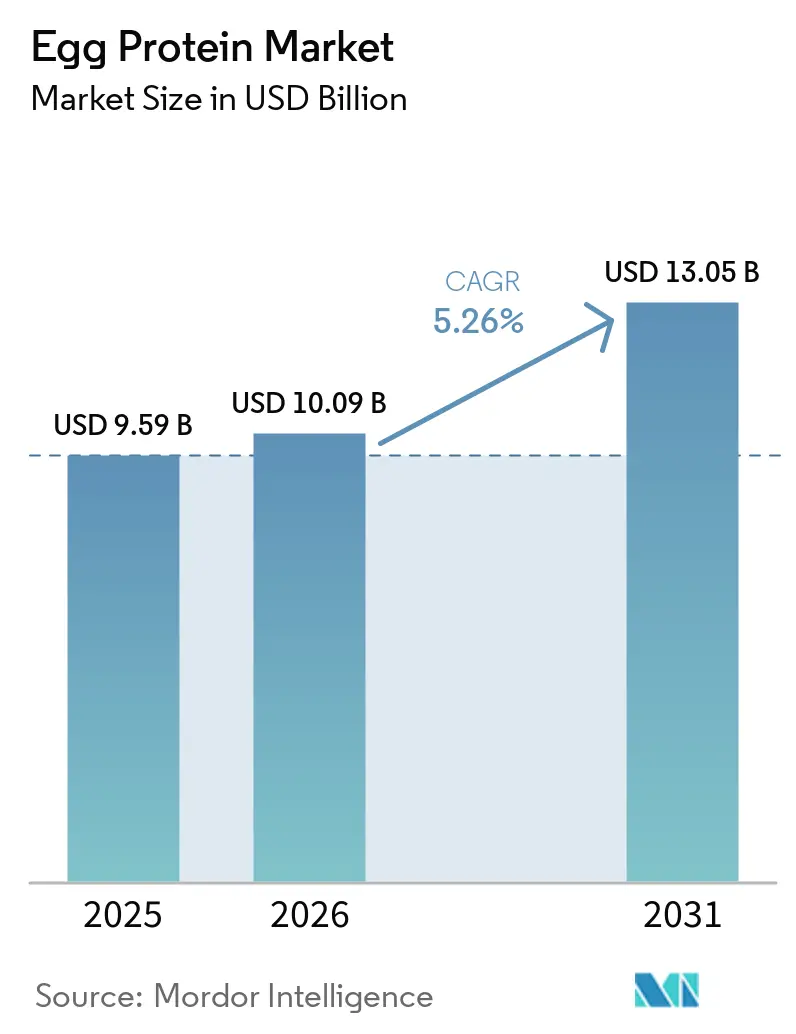
The egg protein market size was valued at USD 9.59 billion in 2025 and estimated to grow from USD 10.09 billion in 2026 to reach USD 13.05 billion by 2031, at a CAGR of 5.26% during the forecast period (2026-2031). This growth is primarily driven by increasing demand for clean-label products, the rising popularity of sports nutrition, and the versatile functional properties of egg protein, such as its ability to foam, emulsify, and gel. Powdered egg protein dominates global trade due to its long shelf life of up to 24 months, making it a preferred choice for manufacturers. In regions such as North America and Europe, vertically integrated producers manage the entire supply chain, from raising layer flocks to operating spray-drying facilities, ensuring better traceability and higher profit margins. Meanwhile, the Asia-Pacific region is experiencing the fastest growth in demand, driven by the expansion of poultry farming and rising protein consumption among the growing middle-class populations in countries such as China, India, and Indonesia. The egg protein industry is moderately consolidated, with key players focusing on maintaining competitive advantages through innovation and optimizing their supply chains.
Key Report Takeaways
- By product type, whole egg protein led with 44.93% revenue share of the egg protein market in 2025, while egg white protein is projected to advance at a 6.67% CAGR through 2031.
- By source, powder accounted for 73.95% of the egg protein market size in 2025; liquid formats are expected to represent the fastest expansion at a 6.25% CAGR from 2026 to 2031.
- By application, food and beverages captured 68.23% of the egg protein market share in 2025, whereas pharmaceuticals and dietary supplements recorded the highest projected CAGR at 6.37% during the forecast window.
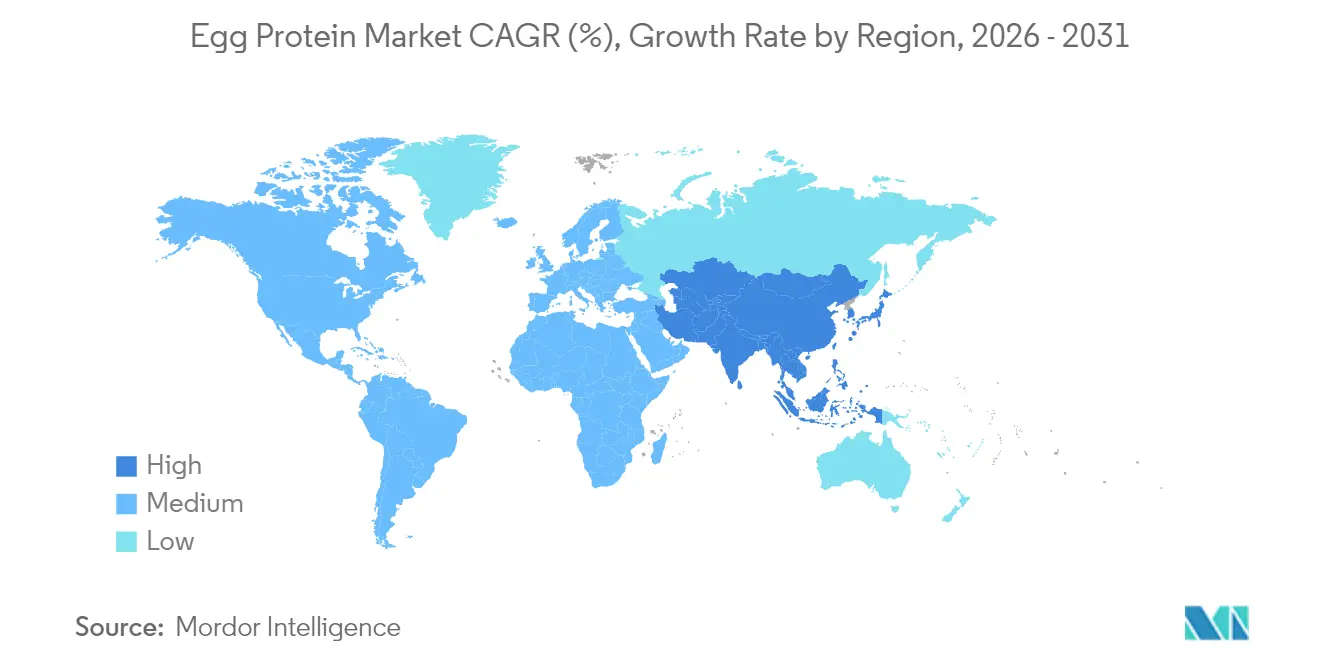
- By geography, North America accounted for 35.88% of global revenue in 2025, while the Asia-Pacific region is projected to have the fastest regional CAGR of 7.41% from 2026 to 2031.
Note: Market size and forecast figures in this report are generated using Mordor Intelligence’s proprietary estimation framework, updated with the latest available data and insights as of 2026.
Market Trends and Insights
Drivers Impact Analysis of Egg Protein Market*
| Driver | (~) % Impact on CAGR Forecast | Geographic Relevance | Impact Timeline |
|---|---|---|---|
| Rising consumer focus on high-quality, complete protein sources | +1.2% | Global, with pronounced uptake in North America and Europe | Medium term (2-4 years) |
| Demand for lactose-free and dairy-free protein sources | +0.9% | North America, Europe, Asia-Pacific urban centers | Short term (≤ 2 years) |
| Growing demand for natural emulsifiers in clean-label formulations | +0.7% | North America, Europe | Medium term (2-4 years) |
| Focus on animal welfare and high-performance livestock diets | +0.6% | Asia-Pacific (China, Thailand, Indonesia), South America (Brazil) | Long term (≥ 4 years) |
| Increasing preference for natural foaming agents in bakery and confectionery | +0.5% | Global, led by Europe and North America | Medium term (2-4 years) |
| Increasing adoption of single-serve sachets and on-the-go protein formats | +0.4% | North America, Asia-Pacific, Middle East | Short term (≤ 2 years) |
| Source: Mordor Intelligence | |||
Rising consumer focus on high-quality, complete protein sources
The growing focus on consuming high-quality, complete protein sources is driving global demand for egg protein. According to the International Food Information Council Food and Health Survey 2024, 71% of Americans were actively trying to increase their protein intake, a trend that continues to gain momentum[1]Source: International Food Information Council, "2024 IFIC Food and Health Survey", ific.org. Egg protein is highly valued because it contains all nine essential amino acids, making it a superior option compared to most plant-based proteins. It also matches whey protein in supporting muscle recovery, which enhances its popularity in the performance nutrition segment. To cater to diverse consumer needs, brands are creating hybrid products that combine egg and whey proteins. These blends are particularly appealing to lactose-intolerant consumers while maintaining high leucine content. Companies like Naked Nutrition are focusing on premiumization by offering clean-label products, such as their Naked Egg Powder range, which targets health-conscious and high-protein consumers.
Demand for lactose-free and dairy-free protein sources
The demand for lactose-free and dairy-free protein sources is increasing, driving the popularity of egg protein as a viable alternative. According to the National Institute of Diabetes and Digestive and Kidney Diseases, as of August 2025, around 68% of the global population experiences lactose malabsorption[2]Source: National Institute of Diabetes and Digestive and Kidney Diseases, "Definition & Facts for Lactose Intolerance", niddk.nih.gov. This makes egg protein an excellent alternative for individuals with sensitive digestion. Egg protein is naturally lactose-free and contains minimal carbohydrates, making it an ideal substitute for whey protein in products such as ready-to-drink shakes, protein bars, and other convenient formats. While approximately 88 million people globally, or about 1.1% of the population, identify as vegan as of June 2025, according to the World Animal Foundation, the much larger groups of flexitarians and those avoiding dairy are driving significant demand for egg-based protein products[3]Source: World Animal Foundation, "How Many Vegans Are in the World in 2025? Latest Vegan Stats", worldanimalfoundation.org. In urban markets across the Asia-Pacific region, a growing trend is emerging among consumers opting for egg-based protein waters and sachets, largely driven by the rise in on-the-go consumption.
Increasing preference for natural foaming agents in bakery and confectionery
The growing demand for natural foaming agents in bakery and confectionery products is significantly boosting the use of egg protein. Compounds like ovalbumin and ovomucin in egg protein provide excellent foaming stability, making them ideal for creating products such as meringues, nougats, and marshmallows without relying on artificial additives. In Europe, confectioners are increasingly replacing gelatin with egg white protein to cater to consumers who prefer avoiding certain animal-derived ingredients but still expect traditional textures in their products. This shift is further supported by innovation, including a 2024 European patent that introduces a method to improve foam stability using natural antioxidants, which also extends shelf life without the need for preservatives. In North America, artisan bakeries are adopting pre-pasteurized liquid egg whites to streamline operations, reduce labor, and address safety concerns associated with handling raw shell eggs.
Focus on animal welfare and high-performance livestock diets
The increasing focus on animal welfare and the need for high-performance livestock diets are driving the demand for egg protein. Farmers and producers are turning to egg protein because it is nutrient-dense, highly digestible, and supports healthier animal growth while reducing the reliance on synthetic additives. Egg protein offers a complete amino acid profile, enhancing feed efficiency in poultry, aquaculture, and companion animals. This helps farms meet welfare standards by promoting better gut health, reducing stress, and boosting immunity in animals. Producers are increasingly adopting clean-label feed solutions. Many global feed companies now offer premixes enriched with egg protein, designed to enhance nutrient absorption and reduce mortality rates, particularly in programs aimed at reducing antibiotic use. The growing implementation of welfare certifications and retailer audits is further encouraging farms to use natural and functional proteins.
Restraints Impact Analysis of Egg Protein Market*
| Restraint | (~) % Impact on CAGR Forecast | Geographic Relevance | Impact Timeline |
|---|---|---|---|
| Growing competition from plant-based and alternative proteins | -0.8% | Global, most acute in North America and Europe | Short term (≤ 2 years) |
| Rising consumer concerns about cholesterol, animal welfare and intensive farming practices | -0.6% | North America, Europe, urban Asia-Pacific | Medium term (2-4 years) |
| Regulatory limitations on the use of egg protein in infant food and medical nutrition | -0.3% | Global, with strictest enforcement in Europe and North America | Long term (≥ 4 years) |
| Inconsistent quality and adulteration risks in low-cost supply chains | -0.3% | Asia-Pacific (excluding Japan, South Korea), South America, Middle East and Africa | Medium term (2-4 years) |
| Source: Mordor Intelligence | |||
Growing competition from plant-based and alternative proteins
The egg protein market is facing increasing challenges from plant-based and alternative proteins, such as those derived from peas, soy, and rice, as well as precision-fermented options. These alternatives are priced 15% to 25% lower than egg protein in key markets, such as North America and Europe, making them more attractive to cost-conscious consumers. The adoption of plant-based proteins is growing rapidly, with 59% of United States households purchasing plant-based foods in 2024, according to the Good Food Institute[4]Source: Good Food Institute, "U.S. Retail Market Insights for the Plant-Based Industry", gfi.org. This shift in consumer preferences is reducing demand for animal-derived proteins, including egg protein. The introduction of animal-free recombinant ovalbumen, which was approved by the Food and Drug Administration in 2024 for use in baked goods, is intensifying competition. This innovation allows vegan brands to replicate the functional properties of egg protein.
Regulatory limitations on the use of egg protein in infant food and medical nutrition
Regulatory restrictions on using egg protein in infant food and medical nutrition significantly hinder market growth. Both the European Food Safety Authority and the Food and Drug Administration classify egg proteins as major allergens, requiring clear labeling and effectively prohibiting their intentional inclusion in infant formula. These regulations are in place to ensure the safety of vulnerable groups, such as infants and high-risk individuals, as even minimal exposure to allergens can lead to severe reactions. Similarly, many enteral nutrition products, designed for patients with weakened immune systems, cancer patients, or those with compromised digestive systems, often avoid egg protein. Manufacturers in these segments prioritize hypoallergenic ingredients to reduce the risk of adverse effects. Consequently, egg protein producers are unable to tap into two of the fastest-growing and high-value nutrition markets.
*Our forecasts treat driver/restraint impacts as directional, not additive. The impact forecasts reflect baseline growth, mix effects, and variable interactions.
Egg Protein Market Segment Analysis
By Product Type:
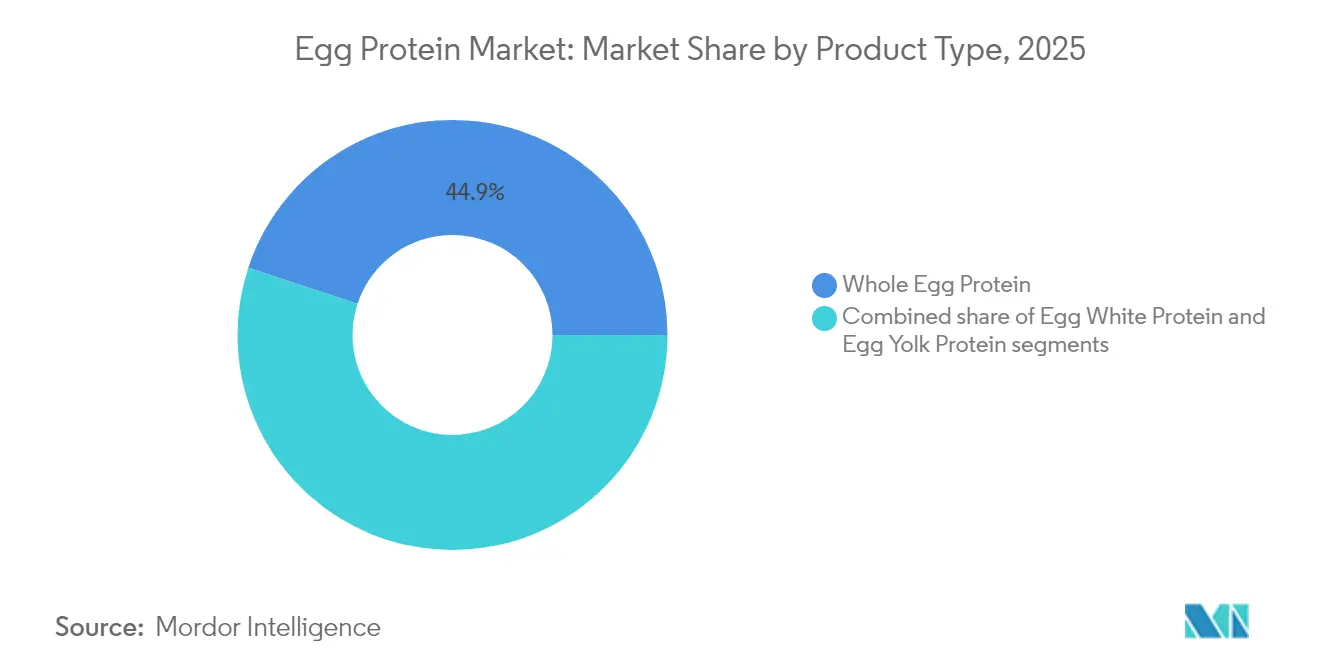
Whole Egg Retains Scale, Egg White AcceleratesWhole egg protein was the largest contributor to global revenues in 2025, accounting for 44.93% of the market. This is because it provides a balanced nutritional profile and is highly versatile, making it suitable for a wide range of food products such as baked goods, pasta, sauces, and ready meals. Manufacturers prefer whole egg protein due to its cost-effectiveness and its ability to perform essential functions, such as adding structure, emulsifying, and improving browning, without requiring additional ingredients. Its compatibility with large-scale production processes and the increasing demand for clean-label packaged foods have further strengthened its position in the market.
Egg white protein is expected to grow at a faster rate, with a projected CAGR of 6.67% from 2026 to 2031. This growth is largely driven by its rising popularity among health-conscious consumers and those with active lifestyles. Its fat-free nature, easy digestibility, and high leucine content make it an ideal choice for muscle recovery and enhancing physical performance. It offers a balanced nutritional profile and is highly versatile, making it suitable for a wide range of food products, including serving as a great non-dairy protein alternative for individuals with lactose intolerance. The increasing use of egg white protein in products like ready-to-drink shakes, single-serve sachets, and premium bakery items is anticipated to drive its demand, making it one of the fastest-growing segments in the market.



By Source:
Powder Remains the Workhorse, Liquid Gains MomentumEgg protein powder accounted for 73.95% of the global volume in 2025, mainly due to its long shelf life, ease of storage, and suitability for transportation. With a shelf life of up to 24 months and stability at room temperature, it is highly preferred for international trade. Its low moisture content ensures consistent performance in various products, including protein bars, bakery mixes, ready meal coatings, and animal feed. Manufacturers also benefit from its cost-effectiveness in logistics and its compatibility with automated production systems, making it the most commonly used form of egg protein across industries.
Liquid egg protein products are projected to grow at a 6.25% CAGR from 2026 to 2031, driven by their increasing use in foodservice, artisanal baking, and protein beverage production. Liquid egg protein is valued for its superior functional properties, including whipping, foaming, and gelling, which are essential for premium confectionery and commercial kitchen applications. It also offers operational advantages, including reduced processing time and eliminating the need for rehydration, which enhances efficiency. As the demand for ready-to-drink shakes, refrigerated desserts, and convenience-focused meal solutions rises, liquid egg protein is expected to capture a growing share in applications that prioritize freshness and specialized functionality.
By Application:
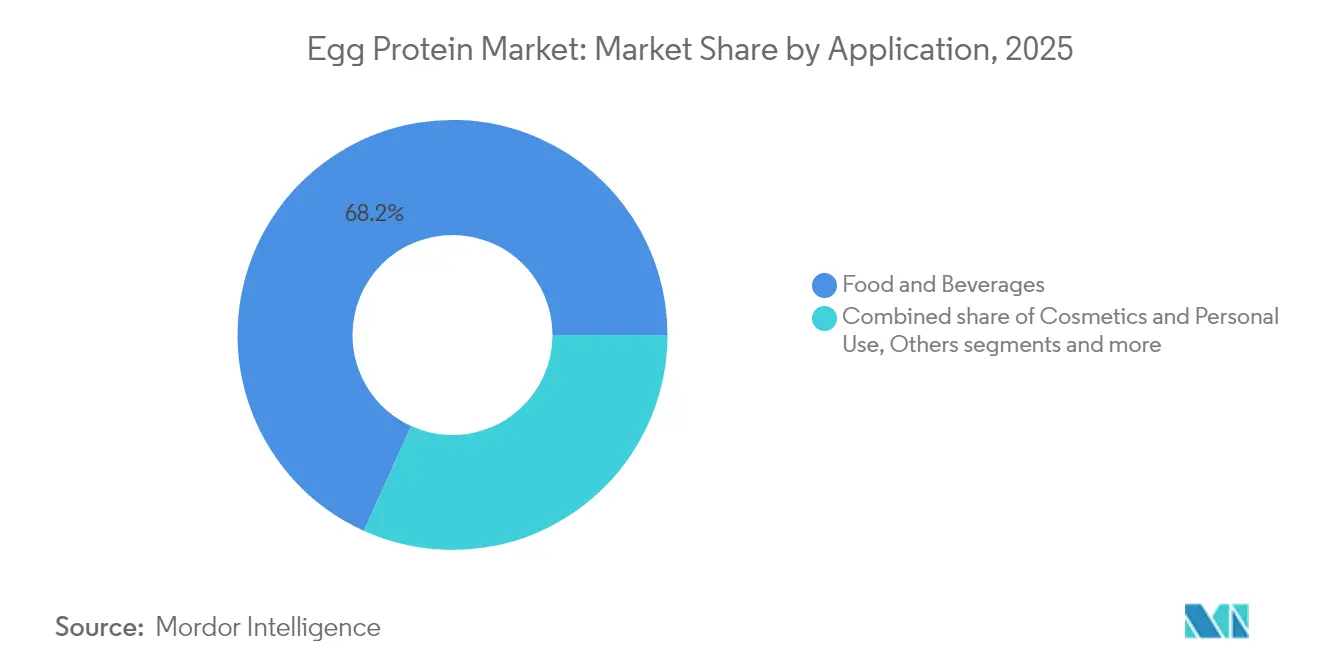
Food and Beverage Dominates, Pharma and Supplements Scale QuicklyThe food and beverage sector accounted for 68.23% of the total demand in 2025, making it the largest consumer of egg protein. Egg protein is widely used in this sector because it improves food texture, stabilizes mixtures, and acts as an emulsifier, foaming agent, and gelling agent. These properties make it a preferred ingredient in products such as mayonnaise, confectionery, ready-to-eat meals, and sports nutrition items. Manufacturers choose egg protein for its natural, clean-label appeal and reliable performance. The growing popularity of high-protein snacks, innovative bakery products, and functional beverages continues to drive its demand, ensuring its dominance in the food and beverage sector.
The pharmaceuticals and dietary supplements segment is projected to grow at the fastest rate, with a CAGR of 6.37% through 2031. Egg protein is increasingly used in products such as capsules, powders, and medical nutrition due to its high nutritional value and ease of digestion. It is particularly beneficial for muscle recovery, supporting the health of older adults, and addressing specific dietary needs. As consumers focus more on clinical nutrition, immunity-boosting supplements, and personalized wellness products, the demand for egg protein in this segment is expected to rise significantly. This trend positions the pharmaceuticals and dietary supplements segment as a key growth driver in the global egg protein market.
Geography Analysis
North America Egg Protein Market
In 2025, North America accounted for 35.88% of the total revenue, driven by major companies such as Cal-Maine Foods and Rose Acre Farms, which have strong control over their supply chains and ensure high product traceability. The region benefits from a well-established sports-nutrition culture, large-scale industrial bakeries, and strict Food and Drug Administration standards that maintain steady demand. Canada is shifting toward cage-free egg production to meet retailer deadlines, while Mexico leverages its lower labor costs to process eggs for United States importers. Although growth in the region is slowing due to market saturation, the increasing demand for cage-free and organic products continues to drive value growth.
APAC Egg Protein Market
The Asia-Pacific region is projected to grow at the fastest rate globally, with a CAGR of 7.41% through 2031. In China, new 2024 guidelines promoting high-digestibility starter proteins are boosting the use of egg protein in broiler feed diets. Countries like India, Indonesia, and Thailand are making significant investments in spray-drying facilities and cold-chain logistics to meet the growing demand for bakery and sports nutrition products. Japan, which has the highest per-capita egg consumption in the world, continues to see strong demand for liquid egg whites used in confectionery. Additionally, Australia’s cage-free and organic certifications are gaining premium value in export markets like Japan and South Korea, strengthening trade within the region
EMEA and South America Egg Protein Market
In Europe, strict animal welfare and clean-label requirements are pushing suppliers such as Eurovo and Ovostar Union to focus on cage-free, organic, and environmentally sustainable products. While European Food Safety Authority regulations on allergen labeling and infant formula limit some opportunities, demand remains strong in the sports-nutrition, bakery, and confectionery sectors. Eastern European producers are taking advantage of lower costs while meeting European standards, supplying egg powder to Western processing facilities. In South America, Brazil leads the market by integrating egg protein into premium poultry feed. Meanwhile, the Middle East and Africa are emerging markets, driven by halal certification initiatives in Gulf countries and increasing local processing capabilities in South Africa and Nigeria, despite challenges in cold-chain infrastructure.

Competitive Landscape
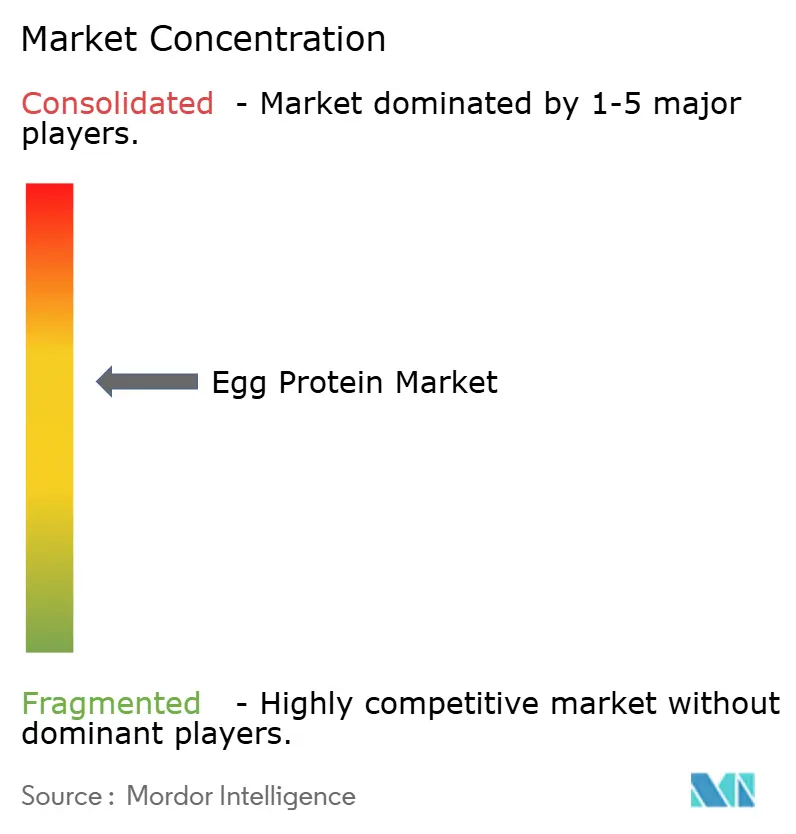
The egg protein market is moderately consolidated, with a few major companies dominating the entire supply chain, from feed production to packaging. This control enables them to maintain consistent product quality and comply with strict international regulations. These companies continue to strengthen their position by expanding their product range, securing reliable raw material supplies, and increasing their presence in regions with high growth potential. This dominance makes it difficult for new players to enter the market and compete effectively.
New companies are introducing innovative solutions that are reshaping the market dynamics. For example, precision fermentation is being used to create animal-free proteins that mimic the properties of traditional egg proteins, appealing to vegan consumers and those with allergies. Established players are responding by improving transparency in their operations, adopting better animal welfare practices, and implementing advanced traceability systems. Advancements in processing technologies are making egg proteins more versatile, supporting their use in industries like bakery and sports nutrition, which further drives market growth.
Investments in the egg protein market are focused on increasing production capacity and upgrading processing technologies to meet rising demand. Leading companies are enhancing spray-drying facilities, improving liquid egg processing systems, and strengthening supply chains to ensure consistent product availability. Some producers are also developing specialized ingredients, such as yolk-based emulsifiers, to meet the growing demand for clean-label products. With both established firms and new entrants investing in research and development, the market is becoming more innovation-driven, fostering competition and long-term growth.
Egg Protein Industry Leaders
-
Ovostar Union PLC
-
Rose Acre Farms
-
IGRECA
-
Eurovo S.r.l.
-
Cargill Inc.
- *Disclaimer: Major Players sorted in no particular order
Egg Protein Market Companies Covered in this Report
- Ovostar Union PLC
- Rose Acre Farms
- IGRECA
- Eurovo S.r.l.
- Cargill Inc.
- Lodewijckx NV (Pulviver)
- Bouwhuis Enthoven BV
- Farm Pride Foods Limited
- Cal-Maine Foods Inc.
- Taiyo Kagaku Corporation
- Wulro B.V.
- Egg Domain Pty Ltd.
- Interovo Egg Group B.V.
- Danaeg Holding A/S (Källbergs)
- Parmovo S.r.l.
- VH Group (Venky's India)
- Taj Pharma Group
- Ovobel Foods Limited
- Sigma Aldrich (Merck KGaA)
- The Every Company

Recent Industry Developments in Egg Protein Market
- November 2025: The Every Company secured USD 55 million in Series D funding. This funding round aimed to support the expansion of its precision-fermented egg protein production capabilities. The company’s innovative approach to creating animal-free egg proteins gained significant traction, particularly following its nationwide rollout at Walmart.
- March 2025: Onego Bio became the second tenant at Jefferson County’s Food and Beverage Innovation Campus in Wisconsin. The Jefferson County Board of Supervisors approved the company’s acquisition of 25.9 acres within the campus for USD 777,000.
- November 2021: United Nations Food and Agriculture Organization (FAO) announced its investment in piloting the project to manufacture egg powder from eggs in Rwanda. This was in line with the growing demand for egg protein in the region and producing the same locally.
- October 2024: PoLoPo and CSM Ingredients announced a strategic partnership aimed at developing a price-stable egg protein powder tailored for the baking industry. This collaboration aimed to mitigate the volatility in egg protein pricing by utilizing innovative production techniques.
- July 2024: Designer Protein introduced a new product, Totally Egg, an innovative egg protein powder, designed to deliver the essential nutrients found in both egg whites and yolks while eliminating excess fat, cholesterol, and calories.


Global Egg Protein Market Report Scope
The egg protein market is segmented by product type, source, application, and geography. Based on product type, the market is classified as whole egg protein, egg white protein, and egg yolk protein. According to the source, the market is categorized into liquid and powder forms. Based on application, the market is classified into food and beverage, animal feed, pharmaceuticals and dietary supplements, and cosmetics and personal use. The study examines the egg protein market in both emerging and established markets worldwide, encompassing North America, Europe, Asia-Pacific, South America, and the Middle East and Africa.
| Whole Egg Protein |
| Egg White Protein |
| Egg Yolk Protein |
| Liquid |
| Powder |
| Food and Beverages |
| Animal Feed |
| Pharmaceuticals and Dietary Supplements |
| Cosmetics and Personal Use |
| North America | United States |
| Canada | |
| Mexico | |
| Rest of North America | |
| South America | Brazil |
| Colombia | |
| Chile | |
| Peru | |
| Argentina | |
| Rest of South America | |
| Europe | United Kingdom |
| Germany | |
| France | |
| Italy | |
| Spain | |
| Poland | |
| Belgium | |
| Sweden | |
| Rest of Europe | |
| Asia-Pacific | China |
| Japan | |
| India | |
| Australia | |
| Indonesia | |
| South Korea | |
| Thailand | |
| Singapore | |
| Rest of Asia-Pacific | |
| Middle East and Africa | South Africa |
| Saudi Arabia | |
| United Arab Emirates | |
| Nigeria | |
| Egypt | |
| Morocco | |
| Turkey | |
| Rest of Middle East and Africa |
| By Product Type | Whole Egg Protein | |
| Egg White Protein | ||
| Egg Yolk Protein | ||
| By Source | Liquid | |
| Powder | ||
| By Application | Food and Beverages | |
| Animal Feed | ||
| Pharmaceuticals and Dietary Supplements | ||
| Cosmetics and Personal Use | ||
| By Geography | North America | United States |
| Canada | ||
| Mexico | ||
| Rest of North America | ||
| South America | Brazil | |
| Colombia | ||
| Chile | ||
| Peru | ||
| Argentina | ||
| Rest of South America | ||
| Europe | United Kingdom | |
| Germany | ||
| France | ||
| Italy | ||
| Spain | ||
| Poland | ||
| Belgium | ||
| Sweden | ||
| Rest of Europe | ||
| Asia-Pacific | China | |
| Japan | ||
| India | ||
| Australia | ||
| Indonesia | ||
| South Korea | ||
| Thailand | ||
| Singapore | ||
| Rest of Asia-Pacific | ||
| Middle East and Africa | South Africa | |
| Saudi Arabia | ||
| United Arab Emirates | ||
| Nigeria | ||
| Egypt | ||
| Morocco | ||
| Turkey | ||
| Rest of Middle East and Africa | ||


Key Questions Answered in the Report
What is the current value of the egg protein market?
The egg protein market size is USD 10.09 billion in 2026.
How fast is global demand expected to grow?
Industry revenue is projected to rise at a 5.26% CAGR to 2031.
Which region offers the fastest growth prospects?
Asia-Pacific is forecast to expand at a 7.41% CAGR through 2031.
Which product type shows the strongest near-term momentum?
Egg white protein leads in growth with a 6.67% projected CAGR.
Page last updated on:


 Your data is secure and never sold or shared.


