
Dry Powder Inhalers Market Size and Share
Market Overview
| Study Period | 2020 - 2031 |
|---|---|
| Market Size (2026) | USD 25.64 Billion |
| Market Size (2031) | USD 32.71 Billion |
| Growth Rate (2026 - 2031) | 4.97 % |
| Fastest Growing Market | Asia-Pacific |
| Largest Market | North America |
| Market Concentration | Medium |
Major Players *Disclaimer: Major Players sorted in no particular order Image © Mordor Intelligence. Reuse requires attribution under CC BY 4.0. | |
Dry Powder Inhalers Market Analysis by Mordor Intelligence
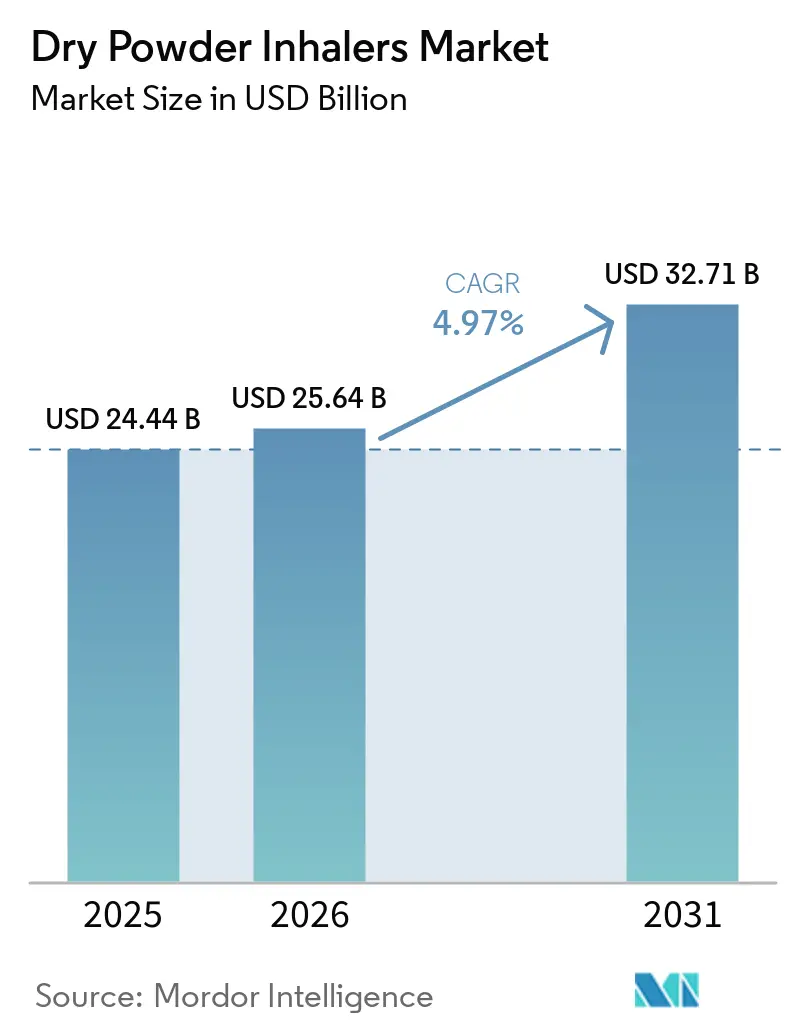
The Dry Powder Inhalers Market size is projected to expand from USD 24.44 billion in 2025 and USD 25.64 billion in 2026 to USD 32.71 billion by 2031, registering a CAGR of 4.97% between 2026 and 2031.
The dry powder inhalers market is supported by a growing burden of chronic respiratory disease and wider use of maintenance therapies. It is also shaped by the way long-term asthma and COPD care moves across clinics, pharmacies, home settings, and digital support services. This makes reliable refill access and suitable inhaler technique central to treatment continuity. Propellant-free devices also align with healthcare procurement policies that seek to reduce emissions from inhaler use. A clinical review published in 2026 found comparable efficacy and safety for dry powder inhalers and pressurized metered-dose inhalers in asthma and COPD care, which reduces a longstanding barrier to device selection. The dry powder inhalers market is also gaining options for high-payload formulations as drug developers assess inhaled proteins and other complex molecules. Device manufacturers, drug developers, and contract manufacturers are therefore competing on formulation reliability, dose delivery, environmental performance, and patient support rather than on device hardware alone.
Key Report Takeaways
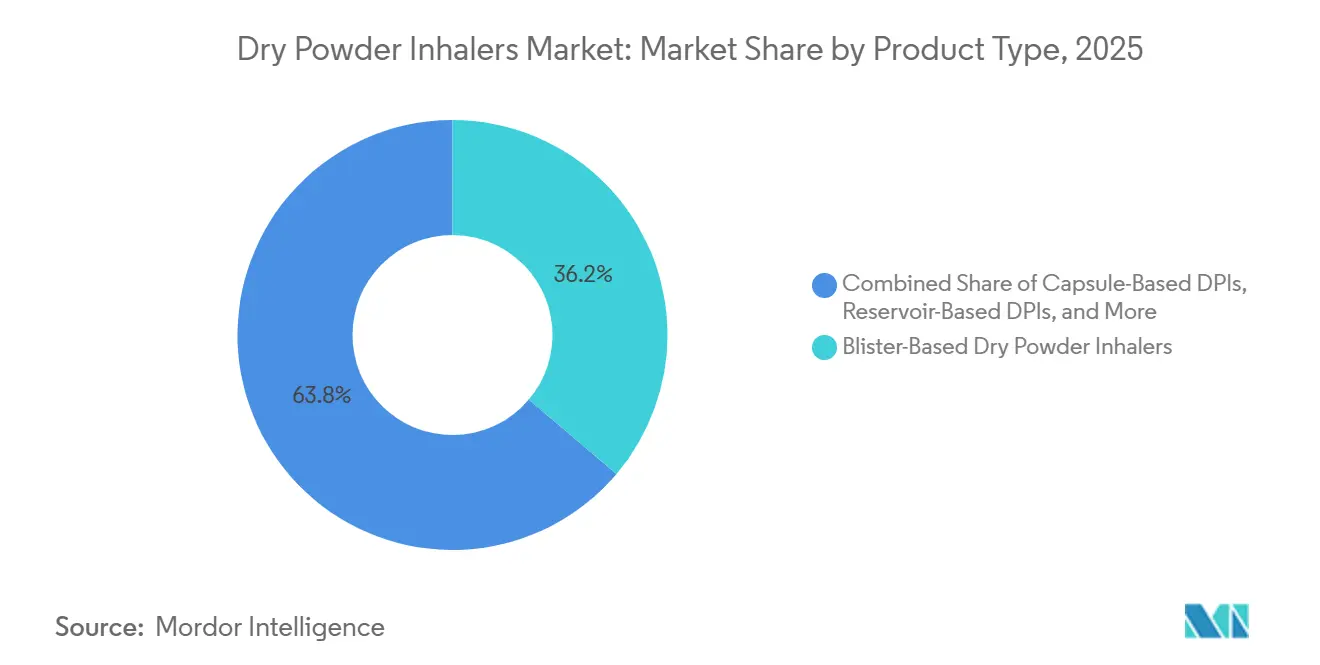
- By product type, blister-based devices held 36.18% revenue share in 2025, while cartridge-based devices are forecast to grow at a 6.12% CAGR through 2031.
- By drug class, inhaled corticosteroid combination therapies held 42.16% revenue share in 2025, while long-acting muscarinic antagonists are forecast to grow at a 6.34% CAGR through 2031.
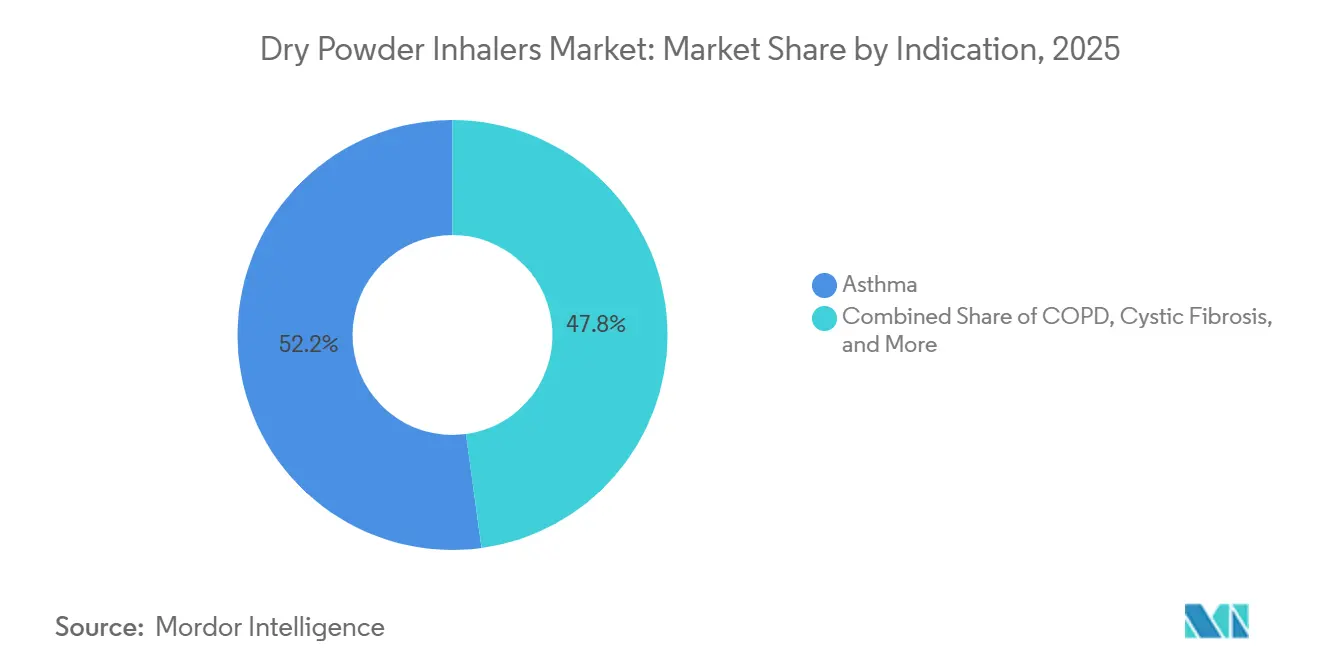
- By indication, asthma held 52.16% revenue share in 2025, while COPD is forecast to grow at a 6.55% CAGR through 2031.
- By device lifecycle, reusable inhalers held 58.11% revenue share in 2025, while disposable formats are forecast to grow at a 6.82% CAGR through 2031.
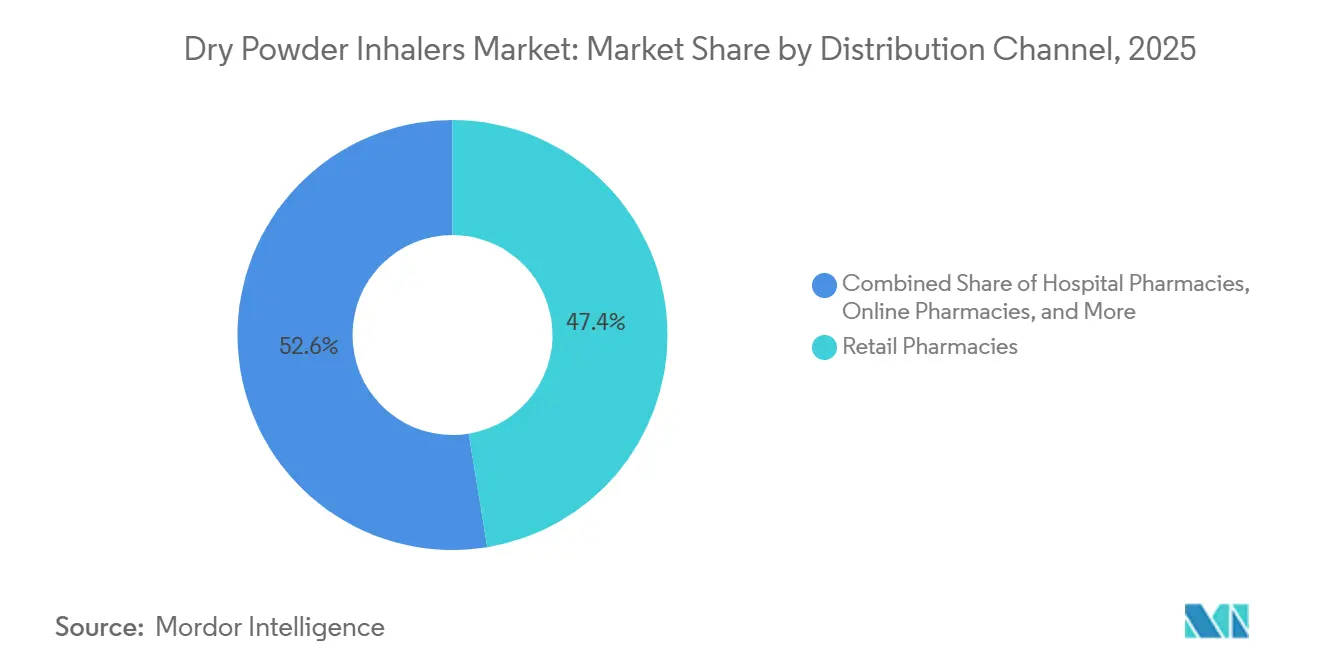
- By distribution channel, retail pharmacies held 47.41% revenue share in 2025, while online pharmacies are forecast to grow at a 7.02% CAGR through 2031.
- By geography, North America held 38.11% revenue share in 2025, while Asia-Pacific is forecast to grow at a 6.93% CAGR through 2031.
Note: Market size and forecast figures in this report are generated using Mordor Intelligence’s proprietary estimation framework, updated with the latest available data and insights as of January 2026.
Global Dry Powder Inhalers Market Trends and Insights
Drivers Impact Analysis*
| Driver | (~) % Impact on CAGR Forecast | Geographic Relevance | Impact Timeline |
|---|---|---|---|
| Rising Asthma, COPD, and Cystic Fibrosis Burden | +1.3% | Global | Long term (≥ 4 years) |
| Preference for Propellant-Free Pulmonary Delivery | +1.0% | Global, with early gains in Europe and North America | Medium term (2-4 years) |
| Expansion of Home-Based Respiratory Care | +0.7% | North America, Europe, and core Asia-Pacific markets | Medium term (2-4 years) |
| Growth of High-Payload and Inhaled Biologic Programs | +0.6% | North America, Europe, Asia-Pacific, and spillover to the Middle East and Africa | Long term (≥ 4 years) |
| Digital Adherence Monitoring in Chronic Respiratory Therapy | +0.4% | North America and Europe, with early gains in Asia-Pacific | Medium term (2-4 years) |
| Localized Device-Formulation Optimization for Low-Flow Patients | +0.3% | Global, with early gains in Asia-Pacific and the Middle East and Africa | Medium term (2-4 years) |
| Source: Mordor Intelligence | |||
Rising Asthma, COPD, and Cystic Fibrosis Burden
The dry powder inhalers market benefits from a durable need for long-term respiratory treatment. Continued particulate exposure in South and East Asian cities increases the population at risk of COPD. Urban allergen exposure also supports asthma incidence among younger patients in Latin America and Africa. The 2026 review of 44 randomized controlled trials involving 24,710 participants found that dry powder inhalers had equivalent efficacy and safety to pressurized metered-dose inhalers for asthma maintenance and COPD treatment.[1]“Efficacy and Safety of Different Inhaler Types for Asthma and Chronic Obstructive Pulmonary Disease,” npj Primary Care Respiratory Medicine, link.springer.com. This evidence gives clinicians more flexibility to select a device based on patient use, treatment goals, and environmental considerations. Cystic fibrosis adds a long-duration source of demand because longer survival with CFTR modulators can extend the period during which patients use inhaled antibiotics and mucolytics.
Preference for Propellant-Free Pulmonary Delivery
The dry powder inhalers market is increasingly affected by healthcare decarbonization programs. Health systems must consider emissions, clinical suitability, device training, and medicine availability when they revise inhaler formularies. This creates a more structured decision process than a simple switch between inhaler formats. A 2025 study found that 100,000 dispensed pressurized metered-dose inhalers generated 1,000 to 1,100 tonnes of carbon dioxide equivalent emissions, compared with less than 55 tonnes for an equivalent volume of dry powder inhalers.[2]“Comparing the CO2 Emissions of Metered Dose Inhalers and Dry Powder Inhalers,” BMJ Open Respiratory Research, pubmed.ncbi.nlm.nih.gov. This difference is influencing procurement and prescribing discussions in European health systems. National data cited in the draft showed that multi-dose dry powder inhalers accounted for 87% of inhalers dispensed in Sweden. AstraZeneca received UK approval in May 2025 for Trixeo Aerosphere with a near-zero global warming potential propellant, illustrating how sustainability requirements are also changing pressurized-device development. European procurement policies through 2031 can favor manufacturers that can demonstrate low-emission respiratory delivery and dependable device performance.
Expansion of Home-Based Respiratory Care
The dry powder inhalers market gains access points as COPD and asthma management move from hospital outpatient settings into patients’ homes. Home care can reduce the practical distance between a prescription, patient education, routine monitoring, and repeat dispensing. It can also give clinicians a clearer opportunity to identify declining adherence before symptoms worsen. In April 2026, the Centers for Medicare & Medicaid Services expanded Medicare coverage for home-based non-invasive positive pressure ventilation for COPD through transmittal R13756CP. Home ventilation patients commonly receive bronchodilator therapy, so expanded coverage can support treatment continuity. Remote care also provides a practical setting for adherence reminders, refill prompts, and clinical follow-up. A 2026 randomized controlled study reported better chronic respiratory disease management outcomes with Internet of Things-based telerespiratory rehabilitation. This model supports recurring medicine supply and helps explain the faster outlook for online pharmacy distribution.
Growth of High-Payload and Inhaled Biologic Programs
The dry powder inhalers market is extending beyond established bronchodilator and corticosteroid products. In the dry powder inhalers market, product developers must protect molecule activity while achieving a particle profile that can reach the intended part of the lung. This requires practical coordination between formulation scientists, device engineers, analytical teams, and manufacturing specialists throughout development and scale-up. These demands make the choice of excipients, process conditions, capsule or blister system, and package design closely interdependent. Development programs include recombinant proteins, non-recombinant proteins, and antibody fragments that require careful control of powder structure and stability. Ultra-rapid freezing methods with cooling rates of 100 to 1,000 K/s can limit protein aggregation during powder formation. Co-spray-dried amino acid excipient systems can improve aerodynamic performance and reduce moisture sensitivity. In August 2025, MannKind expanded its collaboration with United Therapeutics for a second Technosphere DPI therapy, receiving USD 5.0 million upfront and becoming eligible for up to USD 35.0 million in development milestones plus 10% royalties. These programs make spray-drying capability and inhalation formulation expertise more important competitive assets.
Restraints Impact Analysis*
| Restraint | (~) % Impact on CAGR Forecast | Geographic Relevance | Impact Timeline |
|---|---|---|---|
| Patient Inspiratory-Flow Limitations | -0.7% | Global, with greater effect in Asia-Pacific and the Middle East and Africa | Long term (≥ 4 years) |
| Complex Drug-Device Bioequivalence Requirements | -0.5% | North America and Europe | Long term (≥ 4 years) |
| Moisture Sensitivity and Powder Stability | -0.4% | Asia-Pacific, the Middle East and Africa, and South America | Medium term (2-4 years) |
| Fragmented Digital-Device Data and Privacy Standards | -0.3% | Global, with acute effects in Europe and North America | Short term (≤ 2 years) |
| Source: Mordor Intelligence | |||
Patient Inspiratory-Flow Limitations
The dry powder inhalers market remains limited by the physical ability of some patients to use these devices effectively. This limitation makes patient assessment and device training important parts of treatment selection. It can also require clinicians to retain alternative inhaler options for people whose inspiratory flow is inadequate. Advanced COPD and older age can reduce the peak inspiratory flow needed for consistent drug deposition. A 2025 study examined preliminary bronchodilation and aerosol delivery in COPD patients with suboptimal peak inspiratory flow, highlighting the challenge for standard DPI devices.[3]“Evaluation of Preliminary Bronchodilation Effect on Aerosol Delivery from a Dry Powder Inhaler for Patients with COPD with Suboptimal Peak Inspiratory Flow Rate,” Clinical Pharmacokinetics, link.springer.com. The issue can be more pronounced in Asia-Pacific and the Middle East and Africa, where COPD may be diagnosed later. Poor device fit can create a difference between clinical trial performance and real-world treatment use. The constraint will remain until low-resistance devices can preserve adequate fine-particle delivery for a wider range of patients.
Complex Drug-Device Bioequivalence Requirements
The dry powder inhalers market faces lengthy generic development programs because both the medicine and device must perform consistently. Each development program must show that the user can receive a reproducible dose under intended conditions. The resulting evidence burden is materially different from a standard solid-dose generic medicine. The FDA’s GDUFA research framework addresses complex generic products delivered through pulmonary and nasal routes. Developers must address inactive ingredient similarity, device performance, pharmacokinetics, and pharmacodynamics. Matching particle-size distribution, fine-particle fraction, and cascade impactor profiles can require repeated formulation and process work. ISO 11040 performance requirements add further development costs. These hurdles can preserve branded revenue for longer, while also delaying lower-cost access in lower-middle-income countries.
*Our forecasts treat driver/restraint impacts as directional, not additive. The impact forecasts reflect baseline growth, mix effects, and variable interactions.
Segment Analysis
By Product Type: Blister-Based Formats Lead, Cartridges Support High-Payload Applications
Blister-based devices held 36.18% revenue share in 2025. Precise dose metering and established manufacturing systems support their use across small-molecule and peptide-based products. Multi-dose blister devices fit fixed-dose combinations that are increasingly used in COPD and asthma treatment. Their dose-tracking potential also supports adherence programs when paired with digital services. Capsule-based inhalers retain demand in price-sensitive Asia-Pacific and South American settings. These devices can offer lower device costs and compatibility with generic medicines.
Cartridge-based formats are projected to expand at a 6.12% CAGR through 2031. Their architecture can support higher drug payloads for combination regimens and inhaled biologics. Spray-drying process design, including outlet-temperature management, can help retain protein bioactivity in these applications. Reservoir devices continue to serve patients who value multi-dose convenience. However, they face pressure from blister devices that may provide more accurate dose tracking. Disposable devices are used where infection-control protocols or short antibiotic courses make single-patient use more appropriate.



By Drug Class: ICS Combinations Maintain Leadership, LAMAs Expand with Triple Therapy
Inhaled corticosteroid combination therapies accounted for 42.16% of the dry powder inhalers market share in 2025. Their position reflects the central role of ICS and long-acting beta agonist combinations in asthma maintenance. Global treatment guidelines have supported their continued use as foundational therapy. Patients with uncontrolled disease can progress through structured treatment pathways toward more intensive combinations. Standalone inhaled corticosteroids face pressure from step-down approaches when patients have stable symptoms. Combination products also help manufacturers link a medicine portfolio with a familiar device platform.
Long-acting muscarinic antagonists are forecast to expand at a 6.34% CAGR through 2031. Their use is extending from COPD maintenance toward triple-combination treatment in asthma. This shift increases the clinical relevance of LAMA-containing dry powder inhalers beyond their historical COPD base. Short-acting beta agonists are also beginning to move from pressurized formats into dry powder devices in sustainability-focused formularies. The remaining drug class includes inhaled antibiotics, antifungals, and antiviral agents. These products show how pulmonary delivery can address specialized respiratory and systemic treatment needs.
By Indication: Asthma Provides Scale, COPD has the Faster Outlook
Asthma accounted for 52.16% of the dry powder inhalers market size by indication in 2025. Its broad patient base and established maintenance treatment pathways support this position. Branded therapy uptake is particularly strong in the United States and Europe. Step therapy can guide patients toward combination and triple-combination regimens when symptoms remain uncontrolled. Asthma-COPD overlap among aging populations can also raise the need for multi-component therapies. This pattern increases device and medicine use per treated patient.
COPD is forecast to grow at a 6.55% CAGR through 2031. Rising diagnoses in China, India, and Brazil support this outlook as air-quality conditions increase the susceptible population. COPD patients often need maintenance bronchodilation over extended periods. Pulmonary arterial hypertension remains a smaller, high-value use case for DPI platforms. MannKind’s collaboration with United Therapeutics followed the commercial use of Tyvaso DPI and supports further development in this area. The remaining indication group includes pulmonary infections and inhaled insulin, where regulatory frameworks for systemic pulmonary delivery are becoming more defined.
By Device Lifecycle: Reusable Devices Lead, Disposable Options Address Specific Needs
Reusable devices held 58.11% revenue share in 2025. Lower cost per dose supports their use in chronic treatment regimens. Patient familiarity also favors reusable platforms when therapy continues for years. A 2025 life cycle assessment presented by Hovione found that transport accounted for 42% and capsule packaging for 24% of the per-dose environmental burden for the evaluated platforms.[4]“Life Cycle Assessment of the Environmental Impact of Respiratory Drug Products,” DDL Conference, ddl-conference.com. This finding shows that environmental performance depends on the wider supply system as well as the device. Reusable devices can spread manufacturing emissions across a greater number of doses.
Disposable formats are projected to grow at a 6.82% CAGR through 2031. Short-course uses, including inhaled antibiotics and antiviral therapies, can favor a device intended for a limited period. Lower per-unit cost can also improve access in lower-middle-income health systems. Single-use products can meet hospital infection-control protocols where device sharing is unacceptable. Recyclable and circular-design options respond to European sustainability reporting requirements. Manufacturers must balance these design features with consistent dose delivery and usability.
By Distribution Channel: Retail Pharmacies Lead, Online Pharmacies Gain Momentum
Retail pharmacies held 47.41% revenue share in 2025. Their role extends beyond dispensing because pharmacists can teach inhalation techniques and discuss refill use. This support can improve adherence to chronic respiratory treatment. Insurers and prescribers benefit when treatment is used correctly, and persistent symptoms are managed earlier. Retail settings also provide an accessible point for patients to replace a device or receive clarification on therapy. The channel remains important where prescriptions move from hospital initiation into long-term community refills.
Online pharmacies are projected to grow at a 7.02% CAGR through 2031, the fastest rate among the distribution channels. E-prescription integration and subscription-style supply models can simplify regular treatment delivery. Digital adherence apps can also link medicine ordering with patient reminders. The 2024 systematic review of remote COPD interventions supports the role of active provider-led digital programs in improving adherence. Hospital pharmacies remain important for treatment initiation and complex biologic dispensing that requires specialist oversight. Specialty and mail-order providers serve rare-disease therapies, including pulmonary arterial hypertension and cystic fibrosis products, under more controlled distribution arrangements.
Geography Analysis
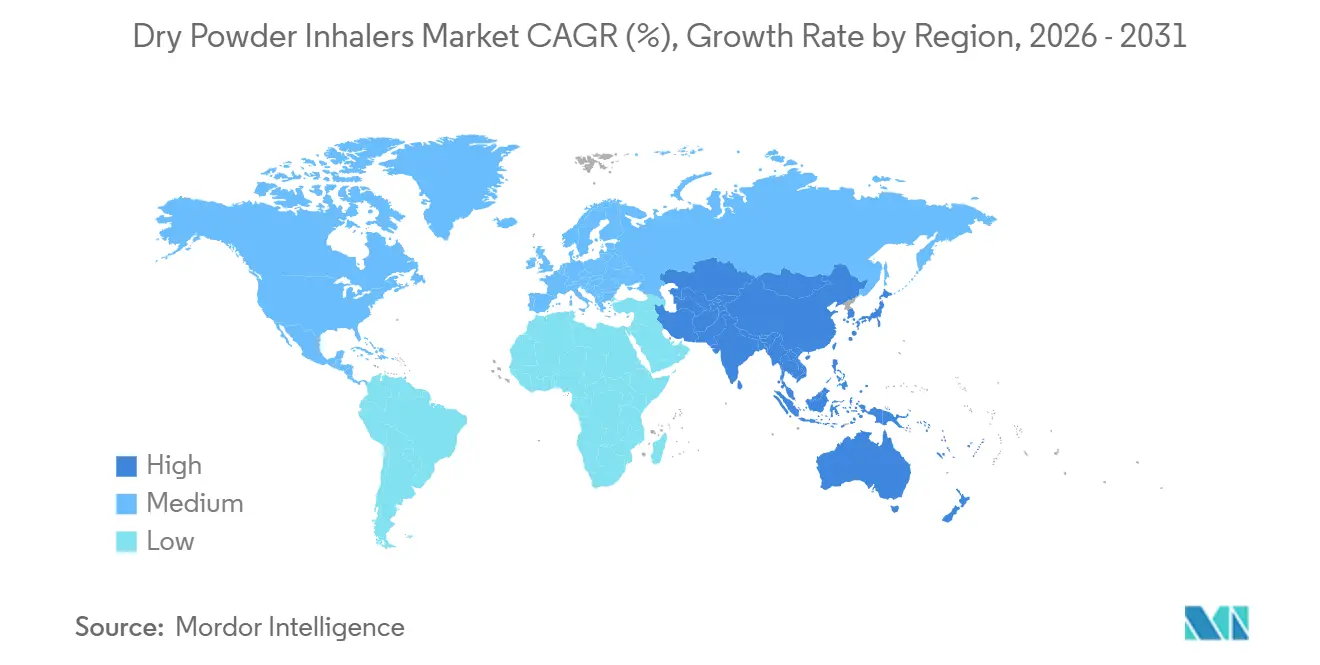
North America held 38.11% of the dry powder inhalers market share in 2025. Premium branded platforms, payer coverage for specialty respiratory therapies, and regulatory pathways for digital device additions support regional demand. In April 2026, CMS expanded Medicare coverage for home non-invasive ventilation for COPD, reinforcing the policy setting for home respiratory management. Connected inhaler programs can integrate therapy into remote care practices and create practical switching barriers for established brands. The United States benefits from deep specialty reimbursement pathways. Canada and Mexico add steady demand as formulary coverage for combination therapies broadens.
The dry powder inhalers market in Europe has a distinct policy basis because environmental considerations shape prescribing and procurement. Health services must assess whether a proposed device remains clinically appropriate for each patient while pursuing lower-emission treatment options. A 2024 analysis estimated annual European emissions from pressurized metered-dose inhalers at 4.0 Mt of carbon dioxide equivalent and indicated that replacement with dry powder inhalers could lower the total to 0.60 Mt.[5]“Thoughtful Prescription of Inhaled Medication Has the Potential to Reduce Inhaler-Related Greenhouse Gas Emissions by 85%,” BMJ Open Respiratory Research, bmjopenrespres.bmj.com. Sweden, the Netherlands, Germany, and the United Kingdom are using this type of evidence in inhaler guidance. Germany, the United Kingdom, France, Italy, and Spain remain mature, high-volume markets. The rest of Europe can benefit as generic penetration improves and device suppliers refresh platforms for EU medical-device requirements.
The dry powder inhalers market in Asia-Pacific is forecast to expand at a 6.93% CAGR through 2031. This growth profile reflects a mix of price-sensitive volume needs, branded combination therapies, growing diagnoses, and a continuing need to strengthen distribution outside major urban centers. China’s 2025 national reimbursement list expansion included 18 additional inhaled therapies and reduced out-of-pocket costs for maintenance treatment. In July 2026, Sino Biopharmaceutical expanded its exclusive collaboration with GSK to commercialize Trelegy Ellipta and Anoro Ellipta in China. India’s respiratory care setting is supported by Ayushman Bharat coverage, although rural distribution gaps still restrict penetration outside major cities. Japan, South Korea, and Australia have stronger conditions for connected inhaler adoption due to telehealth policy support.

Competitive Landscape
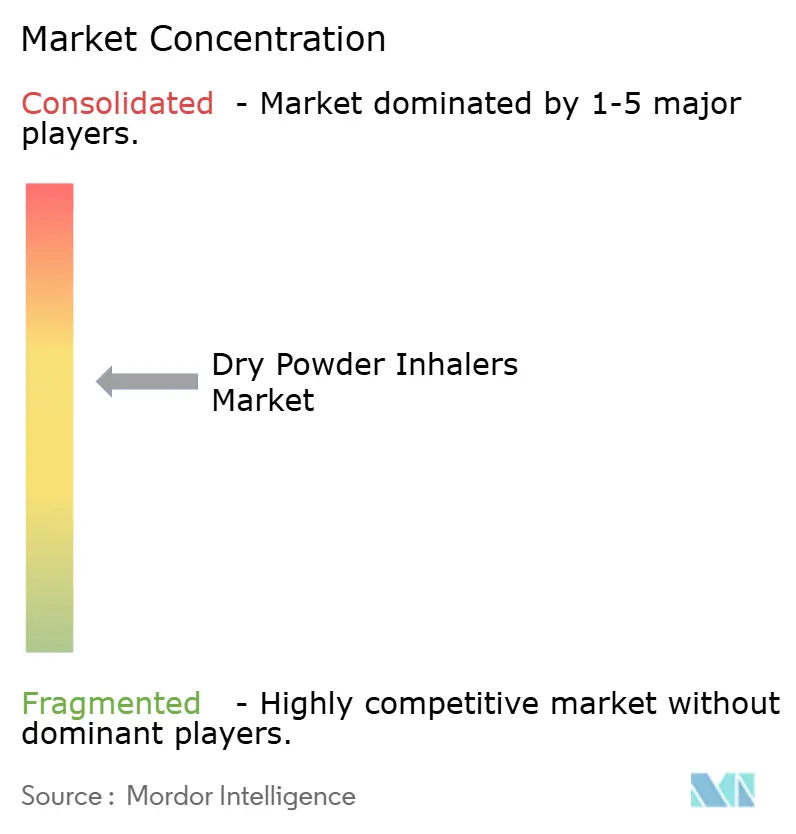
The dry powder inhalers market is moderately consolidated at the branded prescription level. Competition is most evident when a new medicine, a generic alternative, or a redesigned device disrupts established prescribing and refill patterns. This environment creates opportunities for innovation while rewarding companies that can support products through clinical development, manufacturing, reimbursement, and post-launch services. GlaxoSmithKline, through its Ellipta platform, Boehringer Ingelheim, and Novartis, through its Breezhaler platform, offer proprietary multi-dose device platforms that can make switching less convenient once patients begin multi-drug regimens. Their market positions reflect device familiarity, portfolio breadth, payer engagement, and clinical adoption. While generic manufacturers continue to compete, these factors increase the development and commercialization requirements for new entrants. Consequently, the dry powder inhalers industry combines established branded portfolios with focused competition across individual products and regional markets. The competitive structure includes several branded platform owners, active generic manufacturers, and specialized suppliers.
Cipla, Lupin, Teva, and Viatris pursue generic opportunities, particularly in mid-income markets. In the dry powder inhalers market, generic entry depends on proving drug-device bioequivalence and achieving reliable powder performance. Developers must also make sure that the device is understandable for patients and can be manufactured consistently at the required commercial scale. These requirements can delay launches, but they also create a route to broader patient access when approvals are secured. Contract development and manufacturing organizations have a separate role in the dry powder inhalers market because particle engineering and spray drying are essential for complex formulations. Hovione has presented environmental analysis for its PowdAir multi-use and TwinMax single-use platforms, helping it address sustainability-focused tender requirements. Companies with demonstrated formulation control can become important partners for inhaled biologic programs.
Strategic activity shows how manufacturers are widening the range of dry powder inhaler applications. MannKind expanded its United Therapeutics collaboration in August 2025 for a second Technosphere DPI therapy. Sino Biopharmaceutical deepened its GSK collaboration in July 2026 for the commercialization of Trelegy Ellipta and Anoro Ellipta in China. AstraZeneca’s low-global-warming-potential propellant program shows that device competition also includes environmental product design. FDA clearance processes for connected-device additions, European medical-device requirements, and quality certifications increase the investment needed for new entrants. Smaller sensor and digital health companies can still compete where established inhaler portfolios do not offer integrated patient monitoring.
Dry Powder Inhalers Industry Leaders
AstraZeneca plc
Boehringer Ingelheim International GmbH
GlaxoSmithKline plc
Novartis AG
Teva Pharmaceutical Industries Limited
- *Disclaimer: Major Players sorted in no particular order

Recent Industry Developments
- July 2026: Sino Biopharmaceutical deepened its exclusive strategic collaboration with GSK to commercialize Trelegy Ellipta (FF/UMEC/VI) and Anoro Ellipta (UMEC/VI) across China, expanding an agreement first executed in May 2026.
- April 2026: US FDA approved BREZTRI Aerosphere as the first and only triple ICS/LAMA/LABA maintenance therapy for asthma in patients aged 12 and older, based on Phase III KALOS and LOGOS trials enrolling 4,300 patients.
- March 2026: Cannovex and PureIMS entered a strategic co-development agreement granting Cannovex exclusive rights to develop pharmaceutical cannabinoid products through PureIMS’s Cyclops high-dose DPI platform. Phase I trials are anticipated in 2027.
- August 2025: United Therapeutics exercised its option under a 2018 collaboration to develop a second DPI therapy with MannKind using the Technosphere platform. MannKind received USD 5.0 million upfront and is eligible for up to USD 35.0 million in development milestones and 10% royalties on net sales.


Global Dry Powder Inhalers Market Report Scope
The dry powder inhalers (DPI) market comprises devices that deliver dry powder medication directly to the lungs for treating and managing respiratory disorders. These devices are used to manage asthma, chronic obstructive pulmonary disease (COPD), and other chronic pulmonary diseases due to their portability, breath-actuated mechanism, and ease of use. The market encompasses the development, manufacturing, distribution, and use of DPI-based drug delivery systems, including prescription and maintenance therapies that improve pulmonary drug deposition, enhance patient adherence, and support long-term respiratory disease management across pediatric, adult, and geriatric populations.
The dry powder inhalers market is segmented by product type, drug class, indication, device lifecycle, distribution channel, and geography. By product type, it is further divided into capsule-based dry powder inhalers, blister-based dry powder inhalers, reservoir-based dry powder inhalers, cartridge-based dry powder inhalers, and disposable dry powder inhalers. By drug class, it is segmented into inhaled corticosteroids, short-acting beta agonists, long-acting beta agonists, long-acting muscarinic antagonists, inhaled corticosteroid combination therapies, and others. By indication, the market is segmented into asthma, chronic obstructive pulmonary disease, cystic fibrosis, bronchitis, pulmonary arterial hypertension, and others. By device lifecycle, the market is segmented into reusable inhalers, disposable inhalers, single-use inhalers, and recyclable and circular-design inhalers. By distribution channel, the market is segmented into hospital pharmacies, retail pharmacies, online pharmacies, and others. The geography segment is further divided into North America, Europe, Asia-Pacific, the Middle East and Africa, and South America. The report also covers the estimated market sizes and trends for 17 countries across major regions globally. The report offers the market size and forecasts in value (USD) for the above segments.
| Capsule-Based Dry Powder Inhalers |
| Blister-Based Dry Powder Inhalers |
| Reservoir-Based Dry Powder Inhalers |
| Cartridge-Based Dry Powder Inhalers |
| Disposable Dry Powder Inhalers |
| Inhaled Corticosteroids |
| Short-Acting Beta Agonists |
| Long-Acting Beta Agonists |
| Long-Acting Muscarinic Antagonists |
| Inhaled Corticosteroid Combination Therapies |
| Others (Antibiotics, Antiviral Agents, etc.) |
| Asthma |
| Chronic Obstructive Pulmonary Disease |
| Cystic Fibrosis |
| Bronchitis |
| Pulmonary Arterial Hypertension |
| Others (Pulmonary Infections, Diabetes, etc.) |
| Reusable Inhalers |
| Disposable Inhalers |
| Single-Use Inhalers |
| Recyclable and Circular-Design Inhalers |
| Hospital Pharmacies |
| Retail Pharmacies |
| Online Pharmacies |
| Others (Specialty Pharmacies, Mail-Order Pharmacies etc.) |
| North America | United States |
| Canada | |
| Mexico | |
| Europe | Germany |
| United Kingdom | |
| France | |
| Italy | |
| Spain | |
| Rest of Europe | |
| Asia-Pacific | China |
| Japan | |
| India | |
| Australia | |
| South Korea | |
| Rest of Asia-Pacific | |
| Middle East and Africa | GCC |
| South Africa | |
| Rest of Middle East and Africa | |
| South America | Brazil |
| Argentina | |
| Rest of South America |
| By Product Type | Capsule-Based Dry Powder Inhalers | |
| Blister-Based Dry Powder Inhalers | ||
| Reservoir-Based Dry Powder Inhalers | ||
| Cartridge-Based Dry Powder Inhalers | ||
| Disposable Dry Powder Inhalers | ||
| By Drug Class | Inhaled Corticosteroids | |
| Short-Acting Beta Agonists | ||
| Long-Acting Beta Agonists | ||
| Long-Acting Muscarinic Antagonists | ||
| Inhaled Corticosteroid Combination Therapies | ||
| Others (Antibiotics, Antiviral Agents, etc.) | ||
| By Indication | Asthma | |
| Chronic Obstructive Pulmonary Disease | ||
| Cystic Fibrosis | ||
| Bronchitis | ||
| Pulmonary Arterial Hypertension | ||
| Others (Pulmonary Infections, Diabetes, etc.) | ||
| By Device Lifecycle | Reusable Inhalers | |
| Disposable Inhalers | ||
| Single-Use Inhalers | ||
| Recyclable and Circular-Design Inhalers | ||
| By Distribution Channel | Hospital Pharmacies | |
| Retail Pharmacies | ||
| Online Pharmacies | ||
| Others (Specialty Pharmacies, Mail-Order Pharmacies etc.) | ||
| By Geography | North America | United States |
| Canada | ||
| Mexico | ||
| Europe | Germany | |
| United Kingdom | ||
| France | ||
| Italy | ||
| Spain | ||
| Rest of Europe | ||
| Asia-Pacific | China | |
| Japan | ||
| India | ||
| Australia | ||
| South Korea | ||
| Rest of Asia-Pacific | ||
| Middle East and Africa | GCC | |
| South Africa | ||
| Rest of Middle East and Africa | ||
| South America | Brazil | |
| Argentina | ||
| Rest of South America | ||


Key Questions Answered in the Report
What is the projected value of dry powder inhalers by 2031?
The dry powder inhalers market is projected to reach USD 32.71 billion by 2031, from USD 25.64 billion in 2026. The forecast represents a 4.97% CAGR for 2026 to 2031. It reflects continued use of maintenance treatment and the expanding role of propellant-free delivery options.
What is driving demand for dry powder inhalers?
Chronic respiratory disease, propellant-free delivery, home-based care, and complex inhaled formulations support demand. Clinical evidence also supports device selection based on patient needs because dry powder inhalers and pressurized metered-dose inhalers showed comparable efficacy and safety in the cited 2026 review.
Which dry powder inhaler product type leads revenue?
Blister-based devices led product-type revenue with a 36.18% share in 2025. Their position is supported by precise dose metering, established manufacturing capability, and broad compatibility with several types of respiratory formulation. Multi-dose blister formats also fit fixed-dose combination treatment.
Which distribution channel is growing fastest for dry powder inhalers?
Online pharmacies are forecast to grow at a 7.02% CAGR through 2031, supported by e-prescriptions and adherence services. Provider-led programs that combine electronic inhaler monitoring with remote support improved adherence in the cited 2024 review.
Which region has the fastest projected growth?
Asia-Pacific is forecast to grow at a 6.93% CAGR through 2031, the fastest regional rate in the supplied data. Reimbursement expansion in China and growing treatment access across other Asian countries support this outlook.
Why do some patients struggle with dry powder inhalers?
Some older patients and people with advanced COPD cannot reliably generate the inspiratory flow needed for consistent powder delivery. Clinicians may need to assess inhalation ability, provide training, and consider a different device where the patient cannot achieve adequate flow. This remains an important limitation for the most severe COPD population.
Page last updated on:





