
Dental Suture Market Size and Share
Market Overview
| Study Period | 2020 - 2031 |
|---|---|
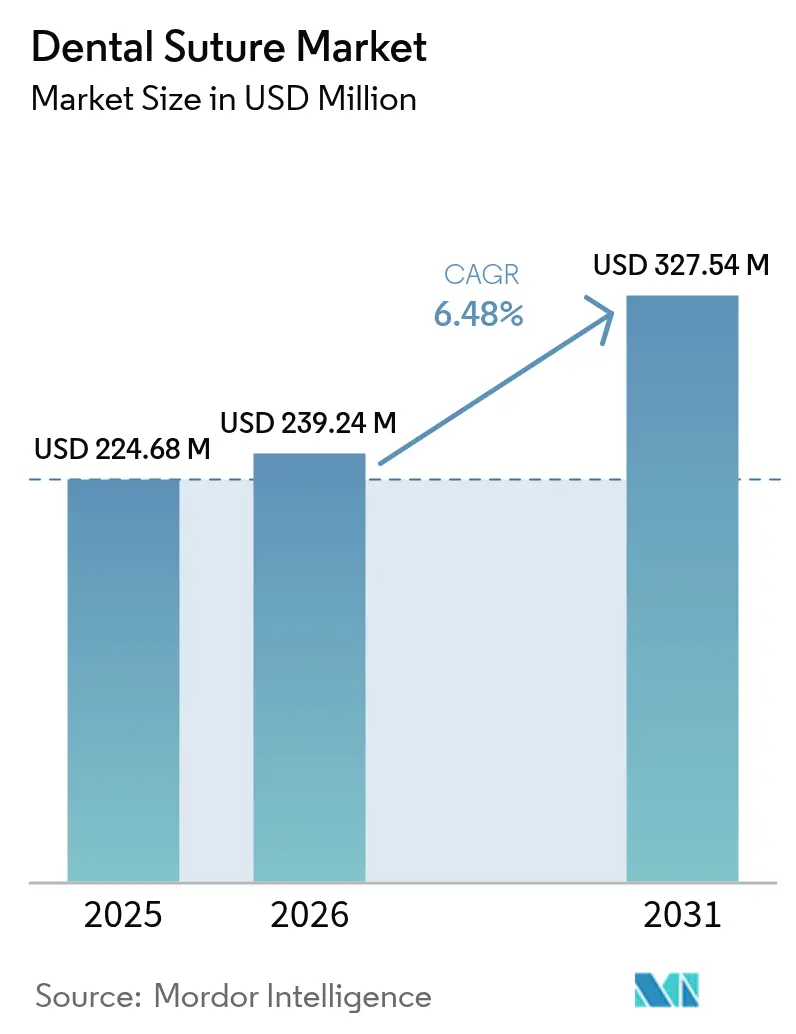
| Market Size (2026) | USD 239.24 Million |
| Market Size (2031) | USD 327.54 Million |
| Growth Rate (2026 - 2031) | 6.48 % |
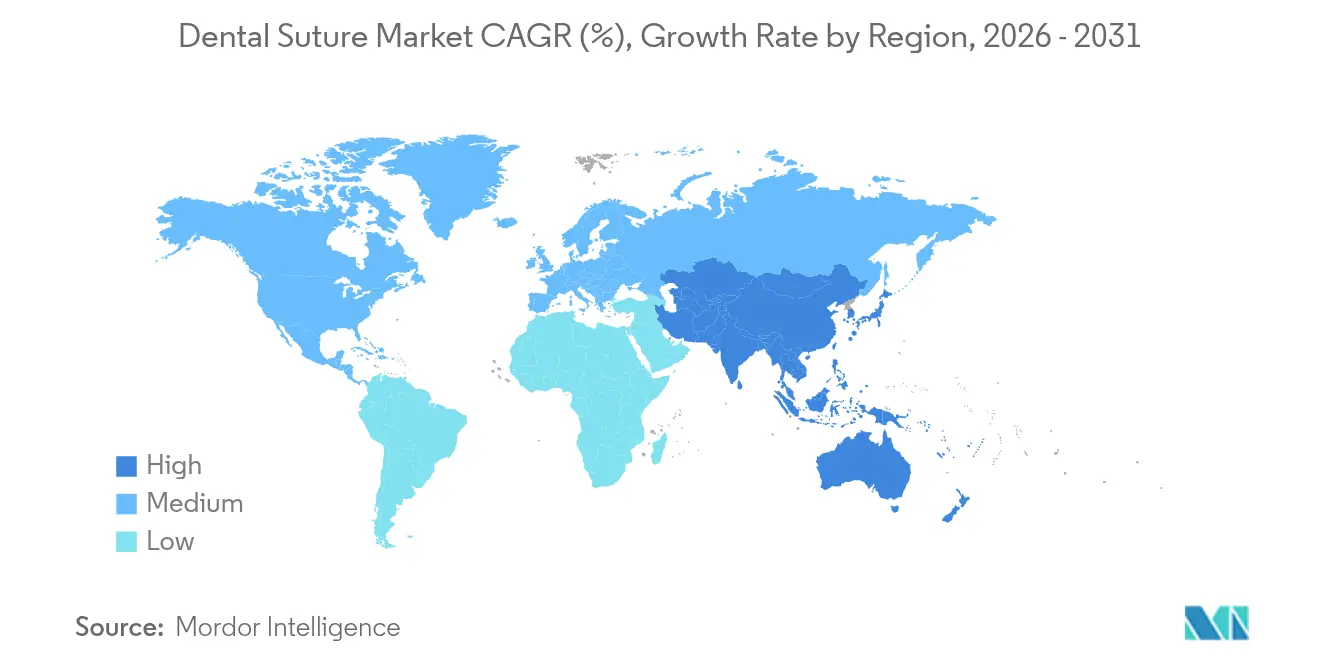
| Fastest Growing Market | Asia-Pacific |
| Largest Market | North America |
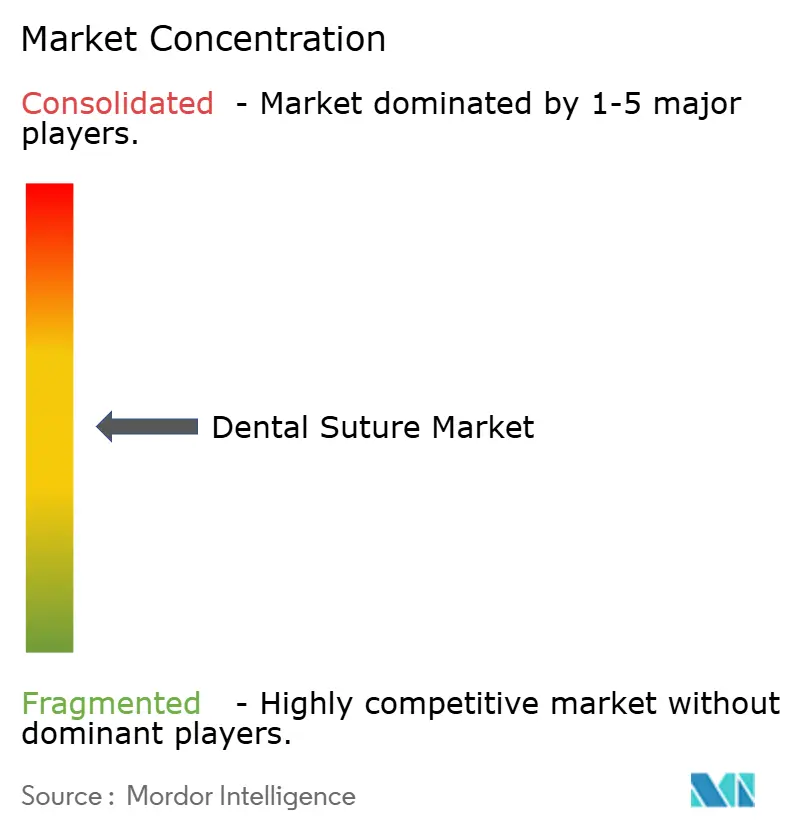
| Market Concentration | Medium |
Major Players *Disclaimer: Major Players sorted in no particular order Image © Mordor Intelligence. Reuse requires attribution under CC BY 4.0. | |
Dental Suture Market Analysis by Mordor Intelligence
The global dental suture market size in 2026 is estimated at USD 239.24 million, growing from 2025 value of USD 224.68 million with 2031 projections showing USD 327.54 million, growing at 6.48% CAGR over 2026-2031. Market expansion reflects three reinforcing dynamics: an aging population that requires a growing volume of periodontal and extraction procedures, sustained innovation in minimally invasive dentistry, and stricter regulatory momentum favoring biodegradable materials. In 2024, synthetic sutures captured a commanding 60.17% dental suture market share after demonstrating reliable tensile strength and predictable absorption properties. At the same time, the global burden of periodontal disease exceeded 1 billion cases in 2024 and remains on track to reach 1.56 billion by 2050, reinforcing consistent demand for wound-closure products. North America maintained leadership with 37.26% of the dental suture market in 2024, yet Asia-Pacific recorded the fastest growth trajectory at 7.52% CAGR, thanks to expanding middle-class access to dental care. Meanwhile, clinical adoption of resorbable sutures continues to accelerate as randomized trials show lower inflammatory response compared with traditional materials.
Key Report Takeaways
- By suture type, absorbable variants are forecast to post the fastest 6.78% CAGR to 2031, compared with non-absorbable offerings that held 54.10% of the dental suture market size in 2025.
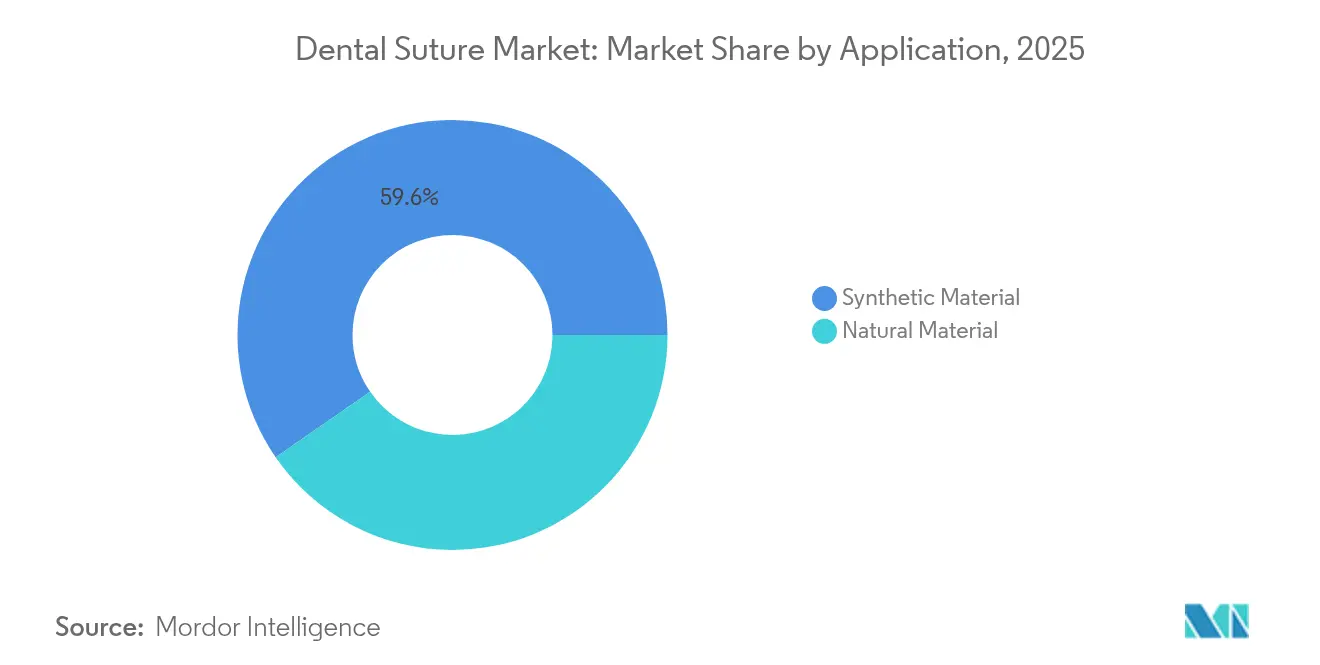
- By material, synthetic products led with 59.62% of the dental suture market share in 2025, while they are projected to expand at a 7.02% CAGR through 2031.
- By patient type, above 17 - Up to 65 segment held 54.00% of the dental suture market size in 2025, whereas up to 17 segment is set to advance at a 7.45% CAGR to 2031.
- By application, tooth-extraction procedures dominated 31.85% of the dental suture market share in 2025, while cosmetic dentistry is set to advance at a 7.40% CAGR to 2031.
- By end-use, dental clinics held a 63.40% share of the dental suture market in 2025 and are growing at a 6.90% CAGR on the back of outpatient care expansion.
- By geography, North America captured 36.90% of 2025 revenue; Asia-Pacific is projected to deliver a 7.25% CAGR through 2031.
Note: Market size and forecast figures in this report are generated using Mordor Intelligence’s proprietary estimation framework, updated with the latest available data and insights as of 2026.
Global Dental Suture Market Trends and Insights
Drivers Impact Analysis*
| Driver | (~) % Impact on CAGR Forecast | Geographic Relevance | Impact Timeline |
|---|---|---|---|
| Rising Prevalence of Periodontal Disease & Tooth-Loss Procedures | +1.8% | Global, with highest impact in North America & Europe | Medium term (2-4 years) |
| Growth in Dental Implant Surgeries Worldwide | +1.5% | North America & Asia-Pacific core, spill-over to Europe | Medium term (2-4 years) |
| Increasing Adoption of Resorbable Sutures in Dentistry | +1.2% | Global, with early gains in North America, Europe, Australia | Short term (≤ 2 years) |
| Growth of Outpatient Dental Microsurgery Enabled by Chairside Microscopes | +0.8% | North America & Europe, emerging in Asia-Pacific | Long term (≥ 4 years) |
| Regulatory Push for Biodegradable Dental Materials | +0.7% | Global, with strongest enforcement in North America & Europe | Medium term (2-4 years) |
| Adoption of 3-D Printed Patient-Specific Graft Membranes Needing Finer Closure | +0.5% | North America & Europe, with selective adoption in Asia-Pacific | Long term (≥ 4 years) |
| Source: Mordor Intelligence | |||
Rising Prevalence of Periodontal Disease and Tooth-Loss Procedures
More than 1 billion people were affected by periodontal disease[1]Liang Xie, “The research progress on periodontitis by the National Natural Science Foundation of China,” International Journal of Oral Science, nature.com in 2024, and epidemiological modeling anticipates 1.56 billion cases by 2050. Disease incidence rises sharply with age and displays pronounced socioeconomic variation, which leads to a diverse set of clinical protocols that rely on precise tissue approximation to curb bacterial infiltration. Surgical guidelines emphasize premium suture selection as a non-negotiable tool for flap stability, especially in patients with comorbid diabetes or cardiovascular conditions that complicate healing.
Growth in Dental-Implant Surgeries Worldwide
U.S. implant prevalence was 5.7% in 2016 and is anticipated to reach as high as 23% by 2026 if accessibility trends continue. Implants usually mandate several suturing episodes—including initial fixture placement, membrane fixation, and soft-tissue reshaping—which multiply suture use per patient. Positioning errors persist in 56.6% of implant cases, leading to revision surgeries[2]Razan Alaqeely, “Cyanoacrylates versus sutures in periodontal surgery,” Journal of Periodontology, mdpi.com that further augment suture demand.
Increasing Adoption of Resorbable Sutures in Dentistry
Randomized comparisons of polyglactin versus polyglycolic-acid filaments report lower postoperative inflammation and reduced plaque adhesion, especially in highly vascular periodontal sites. ASTM F2579-18 gives manufacturers a definitive standard for poly(lactide) and poly(lactide-co-glycolide)[3]U.S. Food and Drug Administration, “ASTM F2579-18 Recognition,” accessdata.fda.gov implants, accelerating product registrations. Patient convenience is another catalyst because absorbable sutures eliminate follow-up removal visits, an attractive advantage for busy clinics operating on lean schedules.
Expansion of Outpatient Dental Microsurgery Enabled by Chairside Microscopes
Magnification devices have migrated from specialty centers to routine practice, enabling broader use of 6-0 to 10-0 sutures that would otherwise be impractical. Observational studies confirm that microscope-assisted flaps present reduced tissue trauma and improved esthetics, which elevates material requirements as clinicians seek ultra-fine filaments with enhanced color visibility under high magnification. Younger dentists and larger urban practices act as first adopters, signaling an impending shift in baseline surgical standards.
Restraints Impact Analysis*
| Restraint | (~) % Impact on CAGR Forecast | Geographic Relevance | Impact Timeline |
|---|---|---|---|
| Availability of tissue adhesives and sealants as substitutes | -1.1% | Global, greatest in North America and Europe | Short term (≤ 2 years) |
| Elevated cost of advanced synthetic absorbable sutures | -0.8% | Emerging Asia-Pacific, Latin America, MEA | Medium term (2-4 years) |
| Skill gaps in advanced suturing among general dentists | -0.6% | Global, pronounced in resource-limited regions | Medium term (2-4 years) |
| Stringent waste-disposal regulation for single-use devices | -0.4% | North America, Europe; gradually extending to Asia-Pacific | Long term (≥ 4 years) |
| Source: Mordor Intelligence | |||
Availability of Tissue Adhesives and Sealants as Substitutes
Clinical trials show intraoral cyanoacrylate can secure 71.97% root coverage in periodontal surgery compared with 61.36% for sutures, while reducing closure time from 7.31 minutes to 2.16 minutes. Adhesives also eliminate removal appointments, a cost advantage in high-volume practices. Their growing acceptance threatens routine suture volumes, particularly for small incisions.
High Cost of Advanced Synthetic Absorbable Sutures
Price gaps between entry-level catgut and high-end braided polyglactin exceed 300%. In many emerging markets, private dental spending remains out-of-pocket, making high-performance sutures difficult to justify. Research into albumin-based composites demonstrates a credible, low-cost pathway that could narrow the gulf while meeting biocompatibility standards[4]Mohamed A. Naser, “Biodegradable suture development-based albumin composites for tissue engineering applications,” Scientific Reports, nature.com.
*Our forecasts treat driver/restraint impacts as directional, not additive. The impact forecasts reflect baseline growth, mix effects, and variable interactions.
Segment Analysis
By Suture Type: Absorbable Innovation Drives Future Growth
Non-absorbable filaments held 54.10% of the dental suture market in 2025, yet absorbable variants are forecast to deliver the leading 6.78% CAGR to 2031. The absorbable category benefits from synthetic polymers that offer controlled degradation and tensile retention matching tissue-healing kinetics. Dental suture market size for absorbable lines is projected to expand as regulatory frameworks validate their biodegradation profiles. Because removal appointments disappear, clinics gain scheduling flexibility and lower chair-time per patient, reinforcing uptake.
Polyglactin and polyglycolic-acid braids now achieve tensile strengths comparable to silk and nylon while provoking lower tissue reactivity, a critical feature in the oral cavity’s microbe-rich milieu. As product portfolios widen to include monofilament designs for esthetic zones, the adoption curve steepens. Over the forecast horizon, non-absorbable will continue to dominate specific indications that demand permanent tensile support, yet their share is expected to erode gradually in favor of absorbables.




By Material: Synthetic Dominance Reflects Performance Advantages
Synthetic fibers accounted for 59.62% of 2025 revenue and are projected to compound at 7.02% annually through 2031, maintaining clear leadership in the dental suture market. Their low bacterial retention and consistent absorption rates outperform natural alternatives, especially important in procedures where infection control is paramount. Conversely, natural offerings such as silk or cellulose retain niche relevance for patients sensitive to chemical additives.
The regulatory push for eco-friendly materials is catalyzing hybrid R&D that bonds synthetic strength with plant-derived substrates. Early prototypes of cellulose-reinforced polylactide braids suggest a credible bridge between performance and sustainability demands. While not yet commercialized, such products could shift buyer criteria toward environmental credentials.
By Patient Age Group: Pediatric Growth Outpaces Adult Segments
Adults aged 17-65 formed 54.00% of 2025 volume, reflecting peak intervention years. However, pediatric procedures are rising 7.45% yearly, driven by preventive dentistry campaigns and insurance coverage expansions. Child-specific sutures require delicate handling properties and smaller diameters, prompting suppliers to develop size-5-0 monofilaments with brightly colored coatings to aid visibility.
Elderly demand also climbs as life expectancy and edentulous rehabilitation increase. Older patients often present comorbidities that slow healing, so extended-support sutures with antimicrobial coatings gain traction. Tele-dentistry follow-up programs help monitor geriatric recovery, fostering confidence in remote management of postoperative care.
By Application: Cosmetic Procedures Drive Premium Growth
Tooth extraction retained 31.85% dental suture market share in 2025 and will stay volume-heavy. Periodontal therapy follows closely, underpinned by the pervasive incidence of gum disease. Meanwhile, cosmetic dentistry enjoys the fastest 7.40% CAGR to 2031 as social media visibility shapes patient expectations. Suture aesthetics—minimal scarring, color-matched filaments—command price premiums in esthetic zones.
Implant surgery remains a robust contributor because every fixture insertion requires flap management, guided bone regeneration, and often membrane fixation. Orthodontic soft-tissue procedures also increase in line with adult aligner demand, although their share stays modest relative to extractions.
By End-Use: Dental Clinics Maintain Market Leadership
Dental clinics controlled 63.40% of 2025 revenue and are forecast to grow at 6.90% CAGR. Consolidation under multisite Dental Service Organizations (DSOs) boosts volume purchasing power, enabling clinics to negotiate bundling deals on sutures and related consumables. Hospitals continue to manage trauma and medically complex cases, but experience a shrinking share as routine work migrates to the outpatient setting.
Ambulatory surgical centers (ASCs) occupy an intermediate niche. Prospective studies covering 11,680 dental-surgery patients confirm comparable safety to hospital care, encouraging wider insurer acceptance. With ASCs adopting hospital-grade protocols, their demand for specialized absorbable sutures should rise proportionately.
Geography Analysis
North America generated 36.90% of global revenue in 2025, anchored by high procedural volumes, robust insurance coverage, and practitioner familiarity with premium materials. United States-specific initiatives on opioid-sparing analgesia, such as the 2025 approval of suzetrigine, help safeguard patient comfort and promote elective procedures. Recent 10% tariffs on imported dental consumables may shift sourcing toward local suture manufacturers, but the market remains attractive given a 7.05% regional CAGR through 2031. Asia-Pacific represents the fastest 7.25% CAGR trajectory thanks to rising disposable income, urbanization, and large-scale public health investments. While per-capita procedure rates are lower than in North America, the vast population base translates to unparalleled volume potential. Domestic firms in India, China, and South Korea are scaling capacity to meet demand while offering cost-competitive alternatives. Europe recorded a steady 6.80% annual growth, buoyed by single-payer insurance schemes that cover a baseline of restorative care. Strict environmental policy accelerates the shift to biodegradable filaments. Local content regulations in France and Germany stimulate intra-regional production, offering European brands a competitive edge over imports. Latin America and the Middle East & Africa display 6.33% and 5.95% growth rates, respectively. Economic volatility is a recurring challenge, yet targeted government programs—such as Brazil’s Expanded National Oral Health Policy—create pockets of accelerated uptake. GCC countries leverage medical tourism to attract affluent patients seeking advanced aesthetic restoration, supporting premium suture consumption.

Regulatory Landscape
Dental sutures are regulated as medical devices across major markets. In the United States, most surgical sutures are regulated as Class II devices with FDA oversight, which typically uses a 510(k) clearance pathway and requires conformity to performance and sterilization controls. In Europe, dental sutures fall under the EU Medical Device Regulation (MDR 2017/745), where classification and evidence obligations, including clinical evaluation and post-market surveillance, increase the cost and complexity of maintaining CE marking and can favor suppliers with established regulatory infrastructure.
Global market access is anchored in conformity to biological safety and quality frameworks, including the ISO 10993 series for biocompatibility (ISO 10993-1:2018 as a core reference) and related sterilization and cleanroom expectations used in device manufacturing and validation. Changes in the standards environment, such as ISO 10993-6:2026 (local effects after implantation), reinforce deeper scrutiny of tissue response for absorbable and long-residence materials. This aligns with the report theme of stricter momentum favoring biodegradable options.
Value Chain Analysis
The dental suture value chain begins with upstream procurement of medical-grade inputs, including specialty polymers used for absorbable and non-absorbable products such as polyglactin, polydioxanone, polypropylene, and polyamide, along with natural fibers like silk and stainless steel alloys used for needles. These inputs feed midstream conversion steps: polymer synthesis and purification, extrusion into filaments, braiding or monofilament formation, needle manufacturing and swaging, followed by sterile barrier packaging and sterilization using modalities such as ethylene oxide or irradiation.
Downstream, products reach dental clinics through direct hospital procurement, dental distributors, DSOs, and e-commerce channels that support rapid replenishment for high-throughput practices. Key friction points include reliance on a concentrated base of specialty polymer suppliers, validation-heavy manufacturing steps, including sterility assurance and needle-attachment performance, and constrained certification throughput in regions dependent on EU MDR Notified Body capacity, which can extend lead times for new SKUs and material transitions.
Competitive Landscape
Competitive intensity remains moderate, with no single vendor exceeding a one-fifth share across all product categories. Established multinationals leverage polymer science and regulatory experience to maintain quality leadership, whereas regional challengers press price advantages and local regulatory familiarity. Technology portfolios increasingly extend beyond sutures into tissue adhesives, membranes, and sutureless closure systems.
Intellectual-property filings emphasize biodegradable composites and antimicrobial coatings. A recent wave of patents covers polylactide braids embedded with silver nanoparticles that reduce microbial colonization by up to 99% in in-vitro models. Concurrently, several manufacturers have prototyped 3-D-printed suture needles matched to patient anatomy, indicating the convergence of additive manufacturing and dental wound closure.
Distribution strategies pivot on multisite DSOs and e-commerce portals, enabling direct-to-clinic shipment models that shorten replenishment cycles. Customer-experience programs now combine digital education modules, augmented-reality knot-tying tutorials, and remote troubleshooting to lock in brand loyalty among early-career clinicians.
Dental Suture Industry Leaders
Advanced Medical Solutions Group PLC
B. Braun Melsungen AG
DemeTECH Corporation
Johnson & Johnson Services, Inc.
Teleflex Incorporated
- *Disclaimer: Major Players sorted in no particular order

Market Opportunities and Future Outlook
Product differentiation is increasingly tied to infection control and materials that reduce bacterial adhesion in the oral cavity, creating whitespace for monofilament and coated solutions that balance handling with lower microbial retention. The 2026 academic comparisons of Vicryl (polyglactin 910) and Monocryl (poliglecaprone 25) on bacterial adhesion differences support procurement decisions that favor monofilament designs for high-biofilm settings.
A second opportunity is the move toward sutures that integrate with adjacent closure technologies rather than functioning as a pure substitute. As clinics and suppliers account for the growing presence of tissue adhesives and sealants, 2026 research on rapidly gelling, injectable hydrogel sealants for oral mucosal defects highlights a competing closure pathway. For suture manufacturers, portfolio strategies increasingly pair resorbable threads with complementary sealants, membranes, or antimicrobial approaches to preserve procedure versatility across extractions, periodontal surgery, and implant-related soft-tissue management.
Recent Industry Developments
- March 2026: ISO advanced the biological evaluation framework for implanted devices with ISO 10993-6:2026, strengthening attention on local tissue effects after implantation. This increases the evidence burden for long-residence and absorbable suture materials and pushes suppliers to align material characterization and clinical risk management more tightly with international expectations.
- March 2025: The US FDA cleared the Suture-TOOL System (K250977) as a Class II absorbable polydioxanone surgical suture indicated for abdominal wall closure in adults. While not dental-specific, it signals continued 510(k) throughput for absorbable suture technologies and adds a visible predicate and performance benchmark that can influence broader suture development and validation approaches.
- August 2024: The ESTOIH trial follow-up reported by B. Braun in Hernia supports Monomax suture with the small-bite technique for midline abdominal closure. The publication strengthens longer-horizon clinical evidence strategies and informs dental portfolio choices focused on improved tissue response and healing outcomes.


Research Methodology Framework and Report Scope
Market Definition and Coverage
In this methodology, the dental suture market covers suture products used to close oral soft tissue after dental extractions, implant placement, periodontal surgery, biopsies, and related chairside procedures, measured as revenue at the point of sale into dental care settings.
Scope exclusions: This sizing excludes non-dental surgical sutures used outside oral procedures and excludes adjunct wound-closure items such as tissue adhesives and hemostatic agents.
Segmentation Overview
- By Suture Type
- Absorbable
- Non-Absorbable
- By Material
- Synthetic Material
- Natural Material
- By Patient Age Group
- Up to 17
- Above 17 - Up to 65
- Above 65
- By Application
- Tooth Extraction
- Periodontal Procedure
- Orthodontic Procedure
- Cosmetic Dentistry
- Other Applications
- By End-Use
- Dental Clinics
- Hospitals
- Ambulatory Surgical Centers
- By Geography
- North America
- United States
- Canada
- Mexico
- Europe
- Germany
- United Kingdom
- France
- Italy
- Spain
- Rest of Europe
- Asia-Pacific
- China
- Japan
- India
- Australia
- South Korea
- Rest of Asia-Pacific
- Middle East and Africa
- GCC
- South Africa
- Rest of Middle East and Africa
- South America
- Brazil
- Argentina
- Rest of South America
- North America
Data Sources, Market Sizing, and Validation
Desk Research
Desk work started by pinning down procedure-driven demand signals that reasonably connect to suture usage in dental settings. We used public health and utilization references such as CDC oral health statistics, WHO oral disease burden pages, OECD health data, and national dental association publications to understand how procedure volumes move by region and over time.
On the supply side, we reviewed product approvals and safety notes from regulators such as the US FDA and the European Commission medical device framework pages, then followed with peer-reviewed dentistry and oral surgery journals for practical suture selection patterns. We also used company annual reports, investor decks, and reputable press coverage to confirm product positioning, channel focus, and pricing direction. When useful, paid subscriptions for company financials and patent databases were used to validate revenue scale and track innovation activity. The specific desk sources listed here are illustrative, and additional public references were used for data collection, cross-checking, and clarifying assumptions.
Primary Interviews and Surveys
Primary interviews and structured surveys were used to validate clinical usage patterns and pricing logic, particularly where public data does not clearly separate dental sutures from broader suture categories. We spoke with a mix of manufacturers, distributors, dental clinic buyers, and practicing clinicians across major regions to check and refine assumptions around absorbable versus non-absorbable mix, typical pack sizes, and channel margins.
Distribution of primary research fieldwork respondents
| Company type | Respondent position | Region |
|---|---|---|
| Top tier: 27% | CXOs: 14% | APAC: 40% |
| Mid tier: 51% | Functional/Unit leaders: 28% | EMEA: 33% |
| Smaller Players: 22% | Managers: 58% | Americas: 27% |
Market-Sizing & Forecasting
The market was built using a top-down and bottom-up logic, with the main structure anchored on procedure-driven demand pools. In practice, procedure volumes for extractions, periodontal flap surgery, implant placement, and minor oral surgery were translated into suture consumption using interview-validated usage rates, then priced using average selling price (ASP) ranges that reflect dental channel realities.
To keep the model grounded, a small set of market fingerprints was used as key inputs, including the absorbable versus non-absorbable mix in dental use, average sutures used per procedure, the shift toward synthetic materials, clinic versus hospital purchasing share, and country-level price bands after currency normalization. Bottom-up checks were then applied through selective roll-ups of supplier revenue signals, distributor markups, and sampled ASP times estimated unit consumption in high-volume countries. This helped us spot gaps where procedure data is thin. Where direct visibility was limited, conservative fill rates were used and later re-tested through follow-up calls.
For forecasting, scenario analysis was applied so that procedure growth expectations and ASP progression could be varied without breaking the model. The forward view was tied to expert consensus on dental visit recovery, periodontal treatment intensity, implant adoption, and expected pricing changes, and then scenarios were narrowed to a central case that best matched field feedback.
Data Validation & Update Cycle
Outputs were checked against independent signals, including dental procedure trend lines, regional dental spend direction, and the implied unit consumption per active dental clinic, so totals stay realistic. When a region showed an unusual jump, or when a price band looked too wide, the drivers were isolated and reworked. The affected assumptions were revalidated with fresh expert inputs.
Before sign-off, the model goes through a multi-step analyst review, where inputs, formulas, and cross-check ratios are tested for consistency and outliers are challenged with documentation. Reports are refreshed annually, with interim updates triggered when there are material events such as major regulatory shifts, sharp currency moves, or pricing changes. Right before delivery, we perform a final pass to ensure the latest public indicators and interview-led updates are reflected in both the narrative and the numbers.
Mordor Intelligence's Dental Suture Market Estimate Compared With Other Published Estimates
Published market sizes for dental sutures can look far apart, even when they describe similar products, because the practical counting rules are not always consistent. Differences usually come from what is included around dental-only usage, how ASPs are updated over time, and whether estimates remain current with recent currency movements.
In this study, price bands were refreshed with recent transaction-level guidance from interviews and then normalized to a consistent USD timing before totals were finalized, which explains part of the spread seen against other sources, a refresh-led choice used by Mordor Intelligence. The remaining gaps typically come from whether adjacent wound-closure items are bundled into the suture total, whether forecasts assume aggressive procedure growth, and whether the model is validated against procedure-linked demand checks in each region.
Benchmark comparison
| Source | Market Size | Gaps in Research Methodology |
|---|---|---|
| Mordor Intelligence | USD 239.24 M (2026) | |
| Industry Consultancy A | USD 243.07 M (2026) | This estimate is published with a longer forecast window and limited disclosure on how dental-only ASP ranges and channel markups are refreshed, which can slightly lift the modeled 2026 value. |
| Strategy Advisory B | USD 275.90 M (2021) | The figure is for an earlier year and is not directly comparable without re-basing for procedure volumes and currency timing, and it is unclear if the scope consistently separates dental sutures from broader suture categories. |
The table shows that even when values appear close, the reasons can differ once the year, scope boundary, and pricing update rules are inspected. By tying revenue to dental procedure demand, applying consistent USD timing, and rechecking key assumptions with field feedback, the sizing stays traceable and repeatable for planning.


Key Questions Answered in the Report
Which suture material is currently preferred in dental surgeries and why?
Synthetic sutures dominate clinical choice because their engineered polymers deliver consistent tensile strength, low bacterial adherence, and controlled absorption that align well with oral-cavity healing dynamics.
What regulatory trend is shaping future innovation in dental suture products?
Health agencies in North America and Europe are tightening biocompatibility and sustainability standards, prompting manufacturers to prioritize fully biodegradable polymers and recyclable packaging across new product lines.
How does the rise of outpatient microsurgery influence suture design requirements?
Widespread adoption of chairside microscopes encourages use of ultra-fine, high-contrast filaments that enable precise knot placement while minimizing tissue trauma during minimally invasive procedures.
What competitive strategies are suppliers using to stand out in the dental suture landscape?
Leading companies are integrating antimicrobial coatings, developing bioactive resorbable filaments, and bundling sutures with complementary closure solutions such as membranes and tissue adhesives to create full-service portfolios.
Why is Asia-Pacific considered the most dynamic regional market for dental sutures?
Expanding middle-class spending, government-backed healthcare infrastructure projects, and local manufacturing scale-ups are collectively accelerating adoption of advanced wound-closure products throughout the region.
What substitute technologies pose the greatest threat to traditional dental sutures, and how are vendors responding?
Tissue adhesives and sealants offer faster application and eliminate removal visits; in response, suture manufacturers are launching hybrid kits that combine resorbable threads with bio-compatible adhesive patches to preserve procedural versatility.
Page last updated on:





