
Confocal Microscope Market Size and Share
Market Overview
| Study Period | 2020 - 2031 |
|---|---|
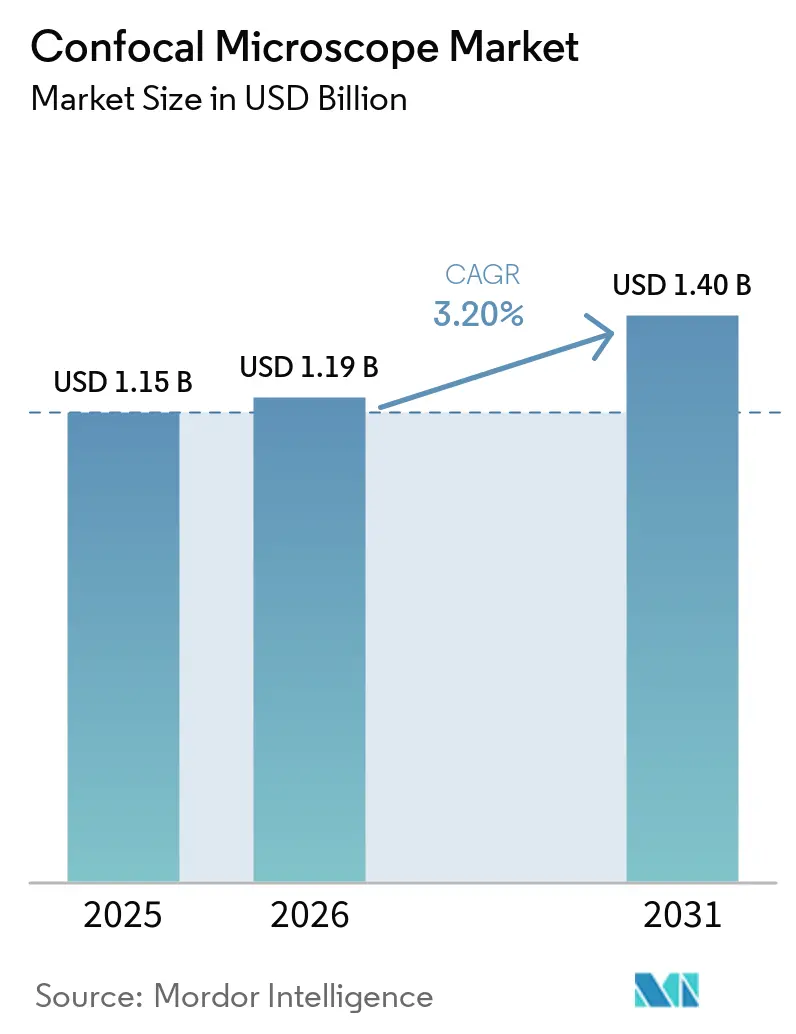
| Market Size (2026) | USD 1.19 Billion |
| Market Size (2031) | USD 1.40 Billion |
| Growth Rate (2026 - 2031) | 3.20 % |
| Fastest Growing Market | Asia Pacific |
| Largest Market | North America |
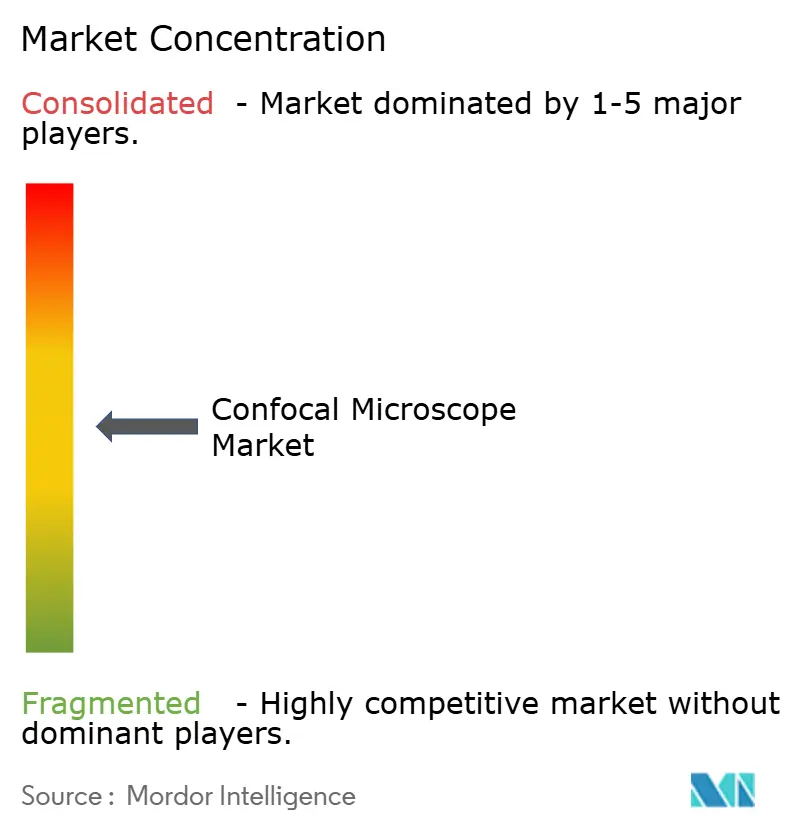
| Market Concentration | Medium |
Major Players *Disclaimer: Major Players sorted in no particular order Image © Mordor Intelligence. Reuse requires attribution under CC BY 4.0. | |
Confocal Microscope Market Analysis by Mordor Intelligence
The Confocal Microscope Market size is projected to expand from USD 1.15 billion in 2025 and USD 1.19 billion in 2026 to USD 1.40 billion by 2031, registering a CAGR of 3.20% between 2026 to 2031.
The measured pace reflects a transition from hardware-only sales to integrated software-and-service bundles, where AI-driven image-analysis workflows and super-resolution modules command premium pricing while extending replacement cycles. Sovereign research mandates in China and Japan are accelerating the procurement of multiphoton systems for brain-mapping initiatives, while ophthalmic confocal imaging is becoming embedded in routine keratitis diagnostics across North American and European hospital networks.
Key Report Takeaways
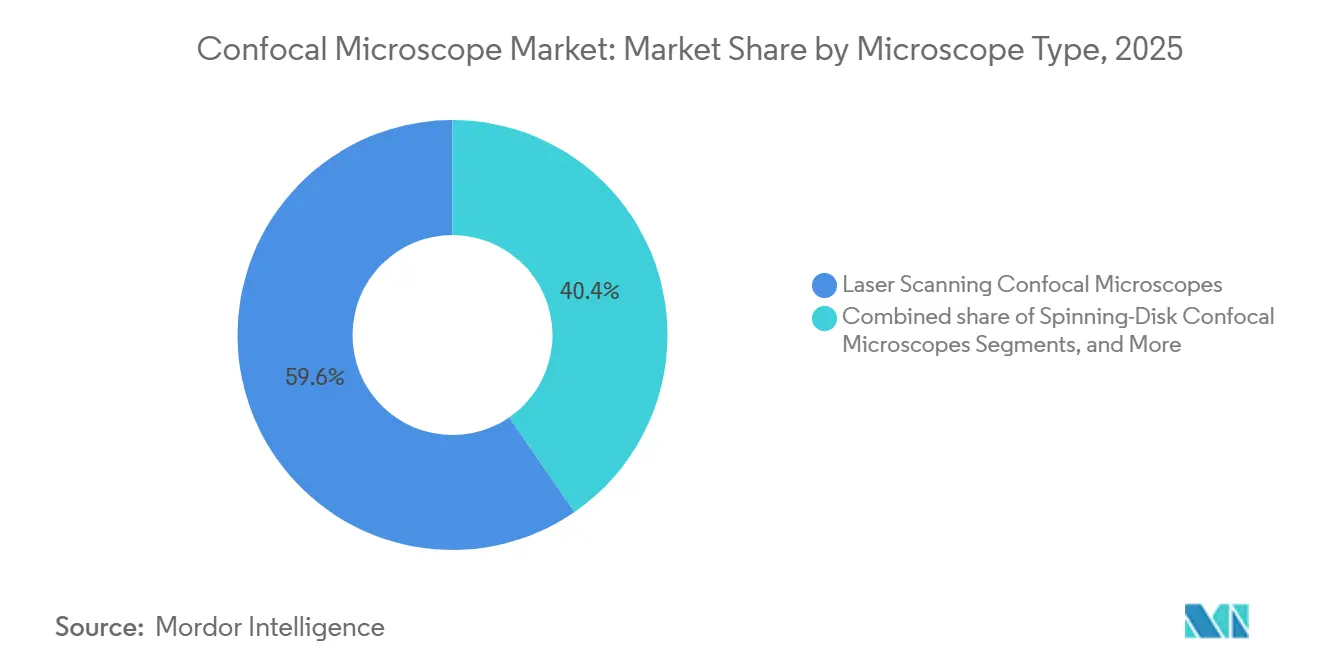
- By microscope type, laser-scanning systems accounted for 59.65% of the confocal microscopy market in 2025. Programmable array microscopes are projected to advance at a 4.32% CAGR between 2026 and 2031, outpacing the overall confocal microscopy market.
- By light source, Diode lasers captured 81.24% of the confocal microscopy market share in 2025. OPSL & fiber lasers are forecast to grow at a 5.32% CAGR through 2031.
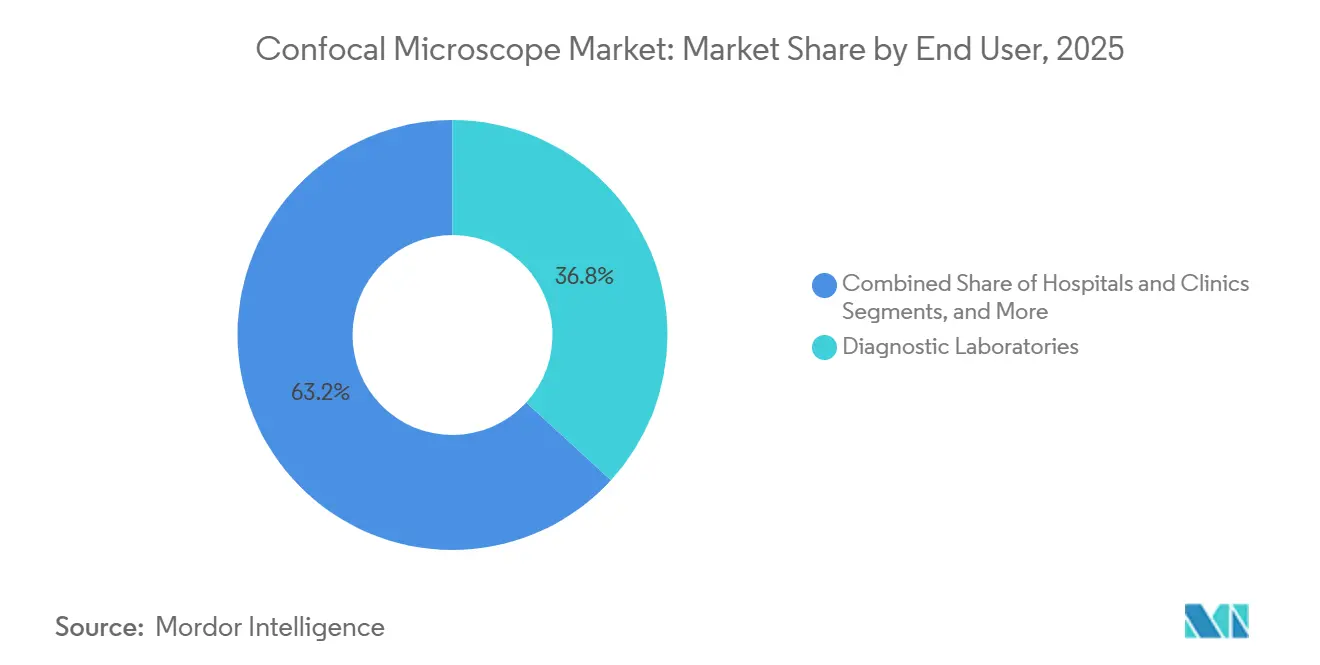
- By end user, diagnostic laboratories led with 36.78% of the confocal microscopy market share in 2025. Pharmaceutical and biotechnology companies are expanding at a 5.21% CAGR through 2031, the fastest growth rate among all end users.
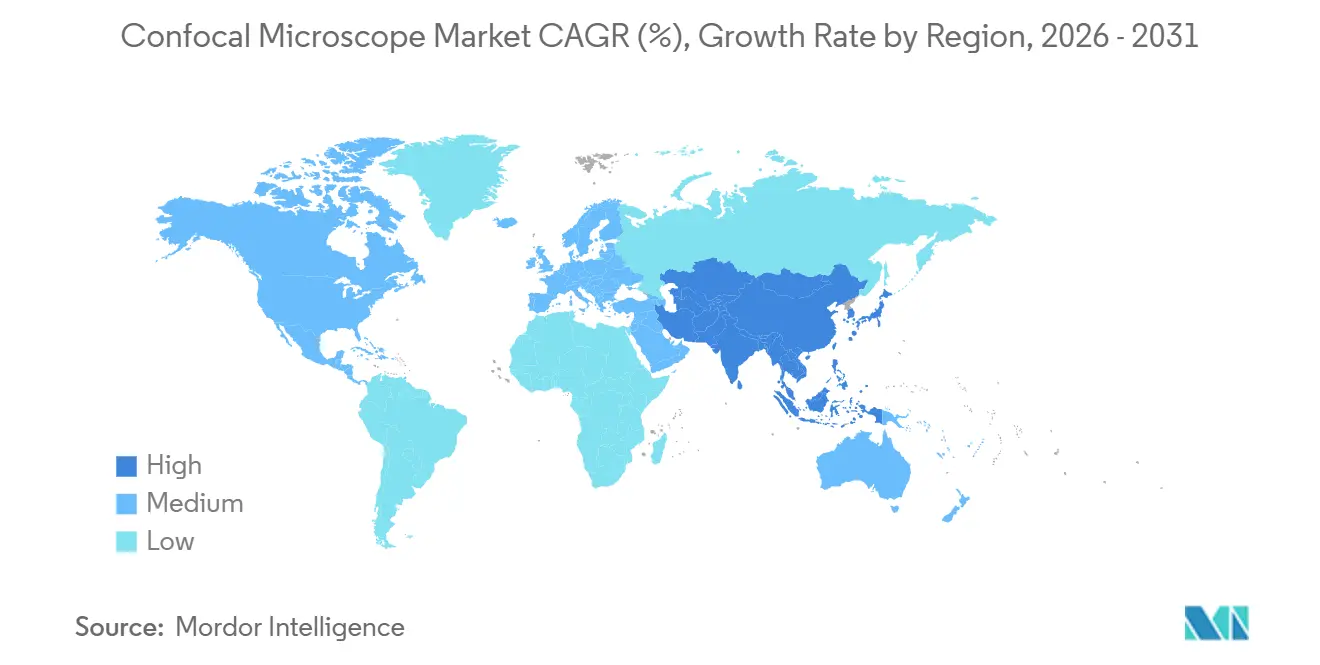
- By geography, North America captured 36.71% revenue share in 2025, while Asia-Pacific is forecast to grow at a 4.17% CAGR to 2031.
Note: Market size and forecast figures in this report are generated using Mordor Intelligence’s proprietary estimation framework, updated with the latest available data and insights as of January 2026.
Market Trends and Insights
Drivers Impact Analysis of Confocal Microscope Market*
| Driver | (~) % Impact on CAGR Forecast | Geographic Relevance | Impact Timeline |
|---|---|---|---|
| Rising Demand for Ophthalmic-Care Confocal Imaging | +0.6% | North America, Europe, APAC urban centers | Medium term (2-4 years) |
| Expansion of Life-Science & Neurophysiology R&D Budgets | +0.8% | Global, with concentration in US, China, EU | Long term (≥4 years) |
| Growing Incidence of Microbial Keratitis & Corneal Disorders | +0.4% | Global, elevated in South Asia, Sub-Saharan Africa | Short term (≤2 years) |
| AI-Enabled Automated Image-Analysis Workflows | +0.7% | North America, Europe, Japan | Medium term (2-4 years) |
| Adoption of Super-Resolution Modules for Live-Cell Studies | +0.5% | North America, Europe, China | Long term (≥4 years) |
| Government-Funded Brain-Connectome Mega-Projects | +0.5% | US, EU, China, Japan | Long term (≥4 years) |
| Source: Mordor Intelligence | |||


Rising Demand for Ophthalmic-Care Confocal Imaging
In-vivo corneal confocal microscopy is moving from research use toward standard-of-care diagnostics, especially for early detection of diabetic peripheral neuropathy and infectious keratitis. The American Academy of Ophthalmology updated its 2025 guidelines to recommend corneal-nerve fiber density quantification for patients with type 2 diabetes showing subclinical neuropathy, prompting hospitals to purchase Heidelberg Retina Tomograph and Nidek Confoscan modules.[1]American Academy of Ophthalmology, “Clinical Guidelines,” aao.org Medicare assigned CPT 92499 to corneal confocal microscopy in January 2025, reimbursing USD 285 per bilateral exam and removing a financial barrier for U.S. practices. Contact-lens-related microbial keratitis cases surged 18% year-over-year in 2025, and real-time imaging shortens diagnosis from 48 hours to under 20 minutes. India’s blindness-control program earmarked INR 120 crore (USD 14.4 million) in fiscal 2025-26 to equip tier-2 city eye-care centers with confocal systems. These policy shifts bolster the confocal microscopy market across multiple geographies.
Expansion of Life-Science & Neurophysiology R&D Budgets
The U.S. National Institutes of Health budget rose to USD 51.3 billion in 2025, with a focus on neuroscience, cancer biology, and infectious disease, where confocal microscopy is foundational. China’s National Natural Science Foundation dedicated CNY 3.5 billion (USD 490 million) to neuroscience imaging, mandating the installation of multiphoton confocal microscopes at leading universities.[2]National Natural Science Foundation of China, “Annual Report,” nsfc.gov.cn Horizon Europe earmarked EUR 2.1 billion (USD 2.3 billion) for 2025-2027 life-science infrastructure, explicitly calling for advanced imaging cores. Japan’s Brain/MINDS project allocated JPY 8.2 billion (USD 55 million) to marmoset connectome mapping using two-photon confocal systems. Sustained funding de-risks vendor R&D, encouraging innovation in adaptive optics and AI autofocus that expands the confocal microscopy market.
Growing Incidence of Microbial Keratitis & Corneal Disorders
Global incidence of microbial keratitis climbed 12% between 2024 and 2025, driven by agricultural trauma and inadequate sanitation in South Asia and Sub-Saharan Africa.[3]World Health Organization, “Blindness and Vision Loss,” who.int Confocal imaging bypasses culture delays, enabling pathogen identification in minutes. A multicenter trial published in 2025 showed confocal-guided antifungal therapy reduced treatment duration by 9 days and improved visual outcomes by 0.3 logMAR units. Rising contact-lens use, now exceeding 150 million users, has elevated Acanthamoeba infections, prompting state optometry boards to mandate confocal screening for symptomatic wearers. Dry-eye disease affects 344 million individuals, and confocal imaging quantifies inflammatory markers to guide therapy. These clinical needs underpin the expansion of the confocal microscopy market.
AI-Enabled Automated Image-Analysis Workflows
Machine-learning tools compress analysis timelines and democratize expert interpretation. Nikon’s NIS.ai, trained on 500,000 annotated images, automates segmentation and phenotype classification, cutting labor by 70%. Zeiss ZEN intellesis uses active learning to refine models with minimal user input, enabling custom classifiers within two hours. The FDA cleared the first AI-assisted corneal-nerve analysis algorithm in August 2025, opening a regulatory pathway for software-as-a-medical-device solutions paired with confocal hardware. AstraZeneca halved its hit-identification cycle time after embedding AI-driven confocal analysis in its 2025 drug-discovery pipeline. Cloud platforms such as Thermo Fisher’s Invitrogen iBright Analysis Cloud allow multi-site teams to process confocal datasets on shared GPU clusters, reinforcing software-centric value capture within the confocal microscopy market.
Restraints Impact Analysis of Confocal Microscope Market*
| Restraint | (~) % Impact on CAGR Forecast | Geographic Relevance | Impact Timeline |
|---|---|---|---|
| High Capital/Maintenance Cost & Long ROI Cycles | -0.9% | Global, acute in emerging markets and smaller institutions | Short term (≤2 years) |
| Shortage of Advanced Microscopy Specialists | -0.5% | North America, Europe, Asia-Pacific | Medium term (2-4 years) |
| Shift of Organoid Research Toward Light-Sheet Microscopy | -0.4% | North America, Europe | Medium term (2-4 years) |
| Cybersecurity Compliance Burden for Networked Instruments | -0.3% | North America, Europe | Short term (≤2 years) |
| Source: Mordor Intelligence | |||
High Capital and Maintenance Cost & Long ROI Cycles
Confocal microscopes range from USD 50,000 for entry-level spinning-disk units to USD 600,000 for multiphoton platforms with environmental chambers, exceeding budgets of community colleges and regional hospitals. Annual service contracts consume 10%-12% of the purchase price, and laser modules require replacement every 8,000-12,000 hours at up to USD 80,000. Import duties add 20% in India and up to 18% in Brazil, inflating landed costs by 30%-40% versus U.S. pricing. Leasing models are emerging, yet adoption remains below 5% of total placements. High entry barriers temper near-term growth in the confocal microscopy market.
Shortage of Advanced Microscopy Specialists
Operating confocal systems demands expertise in optics and image processing, yet university curricula often lack hands-on training. A 2025 Royal Microscopical Society survey found 62% of U.K. imaging cores struggled to recruit qualified staff, with vacancies remaining open for nine months. U.S. specialists command USD 75,000-95,000 salaries, a 15% premium over general technicians, straining smaller institutions. Vendor workshops cannot replace years of iterative troubleshooting experience. Asia-Pacific faces acute shortages; tier-2 Chinese facilities operate at 50% utilization because investigators lack confidence in local support. Staffing gaps slow instrument adoption, constraining the confocal microscopy market.
*Our forecasts treat driver/restraint impacts as directional, not additive. The impact forecasts reflect baseline growth, mix effects, and variable interactions.
Confocal Microscope Market Segment Analysis
By Microscope Type:
Laser Scanning Dominance Meets Programmable-Array DisruptionLaser scanning systems captured 59.65% of the confocal microscopy market share in 2025, sustained by flexibility in fluorophore selection and compatibility with three decades of published protocols. Zeiss LSM 980 and Leica STELLARIS 8 platforms offer spectral detection from 400 nm to 800 nm and record 420 frames per second, making them indispensable for calcium imaging in neurons. Spinning-disk microscopes such as Yokogawa CSU-W1 achieve 200-500 fps with reduced photobleaching, serving live-cell embryology studies. Two-photon systems like Bruker Ultima Investigator penetrate 2 mm of scattering tissue, fulfilling brain-mapping requirements.
Programmable array microscopes are forecast to expand at a 4.32% CAGR through 2031, outpacing the overall confocal microscopy market. Oxford Instruments’ Andor Dragonfly combines spinning-disk speed with computational super-resolution that approaches 100 nm lateral resolution without the phototoxicity of STED. Swept-field and line-scanning modes occupy niche positions in high-throughput screening, while flow imaging microscopy offers complementary capabilities for rapid analysis of cells and particles; Nikon AX R line scanning reduces 96-well plate acquisition time by 40%.


By Light Source Technology:
OPSL Gains Ground on Reliability PremiumDiode lasers captured 81.24% of the confocal microscopy market share in 2025, buoyed by sub-USD 5,000 pricing for common wavelengths and seamless plug-and-play with major microscope brands. Single-mode diodes deliver 20 mW to 150 mW output with beam-quality figures below 1.3, meeting the photon-flux needs of most fluorescence assays. LED light engines such as Lumencor SOLA and CoolLED pE-4000 attract spinning-disk users with one-tenth the cost of laser combiners, yet their broader spectra and lower radiance limit adoption in point-scanning systems. White-light lasers, including Leica’s tunable WLL and NKT Photonics SuperK, sell for USD 40,000-80,000 but give core facilities any excitation between 470 nm and 670 nm in 1 nm steps, trimming inventory and setup time.
By End User:
Diagnostic Labs Lead, Pharma AcceleratesDiagnostic laboratories accounted for 36.78% of 2025 revenue, commanding the largest slice of the confocal microscopy market size. Medicare’s 2025 CPT 92499 reimbursement at USD 285 per bilateral exam drove a 28% installation surge of Heidelberg Retina Tomograph units. Academic institutes host the largest installed base via shared cores that serve dozens of investigators, favoring modular platforms with extensive accessory libraries. Hospitals employ reflectance confocal imaging for rapid intraoperative assessments, reducing frozen-section turnaround from 20-30 minutes to under five minutes.
Pharmaceutical and biotechnology companies represent the fastest-growing end-user segment, advancing at a 5.21% CAGR to 2031. AstraZeneca, Novartis, and Takeda each operate double-digit confocal fleets integrated with robotics and cloud analytics to screen 5,000-10,000 compounds quarterly. Industrial and materials-science labs apply confocal optics to semiconductor inspection and corrosion analysis, with JEOL and Keyence supplying rugged systems for factory floors. Contract research organizations expand capacity to meet outsourcing demand, further scaling the confocal microscopy market.
Geography Analysis
North America Confocal Microscope Market
North America captured 36.71% of 2025 revenue, underpinned by NIH funding exceeding USD 51 billion and Medicare reimbursement that positions confocal imaging as a billable clinical service. The U.S. BRAIN Initiative allocated USD 140 million to imaging infrastructure, mandating multiphoton confocal systems at 22 institutions. Canada’s NSERC directed CAD 450 million (USD 330 million) to imaging cores, while Mexico launched a USD 25 million modernization program, albeit hampered by 15% import tariffs.
APAC Confocal Microscope Market
Asia-Pacific is projected to grow at a 4.17% CAGR through 2031, the fastest among major regions. China installed 320 confocal units in 2025, 60% with multiphoton capability, fueled by CNY 3.5 billion neuroscience grants. Japan’s Brain/MINDS project invested JPY 8.2 billion (USD 55 million) in 2025, installing adaptive-optics-enabled systems for deep-brain imaging. India earmarked INR 180 crore (USD 21.6 million) for advanced microscopy, yet 20% duties and limited operator pools restrict utilization to 60%. South Korea’s Institute for Basic Science standardized on Zeiss and Leica to streamline data sharing across 18 imaging centers.
EMEA and South America Confocal Microscope Market
Germany’s DFG funded 45 confocal acquisitions, prioritizing STED-capable platforms. The U.K. BBSRC invested GBP 28 million (USD 35 million) in imaging infrastructure, concentrating assets at the Francis Crick Institute and leading universities. France’s CNRS standardized on Leica STELLARIS across 32 platforms to ease cross-site training. Saudi Arabia’s KAUST installed six Zeiss LSM 980 units, while South Africa’s NRF funded upgrades at two universities, indicating emerging regional adoption. Currency volatility and customs delays continue to hinder South American growth, with Brazil’s ICMS taxes adding up to 18% to instrument prices.

Regulatory Landscape
Confocal systems used for clinical imaging typically operate under medical-device frameworks. When the system is laser-based, it also comes under controls for radiation-emitting products. In the United States, confocal optical imaging is classified under 21 CFR 876.1500 (Class II, Product Code OWN) and ophthalmic confocal microscopes under 21 CFR 886.1850 (Class II, Product Code HJO), which generally entails 510(k) clearance along with applicable electronic product reporting obligations for laser-emitting devices.
Laser safety and electrical safety standards are a key compliance anchor for manufacturers selling into hospital and diagnostic settings. FDA policy recognizes conformance to IEC 60825-1 (Ed. 3) and IEC 60601-2-22 (Ed. 3.1) for laser products, which helps align US requirements with international practice and shapes design controls, labeling, and test documentation for confocal platforms that use diode, OPSL, or fiber lasers.
Competitive Landscape
The confocal microscopy market remains moderately consolidated, with Zeiss, Leica Microsystems, Nikon, and Olympus controlling the majority of 2025 revenue. Zeiss differentiates through its 32-channel Airyscan detector that boosts resolution 1.7× without STED phototoxicity. Leica counters with a tunable white-light laser covering 440-790 nm, allowing any excitation wavelength and cutting laser inventory costs. Nikon’s AX R offers a 25 mm field-of-view, accelerating whole-slide imaging for digital pathology.
White-space opportunities lie at the intersection of confocal imaging and spatial transcriptomics. Caliber Imaging secured FDA clearance for its VivaScope reflectance system, generating recurring revenue through consumables. PicoQuant dominates fluorescence-lifetime modules that retrofit onto third-party confocals, pursuing a component strategy that avoids direct competition with microscope OEMs. Yokogawa’s partnership with Andor integrates CSU hardware with Dragonfly software and SRRF algorithms, delivering turnkey speed-plus-resolution solutions attractive to imaging cores.
ISO 13485 and FDA pathways favor incumbents with mature quality systems, yet regulatory harmonization under the IMDRF lowers barriers for Asian entrants such as Keyence, which added a 405 nm option to its VK-X3000 laser-scanning confocal for semiconductor clients. Leica announced a EUR 45 million expansion of its Wetzlar factory to halve order lead times by 2027, signaling capacity investments that should stabilize supply in the confocal microscopy market.
Confocal Microscope Industry Leaders
ZEISS Group (Carl Zeiss Meditec AG)
Nikon Corporation
Bruker Corporation
Olympus Corporation
Leica Microsystems (Danaher)
- *Disclaimer: Major Players sorted in no particular order
Confocal Microscope Market Companies Covered in this Report
- Agilent Technologies
- Bruker
- Caliber Imaging & Diagnostics
- Confocal.nl
- CrestOptics S.p.A
- Hitachi High-Tech Corp.
- HORIBA
- ISS
- JEOL Ltd.
- Keyence Corporation
- Danaher
- Molecular Devices
- Nikon
- Olympus Corporation (Evident)
- Oxford Instruments (Andor)
- PerkinElmer (Revvity)
- PicoQuant GmbH
- Thermo Fisher Scientific
- Thorlabs
- Yokogawa Electric
- Carl Zeiss

Market Opportunities and Future Outlook
Clinical adoption beyond traditional ophthalmology and dermatology continues to expand the whitespace for confocal modalities that support near-real-time decision-making. In 2026, VivaScope reported prospective validation of ex vivo fusion confocal microscopy for intraoperative margin assessment in breast-conserving surgery (146 breast tissue samples, 93.7% sensitivity/specificity for tumor detection). The results reinforce a path for confocal systems positioned as workflow tools in surgical oncology, rather than stand-alone research instruments.
Software-focused opportunities are also building around automated interpretation and standardized reporting, which can reduce dependency on scarce microscopy specialists. Multiple 2026 publications described AI-assisted in vivo confocal microscopy interpretation (for example, IVCM-Insight reported 0.96 multi-label classification accuracy). This aligns with the market shift toward integrated software-and-service bundles and supports clearer productization of AI modules paired with confocal hardware for hospital networks and diagnostic laboratories.
Recent Industry Developments in Confocal Microscope Market
- February 2026: ZEISS reported China NMPA approval for the ZEISS ARTEVO 750 and ZEISS ARTEVO 850 ophthalmic microscopes. The approvals broaden ZEISS access to the China ophthalmology installed base and highlight how country-specific clearances can accelerate clinical equipment procurement.
- April 2025: Nikon announced it would commence sales of the AX NIR with the NSPARC super-resolution confocal microscope system on April 30, 2025. The launch strengthens Nikon's positioning in super-resolution confocal workflows and supports differentiation for deep and low-background imaging applications.
- June 2024: Nikon released the AX R with NSPARC 2K super-resolution confocal microscope. This expanded Nikon's confocal portfolio with a higher-performance super-resolution configuration designed to support faster acquisition and improved image quality for advanced life-science imaging cores.


Confocal Microscope Market Report Scope and Research Methodology
Market Definition and Coverage
This market covers revenues generated from confocal microscope systems used for high-resolution optical imaging, where out-of-focus light is reduced using confocal principles to improve contrast and enable optical sectioning.
Scope exclusions: We exclude broader widefield optical microscopes and general microscopy devices that do not use confocal imaging modes as their primary function.
Segments Covered in This Report
- By Microscope Type
- Laser Scanning Confocal Microscopes
- Spinning-Disk Confocal Microscopes
- Programmable Array Microscopes (PAM)
- Two-Photon / Multiphoton Confocal Microscopes
- Swept-Field & Line-Scanning Confocal Microscopes
- By Light Source
- Diode Lasers
- OPSL & Fiber Lasers
- LED Illumination
- Others
- By End User
- Hospitals & Clinics
- Diagnostic Laboratories
- Academic & Research Institutes
- Pharmaceutical & Biotechnology Companies
- Other End Users
- By Geography
- North America
- United States
- Canada
- Mexico
- Europe
- Germany
- United Kingdom
- France
- Italy
- Spain
- Rest of Europe
- Asia-Pacific
- China
- Japan
- India
- South Korea
- Australia
- Rest of Asia-Pacific
- Middle East & Africa
- GCC
- South Africa
- Rest of Middle East & Africa
- South America
- Brazil
- Argentina
- Rest of South America
- North America
Data Sources, Market Sizing, and Validation
Desk Research
Desk work started with public signals that reflect how fast research activity and lab infrastructure are expanding, since these are common demand anchors for confocal imaging. We referred to sources such as the World Health Organization for health system context, the World Bank for R&D and education indicators, UNESCO Institute for Statistics for R&D intensity, and OECD science and technology datasets to understand research spending direction.
We also used company annual reports, investor decks, and product catalogs to map what a confocal microscope typically includes, how systems are positioned, and where upgrades are happening, for example scanning approaches and light-source changes. Patent databases were selectively checked to sense innovation focus around scanning, detectors, and illumination. When needed, we used a paid subscription database for company financials and a separate subscription for news and filings to keep timelines and reported revenue cues consistent. The sources named here are illustrative, and many other public documents and datasets were also checked for cross-verification and clarification.
Primary Interviews and Surveys
Primary discussions were used to connect technical adoption to practical buying patterns, including replacement cycles, the typical configuration mix, and purchasing routes for research labs and clinical settings. We interviewed instrument specialists, lab managers, procurement roles, and service teams across APAC, EMEA, and the Americas so regional pricing and funding differences could be reflected in the modeling assumptions.
Distribution of primary research fieldwork respondents
| Company type | Respondent position | Region |
|---|---|---|
| Top tier: 36% | CXOs: 12% | APAC: 52% |
| Mid tier: 50% | Functional/Unit leaders: 31% | EMEA: 29% |
| Smaller Players: 14% | Managers: 57% | Americas: 19% |
Market-Sizing & Forecasting
Sizing was built using a top-down approach where research spending signals, lab infrastructure build-outs, and import or procurement intensity are used to reconstruct the addressable demand pool for confocal systems, and then this pool is filtered through adoption and replacement behavior. The totals were then checked with selective bottom-up approximations such as sampled system ASP ranges by configuration, channel feedback on unit volumes, and a roll-up of visible supplier revenue exposure, which helped adjust outliers.
Key inputs that shaped the model included, illustratively, R&D expenditure direction, growth in imaging-heavy life science research activity, the installed base replacement cycle for microscopy systems, mix shifts across laser scanning versus spinning-disk setups, and the price impact of light-source choices and detector upgrades. Where unit-level information was sparse, gaps were handled by using regional proxy indicators and then validating the implied unit counts and ASP steps with interview feedback.
For forecasting, scenario analysis was applied around funding cadence and upgrade cycles, and it was combined with simple trend projections for the most stable variables, such as replacement-driven demand and steady ASP progression. Forecast assumptions were reviewed with primary respondents so the growth path reflected how budgets and procurement timing usually behave in this equipment category.
Data Validation & Update Cycle
Validation was done through multiple checks so the final totals matched real-world signals, not just a single calculation. We compared model output against independent indicators such as research spending direction, regional lab capacity expansion cues, and the implied unit demand versus typical installed base behavior, then reworked anomalies until the story and the math aligned.
Before sign-off, a separate analyst review step was used to test key assumptions, currency conversions, and year alignment, and any large variance triggered follow-up calls with respondents. The report is refreshed annually, and interim updates are made when there are material events that can change demand or pricing. Right before publication, we run a fresh pass on the model inputs so clients receive the latest updated view.
Mordor Intelligence's Confocal Microscope Market Size Measured Against Other Published Estimates
Published market sizes for confocal microscopes can look far apart because the scope line is drawn differently, and then pricing, geography coverage, and time windows are applied in inconsistent ways. Differences also show up when one estimate leans heavily on shipment-style logic, while another is closer to end-user demand and replacement timing.
Accessories and aftermarket service are the items that often create the biggest spread, because some estimates include them inside the confocal microscope total. For Mordor Intelligence, the focus stays on system revenues rather than expanding into adjacent add-ons that can be counted in multiple places.
Benchmark comparison
| Source | Market Size | Gaps in Research Methodology |
|---|---|---|
| Mordor Intelligence | USD 1.15 B (2025) | |
| Trade Press Release A | USD 1.30 B (2024) | Uses a different base year and can bundle a wider confocal-related spend umbrella, which may include add-ons and broader demand interpretations beyond system-only revenues. |
| Industry Tracker B | USD 0.68 B (2024) | Tracks the narrower confocal laser scanning microscope subset, which typically excludes other confocal modalities, thereby producing a smaller total than a full confocal microscope market view. |
The comparison mainly points to definition and coverage choices that change what is being counted, along with base-year timing and how pricing is averaged across configurations. By keeping inputs tied to system demand, replacement behavior, and region-level pricing checks, the final number stays traceable to clear variables and repeatable steps.


Key Questions Answered in the Report
What is the value of the confocal microscopy market?
The confocal microscopy market size is expected to reach USD 1.19 billion in 2026 and is forecast to climb to USD 1.40 billion by 2031.
Which region leads global sales of confocal systems?
North America held 36.71% revenue share in 2025, supported by NIH funding and Medicare reimbursement.
Which product type dominates demand?
Laser scanning platforms commanded 59.65% of the confocal microscopy market share in 2025 due to flexibility and broad protocol compatibility.
Why are pharmaceutical companies investing in confocal imaging?
Pharma and biotech firms require high-content 3D imaging of organoids, driving a 5.21% CAGR for this end-user segment through 2031.
How are AI tools changing confocal workflows?
AI-enabled software such as Nikon’s NIS.ai and Zeiss ZEN intellesis cuts analysis labor up to 70%, accelerating data interpretation and boosting instrument utilization.
What is a key barrier to wider adoption?
High capital costs up to USD 600,000 for multiphoton systems combine with specialist-staff shortages to extend ROI timelines.
Page last updated on:





