
Clinical Microbiology Market Size and Share
Market Overview
| Study Period | 2019 - 2030 |
|---|---|
| Market Size (2025) | USD 5.76 Billion |
| Market Size (2030) | USD 8.42 Billion |
| Growth Rate (2025 - 2030) | 7.90 % |
| Fastest Growing Market | Asia Pacific |
| Largest Market | North America |
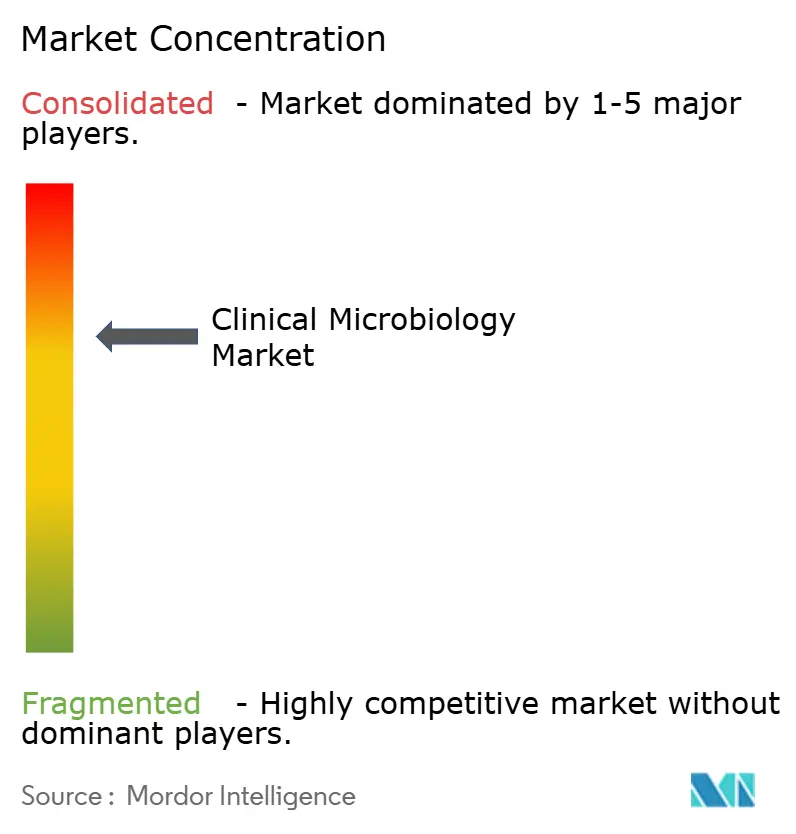
| Market Concentration | Medium |
Major Players *Disclaimer: Major Players sorted in no particular order Image © Mordor Intelligence. Reuse requires attribution under CC BY 4.0. | |
Clinical Microbiology Market Analysis by Mordor Intelligence
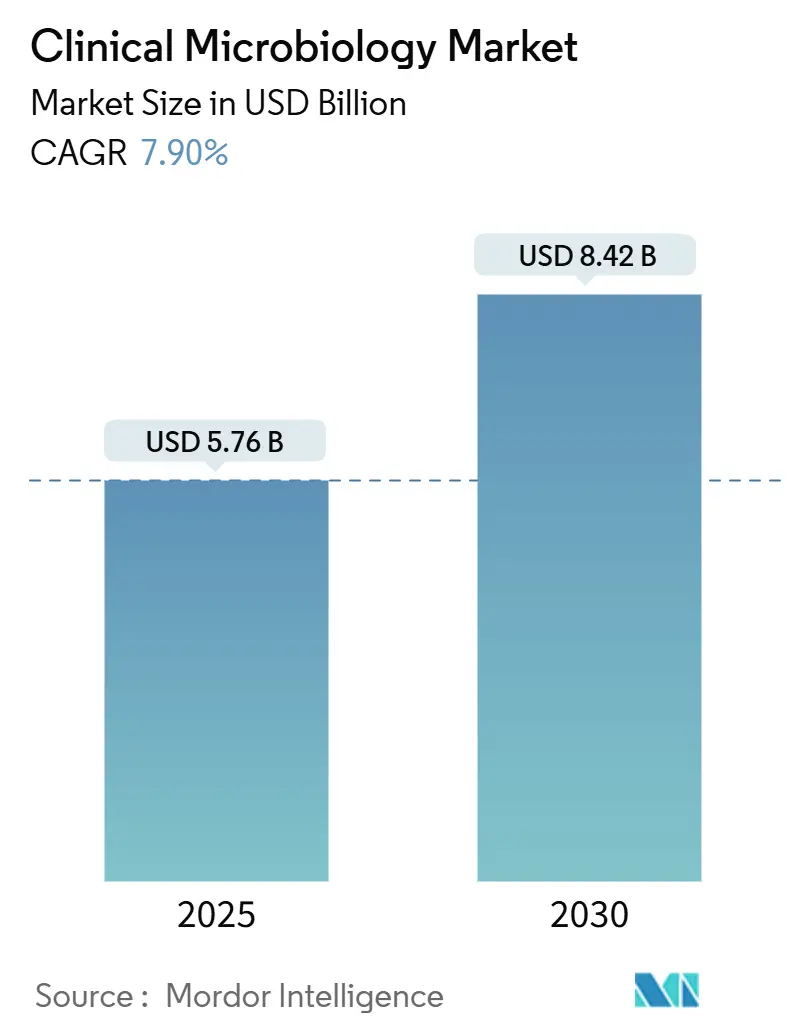
The Clinical Microbiology Market size is estimated at USD 5.76 billion in 2025, and is expected to reach USD 8.42 billion by 2030, at a CAGR of 7.90% during the forecast period (2025-2030).
Clinical Microbiology Market Overview
The clinical microbiology market is experiencing significant growth, driven by increasing concerns over the global infectious disease burden and antimicrobial resistance. According to the World Health Organization's April 2023 fact sheet, approximately 10.6 million individuals worldwide were diagnosed with tuberculosis, including 6.0 million men, 3.6 million women, and 1.3 million children, highlighting the persistent challenges in managing infectious diseases. In November 2024, the CDC reported that around 1.7 million patients in the United States are affected by healthcare-associated infections, underscoring the heightened focus of healthcare providers on infection prevention and control strategies. Additionally, Definitive Healthcare data published in November 2024 reported 41,675 healthcare-associated infection (HAI) cases across the top 10 U.S. states. This has prompted healthcare institutions to strengthen microbiology testing protocols and implement advanced surveillance systems.
The industry is witnessing rapid technological transformation through increased automation and digitalization of laboratory processes. Leading manufacturers are introducing advanced automated systems that integrate artificial intelligence and machine learning capabilities to improve testing accuracy and efficiency. For instance, in April 2024, Bruker unveiled upgrades to its portfolio focused on clinical microbiology and infection diagnostics. These enhancements feature a novel automated system tailored for MALDI Biotyper target preparation and a new panel designed for the concurrent detection of M. tuberculosis complex bacteria. A new optional workflow now offers semi-automated sample preparation via the MBT Pathfinder IVD robot to avoid time-consuming, repetitive, and error-prone manual tasks.
Strategic partnerships and consolidation activities are reshaping the competitive landscape as companies seek to expand their technological capabilities and geographic presence. In May 2023, HiMedia Laboratories partnered with Advanced Instruments to introduce the Anoxomat III Anaerobic Culture System in India, showcasing the industry's focus on innovative solutions for specialized testing needs. Major players are also investing in expanding their product portfolios through strategic acquisitions and collaborations, particularly in emerging markets where healthcare infrastructure is rapidly developing.
The regulatory landscape is evolving, with a stronger focus on standardization and quality control in clinical microbiology testing. The Infectious Diseases Society of America (IDSA) has introduced its 2024 guidelines, developed through systematic reviews and the GRADE process. This update highlights the critical role of microbiology laboratories in infectious disease diagnostics, promoting enhanced collaboration between physicians and microbiologists. The guidelines categorize high-value diagnostic tests by anatomic systems and etiologic agents, outline their optimal use cases, and identify tests with limited utility. Additionally, they provide recommendations for managing pediatric specimens. As a result, laboratories globally are implementing more robust quality management systems and proficiency testing programs. Industry stakeholders are actively driving the development of new standards and protocols to ensure consistent and reliable test outcomes across various healthcare settings.
Global Clinical Microbiology Market Trends and Insights
Rising Prevalence of Infectious Diseases
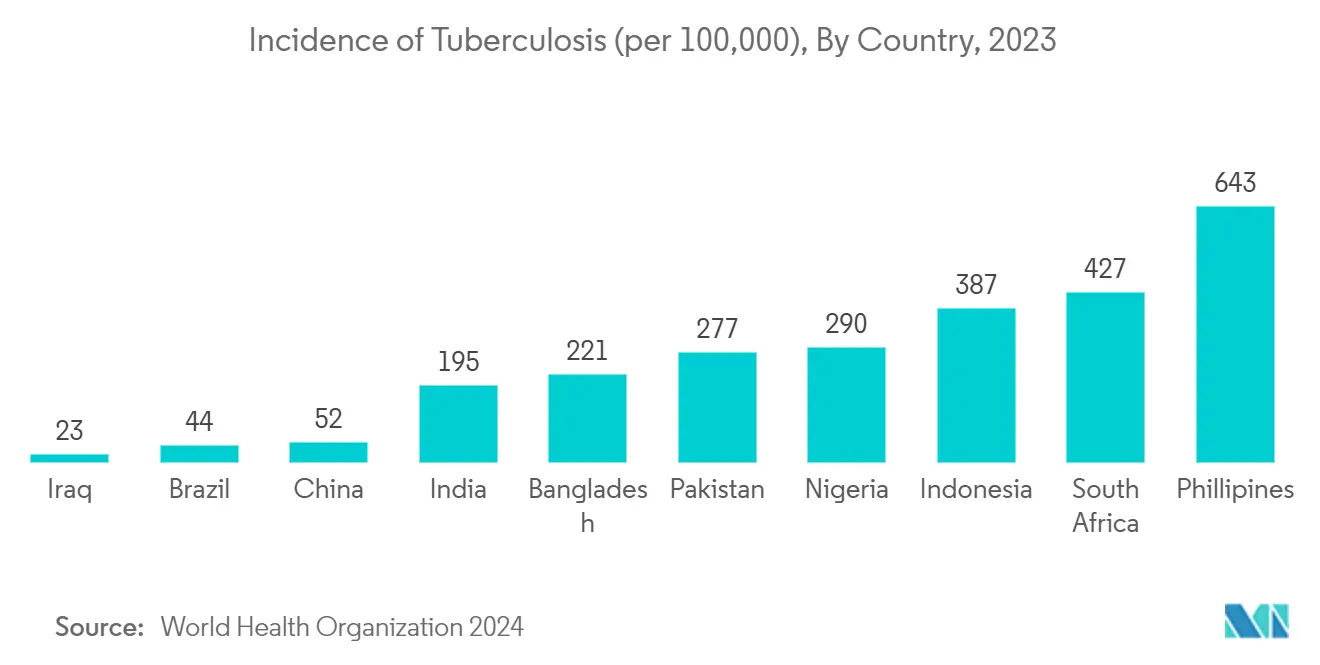
The escalating prevalence of infectious diseases worldwide is driving significant growth in the clinical microbiology testing and diagnostics market. According to the World Health Organization (WHO) in its October 2024 fact sheet, India reported a tuberculosis incidence rate of 195 cases per 100,000 population in 2023, with 1.6 million deaths attributed to the disease. Additionally, data from the Joint United Nations Programme on HIV/AIDS (UNAIDS) indicated that approximately 39.9 million individuals were living with HIV in 2023, including 1.4 million children (ages 0–14) and 38.6 million adults (ages 15 and above). These figures highlight the critical demand for advanced clinical microbiology solutions to strengthen healthcare systems globally.
The escalating challenge of healthcare-associated infections (HAIs) has highlighted the critical role of clinical microbiology in infection control and prevention. In October 2024, the European Centre for Disease Prevention and Control (ECDC) reported that over 3.5 million HAI cases occur annually in the European Union/European Economic Area (EU/EEA). This significant healthcare burden has driven increased investments in clinical microbiology infrastructure, enabling healthcare providers to enhance their capabilities in identifying, monitoring, and managing infectious agents. Additionally, the rising prevalence of antimicrobial resistance and the emergence of new pathogens have amplified the demand for advanced clinical microbiology services to support effective therapeutic decision-making.


Advancements in Diagnostic Technologies and Rapid Testing
The clinical microbiology market has experienced significant technological advancements, improving testing efficiency and revolutionizing diagnostic processes. Automated microbial identification and susceptibility testing systems now deliver unparalleled speed and precision in diagnosing infectious diseases. These systems utilize advanced technologies, including mass spectrometry and molecular diagnostics, to rapidly identify microorganisms and assess their antibiotic susceptibility. For example, bioMérieux's VITEK MS system demonstrates this progress by identifying a wide range of microorganisms within minutes, while BD's Phoenix Automated Microbiology System provides fully automated testing with improved accuracy and faster turnaround times.
Next-generation sequencing (NGS) technology has emerged as a transformative solution for comprehensive microbial identification and characterization, redefining the clinical diagnostics landscape. Additionally, utilization of artificial intelligence (AI) and machine learning (ML) algorithms by these advanced diagnostic platforms has further enhanced their functionality, allowing accurate antimicrobial susceptibility predictions through precise pathogen identification. These advancements have not only accelerated diagnostic processes and improved accuracy but have also empowered healthcare providers to implement more targeted and effective treatment strategies. This progress has contributed to better patient outcomes and reduced overall healthcare costs.
Rising Private-Public Funding for Research on Infectious Diseases
Significant investments in healthcare infrastructure and research initiatives are driving innovation and expansion in the clinical microbiology sector. In FY 2023, the United States Congress allocated USD 1.39 billion to the Centers for Disease Control and Prevention (CDC) to support initiatives aimed at preventing and controlling HIV, viral hepatitis, sexually transmitted infections (STIs), tuberculosis, and other infectious diseases. The funding also addressed the opioid epidemic and promoted adolescent and school health. Approximately 24% of the operating budget was invested in enhancing internal CDC resources, which are critical to the nation's infectious disease response. These resources include state-of-the-art laboratories, outbreak response capabilities, advanced research, and technical assistance provided to health departments and community-based organizations. This type of targeted investment in research and development is crucial for advancing clinical microbiology capabilities and addressing emerging healthcare challenges. The establishment of new laboratories, research centers, and diagnostic facilities worldwide reflects the growing recognition of clinical microbiology's vital role in public health.
Clinical Microbiology Market Product Segment Analysis
Reagents Segment in Clinical Microbiology Market
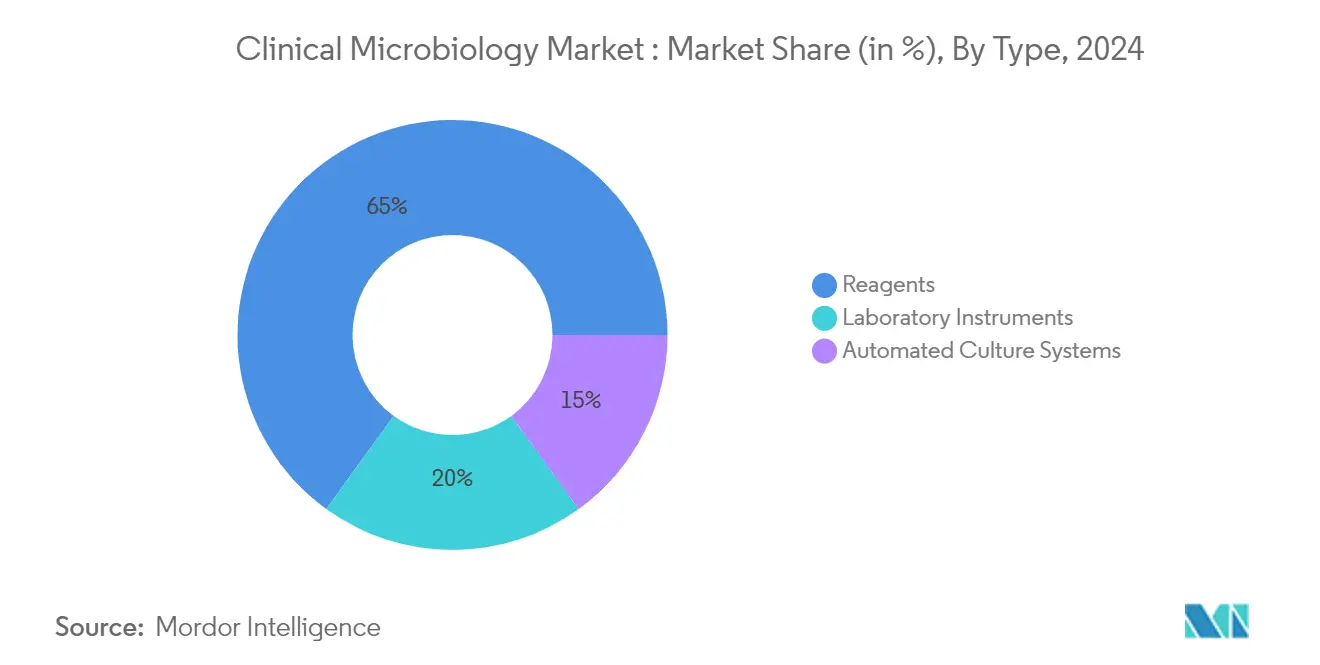
The reagents segment maintains its dominant position in the clinical microbiology market, commanding approximately 65% of the total market share in 2024. This substantial market presence is primarily driven by the continuous demand for diagnostic testing across healthcare facilities worldwide. The segment's strength is reinforced by the essential role of reagents in various microbiological testing procedures, from routine bacterial cultures to advanced molecular diagnostics. Healthcare facilities' increasing focus on accurate diagnosis and the rising prevalence of infectious diseases have further solidified the segment's position. The expansion of testing capabilities in emerging markets, coupled with the development of specialized reagents for novel testing methodologies, has contributed to the segment's robust performance. Additionally, the growing adoption of quality control measures in clinical laboratories and the increasing emphasis on standardization of testing procedures have maintained steady demand for high-quality reagents.
Automated Culture Systems Segment in Clinical Microbiology Market
The automated culture systems segment emerges as the fastest-growing category in the clinical microbiology market, projected to expand at a CAGR of 8.2% from 2025 to 2030. This remarkable growth trajectory is fueled by the increasing adoption of automation in clinical laboratories to improve efficiency and reduce human error. The segment's expansion is particularly driven by the rising demand for rapid and accurate diagnostic solutions in healthcare settings. Technological advancements in automated systems, including improved detection capabilities and reduced time-to-result, have made these systems increasingly attractive to clinical laboratories. The integration of artificial intelligence and machine learning capabilities in newer systems has further accelerated market growth. Additionally, the growing focus on laboratory workflow optimization and the increasing need for standardized testing procedures have contributed to the segment's rapid expansion. The trend toward laboratory consolidation and the emphasis on cost-effective diagnostic solutions have also played crucial roles in driving adoption rates.
Laboratory Instruments Segment in Clinical Microbiology Market
The laboratory instruments segment continues to play a vital role in the clinical microbiology market, complementing both reagents and automated systems. This segment encompasses a wide range of essential equipment, from basic microscopes to sophisticated analytical instruments, serving as the backbone of microbiological testing infrastructure. The segment's performance is closely tied to healthcare facility expansions and laboratory modernization initiatives across various regions. Technological innovations in instrument design and functionality have enhanced the segment's value proposition, particularly in specialized testing applications. The increasing focus on point-of-care testing has led to the development of more compact and efficient laboratory instruments. Integration capabilities with laboratory information systems and the trend toward connected laboratory solutions have further influenced the segment's evolution. Additionally, the growing emphasis on preventive maintenance and instrument calibration services has created new revenue streams within this segment.
Clinical Microbiology Market Disease Area Segment Analysis
Respiratory Diseases Segment in Clinical Microbiology Market
The respiratory diseases segment dominates the clinical microbiology market in 2024. This significant position is primarily driven by the continued focus on respiratory pathogen testing and surveillance programs worldwide. The segment's prominence is reinforced by the integration of advanced molecular diagnostic platforms specifically designed for respiratory pathogen detection. Healthcare facilities have substantially increased their respiratory testing capabilities, particularly in response to emerging variants and seasonal respiratory infections. The segment's robust performance is further supported by the growing adoption of multiplex testing platforms that can simultaneously detect multiple respiratory pathogens. Additionally, the increasing prevalence of chronic respiratory conditions and the rise in healthcare-associated respiratory infections have contributed to sustained demand for clinical microbiology testing in this segment. The development of rapid point-of-care testing solutions for respiratory diseases has also played a crucial role in maintaining this segment's market leadership.
Sexually Transmitted Diseases Segment in Clinical Microbiology Market
The sexually transmitted diseases (STD) testing segment is projected to exhibit the highest growth rate in the clinical microbiology market from 2025 to 2030. This accelerated growth is primarily attributed to increasing awareness campaigns and comprehensive screening programs implemented across various healthcare settings. The segment's expansion is further driven by technological innovations in diagnostic methods, particularly in molecular testing platforms that offer improved sensitivity and specificity for STD detection. Healthcare providers are increasingly adopting automated testing systems that enable high-throughput screening capabilities for multiple STDs simultaneously. The integration of artificial intelligence and machine learning in diagnostic platforms is enhancing the accuracy and efficiency of STD testing processes. Rising investments in sexual health programs, coupled with growing government initiatives for STD prevention and control, are contributing to the segment's rapid growth trajectory. Additionally, the development of home testing kits and self-collection methods is expanding access to STD testing services, further accelerating market growth.
Remaining Segments in Clinical Microbiology Market
The other segments in the clinical microbiology market, including bloodstream infections, gastrointestinal diseases, and urinary tract infections, continue to play vital roles in the overall market landscape. These segments are experiencing steady growth driven by specific factors unique to each disease area. Bloodstream infection testing has gained prominence due to the rising concerns about sepsis and healthcare-associated infections. The gastrointestinal diseases segment is benefiting from innovations in rapid diagnostic technologies and increased focus on gut health. The urinary tract infections segment maintains its significance through the implementation of automated urine culture systems and rising geriatric population needs. These segments collectively demonstrate the diverse applications of clinical microbiology testing and contribute to the market's comprehensive diagnostic capabilities. The continuous development of specialized testing solutions and the integration of advanced technologies across these segments ensure their sustained growth and relevance in the clinical microbiology market. Moreover, the increasing adoption of point-of-care testing solutions across these segments is enhancing their market presence and accessibility.
Clinical Microbiology Market Geography Segment Analysis
Clinical Microbiology Market in North America
North America continues to dominate the global clinical microbiology market. This leadership is attributed to the region's advanced healthcare infrastructure, significant investments in research and development, and rapid adoption of innovative diagnostic technologies. Key market players, including Becton Dickinson, bioMérieux, and Thermo Fisher Scientific, play a pivotal role in driving market growth through ongoing product innovation and strategic collaborations. The robust regulatory framework in the United States ensures adherence to high-quality standards while fostering technological advancements. In addition, prevalence of infectious diseases and improving awareness of the importance of early diagnosis have accelerated the adoption of clinical microbiology solutions. The region's healthcare systems emphasize preventive care and infection control measures, further propelling market growth. Furthermore, the extensive network of clinical laboratories and diagnostic centers, along with favorable reimbursement policies, continues to support the expansion of the clinical microbiology market in North America.
Clinical Microbiology Market in Europe
Europe captures a significant portion of the global clinical microbiology market, exhibiting consistent growth and advancements in technology. The market in this region benefits from a strong focus on research and development, particularly in leading countries such as Germany, France, and the United Kingdom. A well-established healthcare infrastructure, combined with increasing government initiatives aimed at addressing antimicrobial resistance, serves as a key growth driver. Efforts to standardize clinical microbiology practices and integrate advanced diagnostic technologies have created a conducive environment for market expansion. The region's renowned academic and research institutions significantly contribute to the development of innovative diagnostic techniques and methodologies. Additionally, the rising adoption of automated systems and molecular diagnostic platforms in clinical laboratories enhances both operational efficiency and diagnostic accuracy. Rising emphasis on personalized medicine and the increasing demand for rapid diagnostic solutions continue to influence the market dynamics. Furthermore, sustained investments in product innovation by leading market players reinforce Europe’s competitive edge in the global market.
Clinical Microbiology Market in Asia-Pacific
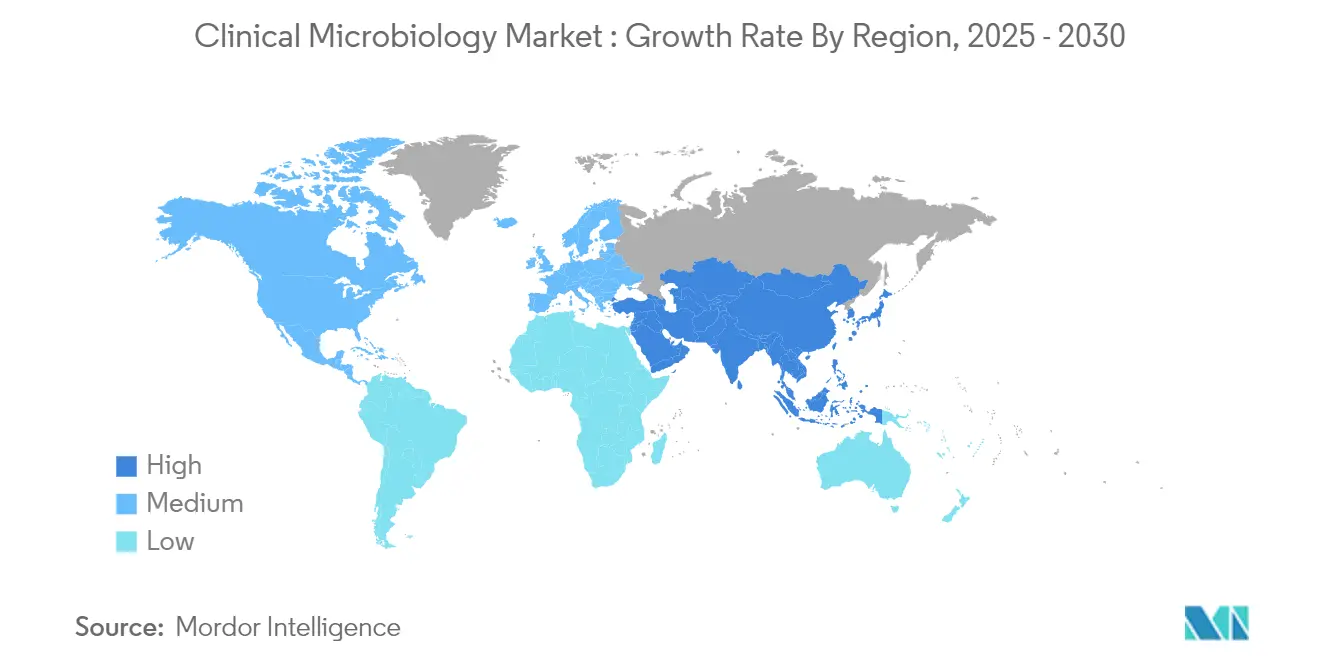
The Asia-Pacific clinical microbiology market is poised for remarkable growth from 2025 to 2030. The region's market dynamics are shaped by rapid healthcare infrastructure development, particularly in emerging economies like China and India. The increasing awareness about infectious diseases and the growing demand for advanced diagnostic solutions drive market expansion. Significant investments in healthcare modernization and the establishment of new clinical laboratories contribute to market growth. The region's large patient population and rising healthcare expenditure create substantial opportunities for market players. Furthermore, government initiatives to improve healthcare accessibility and quality standards enhance market development. The increasing adoption of automated systems and molecular diagnostic techniques, coupled with growing research activities in clinical microbiology, strengthens the market's growth trajectory. Additionally, the rising focus on preventive healthcare and the growing prevalence of infectious diseases continue to drive demand for clinical microbiology solutions in the region.
Clinical Microbiology Market in Middle East & Africa
The clinical microbiology market in the Middle East & Africa is experiencing significant growth, driven by increasing healthcare investments and heightened awareness of advanced diagnostic solutions. This growth is particularly evident in Gulf Cooperation Council countries, where healthcare infrastructure is steadily improving. The market benefits from a rising focus on healthcare quality standards and the adoption of modern diagnostic technologies, which are key contributors to its expansion. Additionally, increased investments in research and development activities are enhancing the market's potential in the region. The growing prevalence of infectious diseases, coupled with rising healthcare expenditure, presents substantial opportunities for market growth. Strategic partnerships between international market players and local healthcare providers are further strengthening market development. The region's focus on preventive healthcare, supported by government initiatives aimed at improving healthcare services, continues to drive market progress. Furthermore, the increasing number of clinical laboratories and diagnostic centers is expanding the market landscape across the Middle East and Africa.
Clinical Microbiology Market in South America
The clinical microbiology market in South America is witnessing significant growth, driven by increasing healthcare awareness and advancements in medical infrastructure. The market benefits from rising investments in healthcare facilities and the growing adoption of advanced diagnostic technologies. Brazil and Mexico are key contributors to regional growth, supported by their expanding healthcare sectors and heightened focus on managing infectious diseases. The increasing prevalence of chronic diseases and the rising demand for early diagnosis present substantial opportunities for market expansion. Additionally, collaborations between international market players and local healthcare providers are improving market accessibility and accelerating the adoption of advanced technologies. The region's evolving healthcare policies and enhanced government support for healthcare modernization further drive market development. Moreover, the growing recognition of accurate diagnosis and the increasing number of clinical laboratories are strengthening the market's growth prospects across South America.
Competitive Landscape
Top Companies in Clinical Microbiology Market
The clinical microbiology market is dominated by several key players including Abbott, BD, bioMerieux SA, Bio-Rad Laboratories, Inc., Bruker, Danaher Corporation (Cepheid, Inc.), F. Hoffmann-La Roche Ltd., Hologic, Inc., Merck KGaA, Qiagen NV, and Thermo Fisher Scientific Inc. These companies demonstrate strong market presence through continuous product innovation, particularly in automated microbial identification and susceptibility testing systems. The competitive landscape is characterized by strategic collaborations and partnerships to enhance technological capabilities and expand product portfolios. Companies are increasingly focusing on developing rapid diagnostic solutions and molecular testing platforms while expanding their geographical presence through distribution networks. Investment in research and development remains a key priority, with emphasis on developing advanced technologies like mass spectrometry and next-generation sequencing for clinical applications.
Market Consolidation Drives Industry Evolution Pattern
The clinical microbiology market exhibits a relatively consolidated structure, with global conglomerates holding significant market share through their extensive product portfolios and strong distribution networks. These major players leverage their financial strength and technological expertise to maintain market leadership, while regional specialists focus on niche segments and specific geographical markets. The market has witnessed considerable merger and acquisition activity, particularly involving larger companies acquiring innovative startups and smaller firms to enhance their technological capabilities and expand their market presence.
The competitive dynamics are shaped by a combination of established multinational corporations and specialized regional players, creating a diverse market landscape. Major companies are increasingly pursuing vertical integration strategies to strengthen their market position and control various aspects of the value chain. The market has seen a trend toward strategic partnerships between diagnostic companies and healthcare providers, creating integrated solutions for clinical microbiology testing. Regional players often compete through specialized product offerings and strong local relationships, while global players leverage their broad product portfolios and extensive research capabilities.
Innovation and Adaptation Drive Future Success
Success in the clinical microbiology market increasingly depends on companies' ability to develop innovative solutions that address emerging healthcare challenges while maintaining cost-effectiveness. Incumbent players must focus on continuous technological advancement, particularly in areas such as automation, artificial intelligence integration, and rapid testing capabilities. Market leaders need to balance investment in research and development with strategic acquisitions to maintain their competitive edge. Companies must also strengthen their distribution networks and after-sales support systems while developing customized solutions for different healthcare settings.
For new entrants and smaller players, success lies in identifying and exploiting niche market segments while building strategic partnerships with established healthcare providers. Companies need to focus on developing specialized products that address specific unmet needs in clinical microbiology testing. Regulatory compliance and quality assurance remain critical factors, with successful companies maintaining robust quality management systems and staying ahead of evolving regulatory requirements. The ability to adapt to changing healthcare delivery models and integrate with digital health platforms will become increasingly important for maintaining market position.
Clinical Microbiology Industry Leaders
Abbott
BD
Bio-Rad Laboratories, Inc.
F. Hoffmann-La Roche Ltd.
Thermo Fisher Scientific Inc.
- *Disclaimer: Major Players sorted in no particular order

Recent Industry Developments
- January 2025: Rapid Infection Diagnostics Inc. (RID) launched the BSIDx, a groundbreaking microbiology testing system designed for bloodstream infections. The BSIDx, with just a button press, can identify disease-causing organisms and conduct antibiotic susceptibility testing from positive blood cultures, all in under 5 hours.
- January 2025: Sphere Fluidics launched of Cyto-Mine Chroma, its next generation single-cell analysis platform alongside the opening of its Early Access Program. The Cyto-Mine Chroma for faster project timeline completion and improved outcomes across broad applications, including antibody discovery, cell line development, and emerging areas such as cell therapy.
- September 2024: inbiome has secured the Breakthrough Device Designation from the U.S. Food and Drug Administration (FDA) for its Molecular Culture Identification (ID) technology. This designation signifies the FDA's recognition of inbiome's innovation and its potential to transform the field of infectious disease diagnostics.
- February 2023: bioMérieux SA launched MAESTRIA, a cutting-edge middleware designed for microbiology laboratories. This new-generation middleware enables management of all routine activities in the microbiology lab through a single software tool.


Global Clinical Microbiology Market Report Scope
As per the report's scope, clinical microbiology is the branch of microbiology that focuses on the identification, diagnosis, and treatment of infectious diseases caused by bacteria, viruses, fungi, and parasites in humans. It plays a crucial role in public health and medical diagnostics, helping healthcare providers detect pathogens, determine antimicrobial resistance, and guide appropriate treatment.
The clinical microbiology market is segmented by product, disease area, end-user, and geography. By product, the market is segmented as laboratory instruments, reagents, and automated culture systems. By Disease area, the market is segmented into respiratory diseases, bloodstream infections, gastrointestinal diseases, sexually transmitted diseases, urinary tract infections, and others. By end-user, the market is segmented as hospital and diagnostics laboratories, pharmaceutical and biotechnology companies, and others. By geography, the market is segmented into North America, Europe, Asia-Pacific, the Middle East and Africa, and South America. The market report also covers the estimated market sizes and trends for 17 countries across major regions globally. The report offers the value (in USD) for the segments mentioned above.
| Laboratory Instruments |
| Reagents |
| Automated Culture Systems |
| Respiratory Diseases |
| Bloodstream Infections |
| Gastrointestinal Diseases |
| Sexually Transmitted Diseases |
| Urinary Tract Infections |
| Others |
| Hospital and Diagnostics Laboratories |
| Pharmaceutical and Biotechnology Companies |
| Others |
| North America | United States |
| Canada | |
| Mexico | |
| Europe | Germany |
| United Kingdom | |
| France | |
| Italy | |
| Spain | |
| Rest of Europe | |
| Asia-Pacific | China |
| Japan | |
| India | |
| Australia | |
| South Korea | |
| Rest of Asia-Pacific | |
| Middle East and Africa | GCC |
| South Africa | |
| Rest of Middle East and Africa | |
| South America | Brazil |
| Argentina | |
| Rest of South America |
| By Product | Laboratory Instruments | |
| Reagents | ||
| Automated Culture Systems | ||
| By Disease Area | Respiratory Diseases | |
| Bloodstream Infections | ||
| Gastrointestinal Diseases | ||
| Sexually Transmitted Diseases | ||
| Urinary Tract Infections | ||
| Others | ||
| By End-User | Hospital and Diagnostics Laboratories | |
| Pharmaceutical and Biotechnology Companies | ||
| Others | ||
| Geography | North America | United States |
| Canada | ||
| Mexico | ||
| Europe | Germany | |
| United Kingdom | ||
| France | ||
| Italy | ||
| Spain | ||
| Rest of Europe | ||
| Asia-Pacific | China | |
| Japan | ||
| India | ||
| Australia | ||
| South Korea | ||
| Rest of Asia-Pacific | ||
| Middle East and Africa | GCC | |
| South Africa | ||
| Rest of Middle East and Africa | ||
| South America | Brazil | |
| Argentina | ||
| Rest of South America | ||


Key Questions Answered in the Report
How big is the Clinical Microbiology Market?
The Clinical Microbiology Market size is expected to reach USD 5.76 billion in 2025 and grow at a CAGR of 7.90% to reach USD 8.42 billion by 2030.
What is the current Clinical Microbiology Market size?
In 2025, the Clinical Microbiology Market size is expected to reach USD 5.76 billion.
Which is the fastest growing region in Clinical Microbiology Market?
Asia Pacific is estimated to grow at the highest CAGR over the forecast period (2025-2030).
Which region has the biggest share in Clinical Microbiology Market?
In 2025, the North America accounts for the largest market share in Clinical Microbiology Market.
What years does this Clinical Microbiology Market cover, and what was the market size in 2024?
In 2024, the Clinical Microbiology Market size was estimated at USD 5.30 billion. The report covers the Clinical Microbiology Market historical market size for years: 2019, 2020, 2021, 2022, 2023 and 2024. The report also forecasts the Clinical Microbiology Market size for years: 2025, 2026, 2027, 2028, 2029 and 2030.
Page last updated on:


 Your data is secure and never sold or shared.


