
Choline Bitartrate Market Size and Share
Market Overview
| Study Period | 2021 - 2031 |
|---|---|
| Market Size (2026) | USD 515.31 Million |
| Market Size (2031) | USD 718.03 Million |
| Growth Rate (2026 - 2031) | 6.86 % |
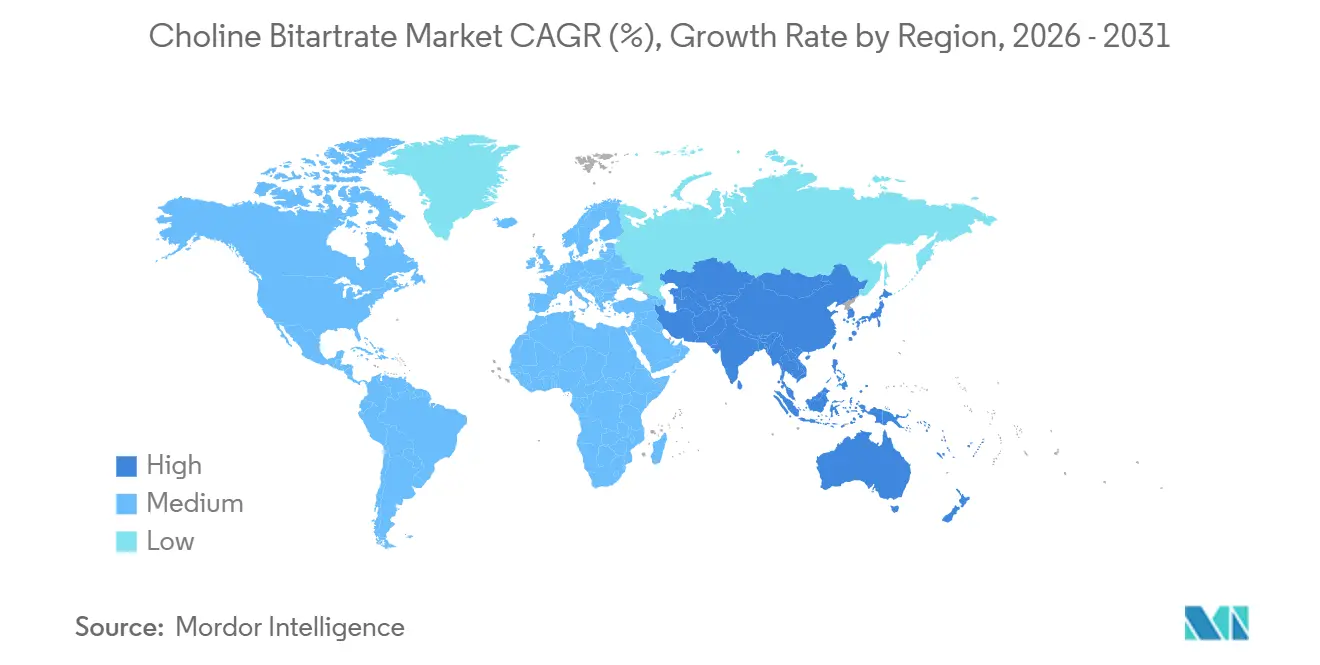
| Fastest Growing Market | Asia Pacific |
| Largest Market | North America |
| Market Concentration | Medium |
Major Players *Disclaimer: Major Players sorted in no particular order Image © Mordor Intelligence. Reuse requires attribution under CC BY 4.0. | |
Choline Bitartrate Market Analysis by Mordor Intelligence
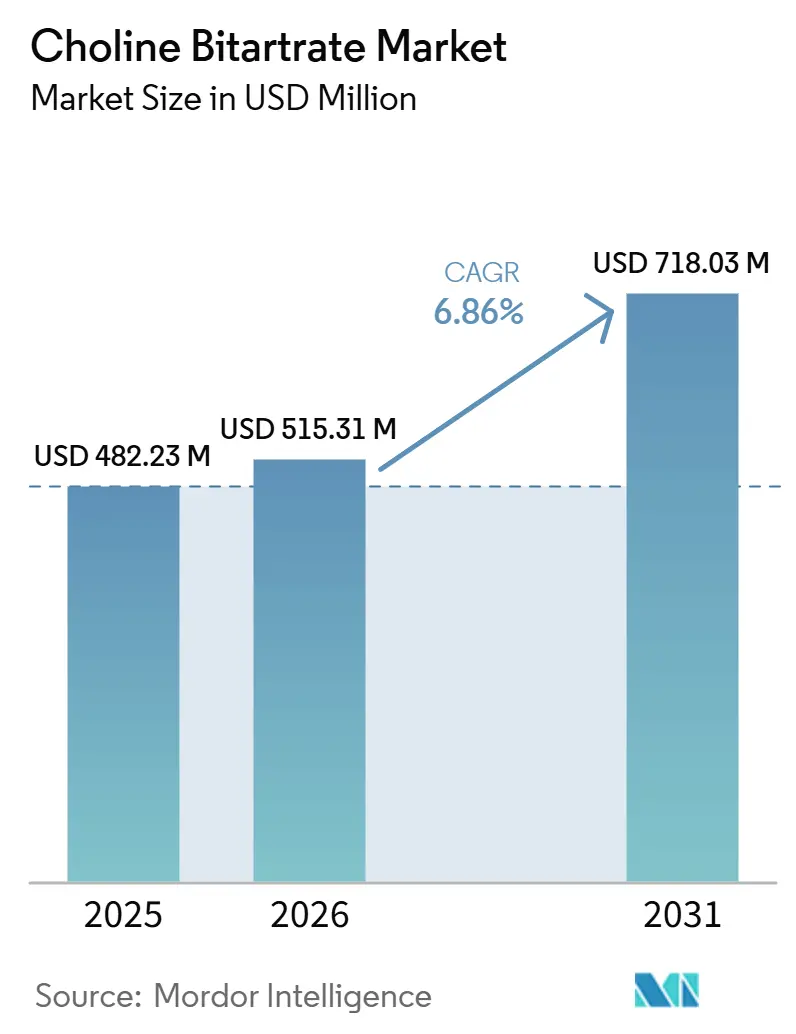
The Choline Bitartrate Market size is expected to increase from USD 482.23 million in 2025 to USD 515.31 million in 2026 and reach USD 718.03 million by 2031, growing at a CAGR of 6.86% over 2026-2031. Heightened prenatal-nutrition awareness, stricter infant-formula fortification requirements, and expanding sports nutrition portfolios are driving demand, while advancements in microencapsulation are enabling liquid formats for ready-to-drink beverages. North America remains the leading region, but Asia-Pacific is experiencing the fastest growth as China and India expand livestock feed programs that increasingly require high-bioavailability choline salts. Market participants are reallocating investments toward USP- and pharmaceutical-grade production capacity to capture premium margins, although costs linked to hygroscopicity and regulatory intake limits are constraining short-term profitability.
Key Report Takeaways
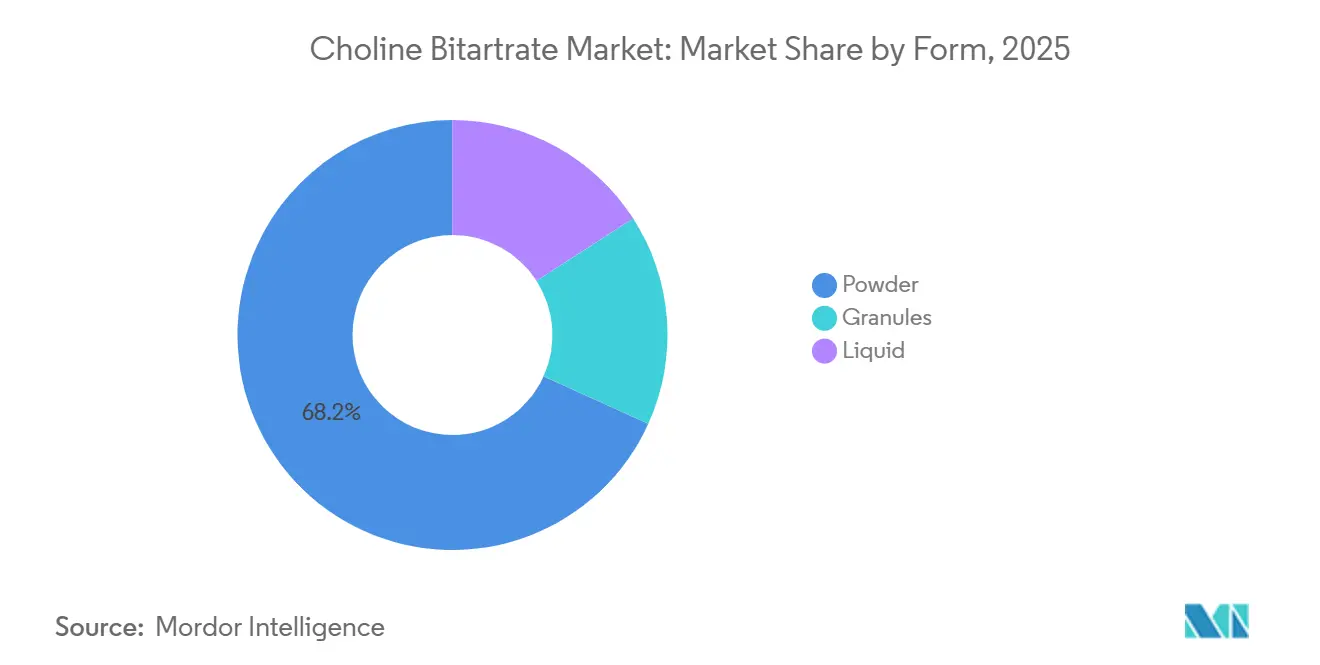
- By form, powder controlled 68.23% of the choline bitartrate market share in 2025, whereas liquid is expanding at a 7.31% CAGR through 2031.
- By purity grade, food-grade controlled 42.26% of the choline bitartrate market share in 2025, whereas USP/pharmaceutical-grade is expanding at a 7.55% CAGR through 2031.
- By application, dietary supplements accounted for 49.13% of the choline bitartrate market share in 2025, while infant nutrition is rising at a 7.61% CAGR through 2031.
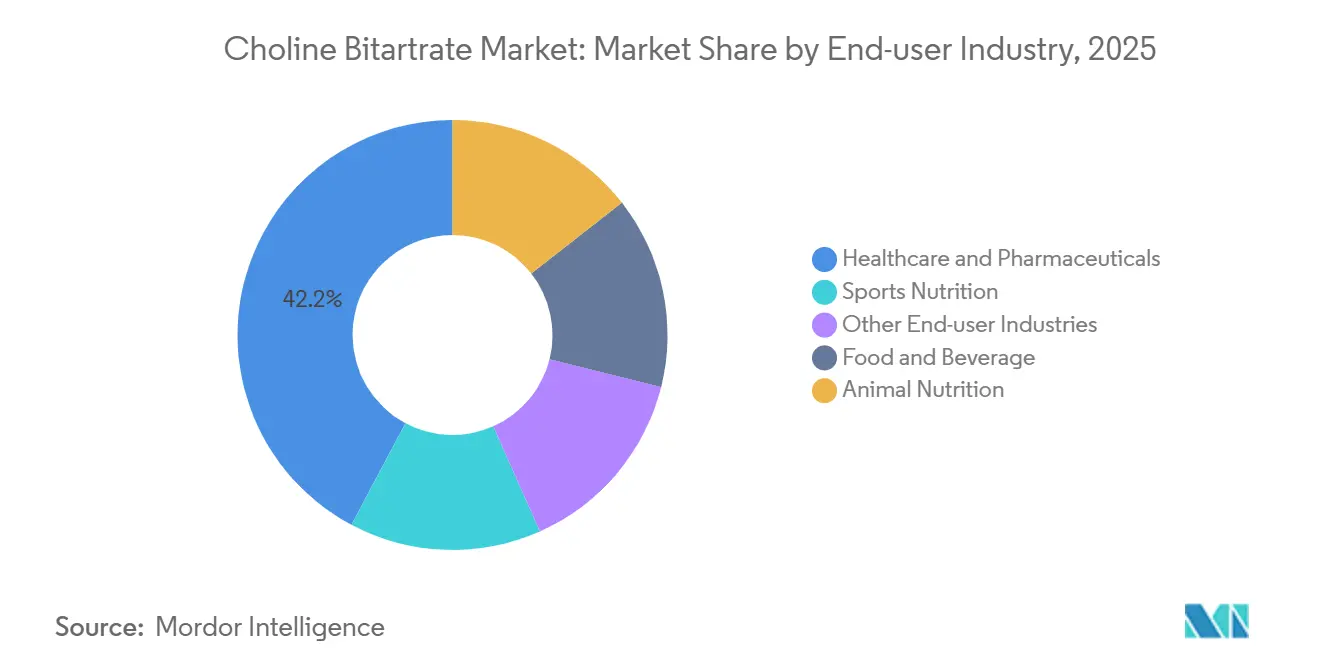
- By end-user industry, healthcare and pharmaceuticals commanded 42.22% of the choline bitartrate market share in 2025, while sports nutrition is pacing ahead with a 7.39% CAGR through 2031.
- By geography, North America led with 36.78% of the choline bitartrate market share in 2025; Asia-Pacific is forecast to register the fastest 7.71% CAGR through 2031.
Note: Market size and forecast figures in this report are generated using Mordor Intelligence’s proprietary estimation framework, updated with the latest available data and insights as of January 2026.
Market Trends and Insights
Drivers Impact Analysis of Choline Bitartrate Market*
| Driver | (~) % Impact on CAGR Forecast | Geographic Relevance | Impact Timeline |
|---|---|---|---|
| Prenatal and cognitive-health awareness | +1.8% | Global, with early adoption in North America and EU | Medium term (2-4 years) |
| Livestock productivity push | +1.5% | APAC core (China, India, ASEAN), spill-over to South America | Short term (≤ 2 years) |
| Sodium-reduction ingredient adoption | +0.9% | North America and EU | Long term (≥ 4 years) |
| Micro-encapsulation breakthroughs enabling RTD beverages | +1.2% | Global, led by North America sports nutrition | Medium term (2-4 years) |
| European Union neuro-degenerative clinical-trial acceleration | +0.7% | EU, with secondary impact in North America | Long term (≥ 4 years) |
| Source: Mordor Intelligence | |||
Prenatal and Cognitive-Health Awareness
In 2025, only 11% of pregnant women in the United States met the adequate intake threshold for choline, leading obstetricians to recommend higher-potency prenatal multivitamins and single-ingredient choline products[1]. A 2026 study in the European Journal of Nutrition found that 930 mg of maternal choline intake improved infant information-processing speed and sustained attention, strengthening label claims for premium formulations. Research on co-supplementation has shown that increased choline intake enhances maternal DHA levels, prompting brands to combine these nutrients in prenatal product lines. Between 2020 and 2023, consumer search interest for “choline” increased by 55%, reflecting growing demand and expanding shelf space for choline-focused products. As professional guidelines begin to include choline screening, formulators are increasing inclusion rates to 200–400 mg per serving, addressing maternal intake gaps while staying within tolerable upper-limit thresholds.
Livestock Productivity Push
Meta-analyses show that rumen-protected choline increases dairy cow milk yield by 10–21% and improves reproductive performance when cows consume 13–14 g of choline chloride equivalents daily. Studies on swine report reduced back-fat layers and larger litter sizes at 500–1,000 mg per kg of feed, aligning with producer strategies that prioritize non-antibiotic performance enhancers. China’s vertically integrated pork industry and India’s growing poultry sector are increasingly adopting choline bitartrate to improve feed-conversion efficiency. Export-oriented feed premix manufacturers in Vietnam and Thailand are also transitioning to bioavailable choline forms to meet Japanese buyer specifications. This shift is driving significant revenue growth in the choline bitartrate market, as livestock feed continues to account for a larger share of choline consumption compared to human nutrition channels.
Sodium-Reduction Ingredient Adoption
The U.S. FDA’s 2024 voluntary sodium-reduction targets require packaged food brands to reduce average sodium levels by 12% by 2026. Processors are testing choline chloride and buffered choline bitartrate blends to maintain flavor while reducing sodium content. A USDA “no objection” letter now permits up to 1,200 ppm choline chloride in meat products, enabling 30–50% sodium replacement without compromising microbial stability. Although the tartaric moiety in choline bitartrate increases acidity, advancements in microencapsulation and pH-buffer systems mitigate off-notes, allowing its use in ready-to-eat entrées and deli meats. Retailers promoting “Better for You” sodium benchmarks are incentivizing compliant suppliers with additional shelf space, creating new revenue opportunities for choline suppliers. Given that North American and EU consumers exceed sodium recommendations by up to 60%, choline salts are expected to play a key role in long-term sodium-reduction strategies.
Micro-encapsulation Breakthroughs Enabling RTD Beverages
Traditional powder formats face challenges such as hygroscopicity and bitter aftertaste, which deter beverage formulators. Fluidized-bed coatings using hydrogenated soybean oil have extended the stability of choline bitartrate to six months at 40°C and 75% relative humidity. Vantage Nutrition’s 2024 launch of high-concentration VitaCholine liquid capsules demonstrated the feasibility of delivering 500–750 mg of choline in a 60 mL shot without chalkiness. Multi-layer alginate coatings now reduce moisture uptake by up to 70%, narrowing the performance gap with alpha-GPC in premium nootropic beverages. Energy drink and pre-workout brands are incorporating choline into caffeine-L-theanine stacks to promote “laser focus,” prompting contract manufacturers to invest in dedicated choline encapsulation lines. Balchem’s new 12-acre facility in New York, set to open in 2027, is designed to meet the growing demand for choline in beverage applications.
Restraints Impact Analysis of Choline Bitartrate Market*
| Restraint | (~) % Impact on CAGR Forecast | Geographic Relevance | Impact Timeline |
|---|---|---|---|
| Intake-level regulatory caps | -0.6% | Global, with stricter enforcement in EU | Medium term (2-4 years) |
| Hygroscopicity-linked formulation costs | -0.8% | Global, acute in tropical/humid regions | Short term (≤ 2 years) |
| Biogenic-amine contamination concerns in low-grade supply | -0.4% | APAC and MEA, limited to feed-grade imports | Short term (≤ 2 years) |
| Source: Mordor Intelligence | |||
Intake-Level Regulatory Caps
The European Food Safety Authority (EFSA) sets the tolerable upper limit for choline at 3,000 mg/day, while the U.S. FDA allows 3,500 mg/day. Brands offering 1,000–1,500 mg capsules must include cautionary labels, complicating marketing efforts targeting cognitive health consumers. Since choline bitartrate contains 40% elemental choline, users would need up to seven 1 g capsules to achieve the 2 g intake levels studied for therapeutic effects, increasing pill burden and reducing repeat purchases compared to higher-bioavailability salts. The lack of harmonized limits across Asia creates labeling inconsistencies, discouraging global product launches. As regulators enforce stricter serving-size disclosures, formulators are developing smaller, multi-dose delivery formats that comply with daily intake ceilings.
Hygroscopicity-Linked Formulation Costs
Choline bitartrate’s high moisture absorption necessitates additional measures such as silicon dioxide, moisture-barrier foil blistering, and air-conditioned storage, increasing finished product costs by 8–12%[2]. While commodity feed-grade suppliers offer ≤0.5% moisture specifications, stability tests reveal 3–5% assay loss within six months in tropical climates without climate control. Microencapsulation reduces moisture uptake by half but adds USD 4–6/kg in processing costs, making it economically viable only for premium beverages and sports nutrition powders. Smaller Southeast Asian brands lacking cold-chain infrastructure are forced to shorten expiry dates, tying up working capital. Although new high-glass-transition polymer coatings extend shelf life to 18 months, technology transfer delays keep many mid-tier players reliant on older, costlier anti-caking methods.
*Our forecasts treat driver/restraint impacts as directional, not additive. The impact forecasts reflect baseline growth, mix effects, and variable interactions.
Choline Bitartrate Market Segment Analysis
By Form:
Encapsulation Solves Liquid Stability ChallengePowder accounted for 68.23% of the choline bitartrate market share in 2025, driven by its low unit cost and compatibility with high-speed tablet presses. The liquid form is projected to grow at a 7.31% CAGR through 2031 as encapsulation enhances flavor masking and moisture stability. Granules, positioned between powder and liquid, are preferred by pharmaceutical contract manufacturers for their uniform flow and low dust properties. Competitive pricing from Chinese DL-choline bitartrate powder, priced at USD 6–8/kg, ensures powder remains the revenue leader. However, beverage-focused brand launches are gradually increasing the demand for liquids. Encapsulated liquids, priced at USD 2–4 per 60 mL shot, offer higher retail margins, absorbing the 20–30 cent per-serving cost increase compared to powder capsules. Powder will continue to dominate feed-premix and low-cost multivitamin segments, but its market share is expected to decline by 200 basis points by 2031 as ready-to-drink (RTD) beverages gain traction.
Second-generation liquid systems now achieve 70–75% choline equivalent suspension without crystallization, enabling a 500-mg choline dose in two ounces, a dosage previously achievable only with large pill counts. This convenience appeals to on-the-go sports nutrition consumers, where caffeine, beta-alanine, and citrulline stacks are popular. Multi-layer alginate coatings, adapted from pharmaceutical-grade controlled-release technology, minimize pH drift and sensory off-notes, facilitating new partnerships with national energy-drink bottlers. Balchem’s New York plant, dedicated to food-grade microencapsulation, highlights the industry’s pivot toward liquid formats, which are expected to drive competitive advantage in the coming years.

By Purity Grade:
Pharmaceutical Standards Command PremiumsIn 2025, food-grade choline bitartrate accounted for 42.26% of market revenue, primarily serving infant formula and cereal fortification applications requiring ≥99% purity without full cGMP compliance. USP/pharmaceutical-grade choline is projected to grow at a 7.55% CAGR through 2031, driven by demand from clinical-trial sponsors and prescription-drug formulators requiring Drug Master File (DMF) traceability. Feed-grade choline remains critical for bulk animal nutrition, priced at USD 6–8/kg to support inclusion rates of 500–1,000 mg/kg.
Pharmaceutical-grade products command significantly higher prices, up to 10 times that of feed-grade, due to stringent requirements, including assay consistency via HPLC, heavy-metal thresholds below 2 ppm, and compliance with United States Pharmacopeia (USP) microbial limits. Suppliers with FDA-registered DMFs or equivalent EMA listings secure long-term contracts with infant-formula manufacturers and neurology-focused biotech firms. In contrast, feed-grade suppliers face pricing volatility linked to raw material cost fluctuations. Over the forecast period, mid-tier Asian manufacturers are expected to upgrade production processes to ISO 9001 and HACCP standards, enabling access to food-grade markets and incremental profitability, even if unit volumes remain concentrated in feed applications.
By Application:
Infant Nutrition Outpaces Supplements on Regulatory MandatesDietary supplements held a 49.13% market share in 2025, with prenatal multivitamins, liver-health tablets, and cognitive-health capsules as key dosage forms. However, infant nutrition is projected to be the fastest-growing application, with a 7.61% CAGR through 2031, driven by the FDA’s 7 mg/100 kcal choline requirement for infant formula. This regulation, combined with EFSA’s 50 mg/100 kcal ceiling, is prompting manufacturers to position premium products at 20–25 mg levels to emphasize cognitive-development benefits. Claims such as “good source of choline” are increasingly featured alongside DHA and lutein on product packaging, reflecting a competitive fortification landscape.
Sports nutrition drinks are also gaining traction as choline is recognized for its role as a neuromuscular facilitator. Energy-drink formulations now combine 250–500 mg choline with 200 mg caffeine and 200 mg L-theanine for a “clean-focus” effect. Animal feed also continues to absorb significant revenue, particularly in Asia, where expanding dairy herds require choline supplementation to address negative energy balance in early-lactation cows. Pharmaceutical applications, including Alzheimer’s and non-alcoholic fatty liver disease (NAFLD) therapeutics, will remain niche but high-value segments, supporting strong margins for compliant suppliers.
By End-user Industry:
Sports Nutrition Scales on Mind–Muscle MessagingHealthcare and pharmaceuticals led the market with a 42.22% share in 2025, driven by demand for prenatal vitamins and liver-support complexes distributed through pharmacies. Sports nutrition is expected to grow at a 7.39% CAGR through 2031, fueled by gym-goers seeking to delay central fatigue. Cognitive-health claims, such as “supports acetylcholine synthesis,” resonate with esports athletes and hybrid workforces, boosting demand for powder-based pre-workout products.
Food and beverage companies, though smaller in scale, are increasingly experimenting with choline fortification in response to sodium-reduction regulations. For example, breakfast cereal manufacturers have added 50–80 mg choline per serving to flagship products that already highlight iron and B-vitamins. In animal nutrition, feed mills in India, Brazil, and Vietnam remain consistent buyers, though their market share is declining as human-nutrition channels grow more rapidly in value. Healthcare systems piloting choline screening in antenatal care further solidify the sector’s dominant position.
Geography Analysis
North America Choline Bitartrate Market
North America generated 36.78% of global revenue in 2025, led by a U.S. dietary-supplement ecosystem where prenatal and cognitive-health SKUs integrate choline bitartrate at 250–600 mg per serving. The region also benefits from balanced demand across pharmaceutical trials, infant formula fortification, and a burgeoning RTD performance-drink segment. Balchem’s doubled VitaCholine capacity in South Carolina and its upcoming New York encapsulation hub underscore long-term confidence in regional consumption and export pull. Canada aligns quickly with FDA changes; Health Canada is considering mirroring the 7 mg/100 kcal infant-formula floor, which would harmonize North-American sourcing programs.
APAC Choline Bitartrate Market
Asia-Pacific is the fastest-growing region at a projected 7.71% CAGR through 2031. China’s feed mills have moved swiftly to choline bitartrate premixes to cushion rising corn-soymeal costs by improving feed-conversion metrics, while India’s pharmaceutical corridors in Gujarat and Maharashtra add USP-grade demand. Japan and South Korea show high per-capita supplement penetration; choline bitartrate gains shelf prominence in combination products marketed for focus and memory. Trade statistics reveal Vietnam and Thailand doubled choline-salt imports between 2023 and 2025 as poultry integrators scaled up. Rapid urbanization and expanding middle classes across ASEAN set the stage for continued penetration of fortified foods bearing cognitive-health positioning.
Europe Choline Bitartrate Market
Europe maintains a substantive slice anchored in the EU’s stringent infant-formula framework under Regulation (EU) 2016/127, which effectively guarantees baseline choline tonnage irrespective of macroeconomic swings. Aging demographics and a healthcare focus on dementia prevention lift pharmaceutical and OTC supplement demand in Germany, France, and Italy. EFSA’s 3,000 mg/day upper limit, however, caps per-serving dosages, nudging formulators toward multiple-dose or sustained-release formats. Northern European consumers place a premium on non-GMO and sustainably sourced inputs, benefiting suppliers with transparent supply-chain audits.
The Americas and MEA Choline Bitartrate Market
South America exhibits steady but lower base volumes, overwhelmingly via dairy-cattle feed programs in Brazil and Argentina seeking milk-yield gains without banned growth promoters. Mexico’s alignment with U.S. infant-formula regulations has opened cross-border opportunities for U.S. USP-grade exporters. The Middle-East and Africa remain nascent but promising: Saudi Arabia’s Vision 2030 food-security plan funds domestic poultry mega-farms requiring sophisticated premixes, and South Africa’s multivitamin market posted moderate growth in 2025.
Competitive Landscape
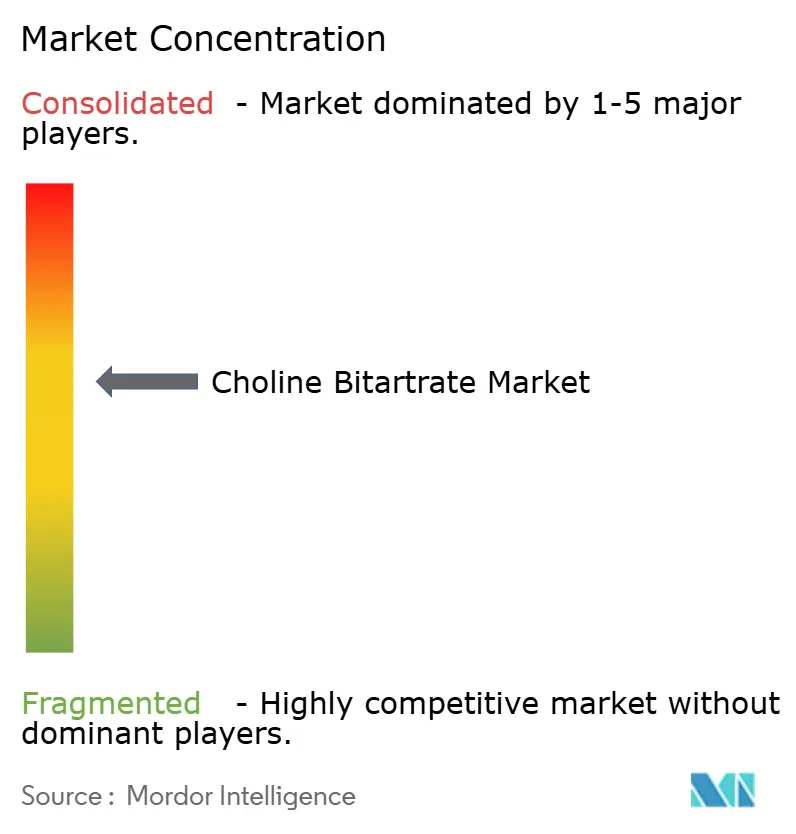
The market exhibits moderate concentration. Balchem’s VitaCholine line leverages synthetic routes with reduced environmental footprint and now feeds both domestic U.S. and export customers needing USP compliance. Clover Corporation, headquartered in Australia, exploits its microencapsulation know-how from DHA to offer synergistic choline-plus-DHA powders aimed at the infant-formula sector.
A second tier of Chinese and Indian producers competes mainly on price in feed- and basic food-grade segments, supplying DL-choline bitartrate powders at USD 6–8/kg with ≥99% assay. Many of these firms are upgrading ISO-22000 programs to secure entry into regulated infant-nutrition channels. Technology investments center on fluidized-bed coating, fully enclosed milling, and automated nitrogen-blanketed packing that reduces trimethylamine off-odors.
Strategic moves in 2025-2026 emphasize capacity expansions tied to liquid formats. Balchem’s 12-acre Orange County plant, slated for operation in 2027, will triple its food-focused encapsulation throughput and anchor North American supply resilience. Clover Corporation announced pilot trials in Victoria optimizing lecithin-based matrices that co-deliver choline and phospholipids for cognition claims. Several mid-tier Indian players are exploring enzymatic synthesis routes that cut waste-water discharge by 30%, aligning with EU sustainability scorecards valued by infant-formula customers.
M&A interest has been muted; instead, alliances surface in the form of multi-year tolling contracts with beverage co-packers who require stable choline dispersions. Intellectual-property barriers remain significant: proprietary coating recipes and in-process real-time moisture analytics constitute key defensible assets. Overall, while three leaders set the price floor for pharmaceutical-grade, fragmentation below them retains room for competitive bidding in food- and feed-grade tenders.
Choline Bitartrate Industry Leaders
-
Clover Corporation Limited
-
Glentham Life Sciences Limited
-
Balchem Corp.
-
BAJAJ HEALTHCARE LTD
-
Jubilant Ingrevia Limited
- *Disclaimer: Major Players sorted in no particular order
Choline Bitartrate Market Companies Covered in this Report
- Ambition Pharma
- BAJAJ HEALTHCARE LTD
- Balchem Corp.
- Chem-Impex.
- Clover Corporation Limited
- Glentham Life Sciences Limited
- Global calcium
- Jubilant Ingrevia Limited
- Kemiex
- LGC Limited
- MP BIOMEDICALS
- Nutricost
- PCCA
- Prinova Group
- Spectrum Chemical
- Thermo Fisher Scientific Inc.
- TOKYO CHEMICAL INDUSTRY CO., LTD.
- Vantage Nutrition LLP
- Vita Actives Ltd
Recent Industry Developments in Choline Bitartrate Market
- June 2024: DH Brands, a Bangalore-based beverage manufacturer, launched Rocketfuel, a zero-sugar, zero-calorie energy drink targeting active consumers. Rocketfuel Original Punch provided an energy boost through its formulation, which included Caffeine, Taurine, CoQ10, L-Theanine, BCAA, and Choline L-Bitartrate.
- March 2024: Killer Labz introduced its stimulant pre-workout product, First Degree, featuring a potent formula designed for high-intensity performance. The product contained a total of 400 mg of caffeine, sourced from caffeine anhydrous and Infinergy di-caffeine malate, along with ingredients such as juglans regia, eria jarensis, and choline bitartrate to enhance its stimulant profile.
Global Choline Bitartrate Market Report Scope
Choline bitartrate is a highly water-soluble salt formed by combining choline with tartaric acid. It is commonly used in dietary supplements to support cognitive function, liver health, and lipid metabolism. As a precursor to the neurotransmitter acetylcholine, it plays a role in promoting brain health.
The Choline Bitartrate Market is segmented into form, purity grade, application, end-user industry, and geography. By form, the market is segmented into powder, granules, and liquid. By purity grade, the market is segmented into food-grade, USP/pharmaceutical-grade, and feed-grade. By application, the market is segmented into dietary supplements, infant nutrition, animal feed, pharmaceuticals, and food and beverage fortification. By end-user industry, the market is segmented into healthcare and pharmaceuticals, food and beverage, animal nutrition, sports nutrition, and other end-user industries. The report also covers the market size and forecasts for choline bitartrate in 16 countries across major regions. For each segment, the market sizing and forecasts have been done on the basis of value (USD).
| Powder |
| Granules |
| Liquid |
| Food-Grade |
| USP/Pharmaceutical-Grade |
| Feed-Grade |
| Dietary Supplements |
| Infant Nutrition |
| Animal Feed |
| Pharmaceuticals |
| Food and Beverage Fortification |
| Healthcare and Pharmaceuticals |
| Food and Beverage |
| Animal Nutrition |
| Sports Nutrition |
| Other End-user Industries |
| Asia-Pacific | China |
| India | |
| Japan | |
| South Korea | |
| ASEAN Countries | |
| Rest of Asia-Pacific | |
| North America | United States |
| Canada | |
| Mexico | |
| Europe | Germany |
| United Kingdom | |
| France | |
| Italy | |
| Russia | |
| NORDIC Countries | |
| Rest of Europe | |
| South America | Brazil |
| Argentina | |
| Rest of South America | |
| Middle-East and Africa | Saudi Arabia |
| South Africa | |
| Rest of Middle-East and Africa |
| By Form | Powder | |
| Granules | ||
| Liquid | ||
| By Purity Grade | Food-Grade | |
| USP/Pharmaceutical-Grade | ||
| Feed-Grade | ||
| By Application | Dietary Supplements | |
| Infant Nutrition | ||
| Animal Feed | ||
| Pharmaceuticals | ||
| Food and Beverage Fortification | ||
| By End-user Industry | Healthcare and Pharmaceuticals | |
| Food and Beverage | ||
| Animal Nutrition | ||
| Sports Nutrition | ||
| Other End-user Industries | ||
| By Geography | Asia-Pacific | China |
| India | ||
| Japan | ||
| South Korea | ||
| ASEAN Countries | ||
| Rest of Asia-Pacific | ||
| North America | United States | |
| Canada | ||
| Mexico | ||
| Europe | Germany | |
| United Kingdom | ||
| France | ||
| Italy | ||
| Russia | ||
| NORDIC Countries | ||
| Rest of Europe | ||
| South America | Brazil | |
| Argentina | ||
| Rest of South America | ||
| Middle-East and Africa | Saudi Arabia | |
| South Africa | ||
| Rest of Middle-East and Africa | ||
Key Questions Answered in the Report
What is the size of the choline bitartrate market?
The choline bitartrate market stands at USD 515.31 million in 2026 and is forecast to reach USD 718.03 million, advancing at a 6.86% CAGR over 2026-2031.
Which region is growing the fastest through 2031?
Asia-Pacific is projected to post a 7.71% CAGR through 2031, led by China and India’s livestock and supplement sectors.
Why are infant-formula manufacturers increasing choline levels?
FDA and EFSA rules now require 7 mg/100 kcal minimums, and newer clinical evidence links higher choline to improved infant cognitive outcomes.
What is driving sports nutrition interest in choline bitartrate?
Athletes value choline’s role in acetylcholine synthesis, which supports focus and mitigates central fatigue during intense training.