
Cholesterol Testing Products And Services Market Size and Share
Market Overview
| Study Period | 2020 - 2031 |
|---|---|
| Forecast Data Period | 2026 - 2031 |
| Historical Data Period | 2020 - 2024 |
| Growth Rate | 7.71 % |
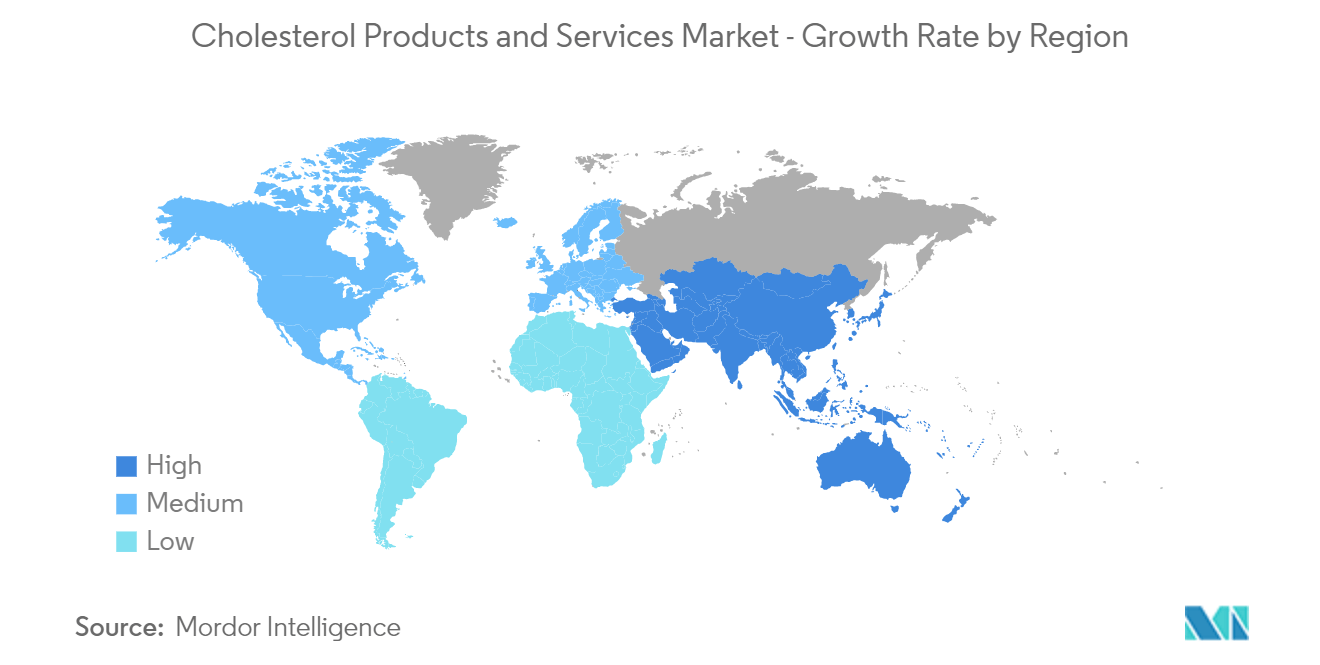
| Fastest Growing Market | Asia Pacific |
| Largest Market | North America |
Major Players *Disclaimer: Major Players sorted in no particular order Image © Mordor Intelligence. Reuse requires attribution under CC BY 4.0. | |
Cholesterol Testing Products And Services Market Analysis by Mordor Intelligence
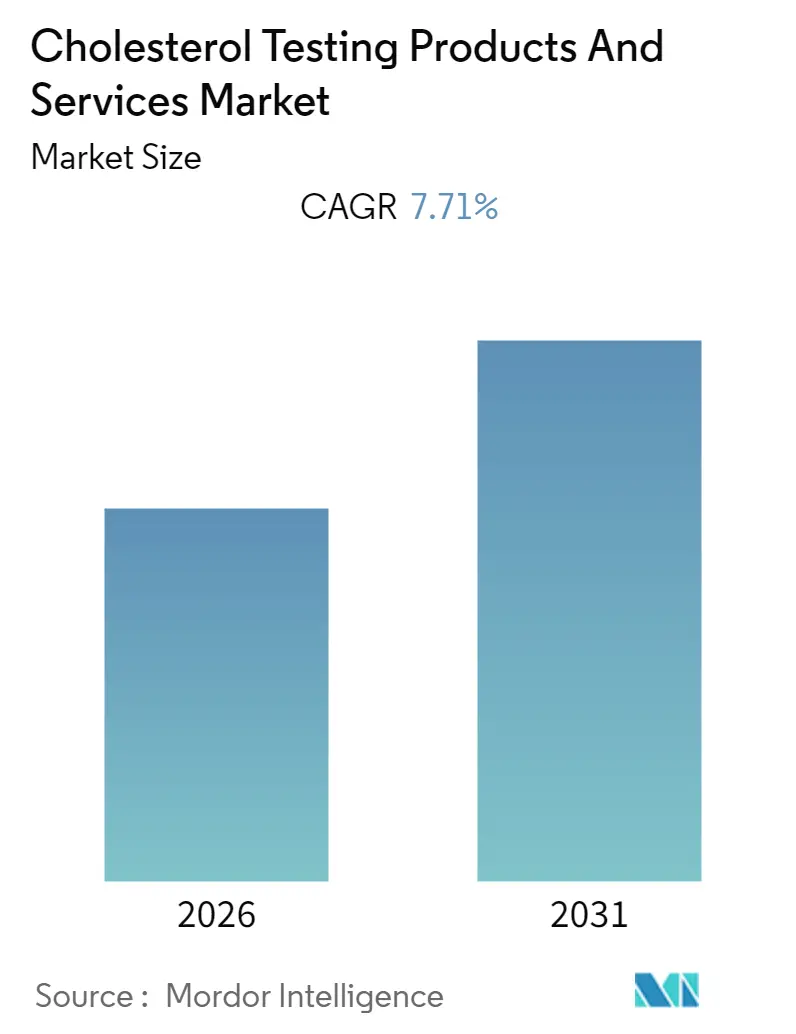
The Cholesterol Testing Products And Services Market size is expected to register a CAGR of 7.71% over 2026-2031.
Due to the COVID-19 pandemic, there has been a decrease in cholesterol testing, which saw demand decline even more rapidly to keep pace with the suspected cases of COVID-19. According to the study titled "Trends in cholesterol testing during the COVID-19 pandemic: COVID-19 and cholesterol testing," published in the American Journal of Preventive Cardiology in June 2021, between March and September 2020, cholesterol testing rates in an extensive integrated healthcare system were 39 percent lower than the same period in 2019. As COVID-19 resurfaces across the United States, mechanisms for safely facilitating cholesterol testing and management for high-risk patients have critical scenarios during COVID-19. Thus, during COVID-19, the cholesterol testing and services market was significantly impacted.
The cholesterol testing products and services market is primarily driven by the growing burden of high cholesterol and cardiac diseases worldwide. The average cholesterol levels are 200 mg/dl. The range higher than this is referred to as hypercholesteremia. The rise in cholesterol levels increases the risk of stroke and heart disease. For instance, according to the research study published in November 2020, titled 'Lipid Profile in Indian Patients with Type 2 Diabetes: The Scope for Atherosclerotic Cardiovascular Disease Risk Reduction', 40.0% of people had hyperlipidemia, of which 14.6% had just received a diagnosis. Elevated LDL cholesterol was the most prevalent lipid abnormality and low-density lipoprotein (LDL) cholesterol levels were shown to be correlated with increased A1C and fasting blood glucose values. Similarly, according to the July 2022 update of the Centers for Disease Control and Prevention, the total cholesterol level in about 94 million American individuals aged 20 or older is higher than 200 mg/dL and in the United States, adults with total cholesterol levels greater than 240 mg/dL number 28 million. Thus, an increase in cardiac diseases especially in cholesterol levels is expected to drive the demand for cholesterol testing and services, boosting the market growth.
Furthermore, various critical development in the market supports the growth of the market. For instance, in January 2021, Researchers in China developed a noninvasive skin cholesterol detection system that could be useful in the long-term lipid management of cardiovascular diseases, meeting a critical unmet need. The traditional indicator, low-density lipoprotein cholesterol (LDL-C), is prone to false positives, and lipid levels measured by routine blood cholesterol tests fluctuate based on diet, exercise, and weight. Thus, development help to bolster the market growth over the forecast period. However, stringent regulatory policies are anticipated to impede market growth over the forecast period.
Note: Market size and forecast figures in this report are generated using Mordor Intelligence’s proprietary estimation framework, updated with the latest available data and insights as of 2026.
Global Cholesterol Testing Products And Services Market Trends and Insights
Test kits Segment is Anticipated to Have a Significant Market Share Over the Forecast Period
The test kit segment commanded the majority of the market. Patients now have better access to cholesterol testing due to the development of cutting-edge testing kits. Due to technological advancements, cholesterol testing kits are expected to become the fastest-growing segment.
According to the study article titled "Cardiovascular disease (CVD) burden: Italian and global perspectives," published in March 2021, stated that Italy has an almost two-fold increase in the CVD prevalence than the rest of the world (12.9 percent vs. 6.6 percent), while age-standardized figures are similar (6.2 percent vs. 6.3 percent). This high prevalence of cardiovascular diseases and associated risk factors such as hypertension and diabetes are expected to drive early diagnosis and treatment demand. Patients with a history of heart attacks require cholesterol screening regularly to monitor the effectiveness of their treatment. hence, with the rising burden of cardiac diseases, the segment is expected to grow over the forecast period.
In addition, the increasing product launches by the key market players are anticipated to boost market growth over the forecast period. For Instance, in October 2021, Boditech Med launched ichorma LDL Cholesterol Direct, and ichroma AST has obtained the export licenses. Both are indicators of preventing lifestyle diseases such as arteriosclerosis, high blood pressure, diabetes, stroke, liver disease, etc., and we have started sales worldwide. Moreover, the services segment is anticipated to have a significant growth rate, owing to growing affordability and favorable reimbursement policies in many countries worldwide.


North America Anticipated to Have Significant Growth Over the Forecast Period
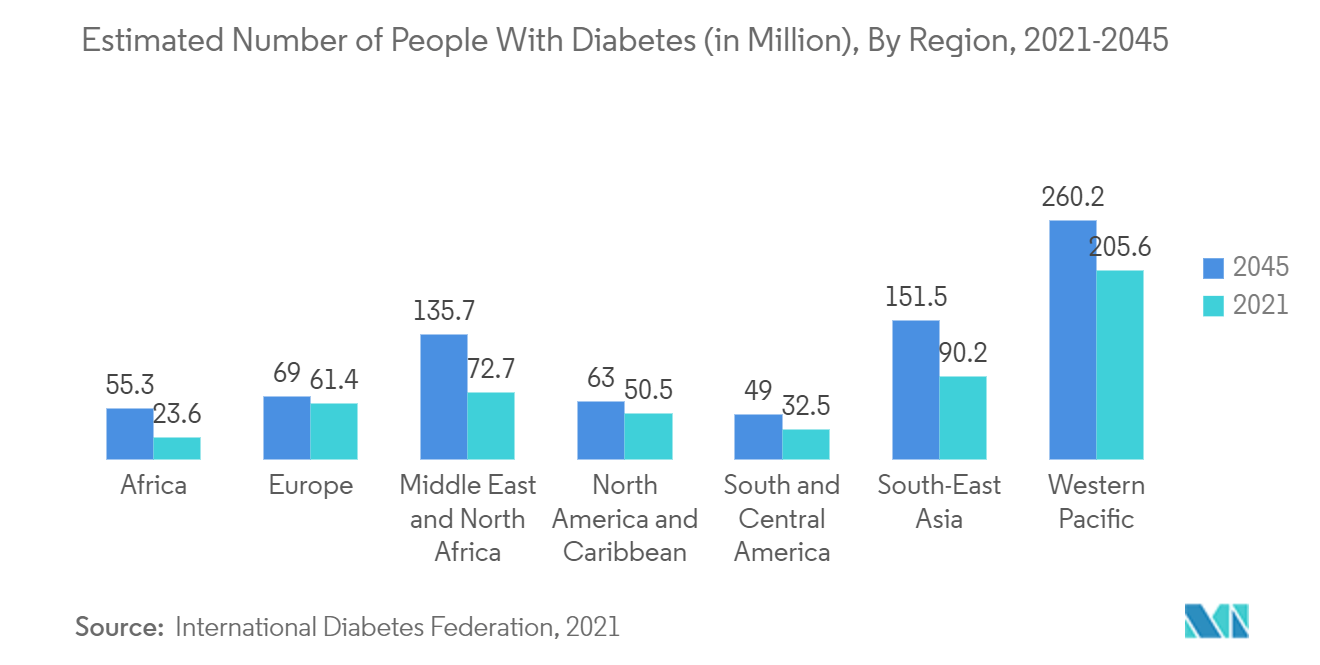
North America is anticipated to have a significant growth rate owing to a well-established healthcare infrastructure, a growing number of people with high cholesterol levels, a rise in the prevalence of heart diseases, and an increasing burden of obesity in the region. In September 2020, the Centers for Disease Control and Prevention (CDC) notified that adult obesity prevalence is increasing and racial and ethnic disparities persist owing to the current circumstances of work from home, less physical activities, and financial and other stress among the adult population. The CDC stated that obesity remains high, and currently, twelve states have an adult obesity prevalence at or above 35%, including Alabama, Arkansas, Indiana, Kansas, Kentucky, Louisiana, Michigan, Mississippi, Oklahoma, South Carolina, Tennessee, and West Virginia, which is high when nine states reported 35% obese population. The growing burden of obesity in the region is expected to boost the demand for cholesterol testing, thereby boosting market growth.
Furthermore, the rise in the prevalence of diseases drives the demand for cholesterol testing anticipated to boost the market growth. According to the American College of Cardiology (ACC), on March 6, 2020, people who have an underlying cardiovascular disease have a higher mortality rate when it comes to COVID-19 (10.5%) than people who have an underlying chronic respiratory disease (6.3%). Thus, the increased burden of heart disease increases demand for cholesterol testing and services, thereby boosting market growth.
Several companies are starting various strategies like collaborations, new product launches, and mergers and acquisitions to maintain and increase their market shares. For instance, in September 2021, Verv Technologies and a Sudbury company developed an at-home blood test. A user can get their cholesterol level, for example, on their smartphone in as little as 15 minutes. Thus, all aforementioned factors are anticipated to drive segment growth over the forecast period.

Regulatory Landscape
Regulation for cholesterol testing spans both IVD devices and laboratory services. In the United States, total cholesterol test systems are classified by the FDA as Class I (General Controls) devices under 21 CFR 862.1175, which sets baseline requirements around controls such as labeling and adverse event reporting. For Laboratory Developed Tests (LDTs), a compliance shift is taking shape following the FDA final rule published May 6, 2024, with phased reduction of enforcement discretion starting with Stage 1 on May 6, 2025 and running through May 2028. That timeline increases the need for laboratories offering cholesterol-related assays to align with medical device regulatory expectations.
In Europe, cholesterol testing IVDs are regulated under IVDR (EU) 2017/746, and self-testing devices generally require a notified body conformity assessment (commonly Class B, depending on intended use and claims). Regulation (EU) 2024/1860, effective July 9, 2024, extended IVDR transitional timelines for legacy IVDs, making notified-body application timing a practical gating factor, including May 26, 2026 for certain Class C pathways and May 26, 2027 for Class B pathways. Globally, the WHO Model List of Essential In Vitro Diagnostics (EDL) includes LDL cholesterol monitoring under cardiovascular disease management, which reinforces the demand for standardized performance evaluation and traceability across platforms used in hospitals, diagnostic centers, and decentralized settings.
Competitive Landscape
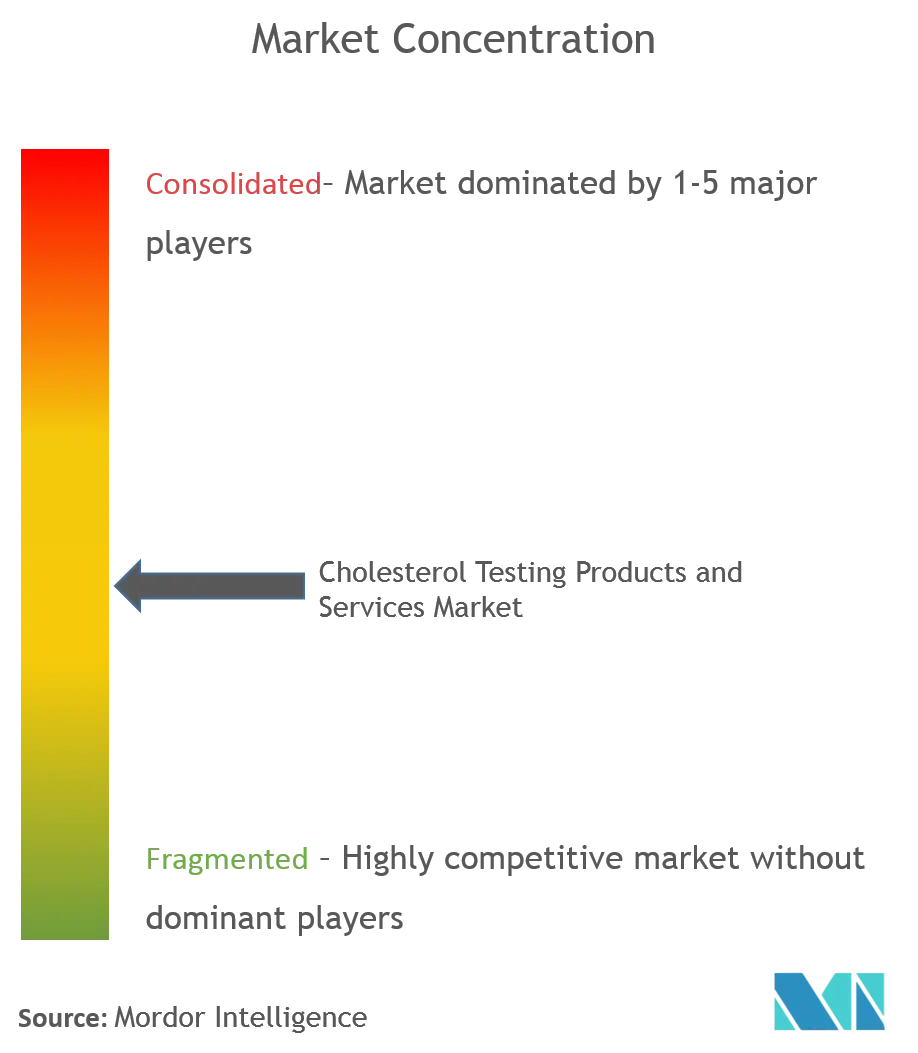
The global cholesterol testing product and services market is moderately fragmented and competitive. Market players focus on new product launches, innovations, and geographical expansion to strengthen their market share. The key market players operating in the market include Quest Diagnostics, SpectraCell Laboratories Inc., Randox Laboratories Ltd, Thermo Fisher Scientific, and Cell Biolabs Inc., among others.
Cholesterol Testing Products And Services Industry Leaders
Quest Diagnostics
SpectraCell Laboratories, Inc.
Randox Laboratories Ltd
Thermo Fisher Scientific
Cell Biolabs, Inc.
- *Disclaimer: Major Players sorted in no particular order

Market Opportunities and Future Outlook
Home-use and consumer-initiated testing creates room for cholesterol monitoring solutions that combine simplified sampling, human factors engineering, and connectivity. In April 2026, the FDA launched the READI-Home Innovation Challenge to accelerate development of home-use diagnostic devices linked to reducing hospital readmissions, which aligns with product concepts for cholesterol monitoring outside traditional care sites. On the clinical chemistry device pathway, FDA-cleared lipid testing activity such as Truvian Healths 510(k) (K251091, December 2025) indicates continued commercialization of lipid test systems within established classification frameworks under 21 CFR 862.1175, and it underscores where competition is centered, including ease-of-use, turnaround time, and integration into care pathways.
Regulatory execution under EU IVDR, alongside evolving oversight of LDTs in the United States, increases the value of performance evaluation packages, post-market surveillance readiness, and earlier notified body engagement for self-testing and near-patient devices. The opportunity set also expands for digitally connected cholesterol meters and test kits that transmit results into remote monitoring workflows, reflecting the industry's movement away from stand-alone measurements toward device-software solutions. On the services side, growth in consumer-initiated testing channels supports broader cardiometabolic screening bundles, as reflected in Quest Diagnostics reporting expansion of QuestHealth.com momentum in 2025. Suppliers that can provide validated assays across installed analyzer platforms can also scale through reagent menus and distribution partnerships.
Recent Industry Developments
- June 2026: Randox Health launched RanChip Insight 360, a health intelligence program that analyzes more than 250 data points, including heart and cardiovascular health markers. The launch extends consumer-facing testing beyond single-analyte measurements into multi-marker panels, supporting higher-value cholesterol and cardiometabolic screening bundles.
- February 2026: Quest Diagnostics reported that its consumer-initiated testing business (QuestHealth.com) grew by more than 20% year-over-year in 2025 and generated about USD 250 million in revenue. The update points to sustained demand for direct access testing channels, increasing competitive pressure on traditional lab pathways for cholesterol and lipid testing services.
- December 2025: Thermo Fisher Scientific and GENinCode Plc announced a collaboration to manufacture, sell, and distribute the CARDIO inCode-Score polygenic risk score test for coronary heart disease across the United States and EMEA. Adding genetic risk stratification alongside lipid testing supports more comprehensive cardiovascular assessment workflows and strengthens the case for integrated testing menus for labs and diagnostic providers.


Research Methodology Framework and Report Scope
Market Definition and Coverage
This market covers revenue from cholesterol testing products and related testing services used to screen or monitor lipid levels in clinical and near-patient settings. It includes the sale and recurring use of devices and consumables, plus fees tied to cholesterol testing services.
Scope exclusions: We exclude broader cardiovascular diagnostics that are not specific to cholesterol or lipid measurement, and we also exclude drugs and lifestyle programs used after diagnosis.
Segmentation Overview
- By Products and Services
- Products
- Devices
- Test Kits
- Other Products and Services
- Services
- Products
- By End User
- Diagnostic Centers
- Hospitals
- Other End Users
- Geography
- North America
- United States
- Canada
- Mexico
- Europe
- Germany
- United Kingdom
- France
- Italy
- Spain
- Rest of Europe
- Asia-Pacific
- China
- Japan
- India
- Australia
- South Korea
- Rest of Asia-Pacific
- Middle East and Africa
- GCC
- South Africa
- Rest of Middle East and Africa
- South America
- Brazil
- Argentina
- Rest of South America
- North America
Data Sources, Market Sizing, and Validation
Desk Research
Desk work starts with building the real-world demand pool, then translating it into testing activity and spend. We review public health statistics and screening guidance, including CDC health surveys and health indicators, WHO and OECD health data, and national health service publications where available. To make the usage picture less theoretical, we also use sources such as peer-reviewed cardiometabolic journals and clinical society guidance documents that describe testing frequency patterns and care pathways.
On the supply side, we use public company filings, investor presentations, regulatory and product documentation, and association websites to understand what is being sold and where it is being used. When needed, paid subscription sources for company financials and market intelligence are used to standardize revenue splits and track corporate actions. We also reference a paid patent database to cross-check technology direction that can affect device replacement cycles. The sources listed here are illustrative only, and many additional public references were used during data collection, cross-checking, and clarification.
Primary Interviews and Surveys
Primary work is used to pressure-test model inputs that are hard to confirm from public sources, particularly how testing shifts between central labs, point-of-care settings, and at-home use. We speak with a mix of product-side and service-side respondents, plus end users such as diagnostic leaders and hospital lab managers, and then we validate how pricing, replenishment, and procurement cycles actually behave across major regions.
Distribution of primary research fieldwork respondents
| Company type | Respondent position | Region |
|---|---|---|
| Top tier: 37% | CXOs: 17% | APAC: 40% |
| Mid tier: 43% | Functional/Unit leaders: 23% | EMEA: 36% |
| Smaller Players: 20% | Managers: 60% | Americas: 24% |
Market-Sizing & Forecasting
Sizing is built using a top-down approach where population lipid-risk indicators and screening behavior are used to reconstruct a realistic testing volume pool, then converted into spend using typical test mix and pricing ranges. In practice, we map a patient pathway from screening to follow-up checks, and apply setting splits across hospitals, diagnostic centers, and other sites where testing is performed.
Inputs that matter most include the diagnosed and screened population trend, preventive health check uptake, lipid panel versus single-parameter test mix, device installed base replacement timing, and average selling price movement for test kits and consumables, including reorder frequency. Forecasts are built using scenario analysis supported by expert views on screening intensity, reimbursement stability, and the pace of point-of-care adoption. The model is adjusted when an assumption creates an unrealistic jump versus known healthcare activity signals.
To corroborate totals, we also run selective bottom-up approximations, such as sampling supplier revenues by region and checking whether implied volumes and ASPs align with channel feedback. Where gaps exist in smaller countries or informal service settings, proxy indicators like relative healthcare spend and lab testing intensity are used, and we re-check resulting shares with respondents before finalizing.
Data Validation & Update Cycle
Validation is done by comparing the modeled market value with independent signals such as broader IVD spending direction, reported preventive testing activity, and public health screening momentum, then checking for outliers by region and by setting. Any sharp variance triggers a second review of the input drivers, followed by a re-check of assumed test frequency, pricing bands, and site-of-care splits.
Before sign-off, the model and assumptions go through multi-step analyst reviews so calculation logic and source interpretation stay consistent. Reports are refreshed annually, and interim updates are made when material events occur, such as policy changes, major regulatory shifts, or large product launches that can alter adoption. Right before delivery, a final pass is completed so clients receive an up-to-date view aligned with the latest available evidence.
Mordor Intelligence's Cholesterol Testing Products and Services Market Size Measured Against Other Published Estimates
It is normal to see different market values for cholesterol testing products and services because each publisher draws the boundary in its own way, and the same label can cover different mixes of products, consumables, and testing services. Differences also show up when base years do not match, when currency timing is handled differently, or when the forecast window starts after a disruption year.
By tracking screening-linked test volumes, refreshing setting-level pricing bands, and separating service revenues from product pull-through in the same modeling approach, Mordor Intelligence reduces double counting risk when both lab service value and kit value are treated as the full test value. Gaps can also come from how at-home testing is handled, whether lipid panels are priced as bundled tests or as component tests, and how quickly utilization is assumed to rise with prevention programs.
Benchmark comparison
| Source | Market Size | Gaps in Research Methodology |
|---|---|---|
| Mordor Intelligence | USD 4.75 B (2026) | |
| Industry Publisher A | USD 19.85 B (2024) | Uses a broader revenue scope that appears to include a wider set of tests, service provider coverage, and geographic timing, and it also anchors sizing to an earlier base year that can inflate the comparable total versus a narrower cholesterol testing boundary. |
| Research Publisher B | USD 10.56 B (2024) | Applies a lower-growth view and a different inclusion mix across product types, channels, and end users, which can reduce implied test intensity and keep service value capture more conservative for the same labeled market. |
The spread across published values is mainly explained by scope choices and how testing activity is translated into money, especially when bundled lipid panels and service billing are treated differently. Our approach keeps the market tied to observable testing drivers and practical price bands, which makes the final number easier to trace and re-check when assumptions change.


Key Questions Answered in the Report
What is the current Global Cholesterol Testing Products and Services Market size?
The Global Cholesterol Testing Products and Services Market is projected to register a CAGR of 7.71% during the forecast period (2026-2031)
Who are the key players in Global Cholesterol Testing Products and Services Market?
Quest Diagnostics, SpectraCell Laboratories, Inc., Randox Laboratories Ltd, Thermo Fisher Scientific and Cell Biolabs, Inc. are the major companies operating in the Global Cholesterol Testing Products and Services Market.
Which is the fastest growing region in Global Cholesterol Testing Products and Services Market?
Asia Pacific is estimated to grow at the highest CAGR over the forecast period (2026-2031).
Which region has the biggest share in Global Cholesterol Testing Products and Services Market?
In 2025, the North America accounts for the largest market share in Global Cholesterol Testing Products and Services Market.
What years does this Global Cholesterol Testing Products and Services Market cover?
The report covers the Global Cholesterol Testing Products and Services Market historical market size for years: 2019, 2020, 2021, 2022, 2023 and 2024. The report also forecasts the Global Cholesterol Testing Products and Services Market size for years: 2026, 2027, 2028, 2029, 2030 and 2031.
Page last updated on:





