
Cheese Powder Market Size and Share
Market Overview
| Study Period | 2021 - 2031 |
|---|---|
| Market Size (2026) | USD 1.61 Billion |
| Market Size (2031) | USD 2.29 Billion |
| Growth Rate (2026 - 2031) | 7.26 % |
| Fastest Growing Market | Asia-Pacific |
| Largest Market | North America |
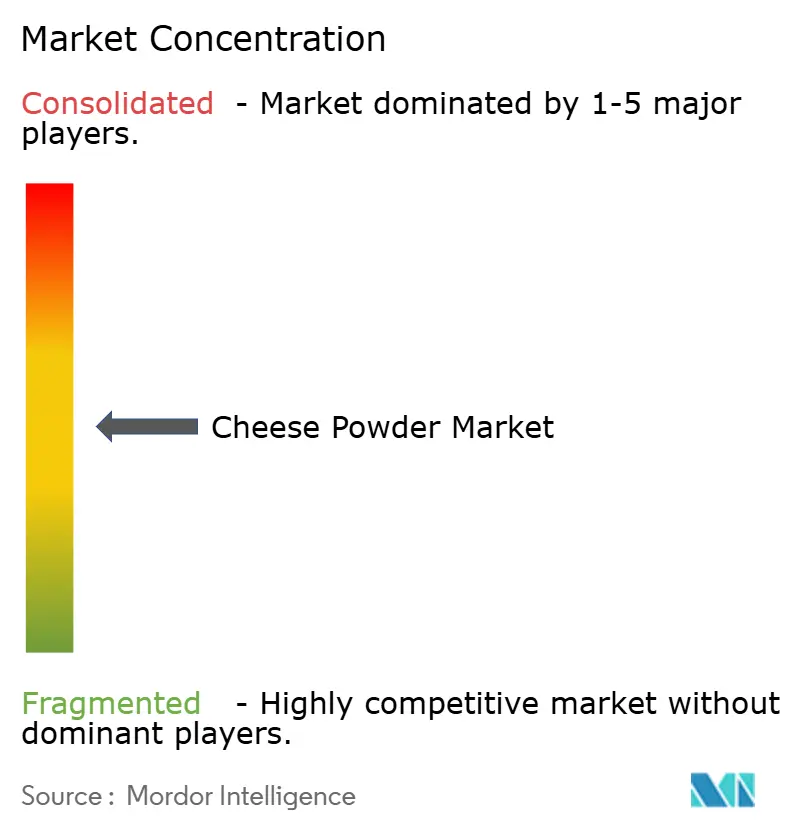
| Market Concentration | Medium |
Major Players *Disclaimer: Major Players sorted in no particular order Image © Mordor Intelligence. Reuse requires attribution under CC BY 4.0. | |
Cheese Powder Market Analysis by Mordor Intelligence
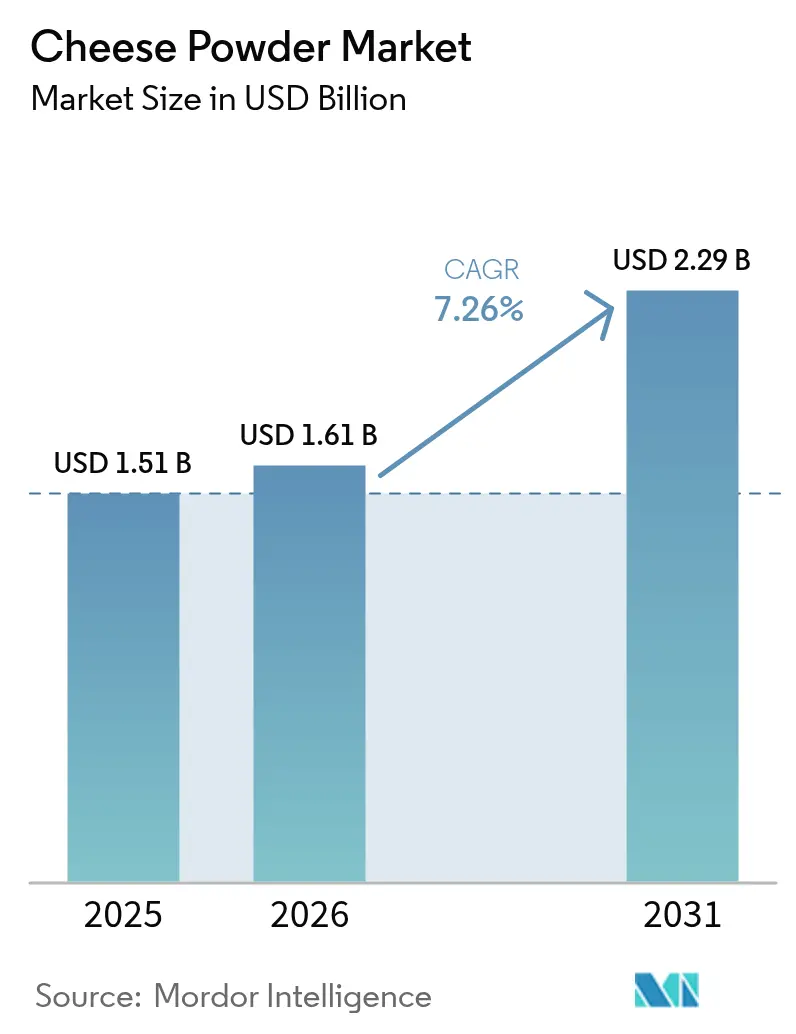
The cheese powder market size was valued at USD 1.51 billion in 2025 and estimated to grow from USD 1.61 billion in 2026 to reach USD 2.29 billion by 2031, at a CAGR of 7.26% during the forecast period (2026-2031). Demand is climbing as manufacturers balance volatile dairy prices with shelf-stable, flavor-intense ingredients, while foodservice chains adopt powder formats to lower labor and refrigeration costs. North America retained leadership thanks to decades-old snack-seasoning infrastructure, yet capacity additions in Asia-Pacific will accelerate regional uptake as multinational quick-service restaurants enter secondary cities. Technology breakthroughs in electrostatic and pulse spray-drying safeguard delicate sulfur volatiles, broadening premium applications such as aged-parmesan and blue-cheese powders. Meanwhile, clean-label reformulations that replace artificial colors with natural annatto and enzyme-modified bases cater to health-conscious consumers and support sustained value growth.
Key Report Takeaways
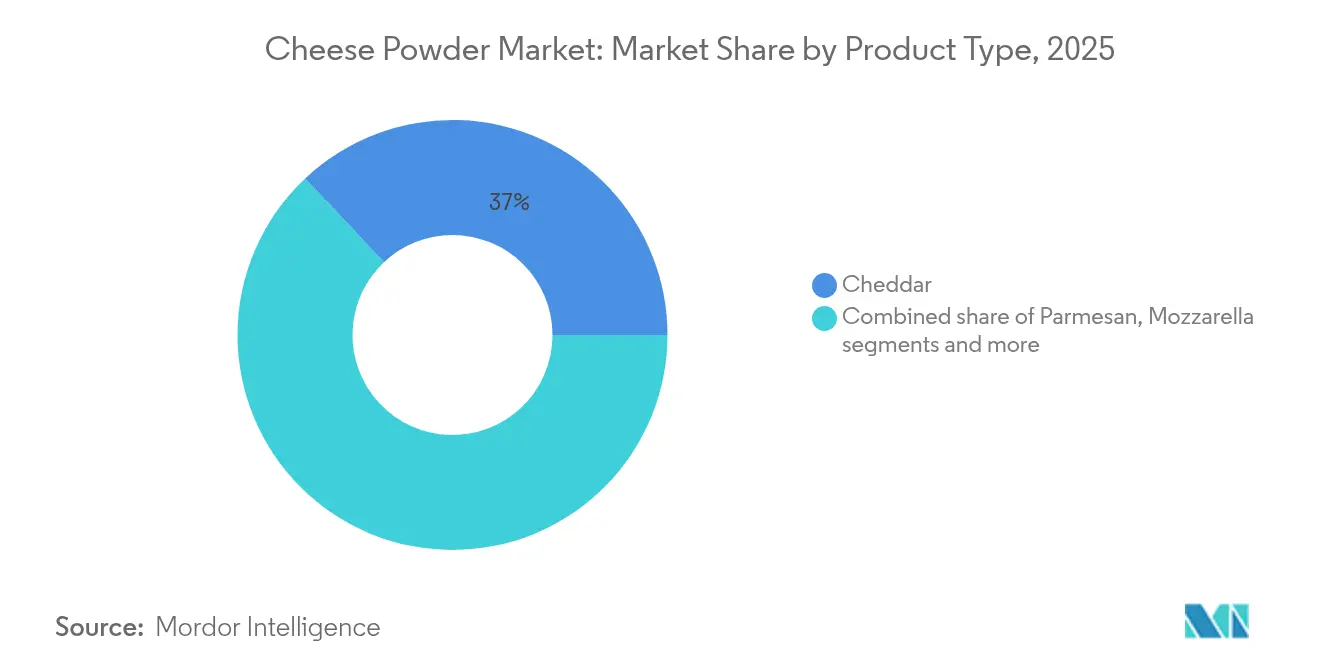
- By product type, cheddar led with 37.08% of the cheese powder market share in 2025, whereas mozzarella is projected to post the fastest 9.89% CAGR to 2031.
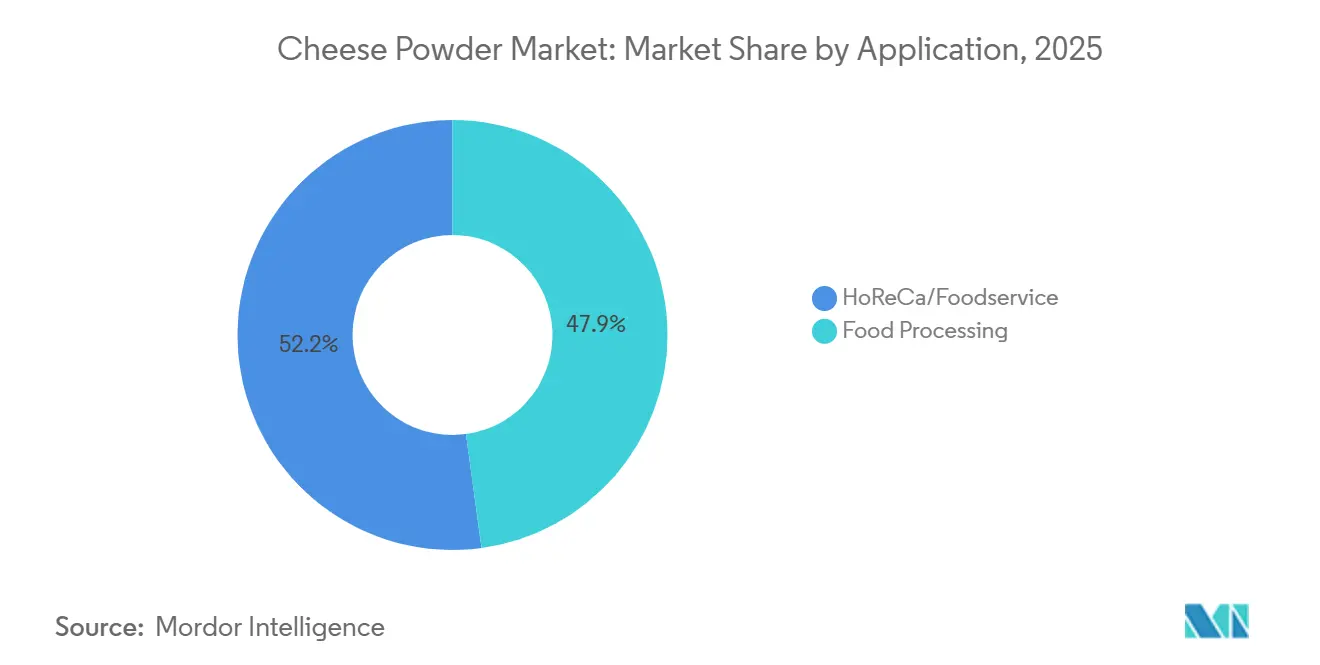
- By application, HoReCa/Foodservice captured 52.15% revenue share of the cheese powder market in 2025; whereas, food processing is forecast to expand at a 7.84% CAGR through 2031.
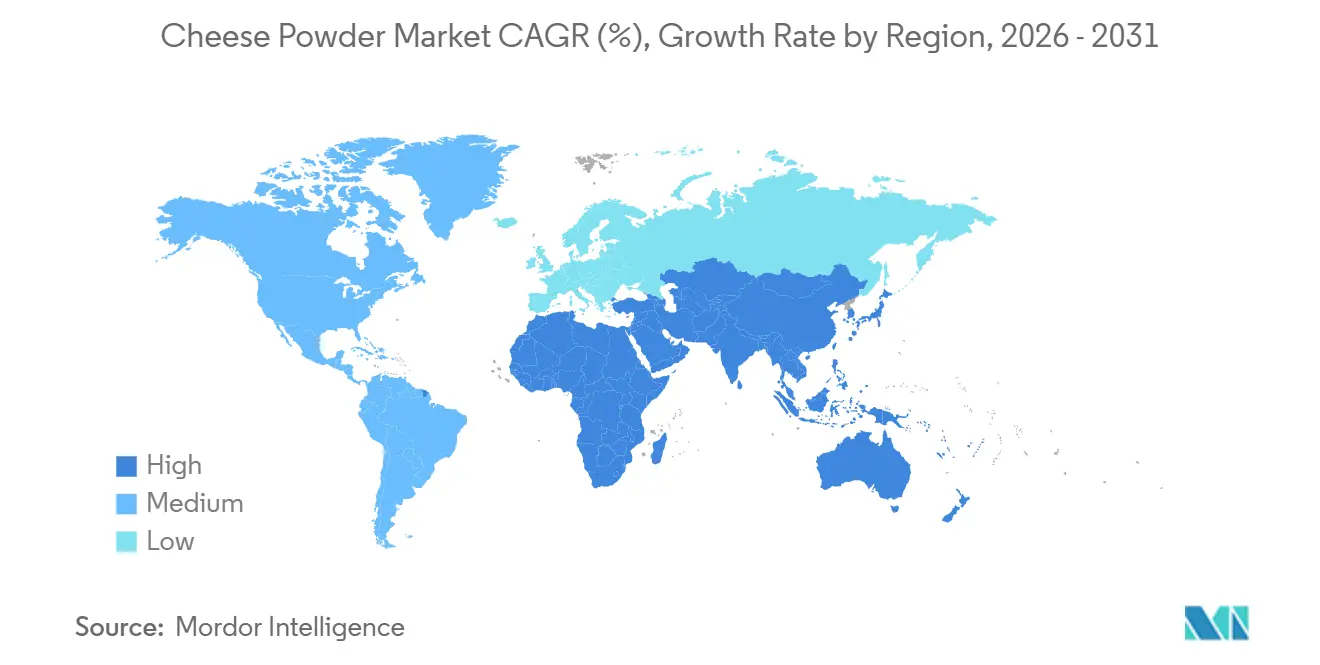
- By geography, North America held 36.24% of sales in 2025, while Asia-Pacific is set to climb at a 8.91% CAGR during 2026-2031.
Note: Market size and forecast figures in this report are generated using Mordor Intelligence’s proprietary estimation framework, updated with the latest available data and insights as of 2026.
Market Trends and Insights
Drivers Impact Analysis of Cheese Powder Market*
| Driver | (~) % Impact on CAGR Forecast | Geographic Relevance | Impact Timeline |
|---|---|---|---|
| Rising demand for convenience foods and snacks | +1.8% | Global, with concentration in North America and Asia-Pacific urban centers | Medium term (2-4 years) |
| Expansion of foodservice and HoReCa industry use | +1.5% | Asia-Pacific core, spill-over to Middle East and South America | Medium term (2-4 years) |
| Long shelf life and easy storage benefits | +0.9% | Global, particularly emerging markets with fragmented cold-chain infrastructure | Long term (≥ 4 years) |
| Technological advances in drying and flavor retention | +1.2% | North America and Europe, with technology transfer to Asia-Pacific | Long term (≥ 4 years) |
| Clean-label and natural formulation trends | +1.0% | North America and Europe, early adoption in urban Asia-Pacific | Short term (≤ 2 years) |
| Growing adoption in sauces, dips, and bakery applications | +0.8% | Global, led by North America and Europe bakery sectors | Medium term (2-4 years) |
| Source: Mordor Intelligence | |||
Rising demand for convenience foods and snacks
Rising demand for convenience foods and snacks is a significant driver of the cheese powder market, as manufacturers increasingly incorporate cheese powders into ready-to-eat meals, savory snacks, sauces, and seasoning blends to enhance flavor, texture, and nutritional appeal. Cheese powder offers a versatile, shelf-stable, and easy-to-use ingredient that allows snack producers to deliver consistent taste and creamy profiles without relying on fresh cheese, supporting mass production and extended shelf life. According to the 2024 IFIC Food & Health Survey, nearly three in four Americans snack at least once a day, with 73% consuming snacks daily and 14% snacking three or more times per day, highlighting the growing consumer preference for convenient, flavorful, and on-the-go food options[1]. This trend encourages manufacturers to innovate with cheese-flavored chips, popcorn, seasoning mixes, and meal kits, further increasing demand for powdered cheese ingredients.
Expansion of foodservice and HoReCa industry use
The expansion of the foodservice and HoReCa (Hotels, Restaurants, and Catering) industry is a key driver of the cheese powder market, as these sectors increasingly rely on versatile, shelf-stable ingredients to streamline kitchen operations and ensure consistent product quality. Cheese powders provide a convenient and cost-effective alternative to fresh cheese, enabling chefs and foodservice operators to create a wide range of menu items, including sauces, soups, baked goods, and snack toppings, without the challenges of refrigeration or rapid spoilage. The growing number of quick-service restaurants, casual dining chains, and catering services has intensified demand for ingredients that are easy to store, measure, and integrate into high-volume production. Additionally, the adoption of standardized recipes and portion-controlled preparations in the HoReCa segment further reinforces the need for powdered cheese to maintain flavor consistency across outlets.
Long shelf life and easy storage benefits
Long shelf life and easy storage are important drivers of the cheese powder market, as these characteristics make it a highly convenient ingredient for both food manufacturers and end-users. Unlike fresh cheese, cheese powder does not require refrigeration, reducing storage costs and simplifying logistics across production, distribution, and retail channels. Its extended shelf stability allows manufacturers to produce, transport, and store large quantities without the risk of spoilage, supporting consistent supply for year-round demand. The powder form also enables precise portioning and easy integration into sauces, snacks, seasonings, and ready-to-eat meals, improving operational efficiency in both industrial and foodservice applications. These benefits are particularly valuable for markets with limited cold-chain infrastructure or for small-scale producers seeking cost-effective ingredient solutions.
Clean-label and natural formulation trends
Clean-label and natural formulation trends are driving growth in the cheese powder market, as consumers increasingly demand products with transparent, minimally processed, and recognizable ingredients. Manufacturers are responding by developing cheese powders that avoid artificial flavors, colors, and preservatives while maintaining taste and functionality in a variety of applications such as snacks, sauces, and ready-to-eat meals. According to research by the CBI Ministry of Foreign Affairs, clean-label products are projected to constitute over 70% of portfolios in 2025 and 2026, up from 52% in 2021, reflecting the strong shift toward natural and trustworthy product formulations[2]. This trend encourages the use of dairy-derived or plant-based cheese powders that align with consumer expectations for authenticity and simplicity. Clean-label positioning not only strengthens brand credibility but also supports marketing claims related to health, wellness, and sustainability.
Restraints Impact Analysis of Cheese Powder Market*
| Restraint | (~) % Impact on CAGR Forecast | Geographic Relevance | Impact Timeline |
|---|---|---|---|
| Volatile dairy raw material prices | -1.2% | Global, with acute impact in import-dependent regions | Short term (≤ 2 years) |
| Health concerns related to sodium and fat content | -0.7% | North America and Europe, emerging in urban Asia-Pacific | Medium term (2-4 years) |
| Stringent food safety and regulatory compliance | -0.5% | Global, with heightened enforcement in EU and India | Long term (≥ 4 years) |
| Supply chain disruptions and raw material shortages | -0.8% | Global, concentrated in Southern Hemisphere export markets | Short term (≤ 2 years) |
| Source: Mordor Intelligence | |||
Volatile dairy raw material prices
Volatile dairy raw material prices represent a significant restraint on the cheese powder market, as the cost of production is closely tied to commodities such as milk, whey, and cheese curds, which are highly susceptible to seasonal fluctuations, weather events, and changes in trade policy. These price swings directly impact manufacturers’ margins, especially for large-scale production of powdered cheese used in snacks, sauces, and ready-to-eat meals. USDA data showed U.S. cheddar-block prices averaging USD 1.85 per pound in early 2025, up from USD 1.62 in 2024, driven by tighter milk supplies resulting from dairy-farm consolidation and a reduced national herd count[3]. Such volatility can lead to increased product costs for both foodservice operators and retail brands, potentially affecting pricing strategies and product accessibility. Manufacturers must frequently adjust procurement plans, hedge against market fluctuations, or explore alternative suppliers to maintain stable production.
Health concerns related to sodium and fat content
Health concerns related to sodium and fat content pose a notable restraint on the cheese powder market, as consumers and regulatory authorities increasingly scrutinize processed foods for nutritional quality. Cheese powders, particularly those derived from full-fat cheeses, can contain elevated levels of saturated fat and sodium, which are associated with cardiovascular risks and other diet-related health issues. Growing awareness about obesity, hypertension, and heart disease has prompted consumers to limit intake of high-sodium and high-fat products, affecting demand for traditional cheese-flavored ingredients. Food manufacturers are therefore under pressure to reformulate products with reduced-fat or low-sodium alternatives, which may alter taste, texture, and functionality in applications such as snacks, sauces, and ready-to-eat meals. These concerns can slow market growth, as producers balance consumer expectations for flavor with the need to comply with health-conscious trends.
*Our forecasts treat driver/restraint impacts as directional, not additive. The impact forecasts reflect baseline growth, mix effects, and variable interactions.
Cheese Powder Market Segment Analysis
By Product Type:
Cheddar Dominance Anchored in Snack InfrastructureCheddar accounted for 37.08% of the global cheese powder market share in 2025, establishing itself as the dominant segment within the category. Its leading position is primarily driven by widespread consumer familiarity and strong preference across both retail and foodservice channels. Cheddar cheese powder is extensively used in snack seasonings, ready-to-eat meals, bakery products, sauces, and convenience foods due to its sharp flavor profile and versatile functionality. The segment benefits from strong demand in processed and packaged food applications, particularly in flavored chips, popcorn, pasta mixes, and instant meal kits. Additionally, manufacturers favor cheddar powder for its consistent taste, stable shelf life, and compatibility with large-scale production processes.
Mozzarella cheese powder is projected to expand at a CAGR of 9.89% through 2031, making it the fastest-growing segment in the market. This accelerated growth is largely attributed to the increasing global popularity of Italian-style cuisine, particularly pizza, pasta, and baked dishes. The rising demand for convenience foods that replicate authentic mozzarella flavor in powdered form is further supporting segment expansion. Mozzarella powder is increasingly being incorporated into ready-to-cook mixes, seasoning blends, and snack coatings to meet evolving consumer taste preferences. Moreover, rapid urbanization and changing dietary habits in emerging economies are driving higher consumption of Western-style food products, which often feature mozzarella-based flavors.

By Application:
Food Processing Gains on HoReCa LeadershipThe HoReCa channel generated 52.15% of the cheese powder market revenue in 2025, driven by high-volume purchases from quick-service restaurants and institutional caterers. These businesses value cheese powder for its storage stability and ability to maintain consistent menu quality. The ingredient helps streamline kitchen operations, reduce waste, and maintain uniform taste across multiple locations. However, the segment's growth is moderating due to fluctuations in consumer foot traffic during economic cycles.
The food processing segment is expected to grow at a 7.84% CAGR, surpassing HoReCa's growth rate. This growth is driven by increasing demand for frozen entrées, soups, sauces, and shelf-ready meal kits, particularly among remote workers. The trend reflects a growing consumer preference for convenient, protein-rich packaged foods in middle-income households. Small and medium processors incorporate cheese powder in regional seasonings and instant noodles, benefiting from reduced product development cycles. The bakery sector utilizes the ingredient's heat stability to add cheddar or parmesan flavors to biscuits while maintaining product texture. Ready-meal manufacturers combine mozzarella powder with air-dried basil to create premium products with authentic pizza flavors. Plant-based food manufacturers use cheese powder with vegetable ingredients to appeal to flexitarian consumers. This shift would significantly reshape the cheese powder market landscape.
Geography Analysis
North America Cheese Powder Market
North America dominated the global cheese powder market in 2025, accounting for 36.24% of the total market share. The region’s leadership position is supported by strong consumption of processed and convenience foods, particularly in the United States and Canada. High demand for flavored snacks, ready-to-eat meals, and packaged food products continues to drive substantial usage of cheese powder across multiple applications. The presence of well-established food processing industries and advanced distribution networks further strengthens regional market penetration. Additionally, consumers in North America exhibit a strong preference for cheese-based flavors, particularly cheddar and specialty blends, which boosts product innovation and portfolio expansion.
APAC Cheese Powder Market
Asia-Pacific is projected to register the fastest growth in the cheese powder market, expanding at a CAGR of 8.91% through 2031. The region’s growth is primarily driven by rapid urbanization, rising disposable incomes, and increasing adoption of Western dietary habits. Expanding quick-service restaurant chains and growing consumption of bakery, snack, and convenience food products are significantly contributing to demand. Countries such as China, India, Japan, and Southeast Asian nations are witnessing rising popularity of cheese-flavored snacks and ready-to-cook meals. Additionally, the increasing penetration of modern retail formats and e-commerce platforms is improving product accessibility across urban and semi-urban areas.
EMEA and South America Cheese Powder Market
Europe represents a mature yet steadily expanding market for cheese powder, supported by strong dairy production capabilities and established consumer preference for cheese-based products. The region benefits from a well-developed food processing sector and consistent demand from bakery, snack, and ready meal segments. South America is experiencing gradual growth, driven by expanding urban populations and increasing consumption of processed foods in countries such as Brazil and Argentina. Meanwhile, the Middle East & Africa region is emerging as a promising market due to rising disposable incomes, growing young populations, and expanding retail infrastructure. Increasing adoption of convenience foods and Western-style fast food chains is contributing to higher demand for cheese powder products in these regions.
Regulatory Landscape
Cheese powder manufacturers work within dairy standards of identity, additive rules, and preventive food-safety systems that shape compositional claims, processing aids, and labeling across major markets. In the United States, FDA standards for cheeses and related cheese products (21 CFR Part 133) set identity and naming conventions, while compliance attention to pathogens such as Listeria monocytogenes is reflected in FDA Compliance Policy Guide 555.320 for dairy products, including processed cheese categories.
Regulatory change and traceability requirements are active compliance variables. In July 2025, the US FDA proposed revoking 18 standards of identity for dairy products to streamline standards that can affect how cheese-derived ingredients are described in formulations and labels. Under FSMA, products such as soft cheeses appear on the FDA Food Traceability List, and FDA traceability guidance updated in February 2026 raised record-keeping expectations for ingredients and finished foods that intersect with listed categories. In India, FSSAI issued draft standards for cheese powder in June 2025, adding a clearer specification framework for domestic and imported cheese powders and tightening quality and labeling alignment with existing food regulations.
Value Chain Analysis
The cheese powder value chain starts with milk sourcing and primary dairy processing (milk, curd, and cheese manufacture), then moves into ingredient conversion where natural cheese is comminuted and melted with water and emulsifying salts to form an emulsion. After pasteurization, the emulsion is spray-dried into powder. Inputs also include cultures, enzymes (such as chymosin), emulsifying salts, anti-caking agents (where permitted), and packaging materials intended to limit moisture and oxygen exposure.
Production economics are shaped by dairy commodity volatility and by access to capital-intensive drying assets such as spray dryers and, in many plants, two-stage systems with secondary drying. These steps influence particle size, flowability, and flavor retention, which matter for snack, ready-meal, and sauce applications. Downstream, powders are distributed through ingredient distributors and direct B2B channels to food processors and HoReCa buyers, where performance requirements focus on adhesion for snack coatings, dispersibility in sauces, and consistent flavor intensity. Logistics and storage also remain sensitive, since the finished ingredient is shelf-stable relative to fresh cheese but still vulnerable to heat and humidity, making controlled warehousing and robust packaging important for quality preservation. Compliance and governance cut across the chain, including FSMA supplier verification for US supply, GRAS pathways for certain processing aids and enzymes, and regional standard-setting and trade facilitation efforts such as those involving ASSIFONTE within the European processed-cheese ecosystem.
Competitive Landscape
The cheese powder market is moderately fragmented. Global dairy giants, including Fonterra, Kerry Group plc, and Lactosan A/S, adopt vertical integration strategies, overseeing everything from milk collection to the production of finished powder. This approach helps them manage cost fluctuations and ensure traceability. While the capital-intensive nature of spray-drying equipment poses entry barriers, medium-sized regional firms carve out niches with specialized offerings, such as provenance-based flavors and religious certifications. Technological competition in the industry centers on innovations like microencapsulation for aroma retention, sodium reduction, and energy-efficient drying systems that cut emissions and operational costs.
Recent strategic moves underscore the competitive landscape and capability enhancements within the industry. In December 2024, Fonterra bolstered its ingredients operations with a USD 150 million investment in warehouse facilities, adding a 26,000-tonne cheese storage capacity. In 2024, Leprino Foods teamed up with Fooditive to pioneer precision-fermented casein, targeting a reduction in dairy farming emissions and broadening protein sourcing avenues. Responding to the EU's carbon pricing regulations, which heighten the race for energy efficiency, companies are channeling investments into heat-pump dryers and solar-integrated evaporators.
Small-scale producers are innovating with enzyme-modified powders for a richer umami flavor and crafting low-fat alternatives. In the U.S., regional cooperatives have banded together to form Integrated Dairy Ingredients, collectively marketing rbST-free specialty powders. These maneuvers are reshaping the competitive dynamics of the cheese powder market. Companies eyeing opportunities in the burgeoning snack and ready-meal sectors recognize that success hinges on technical prowess, a secure supply chain, and strict regulatory adherence.
Cheese Powder Industry Leaders
-
Lactosan A/S
-
Land O’Lakes Inc.
-
Kerry Group PLC
-
Fonterra Co-operative Group Limited
-
Royal FrieslandCampina N.V.
- *Disclaimer: Major Players sorted in no particular order
Cheese Powder Market Companies Covered in this Report
- Kerry Group PLC
- Fonterra Co-operative Group Limited
- Land O Lakes Inc.
- Lactosan A/S
- Rotal FrieslandCampina N.V.
- Glanbia plc
- Dairy Farmers of America, Inc.
- Agropur Ingredients
- Ornua Ingredients
- Commercial Creamery Company
- Bluegrass Ingredients Inc.
- Aarkay Food Products Ltd.
- Hoosier Hill Farm
- Archer Daniels Midland Company
- Grozette B.V.
- Grande Custom Ingredients Group
- All American Foods
- Batory Foods
- Lactalis Ingredients
- Food Source International
Market Opportunities and Future Outlook
Product development whitespace is forming around clean-label functionality and process simplification, especially formulations that reduce reliance on calcium-sequestering salts while retaining emulsification, flavor release, and dispersibility. Technical literature and process roadmaps in cheese powders describe alternative strategies, including pH adjustment, homogenization, and dairy components such as buttermilk powder and sodium caseinate, that align reformulation efforts with sodium management and label transparency. For buyers in snacks, bakery, and extrusion, engineered powders that withstand high temperatures and deliver consistent adhesion offer a practical route to reformulate flavor systems without redesigning the full process line.
Activity in the category is also broadening into wider portfolios and plant-forward use cases. In April 2026, Bluegrass Ingredients expanded its cheese powder range across multiple dairy-based types (including Cheddar and Parmesan) and introduced plant-based Vegan Cheez options positioned for high-temperature stability in bakery and snack extrusion, reflecting demand for application-specific powders and hybrid portfolios spanning traditional and alternative products. In parallel, industry and academic work on umami and kokumi enhancement in plant-based dishes supports opportunities for cheese powder use in sauces, ready meals, and seasoning systems where manufacturers aim to improve taste and mouthfeel without adding refrigerated dairy handling complexity.
Recent Industry Developments in Cheese Powder Market
- July 2026: Land O'Lakes, Inc. announced an investment to expand high-value dairy protein production capabilities at its Tulare, California facility. The added ingredients capacity supports downstream formulation flexibility for dairy-based applications, strengthening supply options for manufacturers that also source cheese-derived ingredients for powders and seasonings.
- July 2025: Daiya Foods launched Chipotle Cheddar Shreds and Pepper Jack Slices made with its Oat Cream blend and expanded availability in North American retail. The rollout reinforces how bold flavor profiles and plant-based positioning continue to influence cheese-flavor innovation and adjacent demand for powdered cheese-style seasonings in processed foods and snacks.
- April 2024: Butter Buds Inc. introduced Cheese Buds Simple Cheddar Cheese Concentrate, a powdered ingredient designed to deliver cheddar flavor at low inclusion rates. This type of concentrated powder supports cost-in-use optimization for food processors while aligning with cleaner-label reformulation approaches through simplified ingredient statements.
Cheese Powder Market Report Scope and Research Methodology
Market Definition and Coverage
For this study, the market is defined as the revenue generated from cheese powder sold as a food ingredient for industrial food manufacturing and foodservice use, across major regions, in USD terms.
Scope exclusions: We exclude fresh and block cheese, non-cheese flavor seasonings, and any retail-level markups beyond the first point of sale of cheese powder.
Segments Covered in This Report
- By Product Type
- Cheddar
- Parmesan
- Mozzarella
- Blue Cheese
- Other Types
- By Application
- Food Processing
- Bakery and Confectionery
- Dairy
- Soups, Sauces and Condiments
- Ready Meals
- Other Applications
- HoReCa/Foodservice
- Food Processing
- By Geography
- North America
- United States
- Canada
- Mexico
- Rest of North America
- Europe
- United Kingdom
- Germany
- Spain
- France
- Italy
- Netherlands
- Poland
- Belgium
- Sweden
- Rest of Europe
- Asia-Pacific
- China
- India
- Japan
- Australia
- Indonesia
- South Korea
- Thailand
- Singapore
- Rest of Asia-Pacific
- South America
- Brazil
- Argentina
- Colombia
- Chile
- Peru
- Rest of South America
- Middle East and Africa
- Saudi Arabia
- South Africa
- United Arab Emirates
- Turkey
- Morocco
- Egypt
- Rest of Middle East and Africa
- North America
Data Sources, Market Sizing, and Validation
Desk Research
Desk research starts by grounding the supply and demand context for cheese powders, since this category often follows broader dairy and cheese processing cycles. We reviewed public production and price series, including USDA dairy data, Eurostat production statistics, FAO food balance information, and national statistics portals in key countries, then mapped those signals to processed food output trends.
To make the figures usable for market modeling, we also referenced trade flows and ingredient movement signals from sources such as UN Comtrade and customs dashboards, along with association websites and peer-reviewed food science journals that discuss drying formats and functional performance. Company filings, investor presentations, and reputed press were used to sanity-check capacity additions, distribution focus, and application demand shifts. Where needed, we used paid subscriptions for company financials and intelligence, news and financials, and an import-export shipment-level database to cross-check directionally on volumes and pricing. These sources are illustrative only, and we reviewed additional public and paid references to confirm inputs and clarify gaps.
Primary Interviews and Surveys
Primary work was used to pressure-test the desk assumptions that are hard to observe directly, especially application-level mix, typical contract pricing moves, and how quickly customers switch between cheese types and formats. We spoke with ingredient sellers, food manufacturers, and distributors across major consuming regions, so regional demand signals and conversion factors could be checked before finalizing totals.
Distribution of primary research fieldwork respondents
| Company type | Respondent position | Region |
|---|---|---|
| Top tier: 33% | CXOs: 14% | APAC: 42% |
| Mid tier: 52% | Functional/Unit leaders: 32% | EMEA: 33% |
| Smaller Players: 15% | Managers: 54% | Americas: 25% |
Market-Sizing & Forecasting
Sizing is built using a mix of top-down and bottom-up checks. On the top-down side, we use processed food output indicators and cheese processing signals to reconstruct the addressable ingredient demand pool, then filter it by cheese powder penetration across key uses such as snacks, soups and sauces, bakery seasonings, and ready meals.
To keep the model grounded, we corroborate totals with selective bottom-up approximations, including sampled price-per-kg ranges by region and format, distributor channel checks, and supplier revenue splits where disclosures are available. Practical inputs in the model include dairy solids and cheese production trends, trade movement of cheese and dairy ingredients, shifts in application mix toward convenience foods, drying format preference (for example, spray-dried), and observed price movements tied to milk and cheese costs. When bottom-up visibility is incomplete in smaller countries, gaps are handled by applying validated regional consumption ratios, then re-checking against import dependence and the presence of local processing.
Data Validation & Update Cycle
Validation is done through multiple passes so the model does not drift away from observable signals. We compare outputs against independent checks such as regional processed food production direction, dairy price cycles, and trade movements, then investigate any large variances before sign-off.
A second analyst review is used to challenge assumptions that drive the most sensitivity, including application mix, conversion factors, and regional pricing. The report is refreshed annually, and interim updates are triggered when material events occur, such as sharp dairy cost swings or major capacity changes. Before delivery, an analyst performs a fresh pass to ensure clients receive the latest updated view.
Mordor Intelligence's Cheese Powder Market Size Compared With Other Published Estimates
Published cheese powder market values often do not line up because each publisher makes different choices on what counts as cheese powder revenue and how prices are treated across the chain. The largest gaps usually come from scope around adjacent seasoning blends, the pricing point used (ingredient level versus later-channel pricing), and how aggressively pricing is carried forward in the forecast years.
Some external estimates appear to fold in broader cheese-based flavor systems and downstream value closer to packaged food pricing. In Mordor Intelligence, the value is limited to cheese powder sold as an ingredient across defined applications and regions, and it is checked against dairy cost signals and application-level adoption gathered during interviews.
Benchmark comparison
| Source | Market Size | Gaps in Research Methodology |
|---|---|---|
| Mordor Intelligence | USD 1.51 B (2025) | |
| Global Consultancy A | USD 5.17 B (2025) | Often reflects a wider revenue capture that can include broader cheese-based flavor systems and later-channel pricing assumptions, which can lift the value beyond ingredient-level cheese powder sales. |
| Industry Research Publisher B | USD 5.29 B (2025) | Pricing basis and scope are not clearly stated in public excerpts, and the total can move higher when retail or branded packaged-food price layers are implicitly embedded into the market value. |
The comparison shows that most of the spread is explained by how narrowly the product and pricing point are defined, not by a disagreement on demand direction. By keeping inputs tied to observable dairy and processed food signals and then confirming key assumptions through interviews, the final market value stays traceable to repeatable steps and clear inclusion rules.
Key Questions Answered in the Report
What is the current value of the cheese powder market?
The market is valued at USD 1.61 billion in 2026 and is projected to reach USD 2.29 billion by 2031, reflecting a 7.26% CAGR.
Which cheese type dominates sales?
Cheddar powder leads with a 37.08% cheese powder market share in 2025, benefiting from established demand in North America and Europe.
Why is mozzarella powder growing faster than other varieties?
Global pizza consumption and broader Italian-cuisine adoption push mozzarella powder to a 9.89% CAGR through 2031 within the cheese powder market.
Which region offers the strongest growth outlook?
Asia-Pacific is expected to post a 8.91% CAGR, driven by urbanization, higher disposable income, and rapid QSR expansion.