
Market Overview
| Study Period | 2020 - 2031 |
|---|---|
| Forecast Data Period | 2026 - 2031 |
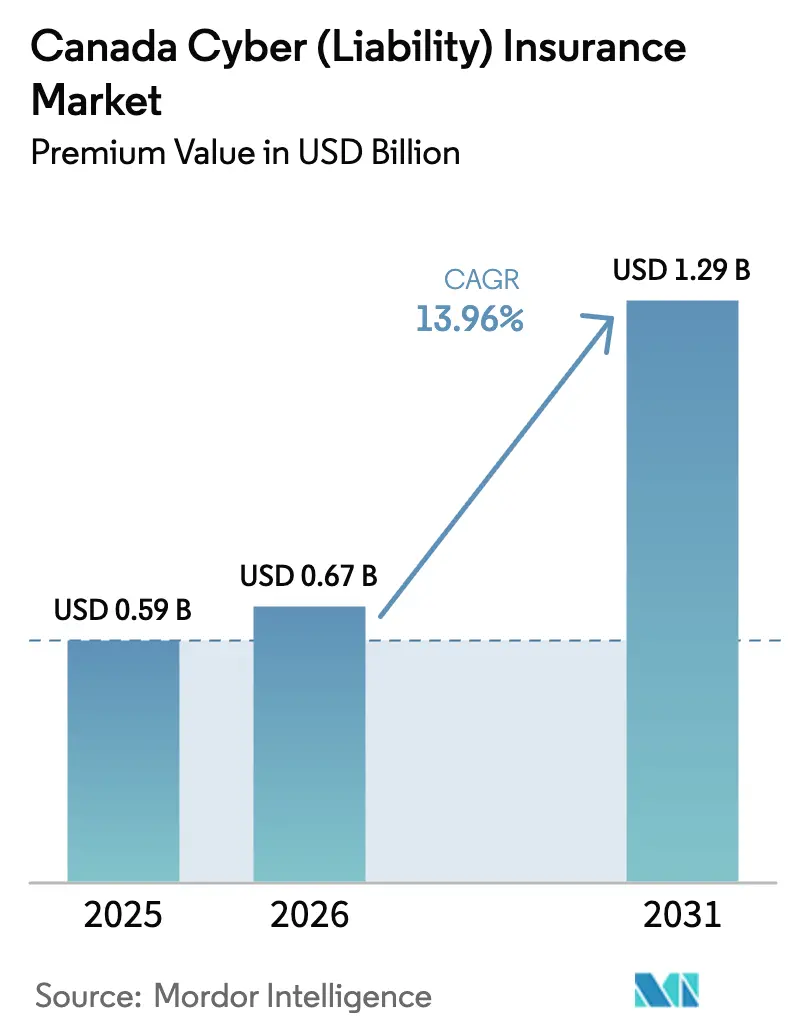
| Base Year Market Size (2025) | USD 0.59 Billion |
| Market Size (2026) | USD 0.67 Billion |
| Market Size (2031) | USD 1.29 Billion |
| Growth Rate (2026 - 2031) | 13.96 % |
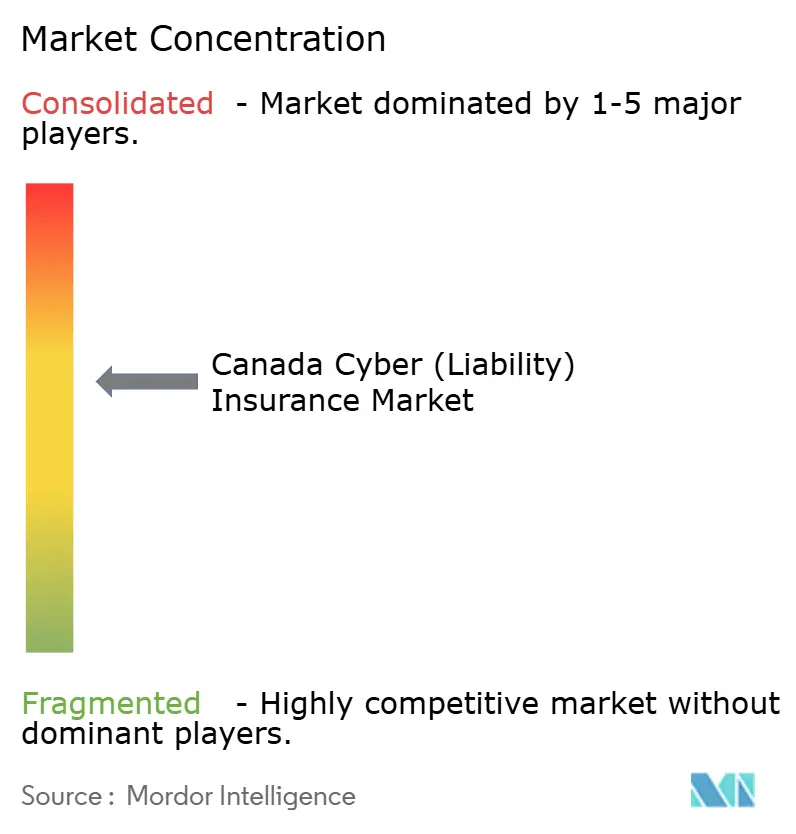
| Market Concentration | Medium |
Major Players
*Disclaimer: Major Players sorted in no particular order Image © Mordor Intelligence. Reuse requires attribution under CC BY 4.0. |
|
Canada Cyber (Liability) Insurance Market Analysis by Mordor Intelligence
The Canadian cyber insurance market size in 2026 is estimated at USD 0.67 billion, growing from 2025 value of USD 0.59 billion with 2031 projections showing USD 1.29 billion, growing at 13.96% CAGR over 2026-2031. This expansion is underpinned by the rapid digital transformation of SMEs, stricter regulatory frameworks, and the increasing frequency of ransomware attacks, which collectively broaden the scope of insurable risks. Despite rising demand, capacity remains constrained as reinsurers exercise caution regarding systemic risks, compelling primary insurers to adopt advanced underwriting practices that incorporate real-time security telemetry. The distribution model is transforming, with brokers still managing the majority of policies, while MGA-led digital platforms are progressively capturing market share, influencing product innovation, and accelerating time-to-market. These dynamics highlight the evolving nature of the market, where technological advancements and regulatory pressures are reshaping both risk assessment and distribution strategies.
Key Report Takeaways
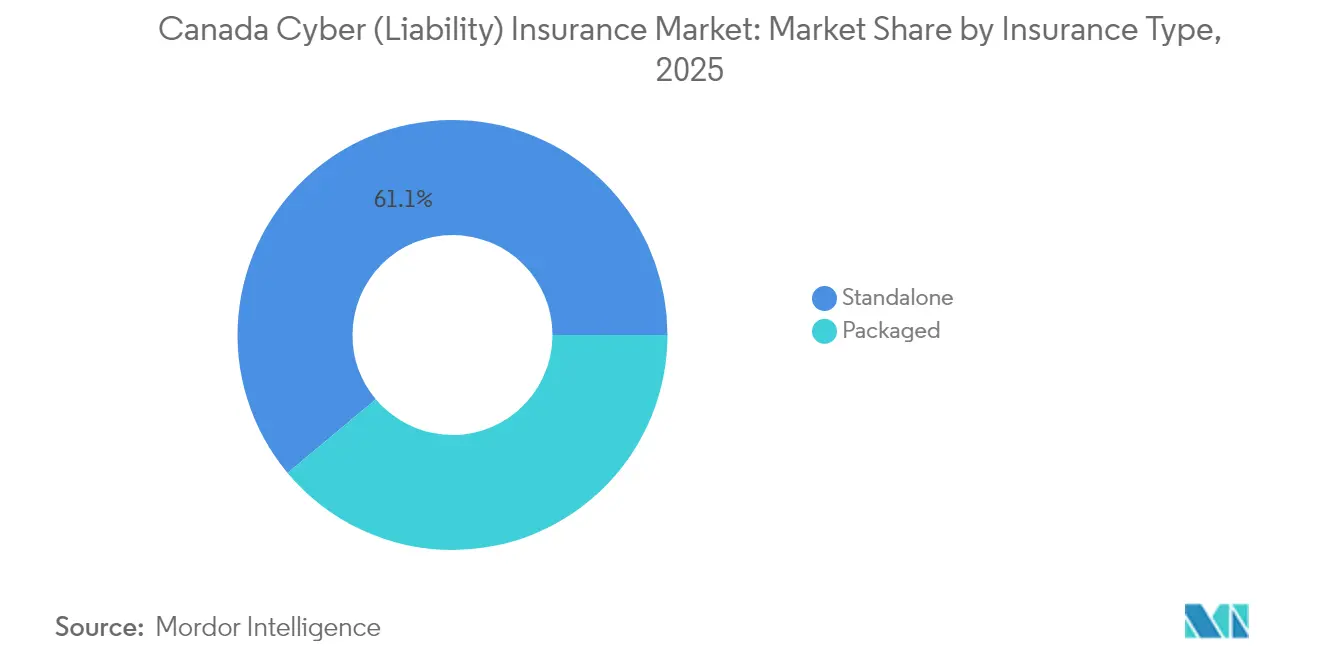
- By insurance type, standalone policies held 61.08% of the 2025 written premium of the Canadian cyber insurance market, while packaged products for SMEs are forecast to grow at a 15.35% CAGR through 2031.
- By organization size, large enterprises controlled 45.75% revenue share of the Canadian cyber insurance market in 2025, whereas small enterprises are set to grow at 17.25% CAGR to 2031.
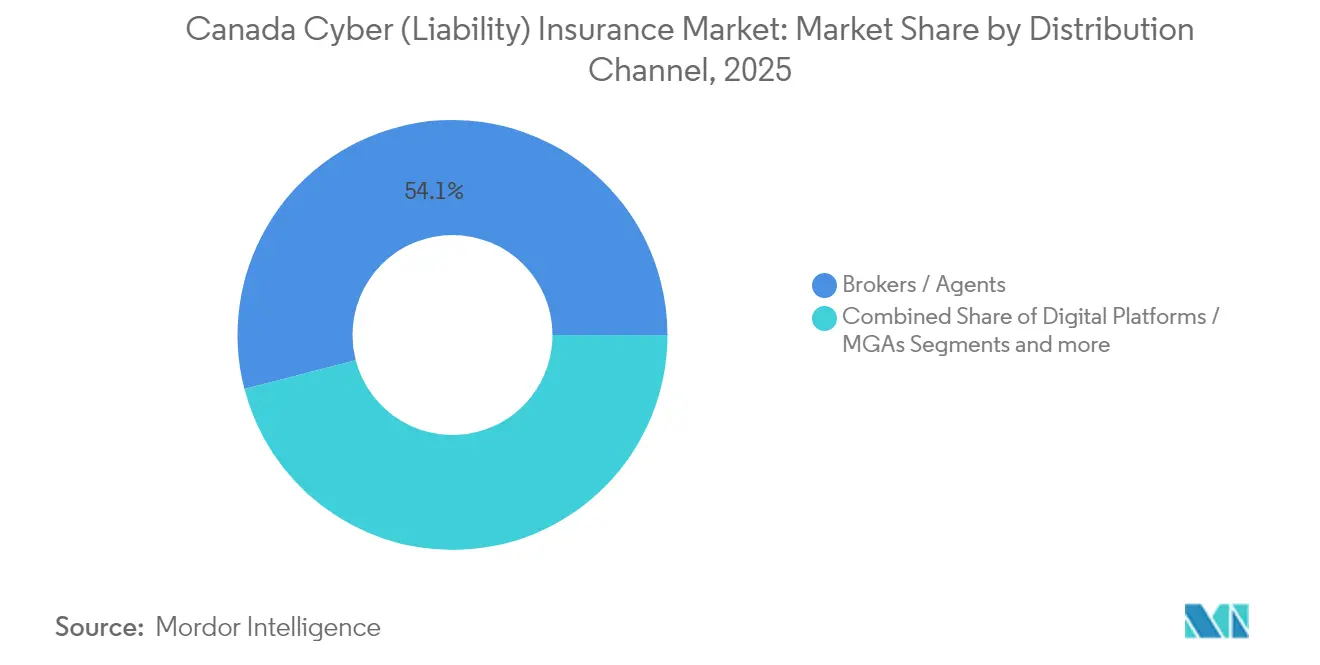
- By distribution channel, brokers and agents retained 54.05% of the 2025 premium of the Canadian cyber insurance market, yet digital platforms and MGAs are expanding at a 18.85% CAGR.
- By end-use industry, financial services captured 27.55% of the Canada cyber insurance market size in 2025; critical infrastructure is advancing fastest at 18.05% CAGR.
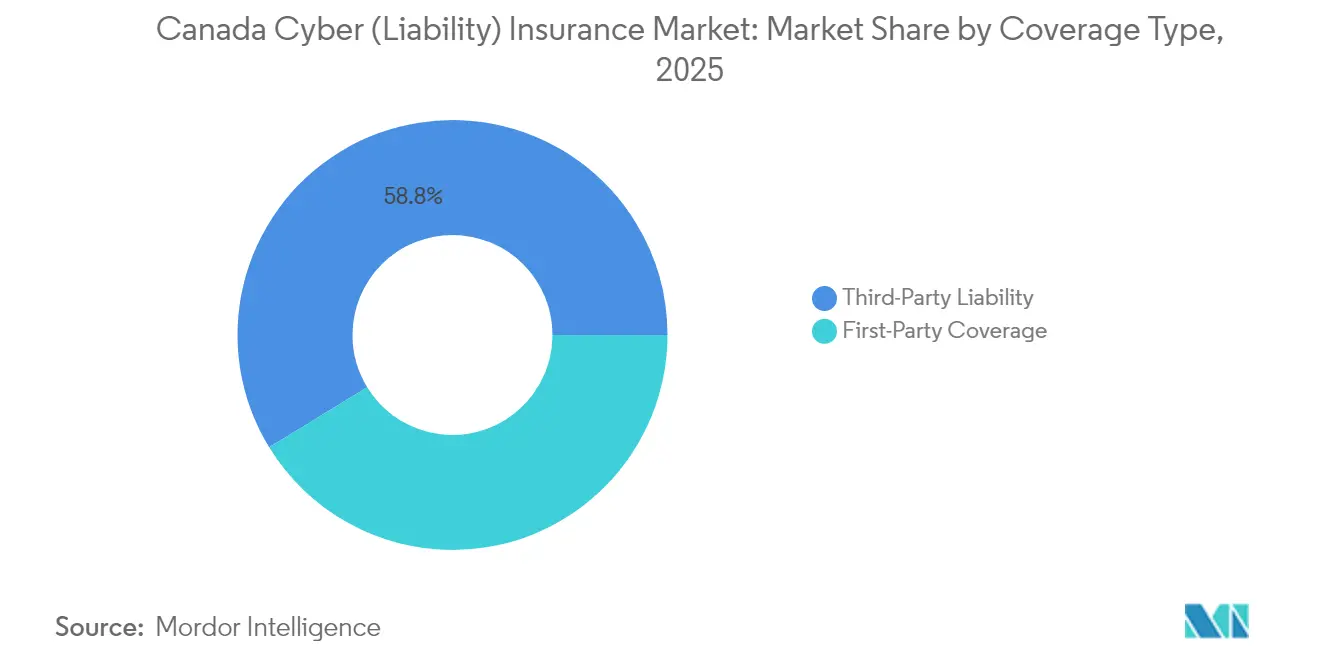
- By coverage type, third-party liability accounted for 58.75% of the Canada cyber insurance market share in 2025, while first-party protections are increasing at 16.55% CAGR.
Note: Market size and forecast figures in this report are generated using Mordor Intelligence’s proprietary estimation framework, updated with the latest available data and insights as of 2026.
Canada Cyber (Liability) Insurance Market Trends and Insights
Drivers Impact Analysis*
| Driver | (~) % Impact on CAGR Forecast | Geographic Relevance | Impact Timeline |
|---|---|---|---|
| Rapid digitization of SMEs | +3.2% | Ontario, Quebec, British Columbia | Medium term (2-4 years) |
| Rising ransomware severity & frequency | +4.1% | National, highest in urban critical-infrastructure hubs | Short term (≤ 2 years) |
| Mandatory breach-notification under PIPEDA | +2.8% | National, strongest in federally regulated sectors | Medium term (2-4 years) |
| Premium tax deductibility (CRA 2026 ruling) | +1.9% | National, strongest among tax-sensitive SMEs | Long term (≥ 4 years) |
| Cyber-security frameworks in infrastructure | +2.3% | Energy, telecom, and banking clusters | Long term (≥ 4 years) |
| MGA-led managed cyber-insurance platforms | +1.5% | Major metropolitan areas | Medium term (2-4 years) |
| Source: Mordor Intelligence | |||
Rapid digitization of Canadian SMEs
Over 71,000 businesses have tapped the Canada Digital Adoption Program’s CAD 1.2 billion pool of grants, loans, and wage subsidies since 2022, speeding adoption of e-commerce, cloud, and hybrid-work tools [1]Innovation, Science and Economic Development Canada, “Canada Digital Adoption Program,” ised-isde.canada.ca . This technology leap has broadened SMEs’ attack surfaces because security controls trail behind new deployments. Human error remains the proximate cause in many data-loss events, underscoring the gap between operational and security maturity. Insurers respond by bundling risk-assessment and employee-training modules into policies, which raises the perceived value proposition. As these firms increasingly transact online, cyber cover is evolving from discretionary spend to a prerequisite for supplier contracts and financing.
Rising ransomware severity & frequency
Ransomware is projected to remain the leading threat to critical infrastructure in Canada through 2026, as identified by the Canadian Centre for Cyber Security [2]Communications Security Establishment Canada, “National Cyber Threat Assessment 2025-2026,” cyber.gc.ca . The adoption of cybercrime-as-a-service models by state-sponsored actors and organized crime groups has lowered the entry barrier for attackers, enabling the use of advanced cyber tools by less experienced individuals. In 2023, the average cost of resolving a data breach in Canada reached CAD 6.9 million, driving organizations to prioritize high-limit first-party insurance coverage to address ransom payments, forensic analysis, and business interruption recovery. Insurance providers are increasingly implementing stricter incident cooperation clauses, requiring insured entities to report incidents within hours to ensure coverage eligibility. These developments underscore the growing financial and operational risks posed by cyber threats, compelling businesses to enhance their cybersecurity strategies and risk management frameworks.
Mandatory breach notification under PIPEDA
Since the 2024 enforcement of Quebec’s Law 25 and Ontario’s Bill 194, organizations now juggle overlapping provincial and federal requirements that raise the stakes of non-compliance. Breach disclosure triggers legal fees, notification expenses, and potential class actions, making liability insurance indispensable. For insurers, the richer flow of claims data improves actuarial insight, yet it also highlights the magnitude of unanticipated costs such as post-incident credit monitoring. Consequently, underwriters are adding sub-limits for notification expenditures while offering pre-breach consultancy credits to policyholders that adopt recommended safeguards. The additional transparency is expected to narrow data gaps in pricing models over the next three years.
Cyber-insurance premium tax deductibility (CRA ruling)
The 2024 Budget outlines a provision enabling corporations to categorize cyber insurance premiums as operating expenses, which could significantly lower their after-tax expenditures depending on their tax brackets. This measure is anticipated to alleviate financial constraints for companies with limited cash flow, allowing them to secure higher insurance limits and enhance their cyber risk management capabilities. Industry associations are proactively urging businesses to align their quoting processes with fiscal year-end schedules to fully capitalize on the expected tax benefits. Insurance providers, while preparing for increased price competition in the short term, are also leveraging this opportunity to bundle cybersecurity services and establish multi-year agreements before the policy is implemented. Actuarial analysis suggests that expanding the premium base will likely reduce loss-ratio volatility by diversifying the risk pool, thereby contributing to greater market stability.
Restraints Impact Analysis*
| Restraint | (~) % Impact on CAGR Forecast | Geographic Relevance | Impact Timeline |
|---|---|---|---|
| Limited historical actuarial loss data | -2.1% | All provinces, most acute in specialty risks | Long term (≥ 4 years) |
| Capacity pull-back by global reinsurers | -1.8% | Large-limit accounts nationwide | Medium term (2-4 years) |
| Tight underwriting on nation-state threats | -1.4% | Critical infrastructure and government contractors | Short term (≤ 2 years) |
| Low awareness among <50-employee firms | -1.2% | Rural and non-metro SMEs | Medium term (2-4 years) |
| Source: Mordor Intelligence | |||
Limited historical actuarial loss data
Traditional lines benefit from decades of claims history, but cyber threats mutate quickly, weakening the predictive power of back-testing. The Insurance Bureau of Canada attributes the 153% combined ratio from 2019-2023 to the underestimation of correlated ransomware losses and breach-response inflation [3]Insurance Bureau of Canada, “Cyber Insurance Premiums and Claims 2019-2023,” ibc.ca . Carriers now integrate threat-intel feeds and scenario stress tests alongside classical frequency-severity curves, yet remain judgmental. Over the long term, mandatory disclosures will enlarge datasets, but model calibration lags means prudence will dominate pricing strategy through at least 2029. This restraint tempers growth by keeping premiums high, especially for high-aggregate limits.
Tight underwriting linked to nation-state threats
Unclear attribution in early incident stages complicates the distinction between cybercrime and state-linked espionage. Consequently, insurers survey insureds about geopolitical exposure, software supply chain governance, and segmentation of operational technology networks. Entities handling critical infrastructure face exclusionary war-risk clauses or hefty rate-on-line uplifts until they document segmentation and incident-response playbooks. The Canadian Centre for Cyber Security’s alerts provide valuable context, yet carriers anticipate retaining carve-outs for hostile-state actions through at least 2027. Buyers respond by enhancing monitoring and threat-intelligence subscriptions to retain broader coverage.
*Our forecasts treat driver/restraint impacts as directional, not additive. The impact forecasts reflect baseline growth, mix effects, and variable interactions.
Segment Analysis
By Insurance Type: Standalone Policies Anchor Growth
Standalone policies dominated 2025 with a 61.08% share, reflecting organizations’ need for bespoke terms covering ransom demands, data-restoration fees, and systemic-business-interruption losses. Underwriters continuously tweak terms, adding sub-limits for social-engineering fraud and cryptojacking as threat vectors evolve. Packaged add-ons bundled into business-owner or errors-and-omissions forms remain attractive for SMEs seeking convenience. High-touch brokers pitch standalone cover to regulated verticals like finance and healthcare that require comprehensive wordings. As incident costs rise, average standalone limits are trending upward, emphasizing deep carrier-reinsurer collaboration.
Packaged products, while smaller in scale, are demonstrating a strong compound annual growth rate (CAGR) of 15.35%, reflecting their growing relevance in the market. These offerings incorporate advanced value-added services, such as 24/7 breach coach hotlines and phishing-simulation platforms, which are designed to strengthen clients' cyber hygiene practices. Insurance carriers strategically position these packages as entry-level solutions, intending to transition clients to more comprehensive standalone policies as their operational scale increases. This approach underscores the dual-track model within the Canadian cyber insurance market, which effectively aligns the complexity of coverage with the evolving maturity of organizations. As a result, the market is well-positioned to cater to diverse organizational needs, ensuring scalability and adaptability in its offerings.



By Organization Size: Enterprise Dominance Meets SME Momentum
Large enterprises held 45.75% of the 2025 premium because their complex, multi-jurisdictional exposures demand broad indemnification and sophisticated incident-response vendors. These buyers negotiate manuscript wordings and layered towers blending domestic and London-market capacity to reach limits exceeding CAD 400 million. They also invest in continuous-monitoring tools that integrate with insurers’ loss-prevention platforms, yielding underwriting credits and reduced retentions. Board-level scrutiny of cyber operations ensures annual coverage reviews, often resulting in expanded endorsements for technology errors and reputational-harm costs.
SMEs, particularly those under CAD 20 million revenue, represent the fastest-growing cohort at 17.25% CAGR. Digitization grants compressed technology-adoption timelines, exposing gaps in security staffing and process maturity. MGA platforms leverage automated scans and public-threat intel to produce instant, bindable quotes, shortening sales cycles from weeks to minutes. Mid-market firms (CAD 20-200 million revenue) fall between the two extremes, often lacking IT scale yet facing sophisticated threats. They are key targets for hybrid distribution—brokers harness MGA tools to deliver advisory depth alongside digital speed, ensuring the Canada cyber insurance market captures spend across the organizational spectrum.
By Distribution Channel: Digital Platforms Disrupt Brokerage Primacy
Brokers and agents intermediated 54.05% of premiums in 2025, continuing to deliver bespoke advisory services to complex accounts. Their competitive edge lies in policy-comparison expertise and claim-advocacy capabilities, yet manual workflows encumber speed. Digital MGA platforms, clocking 18.85% CAGR, automate application intake, leverage AI scoring, and bundle risk-mitigation software. They resonate with tech-savvy SMEs that prefer self-service models and near-instant coverage confirmation. Direct carrier portals occupy a middle ground, targeting mid-sized firms seeking brand assurance without brokerage fees.
Brokerages are adapting through technology alliances, deploying application-programming-interface (API) connectivity to pull MGA quotes into comparative rating dashboards. Meanwhile, MGAs partner with security-operations-center vendors to add continuous-monitoring subscriptions, creating sticky renewal economics. As these models converge, buyers will likely toggle between channels depending on transaction complexity: high-limit placements via brokerage advisory and low-limit renewals through embedded digital touchpoints. The interplay ensures competitive tension that benefits clients through broader product choice and service innovation.
By End-Use Industry: Financial Services Leads While Infrastructure Accelerates
Financial services captured 27.55% of the Canada cyber insurance market size in 2025 because OSFI’s Guideline B-13 mandates robust governance, risk, and compliance frameworks. Banks and credit unions routinely purchase full-suite coverage, including funds-transfer fraud and operational-technology (OT) outages tied to payment-system disruptions. High board engagement sustains multi-year policy partnerships that bundle analytics dashboards and tabletop exercises. Claims trends show rising costs for regulatory investigation and customer-notification obligations, reinforcing the need for third-party liability layers.
Critical-infrastructure sectors—energy, utilities, transport—log the highest growth rate at 18.05% CAGR as Bill C-26 compels robust OT safeguards. Cyber incidents in these verticals risk physical consequences, elevating business-interruption and contingent-BI exposures. Insurers respond with specialised wordings that contemplate property damage and environmental liabilities triggered by cyber events. Healthcare, retail, manufacturing, government, and education each display unique triggers: patient-data privacy, PCI-DSS compliance, intellectual-property theft, and system outages. The diversity underscores segmentation granularity, enabling insurers to fine-tune coverages and pricing.
By Coverage Type: Liability Core Expands to Operational Protections
Third-party liability maintained 58.75% of the Canada cyber insurance market share in 2025, driven by stringent privacy obligations and class-action prevalence. PIPEDA and provincial statutes oblige prompt disclosure and remediation, which pushes legal expenses higher. Consequently, carriers include dedicated panels of breach coaches, privacy counsel, and media-crisis advisors to mitigate reputational fallout. Limit adequacy is a growing board concern as breach-notification thresholds expand to encompass supply-chain incidents.
First-party covers are advancing at 16.55% CAGR, reflecting ransomware’s dominance. Policies now encompass extortion payments, digital-asset restoration, and reputational-harm mitigation expenses. Many carriers offer sub-limits for business-interruption measured in hourly revenue rather than daily aggregates, better aligning indemnity with high-velocity digital commerce. Some insurers bundle proactive services—penetration testing, patch-management audits—to reduce loss frequency in exchange for premium credits. The blending of liability and first-party protections positions the Canada cyber insurance market to deliver holistic risk-transfer solutions.
Geography Analysis
Adoption correlates strongly with economic concentration, making Ontario, Quebec, and British Columbia the largest buyers by premium. Toronto’s financial corridor, Montreal’s aerospace and AI clusters, and Vancouver’s burgeoning tech sector face intense ransomware and supply-chain threats, driving higher average limits. Quebec’s Law 25 goes beyond federal standards, elevating liability exposure and prompting local firms to negotiate broader notification-cost coverage. British Columbia’s energy pipeline infrastructure brings OT-centric risks that require bespoke endorsements for physical-damage triggers.
Alberta’s energy and midstream operators demand solutions for OT and SCADA vulnerabilities, drawing capacity from carriers versed in industrial-control-system exposures. The province’s cyber-maturity initiatives dovetail with Bill C-26, encouraging policy uptake among mid-tier oilfield-services firms. Atlantic provinces, while smaller, show steady growth as provincial grants spur digital trade adoption in aquaculture and logistics. Northern territories remain nascent due to sparse population and limited broadband, though federal infrastructure projects could stimulate uptake over time.
National threat-information-sharing agreements facilitate uniform underwriting, but premium differentials persist based on local incident frequency and legal milieu. Urbanized provinces experience higher cybercrime reporting rates, influencing carrier loss models and pricing granularity. Rural resilience programs, including subsidised cyber-awareness workshops, aim to close coverage gaps for micro-businesses. As cloud adoption equalises access to advanced tools across geographies, insurers expect risk dispersion to narrow, reducing the variance of base rates between provinces.
Regulatory Landscape
Canada cyber (liability) insurance is governed by a layered compliance environment that combines federal privacy obligations with sector-level supervision. PIPEDA breach-notification requirements and the post-2024 tightening of provincial privacy rules, including Quebec Law 25, raise third-party liability exposure and increase disclosure-driven claims costs (legal counsel, notification, and credit monitoring). Insurers have responded by tightening sub-limits and incident-reporting conditions within policy wording.
For regulated financial institutions, OSFI provides a key reference point for cyber risk governance and insurance purchasing. OSFI Guideline B-13 (Technology and Cyber Risk Management) sets expectations for federally regulated financial institutions, including foreign insurance company branches, shaping the controls carriers look for during underwriting. OSFI also elevated cyber and AI in its Annual Risk Outlook for fiscal year 2026-2027, released April 14, 2026, and flagged thematic monitoring of cyber insurance underwriting and AI coverage for P&C insurers during 2026-2027, which reinforces scrutiny on model governance, exclusions, and the way AI-related exposures are covered in wordings.
Value Chain Analysis
In Canada, the cyber insurance value chain begins with risk origination and advisory, where brokers and agents remain the dominant route for complex placements and renewals, while MGA-led digital platforms increasingly compress quote-to-bind for SMEs through standardized intake and streamlined workflows. Carriers then translate submissions into underwriting decisions using internal cyber models alongside third-party telemetry, such as vulnerability scans, security control attestations, and threat-intelligence inputs. To manage systemic-loss concerns, carriers place aggregate exposures into reinsurance and other capacity structures.
Policy delivery and servicing depend on specialist partners embedded in the product, including breach coaches, privacy counsel, digital forensics, incident response, and ransomware negotiation support. Claims execution is a key value capture point, since insurer-managed vendor panels and 24/7 hotlines can influence both loss outcomes and renewal retention. Upstream, the Insurance Bureau of Canada (IBC) supports insurer distribution partners with SME readiness tools, including a cyber insurance self-assessment, intended to improve application quality and speed underwriting decisions.
Competitive Landscape
The top five players—Intact, Aviva, Chubb, Zurich, and CNA—control approximately half of the premium, giving the Canada cyber insurance market a moderate concentration score while leaving room for specialist MGAs and Lloyd’s syndicates to contest share. These incumbents leverage multi-line relationships and scale to bundle cyber endorsements with property and casualty placements, deepening client stickiness. Technology investment is a clear differentiator: Intact’s CAD 2.25 million commitment to the Université de Sherbrooke cybersecurity hub enhances analytical capability, while Zurich’s North America platform integrates predictive analytics for middle-market cyber underwriting.
Strategic partnerships abound. Incumbents increasingly underwrite MGAs’ fronting programs, exchanging capacity for data analytics that refine their models. Reinsurers’ cautious stance on aggregate cyber exposure incentivises carriers to diversify retrocession through capital-markets instruments such as cyber-cat bonds. Consolidation remains active: Definity’s CAD 3.3 billion purchase of Travelers Canada elevates its commercial-lines footprint and injects fresh cyber expertise into its portfolio mix. Foreign specialists like Beazley and Hiscox maintain Lloyd’s platforms to provide high-excess layers, filling gaps left by domestic primary capacity caps.
Competitive intensity is tempered by underwriting discipline necessitated by systemic-risk uncertainty. Carriers cross-sell pre-breach services—vulnerability scans, threat-hunting retainers—to differentiate beyond price. MGAs pioneer parametric triggers that pay out when widely used cloud providers suffer outages, addressing contention points around business-interruption coverage. As cyber incidents increasingly involve overlapping property, liability, and crime elements, carriers with integrated claims and forensics infrastructure are better positioned to manage loss costs and sustain profitability. Overall, the market structure encourages continuous product innovation while preserving sufficient stability for reinsurer confidence.
Canada Cyber (Liability) Insurance Industry Leaders
-
Intact Financial Corp.
-
Chubb
-
AIG Canada
-
Zurich Canada
-
CNA Canada
- *Disclaimer: Major Players sorted in no particular order

Market Opportunities and Future Outlook
Opportunities for growth center on managed cyber offerings for SMEs and mid-market organizations that want packaged risk-transfer alongside operational support. Coalition’s entry into Canada with its Active Cyber Policy in March 2026 is one signal of sustained product push for organizations up to USD 5 billion in annual revenue. Carriers have also been embedding monitoring, detection, and response services into cyber policies to build underwriting confidence and reduce incident severity, which fits the broader shift described in the report context toward MGA-led digital platforms gaining share and insurers using real-time security telemetry to manage constrained capacity.
Coverage innovation is also being shaped by threat and governance signals tied to AI-driven risk assessment. Five Eyes-aligned guidance and Canadian Centre for Cyber Security actions on AI security have increased broker and insurer focus on resilience assessments. Against that backdrop, OSFI’s supervisory emphasis on cyber and AI in its fiscal 2026-2027 Annual Risk Outlook (April 2026), along with its thematic monitoring of cyber underwriting and AI coverage for P&C insurers during 2026-2027, supports clearer affirmative coverage language for AI-enabled incidents and tighter integration of cyber controls with pricing, particularly for financial services and critical infrastructure buyers facing higher operational and compliance demands.
Recent Industry Developments
- June 2026: Chubb Canada launched new cyber coverages and portal enhancements for the Cyber Enterprise Risk Management suite within its Marketplace Portal. The expansion of cyber coverage and broker portal enhancements broadens protection and streamlines quoting for brokers and insureds, potentially shifting Canadian market dynamics.
- May 2026: Intact Insurance (Intact Financial Corp.) Commercial lines managing director stated the company is reviewing its cyber insurance strategy with a potential return to the market in 2027. The strategic reassessment signals possible re-entry timing and competitive realignment in Canada cyber market post 2026 tightening.
- February 2026: Intact Financial Corporation Q4 2025 earnings release confirms strategy to grow by expanding distribution channels, product shelves, and deploying value added technology. The expansion of distribution and product capabilities in cyber line reinforces Intact's growth trajectory and elevates competitive intensity in the Canadian cyber market.


Research Methodology Framework and Report Scope
Market Definition and Coverage
This market is measured as the cyber insurance premium value written in Canada for policies that transfer cyber-related financial risk, including first-party cover and third-party liability cover, across commercial buyer types.
Scope exclusions: It excludes non-cyber lines that only have incidental cyber clauses, and it does not count losses, claims paid, or security software and services spend as market value.
Segmentation Overview
-
By Insurance Type
- Standalone
- Packaged
-
By Organization Size
- Small Enterprises
- Mid-Sized Enterprises
- Large Enterprises
-
By Distribution Channel
- Brokers / Agents
- Direct Sales (Insurer-Owned Channels)
- Digital Platforms / MGAs
-
By End-Use Industry
- Financial Services
- Healthcare
- Retail & E-Commerce
- Manufacturing
- Critical Infrastructure (Energy, Utilities, Transport)
- Government & Public Sector
- Others (Education, Non-Profit)
-
By End-Use Coverage Type
- First-Party Coverage (Ransom, Downtime, Forensics)
- Third-Party Liability (Legal, Privacy Breach, Fines)
Data Sources, Market Sizing, and Validation
Desk Research
Desk work started with public insurance and risk data to understand premium pools, coverage themes, and how fast cyber exposures are changing in Canada. Common sources used included Government of Canada cyber guidance and incident reporting material, Statistics Canada business and ICT adoption series, OSFI and provincial regulator publications where available, and association insights such as the Insurance Bureau of Canada.
We also reviewed insurer financial filings, annual reports, and investor presentations to interpret cyber as a line item or as a disclosed growth theme, and then cross-checked it with reported underwriting and pricing commentary in reputed Canadian insurance press. Where gaps existed on company positioning and portfolio mix, paid subscriptions focused on company financials and intelligence, news and financials, and patent databases were used selectively to keep assumptions consistent over time. This desk research source list is illustrative only, and many other public and paid sources were also used for collection, validation, and clarification.
Primary Interviews and Surveys
Primary work was used to pressure-test how cyber is packaged and priced in Canada, and to clarify when coverage is written as standalone versus embedded in broader commercial policies. We spoke with insurance-side stakeholders and buying-side risk and finance leaders across Canada, including how they think about penetration, minimum limits, and renewal pricing. The goal was to align our assumptions with what is actually being placed in the market.
Distribution of primary research fieldwork respondents
| Company type | Respondent position |
|---|---|
| Top tier: 31% | CXOs: 21% |
| Mid tier: 47% | Functional/Unit leaders: 19% |
| Smaller Players: 22% | Managers: 60% |
Market-Sizing & Forecasting
Sizing was built using a blended approach, where a top-down demand pool was reconstructed from Canada premium signals and coverage adoption patterns, followed by checks using selective bottom-up approximations. In practice, the top-down view used public premium series and insurer disclosures to anchor the total addressable cyber premium, which was then split using observed mix patterns for first-party versus third-party cover, packaged versus standalone placement, and buyer type.
To keep the model practical, a few inputs were tracked closely because they move premiums in visible ways: cyber incident frequency and ransomware pressure, average rate change at renewal, attachment of cyber cover into packaged commercial policies, minimum limits and retentions being requested, and sector risk concentration (for example, finance and healthcare being quoted differently). Forecasts were generated using scenario analysis, with assumptions adjusted based on what interviewees shared about underwriting appetite, reinsurance capacity, and how fast exclusions and sublimits are being tightened or relaxed. When a direct data point was missing, gaps were handled through conservative interpolation using adjacent-year signals and then confirmed through interview re-contacts, before the final totals were locked.
Data Validation & Update Cycle
Model outputs were checked against independent signals, including published premium figures and directional indicators from filings and regulator commentary, and then variances were investigated before sign-off. If an assumption shifted the market total more than expected, the input was re-tested with fresh desk checks and follow-up calls until the change could be explained in plain business terms.
A multi-step internal review was completed, where calculations, splits, and forecast drivers were reviewed by another analyst and then rechecked for consistency across years. Reports are refreshed annually, and interim updates are made when material events occur, such as major wording changes or sharp pricing moves. Before delivery, a final pass is completed so clients receive the latest updated view of the market.
Mordor Intelligence's Canada Cyber Insurance Market Estimate Compared With Other Published Estimates
Published figures for Canada cyber insurance do not always match, even when they sound like they are describing the same thing, because each publisher selects different premium bases, coverage definitions, and years. Differences also show up when one estimate leans on a single premium dataset, while another tries to reconcile multiple signals and then applies its own forecast curve.
The main gap comes from whether the total counts only cyber premiums reported by a narrow insurer group, or whether packaged policies and broader commercial placements are also captured, which is where Mordor Intelligence treats the market as the full Canada cyber (liability) insurance premium pool and cross-checks it with coverage mix such as third-party liability versus first-party protections.
Benchmark comparison
| Source | Market Size | Gaps in Research Methodology |
|---|---|---|
| Mordor Intelligence | USD 0.59 B (2025) | |
| Industry Association A | USD 0.40 B (2023) | Often reflects reported cyber liability premium figures that can undercount the total market if packaged placements, non-reported sublines, or broader insurer participation are not fully represented, and it is for an earlier year. |
| Trade Journal B | USD 0.35 B (2022) | Typically based on direct premium reported by a specific regulated subset of P&C insurers, which can miss portions written through other structures, and it may not normalize for year-to-year pricing swings or coverage tightening. |
The spread across sources is mainly explained by what premium base is being counted and how packaged coverage is treated, followed by the year selected and whether price movement is normalized. By keeping the inputs tied to observable premium signals and then validating splits through interviews, the estimate stays traceable to clear, repeatable steps.


Key Questions Answered in the Report
What is the projected value of the Canada cyber insurance market by 2031?
It is expected to reach USD 1.29 billion, reflecting a 13.96% CAGR.
Which coverage type currently dominates Canadian cyber policies?
Third-party liability leads with a 58.75% share, though first-party protections are expanding fastest.
Why are MGA digital platforms gaining share in Canada?
They automate underwriting, embed security services, and appeal to SMEs by cutting quote-to-bind time to minutes.
How will CRA’s forthcoming tax ruling influence adoption?
Allowing premiums to be tax-deductible has the potential to reduce effective costs for SMEs, thereby stimulating latent demand beyond 2026.
Which sector is growing fastest in cyber-insurance uptake?
Critical infrastructure (energy, utilities, transport) is advancing at 18.05% CAGR due to Bill C-26 compliance pressures.
How concentrated is the competitive landscape?
The top five carriers account for nearly half of the total premiums, highlighting their significant market concentration.
Page last updated on:





