
Market Overview
| Study Period | 2021 - 2031 |
|---|---|
| Forecast Data Period | 2026 - 2031 |
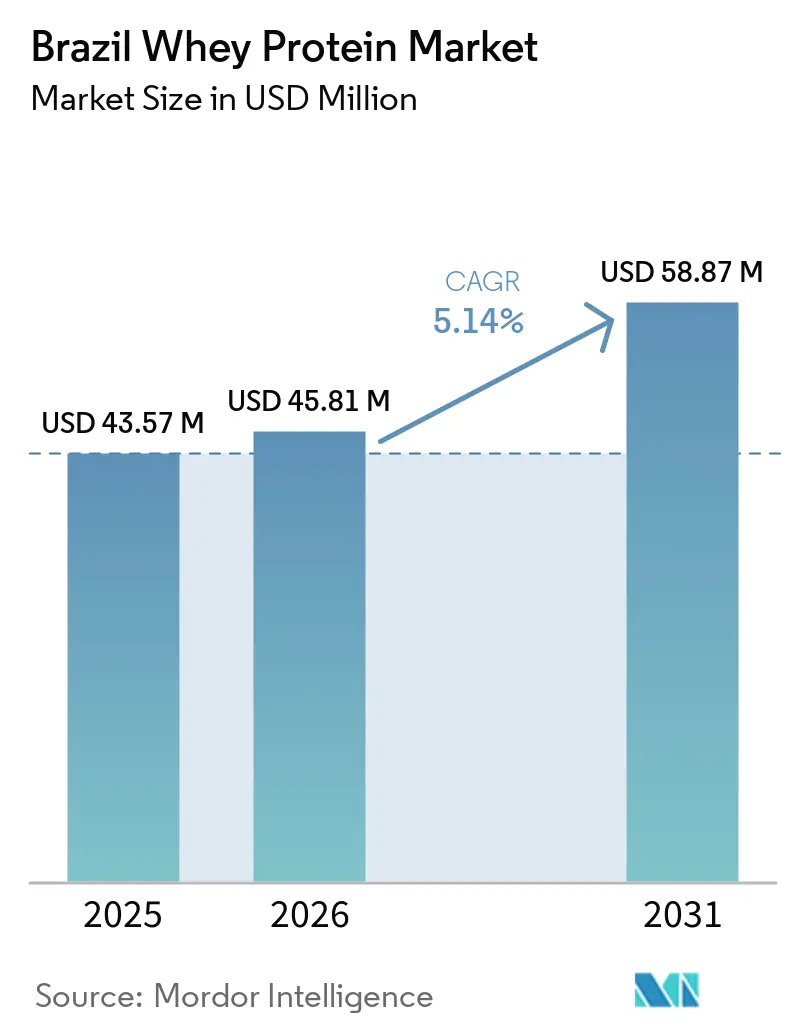
| Base Year Market Size (2025) | USD 43.57 Million |
| Market Size (2026) | USD 45.81 Million |
| Market Size (2031) | USD 58.87 Million |
| Growth Rate (2026 - 2031) | 5.14 % |
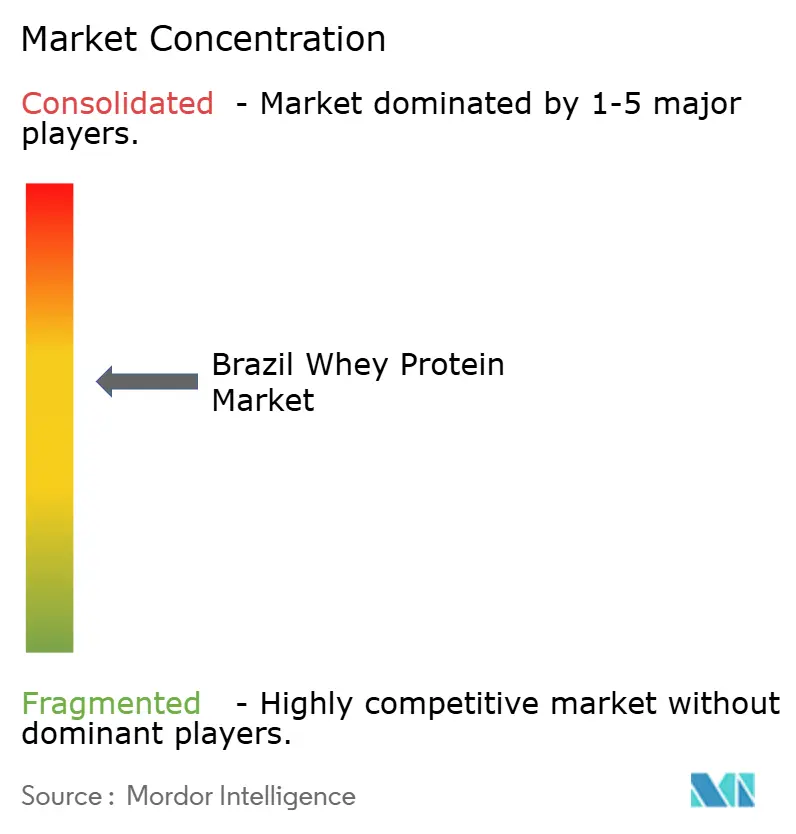
| Market Concentration | Medium |
Major Players
*Disclaimer: Major Players sorted in no particular order Image © Mordor Intelligence. Reuse requires attribution under CC BY 4.0. |
|
Brazil Whey Protein Market Analysis by Mordor Intelligence
Brazil whey protein market size in 2026 is estimated at USD 45.81 million, growing from 2025 value of USD 43.57 million with 2031 projections showing USD 58.87 million, growing at 5.14% CAGR over 2026-2031. This growth highlights Brazil's position as South America's largest economy and reflects the increasing demand for health-conscious nutrition among its consumers. The market is driven by a rising awareness of the benefits of whey protein, including muscle building, weight management, and overall health improvement. Consumers in Brazil are actively seeking high-quality protein supplements to support their fitness goals and healthy lifestyles. Additionally, the growing influence of fitness trends, coupled with the expansion of e-commerce platforms, has made whey protein products more accessible to a broader audience. Manufacturers are also innovating with new product formulations and flavors to cater to diverse consumer preferences, further fueling market growth. This evolving landscape positions Brazil as a key player in the whey protein market within the region.
Key Report Takeaways
- By product type, Whey Protein Concentrate held 45.92% of Brazil whey protein market share in 2025, while Hydrolyzed Whey Protein is advancing at a 6.07% CAGR through 2031.
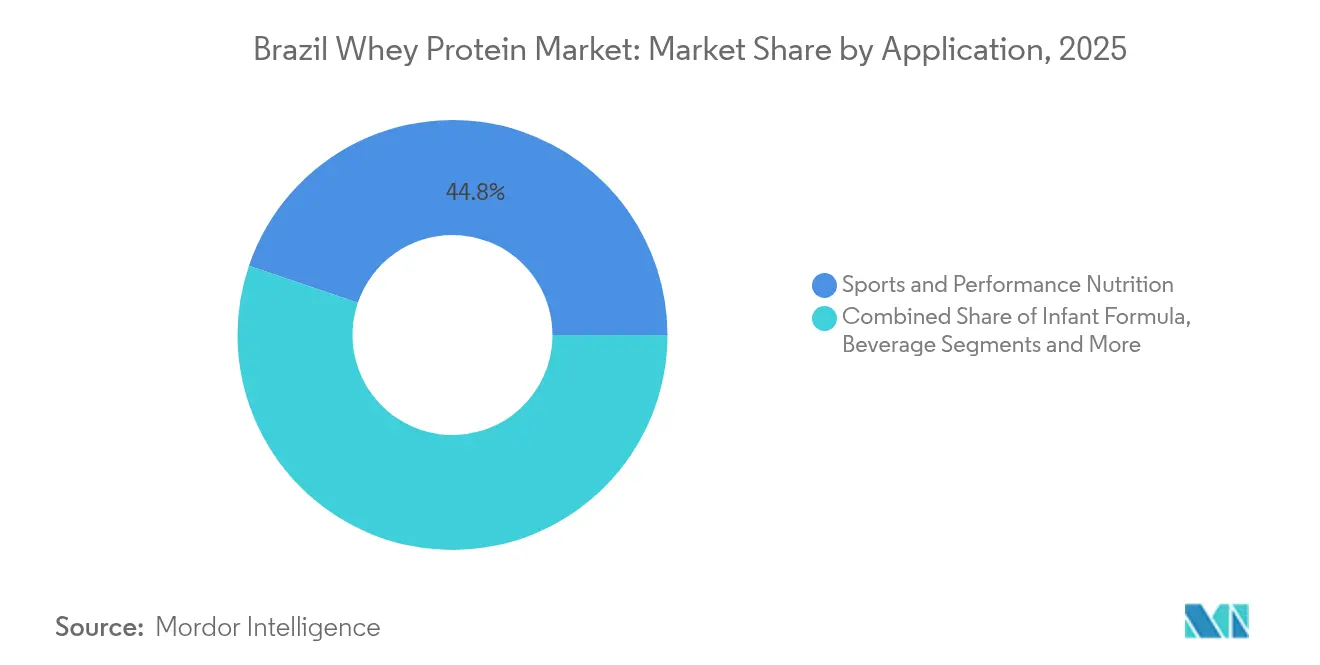
- By application, Sports and Performance Nutrition captured 44.78% revenue share of the Brazil whey protein market size in 2025; Functional/Fortified Food is projected to expand at a 6.29% CAGR between 2026-2031.
Note: Market size and forecast figures in this report are generated using Mordor Intelligence’s proprietary estimation framework, updated with the latest available data and insights as of 2026.
Brazil Whey Protein Market Trends and Insights
Drivers Impact Analysis*
| Driver | (~) % Impact on CAGR Forecast | Geographic Relevance | Impact Timeline |
|---|---|---|---|
| Rising health and fitness awareness among Brazilian consumers | +1.2% | National, with concentration in São Paulo and Rio de Janeiro metropolitan areas | Medium term (2-4 years) |
| Increasing number of fitness centers and gyms | +0.8% | National, with urban concentration in major metropolitan areas | Short term (≤ 2 years) |
| Growing popularity of sports nutrition products | +1.0% | National, with higher penetration in Southern and Southeastern regions | Medium term (2-4 years) |
| Preference for clean-label and natural products | +0.7% | National, with premium segments in major cities | Long term (≥ 4 years) |
| Increasing use in infant formula and pediatric nutrition | +0.6% | National, regulated by ANVISA compliance frameworks | Long term (≥ 4 years) |
| High-quality whey ingredients see a strong import pipeline | +0.5% | National, concentrated in major port cities and industrial centers | Short term (≤ 2 years) |
| Source: Mordor Intelligence | |||
Rising health and fitness awareness among Brazilian consumers
Brazilian consumers increasingly prioritize health and fitness, driving the demand for whey protein in the country. This trend is fueled by a growing awareness of the benefits of maintaining a healthy lifestyle, including improved physical performance and overall well-being. According to data from the Brazilian Ministry of Health, initiatives promoting physical activity and balanced diets have gained traction, further encouraging consumers to incorporate protein supplements like whey protein into their routines. Additionally, government campaigns such as the "Saúde Brasil" program aim to reduce obesity rates and promote healthier living, which aligns with the rising adoption of whey protein products among health-conscious individuals. In 2023, approximately 56% of Brazilian adults were reported to have overweight or obesity, with 34% classified as obese and 22% as overweight. This rising trend is projected to worsen, with nearly half of Brazilian adults (48%) expected to live with obesity by 2044, and 27% with overweight [1]Source: International Congress on Obesity, "A new study suggests that 48% of Brazilian adults will be living with obesity by 2044, with a further 27% living with overweight", worldobesity.org. Such alarming statistics are anticipated to impose significant health and economic burdens on the country. As a result, consumers are increasingly turning to dietary solutions, including whey protein, to manage weight and improve overall health, further driving the market's growth.
Increasing number of fitness centers and gyms
The increasing number of fitness centers and gyms in Brazil is significantly driving the demand for whey protein. As fitness awareness grows among the population, more individuals are incorporating regular exercise into their lifestyles, leading to a higher demand for nutritional supplements. Whey protein, known for its role in muscle recovery, strength building, and overall fitness enhancement, has become a staple product in the fitness industry. According to the Federal Council of Physical Education (CONFEF), which regulates physical education professionals and fitness companies in Brazil, the country had approximately 50,000 registered companies, including gyms, studios, and sports clubs, as of May 2023 [2]Source: Federal Council of Physical Education, "FITNESS TRENDS FOR 2024 IN BRAZIL", cdn-links.com. Many of these establishments actively promote whey protein as an essential supplement for achieving fitness goals, further amplifying its market growth. Additionally, the rise in fitness-related events, personal training sessions, and group workout programs has created a supportive ecosystem for whey protein consumption. This trend is expected to continue fueling the growth of the Brazil whey protein market during the forecast period.
Growing popularity of sports nutrition products
The growing popularity of sports nutrition products is a significant driver of the Brazil whey protein market. As consumers increasingly prioritize health and fitness, the demand for whey protein as a key ingredient in sports nutrition products has surged. This trend is fueled by a rising awareness of the benefits of protein in muscle recovery, weight management, and overall physical performance. Additionally, the expanding fitness culture, coupled with the influence of social media and endorsements by fitness influencers, has further propelled the adoption of sports nutrition products. The availability of diverse whey protein formulations, catering to various dietary preferences and fitness goals, also contributes to its growing appeal among Brazilian consumers. Furthermore, the increasing participation in sports and fitness activities, such as gym workouts, running, and other endurance sports, has created a robust demand for protein supplements. The rise of e-commerce platforms has also made sports nutrition products, including whey protein, more accessible to a broader audience, driving market growth.
Preference for clean-label and natural products
Consumers increasingly favor clean-label and natural products, which is a significant driver of the Brazil whey protein market. This preference stems from growing health awareness and the demand for transparency in product labeling. Clean-label products, which avoid artificial additives, preservatives, and synthetic ingredients, align with the evolving consumer focus on healthier and more natural dietary choices. In the Brazil whey protein market, this trend has led to increased demand for whey protein products that emphasize natural sourcing and minimal processing. Manufacturers are responding by reformulating products and highlighting clean-label attributes to cater to this growing consumer segment. Additionally, the rising prevalence of lifestyle-related health issues, such as obesity and diabetes, has further amplified the demand for clean-label whey protein products, as consumers seek functional foods that support their health goals. The clean-label movement is also gaining traction due to the influence of social media and digital platforms, where consumers actively share and seek information about product ingredients and benefits.
Restraints Impact Analysis*
| Restraint | (~) % Impact on CAGR Forecast | Geographic Relevance | Impact Timeline |
|---|---|---|---|
| Plant-based proteins pose competition | -1.5% | National, with higher impact in urban centers and Southern regions | Medium term (2-4 years) |
| Allergies and lactose intolerance in some consumers | -0.4% | National, with regional dietary pattern variations | Long term (≥ 4 years) |
| Import dependence hampering market growth | -0.6% | National, concentrated in major port cities and distribution centers | Short term (≤ 2 years) |
| Inconsistent quality and adulteration concerns | -0.8% | National, with regulatory oversight by ANVISA | Medium term (2-4 years) |
| Source: Mordor Intelligence | |||
Plant-based proteins pose competition
In the Brazil whey protein market, plant-based proteins are emerging as a significant restraint. The growing consumer preference for plant-based diets, driven by health consciousness, environmental concerns, and ethical considerations, is reducing the demand for animal-derived proteins like whey. Additionally, advancements in plant-based protein formulations have improved their taste, texture, and nutritional profile, making them a viable alternative to whey protein. Brazil's plant-based protein market is expanding at an impressive rate of 20% annually [3]Source: Good Food Institute, "PLANT-BASED MARKET - BRAZIL", gfi.org, significantly exceeding the global average growth rate of 8%. This rapid growth creates substantial competitive pressure for whey protein suppliers in the region. The shift is further supported by the increasing availability of plant-based protein products in the market, catering to a wide range of dietary preferences and restrictions. As a result, the competition posed by plant-based proteins is expected to impact the growth trajectory of the whey protein market in Brazil during the forecast period.
Allergies and lactose intolerance in some consumers
Consumers in Brazil face challenges such as allergies and lactose intolerance, which act as significant restraints in the whey protein market. These conditions limit the consumption of whey protein products, as individuals with such sensitivities often seek alternative protein sources. This trend impacts the market growth by reducing the potential consumer base and driving demand for lactose-free or hypoallergenic protein options. Consequently, manufacturers are compelled to innovate and diversify their product offerings to cater to this segment of the population. Additionally, the prevalence of lactose intolerance in Brazil is relatively high, further intensifying the challenge for whey protein manufacturers. Companies must invest in research and development to create products that address these dietary restrictions while maintaining the nutritional benefits of whey protein. The need for consumer education regarding the availability of lactose-free whey protein products also becomes crucial to mitigate this restraint and expand market reach.
*Our forecasts treat driver/restraint impacts as directional, not additive. The impact forecasts reflect baseline growth, mix effects, and variable interactions.
Segment Analysis
By Product Type: Concentrate Dominance Amid Hydrolyzed Innovation
Whey Protein Concentrate (WPC) holds the largest market share in Brazil’s whey protein segment, commanding approximately 45.92% of the market in 2025. This dominant position is primarily attributed to its cost-effectiveness, making it an attractive option for a wide range of consumers and manufacturers. WPC's versatility spans diverse applications in both food and supplement categories, contributing significantly to its sustained demand and market leadership. The product’s affordability, combined with its balanced protein content and functional properties, enables it to meet the nutritional and economic needs of various customer segments. Industry participants continue to innovate using WPC, expanding its usage in protein bars, drinks, and fortified foods. This adaptability solidifies WPC’s role as the backbone of Brazil’s whey protein market, maintaining steady revenue contribution and consistent consumer acceptance.
On the other hand, Hydrolyzed Whey Protein (HWP) is recognized as the fastest-growing segment within the Brazilian market, projected to grow at a robust CAGR of 6.07% through 2031. Technological advancements in enzymatic hydrolysis have enhanced the bioavailability of HWP, making it highly appealing among health-conscious consumers seeking rapid absorption and digestion benefits. This segment’s growth is fueled by increased awareness of sports nutrition and the demand for premium-quality whey protein options that provide superior functional and nutritional benefits. HWP finds particular favor with athletes and fitness enthusiasts due to its improved protein efficacy and minimal allergenic potential. Furthermore, product innovation, such as the inclusion of HWP in functional beverages and clinical nutrition, supports its rapid expansion.




By Application: Sports Nutrition Leadership Faces Functional Food Growth
The Sports and Performance Nutrition segment commands a significant market share of 44.78% in Brazil's whey protein market in 2025. This dominant position reflects Brazil's stature as the world’s second-largest fitness market by club count, highlighting the widespread adoption of protein supplementation among gym-goers and fitness enthusiasts across the country. The increasing fitness culture and health-conscious lifestyle have driven more consumers to incorporate protein supplements into their routines for muscle building, performance enhancement, and recovery. Additionally, the strong presence of fitness clubs and gyms fosters steady demand and market growth. This segment’s popularity is further supported by rising awareness about the benefits of protein supplementation and the availability of a broad range of sports nutrition products tailored to different consumer preferences and fitness goals. Brand innovations and targeted marketing efforts also play crucial roles in reinforcing the leadership of this segment in Brazil's whey protein market.
In contrast, the Functional/Fortified Food applications segment is identified as the fastest-growing in the Brazil whey protein market, with a projected CAGR of 6.29% through 2031. This growth is fueled by the increasing consumer demand for protein fortification in everyday food products, such as bakery items, beverages, and snacks, aimed at enhancing nutritional value without sacrificing convenience. Driven by a broader wellness trend, consumers seek functional foods that contribute to their health and dietary needs in routine consumption. Manufacturers are responding with innovative formulations that offer enriched protein content in traditional foods, catering to diverse dietary preferences and lifestyle requirements. The rise of on-the-go snacking and the demand for nutritious options in ready-to-eat formats further propel this segment's expansion. Moreover, increasing urbanization and rising disposable incomes in Brazil support consumers’ willingness to invest in functional food products, making this segment a key growth driver within the whey protein market landscape.
Geography Analysis
The Brazil whey protein market exhibits significant geographic variation, largely influenced by regional economic development, consumer awareness, and fitness culture. The Southeast region, particularly states like São Paulo and Rio de Janeiro, dominates the market due to higher disposable incomes, urbanization, and the presence of a large population base engaged in fitness and healthy lifestyle activities. This region also benefits from stronger retail infrastructure, including specialized health stores, gyms, and e-commerce platforms, facilitating easier access to various whey protein products. Consequently, the Southeast commands the largest share in the Brazil whey protein market, supported by a well-established network of distributors and manufacturers.
In contrast, the South region also demonstrates strong market potential driven by rising health consciousness and expansion of fitness centers. States such as Paraná and Rio Grande do Sul are witnessing increased demand for high-quality protein supplements fueled by growing interest in sports and wellness. The region's consumers are gradually shifting from conventional nutrition products towards advanced whey protein formulations, including concentrates, isolates, and hydrolyzed variants. Moreover, businesses targeting this geographic area focus on educating consumers about dietary supplements' benefits, thereby enhancing market penetration in this segment.
The Northern and Northeastern regions of Brazil, while currently smaller in market size, present emerging opportunities for whey protein growth. These areas are marked by increasing urbanization, rising middle-class populations, and improving retail channels that are gradually creating demand for nutritional supplements. However, challenges such as lower consumer awareness, limited cold-chain infrastructure, and price sensitivity restrict rapid adoption compared to more developed regions. Market players are strategically investing in promotional campaigns and affordable product lines to tap into these expanding but price-conscious markets. Overall, geographic diversification of the whey protein market in Brazil highlights varying consumer behavior and development levels, prompting tailored strategies to maximize growth across regions.
Competitive Landscape
The Brazil Whey Protein Market demonstrates moderate fragmentation, with a concentration score of 6, indicating a competitive landscape that offers significant opportunities for both market consolidation and the entry of new players. The market's structure allows companies to differentiate themselves through unique positioning strategies, catering to the diverse needs of consumers. This dynamic environment encourages innovation and competition, fostering growth potential for both established players and emerging entrants. The moderate fragmentation also reflects the presence of a mix of multinational corporations and domestic producers, each contributing to the market's growth through distinct approaches and strategies.
Multinational companies dominate the market by leveraging their economies of scale and strong regulatory compliance capabilities. These players benefit from their ability to produce high-quality whey protein at competitive prices, supported by advanced production technologies and global supply chains. Their adherence to international quality standards and certifications further strengthens their position, enabling them to meet the demand for premium whey protein products in Brazil. Additionally, these companies often invest in marketing and branding efforts to establish a strong presence, targeting health-conscious consumers and fitness enthusiasts who prioritize quality and reliability in whey protein products.
On the other hand, domestic producers capitalize on their deep understanding of local market dynamics and established distribution networks. Their proximity to consumers allows them to respond quickly to changing preferences and trends, giving them a competitive edge in certain segments. Domestic players often focus on offering cost-effective solutions and tailoring their products to suit local tastes and preferences, which helps them maintain a loyal customer base. However, Brazil's dependency on imports for high-quality whey ingredients creates a favorable environment for international suppliers with robust production capabilities and recognized quality certifications. This reliance on imports intensifies competition within the market, as international players with superior production infrastructure and established reputations continue to gain traction among Brazilian consumers seeking premium whey protein products.
Brazil Whey Protein Industry Leaders
-
Arla Foods AMBA
-
Glanbia plc
-
Fonterra Co-Operative Group
-
Royal FrieslandCampina N.V.
-
Hilmar Cheese Company, Inc.
- *Disclaimer: Major Players sorted in no particular order

Recent Industry Developments
- June 2025: io technology and Plasma Nutrition, in collaboration with the local sports-nutrition brand Nutrata, have introduced ioWhey Protein to the Brazilian market. This partnership aims to cater to the growing demand for high-quality sports nutrition products in the region.
- June 2025: Nestlé plans to invest BRL 7 billion in Brazil from 2025 to 2028, targeting an expansion of production capacity and a modernization of its factories. The focus will be on the nutrition division, particularly on infant formulas and milk products for growth stages. This substantial investment marks one of the most significant commitments to Brazil's nutrition market, underscoring Nestlé's unwavering confidence in the sector's long-term growth potential, even amidst economic hurdles.
- September 2024: In a strategic move, Lactalis has poured over EUR 16 million into its operations in southern Brazil, aiming to bolster production capabilities and broaden its market footprint. This significant investment not only fortifies Lactalis's standing in Brazil's dairy sector but also augments the availability of whey protein ingredients for subsequent processing. The ambitious expansion encompasses the launch of several new production lines: a processed cheese line in Santa Rosa, a whey protein line in Teutônia, and a mozzarella line in Três de Maio.


Brazil Whey Protein Market Report Scope
The market studied has been segmented by product type which includes whey protein concentrate, whey protein isolate, and hydrolyzed whey protein. By Application, the market can be divided into sports and performance nutrition, infant formula, functional/ fortified food.
By Product Type
| Whey Protein Concentrate (WPC) |
| Whey Protein Isolate (WPI) |
| Hydrolyzed Whey Protein (HWP) |
By Application
| Sports and Performance Nutrition |
| Infant Formula |
| Functional/Fortified Food |
| Beverage |
| Others |
| By Product Type | Whey Protein Concentrate (WPC) |
| Whey Protein Isolate (WPI) | |
| Hydrolyzed Whey Protein (HWP) | |
| By Application | Sports and Performance Nutrition |
| Infant Formula | |
| Functional/Fortified Food | |
| Beverage | |
| Others |


Key Questions Answered in the Report
What is the projected value of the Brazil whey protein market in 2031?
Forecasts place the Brazil whey protein market at USD 58.87 million by 2031, reflecting a 5.14% CAGR.
Which product type leads sales in Brazil?
Whey Protein Concentrate controls 45.92% share and remains the dominant format nationwide.
Which application shows the fastest growth?
Functional and fortified foods are expanding at a 6.29% CAGR as manufacturers blend whey into everyday meals.
What regulatory body oversees whey supplements in Brazil?
ANVISA sets ingredient, labeling, and safety standards for whey protein products sold domestically.
Page last updated on:


 Your data is secure and never sold or shared.



