
Market Overview
| Study Period | 2021 - 2031 |
|---|---|
| Forecast Data Period | 2026 - 2031 |
| Base Year Market Size (2025) | USD 164.49 Million |
| Market Size (2026) | USD 176.46 Million |
| Market Size (2031) | USD 250.62 Million |
| Growth Rate (2026 - 2031) | 7.28 % |
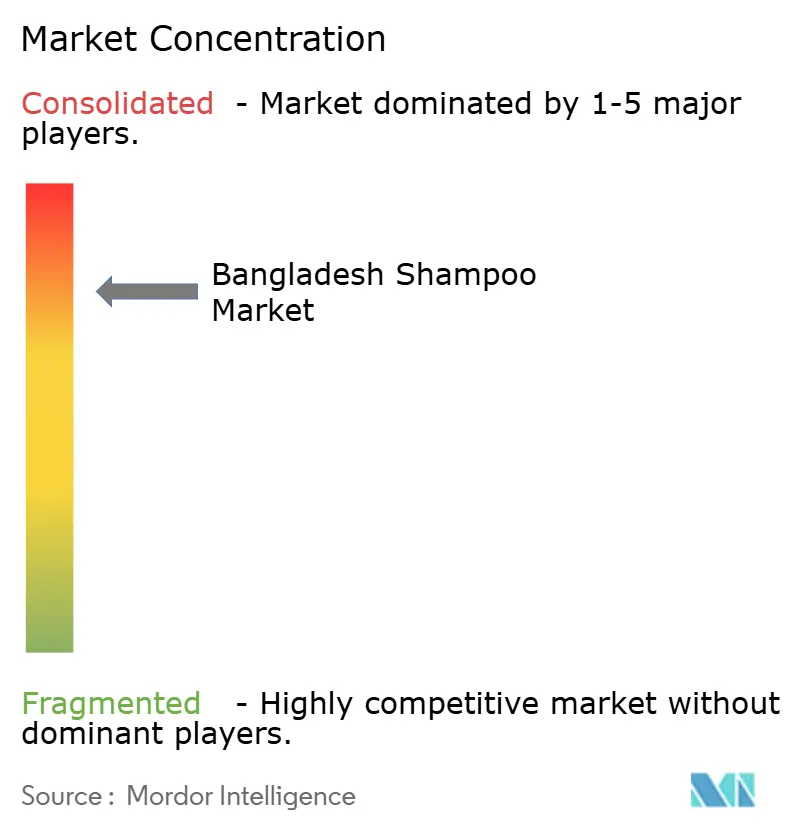
| Market Concentration | High |
Major Players *Disclaimer: Major Players sorted in no particular order Image © Mordor Intelligence. Reuse requires attribution under CC BY 4.0. | |
Bangladesh Shampoo Market Analysis by Mordor Intelligence
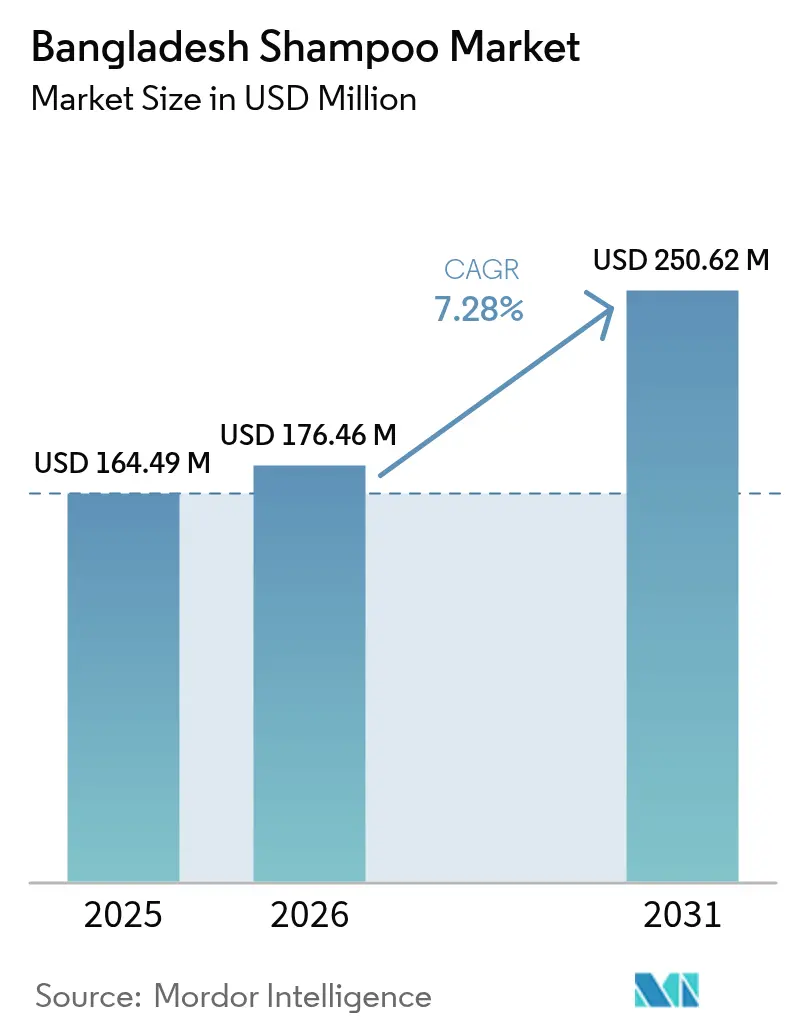
The Bangladesh shampoo market size is expected to grow from USD 164.49 million in 2025 to USD 176.46 million in 2026 and is forecast to reach USD 250.62 million by 2031 at 7.28% CAGR over 2026-2031. Factors such as rapid urbanization, increasing disposable incomes, and stricter grooming standards are driving higher per-capita consumption. The depreciation of the taka since 2023 has influenced urban consumers to opt for premium shampoo bottles, while rural households increasingly prefer sachets. E-commerce penetration increased in 2025, with beauty and personal care products accounting for 56% of online transactions, allowing brands to reduce reliance on traditional trade margins. The market has also been impacted by category exits, most notably Procter & Gamble's exit in 2024, which redistributed shelf space to companies like Unilever, Square Toiletries, and emerging local players. Domestic production now meets a significant portion of demand, as companies such as Square, Kohinoor, and Keya expand formulation capacities and engage in contract farming of aloe vera in Natore to reduce dependence on imported specialty chemicals.
Key Report Takeaways
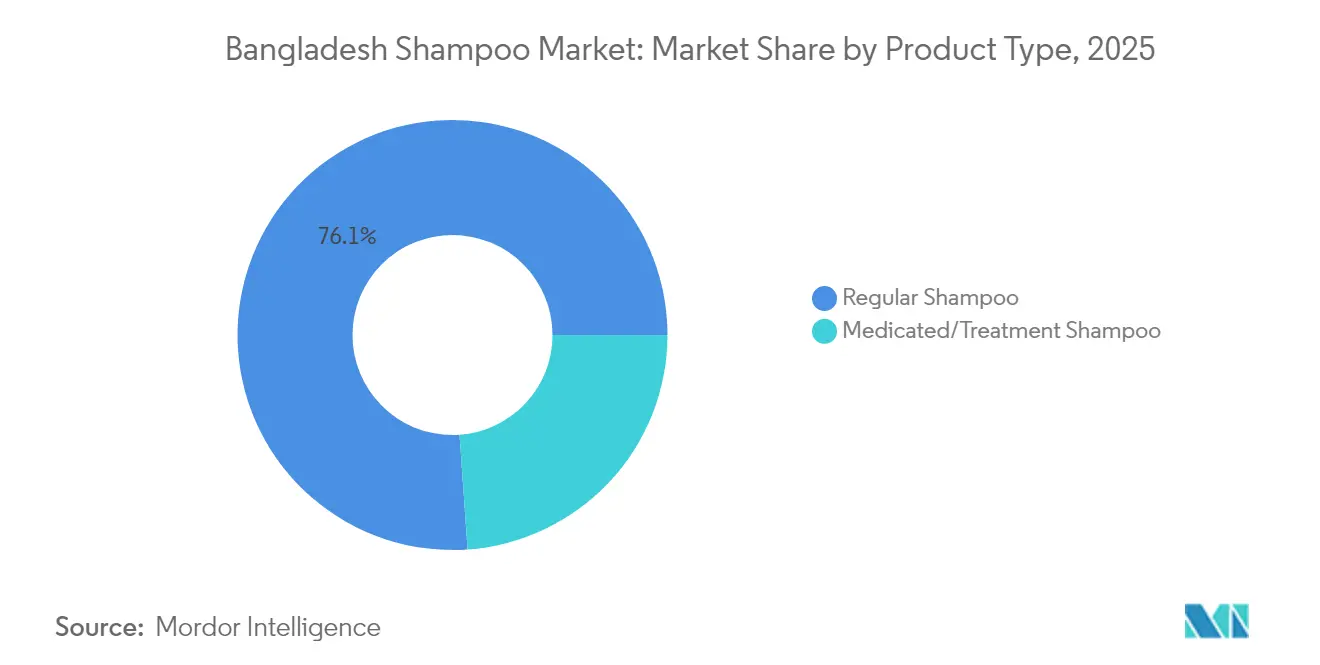
- By product type, regular shampoo held a 76.12% Bangladesh shampoo market share in 2025, while medicated variants are advancing at a 8.78% CAGR through 2031.
- By end user, adults accounted for 92.74% of the Bangladesh shampoo market size in 2025, whereas the kids segment is set to expand at an 8.45% CAGR.
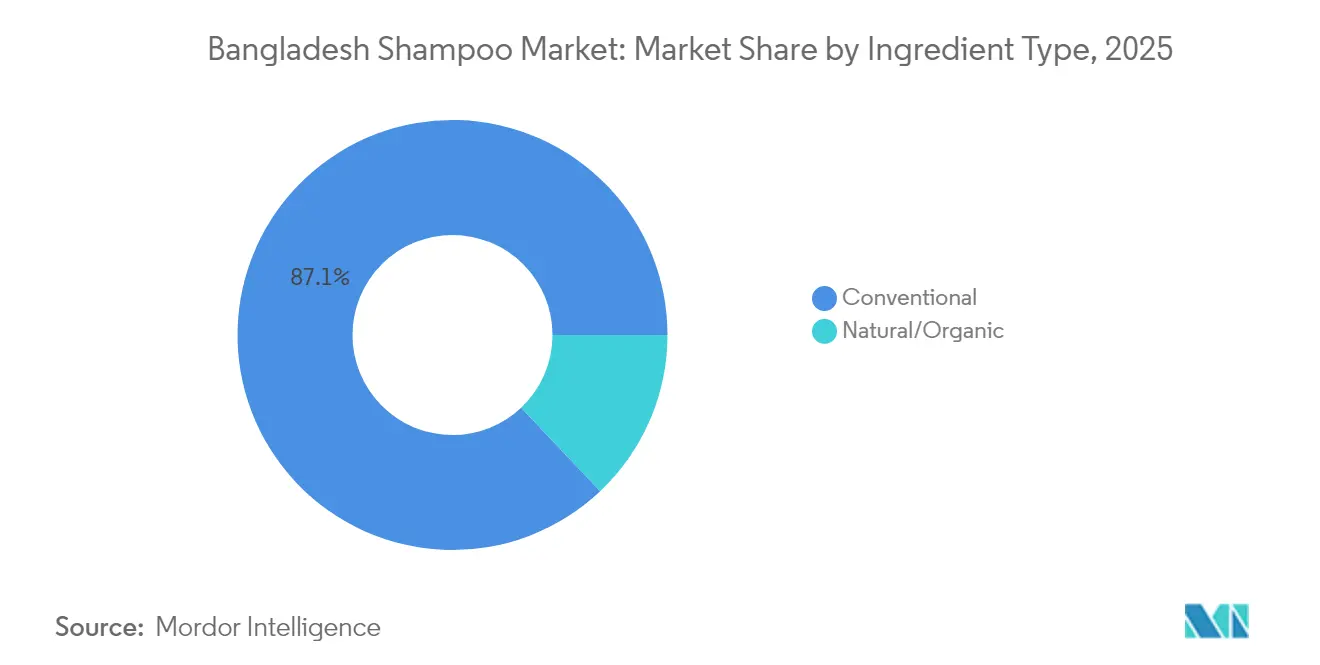
- By ingredient, conventional formulations commanded 87.05% share of the Bangladesh shampoo market size in 2025; natural and organic products are projected to grow at an 8.26% CAGR.
- By distribution channel, supermarkets and hypermarkets led with 42.63% revenue share in 2025, while online retail is forecast to post a 8.74% CAGR through 2031
Note: Market size and forecast figures in this report are generated using Mordor Intelligence’s proprietary estimation framework, updated with the latest available data and insights as of 2026.
Bangladesh Shampoo Market Trends and Insights
Drivers Impact Analysis*
| Driver | (~)% Impact on CAGR Forecast | Geographic Relevance | Impact Timeline |
|---|---|---|---|
| Rising consumer awareness of personal hygiene and grooming standards | +1.8% | National, with stronger gains in Dhaka, Chittagong, Sylhet urban clusters | Medium term (2-4 years) |
| Shift towards natural, herbal, and organic shampoo formulations | +1.5% | National, particularly urban middle class and tier-2 cities | Medium term (2-4 years) |
| Expansion of e-commerce platforms enhancing product accessibility | +1.4% | National, with early gains in Dhaka, Chittagong; spillover to tier-2 cities | Short term (≤ 2 years) |
| Aggressive marketing and promotional campaigns by brands | +1.2% | National, concentrated in urban and peri-urban areas | Short term (≤ 2 years) |
| Wellness and self-care trends favoring gentle, chemical-free options | +1.0% | Urban centers, expanding to tier-2 cities | Medium term (2-4 years) |
| Increasing health consciousness driving herbal over synthetic products | +0.9% | National, with cultural resonance in rural and semi-urban areas | Long term (≥ 4 years) |
| Source: Mordor Intelligence | |||
Rising Consumer Awareness of Personal Hygiene and Grooming Standards
Hygiene awareness in Bangladesh has grown significantly, driven by accelerating urbanization and the influence of social media on grooming standards. According to Square Toiletries, the national toiletries market experienced year-on-year growth, with rural areas showing higher growth rates—marking a reversal of the traditional urban-rural gap. For instance, in Hatiya, a remote island, demand for Sunsilk increased from negligible levels to dozens of units per day within a few months, as residents transitioned from using traditional soap-based washing to branded shampoos. This change in consumer behavior is further supported by influencer marketing, with Bangladesh's creator economy, comprising over half a million individuals with at least ten thousand followers, playing a key role in promoting product trials through YouTube tutorials and Instagram reels that focus on scalp health and hair texture. Additionally, the dual-licensing requirements introduced by the 2023 Drugs and Cosmetics Act, mandating approval from both the Bangladesh Standards and Testing Institution (BSTI) and the Directorate General of Drug Administration (DGDA), have encouraged brands to adopt clearer labeling and greater ingredient transparency, helping educate consumers and raising their expectations regarding product quality and efficacy. Meanwhile, Bangladesh faces rapid, unplanned urbanization, with 56% of its population expected in urban areas by 2050 [1]. Dhaka struggles with housing shortages, inadequate services, pollution, waste management, and severe socio-spatial divisions between wealthy and poor communities, threatening sustainability and public health.
Shift Towards Natural, Herbal, and Organic Shampoo Formulations
Paraben-free and sulfate-free formulations have transitioned from niche offerings to a strategic focus for both multinational corporations and local companies. In December 2024, Marico Bangladesh introduced Parachute Naturale Egg Shine Shampoo, combining egg protein with coconut milk protein, available in multiple formats, including sachets, to appeal to price-sensitive consumers. Dabur's Vatika range, featuring ingredients like amla, shikakai, and reetha, aligns with consumer preferences for Ayurvedic formulations perceived as culturally authentic and gentler than synthetic alternatives. Himalaya Herbals' anti-hair-fall and anti-dandruff variants utilize botanical extracts to address scalp issues common in Bangladesh's humid climate. In January 2025, Unilever launched the URefill initiative, introducing refill machines for Sunsilk and Dove products, significantly reducing plastic usage and lowering consumer costs. This initiative underscores the convergence of sustainability and natural product positioning into a unified value proposition. The projected compound annual growth rate for natural and organic ingredients through 2030 indicates that this trend represents a structural shift driven by growing health consciousness and environmental awareness.
Expansion of E-Commerce Platforms Enhancing Product Accessibility
Online retail for personal care products has experienced significant growth and continues to expand rapidly each year. Beauty and shower products account for the majority of e-commerce transactions within this segment. Daraz Bangladesh, the largest online marketplace in the country, has expanded its Daraz Mart grocery and fast-moving consumer goods (FMCG) vertical, integrating mobile payment systems such as bKash, Nagad, and Rocket to facilitate transactions for first-time online buyers. Shajgoj, a specialized beauty e-commerce platform, emphasizes problem-based merchandising (e.g., dandruff, hair fall, thinning) and has formed exclusive partnerships with companies like Unilever, Marico, and Himalaya. This strategy positions Shajgoj as a trusted advisor rather than just a transactional platform. Klassy Missy, which offers a wide range of premium beauty brands, provides pre-order options and significant discounts. This approach has increased access to imported products such as Olaplex and TRESemme, which were previously available only in Dhaka's high-end salons. According to the International Trade Administration, the growing mobile financial services (MFS) industry has made it easier for consumers to purchase products online, further boosting the e-commerce sector. The market is projected to triple in size by 2023, as reported by the Asian Development Bank (ADB) in its analysis of the cottage, micro, small, and medium enterprise (CMSME) sector. Currently, there are approximately 2,500 e-commerce companies in the country, along with at least 50,000 business pages on Facebook [2].
Aggressive Marketing and Promotional Campaigns by Brands
Micro-influencers, defined as individuals with follower counts between 10,000 and 100,000, achieve engagement rates of ~3.86% on Instagram and 8.0% on TikTok. These rates surpass those of mega-influencers, providing brands with a cost-effective approach to reach niche audiences. In May 2024, Unilever relaunched Sunsilk under the name "Sunsilk New Black Shine," incorporating upgraded ingredients and premium packaging. The relaunch was supported by a multi-channel marketing campaign spanning television, YouTube, and Facebook Live, targeting younger consumers who value shine and manageability in hair care products. In February 2025, Square Toiletries highlighted the importance of trade marketing and in-store activation during its Annual Sales Conference, which was attended by 1,600 distributors and retailers. This emphasis is particularly relevant in a market where nearly all retail consumption is still dominated by small independent retailers, commonly referred to as mom-and-pop shops.
Restraints Impact Analysis*
| Restraint | (~)% Impact on CAGR Forecast | Geographic Relevance | Impact Timeline |
|---|---|---|---|
| Prevalence of counterfeit and substandard shampoo products | -1.2% | National, with higher incidence in rural and peri-urban markets | Short term (≤ 2 years) |
| Logistical challenges in rural market penetration and distribution | -1.0% | Rural Bangladesh, particularly remote districts and island regions | Medium term (2-4 years) |
| Availability of traditional herbal remedies and homemade alternatives | -0.7% | Rural and semi-urban areas with strong cultural ties to traditional practices | Long term (≥ 4 years) |
| Limited retail infrastructure in remote regions | -0.6% | Remote districts, char areas, and hill tracts | Medium term (2-4 years) |
| Source: Mordor Intelligence | |||
Prevalence of Counterfeit and Substandard Shampoo Products
Counterfeit shampoos continue to pose significant challenges to both brand reputation and consumer safety, as substandard products infiltrate distribution channels due to weak enforcement and insufficient border controls. Research has revealed microbial contamination in locally sold cosmetics, raising concerns about the hygiene of manufacturing processes and storage conditions. The 2023 Drugs and Cosmetics Act, which mandates dual licensing from the Bangladesh Standards and Testing Institution (BSTI) and the Directorate General of Drug Administration (DGDA), has not been fully enforced, allowing unregistered products to remain in circulation [3]. This issue is particularly prevalent in rural markets, where consumers prioritize affordability over brand loyalty and often lack the knowledge to differentiate between genuine and counterfeit packaging. In response, Unilever has introduced holographic labels and QR-code verification for its Sunsilk and Lux brands as a protective measure, but small-scale counterfeiters can easily replicate these features at low cost. The Bangladesh Food Safety Authority's 2023 regulations on microbiological contaminants in cosmetics aim to improve compliance standards, but limited resources have constrained the frequency of inspections and the enforcement of penalties. This situation disproportionately affects premium and medicated product segments, where consumers expect reliable therapeutic benefits and may lose trust in branded products after encountering counterfeit versions.
Logistical Challenges in Rural Market Penetration and Distribution
In Bangladesh, 75% of the population lives in rural areas where road infrastructure, cold-chain logistics, and last-mile delivery networks are still underdeveloped. ShopUp, a leading e-commerce platform, has established 427 micro-fulfillment hubs and plans to expand this network to 700 by December 2025, addressing part of these challenges. However, serving low-density, low-ticket-size markets remains a significant hurdle. The Chief Executive Officer (CEO) of Square Toiletries highlighted that rural market growth reached 14% in 2024, outpacing urban areas. Despite this growth, 90% of raw materials are imported, and local sourcing efforts, such as contract farming of aloe vera in Natore, are still in the trial phase. The 40% depreciation of the Bangladeshi taka (BDT) against the United States (US) dollar has further increased import costs, reducing distributor margins and discouraging them from stocking slow-moving stock-keeping units (SKUs) in remote outlets. Seasonal flooding and monsoon disruptions add to inventory management challenges, often leading to stockouts that push consumers toward traditional alternatives or counterfeit products. Companies that can effectively address rural distribution—using sachet packaging, mobile sales vans, or partnerships with agricultural cooperatives—have the potential to achieve significant volume growth. However, the high upfront investment and operational complexities remain barriers for all but the most committed businesses.
*Our forecasts treat driver/restraint impacts as directional, not additive. The impact forecasts reflect baseline growth, mix effects, and variable interactions.
Segment Analysis
By Product Type: Medicated Variants Gain as Scalp Health Concerns Mount
Challenges such as dandruff, hair fall, and scalp irritation—worsened by Dhaka's hard water, high humidity, and air pollution—are pushing consumers toward medicated and treatment shampoos. This category is expected to grow at a rate of 8.78 percent through 2031, even though it currently holds a smaller share of the market. On the other hand, regular shampoos, which focus on attributes like shine, smoothness, and volume, dominated 76.12 percent of the market in 2025. This segment is led by Unilever's Sunsilk and Clear brands, along with Square Pharmaceuticals' Meril brand. In May 2024, Unilever relaunched Sunsilk as "Sunsilk New Black Shine," incorporating enhanced ingredients and premium packaging. This move underscores the competitive nature of the regular shampoo market, where brands differentiate themselves through sensory appeal and aspirational messaging.
The rapid growth of the medicated shampoo segment reflects a shift in consumer preference from cosmetic to therapeutic solutions. For instance, Himalaya Herbals' anti-dandruff and anti-hair-fall shampoos, formulated with bhringraj (false daisy) and butea frondosa (flame of the forest), address specific scalp issues and are priced at a premium that regular shampoos cannot command. Furthermore, Procter & Gamble's (P&G) exit from Bangladesh in 2024 led to the withdrawal of Head & Shoulders, the leading anti-dandruff brand, from the market. This has created a gap that Unilever's Clear and local competitors are striving to fill.

By End User: Kids Segment Expands as Middle-Class Parents Prioritize Gentle Formulations
In 2025, adults made up 92.74% of end users, reflecting the traditional focus on working-age consumers and the limited availability of products tailored specifically for children. However, the kids' segment is expected to grow at a rate of 8.45% through 2031, driven by the expansion of the middle class, the rise of nuclear family structures, and growing parental awareness about the safety of product ingredients. Johnson's Baby, the long-standing market leader, is now facing competition from new players such as Himalaya's gentle baby shampoo, Square's Meril Junior line, and Dabur's Vatika Kids variants. These competitors emphasize features like tear-free formulations, natural ingredients, and dermatologist testing. Marico's December 2024 launch of Parachute Naturale Egg Shine Shampoo, although aimed at adults, reflects a broader trend toward protein-enriched, paraben-free formulations, which are increasingly preferred by parents for their children.
The kids' segment is less price-sensitive compared to the adult market, as parents tend to prioritize safety and effectiveness over cost. Sachet formats, priced between Bangladeshi Taka (BDT) 5 and 10, make it easier for parents to try products without a significant financial commitment. E-commerce platforms such as Shajgoj and Klassy Missy have expanded their range of kids' hair care products, introducing imported brands like Mustela and Sebamed, which were previously only available in specialty stores in Dhaka. This segment's growth is further supported by shrinking household sizes and increased spending per child, as urban families dedicate more resources to health, education, and personal care for fewer children.
By Ingredient Type: Natural and Organic Formulations Capture Wellness-Conscious Buyers
In 2025, conventional formulations, which rely on synthetic surfactants, silicones, and preservatives, held 87.05% of the market. Their popularity stems from their cost efficiency, long shelf life, and established supply chains. On the other hand, natural and organic variants are expected to grow at a rate of 8.26% through 2031, as consumers increasingly prioritize products free from parabens, sulfates, and other ingredients linked to potential long-term health concerns.
Marico's Parachute Naturale Egg Shine Shampoo, launched in December 2024, combines egg protein with coconut milk protein, catering to consumers who value natural ingredients for their perceived nourishment and safety. Dabur's Vatika range, featuring amla (Indian gooseberry), shikakai (Acacia concinna), and reetha (soapnut), draws on Ayurvedic traditions to position itself as a culturally authentic alternative to Western brands. Similarly, Himalaya Herbals' botanical extracts and Patanjali's Ayurvedic offerings further diversify the natural segment, offering options that range from mass-market herbal products to premium organic alternatives. Unilever's URefill (Universal Refill) initiative, introduced in January 2025, reduces plastic waste by 90% and consumer costs by 20%, aligning sustainability with natural product positioning to attract environmentally conscious buyers who see packaging and formulation as interconnected priorities.
By Distribution Channel: Online Retail Surges as Digital Infrastructure Matures
In 2025, supermarkets and hypermarkets captured 42.63% of the distribution market, led by Shwapno with 440 outlets, Daily Shopping with 75 stores, and Meena Bazar with 33 locations. These retailers collectively offer between 8,000 and 50,000 Stock Keeping Units (SKUs) and have integrated mobile payment options, which account for 35% of transactions. However, rising inflation has led to a reduction in basket size—from BDT 2,000 to BDT 1,000 per visit—putting pressure on modern trade. As a result, retailers are focusing on optimizing their product assortments and promotional strategies to adapt to these changes.
Online retail stores, expected to grow at a rate of 8.74% through 2031, are gaining traction by offering a broader product range, cash-on-delivery convenience, and influencer-driven product discovery. Daraz Bangladesh, the country's largest online marketplace, has expanded its Daraz Mart Fast-Moving Consumer Goods (FMCG) vertical and integrated payment systems such as bKash, Nagad, and Rocket, making it easier for first-time online shoppers to complete transactions. Shajgoj, a specialized beauty e-commerce platform, focuses on problem-based merchandising—such as solutions for dandruff, hair fall, and thinning hair—and has secured exclusive partnerships with brands like Unilever, Marico, and Himalaya. This approach positions Shajgoj as a trusted advisor rather than just a transactional platform. Klassy Missy, which listed over 150 premium beauty brands by July 2024, offers pre-order options and discounts of up to 50%, making imported products like Olaplex and TRESemme more accessible to consumers.
Geography Analysis
Urban centers like Dhaka, Chittagong, and Sylhet play a pivotal role in the Bangladesh shampoo market, driven by modern retail networks, e-commerce hubs, and a growing preference for premium products. Retail chains such as Shwapno, with 440 supermarket outlets, Daily Shopping's 75 stores, and Meena Bazar's 33 locations, are concentrated in these cities. Notably, 35% of transactions in these areas are conducted through mobile payment systems, reflecting a consumer base that is less sensitive to price changes. Unilever's announcement in April 2024 to establish a 20-acre manufacturing site in Kalurghat, Chittagong, underscores the importance of strategically located facilities to meet urban demand and support export opportunities. Additionally, the popularity of medicated shampoos and natural formulations is highest in urban areas, supported by factors such as access to dermatologists, effective influencer marketing, and reliable e-commerce delivery services. Platforms like Daraz Bangladesh and Shajgoj focus their three-hour delivery services in Dhaka and Chittagong, where high order volumes justify logistics costs and cash-on-delivery fraud remains manageable.
Rural areas, home to 75% of Bangladesh's population, experienced a 13.2% growth rate in 2025, surpassing urban growth and signaling a significant shift as rising incomes and improved hygiene awareness reach remote regions. Tier-2 cities and peri-urban areas such as Rajshahi, Khulna, Barisal, and Rangpur are emerging as high-growth markets. These regions combine the purchasing power of urban areas with the population density of rural districts, creating opportunities for brands to expand. While these areas lack the modern trade saturation seen in Dhaka and Chittagong, they are adopting e-commerce and digital payment systems at a faster rate than remote rural districts. This trend presents a favorable environment for companies that can effectively navigate hybrid distribution models.
Inflationary pressures have impacted consumer spending patterns, particularly in urban areas, where the average supermarket basket size has decreased from BDT 2,000 to BDT 1,000 per visit. This has constrained volume growth, prompting brands to adapt by optimizing pack sizes and increasing promotional efforts to maintain household penetration. Meanwhile, investments in tier-2 cities are gaining momentum, as evidenced by Bashundhara Group's planned BDT 1,000 crore (USD 91 million) investment in toiletries over five years, which aims to create 5,000 jobs. Such initiatives highlight the potential of tier-2 manufacturing and distribution hubs to reduce logistics costs while capturing local demand.
Competitive Landscape
The Bangladesh shampoo market is highly concentrated, with a concentration score of 8 out of 10. Unilever holds nearly 50% of the market share through its Sunsilk, Clear, Dove, and Lux brands. Local competitors, including Square Toiletries (18%), Kohinoor Chemical (20%), and Keya Group (13%), play a significant role in the market. Procter & Gamble's (P&G) planned exit in 2024, which involves ending distribution through Gillette India and halting contract manufacturing with Pran Group, has reshaped the competitive landscape by redistributing shelf space for Head & Shoulders and Pantene, intensifying competition among the remaining players.
Unilever's announcement in April 2024 of a 20-acre Kalurghat site for its largest investment in Bangladesh highlights its long-term commitment to the market. However, the company is navigating challenges such as margin pressures caused by the depreciation of the Bangladeshi taka and rising raw material costs. Meanwhile, growth opportunities are emerging in segments like medicated shampoos (9.12% compound annual growth rate or CAGR), kids' formulations (8.88% CAGR), and products with natural ingredients (8.78% CAGR), where consumer demand outpaces supply, and price premiums help offset higher formulation costs.
New players are also making their mark. Patanjali, for instance, is leveraging its Ayurvedic expertise to compete with established brands like Dabur and Himalaya. Additionally, e-commerce platforms such as Shajgoj and Klassy Missy are bypassing traditional distribution channels, offering curated assortments that modern trade cannot replicate. On the technology front, adoption remains uneven. Unilever's URefill initiative, launched in January 2025, introduces refill machines that reduce plastic usage by 90%, representing a significant innovation. In contrast, most local players continue to rely on manual sales tracking and traditional distributor relationships.
Bangladesh Shampoo Industry Leaders
-
Unilever PLC
-
Square Group
-
Marico Limited
-
The Procter & Gamble Company
-
Kohinoor Chemical Company Ltd.
- *Disclaimer: Major Players sorted in no particular order
Recent Industry Developments
- October 2024: Unilever Bangladesh partnered with GAIN (Global Alliance for Improved Nutrition) to pilot a sustainability initiative focused on reducing plastic waste and improving supply chain transparency. The pilot, conducted in Dhaka and Chittagong, informed the subsequent URefill rollout in January 2025
- May 2024: Unilever Bangladesh has relaunched Sunsilk Sparkle, positioning it as a premium shampoo designed to deliver a stunning black shine. The market-leading brand introduced an improved formulation and premium packaging, strengthening its position in Bangladesh's shampoo market through enhanced product positioning and extensive nationwide distribution.
- May 2024: ShopUp, the largest B2B commerce platform in Bangladesh, achieved EBITDA positivity in December 2023 and announced its plans to significantly expand its network of micro-fulfillment hubs to enhance operational efficiency.
Research Methodology Framework and Report Scope
Market Definition and Coverage
This market is counted as the retail and wholesale value of shampoo products sold for hair and scalp cleansing in Bangladesh, across mass and premium price points. Values are tracked in USD and reflect what consumers buy through physical and online channels.
Scope exclusions: Hair oils, conditioners, soaps, and salon-only professional treatments are excluded unless they are sold and labeled as shampoo products.
Segmentation Overview
- By Product Type
- Regular Shampoo
- Medicated/Treatment Shampoo
- By End User
- Kids
- Adult
- By Ingredient Type
- Natural/Organic
- Conventional
- By Distribution Channel
- Supermarkets / Hypermarkets
- Convenience/Grocery Stores
- Pharmacies and Drugstores
- Online Retail Stores
- Others
Data Sources, Market Sizing, and Validation
Desk Research
Desk research was used to set the demand boundary and to anchor key assumptions to public signals that can be checked year after year. We referred to sources such as Bangladesh Bureau of Statistics household expenditure and CPI releases, Bangladesh Bank exchange-rate and inflation series, and the National Board of Revenue context on VAT and duties that shape consumer goods pricing.
To understand how supply and compliance can influence availability, we also reviewed public notices and standards references from Bangladesh Standards and Testing Institution, plus trade statistics from UN Comtrade as a consistency check for import-linked categories. Category structure and price ladders were further supported using company annual reports, product catalogs, and publicly visible online retail listings and promotions, followed by reputed local business press coverage of capacity additions and distribution changes. A paid subscription covering company financials and another covering shipment-level import and export data were used selectively to sanity-check scale and import reliance. These are illustrative examples, and many other public sources were also used for data collection, validation, and clarification during the work.
Primary Interviews and Surveys
Interviews and surveys with manufacturers, distributors, retailers, pharmacy buyers, and hair-care professionals in Bangladesh are used to test channel margins, sachet and bottle movement, pack preferences, and gaps in published data. Functional leaders and managers provide detail on price changes and product availability in Bangladesh, while their responses are compared with customs, retail, and company evidence. Respondents are re-contacted when reported prices, supply conditions, or sales direction do not align.
Distribution of primary research fieldwork respondents
| Company type | Respondent position |
|---|---|
| Top tier: 28% | CXOs: 18% |
| Mid tier: 47% | Functional/Unit leaders: 31% |
| Smaller Players: 25% | Managers: 51% |
Market-Sizing & Forecasting
The core sizing starts with a top-down demand pool build where population and grooming usage patterns are translated into annual consumption, and then converted to value using observed price ladders. To keep it practical, the model uses a small set of inputs that can be refreshed, such as urbanization and income direction, shampoo penetration by household type, sachet versus bottle share, distribution-channel mix, and average selling price movement by pack size.
Results are then corroborated using selective bottom-up checks, including a supplier and distributor sense-check on volumes, sampled shelf prices across trade formats, and consistency with import and local production signals when those are visible. Forecasts are built with scenario analysis supported by simple regression-style relationships between price, income pressure, and channel expansion, and then reviewed with primary respondents to confirm which drivers are likely to matter most. Where company-level detail is limited, the gap is handled by using channel-based volume proxies and adjusting the price mix to match what is actually stocked and sold.
Data Validation & Update Cycle
Model outputs are cross-checked against independent metrics, including exchange-rate and inflation direction, visible retail price resets, and shifts in product availability across channels. If a year shows an unusual jump, we re-check the mix assumptions (especially sachets versus bottles), re-run currency conversions for the correct period, and re-contact selected primary respondents to confirm whether it was a real demand change or a pricing pass-through.
Before sign-off, the work goes through multi-step analyst reviews where inputs, formulas, and assumptions are traced back to source notes and interview learnings. Reports are refreshed annually, with interim updates triggered by material events such as sharp currency moves, tax changes affecting consumer goods, or major channel disruption. Right before delivery, a final pass is done so clients receive the most current view.
Mordor Intelligence's Bangladesh Shampoo Market Size Compared Against Other Published Estimates
It is normal to see different market sizes for Bangladesh shampoo because publishers do not always use the same year cutoffs, pricing logic, or treatment of currency conversion. Differences also show up when one model leans more on manufacturer-side signals while another leans more on consumer spending proxies.
A refresh-led gap is common in this category because shampoo pricing moves with inflation and taka movement, and pack-size mix changes can swing the average selling price quickly. Some published figures also roll in broader hair care baskets or apply a single price per unit across formats, which can miss the sachet-heavy reality and the trade margin structure seen in Bangladesh.
Benchmark comparison
| Source | Market Size | Gaps in Research Methodology |
|---|---|---|
| Mordor Intelligence | USD 164.49 M (2025) | |
| Global Consultancy A | USD 110.00 M (2024) | Uses an earlier base year and a shorter historical anchor, and the value appears closer to a narrower shampoo basket with different assumptions on pack-size mix and channel margins. |
| Industry Publisher B | USD 132.73 M (2026) | Starts the series at the first forecast year, which can understate near-term price resets, and it can shift totals if currency conversion timing and ASP escalation are applied more smoothly than observed in retail. |
The spread in the table is mainly explained by how often pricing, pack mix, and exchange-rate translation are refreshed, and by whether the count stays strictly within shampoo versus adjacent hair care. By updating the ASP ladder using recent shelf checks and validating it through distributor and retailer feedback, the model stays aligned to current purchasing patterns, which is reinforced through the annual refresh cycle followed by Mordor Intelligence.
Key Questions Answered in the Report
What is the current value of the Bangladesh shampoo market?
The market stands at USD 176.46 million in 2026, with a forecast to reach USD 250.62 million by 2031.
Which product type is growing fastest in Bangladesh?
Medicated and treatment shampoos are expanding at a 8.78% CAGR through 2031 due to rising scalp-health concerns.
Why are natural and herbal shampoos gaining popularity?
Consumers associate botanical formulations with safety and wellness, driving an 8.26% CAGR for natural variants.
Which sales channel will outperform others by 2031?
Online retail is projected to grow at a 8.74% CAGR, outpacing supermarkets and traditional trade.