Food & Beverage
2nd MayMarket Analysis of Synthetic Food Colorants for a Beverage Leader
5 Min Read
The South America Weight Management Supplement Market Report is Segmented by Product Type (Vitamins and Minerals, Botanicals, and More), Form (Powders, Gummies, and More), Distribution Channel (Supermarkets/Hypermarkets, Online Retail Stores, and More), and Country (Brazil, Colombia, Chile, Peru, Argentina, and Rest of South America). The Market Forecasts are Provided in Terms of Value (USD).
Market Overview
| Study Period | 2021 - 2031 |
|---|---|
| Base Year For Estimation | 2025 |
| Forecast Data Period | 2026 - 2031 |
| Market Size (2026) | USD 251.44 Million |
| Market Size (2031) | USD 389.02 Million |
| Growth Rate (2026 - 2031) | 9.12 % CAGR |
| Market Concentration | Medium |
Major Players *Disclaimer: Major Players sorted in no particular order. Image © Mordor Intelligence. Reuse requires attribution under CC BY 4.0. |
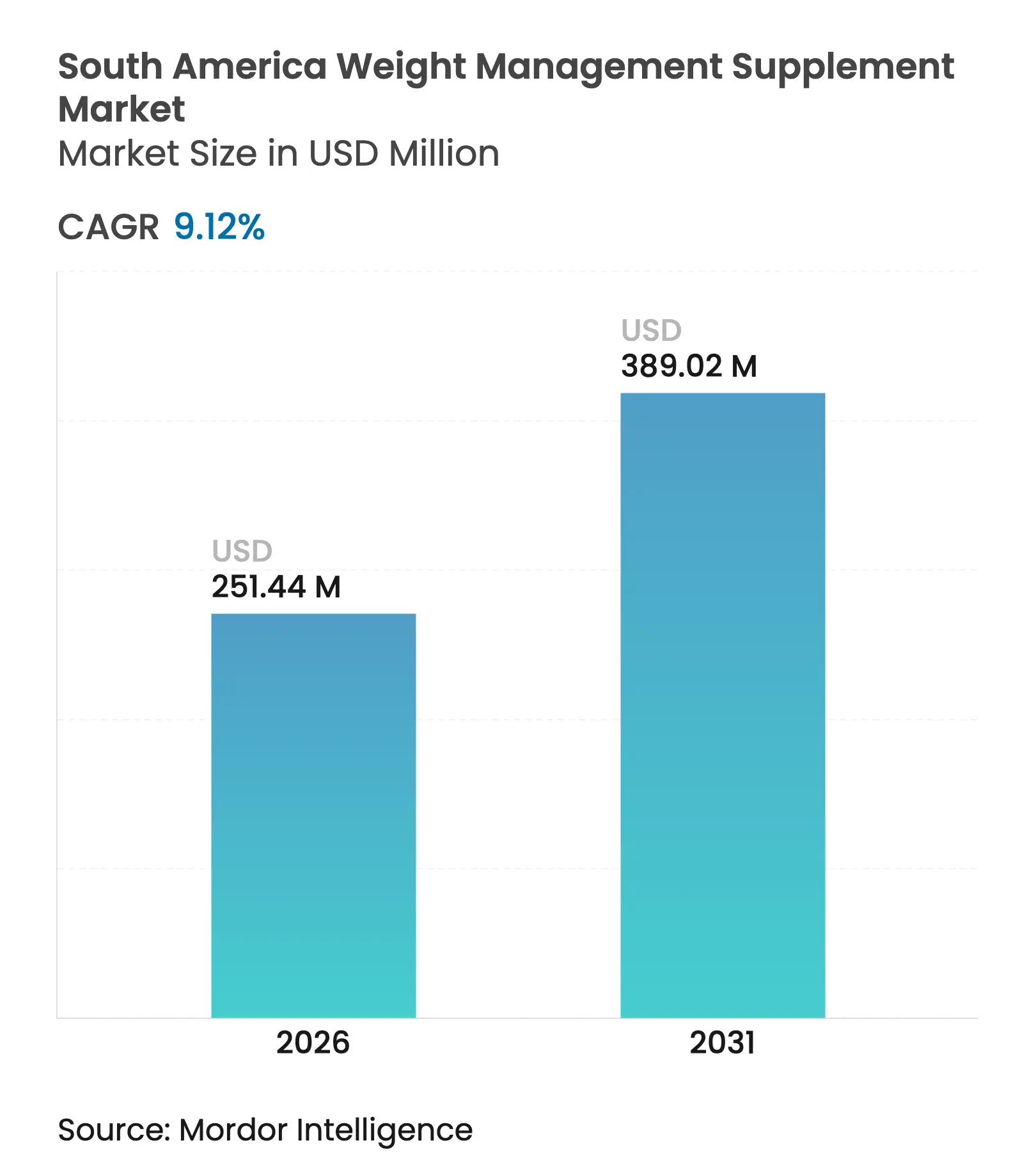

South America weight management supplement market size in 2026 is estimated at USD 251.44 million, growing from 2025 value of USD 230.43 million with 2031 projections showing USD 389.02 million, growing at 9.12% CAGR over 2026-2031. This growth is driven by several factors, including a sharp increase in obesity rates across the region, a rising focus on fitness and health, and the growing popularity of GLP-1 receptor agonists, which highlight the importance of muscle-preserving micronutrition. Among product types, vitamins and minerals remain the most widely used, but essential amino acids are gaining popularity as consumers increasingly associate high-quality protein with improved metabolic health. The distribution landscape is shifting, with e-commerce gaining traction among consumers who value convenience. The competitive landscape in the market is moderately intense. Domestic companies are utilizing their agility to focus on niche products, such as botanical blends, while multinational corporations are introducing meal-replacement products that blur the line between food and supplements.
Key Report Takeaways
Note: Market size and forecast figures in this report are generated using Mordor Intelligence's proprietary estimation framework, updated with the latest available data and insights as of 2026.
Drivers Impact Analysis
| Driver | (~) % Impact on CAGR Forecast | Geographic Relevance | Impact Timeline |
|---|---|---|---|
Rising
obesity rates and lifestyle-related health issues
|
+2.1%
|
Highest
impact in Brazil, Mexico (North America proxy), Chile, Argentina
|
Long
term (≥ 4 years)
|
Growing
participation in fitness and active lifestyles
| +1.8% | Brazil, Colombia, Chile (urban metros); spillover to Argentina, Peru | Medium term (2-4 years) |
Increasing
health consciousness pushing consumers toward preventive nutrition and
metabolism-support supplements
| +1.5% | Early adoption in Brazil (São Paulo, Rio), Santiago, Bogotá | Medium term (2-4 years) |
Strong
consumer preference for natural, herbal, and clean-label formulations
| +1.3% | Brazil, Colombia, Peru (Andean herbal tradition); moderate in Chile, Argentina | Short term (≤ 2 years) |
Expanding
influence of celebrity endorsements and fitness influencers
| +0.9% | Brazil, Colombia (high social-media penetration); emerging in Chile, Argentina | Short term (≤ 2 years) |
Rising
demand for gluten-free, sugar-free, and low-calorie formulations
| +0.7% | Brazil, Chile (front-of-pack labeling laws); moderate in Colombia, Argentina | Medium term (2-4 years) |
| Source: Mordor Intelligence | |||
Rising obesity rates and lifestyle-related health issues
The growing prevalence of obesity and related health issues is driving a significant increase in the demand for weight-management supplements across South America. In Brazil, for instance, nearly 48% of the adult population is expected to be obese by 2044, while an additional 27% may be overweight, according to the World Obesity Organization in June 2024[1]. This highlights the severity of the health challenges in the region. Similar trends are observed across other South American countries, prompting governments and healthcare professionals to promote preventive measures, including metabolic support through supplements, alongside lifestyle changes like improved diets and increased physical activity. The growing use of GLP-1 medications has also shifted the perception of weight management, making it a more medically manageable issue. This shift has brought weight-management supplements into the mainstream, moving them beyond niche fitness markets and integrating them into broader health and wellness routines.
Rising demand for gluten-free, sugar-free, and low-calorie formulations
The demand for gluten-free, sugar-free, and low-calorie products is significantly influencing the weight-management supplement market in South America. Governments in the region are implementing stricter labeling regulations, such as Chile’s black-octagon warnings and Brazil’s updated ANVISA labeling rules, which require brands to reformulate their products to avoid warning labels that could deter consumers. For instance, Integralmedica’s booster energy drink zero açúcar is an example of how companies are adapting by introducing sugar-free options that meet these regulatory standards. This trend is also driven by increasing health concerns, particularly related to metabolic disorders. In Argentina, for example, 14% of adults were living with diabetes in 2024, according to the International Diabetes Federation, highlighting the growing need for healthier, low-calorie alternatives[2]. The increasing use of GLP-1 therapies, which help suppress appetite, has created a demand for nutrient-dense, low-calorie supplements that complement these treatments.
Increasing health consciousness pushing consumers toward preventive nutrition and metabolism-support supplements
Health awareness is growing rapidly in South America, driving the demand for weight-management supplements. People are increasingly turning to daily supplements as a way to maintain their health and reduce the risk of chronic diseases. This trend is also fueled by concerns over rising healthcare costs, prompting individuals to prioritize preventive measures. In Brazil, this shift is particularly evident, as the country allocates 9.7% of its GDP, approximately USD 135 billion, according to the International Trade Administration in August 2025, to healthcare[3]. Both consumers and the government are emphasizing the importance of reducing long-term health risks. To meet this demand, companies are focusing on scientifically proven ingredients, such as chromium picolinate, which supports insulin regulation, and green coffee extract, known for its role in boosting metabolism. These supplements are increasingly being marketed as essential tools for everyday health management, making them more appealing to a broader audience.
Growing participation in fitness and active lifestyles
The increasing focus on fitness and active lifestyles is becoming a major factor driving the growth of South America’s weight-management supplement market. As of February 2025, 78% of people in major metropolitan areas across South America engage in physical exercise at least once a month as per the Health Club Management[4]. This indicates a strong post-pandemic trend toward regular physical activity. This growing interest in fitness is driving demand for supplements such as proteins, amino acids, and performance enhancers, which help individuals maintain muscle mass and enhance their workout results. Gym chains such as SmartFit are playing a significant role in this trend. SmartFit has expanded rapidly and diversified its offerings by acquiring brands like Velocity, a spin-studio chain. These gyms are increasing the visibility of supplements by offering them directly within their facilities, making it easier for consumers to access these products. Investments in fitness infrastructure, such as Bluefit’s stake sale to Mubadala Capital, are further supporting this growth.
Restraints Impact Analysis
| Restraint | (~) % Impact on CAGR Forecast | Geographic Relevance | Impact Timeline |
|---|---|---|---|
Strong
competition from functional foods and fortified beverages
|
-1.4%
|
Brazil,
Chile, Argentina (high penetration of dairy/beverage multinationals)
|
Short
term (≤ 2 years)
|
Cultural
preference for traditional weight-loss approaches over commercial supplements
| -0.9% | Peru, rural Argentina, Colombia (outside Bogotá/Medellín) | Long term (≥ 4 years) |
Growing
concerns over product safety, adulteration, and unverified ingredients
| -1.1% | Acute enforcement gaps in Peru, Paraguay, Bolivia (Rest of South America) | Medium term (2-4 years) |
Limited
regulatory harmonization across South American countries
| -0.8% | Regional (fragmented compliance across Brazil, Colombia, Chile, Peru, Argentina) | Long term (≥ 4 years) |
| Source: Mordor Intelligence | |||
Strong competition from functional foods and fortified beverages
Functional foods and fortified beverages are emerging as strong competitors to South America’s weight-management supplement market. Large food and beverage companies are leveraging their well-established brands, widespread shelf presence, and robust distribution networks to introduce products like protein-enriched yogurts, satiety drinks, and meal-replacement options. These products provide similar benefits to supplements but are presented in more familiar and convenient formats, making them appealing to a broader audience. Consumers are increasingly drawn to these functional foods due to their ease of use and integration into daily diets, leading to a shift in spending away from traditional supplements. This trend is particularly evident in key markets such as Brazil, Chile, and Argentina, where fortified beverages and functional foods are rapidly gaining popularity. As a result, supplement manufacturers are facing increasing challenges in maintaining their market share and must innovate to remain competitive in this evolving landscape.
Growing concerns over product safety, adulteration, and unverified ingredients
Concerns about product safety and adulteration are becoming significant challenges for the South American weight-management supplement market. The widespread availability of unregistered and counterfeit products, especially on online platforms, has led to growing consumer distrust. This issue has prompted regulatory authorities, such as INVIMA in Colombia and ANVISA in Brazil, to strengthen their oversight by issuing warnings and updating regulations to combat illegal sales. However, enforcement remains inconsistent, allowing non-compliant products to continue circulating in the market. Even well-known brands are trying to address these concerns by providing voluntary quality or purity assurances. Despite these efforts, the lack of transparency regarding independent lab testing has left many consumers skeptical about product safety. These ongoing safety issues are not only eroding consumer confidence but also slowing the market's growththe the illegal sale of these products, particularly in countries where regulatory enforcement is weaker.
By Product Type: Amino Acids Surge As Muscle Preservation Becomes Central
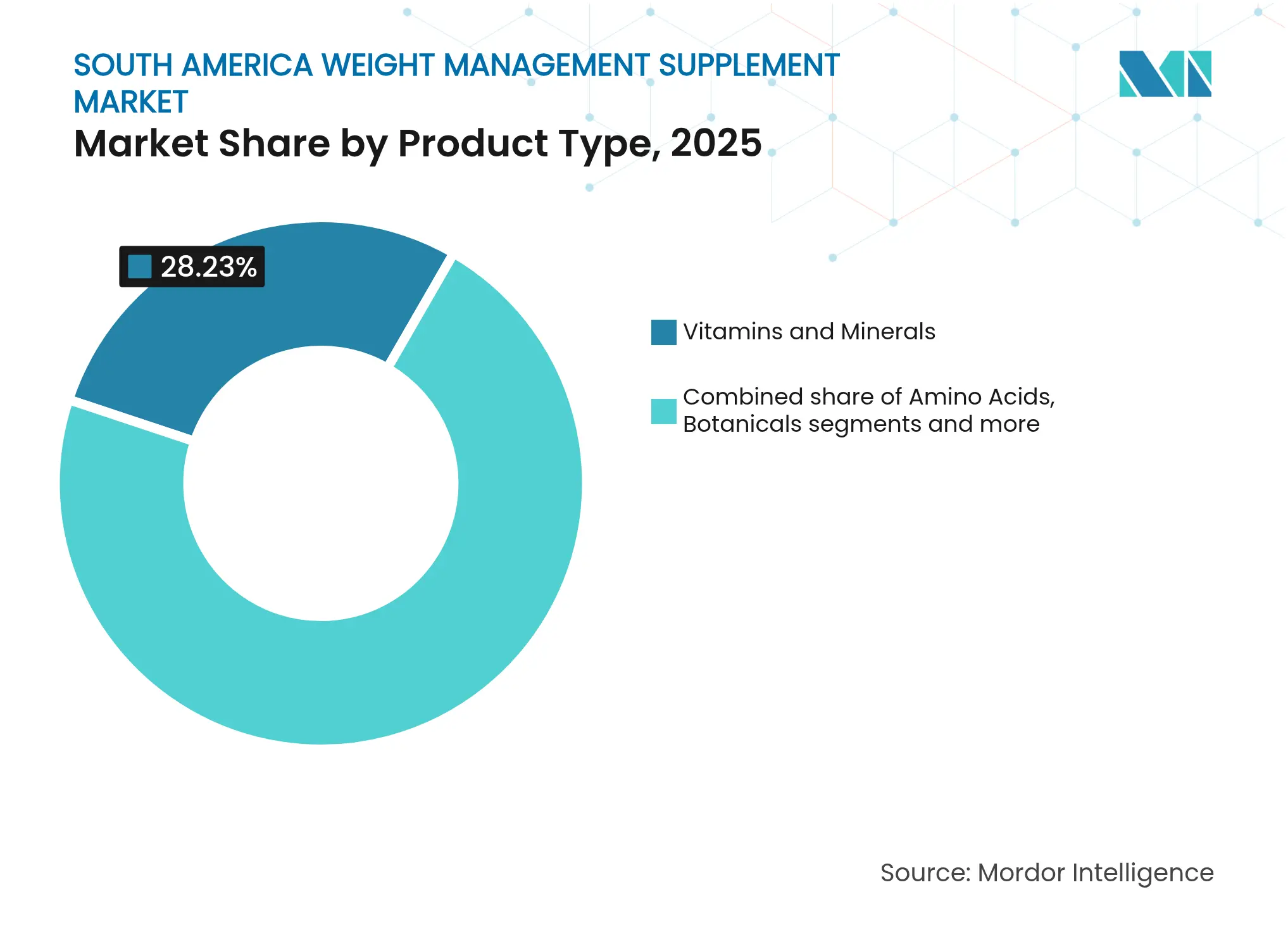
Vitamins and minerals are the most widely used supplements in the South America weight-management market in 2025, contributing 28.23% of the total revenue. These supplements are highly popular due to their easy availability in pharmacies and retail stores, making them readily accessible to consumers. They are commonly used to support metabolism, manage appetite, and promote overall well-being, making them a go-to choice for many individuals. Their affordability, combined with the presence of trusted, well-established brands, attracts a wide range of consumers, from those seeking budget-friendly options to those preferring premium-quality products.
Amino acids are becoming the fastest-growing segment in the market, with an expected CAGR of 10.34% through 2031. This rapid growth is largely driven by the increasing use of GLP-1 therapies, which encourage the consumption of high-protein, low-calorie supplements to help maintain muscle mass during weight loss. The growing interest in fitness and active lifestyles is also driving the demand for amino acids, as they are essential for enhancing physical performance and facilitating recovery. To meet this growing demand, manufacturers are focusing on developing innovative amino acid-based products that cater to both clinical users and fitness enthusiasts, positioning this segment as a key driver of future market growth.
Note: Segment shares of all individual segments available upon report purchase
By Form: Gummies Capitalize On Palatability And Convenience
Tablets and capsules accounted for 38.75% of South America’s weight-management supplement revenue in 2025, remaining the most preferred format. These forms are affordable, have a longer shelf life, and can deliver higher concentrations of active ingredients compared to other options, such as gummies or drinks. They are especially popular among consumers who value precise dosing and effective results, as they can include a wide range of ingredients in one product. Their strong presence in pharmacies and the trust associated with traditional supplement forms make them a reliable choice for many users.
From 2026 to 2031, gummies are expected to grow at the fastest rate, with a projected CAGR of 12.61%. Innovations like microencapsulation are enhancing the taste of gummies by masking the bitterness of ingredients like amino acids and botanicals. The availability of sugar-free and pectin-based options is attracting health-conscious consumers, including those seeking vegan or clean-label products. Gummies are gaining popularity due to their convenience, enjoyable flavors, and appeal to younger audiences. As manufacturers enhance the stability and effectiveness of their products, gummies are becoming a mainstream option in the weight-management supplement market, moving beyond their earlier niche status.
By Distribution Channel: E-Commerce Disrupts Traditional Retail Hierarchies
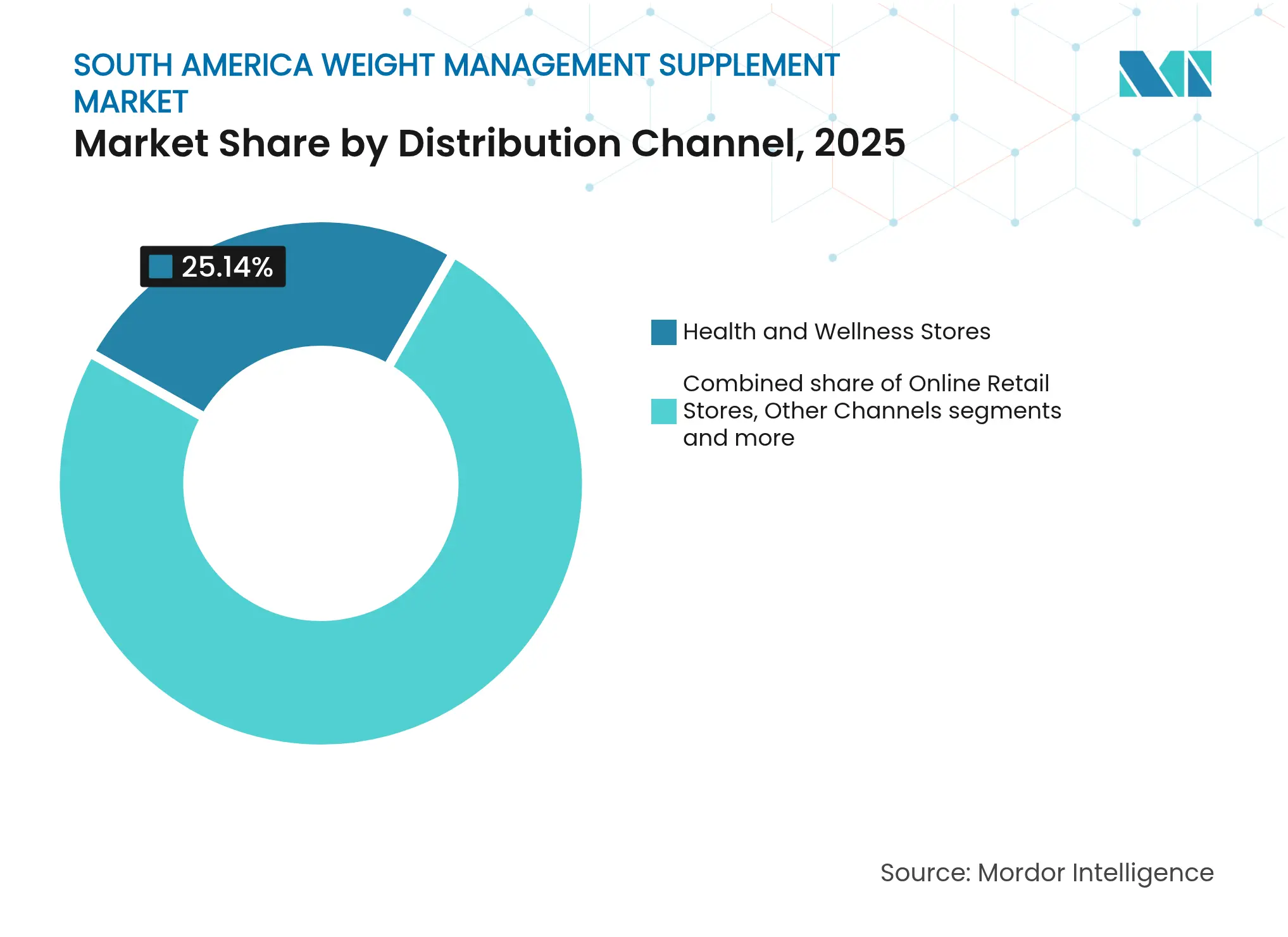
Health and wellness specialty stores made up 25.14% of South America’s weight-management supplement revenue in 2025. These stores are popular because they offer personalized advice from knowledgeable staff, helping customers select the right products for their specific needs. They also offer a carefully selected range of supplements, making it easier for consumers to trust the quality of what they are buying. For first-time buyers, these stores are especially valuable as they provide guidance on how to use supplements effectively. In urban areas, they play a key role in educating consumers and introducing them to new and advanced supplement options.
Online retail is expected to grow the fastest, with a CAGR of 12.31% through 2031, significantly outpacing physical stores. Many consumers, particularly in Brazil, are turning to e-commerce because it offers convenience, a wider variety of products, and competitive pricing. Online shopping provides privacy, which is appealing for those purchasing weight-management products. The growth of e-commerce is further supported by improved digital payment systems, the influence of social media and customer reviews, as well as faster delivery options, including same-day services. These factors are driving the rapid expansion of online retail as a key channel for weight-management supplements in the region.
Note: Segment shares of all individual segments available upon report purchase
Brazil is the largest market for weight management supplements in South America, contributing 62.35% of the regional revenue in 2025. The country’s widespread use of supplements, increasing interest in sports nutrition, and supportive government policies are the primary reasons for its dominance. Gyms and specialty stores play a crucial role in promoting these products, helping consumers understand their benefits and encouraging regular use. The rapid expansion of e-commerce has made supplements more accessible, even in smaller cities, further boosting Brazil’s leadership in the market. This combination of factors ensures Brazil remains a key player in the region.
Colombia is expected to grow the fastest in the region, with a projected CAGR of 10.15%, driven by clear regulations and a growing focus on fitness. Major cities like Bogotá and Medellín are becoming important hubs where gyms and fitness centers actively educate people about the advantages of supplements, leading to higher adoption rates. The increasing awareness of health and wellness, along with a shift toward healthier lifestyles, is fueling demand for weight management products. Chile is also experiencing steady growth, supported by stringent labeling laws that encourage consumers to opt for healthier options, such as sugar-free and high-protein products, which align with modern wellness trends and consumer preferences.
Peru and Argentina are experiencing slower growth due to a stronger preference for traditional herbal remedies and fewer gym facilities compared to other countries in the region. Limited infrastructure and slower adoption of modern health and fitness trends have also contributed to their moderate market expansion. Smaller markets, such as Uruguay, Paraguay, Bolivia, and Ecuador, are still in the early stages of development but show potential for growth as urbanization and retail modernization continue to advance. Chile often serves as a testing ground for clean-label innovations, which are later introduced to other South American markets as consumer preferences evolve and demand for healthier products increases.

Reports are available across multiple geographies.
Gain in-depth market insights across regions to support informed decisions.
Market Concentration
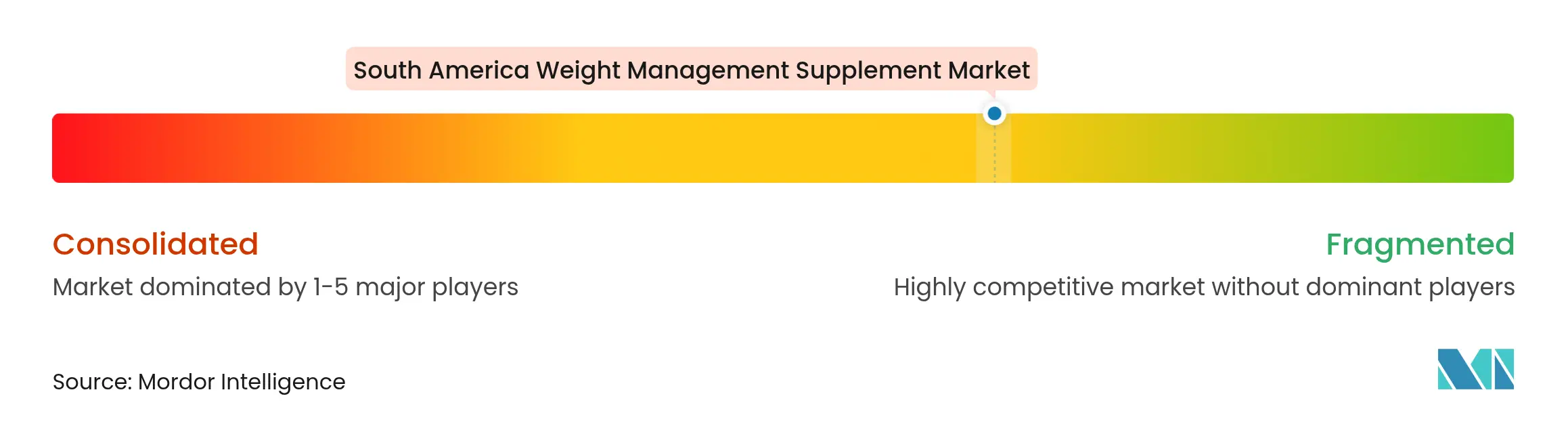
The South America weight-management supplement market is moderately fragmented, with no single company holding a dominant position. Global players, such as Nestlé, are expanding their footprint by acquiring other businesses and introducing innovative products to strengthen their market share. Herbalife is focusing on creating high-protein, nutrient-dense solutions that appeal to consumers adopting modern weight-loss methods. Meanwhile, local companies such as Integralmedica are capitalizing on regional ingredients and clean-label trends to attract health-conscious buyers. This competitive landscape provides opportunities for both global and local players to grow while catering to the diverse needs of consumers in the region.
Digital-first brands are intensifying competition by offering subscription-based services and using blockchain technology to ensure product transparency. These approaches resonate with consumers who value convenience, quality, and authenticity in their purchases. Companies focusing on science-backed products, particularly in the performance nutrition segment, are experiencing steady growth. This reflects a shift in consumer preferences toward evidence-based formulations, especially those centered on protein and other proven ingredients. As a result, brands that prioritize research and innovation are gaining a competitive advantage in the market.
Distribution strategies are playing an increasingly important role in determining success within the market. The expansion of fitness chains like SmartFit is creating new opportunities for supplement brands to directly engage with fitness-focused consumers. Companies are adopting omnichannel strategies, combining online platforms with in-gym retail options to reach a broader audience. To stay competitive, brands must also comply with stricter regulations, invest in clinical research to validate their products, and develop integrated retail networks. These efforts will help companies remain relevant and secure a strong position in the evolving market landscape.

*Disclaimer: Major Players sorted in no particular order
1. INTRODUCTION
2. RESEARCH METHODOLOGY
3. EXECUTIVE SUMMARY
4. MARKET LANDSCAPE
5. MARKET SIZE AND GROWTH FORECASTS (VALUE)
6. COMPETITIVE LANDSCAPE
7. MARKET OPPORTUNITIES AND FUTURE OUTLOOK
The South American weight management supplement market is segmented by product type, form, distribution channel, and country. By product type, the market is segmented into vitamins and minerals, botanicals, amino acids, and others. By form, the market is segmented into powders, tablets/capsules, gummies, and others. By distribution channel, the market is segmented into supermarkets/hypermarkets, health and wellness stores, online retail stores, and other channels. The study provides an analysis of the weight management supplement market in the emerging and established markets across South America, including Brazil, Colombia, Chile, Peru, Argentina, and the Rest of South America.
| By Product Type | Vitamins and Minerals |
| Botanicals | |
| Amino Acids | |
| Others | |
| By Form | Powders |
| Tablets/Capsules | |
| Gummies | |
| Others | |
| By Distribution Channel | Supermarkets/Hypermarkets |
| Health and Wellness Stores | |
| Online Retail Stores | |
| Other Channels | |
| By Country | Brazil |
| Colombia | |
| Chile | |
| Peru | |
| Argentina | |
| Rest of South America |
Market Analysis of Synthetic Food Colorants for a Beverage Leader
5 Min Read
Unlocking Saudi Arabia’s Regional Tourism Growth Potential
5 Min Read
When decisions matter, industry leaders turn to our analysts. Let’s talk.

