
Market Overview
| Study Period | 2021 - 2031 |
|---|---|
| Forecast Data Period | 2026 - 2031 |
| Historical Data Period | 2021 - 2024 |
| Growth Rate | 8.04 % |
Major Players *Disclaimer: Major Players sorted in no particular order Image © Mordor Intelligence. Reuse requires attribution under CC BY 4.0. | |

Asia Pacific Smart Transformers Market Analysis by Mordor Intelligence
The Asia Pacific Smart Transformers Market size is expected to register a CAGR of 8.04% during the forecast period (2026-2031).
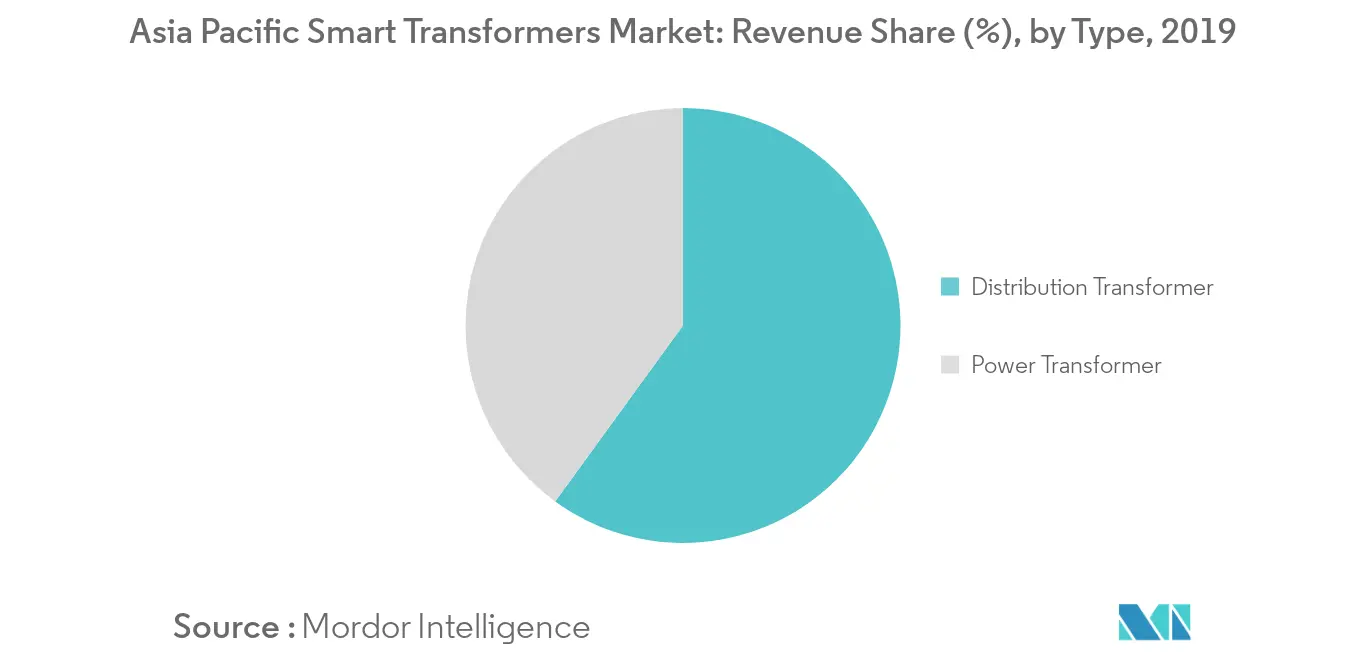
- Distribution transformers, which are to communicate with consumers and for continuous load monitoring, are expected to be the major segment for the smart transformers market.
- A number of governments of both emerging and underdeveloped nations across the world are increasingly viewing smart grid technology as a strategic infrastructural investment that will sustain their long-term economic prosperity and help them to achieve their carbon emission reduction targets. This, in turn, is expected to provide an ample amount of opportunity to the companies involved in smart transformers market in the near future.
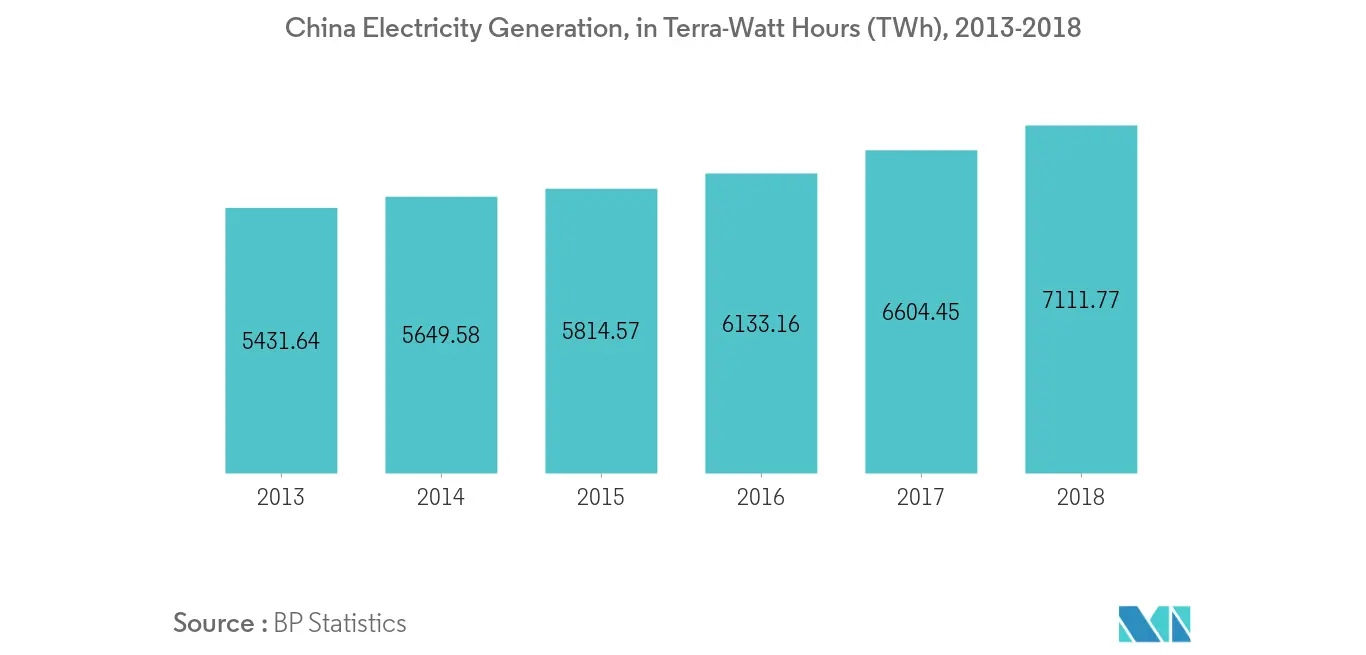
- China is expected to be the largest market for smart transformers, owing to increased investment in smart grids to meet the demand of electricity in the country.
Note: Market size and forecast figures in this report are generated using Mordor Intelligence’s proprietary estimation framework, updated with the latest available data and insights as of 2026.
Asia Pacific Smart Transformers Market Trends and Insights
Distribution Transformers to Dominate the Market
- The growing emphasis on renewable energy generation across the world, coupled with increasing electrical infrastructure projects, is expected to drive the demand for distribution transformers during the forecast period, in turn driving the smart transformers market.
- In electric distribution grid, smart transformers work independently to monitor and regulate the voltage while maintaining a contact with the smart grid. This enables the information about the transformer and the power supply to be provided even by remote administration. Hence, this enables for proper load management, resulting in better power quality and lesser power outages.
- In 2018, India was the third-largest electricity-generating nation in the world. This power is generated from both conventional and renewable sources. The country has made major strides in improving access to power among both rural and urban communities through various government-led schemes focused on Power for All.
- Moreover, developed economies, such as Japan, contribute to the significant demand for smart transformers, owing to the increasing replacement of aging power distribution equipment, and increase in the integration of renewables to the grid.


China to Drive the Market
- China is the world's largest market for power transmission and distribution (T&D) and is also poised to become a major consumer of smart grid technology, supported by its policy to reduce carbon emission and commitment for green development.
- China has the ambition to become a world leader in electrical power equipment by 2025. This is a national strategy outlined in the Technology Roadmap (2017) of the Made in China 2025 programme. Innovation and technology are heavily focused on in the national programme and large amounts of funding are allocated to support the development.
- State Grid Corporation of China has rolled out 'Global Energy Internet' concept, based on having smart grid connections to an ultra-high voltage power grid that would have the potential to deliver clean energy. This in turn is expected to drive the smart transformers market in the country during the forecast period.
- In 2019, China's State Grid sanctioned world's largest smart grid facility, with first phase of this project concluding in 2021, and completing it in 2024. This project is expected to bolster the smart transformer market in China and hence drive it during the forecast period.
Regulatory Landscape
Across Asia-Pacific, smart transformer adoption is being shaped by international interoperability guidance alongside country-specific grid modernization rules. IEEE 2815-2024 (published June 2025) provides a technical guide for smart distribution transformer terminals, reinforcing requirements around intelligent monitoring, communications, and integration with smart grid systems.
China is tightening technical expectations for intelligent distribution architectures through the DL/T standard series, including DL/T 2806-2024 (technical guidelines for intelligent distribution areas) and DL/T 1442-2024 (updated technical conditions for smart transformer terminals that replace the 2015 version and include higher compute and communications expectations such as 5G support). In Southeast Asia, equipment specifications increasingly link to distributed solar hosting capacity and grid resilience programs. For example, Malaysia's Sustainable Energy Development Authority (SEDA) guidelines issued in December 2025 call out voltage regulating distribution transformers (VRDTs) to optimize distribution network hosting capacity for solar PV, while Taiwan's Smart Grid Master Plan (amended 2019) anchors grid resilience upgrades alongside its renewable integration targets through 2025.
Value Chain Analysis
The value chain spans core raw materials (electrical steel, copper/aluminum conductors, insulation and transformer oil), component and subsystem suppliers (bushings, tap changers, sensors, communications modules, and embedded computing for smart terminals), transformer OEMs and system integrators, utility and EPC procurement channels, and commissioning and lifecycle services (testing, digital monitoring, maintenance, and spares). For smart transformers, the differentiating layers increasingly include sensing, edge computing, cybersecurity and communications, and integration with SCADA/ADMS and utility data platforms.
In Asia-Pacific, public utilities and national grid companies remain the dominant demand concentrators, using bulk tenders to draw through localized manufacturing and qualified supply bases. India illustrates this procurement-led structure, with POWERGRID awarding large extra-high-voltage transformer and reactor packages to suppliers such as GE Vernova (manufacturing at Vadodara) and Hitachi Energy India (765 kV single-phase units) during 2025. This supports upstream capacity planning and localization of critical parts. Localization and technology partnerships also shape supply availability for digitally enabled grid equipment, such as the July 2025 MOU between LS Electric and GE Vernova aimed at localizing gigawatt-scale VSC HVDC converter valves in South Korea. Southeast Asia continues to face integration friction from mixed IEC/ISO/ANSI/IEEE adoption across utilities, complicating multi-country deployments for cross-border initiatives like the ASEAN Power Grid.
Competitive Landscape
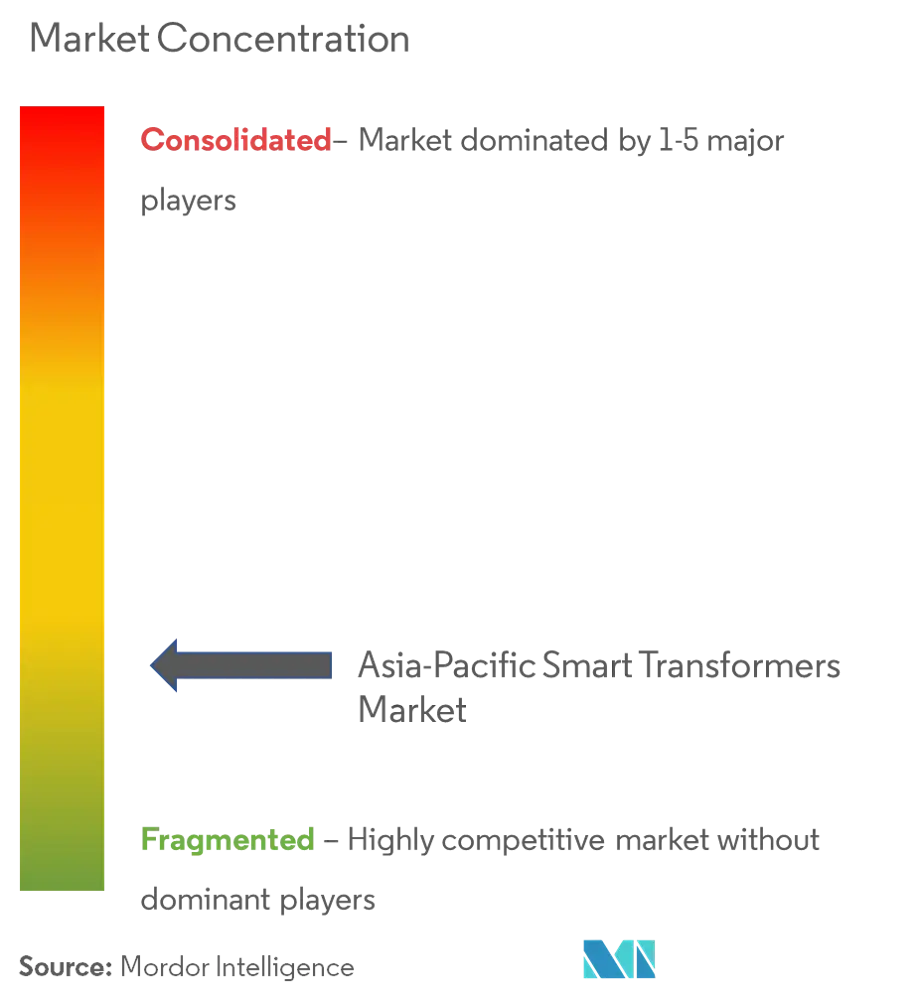
The Asia-Pacific smart transformers market is moderately fragmented. Some of the key players in the market include ABB Ltd, Siemens AG, Schneider Electric SE, Eaton Corporation PLC, and General Electric Company.
Asia Pacific Smart Transformers Industry Leaders
ABB Ltd
Siemens AG
Schneider Electric SE
Eaton Corporation PLC
General Electric Company
- *Disclaimer: Major Players sorted in no particular order

Market Opportunities and Future Outlook
Opportunities increasingly tie to programs that combine grid digitalization with renewable integration, which in turn drives demand for distribution-level smart transformers that support continuous load monitoring, voltage regulation, and remote asset visibility. India provides a program-scale example, with the June 2026 Letter of Award for Tripura State Electricity Corporation Limited's Agartala Smart Grid Project (including SCADA, ADMS, and distribution automation) indicating continued rollout of distribution automation architectures that raise the value of transformer-side sensing and communications.
In Malaysia, SEDA's December 2025 guidance referencing VRDTs to increase solar PV hosting capacity reinforces demand for voltage-regulating, digitally monitored distribution transformers at feeders seeing higher distributed generation. Large renewable connection buildouts and resilience-driven upgrades also expand the addressable scope beyond conventional replacements into higher-spec transformer designs and digitally integrated substations. In Australia, transformer packages associated with renewable energy zone infrastructure advanced, with TBEA Shenyang Transformer Group completing assembly of multiple 500 kV transformers for the Central West Orana Renewable Energy Zone project in May 2026, pointing to demand for equipment designed for higher operational flexibility. In Southeast Asia, commissioning of intelligent modular substations, such as the energized 150 kV intelligent prefabricated substation at BYD's Subang industrial base in West Java, Indonesia in June 2026, shows how modular substation solutions and smart transformer terminals can move together as utilities and large industrial loads seek faster deployment and improved power quality management.
Recent Industry Developments
- June 2026: Schneider Electric launched MCSeT medium-voltage digital switchgear in Malaysia with embedded sensors and analytics for improved grid-edge visibility. The introduction supports digitally instrumented distribution nodes that align with smart transformer monitoring and protection requirements in utility modernization and DER-heavy feeders.
- December 2025: GE Vernova received a major contract from Adani Energy Solutions Ltd. to supply a 2.5 GW bipolar HVDC system for the Khavda-South Olpad transmission corridor in India. The award expands the installed base of digitally controlled transmission assets that require coordinated transformer, protection, and grid automation interfaces across renewable evacuation corridors.
- December 2024: GE Vernova, through the KAPES joint venture, announced a contract from KEPCO for a 500 kV HVDC system for the Donghaean #2 to Dong-Seoul transmission project (EP2) in South Korea. The project strengthens regional demand for high-specification grid equipment and interoperable monitoring and control architectures that complement smart transformer deployments.


Research Methodology Framework and Report Scope
Market Definition and Coverage
This market covers smart transformers sold and installed across Asia Pacific, where digital monitoring, communication, and power electronics are used to improve control of voltage, load, and grid performance for utilities and large power users.
Scope exclusions: We exclude conventional transformers without smart monitoring or control features, and we exclude standalone software or services that are not bundled with smart transformer hardware.
Segmentation Overview
- Type
- Distribution Transformers
- Power Transformers
- Geography
- India
- China
- Japan
- South Korea
- Rest of Asia-Pacific
Data Sources, Market Sizing, and Validation
Desk Research
Desk work started by building a demand view for transformer deployments supporting modern grids across Asia Pacific, and then narrowing it to the share that can realistically shift to smart units during the study period. Public sources were used to anchor the model, such as national energy ministry releases, grid and transmission planning documents, and statistics offices that publish electricity generation and network expansion indicators.
To pressure-test those assumptions, we also referred to sources such as customs and trade statistics where available, standards and regulatory publications linked to smart grids, and peer-reviewed power engineering journals that discuss solid-state and digitally monitored transformer deployments. Company annual reports, investor presentations, and credible press coverage were used to map product focus and country presence, and a paid subscription for company financials and intelligence was used selectively to normalize reporting periods and fill gaps for private entities. These desk sources are not exhaustive, and additional public references were used during data collection, validation, and clarification.
Primary Interviews and Surveys
Primary conversations were run with transformer suppliers, component and monitoring ecosystem participants, utilities and grid operators, and engineering and procurement stakeholders that influence adoption. Since pricing and rollout timing can vary by country, we used expert inputs across key Asia Pacific markets to confirm adoption triggers, typical procurement cycles, and the realistic pace of smart grid upgrades, and then used that feedback to refine assumptions from desk findings.
Distribution of primary research fieldwork respondents
| Company type | Respondent position |
|---|---|
| Top tier: 28% | CXOs: 14% |
| Mid tier: 53% | Functional/Unit leaders: 41% |
| Smaller Players: 19% | Managers: 45% |
Market-Sizing & Forecasting
Sizing was built using a top-down approach where power-sector expansion signals were converted into an addressable transformer demand pool, and then filtered to the portion that fits smart transformer technical requirements and buying behavior in Asia Pacific. The total was corroborated with selective bottom-up checks, mainly through sampled price bands by rating and type, supplier-channel feedback on shipped volumes, and a sanity check against a short list of visible projects where smart grid upgrades are being deployed.
Inputs used in the model included planned grid modernization spending, renewable integration targets that increase the need for flexible voltage control, substation additions and refurbishment rates, the split between distribution and power transformer procurement, and typical smart feature attach rates (monitoring, communication, and control) by country. Where interview inputs showed uneven adoption, gaps were handled by using conservative penetration ranges and then tightening them after follow-up calls with procurement and engineering respondents.
For forecasting, scenario analysis was used so the base case reflects the most commonly cited rollout schedules, while the up and down cases flex adoption speed and price progression. The final forecast was then aligned to macro and electricity-sector outlooks, and adjusted where country-level policy timing or supply constraints materially change the installation curve.
Data Validation & Update Cycle
Outputs were checked through multiple steps so totals remain consistent with independent signals like transformer demand indicators, grid capex direction, and observed tender activity where it is publicly visible. When variances appeared, the drivers were traced back to adoption rates, pricing ladders, and country weighting, and then reviewed again before sign-off.
The report is refreshed annually, and interim updates are made when material events occur, such as major policy changes or sharp input-cost shifts that can move pricing. Before delivery, a final review pass is completed so the published view reflects the latest available data and any newly validated assumptions.
Mordor Intelligence's Asia Pacific Smart Transformers Market Size Compared Against Other Published Estimates
Published market sizes for smart transformers in Asia Pacific often do not match because the market boundary is set differently, and the same hardware can be counted as a transformer upgrade, a monitoring add-on, or a power-electronics system depending on the study. Differences also show up when one estimate is shipment-led and another is installation-led, or when currency timing and inflation treatment are not handled in the same way.
By tracking adoption triggers and pricing ladders by country, and then checking scope rules with expert feedback, Mordor Intelligence keeps the estimate focused on smart transformer hardware revenues in Asia Pacific rather than broader digital grid equipment totals.
Benchmark comparison
| Source | Market Size | Gaps in Research Methodology |
|---|---|---|
| Mordor Intelligence | USD 0.00 B (2026) | |
| Global Consultancy A | USD 1.18 B (2026) | This estimate appears to use a wider scope that can pull in adjacent power-electronics and smart grid equipment, and it may apply higher early-stage penetration rates across the region than what is supported by utility procurement cycles. |
| Regional Consultancy B | USD 4.02 B (2035) | The longer forecast horizon can amplify differences in assumed price declines and adoption speed, and the sizing may apply an aggressive rollout path for solid-state and digitally monitored transformers across multiple end uses. |
Taken together, the spread mainly comes from what is counted as a smart transformer versus surrounding smart grid hardware, and from how quickly adoption is assumed to scale across countries. Our approach stays repeatable by tying the total to clear demand signals, practical penetration ranges, and validation loops that can be rechecked when new projects and policies emerge.


Key Questions Answered in the Report
What is the current Asia Pacific Smart Transformers Market size?
The Asia Pacific Smart Transformers Market is projected to register a CAGR of 8.04% during the forecast period (2026-2031)
Who are the key players in Asia Pacific Smart Transformers Market?
ABB Ltd, Siemens AG, Schneider Electric SE, Eaton Corporation PLC and General Electric Company are the major companies operating in the Asia Pacific Smart Transformers Market.
What years does this Asia Pacific Smart Transformers Market cover?
The report covers the Asia Pacific Smart Transformers Market historical market size for years: 2020, 2021, 2022, 2023, 2024 and 2025. The report also forecasts the Asia Pacific Smart Transformers Market size for years: 2026, 2027, 2028, 2029, 2030 and 2031.
Page last updated on:


 Your data is secure and never sold or shared.


