
Ascorbic Acid Market Size and Share
Market Overview
| Study Period | 2021 - 2031 |
|---|---|
| Market Size (2026) | USD 2.23 Billion |
| Market Size (2031) | USD 2.87 Billion |
| Growth Rate (2026 - 2031) | 5.18 % |
| Fastest Growing Market | Asia Pacific |
| Largest Market | Asia Pacific |
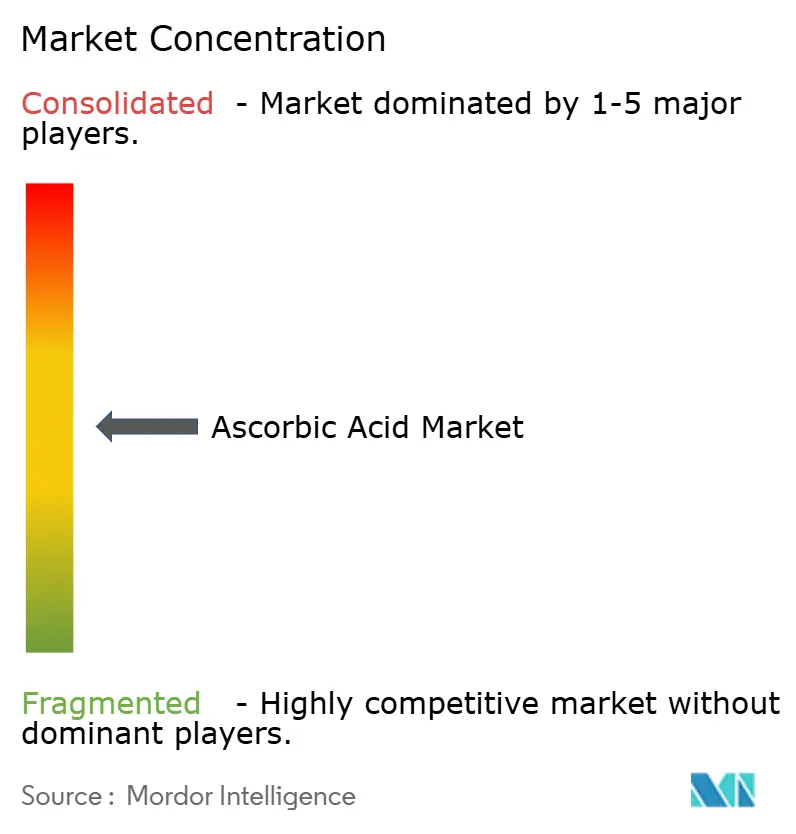
| Market Concentration | Medium |
Major Players *Disclaimer: Major Players sorted in no particular order Image © Mordor Intelligence. Reuse requires attribution under CC BY 4.0. | |
Ascorbic Acid Market Analysis by Mordor Intelligence
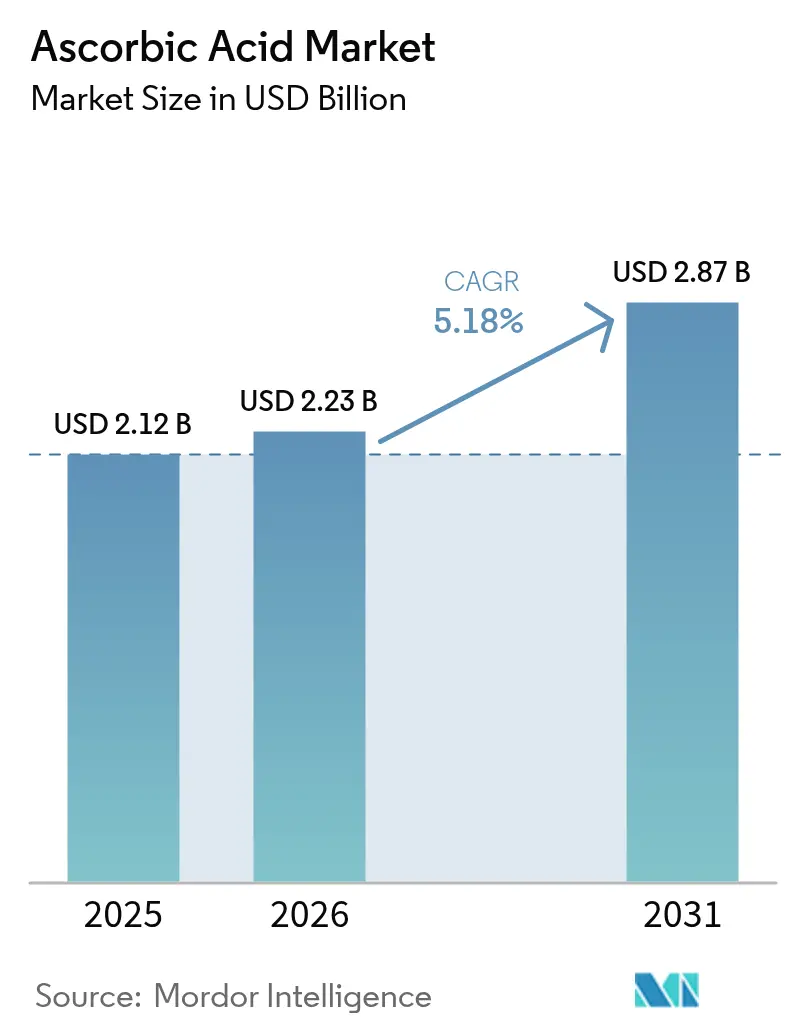
The global ascorbic acid market size in 2026 is estimated at USD 2.23 billion, growing from 2025 value of USD 2.12 billion with 2031 projections showing USD 2.87 billion, growing at 5.18% CAGR over 2026-2031. Structural changes are influencing the market as food, pharmaceutical, and cosmetic industries increasingly utilize vitamin C for preservation, immunity enhancement, and skincare applications. Chinese suppliers continue to implement production shutdowns to maintain price levels; however, overcapacity and weak downstream demand are exerting pressure on spot prices. Premium formats such as liposomal liquids, buffered mineral ascorbates, and coated powders are gaining market share due to their ability to address stability and absorption challenges while aligning with clean-label trends. Trade tensions between the United States and China are prompting North American buyers to explore dual sourcing or onshore blending options, leading to wider regional price disparities and shifts in trade flows. Additionally, innovation is expanding the application scope of ascorbic acid beyond traditional nutrition and preservation uses. Emerging applications include semiconductor stabilization and colon-cleansing solutions, indicating potential new revenue streams for the market.
Key Report Takeaways
- By type, sodium ascorbate led with 39.58% of the ascorbic acid market share in 2025, while potassium ascorbate is projected to grow at a 6.39% CAGR through 2031.
- By form, powder and granule formats accounted for 73.15% of the ascorbic acid market size in 2025; liquid concentrates are forecast to expand at 6.45% between 2026 and 2031.
- By application, food and beverages held a 65.62% share of the ascorbic acid market size in 2025, whereas pharmaceuticals and supplements are advancing at a 6.05% CAGR to 2031.
- By geography, Asia-Pacific captured 38.35% revenue in 2025 and is anticipated to post a 6.22% CAGR over the forecast horizon.
Note: Market size and forecast figures in this report are generated using Mordor Intelligence’s proprietary estimation framework, updated with the latest available data and insights as of 2026.
Market Trends and Insights
Drivers Impact Analysis of Ascorbic Acid Market*
| Driver | (~)% Impact on CAGR Forecast | Geographic Relevance | Impact Timeline |
|---|---|---|---|
| Rising use of ascorbic acid as an antioxidant preservative in processed foods and beverages | +1.2% | Global, with concentration in North America and Europe | Medium term (2-4 years) |
| Expansion of fortified foods and beverages incorporating vitamin C ingredients for added health benefits | +1.0% | Global, led by Asia-Pacific and North America | Medium term (2-4 years) |
| Increased application of vitamin C in nutricosmetics and skincare for anti-aging and antioxidant properties | +0.9% | North America, Europe, and urban Asia-Pacific | Long term (≥ 4 years) |
| Heightened clinical attention on vitamin C deficiency and associated health risks | +0.8% | Global, with emphasis on emerging markets | Short term (≤ 2 years) |
| Growth in demand for clean-label products utilizing ascorbic acid as a natural antioxidant | +0.7% | North America and Western Europe | Medium term (2-4 years) |
| Wider adoption of ascorbic acid in pharmaceutical formulations, including cold remedies and multivitamins | +1.0% | Global, with strong uptake in Asia-Pacific and North America | Medium term (2-4 years) |
| Source: Mordor Intelligence | |||
Rising use of ascorbic acid as an antioxidant preservative in processed foods and beverages
Food manufacturers are increasingly incorporating ascorbic acid into reformulation strategies to extend shelf life without relying on synthetic additives, a trend driven by European clean-label mandates. Ascorbic acid serves a dual purpose as an oxygen scavenger and color stabilizer, making it essential in products such as fruit juices, cured meats, and baked goods, where oxidative rancidity can compromise product quality. DSM-Firmenich has highlighted that its Quali-C brand, produced at its Dalry, Scotland facility since 1983, achieves 59 percent lower greenhouse gas emissions compared to major alternative sources. This is a key consideration for corporate sustainability buyers addressing Scope 3 (indirect emissions from a company’s value chain) reporting requirements. Regulatory approvals, including Food and Drug Administration (FDA) Generally Recognized as Safe (GRAS) listings and European Food Safety Authority (EFSA) authorization for specific use levels in oils, position ascorbic acid as a compliance-friendly option. However, its instability during thermal processing, where degradation accelerates above 70 degrees Celsius, necessitates the use of encapsulation techniques or the addition of synergistic tocopherols. This balance between regulatory support and technical challenges is driving investments in coated ascorbic acid powders designed to release vitamin C after processing. In this niche market, Chinese suppliers on Made-in-China.com offer products priced between USD 3.50 and USD 7.00 per kilogram, depending on the coating technology used.
Expansion of fortified foods and beverages incorporating vitamin C ingredients for added health benefits
Fortification mandates and voluntary enrichment programs are incorporating vitamin C into staple foods such as cereals, dairy analogs, and infant formula at levels exceeding baseline dietary intake. Increased health consciousness following the pandemic has driven demand for immune-support claims, leading beverage brands to significantly increase vitamin C concentrations in functional drinks and ready-to-drink teas. Liposomal vitamin C formulations, such as LiposoMax Liposomal PureWay-C, offer 30 percent higher plasma absorption within the first four hours compared to calcium ascorbate-calcium threonate forms. This enhanced bioavailability supports premium pricing in nutraceutical markets. Regulatory frameworks, such as Regulation (EU) No. 1169/2011, mandate nutrient reference value (NRV) labeling, standardizing consumer expectations and facilitating cross-border product launches [1]. However, maintaining ascorbic acid stability in liquid formulations presents technical challenges, as pH levels below 4 accelerate degradation. To address this, formulators are increasingly using fat-soluble derivatives like ascorbyl palmitate or magnesium ascorbyl phosphate, which resist oxidation and effectively penetrate lipid-rich tissues. This shift has led to a bifurcation between water-soluble commodity ascorbic acid and lipophilic specialty derivatives, prompting Indian and Chinese manufacturers to expand esterification capacity to capture higher-margin market segments.
Increased application of vitamin C in nutricosmetics and skincare for anti-aging and antioxidant properties
Topical vitamin C serums have transitioned from niche dermatology clinics to mainstream beauty aisles, supported by clinical evidence linking L-ascorbic acid to collagen production and tyrosinase inhibition. Magnesium ascorbyl phosphate, a water-soluble derivative, has demonstrated an 89 percent reduction in oxidative stress and a 34 percent improvement in skin firmness in preclinical assays, although these results lack peer-reviewed validation. The instability of pure ascorbic acid, which is prone to oxidation when exposed to air and light, has driven innovation in stabilization technologies. For instance, Fuji Oil Holdings patented a water-in-oil emulsion with an aqueous phase pH of greater than or equal to 4 and particle size less than or equal to 300 nanometers, addressing issues such as unpleasant taste and discoloration while simplifying manufacturing processes. Similarly, Natura Cosméticos secured a patent in July 2024 for a stable skin-lightening composition containing high-concentration ascorbic acid combined with complementary active ingredients, targeting hyperpigmentation markets in Latin America and Asia. Regulatory compliance with cosmetic safety standards, such as International Organization for Standardization (ISO) 22716 for Good Manufacturing Practices, adds complexity to the market [2]. This compliance tends to favor established companies with in-house toxicology laboratories over contract manufacturers that rely on third-party testing. Additionally, the convergence of ingestible and topical vitamin C in the form of nutricosmetics is blurring category boundaries, with brands introducing synchronized oral-and-serum regimens that claim to promote inside-out skin renewal.
Heightened clinical attention on vitamin C deficiency and associated health risks
Public health agencies are revisiting vitamin C adequacy thresholds as emerging research links marginal deficiency, defined as serum levels below 11.4 micromoles per liter, to impaired immune function and delayed wound healing. The World Health Organization's (WHO) acceptable daily intake of up to 1.25 milligrams per kilogram of body weight provides regulatory flexibility for high-dose supplementation [3]. However, clinical trials exploring intravenous ascorbic acid for sepsis and COVID-19 have yielded mixed results, tempering enthusiasm for its therapeutic claims. Pharmaceutical formulators are responding with multi-dose vial formats, such as 200 milligrams per vial and 500 milligrams per vial, that enable titration in hospital settings. This is evidenced by 343 finished-dosage-form dossiers and 20 United States Food and Drug Administration (FDA) Orange Book entries for ascorbic acid injectables. The regulatory pathway for intravenous vitamin C remains stringent, as United States Drug Master File (USDMF) and Certificate of Suitability to the Monographs of the European Pharmacopoeia (CEP) filings require batch-to-batch purity documentation. CSPC Pharmaceutical's DMF 23162 and Royal DSM's DMF 30618 serve as benchmarks for compliance. Smokers, who require 35 milligrams per day more than non-smokers due to oxidative stress, represent a targeted cohort for fortified tobacco-cessation products. However, consumer skepticism of functional tobacco alternatives continues to limit adoption in this segment.
Restraints Impact Analysis of Ascorbic Acid Market*
| Restraint | (~)% Impact on CAGR Forecast | Geographic Relevance | Impact Timeline |
|---|---|---|---|
| Strict regulations on purity, safety, and labeling impact food, pharmaceutical, and cosmetic industries | -0.6% | Global, with stringent enforcement in North America and Europe | Medium term (2-4 years) |
| Price fluctuations of raw materials affect ascorbic acid production costs and market stability | -0.8% | Global, with acute impact in Asia-Pacific production hubs | Short term (≤ 2 years) |
| Vitamin C degradation during processing, storage, and distribution reduces its effectiveness in applications | -0.5% | Global, particularly in tropical and subtropical regions | Long term (≥ 4 years) |
| Alternative antioxidants replace vitamin C in certain food and cosmetic formulations, limiting its usage | -0.4% | North America and Europe | Medium term (2-4 years) |
| Source: Mordor Intelligence | |||
Strict regulations on purity, safety, and labeling impact food, pharmaceutical, and cosmetic industries
Regulatory agencies impose complex compliance requirements that disproportionately impact smaller manufacturers without in-house analytical laboratories. The United States Food and Drug Administration (FDA)'s Inactive Ingredients Database lists ascorbic acid for oral, rectal, and topical applications, each necessitating specific purity profiles and residual-solvent limits. The Food Standards Agency (FSA)'s re-evaluation of antioxidants in 2024 introduced stricter acceptable daily intake calculations, compelling reformulation of products exceeding the revised thresholds. In India, the Food Safety and Standards Authority of India (FSSAI) mandates batch-wise testing for heavy metals, requiring lead levels to remain below 2 parts per million and arsenic levels to remain below 1 part per million. This standard must be met by Chinese exporters to access the expanding supplement market in the region. The cost of United States Drug Master File (USDMF) and Certificate of Suitability to the Monographs of the European Pharmacopoeia (CEP) filings, which exceed USD 50,000 per submission along with annual maintenance fees, creates significant entry barriers. This has consolidated supply among established players such as CSPC Pharmaceutical (DMF 23162, CEP R1-CEP 2004-019 Rev 06) and Royal DSM (DMF 30618, CEP R1-CEP 1996-078 Rev 05). Labeling requirements further complicate cross-border trade. Regulation (EU) No. 1169/2011 mandates nutrient reference values, allergen declarations, and origin statements, while U.S. Nutrition Facts panels adhere to the FDA's 2016 format. This regulatory landscape benefits multinational corporations with dedicated compliance teams, leaving regional players to compete primarily on price in less-regulated markets.
Price fluctuations of raw materials affect ascorbic acid production costs and market stability
Corn-derived glucose, which serves as the primary feedstock for fermentation-based ascorbic acid, is influenced by agricultural commodity cycles. Prices tend to increase during droughts or when biofuel mandates reduce the available supply. Chinese producers, who dominate global production, often reduce their operating schedules to manage inventory levels and support prices. However, this coordination remains fragile. Weak demand in the end markets during 2024 led to price declines despite extended production shutdowns. A planned five-month shutdown by a major Chinese producer in mid-2025 may stabilize spot markets, but buyers remain cautious due to previous failures to maintain production discipline. Freight cost inflation has further exacerbated raw material volatility. For example, container shipping rates from Shanghai to Rotterdam increased by 40 percent in early 2024, squeezing margins for importers unable to pass on these costs. Additionally, United States tariffs on Chinese goods, raised to 20 percent in March 2025, have introduced geopolitical challenges. North American buyers are increasingly exploring Indian and European suppliers, but capacity outside China remains constrained. Notably, Northeast Pharmaceutical Group and Shandong Luwei collectively control an estimated 60 percent of global production. The lack of long-term supply contracts, with buyers typically maintaining coverage for only three months, further amplifies price volatility and discourages capital investment in new production capacity.
*Our forecasts treat driver/restraint impacts as directional, not additive. The impact forecasts reflect baseline growth, mix effects, and variable interactions.
Ascorbic Acid Market Segment Analysis
By Type:
Electrolyte-Balanced Salts Gain Pharmaceutical TractionSodium ascorbate accounted for 39.58% of the type segment in 2025, driven by its dual functionality as a reducing agent in meat curing and an antioxidant in fruit juice processing. Potassium ascorbate is projected to grow at a rate of 6.39% through 2031, gaining traction among pharmaceutical formulators seeking electrolyte-balanced delivery systems for oral rehydration salts and sports nutrition products, particularly where sodium overload poses cardiovascular concerns. Calcium ascorbate is favored by bone-health brands for its combination of vitamin C and calcium, supporting claims related to collagen synthesis. Magnesium ascorbate is positioned for stress-relief supplements, leveraging magnesium's calming properties.
D-isoascorbic acid, a stereoisomer without vitamin activity, is utilized as a cost-effective color stabilizer in cured meats, though its adoption is limited by regulatory restrictions in certain regions. Patent activity highlights niche innovations, such as Norgine BV's 2024 patent for colon-cleansing solutions containing 300 to 800 millimoles per liter of ascorbate anion, which is a blend of ascorbic acid and ascorbate salts. This demonstrates applications that extend beyond nutrition.


By Form:
Liquid Concentrates Bypass Recrystallization BottlenecksIn 2025, powder and granule forms accounted for 73.15% of the market, primarily due to their stability, ease of transport, and compatibility with dry-blending processes in food and supplement manufacturing. Liquid ascorbic acid, projected to grow at a rate of 6.45% through 2031, is gaining traction among beverage manufacturers who prioritize ready-to-use concentrates. These formulations eliminate recrystallization steps and reduce batch-to-batch variability. Additionally, liquid formulations support precise dosing in high-speed bottling lines, offering a technical advantage that justifies a 15% to 20% price premium over powder alternatives.
However, liquid ascorbic acid faces stability challenges, as it oxidizes within weeks unless the pH is maintained below 4 and oxygen exposure is minimized. This has driven innovations such as nitrogen-flushed packaging and the use of chelating agents like ethylenediaminetetraacetic acid (EDTA) to sequester trace metals that catalyze degradation.
Liposomal liquid vitamin C, such as LiposoMax Liposomal PureWay-C, offers 30% higher plasma absorption within four hours compared to non-liposomal forms. This enhanced bioavailability appeals to nutraceutical brands targeting premium market segments.
By Application:
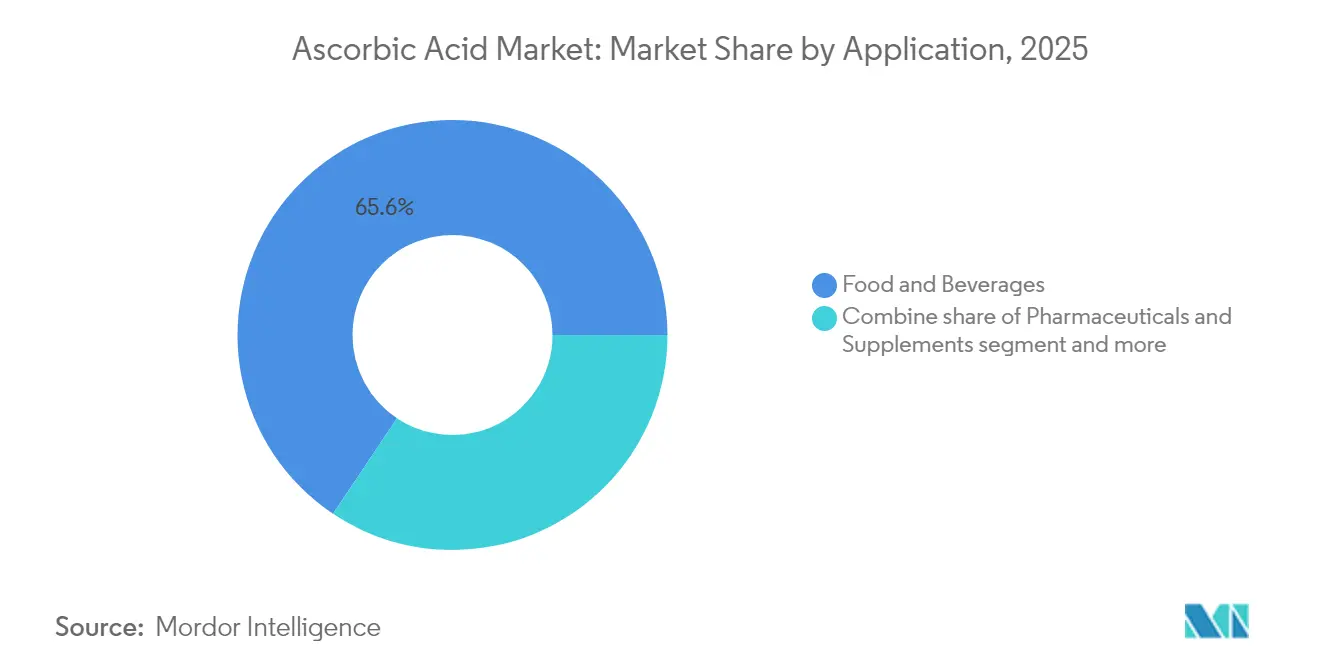
Pharmaceutical Segment Accelerates on Immunity NarrativesIn 2025, the food and beverages segment accounted for 65.62% of the application market, driven by the widespread use of ascorbic acid in products such as fruit juices, baked goods, and cured meats, where it helps prevent oxidative rancidity and color fading. The pharmaceuticals and supplements segment, projected to grow at a rate of 6.05% through 2031, is supported by increased focus on immunity post-pandemic and clinical interest in high-dose intravenous applications for conditions like sepsis and viral infections, despite mixed trial outcomes.
Over-the-counter cold remedies are incorporating 1,000 milligrams of vitamin C per tablet, leveraging consumer belief in its immune-supporting properties, while multivitamin manufacturers are transitioning to buffered mineral ascorbates to minimize gastric irritation.
In animal feed applications, vitamin C is used to enhance immune function in aquaculture and reduce stress in poultry; however, this segment faces challenges as price-sensitive buyers opt for cheaper alternatives during periods of margin compression. The personal care and cosmetics segment, though smaller, is experiencing rapid innovation. Topical vitamin C serums utilize L-ascorbic acid for its collagen-boosting and tyrosinase-inhibiting effects, with advancements in stabilization technologies such as water-in-oil emulsions and lipophilic derivatives being patented.
Geography Analysis
APAC Ascorbic Acid Market
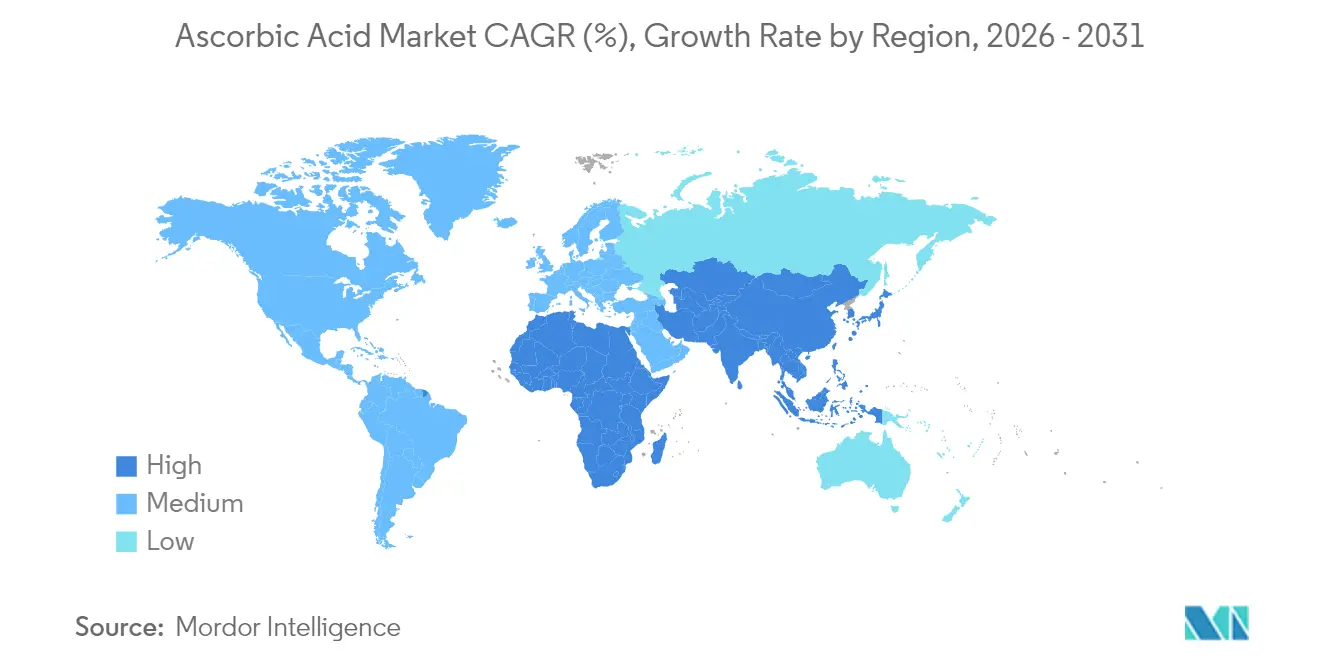
In 2025, the Asia-Pacific region emerged as the leading segment, contributing 38.35% of global revenue. This dominance is attributed to China's significant production capacity and India's growing demand for supplements. Chinese manufacturers, including CSPC Pharmaceutical, Northeast Pharmaceutical Group, and Shandong Luwei, collectively account for approximately 60% of global ascorbic acid production. These companies utilize fermentation-based processes to convert corn-derived glucose into L-ascorbic acid on a large scale. Efforts to stabilize prices through coordinated production shutdowns in 2024 were undermined by persistent overcapacity and weak end-market demand, leading to declining spot prices despite reduced production volumes.
India and Japan Ascorbic Acid Market
The fastest-growing segment is India, driven by fortification programs mandated by the Food Safety and Standards Authority of India (FSSAI). These programs incorporate vitamin C into staple foods such as wheat flour, rice, and edible oils. Additionally, urban consumers are increasingly purchasing immunity supplements and nutricosmetics. In Japan, the pharmaceutical sector is navigating supply chain disruptions. Nichi-Iko Pharmaceutical's ascorbic acid injectables (100 milligrams and 500 milligrams) were delisted from national health insurance pricing in 2024, forcing hospitals to seek alternative suppliers.
The Americas and EMEA Ascorbic Acid Market
Other regions, including North America, Europe, South America, and the Middle East and Africa, are also contributing to the market. North America and Europe remain high-value markets, with premium formulations such as liposomal vitamin C and buffered mineral ascorbates commanding higher margins. In the United States, tariffs on Chinese goods were raised to 20% in March 2025, prompting buyers to explore Indian suppliers like Reckon Organics and West Bengal Chemicals, although capacity constraints limit substitution. European buyers are prioritizing sustainability, with DSM-Firmenich's Dalry facility securing contracts due to its 59% lower greenhouse gas emissions compared to alternative sources. In South America, Brazil's food fortification programs aimed at addressing iron-deficiency anemia combine ferrous sulfate with ascorbic acid to enhance iron absorption, driving dual demand. In Nigeria, pharmaceutical imports are increasing as local manufacturers lack the fermentation capacity to produce ascorbic acid domestically, creating opportunities for Chinese and Indian exporters with National Agency for Food and Drug Administration and Control (NAFDAC) registrations. In the Middle East, particularly in the United Arab Emirates and Saudi Arabia, the cosmetics market is adopting vitamin C serums and nutricosmetics. However, high ambient temperatures in the region accelerate product degradation, necessitating cold-chain logistics that increase landed costs by 10 to 15 percent.
Regulatory Landscape
Regulatory access for ascorbic acid is anchored in established food-additive and pharmaceutical compliance frameworks across major consuming regions. In the United States, ascorbic acid is affirmed as Generally Recognized as Safe (GRAS) under 21 CFR 182.3013 for use in foods as a chemical preservative and antioxidant, which supports broad formulation use across processed foods and beverages.
In Europe, ascorbic acid is authorized as food additive E 300 under Regulation (EC) No 1333/2008 (commonly used under quantum satis for many categories), with specifications set through the EU additives specification framework. The UK continues to authorize E 300 under assimilated EU rules, with listings and specifications maintained through the Food Standards Agency framework for regulated products. For cross-border brand owners, these aligned additive regimes simplify label and specification management, but pharmaceutical and cosmetic uses still require tighter quality documentation, including pharmacopoeial alignment and GMP expectations, compared with commodity food-grade supply.
Value Chain Analysis
The value chain begins with agricultural carbohydrates, primarily corn-derived glucose or related intermediates (for example, D-sorbitol), which feed fermentation-based production and underpin most industrial vitamin C output. Manufacturing is concentrated in Asia, especially China, where large producers such as CSPC Pharmaceutical, Northeast Pharmaceutical Group, and Shandong Luwei run high-volume plants and influence global availability through operating-rate management and periodic shutdowns, which increases exposure to feedstock swings and export-logistics disruptions.
Downstream, ascorbic acid moves through traders and distributors into (1) food and beverage processors using it as an antioxidant and color stabilizer, (2) pharmaceutical and supplement manufacturers that require tighter specifications and documentation (for example, DMF/CEP-style quality packages), and (3) personal care and cosmetics formulators that often favor stabilized derivatives and encapsulated forms. Western supply is centered on a smaller number of sites, notably DSM-Firmenichs Dalry facility in Scotland, with additional value captured through premix and blending, coating and encapsulation, and liquid-concentrate preparation closer to end markets to reduce stability losses and mitigate tariff or freight friction.
Competitive Landscape
The ascorbic acid market demonstrates moderate fragmentation, characterized by a dual structure. Chinese commodity producers focus on high-volume, low-cost production, while Western companies prioritize specialty formulations to capture higher margins. Key players in the low-cost segment include CSPC Pharmaceutical, Northeast Pharmaceutical Group, and Shandong Luwei, which utilize fermentation-based production processes with capacities exceeding 10,000 metric tons annually. These companies rely on corn-glucose feedstock and coordinated production shutdowns to manage supply. In contrast, DSM-Firmenich and BASF dominate the premium segment, offering branded products such as ROVIMIX Stay-C 35 and Quali-C, which command 20 to 30 percent price premiums due to their emphasis on sustainability with 59 percent lower greenhouse gas emissions, stability, and regulatory compliance such as United States Drug Master File (USDMF) and Certificate of Suitability to the Monographs of the European Pharmacopoeia (CEP) filings.
Vertical integration serves as a key competitive advantage in the market. For instance, DSM-Firmenich's Dalry facility produces ascorbic acid internally and incorporates it into animal nutrition premixes, enabling value capture across the supply chain. Patent activity highlights diversification into non-nutrition applications, such as DSM-Firmenich's stable vitamin C formulations for cosmetics, Norgine BV's colon-cleansing solutions, and Fuji Oil Holdings' water-in-oil emulsions. These developments reflect efforts to leverage ascorbic acid's redox chemistry in adjacent markets. Emerging opportunities include bioavailability-enhanced formats and non-food applications. Liposomal vitamin C, which offers 30 percent higher plasma absorption compared to standard forms, remains underutilized in mass-market supplements, with most products limited to premium channels. Additionally, industrial applications, such as ascorbic acid's use as a stabilizer for n-type organic semiconductors as noted in a 2024 Nature Materials study, suggest potential demand in electronics manufacturing, though commercialization timelines remain uncertain.
New entrants, such as Indian manufacturers Reckon Organics and West Bengal Chemicals, are scaling Current Good Manufacturing Practice (cGMP)-certified production capacities to cater to North American and European buyers seeking alternatives to Chinese suppliers amid tariff pressures. Technology adoption varies across regions. Chinese producers predominantly use traditional Reichstein-Grüssner fermentation methods, while Western companies invest in advanced technologies like enzymatic synthesis and continuous-flow reactors, which reduce energy consumption and waste. The competitive landscape is likely to see consolidation as regulatory compliance costs such as United States Drug Master File (USDMF) filings, batch-release testing, and sustainability audits favor larger players. However, regional quality standards and tariff barriers continue to sustain a fragmented supplier base.
Ascorbic Acid Industry Leaders
-
DSM-Firmenich N.V.
-
BASF SE
-
CSPC Pharmaceutical Group Ltd
-
Northeast Pharmaceutical Group Co. Ltd
-
Shandong Luwei Pharmaceutical Co. Ltd
- *Disclaimer: Major Players sorted in no particular order
Ascorbic Acid Market Companies Covered in this Report
- DSM-Firmenich N.V.
- BASF SE
- CSPC Pharmaceutical Group Ltd
- Northeast Pharmaceutical Group Co. Ltd
- Shandong Luwei Pharmaceutical Co. Ltd
- Bayer AG
- Glanbia Nutritionals
- Sigma-Aldrich
- Aland Nutraceuticals Group
- North China Pharmaceutical Co. Ltd
- Spectrum Laboratory Products Inc.
- Bactolac Pharmaceutical Inc.
- Foodchem International Corporation
- M.C. Biotec Inc.
- Honson Pharmatech Group
- Botanic Healthcare
- ChemCeed LLC
- Superior Supplement Manufacturing
- Reckon Organics Pvt Ltd
- Vega Group Company Limited
Market Opportunities and Future Outlook
Opportunities are building around supply-chain redesign and specification upgrading, shaped by tariff and compliance complexity in key import markets. The United States move to 20% tariffs on Chinese goods (raised in March 2025) has pushed buyers toward dual sourcing, onshore blending, and qualification of non-Chinese suppliers. That shift raises the need for traceable, audit-ready supply and supports demand for cGMP-aligned producers and regional blenders that can bridge food-grade and supplement-grade requirements.
Product-format innovation is also broadening demand beyond bulk powder. Current evidence includes growing adoption of liquid concentrates for beverage lines, plus increased traction for premium formats such as liposomal liquids, buffered mineral ascorbates, and coated powders that help manage degradation during processing (notably above 70 degrees Celsius) and storage. In personal care, stabilization patents (for example, Fuji Oil Holdings water-in-oil systems and Natura Cosméticos July 2024 patent activity) and increased use of derivatives like magnesium ascorbyl phosphate support higher-margin propositions. Non-nutrition applications remain early-stage, but visible work on semiconductor stabilization and colon-cleansing solutions, including colon-cleansing formulations, indicates a plausible diversification route for specialty suppliers seeking to reduce exposure to bulk price cycles tied to Chinese operating rates.
Recent Industry Developments in Ascorbic Acid Market
- May 2026: DSM-Firmenich expanded its pharma-positioning for ascorbic acid by promoting vitamin C (with alpha-tocopherol) as a functional excipient approach for nitrosamine mitigation in drug products. The messaging links vitamin C demand more directly to evolving pharmaceutical quality expectations, supporting higher-spec grades and documentation-driven supply relationships.
- November 2025: Seiwa Kasei launched iVC 3GA-green, a plant-derived 3-Glyceryl Ascorbate designed for preservative-free, stable vitamin C cosmetic formulations. The ingredient supports the shift toward differentiated derivatives that address oxidation and stability limits in concentrated serums, increasing the value share of specialty forms versus commodity L-ascorbic acid.
- March 2024: DSM-Firmenich completed the divestiture of its Jiangshan vitamin C manufacturing facility in China. The divestiture reshaped its footprint toward Western production at Dalry, Scotland and away from China-based manufacturing, affecting how multinational buyers balance China-linked supply risk against premium, compliance-oriented sourcing.
Ascorbic Acid Market Report Scope and Research Methodology
Market Definition and Coverage
For this study, the market covers the sales value of ascorbic acid (vitamin C) used as an ingredient across major end-use industries, tracked across key producing and consuming regions and then totaled to a global value.
Scope exclusions: We exclude downstream finished products where vitamin C is only one of many ingredients and the product is priced mainly for its brand or formulation.
Segments Covered in This Report
- By Type
- Sodium Ascorbate
- Calcium Ascorbate
- Potassium Ascorbate
- Magnesium Ascorbate
- D-Isoascorbic Acid
- By Form
- Powder/Granules
- Liquid
- By Application
- Food and Beverages
- Pharmaceuticals and Supplements
- Animal feed
- Personal Care and Cosmetics
- Others
- By Geography
- North America
- United States
- Canada
- Mexico
- Rest of North America
- Europe
- Germany
- United Kingdom
- Italy
- France
- Spain
- Netherlands
- Poland
- Belgium
- Sweden
- Rest of Europe
- Asia-Pacific
- China
- India
- Japan
- Australia
- Indonesia
- South Korea
- Thailand
- Rest of Asia-Pacific
- South America
- Brazil
- Argentina
- Colombia
- Chile
- Peru
- Rest of South America
- Middle East and Africa
- South Africa
- Saudi Arabia
- United Arab Emirates
- Nigeria
- Egypt
- Morocco
- Turkey
- Rest of Middle East and Africa
- North America
Data Sources, Market Sizing, and Validation
Desk Research
Desk research was used to build the first structure of the market and to sanity-check the direction of pricing and demand signals over time. We mainly used public sources such as United Nations Comtrade trade statistics, USITC DataWeb for customs and tariff context, FAOSTAT for food-processing related indicators, and FDA and EFSA publications for safety and usage references that influence adoption.
In parallel, we reviewed company annual reports, investor presentations, and press releases to understand capacity changes and product mix movements, which are often the reason for short-term price swings. Patent databases and a shipment-level import and export database were also used selectively to cross-check trade flows and confirm where supply is actually moving. These desk sources are illustrative and not exhaustive, and many other documents were reviewed to collect, validate, and clarify the final inputs.
Primary Interviews and Surveys
Primary work focused on interviews and surveys with manufacturers, distributors, procurement teams, and technical experts who work with vitamin ingredients and premixes across food, pharma, personal care, and feed. We covered APAC, EMEA, and the Americas so assumptions on price realization, grade mix, and demand seasonality could be tested against different trade and consumption patterns.
Distribution of primary research fieldwork respondents
| Company type | Respondent position | Region |
|---|---|---|
| Top tier: 31% | CXOs: 15% | APAC: 42% |
| Mid tier: 47% | Functional/Unit leaders: 27% | EMEA: 31% |
| Smaller Players: 22% | Managers: 58% | Americas: 27% |
Market-Sizing & Forecasting
Sizing started with a top-down build where production and trade data reconstruct the available supply pool by region, which was then adjusted for typical application splits that were confirmed through interviews. The totals were corroborated with selective bottom-up approximations, mainly by sampling average selling price ranges by grade and pairing them with indicative volume movement through major channels, and then tuning the model if the implied price or volume looked unrealistic.
Key inputs used in the model included import and export volumes for vitamin C, regional price realization trends, the share of food and beverage fortification activity, pharmaceutical and healthcare usage intensity, and animal feed additive demand changes, which were checked for seasonality and substitution effects. Where direct observations were thin, gaps were handled by using conservative ranges from multiple interviewees and then applying region-specific trade-weighted averages rather than a single global assumption.
For forecasting, scenario analysis was used to reflect different paths for capacity utilization, trade re-routing, and price normalization, and then one central case was selected based on the consensus view from primary respondents. The output was reviewed so that the implied CAGR and year-to-year movements stayed consistent with how this market typically responds to supply shocks and formulation-driven demand.
Data Validation & Update Cycle
Validation was done by triangulating the final market numbers against independent signals such as trade balances, price movements, and end-use demand indicators, and then checking whether the implied mix by region and application remained plausible. Outliers were flagged, discussed internally, and tested again by revisiting the underlying assumptions, after which selected respondents were re-contacted if the variance stayed high.
Before sign-off, the model and narrative go through multi-step analyst review so calculation logic, unit consistency, and currency treatment are aligned. Reports are refreshed annually, with interim updates triggered by material events such as large capacity additions, major regulatory changes, or sharp price shocks. Right before delivery, a final pass is completed so clients receive the most current view available.
Mordor Intelligence's Ascorbic Acid Market Size Compared Against Other Published Estimates
Published estimates for ascorbic acid can differ even when they use similar time horizons, because they do not always count the same product forms, grades, and end-use links in the value calculation. Differences also come from the way pricing is treated, especially when the market goes through short cycles of oversupply or tightness.
A common gap driver is scope creep where mineral ascorbate salts and broader vitamin blends are included in full, which lifts the total beyond straight ascorbic acid demand. Another driver is the base year selection and currency timing, since some sources anchor on 2024 trade and pricing while others use a later normalization year and a different mix across food, pharma, personal care, and feed.
Benchmark comparison
| Source | Market Size | Gaps in Research Methodology |
|---|---|---|
| Mordor Intelligence | USD 2.23 B (2026) | |
| Global Consultancy A | USD 1.47 B (2024) | Uses an earlier base year and appears to roll in a wider set of ascorbate salts and type splits, which can shift the value depending on which grades and forms are priced at premium levels. |
| Industry Publisher B | USD 2.72 B (2024) | Leans on a 2024 base with broader segmentation that can include additional forms and packaging driven price effects, and the year can reflect temporary pricing conditions rather than a more normalized cycle. |
The spread is mainly explained by what gets counted as part of the core ingredient market and the year used to anchor price and volume. When trade-weighted volumes and grade-level price checks are aligned to the 2026 normalization year, the totals stay more repeatable across regions, which is the approach used here by Mordor Intelligence.
Key Questions Answered in the Report
How large is the ascorbic acid market in 2026 and how fast is it growing?
The ascorbic acid market size stands at USD 2.23 billion in 2026 and is projected to reach USD 2.87 billion by 2031 on a 5.18% CAGR.
Which region generates the greatest revenue?
Asia-Pacific leads with 38.35% of global revenue in 2025 and is expected to maintain the fastest regional CAGR at 6.22% through 2031.
What segment is expanding faster than the overall market?
Pharmaceuticals and supplements are advancing at 6.05% per year, outpacing the aggregate growth rate as immunity and clinical applications rise.
What innovations are shaping future demand?
Liposomal liquids that boost absorption, buffered mineral ascorbates that reduce gastric irritation, and patents extending vitamin C into semiconductors and colon-cleansing solutions are redefining market frontiers.