
Amyotrophic Lateral Sclerosis Treatment Market Size and Share
Market Overview
| Study Period | 2021 - 2032 |
|---|---|
| Market Size (2027) | USD 1.06 Billion |
| Market Size (2032) | USD 1.47 Billion |
| Growth Rate (2027 - 2032) | 5.88 % |
| Fastest Growing Market | Asia Pacific |
| Largest Market | North America |
| Market Concentration | Medium |
Major Players *Disclaimer: Major Players sorted in no particular order Image © Mordor Intelligence. Reuse requires attribution under CC BY 4.0. | |
Amyotrophic Lateral Sclerosis Treatment Market Analysis by Mordor Intelligence
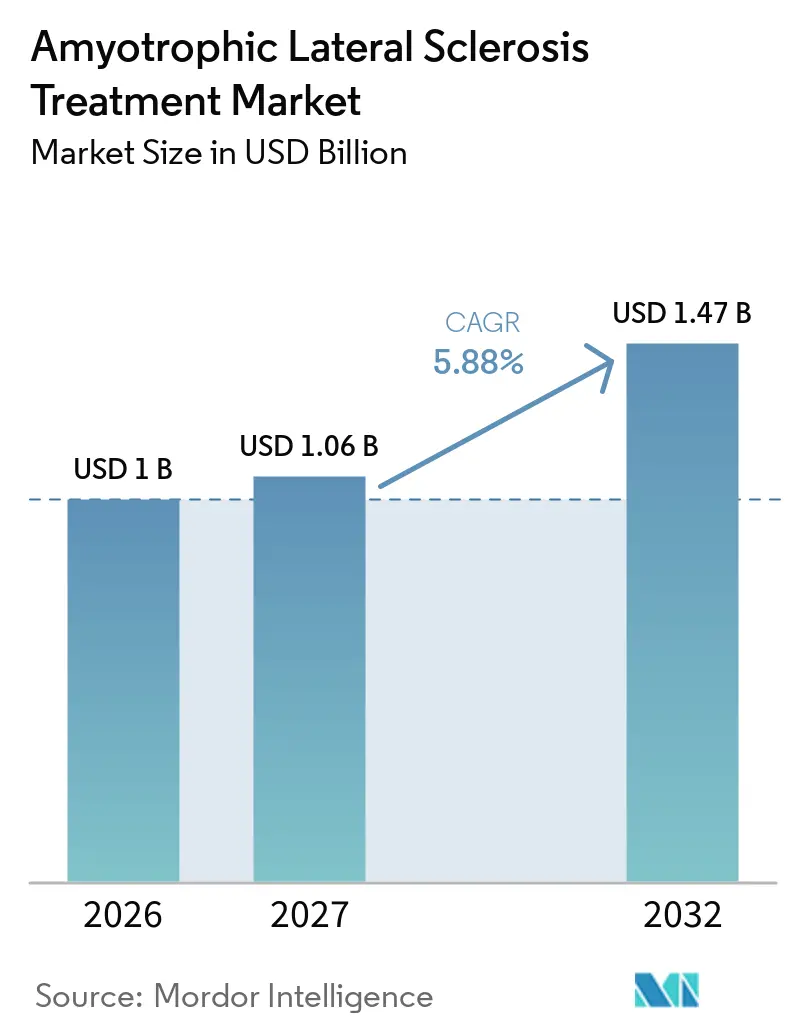
The Global Amyotrophic Lateral Sclerosis Treatment Market size was valued at USD 1 billion in 2026 and is estimated to grow from USD 1.06 billion in 2027 to reach USD 1.47 billion by 2032, at a CAGR of 5.88% during the forecast period (2027-2032).
The growth trajectory reflects a decisive shift from symptomatic relief toward disease-modifying options as the first antisense oligonucleotide (ASO) for SOD1-ALS secured United States approval in 2023, followed by European clearance in 2024. Commercial momentum is reinforced by an expanding orphan-drug pipeline, regulatory fee waivers, and right-to-try provisions that collectively shorten time to market and widen patient access. Capacity investments in oligonucleotide manufacturing, together with scalable viral-vector platforms, are lowering per-dose production costs and improving gross margins for gene-based products. Meanwhile, multidisciplinary ALS centers continue to demonstrate survival and quality-of-life benefits that underpin a steady rise in specialty-clinic prescriptions. Market risks include biologics capacity shortfalls, high therapy prices, and emerging safety signals for edaravone, yet patient advocacy and AI-enabled drug-repurposing initiatives sustain capital inflows and diversify the therapeutic portfolio.
Key Report Takeaways
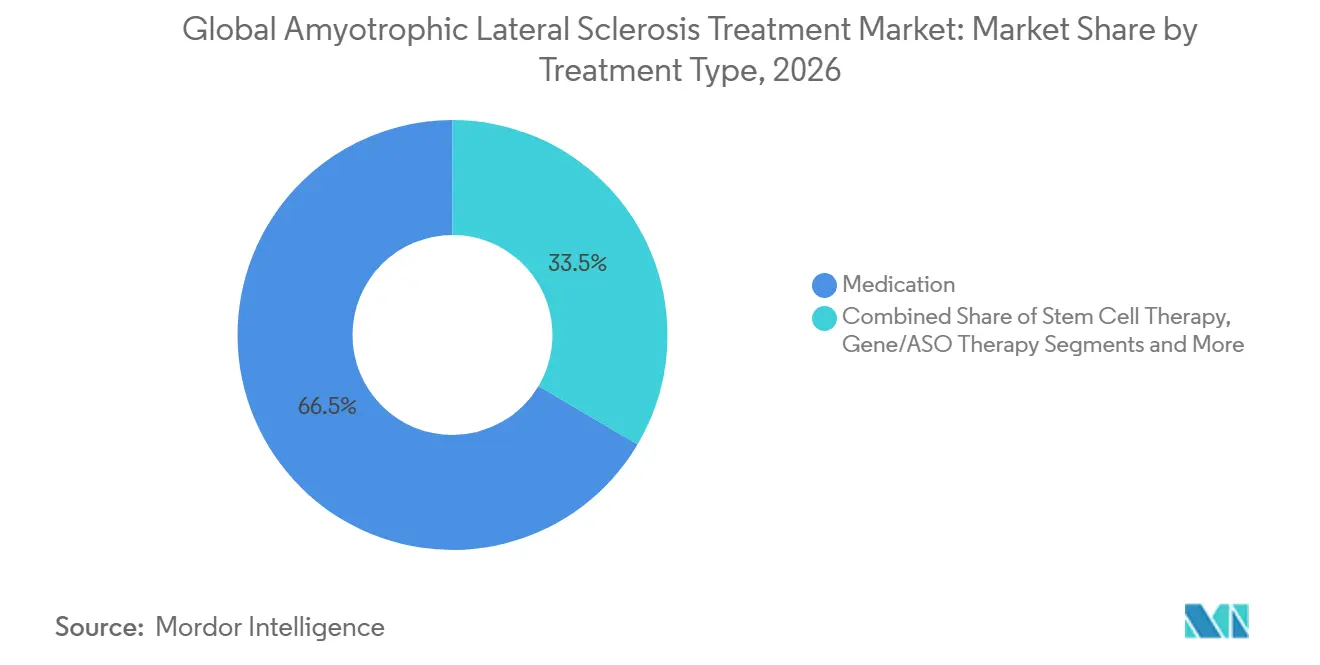
- By treatment type, medication held 66.50% of 2026 revenue, while gene & ASO therapy is forecast to expand at a 7.55% CAGR through 2032.
- By drug class, riluzole led with 37.40% of the Amyotrophic lateral sclerosis treatment market share in 2026; ASOs posted the fastest 8.45% CAGR to 2032.
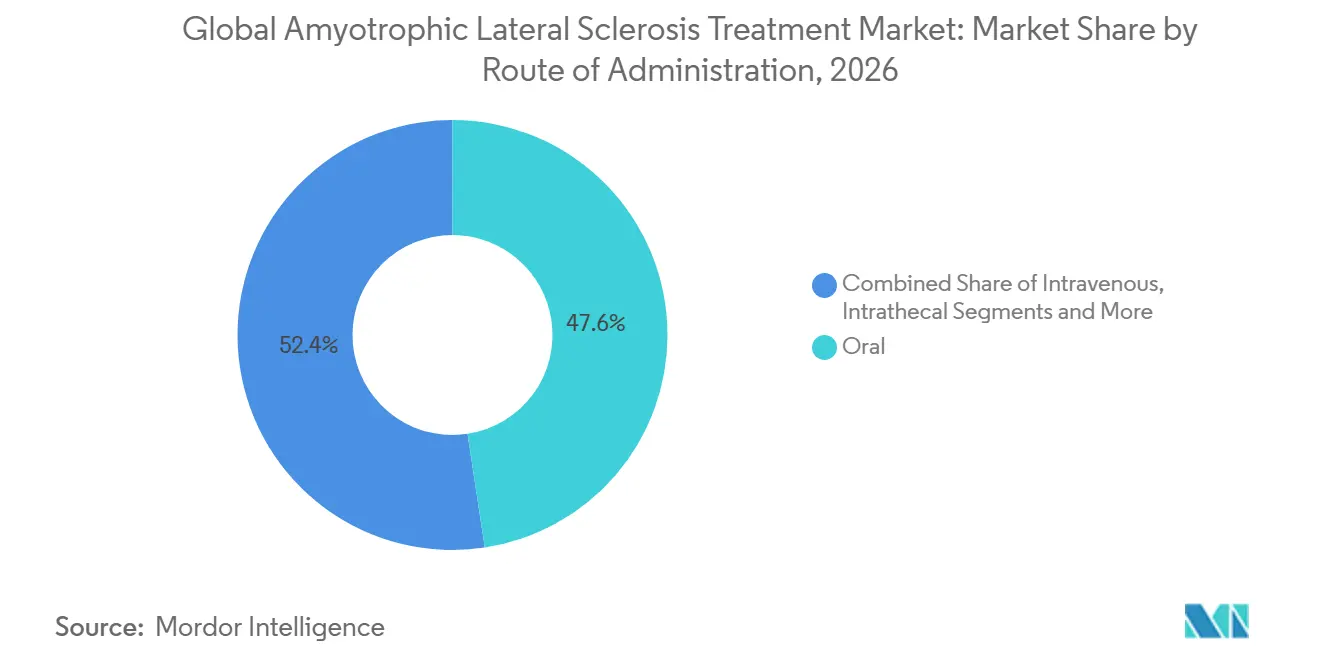
- By route of administration, oral products accounted for 47.60% of the Amyotrophic lateral sclerosis treatment market size in 2026; intrathecal delivery is rising at 9.62% CAGR.
- By end-user, hospitals dominated with 63.60% revenue share in 2026, whereas specialty clinics recorded the highest 9.28% CAGR to 2032.
- By geography, North America captured 42.05% revenue in 2026; Asia Pacific registers the quickest 10.98% CAGR through 2032.
Note: Market numbers in this report are based on Mordor Intelligence's proprietary estimation framework, which combines nine months of actuals with Q4 projections for base year 2026.
Market Trends and Insights
Drivers Impact Analysis of Amyotrophic Lateral Sclerosis Treatment Market*
| Driver | (~) % Impact on CAGR Forecast | Geographic Relevance | Impact Timeline |
|---|---|---|---|
| Growing Incidence And Prevalence Of ALS | +1.20% | Global, with higher impact in aging populations of North America & Europe | Long term (≥ 4 years) |
| Regulatory Tailwinds For Orphan / Rare-Disease Drugs | +0.80% | North America & EU leading, expanding to APAC | Medium term (2-4 years) |
| Breakthroughs In Gene And Antisense-Oligonucleotide Therapies | +0.60% | Global, with early adoption in developed markets | Medium term (2-4 years) |
| AI-Driven Drug-Repurposing Accelerating Pipeline Diversity | +0.50% | North America & EU core, expanding globally | Long term (≥ 4 years) |
| Right-To-Try And Expanded-Access Laws Boosting Early Uptake | +0.40% | North America leading, selective EU adoption | Short term (≤ 2 years) |
| Adoption Of Digital Biomarkers And Remote Patient Monitoring | +0.30% | Global, with faster adoption in digitally mature markets | Medium term (2-4 years) |
| Source: Mordor Intelligence | |||
Growing Incidence and Prevalence of ALS
Epidemiologic studies record rising ALS incidence, especially in aging Western populations, where enhanced neurodiagnostic tools have trimmed diagnostic delay from 16 months to under 12 months.[1]Earlier detection widens the therapeutic window for ASOs that show greatest efficacy in presymptomatic carriers, thereby boosting unit demand and supporting premium pricing. Emerging economies post parallel prevalence gains as specialist neurologists and genetic testing become more available. The demographic surge combines with precision medicine momentum to reinforce sustained volume growth in the Amyotrophic lateral sclerosis treatment market.
Regulatory Tailwinds for Orphan / Rare-Disease Drugs
The FDA’s accelerated approval of tofersen on biomarker endpoints and the EMA’s 2024 endorsement under exceptional-circumstances status underscored a transatlantic realignment toward expedited, evidence-adaptive reviews.[2] Parallel incentives such as fee waivers, priority vouchers, and extended exclusivity, among others, attract venture financing and shorten average development timelines by 3–5 years. Health technology agencies are increasingly receptive to surrogate endpoints, easing reimbursement hurdles for validated biomarker-directed products.
Breakthroughs in Gene and Antisense-Oligonucleotide Therapies
Landmark phase 3 read-outs showed a 55% drop in neurofilament light chain with SOD1-targeted ASO, confirming biomarker-driven disease modification. Platform modularity now speeds mutation-specific candidates for FUS-ALS and C9orf72-ALS, fostering a robust pipeline. Production yields for synthetic oligonucleotides improved 40% since 2023, shrinking cost of goods and enabling broader geographic launches. Intrathecal infrastructure created for early ASOs benefits future gene therapies directed at other neurodegenerative disorders.
AI-Driven Drug-Repurposing Accelerating Pipeline Diversity
Machine-learning engines that interrogate multi-omics and phenotypic datasets have surfaced repurposing leads like FB1006, which advanced from computational hit to first-in-human dosing within 18 months. Computational optimization slashes early-stage R&D spend by up to 70% and diversifies the candidate pool to include combination regimens targeting inflammation, mitochondrial dysfunction, and synaptic failure. The result is a more resilient pipeline that limits single-asset attrition risk and supports long-term CAGR acceleration.
Restraints Impact Analysis of Amyotrophic Lateral Sclerosis Treatment Market*
| Restraint | (~) % Impact on CAGR Forecast | Geographic Relevance | Impact Timeline |
|---|---|---|---|
| High Treatment Costs And Limited Reimbursement | -0.90% | Global, with acute impact in emerging markets | Medium term (2-4 years) |
| Limited Efficacy Of Current Disease-Modifying Drugs | -0.70% | Global, affecting all therapeutic classes | Long term (≥ 4 years) |
| Biologics / Autologous-Cell CMC Capacity Bottlenecks | -0.50% | Global, with severe constraints in specialized manufacturing | Short term (≤ 2 years) |
| Emerging Safety Signals For Long-Term Edaravone Use | -0.40% | Global, with regulatory scrutiny intensifying | Medium term (2-4 years) |
| Source: Mordor Intelligence | |||
High Treatment Costs and Limited Reimbursement
Annual therapy costs for approved ASOs exceed USD 450,000, and real-world analyses show out-of-pocket spending topping USD 36,000 when supplemental coverage is absent.[3] European payers apply stringent cost-effectiveness thresholds, delaying launches by one to two reimbursement cycles. In middle-income countries, list prices surpass per-capita income, severely curtailing uptake. These affordability gaps temper overall revenue growth despite robust clinical demand.
Limited Efficacy of Current Disease-Modifying Drugs
Legacy standards, riluzole and edaravone, provide only modest survival extensions of 2–3 months and functional benefits that vary widely across genotypes. Recent phase 3 setbacks, including reldesemtiv’s miss on primary endpoints, reinforce clinician caution and can dampen first-line uptake of new entrants absent compelling evidence. Consequently, prescribers prioritize multidisciplinary care and supportive interventions unless apparent patient-level efficacy is demonstrated.
*Our forecasts treat driver/restraint impacts as directional, not additive. The impact forecasts reflect baseline growth, mix effects, and variable interactions.
Amyotrophic Lateral Sclerosis Treatment Market Segment Analysis
By Treatment Type:
Gene Therapy Disruption Gains PaceMedication retained 66.50% revenue leadership in 2026, reflecting entrenched prescribing patterns and widespread availability. Gene & ASO therapies, however, are advancing at a 7.55% CAGR that will narrow the gap through 2032. The Amyotrophic lateral sclerosis treatment market size for gene-based modalities is forecast to rise as hospital formulary committees increasingly endorse intrathecal ASO protocols following consistent biomarker correlation with slowed clinical decline. Capacity bottlenecks in autologous cell manufacturing persist, yet gene-editing platforms avoid many of these constraints, accelerating commercial scale-up.
Stem cell therapy occupies a high-touch niche anchored by South Korea’s Neuronata-R approval, while BrainStorm’s NurOwn pursues an FDA special protocol. Their progress reinforces sustained investment even as manufacturing scale limitations cap near-term volumes. Oral medications remain the mainstay for symptom control, but payer focus is migrating toward high-value therapies that demonstrably alter disease trajectory, sharpening competitive dynamics across all categories.

By Drug Class:
ASOs Challenge Riluzole DominanceRiluzole’s 37.40% share benefits from generic penetration and favorable neurologist familiarity, yet ASOs are growing 8.45% annually through 2032 as genetic testing becomes routine at diagnosis. The Amyotrophic lateral sclerosis treatment market share for riluzole is projected to erode once additional mutation-specific ASOs transition from the pipeline to the bedside. Edaravone retains intravenous share but faces safety surveillance over long-term hepatic events, prompting some payers to restrict the duration of therapy. Combination products integrating neuroprotection and anti-inflammatory action are progressing in late-phase trials, signaling a future market composed of multimodal regimens rather than single-agent therapies.
By Route of Administration:
Intrathecal Uptake AcceleratesOral therapies represented 47.60% of 2026 revenues, driven by convenience and established reimbursement coding. Intrathecal delivery is the fastest-rising route at 9.62% CAGR, supported by hospital investments in fluoroscopy suites and trained specialist nurses. The Amyotrophic lateral sclerosis treatment market size allocated to intrathecal products will climb notably as next-generation ASOs and gene vectors demand direct cerebrospinal access for optimal bioavailability. Intravenous administration maintains a sizeable share via edaravone infusions, while subcutaneous options are in early development to balance efficacy with outpatient practicality.
By End-user:
Specialty Clinics Drive Multidisciplinary CareHospitals controlled 63.60% of sales in 2026 because complex dosing and monitoring requirements align with inpatient settings. Nonetheless, specialty ALS clinics are expanding 6.28% annually, owing to evidence that coordinated team care extends survival by nearly 300 days and cuts hospitalizations in half. As payers gravitate toward value-based contracts, multidisciplinary centers gain leverage in negotiating formulary inclusion of high-cost ASOs. Home-based care adoption grows through tele-neurology platforms, yet invasive delivery techniques keep the highest-value prescriptions anchored to specialist sites.
By Distribution Channel:
Digital Health Boosts Online DispensingHospital pharmacies oversaw 56.90% market share in 2026, but online channels are expanding at a 9.06% CAGR as chronic patients seek doorstep delivery and synchronized refills. Specialty digital pharmacies integrate teleconsultation, prior-authorization support, and adherence analytics, meeting payer requirements for high-touch oversight of expensive biologics. Retail chains remain relevant for generic riluzole refills but see diminished share as therapy complexity climbs.
Geography Analysis
North America Amyotrophic Lateral Sclerosis Treatment Market
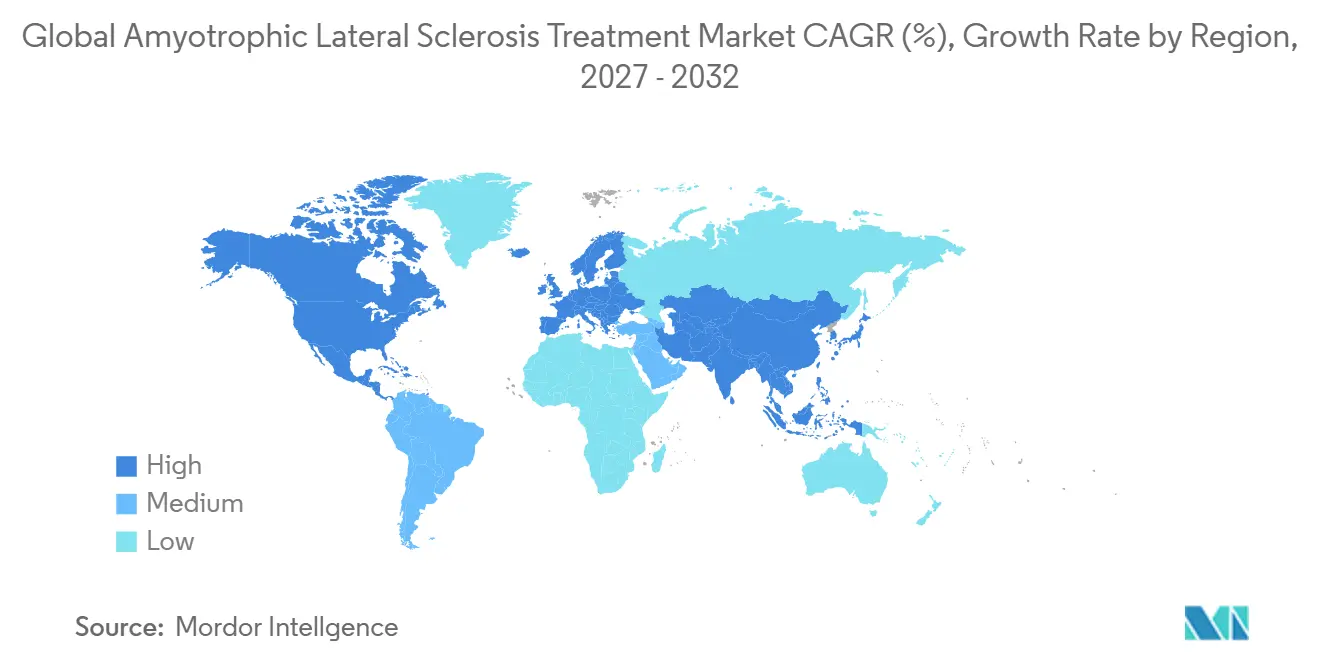
North America held 42.05% of global revenue in 2026, propelled by immediate Medicare eligibility for ALS patients and early FDA approvals that grant first access to innovative treatments. Legislation such as the ACT for ALS program finances expanded clinical-trial infrastructure, and right-to-try provisions accelerate compassionate-use uptake. Despite comprehensive insurance, coverage caps and variable state supplemental policies expose income-linked disparities in therapy access, especially for ASOs priced beyond USD 400,000.
Europe Amyotrophic Lateral Sclerosis Treatment Market
Europe follows with mature reimbursement networks and the EMA’s coordinated authorization pathway that endorsed the first ASO in 2024. Although pan-EU marketing approval is centralized, country-specific health technology appraisals produce launch stagger delays of 6–12 months. Germany’s AMNOG framework and the United Kingdom’s NICE evaluations often impose early price-volume agreements that shape commercial forecasts. Research consortia anchored in Germany, France, and the United Kingdom underpin a robust clinical-trial ecosystem that draws foreign sponsors.
APAC Amyotrophic Lateral Sclerosis Treatment Market
Asia Pacific posts the highest 10.98% CAGR through 2032 as large unmet need intersects with rapid neurology-center expansion. Japan leads commercial uptake, leveraging prior edaravone familiarity and government funding for neurodegeneration R&D. South Korea’s regulatory head start on stem cell therapy positions the country as a manufacturing exporter for regional demand. China’s volume opportunity is vast, but provincial reimbursement heterogeneity and lengthy drug-price negotiations delay full monetization. Australia, Singapore, and India are emerging nodes in multinational trial networks, offering enrollment scale and cost efficiencies.
Regulatory Landscape
Regulatory oversight for ALS therapeutics is shaped by rare-disease frameworks and an increased willingness to support biomarker-linked development. In the United States, this shift is reflected in the accelerated approval of tofersen (Qalsody) in 2023, followed by European marketing authorization granted to Biogen Netherlands B.V. on 29 May 2024 under exceptional circumstances for SOD1-mutation ALS. Sponsors often align pivotal plans with the FDA guidance for industry on developing drugs for ALS (most recently updated in 2019), which continues to shape endpoint selection, trial design, and safety monitoring expectations.
In Europe, the EMA clinical investigation guideline for ALS medicinal products (last updated in 2015) moved into a formal revision pathway when the CHMP adopted a concept paper on 16 March 2026 to update the guideline to reflect current methodologies and evidence approaches. The region also continues to apply strict benefit-risk and evidentiary thresholds, illustrated by the EMA confirmation of its recommendation to refuse marketing authorization for masitinib (AB Science) on 27 June 2024.
Value Chain Analysis
The ALS treatment value chain runs from discovery and translational research through clinical development, specialized manufacturing, and high-touch distribution through hospitals, specialty ALS centers, and specialty pharmacies. Upstream, precision-medicine programs depend on genetic testing and biomarker analytics (for example, neurofilament light chain) to stratify patients and support expedited regulatory interactions. Platform trials and expanded-access programs also feed real-world data into late development, including the FDA-authorized Expanded Access Program for Spinogenix SPG302 (May 2025).
Manufacturing and fill-finish capacity for complex modalities is a key pinch point, which drives licensing and CDMO partnering across oligonucleotides and cell therapies. Examples include Otsuka Pharmaceuticals' exclusive worldwide licensing agreement with Ionis Pharmaceuticals (November 2024) covering manufacturing and marketing of ulefnersen (ION363) for FUS-ALS, NeuroSense Therapeutics' commercial manufacturing scale-up for PrimeC (May 2025) and its subsequent partnership with Recipharm (September 2025) to support formulation work and commercial batch manufacturing, and BrainStorm Cell Therapeutics' technology transfer and manufacturing collaboration planning with Minaris Advanced Therapies for NurOwn in Allendale, New Jersey (May 2025). Downstream, access is shaped by specialty-clinic administration capabilities, payer prior authorization, and cold-chain and controlled-substance compliant logistics where applicable.
Competitive Landscape
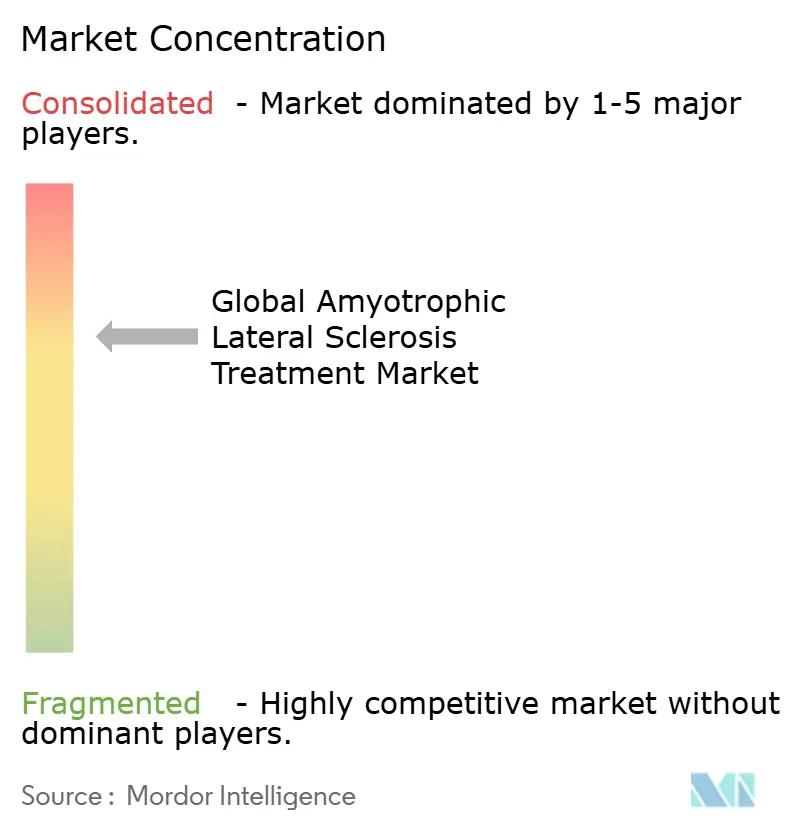
Market concentration is moderate, with the top five companies controlling roughly 45% of 2026 sales. Biogen and Ionis Pharmaceuticals co-lead the ASO field by virtue of validated clinical data and proprietary chemistry platforms. Mitsubishi Tanabe secures intravenous share via edaravone, while Eisai maintains a domestic Japanese foothold with oral riluzole and adjunct pipeline assets. Strategic alliances dominate growth strategy: Eli Lilly’s USD 45 million acquisition of QurAlis’s UNC13A program in 2024 exemplifies big-pharma sourcing of de-risked assets.
Technology adoption centers on companion diagnostics and remote monitoring. Device companies supplying intrathecal delivery systems have formed cross-licensing pacts with gene-therapy developers, creating vertically integrated care packages that streamline hospital purchasing decisions. AI-driven startups leverage cloud-based discovery platforms to identify multitarget small molecules, lowering entry barriers and fostering a pipeline of challengers whose cost structures undercut heritage players.
Manufacturing capability remains a competitive divider. Firms with in-house oligonucleotide lines meet scale requirements faster than those reliant on contract partners, safeguarding launch timelines. Conversely, autologous cell-therapy developers must secure additional viral-vector capacity or risk supply disruptions that impede commercial roll-out. In response, several incumbents announced 2025-to-2026 capital plans for cGMP suites that will roughly double global ASO output.
Amyotrophic Lateral Sclerosis Treatment Industry Leaders
-
Mitsubishi Tanabe Pharma Corporation
-
CORESTEM, Inc
-
BrainStorm Cell Limited
-
Amylyx Pharmaceuticals Inc.
-
Biogen
- *Disclaimer: Major Players sorted in no particular order
Amyotrophic Lateral Sclerosis Treatment Market Companies Covered in this Report
- Mitsubishi Tanabe Pharma
- Amylyx Pharmaceuticals
- Sun Pharmaceuticals Industries
- Biogen
- Ionis Pharmaceuticals
- BrainStorm Cell Therapeutics Inc.
- CORESTEM Inc.
- AB Science SA
- Boehringer Ingelheim
- Annexon Biosciences Inc.
- CRISPR Therapeutics AG
- Biohaven Ltd.
- Cytokinetics
- QurAlis Corporation
- MediciNova Inc.
- Takeda Pharmaceuticals
- Neuvivo Inc.
- Acorda Therapeutics
- Cyclerion Therapeutics Inc.
- ALS Biopharma LLC
Read Analysis of Amyotrophic Lateral Sclerosis Treatment Companies
Market Opportunities and Future Outlook
Whitespace in ALS treatment remains concentrated in scalable options for the broader sporadic ALS population, alongside deeper precision-medicine penetration for defined genetic subtypes. Clinical readouts supporting multi-target and biomarker-linked programs are expanding the set of mechanisms beyond legacy neuroprotection: NeuroSense Therapeutics reported Phase 2b PARADIGM results for PrimeC with biological activity tied to TDP-43 and clinical outcomes (publicly highlighted in March 2026 and June 2026), which points to an avenue for non-mutation-specific regimens that can fit established neurology workflows.
Next-generation nucleic-acid therapeutics are also widening the competitive field in SOD1-ALS beyond ASOs, creating room for new entrants in delivery, manufacturing, and companion diagnostics. In July 2026, Nature Medicine published Phase 1 data for Ractigen Therapeutics RAG-17 (intrathecal siRNA for SOD1-ALS) showing substantial CSF SOD1 reductions alongside plasma NfL reductions, reinforcing the practical value of biomarker-based development strategies and specialized intrathecal administration infrastructure. Parallel advances in vector engineering reported in 2026 (for example, AAV9 microRNA approaches in preclinical models) underscore the demand for viral-vector capacity, analytics, and long-term safety monitoring, while programs such as the HEALEY ALS Platform Trial (with enrollment completion for NUZ-001 Regimen I reported in July 2026) continue to normalize adaptive, multi-arm development pathways that compress time and cost per asset for sponsors.
Recent Industry Developments in Amyotrophic Lateral Sclerosis Treatment Market
- May 2026: BrainStorm Cell Therapeutics provided a corporate update outlining preparations for the Phase 3b ENDURANCE study (NCT06973629) of NurOwn in ALS, including progress toward site activation. The update signals continued investment in operational readiness, a key gating factor for high-touch regenerative medicine programs that depend on consistent manufacturing and site handling.
- December 2025: CorestemChemon reported progress toward commercialization of Neuronata-R in South Korea and highlighted a clinically defined slow-progressor subgroup strategy alongside plans for deeper U.S. regulatory engagement through its U.S. footprint in North Carolina. The move aligns stem cell development with regulator and payer preferences for clearer responder identification and strengthens cross-border commercialization capabilities.
- November 2024: Otsuka Pharmaceutical entered an exclusive worldwide licensing agreement with Ionis Pharmaceuticals for ulefnersen (ION363) for FUS-ALS, covering manufacturing and marketing. This structure expands the route to global supply and launch execution for a mutation-specific oligonucleotide program, while shifting scale-up and commercialization responsibilities toward a larger commercial organization.
Amyotrophic Lateral Sclerosis Treatment Market Report Scope and Research Methodology
Market Definition and Coverage
For this study, the market covers revenues generated from therapies used to manage amyotrophic lateral sclerosis, including drug-based care and other clinical interventions used for symptom control and disease management across major regions.
Scope exclusions: Adjacent neuromuscular disorders and non-ALS neurodegenerative indications are excluded even if the same products are prescribed off-label.
Segments Covered in This Report
- By Treatment Type
- Medication
- Stem Cell Therapy
- Gene / ASO Therapy
- Others
- By Drug Class
- Riluzole
- Edaravone
- Antisense Oligonucleotides
- Combination / Multi-target
- Symptomatic Modifiers
- By Route of Administration
- Oral
- Intravenous
- Intrathecal
- Sub-cutaneous
- By End-user
- Hospitals
- Specialty Clinics / ALS Centers
- Home-care Settings
- By Distribution Channel
- Hospital Pharmacies
- Retail Pharmacies
- Online Pharmacies
- By Geography
- North America
- United States
- Canada
- Mexico
- Europe
- Germany
- United Kingdom
- France
- Italy
- Spain
- Rest of Europe
- Asia Pacific
- China
- Japan
- India
- South Korea
- Australia
- Rest of Asia Pacific
- Middle East & Africa
- GCC
- South Africa
- Rest of Middle East & Africa
- South America
- Brazil
- Argentina
- Rest of South America
- North America
Data Sources, Market Sizing, and Validation
Desk Research
Desk work started with building a clean disease and treatment frame, then mapping how patients move from diagnosis to treated care. We leaned on public, non-paywalled sources such as WHO health statistics, CDC health data, NIH and PubMed-indexed peer reviewed literature, FDA drug labels and approval history, and OECD health system indicators to anchor prevalence ranges and care setting patterns.
Next, we gathered pricing and access signals from sources such as national reimbursement schedules where available, government drug price disclosures, and regulatory safety communications, and we checked adoption narratives using company filings, investor presentations, association websites, and trusted press. In parallel, paid subscriptions for company financials and intelligence plus a broad patent database were used to confirm product positioning and the timing of pipeline events that could shift demand. The sources listed here are illustrative and not exhaustive, since other public documents were also used for data collection, cross-checking, and clarification.
Primary Interviews and Surveys
Primary interviews focused on validating what drives treated volume and how therapy choice shifts by disease stage and care setting. We spoke with neurologists, hospital and specialty pharmacy stakeholders, payor or reimbursement experts, and industry participants across APAC, EMEA, and the Americas to confirm assumptions on uptake, discontinuation, and typical therapy sequencing.
Distribution of primary research fieldwork respondents
| Company type | Respondent position | Region |
|---|---|---|
| Top tier: 39% | CXOs: 14% | APAC: 45% |
| Mid tier: 47% | Functional/Unit leaders: 32% | EMEA: 33% |
| Smaller Players: 14% | Managers: 54% | Americas: 22% |
Market-Sizing & Forecasting
The size model starts from a top-down demand pool built from diagnosed ALS prevalence, treated share, and therapy usage rates by care setting. We then translate the treatment volumes into value using typical annualized cost of therapy and the mix by treatment type. To keep totals realistic, we corroborate with selective bottom-up checks, such as sampled country-level price points multiplied by estimated treated volumes, and channel discussions on prescription mix in hospital and specialty settings.
Model inputs include diagnosed prevalence trends, treatment penetration by stage, switching and discontinuation behavior, the split of hospital versus homecare management, and expected pricing movement after label or reimbursement changes. Where some countries do not disclose full pricing or access details, we fill gaps using proxy markets with similar reimbursement structures, then confirm with primary input and sensitivity bands.
For forecasting, scenario analysis was used so pipeline timing, access decisions, and therapy mix shifts can be reflected without overfitting limited historical series. The base case aligns to the most common expert view on uptake speed and persistence, and we stress-test using slower access and faster adoption cases.
Data Validation & Update Cycle
Outputs are checked against independent signals, including epidemiology ranges, published treatment guidelines, and observed access milestones, before the final numbers are signed off. When an outlier appears, we revisit assumptions, recheck price conversions, and place follow-up calls to primary sources for the specific country or therapy class that created the variance.
A multi-step internal review is completed so logic, inputs, and calculations stay consistent from country totals through to regional rollups. Reports are refreshed annually, with interim updates added when material events occur, such as major approvals, withdrawals, or reimbursement shifts. Before delivery, a final analyst pass is done so clients receive the latest updated view.
Mordor Intelligence's Amyotrophic Lateral Sclerosis Treatment Market Size Compared With Other Published Estimates
Published values for ALS treatment can look far apart because the underlying count of treated patients and the therapy basket are not always defined the same way. Differences also show up when firms use different base years, currency timing, and how quickly they assume new therapies are adopted.
Supportive respiratory care devices and long-term ventilation services sit outside Mordor Intelligence's scope, which keeps the sizing focused on ALS therapy revenues rather than broader disease management spending.
Benchmark comparison
| Source | Market Size | Gaps in Research Methodology |
|---|---|---|
| Mordor Intelligence | USD 0.95 B (2025) | |
| Trade Journal A | USD 0.79 B (2024) | Uses an earlier base year and a conservative treated-patient share, and it appears to hold price levels flatter without fully reflecting therapy mix upgrades in specialty channels. |
| Industry Publisher B | USD 0.73 B (2025) | Keeps the therapy basket tighter by emphasizing legacy drug sales and limited geography coverage, which can undercount newer uptake and reimbursement expansion outside core markets. |
The spread in the table is mainly explained by what gets counted as treatment revenue, how treated share is built from prevalence, and how pricing is converted and updated. By tying totals back to diagnosed and treated cohorts, then rechecking mix shifts during the annual refresh, the output stays transparent and repeatable year to year.
Key Questions Answered in the Report
How big is the Global Amyotrophic Lateral Sclerosis Treatment Market?
The Global Amyotrophic Lateral Sclerosis Treatment Market size is expected to reach USD 1.00 billion in 2026 and grow at a CAGR of 5.88% to reach USD 1.47 billion by 2032.
What is the current Global Amyotrophic Lateral Sclerosis Treatment Market size?
In 2027, the Global Amyotrophic Lateral Sclerosis Treatment Market size is expected to reach USD 1.06 billion.
Who are the key players in Global Amyotrophic Lateral Sclerosis Treatment Market?
Mitsubishi Tanabe Pharma Corporation, CORESTEM, Inc, BrainStorm Cell Limited, Amylyx Pharmaceuticals Inc. and Biogen are the major companies operating in the Global Amyotrophic Lateral Sclerosis Treatment Market.
Which is the fastest growing region in Global Amyotrophic Lateral Sclerosis Treatment Market?
Asia Pacific is estimated to grow at the highest CAGR over the forecast period (2027-2032).
Which region has the biggest share in Global Amyotrophic Lateral Sclerosis Treatment Market?
In 2026, the North America accounts for the largest market share in Global Amyotrophic Lateral Sclerosis Treatment Market.