
Aminophylline Market Size and Share
Market Overview
| Study Period | 2020 - 2031 |
|---|---|
| Market Size (2026) | USD 323.7 Million |
| Market Size (2031) | USD 363.03 Million |
| Growth Rate (2026 - 2031) | 2.32 % |
| Fastest Growing Market | Asia Pacific |
| Largest Market | North America |
| Market Concentration | Medium |
Major Players *Disclaimer: Major Players sorted in no particular order Image © Mordor Intelligence. Reuse requires attribution under CC BY 4.0. | |
Aminophylline Market Analysis by Mordor Intelligence
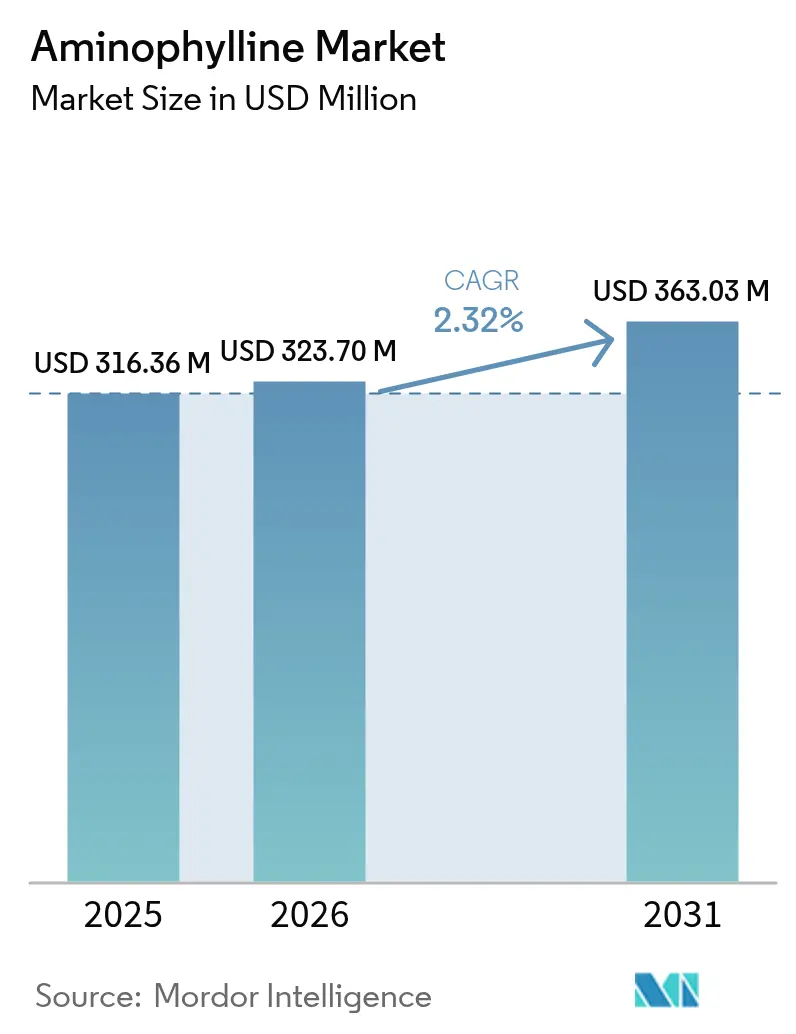
The aminophylline market size was valued at USD 316.36 million in 2025 and estimated to grow from USD 323.7 million in 2026 to reach USD 363.03 million by 2031, at a CAGR of 2.32% during the forecast period (2026-2031). The growth profile reflects steady demand for this long-established bronchodilator, particularly in cost-sensitive health systems that prioritize proven respiratory therapies over premium novel drugs. North America dominates revenue because neonatal care and COPD management pathways still incorporate methylxanthines, while Asia-Pacific registers the strongest expansion as healthcare access widens and respiratory disease prevalence rises. Oral dosage forms underpin the bulk of prescriptions on the back of patient convenience, yet injectable products are scaling faster in hospitals where rapid bronchodilation is required. COPD remains the leading indication, but infant apnea contributes an outsized share of incremental volume owing to continuing NICU build-outs and supportive clinical data. Digital dispensing and tele-prescription momentum further expand access, positioning aminophylline as a practical option for long-term therapy continuity across geographies.
Key Report Takeaways
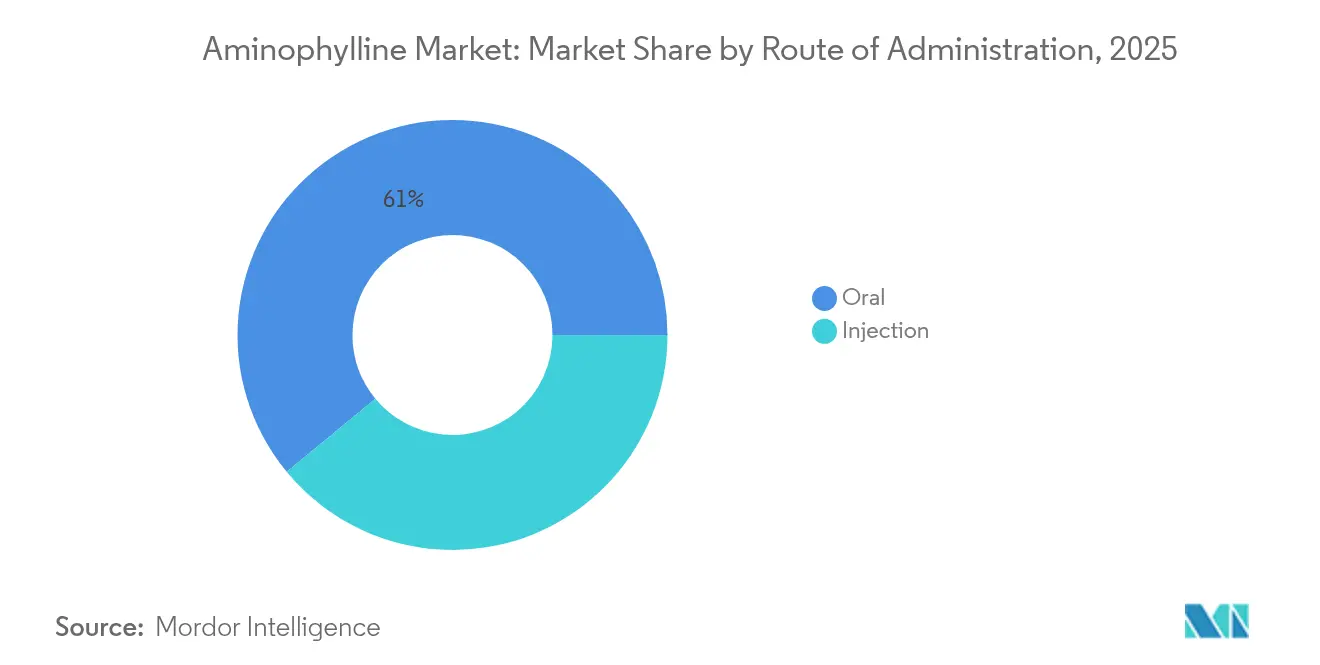
- By route of administration, oral products accounted for 60.98% of the aminophylline market share in 2025; injections are projected to expand at a 4.52% CAGR through 2031.
- By dosage form, tablets led with 54.03% revenue share in 2025, while solutions are forecast to grow at 5.67% CAGR between 2026-2031.
- By application, COPD captured 44.78% of the aminophylline market size in 2025 and infant apnea is advancing at a 6.55% CAGR to 2031.
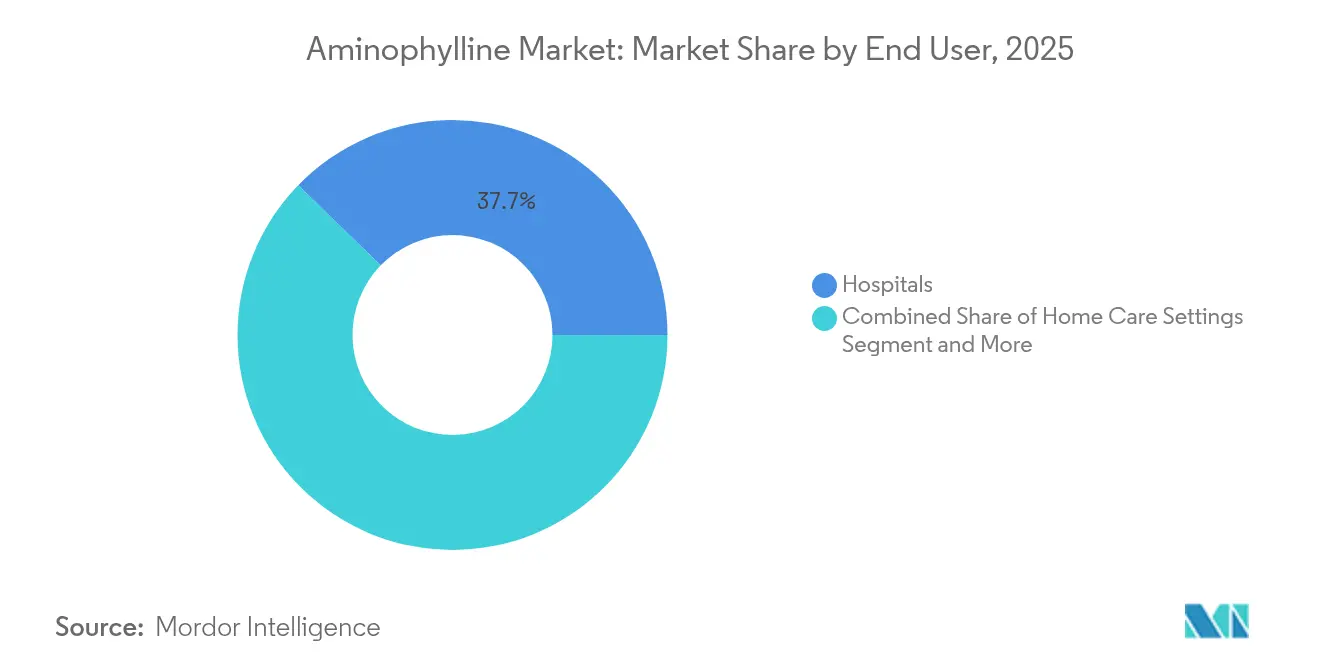
- By end user, hospitals represented 37.74% share of the aminophylline market in 2025; home-care settings exhibit the highest projected CAGR at 6.28% through 2031.
- By distribution channel, hospital pharmacies held 46.31% share in 2025, whereas online pharmacies are growing at 7.44% CAGR across the forecast horizon.
- By geography, North America contributed 37.29% of 2025 revenue; Asia-Pacific is expected to climb at an 6.33% CAGR through 2031.
Note: Market size and forecast figures in this report are generated using Mordor Intelligence’s proprietary estimation framework, updated with the latest available data and insights as of 2026.
Market Trends and Insights
Drivers Impact Analysis of Aminophylline Market*
| Driver | (~) % Impact on CAGR Forecast | Geographic Relevance | Impact Timeline |
|---|---|---|---|
| Increase in prevalence of chronic respiratory diseases | +0.8% | Global, strongest in Asia-Pacific and Middle East-Africa | Long term (≥ 4 years) |
| Price advantage over novel bronchodilators | +1.2% | India, China, Brazil | Medium term (2-4 years) |
| Growing adoption in neonatal respiratory stimulation | +0.9% | Developed economies with advanced NICUs | Medium term (2-4 years) |
| API supply diversification in emerging markets | +0.7% | Asia-Pacific core, spill-over to Latin America | Long term (≥ 4 years) |
| Integration into combination inhalers | +0.6% | North America and European Union | Long term (≥ 4 years) |
| Rising tele-prescription volumes | +0.4% | North America and European Union | Short term (≤ 2 years) |
| Source: Mordor Intelligence | |||
Increase in prevalence of chronic respiratory diseases
Global COPD cases exceed 16 million adults in the United States alone, underpinning consistent demand for cost-effective bronchodilators such as aminophylline. Aging demographics in high-income countries heighten susceptibility to chronic airway obstruction, while pollution-driven morbidity in megacities escalates patient numbers across Asia-Pacific. The drug’s long clinical pedigree and multisource availability make it a viable alternative when patients cannot tolerate or afford newer dual- or triple-therapy inhalers. Health ministries in emerging economies often mandate formulary inclusion of essential generics to curb treatment costs, thereby reinforcing aminophylline uptake. These converging epidemiological and economic factors provide a durable volume base that steadies the overall aminophylline market.
Price advantage over novel bronchodilators
Benchmark procurement audits show that generic aminophylline can be priced more than 70% below patented respiratory agents, a differential that is decisive for payers managing tight budgets[1]. Recent withdrawals of high-priced inhalers have prompted insurers to steer prescribers toward lower-cost therapies to sustain access. Hospital pharmacy and group-purchasing contracts increasingly favour suppliers offering guaranteed volumes at predictable prices, positioning aminophylline manufacturers with diversified production networks to win tenders. The resulting savings free capacity for health systems to finance diagnostics and preventive programs, reinforcing the drug’s perceived value.
Growing adoption in neonatal respiratory stimulation
NICUs routinely administer aminophylline to preterm infants with central apnea, achieving 80-85% efficacy rates in reducing episodes and lowering ventilator dependence[2]. Clinicians note ancillary renal-protective properties that extend utility beyond breathing support, broadening appeal among neonatologists. Capacity expansion of neonatal units across middle-income countries amplifies demand, especially where caffeine citrate is either unavailable or unaffordable. The drug’s established safety profile and decades of dosing know-how lessen adoption barriers, sustaining double-digit volume growth within this sub-segment.
API supply diversification in emerging markets
New multi-purpose reactors totalling 3,773 m³ commissioned by WuXi STA in 2024 enlarge global aminophylline API output and disperse sourcing risk[3]. Parallel capacity upgrades in India and Singapore provide additional buffers against single-site disruptions. Broader geographic spread supports competitive pricing and strengthens resilience, but trade-security regulations such as China’s anti-espionage law add layers of compliance and inspection complexity that manufacturers must navigate. Overall, supply diversification contributes positively to growth by stabilizing finished-product availability.
Restraints Impact Analysis of Aminophylline Market*
| Restraint | (~) % Impact on CAGR Forecast | Geographic Relevance | Impact Timeline |
|---|---|---|---|
| Narrow therapeutic window & side-effect profile | -0.5% | Global, more restrictive in highly regulated markets | Medium term (2-4 years) |
| Decline in evidence-based COPD guidelines | -0.3% | North America and European Union | Long term (≥ 4 years) |
| Regulatory scrutiny on neonatal caffeine analogs | -0.4% | Global, highest in tier-one regulatory regions | Short term (≤ 2 years) |
| Periodic API shortages as CMOs exit | -0.2% | Global supply chain | Medium term (2-4 years) |
| Source: Mordor Intelligence | |||
Narrow therapeutic window & side-effect profile
Aminophylline requires serum monitoring because toxicity risk escalates above 20 mcg/mL, with documented arrhythmias and seizures at supratherapeutic exposures. Outpatient practices lacking point-of-care analyzers often prefer agents with wider margins such as long-acting beta-agonists, translating to slower uptake in primary-care settings. Elderly and multi-comorbidity cohorts present higher drug-interaction risk, prompting guideline committees to advocate caution. These safety demands elevate overall care costs, partly offsetting the product’s price advantage and thereby tempering growth.
Decline in evidence-based COPD guidelines
The 2024 GOLD and 2025 BTS/NICE/SIGN reviews relegate methylxanthines to adjunctive or second-line therapy, citing modest incremental benefit versus inhaled dual bronchodilators and inhaled corticosteroid combinations. Payer formularies in Europe and the United States align with these guidelines, tightening reimbursement pathways. Introduction of new classes like ensifentrine, approved in 2024 as a first-in-class PDE3/4 inhibitor, further narrows clinical mindshare. Reduced first-line positioning erodes potential prescription volume in mature markets.
*Our forecasts treat driver/restraint impacts as directional, not additive. The impact forecasts reflect baseline growth, mix effects, and variable interactions.
Aminophylline Market Segment Analysis
By Route of Administration:
Oral Dominance Faces Injectable GrowthOral products contributed 60.98% of global revenue in 2025, reflecting entrenched patient familiarity and streamlined manufacturing economics that favor tablets and extended-release capsules. The segment benefits from robust quality-assured supply networks and straightforward distribution, anchoring the aminophylline market despite periodic shortages in extended-release forms. Hospitals increasingly adopt injectable aminophylline for rapid symptom relief amid acute COPD exacerbations, fuelling a 4.52% CAGR that outpaces the broader aminophylline market. Uptake is most pronounced in emergency departments and NICUs where precise titration and immediate bioavailability are critical. Over the forecast period, technology-driven infusion pumps with integrated serum-level alarms could mitigate toxicity concerns and accelerate intravenous volumes.
Injectable adoption also aligns with the neonatal apnea segment, where prophylactic administration of aminophylline solutions significantly cuts apnea incidence in preterm infants. Broader critical-care infrastructure expansion, especially across Southeast Asia, supports sustained double-digit demand for parenteral formats. Nevertheless, the segment faces cost pressures as sterile-fill requirements raise capital outlays for prospective entrants. Overall, the coexistence of established oral regimens and fast-growing injectables reinforces diversified revenue streams for stakeholders.

By Dosage Form:
Tablets Lead While Solutions AccelerateTablets generated 54.03% of sales in 2025 due to their portability, dosing familiarity, and low unit manufacturing cost, consolidating their role in chronic maintenance therapy within the aminophylline market. However, solutions are forecast to deliver the strongest growth at 5.67% CAGR to 2031 as nebulization and intravenous care protocols gain traction in pediatric and geriatric cohorts with swallowing difficulties. Pfizer’s long-standing injectable offerings remain widely available, highlighting supply continuity even when other respiratory drugs encounter shortages. The aminophylline market size for solution formats is expected to widen further once point-of-care mixing systems become mainstream in critical-care wards.
Solutions also facilitate outpatient nebulized therapy, allowing physicians to tailor regimens for patients intolerant to inhaled corticosteroids withdrawn from markets in 2024. Although manufacturing complexity remains higher versus solid dosage, premium pricing partly offsets additional overhead. The tablet segment will retain leadership given its cost advantage, yet its share may erode modestly as solution versatility attracts incremental prescribers and caregivers.
By Application:
COPD Leadership Challenged by Neonatal GrowthCOPD represented 44.78% of overall revenue in 2025, underscoring the prevalence of chronic airway obstruction and the role of methylxanthines as adjunct therapy in severe or refractory cases. The aminophylline market size for COPD is projected to expand steadily, albeit below the overall market CAGR, because guidelines increasingly prioritize long-acting bronchodilator combinations. By contrast, the infant apnea segment is set for 6.55% CAGR on the back of rising NICU coverage and favourable data showing up to 85% efficacy in managing central apnea events. As more tertiary centres upgrade neonatal services, demand for pediatric-grade injectable and oral solutions will climb, partially offsetting stagnation in mild-to-moderate COPD prescribing.
Off-label exploratory uses, including renal protection in birth asphyxia and potential anti-inflammatory effects, are under investigation and could unlock niche revenues. Nonetheless, any expansion beyond respiratory indications will hinge on additional evidence and regulatory review. Asthma remains a mature niche where inhaled alternatives are typically preferred in first-line care, thus contributing stable but limited incremental volume.
By End User:
Hospitals Dominant Despite Home-Care SurgeHospitals accounted for 37.74% of global sales in 2025, anchored by the need for therapeutic drug monitoring and rapid dose adjustment during acute episodes. Institutional buyers value suppliers that can guarantee on-time delivery and supply redundancy, which benefits vertically integrated manufacturers. Home-care demand is expected to rise at 6.28% CAGR as remote monitoring devices capable of fingertip theophylline testing reach commercial scale, easing safety management outside clinical settings. Clinics and ambulatory surgical centres maintain consistent uptake but are constrained by limited laboratory facilities for routine serum checks.
Telehealth integration facilitates virtual follow-up, enabling early dose optimisation that historically required hospital visits. However, reimbursement frameworks in emerging markets still favour inpatient management for high-risk cases, ensuring hospitals remain the prime revenue source. In the medium term, combined advances in diagnostic wearables and value-based care contracts could accelerate patient transition toward community and home settings.
By Distribution Channel:
Hospital Pharmacies Lead Online GrowthHospital pharmacies captured 46.31% of distribution in 2025, reflecting formulary alignment with institutional prescribing and centralised monitoring. Supply agreements emphasise volume discounts and vendor reliability, solidifying the channel’s primacy within the aminophylline market. Online pharmacies, though smaller, are forecast to post 7.44% CAGR as e-commerce penetration and prescription digitalisation broaden access, particularly in chronic disease management scenarios. Enhanced cold-chain and tamper-proof packaging technologies further support direct-to-patient shipments.
Retail pharmacies continue to serve walk-in refills but face competition from vertically integrated health plans that steer members to mail-order services. Persistent therapeutic-drug-monitoring prerequisites limit broad community-pharmacy dispensing, although collaborative practice agreements could gradually close this gap. Ultimately, omnichannel strategies blending hospital, online, and brick-and-mortar outlets will emerge to maximise patient reach while meeting regulatory safeguards.
Geography Analysis
North America Aminophylline Market
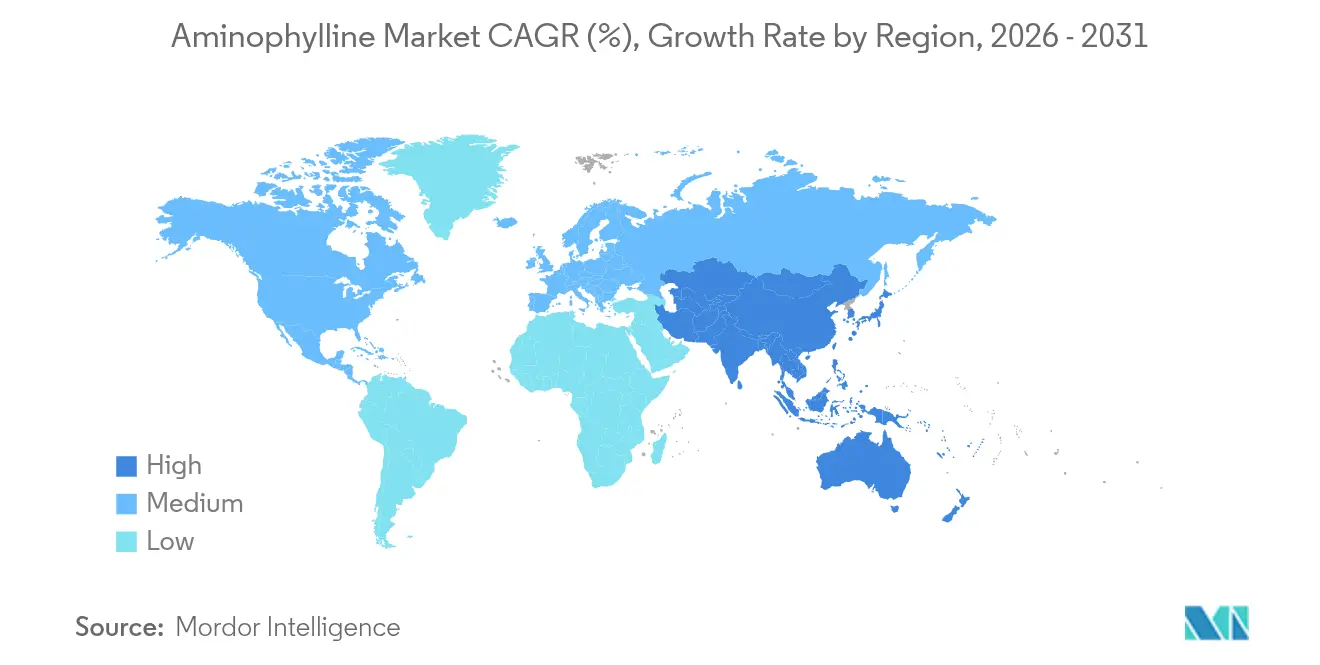
North America retained 37.29% revenue share in 2025, powered by mature reimbursement systems, widespread NICU availability, and established COPD treatment algorithms. Market expansion is tempered by guideline shifts that prioritise inhaled dual therapy, yet domestic manufacturing investments such as AstraZeneca’s USD 50 billion programme through 2030 help safeguard supply continuity. The aminophylline market size for North America is anticipated to increase gradually, supported by tele-health adoption that simplifies drug-level surveillance.
APAC Aminophylline Market
Asia-Pacific is the fastest growing, projected at 6.33% CAGR through 2031, as rising air-pollution-linked morbidity and expanding insurance coverage elevate therapy adoption. Regional API capacity build-outs in China and India ensure competitive pricing, though regulatory headwinds such as data-security legislation may introduce periodic compliance costs. Still, governmental essential-medicine lists and public-sector purchasing underpin sustained volume growth.
EMEA and South America Aminophylline Market
Europe’s trajectory remains steady as pharmacoeconomic assessments continue to favour older generics in resource-constrained health systems. However, strict evidence-based formularies constrain first-line use outside severe COPD flares. Middle East & Africa and South America present incremental opportunities where public tenders favour low-cost therapeutics for expanding respiratory programmes. Inclusion of theophylline derivatives on the 2024 WHO Model List of Essential Medicines for Children supports global paediatric adoption. Across developing regions, the aminophylline market benefits from donor-funded capacity building in neonatal and emergency care.
Regulatory Landscape
Aminophylline is overseen by established drug-quality and labeling frameworks across major markets, with its long-established generic status and narrow therapeutic window driving the need for clear dosing and monitoring instructions. In the United States, product information is maintained through FDA labeling and listing systems (including DailyMed), while pharmacopoeial standards such as USP and the British Pharmacopoeia set identity and quality expectations for aminophylline and related specifications, supporting consistent release testing across multisource suppliers.
For manufacturing and regulatory filings, the US Drug Master File pathway under 21 CFR 314.420 is a practical mechanism for API manufacturers to provide confidential CMC information by reference in ANDA/NDA submissions, rather than disclosing proprietary process details to partners. In Europe and the United Kingdom, authorized products are handled through SmPC updates; for example, Hameln Pharma Ltd updated the SmPC for aminophylline 25 mg/ml solution for injection/infusion in February 2026, reflecting continuing lifecycle compliance for injectable formats used in acute care.
Competitive Landscape
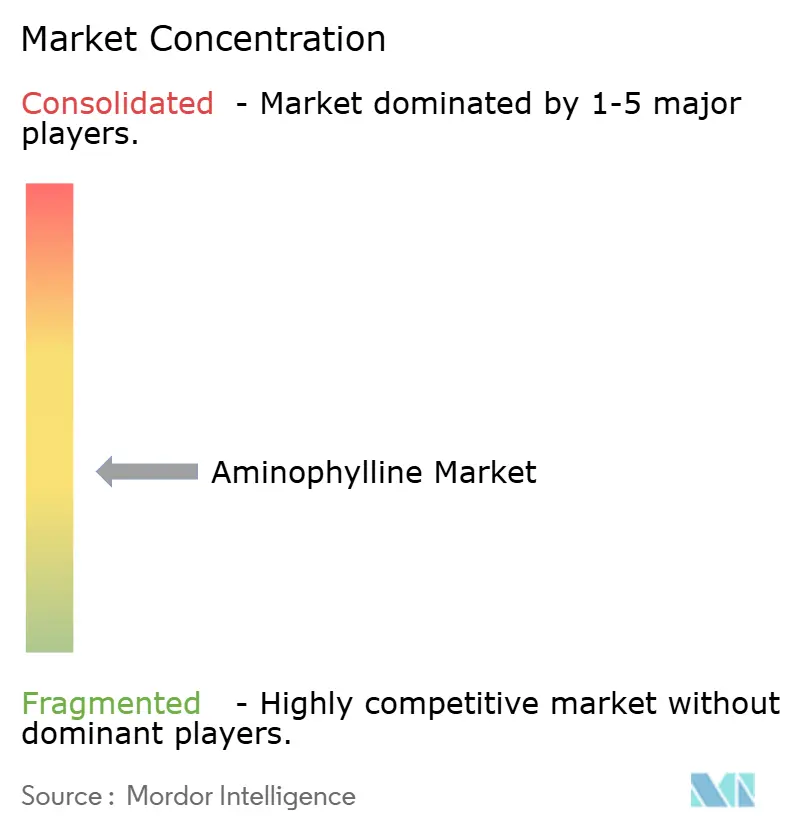
The aminophylline market exhibits moderate concentration, with established generics manufacturers such as Pfizer, Teva, and Hikma holding the largest combined share through integrated API-to-finished-dose operations. These firms leverage global supply redundancy to mitigate raw-material disruptions documented during the 277 active drug shortages reported in late 2024. Competition revolves around cost leadership, regulatory compliance, and delivery reliability rather than formulation innovation, given the molecule’s maturity and narrow therapeutic index.
Strategic moves include Pfizer’s SGD 1 billion API plant in Singapore that broadened regional sourcing resilience and Dr. Reddy’s USD 620 million investment in a Swiss unit to expand sterile injectable capacity. Teva reinforces distribution reach through strategic sNDAs that demonstrate regulatory agility across wider portfolios, indirectly supporting aminophylline brand reputation. On the M&A front, Merck’s USD 10 billion purchase of Verona Pharma underlines sustained big-pharma interest in respiratory therapeutics, potentially heightening competitive intensity over the long term.
Supply-chain digitisation remains a key differentiator. Leading players deploy AI-based predictive analytics to flag impending API shortages, enabling pre-emptive inventory allocation and reinforcing customer trust. Smaller regional firms exploit niche hospital relationships but face rising quality-compliance costs, nudging the market toward gradual consolidation without eliminating multisource competition.
Aminophylline Industry Leaders
-
Pfizer Inc.
-
Teva Pharmaceutical Industries Ltd
-
Hikma Pharmaceuticals PLC
-
Sandoz AG
-
Cipla Ltd.
- *Disclaimer: Major Players sorted in no particular order
Aminophylline Market Companies Covered in this Report
- Pfizer
- Teva Pharmaceutical Industries
- Hikma Pharmaceuticals
- Merck
- Dr. Reddy’s Laboratories
- Endo International
- Cipla
- Aurobindo Pharma
- Fresenius
- Sandoz Group
- Viatris
- Lannett Company
- Omega Laboratories
- AGP
- Amneal Pharmaceuticals
- ACTIZA Pharmaceutical
- Apotex
- B. Braun
- Glenmark Pharmaceuticals
- Jubilant Generics
Market Opportunities and Future Outlook
A key near-term opportunity is dependable access to injectable aminophylline for hospitals and NICUs, where rapid bronchodilation and controlled titration are used under protocolized care. In the United Kingdom, the University Hospitals of Leicester NHS Trust approved an Adult Intravenous Aminophylline Prescribing Guideline (Ref: B59/2024) in May 2024, showing how institutional protocols continue to shape where IV aminophylline fits in acute severe respiratory failure pathways. This creates demand signals for suppliers that can support therapeutic drug monitoring, reliable sterile supply, and hospital-pharmacy contracting requirements.
Upstream investment also offers a concrete route to higher availability and cost competitiveness through more xanthine-derivative capacity. Aarti Pharmalabs inaugurated a new manufacturing block at Tarapur Unit 5 (Maharashtra) in June 2026, adding 3,600 TPA and taking xanthine-derivatives capacity to 9,600 TPA, which expands the manufacturing base serving methylxanthine demand. At the same time, intermittent IV aminophylline shortages in the United States and the discontinuation of oral aminophylline formulations shift focus toward maintaining continuity for the remaining parenteral option, which supports dual sourcing, hospital inventory planning, and regionally diversified sterile fill-finish coverage.
Recent Industry Developments in Aminophylline Market
- June 2026: Aarti Pharmalabs inaugurated a new manufacturing block at its Tarapur Unit 5 site in Maharashtra, adding 3,600 TPA of xanthine-derivatives capacity and taking the total to 9,600 TPA. As aminophylline is part of the broader methylxanthine value chain, this type of upstream capacity addition supports supply resilience and cost competitiveness for manufacturers and tender-facing suppliers.
- July 2025: AstraZeneca confirmed plans to build its largest US manufacturing campus in Virginia as part of a USD 50 billion expansion program through 2030 focused on respiratory medicines. Expanded domestic manufacturing footprints can tighten supply continuity for respiratory portfolios and influence procurement preferences in North America for established therapies alongside newer agents.
- July 2024: Pfizer invested SGD 1 billion to add 429,000 sq ft of small-molecule API capacity in Singapore. The added API footprint strengthens regional sourcing options for respiratory medicines and supports continuity planning for mature molecules where multisource availability and predictable lead times matter for hospital and institutional buyers.
Aminophylline Market Report Scope and Research Methodology
Market Definition and Coverage
For this report, the aminophylline market is measured as the global revenue generated from aminophylline drug sales across common formulations and routes of administration, counted at the point of sale into healthcare channels and end users.
Scope exclusions: This sizing excludes adjacent bronchodilators that are not aminophylline, and it also excludes diagnostic services and devices used in respiratory care.
Segments Covered in This Report
- By Route of Administration
- Oral
- Injection
- By Dosage Form
- Tablet
- Solution
- Extended-release Capsule
- By Application
- COPD
- Asthma
- Infant Apnea
- Other Off-label Uses
- By End User
- Hospitals
- Clinics
- Ambulatory Surgical Centers
- Home Care Settings
- By Distribution Channel
- Hospital Pharmacies
- Retail Pharmacies
- Online Pharmacies
- Geography
- North America
- United States
- Canada
- Mexico
- Europe
- Germany
- United Kingdom
- France
- Italy
- Spain
- Rest of Europe
- Asia-Pacific
- China
- Japan
- India
- South Korea
- Australia
- Rest of Asia-Pacific
- Middle East and Africa
- GCC
- South Africa
- Rest of Middle East and Africa
- South America
- Brazil
- Argentina
- Rest of South America
- North America
Data Sources, Market Sizing, and Validation
Desk Research
Desk work starts with building a clean fact base on respiratory disease burden, treatment patterns, and pharma supply availability, before any modeling assumptions are set. We referenced public sources such as the World Health Organization for respiratory burden context, the US FDA drug database and labels for formulation and route mapping, and the European Medicines Agency public assessment reports for approval and safety signals.
To ground volumes and trade direction, we also reviewed sources such as UN Comtrade for cross border shipment indicators and country level health statistics portals that publish hospital activity and prescription context where available. Company filings, investor presentations, and reputable press were used to check portfolio positioning and manufacturing footprints, then a paid subscription for company financials and a patent database were used selectively to fill gaps in revenue attribution and product maturity. These examples are not exhaustive, and many other public sources were also used for data collection, cross checks, and research clarification.
Primary Interviews and Surveys
Primary validation was done through structured discussions with pharmaceutical manufacturers, distributors, hospital pharmacy stakeholders, and clinicians who see aminophylline use in acute and chronic respiratory care. Respondent input was used to confirm which formulations are actively stocked, how utilization shifts by setting, and how price and procurement behavior differ across Americas, EMEA, and APAC, so assumptions from desk research could be corrected where needed.
Distribution of primary research fieldwork respondents
| Company type | Respondent position | Region |
|---|---|---|
| Top tier: 26% | CXOs: 13% | APAC: 39% |
| Mid tier: 57% | Functional/Unit leaders: 33% | EMEA: 34% |
| Smaller Players: 17% | Managers: 54% | Americas: 27% |
Market-Sizing & Forecasting
Sizing begins with a top-down demand pool build that connects diagnosed respiratory cohorts and acute care episodes to realistic aminophylline usage rates, then converts expected treated volumes into value using observed price ranges by route and dosage form. Because the drug is used in defined clinical situations, the model is anchored on practical signals such as COPD and asthma prevalence trends, hospital admission intensity for respiratory exacerbations, injectable versus oral mix by care setting, typical pack sizes, and procurement and stocking cycles in hospital pharmacies.
After the top-down totals are produced, we corroborate them with selective bottom-up approximations, such as rolling up a sample of supplier and distributor revenue disclosures, and checking implied volumes against trade flows and known manufacturing footprints. Where direct data is thin, gaps are handled by applying conservative proxy shares from comparable markets, then re-checking outputs with interview feedback so the final totals remain realistic.
For forecasting, scenario analysis is used, since demand is influenced by clinical practice shifts and substitution toward alternative therapies in some countries. Assumptions on prevalence growth, hospital utilization, and price progression are refreshed with expert views, and then stress tested so the final CAGR path is not driven by one aggressive variable.
Data Validation & Update Cycle
Validation is done in layers, starting with unit checks that make sure volumes, prices, and implied patient reach stay consistent with real world treatment pathways. Analysts then compare outputs against independent signals such as respiratory hospitalization direction, trade movement, and changes in route mix, and any large variance triggers a re-check of assumptions and a follow-up with selected respondents.
Before sign-off, the model and narrative go through multiple analyst reviews so calculation logic, currency handling, and regional rollups are consistent. Reports are refreshed annually, and interim updates are made when a material event affects supply, pricing, regulation, or clinical use. Right before delivery, a final pass is completed so clients receive the latest updated view.
Mordor Intelligence's Aminophylline Market Sizing Compared With Other Published Estimates
Published market sizes for aminophylline do not always match because the drug is a small, mature category and small changes in scope and pricing logic can move the total. Differences usually come from what is counted as revenue, how route mix is treated, and whether the year and currency timing are kept consistent.
By tracking route-level utilization and refreshing price bands through procurement checks, Mordor Intelligence keeps the aminophylline total tied to hospitals and outpatient channels where the molecule is actually purchased, which helps avoid accidental overlap with broader bronchodilator baskets or blended currency assumptions.
Benchmark comparison
| Source | Market Size | Gaps in Research Methodology |
|---|---|---|
| Mordor Intelligence | USD 316.36 M (2025) | |
| Global Consultancy A | USD 305.31 M (2024) | Uses an earlier base year and applies a flatter price progression, which can understate value when injectable share and hospital procurement premiums are present. |
| Industry Publisher B | USD 300.51 M (2023) | Relies more on historical sales snapshots and a narrower channel read, which can miss year-to-year shifts in hospital stocking and route mix across regions. |
The table shows that the spread is largely explained by year selection and how price and channel boundaries are handled, rather than a fundamentally different demand story. With clear scope rules and practical checks on utilization and pricing, our estimate stays traceable to repeatable inputs that can be revalidated as market conditions change.
Key Questions Answered in the Report
What is the current global value of the aminophylline market?
The sector is valued at USD 323.7 million in 2026 with a forecast to reach USD 363.03 million by 2031.
How fast is the aminophylline market expected to grow through 2031?
The market is projected to expand at a CAGR of 2.32% across the 2026-2031 period.
Which dosage form is growing quickest in aminophylline sales?
Solution formulations are expanding at 5.67% CAGR owing to increased hospital and pediatric use.
Why is the Asia-Pacific region important for aminophylline demand?
Asia-Pacific shows the highest CAGR at 6.33% driven by rising COPD prevalence, wider insurance cover, and expanding API production capacity.
What clinical area offers the fastest growth opportunity?
Infant apnea treatments are forecast to grow at 6.55% CAGR due to ongoing global NICU expansion and proven drug efficacy.