
Adrenocortical Carcinoma Treatment Market Size and Share
Market Overview
| Study Period | 2020 - 2031 |
|---|---|
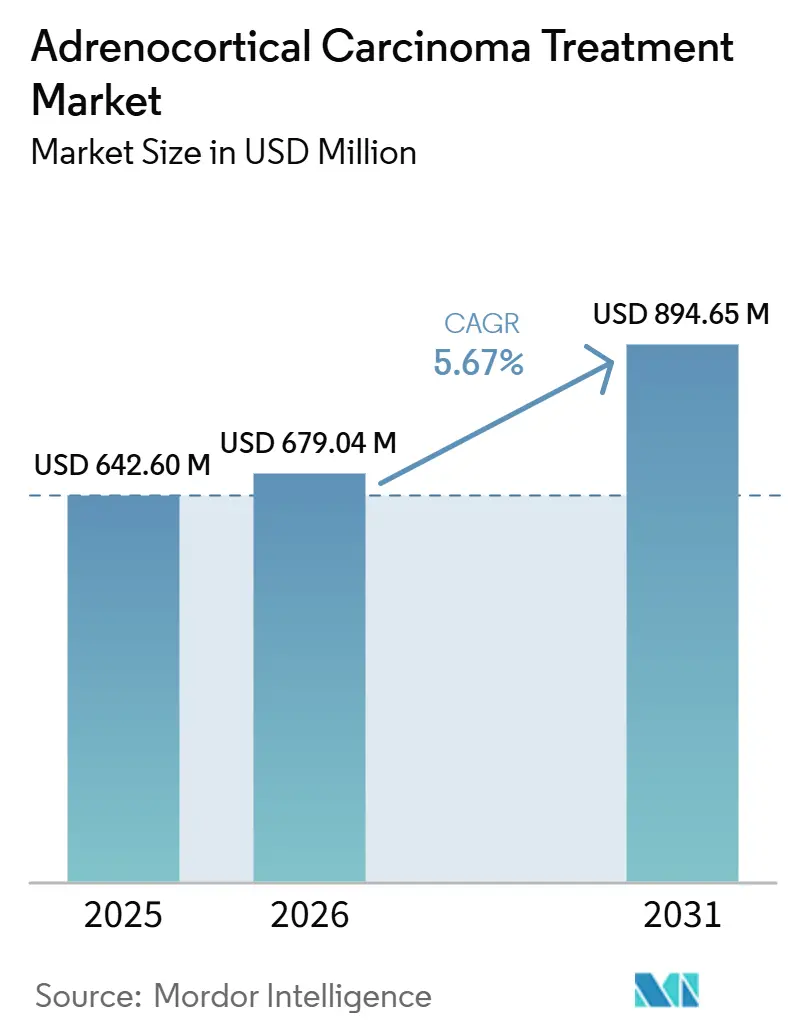
| Market Size (2026) | USD 679.04 Million |
| Market Size (2031) | USD 894.65 Million |
| Growth Rate (2026 - 2031) | 5.67 % |
| Fastest Growing Market | Asia-Pacific |
| Largest Market | North America |
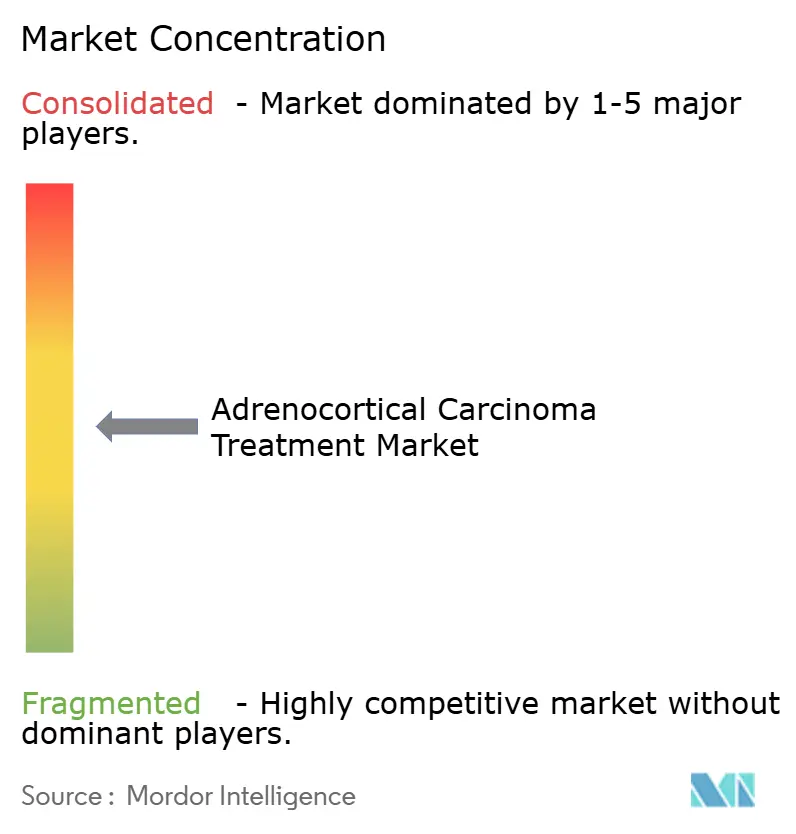
| Market Concentration | Medium |
Major Players *Disclaimer: Major Players sorted in no particular order Image © Mordor Intelligence. Reuse requires attribution under CC BY 4.0. | |
Adrenocortical Carcinoma Treatment Market Analysis by Mordor Intelligence
The Adrenocortical Carcinoma Treatment Market size is expected to increase from USD 642.60 million in 2025 to USD 679.04 million in 2026 and reach USD 894.65 million by 2031, growing at a CAGR of 5.67% over 2026-2031.
The Adrenocortical carcinoma treatment market is still shaped by a very small patient pool, but revenue remains supported by high treatment intensity and premium pricing around mitotane, which remains the only drug with both FDA and EMA approval for this disease. The Adrenocortical carcinoma treatment market is also moving toward biomarker-led development as IGF2 overexpression, Wnt and β-catenin pathway changes, and immune-response scoring frameworks are starting to guide trial design and patient selection. Public and nonprofit-backed trial activity has kept the pipeline active despite small cohorts, which has helped rare-cancer developers test combination regimens that would otherwise be difficult to fund at this scale. The Adrenocortical carcinoma treatment market now depends less on broad patient expansion and more on whether targeted combinations, better referral patterns, and stronger molecular selection can turn limited evidence into durable treatment use.
Key Report Takeaways
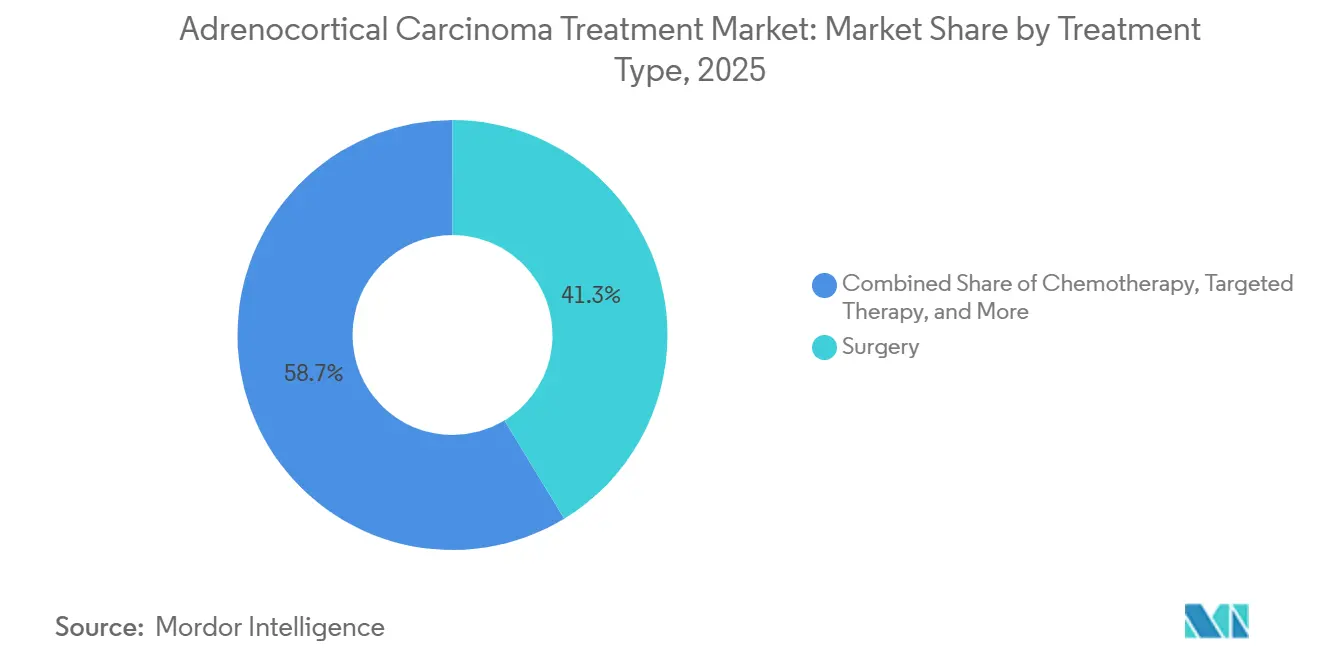
By treatment type, surgery held 41.30% of the Adrenocortical carcinoma treatment market share in 2025, while targeted therapy is projected to expand at a 7.23% CAGR through 2031.
By disease stage, localized disease accounted for 55.18% of revenue in 2025, while metastatic disease is forecast to record the highest CAGR at 7.54% through 2031.
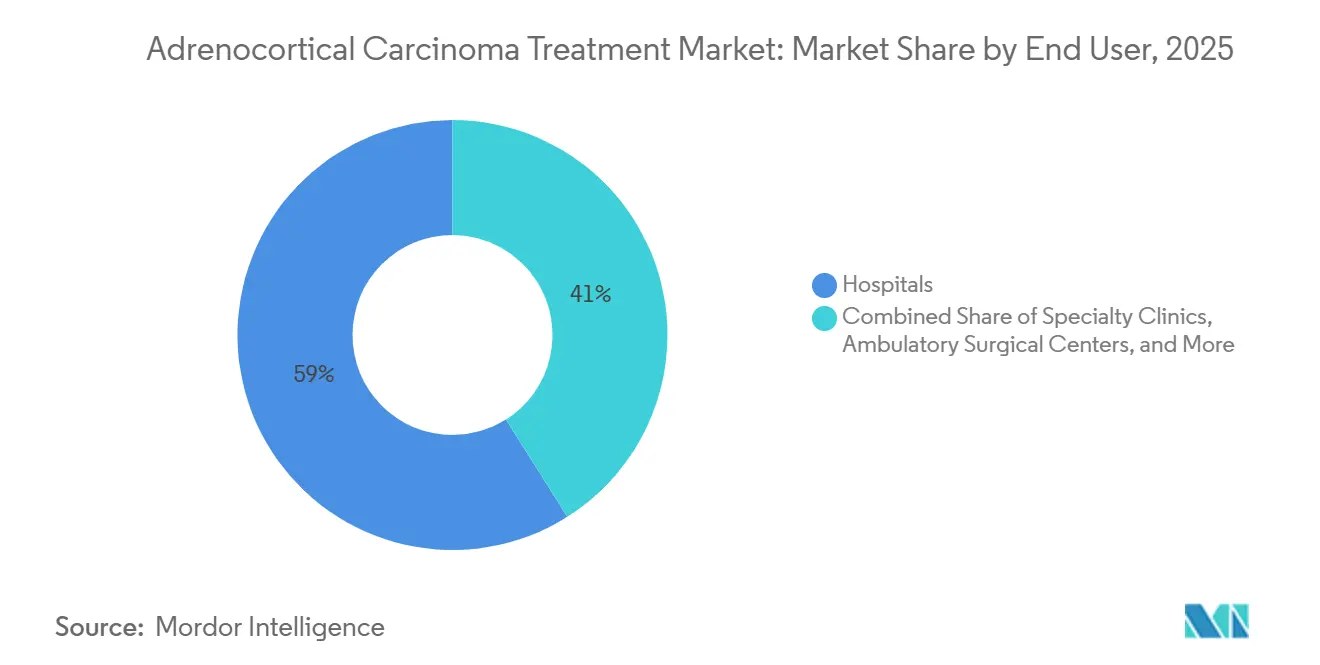
By end user, hospitals held 58.97% of revenue in 2025, while specialty clinics are expected to advance at a 7.84% CAGR through 2031.
By geography, North America held 43.38% of the Adrenocortical carcinoma treatment market share in 2025, while Asia-Pacific is set to grow at a 7.46% CAGR through 2031.
Note: Market size and forecast figures in this report are generated using Mordor Intelligence’s proprietary estimation framework, updated with the latest available data and insights as of January 2026.
Market Trends and Insights
Drivers Impact Analysis of Adrenocortical Carcinoma Treatment Market*
| Driver | (~) % Impact on CAGR Forecast | Geographic Relevance | Impact Timeline |
|---|---|---|---|
| Rising Adoption of Precision Oncology for Rare Endocrine Cancers | +1.2% | Global, with highest intensity in North America and Europe | Medium term (2-4 years) |
| Expansion of Orphan Drug Development and Regulatory Incentives | +0.9% | North America and EU | Medium term (2-4 years) |
| Higher Use of Multimodal Therapy in Advanced and Metastatic Disease | +1.1% | Global | Short term (≤ 2 years) |
| Stronger Referral Pathways to High-Volume Tertiary Cancer Centers | +0.6% | North America, Western Europe | Medium term (2-4 years) |
| Genomic Profiling Revealing Actionable Subsets for Trial Enrollment | +0.8% | North America, Europe, APAC | Long term (≥ 4 years) |
| More Earlier-Stage Detection from Incidental Imaging Findings | +0.5% | Global, with early gains in APAC and Europe | Short term (≤ 2 years) |
| Source: Mordor Intelligence | |||
Rising Adoption of Precision Oncology for Rare Endocrine Cancers
Molecularly guided treatment selection is increasingly replacing uniform therapeutic approaches in the adrenocortical carcinoma treatment market. IGF2 overexpression occurs in nearly 90% of tumors, while disruptions in the Wnt and β-catenin pathways occur in up to 54% of cases, providing researchers with recurring targets in a disease historically treated with more uniform strategies. A 2025 study published in npj Precision Oncology found that more than 70% of high-SIS patients were predicted to respond to immune checkpoint blockade, whereas more than 65% of low-SIS patients were identified as biologically resistant.[1]W. Hao, “Multi-modal Characterization of Metabolic and Immune Gene Clusters in Adrenocortical Carcinoma Treatment,” npj Precision Oncology, NATURE.COM. This distinction is significant because it can help reduce avoidable clinical trial failures in a disease with a limited patient population. Consequently, the adrenocortical carcinoma treatment market is increasingly favoring developers that align therapy design with companion diagnostics and more precise patient enrollment.
Expansion of Orphan Drug Development and Regulatory Incentives
Orphan drug policy support continues to benefit the adrenocortical carcinoma treatment market, as trial economics for this disease remain challenging without market exclusivity and development incentives. In the United States and Europe, orphan drug frameworks reduce commercial risk for sponsors that may otherwise struggle to justify Phase 2 development in an indication with a very low annual incidence. Public registries reflect this support, with small and mid-sized programs continuing to advance in rare endocrine oncology despite limited patient enrollment pools. Similarly, investigator-led advanced adrenocortical carcinoma studies continue in national multicenter settings, which would be difficult to sustain without regulatory and procedural support. These factors have expanded the number of companies willing to enter the adrenocortical carcinoma treatment market, even before new products receive approval.
Higher Use of Multimodal Therapy in Advanced and Metastatic Disease
Longer and more complex treatment pathways for patients with advanced disease support the adrenocortical carcinoma treatment market. The FIRM-ACT standard EDP-M regimen demonstrated a 23% objective response rate and a median overall survival of 14.8 months, while retrospective studies reported disease control rates ranging from 30% to 50%.[2]N. P. Rowell, “Oncological Management of Adrenocortical Carcinoma, An Update and Critical Review,” Oncology and Therapy, LINK.SPRINGER.COM. However, optimizing mitotane therapy remains challenging because its induction of CYP3A4 can reduce etoposide exposure by nearly 50%, creating uncertainty around real-world treatment outcomes. Radiotherapy is also becoming increasingly relevant, as a 2025 meta-analysis involving 1,338 patients reported lower locoregional recurrence and mortality in higher-risk patients receiving postoperative radiation therapy. These trends support market growth as patients progress through surgery, systemic therapy, radiation therapy, and later-line management rather than relying on a single treatment modality.
Genomic Profiling Revealing Actionable Subsets for Trial Enrollment
Genomic testing is enabling faster, more targeted patient enrollment in clinical trials, thereby shaping the adrenocortical carcinoma treatment market. A prospective study planned for 2025 across UK and Italian cohorts aims to validate a 10-gene targeted panel comprising CTNNB1, TP53, ZNRF3, RB1, MEN1, CDK4, NF1, ATM, APC, and the TERT promoter. The panel uses variant allele frequency thresholds of 5% to 10%, aligning with real-world diagnostic timelines. This approach can help identify eligible patients near the time of surgery, rather than after they are lost within fragmented referral pathways. The importance of this shift was underscored by the Phase 2 pembrolizumab-plus-mitotane study at MD Anderson, which closed in July 2024 after enrolling only three patients. Companies and treatment centers that establish genomic registries before initiating larger combination trials may gain a practical advantage in the adrenocortical carcinoma treatment market.
Restraints Impact Analysis of Adrenocortical Carcinoma Treatment Market*
| Restraint | (~) % Impact on CAGR Forecast | Geographic Relevance | Impact Timeline |
|---|---|---|---|
| Very Small Patient Pool Limiting Trial Scale and Commercial Uptake | -0.7% | Global | Short term (≤ 2 years) |
| High Total Cost of Care for Surgery, Mitotane, and Combination Regimens | -0.5% | South America, Middle East, Africa, and APAC developing markets | Medium term (2-4 years) |
| Severe Toxicity and Monitoring Burden of Current Systemic Therapies | -0.4% | Global | Medium term (2-4 years) |
| Slow Evidence Generation for Biomarker-Defined Patient Subsets | -0.3% | Global | Long term (≥ 4 years) |
| Source: Mordor Intelligence | |||
Very Small Patient Pool Limiting Trial Scale and Commercial Uptake
Low disease incidence, generally estimated at 1 to 2 cases per million people annually, continues to constrain the adrenocortical carcinoma treatment market. Small patient populations not only hinder clinical trial enrollment but also limit the commercial potential available after product launch. This challenge was evident in the MD Anderson study of pembrolizumab plus mitotane, which concluded after enrolling only three patients despite a strong clinical rationale for the combination. The limited patient pool also requires developers to recover research costs across a narrow treated population, potentially complicating pricing and reimbursement in healthcare systems that lack clear rare-disease funding pathways. Consequently, the adrenocortical carcinoma treatment market continues to rely heavily on a limited number of tertiary care centers that can consistently identify, refer, and treat patients.
Severe Toxicity and Monitoring Burden of Current Systemic Therapies
Mitotane use in routine clinical practice creates a significant management burden for the adrenocortical carcinoma treatment market. Mitotane requires plasma concentrations of 14–20 mg/L, and a 2024 audit at a tertiary center in Ireland reported a median of seven months to achieve this therapeutic range. The audit also found abnormal thyroid function in 83% of patients and nausea in 67%, highlighting the complexity of routine management even in specialist settings.[3]“Management and Outcomes of Patients Treated with Mitotane for Adrenocortical Carcinoma in a Tertiary Adrenal Tumour Centre in Ireland,” Endocrine Abstracts, ENDOCRINE-ABSTRACTS.ORG. Label and product information updates in North America and Europe continue to emphasize the risk of CYP3A4 interactions, affecting both current treatment practices and the design of combination-regimen clinical trials. These factors keep a significant share of the adrenocortical carcinoma treatment market within hospital settings and limit broader adoption in outpatient care.
*Our forecasts treat driver/restraint impacts as directional, not additive. The impact forecasts reflect baseline growth, mix effects, and variable interactions.
Adrenocortical Carcinoma Treatment Market Segment Analysis
By Treatment Type:
Growth Is Shifting Toward Targeted CombinationsSurgery is projected to lead treatment revenue in the adrenocortical carcinoma treatment market, with a 41.30% share in 2025, as it remains the only curative option for localized disease. Open adrenalectomy continues to dominate clinical practice, while laparoscopic surgery is limited to selected tumors measuring less than 6 cm without local invasion. This limitation concentrates procedure volumes in high-volume centers. Chemotherapy remains the next most important treatment pillar, primarily through etoposide, doxorubicin, and cisplatin combined with mitotane (EDP-M). However, mitotane's effect on etoposide exposure continues to complicate dose planning and treatment consistency. Radiation therapy holds a smaller share, although recent evidence has strengthened its role as an adjunct therapy for locoregional control and selected metastatic settings.
Targeted therapy is projected to register the fastest CAGR of 7.23% in the adrenocortical carcinoma treatment market through 2031, as new combination therapies demonstrate greater activity than older single-agent approaches. The CaboACC Phase II dataset reported a 78% disease control rate, an 11% objective response rate, and a median progression-free survival of 6 months for cabozantinib in advanced ACC. The camrelizumab-apatanib combination also demonstrated notable outcomes, with an objective response rate of nearly 50% and a median progression-free survival of 12.6 months. These findings support dual VEGFR and PD-1 targeting over checkpoint monotherapy.[4]Declan Moore, “Therapeutic Strategies for Adrenocortical Carcinoma, Integrating Genomic Insights, Molecular Targeting, and Immunotherapy,” Frontiers in Immunology, FRONTIERSIN.ORG. Within the adrenocortical carcinoma treatment industry, these developments indicate that future value creation will likely stem from combination-based targeted regimens rather than the incremental use of older cytotoxic backbones.



By Disease Stage:
Metastatic Care Carries Higher Revenue IntensityLocalized disease is projected to account for 55.18% of revenue in the adrenocortical carcinoma treatment market in 2025, as most newly diagnosed patients enter treatment through surgery and adjuvant planning. The use of adjuvant mitotane in this setting is becoming more selective, particularly following evidence from the ADIUVO trial showing no benefit from two years of adjuvant treatment in low- to intermediate-risk patients. However, pooled analyses continue to support its benefit in higher-risk disease. This shift is expected to reduce treatment use among lower-risk patients while concentrating systemic therapy spending on patients with a higher risk of recurrence. Locally advanced disease represents a smaller segment; however, neoadjuvant EDP-M is gaining importance for borderline-resectable disease, where tumor shrinkage may enable surgical intervention.
The metastatic disease segment is projected to expand at a CAGR of 7.54% in the adrenocortical carcinoma treatment market through 2031, as patients typically require multiple lines of treatment and incur higher cumulative drug utilization. This segment includes systemic therapies, local control procedures, salvage treatments, and enrollment in clinical studies, resulting in higher revenue per patient than earlier-stage disease management. The planned opening of the CLARITY study in April 2026 and the Phase 1 DS9051b trial, expected to be recruiting by February 2026, indicate that later-line treatment options for metastatic disease are likely to expand. Consequently, within the adrenocortical carcinoma treatment industry, metastatic care is expected to contribute a disproportionate share of incremental revenue despite the limited patient population.
By End User:
Hospitals Lead While Specialty Clinics Gain Follow-On VolumeHospitals are projected to account for 58.97% of revenue in the adrenocortical carcinoma treatment market in 2025, as they typically manage surgery, endocrinology, oncology, and therapeutic drug monitoring within a single institution. The infrastructure required for cortisol management, open adrenalectomy, adverse-event follow-up, and mitotane level testing further reinforces this concentration. Research and academic institutions also play an important role, particularly as early-stage programs, such as DS9051b and CY-101, are conducted through academic and specialist trial sites in Europe. Ambulatory surgical centers and home healthcare providers continue to hold smaller shares, as treatment complexity limits the extent to which care can shift away from specialist supervision.
Specialty clinics are forecast to grow at a CAGR of 7.84% through 2031, as stable patients transition to endocrine oncology follow-up outside major hospital outpatient units. This shift does not necessarily reduce revenue, as long-term management often involves drug titration, adverse-event assessment, imaging follow-up, and later-line treatment planning. The transition could accelerate as oral targeted regimens and maintenance-oriented immunotherapy combinations become more widely adopted following the maturation of ongoing trials. Consequently, the market is expected to develop a two-step care model, in which hospitals manage the initial high-acuity treatment episode while specialty clinics increasingly support recurring monitoring and maintenance activities.
Geography Analysis
North America Adrenocortical Carcinoma Treatment Market
North America is projected to hold the largest share of the adrenocortical carcinoma treatment market, accounting for 43.38% in 2025. The region benefits from strong referral networks, rare-disease reimbursement support, and a high concentration of specialized cancer centers. The United States remains central to evidence generation, with the National Cancer Institute expected to launch a Phase 2 trial of cabozantinib plus cemiplimab in February 2026. The planned 48-patient cohort will include adolescents and adults. Canada supports treatment continuity through updated product guidance, while the December 2024 revision to the Lysodren monograph is expected to align national labeling with more recent safety and drug-interaction standards. In revenue terms, North America is projected to account for 43.38% of the adrenocortical carcinoma treatment market size in 2025, reflecting more established clinical access and reimbursement systems than in most other regions.
Europe Adrenocortical Carcinoma Treatment Market
Europe is projected to remain the second-largest regional market, led by Germany, France, the United Kingdom, and Italy. The region continues to contribute substantially to foundational treatment evidence, as major European groups have helped establish standards for surgery, adjuvant treatment, and systemic care. Lysodren maintains full European Medicines Agency (EMA) marketing authorization for advanced, unresectable, metastatic, or relapsed adrenocortical carcinoma (ACC). The product information update scheduled for April 2025 is expected to preserve its position as the default systemic treatment option across Europe. Europe also continues to support clinical trial activity and multidisciplinary treatment planning, concentrating commercial activity in academic referral hospitals.
APAC Adrenocortical Carcinoma Treatment Market
Asia-Pacific is projected to record the fastest regional CAGR of 7.46% through 2031, driven by expanding cancer infrastructure and rising incidental detection through broader imaging use. China has gained greater visibility in clinical evidence following the Phase 2 study of camrelizumab plus apatinib, which reported stronger activity than most single-agent immunotherapy data in previously treated ACC. South Korea also contributes through the ACCOMPLISH trial of pembrolizumab plus lenvatinib, which remains active in post-platinum disease and is expected to complete its primary evaluation in 2027. Japan and India support the regional outlook through expanding oncology capacity rather than a high volume of branded ACC-specific commercial assets.
Competitive Landscape
Current revenue remains concentrated in a single approved product, despite a more dispersed development pipeline for adrenocortical carcinoma treatment. HRA Pharma Rare Diseases leads the market with Lysodren, the only drug approved by both the FDA and EMA for adrenocortical carcinoma (ACC). The company reinforced its position through the revised April 2025 Medication Guide, which updated practical safety guidance for real-world use and combination treatment planning. Large oncology companies, including Merck, Bristol Myers Squibb, AstraZeneca, and Pfizer, primarily participate through portfolio extensions rather than disease-specific platform development. This approach limits direct rivalry because most major companies are evaluating broad oncology assets in a highly narrow indication rather than developing comprehensive commercial franchises for ACC.
Strategic differentiation is emerging through novel mechanisms of action and combination strategies. Cytovation advanced CY-101 into the Phase II CLARITY trial, supported by Cancer Research UK and the Norwegian Cancer Society. This support strengthened the program’s trial-delivery model and expanded access to European clinical sites. Daiichi Sankyo also advanced DS9051b into a first-in-human study that includes ACC, introducing a targeted protein degradation approach distinct from mitotane- and checkpoint-based strategies. These developments are significant because early clinical positioning in rare cancers often determines which developers establish the strongest relationships with referral centers before pivotal trials begin.
The most significant competitive white spaces include biomarker-selected immunotherapy, mitotane optimization, and adjuvant treatment following surgical resection. Evidence supporting single-agent checkpoint blockade remains limited; however, combinations involving VEGFR and PD-1 inhibitors, as well as newer immune-modulating approaches, present a stronger rationale for future development. The primary commercial challenge is not a lack of therapeutic concepts but the difficulty of recruiting sufficient patients for timely clinical evaluation. Developers that establish genomic screening pathways and strong partnerships with academic centers are more likely to reduce enrollment timelines and maintain visibility among specialist prescribers. Therefore, the next phase of competition will likely depend as much on trial execution and access to treatment centers as on drug mechanism alone.
Adrenocortical Carcinoma Treatment Industry Leaders
Bristol-Myers Squibb Company
Exelixis, Inc.
Merck & Co., Inc.
Pfizer Inc.
Takeda Pharmaceutical Company Limited
- *Disclaimer: Major Players sorted in no particular order
Adrenocortical Carcinoma Treatment Market Companies Covered in this Report
- AstraZeneca
- Bayer
- Bristol-Myers Squibb
- Corcept Therapeutics Incorporated
- Cytovation AS
- Daiichi Sankyo
- EnGeneIC Ltd.
- Enterome
- EUSA Pharma
- Exelixis, Inc.
- HRA Pharma
- Ipsen
- Merck
- Millendo Therapeutics, Inc.
- Mundipharma International Limited
- Novartis
- Orphagen Pharmaceuticals, Inc.
- Pfizer
- Sanofi
- Takeda Pharmaceuticals

Recent Industry Developments in Adrenocortical Carcinoma Treatment Market
- July 2026: Cancer Research UK opened the Phase 2 CLARITY trial (ISRCTN15479264) of CY-101 (getacatetide), Cytovation's intratumoral peptide immunotherapy, in patients with locally advanced or metastatic ACC, with recruitment beginning April 16, 2026, at sites in the UK and Norway, and additional European sites planned. CY-101 targets the Wnt/β-catenin signaling pathway, implicated in up to 54% of ACC tumors, and simultaneously activates local antitumor immune responses, distinguishing it mechanistically from all currently approved or investigational systemic therapies.
- February 2026: Daiichi Sankyo initiated the Phase 1 first-in-human trial of DS9051b (NCT07189403), a novel targeted protein degradation molecule, in patients with advanced or metastatic ACC and metastatic castration-resistant prostate cancer, with recruiting commenced at EU-authorized sites including France. The trial received its initial EU and EEA regulatory decision in December 2025 and a substantial modification approval in January 2026, with primary data collection expected to extend to March 2028.
- February 2026: The National Cancer Institute launched a Phase 2 trial (NCT06900595) evaluating cabozantinib combined with cemiplimab (REGN2810) in adolescents and adults with advanced adrenocortical cancer, targeting 48 participants, with recruitment beginning February 22, 2026. The trial extends the cabozantinib clinical dataset beyond the CaboACC study and introduces a PD-1 inhibitor combination arm in a government-funded trial design, reducing commercial development risk for the VEGFR-ICI combination.
- January 2025: Cancer Research UK, Cytovation AS, and the Norwegian Cancer Society announced a multinational partnership to initiate the CLARITY Phase 2 trial for CY-101 in advanced ACC. Cancer Research UK's Centre for Drug Development designed and is delivering the trial, with Norwegian Cancer Society support enabling patient access and site diversity across Nordic and European geographies.


Global Adrenocortical Carcinoma Treatment Market Report Scope
The adrenocortical carcinoma treatment market is defined as the global industry focused on therapies and interventions for this rare and aggressive cancer of the adrenal cortex. It encompasses conventional approaches such as surgery and mitotane therapy, alongside emerging targeted therapies, immunotherapies, and clinical trial innovations. The market is shaped by pharmaceutical companies, research institutions, and healthcare providers working to address the high unmet medical needs due to limited treatment options and poor prognosis.
The adrenocortical carcinoma treatment market is segmented by genetic disease type, treatment stage, end user, and geography. By disease type, it is further divided into surgery, chemotherapy, immunotherapy, radiation therapy, and immunotherapy. By disease stage, it is segmented into localized stage, locally advanced stage, and metastatic stage. By end user, the market is segmented into hospitals, specialty clinics, ambulatory surgical centers, research and academic institutions, and home healthcare settings. The geography segment is further divided into North America, Europe, Asia-Pacific, and the rest of the world. The report also covers the estimated market sizes and trends for 17 countries across major regions globally. The report offers the market size and forecasts in value (USD) for the above segments.
| Surgery |
| Chemotherapy |
| Targeted Therapy |
| Radiation Therapy |
| Immunotherapy |
| Localized Stage |
| Locally Advanced Stage |
| Metastatic Stage |
| Hospitals |
| Specialty Clinics |
| Ambulatory Surgical Centers |
| Research and Academic Institutions |
| Home Healthcare Settings |
| North America | United States |
| Canada | |
| Mexico | |
| Europe | Germany |
| United Kingdom | |
| France | |
| Italy | |
| Spain | |
| Rest of Europe | |
| Asia-Pacific | China |
| Japan | |
| India | |
| Australia | |
| South Korea | |
| Rest of Asia-Pacific | |
| Middle East and Africa | GCC |
| South Africa | |
| Rest of Middle East and Africa | |
| South America | Brazil |
| Argentina | |
| Rest of South America |
| By Treatment Type | Surgery | |
| Chemotherapy | ||
| Targeted Therapy | ||
| Radiation Therapy | ||
| Immunotherapy | ||
| By Disease Stage | Localized Stage | |
| Locally Advanced Stage | ||
| Metastatic Stage | ||
| By End User | Hospitals | |
| Specialty Clinics | ||
| Ambulatory Surgical Centers | ||
| Research and Academic Institutions | ||
| Home Healthcare Settings | ||
| By Geography | North America | United States |
| Canada | ||
| Mexico | ||
| Europe | Germany | |
| United Kingdom | ||
| France | ||
| Italy | ||
| Spain | ||
| Rest of Europe | ||
| Asia-Pacific | China | |
| Japan | ||
| India | ||
| Australia | ||
| South Korea | ||
| Rest of Asia-Pacific | ||
| Middle East and Africa | GCC | |
| South Africa | ||
| Rest of Middle East and Africa | ||
| South America | Brazil | |
| Argentina | ||
| Rest of South America | ||


Key Questions Answered in the Report
What is the 2031 value expected for adrenocortical carcinoma treatment?
The market is projected to reach USD 894.65 million by 2031, rising from USD 679.04 million in 2026 at a 5.67% CAGR over 2026-2031.
Which treatment type currently leads revenue in adrenocortical carcinoma treatment?
Surgery led with a 41.30% share in 2025 because it remains the only curative option for localized disease and is the entry point for most treatment pathways.
Which part of care is growing fastest in adrenocortical carcinoma treatment?
Targeted therapy is projected to grow at 7.23% CAGR, while metastatic disease is the fastest-growing stage at 7.54% CAGR due to higher treatment intensity and longer care duration.
Why do hospitals remain the main treatment setting for ACC care?
Hospitals held 58.97% of revenue in 2025 because ACC care needs surgery, endocrinology, oncology, imaging, and mitotane drug-level monitoring in one place.
Which region leads adrenocortical carcinoma treatment demand today?
North America led with a 43.38% share in 2025, supported by specialized cancer centers, rare-disease reimbursement pathways, and active public trial programs.
What is the main commercial challenge for new ACC therapies?
The biggest challenge is the very small patient pool, which slows enrollment, limits post-launch volume, and raises pressure on pricing and reimbursement for new therapies.
Page last updated on:





