
Acute Myeloid Leukemia Therapeutics Market Size and Share
Market Overview
| Study Period | 2020 - 2031 |
|---|---|
| Market Size (2026) | USD 3.18 Billion |
| Market Size (2031) | USD 5.18 Billion |
| Growth Rate (2026 - 2031) | 10.29 % |
| Fastest Growing Market | Asia Pacific |
| Largest Market | North America |
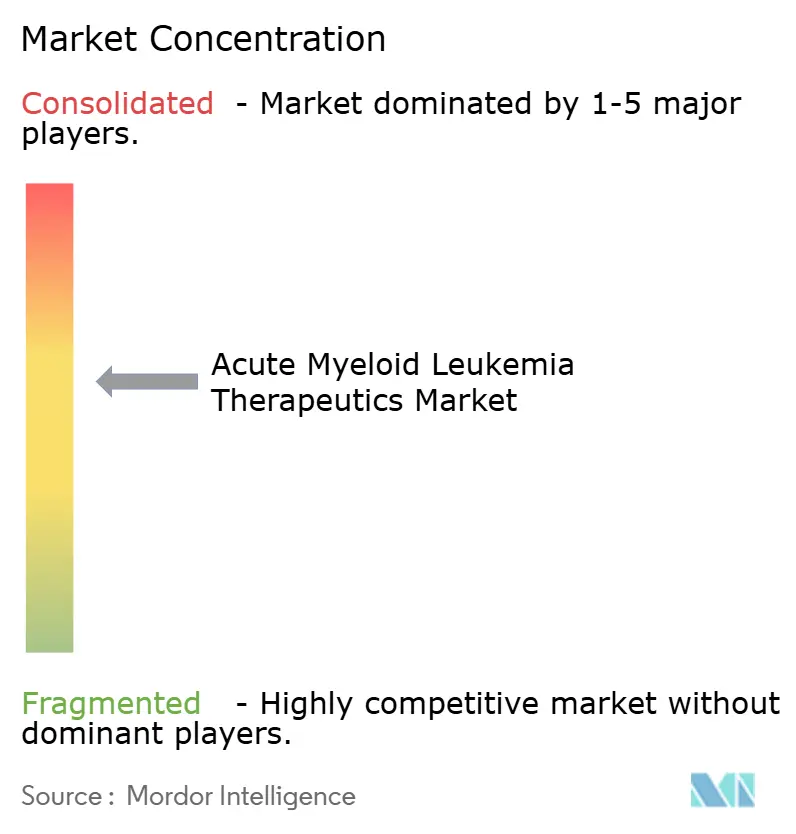
| Market Concentration | Medium |
Major Players *Disclaimer: Major Players sorted in no particular order Image © Mordor Intelligence. Reuse requires attribution under CC BY 4.0. | |
Acute Myeloid Leukemia Therapeutics Market Analysis by Mordor Intelligence
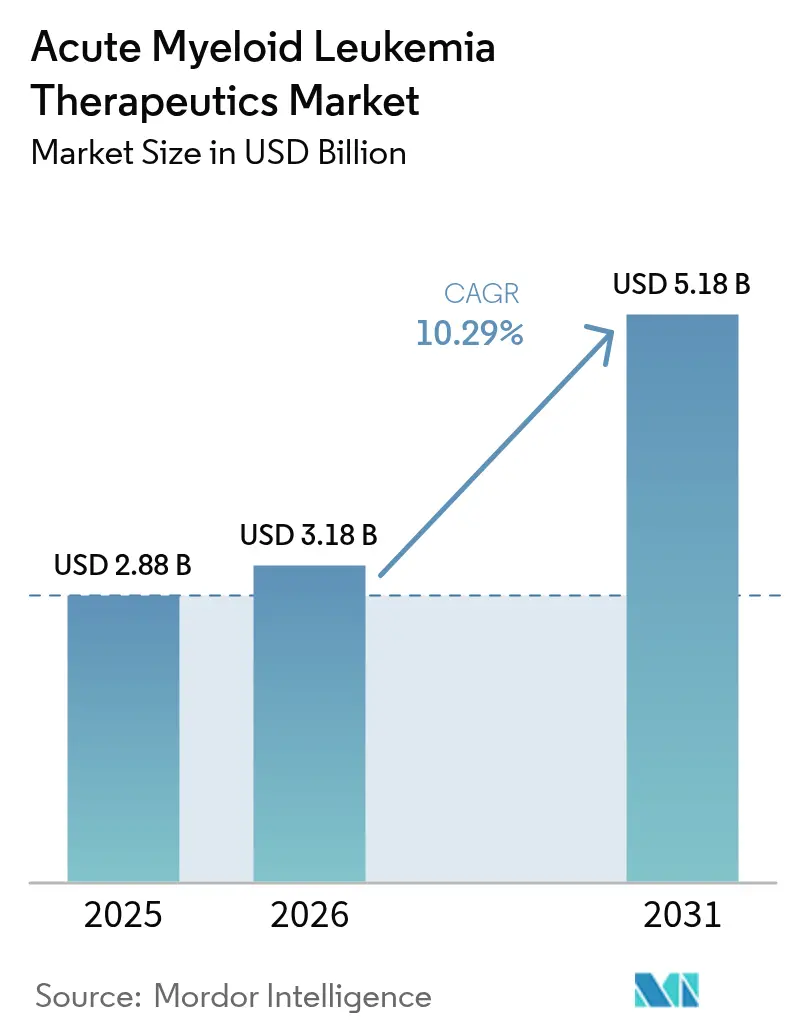
The acute myeloid leukemia therapeutics market size was valued at USD 2.88 billion in 2025 and estimated to grow from USD 3.18 billion in 2026 to reach USD 5.18 billion by 2031, at a CAGR of 10.29% during the forecast period (2026-2031). Therapeutic innovation is shifting clinical practice away from broad-spectrum chemotherapy toward targeted therapies that exploit precise molecular weaknesses, such as FLT3, IDH1/2, BCL-2, and menin. Regulatory agencies have quickened review timelines, resulting in several first-in-class approvals that immediately translated into commercial uptake. Venture investment and large-cap licensing deals channel fresh capital into discovery programs, while next-generation sequencing (NGS) diagnostics expand the treatable population by identifying actionable mutations. Although chemotherapy still dominates treatment volume, the commercial spotlight now falls on oral targeted combinations that lower hospitalization needs, increase adherence, and improve survival, especially among frail seniors. Supply-chain vulnerabilities and rising genetic-testing costs temper the outlook but do not derail the long-term growth trajectory.
Key Report Takeaways
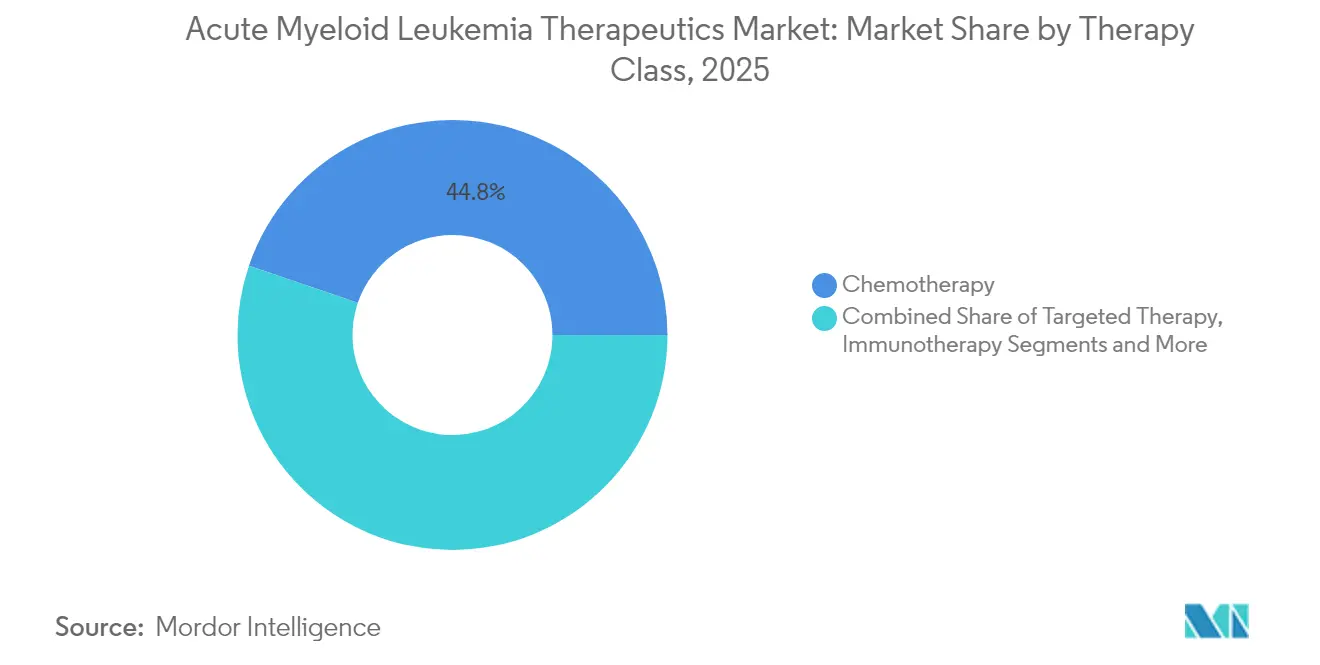
- By therapy class – Chemotherapy retained 44.78% of the acute myeloid leukemia therapeutics market share in 2025, whereas immunotherapy is projected to log the fastest 12.14% CAGR through 2031.
- By mechanism/molecular target, FLT3 inhibitors led with a 23.21% revenue share in 2025; BCL-2 inhibitors are expected to expand at a 13.22% CAGR, the highest among all molecular targets.
- By patient age group, adults aged 18-64 years accounted for a 50.86% share in 2025, while the ≥65-year cohort is set to grow at a 12.06% CAGR, driven by better-tolerated oral regimens.
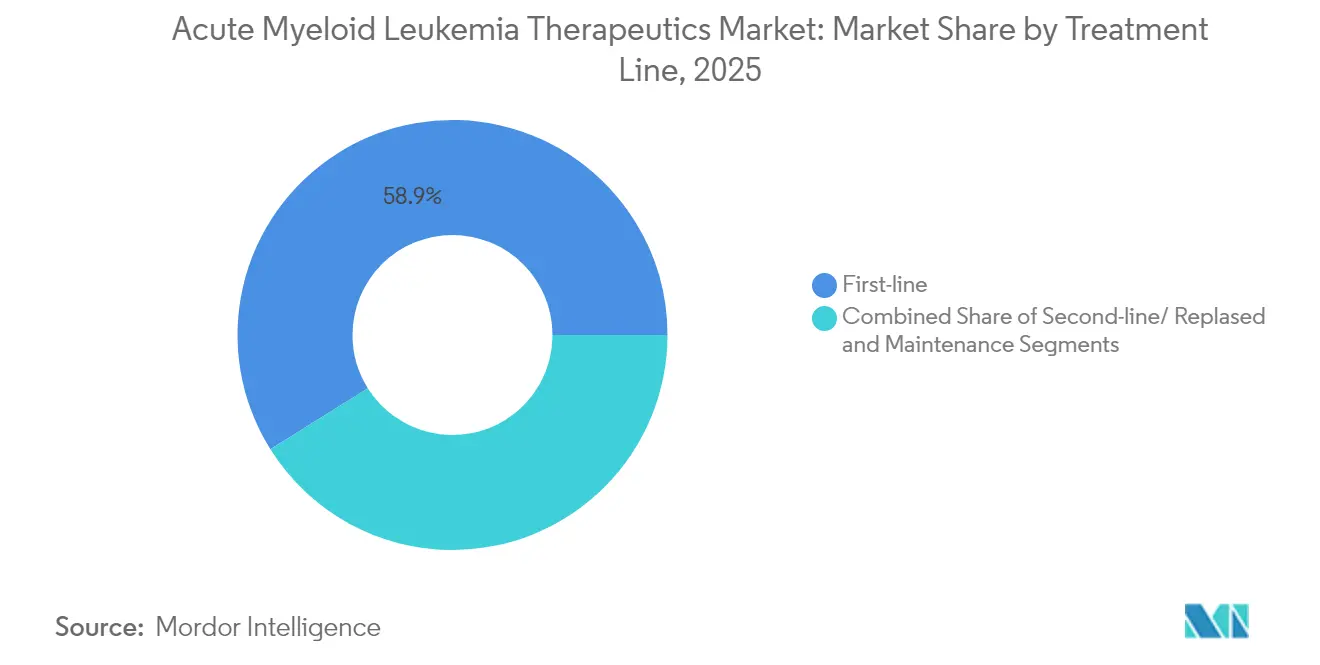
- By treatment line, First-line therapies commanded a 58.92% share in 2025; however, second-line / relapsed treatments are forecast to rise at a 13.07% CAGR, as survival improvements enable multiple lines of care.
- By end user, hospitals captured a 58.12% share in 2025; home and outpatient settings represent the fastest-growing channel, with a 13.34% CAGR, supported by reimbursement for at-home infusions.
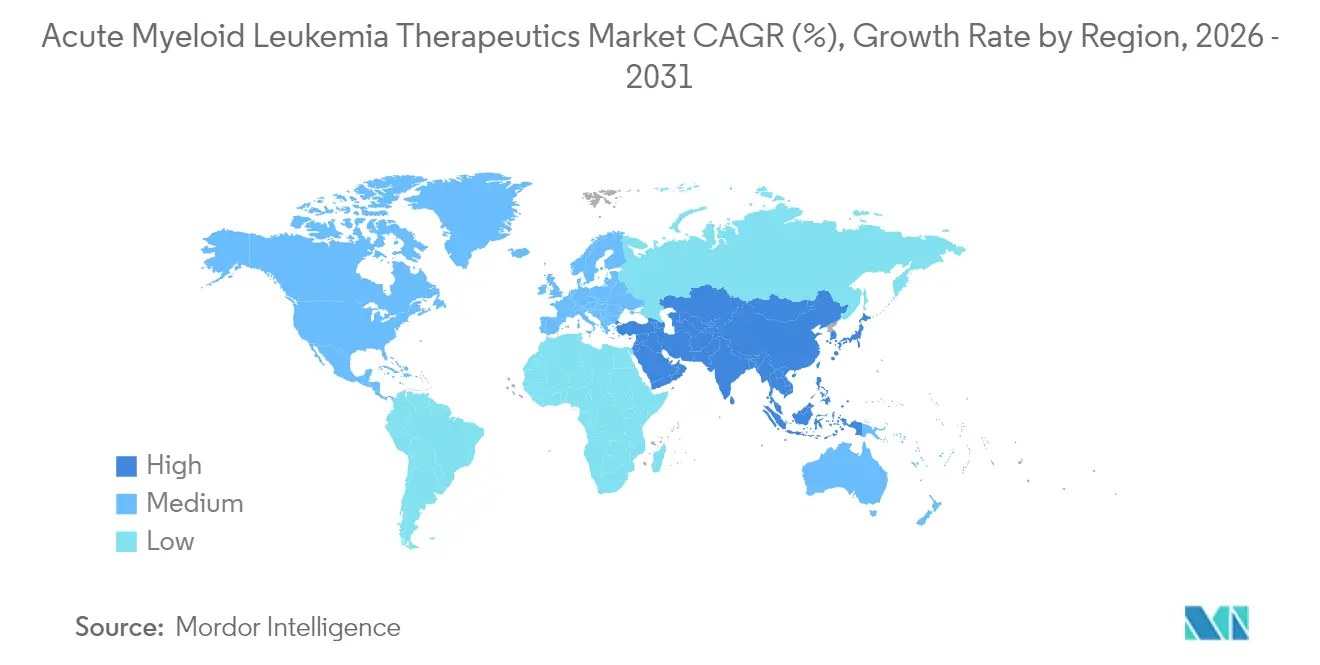
- By geography, North America led with a 43.12% market share in 2025, while the Asia-Pacific region is expected to advance at a 11.95% CAGR, the steepest regional growth rate through 2031.
Note: Market size and forecast figures in this report are generated using Mordor Intelligence’s proprietary estimation framework, updated with the latest available data and insights as of 2026.
Market Trends and Insights
Drivers Impact Analysis of Acute Myeloid Leukemia Therapeutics Market*
| Driver | (~) % Impact on CAGR Forecast | Geographic Relevance | Impact Timeline |
|---|---|---|---|
| Rising incidence of AML among ageing populations | +1.8% | Global; strongest in North America & Europe | Long term (≥ 4 years) |
| Precision-medicine approvals for FLT3/IDH/BCL-2 inhibitors | +2.3% | North America & EU; spreading to APAC | Medium term (2-4 years) |
| Escalating global R&D investments & venture financing | +1.2% | US & EU innovation hubs | Medium term (2-4 years) |
| Expedited FDA/EMA pathways & orphan-drug incentives | +1.5% | North America & EU | Short term (≤ 2 years) |
| Outpatient venetoclax-based regimens expanding treatable pool | +1.9% | Global; high impact in LMICs | Short term (≤ 2 years) |
| Wider adoption of NGS companion diagnostics in emerging markets | +1.1% | Core APAC; spill-over to MEA & Latin America | Long term (≥ 4 years) |
| Source: Mordor Intelligence | |||
Rising Incidence Of AML Among Ageing Populations
Global life expectancy gains widen the pool of patients over 65 years who are most susceptible to AML. The incidence in this cohort accelerates demand for gentler yet potent regimens, a niche currently filled by venetoclax-based oral combinations that report an overall response rate of 73% in real-world frail cohorts.[1] Outpatient-enabled dosing reduces hospital burden and widens geographic reach, driving a 12.42% CAGR among geriatric patients. National screening policies that encourage baseline bloodwork in seniors further enlarge the diagnosed population.
Precision-Medicine Approvals For FLT3/IDH/BCL-2 Inhibitors
Mutation-specific drugs are rewriting first-line standards. Revumenib became the first menin inhibitor approved for KMT2A-rearranged leukemia, while quizartinib nearly doubled median overall survival in FLT3-ITD-positive disease when paired with backbone chemotherapy. Regulatory confidence in these data spurs companies to broaden label indications and bundle companion diagnostics, resulting in a multiplier effect across therapeutic and testing revenues.
Escalating Global R&D Investments & Venture Financing
Large-cap firms are pouring capital into differentiated modalities. Gilead earmarked USD 1.5 billion for trispecific T-cell engagers, underscoring its confidence in next-generation immunotherapies. Grant support, such as NIH-backed protein therapeutics, extends the innovative runway for smaller biotechs. Deepening pipelines shortens cycle times between discovery and first-in-human studies, sustaining the growth engine of the acute myeloid leukemia therapeutics market.
Expedited FDA/EMA Pathways & Orphan-Drug Incentives
Breakthrough, fast-track, and orphan designations truncate review cycles and add exclusivity benefits. Ziftomenib secured breakthrough status for NPM1-mutant AML, granting rolling submissions and frequent FDA guidance. Comparable EMA mechanisms ensure synchronized European launches, reinforcing global revenue prospects.
Restraints Impact Analysis of Acute Myeloid Leukemia Therapeutics Market*
| Restraint | (~) % Impact on CAGR Forecast | Geographic Relevance | Impact Timeline |
|---|---|---|---|
| Stringent multi-phase clinical-trial attrition | -1.4% | Global; highest where trial infrastructure is weak | Long term (≥ 4 years) |
| Severe chemo-toxicity & treatment-related mortality | -1.1% | Global; acute among elderly | Medium term (2-4 years) |
| Cold-chain/IP barriers limiting novel-drug access in LMICs | -0.9% | APAC, MEA, Latin America | Long term (≥ 4 years) |
| Rising cost burden of genomics-driven care | -1.2% | Varies with reimbursement stringency | Medium term (2-4 years) |
| Source: Mordor Intelligence | |||
Stringent Multi-Phase Clinical-Trial Attrition
AML’s biological diversity demands large, stratified trials that encounter enrollment bottlenecks and soaring costs. Moleculin’s MIRACLE study highlights the challenge of recruiting mutation-matched subjects across multiple continents, a hurdle that prolongs timelines and increases costs. Investors price this risk into financing terms, potentially slowing pipeline expansion.
Severe Chemo-Toxicity & Treatment-Related Mortality
Legacy induction regimens still carry high mortality, especially in patients over 70 years, prompting clinicians to favor lower-intensity options or hospice care. Although targeted drugs mitigate toxicity, they often serve as add-ons rather than substitutes, leaving cumulative side effects unresolved and curbing overall adoption.[2]
*Our forecasts treat driver/restraint impacts as directional, not additive. The impact forecasts reflect baseline growth, mix effects, and variable interactions.
Acute Myeloid Leukemia Therapeutics Market Segment Analysis
By Therapy Class:
Immunotherapy Drives Innovation WaveChemotherapy controlled 44.78% of the acute myeloid leukemia therapeutics market in 2025, yet immunotherapy’s 12.14% CAGR defines the future revenue slope. Early clinical data on CD371-directed CAR-T cells and CD33-GSPT1 antibody-drug conjugates demonstrate durable remissions in relapsed populations where cytotoxic therapies fail. Stem-cell transplant conditioning also entered the precision era with FDA approval of treosulfan plus fludarabine, a regimen that produces superior long-term survival compared with older busulfan protocols.
Investment inflows sustain this momentum. Bristol Myers Squibb aligns its cell-therapy franchise with antibody conjugates to capture multiple immune pathways, and academic consortia explore dual-antigen CAR designs to bypass antigen-loss relapse. Supportive-care innovations now focus on mitigating cytokine release, thereby broadening eligibility for outpatient administration. The therapy-class mix will therefore shift steadily toward immune-modulating agents that integrate seamlessly with targeted small molecules, expanding the acute myeloid leukemia therapeutics market.

By Mechanism/Molecular Target:
BCL-2 Inhibitors Lead GrowthFLT3 inhibitors held 23.21% mechanism-level share in 2025, yet the BCL-2 subclass posts the sharpest 13.22% CAGR, propelled by venetoclax’s robust complete-remission depth when combined with hypomethylating agents. Menin inhibition inaugurates a new mechanistic era after revumenib’s approval, broadening therapeutic geometry beyond kinase or epigenetic targets.
Pipeline synergies multiply as developers pair BCL-2 blockade with FLT3 or IDH inhibition to forestall clonal escape. Hedgehog and CD33 pathways retain strategic relevance in combination cocktails aimed at minimal residual disease. Consequently, sponsors with diversified target portfolios, rather than single-asset bets, are positioned to capitalize on the projected gains in the acute myeloid leukemia therapeutics market size for the period.
By Patient Age Group:
Geriatric Segment Transforms TreatmentThe ≥65-year cohort drives a 12.06% CAGR even though adults aged 18-64 years still generate the largest revenue slice. Venetoclax-based low-intensity regimens achieve a 73% composite remission rate in octo- and nonagenarians, shifting therapeutic decision-making from palliation to disease eradication in seniors. Reduced transfusion and hospitalization requirements enable decentralized care, improving quality of life.
Pediatric incidence remains low, but benefits from dedicated centers that employ genomic-guided risk stratification and early transplant referral. Intravenous delivery innovations, including smaller-volume CAR-T products, may eventually bridge the age divide. Overall, a fine-grained, age-aware model replaces the historical one-size-fits-all paradigm, expanding the acute myeloid leukemia therapeutics market.
By Treatment Line:
Second-Line Therapies Gain MomentumFirst-line settings capture 58.92% of revenue, but second-line and relapsed therapy areas accelerate at a 13.07% CAGR, as survival gains allow for multiple treatment sequences. Venetoclax, combined with cytidine analogs, dominates salvage regimens, while emergent cell therapies anchor bridge-to-transplant strategies. Maintenance therapy gains commercial focus, utilizing low-dose targeted agents to sustain remission and generate annuity-like revenue streams, thereby increasing the size of the acute myeloid leukemia therapeutics market.
Sequential therapy design now guides clinical-trial architecture, with sponsors developing drug portfolios explicitly staged for first, second, and maintenance lines to maximize lifetime value per patient. The trend reinforces the demand for molecular monitoring tools that detect early relapse, thereby connecting diagnostic and therapeutic revenue streams.
By End User:
Home Care Revolution AcceleratesHospitals represented 58.12% of the acute myeloid leukemia therapeutics market in 2025, whereas home/outpatient venues are projected to set the fastest 13.34% CAGR through 2031. Medicare’s 2025 reimbursement update authorizes higher payment for home infusions, removing a key financial barrier. Portable infusion pumps and digital adherence tools make daily oral care feasible outside inpatient wards, further decentralizing care.
Academic centers remain indispensable for complex cellular therapies; however, they are increasingly partnering with community clinics for post-infusion follow-up. Ambulatory centers navigate the intricacies of coverage but benefit from patients' preference for shorter stays. Taken together, shifting care delivery patterns expand the acute myeloid leukemia therapeutics market while easing capacity constraints at tertiary hospitals.
Geography Analysis
North America Acute Myeloid Leukemia Therapeutics Market
North America captured 43.12% of the acute myeloid leukemia therapeutics market in 2025. The United States drives this dominance through robust private and public reimbursement, widespread mandatory testing, and rapid FDA pathways that reduce the time from submission to bedside. Academic networks such as the Alliance for Clinical Trials link smaller hospitals into nationwide studies, accelerating trial recruitment and broadening early access. Cellular-therapy centers of excellence anchor a thriving referral ecosystem, ensuring continued uptake of high-value interventions. Canada mirrors practice patterns but faces occasional formulary lags. At the same time, Mexico improves access through participation in cross-border clinical trials. Collectively, the region is expected to maintain momentum through 2030, as payer policies increasingly endorse precision approaches that demonstrate superior value.
Europe Acute Myeloid Leukemia Therapeutics Market
Europe ranks second by revenue, leveraging centralized EMA approvals to harmonize drug availability. Markets such as Germany and the United Kingdom rapidly integrate newly authorized therapies after rigorous health technology appraisals validate their cost-effectiveness. Recent EMA endorsements of Rytelo and the CRISPR-derived Casgevy illustrate a willingness to back transformative modalities. National genomic strategies fund NGS panels, ensuring that mutation-matched therapies reach eligible patients. Southern European countries adopt at a measured pace due to budget constraints, yet benefit from EU joint procurement initiatives that negotiate volume-based discounts. Overall, Europe’s evidence-driven environment sustains stable growth and drives clinical trial diversity, which is essential for mechanistic validation.
APAC and MEA Acute Myeloid Leukemia Therapeutics Market
Asia-Pacific logs the highest 11.95% CAGR as healthcare infrastructure modernizes and diagnostic capacity expands. Japan’s universal coverage rapidly reimburses approved agents, while local studies adapt global regimens to Asian metabolic profiles. China’s domestic innovators are leveraging government funding to enter Phase 3 international trials, aiming to match or exceed Western benchmarks in survival rates. India proves the cost-effectiveness of outpatient venetoclax protocols, making precision care viable even in lower-resource settings. Australia and South Korea serve as gateways for clinical trials for multinationals targeting regional approval. The Middle East and Africa remain nascent but show incremental progress through public–private partnerships that build diagnostic labs and negotiate tiered pricing. Together, these trends propel theacute myeloid leukemia therapeutics market into new high-growth territories.
Regulatory Landscape
Regulatory oversight for AML therapeutics is shaped by accelerated review and orphan-drug frameworks that reward biomarker-defined programs and clinically meaningful endpoints in high-unmet-need populations. In the United States, FDA guidance for developing drugs and biological products for AML underpins trial-design expectations around mutation-stratified enrollment and combination regimens, reflecting the market shift toward FLT3, IDH1/2, BCL-2, and menin-targeted approaches.
Recent actions reinforce this direction: in October 2025, the FDA approved revumenib (Revuforj) for relapsed or refractory AML with KMT2A translocations, and in November 2025, the FDA approved ziftomenib (Komzifti) for relapsed or refractory NPM1-mutated AML. In May 2026, the FDA approved the combination of decitabine and cedazuridine (Inqovi) plus venetoclax for newly diagnosed AML in adults aged 75 or older or those ineligible for intensive induction chemotherapy, highlighting regulatory emphasis on expanding access to lower-intensity, outpatient-friendly regimens. In Europe, the EMA continues to support innovation through orphan designations for AML (including designations recorded in 2024 and 2025), which include protocol assistance and incentives that help sustain late-stage development across multiple novel mechanisms.
Value Chain Analysis
The AML therapeutics value chain starts with target discovery and companion-diagnostic enablement, then moves through clinical development, GMP manufacturing, and controlled distribution into hospitals and specialty oncology centers, with home and outpatient settings playing a larger role as regimen administration shifts. As targeted small molecules and emerging immunotherapies scale, the chain increasingly depends on specialized CDMOs for complex process development and on clinical logistics partners that coordinate multi-country supply of backbone agents and combination components used in trials.
Manufacturing and commercialization partnerships have become a key link between R&D and supply. Kura Oncology and Kyowa Kirin established a global collaboration for ziftomenib (November 2024), with defined responsibilities that include U.S. manufacturing, while Made Scientific partnered with Hemogenyx Pharmaceuticals (September 2025) to provide clinical and commercial manufacturing support for HG-CT-1, an autologous CAR-T therapy for relapsed/refractory AML. For antibody-based and other biologic candidates, early CDMO contracting (for example, KBI Biopharma supporting Alanis Therapeutics on a pre-clinical antibody program announced in December 2024) shows how capacity access is secured before clinic. On the downstream side, specialty pharmacy and distributor networks (such as Biologics by McKesson, Onco360, Optum Specialty, ASD Healthcare, and Cardinal Health Specialty Distribution) act as the access-control layer for high-cost AML regimens, managing prior authorization workflows, patient support services, and reliable delivery of oral and infused therapies.
Competitive Landscape
The acute myeloid leukemia therapeutics market remains moderately fragmented. AbbVie and Genentech's venetoclax franchise generates blockbuster revenue, driven by a compelling survival benefit and flexible oral dosing. Bristol Myers Squibb expands its hematology footprint through CAR-T platforms and a CD33-GSPT1 conjugate that seeks to outrun antigen escape. Gilead's USD 1.5 billion collaboration with Merus underscores the industry's appetite for multispecific T-cell engagers that promise off-the-shelf convenience and deep remissions. Pfizer strengthens its position via quizartinib, creating a dual-FLT3 offering alongside gilteritinib, while Astellas co-develops maintenance regimens to extend the patient journey and lifetime value.
Emerging players carve niches with differentiated science. Actinium Pharmaceuticals' Actimab-A couples alpha particle payloads to a CD33 antibody, showing activity across mutational backgrounds and synergy with FLT3 and menin inhibitors. Academic spin-outs are piloting protein-degradation technologies aimed at transcription factors that have been historically deemed undruggable. Venture-backed startups target epitranscriptomic pathways, aiming to leapfrog crowded kinase spaces. Partnership models prevail, pairing biotech creativity with big-pharma capital and commercialization muscle. Competitive intensity will therefore continue to rise, with combination-ready portfolios emerging as the winning formula in the acute myeloid leukemia therapeutics market.
Acute Myeloid Leukemia Therapeutics Industry Leaders
-
Pfizer Inc.
-
Novartis AG
-
Bristol Myers Squibb
-
Astellas Pharma
-
AbbVie
- *Disclaimer: Major Players sorted in no particular order
Acute Myeloid Leukemia Therapeutics Market Companies Covered in this Report
- Abbvie
- Amgen
- Astellas Pharma
- AstraZeneca
- Bristol Myers Squibb / Celgene
- Daiichi Sankyo
- Roche
- Genmab
- Gilead
- Jazz Pharmaceuticals
- Johnson & Johnson
- Novartis
- Otsuka
- Pfizer
- Sanofi
- Sunesis Pharmaceuticals
- Syndax Pharmaceuticals
- Takeda Pharmaceuticals
- Teva Pharmaceutical Industries
- Oncolyze
Read Analysis of Acute Myeloid Leukemia Therapeutics Companies
Market Opportunities and Future Outlook
A near-term whitespace is the expansion of fully oral, lower-intensity regimens that shift treatment from inpatient induction to outpatient management for older or comorbid patients, aligning with decentralized care. The May 2026 FDA approval of Inqovi (decitabine and cedazuridine) in combination with venetoclax for newly diagnosed AML in adults aged 75 or older or those ineligible for intensive induction chemotherapy provides a clear commercialization pathway for oral combination strategies and creates room for manufacturers and providers to redesign care pathways around fewer clinic visits and simplified administration.
Another opportunity area is the rapid formalization of menin inhibition as a platform class across NPM1-mutated and KMT2A-rearranged AML, moving beyond narrow relapsed/refractory positioning into broader treatment lines and combination backbones. FDA approvals in late 2025 for revumenib (KMT2A-translocated r/r AML) and ziftomenib (NPM1-mutated r/r AML) establish regulatory precedent for biomarker-defined labels, and multiple Phase 3 programs in 2026 investigating menin inhibitors (including revumenib, ziftomenib, and bleximenib) indicate an active development runway for combination partnering, diagnostic bundling, and differentiation through sequencing strategies. Internationally, review models that involve cross-agency collaboration, such as the FDA using Project Orbis in the review process for the Inqovi plus venetoclax combination, also open operational whitespace for faster multi-country launches when sponsors align dossiers, manufacturing readiness, and companion diagnostic availability across regulators.
Recent Industry Developments in Acute Myeloid Leukemia Therapeutics Market
- May 2026: The FDA approved Inqovi (decitabine and cedazuridine) in combination with venetoclax for newly diagnosed AML in adults aged 75 years or older or those ineligible for intensive induction chemotherapy. The decision established the first all-oral combination option in this setting, reinforcing the shift of treatment delivery toward outpatient care and expanding commercial focus on oral regimens that reduce infusion and hospitalization dependence.
- March 2026: Astellas reported that the Phase 3 HOVON 156 / AMLSG 28-18 / PASHA study of Xospata (gilteritinib) versus midostaurin-based treatment in newly diagnosed FLT3-mutated AML did not meet its primary endpoint of overall survival. This outcome reshapes competitive positioning within the FLT3 inhibitor segment and increases emphasis on alternative combinations and sequencing strategies to sustain differentiation in frontline FLT3-mutated disease.
- January 2026: Amgen acquired Dark Blue Therapeutics Ltd., adding an investigational small-molecule program targeting MLLT1/3 proteins for AML. The deal strengthens interest in early-stage, mechanism-differentiated assets tied to leukemia transcriptional machinery and supports continued M&A-led pipeline building alongside later-stage targeted therapy launches.
Acute Myeloid Leukemia Therapeutics Market Report Scope and Research Methodology
Market Definition and Coverage
This market covers drug therapies used to treat acute myeloid leukemia across care settings, counted as the value of therapeutics supplied for AML treatment across the study geographies and time period.
Scope exclusions: We exclude supportive medicines that are not AML treatments, such as anti-emetics, hematopoietic growth factors, and antibiotic prophylaxis.
Segments Covered in This Report
- By Therapy Class
- Chemotherapy
- Targeted Therapy
- Immunotherapy (incl. CAR-T, bispecifics)
- Stem-cell Transplant
- Supportive / Others
- By Mechanism / Molecular Target
- FLT3 Inhibitors
- IDH1/2 Inhibitors
- BCL-2 Inhibitors
- Hedgehog Pathway Inhibitors
- CD33-Directed Antibody–Drug Conjugates
- By Patient Age Group
- Paediatric (<18 yrs)
- Adults (18-64 yrs)
- Geriatric (≥65 yrs)
- By Treatment Line
- First-line
- Second-line/Relapsed
- Maintenance
- By End User
- Hospitals
- Specialty Oncology Centres
- Academic & Research Institutes
- Home/Out-patient Settings
- By Geography
- North America
- United States
- Canada
- Mexico
- Europe
- Germany
- United Kingdom
- France
- Italy
- Spain
- Rest of Europe
- Asia-Pacific
- China
- Japan
- India
- Australia
- South Korea
- Rest of Asia-Pacific
- Middle East and Africa
- GCC
- South Africa
- Rest of Middle East and Africa
- South America
- Brazil
- Argentina
- Rest of South America
- North America
Data Sources, Market Sizing, and Validation
Desk Research
Desk research was used to map the disease and treatment landscape, then to ground assumptions on patient flow and therapy use. Public sources such as the World Health Organization, Centers for Disease Control and Prevention, the US National Cancer Institute, and national cancer registries were reviewed to understand incidence, survival, and treatment access patterns. We also referenced scientific literature indexed in PubMed and guidance documents from regulators such as the US FDA and the European Medicines Agency to confirm how drugs are used (for example, in induction, consolidation, or relapsed settings).
To translate clinical use into market value, we pulled pricing references, formulary signals, and reimbursement context from hospital and payer publications where available, then complemented these with company filings, investor presentations, and reputable press releases for launch timing and label updates. A paid subscription focused on company financials and news was used selectively to sanity check revenue direction and to spot major events that can shift demand. The desk sources listed here are illustrative only, and many other public and paid references were used to collect data points, validate assumptions, and clarify open questions.
Primary Interviews and Surveys
Primary work was completed through expert interviews and structured surveys with stakeholders such as hematologists, oncology pharmacists, hospital procurement teams, payers, and distributors. The insights were then consolidated to resolve gaps that public data did not fully explain. Since this is a global market, feedback was balanced across the Americas, EMEA, and APAC so that differences in testing rates, regimen choice, and access to newer therapies could be reflected in the final model.
Distribution of primary research fieldwork respondents
| Company type | Respondent position | Region |
|---|---|---|
| Top tier: 37% | CXOs: 14% | APAC: 39% |
| Mid tier: 44% | Functional/Unit leaders: 26% | EMEA: 37% |
| Smaller Players: 19% | Managers: 60% | Americas: 24% |
Market-Sizing & Forecasting
Sizing starts with a top-down build where epidemiology and treated-patient funnels are converted into therapy demand, then translated into value using pricing and duration assumptions that match real-world regimen patterns. Before finalization, we use selective bottom-up approximations as cross-checks, such as sampling a set of therapy classes and multiplying typical patient volumes by average selling price ranges, then adjusting when implied totals conflict with known revenue direction.
Key model inputs include AML incidence and prevalence by geography, diagnosis and treatment rates (including the share that receives active therapy), line-of-therapy splits (newly diagnosed versus relapsed or refractory), mutation testing adoption that shifts use of targeted agents, and typical treatment duration and discontinuation patterns. Pricing assumptions are built using list price references when available and validated through interviews, with separate handling when oral versus infused therapies show different persistence. Forecasting is done mainly through scenario analysis tied to pipeline approvals, label expansions, and access changes, and then pressure-tested with expert views before selecting a central case. Where bottom-up signals are incomplete for smaller countries, ratios from similar markets are applied and then corrected using local access indicators and primary feedback.
Data Validation & Update Cycle
Validation is handled through several checks so the final outputs do not depend on a single assumption. Analysts compare model results against independent signals such as therapy uptake trends, treatment setting mix, and the timing of major launches, then investigate variances that appear too high or too low for the known clinical pathway. If a swing is driven by one variable (for example, treatment rate or duration), the assumption is revisited and, when needed, experts are re-contacted to confirm what changed.
Before sign-off, the model and write-up go through multi-step internal review so that math, units, and scope interpretation remain consistent across geographies. Reports are refreshed annually, and interim updates are added when material events occur, such as approvals, safety actions, or major reimbursement changes. Right before delivery, a final pass is completed to ensure the latest public updates are reflected in the numbers and narratives clients receive.
Mordor Intelligence's Acute Myeloid Leukemia Therapeutics Market Sizing Compared With Other Published Estimates
Published AML therapeutics market numbers can vary even when they appear to cover the same topic, mainly because the counted therapies and base-year setup are not always consistent. Differences also show up when one estimate is tied directly to patient treatment flows, while another draws more from broader therapy revenue pools.
The table makes the spread clear, and it comes down largely to scope and what is treated as true AML therapy versus adjacent drug spend. The table points to a key gap, and in Mordor Intelligence's model, supportive medicines like anti-emetics, hematopoietic growth factors, and antibiotic prophylaxis are excluded so the value tracks only AML therapeutics use rather than broader oncology supportive care spend.
Benchmark comparison
| Source | Market Size | Gaps in Research Methodology |
|---|---|---|
| Mordor Intelligence | USD 3.18 B (2026) | |
| Global Consultancy A | USD 3.47 B (2024) | Uses a different base year and may reflect a wider treatment revenue pool that blends therapy value across settings and routes, which can shift totals when patient-flow and duration assumptions are not made explicit. |
| Industry Publisher B | USD 4.20 B (2026) | Includes supportive care drugs alongside AML therapies and applies a broader end-user and supply channel lens, which can lift the total versus a therapeutics-only definition. |
After aligning the year and definition, most of the variance becomes explainable through what is included in the therapy basket and how treatment duration and access are handled. By keeping the model tied to treated patients, regimen duration, and validated pricing logic, the final number stays traceable to repeatable steps that can be rechecked when clinical practice or access conditions change.
Key Questions Answered in the Report
What is the current size of the acute myeloid leukemia therapeutics market?
The acute myeloid leukemia therapeutics market stands at USD 3.18 billion in 2026 and is projected to reach USD 5.18 billion by 2031 at a 10.29% CAGR.
Which therapy class is growing fastest in acute myeloid leukemia treatment?
Immunotherapy, including CAR-T cells and antibody-drug conjugates, is expanding at a 12.14% CAGR, outpacing other classes.
Why is Asia-Pacific considered the high-growth region for AML drugs?
Improved healthcare infrastructure, broader NGS access, and rising investment propel a 11.95% CAGR in Asia-Pacific.
How are outpatient regimens shaping AML care?
Oral venetoclax-based combinations enable home administration, cut hospital costs, and expand the treatable patient pool, especially among seniors.
What recent FDA approval significantly impacts transplant conditioning?
In January 2025, the FDA cleared treosulfan with fludarabine, offering better survival than busulfan-based regimens for allogeneic transplant candidates.
How concentrated is the AML treatment market?
A market concentration score of 5 signals moderate competition, with the top five firms controlling about half of total revenue.