
Wearable Breast Pumps Market Size and Share
| Study Period | 2020 - 2030 |
| Market Size (2025) | USD 615.55 Million |
| Market Size (2030) | USD 899.53 Million |
| CAGR (2025 - 2030) | 7.88% |
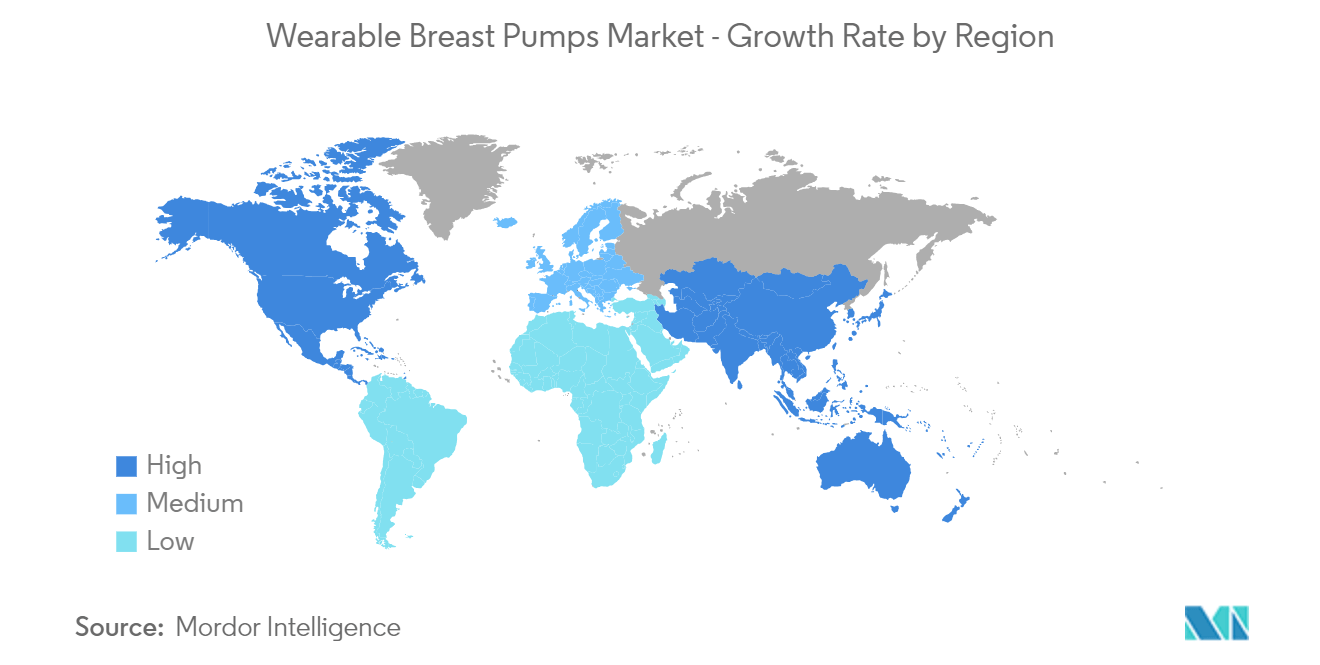
| Fastest Growing Market | Asia Pacific |
| Largest Market | North America |
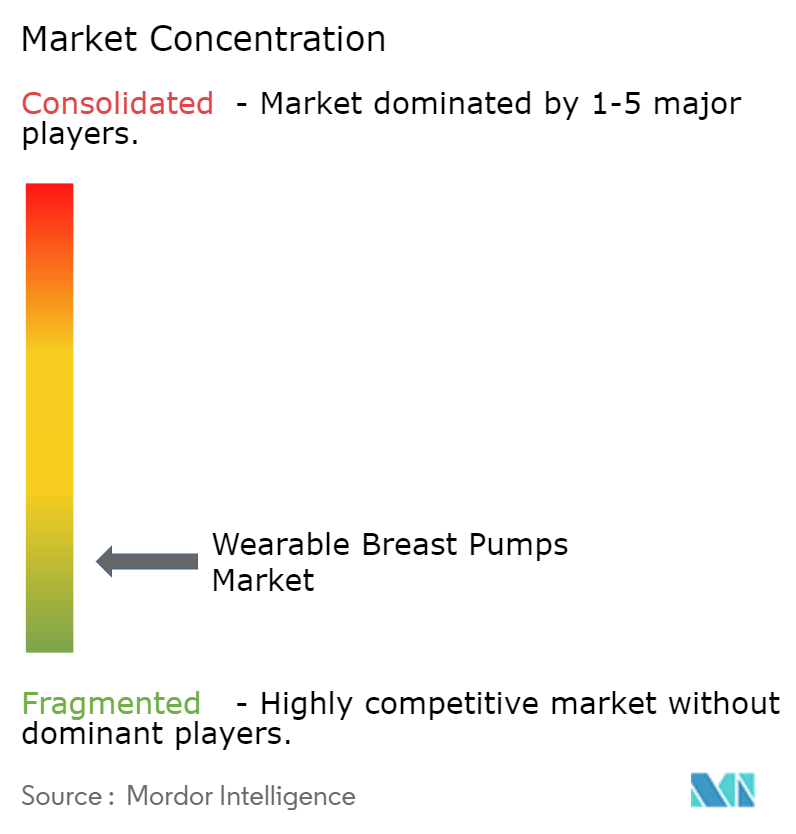
| Market Concentration | Low |
Major Players *Disclaimer: Major Players sorted in no particular order |
Wearable Breast Pumps Market Analysis by Mordor Intelligence
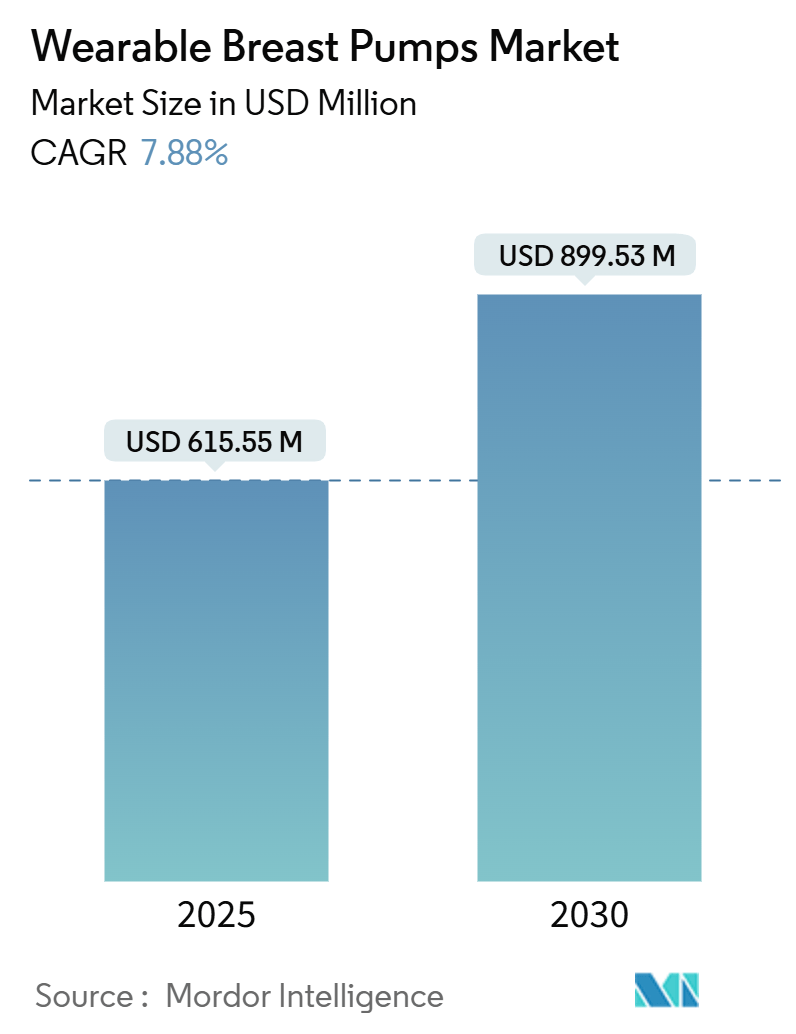
The Wearable Breast Pumps Market size is estimated at USD 615.55 million in 2025, and is expected to reach USD 899.53 million by 2030, at a CAGR of 7.88% during the forecast period (2025-2030).
Factors such as the growing awareness about wearable breast pumps, the surge in women’s employment rates, and the increasing number of milk banks are expected to boost the market growth over the forecast period.
The increasing adoption of wearable breast pumps, driven by growing awareness about these devices, is expected to drive market growth during the forecast period. For instance, in August 2023, Calla, an innovative breast pump start-up, launched its 60-day crowdfunding campaign to bring its wearable manual breast pump to the market. The pump mimics the infant’s suckling tongue. As more mothers seek efficient and comfortable solutions for breastfeeding, the demand for wearable breast pumps is likely to continue rising.
Similarly, in January 2023, Medela launched its first in-bra, wearable breast pump solution, the new Freestyle Hands-free Breast Pump. The newly launched pump ultra-lightweight, comfortable, and discreet collection cups connect to a portable pump motor to deliver an exceptional hands-free pumping experience. The collection cups include proven technology that allows the removal of up to 11.8% more milk faster than traditional breast pump shields.
Several studies were conducted to evaluate the efficacy and comfort of a new hands-free, in-bra, breastmilk collection pump set (IBCPS) connected to a personal use double electric breast pump. For instance, an article published in Clinical Nutrition Open Science in June 2023 reported that applying an in-bra breastmilk collection pump set (IBCPS) resulted in efficient and effective breast emptying without considerable compromise in comfort. As more mothers seek practical and comfortable solutions for breastfeeding, the demand for advanced wearable breast pumps like the IBCPS is expected to rise. This trend is driven by technological advancements, increased awareness of breastfeeding benefits, and the need for flexible options for working mothers.
Furthermore, the increasing donations of human milk in milk banks and the rising number of milk banks worldwide are also expected to fuel the adoption of wearable breast pump devices that are used to collect breast milk from lactating mothers. For instance, in March 2024, A network of breastfeeding mothers donated over 6,800 liters of milk to human milk banks in government hospitals across Tamil Nadu from 2021 to 2023. This trend underscores the growing demand for efficient and comfortable breastfeeding solutions, such as wearable breast pumps, which offer convenience and discretion, making it easier for mothers to donate milk and breastfeed effectively. As more mothers recognize the benefits of breastfeeding and seek practical solutions, the demand for advanced wearable breast pumps is expected to rise over the forecast period.
Therefore, owing to the growing awareness about wearable breast pumps, new product launches, and rising donation of human milk by donors across the globe, the studied market is expected to grow over the forecast period. However, the high price of breast pumps and the adoption of breast milk substitutes among the population are expected to restrain the growth of the wearable breast pump market over the forecast period.
Global Wearable Breast Pumps Market Trends and Insights
Electric/Battery-operated Segment is Expected to Register a Significant Growth Over the Forecast Period
The electric wearable breast pump segment is expected to witness significant growth over the forecast period owing to factors such as the increasing technological advancements in breast pumps, rising product launches, and favorable insurance coverage for electric breast pumps.
In addition, the advantages offered by electric wearable breast pumps, such as high portability, comfortability, stronger suction, and faster pumping, and the availability of a variety of pumping modes, like expression and massage, over traditional breast pumps make them ideal choices for women needing frequent or continuous milk expression. This is anticipated to augment the growth of the electric wearable breast pumps segment over the forecast period.
Furthermore, the rising focus of companies on developing and launching technologically advanced electric wearable breast pumps in the market is expected to increase their adoption among the population. For instance, in August 2024, Medela, a leading brand in breast pump technology and breastfeeding solutions, launched Swing Maxi Hands-free, an innovative double electric breast pump designed to make pumping simple, intuitive, and flexible for breastfeeding families. Swing Maxi Hands-free features Medela’s patented 2-Phase Expression technology, mimicking a baby’s natural sucking rhythm for comfortable and efficient pumping.
In addition to the above context, the newly launched device can be connected to the Medela family App via Bluetooth. The app offers personalized real-time tracking, dashboards, science-based content, and smart tools to help parents reach their breastfeeding and pumping goals.
Similarly, in June 2023, Elvie, United Kingdom, launched a new wearable breast pump, Elvie Pump, a portable, electric, and wireless pump that fits in a nursing bra in the United Arab Emirates. Thus, introducing advanced features such as wireless connectivity and portability makes wearable breast pumps more appealing to modern mothers, driving market growth.
Therefore, the studied segment is expected to grow over the forecast period due to the advantages offered by electric wearable breast pumps, new product launches, and increasing coverage for electric wearable breast pumps.
North America is Expected to Hold Significant Market Share Over the Forecast Period
North America is anticipated to witness significant growth in the wearable breast pump market over the forecast period owing to growing awareness about breast pumps, increasing government initiatives, and rising women's employment rates. In addition, the rising number of milk bans and increasing launches of breast milk donation campaigns are also expected to boost the market growth over the forecast period.
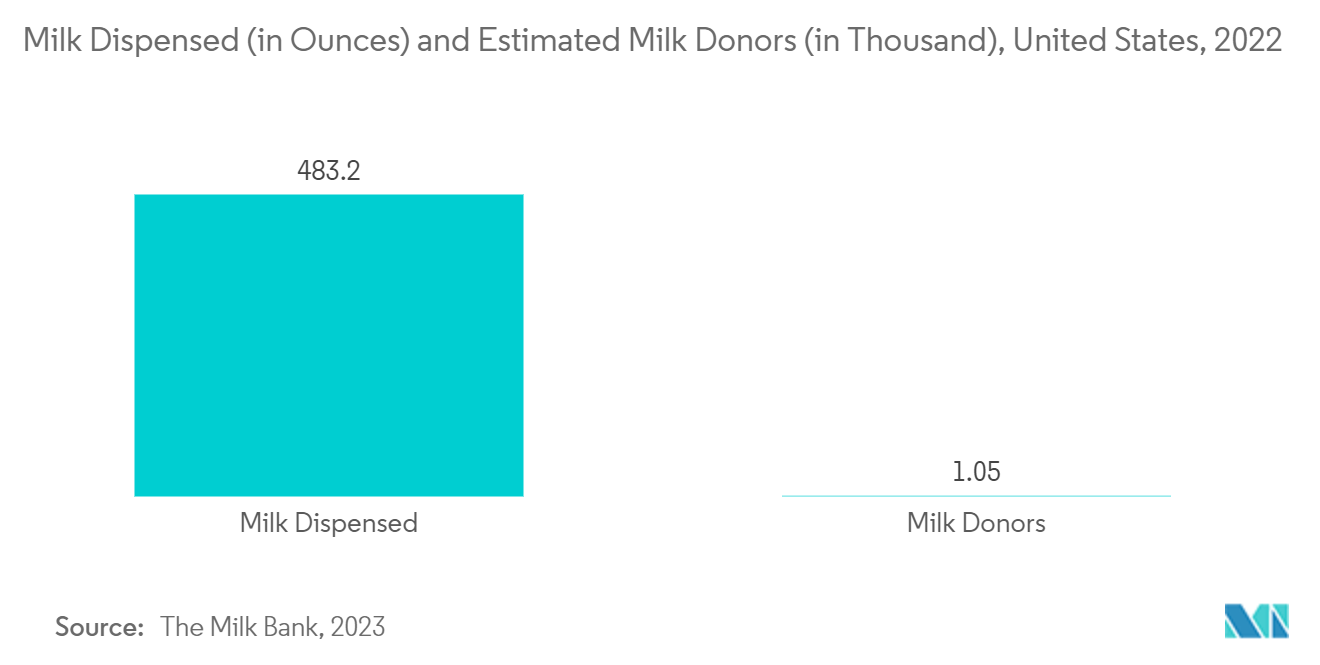
The increasing adoption of milk banks to obtain human milk across the region is anticipated to fuel the demand for wearable breast pumps, propelling the market growth. For instance, according to Brookings Health System, in September 2024, Mother's Milk Bank of Iowa supplied milk to eight states, serving 44 hospitals in 2023. The bank distributed 74% of the donated milk to hospitals and 26% to infants at home. Adding Brookings Health System as the 46th breastmilk collection depot further supports this trend, highlighting the growing infrastructure to support breastfeeding mothers. As more mothers seek convenient and effective ways to express and donate milk, the demand for wearable breast pumps is expected to continue rising, driven by technological advancements and increased awareness of breastfeeding benefits. Hence, it is anticipated to augment the market growth over the forecast period.
Similarly, in February 2024, the Human Milk Banking Association of North America reported that its 33-member milk banks have dispensed nearly 10 million ounces of life-saving donor human milk to hospitals across North America. Also, in 2023, HMBANA milk banks distributed 9,949,042 ounces of donor human milk, highlighting the unwavering commitment of its network to meet the increasing demand for safe donor milk. This trend reflects the broader market demand for wearable breast pumps, which offer breastfeeding mothers convenience, comfort, and efficiency.
Furthermore, the rising launches of wearable breast pumps are expected to increase the availability of a variety of wearable breast pumps in the market, which in turn is anticipated to fuel the market's growth over the forecast period. For instance, in April 2023, Motif Medical launched its newest breast pump, the Motif Aura, a wireless, discreet, and comfortable pump designed for use on the go so that moms never miss a pumping session.
Therefore, the studied market is expected to grow over the forecast period due to the increasing adoption of milk banks and rising launches of wearable breast pumps.
Competitive Landscape
The wearable breast pumps market is fragmented due to the presence of a large number of players. Some of these players are increasingly turning to strategic activities, including agreements, collaborations, and product launches, to innovate their wearable breast pumps and broaden their global product range. Some of the key players in the market include Koninklijke Philips N.V., Medela LLC, Motif Medical, Pigeon Corporation (Lansinoh Laboratories Inc.), and Willow Innovation Inc., among others.
Wearable Breast Pumps Industry Leaders
Koninklijke Philips N.V
Medela LLC
Motif Medical
Pigeon Corporation (Lansinoh Laboratories Inc.)
Willow Innovation Inc.
- *Disclaimer: Major Players sorted in no particular order
Recent Industry Developments
- October 2024: Momcozy introduced the V Pro Series Breast Pumps, which includes the V1 Pro and V2 Pro models. The V Pro Series incorporates user-focused design and research-based development to provide mothers with a comfortable and efficient breastfeeding experience.
- January 2024: Maternal Health brand Lansinoh launched the DiscreetDuo Wearable Pump, the first wearable breast pump on the market that is covered by insurance plans, including Medicaid, without an upgrade fee. The pump has customizable settings, including nine levels of suction and four pumping modes, along with an LED display and easy-to-clean parts to simplify the pumping process.
Global Wearable Breast Pumps Market Report Scope
As per the report's scope, wearable breast pumps are electronic devices used by lactating mothers to extract milk from their breasts. These pumps are specifically designed to be worn comfortably on the breast and allow easy pumping.
The wearable breast pumps market is segmented by type, component, end-user, and geography. By type, the market is segmented into manual and electric/battery-operated. Based on component, the market is segmented into wearable pumps and accessories. By end-user, the market is segmented into hospital facilities and home healthcare. By end-user, the market is segmented as hospitals, clinics, and others. By geography, the market is divided into North America, Europe, Asia-Pacific, Middle East and Africa, and South America. The market report also covers the estimated market sizes and trends for 17 different countries across major regions globally. For each segment, the market sizing and forecasts have been done based on value (in USD).
| Manual |
| Electric/Battery-operated |
| Wearable Pumps |
| Accessories |
| Hospital Facilities |
| Home Healthcare |
| North America | United States |
| Canada | |
| Mexico | |
| Europe | Germany |
| United Kingdom | |
| France | |
| Italy | |
| Spain | |
| Rest of Europe | |
| Asia-Pacific | China |
| Japan | |
| India | |
| Australia | |
| South Korea | |
| Rest of Asia-Pacific | |
| Middle East and Africa | GCC |
| South Africa | |
| Rest of Middle East and Africa | |
| South America | Brazil |
| Argentina | |
| Rest of South America |
| By Technology | Manual | |
| Electric/Battery-operated | ||
| By Component | Wearable Pumps | |
| Accessories | ||
| By End-User | Hospital Facilities | |
| Home Healthcare | ||
| Geography | North America | United States |
| Canada | ||
| Mexico | ||
| Europe | Germany | |
| United Kingdom | ||
| France | ||
| Italy | ||
| Spain | ||
| Rest of Europe | ||
| Asia-Pacific | China | |
| Japan | ||
| India | ||
| Australia | ||
| South Korea | ||
| Rest of Asia-Pacific | ||
| Middle East and Africa | GCC | |
| South Africa | ||
| Rest of Middle East and Africa | ||
| South America | Brazil | |
| Argentina | ||
| Rest of South America | ||
Key Questions Answered in the Report
How big is the Wearable Breast Pumps Market?
The Wearable Breast Pumps Market size is expected to reach USD 615.55 million in 2025 and grow at a CAGR of 7.88% to reach USD 899.53 million by 2030.
What is the current Wearable Breast Pumps Market size?
In 2025, the Wearable Breast Pumps Market size is expected to reach USD 615.55 million.
Who are the key players in Wearable Breast Pumps Market?
Koninklijke Philips N.V, Medela LLC, Motif Medical, Pigeon Corporation (Lansinoh Laboratories Inc.) and Willow Innovation Inc. are the major companies operating in the Wearable Breast Pumps Market.
Which is the fastest growing region in Wearable Breast Pumps Market?
Asia Pacific is estimated to grow at the highest CAGR over the forecast period (2025-2030).
Which region has the biggest share in Wearable Breast Pumps Market?
In 2025, the North America accounts for the largest market share in Wearable Breast Pumps Market.
What years does this Wearable Breast Pumps Market cover, and what was the market size in 2024?
In 2024, the Wearable Breast Pumps Market size was estimated at USD 567.04 million. The report covers the Wearable Breast Pumps Market historical market size for years: 2020, 2021, 2022, 2023 and 2024. The report also forecasts the Wearable Breast Pumps Market size for years: 2025, 2026, 2027, 2028, 2029 and 2030.
Page last updated on:


