
Smart Implantable Pumps Market Size and Share
Market Overview
| Study Period | 2020 - 2031 |
|---|---|
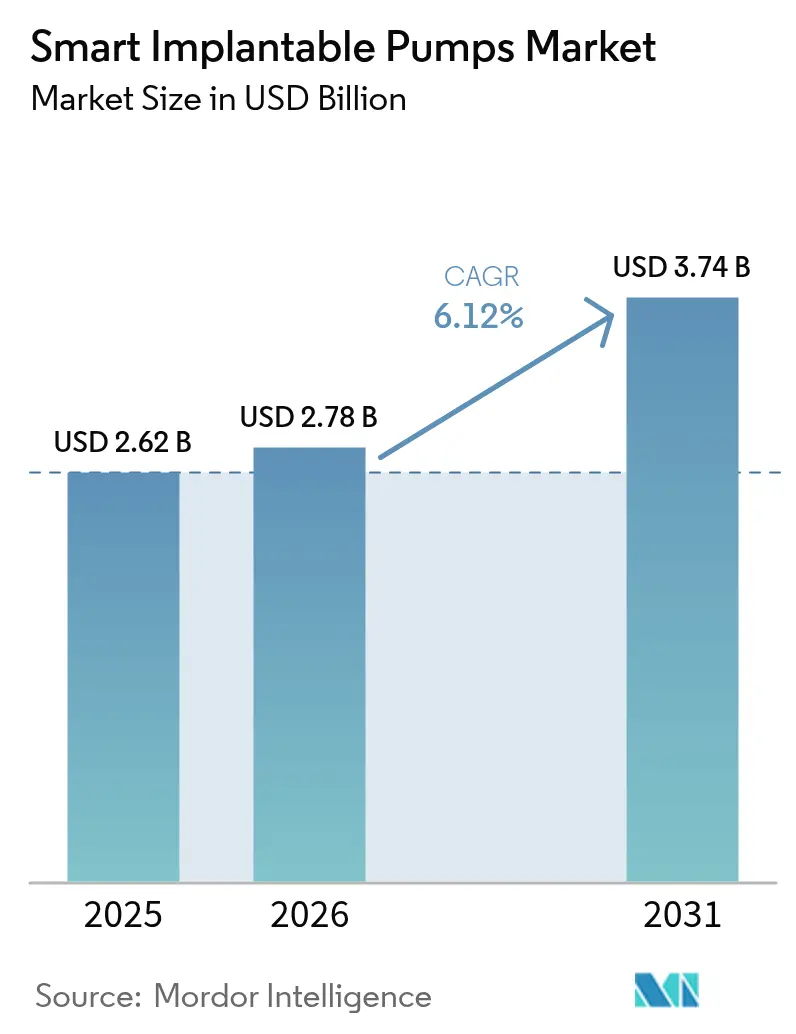
| Market Size (2026) | USD 2.78 Billion |
| Market Size (2031) | USD 3.74 Billion |
| Growth Rate (2026 - 2031) | 6.12 % |
| Fastest Growing Market | Asia Pacific |
| Largest Market | North America |
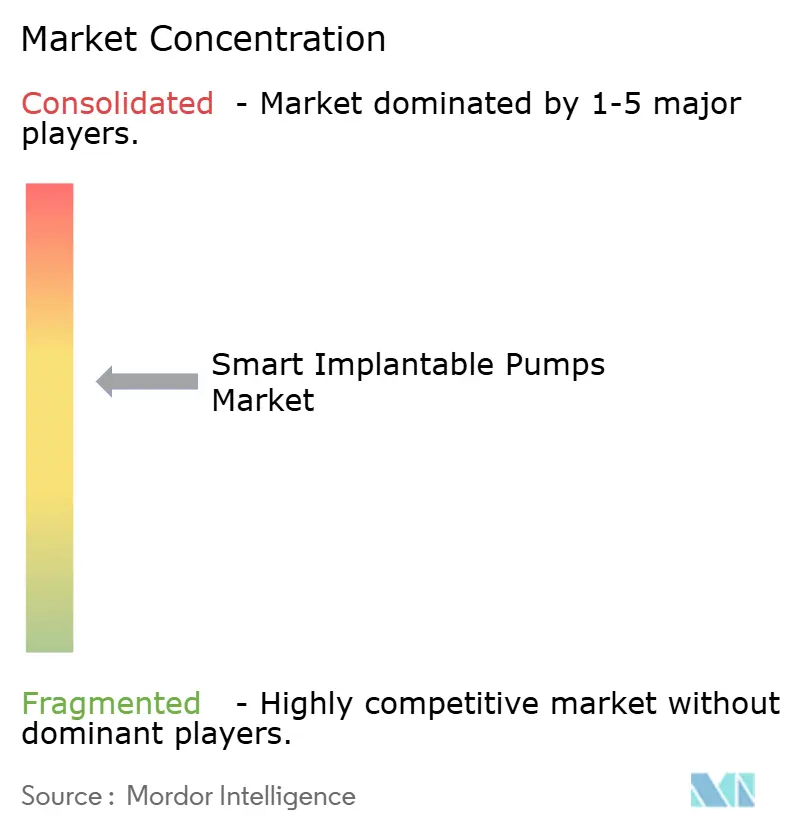
| Market Concentration | Medium |
Major Players *Disclaimer: Major Players sorted in no particular order Image © Mordor Intelligence. Reuse requires attribution under CC BY 4.0. | |
Smart Implantable Pumps Market Analysis by Mordor Intelligence
The Smart implantable pumps market size is expected to grow from USD 2.62 billion in 2025 to USD 2.78 billion in 2026 and is forecast to reach USD 3.74 billion by 2031 at 6.12% CAGR over 2026-2031. Closed-loop automation, cybersecurity-aligned fast-track approvals and the migration of infusion therapies from inpatient wards to home settings sustain a balanced demand curve. Perfusion systems anchor the revenue base thanks to proven clinical efficacy in chronic pain, while BioMEMS-enabled micro pumps open high-growth niches by achieving nano-scale dose accuracy. Reimbursement reforms under the NOPAIN Act lower patient out-of-pocket costs for out-of-hospital procedures, and interoperability partnerships among leading manufacturers strengthen ecosystem lock-in. At the same time, battery longevity challenges and exacting FDA cyber documentation requirements temper near-term enthusiasm but ultimately raise the entry barrier, benefiting compliant suppliers.
Key Report Takeaways
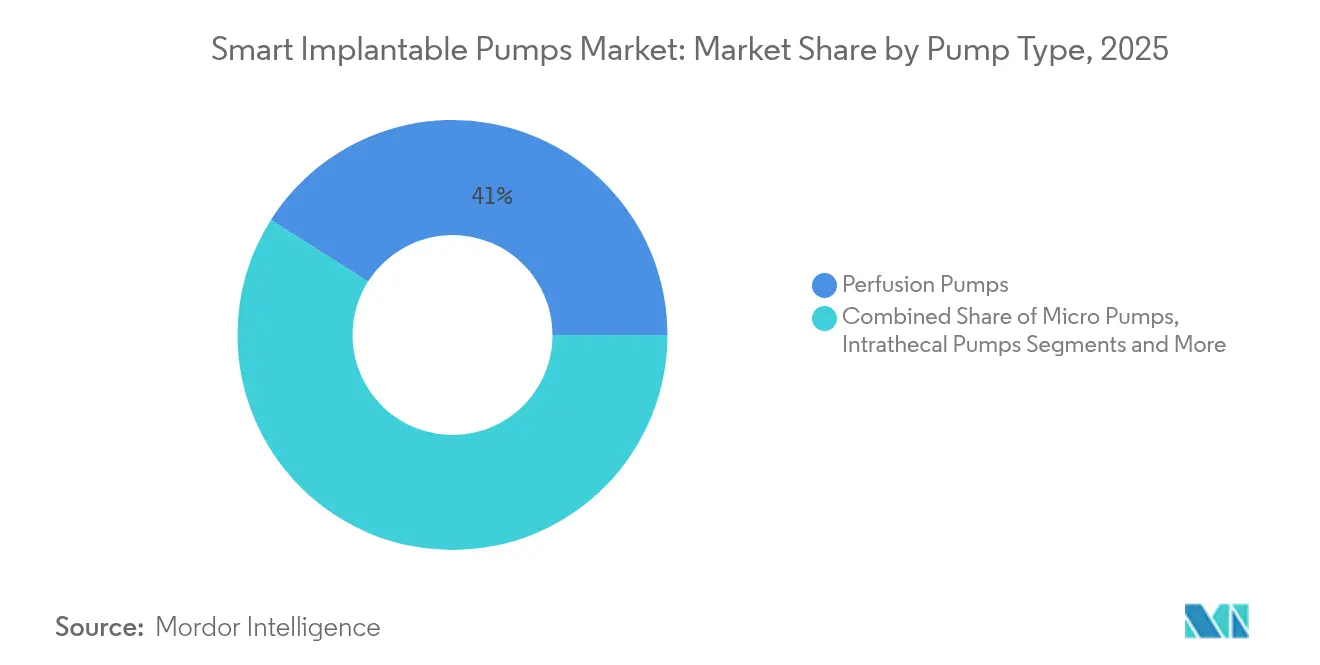
- By pump type, perfusion pumps held 41.02% of Smart implantable pumps market share in 2025, whereas micro pumps are projected to grow at 15.88% CAGR to 2031.
- By application, pain management accounted for the largest 37.01% revenue slice in 2025; oncology is on track for a 12.31% CAGR through 2031.
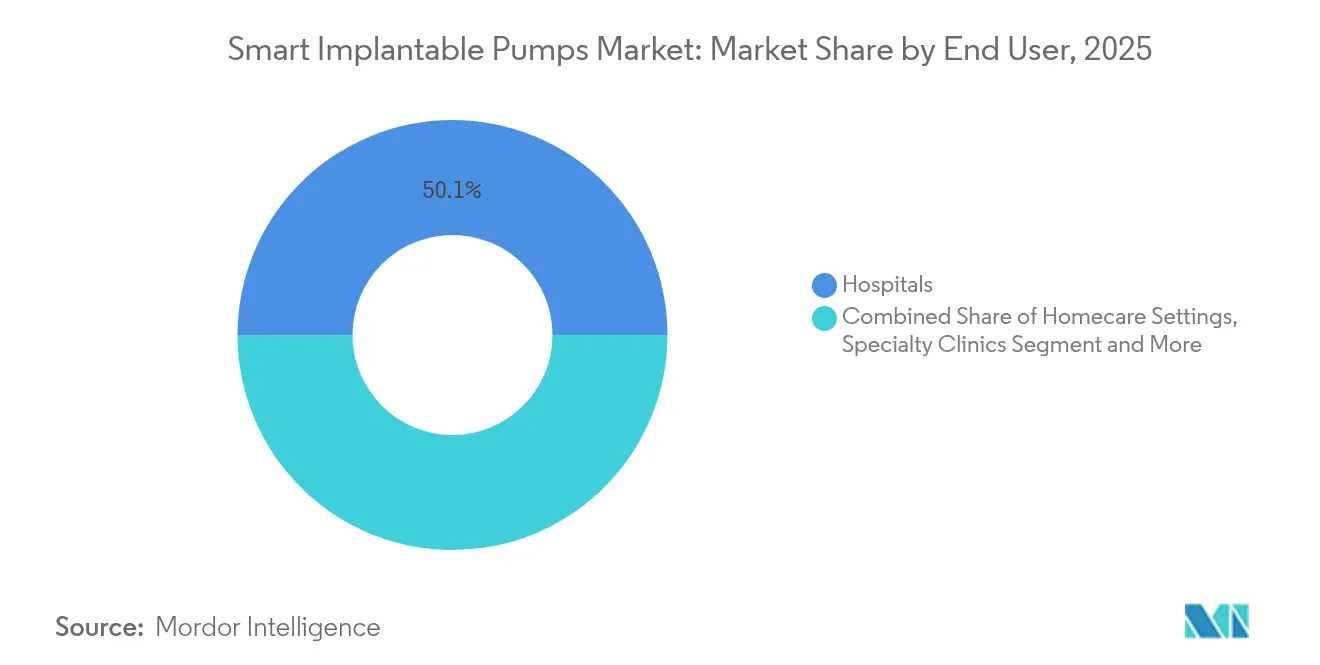
- By end user, hospitals commanded 50.05% of the Smart implantable pumps market size in 2025, while homecare settings are expanding the fastest at 10.12% CAGR.
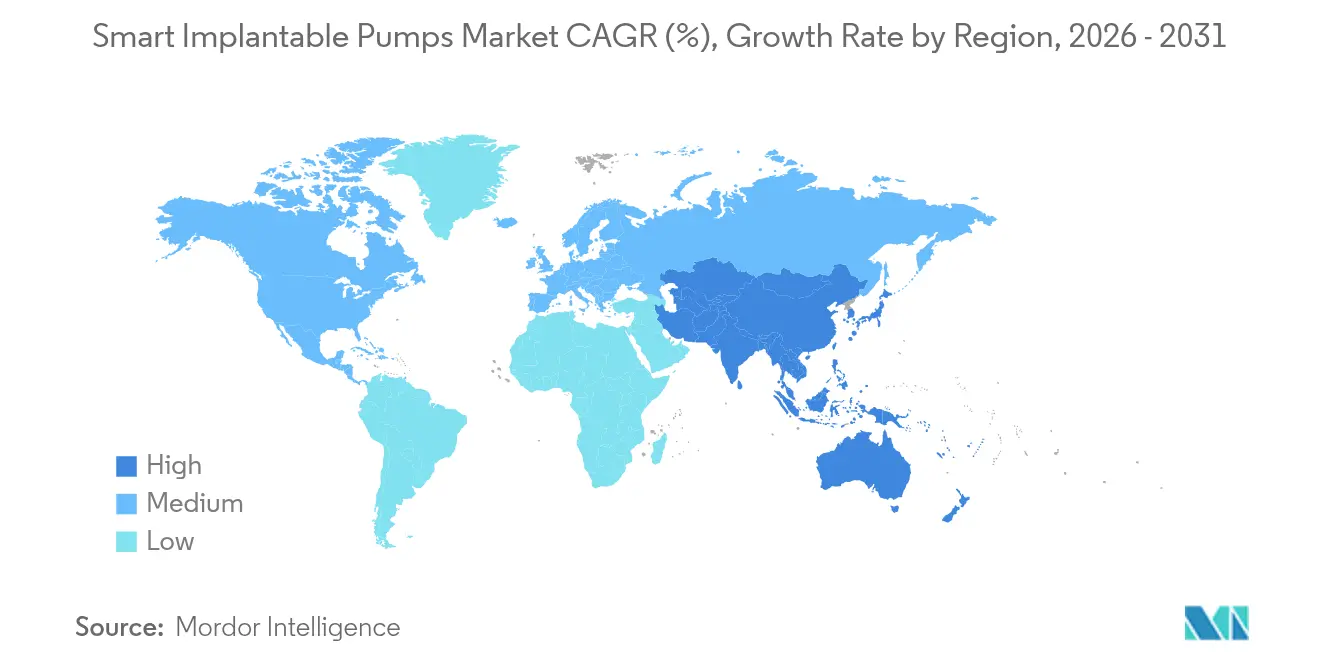
- By geography, North America led with 39.85% share in 2025, whereas Asia-Pacific is poised for a 9.18% CAGR to 2031.
Note: Market size and forecast figures in this report are generated using Mordor Intelligence’s proprietary estimation framework, updated with the latest available data and insights as of 2026.
Market Trends and Insights
Drivers Impact Analysis of Smart Implantable Pumps Market*
| Driver | (~) % Impact on CAGR Forecast | Geographic Relevance | Impact Timeline |
|---|---|---|---|
| High prevalence of chronic diseases | +1.8% | Global; especially North America and Europe | Long term (≥ 4 years) |
| Aging population and long-term care burden | +1.2% | Global; notably Asia-Pacific and Europe | Long term (≥ 4 years) |
| Advancements in closed-loop & IoT technology | +1.5% | North America and EU; scaling into Asia-Pacific | Medium term (2-4 years) |
| Shift to home-based and ambulatory care | +0.9% | North America and EU; early uptake in urban Asia-Pacific | Medium term (2-4 years) |
| Emergence of BioMEMS nano-fluidic micro-dosing | +0.7% | R&D hubs in North America and EU | Long term (≥ 4 years) |
| Cybersecurity-driven regulatory fast-tracking | +0.4% | Global; spearheaded by FDA and EU authorities | Short term (≤ 2 years) |
| Source: Mordor Intelligence | |||
High Prevalence Of Chronic Diseases
Global diabetes prevalence surpassed 537 million adults in 2025, widening the therapeutic field beyond pain management toward insulin, baclofen and chemotherapeutic delivery. Intrathecal baclofen pumps cut spasticity severity by 40.25% in multiple cohort analyses, directly improving motor performance in cerebral palsy. Registry reviews tracking 1,403 oncology cases documented durable pain control over 12 months when implantable systems replaced systemic opioids. Such outcome evidence underpins payer justification and accelerates prescriber confidence, driving incremental Smart implantable pumps market adoption across neurological and oncologic specialties.
Advancements In Closed-Loop & IoT-Enabled Pump Technology
Medtronic’s MiniMed 780G delivers >80% Time-in-Range results, surpassing ADA glycemic targets in real-world cohorts[1]. Nevro’s HFX iQ integrates adaptive algorithms that tailor spinal stimulation parameters, illustrating the shift toward AI-directed therapy. FDA cybersecurity guidance issued in 2025 codifies secure-by-design principles, giving manufacturers a predictable path to clearance. Interoperability alliances, such as Abbott’s global CGM-pump integration deals, future-proof installed bases and extend recurring revenue streams.
Shift To Home-Based And Ambulatory Care
Separate Medicare payments of USD 2,284.98 per advanced infusion pump, effective 2025 under the NOPAIN Act, sharpen outpatient economics and reduce inpatient backlog[2]. Firmware-upgradable platforms such as SynchroMed III let clinicians recalibrate flow parameters remotely, maintaining vigilance while cutting clinic visits. Patient-reported data show 90% of chronic pain users would recommend intrathecal therapy, while 94% reduced systemic opioid reliance, underscoring a user-experience dividend that fuels Smart implantable pumps market expansion into domiciliary care.
Emergence of BioMEMS Nano-Fluidic Micro-Dosing
Silicon micro-pumps achieving 12 ml/min flow rates without counter-pressure prove scalability beyond laboratory prototypes. Piezoelectric devices now dispense 0.28 µL increments with no electromagnetic interference, aligning with implant safety needs. Sequentially triggerable nano-nozzle systems enable on-demand chronotherapy, pointing toward personalized circadian dosing matrices. Venture flows chasing a projected USD 24.5 billion BioMEMS sector underwrite ongoing R&D, positioning micro-engineered pumps as vital components in precision medicine and sustaining long-run Smart implantable pumps market momentum.
Restraints Impact Analysis of Smart Implantable Pumps Market*
| Restraint | (~) % Impact on CAGR Forecast | Geographic Relevance | Impact Timeline |
|---|---|---|---|
| Stringent regulatory scrutiny & recall risk | -0.8% | North America and EU | Medium term (2-4 years) |
| Battery longevity & biocompatibility issues | -1.1% | Global | Long term (≥ 4 years) |
| Escalating cyber-threat surface | -0.6% | Worldwide; most visible in connected pump segments | Short term (≤ 2 years) |
| Limited surgical expertise | -0.9% | Emerging markets primarily | Medium term (2-4 years) |
| Source: Mordor Intelligence | |||
Stringent Regulatory Scrutiny & Recall Risk
Section 524B now obliges every cyber-device submission to include a Software Bill of Materials, threat modeling and remediation road map, extending dossier volume and review times. ICU Medical’s 2025 warning letter illustrates the financial and reputational cost when legacy infusion platforms fall short of updated standards[3]. Design-control rigor mandated under 21 CFR 820 inflates development budgets but ultimately elevates product reliability. For smaller innovators, capital scarcity heightens acquisition likelihood, nudging the Smart implantable pumps market toward moderate concentration.
Battery Longevity & Biocompatibility Issues
Existing lithium packs demand change-outs every 5-7 years, exposing patients to repeated OR events and aggregate costs that curb adoption in price-sensitive locales. Foreign-body responses trigger fibrosis that can impair flow ports, as documented in multiple biomaterial studies. Anti-biofouling coatings under development at Wyss Institute prolong biosensor life by arresting bacterial adhesion, a breakthrough that could migrate to infusion pumps. Silicon IC encapsulation with PDMS extends hermeticity in accelerated aging tests but full physiological validation remains in progress. Persistent heavy-metal ion leaching pushes material science toward nickel-free alloys and polymer composites, but until resolved the drag on Smart implantable pumps market penetration persists.
*Our forecasts treat driver/restraint impacts as directional, not additive. The impact forecasts reflect baseline growth, mix effects, and variable interactions.
Smart Implantable Pumps Market Segment Analysis
By Pump Type:
Micro Pumps Drive InnovationThe segment generated 41.02% of 2025 revenue from perfusion models, anchoring the Smart implantable pumps market size in inpatient pain therapy. Micro pumps, however, exhibit a 15.88% CAGR that redefines growth math. Their MEMS sensors synchronize real-time flow with sensor feedback, facilitating sub-microliter precision and widening therapeutic scope to gene vectors and biologics. AI-optimized control loops, already standard in hybrid insulin platforms, migrate to micro pump architectures to personalize intra-day dosing. Supply-chain localization and wafer-level manufacturing cut cost curves, lowering entry thresholds for start-ups and thereby diversifying vendor rosters within the Smart implantable pumps market.
Second-generation perfusion units retain surgical mindshare thanks to simple programmability, but predictive maintenance modules now alert clinicians to reservoir depletions and catheter resistance spikes. Drug-eluting and iontronic variants join R&D pipelines, offering infection-mitigation and on-chip sterilization features that could reclaim share from competitive neuromodulation alternatives. As proprietary algorithms accrue real-world data, manufacturers consolidate dataset advantages that complicate late entrant catch-up.

By Application:
Oncology Accelerates GrowthPain management captured the largest slice of Smart implantable pumps market share at 37.01% in 2025 and remains favored by payers for opioid-sparing outcomes. Nonetheless, oncology registers the quickest 12.31% CAGR as hepatic-arterial and intrathecal chemotherapeutic pumps outperform systemic regimens in multiple survival and quality-of-life metrics. FDA PMA approval for Sequana’s alfapump underscores regulator willingness to green-light class III actives when survival benefit is evident.
Cardiovascular adoption tracks LVAD miniaturization, evidenced by CorWave’s first-in-human membrane pump implantation delivering physiologic pulsatility. Endocrinology trails but gains ground as biannual GLP-1 implants improve compliance in obesity management. Collectively, these emerging indications embed resilience into overall Smart implantable pumps market demand by reducing reliance on a single therapy area.
By End User:
Homecare Settings Transform DeliveryHospitals retained 50.05% revenue in 2025, benefiting from integrated surgical suites and intensivist oversight intrinsic to initial implantation. Yet, 10.12% CAGR in homecare signals a structural swing toward patient-managed therapy. Cloud-linked programmer wands allow clinicians to titrate flow remotely, cutting follow-up appointments and enabling decentralized care models. Specialty pain clinics utilize ambulatory pumps to discharge patients the same day, thereby capturing DRG savings under value-based purchasing schemes.
Ambulatory surgical centers combine capital-light infrastructure with anesthesia efficiency to slice procedural costs, a combination amplified by dedicated Medicare codes. Home infusion providers now recruit biomedical engineers to troubleshoot alerts, demonstrating ancillary employment spillovers from Smart implantable pumps market growth. The net effect shifts budgetary power from inpatient administrators to at-home service managers, reshaping future go-to-market strategies.
Geography Analysis
North America, Europe and APAC Smart Implantable Pumps Market
North America contributed 39.85% of 2025 turnover, underpinned by extensive payer coverage and a robust clinical trial ecosystem. Europe follows with CE solidarity enabling multi-country launches off a single dossier, though slower reimbursement cycles temper early uptake. China’s volume-based procurement and indigenous manufacturing grants stimulate local production of programmable pumps, lowering ASPs and broadening domestic access.
APAC Smart Implantable Pumps Market
Asia-Pacific’s 9.18% CAGR arises from demographic aging and chronic disease incidence intersecting with state incentives for smart device localization. India’s frugal engineering adapts high-end models into cost-efficient variants suitable for tier-2 city clinics. Partnerships that bundle AI analytics with pump hardware appeal to public-health buyers focused on remote regions, reinforcing digital-health alignment in regional tender criteria.
Singapore Smart Implantable Pumps Market
Regulatory convergence initiatives, such as Singapore’s IMDRF leadership, reduce redundant clinical testing and accelerate cross-border registration. Concurrently, cybersecurity stipulations modeled on FDA precedents assure end users of data protection, narrowing the perceived quality gap versus Western imports. Steadily, these dynamics propel Smart implantable pumps market penetration deeper into populous economies while seeding global supply-chain resilience.
Regulatory Landscape
In the United States, smart implantable pump systems are regulated by the FDA under the medical device framework. Infusion pump categories generally fall under Class II pathways, such as the 21 CFR Part 880 infusion pump classifications, which typically require 510(k) submissions and lifecycle controls aligned with infusion pump Total Product Life Cycle expectations. A major quality-system inflection point arrived with FDA's Quality Management System Regulation (QMSR) taking effect on February 2, 2026, aligning FDA quality requirements to ISO 13485:2016 and tightening audit readiness and documentation discipline for implantable, software-enabled platforms.
In Europe, implantable and active implantable pump systems are governed under the Medical Device Regulation (EU) 2017/745. Market access depends on notified-body capacity, clinical evidence planning, and post-market obligations, including UDI and vigilance expectations in MDCG guidance. MDR transition deadlines include the September 26, 2024 requirement for certain legacy devices certified under prior Directives to shift surveillance responsibility to an MDR-designated notified body. In 2026, the European Commission issued delegated acts dated March 20, 2026 (Commission Delegated Regulation (EU) 2026/1451 and Commission Delegated Regulation (EU) 2026/1359), which updated exemptions and defined technical documentation assessment exemptions for specified implantable device classes, changing the compliance workplan for manufacturers managing implantable portfolios.
Competitive Landscape
Moderate consolidation typifies the Smart implantable pumps market: top incumbents leverage portfolio breadth and data ecosystems, while venture-backed entrants peel off high-innovation niches. Medtronic and Abbott solidified an interoperable CGM-pump hub, tethering glycemic analytics, infusion algorithms and cloud dashboards into a cohesive user journey. Boston Scientific’s selective acquisition of Intera Oncology aligns with a strategy of owning specialized, high-margin indications rather than broad platforms.
Vivani Medical pursues adherence-oriented implants, securing USD 3 million equity to progress once-yearly semaglutide dosing designs. ClearPoint Neuro exploits MRI-guided cannula navigation to expand procedural addressability in neurosurgical pumps. Cybersecurity capabilities, measured by SBOM transparency and zero-trust frameworks, emerge as deal-breaking selection criteria in tenders, favoring players with mature DevSecOps pipelines.
Patent filings cluster around low-profile reservoirs, hermetic micro-valves and adaptive closed-loop algorithms, signaling where firms perceive durable differentiation. Licensing cross-pollination flourishes: Beta Bionics integrates Abbott sensors into its bionic pancreas, evidencing an openness to modular cooperation amid intensifying platform wars. Overall, ecosystem control, rather than single-device supremacy, defines competitive advantage.
Smart Implantable Pumps Industry Leaders
-
Cognos Therapeutics, Inc.
-
Insulet Corporation
-
Intera Oncology
-
Medtronic plc
-
Abbott Laboratories
- *Disclaimer: Major Players sorted in no particular order
Smart Implantable Pumps Market Companies Covered in this Report
- Medtronic
- Abbott Laboratories
- Cognos Therapeutics
- Insulet
- Tandem Diabetes Care
- Intera Oncology
- i2o Therapeutics
- OrphaCare GmbH
- Flowonix Medical
- Codman & Shurtleff
- Baxter
- Boston Scientific
- Tricumed Medizintechnik
- Nevro
- B. Braun
- Fresenius
- Advanced Microfluidics SA
- I-Flow Corporation
- MicroPort
- Nano Precision Medical
Market Opportunities and Future Outlook
Closed-loop therapy migration beyond diabetes and pain management creates whitespace for implantable pumps that combine long-duration delivery with sensor-driven control, particularly as payers and providers operationalize outpatient pathways. In the United States, separate Medicare payment of USD 2,284.98 per advanced infusion pump effective 2025 under the NOPAIN Act strengthens the economic case for out-of-hospital infusion workflows. This supports demand for remotely managed, firmware-upgradable platforms that reduce visit burden while maintaining therapy precision.
Technology and clinical translation also point to opportunities in multi-drug and specialty oncology use cases where systemic delivery underperforms. In November 2024, a phase 3 multicenter randomized trial (PUMP-IT) began across 20 Dutch liver centers to evaluate hepatic arterial infusion pump chemotherapy for unresectable colorectal liver metastases, strengthening an evidence pathway for implantable pump use in oncology. In diabetes, Medtronic initiated the CIP347 clinical study in March 2025 to evaluate an implantable insulin pump system (MIIPS 2020) in adults with type 1 diabetes, and FDA's Breakthrough Device designation for Portal Diabetes's Portal Pump in February 2026 highlights active regulatory traction for implantable insulin delivery concepts. On the drug-implant side, Vivani Medical's July 2026 agreement with Novo Nordisk to evaluate an ultra-long-acting semaglutide implant provides a concrete pharma-device collaboration vector that can extend implantable delivery from acute use toward adherence-oriented chronic therapy.
Recent Industry Developments in Smart Implantable Pumps Market
- July 2026: Cognos Therapeutics added Miguel Adao (Innovobot U.S. Labs) to its Industry Advisory Board to support commercialization planning for the SINNAIS AI-driven implantable drug delivery platform. The addition points to continued ecosystem building around intelligent, implantable delivery concepts aimed at complex indications that require cross-functional clinical, regulatory, and go-to-market execution.
- May 2026: Insulet enrolled the first participant in the EVOLVE pivotal study for a fully closed-loop automated insulin delivery system for type 2 diabetes, following FDA IDE approval in March 2026. Moving into a pivotal, multicenter randomized study strengthens the clinical evidence funnel for next-generation automated delivery capabilities across connected pump segments, including performance and usability expectations.
- August 2024: Cognos Therapeutics announced the formation of its Industry Advisory Board to guide strategy for its implantable drug delivery efforts. Setting formal external leadership support early helps align product requirements with real-world adoption constraints such as evidence generation, reimbursement narratives, and scaling considerations for implantable platforms.
Smart Implantable Pumps Market Report Scope and Research Methodology
Market Definition and Coverage
This market covers revenue generated from smart implantable pumps used to deliver drugs inside the body through an implantable reservoir and catheter, where dosing is programmed and monitored using digital controls. We count device revenues across major care settings and geographies where these systems are sold and used.
Scope exclusions: We exclude external infusion pumps, disposable infusion sets, and pure software apps that are not sold as part of an implantable pump system.
Segments Covered in This Report
- By Pump Type
- Perfusion Pumps
- Micro Pumps
- Programmable Insulin Pumps
- Intrathecal Pumps
- Drug-Eluting Pumps
- By Application
- Pain Management
- Spasticity Management
- Cardiovascular Disorders
- Diabetes Management
- Oncology
- Others
- By End User
- Hospitals
- Ambulatory Surgical Centers
- Specialty Clinics
- Homecare Settings
- Geography
- North America
- United States
- Canada
- Mexico
- Europe
- Germany
- United Kingdom
- France
- Italy
- Spain
- Rest of Europe
- Asia-Pacific
- China
- Japan
- India
- South Korea
- Australia
- Rest of Asia-Pacific
- Middle East and Africa
- GCC
- South Africa
- Rest of Middle East and Africa
- South America
- Brazil
- Argentina
- Rest of South America
- North America
Data Sources, Market Sizing, and Validation
Desk Research
Desk research helps us set the factual base for the model before any assumptions are applied. We typically start with public regulatory and clinical signals that explain how implantable pumps are adopted, such as FDA device databases and safety communications, the CDC for disease burden context, and peer-reviewed journals for therapy use patterns and outcomes.
To ground the commercial side, we also refer to sources such as annual reports and investor presentations, medical association publications, and reputable healthcare press updates on reimbursement and shifts across care settings. Where available, we use paid subscriptions for company financials and intelligence, patent databases, and an import-export shipment level database to sanity check cross-border supply signals. These examples are not exhaustive, and many other public and paid sources were also used for data collection, validation, and research clarification.
Primary Interviews and Surveys
Primary work is used to convert desk findings into usable sizing assumptions, especially where published numbers are thin or not comparable across regions. We speak with device makers, distributors, clinicians involved in implantation and follow-up, and hospital procurement or biomedical teams, and then we test ranges for pricing, replacement cycles, and care setting mix across APAC, EMEA, and the Americas.
Distribution of primary research fieldwork respondents
| Company type | Respondent position | Region |
|---|---|---|
| Top tier: 30% | CXOs: 16% | APAC: 44% |
| Mid tier: 53% | Functional/Unit leaders: 35% | EMEA: 35% |
| Smaller Players: 17% | Managers: 49% | Americas: 21% |
Market-Sizing & Forecasting
Sizing is built using a top-down approach where the demand pool is reconstructed by geography from treated patient cohorts and procedure volumes, then translated into annual device demand using utilization and replacement logic. To keep the totals realistic, we corroborate the results with selective bottom-up approximations, such as sampled average selling price ranges multiplied by estimated unit volumes from channel checks, and then adjust when the two views drift.
Inputs that materially move the model include implant procedure volumes for relevant therapies, installed base and replacement interval assumptions, average selling price progression by pump type, the share of cases shifting to outpatient or homecare settings, and reimbursement direction that changes patient affordability. Because coverage differs by application, we also check how pain management and spasticity usage patterns evolve versus smaller pools like cardiovascular indications.
Forecasts are produced using scenario analysis, where the drivers above are projected under a base case and then stressed for faster or slower adoption, pricing pressure, and care setting shifts. Where unit level gaps exist for smaller countries, we apply proxy indicators from similar markets and then recheck the implied per capita device intensity with interview feedback before locking the final series.
Data Validation & Update Cycle
Outputs are checked in several steps so that odd jumps do not pass through unnoticed. We compare modeled revenue against independent signals like procedure growth rates, regulatory and reimbursement milestones, and the expected pace of ASP changes, then review outliers and correct them with documented reasons.
Before sign-off, the model and its assumptions go through analyst reviews, and re-contacts are triggered when interview feedback conflicts with the desk evidence, or when implied units per facility look unrealistic. Reports are refreshed annually, with interim updates when material events happen, and a final pre-delivery pass so clients receive the latest updated view.
Mordor Intelligence's Smart Implantable Pumps Market Size Compared With Other Published Estimates
Published market sizes for smart implantable pumps can look far apart, even when they are describing the same device concept, because the counted products and timing assumptions are not always aligned. Differences usually come from what is included as a smart implantable pump, which year is treated as the base, and how pricing and adoption are projected forward.
The main gap comes from scope and year alignment, where some estimates include broader implantable drug delivery devices or use an earlier base year, then carry a higher growth path without clearly rechecking implied units. By counting only implantable pump systems and keeping ASP movement tied to interviewed price ranges and replacement cycles, Mordor Intelligence lands at USD 2.62 B (2025), while other figures can swing based on inclusion of adjacent devices, currency timing, and how outpatient and homecare uptake is modeled.
Benchmark comparison
| Source | Market Size | Gaps in Research Methodology |
|---|---|---|
| Mordor Intelligence | USD 2.62 B (2025) | |
| Global Consultancy A | USD 2.81 B (2025) | Uses a slightly broader interpretation of smart implantable pumps across types, and the higher 2025 value can reflect different ASP baselines and care setting mix assumptions that are not transparently reconciled to procedure volume checks. |
| Industry Publisher B | USD 1.91 B (2024) | Anchors the series on a 2024 base year and applies a longer forecast window, which can understate near term value if replacement cycles and adoption in hospitals and ambulatory centers are not aligned to country level procedure intensity. |
Seen together, the spread is mostly explained by what products are counted, which year is used to anchor the model, and how pricing and adoption are stepped forward. Our approach keeps the math traceable to clear variables like treated cohorts, procedure volumes, and replacement timing, which makes the final number easier to replicate and challenge.
Key Questions Answered in the Report
What is the projected value of the Smart implantable pumps market in 2031?
The sector is expected to reach USD 3.74 billion by 2031.
Which pump type is growing the fastest?
BioMEMS-enabled micro pumps are forecast to post a 15.88% CAGR through 2031.
Which therapeutic area is expanding most rapidly?
Oncology applications lead with a 12.31% CAGR over the forecast horizon.
How are reimbursement changes influencing adoption?
Separate Medicare payments of USD 2,284.98 per device in ambulatory settings significantly improve outpatient economics and encourage wider use.
What geographic region offers the highest growth potential?
Asia-Pacific is projected to grow at 9.18% CAGR thanks to aging demographics and local manufacturing initiatives.
What is a key technical hurdle for long-term implant performance?
Battery life limitations, currently requiring replacement every 5-7 years, remain the primary engineering challenge.