
Ureteral Stent Market Size and Share
Market Overview
| Study Period | 2020 - 2031 |
|---|---|
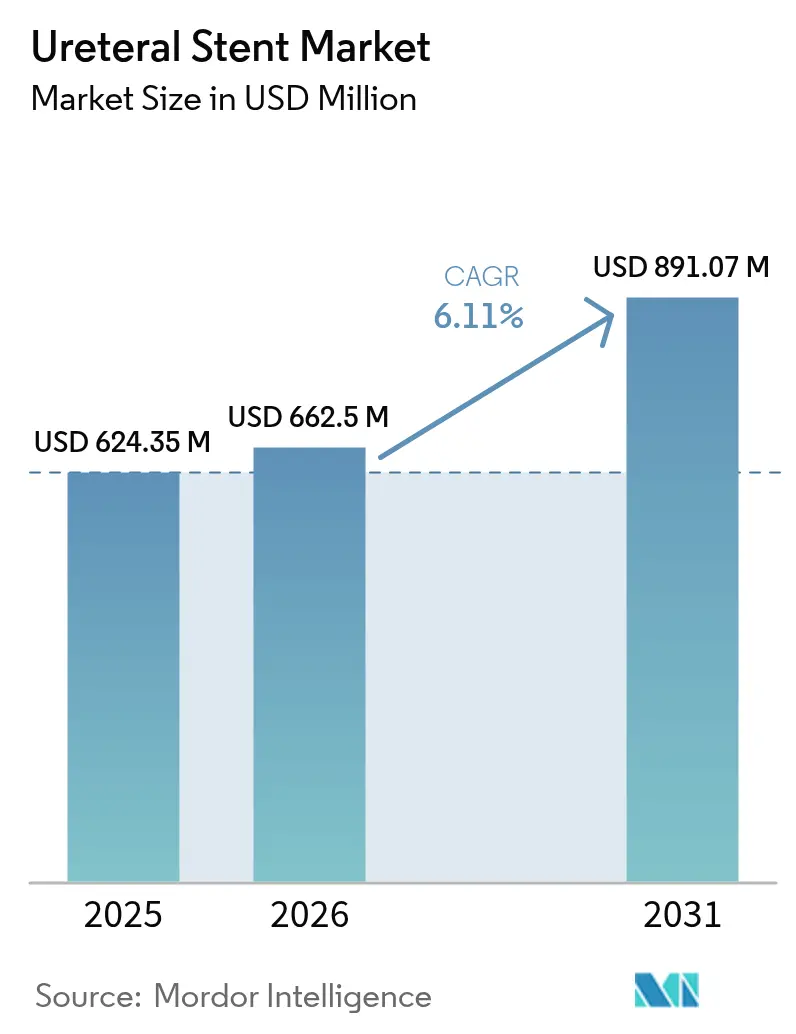
| Market Size (2026) | USD 662.5 Million |
| Market Size (2031) | USD 891.07 Million |
| Growth Rate (2026 - 2031) | 6.11 % |
| Fastest Growing Market | Asia Pacific |
| Largest Market | North America |
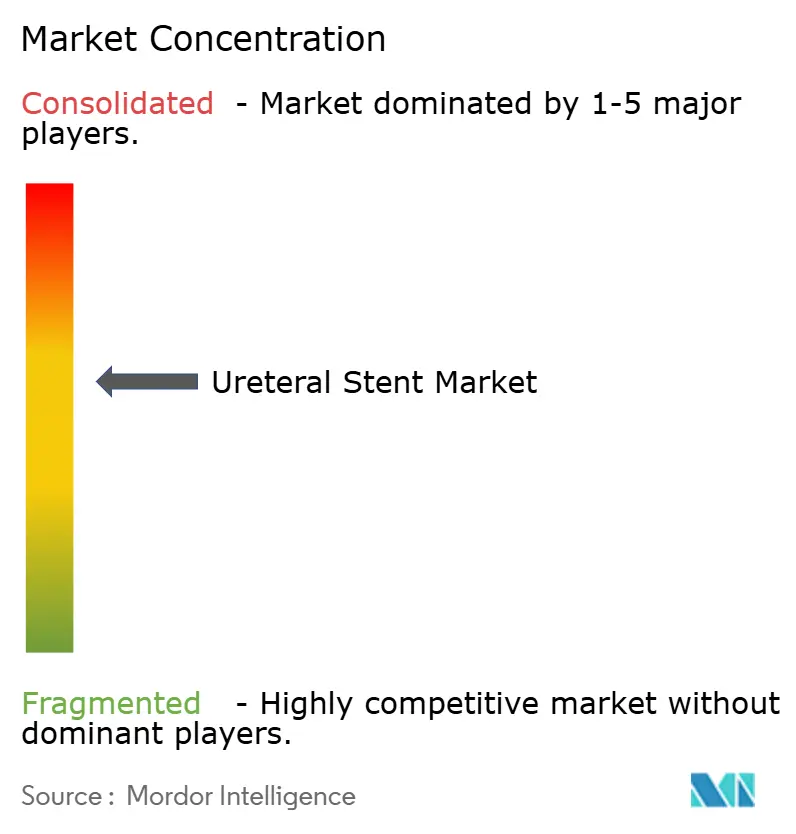
| Market Concentration | Medium |
Major Players *Disclaimer: Major Players sorted in no particular order Image © Mordor Intelligence. Reuse requires attribution under CC BY 4.0. | |
Ureteral Stent Market Analysis by Mordor Intelligence
The ureteral stents market size was valued at USD 624.35 million in 2025 and estimated to grow from USD 662.5 million in 2026 to reach USD 891.07 million by 2031, at a CAGR of 6.11% during the forecast period (2026-2031). Biodegradable innovation, accelerated by the FDA’s clearance of the RELIEF stent for vesicoureteral reflux prevention, is reshaping competitive dynamics while simultaneously addressing long-standing concerns around secondary removal procedures. Heightened kidney-stone prevalence—now 9.25% among US adults—expands procedure volumes, especially in women under 60, and pushes manufacturers to refine gender-tailored designs.[1] Aging demographics intensify demand for less invasive drainage solutions, encouraging healthcare systems to shift complex cases into efficient ambulatory surgical centers. Material science breakthroughs—from anti-encrustation nano-coatings to radiopaque biodegradable polymers—strengthen product differentiation, while AI-guided placement systems improve first-time accuracy and reduce revision rates.[2] Strategic consolidation continues as large device makers acquire niche innovators, exemplified by Teleflex’s EUR 760 million purchase of BIOTRONIK’s vascular intervention unit to broaden urology cross-selling potential.
Key Report Takeaways
- By product type, double pigtail stents led with 39.02% of ureteral stents market share in 2025, whereas biodegradable designs are advancing at a 10.04% CAGR to 2031.
- By material, polyurethane accounted for 41.85% share of the ureteral stents market size in 2025, while biodegradable polymers are expanding at an 10.48% CAGR through 2031.
- By coating, hydrophilic variants captured 42.78% revenue in 2025; anti-encrustation nano-coated alternatives hold the highest projected CAGR at 7.83% to 2031.
- By application, kidney-stone management represented 53.10% of the ureteral stents market size in 2025; tumor-related procedures are forecast to rise at an 8.35% CAGR.
- By end user, hospitals held 58.92% of ureteral stents market share in 2025, while ambulatory surgical centers are set to grow at 7.18% CAGR through 2031.
Note: Market size and forecast figures in this report are generated using Mordor Intelligence’s proprietary estimation framework, updated with the latest available data and insights as of 2026.
Market Trends and Insights
Drivers Impact Analysis of Ureteral Stent Market*
| Driver | (~) % Impact on CAGR Forecast | Geographic Relevance | Impact Timeline |
|---|---|---|---|
| Rising Burden Of Urological Disorders | +1.2% | Global, with higher impact in North America & Europe | Long term (≥ 4 years) |
| Ageing Population-Linked Urological Surgeries Surge | +1.8% | Global, concentrated in developed regions | Long term (≥ 4 years) |
| Increasing Research and Development for Material & Coating Innovations | +0.9% | North America & EU leading, APAC following | Medium term (2-4 years) |
| Increased Adoption and Launch Of Biodegradable/Bioresorbable Stents | +1.1% | Global, early adoption in North America | Medium term (2-4 years) |
| AI-Guided Sizing & Placement Reducing Revision Rates | +0.7% | North America & EU, gradual APAC adoption | Short term (≤ 2 years) |
| Day-Care Ureteroscopy Growth In ASCs | +0.9% | North America primarily, expanding to EU | Short term (≤ 2 years) |
| Source: Mordor Intelligence | |||
Rising Burden of Urological Disorders
Kidney-stone disease now affects 9.25% of US adults, with the sharpest gains in women under 60—a demographic shift prompting gender-specific stent design refinement.[1]Obesity-linked metabolic changes accelerate stone formation in younger populations, creating a sustained pipeline of preventive stenting procedures. Chronic kidney disease correlates strongly with retained devices; 30.6% of patients with forgotten stents develop CKD versus 8.3% when timely removal occurs, nudging clinicians toward long-dwell, biocompatible options. These epidemiological realities underpin steady procedural growth and motivate manufacturers to deliver designs that maintain drainage while minimizing encrustation over extended durations.
Ageing Population-Linked Urological Surgeries Surge
Roughly 14.53% of older adults now experience renal stones, yet octogenarian treatment outcomes match younger cohorts, validating ureteroscopy coupled with stenting for frail patients. Initial stone-free rates reach 88% and rise to 97% after ancillary therapy, while complications remain near 9%, reinforcing preference for biodegradable stents that negate second interventions. Frailty assessments show a 1.731-fold greater kidney-stone risk, encouraging preventive drainage strategies for vulnerable seniors. Geriatric urology programs are standardizing anesthesia and recovery protocols to accommodate reduced physiological reserves, positioning temporary, dissolvable implants as a default option.
Increasing Research and Development for Material & Coating Innovations
Advanced coatings such as Percushield and pHreeCoat cut calcium and magnesium adherence relative to traditional Hydroplus layers, directly addressing the 80.8% encrustation prevalence in forgotten stents. FDA draft guidance on chemical analysis tightens biocompatibility testing, accelerating the shift toward low-extractable polymers. Nano-engineered anti-encrustation surfaces show 8.12% CAGR, and drug-eluting designs that release antibiofilm agents are moving from bench to bedside. Radiopaque additives integrated into biodegradable matrices enable clinicians to track in-vivo degradation on routine imaging, solving a prior visibility barrier.
Increased Adoption and Launch of Biodegradable/Bioresorbable Stents
Biodegradable models are expanding at a 10.57% CAGR, proving clinically equivalent while sparing patients the discomfort and cost of removal. PLA and PLA/PHB 3-D-printed geometries allow bespoke sizing for complex anatomies, and regulatory clarity arrived when the FDA recognized ASTM F2579-18 for lactide-based resins. Early tracheal-stent data showing 89.7% two-month effectiveness build confidence for urological adaptation. Liquid-injection molding is scaling production without sacrificing sterility, while combined drug-delivery variants promise simultaneous mechanical relief and localized therapy.
Restraints Impact Analysis of Ureteral Stent Market*
| Restraint | (~) % Impact on CAGR Forecast | Geographic Relevance | Impact Timeline |
|---|---|---|---|
| Infection & Encrustation Risks | -0.8% | Global, higher impact in regions with limited follow-up care | Long term (≥ 4 years) |
| Patient Discomfort / Stent-Related Symptoms | -0.6% | Global, particularly affecting quality-conscious markets | Medium term (2-4 years) |
| Supply-Chain Shortage Of Medical-Grade Silicones | -0.9% | Global, concentrated impact in manufacturing hubs | Short term (≤ 2 years) |
| Regulatory Scrutiny On Biodegradable By-Products | -0.4% | North America & EU primarily, expanding globally | Medium term (2-4 years) |
| Source: Mordor Intelligence | |||
Infection & Encrustation Risks
Encrustation afflicts 80.8% of forgotten stents and drives a 40.2% UTI incidence, while risk escalates from 18.33% at 5 weeks to 75% beyond 12 weeks, underscoring the need for timely exchange or resorbable options. Prolonged pre-operative dwell exceeding two months multiplies post-ureteroscopy infection risk nearly fourfold. Even visually clean devices may harbor internal crystalline blockage, necessitating emergency intervention and prompting R&D toward antimicrobial coatings that disrupt biofilm formation.
Patient Discomfort / Stent-Related Symptoms
Traditional double-J devices cause vesicoureteral reflux in 63% of cases versus none for the RELIEF design, highlighting symptom-relief potential through engineering refinement.[3]Complete intraureteral placement significantly lowers pain scores for normotensive and diabetic cohorts alike. Quality-of-life impacts extend to sexual function, creating adherence challenges unless next-generation devices minimize irritation. Stent-on-string solutions enable patient self-removal and shorten clinic visits, though small dislodgment risks demand careful selection protocols.
*Our forecasts treat driver/restraint impacts as directional, not additive. The impact forecasts reflect baseline growth, mix effects, and variable interactions.
Ureteral Stent Market Segment Analysis
By Product Type:
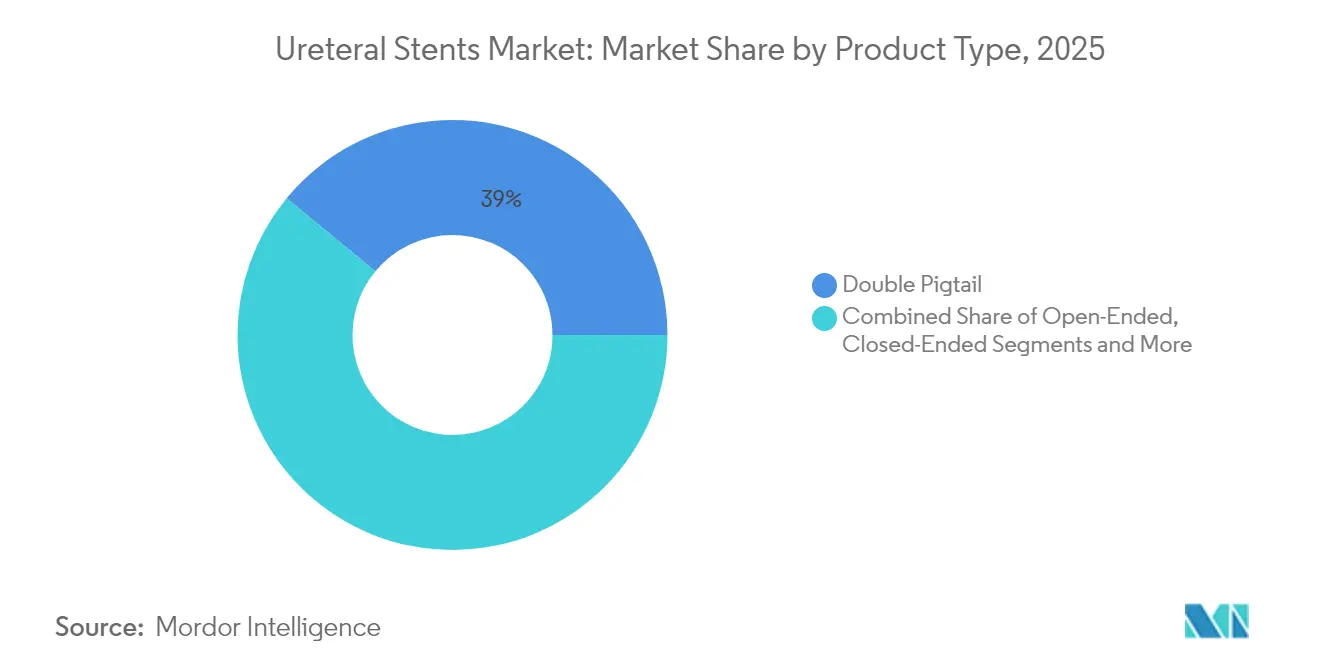
Double Pigtail Dominance Faces Biodegradable ChallengeDouble pigtail devices retained 39.02% ureteral stents market share in 2025 because clinicians appreciate their reliable drainage and straightforward placement. Yet biodegradable alternatives are growing 10.04% annually as hospitals focus on single-procedure care pathways that boost throughput and patient satisfaction. Open-ended and closed-ended configurations remain niche, reserved for anatomically complex cases or strictures needing directional flow control. Metallic stents serve malignant obstruction needs, with the Allium system delivering 59.5% functional survival and a 22-month median patency despite notable migration.
Biodegradable innovations address core drawbacks of traditional products. PLA/PGA blends withstand early postoperative forces before dissolving into CO₂ and water, limiting chronic irritation. Hybrid constructs combine self-expanding metal frames with resorbable coverings to unite long-term radial force with eventual lumen restoration. Patient-specific 3-D-printed geometries reduce migration by matching ureteral curvature, aligning with the ureteral stents market trend toward customized therapy at scale.

By Material:
Biodegradable Polymers Reshape Traditional HierarchiesPolyurethane held 41.85% of the ureteral stents market size in 2025 thanks to decades of clinical familiarity and balanced flexibility. However, biodegradable materials exhibit an 10.48% CAGR because payers reward avoidance of second procedures. Silicone continues to dominate extended indwelling cases, valued for smoothness and low encrustation propensity, yet supply-chain shortages of medical-grade grades prompt diversification toward liquid-silicone-rubber variants produced closer to point of care.
Composite designs integrate radiopaque fillers within biodegradable matrices, ensuring visibility without permanent residue. Metal-polymer hybrids exploit nitinol’s elasticity while providing resorbable luminal scaffolding. As ASTM F2579-18 standardization streamlines FDA review, manufacturers accelerate launches, reinforcing a structural change in the ureteral stents market where temporary function replaces permanent implantation.
By Coating/Technology:
Anti-Encrustation Innovation Drives GrowthHydrophilic coatings captured 42.78% revenue in 2025 by easing insertion and lowering friction. Anti-encrustation nano-coatings now expand at 7.83% CAGR, addressing the central pain point of mineral buildup. Early data show Percushield surfaces slashing calcium precipitation, prolonging safe indwelling times without extra systemic antibiotics. Drug-eluting profiles migrate from cardiology, with controlled gentamicin or heparin release targeting infection and thrombosis in situ.
Future-ready designs marry pH-responsive chemistries with intelligent sensors that flag early obstruction signs to cloud-based dashboards. Such convergence mirrors broader ureteral stents market pressures where device makers must pair hardware with data analytics to win procurement contracts emphasizing outcome-based reimbursement.
By Application:
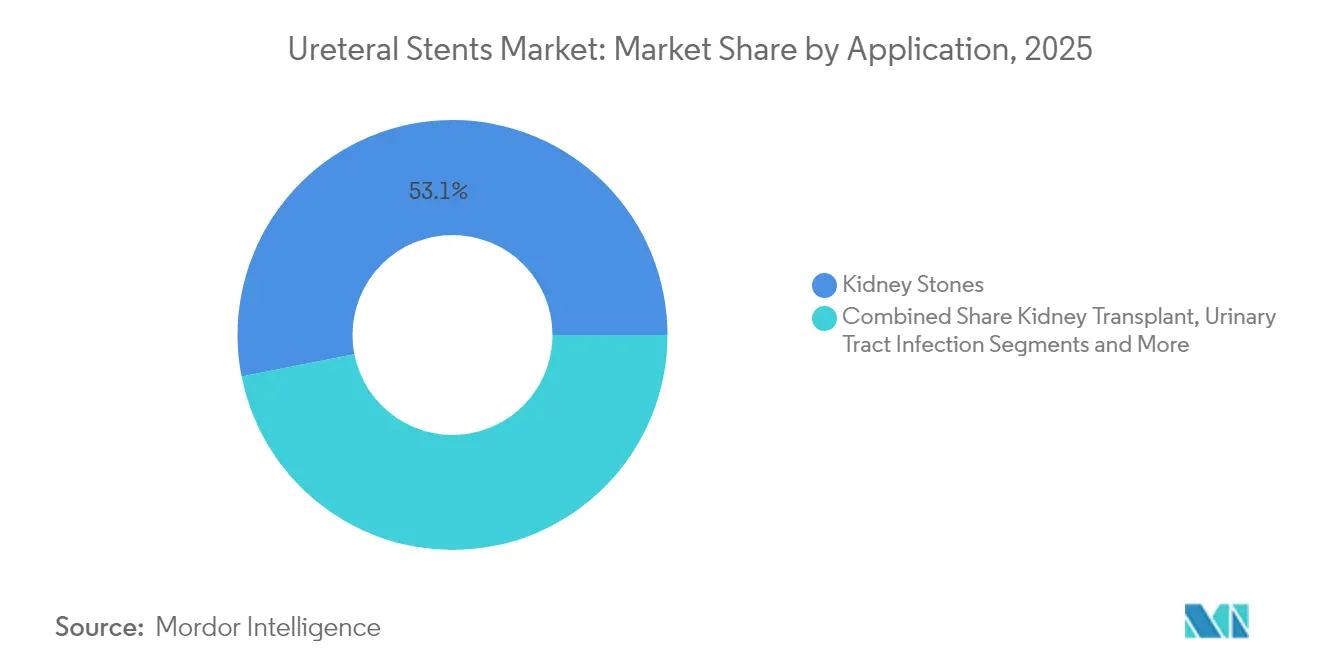
Tumor Treatment Emerges as High-Growth SegmentKidney-stone intervention still delivered 53.10% of ureteral stents market revenue in 2025 because of high prevalence and recurring episodes. Meanwhile, tumor-related drainage shows an 8.35% CAGR as rising cancer survivorship demands durable patency without repeated anesthetic exposure. Post-ureteroscopy recovery benefits from slimline, lubricious stents that reduce hematuria and expedite discharge in ambulatory centers.
In transplant surgery, biodegradable scaffolds protect delicate anastomoses during vascular reperfusion before vanishing to curb infection. AI-guided sizing tools predict optimal diameter based on CT datasets, lowering post-graft obstruction rates. These advances align with payer preference for evidence-based care, solidifying the ureteral stents market’s evolution toward precision-engineered, condition-specific solutions.
By End User:
ASC Growth Reshapes Care Delivery ModelsHospitals commanded 58.92% ureteral stents market share in 2025, yet procedure migration to ambulatory surgical centers is advancing 7.18% per year. Urology-focused ASCs execute 95% of cases under 25 CPT codes, achieving predictable scheduling and reduced overhead. Specialty clinics bridge accessibility gaps, especially in rural areas where hospital urologists are scarce but demand for quick stone relief persists.
Patient-led home-care scenarios emerge as stent-on-string models gain traction, offering self-removal and lowering clinic loads. Reimbursement incentives tied to site neutrality may accelerate this trend, underscoring how care-setting flexibility is integral to future ureteral stents market expansion.
Geography Analysis
North America Ureteral Stent Market
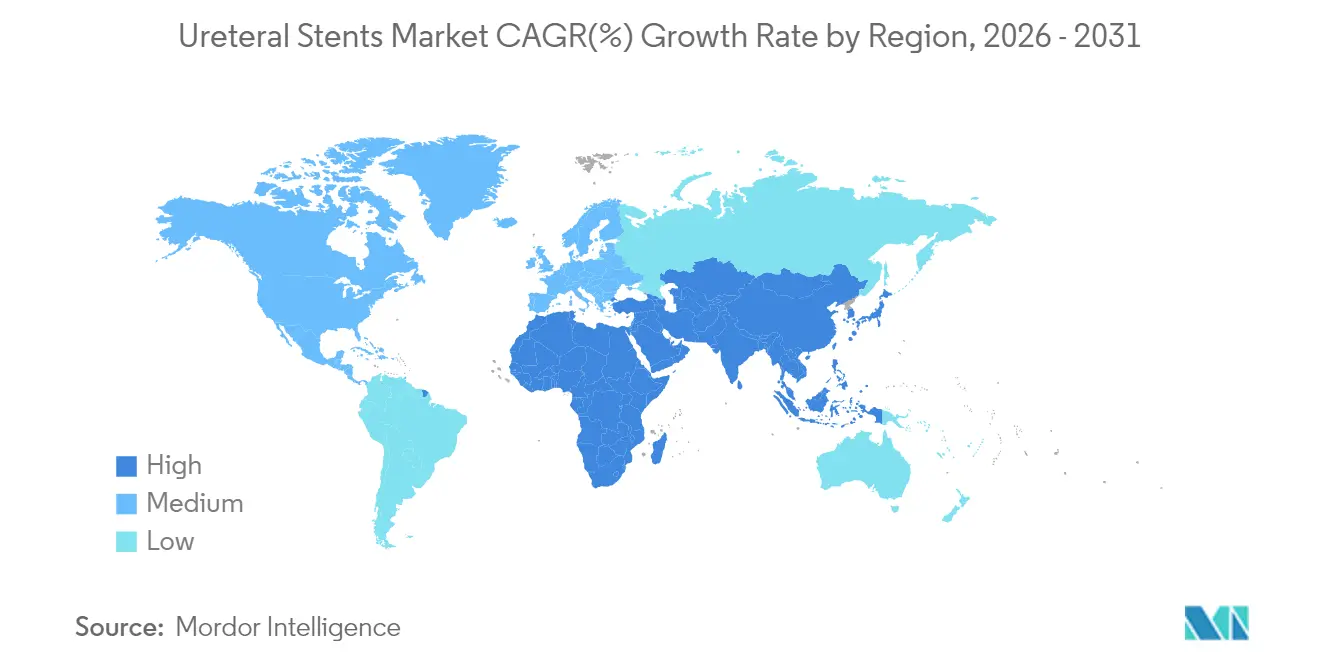
North America held 36.85% ureteral stents market share in 2025, powered by robust reimbursement, established procedural pathways, and early adoption of designs such as the RELIEF stent for reflux prevention. Kidney-stone incidence at 9.25% fuels volume, while ASC penetration improves throughput and patient convenience. Regional supply-chain resilience remains top-of-mind after pandemic-era shortages exposed vulnerabilities in medical-grade silicone sourcing.
APAC Ureteral Stent Market
Asia-Pacific registers the fastest 7.92% CAGR, reflecting healthcare modernization, aging societies in Japan and South Korea, and expanding insurance coverage throughout China and India. Regulatory harmonization across ASEAN lowers approval barriers, and domestic manufacturing plants shorten lead times, making advanced stents accessible to price-sensitive markets. Telemedicine adoption aids post-procedure follow-up across wide geographies, mitigating rural access gaps.
Europe Ureteral Stent Market
Europe grows steadily under universal healthcare but navigates a complex regulatory landscape that can slow novel-device rollouts. EMA scrutiny of biodegradable-by-product safety imposes rigorous, expensive trials, though academic-center collaborations support evidence generation. Cost-effectiveness remains pivotal; thus, technologies showing tangible savings—such as eliminating removal procedures—gain faster traction. Brexit-related logistics disruption persists, yet established supplier relationships deliver stability.
Regulatory Landscape
Ureteral stents are regulated primarily as medical devices, with pathway selection shifting when coatings incorporate active substances. In the United States, the FDA typically reviews ureteral stents through the 510(k) premarket notification process under its ureteral stent guidance, while drug-eluting variants can be treated as combination products under 21 CFR Part 3, with the lead center determined by the product's primary mode of action.
In Europe, Regulation (EU) 2017/745 (EU MDR) governs ureteral stents as devices, but stents that integrate a medicinal substance with ancillary action trigger additional conformity assessment requirements, including an opinion on the drug component as applicable. Across major markets, biological evaluation expectations are anchored to ISO 10993-1:2025, tightening documentation and strengthening the linkage between risk management and evidence for biocompatibility, extractables, and related safety for both conventional and biodegradable materials.
Value Chain Analysis
The value chain begins with raw materials and component inputs, including medical-grade polymers (polyurethane, silicone, and biodegradable polymers such as PLA/PGA), radiopaque additives, and coating chemistries (hydrophilic, anti-encrustation, and drug-eluting layers). Stent manufacturing commonly involves extrusion and forming, followed by coating application, which remains a key yield and consistency bottleneck for drug-eluting or nano-coated designs. The process then includes assembly with positioning aids, including stent-on-string variants, and ends with terminal sterilization using validated sterile barrier packaging.
Downstream, products typically move through direct sales and specialty distributors to hospitals, ambulatory surgical centers, and specialty urology clinics. Procurement decisions are shaped by clinician preference, outcomes evidence, and supply reliability. Quality and compliance requirements, including FDA QSR and ISO 13485-aligned systems, raise the importance of qualified suppliers for polymers, coating processors, and sterile packaging partners, particularly as the market expands into combination-device configurations where PMOA determination and cross-functional regulatory controls increase development and lifecycle complexity.
Competitive Landscape
The ureteral stents market is moderately fragmented. Boston Scientific notched 23.5% urology-segment growth in Q1 2025, leveraging broad portfolios plus data-backed performance messaging. Its USD 3.7 billion Axonics acquisition augments pelvic-health overlap, fortifying cross-selling channels. Teleflex’s EUR 760 million BIOTRONIK buy and impending corporate split illustrate a push toward focused, innovation-centric business models investors.
Technological differentiation outweighs cost competition: AI-guided placement, anti-encrustation nano-coatings, and biodegradable matrices represent key battlegrounds. FDA’s first-in-class approvals (e.g., RELIEF) offer strong marketing moats, prompting rivals to fast-track comparable innovations. Smaller firms exploit additive manufacturing expertise to supply patient-specific stents, carving niches despite limited scale. Digital-health integration deepens competitive complexity, as outcome-tracking software bundled with hardware can secure value-based contracts.
Supply-chain security shapes procurement decisions after silicone shortages highlighted dependence on narrow supplier bases. Players investing in diversified materials and regional production earn credibility with hospitals optimizing resilience. Overall, heightened R&D spend and merger activity signal sustained transformation of the ureteral stents market.
Ureteral Stent Industry Leaders
-
Beckton, Dickinson and Company
-
Boston Scientific Corporation
-
B. Braun Melsungen AG
-
Cook Medical LLC
-
Coloplast A/S
- *Disclaimer: Major Players sorted in no particular order
Ureteral Stent Market Companies Covered in this Report
- Allium Medical
- Beckton Dickinson
- B. Braun
- Boston Scientific
- Coloplast
- Cook Group
- Olympus
- Teleflex
- UROMED Kurt Drews KG
- Taewoong Medical
- Advin Health Care
- Zhejiang ChuangXiang Medical Technology
- Pnn Medical A/S
- Merit Medical Systems
- Stryker
- Plasti-Med
- Micro-tech
- ROCAMED
- HydrUStent Lda
Market Opportunities and Future Outlook
Unmet needs around infection, encrustation, and patient discomfort keep product differentiation focused on materials and surface engineering rather than basic form factors. The market also shows whitespace in advanced anti-fouling and controlled-delivery coatings: 2026 academic work described site-specific, microporous hydrogel coatings for tunable drug delivery on ureteral stents (International Journal of Pharmaceutics, March 2026) and an intrinsically disordered protein condensate coating intended to inhibit biofouling and encrustation (Acta Biomaterialia, April 2026). Together, these publications reinforce a pipeline of coating approaches aimed at reducing mineral deposition and bacterial adhesion.
Biodegradable platforms broaden opportunity beyond polymer resorbables into metallic biodegradation concepts, supported by 2026 in vitro evaluation of Mg-1Y biodegradable ureteral stent prototypes (npj Materials Degradation, July 2026). Beyond device design, a commercialization gap persists in standardized, physiologically realistic in vitro test systems that reproduce urinary flow, temperature, and microbial conditions. Developers that industrialize these validation platforms can improve comparability across designs and streamline evidence generation for regulatory submissions and hospital value assessments.
Recent Industry Developments in Ureteral Stent Market
- May 2026: Becton, Dickinson and Company introduced the Elyra Thulium Fiber Laser System to expand its kidney stone care platform used by urology teams. The launch strengthens bundled procedure offerings around ureteroscopy workflows where ureteral stents are routinely used for post-procedure drainage and symptom management.
- May 2025: Cook Medical issued an Urgent Field Safety Notice for Universa Soft and Universa Firm Ureteral Stent Sets tied to a manufacturing issue involving the heat sealer, with potential sterility impact for units sealed between August 7, 2024, and April 3, 2025. The notice highlighted the operational and compliance importance of validated sterile barrier packaging in stent supply chains and can influence hospital purchasing scrutiny and supplier qualification.
- December 2024: University Hospitals secured FDA clearance for the RELIEF ureteral stent, positioned as the first device cleared to prevent vesicoureteral reflux. The clearance emphasized growing regulatory and clinical focus on symptom-reducing stent designs and raised the bar for differentiated performance claims beyond basic drainage.
Ureteral Stent Market Report Scope and Research Methodology
Market Definition and Coverage
This market tracks the value of ureteral stents that are placed to keep urine flowing between the kidney and bladder when the ureter is blocked or needs support after a procedure.
Scope exclusions: External drainage devices such as nephrostomy tubes, general urology catheters, and vascular stents are not counted.
Segments Covered in This Report
- By Product Type
- Double Pigtail
- Open-Ended
- Closed-Ended
- Multiloop
- Biodegradable/Bioresorbable
- Metallic
- By Material
- Polyurethane
- Silicone
- Metal (Nitinol/Stainless)
- Biodegradable Polymers (PLA/PGA)
- Hybrid/Composite
- By Coating / Technology
- Hydrophilic-Coated
- Drug-Eluting
- Anti-Encrustation Nano-coated
- Radiopaque / Imaging-Enhanced
- By Application
- Kidney Stones (Urolithiasis)
- Kidney Transplant
- Urinary Tract Infection / Obstruction
- Tumors / Malignancies
- Post-Ureteroscopy / Post-Surgery
- By End User
- Hospitals
- Ambulatory Surgical Centers
- Specialty Urology Clinics
- Home-Care Settings
- By Geography
- North America
- United States
- Canada
- Mexico
- Europe
- Germany
- United Kingdom
- France
- Italy
- Spain
- Rest of Europe
- Asia-Pacific
- China
- Japan
- India
- Australia
- South Korea
- Rest of Asia-Pacific
- Middle East and Africa
- GCC
- South Africa
- Rest of Middle East and Africa
- South America
- Brazil
- Argentina
- Rest of South America
- North America
Data Sources, Market Sizing, and Validation
Desk Research
Desk work starts by mapping the clinical and procedure context that creates demand for ureteral stents, and then building guardrails around what should and should not be included. Public sources such as the CDC, NIH, and national health statistics programs help track disease burden and procedure drivers, including kidney stone incidence, urinary obstruction, and hospitalization patterns.
We also review open clinical literature (for example, PubMed-indexed studies) to understand typical indwell times, replacement frequency, complication rates, and shifts toward newer materials. For market structure checks, we use sources such as SEC filings, annual reports, investor presentations, reputable medical device press, and customs and trade releases where available, and we selectively use paid subscriptions for company financials and patent landscaping to validate product pipelines and pricing direction. The desk source list mentioned here is not exhaustive, and many additional public references were used for data collection, cross-checks, and clarification.
Primary Interviews and Surveys
Primary work is used to pressure test model assumptions that desk sources cannot settle cleanly, especially around unit usage per procedure, tendering behavior, and how average selling price changes by material type. We speak with clinical stakeholders and procurement-oriented roles across APAC, EMEA, and the Americas, so demand drivers, utilization, and pricing logic are checked against different care pathways and reimbursement settings.
Distribution of primary research fieldwork respondents
| Company type | Respondent position | Region |
|---|---|---|
| Top tier: 37% | CXOs: 15% | APAC: 41% |
| Mid tier: 43% | Functional/Unit leaders: 39% | EMEA: 33% |
| Smaller Players: 20% | Managers: 46% | Americas: 26% |
Market-Sizing & Forecasting
Sizing is built using top-down and bottom-up logic in a practical way. On the top-down side, the demand pool is reconstructed from procedure and patient flow signals, and then translated into stent consumption using realistic usage rates, replacement patterns, and setting mix (hospital versus ambulatory surgical centers). Where procedure statistics are patchy, we fill gaps with proxy indicators that were validated in calls, and then apply conservative ranges before a single point estimate is finalized.
The model is guided by a small set of trackable inputs that matter for this market, such as kidney stone and ureteral obstruction case volumes, ureteroscopy and lithotripsy procedure trends, average stents used per intervention, the typical dwell time before removal or exchange, and ASP differences by material class (polymer, hybrid, metal). Once a market total is formed, it is corroborated with selective bottom-up approximations, including sampled unit volumes by care setting and price bands, along with channel feedback on mix shifts, which helps adjust outliers without assuming every supplier can be fully rolled up.
For forecasting, we mainly use scenario analysis supported by a light multivariate regression check, so growth is tied to procedure growth, aging population signals, and technology adoption that changes replacement or complication rates. Assumptions are reviewed with experts by region, and then the forecast is carried forward with year-by-year logic rather than a single straight-line CAGR.
Data Validation & Update Cycle
Validation is done through repeated cross-checks so the final number stays aligned with real demand signals. We compare model output against independent metrics like procedure totals, hospital activity patterns, and pricing ranges discussed in interviews, and then variance flags are raised when a country or region deviates without a clear clinical or reimbursement reason.
Before sign-off, the work goes through multiple analyst reviews where assumptions, calculations, and unit-to-value conversions are rechecked, and interview follow-ups are triggered when a key input shifts or contradicts earlier findings. The report is refreshed annually, and interim updates are made when material events occur, such as guideline changes, product shifts that alter dwell time practice, or notable pricing movements. Right before delivery, a final pass is performed so clients receive the latest updated view.
Mordor Intelligence's Ureteral Stents Market Size Compared Against Other Published Estimates
Published market sizes for ureteral stents can look different even when they describe similar clinical use, because each study makes its own choices on device scope, base year, currency handling, and how procedure-driven demand is converted into revenue.
The table points to a spread that is largely explained by what is counted as a ureteral stent sale and how the current year is anchored. In Mordor Intelligence's model, the total is tied to single-use or short-term indwelling ureteral stents and it avoids adjacent drainage products, and the year value is validated against procedure-based demand indicators and realistic ASP bands by material.
Benchmark comparison
| Source | Market Size | Gaps in Research Methodology |
|---|---|---|
| Mordor Intelligence | USD 662.5 M (2026) | |
| Global Research Publisher A | USD 575.5 M (2024) | Uses an earlier base year and does not clearly separate short-term indwelling stents from adjacent urology disposables, which can shift the denominator and the implied unit-to-value conversion. |
| Online Research Publisher B | USD 575.54 M (2024) | A longer forecast window is presented with limited detail on procedure-to-stent usage logic, and pricing is typically applied at a broad regional level, which can miss material-mix driven ASP differences. |
Looking across the three values, most of the gap comes from base-year choice and how tightly the device boundary is defined around indwelling ureteral stents versus nearby drainage items. By keeping inputs traceable to procedure volumes, usage rates, and material-linked pricing ranges, our estimate stays repeatable and easier to reconcile when new clinical practice or pricing signals emerge.
Key Questions Answered in the Report
What is the current size of the ureteral stents market?
The ureteral stents market is valued at USD 662.5 million in 2026 and is projected to reach USD 891.07 million by 2031.
Why are biodegradable ureteral stents gaining popularity?
They match traditional devices’ drainage performance while dissolving naturally, sparing patients a second removal procedure and lowering overall treatment costs.
Which region is expanding fastest?
Asia-Pacific leads with an 7.92% CAGR, driven by healthcare modernization and broader insurance coverage.
What segment holds the largest ureteral stents market share?
Double pigtail stents dominate with 39.02% revenue share in 2025.
How are AI technologies influencing stent placement?
AI-guided systems improve sizing accuracy, reduce revision rates, and cut radiation exposure during procedures, enhancing patient safety and procedural efficiency.
What are the chief restraints on market growth?
High infection and encrustation risks, along with patient discomfort from traditional stent designs, moderate overall expansion despite technological advances.