
United States Telehealth Market Size and Share
| Study Period | 2019 - 2030 |
| Forecast Data Period | 2025 - 2030 |
| Historical Data Period | 2019 - 2023 |
| Market Size (2025) | USD 66.75 Billion |
| Market Size (2030) | USD 198.77 Billion |
| CAGR (2025 - 2030) | 24.39% |
| Market Concentration | Medium |
Major Players *Disclaimer: Major Players sorted in no particular order |
United States Telehealth Market Analysis by Mordor Intelligence
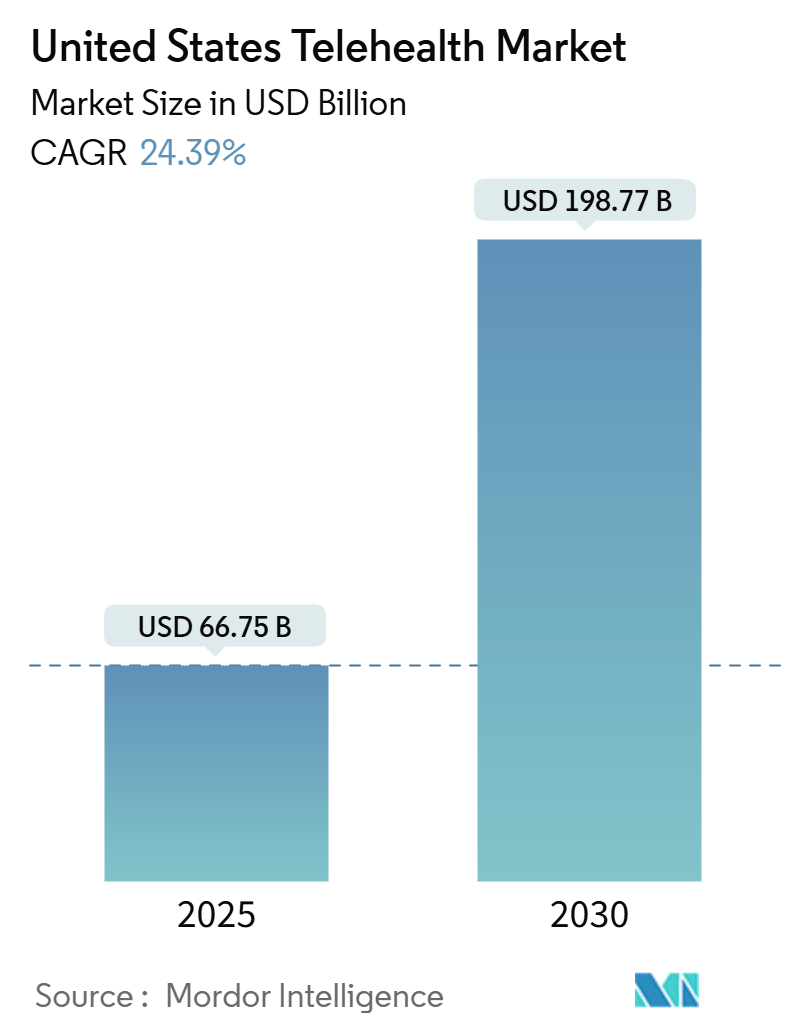
The United States Telehealth Market size is estimated at USD 66.75 billion in 2025, and is expected to reach USD 198.77 billion by 2030, at a CAGR of 24.39% during the forecast period (2025-2030).
Telehealth encompasses a range of services, including virtual consultations, remote patient monitoring, and health-related educational resources, streamlining healthcare access and efficiency. Factors such as the growing burden of chronic diseases and the growing need for remote consultations to avoid medical visits are some of the key factors driving the telehealth market in the United States Moreover, the rising shortage of healthcare professionals in the United States and the rising acceptance of telehealth in the United States is another factor anticipated to propel the market growth forward.
Chronic diseases such as, cancer, cardiovascular disorders have substantially increased over the past years. For instance, the American Cancer Society estimated that new cancer cases increased from 1.9 million in 2023 to 2.0 million in 2024. In 2023, the most diagnosed cancers included breast, lung, and hematological malignancies. Such an anticipated rise in the number of cancer cases and the growing need for routine hospital visits in case of cancer is likely to fuel the need for telehealth practices to make healthcare more accessible for patients. Therefore, the rising burden of chronic diseases will bolster the country’s market growth over the coming years.
In addition, the promising utilization rates of telehealth across the United States are further expected to open new avenues for the companies operating across the United States, thereby supporting the market growth. For instance, the study published in JMIR Public Health and Surveillance in July 2023 highlighted a significant increase in telehealth utilization in the United States, particularly driven by provider recommendations and the convenience associated with virtual care. With nearly 40% of adults engaging in telehealth services, the findings underscored the positive patient satisfaction and telehealth's continued role in addressing acute and chronic health needs.
This shift indicates a fundamental transformation in healthcare delivery, positioning telehealth as an integral component of the future healthcare landscape. Such a promising utilization rate of telehealth in the country is poised to foster industry expansion over the coming years.
Moreover, promising public and private sector initiatives to strengthen the telehealth landscape across the country are further projected to offer significant growth opportunities for the market. For instance, in October 2024, the American Hospital Association (AHA) emphasized the importance of making telehealth and hospital-at-home programs permanent following their successful expansion during and after the pandemic.
With regulatory waivers set to expire, the AHA urged Congress to take action to ensure continued access to these innovative healthcare models, which have proven beneficial for patients and providers alike. Such significant initiatives by public organizations are projected to accelerate market expansion over the forecast period.
Furthermore, market participants' growing introductions of innovative telehealth services are projected to further bolster industry expansions over the coming years. For instance, in August 2024, VSee Health, Inc., a provider of comprehensive telehealth services aimed at optimizing workflow and enhancing patient care, launched its Aimee telehealth service in Wichita, Kansas, in collaboration with Stand Together. Aimee offered an innovative virtual healthcare platform, including lab services and prescription drug access, regardless of patients' insurance status, while transforming local community organizations into centers of care for virtual urgent care, primary care, and medical weight loss programs. Such innovative service introductions by the market players are projected to foster market expansion over the coming years.
Therefore, the above-mentioned factors, including the rising burden of chronic diseases in the United States, the growing demand for telehealth services, and innovative service introductions by market players, are likely to boost the country’s market growth. However, security and privacy concerns associated with telehealth are likely to hinder market growth over the coming years.
Worldwide, activity is shaped by contributions from multiple countries and regions, with United states representing one among them. The global report on telehealth market by Mordor Intelligence reflects how these countries and regional layers combine into a single system.
United States Telehealth Market Trends and Insights
Telemedicine Segment is Expected to Hold Largest Market Share of the United States Telehealth Market
The telemedicine segment is anticipated to dominate the United States telehealth market over the projected period, and its growth is driven by factors such as the growing importance of telemedicine in the United States, rising government support, and rising efforts by market players to strengthen telemedicine practices in the United States.
The rising adoption of telemedicine in the United States will likely boost the utilization of key telemedicine technologies, thereby supporting the segment market. For instance, the study published in JAMA Network Open in March 2024 concluded that telemedicine utilization in the United States had significantly increased, particularly among patients with high care needs.
It highlighted that despite the availability of in-person visits, a considerable portion of patients preferred telemedicine, thus reaffirming its value in enhancing healthcare access. The findings underscored the necessity for continued investment in telemedicine infrastructure to ensure equitable access across diverse patient demographics. This substantial adoption of telemedicine practice in the country is expected to open new growth avenues for the industry, thereby supporting industry growth.
In addition, supportive government initiatives to expand accessibility and usage of telemedicine practice in the country is further projected to boost the segment growth. For instance, in November 2024, the Drug Enforcement Administration and the Department of Health and Human Services announced a one-year extension of telemedicine prescribing flexibilities, allowing the waiver of in-person visit requirements for prescribing controlled substances until December 31, 2025. This decision followed advocacy from the American Hospital Association during the COVID-19 public health emergency. Such policies are likely to expand the penetration of telemedicine practices in the country, thereby supporting the overall country’s market.
Moreover, several investments and funding activities undertaken by the government bodies to accelerate telemedicine practice in the United States is further expected to propel industry growth over the coming years. For instance, in March 2024, the United States Department of Agriculture (USDA) sanctioned a grant of USD 60 million via its Distance Learning and Telemedicine (DLT) Grant Program. Such grants are likely to offer lucrative growth opportunities for telemedicine, thereby creating substantial growth opportunities for the segment.
Therefore, the above-mentioned factors are expected to boost the segment growth over the forecast period.
Healthcare Facilities Segment is Expected to Exhibit Substantial Growth Rate in the United States Telehealth Market
The healthcare facilities segment is expected to exhibit a substantial growth rate over the forecast period owing to factors such as the growing implementation of telehealth platforms by healthcare facilities to provide the best healthcare to patients and the rising number of healthcare facilities like hospitals across the United States. Moreover, rising strategic efforts by the market participants to introduce advanced telehealth technologies for healthcare facilities are further anticipated to bolster the country’s market growth over the coming years.
In addition, a substantial number of healthcare facilities, including hospitals in the United States, is expected to promote the adoption of such telehealth platforms to facilitate overall patient care and is anticipated to facilitate segment growth over the coming years.
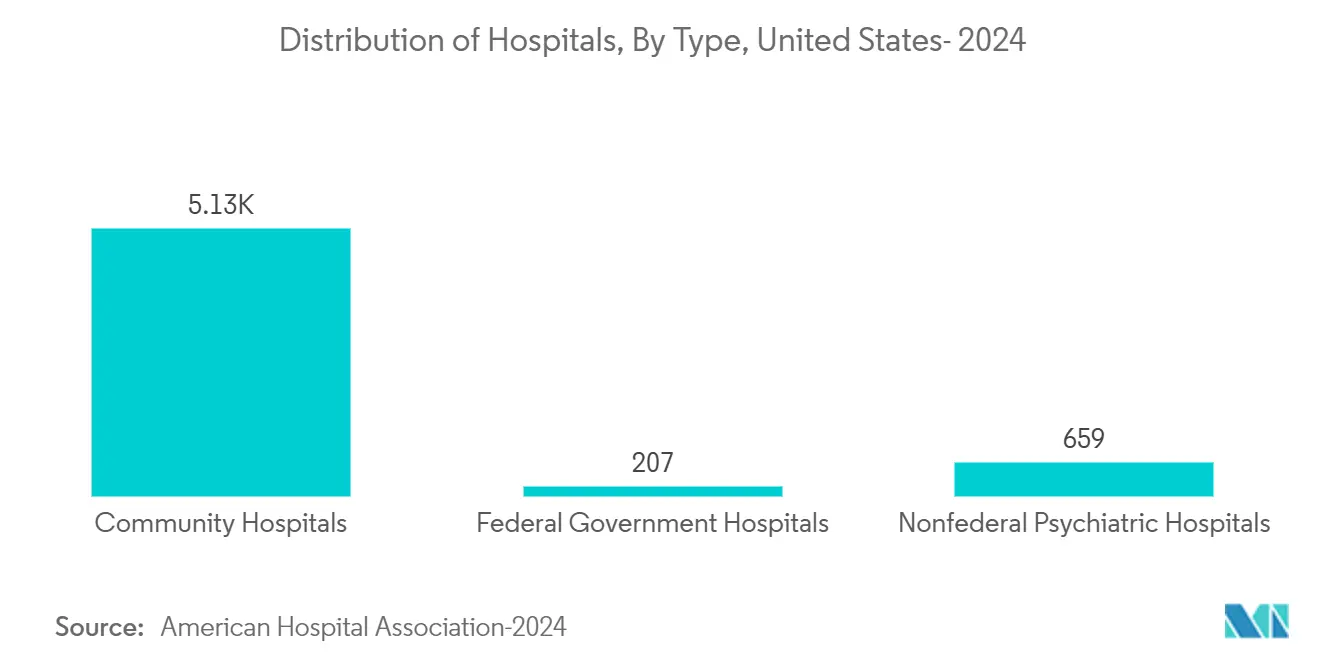
For instance, according to 2024 updated data from the American Hospital Association, there were 6,120 community hospitals in the United States, followed by 1,810 rural community hospitals. Such a substantial number of hospitals in the country is likely to expand utilization rates of telehealth solutions in hospitals, thereby fostering industry growth.
Furthermore, several efforts taken by market players to expand the availability of telehealth platforms to healthcare facilities are anticipated to spur industry expansion over the coming years. For instance, in January 2024, Aramark announced a new program to remotely connect its skilled clinical dietitians with hospital patients using cloud-based technologies.
This initiative included a pioneering technology service agreement with Teladoc Health, allowing Aramark to provide communication solutions to hospitals via Teladoc Health’s Solo platform, integrated with Microsoft Teams. Aramark also facilitated the program through existing telehealth platforms at participating hospitals with a clinical nutrition service agreement with Teladoc Health.
Therefore, the above-mentioned factors, including the substantial number of healthcare facilities in the United States coupled with several strategic initiatives undertaken by the market participants, are likely to support the segment growth over the coming years.
Competitive Landscape
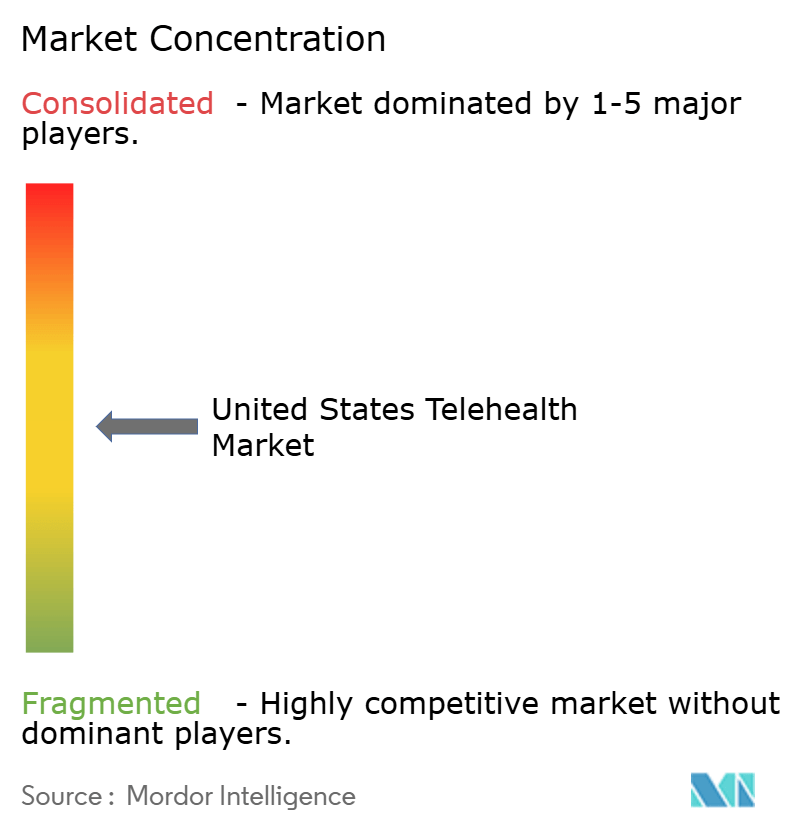
The United States telehealth market is characterized by intense competition and a semi-consolidated structure, featuring numerous prominent companies that dominate market share. This landscape includes several established international firms known for their significant presence. Key players in the United States telehealth sector are actively pursuing various organic and inorganic strategies to enhance their business opportunities. Notable companies operating in this market include Koninklijke Philips N.V., GE HealthCare, Oracle, Siemens Healthcare Private Limited, Cisco Systems, Inc., and American Well, among others.
United States Telehealth Industry Leaders
-
Koninklijke Philips N.V
-
GE HealthCare.
-
Oracle
-
Siemens Healthcare Private Limited
-
American Well
- *Disclaimer: Major Players sorted in no particular order
Recent Industry Developments
- June 2024: IMG expanded its partnership with Teladoc Health, the global leader in whole-person virtual care. This expansion enhanced telehealth service capabilities for IMG customers with existing telehealth services. It introduced new telehealth offerings to additional IMG plans, aiming to improve customers' well-being by providing virtual access to healthcare professionals while traveling.
- September 2024: Iris Telehealth launched its Virtual Clinic and Iris Insights platforms aimed at enhancing behavioral health services within healthcare organizations. This comprehensive suite is designed to improve patient access to mental health care and includes tools for data analysis to optimize service delivery and foster long-term financial viability.
United States Telehealth Market Report Scope
According to the scope of the report, telehealth is the delivery and facilitation of healthcare services through digital communication technologies, enabling remote patient care and health management. It encompasses a range of services, including virtual consultations, remote patient monitoring, and health-related educational resources, streamlining healthcare access and efficiency.
The United States telehealth market is segmented by type, application, delivery mode, and end-user. By type, the market is segmented as products and services. By application, the market is segmented as telemedicine, patient monitoring, continuous medical education, and others. By delivery mode, the market is segmented on-premise, and cloud based. By end-user the market is segmented into, healthcare facilities, homecare and others. The report also covers the market sizes and forecasts for the United States telehealth market. For each segment, the market size is provided in terms of value (USD).
| Products |
| Services |
| Telemedicine |
| Patient Monitoring |
| Continuous Medical Education |
| Others |
| On-Premise |
| Cloud Based |
| Healthcare Facilities |
| Homecare |
| Others |
| By Type | Products |
| Services | |
| By Application | Telemedicine |
| Patient Monitoring | |
| Continuous Medical Education | |
| Others | |
| By Delivery Mode | On-Premise |
| Cloud Based | |
| By End-User | Healthcare Facilities |
| Homecare | |
| Others |
Key Questions Answered in the Report
How big is the United States Telehealth Market?
The United States Telehealth Market size is expected to reach USD 66.75 billion in 2025 and grow at a CAGR of 24.39% to reach USD 198.77 billion by 2030.
What is the current United States Telehealth Market size?
In 2025, the United States Telehealth Market size is expected to reach USD 66.75 billion.
Who are the key players in United States Telehealth Market?
Koninklijke Philips N.V, GE HealthCare., Oracle, Siemens Healthcare Private Limited and American Well are the major companies operating in the United States Telehealth Market.
What years does this United States Telehealth Market cover, and what was the market size in 2024?
In 2024, the United States Telehealth Market size was estimated at USD 50.47 billion. The report covers the United States Telehealth Market historical market size for years: 2019, 2020, 2021, 2022, 2023 and 2024. The report also forecasts the United States Telehealth Market size for years: 2025, 2026, 2027, 2028, 2029 and 2030.
United States Telehealth Market Report
Statistics for the 2025 United States Telehealth market share, size and revenue growth rate, created by Mordor Intelligence™ Industry Reports. United States Telehealth analysis includes a market forecast outlook for 2025 to 2030 and historical overview. Get a sample of this industry analysis as a free report PDF download.