
Market Overview
| Study Period | 2020 - 2031 |
|---|---|
| Forecast Data Period | 2026 - 2031 |
| Base Year Market Size (2025) | USD 0.6 Billion |
| Market Size (2026) | USD 0.65 Billion |
| Market Size (2031) | USD 0.95 Billion |
| Growth Rate (2026 - 2031) | 8.05 % |
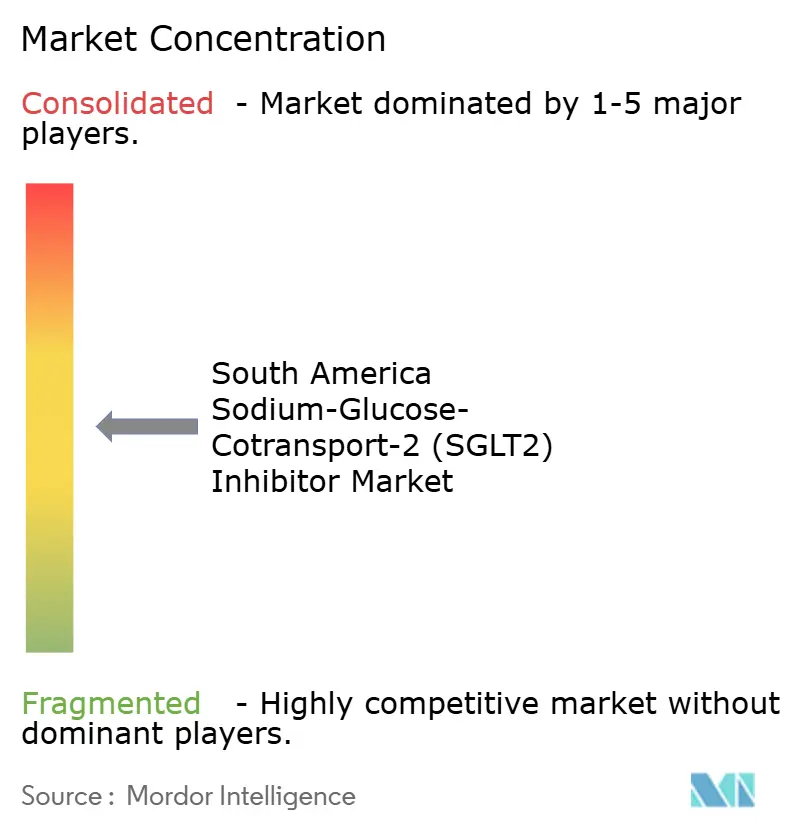
| Market Concentration | Medium |
Major Players *Disclaimer: Major Players sorted in no particular order Image © Mordor Intelligence. Reuse requires attribution under CC BY 4.0. | |
South America Sodium-Glucose-Cotransport-2 (SGLT2) Inhibitor Market Analysis by Mordor Intelligence
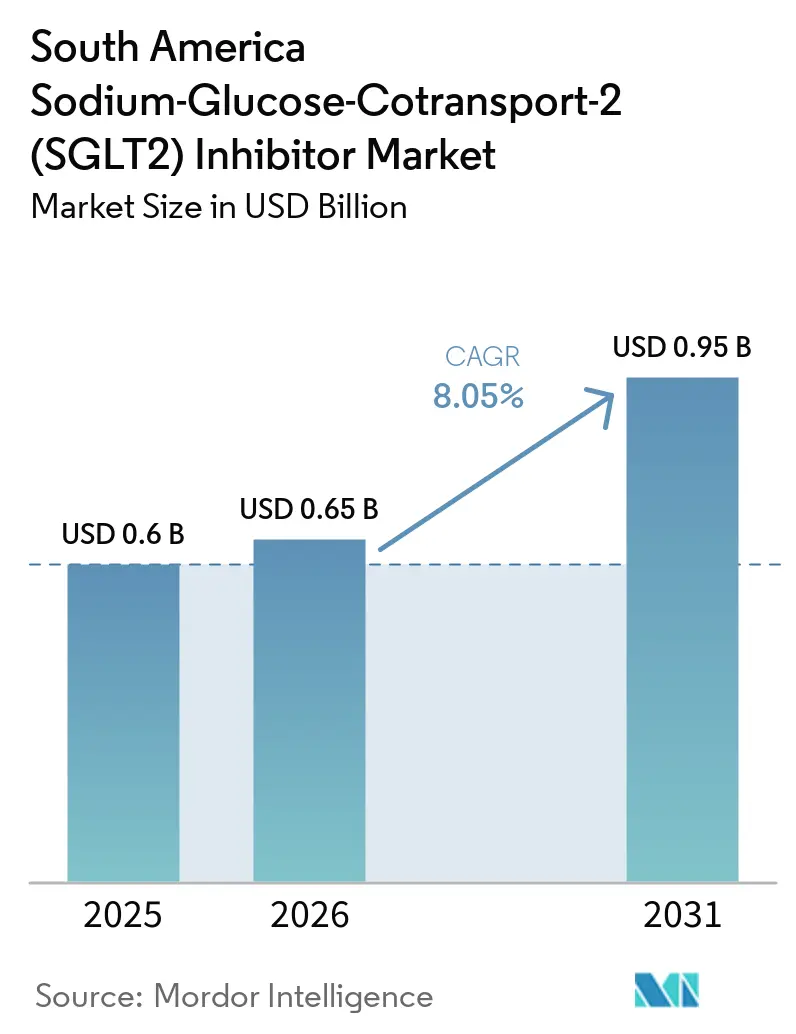
The South America sodium-glucose cotransporter-2 inhibitor market size was valued at USD 0.60 billion in 2025 and is estimated to grow from USD 0.65 billion in 2026 to reach USD 0.95 billion by 2031, at a CAGR of 8.05% during the forecast period (2026-2031).
The region has a substantial and incompletely treated diabetes population, which supports demand for therapies used across diabetes, heart failure, and chronic kidney disease. Public coverage decisions in Brazil, Peru, and Argentina are widening access, although coverage remains disease specific and varies by country. Local generic entry is increasing prescription volumes through lower prices, while placing pressure on revenue per unit for originator brands. The South America SGLT2 inhibitor market therefore depends on the balance between broader access, specialist adoption, and uneven reimbursement conditions across the region.
Key Report Takeaways
- By drug, dapagliflozin held 38.56% of the South American SGLT2 inhibitor market share in 2025, while ertugliflozin is projected to grow at a 10.12% CAGR through 2031.
- By indication, type 2 diabetes mellitus accounted for 41.86% of the South American SGLT2 inhibitor market size in 2025, while chronic kidney disease is projected to expand at an 11.25% CAGR through 2031.
- By distribution channel, hospital pharmacies held 45.87% of the South American SGLT2 inhibitor market share in 2025, while online pharmacies are projected to advance at a 10.67% CAGR through 2031.
- By geography, Brazil led with 52.30% of regional revenue in 2025, while Argentina is projected to record an 11.56% CAGR through 2031.
Note: Market size and forecast figures in this report are generated using Mordor Intelligence’s proprietary estimation framework, updated with the latest available data and insights as of January 2026.
South America Sodium-Glucose-Cotransport-2 (SGLT2) Inhibitor Market Trends and Insights
Drivers Impact Analysis*
| DRIVER | (~) % IMPACT ON CAGR FORECAST | GEOGRAPHIC RELEVANCE | IMPACT TIMELINE |
|---|---|---|---|
| Rising type 2 diabetes and cardiorenal disease burden | +1.8% | Brazil, Argentina, Colombia, Chile, and Peru | Long term (≥ 4 years) |
| Expansion of SGLT2 use beyond glycemic control | +1.5% | Brazil, Colombia, and Argentina | Medium term (2-4 years) |
| Increasing public and private sector formulary adoption | +1.6% | Brazil, Peru, and Argentina | Short term (≤ 2 years) |
| Evidence-based diabetes and heart failure treatment pathways | +1.2% | Brazil, Chile, and Colombia | Medium term (2-4 years) |
| State-backed local generic and technology-transfer programs | +0.8% | Brazil and Peru | Medium term (2-4 years) |
| Digital prescription and pharmacy-led chronic-care models | +0.6% | Brazil, Argentina, and Chile | Short term (≤ 2 years) |
| Source: Mordor Intelligence | |||
Rising Type 2 Diabetes and Cardiorenal Disease Burden
The diabetes burden provided a sustained foundation for the South American SGLT2 inhibitor market. The International Diabetes Federation reported that 35 million adults in South and Central America had diabetes in 2024, resulting in 224,000 diabetes-related deaths and USD 81 billion in related expenditure. The 30.4% undiagnosed rate highlighted a significant untreated population, while the adult diabetes population was projected to reach 52 million by 2050. Brazil had 17 million adults with diabetes, and Argentina had 4.3 million adults with diabetes and a 14% adult prevalence rate, supporting treatment expansion as more patients entered formal care pathways.[1]Magliano DJ, Boyko EJ, “Diabetes Atlas,” International Diabetes Federation, ncbi.nlm.nih.gov
Expansion of SGLT2 Use Beyond Glycemic Control
SGLT2 inhibitors increasingly served as cardiorenal therapies beyond their role as glucose-lowering medicines. The 2024 KDIGO guideline recommended these medicines for patients with chronic kidney disease and an estimated glomerular filtration rate (eGFR) of at least 20 mL/min/1.73 m², including patients without diabetes. The International Society of Nephrology presented this approach in its 2025 SGLT2 inhibitor Cold Map, while Colombia's 2025 expert consensus identified dapagliflozin and empagliflozin as preferred options for chronic kidney disease with albuminuria of at least 200 mg/g.[2]International Diabetes Federation, “Diabetes in South and Central America 2024,” IDF Diabetes Atlas, diabetesatlas.org These recommendations expanded prescribing across endocrinology, cardiology, and nephrology, strengthening access through hospital protocols, specialist education, and diagnostic testing.
Increasing Public and Private Sector Formulary Adoption
Formulary decisions acted as an immediate access driver for the South American SGLT2 inhibitor market. In February 2025, Brazil made dapagliflozin available free of charge through Farmácia Popular for eligible adults aged 65 years and older with type 2 diabetes and cardiovascular disease.[3]Kidney Disease Improving Global Outcomes, “KDIGO 2024 Clinical Practice Guideline for the Evaluation and Management of Chronic Kidney Disease,” Kidney International Supplements, theisn.org In March 2025, Peru added dapagliflozin 10 mg and empagliflozin 10 mg and 25 mg to its complementary essential medicines list, while Argentina mandated specified health coverage for empagliflozin, canagliflozin, or dapagliflozin under Resolution 2091/2025. These measures reduced patient cost barriers and expanded public procurement and insurance volumes, although coverage remained limited to specified clinical groups.
Evidence-Based Diabetes and Heart Failure Treatment Pathways
National guidelines translated clinical evidence into standardized prescribing pathways across the region. Colombia's 2025 clinical guideline recommended SGLT2 inhibitors as an add-on to metformin when patients did not achieve glycemic goals and supported their use as first-line cardiorenal protection for patients with established cardiovascular disease. The guideline positioned these medicines as preferred options for eligible patients with heart failure and diabetic kidney disease. Continuing medical education and digital chronic care models supported adoption beyond major tertiary centers and aligned diabetes, cardiology, and nephrology care for patients with overlapping conditions.
Restraints Impact Analysis*
| RESTRAINT | (~) % IMPACT ON CAGR FORECAST | GEOGRAPHIC RELEVANCE | IMPACT TIMELINE |
|---|---|---|---|
| High out-of-pocket cost and uneven reimbursement | -1.5% | Argentina, Peru, and Rest of South America | Medium term (2-4 years) |
| Urban-rural inequality in specialist diagnosis and follow-up | -1.0% | Brazil, Peru, Bolivia, and Rest of South America | Long term (≥ 4 years) |
| Country-level regulatory and procurement fragmentation | -0.8% | Bolivia, Ecuador, Paraguay, and Uruguay | Long term (≥ 4 years) |
| Inconsistent supply of cardiorenal-disease diagnostics | -0.7% | Rural Brazil, Peru, and Rest of South America | Medium term (2-4 years) |
| Source: Mordor Intelligence | |||
High Out-of-Pocket Cost and Uneven Reimbursement
High out-of-pocket costs continued to limit utilization outside major public coverage channels. In Argentina, price-reference mechanisms did not consistently keep pace with pharmacy costs during currency instability. Peru's 2025 essential medicines decision applied only to the public-sector framework, leaving private retail patients exposed to full medicine costs. This created varied demand patterns between subsidized public-sector and private-sector patients. Fragmented reimbursement and procurement structures further delayed access in smaller countries.
Urban-Rural Inequality in Specialist Diagnosis and Follow-Up
SGLT2 inhibitor prescribing for kidney disease and heart failure often requires eGFR and albuminuria testing. Rural primary care settings had lower access to these diagnostics than major metropolitan centers. In Brazil, high-complexity hospital networks supported the consistent implementation of approved diabetes protocols, while rural municipalities in the North and Northeast had limited specialist access. This gap affected diagnosis, follow-up, and the safe initiation of treatment. Telemedicine and pharmacy-led chronic care services expanded access, but availability remained uneven across regions.
*Our forecasts treat driver/restraint impacts as directional, not additive. The impact forecasts reflect baseline growth, mix effects, and variable interactions.
Segment Analysis
By Drug: Dapagliflozin Leads Access Channels While Ertugliflozin Gains Through Late Entry
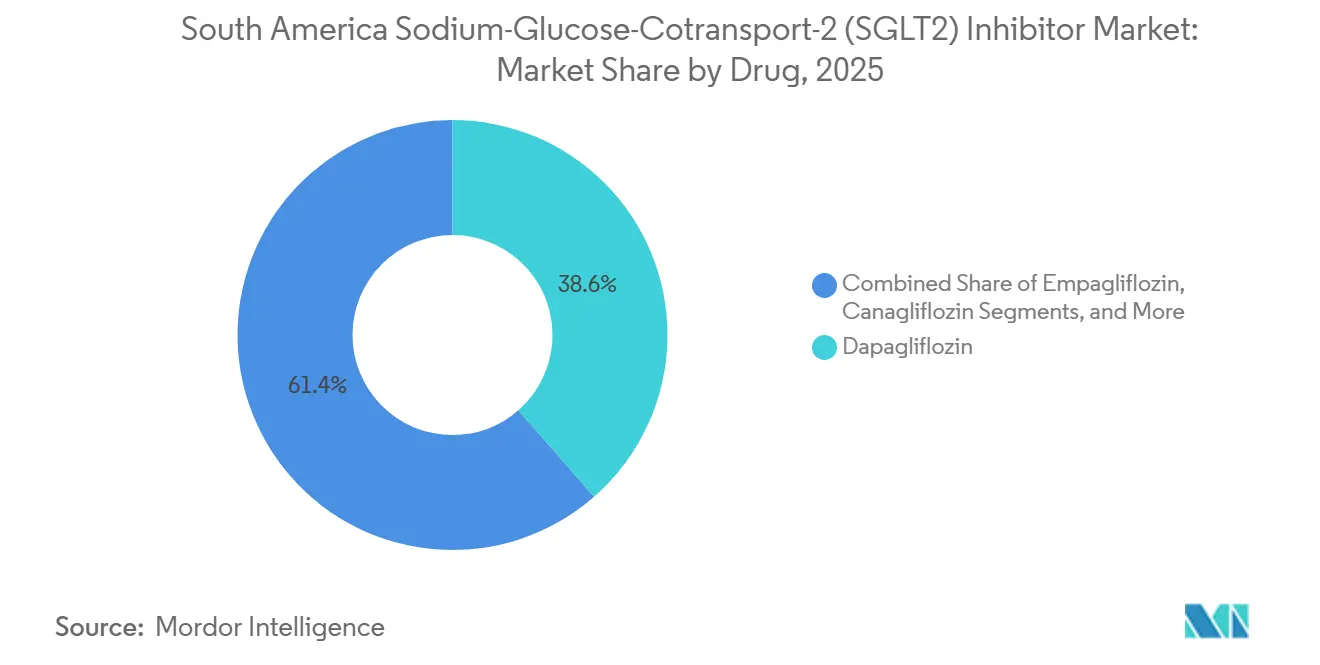
Dapagliflozin accounted for 38.56% of revenue in 2025, making it the leading molecule in the South America SGLT2 inhibitor market. Its position reflects early cardiorenal use and AstraZeneca's established access channels in Brazil and Argentina. Brazil's February 2025 Farmácia Popular decision created a subsidized volume base for eligible older adults with type 2 diabetes and cardiovascular disease. Empagliflozin held the second-largest position, supported by Boehringer Ingelheim's established Jardiance franchise. Canagliflozin has a smaller role, as dapagliflozin and empagliflozin are more embedded in public protocols and specialist practice.
Ertugliflozin is forecast to grow at a CAGR of 10.12% from 2026 to 2031. Its later entry provides scope to compete in markets where formularies for older therapies are established. Ipragliflozin and sotagliflozin address smaller cardiorenal patient groups, while sotagliflozin has a differentiated role in heart failure treatment for patients with type 2 diabetes. The market is also seeing more generic dapagliflozin products from EMS, Eurofarma, and Cristália. ANVISA's bioequivalence requirements support therapeutic quality as generic substitution expands.



By Indication: Type 2 Diabetes Remains the Volume Base While Chronic Kidney Disease Expands
Type 2 diabetes mellitus accounted for 41.86% of revenue in 2025 and remains the primary prescribing indication. The broad prevalence of cardiovascular comorbidities supports continued SGLT2 inhibitor use. Treatment pathways in Colombia, Brazil, and Argentina recommend these medicines for eligible patients with type 2 diabetes and cardiovascular conditions. Heart failure has gained importance as regional recognition expands across reduced- and preserved-ejection-fraction settings. Tertiary centers in São Paulo, Buenos Aires, and Bogotá are increasingly adopting multidisciplinary cardiorenal care models.
Chronic kidney disease is forecast to grow at a CAGR of 11.25% from 2026 to 2031. The South American SGLT2 inhibitor market size for this indication is supported by KDIGO recommendations for patients with an eGFR of at least 20 mL/min/1.73 m², regardless of diabetes status. The 2025 ISN Cold Map supports the clinical implementation of this approach. Cardiovascular risk reduction remains another key use case for high-risk patients. Other approved indications include emerging applications in type 1 diabetes and acute kidney injury prevention, although public formularies do not yet reflect these uses.
By Distribution Channel: Hospital Pharmacies Anchor Access While Online Pharmacies Grow
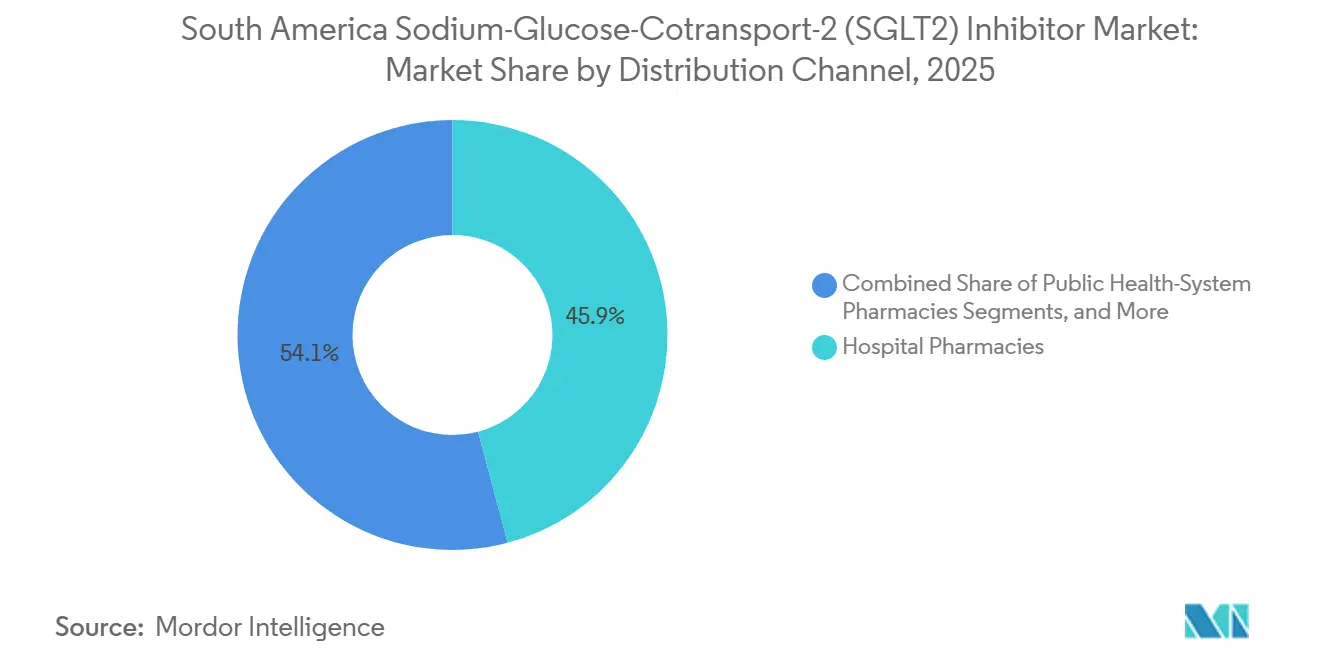
Hospital pharmacies accounted for 45.87% of distribution in 2025, reflecting specialist-led treatment initiation and monitoring for patients with complex kidney, heart failure, or cardiovascular conditions. Brazil's public procurement model channels significant institutional volumes through high-complexity hospital pharmacy networks. This channel favors manufacturers with hospital formulary access and institutional account capabilities. AstraZeneca and Boehringer Ingelheim have established relationships with major hospitals in Brazil, Argentina, and Colombia. Public health systems and retail pharmacies support patients as they transition to an ongoing medicine supply.
Online pharmacies are forecast to expand at a CAGR of 10.67% from 2026 to 2031. Digital dispensing supports recurring monthly refills for diabetes and chronic kidney disease treatment, while subscription models may reduce missed refills. The channel also reflects the growth of digital prescription services and pharmacy-led care models. Retail pharmacies remain important in Chile and Colombia, where private insurance channels play a larger role. The South American SGLT2 inhibitor market will continue to rely on institutional and community dispensing channels, with their relative importance varying by public coverage and pharmacy infrastructure.
Geography Analysis
Brazil held 52.30% of regional revenue in 2025. Its market position was supported by 17 million adults with diabetes, SUS procurement, and expanding generic availability. Farmácia Popular and CONITEC decisions established formal access pathways for defined dapagliflozin patient groups. ANVISA approved the first generic dapagliflozin plus metformin fixed-dose combination in May 2026. Lower prices reduced revenue per unit but could expand the treated patient population.
Argentina is forecast to record an 11.56% CAGR from 2026 to 2031. Resolution 2091/2025 requires coverage for eligible patients with type 2 diabetes and cardiovascular disease or diabetic nephropathy. Argentina had 4.3 million adults with diabetes and a 14% adult prevalence rate. The gap between clinical need and treatment utilization supports faster forecast growth. Colombia had 3 million adults with diabetes, and updated endocrinology guidance supports continued volume growth. Its regulatory and reimbursement pathways facilitate formulary discussions for innovative medicines.
Chile's 2024 multidisciplinary consensus supports SGLT2 use for heart failure, cardiovascular prevention in type 2 diabetes, and chronic kidney disease. However, its smaller scale limits its regional volume contribution. Peru's March 2025 essential medicines listing improved access conditions for dapagliflozin and empagliflozin, which were previously available mainly through private retail. Bolivia, Ecuador, and Paraguay have fragmented regulatory and procurement systems, limiting treatment penetration and resulting in gradual growth. In these countries, market growth remains dependent on local tender design, administrative capacity, and health technology assessment capabilities.
Competitive Landscape
The South American SGLT2 inhibitor market has a moderately consolidated originator tier and a growing base of local generic manufacturers. AstraZeneca and Boehringer Ingelheim hold leading branded positions through Forxiga and Jardiance, supported by clinical evidence, formulary relationships, and physician education. Janssen maintains a presence through Invokana, although its position has narrowed relative to dapagliflozin and empagliflozin. Merck, known as MSD in South America, markets Steglatro with Pfizer. Lexicon Pharmaceuticals offers sotagliflozin, which has a differentiated dual SGLT1 and SGLT2 mechanism for heart failure patients with type 2 diabetes.
Originators remain competitive where brand familiarity and specialist prescribing influence treatment decisions. This trend is more visible in smaller markets with narrower formulary pathways and limited generic competition. Access restrictions can preserve originator positions, even where generic competition is strong in Brazil. As a result, the competitive landscape varies by country and distribution channel.
Generic suppliers are reshaping the lower-price segment of the South American SGLT2 inhibitor market. Eurofarma received ANVISA registration in May 2026 for Brazil's first generic fixed-dose combination of dapagliflozin and metformin hydrochloride. The product is equivalent to AstraZeneca's Xigduo XR. Under Brazil's Generic Drugs Law 9.787/1999, it must carry at least a 35% discount against the reference product. EMS, Cristália, Hypera, and Dr. Reddy's Laboratories are also positioning in generic dapagliflozin and empagliflozin. Biomm and Biocon India are positioned for future entry as pathways for complex generics mature.
South America Sodium-Glucose-Cotransport-2 (SGLT2) Inhibitor Industry Leaders
AstraZeneca PLC
Eli Lilly and Company
Johnson & Johnson
Bristol-Myers Squibb Company
Astellas Pharma Inc.
- *Disclaimer: Major Players sorted in no particular order

Recent Industry Developments
- August 2026: AstraZeneca initiated Phase III trial NCT07662109 in Argentina and Brazil to evaluate elecogliptin plus dapagliflozin versus dapagliflozin alone in adults with type 2 diabetes, supporting its South American lifecycle strategy.
- May 2026: Eurofarma received ANVISA approval for Brazil’s first generic dapagliflozin-metformin hydrochloride fixed-dose combination, creating price pressure in the SGLT2 inhibitor combination segment and expanding lower-cost access.
- March 2025: Peru’s Ministry of Health added dapagliflozin and empagliflozin to the PNUME complementary list, marking the first public-system inclusion of SGLT2 inhibitors for eligible patients.


South America Sodium-Glucose-Cotransport-2 (SGLT2) Inhibitor Market Report Scope
As per the scope of the report, Sodium-Glucose Cotransporter-2 (SGLT2) inhibitors, often referred to as gliflozins, are a class of oral prescription medications used primarily to treat Type 2 diabetes. They lower blood sugar by preventing the kidneys from reabsorbing glucose, forcing the body to excrete excess sugar through urine.
The South America Sodium-Glucose Cotransporter-2 (SGLT2) Inhibitor Market is segmented by drug, indication, distribution channel, end user, and geography. By drug, the market includes dapagliflozin, empagliflozin, canagliflozin, ertugliflozin, ipragliflozin, sotagliflozin, and other SGLT2 inhibitor drugs. By indication, the market is segmented into type 2 diabetes mellitus, heart failure, chronic kidney disease, cardiovascular risk reduction, and other approved indications. By distribution channel, the market is categorized into retail pharmacies, hospital pharmacies, public health system pharmacies, and online pharmacies. By end user, the market is segmented into hospitals, endocrinology clinics, cardiology clinics, nephrology clinics, and others. By geography, the market is analyzed across Brazil, Argentina, Colombia, Chile, Peru, and the rest of South America. The report also covers the estimated market sizes and trends across these countries and the rest of South America. The report offers market sizes and forecasts in terms of value (USD) for the above segments.
By Drug
| Dapagliflozin |
| Empagliflozin |
| Canagliflozin |
| Ertugliflozin |
| Ipragliflozin |
| Sotagliflozin |
| Other SGLT2 Inhibitor Drugs |
By Indication
| Type 2 Diabetes Mellitus |
| Heart Failure |
| Chronic Kidney Disease |
| Cardiovascular Risk Reduction |
| Other Approved Indications |
By Distribution Channel
| Retail Pharmacies |
| Hospital Pharmacies |
| Public Health-System Pharmacies |
| Online Pharmacies |
By Geography
| Brazil |
| Argentina |
| Colombia |
| Chile |
| Peru |
| Rest of South America |
| By Drug | Dapagliflozin |
| Empagliflozin | |
| Canagliflozin | |
| Ertugliflozin | |
| Ipragliflozin | |
| Sotagliflozin | |
| Other SGLT2 Inhibitor Drugs | |
| By Indication | Type 2 Diabetes Mellitus |
| Heart Failure | |
| Chronic Kidney Disease | |
| Cardiovascular Risk Reduction | |
| Other Approved Indications | |
| By Distribution Channel | Retail Pharmacies |
| Hospital Pharmacies | |
| Public Health-System Pharmacies | |
| Online Pharmacies | |
| By Geography | Brazil |
| Argentina | |
| Colombia | |
| Chile | |
| Peru | |
| Rest of South America |


Key Questions Answered in the Report
What is the forecast growth rate for South America SGLT2 inhibitors?
The South America SGLT2 inhibitor market is forecast to grow at an 8.05% CAGR from 2026 to 2031, reaching USD 0.95 billion.
Which SGLT2 inhibitor leads sales in South America?
Dapagliflozin led with 38.56% revenue share in 2025, supported by established access channels in Brazil and Argentina.
Why is chronic kidney disease important for SGLT2 inhibitor demand?
Chronic kidney disease is the fastest-growing indication at an 11.25% CAGR through 2031, supported by KDIGO guidance.
Which country leads SGLT2 inhibitor revenue in South America?
Brazil led regional revenue with 52.30% in 2025, supported by SUS procurement, Farmácia Popular, and generic access.
Which distribution route is growing fastest for SGLT2 therapies?
Online pharmacies are forecast to expand at a 10.67% CAGR through 2031, supported by recurring refill needs.
How are generic products affecting access to SGLT2 therapies in Brazil?
Generic entry is lowering prices and can expand treatment volumes. The first generic dapagliflozin plus metformin combination must carry at least a 35% discount.
Page last updated on:





