
Market Overview
| Study Period | 2020 - 2031 |
|---|---|
| Forecast Data Period | 2026 - 2031 |
| Base Year Market Size (2025) | USD 0.46 Billion |
| Market Size (2026) | USD 0.51 Billion |
| Market Size (2031) | USD 0.89 Billion |
| Growth Rate (2026 - 2031) | 11.67 % |
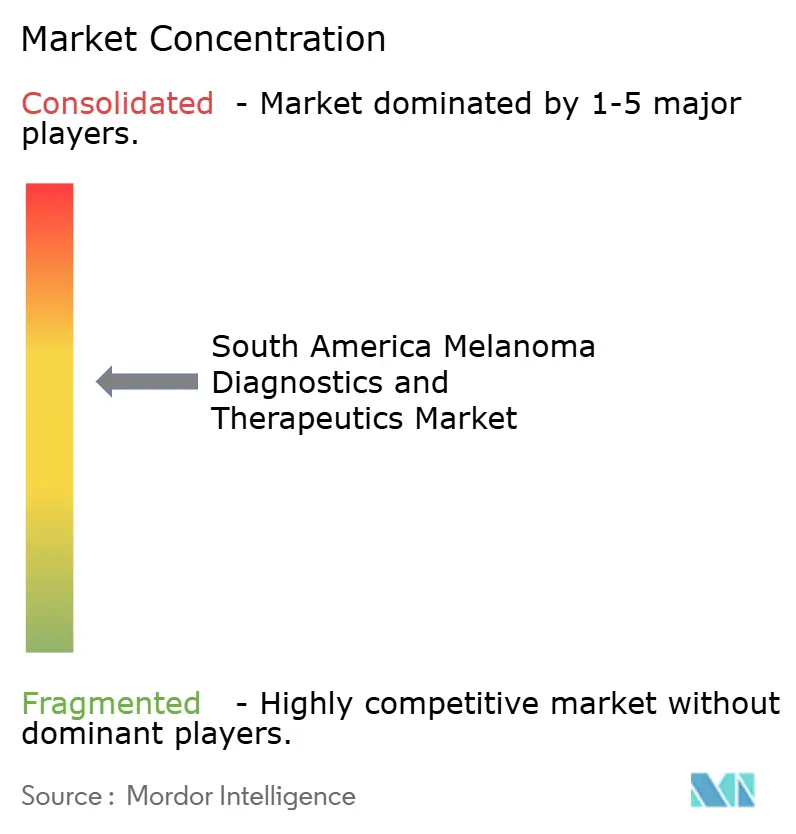
| Market Concentration | Medium |
Major Players *Disclaimer: Major Players sorted in no particular order Image © Mordor Intelligence. Reuse requires attribution under CC BY 4.0. | |
South America Melanoma Diagnostics and Therapeutics Market Analysis by Mordor Intelligence
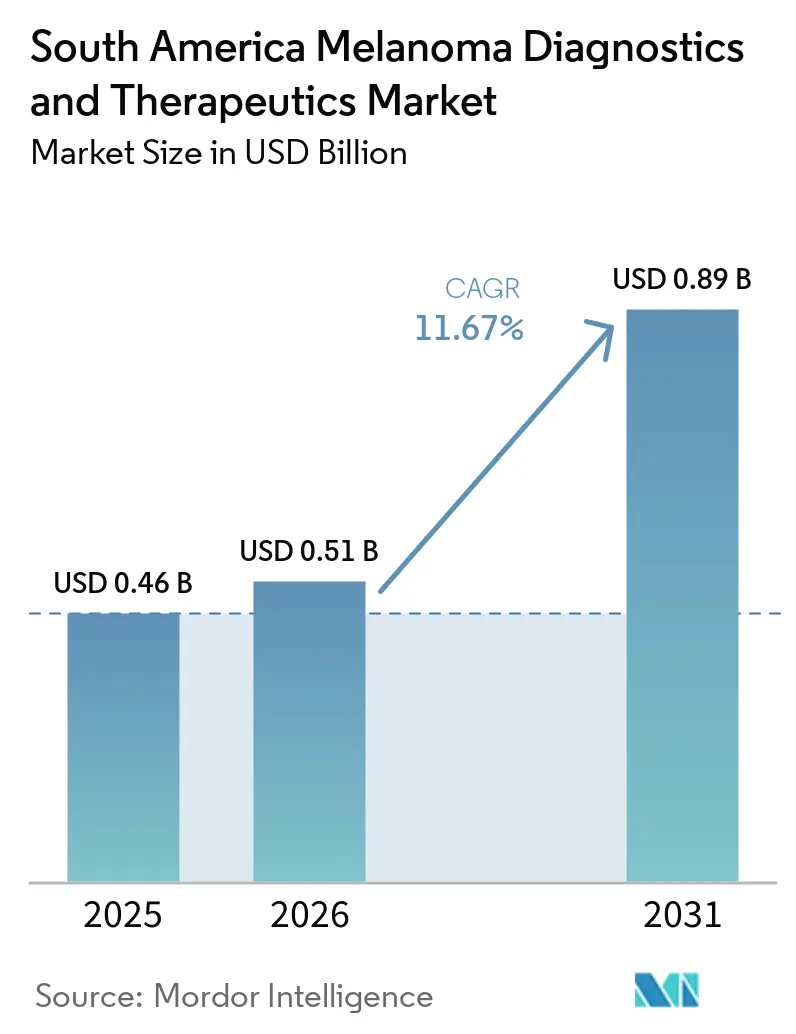
The South America melanoma diagnostics and therapeutics market size was valued at USD 0.46 billion in 2025 and is estimated to grow from USD 0.51 billion in 2026 to reach USD 0.89 billion by 2031, at a CAGR of 11.67% during the forecast period (2026-2031).
Annual new melanoma cases across South America exceed 21,000, with Brazil registering 9,065 new cases among men in the 2024 GLOBOCAN estimates. Demand is driven by the uneven disease burden, as Brazil’s South and Southeast regions have a higher incidence burden and require targeted investment compared with lower-incidence countries. The growing use of immunotherapy is increasing demand for mutation testing, tissue handling, and pathology capacity. Public procurement, local manufacturing, and digital pathology partnerships are supporting improved access. The South America melanoma diagnostics and therapeutics market depends on treatment availability and the ability of laboratories and care providers to identify eligible patients promptly.
Key Report Takeaways
- By product type, therapeutics held 73.21% of revenue in 2025, while diagnostics is projected to grow at a CAGR of 12.67% through 2031.
- By route of administration, oral therapies held 46.87% of revenue in 2025, while intravenous therapies are projected to grow at a CAGR of 14.34% through 2031.
- By end user, hospitals and oncology centers held 54.34% of revenue in 2025, while specialty clinics and dermatology practices are projected to grow at a CAGR of 11.21% through 2031.
- By geography, Brazil held 47.70% of revenue in 2025, while Argentina is the fastest-growing geography through 2031.
Note: Market size and forecast figures in this report are generated using Mordor Intelligence’s proprietary estimation framework, updated with the latest available data and insights as of January 2026.
Market Trends and Insights
Drivers Impact Analysis of South America Melanoma Diagnostics and Therapeutics Market*
| DRIVER | (~) % IMPACT ON CAGR FORECAST | GEOGRAPHIC RELEVANCE | IMPACT TIMELINE |
|---|---|---|---|
| Rising melanoma incidence and prevalence | +1.8% | South and Southeast Brazil, Argentina, Uruguay | Short term (≤ 2 years) |
| Expanding immunotherapy and targeted therapy adoption | +2.4% | Brazil, Argentina, Chile | Medium term (2-4 years) |
| Public sector incorporation of anti-PD-1 treatment | +1.5% | Brazil, Colombia | Medium term (2-4 years) |
| Advancing molecular and digital pathology | +1.6% | Brazil, Argentina | Long term (≥ 4 years) |
| Concentration of referral capacity in Brazil’s oncology hubs | +1.0% | Brazil | Short term (≤ 2 years) |
| Better tissue handling and biomarker testing awareness | +0.8% | Brazil, Argentina, Colombia | Medium term (2-4 years) |
| Source: Mordor Intelligence | |||
Expanding Immunotherapy and Targeted Therapy Adoption Transforms Therapeutic Mix
The shift from dacarbazine-based chemotherapy to immune checkpoint therapies is reshaping treatment demand across the South America melanoma diagnostics and therapeutics market. A Brazilian private oncology network reported a median overall survival of 34 months among 723 patients with metastatic melanoma who received first-line immune checkpoint inhibitor therapy.[1]Combination therapies have increased demand for biomarker-guided treatment selection, including BRAF, NRAS, PD-L1, and tumor mutational burden testing. Targeted BRAF and MEK inhibitor combinations remain important for BRAF-mutated disease, supporting demand for oral treatment options. Integrated pathology, molecular testing, and medicine access strengthen care delivery and market access.
Public Sector Anti-PD-1 Incorporation Widens Access, with Structural Constraints
Brazil incorporated nivolumab and pembrolizumab for advanced melanoma into the Unified Health System (SUS) in August 2024, establishing a formal public access pathway. However, only 15.8% of melanoma treatment authorizations included these medicines during the first four years after incorporation. In March 2026, Brazil’s Ministry of Health, MSD, and Instituto Butantan established a Productive Development Partnership for 10 years of domestic pembrolizumab technology transfer. Colombia also covers BRAF PCR testing through its national healthcare system, with each test valued at USD 300. Procurement budgets and pharmacovigilance requirements continue to affect the pace of therapy adoption.
Rising Melanoma Incidence and Referral Capacity Create Uneven Demand
Melanoma incidence varies significantly across South America, resulting in uneven regional demand. Age-standardized incidence ranged from 1.9 per 100,000 in Colombia to 22.4 per 100,000 in Blumenau, Brazil. Brazil and Argentina reported substantial proportions of superficial spreading and nodular melanoma, while acral lentiginous melanoma accounted for 10% to 18% of cases in Colombia. The supplied study attributed 40% of Colombian acral lentiginous melanoma cases to occupational ultraviolet exposure. Brazil’s reported cases increased by 32%, from 1,547 in 2013 to 2,047 in 2023, while stronger referral networks in São Paulo, Rio de Janeiro, and Curitiba support faster diagnosis and treatment initiation.[2]
Advancing Molecular and Digital Pathology Strengthens the Diagnostic Base
Molecular testing and digital pathology are increasingly central to melanoma diagnosis and treatment planning. The Brazilian Society of Pathology’s 2025 guidelines identified excisional biopsy as the preferred approach for suspected melanoma and outlined BRAF testing methods, including RT-PCR, NGS, and VE-1 immunohistochemistry. The guidelines also supported standardized sentinel-node reporting and consistent pathology records. In May 2026, PathAI and A.C.Camargo Cancer Center announced cooperation to expand the AISight platform through public healthcare programs in Brazil. The project uses cloud-based slide sharing and remote specialist review to improve access to pathology expertise.
Restraints Impact Analysis of South America Melanoma Diagnostics and Therapeutics Market*
| RESTRAINT | (~) % IMPACT ON CAGR FORECAST | GEOGRAPHIC RELEVANCE | IMPACT TIMELINE |
|---|---|---|---|
| High cost and budget impact of advanced therapies | -1.8% | Brazil, Colombia, Peru | Medium term (2-4 years) |
| Uneven access to dermatology, biopsy, and oncology services | -1.4% | Peru, Rest of South America, Chile | Long term (≥ 4 years) |
| Fragmented pathology quality and biomarker turnaround | -0.8% | Colombia, Chile, Rest of South America | Long term (≥ 4 years) |
| Delayed referral from primary and community care | -0.6% | Brazil, Argentina | Short term (≤ 2 years) |
| Source: Mordor Intelligence | |||
High Cost and Budget Impact of Advanced Therapies Limits Public Uptake
The high cost of advanced melanoma therapies limits adoption across public healthcare systems. A Brazilian budget impact analysis projected that increasing nivolumab and pembrolizumab penetration to 80% over five years would require additional spending of BRL 564 million (USD 108.98 million). The analysis also identified a 583% increase in per-authorization costs for concurrent nonbiologic medicines. Fiscal constraints in Argentina, Colombia, Peru, and Brazil can delay reimbursement decisions, disrupt procurement continuity, and restrict patient access despite regulatory approval. Consequently, market growth in public settings may remain below the level indicated by disease burden.
Uneven Access to Dermatology, Biopsy, and Oncology Services Limits Realized Potential
Access to screening, biopsy, specialist review, and oncology treatment remains uneven across the region. A 2025 Chilean multicenter cohort found that dermatology screening detected 16.6% of melanoma cases in private care, compared with 3.6% in public care. The cohort also showed that 34.8% of patients with stage IIB to IV disease received systemic therapy, while BRAF and MEK inhibitors remained unavailable in Chile’s public system. Brazil’s national digital pathology survey identified cost, connectivity, and system integration as barriers to broader adoption. Delayed referrals and inconsistent pathology turnaround times can limit timely entry into the diagnostic and treatment pathway.
*Our forecasts treat driver/restraint impacts as directional, not additive. The impact forecasts reflect baseline growth, mix effects, and variable interactions.
South America Melanoma Diagnostics and Therapeutics Market Segment Analysis
By Product Type:
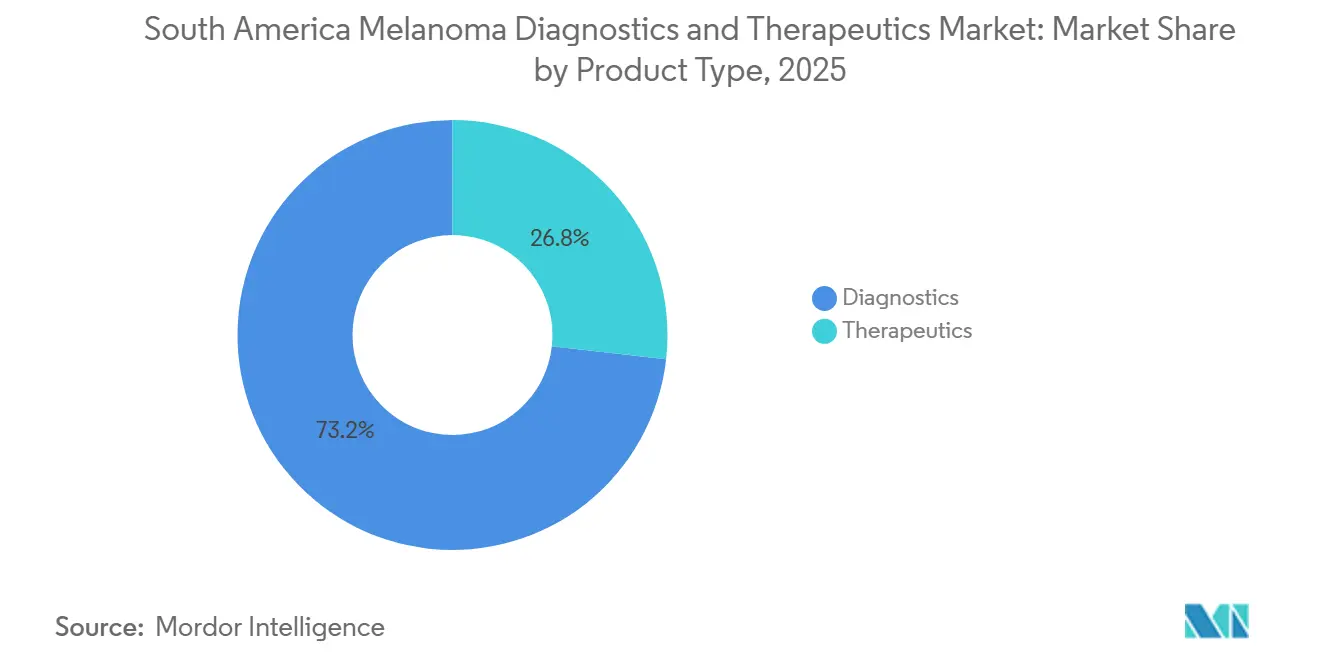
Diagnostics Gains Share as Biomarker Testing ExpandsTherapeutics accounted for 73.21% of the South America melanoma diagnostics and therapeutics market share in 2025, supported by high spending on immune checkpoint inhibitors and longer treatment cycles. Between 28% and 36% of patients in South America presented with stage III or IV disease, driving demand for systemic treatment. Anti-PD-1 regimens and combination protocols replaced chemotherapy as the preferred first-line option for eligible patients. BRAF and MEK inhibitor combinations served patients with BRAF-mutated melanoma, with prevalence ranging from 47% to 53% among advanced cutaneous melanoma patients in Brazil and Chile.
Diagnostics is forecast to grow at a CAGR of 12.67% from 2026 to 2031, making it the faster-growing product category. Biopsy, dermatoscopy, molecular panels, and pathology services support treatment eligibility. The 2025 Brazilian pathology guidelines expanded the role of structured biopsy assessment, BRAF testing, and sentinel-node reporting. Brazil added 1,500 to 2,000 board-certified dermatologists between 2020 and 2025, supporting greater device utilization and earlier biopsy referrals. The Latin American Digital Pathology Association launched in November 2025 to advance whole-slide imaging, AI-assisted diagnostics, and cloud-based collaboration. Argentina and Colombia are beginning to adopt models used in Brazil’s metropolitan oncology centers.

By Route of Administration:
Intravenous Route Gains Ground from Combination TherapyOral therapies accounted for 46.87% of revenue in 2025 within the therapeutic segment of the South America melanoma diagnostics and therapeutics market. Dabrafenib and trametinib are established oral BRAF and MEK inhibitor options that do not require infusion infrastructure. This format supports treatment through oncology pharmacies and high-complexity medicine programs, particularly in areas with limited infusion capacity. However, utilization remains dependent on mutation testing and public or private reimbursement availability. Local and topical routes represent a smaller share of demand and primarily support intralesional treatment for superficial disease.
Intravenous therapies are forecast to grow at a CAGR of 14.34% from 2026 to 2031, driven by combination immunotherapy with ipilimumab and nivolumab, as well as nivolumab and relatlimab. Bristol Myers Squibb commercially launched OPDUALAG in Brazil in May 2024, following ANVISA registration in November 2023. In June 2026, ANVISA approved KEYTRUDA SC for healthcare-professional administration in one minute in the thigh or abdomen. The subcutaneous formulation supports specialty clinics and day-oncology settings with limited chair capacity. It also improves access to advanced melanoma treatment in secondary cities and private outpatient centers.
By End User:
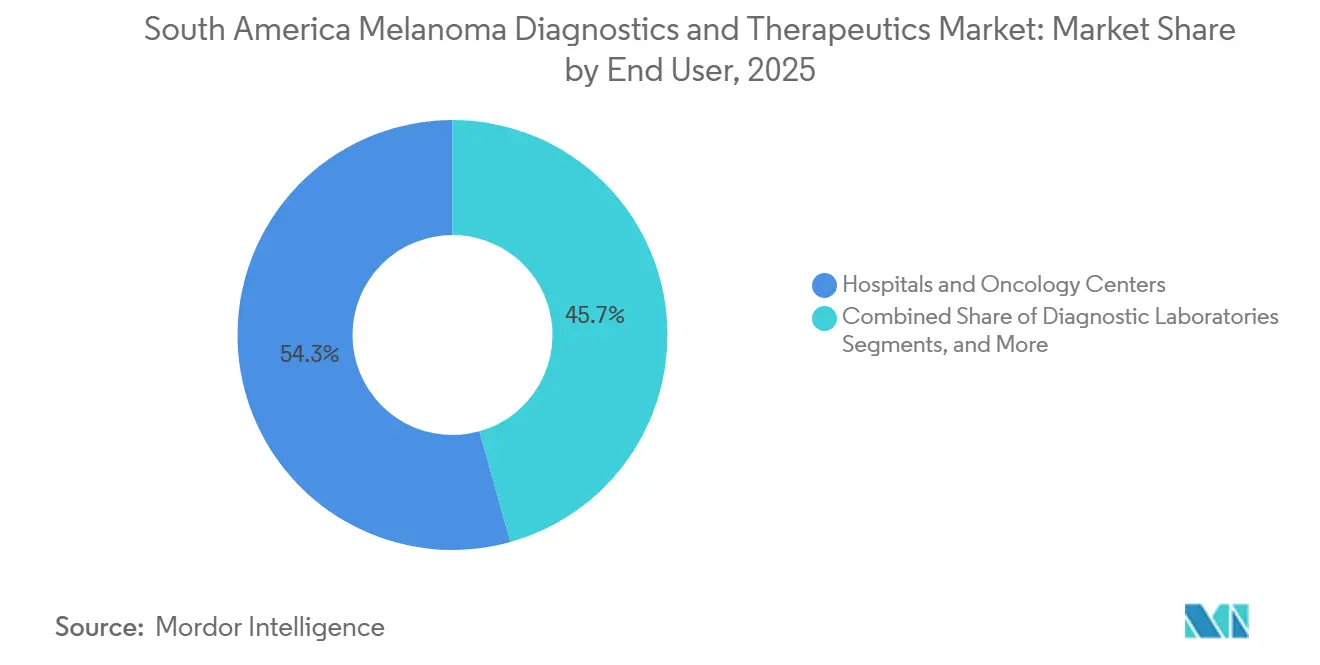
Specialty Clinics Emerge as the Fastest-Growing Delivery ChannelHospitals and oncology centers accounted for 54.34% of revenue in 2025. Their market position reflects their ability to provide intravenous therapies, surgical biopsies, complex pathology services, and specialist follow-up. Major cancer centers, including A.C.Camargo Cancer Center and Hospital Israelita Albert Einstein in Brazil, anchor high-complexity care. Comparable tertiary centers in Buenos Aires and Santiago play similar roles in their national healthcare systems. The PathAI and A.C.Camargo partnership strengthened the role of major cancer centers in reviewing digital pathology slides across connected networks.
Specialty clinics and dermatology practices are forecast to grow at a CAGR of 11.21% from 2026 to 2031. Subcutaneous pembrolizumab can reduce reliance on conventional infusion centers and shift care to day clinics. Grupo Fleury S.A. and Diagnósticos da América S.A. support BRAF testing, immunohistochemical profiling, and NGS-based companion diagnostics. Their role is expanding as treatment selection increasingly depends on pretreatment mutation profiling. Public oncology hospitals may also play a larger role in administering novel biologics following the November 2025 launch of Vaccimel at Hospital de Oncología María Curie. Academic institutions in Peru and Argentina continue to support clinical research and health technology assessments that can inform future treatment access.
Geography Analysis
Brazil Melanoma Diagnostics and Therapeutics Market
Brazil held 47.70% of the South America melanoma diagnostics and therapeutics market share in 2025, supported by its large population and concentrated oncology infrastructure across São Paulo, Rio de Janeiro, and Curitiba. INCA’s 2026 estimates showed the highest melanoma burden in the South and Southeast, where populations of European ancestry represented a larger share of Fitzpatrick skin types I and II. SUS incorporated nivolumab and pembrolizumab for advanced melanoma in August 2020, although adoption remained limited during the first four years after inclusion. The March 2026 pembrolizumab partnership between MSD and Instituto Butantan marked a significant shift in Brazil’s treatment supply structure.
Argentina Melanoma Diagnostics and Therapeutics Market
Argentina was the fastest-growing geography in the South America melanoma diagnostics and therapeutics market. Its age-standardized incidence rate stood at 4.1 per 100,000, compared with 5.2 in Uruguay, 3.5 in Chile, and 1.9 in Colombia. Vaccimel was commercially launched in Argentina in November 2025 after more than 30 years of research by scientists affiliated with Fundación Instituto Leloir and CONICET. The allogeneic therapeutic vaccine targeted cutaneous melanoma stages IIB, IIC, and IIIA with intermediate-to-high recurrence risk, with initial administration at Hospital de Oncología María Curie in Buenos Aires. Molecular testing capacity remained uneven outside Buenos Aires and Córdoba, limiting broader adoption of BRAF-guided treatment.
Andean South America Melanoma Diagnostics and Therapeutics Market
Chile, Colombia, and Peru presented varied access conditions within the South America melanoma diagnostics and therapeutics market. In Chile, a 2025 cohort of 1,037 patients showed stage III to IV incidence of 26.7% in public care, compared with 14.4% in private care. BRAF testing was conducted in 84 of the 1,037 Chilean cases, and 47.6% of tested patients had a BRAF mutation. Colombia’s covered BRAF PCR test provided a structured diagnostic access measure, although treatment procurement remained restricted. Peru’s National Institute of Health issued health technology assessments for encorafenib plus binimetinib in October 2025 and pembrolizumab plus ipilimumab in January 2025.
Competitive Landscape
The South America melanoma diagnostics and therapeutics market is moderately concentrated in therapeutics. Merck & Co., Bristol Myers Squibb, Novartis, and F. Hoffmann-La Roche hold leading positions through pembrolizumab, nivolumab-based combinations, BRAF and MEK inhibitor combinations, and cobimetinib. Their strategies focus on regulatory approvals, public access programs, and companion diagnostics. Merck’s March 2026 partnership with Brazil’s Ministry of Health and Instituto Butantan supported domestic pembrolizumab production and influenced public-sector pricing and supply expectations. Roche operates across companion diagnostics and targeted treatment, linking eligibility testing with treatment delivery.
Bristol Myers Squibb expanded its combination immunotherapy offering through the May 2024 commercial launch of OPDUALAG in Brazil. The registration evidence reported median progression-free survival of 10.12 months for the combination, compared with 4.63 months for nivolumab alone. Competition remains fragmented in diagnostics, with Grupo Fleury S.A., DASA, Siemens Healthineers, Danaher through Leica Biosystems, Roche Diagnostics, QIAGEN, and Illumina serving different stages of the testing value chain. Their offerings include pathology instruments, immunohistochemistry, molecular panels, and sequencing. Digital pathology is gaining importance as laboratory networks improve specialist coverage and workflow consistency.
Oncoclínicas deployed Paige AI tools across OCPM laboratories and processed 249,000 H&E slides from 72,327 patients in 2024. The network reported 38.8% slide digitization and a 65.5% reduction in workflow time for cancer detection. Laboratorio Pablo Cassará’s local production of Vaccimel demonstrates domestic biologic development in Argentina and may provide procurement and regulatory advantages where local production is supported. The South America melanoma diagnostics and therapeutics market favors suppliers that combine treatment access with reliable pathology, molecular testing, country-specific regulatory planning, and local partnerships that extend advanced care beyond major oncology centers.
South America Melanoma Diagnostics and Therapeutics Industry Leaders
-
Bristol-Myers Squibb Company
-
F. Hoffmann-La Roche Ltd
-
Novartis AG
-
Pfizer Inc.
-
Amgen Inc.
- *Disclaimer: Major Players sorted in no particular order
South America Melanoma Diagnostics and Therapeutics Market Companies Covered in this Report
- A.C. Camargo Cancer Center
- Abbott Laboratories
- Agilent Technologies
- Amgen
- Beckton Dickinson
- bioMérieux
- Bristol-Myers Squibb
- Danaher
- Diagnosticos da America S.A.
- Roche
- GlaxoSmithKline
- Grupo Fleury S.A.
- Hospital Israelita Albert Einstein
- Illumina
- Merck
- Novartis
- Pfizer
- QIAGEN
- Siemens Healthineers
- Thermo Fisher Scientific
Recent Industry Developments in South America Melanoma Diagnostics and Therapeutics Market
- June 2026: ANVISA approved KEYTRUDA SC (pembrolizumab plus berahialuronidase alfa-pmph) for all 40 approved indications in Brazil, including metastatic and unresectable melanoma. The subcutaneous formulation reduced administration time to 1 minute, compared with 30 minutes for intravenous infusion.
- May 2026: PathAI and A.C.Camargo Cancer Center partnered to deploy the AISight platform across Brazil’s public healthcare system. The PROADI-SUS- and Agora Tem Especialistas-aligned initiative enabled remote biopsy-slide review through a cloud-connected laboratory network.
- March 2026: Brazil’s Ministry of Health signed a Productive Development Partnership with MSD and Instituto Butantan to enable domestic pembrolizumab production. The 10-year technology transfer program was expected to serve more than 13,000 cancer patients annually across up to five tumor types.
South America Melanoma Diagnostics and Therapeutics Market Report Scope
As per the scope of the report, melanoma diagnostics and therapeutics refer to the methods used to detect and the medical treatments used to cure or manage melanoma, which is the most dangerous form of skin cancer.
The South America melanoma diagnostics and therapeutics market is segmented by product type, route of administration, end user, and geography. By product type, the market includes diagnostics and therapeutics. Diagnostics are further segmented into dermatoscopy devices and biopsy devices. Therapeutics are further categorized into chemotherapy, biological therapy, targeted therapy, and immunotherapy. By route of administration, the market is segmented into intravenous, oral, subcutaneous, and local and topical routes. By end user, the market is segmented into hospitals and oncology centers, diagnostic laboratories, specialty clinics and dermatology practices, and academic and research institutes. By geography, the market is analyzed across Brazil, Argentina, Colombia, Chile, Peru, and the Rest of South America. The report also covers the estimated market sizes and trends for major countries across South America. The report offers market sizes and forecasts in terms of value (USD) for the above segments.
By Product Type
| Diagnostics | Dermatoscopy Devices |
| Biopsy Devices | |
| Therapeutics | Chemotherapy |
| Biological Therapy | |
| Targeted Therapy | |
| Immune Therapy |
By Route of Administration
| Intravenous |
| Oral |
| Subcutaneous |
| Local and Topical Routes |
By End User
| Hospitals and Oncology Centers |
| Diagnostic Laboratories |
| Specialty Clinics and Dermatology Practices |
| Academic and Research Institutes |
By Geography
| Brazil |
| Argentina |
| Colombia |
| Chile |
| Peru |
| Rest of South America |
| By Product Type | Diagnostics | Dermatoscopy Devices |
| Biopsy Devices | ||
| Therapeutics | Chemotherapy | |
| Biological Therapy | ||
| Targeted Therapy | ||
| Immune Therapy | ||
| By Route of Administration | Intravenous | |
| Oral | ||
| Subcutaneous | ||
| Local and Topical Routes | ||
| By End User | Hospitals and Oncology Centers | |
| Diagnostic Laboratories | ||
| Specialty Clinics and Dermatology Practices | ||
| Academic and Research Institutes | ||
| By Geography | Brazil | |
| Argentina | ||
| Colombia | ||
| Chile | ||
| Peru | ||
| Rest of South America | ||
Key Questions Answered in the Report
What is the projected value of South America melanoma diagnostics and therapeutics by 2031?
The sector is forecast to reach USD 0.51 billion by 2031, growing from USD 0.89 billion in 2026 at a CAGR of 11.67%.
Which product category accounts for the largest share of revenue?
Therapeutics held 73.21% of revenue in 2025 because systemic therapies, particularly immune checkpoint inhibitors, represent a large share of treatment spending.
Why is diagnostics expected to grow faster than therapeutics?
Diagnostics is projected to grow at a CAGR of 12.67% through 2031 as BRAF testing, NGS, pathology standardization, and digital slide review become more important in treatment selection.
Which South American country leads revenue in melanoma diagnostics and therapeutics?
Brazil held 47.70% of revenue in 2025, supported by its oncology infrastructure, procurement role, and regulatory influence.
What is driving specialty clinic growth for melanoma care?
Specialty clinics and dermatology practices are forecast to grow at a CAGR of 11.21% through 2031, supported by subcutaneous pembrolizumab and a gradual shift toward outpatient delivery.
What are the main barriers to wider melanoma treatment access in South America?
High medicine costs, uneven access to dermatology and oncology services, inconsistent pathology turnaround, and delayed referral remain key barriers.