
Software As A Medical Device (SaMD) For Diabetes Management Market Size and Share
Market Overview
| Study Period | 2020 - 2031 |
|---|---|
| Market Size (2026) | USD 18.04 Million |
| Market Size (2031) | USD 32.97 Million |
| Growth Rate (2026 - 2031) | 12.82 % |
| Fastest Growing Market | Asia-Pacific |
| Largest Market | North America |
| Market Concentration | Medium |
Major Players *Disclaimer: Major Players sorted in no particular order Image © Mordor Intelligence. Reuse requires attribution under CC BY 4.0. | |
Software As A Medical Device (SaMD) For Diabetes Management Market Analysis by Mordor Intelligence
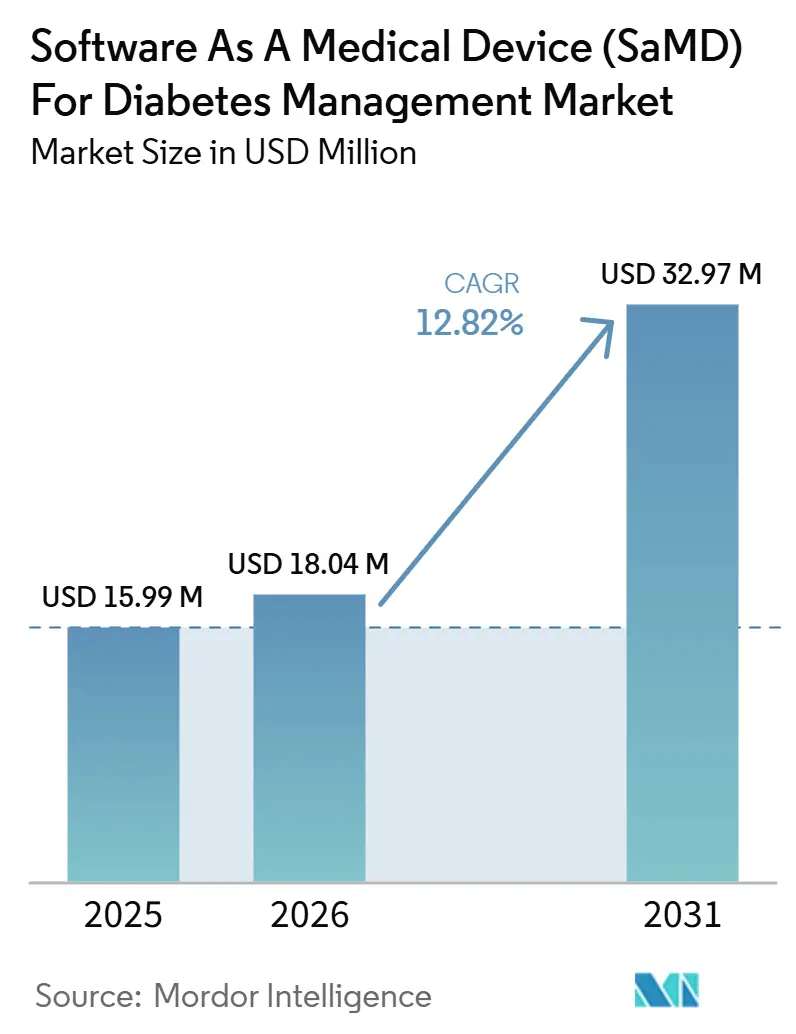
The Software as a Medical Device for Diabetes Management Market size was valued at USD 15.99 million in 2025 and is estimated to grow from USD 18.04 million in 2026 to reach USD 32.97 million by 2031, at a CAGR of 12.82% during the forecast period (2026-2031).
Growth is being supported by the large diabetes burden, wider use of CGM-linked software in routine care, and stronger demand from payers for measurable HbA1c outcomes. The SaMD for diabetes management market is also moving away from simple app adoption and toward regulated software that sits inside care pathways, reimbursement systems, and contracted chronic care programs. Product strategy is now shaped by regulatory status, device interoperability, and the ability to keep patients engaged over long periods. Companies are also expanding beyond stand-alone glucose tools and are building connected offerings that combine software, coaching, analytics, and payer reporting. This is creating new room for algorithm-led platforms, even as large device makers keep an advantage through installed hardware bases and long-standing clinical data ecosystems.
Key Report Takeaways
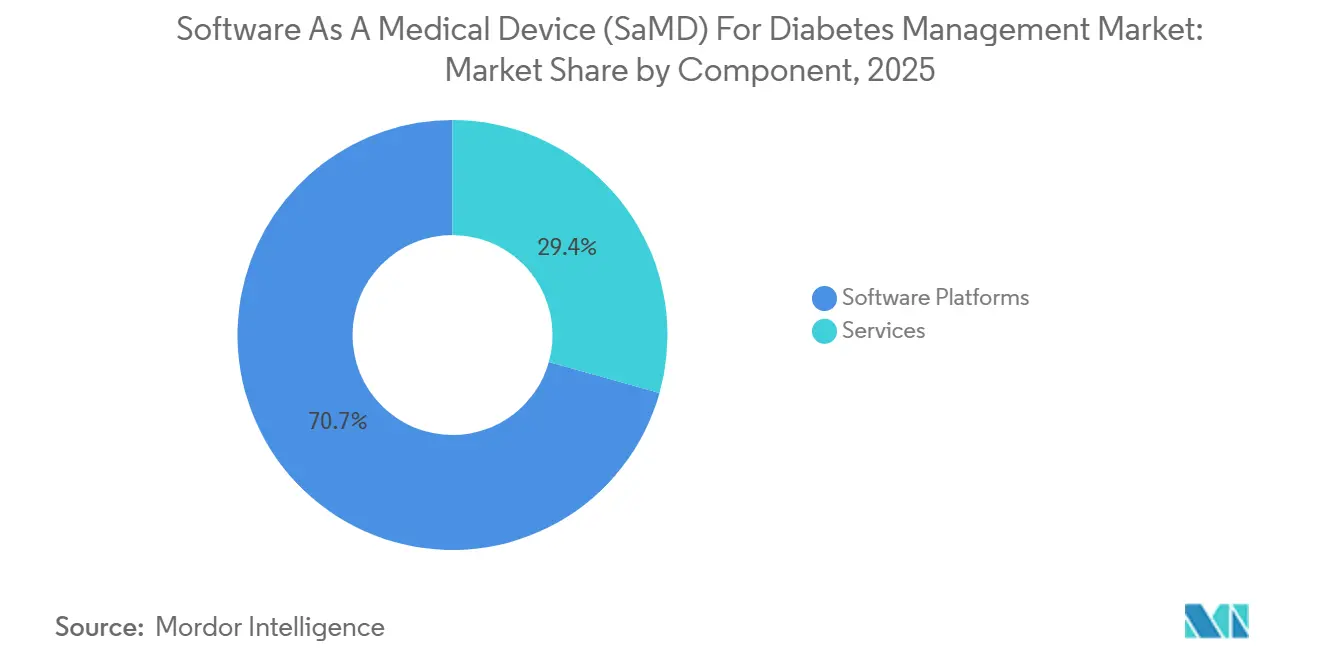
- By component, software platforms held 70.65% share in 2025, while services are projected to grow at a 15.93% CAGR through 2031.
- By product type, diabetes management mobile applications held 38.23% share in 2025, while closed-loop and automated insulin dosing software is projected to grow at a 14.67% CAGR through 2031.
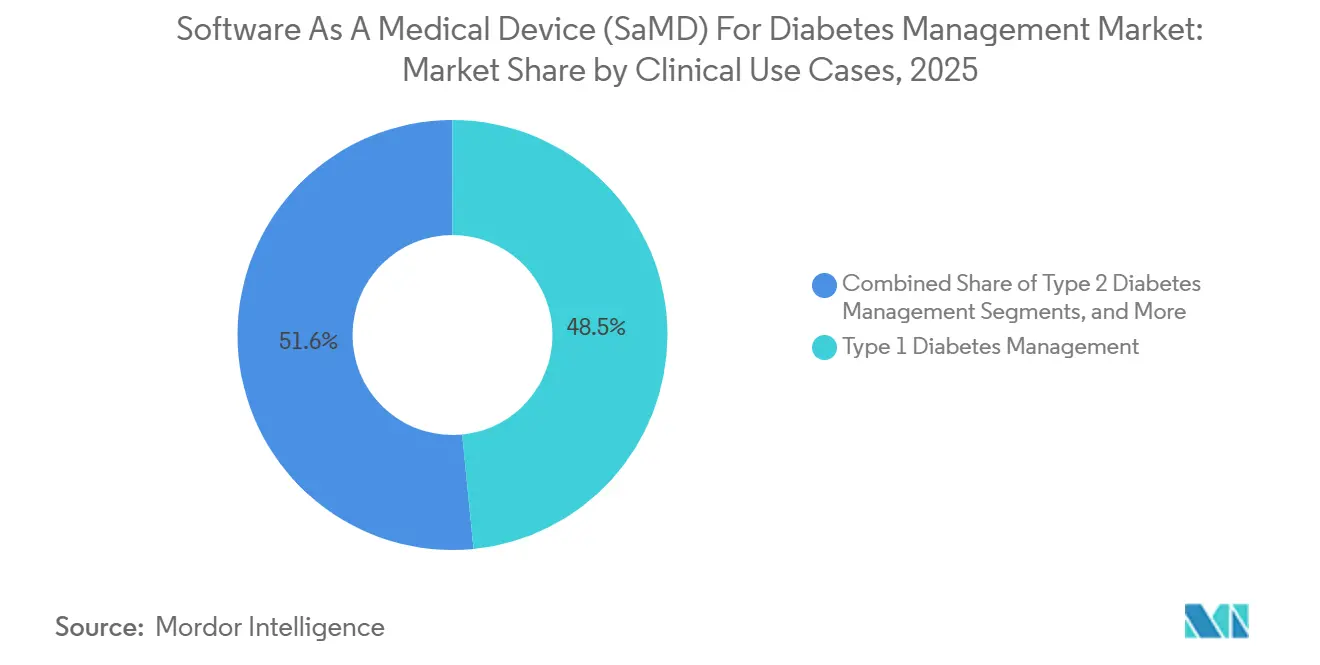
- By clinical use case, type 2 diabetes management held 48.45% share in 2025, while gestational diabetes management is projected to grow at a 16.35% CAGR through 2031.
- By deployment mode, cloud-based deployment held 62.65% share in 2025, while hybrid deployment is projected to grow at a 14.78% CAGR through 2031.
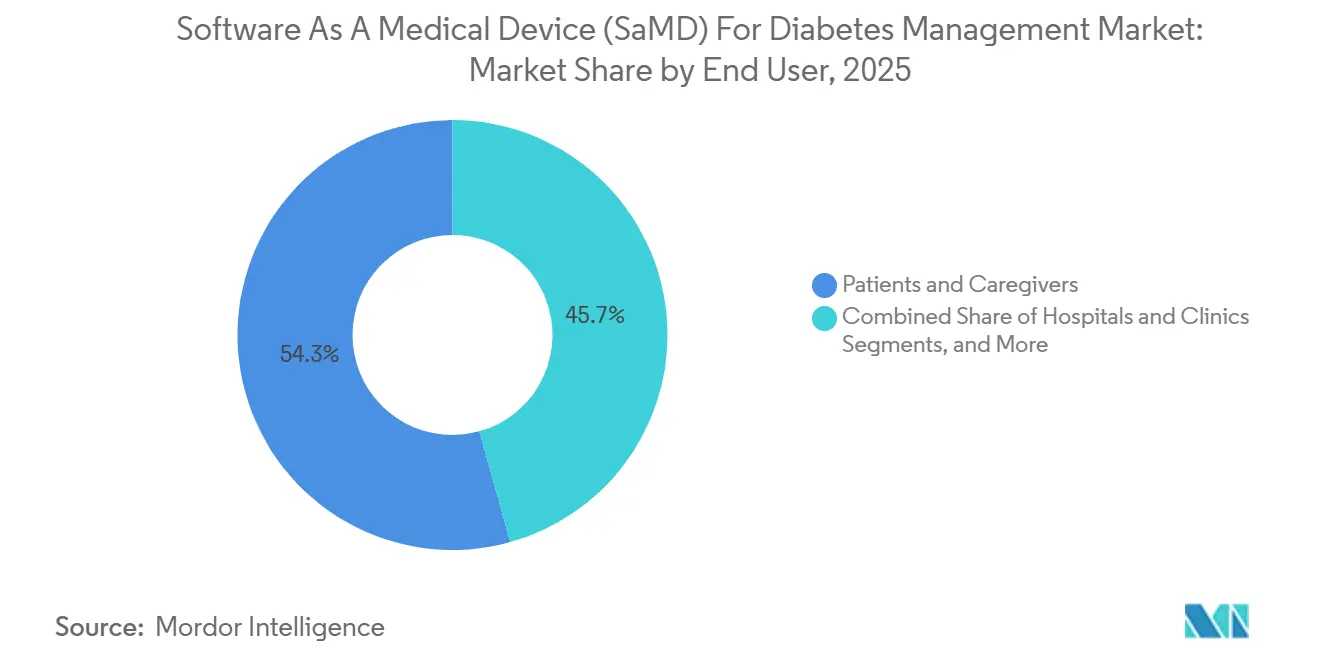
- By end user, patients and caregivers held 54.33% share in 2025, while payers and pharmacy benefit managers are projected to grow at a 15.25% CAGR through 2031.
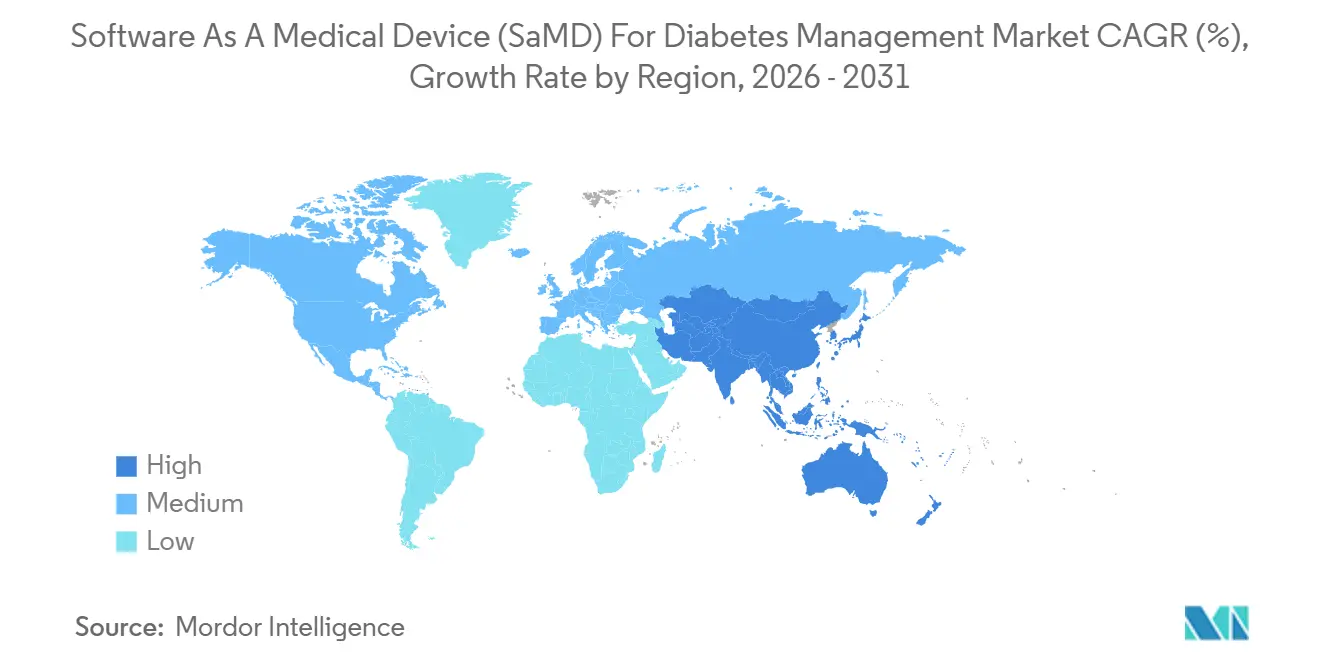
- By geography, North America held 39.56% share in 2025, while Asia-Pacific is projected to grow at a 14.56% CAGR through 2031.
Note: Market size and forecast figures in this report are generated using Mordor Intelligence’s proprietary estimation framework, updated with the latest available data and insights as of January 2026.
Global Software As A Medical Device (SaMD) For Diabetes Management Market Trends and Insights
Drivers Impact Analysis*
| DRIVER | (~) % IMPACT ON CAGR FORECAST | GEOGRAPHIC RELEVANCE | IMPACT TIMELINE |
|---|---|---|---|
| Rising adoption of CGM-connected software and automated insulin delivery | +3.2% | Global, concentrated in North America and Europe | Short term (≤ 2 years) |
| Expansion of remote patient monitoring and chronic care management | +2.4% | North America and Europe, with spill-over to Asia-Pacific | Medium term (2-4 years) |
| Payer preference for HbA1c improvement and utilization | +2.1% | North America core, expanding to Europe and Asia-Pacific | Medium term (2-4 years) |
| Interoperability with CGM, pumps, connected pens, and devices | +1.8% | Global | Short term (≤ 2 years) to Medium term (2-4 years) |
| Ai-enabled personalization for dose support and behavioral change | +1.6% | Global, fastest in North America and East Asia | Long term (≥ 4 years) |
| Shift toward subscription-based diabetes care platforms | +1.1% | North America and Europe | Medium term (2-4 years) |
| Source: Mordor Intelligence | |||
Rising Adoption of CGM-Connected Software and Automated Insulin Delivery
CGM-connected software is becoming a core part of diabetes care, pushing the SaMD for diabetes management market toward higher-value regulated tools. In January 2026, Diabeloop received FDA 510(k) clearance for DBLG2, adding another automated insulin delivery algorithm to DIABELOOP’s cleared product base. Medtronic also announced FDA clearance for the MiniMed Go Smart MDI system in January 2026, indicating broader clinical adoption of software-guided dosing support. A May 2026 study on the MiniMed 780G system showed similar glycemic outcomes across two integrated sensor brands, highlighting the growing value of algorithm performance and interoperability.[1]Nature Portfolio, “AI Predictive Digital Twins for Between-Visit Diabetes Care,” npj Health Systems, nature.com These developments expand opportunities for software-led vendors that can work across devices and demonstrate consistent real-world outcomes, while broadening the addressable base beyond type 1 diabetes into larger insulin-managed populations.
Expansion of Remote Patient Monitoring and Chronic Care Management
Remote monitoring is changing how providers, employers, and health plans use the SaMD for diabetes management market in routine care. Buyers now seek ongoing support for titration, adherence, symptom tracking, and escalation between visits, rather than only post-visit glucose review. This demand is also increasing with wider metabolic therapy use, especially when patients need closer follow-up during dose adjustments and tolerability changes. In 2026, Twin Health introduced a precision GLP-1 stewardship model combining CGM data, quarterly labs, a smart scale, and activity tracking in one continuously learning system. This shift supports demand beyond glucose logging and favors vendors that combine software, review tools, and managed support in a single offering.
Payer Preference for HbA1c Improvement and Utilization
Payers are shifting from passive reimbursement to active procurement, changing how vendors compete in the SaMD for diabetes management market. DarioHealth signed 85 new commercial agreements in 2025, reported a contracted late-stage ARR pipeline of USD 12.9 million expected to convert to revenue in 2026 and 2027, and ended 2025 with an overall commercial pipeline of USD 122 million. The shift also changes channel strategy, as large covered populations are now often reached through health plan and platform intermediaries rather than direct sales alone. In July 2026, DarioHealth signed a new agreement through its Amwell channel partnership, adding access to a major Arizona insurer's ASO-covered lives and increasing total covered-life reach through channel partners to 116 million. This structure favors vendors that can report utilization, sustain engagement, document outcomes at scale, and support subscription-based care models tied to measurable performance.
AI-Enabled Personalization for Dose Support and Behavioral Change
AI-enabled personalization is becoming more important as the SaMD for diabetes management market addresses engagement and adherence gaps. In June 2026, the American Diabetes Association Innovation Fund invested in UpDoc and described it as an FDA-cleared agentic AI platform for chronic disease management and prevention.[2]American Diabetes Association, “The American Diabetes Association’s Innovation Fund Invests in UpDoc to Accelerate the Future of AI-Driven Chronic Disease Management and Prevention,” PR Newswire, prnewswire.com Academic support also strengthened, as npj Health Systems published a framework for AI predictive digital twins for between-visit diabetes care in July 2026. These tools can deliver more relevant guidance than fixed educational modules by responding to user data, timing, and clinical context. They can also reduce patients’ manual burden by converting passive data streams into tailored prompts and dose support, helping improve persistence, payer confidence, and renewal performance.
Restraints Impact Analysis*
| RESTRAINT | (~) % IMPACT ON CAGR FORECAST | GEOGRAPHIC RELEVANCE | IMPACT TIMELINE |
|---|---|---|---|
| Regulatory uncertainty across device, CDS, and wellness classifications | -1.6% | Global, primarily North America and Europe | Short term (≤ 2 years) to Medium term (2-4 years) |
| Clinical validation burden for SaMD claims and real-world evidence | -1.2% | Global | Medium term (2-4 years) |
| Patient drop-off, low app engagement, and long-term adherence | -0.9% | Global | Medium term (2-4 years) to Long term (≥ 4 years) |
| Data privacy, cybersecurity, and cross-border health data | -0.6% | Europe and Asia-Pacific core, spill-over to Middle East and Africa | Medium term (2-4 years) |
| Source: Mordor Intelligence | |||
Regulatory Uncertainty Across Device, CDS, and Wellness Classifications
Regulatory boundaries remain a key operating constraint for the SaMD for diabetes management market. Companies face different requirements across medical device software, clinical decision support (CDS), and wellness applications, even when buyers view these products as similar at the point of use. The challenge increases when vendors seek access across the United States and Europe, as they must manage clearance requirements, technical documentation, post-market follow-up, and clinical evidence across multiple regulatory systems. Smaller developers face higher exposure because quality systems, audit readiness, evidence generation, data residency rules, and cybersecurity reviews can increase costs and delay cloud and hybrid products that handle sensitive patient information across borders.
Patient Drop-Off, Low App Engagement, and Long-Term Adherence
Long-term engagement remains a challenge for many app-led solutions in the SaMD for diabetes management market. A 2026 JMIR mHealth and uHealth review of 23 commercially available gestational diabetes apps found that most apps relied heavily on text-based and manual features rather than responsive automated interactions. As daily use declines, vendors find it harder to defend the gap between trial outcomes and real-world deployment outcomes in payer discussions. Companies that fail to improve engagement through CGM feeds, connected pen logs, and AI-driven micro-interventions may struggle to defend pricing, maintain evidence quality, and renew contracts over time.
*Our forecasts treat driver/restraint impacts as directional, not additive. The impact forecasts reflect baseline growth, mix effects, and variable interactions.
Segment Analysis
By Component: Managed Services Are Reshaping a Platform-Led Base
Software platforms accounted for 70.65% of the SaMD for diabetes management market size in 2025, reflecting the established role of apps, dashboards, viewers, and dose support tools. This base grew from products focused on CGM viewing, insulin guidance, and population management workflows. Services are projected to grow at a 15.93% CAGR through 2031, well above the overall market rate, as buyers place greater value on managed outcomes than on software access alone.
This shift shows that buyers no longer view the SaMD for diabetes management industry only as a software category. DarioHealth's 2025 results highlighted this change, as the company linked new commercial growth to integrated service delivery along with its platform. Platforms remain the core layer because they organize device data, reporting, and care workflows across users and providers. Vendors that do not integrate services into their offer may face pricing pressure as payer contracts become more outcome focused.


By Product Type: Automation Is Gaining Ground Beyond Basic App Use
Diabetes management mobile applications held the largest share at 38.23% in 2025, showing the scale of the installed base for guidance, logging, and coaching tools. Closed-loop and automated insulin dosing software is the fastest-growing product type, with a 14.67% CAGR through 2031. Diabeloop received FDA clearance for DBLG2 in January 2026, and Medtronic announced a new FDA-cleared dosing support system in the same month. Product leadership is shifting toward automation quality, real-time performance, and broad device compatibility.
The SaMD for diabetes management industry is also expanding across adjacent product categories. At the ADA 86th Scientific Sessions in June 2026, Insulet reported that its next-generation Omnipod 6 algorithm outperformed Omnipod 5 across all efficacy endpoints, including a 5.2% increase in time in tight range. Decision support and coaching software is gaining traction as employers and health plans seek tools covering diabetes, hypertension, and weight management. Glooko's expanded partnership with mylife Diabetes Care in May 2026 made Glooko the primary platform for all mylife products, including mylife Loop powered by CamAPS FX.
By Clinical Use Case: Type 2 Leads on Scale While Gestational Care Leads on Growth
Type 2 diabetes management represented 48.45% of the SaMD for diabetes management market size in 2025, consistent with the scale of global type 2 prevalence. Gestational diabetes management is the fastest-growing clinical use case, at a 16.35% CAGR through 2031. Gestational care has gained priority because treatment windows are short and timely monitoring is critical. A 2025 pilot observational study in Scientific Reports found that a smartphone app for gestational diabetes remote monitoring improved glycemic control and birth outcomes.
Type 1 diabetes remains the main proving ground for algorithm depth, while commercial value is extending into broader populations. Insulet initiated the EVOLVE pivotal study in June 2026, after receiving FDA IDE approval in March 2026, to evaluate its fully closed-loop system in up to 350 adults with type 2 diabetes across up to 40 U.S. sites. If this pathway advances, software architecture proven in type 1 care could move into a much larger type 2 base. This supports platform reuse across more than one clinical need, including pregnancy care, insulin management, and broader metabolic follow-up.Cloud-based deployment held 62.65% of the SaMD for diabetes management market size in 2025, reflecting the need for scale across dashboards, analytics, and payer reporting. Health systems and insurers use cloud tools because they support large user pools and centralized monitoring. Hybrid deployment is projected to grow at a 14.78% CAGR through 2031, making it the fastest-growing mode. Automated insulin delivery also requires fast local processing for dosing decisions, while cloud layers support updates, review, reporting, and data exchange.

By Deployment Mode: Cloud Keeps the Lead While Hybrid Gains Speed
Cloud-based deployment held 62.65% of the SaMD for diabetes management market size in 2025, reflecting the need for scale across dashboards, analytics, and payer reporting. Health systems and insurers use cloud tools because they support large user pools and centralized monitoring. Hybrid deployment is projected to grow at a 14.78% CAGR through 2031, making it the fastest-growing mode. Automated insulin delivery also requires fast local processing for dosing decisions, while cloud layers support updates, review, reporting, and data exchange.
This deployment split is visible in commercial products within the SaMD for diabetes management market. Diabeloop and ViCentra launched the DBLG2 system for prescription in Germany in July 2026, combining smartphone-based control with cloud-linked review and device integration. This model helps vendors balance real-time speed with clinical oversight and service visibility. On-premises deployment remains relevant where health systems face strict localization or residency rules for patient data.
By End User: Patient Reach Is Broad While Payer Depth Is Growing Faster
Patients and caregivers held 54.33% of the SaMD for diabetes management market share in 2025, reflecting the wide installed base of CGM-linked apps, insulin guidance tools, and digital coaching products. This segment remains the largest because patient-facing software sits at the center of everyday use. Payers and pharmacy benefit managers are projected to grow at a 15.25% CAGR through 2031, making them the fastest-growing end-user group. The market is shifting from direct user uptake toward institutionally purchased programs.
Ambulatory care settings are gaining relevance as diabetes software moves beyond specialist endocrinology into broader cardiometabolic care. In July 2026, DarioHealth said a top national health plan extended its agreement and expanded the partnership into cardiometabolic care, with the potential to approximately triple revenue opportunity under that relationship and contribute revenue in 2026. Employers and wellness programs are also emerging as practical buyer channels through plan intermediaries. The SaMD for diabetes management market is rewarding companies that can serve both everyday users and contracting institutions through the same connected platform.
Geography Analysis
North America held 39.56% of the SaMD for diabetes management market share in 2025, maintaining its leading regional position. The United States remained the key demand center, supported by a large base of FDA-cleared products, a mature employer-sponsored benefits structure, and stronger payer engagement. The region favored vendors that demonstrated post-market outcomes, managed reporting, and supported broad commercial rollouts. Canada remained a smaller but meaningful growth pocket, and One Drop expanded its digital coaching program there in February 2025. Mexico remained at an earlier adoption stage, with demand concentrated in private insurance and employer wellness programs across major urban markets.
Europe held the second-largest position in the SaMD for diabetes management market. Germany led regional adoption, as its reimbursement framework supported regulated digital therapeutics and connected care tools. In July 2026, Diabeloop and ViCentra launched DBLG2 for prescription use in Germany, with Dexcom G7 and Kaleido integration, and the product was set to reach the Netherlands later in 2026. The United Kingdom, France, Italy, Spain, and the Nordic countries remained important markets, but documentation requirements and Notified Body costs favored vendors that could distribute compliance work across several countries.
Asia-Pacific was the fastest-growing regional segment, with a 14.56% CAGR through 2031. China and India accounted for much of this momentum, driven by large diabetes populations and expanding digital health investment. Japan and South Korea added demand from connected care users comfortable with CGM-supported monitoring and premium device-linked services. The Middle East and Africa remained a smaller part of the global base, while GCC digital transformation programs supported gradual adoption of structured chronic care tools. South America remained relevant, with Brazil standing out as the largest country opportunity due to rising private insurance and employer investment in metabolic care.

Competitive Landscape
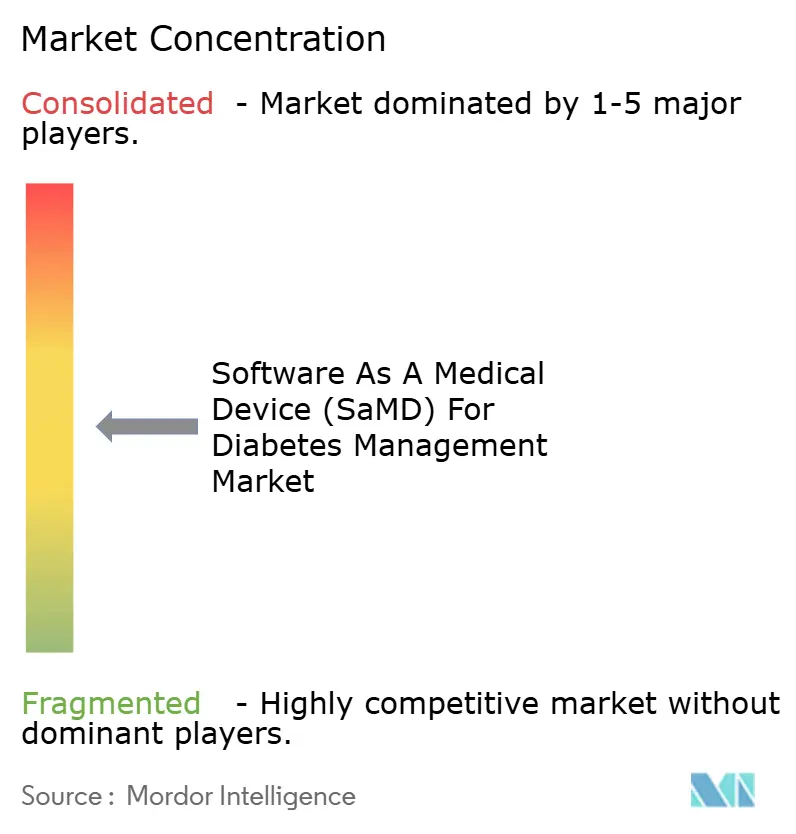
The SaMD for diabetes management market is moderately concentrated, with large hardware-software companies holding the strongest positions. Abbott, Medtronic, Insulet, DexCom, and Roche benefit from device ecosystems that generate continuous glucose and dosing data for their software layers. This data advantage supports algorithm training, workflow design, and stronger switching costs within connected care pathways. In May 2026, MiniMed reported that the MiniMed 780G system delivered consistent glycemic outcomes across two integrated sensor brands, strengthening its sensor-agnostic positioning and highlighting the value of the algorithm layer. In June 2026, MiniMed expanded its agreement with Abbott to develop integrated dual glucose-ketone sensors for its smart dosing systems, extending the clinical scope toward real-time DKA prevention.
Pure-software companies compete differently within the SaMD for diabetes management market. They typically build their edge around device interoperability, behavioral support, and efficient access to payer channels rather than owned hardware. In June 2026, Senseonics and Welldoc partnered to develop a next-generation custom app for Eversense 365, showing how software specialists create value through targeted device alliances. Glooko also expanded its role in May 2026 when mylife Diabetes Care made it the primary data platform for all mylife products, including mylife Loop powered by CamAPS FX.
Another layer of competition is emerging around AI-native platforms and broader cardiometabolic care models. The ADA Innovation Fund’s backing of UpDoc in June 2026 increased visibility for FDA-cleared, AI-led chronic disease management and showed that clinical institutions were closely monitoring this segment. White space remains strongest in gestational diabetes, employer-linked programs, and hybrid edge-cloud tools that support automated dosing and outpatient follow-up in a single workflow. Payer contracts are raising the standard for real-world evidence, benefiting firms with larger datasets, broader service capacity, and proven channel relationships. The SaMD for diabetes management market remains open to new entrants, but scale, regulatory readiness, and sustained engagement are now critical to long-term competitive strength.
Software As A Medical Device (SaMD) For Diabetes Management Industry Leaders
Abbott Laboratories
DexCom, Inc.
Medtronic plc
Insulet Corporation
Ascensia Diabetes Care Holdings AG
- *Disclaimer: Major Players sorted in no particular order

Recent Industry Developments
- July 2026: Diabeloop and ViCentra launched the DBLG2 AID system for prescription use in Germany, integrating Dexcom G7 CGM and the Kaleido insulin patch pump after FDA clearance in January 2026 and EU MDR CE marking in August 2025.
- June 2026: Senseonics and Welldoc partnered to develop a next-generation custom mobile application for the Eversense 365 implantable CGM, with a U.S. launch expected in H2 2026 and European availability planned for early 2027.
- June 2026: MiniMed expanded its agreement with Abbott to develop dual glucose-ketone sensors for MiniMed smart dosing systems, adding real-time diabetic ketoacidosis prevention to connected insulin management.
- June 2026: The American Diabetes Association Innovation Fund invested in UpDoc to support deployment of its FDA-cleared agentic AI SaMD platform across payer and provider settings for type 2 diabetes management.


Global Software As A Medical Device (SaMD) For Diabetes Management Market Report Scope
As per the scope of the report, Software as a Medical Device (SaMD) for diabetes is standalone software used for medical purposes (like calculating insulin doses or analyzing blood sugar trends) that runs on standard platforms like smartphones or cloud networks. It works independently of physical hardware like insulin pumps.
The Software as a Medical Device (SaMD) for diabetes management market is segmented by component, product type, clinical use case, deployment mode, end user, and geography. By component, the market includes software platforms and services. By product type, the market is segmented into diabetes management mobile applications, closed-loop and automated insulin dosing software, decision support and coaching software, and data integration and analytics platforms. By clinical use case, the market is categorized into Type 1 diabetes management, Type 2 diabetes management, and gestational diabetes management. By deployment mode, the market is segmented into cloud-based, on-premises, and hybrid. By end user, the market includes patients and caregivers, hospitals and clinics, ambulatory care centers, payers and pharmacy benefit managers, and employers and wellness programs. By geography, the market is analyzed across North America, Europe, Asia-Pacific, the Middle East and Africa, and South America. The report also covers the estimated market sizes and trends for 17 countries across major regions globally. The report offers the market sizes and forecasts in terms of value (USD) for the above segments.
| Software Platforms |
| Services |
| Diabetes Management Mobile Applications |
| Closed-Loop and Automated Insulin Dosing Software |
| Decision Support and Coaching Software |
| Data Integration and Analytics Platforms |
| Type 1 Diabetes Management |
| Type 2 Diabetes Management |
| Gestational Diabetes Management |
| Cloud-Based |
| On-Premises |
| Hybrid |
| Patients and Caregivers |
| Hospitals and Clinics |
| Ambulatory Care Centers |
| Payers and Pharmacy Benefit Managers |
| Employers and Wellness Programs |
| North America | United States |
| Canada | |
| Mexico | |
| Europe | Germany |
| United Kingdom | |
| France | |
| Italy | |
| Spain | |
| Rest of Europe | |
| Asia-Pacific | China |
| India | |
| Japan | |
| Australia | |
| South Korea | |
| Rest of Asia-Pacific | |
| Middle East and Africa | GCC |
| South Africa | |
| Rest of Middle East and Africa | |
| South America | Brazil |
| Argentina | |
| Rest of South America |
| By Component | Software Platforms | |
| Services | ||
| By Product Type | Diabetes Management Mobile Applications | |
| Closed-Loop and Automated Insulin Dosing Software | ||
| Decision Support and Coaching Software | ||
| Data Integration and Analytics Platforms | ||
| By Clinical Use Case | Type 1 Diabetes Management | |
| Type 2 Diabetes Management | ||
| Gestational Diabetes Management | ||
| By Deployment Mode | Cloud-Based | |
| On-Premises | ||
| Hybrid | ||
| By End User | Patients and Caregivers | |
| Hospitals and Clinics | ||
| Ambulatory Care Centers | ||
| Payers and Pharmacy Benefit Managers | ||
| Employers and Wellness Programs | ||
| By Geography | North America | United States |
| Canada | ||
| Mexico | ||
| Europe | Germany | |
| United Kingdom | ||
| France | ||
| Italy | ||
| Spain | ||
| Rest of Europe | ||
| Asia-Pacific | China | |
| India | ||
| Japan | ||
| Australia | ||
| South Korea | ||
| Rest of Asia-Pacific | ||
| Middle East and Africa | GCC | |
| South Africa | ||
| Rest of Middle East and Africa | ||
| South America | Brazil | |
| Argentina | ||
| Rest of South America | ||


Key Questions Answered in the Report
What is the current size of software as a medical device for diabetes management?
The SaMD for diabetes management market size is USD 18.04 billion in 2026 and is forecast to reach USD 32.97 billion by 2031 at a 12.82% CAGR.
Which product category is growing the fastest in diabetes software?
Closed-loop and automated insulin dosing software is the fastest-growing product type, with a 14.67% CAGR through 2031.
Which end users are driving future demand the most?
Patients and caregivers held the largest share in 2025 at 54.33%, but payers and pharmacy benefit managers are growing fastest at 15.25% through 2031.
Why is hybrid deployment gaining traction?
Hybrid deployment is growing at 14.78% CAGR because automated insulin dosing needs real-time local processing, while cloud layers still support analytics, updates, and reporting.
Which region leads global adoption?
North America led with 39.56% share in 2025, while Asia-Pacific is the fastest-growing region with a 14.56% CAGR through 2031.
What is the main challenge for vendors in this space?
Long-term engagement and regulatory complexity remain the key challenges, because lower real-world adherence can weaken payer confidence and evidence quality even when products perform well in trials.
Page last updated on:





