
Rare Diseases Telemedicine Market Size and Share
| Study Period | 2019 - 2030 |
| Market Size (2025) | USD 2.17 Billion |
| Market Size (2030) | USD 3.93 Billion |
| CAGR (2025 - 2030) | 12.62% |
| Fastest Growing Market | Asia Pacific |
| Largest Market | North America |
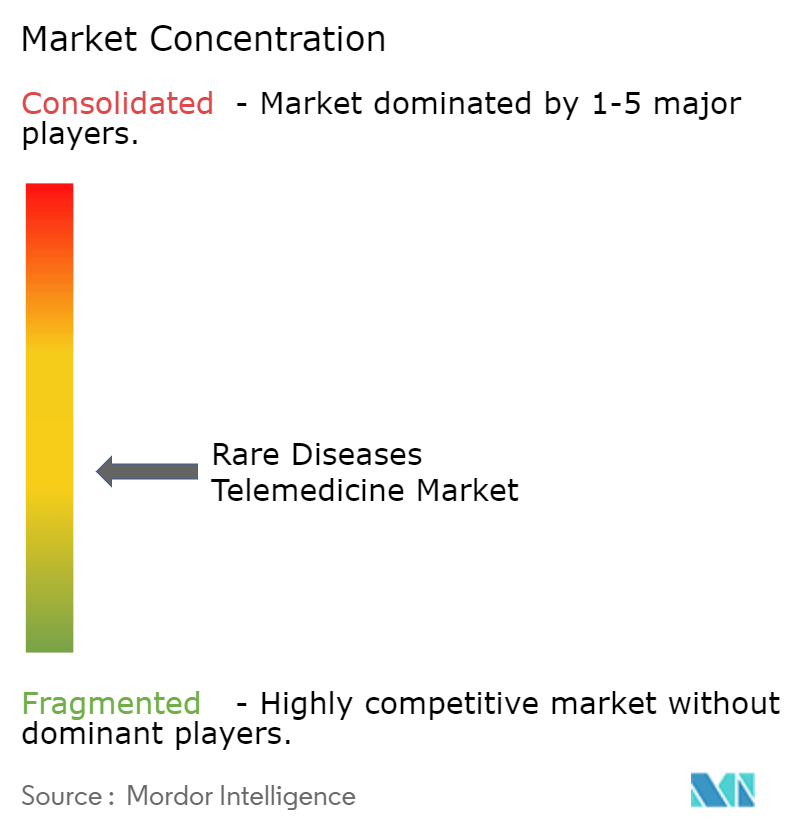
| Market Concentration | Medium |
Major Players *Disclaimer: Major Players sorted in no particular order |
Rare Diseases Telemedicine Market Analysis by Mordor Intelligence
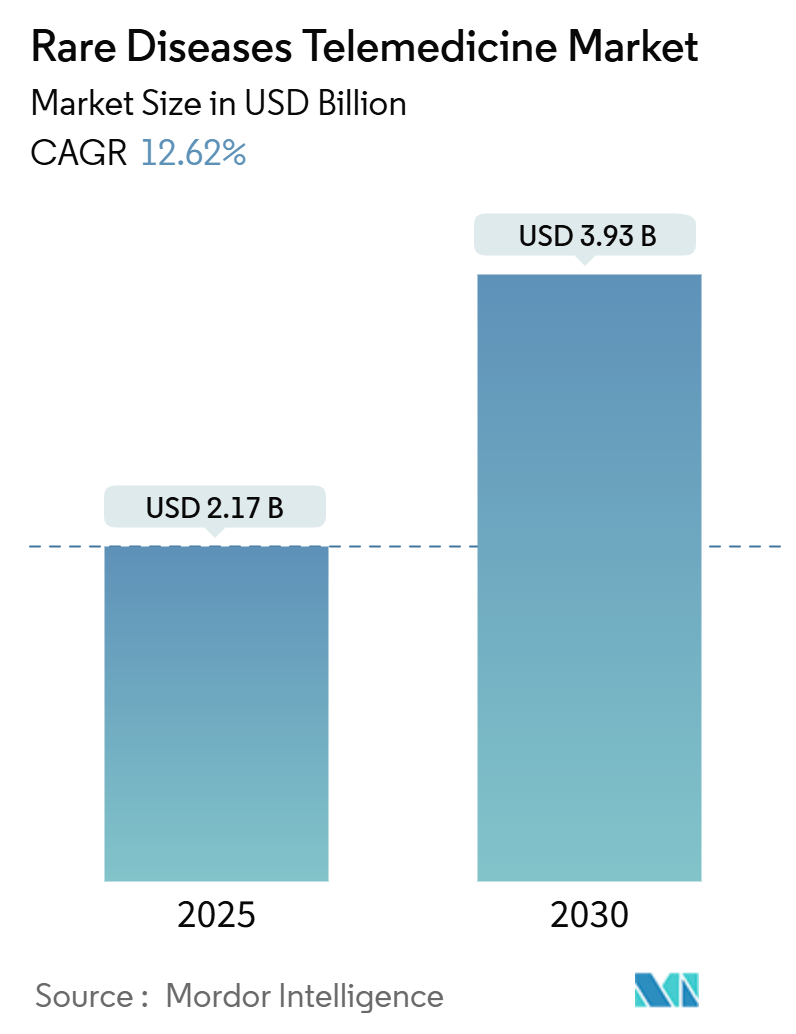
The Rare Diseases Telemedicine Market size is estimated at USD 2.17 billion in 2025, and is expected to reach USD 3.93 billion by 2030, at a CAGR of 12.62% during the forecast period (2025-2030).
Key factors driving the growth of the rare disease telemedicine market include the increasing prevalence of rare diseases, advancements in telemedicine technology, and the rising demand for personalized care. For instance, a report from the Genetic and Rare Diseases (GARD) Information Center in May 2022 highlighted that approximately 1 in 10 Americans, totaling 30 million people, are affected by rare diseases, which encompass around 7,000 known conditions.
Furthermore, a report by GlobalGenes in January 2024 noted that over 400 million people globally are impacted by rare diseases, with 80% of these conditions having identifiable genetic origins. This growing prevalence, particularly with many conditions being genetically rooted, underscores the increasing demand for telemedicine solutions. These solutions not only enable remote diagnoses but also ensure specialized care, significantly improving patient access to expert consultations.
Similarly, according to a report from the American Lung Association in June 2024, in 2023, cystic fibrosis affected approximately 30,000 individuals in the U.S. and roughly 70,000 globally. This heightened prevalence underscores the demand for specialized care, positioning telemedicine as a vital tool for enhancing access to expert consultations and continuous monitoring for managing this rare condition.
Moreover, the introduction of new telemedicine solutions is anticipated to further stimulate the market's growth. Key players are actively pursuing strategies to roll out innovative offerings. For instance, in April 2022, Emmaus Life Sciences, Inc., a biopharmaceutical firm focused on sickle cell disease, unveiled a comprehensive telehealth solution. This was in collaboration with strategic partners like Asembia LLC, US Bioservices Corporation, and UpScriptHealth. Their initiative capitalizes on the expanding telemedicine landscape in the U.S., offering online access to their prescription-grade L-glutamine treatment, Endari.
In conclusion, the confluence of rising rare disease prevalence and telemedicine advancements is fueling the demand for remote healthcare solutions. These solutions not only provide specialized care but also broaden patient access to expert consultations, driving the growth of the rare diseases telemedicine market.
However, the increase in fraudulent activities in telehealth practices poses a challenge, potentially restraining the market's growth.
Note: Market size and forecast figures in this report are generated using Mordor Intelligence’s proprietary estimation framework, updated with the latest available data and insights as of January 2026.
Global Rare Diseases Telemedicine Market Trends and Insights
The Teleconsultation Segment is Expected to Witness Significant Growth Over the Forecast Period
Teleconsultation utilizes information and communication technologies to overcome functional and geographic barriers, enabling both synchronous and asynchronous consultations.
There is an increasing emphasis on teleconsultation across developing nations, particularly in Asian countries. Since the onset of the COVID-19 pandemic, the general population's dependence on teleconsultation has surged significantly. For instance, in April 2022, Emmaus Life Sciences, in partnership with Asembia LLC, US Bioservices Corporation, and UpScriptHealth, launched a comprehensive telehealth solution in the United States. This telehealth program provides online access to Endari, a prescription-grade L-glutamine oral powder, for the treatment of sickle cell disease, benefiting both patients and healthcare providers.
Additionally, government organizations have made substantial investments in telemedicine to enhance healthcare services. For example, in October 2023, Indian startup Clinikally raised USD 2.6 million in a funding round that included Y Combinator, Tribe Capital, Goodwater Capital, Sequoia Scout Fund, Rebel Fund, and several angel investors. Clinikally plans to develop an AI-driven treatment plan generation feature and introduce expert-validated content across its WhatsApp and community blog platforms. Investments in such digital healthcare platforms, which connect consumers with licensed practitioners to offer personalized treatment for specific conditions, are advancing the rare disease telemedicine market by improving access to specialized dermatological care and individualized treatment, which is crucial for managing rare dermatologic diseases remotely.
Similarly, in June 2023, the South Korean Ministry of Health and Welfare initiated a three-month pilot program to institutionalize telemedicine, focusing on rare disease consultations among other patient needs. This initiative includes provisions for teleconsultations in specific hospitals, targeting rare disease patients who require ongoing health management post-surgery. By expanding access to telemedicine for rare diseases, this pilot is expected to significantly drive growth in the rare disease teleconsultation segment.
Therefore, the aforementioned factors, such as increasing investments in teleconsultation and the launch of new products, are anticipated to propel the segment's growth.
North America is Expected to Hold a Significant Share in the Market Over the Forecast Period
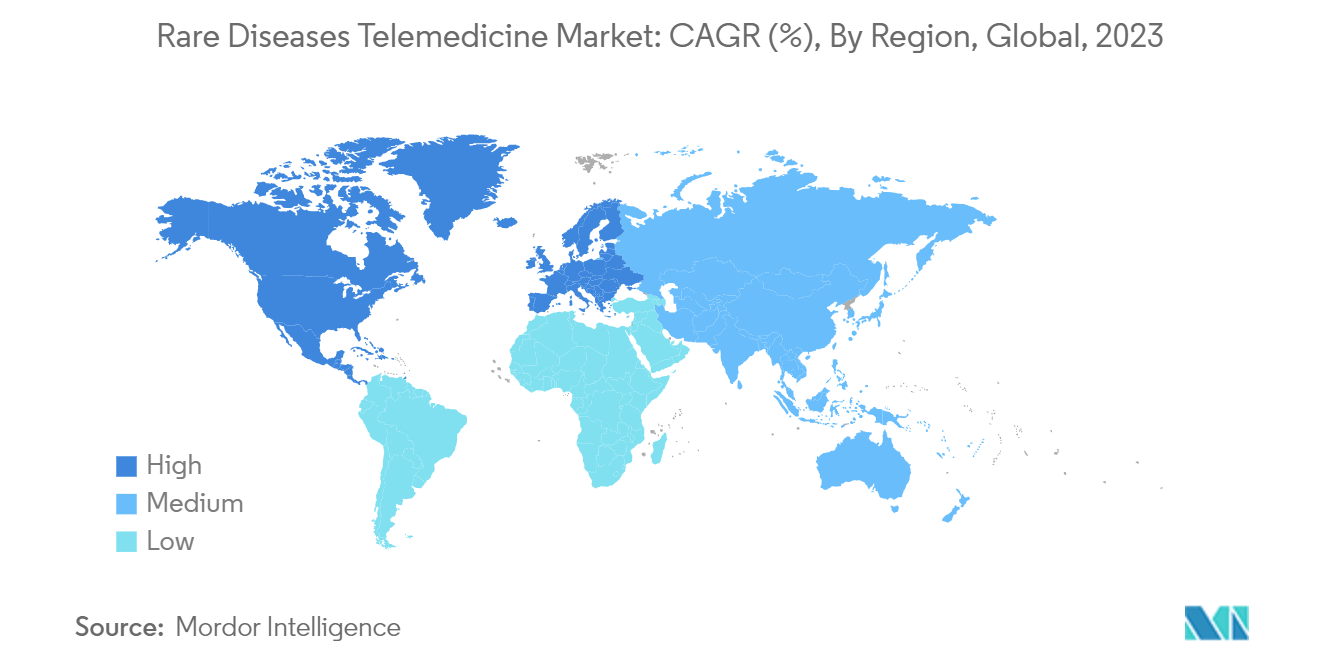
North America is set to grow at a substantial growth in the telemedicine market during the forecast period. This growth can be attributed to the robust healthcare technology industry in the U.S. and Canada, coupled with the widespread adoption of telehealth services across the region.
A key driver for the expansion of the rare diseases telemedicine market is the increasing prevalence of rare diseases in North America. For instance, a report from the National Library of Medicine in November 2022 highlighted that Gaucher disease affects 1 in every 50,000 to 100,000 individuals in the U.S. Furthermore, Type 1, the most prevalent form of the disorder, is notably recognized in both Canada and the U.S.
With telehealth companies intensifying their focus, the rare disease telemedicine market is on the brink of significant expansion. In June 2023, the American Academy of Dermatology, with pivotal backing from Boehringer Ingelheim and utilizing OM1's data aggregation system alongside its PhenOM artificial intelligence (AI) platform, embarked on a pioneering project. This endeavor seeks to craft educational tools aimed at refining the evaluation, diagnosis, and treatment of generalized pustular psoriasis (GPP) patients. GPP is a rare, severe psoriasis variant marked by extensive, pus-filled blisters or pustules.
Similarly, increasing product launches in the region is also expected to propel the market growth. For instance, in April 2022, Emmaus Life Sciences, Inc., a commercial-stage biopharmaceutical company specializing in sickle cell disease treatments, introduced a comprehensive telehealth solution in the United States in collaboration with strategic partners. This program leverages the growing adoption of telemedicine to enhance patient and provider access to its prescription-grade L-glutamine oral powder for sickle cell disease management. The introduction of specialized telehealth solutions enhances accessibility and treatment efficiency for rare disease management, fostering greater adoption of telemedicine by addressing critical patient and provider needs.
In conclusion, the rising prevalence of rare diseases and the strategic maneuvers by companies, the rare disease telemedicine market is poised for robust growth in North America in the foreseeable future.
Competitive Landscape
The rare disease telemedicine market is competitive and consists of several major players. In terms of market share, some significant players currently dominate the market. With technological advancements and quality service provisions, mid-size to smaller companies are increasing their market presence by introducing new products at lower prices. Some of the key players in the market are DermTech Inc., Digital Diagnostics Inc., AMD Global Telemedicine, TeleRare Health, LLC, and Saventic Health among others.
Rare Diseases Telemedicine Industry Leaders
-
DermTech Inc.
-
Digital Diagnostics Inc.
-
AMD Global Telemedicine
-
TeleRare Health, LLC
-
Saventic Health
- *Disclaimer: Major Players sorted in no particular order
Recent Industry Developments
- May 2024: TeleRare Health launched a virtual platform to provide specialized care for individuals with rare diseases, emphasizing diagnosis, disease assessment, and ongoing management. The platform facilitates patient access to expert clinicians, molecular diagnostics, and comprehensive care services, including referrals and therapy information.
- March 2024: EVERSANA and MyHealthTeam formed a strategic alliance to leverage Artificial Intelligence in advancing diagnostic and treatment timelines for global patients. This collaboration aims to provide enhanced support to life sciences companies in addressing complex healthcare needs. By improving diagnosis speed and patient care, this initiative is likely to propel growth in the rare disease telemedicine market.
Global Rare Diseases Telemedicine Market Report Scope
As per the scope of this report, rare disease telemedicine refers to the use of digital communication technologies, such as video consultations and remote monitoring, to provide healthcare services for individuals with rare diseases. This approach helps overcome geographical barriers and enhances access to specialized medical expertise for patients with often difficult-to-diagnose and treat conditions.
The rare disease telemedicine market is segmented by disease type, service type, end user, and geography. The disease type segment is further divided into genetic disorders, metabolic disorders, immunological disorders, neurological disorders, and other diseases. The service type segment is further segmented into teleconsultation, telemonitoring, tele-diagnostics, and other service types. The end user segment is further divided into hospitals and clinics, home settings, and others. The geography segment is further divided into North America, Europe, Asia-Pacific, Middle East and Africa, and South America. The report also covers the estimated market sizes and trends for 17 countries across major regions globally. The report offers the value in USD for the above segments.
| Genetic Disorders |
| Metabolic Disorders |
| Immunological Disorders |
| Neurological Disorders |
| Other Rare Disorders |
| Teleconsultation |
| Telemonitoring |
| Telediagnostics |
| Other Service Type |
| Hospitals and Clinics |
| Home Settings |
| Other End Users |
| North America | United States |
| Canada | |
| Mexico | |
| Europe | Germany |
| United Kingdom | |
| France | |
| Italy | |
| Spain | |
| Rest of Europe | |
| Asia-Pacific | China |
| Japan | |
| India | |
| Australia | |
| South Korea | |
| Rest of Asia-Pacific | |
| Middle-East and Africa | GCC |
| South Africa | |
| Rest of Middle-East and Africa | |
| South America | Brazil |
| Argentina | |
| Rest of South America |
| By Disease Type | Genetic Disorders | |
| Metabolic Disorders | ||
| Immunological Disorders | ||
| Neurological Disorders | ||
| Other Rare Disorders | ||
| By Service Type | Teleconsultation | |
| Telemonitoring | ||
| Telediagnostics | ||
| Other Service Type | ||
| By End User | Hospitals and Clinics | |
| Home Settings | ||
| Other End Users | ||
| Geography | North America | United States |
| Canada | ||
| Mexico | ||
| Europe | Germany | |
| United Kingdom | ||
| France | ||
| Italy | ||
| Spain | ||
| Rest of Europe | ||
| Asia-Pacific | China | |
| Japan | ||
| India | ||
| Australia | ||
| South Korea | ||
| Rest of Asia-Pacific | ||
| Middle-East and Africa | GCC | |
| South Africa | ||
| Rest of Middle-East and Africa | ||
| South America | Brazil | |
| Argentina | ||
| Rest of South America | ||
Key Questions Answered in the Report
How big is the Rare Diseases Telemedicine Market?
The Rare Diseases Telemedicine Market size is expected to reach USD 2.17 billion in 2025 and grow at a CAGR of 12.62% to reach USD 3.93 billion by 2030.
What is the current Rare Diseases Telemedicine Market size?
In 2025, the Rare Diseases Telemedicine Market size is expected to reach USD 2.17 billion.
Who are the key players in Rare Diseases Telemedicine Market?
DermTech Inc., Digital Diagnostics Inc., AMD Global Telemedicine, TeleRare Health, LLC and Saventic Health are the major companies operating in the Rare Diseases Telemedicine Market.
Which is the fastest growing region in Rare Diseases Telemedicine Market?
Asia Pacific is estimated to grow at the highest CAGR over the forecast period (2025-2030).
Which region has the biggest share in Rare Diseases Telemedicine Market?
In 2025, the North America accounts for the largest market share in Rare Diseases Telemedicine Market.
What years does this Rare Diseases Telemedicine Market cover, and what was the market size in 2024?
In 2024, the Rare Diseases Telemedicine Market size was estimated at USD 1.90 billion. The report covers the Rare Diseases Telemedicine Market historical market size for years: 2019, 2020, 2021, 2022, 2023 and 2024. The report also forecasts the Rare Diseases Telemedicine Market size for years: 2025, 2026, 2027, 2028, 2029 and 2030.