
Proton Pump Inhibitors Market Size and Share
Market Overview
| Study Period | 2020 - 2031 |
|---|---|
| Market Size (2026) | USD 14.04 Billion |
| Market Size (2031) | USD 18.03 Billion |
| Growth Rate (2026 - 2031) | 5.14 % |
| Fastest Growing Market | Asia Pacific |
| Largest Market | North America |
| Market Concentration | Medium |
Major Players *Disclaimer: Major Players sorted in no particular order Image © Mordor Intelligence. Reuse requires attribution under CC BY 4.0. | |
Proton Pump Inhibitors Market Analysis by Mordor Intelligence
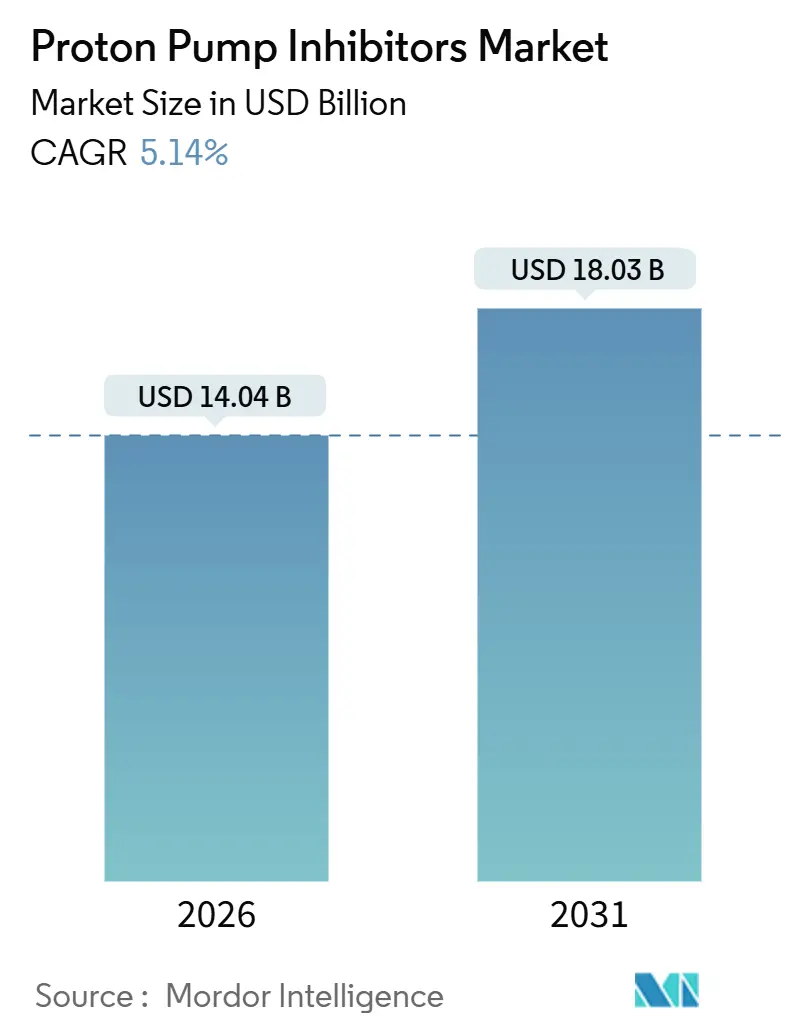
The Proton Pump Inhibitors Market size is estimated at USD 14.04 billion in 2026, and is expected to reach USD 18.03 billion by 2031, at a CAGR of 5.14% during the forecast period (2026-2031).
Current dynamics are shaped by falling branded prices after patent expiries, rapid adoption of intravenous formulations in critical-care wards, and mounting demand from post-operative bariatric patients who require high-dose acid suppression. Expanded over-the-counter (OTC) access, coupled with self-medication trends, has broadened consumer reach, though it simultaneously compresses unit margins. In parallel, undiagnosed gastroesophageal reflux disease (GERD) remains prevalent across the Asia-Pacific, where rising disposable income and aggressive generic manufacturing are accelerating prescription volumes. While mature demand in North America and Western Europe stabilizes aggregate revenue, growth corridors in India, China, and selected Middle East markets are redefining competitive focus.
Key Report Takeaways
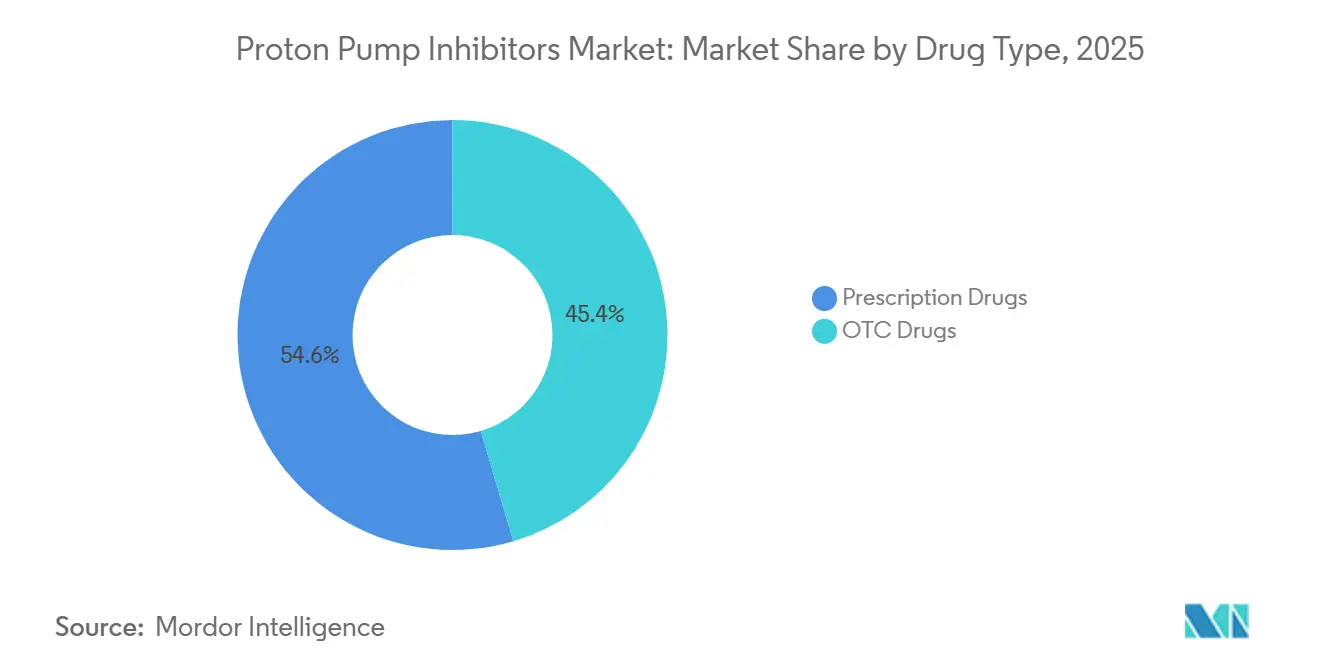
- By drug type, OTC formulations held 45.43% of the proton pump inhibitors market share in 2025, while prescription drugs are projected to advance at a 7.54% CAGR through 2031.
- By route of administration, oral products captured 58.65% share of the proton pump inhibitors market size in 2025, whereas the intravenous segment is projected to expand at a 7.65% CAGR through 2031.
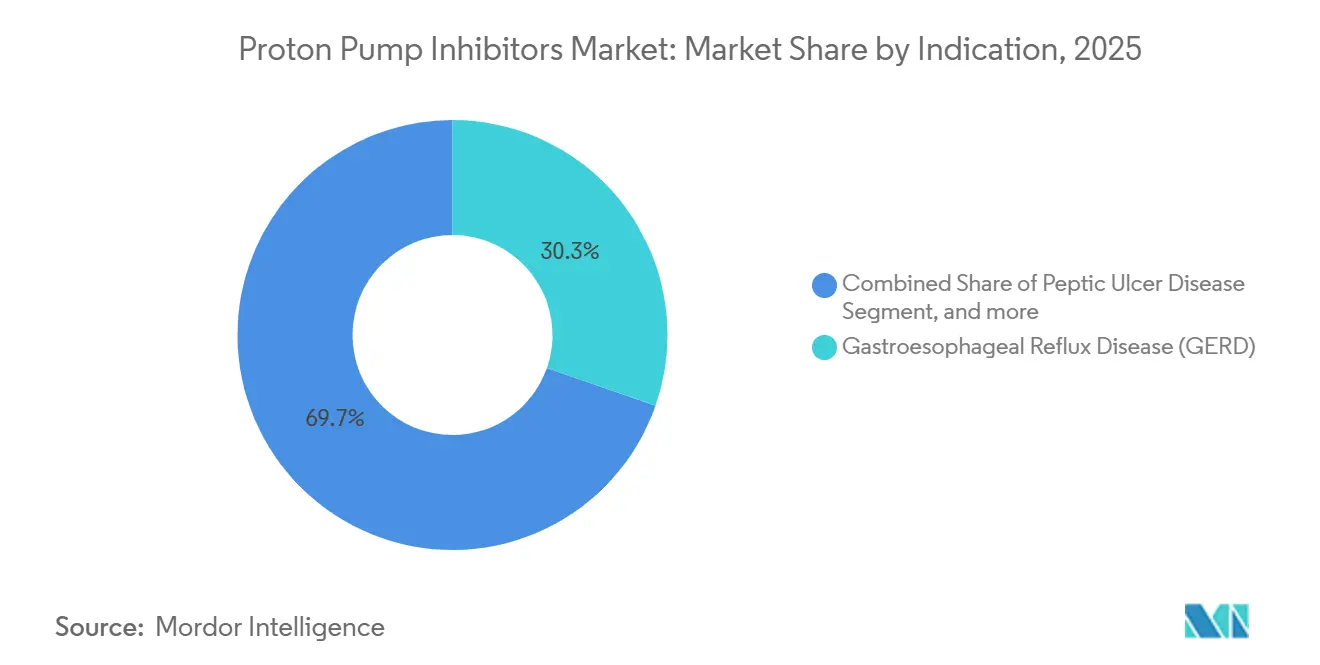
- By indication, gastroesophageal reflux disease led with a 30.34% revenue share in 2025; Zollinger-Ellison syndrome treatments are projected to grow at an 8.01% CAGR through 2031.
- By distribution channel, hospital pharmacies accounted for 60.34% of the proton pump inhibitors market size in 2025; however, online pharmacies recorded the fastest CAGR of 8.32% for the same period.
- By geography, North America retained 42.65% proton pump inhibitors market share in 2025, while Asia-Pacific is pacing ahead with a 6.43% CAGR through 2031.
Note: Market size and forecast figures in this report are generated using Mordor Intelligence’s proprietary estimation framework, updated with the latest available data and insights as of January 2026.
Market Trends and Insights
Drivers Impact Analysis of Proton Pump Inhibitors Market*
| Driver | (~) % Impact on CAGR Forecast | Geographic Relevance | Impact Timeline |
|---|---|---|---|
| Aging population with higher G.I. disorder prevalence | +0.9% | Global, peak impact in North America, Europe, Japan | Long term (≥ 4 years) |
| Increasing burden of GERD and peptic ulcer disease | +1.2% | Global, pronounced in Asia-Pacific urban centers | Medium term (2-4 years) |
| Expanded OTC switches and self-medication trends | +0.7% | North America and leading EU states, emerging in Latin America | Short term (≤ 2 years) |
| Growing availability of low-cost generics in emerging markets | +1.0% | Asia-Pacific core, spill-over to Middle East and South America | Medium term (2-4 years) |
| Rising prevalence of bariatric surgery requiring post-operative acid suppression | +0.5% | North America, Western Europe, select Middle East hubs | Medium term (2-4 years) |
| Adoption of quadruple H. pylori therapies incorporating PPIs | +0.6% | Global, highest uptake in Asia-Pacific | Short term (≤ 2 years) |
| Source: Mordor Intelligence | |||
Aging Population with Higher G.I. Disorder Prevalence
Older adults experience double the incidence of reflux symptoms and peptic complications compared with younger cohorts. Declining lower esophageal sphincter tone, polypharmacy-induced mucosal injury, and the prevalence of hiatal hernia compound this risk. The worldwide population aged 60 years and above is on track to exceed 1.4 billion by 2030, with Asia-Pacific driving the steepest gains[1]World Health Organization, “Ageing and Health,” who.int. This demographic surge elevates prescription volumes because elderly patients often need higher or prolonged dosing due to reduced acid clearance and concurrent NSAID therapy.
Increasing Burden of GERD And Peptic Ulcer Disease
Urbanization and dietary Westernization have pushed global GERD prevalence to roughly 13%, while metropolitan Asia has climbed from historical baselines below 5% to more than 10%[2]Nature Communications, “Global Trends in Gastroesophageal Reflux Disease,” nature.com. Peptic ulcer disease persists among chronic NSAID users, a cohort expanding alongside aging populations. The result is split demand: low-dose short courses for uncomplicated GERD versus high-dose prolonged regimens for ulcer management, favoring firms with diverse dosage strengths.
Expanded OTC Switches and Self-Medication Trends
Regulatory reclassifications enable consumers to purchase 20 mg esomeprazole and pantoprazole without a prescription across much of Europe[3]European Medicines Agency, “Nexium Control Product Information,” ema.europa.eu. In the United States, OTC omeprazole and lansoprazole are the most prevalent medications on retail shelves. While broad access boosts unit volumes, it compresses margins and raises concerns over unsupervised chronic use, prompting regulators to strengthen label warnings and duration limits.
Growing Availability of Low-Cost Generics in Emerging Markets
Vertically integrated manufacturers in India and China supply omeprazole and pantoprazole at less than USD 0.10 per daily dose, thereby challenging the originator's pricing power. Licensing models, such as Takeda’s non-exclusive vonoprazan agreements, monetize intellectual property via royalties instead of direct commercialization, accelerating penetration but squeezing per-unit revenues.
Restraints Impact Analysis of Proton Pump Inhibitors Market*
| Restraint | (~) % Impact on CAGR Forecast | Geographic Relevance | Impact Timeline |
|---|---|---|---|
| Safety concerns over long-term PPI use | -0.8% | Global, highest regulatory scrutiny in North America and EU | Medium term (2-4 years) |
| Patent expiries leading to price erosion | -1.1% | Global, pronounced in North America and Europe | Short term (≤ 2 years) |
| Preference shift toward potassium-competitive acid blockers | -0.4% | Japan, South Korea, early adoption in U.S. specialty channels | Long term (≥ 4 years) |
| Regulatory scrutiny on OTC labeling and duration limits | -0.3% | North America and EU | Short term (≤ 2 years) |
| Source: Mordor Intelligence | |||
Safety Concerns Over Long-Term PPI Use
A 2024 observational study linked chronic exposure to proton pump inhibitors to higher risks of acute interstitial nephritis, progression of chronic kidney disease, and vitamin B12 deficiency, with hazard ratios ranging from 1.3 to 1.8. The resulting FDA and EMA warnings have prompted physicians to adopt step-down protocols and on-demand dosing, thereby shortening the average treatment duration per patient.
Patent Expiries Leading to Price Erosion
Loss of exclusivity for esomeprazole, pantoprazole, and lansoprazole triggered average selling price declines of 60-80% within two years. The first U.S. generic pantoprazole injection secured FDA clearance in 2024, introducing competition to a segment that had long sheltered premium pricing.
*Our forecasts treat driver/restraint impacts as directional, not additive. The impact forecasts reflect baseline growth, mix effects, and variable interactions.
Proton Pump Inhibitors Market Segment Analysis
By Drug Type:
Prescription Therapies Deliver Faster GrowthThe prescription segment contributed a smaller base in 2025, yet is forecast to grow at 7.54% annually through 2031, driven by higher-dose requirements for Zollinger-Ellison syndrome and H. pylori eradication. Health-insurance formularies often subsidize prescriptions more heavily than OTC purchases, indirectly steering patients toward clinician-directed therapy. Conversely, the larger OTC block faces intensifying competition from private-label generics that pressure average selling prices. Regulatory OTC switches broadened access but shifted channel economics toward thin margins, obliging manufacturers to balance volume gains against profitability.
Lifecycle management remains pivotal for prescription brands. Combination products pairing proton pump inhibitors with NSAIDs or antibiotics extend protection periods and command higher reimbursement. Regulatory agencies encourage such formulations when evidence supports superior adherence or safety, thereby reinforcing the relevance of branded products even as core molecules lose exclusivity.



By Route Of Administration:
Intravenous Use Rises in Critical CareOral formulations still account for 58.65% of the 2025 volume, benefiting from their convenience and widespread use in chronic GERD. However, intravenous (IV) demand is rising at a 7.65% CAGR due to stress-ulcer prophylaxis protocols in intensive-care units and post-operative settings that require rapid acid suppression when oral intake is compromised. Hospitals negotiate bulk IV contracts directly with suppliers, often securing steep discounts in exchange for formulary exclusivity, yet the higher complexity of sterile manufacturing creates barriers that favor established producers. Approval of generic pantoprazole injection in 2024 marked a market tipping point that is expected to shift purchasing criteria from brand preference to cost efficiency.
By Indication:
GERD Dominates, Zollinger-Ellison AcceleratesGERD held a 30.34% share in 2025, driven by high global prevalence and consumer familiarity with proton pump inhibitors for symptom relief. Zollinger-Ellison syndrome, though rare, is registering the fastest growth rate at 8.01% as diagnostic tools improve and specialized centers screen at-risk patients more effectively. These patients require significantly higher daily doses, boosting revenue per capita despite small volumes. Peptic ulcer disease and H. pylori eradication together remain sizable, supported by protocol-driven quadruple therapies that guarantee fixed treatment windows and predictable demand.
By Distribution Channel:
Hospital Pharmacies Still Lead, Online SurgesHospital pharmacies controlled 60.34% of global sales in 2025, reflecting their role in procuring IV formulations and enforcing standardized protocols. Channel growth moderates as outpatient care expands, yet hospital formularies continue to wield significant negotiating power, favoring suppliers able to bundle IV and oral SKUs. Online pharmacies, although smaller today, are expanding at a rate of 8.32% because telehealth platforms facilitate discreet, subscription-based refills. Regulatory endorsement of electronic prescriptions and verified digital pharmacy certifications mitigates concerns about counterfeit risk, encouraging wider consumer adoption.
Geography Analysis
North America Proton Pump Inhibitors Market
North America commanded 42.65% global share in 2025, supported by high health-care expenditure and entrenched prescribing habits. FDA safety communications in 2024 tempered chronic use, but did not materially impact overall volume, as clinicians continued to prioritize ulcer prophylaxis in high-risk populations. Canada’s tighter reimbursement rules modestly curtail long-term therapy, chiefly by requiring endoscopic confirmation to extend scripts beyond eight weeks.
APAC Proton Pump Inhibitors Market
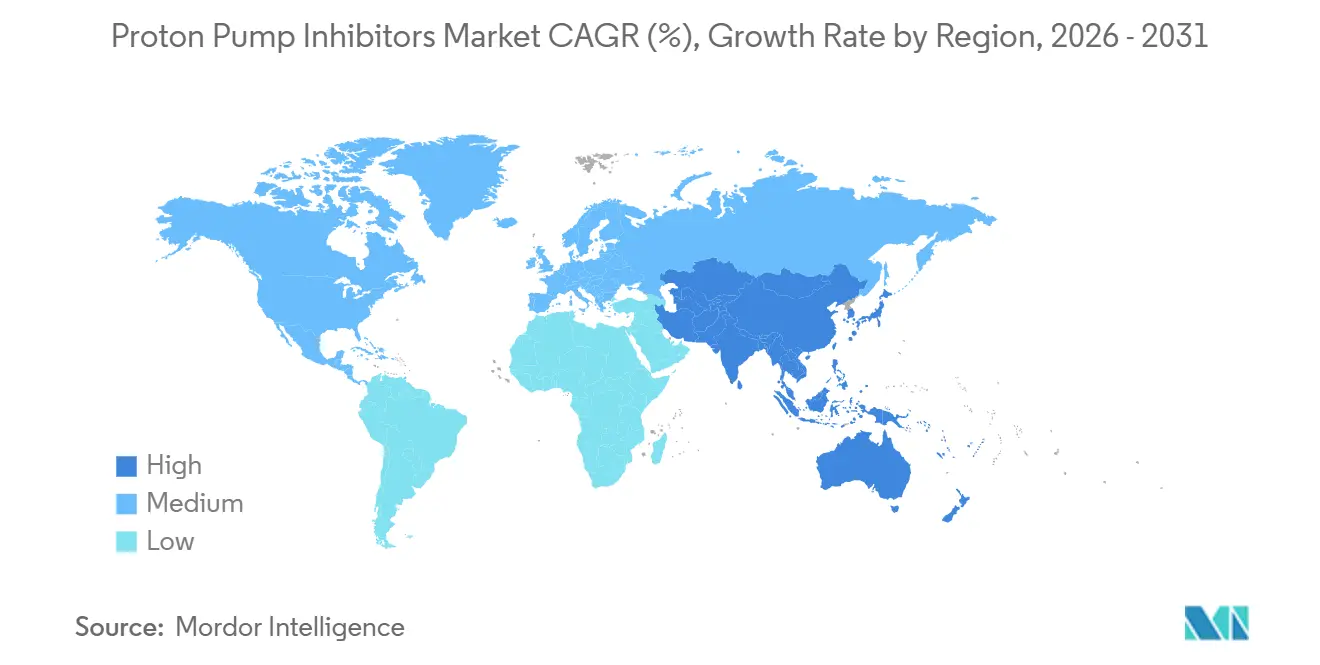
The Asia-Pacific region is the fastest-growing, with a 6.43% CAGR projected to 2031. Rising GERD prevalence, escalating middle-class incomes, and extensive generic production underpin this momentum. Indian and Chinese manufacturers leverage cost advantages to widen access, while licensing deals for vonoprazan demonstrate an originator pivot to royalty-based models that suit price-sensitive markets. Regulatory clearance by India’s Drug Controller General for multiple vonoprazan indications confirms an environment conducive to the rapid uptake of this medication.
EU Proton Pump Inhibitors Market
Europe’s trajectory remains steady but slower, curtailed by stringent EMA labeling that limits the length of self-medication and mandates step-down protocols. The EU’s 2024 delegated regulation on variation procedures eases administrative burdens for label harmonization, potentially accelerating the introduction of reformulated products.
MEA and South America Proton Pump Inhibitors Market
The Middle East and Africa are at an earlier stage of adoption. Gulf Cooperation Council nations expand private insurance coverage, supporting the uptake of premium-branded products in urban hospitals. At the same time, sub-Saharan Africa focuses on essential medicine lists that prioritize low-cost, generic medications. South America exhibits uneven progress, with macroeconomic volatility in Brazil and Argentina impacting price negotiations; nevertheless, large, under-treated patient pools offer long-term upside for cost-efficient suppliers.

Regulatory Landscape
Regulation for proton pump inhibitors (PPIs) is centered on pharmacovigilance-driven label maintenance, OTC self-care controls, and chemistry, manufacturing, and controls (CMC) compliance for high-volume generics across major agencies (FDA, EMA, and national regulators). In the European Union, EMA oversight remains active through PRAC signal work, including the July 2026 PRAC meeting highlights and related 2026 signal follow-ups, which keeps safety and interaction risks under review and can lead to product-information updates and monitoring requirements for widely used PPIs.
In the United Kingdom, post-Brexit packaging and labeling requirements are a material compliance variable for both Rx and OTC PPIs. The UK Government implemented mandatory "UK Only" labeling following the Windsor Framework (effective from January 2025), and MHRA issued updated best-practice guidance on labeling and packaging in mid-2026, increasing the operational need for market-specific artwork control, pack segregation, and supply planning. In the United States, generic PPI lifecycle activity continues under FDA post-marketing and labeling requirements (for example, omeprazole delayed-release capsule labeling updates in standard channels). Abbreviated pathways for differentiated generics such as oral suspensions can still be gated by reference listed drug exclusivities and patent timelines.
Value Chain Analysis
The PPI value chain runs from chemical precursors and API synthesis (benzimidazole intermediates and related reagents) through formulation (enteric-coated oral solids, sterile IV presentations, and patient-friendly formats such as oral suspensions), then into wholesale distribution and dispensing via hospital pharmacies, retail pharmacies and drug stores, and online pharmacies. Specialized enteric-coating polymers and packaging components (particularly for OTC SKUs) are key upstream inputs, while downstream demand is shaped by formulary decisions in hospitals for IV PPIs and by consumer-facing branding and price positioning in the OTC segment.
Quality and compliance checkpoints increasingly affect throughput and supply resilience. Across FDA and EMA-regulated markets, nitrosamine and related impurity risk management, lot-release testing, and documentation practices add time and cost to both API and finished-dose release, which in turn influences inventory strategy for high-volume molecules such as omeprazole, pantoprazole, and esomeprazole. On the distribution side, hospital tendering and group purchasing concentrate bargaining power for IV PPIs, while retail and online channels reward suppliers that sustain consistent pack availability and country-specific labeling, a growing consideration in the UK following the introduction of "UK Only" labeling rules.
Competitive Landscape
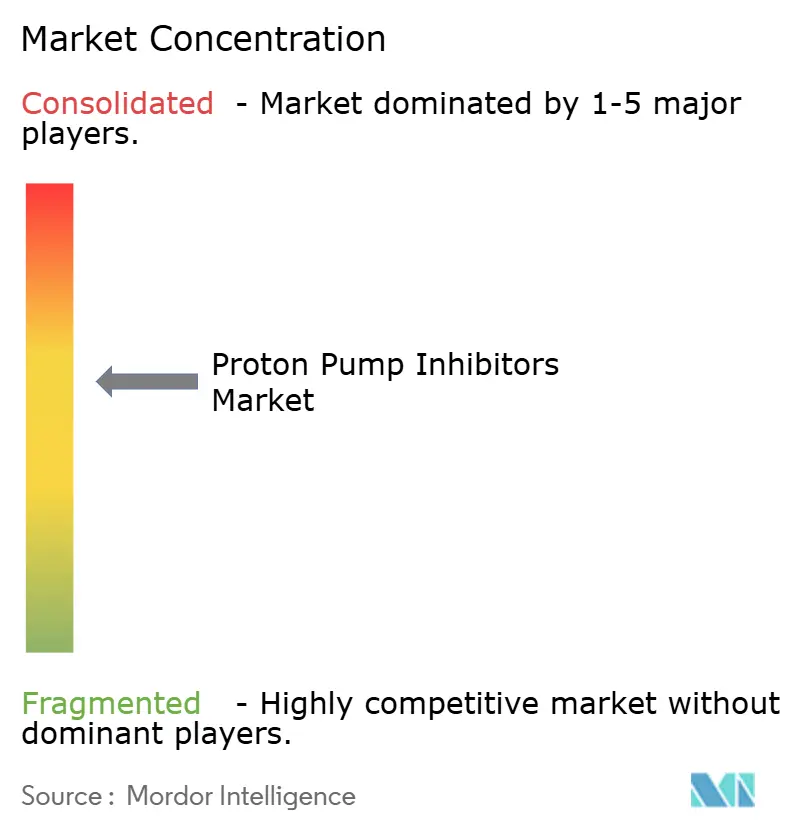
The proton pump inhibitors market is moderately fragmented. The top five companies—AstraZeneca, Takeda, Pfizer, Sun Pharmaceutical Industries, and Cipla—hold a combined share of approximately 45–50%. Originators defend legacy brands through lifecycle extensions such as fixed-dose combinations and novel delivery systems, while generic players compete on manufacturing scale and unit cost. Takeda’s decision to license vonoprazan to multiple Indian partners exemplifies a pivot to royalty-stream models in low-price environments. Phathom Pharmaceuticals advanced differentiation via Voquezna, targeting non-erosive reflux disease in the United States with a potassium-competitive mechanism that bypasses competition from traditional PPIs. Fresenius Kabi’s entry into IV generics intensifies hospital segment pricing pressure, yet underscores sustained demand for acute care formulations.
Strategic opportunities reside in securing hospital supply contracts for IV drugs, bundling PPIs with telehealth adherence platforms, and investing in next-generation mechanisms that offer faster onset or superior drug-interaction profiles. Early-stage disruptors focusing on potassium-competitive molecules or alternative acid blockers could reshape market dynamics if clinical superiority translates into reimbursement support.
Proton Pump Inhibitors Industry Leaders
Bayer AG
Pfizer Inc.
Takeda Pharmaceuticals
Cadila Pharmaceuticals
AstraZeneca
- *Disclaimer: Major Players sorted in no particular order
Proton Pump Inhibitors Market Companies Covered in this Report
- Abbott Laboratories
- Aurobindo Pharma
- AstraZeneca
- Zydus Group
- Cipla
- Dr. Reddy’s Laboratories
- Eisai
- GlaxoSmithKline
- Johnson & Johnson
- Lupin
- Mylan
- Novartis
- Perrigo Company
- Pfizer
- Sanofi
- Sun Pharmaceuticals Industries
- Takeda Pharmaceuticals
- Teva Pharmaceutical Industries

Market Opportunities and Future Outlook
White space remains strongest in differentiated formulations that address administration and care-setting constraints, rather than competing head-to-head in saturated tablet markets. A concrete example is complex generic development in the United States, where Jubilant Generics received tentative USFDA approval (June 2026) for pantoprazole sodium delayed-release oral suspension (40 mg per packet), which highlights commercial room in patient groups that need non-tablet options, such as dysphagia, enteral-feeding, and pediatric-adjacent use under appropriate labeling. In acute care, ready-to-use IV presentations also offer a path to compete beyond price alone, aligning with hospital demand for workflow simplification and reduced compounding burden.
Regulatory actions shape near-term opportunity areas by increasing the value of pharmacovigilance strength, label agility, and risk-communication capabilities. EMA activity in 2026 (PRAC signal work and updates to established OTC product information such as Nexium Control) underscores how companies that can implement label changes quickly and maintain compliant packaging across geographies can protect continuity in retail and e-pharmacy channels. Separately, the UK post-Windsor Framework packaging rules create operational room for manufacturers and packagers to run market-specific artwork and "UK Only" packs efficiently without disrupting broader EU supply.
Recent Industry Developments in Proton Pump Inhibitors Market
- July 2026: RPG Life Sciences launched Naprosyn ES (naproxen plus esomeprazole) in India in partnership with Archerchem Healthcare. The fixed-dose approach pairs analgesia with gastroprotection, supporting adherence in patients who require NSAID therapy while broadening esomeprazole-linked volumes through a non-traditional use pathway.
- June 2026: Jubilant Generics (Jubilant Pharmova) received tentative USFDA approval for pantoprazole sodium delayed-release oral suspension (40 mg per packet). The filing targets a more specialized dosage form than standard tablets, positioning the company for entry once reference product barriers clear and adding another competitor to the U.S. institutional and outpatient segments that need swallow-friendly formats.
- July 2024: Phathom Pharmaceuticals received FDA approval for VOQUEZNA (vonoprazan) 10 mg tablets for heartburn related to non-erosive GERD in adults. The additional indication expanded U.S. prescribing scope for potassium-competitive acid blockers, increasing substitution pressure on traditional PPIs in segments where rapid, meal-independent acid suppression is clinically valued.


Proton Pump Inhibitors Market Report Scope and Research Methodology
Market Definition and Coverage
For this study, the market is defined as the global revenues generated from proton pump inhibitor therapies used to reduce gastric acid, across prescription and OTC use, and across common care settings where these products are dispensed.
Scope exclusions: We exclude non-PPI acid reducers (such as H2 blockers), and we also exclude diagnostic and procedure revenues tied to GERD or ulcers.
Segments Covered in This Report
- By Drug Type
- OTC Drugs
- Omeprazole
- Lansoprazole
- Esomeprazole
- Other OTC Drugs
- Prescription Drugs
- Rabeprazole
- Dexlansoprazole
- Pantoprazole
- Other Prescription Drugs
- OTC Drugs
- By Route Of Administration
- Oral
- Intravenous
- By Indication
- Gastroesophageal Reflux Disease (GERD)
- Peptic Ulcer Disease
- H. Pylori Eradication
- Zollinger-Ellison Syndrome
- Other Indications
- By Distribution Channel
- Hospital Pharmacies
- Retail Pharmacies & Drug Stores
- Online Pharmacies
- Geography
- North America
- United States
- Canada
- Mexico
- Europe
- Germany
- United Kingdom
- France
- Italy
- Spain
- Rest Of Europe
- Asia-Pacific
- China
- Japan
- India
- Australia
- South Korea
- Rest Of Asia-Pacific
- Middle East And Africa
- GCC
- South Africa
- Rest Of Middle East And Africa
- South America
- Brazil
- Argentina
- Rest Of South America
- North America
Data Sources, Market Sizing, and Validation
Desk Research
Desk work starts with mapping the treated population and how care is delivered for acid-related disorders, then aligning that demand to what is realistically dispensed through pharmacies and hospitals. We typically used public health statistics and clinical references to keep definitions consistent, such as CDC health statistics, NIH and NLM resources, the WHO, and peer-reviewed clinical guideline publications. Where needed, we also checked drug label and safety information from regulators such as the FDA, and we used international trade and pricing context from sources such as UN Comtrade.
On top of these, we reviewed annual reports and investor materials of major drug manufacturers, plus reputable press releases and association websites, to confirm therapy mix, channel dynamics, and major patent or generic shifts. For places where public information is thin, we used a paid subscription focused on company financial intelligence and a paid patent database to cross-check product footprints and lifecycle timelines. These desk research sources are illustrative only, and we referenced other public and paid materials as part of data collection, validation, and clarification.
Primary Interviews and Surveys
Primary interviews and surveys were used to pressure-test the desk assumptions with people who see PPI demand daily, including hospital pharmacists, retail pharmacy channel stakeholders, gastroenterology focused clinicians, payor related experts, and supply side commercial teams. Since this is a global market, feedback was gathered across major regions so that OTC versus prescription mix, route-of-administration splits, and price erosion patterns could be adjusted to match what is seen locally. When a data point did not align across respondents, we revisited the assumption and kept the most repeatable input that could be supported with at least two independent checks.
Distribution of primary research fieldwork respondents
| Company type | Respondent position | Region |
|---|---|---|
| Top tier: 26% | CXOs: 12% | APAC: 43% |
| Mid tier: 58% | Functional/Unit leaders: 30% | EMEA: 36% |
| Smaller Players: 16% | Managers: 58% | Americas: 21% |
Market-Sizing & Forecasting
Sizing was built using a top-down demand pool approach, where epidemiology and treatment rates for GERD, peptic ulcer disease, H. pylori eradication, and related indications were used to reconstruct the consumption base, which was then converted into value using region-appropriate pricing logic. To keep the output realistic, the totals were corroborated with selective bottom-up approximations, such as sampling average packs per patient per year, channel checks across hospital and retail dispensing, and sanity checks against supplier revenue disclosures at a high level.
Key inputs that influenced the model include prevalence and diagnosis trends for GERD, share of patients treated with PPIs versus alternatives, OTC penetration by country, oral versus intravenous utilization (especially in inpatient settings), and typical duration of therapy in acute versus chronic use. Pricing assumptions were handled carefully because genericization and reimbursement controls can move the ASP even when volumes stay steady. When country-level inputs were missing, we used proxy markets with similar reimbursement and care access patterns, then adjusted with expert feedback.
For forecasting, we used scenario analysis anchored on a base case, because future demand depends on how guidelines, OTC availability, and payer restrictions evolve over time. Volume drivers were projected using trends in diagnosis, aging population signals, and procedure volumes linked to acid-related disorders, and then price paths were modeled with expected generic share expansion and tender style pressures in selected systems.
Data Validation & Update Cycle
Validation is done through multiple passes, starting with internal variance checks across regions and indications, followed by analyst review of outliers that do not match known clinical use patterns. We also compare model outputs with independent signals, such as prescription trends discussed by clinicians, channel mix shifts reported by pharmacy stakeholders, and major policy changes that affect OTC access or reimbursement.
If a key assumption drives a large swing, we re-contact respondents and re-check the desk inputs before final sign-off. Reports are refreshed annually, and interim updates are triggered when material events occur, such as major regulatory actions or meaningful price changes from generic entries. Before delivery, a final review pass is completed so the latest available information is reflected in the totals and narrative.
Mordor Intelligence's Proton Pump Inhibitors Market Size Compared Against Other Published Estimates
It is common to see different market size values for proton pump inhibitors because firms may measure different revenue points and may also handle OTC and hospital use in different ways. The year used as the base, currency timing, and how price erosion from generics is treated can also change the reported value even when the underlying treated patient pool is similar.
By tracking key demand indicators and refreshing scope rules during updates, Mordor Intelligence aligns the model to retail and hospital dispensing across OTC and prescription use, rather than counting factory-gate revenues that stop at the manufacturer level.
Benchmark comparison
| Source | Market Size | Gaps in Research Methodology |
|---|---|---|
| Mordor Intelligence | USD 14.04 B (2026) | |
| Global Report Publisher A | USD 3.40 B (2024) | This estimate is framed around factory-gate revenues and an earlier base year, which can understate channel markups and later-year volume expansion captured in a dispensing-aligned view. |
| Global Research Publisher B | USD 4.29 B (2025) | This estimate uses a different base year and tends to apply broader assumptions on price progression and forecast period structure, which can compress near-term value versus models that separate route and channel mix impacts. |
Overall, the spread is mainly explained by where revenue is measured in the value chain, which year is treated as the baseline, and how quickly generic pricing declines are applied. When scope boundaries are kept consistent and checked against real-world dispensing and indication mix, the final number becomes easier to trace back to a few clear variables and repeatable steps.


Key Questions Answered in the Report
How large is the proton pump inhibitors market in 2026?
It stands at USD 14.04 billion with a forecast to reach USD 18.03 billion by 2031.
What is the projected CAGR for proton pump inhibitors between 2026 and 2031?
The market is expected to expand at a 5.14% CAGR over the forecast period.
Which route of administration is growing fastest within proton pump inhibitor therapies?
Intravenous formulations are advancing at a 7.65% CAGR, reflecting rising critical-care use.
Which geographic region shows the strongest growth momentum?
Asia-Pacific leads with a projected 6.43% CAGR through 2031 driven by generic uptake and rising GERD prevalence.
What safety issues are regulators emphasizing for long-term proton pump inhibitor users?
Agencies highlight risks such as kidney injury, vitamin B12 deficiency, hypomagnesemia, and potential infection increases, prompting shorter treatment durations.
How are next-generation acid blockers influencing competitive dynamics?
Potassium-competitive acid blockers like vonoprazan and tegoprazan offer faster onset and meal-independent dosing, gradually capturing share from traditional proton pump inhibitors.
Page last updated on:


 Your data is secure and never sold or shared.


