
Preterm Birth Prevention And Management Market Size and Share
Market Overview
| Study Period | 2020 - 2031 |
|---|---|
| Forecast Data Period | 2026 - 2031 |
| Market Size (2026) | USD 2.08 Billion |
| Market Size (2031) | USD 3.17 Billion |
| Growth Rate (2026 - 2031) | 8.83 % |
| Fastest Growing Market | Asia Pacific |
| Largest Market | North America |
Major Players
*Disclaimer: Major Players sorted in no particular order Image © Mordor Intelligence. Reuse requires attribution under CC BY 4.0. |
|
Preterm Birth Prevention And Management Market Analysis by Mordor Intelligence
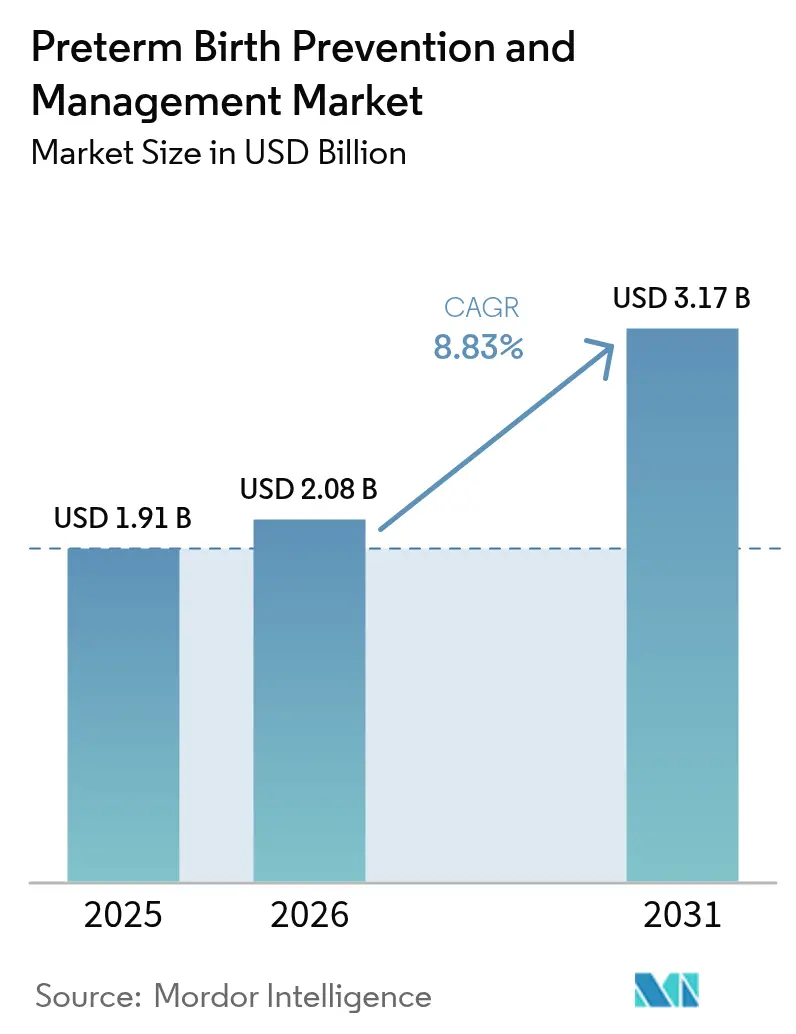
The preterm birth prevention and management market size is expected to grow from USD 1.91 billion in 2025 to USD 2.08 billion in 2026 and is forecast to reach USD 3.17 billion by 2031 at 8.83% CAGR over 2026-2031. Clinical urgency, guideline convergence around progesterone therapy, and rapid adoption of point-of-care biomarker tests anchor current demand. Regulatory withdrawal of ineffective agents has redirected investment toward evidence-based therapeutics and diagnostics, while government funding programs are lowering adoption barriers and catalyzing innovation. Commercial focus is moving from reactive acute-care drugs toward precision risk-stratification platforms that allow earlier, cost-effective intervention. Competitive intensity is rising as pharmaceutical incumbents expand formulation portfolios and diagnostic specialists scale rapid tests with artificial-intelligence (AI) analytics.
Key Report Takeaways
- By intervention, therapeutics led with 60.62% of preterm birth prevention and management market share in 2025; diagnostics are projected to grow at a 9.41% CAGR to 2031
- By route of administration, vaginal formulations commanded 44.02% share of the preterm birth prevention and management market size in 2025, whereas oral delivery is advancing at a 9.62% CAGR between 2026-2031
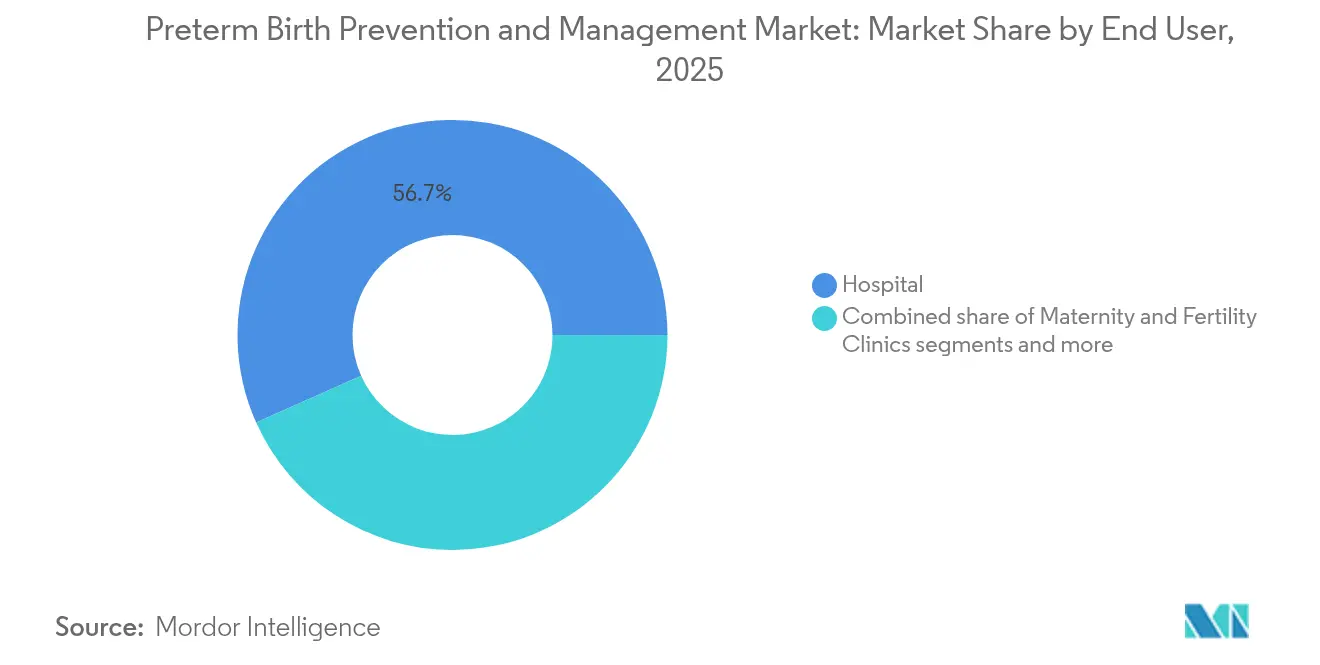
- By end user, hospitals accounted for 56.68% of revenue in 2025 and home healthcare is registering the fastest 10.65% CAGR through 2031
- By gestational-age category, extremely preterm cases (<28 weeks) held 53.21% share and are expanding at 9.88% CAGR, the highest among all categories
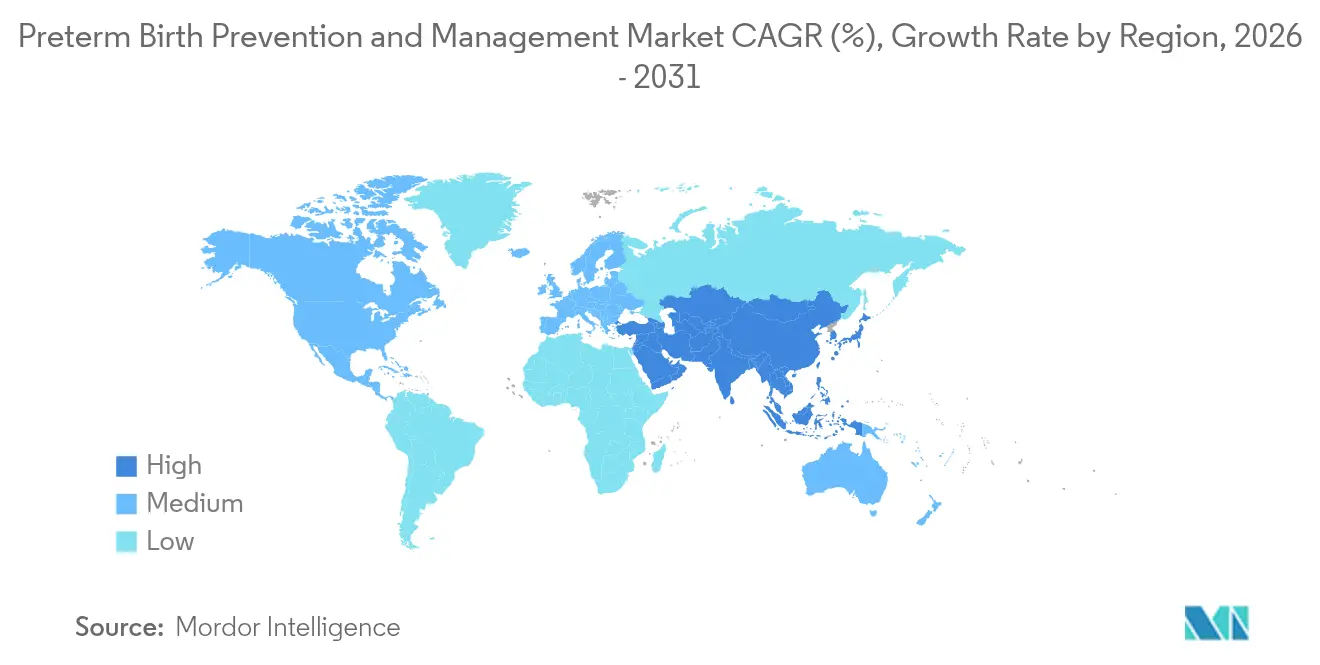
- By geography, North America led with 41.76% share in 2025, while Asia-Pacific is forecast to post the quickest 10.05% CAGR through 2031
Note: Market size and forecast figures in this report are generated using Mordor Intelligence’s proprietary estimation framework, updated with the latest available data and insights as of 2026.
Global Preterm Birth Prevention And Management Market Trends and Insights
Drivers Impact Analysis*
| Driver | (~) % Impact on CAGR Forecast | Geographic Relevance | Impact Timeline |
|---|---|---|---|
| Escalating global incidence of preterm births | +2.1% | Global, with highest impact in Sub-Saharan Africa and South Asia | Long term (≥ 4 years) |
| Clinical-guideline shift toward progesterone therapy | +1.8% | North America & EU, expanding to Asia-Pacific | Medium term (2-4 years) |
| Rapid uptake of point-of-care biomarker tests | +1.5% | Global, led by developed markets | Short term (≤ 2 years) |
| Government maternal-health funding boosts | +1.2% | North America, with spillover to emerging markets | Medium term (2-4 years) |
| AI-driven risk-stratification platforms | +0.9% | APAC core, spill-over to MEA | Long term (≥ 4 years) |
| Repurposed vasodilators entering late-stage trials | +0.7% | Global clinical trial networks | Long term (≥ 4 years) |
| Source: Mordor Intelligence | |||
Escalating Global Incidence of Preterm Births
Preterm births now affect 13.4 million infants a year, anchoring steady demand across therapeutic and diagnostic segments. Rising maternal age, multiple-birth pregnancies from assisted-reproductive technologies, and persistent care disparities sustain the upward trend. Low- and middle-income countries shoulder the heaviest burden, yet cost pressures are global because life-long care of survivors tops USD 30 billion in annual spending in the United States alone. This epidemiology is driving simultaneous growth in preventive interventions and neonatal intensive-care technologies, reinforcing a dual-growth dynamic that keeps the preterm birth prevention and management market expanding on multiple fronts.
Clinical-Guideline Shift Toward Progesterone Therapy
Professional societies now endorse vaginal progesterone for women with short cervix after the withdrawal of 17-hydroxyprogesterone caproate. The pivotal PREGNANT trial showed a 45% drop in preterm deliveries, eliminating earlier uncertainty and unifying prescribing patterns. Pharmaceutical firms are responding with sustained-release microcrystal formulations that improve adherence, while genetic research is clarifying which patients benefit most. The resulting clarity is channelling capital toward route-of-administration innovation and supports predictable volume growth.
Rapid Uptake of Point-of-Care Biomarker Tests
The shift from subjective assessment to objective biomarker evaluation continues to reshape clinical workflow. The Rapid fFN test delivers results in 10 minutes and registers a 96% negative predictive value, allowing safe discharge of low-risk patients. Parallel advances combine multiple analytes; cell-free RNA signatures can predict preterm birth four months in advance, opening a new prevention window. Growing integration with electronic medical records enables real-time decision support, fuelling the fastest CAGR in the overall preterm birth prevention and management market.
Government Maternal-Health Funding Boosts
Federal spending is expanding. The NIH IMPROVE initiative secured USD 53.4 million for FY2024, and 15 US states received combined grants of USD 19 million for innovative maternal-health projects[1]. Grant dollars focus on hypertension screening, community-based training, and home-based diagnostics, directly enlarging the addressable market and reducing private-sector risk. Similar policy momentum is emerging in Canada, the United Kingdom, and Japan, laying durable demand foundations for the preterm birth prevention and management market.
Restraints Impact Analysis*
| Restraint | (~) % Impact on CAGR Forecast | Geographic Relevance | Impact Timeline |
|---|---|---|---|
| FDA withdrawal of Makena & tighter regulations | -1.4% | North America, with spillover to global regulatory agencies | Short term (≤ 2 years) |
| Limited novel-drug R&D investment | -0.8% | Global pharmaceutical industry | Long term (≥ 4 years) |
| Elective-cesarean trend curbing tocolytic demand | -0.6% | Developed markets, particularly North America and Europe | Medium term (2-4 years) |
| API supply-chain fragility for key hormones | -0.5% | Global, with highest impact in emerging markets | Short term (≤ 2 years) |
| Source: Mordor Intelligence | |||
FDA Withdrawal of Makena and Tighter Regulations
Regulators pulled 17-hydroxyprogesterone caproate from the market in 2023 after efficacy and safety doubts surfaced, forcing clinicians to redesign treatment protocols and raising evidentiary hurdles for new agents. The action lengthens development timelines and raises capital requirements for future therapeutics, tempering growth momentum in the near term even as it safeguards patient outcomes.
Limited Novel-Drug R&D Investment
High trial-failure rates and ethical complexities around pregnant populations have curbed venture funding for first-in-class molecules. Developers now prioritize repurposed drugs, such as antibiotics under investigation that showed 40% reduction in preterm births in a recent New England Journal of Medicine trial. This incremental approach constrains breakthrough potential but keeps pipeline risk manageable.
*Our forecasts treat driver/restraint impacts as directional, not additive. The impact forecasts reflect baseline growth, mix effects, and variable interactions.
Segment Analysis
By Intervention: Diagnostics Mount a Rapid Challenge to Therapeutics
Therapeutics retained leadership with a 60.62% slice of the preterm birth prevention and management market in 2025, anchored by progesterone, calcium channel blockers, and corticosteroids. Vaginal progesterone remains first line, while nifedipine outperforms historic tocolytics in prolonging gestation. Corticosteroids continue to support fetal lung maturation under strict gestational-age windows. Pipeline activity spans oxytocin-receptor antagonists and vasodilator combinations, yet uptake hinges on clearer survival data.
Diagnostics are posting the fastest 9.41% CAGR, fuelled by fibronectin kits, PAMG-1 assays, and cervical-length ultrasound systems that integrate with machine-learning risk-scoring. High negative predictive value shortens hospital stays and guides targeted steroid use, strengthening payer backing. Combined, these trends reinforce the preterm birth prevention and management market as a prevention-first clinical environment.




By Route of Administration: Vaginal Dominance Meets Oral Momentum
Vaginal delivery captured 44.02% share of the preterm birth prevention and management market size in 2025 because local dosing concentrates progesterone where it is needed and minimizes systemic side effects. Self-administration, sustained-release rings, and low storage costs favour further adoption.
Oral formulations are accelerating at 9.62% CAGR, energised by micronization and protective coatings that lift bioavailability to therapeutic thresholds. Patients prefer tablets for convenience, and physicians value simplified prescribing. Parenteral routes retain a corner niche for emergency tocolysis but face user discomfort and higher site-of-care costs.
By End User: Hospitals Remain Anchors as Home Healthcare Expands
Hospitals held 56.68% of revenue in 2025, relying on neonatal intensive-care units and 24 × 7 obstetric teams that manage complex deliveries. Tertiary centres also run most clinical trials, so they keep early access to new technology.
Home healthcare is advancing at 10.65% CAGR thanks to connected devices that transmit uterine-activity and blood-pressure data directly to clinicians. Remote models lower admission rates and improve access in rural settings, thereby enlarging the reach of the preterm birth prevention and management market.
By Gestational-Age Risk Category: Extreme Prematurity Drives Spend
Extremely preterm births accounted for 53.21% of revenue in 2025, and their 9.88% CAGR underscores both clinical need and technological progress. Intensive ventilation, surfactant therapy, and personalised steroid protocols improve survival, justifying resource concentration.
Very preterm (28–32 weeks) and moderate-to-late preterm (32–37 weeks) segments grow steadily as corticosteroid guidelines widen and antenatal care access improves. ACTION-III trial results could broaden corticosteroid use in late-preterm births and increase addressable volumes.
Geography Analysis
North America commanded 41.76% of the preterm birth prevention and management market share in 2025, sustained by reimbursement structures, NIH funding streams, and guideline maturity. Market penetration of rapid biomarker tests and sustained-release progesterone is already high. Regulatory uncertainty after Makena’s withdrawal spurred tighter pharmacovigilance but also nudged clinics toward diagnostically driven care paths.
Asia-Pacific registers the quickest 10.05% CAGR, propelled by broader insurance coverage, government device-approval reforms, and multi-country cohort studies such as CARE-Preterm that standardise neonatal care. China’s expanding NICU network and India’s Single Window regulatory portal are shortening product-rollout timelines, while Japan is integrating vaginal progesterone into routine obstetrics. Collectively, the region is reshaping volume dynamics for the preterm birth prevention and management market.
Europe, the Middle East and Africa, and South America offer incremental upside. EMA’s suspension of 17-hydroxyprogesterone caproate is accelerating adoption of alternative agents. Sub-Saharan Africa remains the highest-incidence region yet faces infrastructure gaps, creating white-space for low-cost diagnostics and telehealth. South American regulators are investing in maternal-health capacity building, helping lift baseline demand.

Regulatory Landscape
Regulation in the preterm birth prevention and management market is being shaped by higher evidence thresholds for pregnancy indications and tighter device conformity rules. In the United States, the FDA withdrawal of 17-hydroxyprogesterone caproate (Makena) in 2023 reset the therapeutic bar for recurrent preterm birth prevention and reinforced reliance on guideline-aligned progesterone pathways and diagnostics that can support risk triage in routine care.
On the device and IVD side, market access continues to rely on established frameworks, but compliance overhead is rising across major regions. The FDA continues to clear OB/GYN devices through the 510(k) pathway (for example, K253403, cleared in December 2025). In Europe, the European Commission MDR/IVDR transition has reached key deadlines, with certain categories requiring full compliance by May 28, 2026. Globally, WHO guidance updates, including its April 2025 recommendations on antenatal corticosteroids for improving preterm birth outcomes, provide a clinical-policy anchor that influences adoption and protocol standardization across health systems.
Value Chain Analysis
The value chain covers discovery and clinical evidence generation, regulated manufacturing, and multi-channel distribution into hospitals, maternity and fertility clinics, and home healthcare settings. On the therapeutics side, the chain is anchored by hormone APIs and finished-dose formulation, notably vaginal progesterone formats, alongside cold-chain and quality systems for pregnancy-use labeling and pharmacovigilance. On the diagnostics side, the chain centers on assay development and validation (including fFN, PAMG-1, and emerging multi-analyte panels), cartridge or kit manufacturing, reader or analyzer placement, and ongoing consumables supply supported by training, quality control, and integration into electronic medical records.
Evidence creation and funding are pivotal upstream steps because pregnant populations require rigorous safety oversight and often face longer trial timelines. For novel device approaches, clinical-stage programs and venture backing provide a bridge from prototyping to pivotal trials and eventual regulatory submissions. For instance, Novocuff raised USD 26 million in July 2024 to advance technology aimed at reducing preterm birth risk, highlighting how capital inflows can support trial execution and manufacturing scale-up, and facilitate channel partnerships with established OB/GYN device and distribution players.
Competitive Landscape
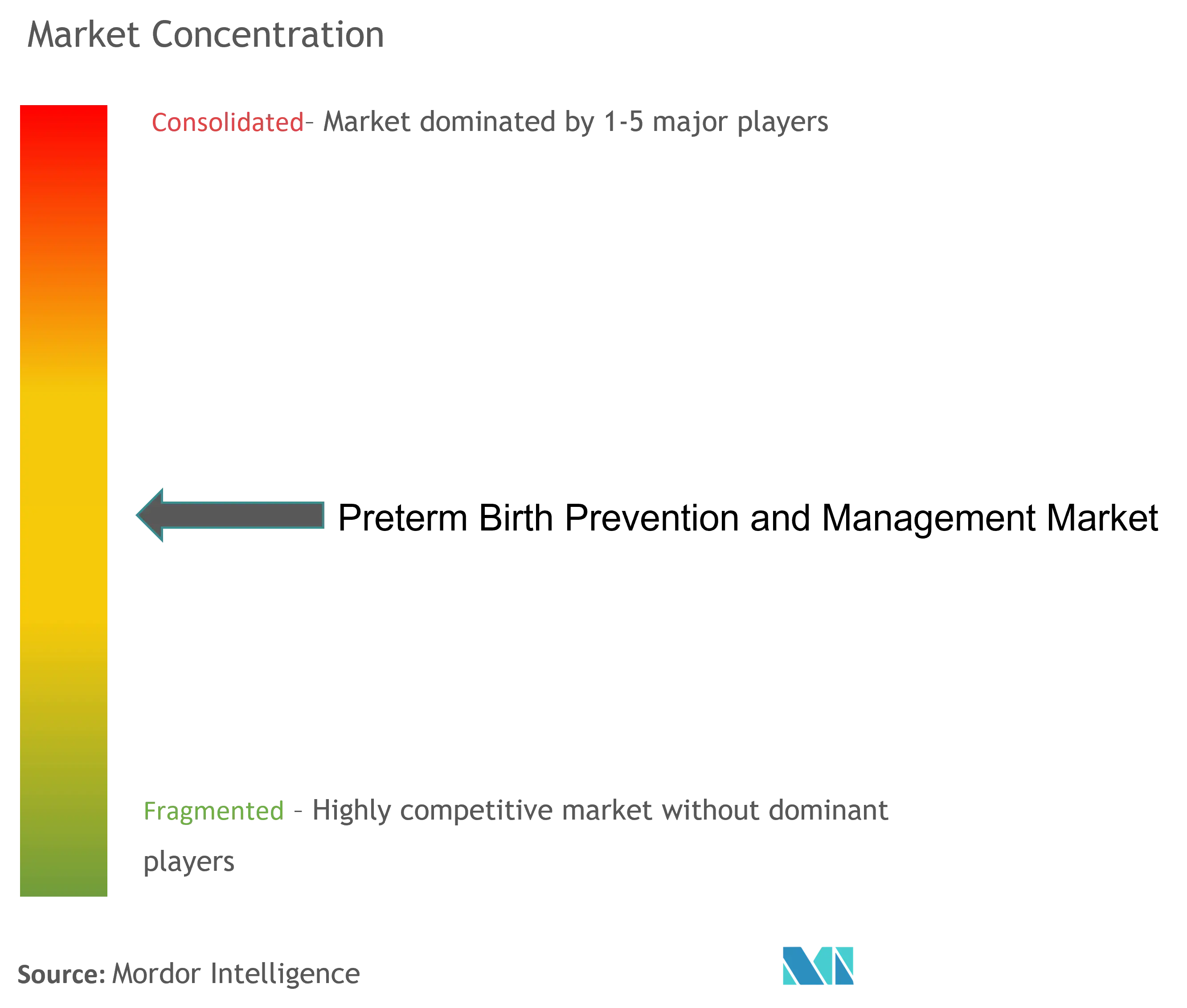
The preterm birth prevention and management market is moderately fragmented because varied g estational-age profiles and mixed care settings demand multiple solutions. Top pharmaceutical suppliers anchor the progesterone and tocolytic space, but diagnostic innovators are scaling faster as point-of-care tests become standard. Market leaders combine risk-prediction algorithms with proprietary biomarker kits, offering bundled solutions that hospitals adopt quickly.
Strategic moves in 2024–2025 confirm the trend. Roche gained FDA clearance for its Elecsys sFlt-1/PlGF ratio test, widening its maternal-health footprint[2]. Large drug makers are upgrading formulation patents to extend revenue streams as generic progesterone looms. Meanwhile, AI start-ups license predictive models to device makers, embedding analytics into existing ultrasound and monitoring equipment.
White-space remains in emerging economies where infrastructure limits diagnostic deployment. Companies are piloting solar-powered analyzers and smartphone-integrated readers to lower cost of ownership. Partnerships with public-health agencies accelerate uptake and distribute financial risk, reinforcing a competitive pivot toward accessibility and scalability in the preterm birth prevention and management market.
Preterm Birth Prevention And Management Industry Leaders
-
Covis Pharma GmbH. (AMAG Pharmaceuticals, Inc.)
-
Ferring B.V.
-
Pfizer Inc.
-
Takeda Pharmaceutical Company Limited.
-
ObsEva
- *Disclaimer: Major Players sorted in no particular order

Market Opportunities and Future Outlook
Product whitespace is concentrated in earlier, more actionable risk stratification, and in interventions that can be selected based on biologic subtype rather than broad clinical risk factors alone. February 2026 research validating a three-protein serum biomarker panel (GPX3, NID1, and PAPPA2) for first and second trimester risk assessment highlights a pathway toward earlier screening windows that aligns with the market shift toward prevention-first care, and can expand the role of diagnostics beyond acute triage. Alongside this, point-of-care workflow improvements, including AI-assisted ultrasound approaches discussed in 2026 clinical literature, support demand for integrated platforms that combine imaging, decision support, and rapid testing.
On the therapeutic side, the post-Makena environment creates room for evidence-backed alternatives and adjuncts, with active trial activity indicating where innovation is moving. March of Dimes announced the launch of FLIP-2 in May 2026, a Phase 2b clinical trial evaluating LACTIN-V (a live biotherapeutic product) for preterm birth prevention in high-risk women. An April 2026 ClinicalTrials.gov-registered pilot study (NCT07305519) began recruitment to evaluate a multi-ingredient adjunct alongside vaginal progesterone. Together, these initiatives point to a near-term opportunity for companies that combine targeted therapeutics with biomarker-led patient selection and care pathways that fit hospital and home monitoring models.
Recent Industry Developments
- April 2026: Pfizer published a JAMA Network Open study on sequential safety surveillance of RSVpreF (Abrysvo) vaccination during pregnancy, analyzing outcomes including preterm birth across data collected from April 25, 2024, through April 10, 2025. The publication supports clinical confidence in maternal immunization programs and strengthens pharmacovigilance expectations for pregnancy-related products, shaping how stakeholders monitor and communicate preterm birth risk signals.
- October 2025: The Biden-Harris Administration awarded USD 19 million to 15 states through HRSA to implement innovative maternal health strategies, including earlier identification and treatment pathways for pregnancy complications. The funding expands programmatic capacity for screening and care navigation, which can accelerate adoption of diagnostics and remote monitoring models used in preterm birth risk management.
- July 2024: Novocuff closed an oversubscribed USD 26 million Series A financing round led by AXA IM Alts with participation from Laerdal Million Lives Fund, Laborie, RH Capital, Avestria Ventures, and March of Dimes to advance technology aimed at reducing preterm birth risk. The raise strengthens the pipeline of interventional devices beyond established progesterone-centric care and supports clinical trial execution and scale-up planning across the device value chain.


Research Methodology Framework and Report Scope
Market Definition and Coverage
This market covers products and clinical interventions used to prevent preterm birth and to manage threatened or actual preterm labor, aligned to pregnancies that may deliver before 37 completed weeks. It includes commonly used drug therapies, procedure-based options, and related diagnostic pathways used to stratify risk and guide care.
Scope exclusions: Neonatal intensive care unit (NICU) equipment purchases and ongoing neonatal inpatient care revenues are excluded from this market size.
Segmentation Overview
-
By Intervention
-
Therapeutics
- Calcium Channel Blockers
- Progesterone Therapy
- Oxytocin Receptor Antagonists
- Corticosteroids
- Others
-
Diagnostics
- Biomarker Test Kits (fFN, PAMG-1)
- Cervical Length Ultrasound Devices
- Other Diagnostic Tools
-
Therapeutics
-
By Route of Administration
- Vaginal
- Oral
- Parenteral
-
By End User
- Hospitals
- Maternity & Fertility Clinics
- Home Healthcare Settings
- Research & Academic Institutes
-
By Gestational-Age Risk Category
- Extremely Preterm (<28 w)
- Very Preterm (28–32 w)
- Moderate–Late Preterm (32–37 w)
-
By Geography
-
North America
- United States
- Canada
- Mexico
-
Europe
- Germany
- United Kingdom
- France
- Italy
- Spain
- Rest of Europe
-
Asia-Pacific
- China
- India
- Japan
- South Korea
- Australia
- Rest of Asia-Pacific
-
South America
- Brazil
- Argentina
- Rest of South America
-
Middle East and Africa
- GCC
- South Africa
- Rest of Middle East and Africa
-
North America
Data Sources, Market Sizing, and Validation
Desk Research
Desk research was used to set the clinical and demand context, then to anchor model inputs that can be checked in the public domain. We referred to sources such as the World Health Organization, the US CDC, and the NIH for preterm birth incidence, risk factors, and guideline-linked care pathways.
We also reviewed sources such as UN population statistics, OECD Health Statistics, and peer-reviewed obstetrics and maternal-fetal medicine journals to understand pregnancy volumes, care-seeking behavior, and how treatment patterns shift by setting. Company filings, investor presentations, regulatory and reimbursement notes, and reputed press were used to validate product availability and pricing direction, and we selectively used a paid subscription for company financials and patent tracking where it helped confirm the maturity of therapy and diagnostic approaches. These desk sources are illustrative only, and many other public materials were also used for data collection, cross-checking, and clarification.
Primary Interviews and Surveys
Primary work was done to test the desk assumptions against what clinicians and channel stakeholders see in real practice, especially around which therapies are used first and how diagnostics influence treatment decisions. We spoke with a mix of hospital and clinic decision makers, maternal-fetal medicine clinicians, pharmacists, and industry specialists across major regions so the coverage reflected different reimbursement and care pathway realities.
Distribution of primary research fieldwork respondents
| Company type | Respondent position | Region |
|---|---|---|
| Top tier: 37% | CXOs: 16% | APAC: 44% |
| Mid tier: 41% | Functional/Unit leaders: 32% | EMEA: 37% |
| Smaller Players: 22% | Managers: 52% | Americas: 19% |
Market-Sizing & Forecasting
The sizing starts with a top-down demand pool build that reconstructs the treated cohort from pregnancy volumes, preterm birth risk prevalence, and the share of women who enter a managed pathway before delivery, and then it is translated into revenues using therapy mix and route-of-administration patterns. To keep the totals realistic, we corroborated outputs with selective bottom-up approximations, such as sampled country price points for key therapies, channel checks on typical utilization, and supplier-side revenue signals where data was available.
Key model inputs included, for example, live births and pregnancies by geography, estimated preterm birth rates and risk stratification practices, adoption of progesterone and other drug classes by care setting, diagnostic usage intensity that triggers intervention, and average treatment duration by route (oral, parenteral, or vaginal). Where direct utilization data was missing, gaps were handled through conservative penetration bands that were refined through primary feedback and then stress-tested against guideline-concordant practice.
For forecasting, we leaned on scenario analysis supported by time-series smoothing on the key demand drivers. This helped us separate structural growth from short-term variability driven by factors such as policy changes and product availability. Assumptions on therapy mix shifts and pricing progression were reviewed with experts so the forecast stayed consistent with clinical adoption and procurement behavior.
Data Validation & Update Cycle
Outputs were checked through triangulation across independent signals, including treated patient pool reasonableness, implied per-pregnancy spend, and regional mix consistency with published epidemiology and care access indicators. When a country result looked unusually high or low, we re-checked the input chain and revisited interview notes, and then adjusted only after the variance could be explained.
Before sign-off, the model goes through step-by-step analyst reviews so calculation logic, currency handling, and assumption ranges are aligned across regions. Reports are refreshed annually, and interim updates are made when a material event occurs, such as a guideline change, reimbursement shift, or a meaningful product launch. Right before delivery, we complete a final pass so clients receive the most current view that can be traced back to clear inputs.
Mordor Intelligence's Preterm Birth Prevention and Management Market Size Compared Against Other Published Estimates
Published market sizes for preterm birth prevention and management often differ because the scope line between maternal interventions, diagnostics, and downstream neonatal care is not drawn the same way, and timing assumptions also vary. Differences also come from how each publisher builds the treated population, which price points are assumed, and whether the mix shift across therapies is updated frequently.
NICU equipment and neonatal inpatient care revenues sit outside Mordor Intelligence's scope. That single exclusion can move totals upward in studies that fold in broader per-birth hospital spend. We also see gaps when some estimates apply aggressive adoption curves for newer testing pathways or when currency conversion timing is not consistent across regions, which can inflate a given base year.
Benchmark comparison
| Source | Market Size | Gaps in Research Methodology |
|---|---|---|
| Mordor Intelligence | USD 2.08 B (2026) | |
| Trade Publisher A | USD 2.01 B (2025) | Uses a different base year and a revenue definition that can include service-led components, and it does not clearly separate maternal prevention and management revenues from adjacent neonatal care items in all cases. |
| Industry Research Group B | USD 2.45 B (2024) | Often combines a wider bundle that can mix diagnostic screening, PROM testing, and broader hospital care spend, and it can also rely on generalized penetration assumptions rather than therapy class level utilization checks. |
The table shows that the spread is largely explained by what is counted around the pregnancy episode and how base-year values are normalized. By keeping the treated cohort logic explicit and tying revenues to therapy mix and observable pricing signals, we provide a number that is easier to reconcile across countries and to update as practice patterns shift.


Key Questions Answered in the Report
What is the current size of the preterm birth prevention and management market?
The preterm birth prevention and management market is valued at USD 2.08 billion in 2026.
How fast is the market expected to grow over the next five years?
From 2026 to 2031 the market is forecast to expand at an 8.83% CAGR, reaching USD 3.17 billion.
Which intervention segment is expanding the quickest?
Diagnostics—led by rapid fetal-fibronectin and PAMG-1 biomarker tests—posts the fastest 9.41% CAGR through 2031.
Why are vaginal progesterone formulations preferred in clinical practice?
Vaginal progesterone delivers higher local uterine concentrations with fewer systemic side effects and holds 44.02% market share in 2025.
Page last updated on:


 Your data is secure and never sold or shared.


