
Plastic Film Market Size and Share
Market Overview
| Study Period | 2020 - 2031 |
|---|---|
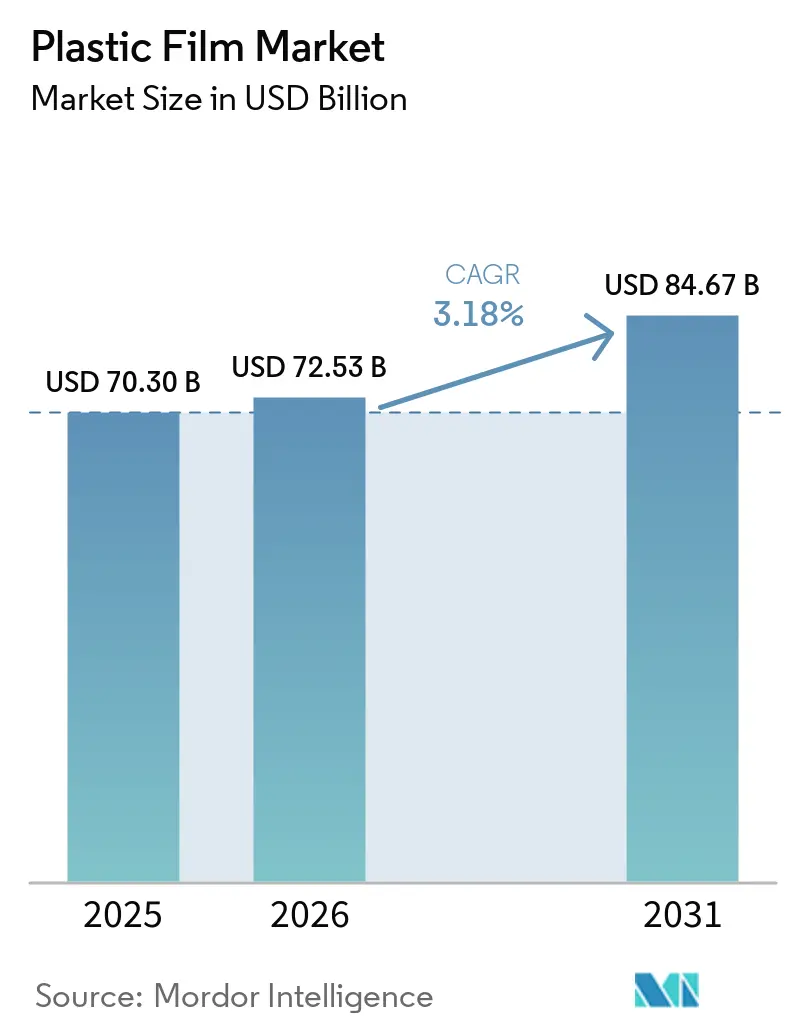
| Market Size (2026) | USD 72.53 Billion |
| Market Size (2031) | USD 84.67 Billion |
| Growth Rate (2026 - 2031) | 3.18 % |
| Fastest Growing Market | Middle East and Africa |
| Largest Market | Asia Pacific |
| Market Concentration | Medium |
Major Players *Disclaimer: Major Players sorted in no particular order Image © Mordor Intelligence. Reuse requires attribution under CC BY 4.0. | |
Plastic Film Market Analysis by Mordor Intelligence
The plastic film market size is expected to grow from USD 70.30 billion in 2025 to USD 72.53 billion in 2026 and is forecast to reach USD 84.67 billion by 2031 at 3.18% CAGR over 2026-2031. This performance underscores a maturing landscape where incremental value now arises from specialty, high-barrier films sold into medical, electronics, and e-commerce channels. Heightened regulatory attention to circular-economy goals is accelerating a pivot toward recyclable mono-material structures and certified compostable grades, while persistent raw-material price swings continue to test converter margins. Integrated producers with vertical control over resin and film assets are mitigating volatility and capturing premium spreads through downgauging, barrier-coating, and recycling initiatives.
Key Report Takeaways
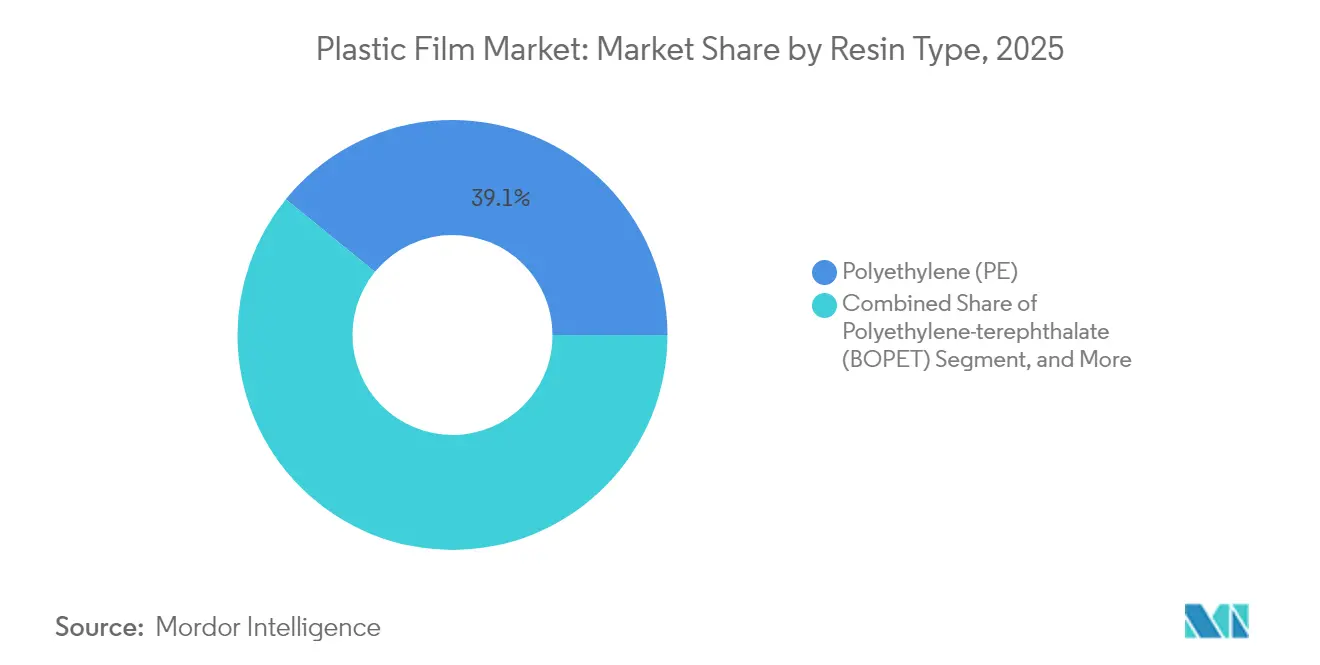
- By resin type, polyethylene retained 39.12% of plastic film market share in 2025, while bioplastics recorded the highest CAGR at 5.87% through 2031.
- By application, pouches accounted for 47.95% of 2025 revenue; wraps and overwraps are forecast to grow at 4.56% CAGR to 2031.
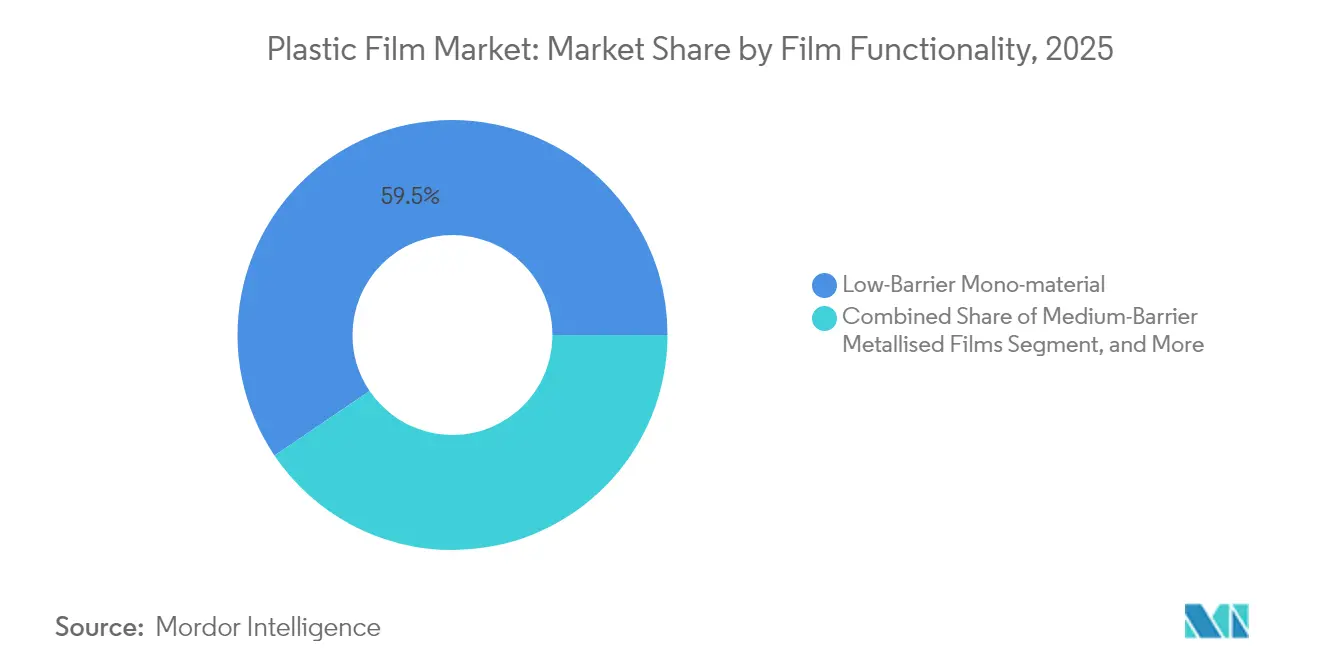
- By film functionality, low-barrier mono-material products led with 59.46% share in 2025; high-barrier multilayer films will expand at 5.86% CAGR.
- By end-use industry, food packaging commanded 31.89% of the plastic film market size in 2025, whereas healthcare and pharmaceuticals are advancing at 4.83% CAGR.
- By Asia-Pacific dominated with 37.98% share in 2025; the Middle East and Africa region is projected to post a 7.86% CAGR through 2031.
Note: Market size and forecast figures in this report are generated using Mordor Intelligence’s proprietary estimation framework, updated with the latest available data and insights as of 2026.
Market Trends and Insights
Drivers Impact Analysis of Plastic Film Market*
| Driver | (~) % Impact on CAGR Forecast | Geographic Relevance | Impact Timeline |
|---|---|---|---|
| Consumer shift toward mono-material recyclable film structures | +0.8% | EU, North America, global spillover | Medium term (2-4 years) |
| Growing adoption of biodegradable and compostable films amid regulations | +0.6% | EU, North America, select APAC markets | Long term (≥ 4 years) |
| Rising demand for high-barrier films in medical and electronics packaging | +0.5% | Global, concentrated in developed markets | Short term (≤ 2 years) |
| Expansion of agri-film usage in vertical farming and greenhouse automation | +0.3% | APAC core, MEA and Latin America | Medium term (2-4 years) |
| Film downgauging enabled by advanced metallocene catalysts | +0.4% | Global, led by major polymer producers | Short term (≤ 2 years) |
| Surge in regional e-commerce cold-chain requiring specialty films | +0.7% | Asia-Pacific, North America, MEA | Short term (≤ 2 years) |
| Source: Mordor Intelligence | |||
Consumer Shift Toward Mono-Material Recyclable Film Structures
Circular-economy policies are swiftly converting legacy multilayer formats into mono-material films that meet recyclability thresholds without sacrificing performance. European regulations mandating full recyclability by 2030 have already spurred converters such as Uzel Plastik to roll out polyethylene pet-food films that eliminate tie-layer adhesives while preserving oxygen barriers.[3]Uzel Plastik, “Recyclable PE Films for Pet Food,” uzelplastik.com Brand owners are rewarding early adopters with multi-year supply contracts linked to sustainability metrics, yet initial capital outlays for new extrusion and adhesive systems are trimming near-term margins. Pharmaceutical players are also transitioning; Klöckner Pentaplast introduced a mono-material blister film that meets stringent medical compliance while simplifying downstream recycling. This momentum is expected to lift mono-material share from 60% in 2024 toward two-thirds of the plastic film market by 2030.
Growing Adoption of Biodegradable and Compostable Films Amid Regulations
A mosaic of state and national mandates is fueling demand for certified compostable films, particularly in food service and produce packaging. Washington State’s labeling and facility-certification rules set a technical benchmark that global suppliers must now match. Minnesota’s legislation requiring industrial-composting compatibility is influencing private-label specifications for supermarket chains. Suppliers with robust R&D budgets, such as DNP Group, are commercializing multilayer compostable structures capable of 90-day degradation while sustaining gas-barrier properties that protect snack foods. Lack of harmonized global standards remains a hurdle, forcing converters to produce country-specific SKUs and inflating compliance costs.
Rising Demand for High-Barrier Films in Medical and Electronics Packaging
Device sterilization protocols and low-moisture requirements for flexible displays are elevating the bar for barrier films. SÜDPACK’s co-extruded medical laminates now guarantee sub-1 cm³/m²/day oxygen transmission rates, fetching premium price points that cushion raw-material volatility. Concurrently, ProAmpac’s investment in USD 50 million metallization assets targets electronics customers seeking water-vapor transmission rates below 0.1 g/m²/day. Participation from upstream chemical firms such as Honeywell, which launched a fluoropolymer-based barrier layer for OLED devices, underscores vertical integration’s role in capturing these high-margin niches.
Expansion of Agri-Film Usage in Vertical Farming and Greenhouse Automation
Urban agriculture and controlled-environment practices are enlarging the addressable pool for agri-films that block near-infrared radiation and endure automated handling. Hyma Plastic’s NIR-blocking greenhouse covers sell at triple the price of commodity mulch films but deliver energy savings by lowering inside temperatures 2-3 °C. Integrated sensor networks from industrial-automation players like ifm require films with consistent optical properties, fusing packaging-grade polymers with precision-ag-equipment standards. As Asian megacities embrace vertical farming, the agri-film subset is set to outpace overall plastic film market growth through 2030.
Restraints Impact Analysis of Plastic Film Market*
| Restraint | (~) % Impact on CAGR Forecast | Geographic Relevance | Impact Timeline |
|---|---|---|---|
| Volatility in polyolefin and PET feedstock prices | -0.9% | Global, import-dependent regions | Short term (≤ 2 years) |
| Stringent single-use plastic bans in emerging economies | -0.6% | Africa, Latin America, Asia | Medium term (2-4 years) |
| Supply tightness of medical-grade PVC resin | -0.4% | Developed healthcare markets | Short term (≤ 2 years) |
| Capital intensity of synchronous biax orientation lines | -0.3% | Global, major film producers | Long term (≥ 4 years) |
| Source: Mordor Intelligence | |||
Volatility in Polyolefin and PET Feedstock Prices
Quarterly swings of 15-20% in PET and LDPE spot prices have compressed converter spreads, particularly among non-integrated players. ChemOrbis data show PET values oscillating between USD 1,200 and USD 1,450 per ton in 2024, making long-term contracts risky for suppliers dependent on spot resin. Overcapacity in Asia’s BOPET segment has driven realizations to historical lows; Firsta Group recorded instances where margins dipped below INR 15/kg, triggering temporary plant shutdowns. Inventory management is further complicated by lengthy transit times, causing small converters to absorb losses during price retracements.
Stringent Single-Use Plastic Bans in Emerging Economies
Accelerated policy rollouts in Africa and Latin America are shrinking demand for conventional carry bags and sachets. Nigeria’s plan to outlaw single-use films by 2026 jeopardizes roughly 200,000 t of annual flexible demand. Similar moves in Tanzania and Kenya have forced local converters to either invest swiftly in biodegradable lines or cease operations. Jamaica’s 2025 progress report validating waste-reduction success has emboldened neighboring Caribbean states to consider analogous bans, expanding the regulatory ripple effect.
*Our forecasts treat driver/restraint impacts as directional, not additive. The impact forecasts reflect baseline growth, mix effects, and variable interactions.
Plastic Film Market Segment Analysis
By Resin Type:
Bioplastics Drive Innovation Despite PE DominancePolyethylene retained 39.12% of 2025 volume, underpinned by metallocene catalyst technology that slashed film gauge by up to 20% without surrendering stiffness or clarity. This dominance supplied predictable cash flows even when oil-linked feedstock costs spiked. In contrast, bioplastics, though representing a modest baseline, are set to post a 5.87% CAGR as brand owners deploy compostable packaging pilots to meet ESG targets. Rising supply of second-generation feedstock, including sugarcane bagasse and algae oils, has clipped the cost premium to conventional resins. Still, high-barrier medical and electronics uses remain out of reach for most bioplastics due to hydrolytic-stability constraints.
Converters courting the bioplastic subsector are negotiating multi-year off-take pacts with resin start-ups to hedge price-volatility risk. Regional clustering around EU and North-American compost facilities also influences plant-location decisions. Polypropylene continues expanding within retort pouch applications, benefiting from heat-resistance and grease-barrier traits, while BOPET producers seek anti-dumping shelters in markets like the United States to escape Asian oversupply. Specialty polymers such as cyclic olefin copolymers fill niche roles in medical diagnostics, emphasizing the value of performance-led differentiation within the plastic film market.



By Application:
E-commerce Elevates Wraps as Pouch Leadership HoldsThe pouch format delivered 47.95% of 2025 sales thanks to portion-control convenience and seal-integrity that reduces food waste. Automated form-fill-seal lines, common in snack and pet-food factories, favor its geometry, while digital printing allows hyper-customized graphics for short campaigns. However, wraps and overwraps are forecast to grow at 4.56% CAGR as omnichannel grocery and meal-kit services demand puncture-resistant films compatible with high-speed bagging robots. Cold-chain compliance amplifies the need for moisture barriers that stay ductile at sub-zero temperatures, an area where BOPP-based laminates have recently gained traction.
Converters are integrating data-matrix codes into secondary wraps to track last-mile delivery conditions, creating analytics revenue streams beyond the material sale itself. Linerless label films and shrink-bundling for multipacks remain important, though growth is slower due to maturation in carbonated-drink markets. Across applications, film formats enabling resource efficiency such as perforated produce wraps that modulate respiration align with retailer sustainability pledges and thus secure shelf space despite premium pricing.
By Film Functionality:
Mono-Material Shift Challenges Multilayer DominanceLow-barrier mono-material films accounted for 59.46% of 2025 shipments as FMCG brands responded to consumer pressure for drop-in recyclable alternatives. Targeted seal-layer engineering and reactive-extrusion tie-layers have narrowed the performance gap with complex laminates, making the cost of switching viable for mid-shelf-life goods. High-barrier multilayer films are still on track for a 5.86% CAGR through 2031, propelled by pharmaceuticals and flexible displays where oxygen or moisture ingress can trigger recalls.
Early commercialization of reactive-extrusion nano-clay masterbatches promises to lift oxygen-barrier performance in mono-material PE films by 40-60%, though scale-up has been slow due to compounding-line abrasion. Metallized films stay relevant for coffee and infant-formula packaging where brand heritage demands foil-like optics. Meanwhile, antimicrobial additives and controlled-release ethylene absorbers create white-space opportunities that command unit prices several multiples above commodity grades. Bostik’s collaboration with Brückner on solvent-free lidding adhesives illustrates how machine suppliers influence the transition to single-polymer options by synchronizing screw profiles, die designs, and adhesive rheology
By End-Use Industry:
Healthcare Growth Outpaces Food Segment LeadershipFood packaging generated 31.89% of the plastic film market size in 2025, propelled by single-serve snacks, frozen convenience meals, and pet foods that benefit from downgauged high-clarity PE/PP blends. Retailers are also piloting pouch-to-pouch collection schemes that elevate consumer loyalty. Healthcare and pharmaceuticals, while smaller, are set to expand 4.83% annually on aging-population dynamics and surgical-kit standardization. Sterile-barrier film makers enjoy margins two-to-three times higher than food-grade counterparts due to clean-room processing and ISO-certification prerequisites. Investments such as Caesar Pack’s USD 48.4 million recycling facility in Egypt underscore the vertical-integration trend linking reclaimed PET flakes to medical-grade films.
Personal-care segments are transitioning to monomaterial pump sleeves and refill-pouch formats, while household-care brands trial solvent-resistant PE/PA blends to replace rigid bottles. Industrial film users remain sensitive to macro-economic cycles; however, electronics assembly lines now specify ultra-low ion-contamination films, an attribute that filters through to specialized clean-room grades.
Geography Analysis
APAC Plastic Film Market
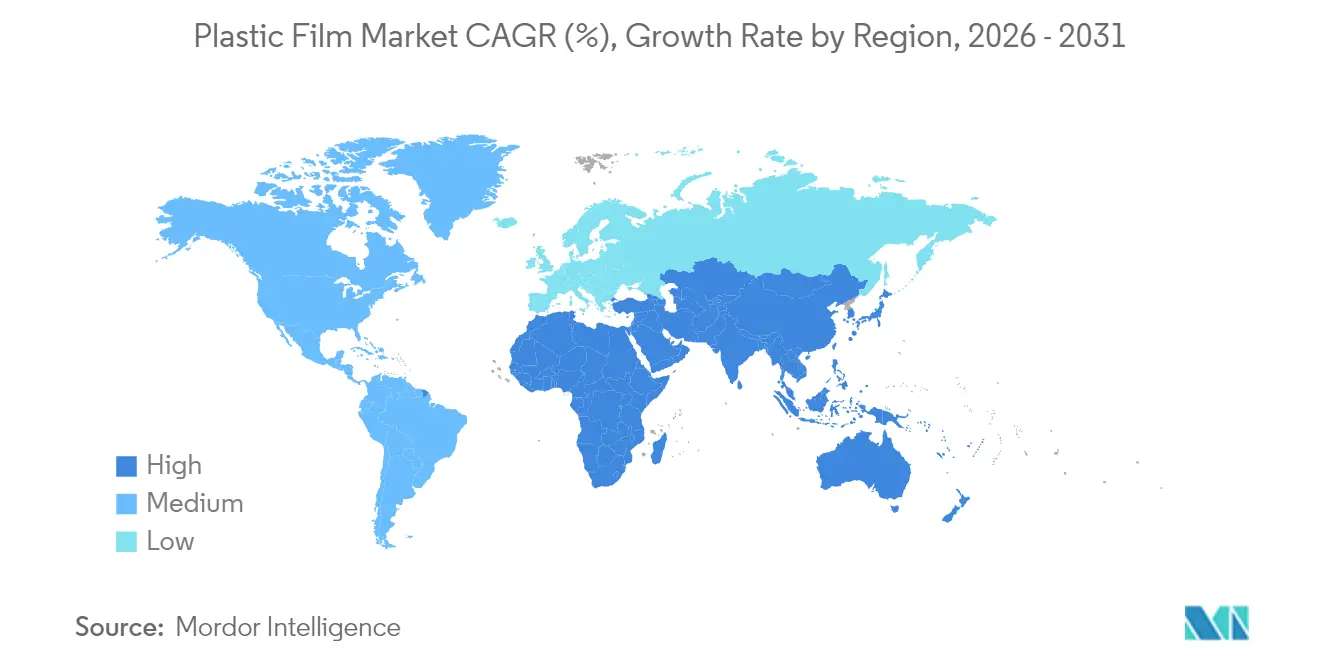
Asia-Pacific secured a 37.98% share of the plastic film market in 2025 by pairing scale economies with burgeoning domestic consumption. China maintains dominance in BOPET and BOPP, though capacity additions have outstripped local demand by roughly 260,000 t a year, pressing margins and catalyzing M&A among mid-tier converters. India leverages metallocene-catalyst technology to serve upgraded pouch formats and is onboarding new BOPP lines at a brisk pace. Japan’s mature yet highly technical ecosystem sustains innovation in optical and battery-separator films.
North America Plastic Film Market
North America’s demand is steadier, buoyed by on-shoring trends and sustainability mandates that push recyclable PE wraps for e-commerce. Polyplex’s USD 100 million PET-film expansion in Alabama illustrates the pull of regional supply chains aligned with trade-policy certainty. Converters increasingly co-locate with logistics hubs to shrink lead times, a factor critical for meal-kit and pharmaceutical shipments.
Europe Plastic Film Market
Europe continues to act as a policy bellwether; extended-producer-responsibility (EPR) fees penalize non-recyclable formats, driving R&D dollars into mono-material upgrades. Mechanical-recycling capacity additions are ramping, and venture funds are backing chemical-recycling pilots aimed at rigid-flexible feedstock mixes.
MEA Plastic Film Market
The Middle East and Africa is poised for a 7.86% CAGR through 2031 on the back of import-substitution plans and regulatory incentives. Egypt’s joint venture to build a recycled-polyester fiber line worth USD 54.8 million signals rising local appetite for circular solutions. Gulf Cooperation Council members leverage hydrocarbon integration to supply competitively priced PE, spawning downstream film clusters that aim to capture regional food-security programs. Sub-Saharan Africa’s demand growth is driven by population expansion and fast-moving consumer-goods uptake, though infrastructure gaps in waste management may moderate adoption of premium sustainable films.
South America Plastic Film Market
South America delivers mid-single-digit growth as branded food and personal-care multinationals widen rural retail penetration, creating incremental packaging needs. Currency volatility and regulatory divergence between Mercosur nations complicate capacity planning, yet rising household incomes sustain baseline consumption.

Regulatory Landscape
The regulatory environment for plastic films is tightening around recyclability, recycled content, and chemicals-of-concern, with the European Union acting as a key reference point. Regulation (EU) 2025/40 on packaging and packaging waste (PPWR) entered into force on 11 February 2025 and applies from 12 August 2026, replacing Directive 94/62/EC. PPWR includes restrictions covering certain single-use plastic packaging formats (including specific films and wraps used to group goods at the point of sale). It also sets a pathway for harmonized standards on packaging minimization (weight, volume, and wall thickness limits), with the European Commission required by 12 February 2027 to request such standards.
EPR and reporting regimes are also changing compliance cost structures and film design choices. The UK Four Nations joint policy direction for packaging EPR introduces fee modulation starting in 2026, linking producer fees to packaging attributes and increasing the value of mono-material and recyclable structures. In Nigeria, the Federal Ministry of Environment is implementing 2025 EPR guidelines alongside draft National Environmental (Plastic Waste Control) Regulations, including traceability systems and annual recovery targets, which adds reporting and data infrastructure requirements for film producers and importers.
Value Chain Analysis
The plastic film value chain begins with upstream petrochemical and specialty-polymer producers supplying PE, PP, PET and barrier resins, along with additives, inks, coatings, and masterbatches. Midstream film producers use blown and cast extrusion and oriented film assets (BOPP, BOPET) to manufacture base films. Downstream converters then handle coating, metallization, lamination, and printing before selling to brand owners, co-packers, retailers, and industrial end users. Material choices and formulation decisions are increasingly coordinated across resin suppliers, film producers, and converters to meet circularity requirements such as mono-material designs and controlled PCR incorporation.
Cost and service performance are shaped by resin price volatility and logistics reliability, and increasingly by compliance-driven traceability. Trade and logistics disruptions (including congestion and container constraints) and workforce availability in extrusion and converting affect lead times and utilization, encouraging some players to regionalize production footprints and use multi-sourcing. EU PPWR application from 12 August 2026 and US state-level packaging EPR reporting timelines in 2026 are also pulling more data, certification, and chain-of-custody steps into procurement and converting workflows, raising the value of integrated suppliers and certified PCR streams.
Competitive Landscape
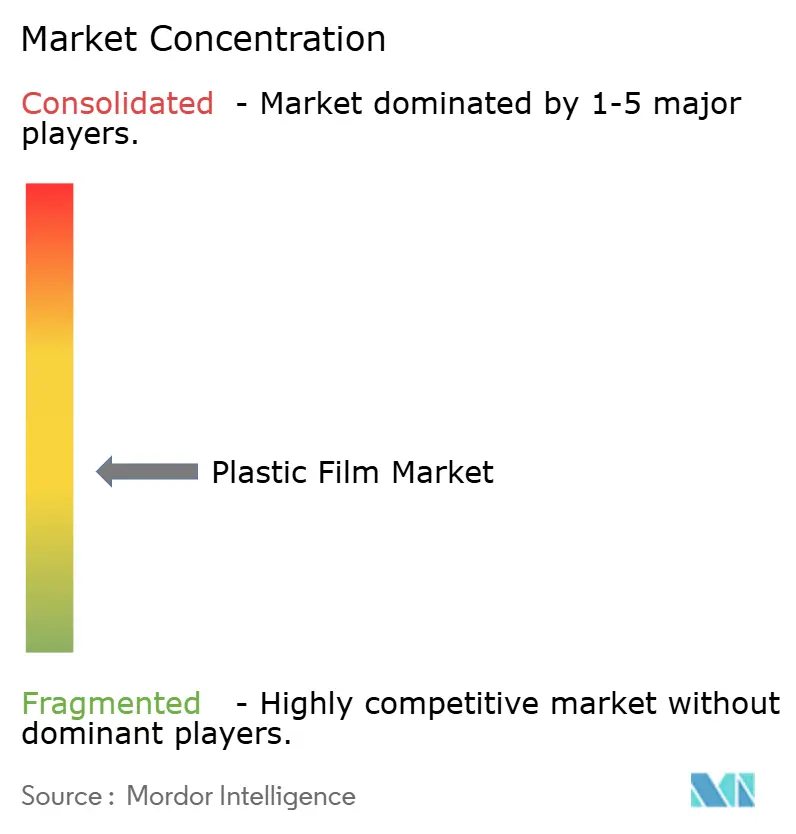
The global scene remains moderately fragmented. Larger groups capitalize on backward-linked resin assets and multimodal logistics to tame feedstock swings. Revolution Sustainable Solutions’ acquisition of Island Plastics expands its post-consumer-recycled (PCR) film stream, guaranteeing supply of PCR-rich feedstock for brand owner mandates.[1]Revolution Sustainable Solutions, “Island Plastics Acquisition,” revolutionsustainablesolutions.com Coveris’ twin acquisitions S and K Label and Hadepol Flexo illustrate roll-up strategies aimed at consolidating Eastern-European converting capacity while cross-selling bakery and confectionery films.[2]Plasticker, “Coveris Acquires Hadepol Flexo,” plasticker.de
Capacity investment continues even amid regional oversupply; Polyplex’s Indian and U.S. expansions reflect confidence in premium BOPET niches for electronics and pharmaceuticals. Berry Global’s tie-up with VOID Technologies targets mono-material pet-food structures offering barrier performance once achievable only via EVOH or aluminum deposition, validating technology partnerships as a path to leapfrog rivals. Equipment suppliers such as Brückner Maschinenbau are embedding inline-recycling modules in orientation lines, enabling off-spec film to be reincorporated instantly, slashing scrap rates from 8% to under 3% in pilot installations. Patents concentrate around solvent-free adhesives, nano-coatings, and enzymatic degradation accelerators, signaling R&D focus on sustainability enablers.
A cadre of disruptors is emerging in chemical recycling, promising to depolymerize mixed-color post-consumer film back to virgin-grade feedstock that circumvents mechanical-recycling limitations. Should scale and economics mature, resin suppliers may find their feedstock oligopoly challenged, adding a new competitive dimension beyond conventional extrusion and orientation prowess.
Plastic Film Industry Leaders
Amcor plc
Taghleef Industries LLC
Toray Industries, Inc.
Jindal Poly Films Limited
Oben Holding Group S.A.
- *Disclaimer: Major Players sorted in no particular order
Plastic Film Market Companies Covered in this Report
- Amcor plc
- Toray Industries, Inc.
- Oben Holding Group S.A.
- Taghleef Industries LLC
- Jindal Poly Films Limited
- Cosmo First Limited
- Uflex Limited
- DuPont Teijin Films Japan Ltd.
- Sealed Air Corporation
- Mondi plc
- Huhtamki Oyj
- Polifilm GmbH
- CCL Industries Inc.
- Klckner Pentaplast Group
- Innovia Films Ltd.
- Mitsui Chemicals Tohcello, Inc.
- Inteplast Group Corporation
- AR Metallizing N.V.
- Guangdong Decro Film New Materials Co., Ltd.

Market Opportunities and Future Outlook
White space is opening around recycle-ready mono-material structures, certified PCR integration, and food-safe sorting and recycling solutions that address historical limitations in flexible packaging recovery. EU PPWR application from 12 August 2026 is a specific demand catalyst for redesign and compliance-ready supply, shifting investment toward films that align with established recycling streams and can support recycled-content targets. Technology programs aimed at improving flexible sorting and raising the quality of recycled feedstock, such as Belgiums July 2026 large-scale trial using invisible watermarks to sort flexible food packaging for food-safe recycling, create routes for converters to commercialize structures that balance performance and recyclability.
Capacity additions and capability upgrades are also creating near- to mid-term opportunity in high-throughput packaging, industrial film, and barrier applications. Oben Group signed a June 2026 agreement for a new 12-meter BOPP line in Brazil with 94,000 metric tons of annual capacity, and UFlex announced in July 2026 an investment of over Rs 700 crore (about USD 80.2 million) to add 54,000 MTPA at its Karnataka facility, reflecting a shift toward regional supply security and faster service for brand owners. Coveris acquisition of GEFO Folienbetrieb GmbH in June 2026 supports CPP film supply, while Amcors April 2026 investment in a new printing line at Hardenberg, Netherlands (adding 6,000 tonnes per annum of industrial film capacity) points to demand growth in higher-value film converting where performance, traceability, and compliance credentials support premium pricing.
Recent Industry Developments in Plastic Film Market
- July 2026: Amcor began expanding its flexible packaging facility in Dongguan, China, adding a 7,000-square-meter manufacturing space and an automated warehouse. The project increases local capacity and supports faster turnaround for regional customers while aligning plant capabilities with demand for more advanced film structures.
- April 2025: Coveris acquired Polands Hadepol Flexo to broaden its bakery and confectionery film footprint across Central and Eastern Europe. The deal strengthens Coveris converting reach and enables cross-selling of flexible film solutions across a wider regional customer base.
- December 2024: Berry Global partnered with VOID Technologies to launch recyclable PE pet-food films designed to deliver enhanced oxygen-barrier performance within a mono-material structure. The collaboration targets brand owner sustainability requirements while preserving shelf-life performance that historically relied on less recyclable barrier constructions.


Plastic Film Market Report Scope and Research Methodology
Market Definition and Coverage
For this study, the plastic film market is defined as revenues generated from thin polymer films used to protect, pack, or wrap products, and to serve industrial uses where a flexible barrier layer is required.
Scope exclusions: Rigid packaging formats are excluded, and products where film is only a minor component of a larger converted item are not counted in the film revenue pool.
Segments Covered in This Report
- By Resin Type
- Polypropylene (PP)
- Polyethylene (PE)
- Polyethylene-terephthalate (BOPET)
- Polystyrene (OPS)
- Bioplastics
- Other Material Types
- By Application
- Wraps and Overwraps
- Bags and Linings
- Pouches
- Other Applications
- By Film Functionality
- Low-Barrier Mono-material Films
- Medium-Barrier Metallised Films
- High-Barrier Multilayer Films
- Specialty Active and Antimicrobial Films
- By End-use Industry
- Food
- Candy and Confectionery
- Frozen Foods
- Fresh Produce
- Dairy Products
- Meat, Poultry and Seafood
- Pet Food
- Other Food Products
- Beverages
- Healthcare and Pharmaceutical
- Personal Care and Home Care
- Industrial Packaging
- Other End-use Industries
- Food
- By Geography
- North America
- United States
- Canada
- Mexico
- South America
- Brazil
- Argentina
- Chile
- Rest of South America
- Europe
- United Kingdom
- Germany
- France
- Spain
- Italy
- Rest of Europe
- Asia-Pacific
- China
- India
- Japan
- Australia
- South Korea
- Vietnam
- Rest of Asia-Pacific
- Middle East and Africa
- Middle East
- Saudi Arabia
- United Arab Emirates
- Turkey
- Rest of Middle East
- Africa
- South Africa
- Nigeria
- Egypt
- Rest of Africa
- Middle East
- North America
Data Sources, Market Sizing, and Validation
Desk Research
Desk work starts with building a clean fact base from polymer demand, packaging activity, and trade flows, so the market boundaries stay consistent across regions. We use public sources such as the US Census Bureau manufacturing and trade tables, UN Comtrade trade statistics, OECD indicators, and the World Bank macro series to align GDP, inflation, and currency context.
For industry direction, we also review regulatory and standards updates from bodies such as the US EPA and the European Commission, and we reference association and technical materials, including PlasticsEurope publications and peer reviewed polymer and packaging journals. Company annual reports, investor presentations, and press releases help track capacity additions, resin price pass-through language, and application mix shifts. Where needed, a paid subscription for company financials and a shipment-level import export database are used to cross-check supplier footprints and the regional movement of key film resins and finished film rolls. These desk sources are not exhaustive, and additional public references were used for data collection, validation, and clarification.
Primary Interviews and Surveys
Primary work is used to confirm what portion of demand is truly film versus adjacent products, and to test price and volume assumptions with people who manage procurement, converting, and packaging operations. We covered major consuming regions and spoke with resin and film value chain participants, so gaps from desk signals could be filled and the final totals could be sanity-checked against capacity and observed demand movement.
Distribution of primary research fieldwork respondents
| Company type | Respondent position | Region |
|---|---|---|
| Top tier: 34% | CXOs: 20% | APAC: 39% |
| Mid tier: 45% | Functional/Unit leaders: 32% | EMEA: 35% |
| Smaller Players: 21% | Managers: 48% | Americas: 26% |
Market-Sizing & Forecasting
Sizing is built using a top-down approach where packaging demand indicators and polymer processing activity are reconstructed into a film demand pool by region, then expressed in value using region-appropriate average selling prices. To keep the model grounded, we corroborate totals with selective bottom-up approximations, such as converter capacity and utilization checks, sampled price ranges for common film types, and channel feedback on typical mix changes.
Key inputs include flexible packaging production trends, resin price movement and pass-through timing, import and export flows for film and major feedstock resins, end-use growth in food and beverage and healthcare packaging, and the pace of recyclable mono-material and barrier-film adoption that changes film structure and pricing. Where local data is thin, gaps are handled by using proxy indicators (like trade intensity and packaging output indices) and then adjusting with primary feedback until implied volumes and prices match observed market behavior.
For forecasting, we rely on scenario analysis supported by a simple multivariate regression view. In this setup, demand is linked to packaged food output, consumer goods production, and regional industrial activity, then moderated by resin price outlook and regulation-driven material shifts. Assumptions are kept transparent so the same steps can be repeated when new price series or macro data points are released.
Data Validation & Update Cycle
Validation is done in layers, starting with arithmetic checks and unit consistency, then variance reviews across regions and end uses so outliers are flagged early. We compare model outputs with independent signals such as packaging output direction, resin pricing trendlines, and trade movements, and we re-contact sources when a number appears disconnected from these market cues.
Before sign-off, the model and assumptions go through multi-step analyst review so the scope boundaries, conversion logic, and forecast drivers are aligned. Reports are refreshed annually, and interim updates are triggered when major capacity announcements, policy changes, or sharp currency and feedstock moves can materially affect film pricing or demand. Right before delivery, a fresh review pass is completed so clients receive the latest updated view.
Mordor Intelligence's Plastic Film Market Size Versus Other Published Estimates
Published market sizes for plastic film often do not match because each publisher chooses different year cutoffs, currency conversion timing, and price logic, and then counts the same demand with slightly different boundaries. Another driver is how frequently the study model is refreshed, because film values can change quickly when resin prices swing or when end-use mix shifts.
In many studies, plastic film and sheet products are blended, or packaging-only is mixed with broader industrial uses, which moves the total up or down depending on what is included. Some estimates also use a single global ASP curve across regions, while others apply regionalized pricing and a clearer pass-through lag, which can shift the value-based market number even if volumes are similar. Refresh cadence and the timing of currency translation also create gaps, since converting local pricing into USD at different points in the year can change the base-year value.
Benchmark comparison
| Source | Market Size | Gaps in Research Methodology |
|---|---|---|
| Mordor Intelligence | USD 72.53 B (2026) | |
| Industry Publisher A | USD 95.62 B (2024) | Uses an earlier base year and a broader definition that also captures more non-packaging film uses, and the value can be higher when price levels from that period are applied without the same pass-through timing by region. |
| Global Publisher B | USD 111.25 B (2024) | Often treats plastic films as a wide pool across many applications and may blend film with adjacent thin sheet-like products, and the estimate is sensitive to how a single USD conversion window and uniform ASP growth are assumed across regions. |
The table shows that year selection and what gets counted as film are the biggest practical reasons for the spread. By rechecking prices and currency timing during updates, and by validating implied volumes against capacity and trade signals, these steps help keep the market number stable and repeatable, which is a modeling approach applied by Mordor Intelligence.


Key Questions Answered in the Report
What is the projected value of the plastic film market in 2031?
It is forecast to reach USD 84.67 billion by 2031 based on a 3.18% CAGR.
Which region is expected to grow the fastest through 2031?
The Middle East and Africa region, supported by infrastructure expansion, is projected to grow at a 7.86% CAGR.
Which resin type holds the largest share today?
Polyethylene leads with 39.12% of market revenue in 2025.
Why are mono-material films gaining popularity?
They meet recyclability mandates while narrowing performance gaps with multilayer structures, aligning with brand-owner sustainability goals.
Which application segment is expanding fastest?
Wraps and overwraps, driven by e-commerce logistics, are advancing at 4.56% CAGR.
What factor most pressures converter margins?
Volatility in polyolefin and PET feedstock prices erodes spreads for non-integrated players.
Page last updated on:




