
Neuroendovascular Coil Market Size and Share
Market Overview
| Study Period | 2020 - 2031 |
|---|---|
| Market Size (2026) | USD 1.14 Billion |
| Market Size (2031) | USD 1.54 Billion |
| Growth Rate (2026 - 2031) | 6.28 % |
| Fastest Growing Market | Asia-Pacific |
| Largest Market | North America |
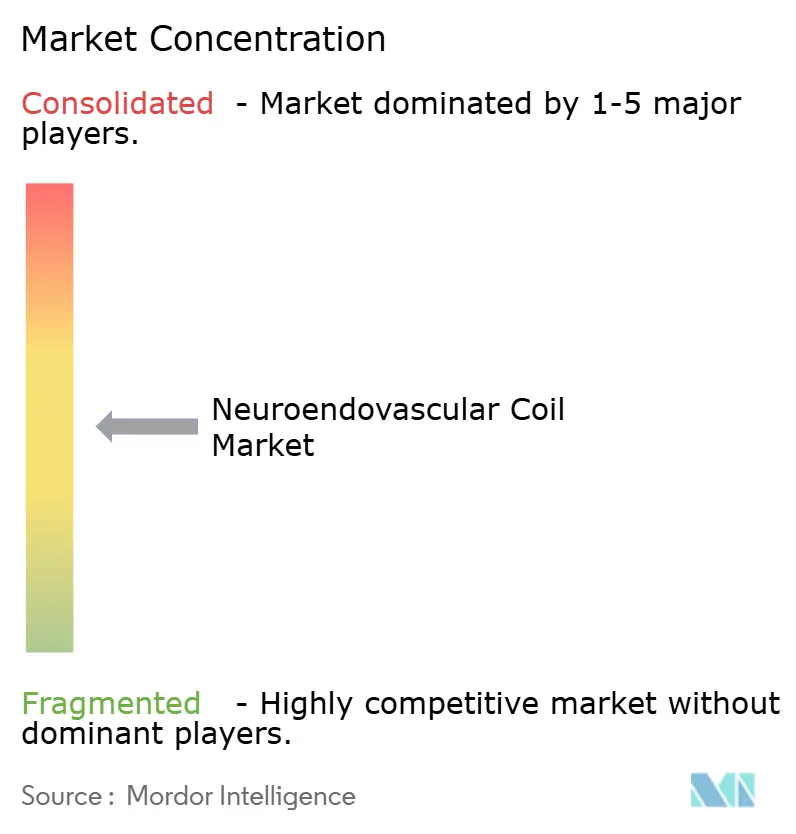
| Market Concentration | Medium |
Major Players *Disclaimer: Major Players sorted in no particular order Image © Mordor Intelligence. Reuse requires attribution under CC BY 4.0. | |
Neuroendovascular Coil Market Analysis by Mordor Intelligence
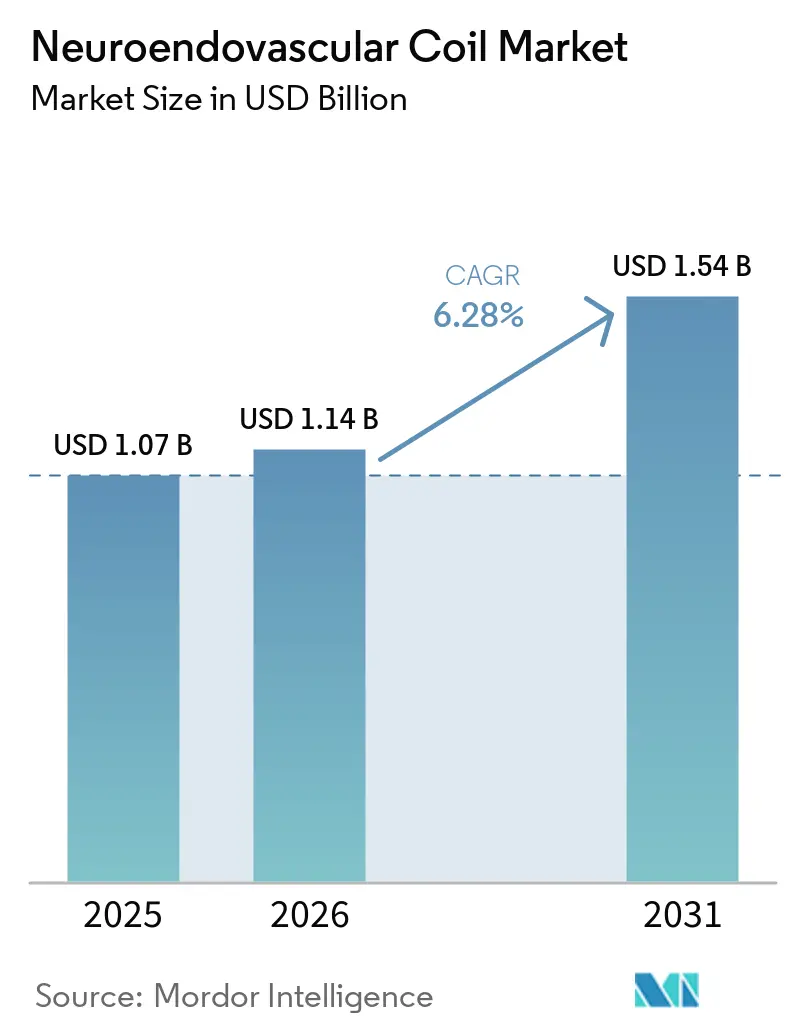
The Neuroendovascular Coil Market size is projected to expand from USD 1.07 billion in 2025 and USD 1.14 billion in 2026 to USD 1.54 billion by 2031, registering a CAGR of 6.28% between 2026 and 2031.
The market is supported by earlier identification of unruptured intracranial aneurysms and continued clinical preference for endovascular treatment in suitable patients, with a 2025 review of 29 studies covering 304,848 subjects reporting a 5.4% global prevalence and identifying female sex, hypertension, smoking, and older age as risk factors. Earlier diagnosis broadens the pool assessed for elective intervention, gives physicians more time to consider anatomy and durability, and favors hospitals that can provide dedicated imaging, specialist teams, and post-procedure monitoring. The neuroendovascular coil market is also shifting from standard bare platinum products toward hydrogel-coated and bioactive options for complex and wide-neck aneurysms. At the same time, suppliers develop lower-profile delivery systems and broader portfolios that connect coils with access devices and detachment technology. This portfolio structure can make switching harder because electrolytic, thermal, and hydraulic systems often depend on compatible delivery infrastructure, supporting integrated suppliers and increasing the importance of established hospital relationships. Growth is strongest where health systems can expand specialist capacity and payment support. At the same time, high capital costs, workforce shortages, regulatory requirements, and recanalization continue to limit wider adoption in lower-acuity and resource-constrained settings.
Key Report Takeaways
- By product type, bare platinum coils held 58.31% of the neuroendovascular coil market share in 2025, while hydrogel-coated coils are forecast to grow at an 8.65% CAGR through 2031.
- By application, intracranial aneurysm embolization accounted for 68.24% of the neuroendovascular coil market share in 2025, while stroke intervention is projected to expand at a 7.42% CAGR through 2031.
- By detachment mechanism, electrolytic detachable coils held 54.14% of the neuroendovascular coil market share in 2025, while thermal and electrothermal systems are forecast to grow at a 7.52% CAGR through 2031.
- By end user, hospitals accounted for 72.14% of the neuroendovascular coil market share in 2025, while ambulatory surgical centers are projected to expand at a 7.82% CAGR through 2031.
- By geography, North America held 36.61% of revenue in 2025, while Asia-Pacific is projected to grow at a CAGR of 8.25% through 2031.
Note: Market size and forecast figures in this report are generated using Mordor Intelligence’s proprietary estimation framework, updated with the latest available data and insights as of January 2026.
Global Neuroendovascular Coil Market Trends and Insights
Drivers Impact Analysis*
| Driver | (~) % Impact on CAGR Forecast | Geographic Relevance | Impact Timeline |
|---|---|---|---|
| Rising Incidence of Intracranial Aneurysms and Stroke | +1.8% | Global, highest burden in East Asia and core Asia-Pacific | Long term (≥ 4 years) |
| Preference for Minimally Invasive Aneurysm Treatment | +1.6% | Global, strongest in North America and Europe | Medium term (2-4 years) |
| Aging Population and Neurovascular Risk-Factor Burden | +1.2% | Global, concentrated in Japan, Western Europe, and North America | Long term (≥ 4 years) |
| Expansion of Neurointerventional Infrastructure and Reimbursement | +1.0% | North America and Europe, with core Asia-Pacific spillover to Middle East and Africa | Medium term (2-4 years) |
| Adoption of Hydrogel and Bioactive Coil Technologies | +0.8% | North America, Europe, Japan, and premium Asia-Pacific centers | Medium term (2-4 years) |
| Higher Procedural Efficiency Through High-Volume Coil Platforms | +0.5% | North American and European tertiary centers | Short term (≤ 2 years) |
| Source: Mordor Intelligence | |||
Rising Incidence of Intracranial Aneurysms and Stroke
The wider detection of unruptured intracranial aneurysms is changing a procedure category that was historically centered on urgent treatment after rupture. A 2025 systematic review and meta-analysis covering 304,848 subjects estimated global prevalence at 5.4%, with a 95% confidence interval of 4.2% to 6.8%. Female sex had an odds ratio of 1.722, hypertension had an odds ratio of 1.579, and smoking had an odds ratio of 2.266 in the review, which identifies a population with several overlapping risk factors. Magnetic resonance angiography screening in Japan and South Korea is identifying asymptomatic aneurysms earlier, before an emergency presentation, which determines the treatment route. Earlier diagnosis gives clinical teams more time to consider anatomy, treatment durability, procedural planning, and the characteristics of available coil platforms. The neuroendovascular coil market can therefore shift from emergency-led bare platinum use toward differentiated devices used in planned elective procedures, especially when patients enter a defined referral pathway before symptoms require urgent intervention, and clinicians can evaluate device options with greater procedural flexibility.
Preference for Minimally Invasive Aneurysm Treatment
Endovascular treatment remains central to care for many patients with ruptured intracranial aneurysms, particularly when a less invasive path is clinically suitable. A 2025 analysis reported a 75% higher hierarchical-outcome win ratio for endovascular coiling than surgical clipping across mortality, functional outcome, major complications, and intensive care unit stay. This evidence supports an endovascular-first approach in suitable cases, although treatment selection continues to depend on clinical presentation and aneurysm anatomy. It also reinforces demand for coils that address a range of aneurysm shapes and work with the catheter systems used in established services. Hospitals can maintain familiarity through procedural training, which supports consistent use of endovascular techniques across their neurovascular teams. The neuroendovascular coil market benefits when clinicians retain the ability to use less invasive treatment across a broader set of patients, because this can support treatment planning that considers both immediate clinical needs and the resources available within established neurovascular services.
Aging Population and Neurovascular Risk-Factor Burden
Population aging increases the number of patients with neurovascular disease and related treatment needs, while also increasing the difficulty of some procedures. A 2025 study linked inflammation, metabolism, cellular senescence, and regenerative processes to the biology of cerebrovascular disease. Age-related changes in vascular walls can alter cerebrovascular structure and hemodynamics, making catheter navigation and aneurysm treatment more demanding. Broader access to cross-sectional imaging has also increased the identification of aneurysms among older patients who may not have presented with symptoms. Treatment decisions for patients aged 80 years or older remain complex because procedure risks must be considered alongside the risks of observation. The neuroendovascular coil market has room for variable-stiffness and conformable coil designs that can help physicians manage technically difficult cases, particularly when age-related vascular changes make the procedure more demanding and place a greater premium on controllable device performance.
Expansion of Neurointerventional Infrastructure and Reimbursement
Procedure capacity determines how much of the underlying clinical need can be treated in practice, regardless of disease prevalence. Dedicated neurointerventional facilities, trained specialists, biplane imaging, and post-procedure monitoring remain necessary for aneurysm embolization, particularly in high-acuity cases. In the United States, CPT codes 61624 and 61626 cover cerebral embolization procedures and, therefore, remain important to service availability. The Society of NeuroInterventional Surgery addressed payment protection for these codes in its 2026 physician fee schedule advocacy. The American Society of Neuroradiology stated that proposed efficiency adjustments could weaken specialist access in rural communities and widen existing capacity gaps[1]American Society of Neuroradiology, “ASNR Comment Letter on CMS CY 2026 Medicare Physician Fee Schedule Proposed Rule,” American Society of Neuroradiology, asnr.org. The neuroendovascular coil market grows more readily where payment supports specialist services, hospitals can sustain trained teams, and providers can build reliable procedure volumes, since each of these conditions helps convert clinical need into procedures that a qualified care setting can safely deliver.
Restraints Impact Analysis*
| Restraint | (~) % Impact on CAGR Forecast | Geographic Relevance | Impact Timeline |
|---|---|---|---|
| High Procedure Costs and Specialist Workforce Shortages | -1.5% | Global, most severe in Middle East and Africa, South America, and rural North America | Long term (≥ 4 years) |
| Stringent Regulatory Approval and Clinical Evidence Requirements | -0.8% | Global, with delays most pronounced in European Union MDR transition settings | Medium term (2-4 years) |
| Retreatment Risk From Recanalization and Coil Compaction | -0.6% | Global, affecting all neurointerventional centers | Long term (≥ 4 years) |
| Dependence on Adjunct Devices and Antiplatelet Therapy in Complex Cases | -0.5% | Global, most acute in ruptured wide-neck aneurysm care | Medium term (2-4 years) |
| Source: Mordor Intelligence | |||
High Procedure Costs and Specialist Workforce Shortages
Neurointerventional aneurysm treatment requires substantial capital investment and highly specialized clinical staffing, which can restrict adoption in lower-resource settings. Biplane fluoroscopy suites, interventional neuroradiology teams, and sustained monitoring capacity are core requirements that many secondary hospitals cannot easily finance or maintain. The American Society of Neuroradiology noted workforce shortages in rural areas in its comments on the 2026 Medicare physician fee schedule. Lower specialist density limits the procedures that a region can perform and makes it harder for local facilities to maintain a consistent service. It also limits the inventory levels that hospitals can justify for advanced coil platforms, especially where case volumes are uncertain. The neuroendovascular coil market consequently remains concentrated in urban hospitals and other high-volume centers with the staff, equipment, and monitoring resources required for care, leaving many smaller facilities dependent on referral pathways when patients require complex neurointerventional treatment.
Retreatment Risk From Recanalization and Coil Compaction
Recanalization remains a significant limitation of coil embolization in complex aneurysm anatomy and can affect confidence in long-term procedure durability. Large cohort studies reported recanalization rates from 10% to 33.6% and retreatment rates from 4.7% to 12.3%. The same research found that 38.3% of recanalized aneurysms developed major re-recanalization after a second coiling procedure during long-term follow-up. Larger aneurysm neck size had an odds ratio of 1.18 for major re-recanalization, while stent-assisted coiling had an odds ratio of 0.34, showing the importance of anatomy and procedural strategy[2]American Journal of Neuroradiology, “Factors Associated with Major Re-Recanalization Following Second Coiling of Recanalized Aneurysms,” American Journal of Neuroradiology, ajnr.org. These results direct clinicians toward adjunct approaches in selected wide-neck or complex lesions where complete, durable occlusion is more difficult to achieve. The neuroendovascular coil market faces substitution from flow diverters and liquid embolics when physicians prioritize durable occlusion in challenging anatomy, particularly where the likelihood of repeat treatment could affect the clinical case for using a conventional coil-based approach alone.
*Our forecasts treat driver/restraint impacts as directional, not additive. The impact forecasts reflect baseline growth, mix effects, and variable interactions.
Segment Analysis
By Product Type: Coated Coils Gain Relevance in Complex Procedures
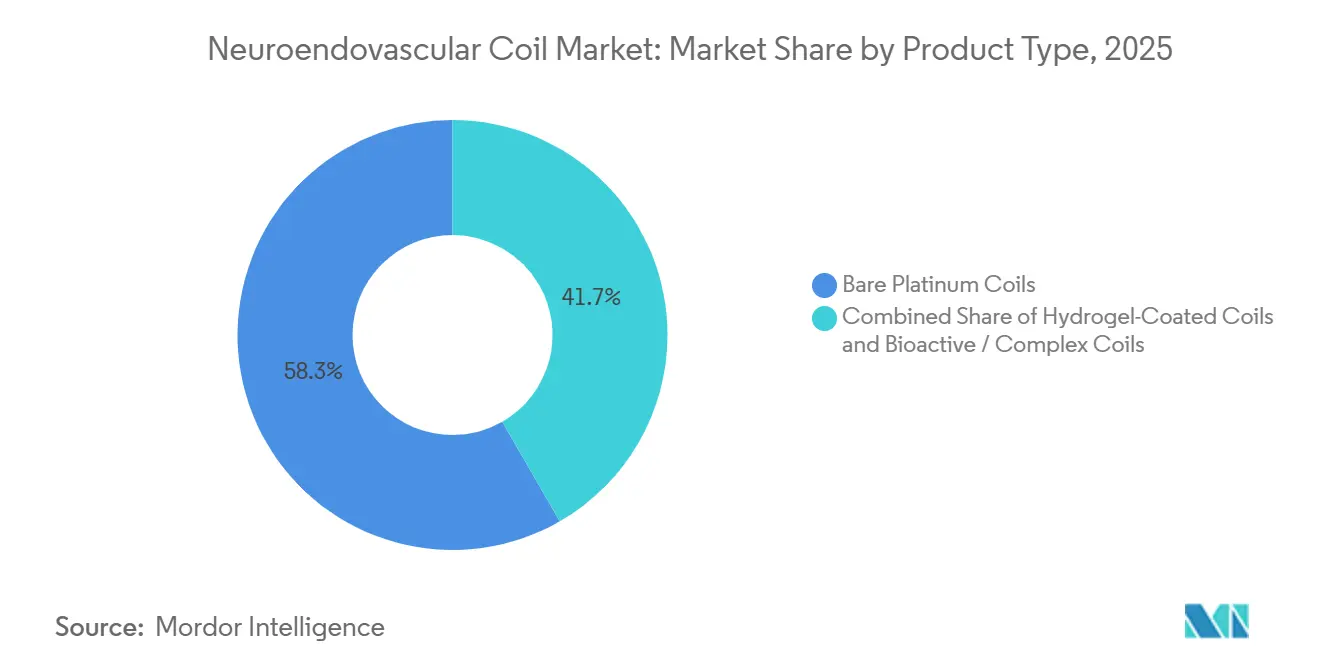
Bare platinum coils accounted for 58.31% of the neuroendovascular coil market size in 2025, supported by long clinical use and broad procedural familiarity. Hospitals use them across a wide range of aneurysm sizes and shapes because they work with many microcatheters and detachment systems. Their established role helps clinicians use a consistent approach when patient anatomy does not require a specialized device. Price remains important in routine procedures, particularly where hospitals must control the cost of disposable supplies. Hydrogel-coated coils are forecast to grow at an 8.65% CAGR through 2031, reflecting a different value proposition for higher-risk anatomy.
The neuroendovascular coil market size for hydrogel-coated coils is supported by the material’s ability to expand after blood contact and occupy more of the aneurysm sac. An updated meta-analysis of 6 randomized controlled trials found a more favorable 1-year occlusion trajectory for hydrogel-coated coils than bare platinum coils. The findings included greater thrombosis and less progression to body filling, both of which matter when clinicians assess durability. Bioactive and complex coils also hold a smaller but strategically important position because their coatings aim to support neoendothelialization. A 2025 in-vitro study reported earlier and greater endothelial cell proliferation on hydrocoils than on bare platinum coils. Coated devices are most relevant for wide-neck, complex, and previously treated aneurysms, while bare platinum products remain suitable for many simpler cases.



By Application: Aneurysm Embolization Retains the Largest Procedure Base
Intracranial aneurysm embolization represented 68.24% of the neuroendovascular coil market size in 2025, making it the main application for these devices. The indication has a large procedure base across neurointerventional services because coiling is a core treatment option for suitable aneurysms. It requires products in different sizes, shapes, and detachment formats to address variation in lesion anatomy. The clinical evidence base also supports the sustained role of endovascular treatment for ruptured aneurysms. A 2025 tertiary-center study reported a 75% higher hierarchical-outcome win ratio for coiling than for surgical clipping across mortality, functional outcome, major complications, and intensive care unit stay.
Stroke intervention is forecast to grow at a 7.42% CAGR through 2031 as comprehensive stroke networks expand access to time-sensitive neurovascular care. Coils are relevant in selected hemorrhagic stroke procedures, where precise placement and controlled deployment are needed. This use broadens the clinical role of suppliers beyond the main aneurysm indication. Arteriovenous malformation procedures can use coils before radiosurgery to reduce lesion volume. Arteriovenous fistula embolization is a smaller but technically demanding application where placement precision is particularly important. The neuroendovascular coil market benefits from several applications because diversified portfolios are less exposed to a reimbursement change in one procedure category.
By Detachment Mechanism: Electrolytic Platforms Retain an Installed-Base Advantage
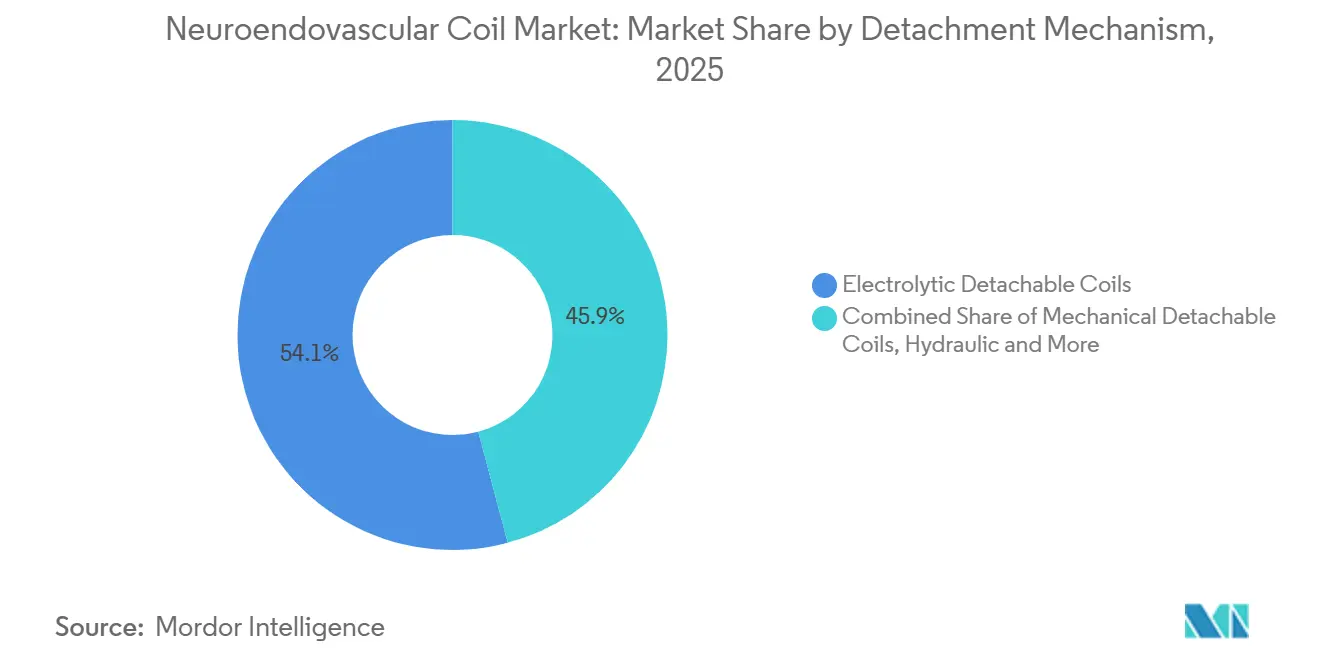
Electrolytic detachable coils captured 54.14% of the neuroendovascular coil market size in 2025, reflecting an extensive installed base and long clinical experience. The mechanism has been used for more than 3 decades and remains familiar to clinicians in academic and community centers. A low-current electrical pulse provides controlled coil release during the procedure. Existing consoles and established protocols make continued use practical for hospitals that have standardized on electrolytic systems. These platforms also support broad product families with multiple coil configurations. Thermal and electrothermal coils are forecast to grow at a 7.52% CAGR through 2031.
Thermal and electrothermal systems can provide tactile detachment confirmation and predictable performance during anticoagulation in ruptured aneurysm care. The U.S. Food and Drug Administration cleared Stryker’s Target Xtra Detachable Coil in June 2026 under K261772. The cleared device combines helical and tetrahedral secondary shapes with a modified stretch-resistant fiber. Mechanical and hydraulic systems serve smaller procedural niches, especially where procurement teams seek to avoid proprietary console investment. The neuroendovascular coil market remains divided among detachment platforms, which can make changes in hospital purchasing more difficult. Integrated suppliers can build on this structure by offering coils, delivery systems, and access devices that work together.
By End User: Hospitals Remain Central While Ambulatory Sites Expand
Hospitals accounted for 72.14% of the neuroendovascular coil market size in 2025, reflecting their role in high-acuity neurovascular care. They provide biplane digital subtraction angiography, intensive care monitoring, and the multidisciplinary teams needed for ruptured aneurysms. Emergency cases are therefore generally treated in hospital settings. Hospitals also handle complex elective procedures and maintain the widest range of coil inventory. This enables physicians to choose products according to anatomy, treatment plan, and clinical risk. Ambulatory surgical centers are forecast to grow at a 7.82% CAGR through 2031.
The shift to ambulatory care is limited to selected elective procedures for unruptured aneurysms rather than emergency presentations. Medicare-certified ambulatory surgical centers increased 2.5% to 6,308 facilities in 2023. Any further migration requires suitable imaging investment, careful patient selection, and reimbursement coverage for the relevant services. Specialty neurology centers serve an intermediate role by handling elective and lower-complexity cases. Their purchasing models can favor standardized procedural kits instead of premium single-use configurations. The neuroendovascular coil industry is responding with lower-profile and simplified delivery systems that can fit ambulatory workflows without changing hospital care for high-risk patients.
Geography Analysis
North America held 36.61% of the neuroendovascular coil market share in 2025, supported by established reimbursement and high procedure volumes at academic medical institutions. The region has a dense network of comprehensive stroke centers and advanced neurointerventional services, especially in the United States. CPT codes 61624 and 61626 remain important to payment for cerebral embolization procedures in the United States. The Society of NeuroInterventional Surgery addressed payment protection for these codes in its 2026 advocacy work. U.S. regulatory clearance is also an important route for novel coil systems, with FDA records documenting relevant clearances from 2024 to 2026. Canada and Mexico add to regional demand, although specialist availability and advanced infrastructure remain concentrated in primary urban centers. Hence, the region’s procedures and purchasing power continue to be led by well-equipped hospitals that can maintain comprehensive neurovascular teams and standardized treatment pathways.
Europe is the second-largest geographic market in the neuroendovascular coil market, led by Germany, the United Kingdom, France, Italy, and Spain. The region has established neurointerventional training pathways, and coil embolization is integrated into routine aneurysm and stroke care in many national health systems. European Union medical device regulation requires extensive technical documentation and biocompatibility evidence for new coil designs. These requirements can extend the launch process, but they also limit the entry of products that cannot meet the required standards. WallabyPhenox reported a limited European release of the Avenir Pico coil after CE Mark approval in November 2025. Price controls, formal health technology assessments, and evidence-focused hospital procurement also shape the neuroendovascular coil market across Europe, creating a setting in which clinical validation, regulatory documentation, and the ability to meet institutional purchasing requirements are all important to sustained adoption.
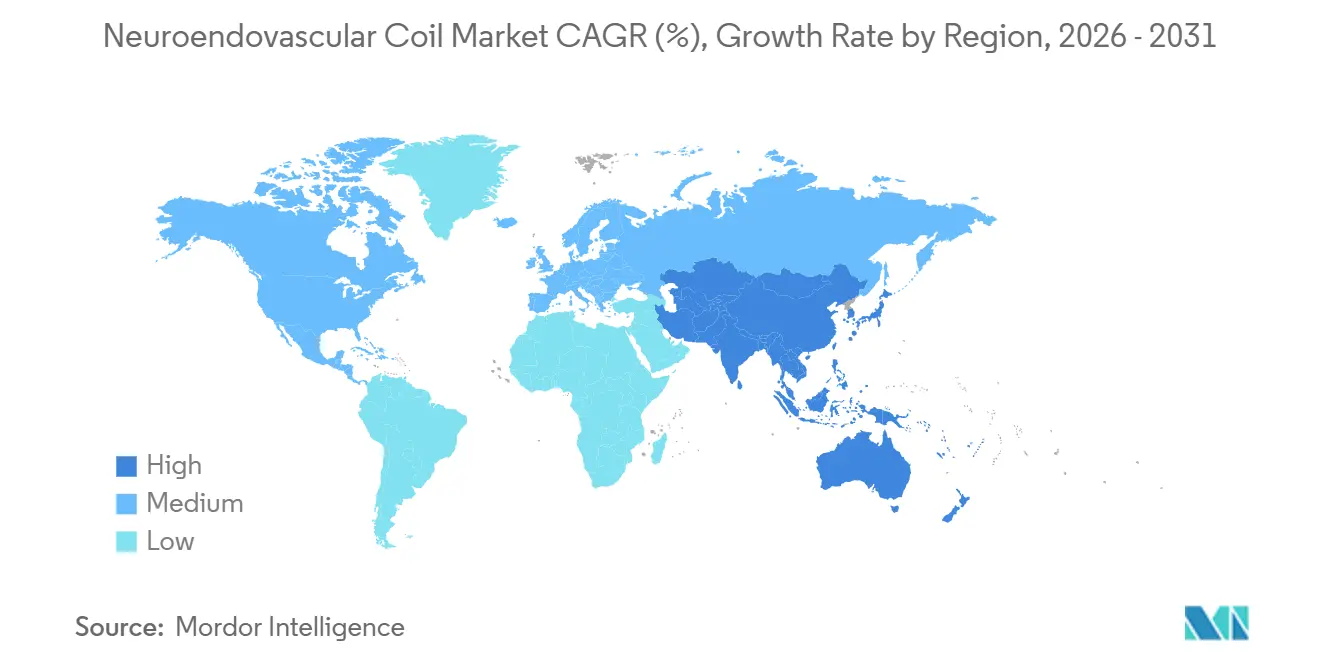
Asia-Pacific is forecast to grow at an 8.25% CAGR through 2031, which is the fastest regional rate in the neuroendovascular coil market. East Asia combines a substantial neurovascular disease burden with expanding capacity for specialist treatment. In April 2026, the Japan Neurosurgical Society published an advisory on stent-assisted coil embolization for acute ruptured aneurysms[3]Japan Neurosurgical Society, “Advisory on Stent-Assisted Coil Embolization for Acute Ruptured Aneurysms,” Japan Neurosurgical Society, jns-official.jp. India is increasing access through digital subtraction angiography investment in private hospital networks, while South Korea has a mature and growing neurointerventional ecosystem. Australia maintains high procedural standards aligned with international clinical guidelines, and Brazil is expanding capacity through academic stroke centers and private hospital investment. Gulf Cooperation Council countries are building tertiary neurovascular facilities, creating new treatment sites across the Middle East and Africa. However, the broader region still faces uneven access to specialist staff, advanced imaging, and the clinical support needed for regular aneurysm embolization services.

Competitive Landscape
The neuroendovascular coil market has a moderately concentrated structure, with several large suppliers competing across related neurovascular product categories. Stryker, Medtronic, Johnson & Johnson, through Cerenovus, and Penumbra lead through portfolios that include multiple coil geometries, detachment mechanisms, and delivery system sizes. These companies reinforce hospital relationships through clinical training, broad supply arrangements, and technical support around complex procedures. Their wider portfolios are also useful when procedures require access devices and embolization products as part of the same care pathway. No combined market share figure for the leading suppliers was provided, so the available information does not show dominance by a single company.
Medtronic completed its acquisition of Scientia Vascular in June 2026 for USD 550 million. Medtronic said the acquisition connected guidewire and catheter access with its existing neurovascular treatment portfolio. Stryker received sequential FDA clearances for Target detachable coil products in December 2025 and June 2026. These moves show an emphasis on procedural access and iterative coil design improvements that keep products aligned with clinical workflow. The neuroendovascular coil market rewards suppliers that can offer compatible systems, reliable supply, and support across the procedure, which can make it harder for single-product entrants to displace established vendors.
Mid-tier manufacturers are targeting defined opportunities through platform differentiation and expansion beyond their home markets. WallabyPhenox began the PIANO IDE trial in March 2026 for HPC-coated flow modulation devices intended to reduce implant thrombogenicity in complex aneurysm management. MicroPort NeuroTech received FDA clearance for NUMEN Silk in September 2024, an important regulatory step for a Chinese-origin neuroendovascular device in the United States. FDA Class II special controls and European Union MDR certification remain important filters because sustained regulatory investment is needed to compete in higher-oversight markets. The neuroendovascular coil industry, therefore, combines established multinational suppliers with specialists competing in targeted technologies and geographic niches.
Neuroendovascular Coil Industry Leaders
Stryker Corporation
Medtronic plc
Terumo Corporation
Johnson & Johnson
Penumbra, Inc.
- *Disclaimer: Major Players sorted in no particular order

Recent Industry Developments
- January 2026: Boston Scientific Corporation and Penumbra, Inc., announced that the companies have entered into a definitive agreement under which Boston Scientific will acquire Penumbra in a cash and stock transaction that values Penumbra at USD 374 per share, reflecting an enterprise value of approximately USD 14.5 billion. Neurovascular offerings from Penumbra currently include differentiated solutions for access, stroke revascularization, and neuroembolization. The transaction is expected to be completed in 2026.
- October 2025: Penumbra launched its SwiftSET Coil, a new complex coil solution designed for adaptive embolization. SwiftSET is engineered to optimize vessel wall apposition through its shape configuration and to facilitate smooth deployment and natural conformity to tight spaces for dense occlusion in small vessels.


Global Neuroendovascular Coil Market Report Scope
As per the scope of the report, a neuroendovascular coil is a soft, platinum-based device used in minimally invasive procedures to treat blood vessel abnormalities in the brain and nervous system. It is typically inserted into an aneurysm or other vascular malformation via a catheter to induce blood clotting and occlusion, thereby preventing rupture or bleeding.
The neuroendovascular coil market is segmented by product type into bare platinum coils, hydrogel-coated coils, and bioactive/complex coils; by application into intracranial aneurysm embolization, arteriovenous malformation embolization, arteriovenous fistula embolization, stroke interventions, and other applications; by detachment mechanism into electrolytically detachable coils, mechanically detachable coils, hydraulic/hydrostatic detachment, and thermal/electrothermal detachment; by end user into hospitals, specialty neurology centers, ambulatory surgical centers, and other end users; and by geography into North America, Europe, Asia-Pacific, the Middle East and Africa, and South America. The market report also covers the estimated market sizes and trends for 17 countries across major regions globally. For each segment, the market size and forecast are provided in terms of value (USD).
| Bare Platinum Coils |
| Hydrogel-Coated Coils |
| Bioactive / Complex Coils |
| Intracranial Aneurysm Embolization |
| Arteriovenous Malformation Embolization |
| Arteriovenous Fistula Embolization |
| Stroke Intervention |
| Other Applications |
| Electrolytic Detachable Coils |
| Mechanical Detachable Coils |
| Hydraulic / Hydrostatic |
| Thermal / Electrothermal |
| Hospitals |
| Specialty Neurology Centers |
| Ambulatory Surgical Centers |
| Other End Users |
| North America | United States |
| Canada | |
| Mexico | |
| Europe | Germany |
| United Kingdom | |
| France | |
| Italy | |
| Spain | |
| Rest of Europe | |
| Asia-Pacific | China |
| Japan | |
| India | |
| Australia | |
| South Korea | |
| Rest of Asia-Pacific | |
| Middle East and Africa | GCC |
| South Africa | |
| Rest of Middle East and Africa | |
| South America | Brazil |
| Argentina | |
| Rest of South America |
| By Product Type | Bare Platinum Coils | |
| Hydrogel-Coated Coils | ||
| Bioactive / Complex Coils | ||
| By Application | Intracranial Aneurysm Embolization | |
| Arteriovenous Malformation Embolization | ||
| Arteriovenous Fistula Embolization | ||
| Stroke Intervention | ||
| Other Applications | ||
| By Detachment Mechanism | Electrolytic Detachable Coils | |
| Mechanical Detachable Coils | ||
| Hydraulic / Hydrostatic | ||
| Thermal / Electrothermal | ||
| By End User | Hospitals | |
| Specialty Neurology Centers | ||
| Ambulatory Surgical Centers | ||
| Other End Users | ||
| By Geography | North America | United States |
| Canada | ||
| Mexico | ||
| Europe | Germany | |
| United Kingdom | ||
| France | ||
| Italy | ||
| Spain | ||
| Rest of Europe | ||
| Asia-Pacific | China | |
| Japan | ||
| India | ||
| Australia | ||
| South Korea | ||
| Rest of Asia-Pacific | ||
| Middle East and Africa | GCC | |
| South Africa | ||
| Rest of Middle East and Africa | ||
| South America | Brazil | |
| Argentina | ||
| Rest of South America | ||


Key Questions Answered in the Report
What is the projected value of the neuroendovascular coil market by 2031?
The neuroendovascular coil market is projected to reach USD 1.54 billion by 2031 from USD 1.14 billion in 2026, at a CAGR of 6.28%.
Which neuroendovascular coil product type leads revenue?
Bare platinum coils led product revenue with a 58.31% share in 2025, supported by broad procedural compatibility, familiar handling, and established clinical use across many aneurysm types.
Why are hydrogel-coated coils gaining adoption?
Randomized trial evidence reported a more favorable 1-year occlusion trajectory for hydrogel-coated coils than bare platinum coils. Their relevance is greatest in complex cases where clinicians are particularly focused on aneurysm filling, occlusion durability, and retreatment risk.
Which application accounts for the largest share of coil use?
Intracranial aneurysm embolization held a 68.24% revenue share in 2025 because it is the foundational neuroendovascular coil indication across established specialist services.
Which care setting has the largest role in neuroendovascular coil procedures?
Hospitals accounted for 72.14% of revenue in 2025 because they provide biplane imaging, intensive care monitoring, multidisciplinary expertise, and emergency treatment capacity.
Which region is expected to grow fastest through 2031?
Asia-Pacific is projected to record the fastest regional growth at an 8.25% CAGR through 2031.
Page last updated on:





