
Myelofibrosis Treatment Market Size and Share
Market Overview
| Study Period | 2020 - 2031 |
|---|---|
| Market Size (2026) | USD 1.57 Billion |
| Market Size (2031) | USD 2.38 Billion |
| Growth Rate (2026 - 2031) | 6.80 % |
| Fastest Growing Market | Asia-Pacific |
| Largest Market | North America |
| Market Concentration | Medium |
Major Players *Disclaimer: Major Players sorted in no particular order Image © Mordor Intelligence. Reuse requires attribution under CC BY 4.0. | |
Myelofibrosis Treatment Market Analysis by Mordor Intelligence
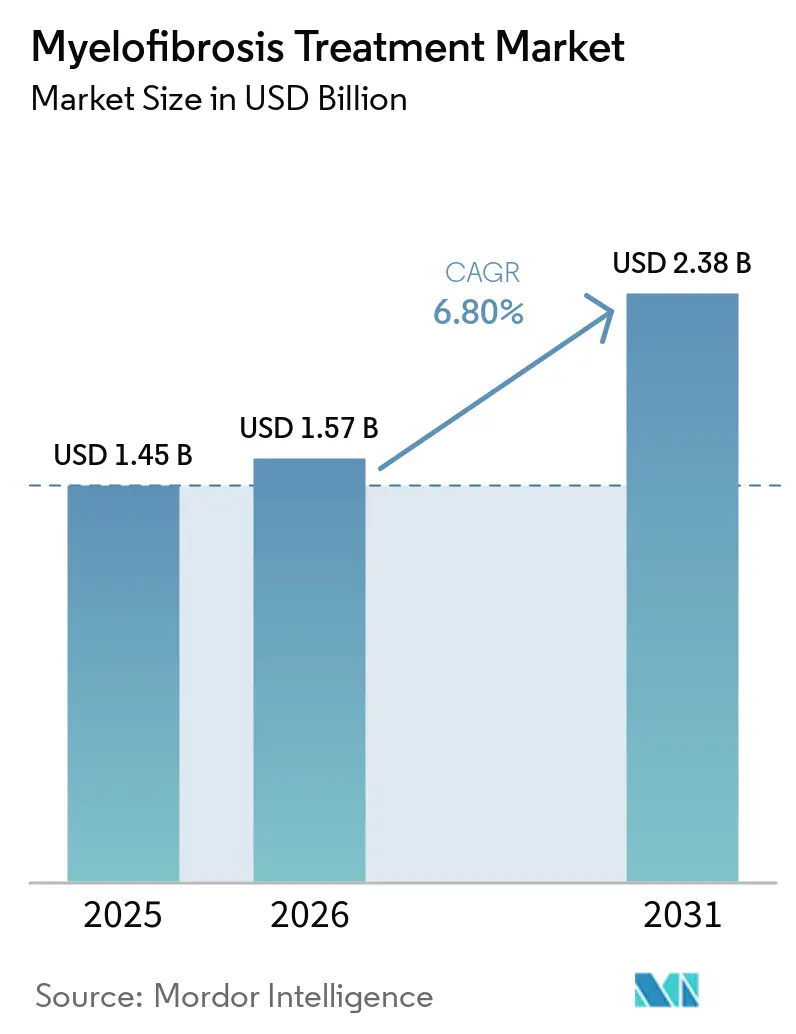
The Myelofibrosis Treatment Market size was valued at USD 1.45 billion in 2025 and is estimated to grow from USD 1.57 billion in 2026 to reach USD 2.38 billion by 2031, at a CAGR of 6.80% during the forecast period (2026-2031).
The myelofibrosis treatment market is shifting from a standardized JAK inhibitor approach toward more personalized treatment selection based on anemia burden, platelet count, mutation profile, and prior treatment history. Ruxolitinib, fedratinib, momelotinib, and pacritinib serve distinct patient segments across current care pathways. A substantial proportion of patients discontinue ruxolitinib within three years, supporting demand for later-line therapies and treatment switching. However, treatment-related cytopenias, uneven reimbursement, and the lack of a validated disease-modification endpoint continue to constrain market growth.
Key Report Takeaways
- By disease type, primary myelofibrosis held 55.67% revenue share in 2025, while secondary myelofibrosis is projected to grow at a 9.22% CAGR through 2031.
- By drug class, targeted drug therapy held 58.66% revenue share in 2025, while chemotherapy is projected to grow at an 8.67% CAGR through 2031.
- By route of administration, oral administration held 57.88% revenue share in 2025 and is projected to grow at a 9.78% CAGR through 2031.
- By end user, hospitals held 64.44% revenue share in 2025, while specialty hematology and oncology clinics are projected to grow at a 10.45% CAGR through 2031.
- By geography, North America held 42.80% revenue share in 2025, while Asia-Pacific is projected to grow at an 8.95% CAGR through 2031.
Note: Market size and forecast figures in this report are generated using Mordor Intelligence’s proprietary estimation framework, updated with the latest available data and insights as of January 2026.
Global Myelofibrosis Treatment Market Trends and Insights
Drivers Impact Analysis*
| DRIVER | (~) % IMPACT ON CAGR FORECAST | GEOGRAPHIC RELEVANCE | IMPACT TIMELINE |
|---|---|---|---|
| Phenotype-specific JAK inhibitor use | +1.8% | Global, concentrated in North America and Western Europe | Medium term (2-4 years) |
| Expansion of anemia-directed options | +1.3% | Global, with early reimbursement gains in Australia and Canada | Medium term (2-4 years) |
| Diagnosis through molecular testing and specialist referral | +1.0% | Asia-Pacific core, with spillover to the Middle East and Africa and U.S. and European specialist networks | Long term (≥ 4 years) |
| Demand for post-jak inhibitor treatment | +1.2% | North America and Europe | Medium term (2-4 years) |
| Disease-modifying and combination therapy pipeline | +1.5% | Global | Long term (≥ 4 years) |
| Use of real-world evidence in rare hematologic cancers | +0.7% | North America and Europe | Short term (≤ 2 years) |
| Source: Mordor Intelligence | |||
Increasing Adoption of Phenotype-Specific JAK Inhibitor Therapy
Treatment selection in the myelofibrosis treatment market is shifting toward a phenotype-based approach. Anemia severity, platelet count, and treatment history increasingly guide therapy selection. Momelotinib inhibits JAK1, JAK2, and ACVR1, lowering hepcidin levels, supporting erythropoiesis, and addressing splenomegaly. Published treatment guidance positions pacritinib for patients with platelet counts below 50 × 10⁹/L and momelotinib for transfusion-dependent patients, creating clearer clinical roles for approved JAK inhibitors.
Pipeline Expansion of Disease-Modifying and Combination Therapies
Combination therapy programs are expanding options in the myelofibrosis treatment market. In the 2025 MANIFEST-2 trial, pelabresib plus ruxolitinib achieved SVR35 in 65.9% of JAK inhibitor-naive patients, compared with 35.2% for ruxolitinib alone. Selinexor plus ruxolitinib achieved SVR35 in 47% of patients at week 36, compared with 23% in the comparator group.[1]Tarabishy, Y., et al., “Pelabresib Plus Ruxolitinib for JAK Inhibitor-Naive Myelofibrosis: A Randomized Phase 3 Trial,” Nature Medicine, link.springer.com Karyopharm submitted a supplemental New Drug Application for the combination in August 2026 and sought accelerated approval. Imetelstat showed a median overall survival of 30.7 months versus 15.4 months with best-available therapy in an updated post-hoc matched analysis presented at ASCO 2026. These programs cover BET inhibition, XPO1 blockade, MDM2 activation, telomerase inhibition, and Type II JAK2 selectivity for frontline and later-line care.
Expansion of Anemia-Directed Treatment Options
Anemia remains a significant unmet need in myelofibrosis treatment and may worsen during ruxolitinib therapy. The Phase 2 ODYSSEY trial enrolled its first patient in February 2025 to evaluate momelotinib plus luspatercept in transfusion-dependent disease. The combination targets early and late stages of erythropoiesis through complementary SMAD pathway activity. In the Phase 2 RESTORE trial, elritercept achieved transfusion independence in 30.4% of transfusion-dependent patients and reduced transfusion burden by at least 50% in 73% of patients requiring at least 3 red blood cell units per 12 weeks at week 24. The 2025 INDEPENDENCE trial failed to meet its primary endpoint for luspatercept, increasing development interest in JAK inhibitor combinations with complementary erythropoietic mechanisms.[2]Perla, A., et al., “Managing Myelofibrosis: Matching Advances in Treatments With Clinical Unmet Needs,” PubMed Central, pmc.ncbi.nlm.nih.gov
Growing Demand for Post-JAK Inhibitor Treatment
The post-JAK inhibitor setting remains underserved in the myelofibrosis treatment market. Historical median survival after ruxolitinib discontinuation was 13.2 months before later-line JAK inhibitors became available. Even with sequential JAK inhibitor use, many patients exhaust approved options within 3 to 5 years. IMPACTMF, BOREAS, and the confirmatory SENTRY program target patients with inadequate responses after JAK inhibitor treatment. Ipsen completed its acquisition of Kartos Therapeutics in August 2026, adding navtemadlin, an MDM2 inhibitor under evaluation for TP53 wild-type patients with a suboptimal ruxolitinib response. These developments may differentiate later-line care through mechanisms such as TP53 pathway restoration and renewed JAK pathway targeting.
Restraints Impact Analysis*
| RESTRAINT | (~) % IMPACT ON CAGR FORECAST | GEOGRAPHIC RELEVANCE | IMPACT TIMELINE |
|---|---|---|---|
| Treatment-limiting anemia, thrombocytopenia, and myelosuppression | -1.2% | Global | Short term (≤ 2 years) |
| Limited evidence of durable disease modification | -0.9% | Global | Long term (≥ 4 years) |
| High treatment cost and unequal reimbursement access | -1.1% | Asia-Pacific core, the Middle East and Africa, and South America | Medium term (2-4 years) |
| Small, heterogeneous, and difficult-to-diagnose patient population | -0.8% | Global | Long term (≥ 4 years) |
| Source: Mordor Intelligence | |||
Treatment-Limiting Anemia, Thrombocytopenia, and Myelosuppression
Myelosuppression remains a key safety challenge in JAK inhibitor treatment and can limit dose escalation for patients requiring more intensive therapy. In MANIFEST-2, 52.8% of patients receiving pelabresib plus ruxolitinib experienced thrombocytopenia, while 44.8% experienced anemia of any grade. In the SENTRY trial, thrombocytopenia occurred in 59% of the selinexor plus ruxolitinib group, compared with 43% of the ruxolitinib plus placebo group. Dose reductions to manage hematologic toxicity can reduce JAK inhibitor effectiveness, limiting broader adoption of certain combination therapies.
High Treatment Cost and Unequal Reimbursement Access
Unequal reimbursement continues to limit treatment access across Asia-Pacific, South America, the Middle East, and Africa. In 2024, Canada’s Drug Agency assessed momelotinib at an incremental cost-effectiveness ratio of USD 245,628 per quality-adjusted life year gained and stated that its price should not exceed the least costly reimbursed JAK inhibitor. While ruxolitinib’s inclusion on China’s National Reimbursement Drug List reduced annual costs and expanded access, newer agents have limited public reimbursement in many Asian markets. Limited health economic evidence based on validated quality-adjusted life year outcomes remains a barrier to higher-priced combination regimens outside the United States.
*Our forecasts treat driver/restraint impacts as directional, not additive. The impact forecasts reflect baseline growth, mix effects, and variable interactions.
Segment Analysis
By Disease Type: Secondary Myelofibrosis Supports a Growing Long-Term Opportunity
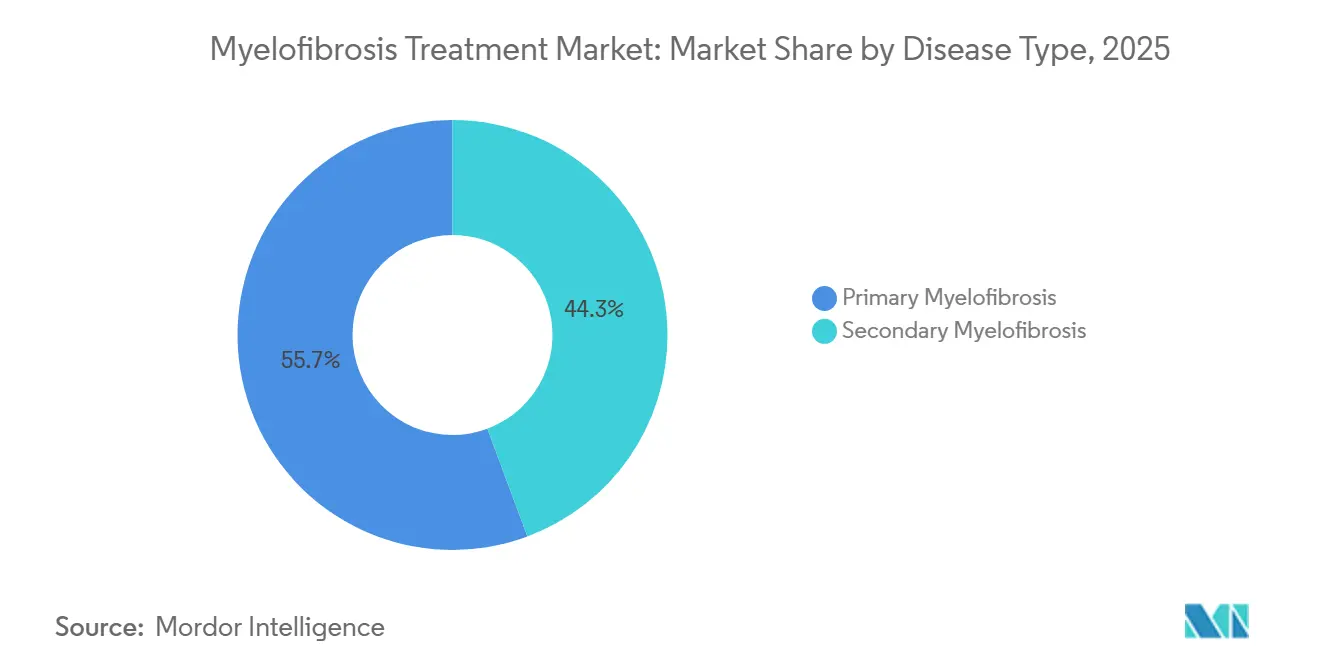
Primary myelofibrosis held 55.67% of the myelofibrosis treatment market share by disease type in 2025, driven by higher de novo incidence than post-essential thrombocythemia and post-polycythemia vera forms. It also remains the established focus of diagnosis and initial treatment. Secondary myelofibrosis is forecast to grow at a 9.22% CAGR through 2031 as longer survival among patients with essential thrombocythemia and polycythemia vera increases the population at risk of transformation. Hydroxyurea and pegylated interferon support long-term disease management, increasing the need for transformation monitoring.
Advances in molecular diagnosis and risk classification support the secondary myelofibrosis segment. A 2026 study from an Indian tertiary referral cohort found that upfront 69-gene next-generation sequencing reclassified 16.4% of patients with myeloproliferative neoplasms into higher prognostic risk categories. The MYSEC-PM score supports risk-based therapy selection for post-myeloproliferative neoplasm secondary myelofibrosis and is used in European treatment algorithms, with increasing adoption across Asia-Pacific specialty centers. These tools improve referral, molecular testing, and timely therapeutic review.


By Drug Class: Combination Programs Test Targeted Therapy’s Front-Line Position
Targeted drug therapy held 58.66% of drug-class revenue in 2025 and includes JAK inhibitors and other molecularly targeted agents. Four approved JAK inhibitors supported the category, while ruxolitinib remained central to front-line symptom and spleen management. The segment reflects a growing focus on matching treatment with anemia and platelet profiles. Emerging targeted combinations are generally being evaluated alongside, rather than in place of, ruxolitinib.
Chemotherapy is forecast to grow at an 8.67% CAGR through 2031, the highest among drug classes. Its use is linked to cytoreductive treatment, particularly hydroxyurea for lower-risk patients in reimbursement-constrained areas of the Asia-Pacific and South America. Pegylated interferon plus ruxolitinib improved marrow cellularity and fibrosis in patients intolerant of prior JAK inhibitor therapy. The Others category includes telomerase inhibitors and MDM2 inhibitors awaiting approval, which could expand the category as Phase 3 programs report results.
By Route of Administration: Oral Treatment Retains Both Scale and Momentum
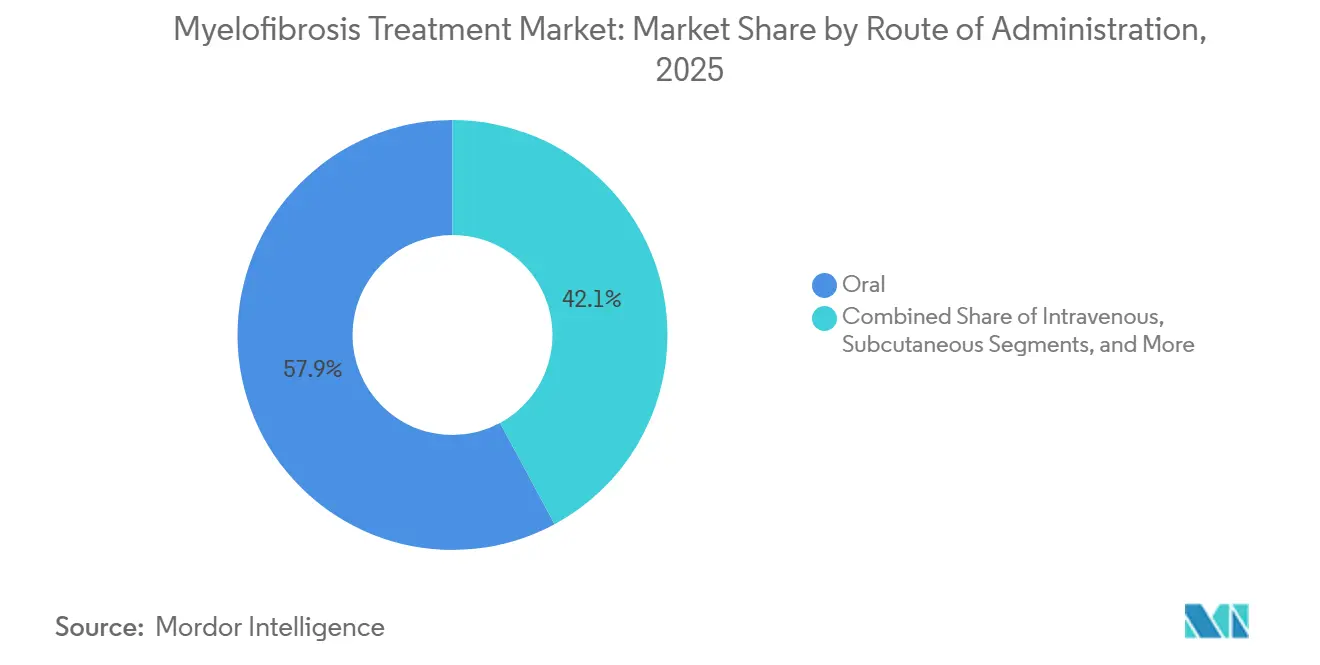
Oral administration held 57.88% of route-of-administration revenue in 2025 and is forecast to grow at a 9.78% CAGR through 2031. This performance reflects a late-stage pipeline that includes oral candidates such as selinexor, pelabresib, navtemadlin, and AJ1-11095. Oral JAK inhibitors remain the primary option for long-term outpatient care, enabling blood count monitoring and dose adjustments without inpatient admission. This model supports the market's strong outpatient orientation.
The intravenous route serves a smaller but clinically distinct patient group. Imetelstat is administered every 3 weeks for relapsed or refractory disease, and an updated post-hoc analysis presented at ASCO 2026 reported median overall survival of 30.7 months with imetelstat versus 15.4 months with best-available therapy. Subcutaneous and other routes mainly support anemia management, including erythropoiesis-stimulating agents and investigational formulations. Specialty pharmacy networks, monitoring programs, and monthly refill processes further support oral oncology delivery.

By End User: Specialty Clinics Gain as Chronic Care Moves Outside Hospitals
Hospitals held 64.44% of end-user revenue in 2025, reflecting the concentration of high-risk cases requiring inpatient evaluation and management. Bone marrow biopsies, transplant evaluations, and acute cytopenic events often require hospital resources. Academic hospital systems also coordinate multidisciplinary care for allogeneic stem cell transplant candidates. Hospitals, therefore, remain essential for complex clinical needs, despite the shift of routine treatment to outpatient settings.
Specialty hematology and oncology clinics are forecast to expand at a 10.45% CAGR through 2031. Oral JAK inhibitor protocols enable chronic care in dedicated myeloproliferative neoplasm practices, which provide monthly blood count monitoring, dose titration, and symptom assessment. A 2025 real-world analysis examined treatment patterns and healthcare resource use among ruxolitinib-treated patients with myelofibrosis, with and without anemia. Academic medical centers remain important for Phase 3 trials and early adoption, while ambulatory infusion centers support intravenous treatments, particularly imetelstat.
Geography Analysis
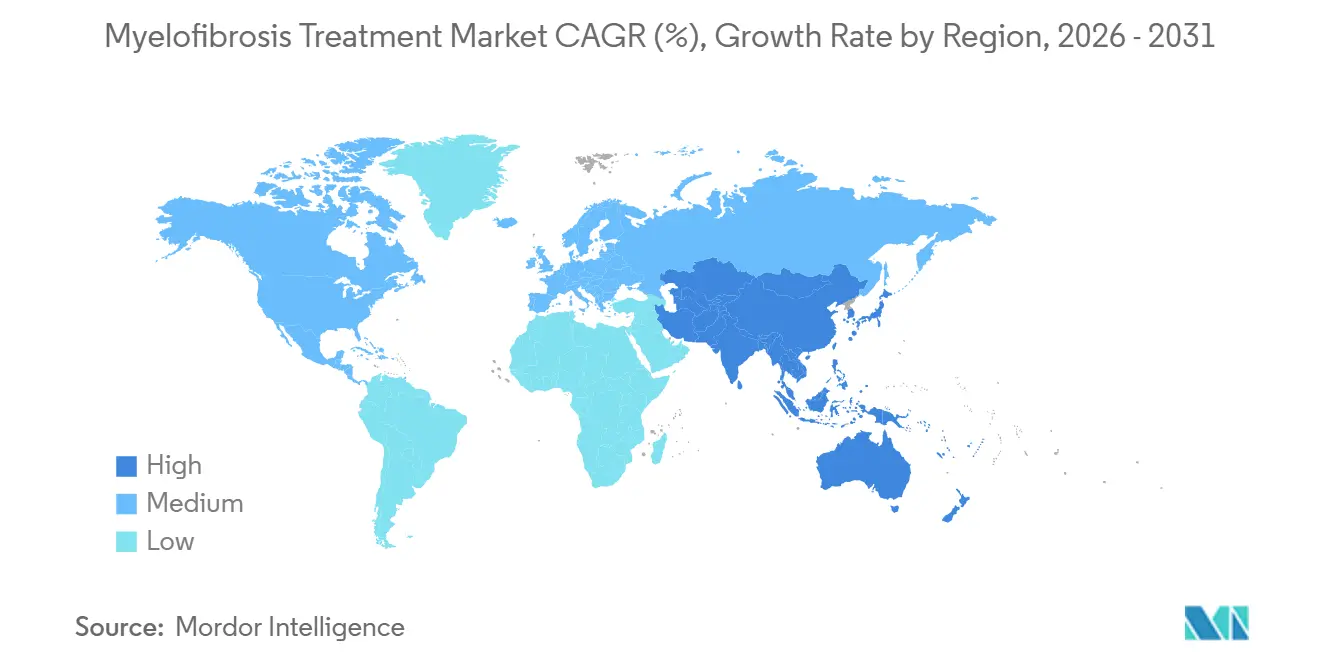
North America held 42.80% of the myelofibrosis treatment market share in 2025, supported by an estimated 20,000 patients in the United States and access to all four FDA-approved JAK inhibitors. Restricted specialty pharmacies support treatment distribution and monitoring. Europe is the second-largest regional market, with ruxolitinib, momelotinib, and fedratinib authorized through the European Medicines Agency’s centralized route. Germany, the United Kingdom, and France lead regional volumes through designated myeloproliferative neoplasm expert centers, while country-specific reimbursement often requires clinical and health economic evidence.
Asia-Pacific is forecast to grow at an 8.95% CAGR through 2031. China’s National Medical Products Administration approved TQ05105, branded Anxu, on February 28, 2026, as a dual JAK/ROCK inhibitor for eligible adults with primary and secondary myelofibrosis; registration data showed SVR35 in 58.33% of patients and TSS50 in 77.78% of patients. China’s myelofibrosis patient population exceeded 67,000 in 2025 and is projected to approach 300,000 by 2030, supported by diagnostic capacity, aging demographics, and tertiary hematology infrastructure. Japan supports steady JAK inhibitor use, while India’s 2026 69-gene sequencing study reclassified 16.4% of patients into higher prognostic risk groups, supporting earlier specialist care.
The Middle East and Africa remain at an early commercial stage for JAK inhibitor therapy, with treatment concentrated in tertiary oncology centers across GCC countries, South Africa, and other major urban locations. Limited reimbursement infrastructure requires many patients to rely on hospital formularies or manufacturer support programs. Brazil and Argentina lead South American activity, although cost and access constraints persist, while Brazil’s public health system is beginning to incorporate treatment pathways as awareness expands beyond academic centers. Diagnostic expansion, international trial participation, and stronger specialist referral networks support gradual adoption across both regions.

Competitive Landscape
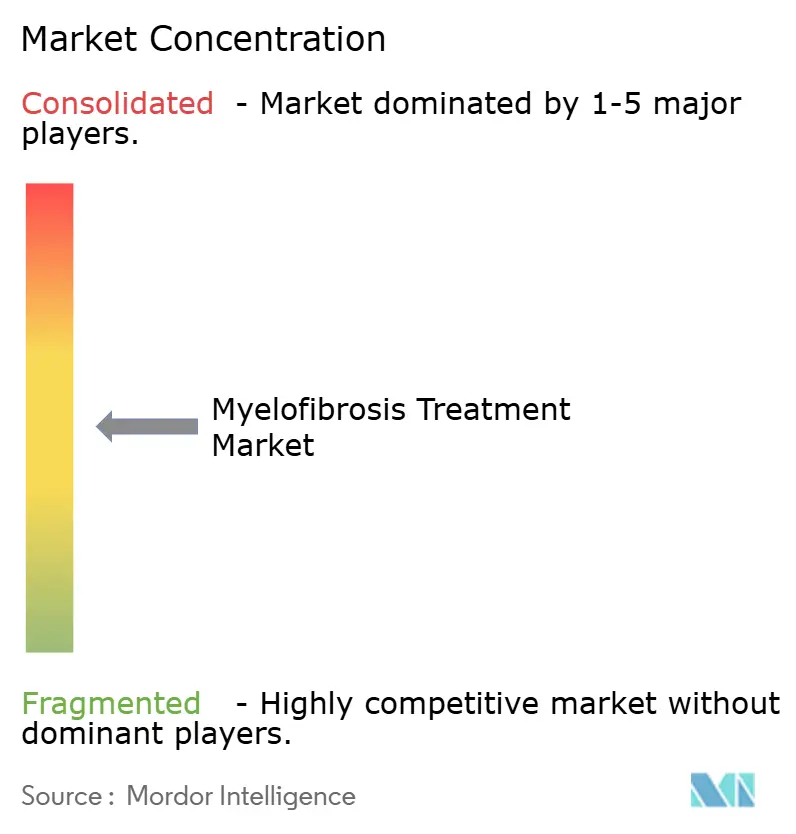
The myelofibrosis treatment market has moderate concentration in frontline treatment and stronger competition in post-JAK inhibitor and combination therapy settings. Incyte and Novartis lead frontline ruxolitinib treatment, while GSK offers momelotinib for anemia-related needs. BMS and Novartis offer fedratinib, and Swedish Orphan Biovitrum offers pacritinib for a thrombocytopenia-defined niche. The expected ruxolitinib loss of exclusivity in 2027 and 2028 will increase the focus on formulation, service, and pipeline strategies.
The myelofibrosis treatment market is also shaped by programs seeking fibrosis reversal or overall survival improvement. No approved therapy has established bone marrow fibrosis improvement as a validated surrogate for survival. IMpactMF, long-term MANIFEST-2 follow-up, and POIESIS may clarify the clinical value of their respective approaches. Karyopharm submitted an August 2026 supplemental New Drug Application for selinexor plus ruxolitinib under an accelerated approval pathway, while Ipsen completed its acquisition of Kartos Therapeutics in August 2026, adding navtemadlin to its oncology pipeline.
Incyte presented Phase 1 data for INCA033989, an antibody targeting the mutant CALR neoepitope, at ASH 2025, highlighting the shift toward mutation-specific treatment development. Companies with approved JAK inhibitors retain established distribution networks and prescriber relationships. New entrants must demonstrate clear benefits in anemia control, thrombocytopenia management, later-line response, or disease outcomes. The market combines established therapy franchises with programs targeting defined treatment gaps.
Myelofibrosis Treatment Industry Leaders
Bristol-Myers Squibb Company
GSK plc
Incyte Corporation
Novartis AG
Swedish Orphan Biovitrum AB (publ)
- *Disclaimer: Major Players sorted in no particular order

Recent Industry Developments
- August 2026: Karyopharm Therapeutics submitted an sNDA to the FDA for accelerated approval of selinexor plus ruxolitinib for myelofibrosis and requested Priority Review; the FDA filing decision was expected in Q4 2026.
- August 2026: Ipsen acquired Kartos Therapeutics for USD 450 million upfront and up to USD 1.3 billion in milestones, adding Phase 3 MDM2 inhibitor navtemadlin; POIESIS trial data were expected in 2027.
- February 2026: hina’s NMPA approved Chia Tai Tianqing’s Anxu (TQ05105) for first-line intermediate-2 or high-risk primary and secondary myelofibrosis; registration data showed 58.33% SVR35 and 77.78% TSS50.


Global Myelofibrosis Treatment Market Report Scope
As per the scope of the report, myelofibrosis is a rare, chronic cancer belonging to a group of disorders called myeloproliferative neoplasms, characterized by the progressive accumulation of scar tissue (fibrosis) within the bone marrow that severely disrupts the normal production of blood cells.
The myelofibrosis treatment market is segmented by disease type, drug class, route of administration, end user, and geography. By disease type, the market is segmented into primary myelofibrosis and secondary myelofibrosis. By drug class, the market includes targeted drug therapy, chemotherapy, immunomodulatory agents, and others. Targeted drug therapy is further segmented into JAK inhibitors and other targeted therapies. By route of administration, the market is segmented into oral, intravenous, subcutaneous, and other routes of administration. By end user, the market is segmented into hospitals, specialty hematology and oncology clinics, ambulatory infusion centers, academic medical centers, and others. By geography, the market is analyzed across North America, Europe, Asia-Pacific, the Middle East and Africa, and South America. The report also covers the estimated market sizes and trends for 17 countries across major regions globally. The report offers market sizes and forecasts in terms of value (USD) for the above segments.
| Primary Myelofibrosis |
| Secondary Myelofibrosis |
| Targeted Drug Therapy | JAK Inhibitors |
| Other Targeted Therapy | |
| Chemotherapy | |
| Immunomodulatory Agents | |
| Others |
| Oral |
| Intravenous |
| Subcutaneous |
| Other Routes of Administration |
| Hospitals |
| Specialty Hematology and Oncology Clinics |
| Ambulatory Infusion Centers |
| Academic Medical Centers |
| Others |
| North America | United States |
| Canada | |
| Mexico | |
| Europe | Germany |
| United Kingdom | |
| France | |
| Italy | |
| Spain | |
| Rest of Europe | |
| Asia-Pacific | China |
| India | |
| Japan | |
| Australia | |
| South Korea | |
| Rest of Asia-Pacific | |
| Middle East and Africa | GCC |
| South Africa | |
| Rest of Middle East and Africa | |
| South America | Brazil |
| Argentina | |
| Rest of South America |
| By Disease Type | Primary Myelofibrosis | |
| Secondary Myelofibrosis | ||
| By Drug Class | Targeted Drug Therapy | JAK Inhibitors |
| Other Targeted Therapy | ||
| Chemotherapy | ||
| Immunomodulatory Agents | ||
| Others | ||
| By Route of Administration | Oral | |
| Intravenous | ||
| Subcutaneous | ||
| Other Routes of Administration | ||
| By End User | Hospitals | |
| Specialty Hematology and Oncology Clinics | ||
| Ambulatory Infusion Centers | ||
| Academic Medical Centers | ||
| Others | ||
| By Geography | North America | United States |
| Canada | ||
| Mexico | ||
| Europe | Germany | |
| United Kingdom | ||
| France | ||
| Italy | ||
| Spain | ||
| Rest of Europe | ||
| Asia-Pacific | China | |
| India | ||
| Japan | ||
| Australia | ||
| South Korea | ||
| Rest of Asia-Pacific | ||
| Middle East and Africa | GCC | |
| South Africa | ||
| Rest of Middle East and Africa | ||
| South America | Brazil | |
| Argentina | ||
| Rest of South America | ||


Key Questions Answered in the Report
What is the expected growth rate for myelofibrosis treatment through 2031?
The myelofibrosis treatment market is projected to grow at an 8.60% CAGR from 2026 to 2031, reaching USD 2.38 billion by 2031.
Which therapy route is growing fastest for myelofibrosis?
Oral administration is forecast to grow at a 9.78% CAGR through 2031. It held 57.88% of route-of-administration revenue in 2025.
Why are specialty hematology and oncology clinics expanding?
Specialty clinics are forecast to grow at a 10.45% CAGR because oral protocols support regular blood count monitoring, dose adjustment, and symptom assessment outside hospitals.
Which region has the highest growth outlook for myelofibrosis treatment?
Asia-Pacific is forecast to grow at an 8.95% CAGR through 2031, supported by diagnostics, specialist infrastructure, and treatment development in China.
What is driving demand after JAK inhibitor treatment?
Patients may discontinue or move through approved JAK inhibitor options over several years, creating demand for later-line therapies such as telomerase, MDM2, and alternative JAK pathway approaches.
What limits broader use of new myelofibrosis therapies?
Anemia, thrombocytopenia, myelosuppression, uneven reimbursement, and limited validated evidence of durable disease modification remain important constraints.
Page last updated on:





