
Mitomycin Market Size and Share
Market Overview
| Study Period | 2020 - 2031 |
|---|---|
| Market Size (2026) | USD 214.59 Million |
| Market Size (2031) | USD 318.24 Million |
| Growth Rate (2026 - 2031) | 8.20 % |
| Fastest Growing Market | Asia-Pacific |
| Largest Market | North America |
| Market Concentration | Medium |
Major Players *Disclaimer: Major Players sorted in no particular order Image © Mordor Intelligence. Reuse requires attribution under CC BY 4.0. | |
Mitomycin Market Analysis by Mordor Intelligence
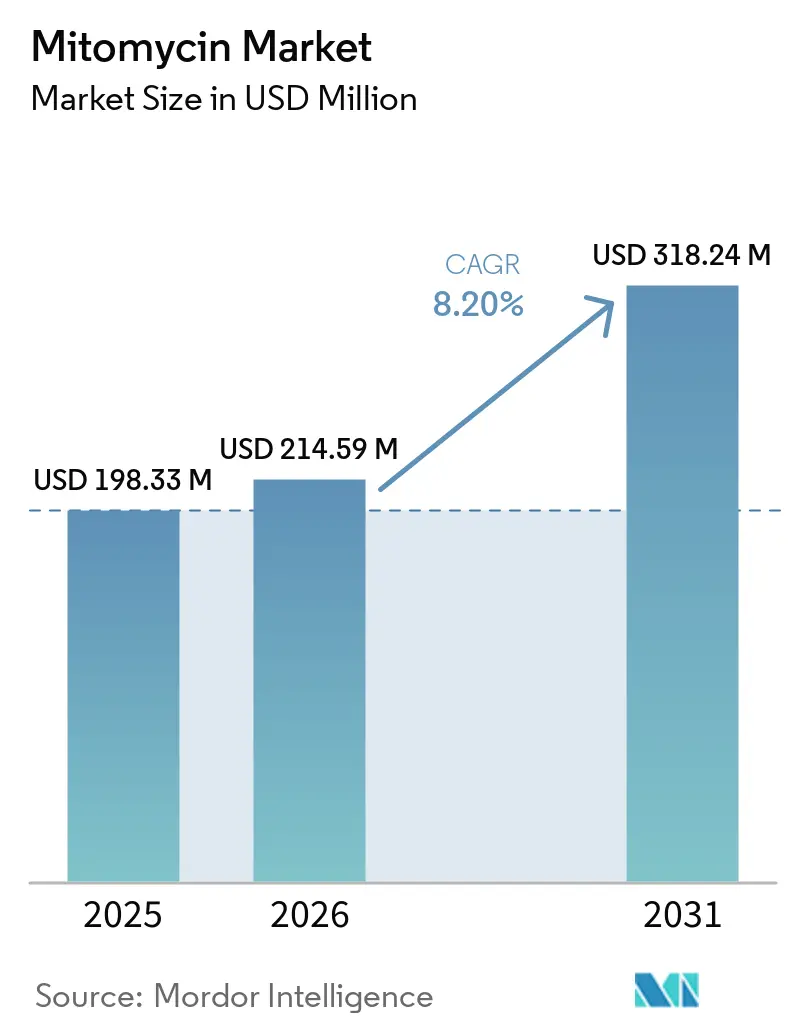
The Mitomycin Market size was valued at USD 198.33 million in 2025 and is estimated to grow from USD 214.59 million in 2026 to reach USD 318.24 million by 2031, at a CAGR of 8.20% during the forecast period (2026-2031).
The mitomycin market is expanding beyond conventional injectable applications, with sustained-release intravesical products supporting nonsurgical treatment in urothelial oncology. FDA approval of ZUSDURI in June 2025 established an intravesical treatment option for adults with recurrent low-grade, intermediate-risk non-muscle-invasive bladder cancer and supported specialist adoption. Established use in ophthalmic antifibrotic surgery and combination cancer therapy provides a broad institutional base. Companies differentiate through delivery systems, clinical evidence, reimbursement support, and supply reliability, while facing competition from intravesical therapies, hazardous-drug handling requirements, and future generic entry in specialty formulations.
Key Report Takeaways
- By product type, mitomycin C for Injection held 54.56% of revenue in 2025, while mitomycin for intravesical solution is projected to grow at a 9.45% CAGR through 2031.
- By therapeutic area, oncology accounted for 55.45% of revenue in 2025, while urology is projected to expand at a 10.52% CAGR through 2031.
- By end user, hospitals represented 64.56% of revenue in 2025, while specialty cancer centers are projected to grow at an 11.23% CAGR through 2031.
- By dosage form, intravenous dosage forms held 44.76% of revenue in 2025, while intravesical dosage forms are projected to expand at a 12.30% CAGR through 2031.
- By geography, North America held 41.95% revenue share in 2025, while Asia-Pacific is projected to grow at 10.67% CAGR through 2031.
Note: Market size and forecast figures in this report are generated using Mordor Intelligence’s proprietary estimation framework, updated with the latest available data and insights as of January 2026.
Global Mitomycin Market Trends and Insights
Drivers Impact Analysis*
| DRIVER | (~) % IMPACT ON CAGR FORECAST | GEOGRAPHIC RELEVANCE | IMPACT TIMELINE |
|---|---|---|---|
| Rising NMIBC incidence | +3.0% | Global, with concentrated impact in North America and Asia-Pacific | Medium term (2-4 years) |
| Sustained-release intravesical formulations and kidney-sparing care | +3.4% | North America and Europe, with emerging uptake in Asia-Pacific | Medium term (2-4 years) |
| Increasing use of mitomycin in ophthalmic antifibrotic surgery | +0.9% | Asia-Pacific, with use across China, India, Southeast Asia, and the Middle East and Africa | Medium term (2-4 years) |
| Formulation-specific supply resilience as a procurement priority | +0.7% | Global, concentrated in North America and Europe | Short term (≤ 2 years) |
| Growing demand for kidney-sparing upper-tract urothelial cancer treatment | +0.9% | Asia-Pacific, with use across China, India, Southeast Asia, and the Middle East and Africa | Medium term (2-4 years) |
| Source: Mordor Intelligence | |||
Rising Incidence of Non-Muscle-Invasive Bladder Cancer
Non-muscle-invasive bladder cancer accounted for 80% of the estimated 84,530 new bladder cancer cases in the United States in 2026. Globally, bladder cancer recorded 614,000 new cases in 2024.[1]American Urological Association and Society of Urologic Oncology, “American Urological Association Releases Non-Muscle-Invasive Bladder Cancer Guideline Amendment,” American Urological Association, auanet.org.
Population aging and growth have increased the number of patients requiring diagnosis, monitoring, and repeat treatment, with the disease burden remaining significant in North America and East Asia and case growth emerging in India and parts of Africa. Recurrence after transurethral resection remains a key driver of repeat intravesical treatment demand, with up to 70% of patients experiencing at least one recurrence, supporting recurring demand for mitomycin-based products in the mitomycin market.
Expansion of Sustained-Release Intravesical Formulations
UroGen Pharma’s RTGel platform has expanded the treatment role of mitomycin by extending drug contact with the urothelium. Conventional intravesical mitomycin C remains in the bladder for one to two hours, while the reverse-thermal hydrogel becomes a semi-solid gel at body temperature, enabling outpatient chemoablation without general anesthesia for eligible patients. ZUSDURI achieved a 78% complete response rate at three months in the Phase 3 ENVISION trial, and 64.5% of responders maintained a response at 36 months, with a median follow-up of 35.5 months. UGN-103 achieved a 77.8% complete response rate at three months, and a 94.5% six-month duration of response in the Phase 3 UTOPIA study, and UroGen submitted its NDA on August 17, 2026, creating opportunities for the mitomycin market to compete on treatment convenience and clinical durability.[2]UroGen Pharma Ltd., “UroGen Reports USD 50.4 Million of ZUSDURI Revenue and Provides Second Quarter 2026 Financial Results and Highlights,” UroGen Pharma, investors.urogen.com.
Increasing Use of Mitomycin in Ophthalmic Antifibrotic Surgery
Mitomycin C remains a widely used antifibrotic adjunct in glaucoma filtering surgery due to its established clinical role, low unit cost, and long history of use. A 2025 pooled analysis of three PRESERFLO MicroShunt studies found that 0.4 mg/mL mitomycin C provided better intraocular pressure control than 0.2 mg/mL without compromising safety, which may influence dosing protocols and increase drug use per procedure. A 2025 randomized study found comparable intraocular pressure control for sponge-applied and sub-Tenon-injected mitomycin C in trabeculectomy, supporting adoption across facilities with different equipment and procedural practices. Rising glaucoma surgery volumes in China, India, and Southeast Asia support this application within the mitomycin market.
Formulation-Specific Supply Resilience as a Procurement Priority
Hospitals continue to rely on conventional injectable mitomycin C across established oncology and urology protocols. Generic purchasing decisions increasingly consider supply continuity alongside acquisition price, as manufacturing remains concentrated among a limited group of suppliers. Accord Healthcare, Fresenius Kabi, Meitheal Pharmaceuticals, Hikma Pharmaceuticals, Intas, Cipla, and Sun Pharmaceutical are among the manufacturers serving conventional injectable demand. At the same time, Accord Healthcare updated its FDA package insert in April 2025. A dependable supply base protects treatment continuity as institutions manage cytotoxic inventory and protocol schedules, making supply reliability a more important purchasing consideration across the mitomycin market.
Restraints Impact Analysis*
| RESTRAINT | (~) % IMPACT ON CAGR FORECAST | GEOGRAPHIC RELEVANCE | IMPACT TIMELINE |
|---|---|---|---|
| Cytotoxic handling and administration complexity | -1.8% | Global | Long term (≥ 4 years) |
| Competition from bcg, gemcitabine, and combination therapies | -1.4% | North America and Europe | Medium term (2-4 years) |
| Narrow treatment windows and formulation-specific administration complexity | -1.5% | Global | Long term (≥ 4 years) |
| Source: Mordor Intelligence | |||
Cytotoxic-Handling and Occupational-Safety Requirements
Mitomycin C is handled as a hazardous drug and requires dedicated preparation processes, trained pharmacy staff, and protective controls. These requirements increase operational complexity and costs for hospitals, ambulatory surgery centers, and community oncology practices, particularly smaller sites with limited compounding capacity and specialized staff. RTGel-based formulations require temperature-controlled reconstitution before administration, while UroGen designed UGN-103 with simplified reconstitution to reduce this burden. Narrow treatment windows and formulation-specific administration requirements can slow adoption in community settings and lower-resource health systems.
Competition from BCG, Gemcitabine, and Combination Intravesical Therapies
The 2026 AUA and Society of Urologic Oncology amended recognizes a treatment landscape that includes BCG, gemcitabine, gemcitabine and docetaxel combinations, and chemoablative therapies such as mitomycin formulations. These options expand intravesical care but distribute demand across multiple clinical alternatives. BCG remains the preferred treatment for high-risk non-muscle-invasive bladder cancer, while the 2026 NCCN update included nogapendekin alfa-inbakicept with BCG for BCG-unresponsive papillary-only disease. Generic gemcitabine-based combinations offer an affordable, supply-stable option for intermediate-risk patients, while Teva may market a generic JELMYTO from September 15, 2030, if FDA-approved, creating a future pricing risk for the upper-tract franchise.
*Our forecasts treat driver/restraint impacts as directional, not additive. The impact forecasts reflect baseline growth, mix effects, and variable interactions.
Segment Analysis
By Product Type: Specialty Formulations Reshape the Revenue Mix
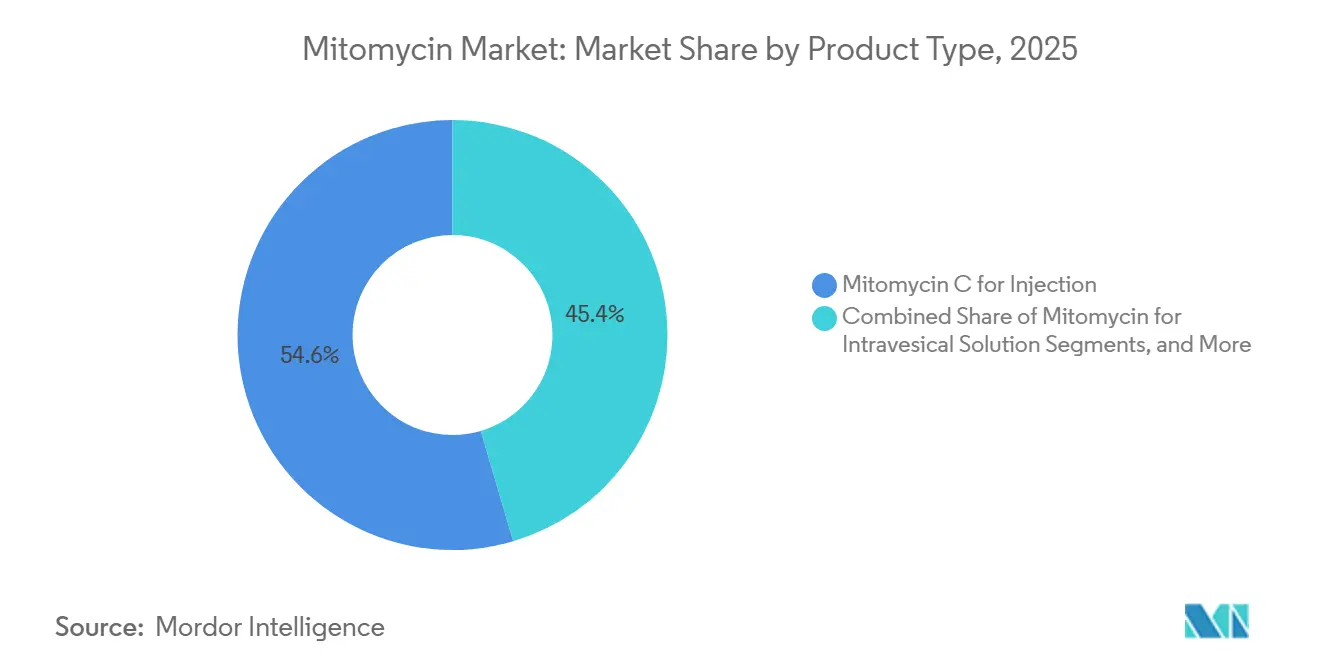
Mitomycin C for Injection held 54.56% of the mitomycin market share in 2025. Its established use in systemic protocols for gastric, pancreatic, and anal cancers, as well as intravesical treatment for non-muscle-invasive bladder cancer, supports hospital demand. Accord Healthcare, Fresenius Kabi, Meitheal Pharmaceuticals, and Asian manufacturers compete in this category, where procurement decisions depend on pricing, manufacturing reliability, and API availability. Mitomycin for Pyelocalyceal Solution and Ophthalmic Mitomycin Kits represented smaller but established revenue pools. JELMYTO benefits from expanding real-world evidence and reimbursement access in the United States. A January 2025 multicenter analysis of 56 initial complete responders across 15 academic and community centers reported 68% recurrence-free survival at 3 years.
Mitomycin for Intravesical Solution is forecast to grow at a 9.45% CAGR through 2031. ZUSDURI generated USD 50.4 million in Q2 2026 revenue, while UroGen activated 1,444 sites of care and recorded 452 unique prescribers by June 30, 2026. UroGen submitted an NDA for UGN-103 on August 17, 2026. The next-generation product has simplified reconstitution and an extended shelf life, improving its practicality beyond specialist urology centers. Ophthalmic kits retain a stable role as minimally invasive glaucoma surgery expands mitomycin use for subconjunctival implant augmentation. The product mix is shifting toward high-volume generics, facing pricing pressure, and specialty formulations with higher value contribution.



By Therapeutic Area: Urology Gaining Clinical and Commercial Momentum
Oncology accounted for 55.45% of the mitomycin market size in 2025. Mitomycin C is used in combination regimens for gastric and pancreatic adenocarcinoma, anal canal cancer, and HIPEC for peritoneal carcinomatosis. Its use across multiple treatment settings supports demand for conventional products and reduces reliance on a single oncology protocol. Hospital oncology pharmacies maintain established workflows for injectable preparation and administration. Ophthalmology and other surgical applications account for the remaining therapeutic demand, with trabeculectomy-associated use established across multiple geographies. A 2025 study reported 65.9% combined or qualified success at 8 years for trabeculectomy with mitomycin C in primary and secondary glaucoma.
Urology is forecast to grow at a 10.52% CAGR through 2031. Growth is supported by rising non-muscle-invasive bladder cancer incidence, chemoablative treatment options, and expanding commercial infrastructure for sustained-release products. The September 2026 AUA and Society of Urologic Oncology amendment included 40 new recommendations based on a literature review through December 2025. The guidance supports active surveillance, office-based treatment, and chemoablative therapies as alternatives to repeat transurethral resection for selected patients with recurrent low-grade disease. JELMYTO also supports kidney-sparing care for low-grade upper-tract urothelial carcinoma. This need is particularly relevant for older patients, whose median diagnosis age was 73 years in the source material.
By End User: Hospital Procurement Volume Contrasts with Specialty Center Growth Rate
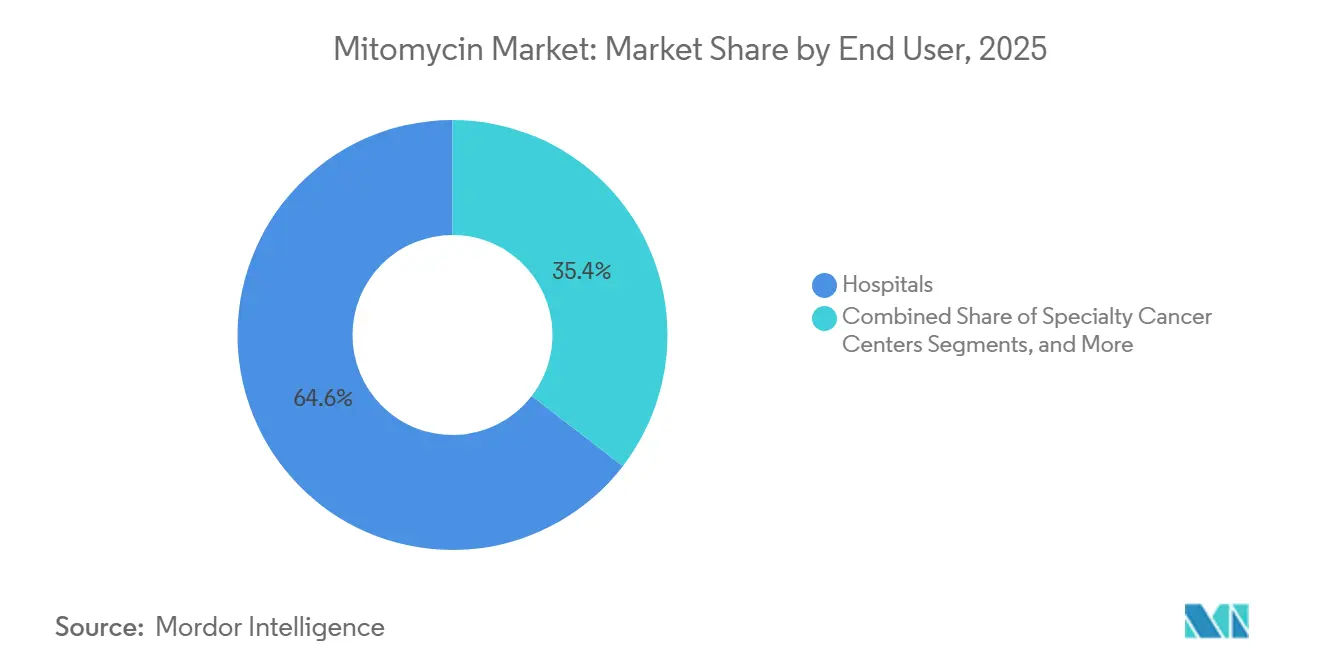
Hospitals represented 64.56% of end-user revenue in 2025. Their position reflects large-scale procurement of injectable mitomycin C through established oncology pharmacy systems. Hospital-based infusion centers remain the primary treatment setting for many systemic cancer protocols and also support intravesical procedures and glaucoma filtration surgery. Ambulatory Surgery Centers contribute to demand through non-muscle-invasive bladder cancer treatment and ophthalmic procedures. Ophthalmology Clinics use mitomycin kits for pterygium excision and glaucoma filtration. Cancer Research Institutes contribute through clinical studies of new treatment combinations, including the ongoing HIVEC-HEAT study for BCG-non-responsive or intolerant non-muscle-invasive bladder cancer.
Specialty Cancer Centers are forecast to grow at an 11.23% CAGR through 2031, the highest growth rate within the end-user classification. UroGen’s commercial model focuses on specialty urology and oncology sites that manage in-clinic catheter-based administration. Repeat prescribers accounted for 45% of all ZUSDURI writers by June 30, 2026. The product’s J-Code reimbursement pathway suits sites with dedicated billing and treatment workflows. Co-location of urology and oncology specialists also supports patient selection for intravesical chemoablation. These centers may take a larger role in the specialty side of the mitomycin market, while hospitals retain their central role in conventional oncology volume.
By Dosage Form: Intravesical Forms Record the Highest Forecast CAGR Across All Segments
Intravenous dosage forms held 44.76% of revenue in 2025. This share reflects systemic use in multidrug regimens for anal cancer and gastric carcinoma, as well as HIPEC protocols for peritoneal carcinomatosis from colorectal and appendiceal cancers. Standardized intravenous administration across oncology centers supports continued demand for this dosage form. Topical forms are mainly used as ophthalmic adjuncts in pterygium excision and trabeculectomy. These forms maintain demand as glaucoma surgery volumes increase, although their use depends on the availability of trained ophthalmic teams. Asia-Pacific supports this demand through expanding ophthalmic surgical capacity.
Intravesical dosage forms are forecast to grow at a 12.30% CAGR through 2031, the highest growth rate across the dosage-form and segment categories in the supplied analysis. ZUSDURI’s United States launch and the prospective approval of UGN-103 are the principal commercial drivers. RTGel delivers mitomycin as a semi-solid gel at body temperature for bladder-selective chemoablation. The supplied analysis stated that this treatment approach can address up to 80% of treated tumors without repeat surgical resection. Hyperthermic Mitomycin Medac is also being evaluated in the HIVEC-HEAT Phase 3 trial across 25 United Kingdom sites for BCG-unresponsive non-muscle-invasive bladder cancer. Sustained-release hydrogel and thermally enhanced delivery support a broader role for intravesical treatment in the mitomycin market.
Geography Analysis
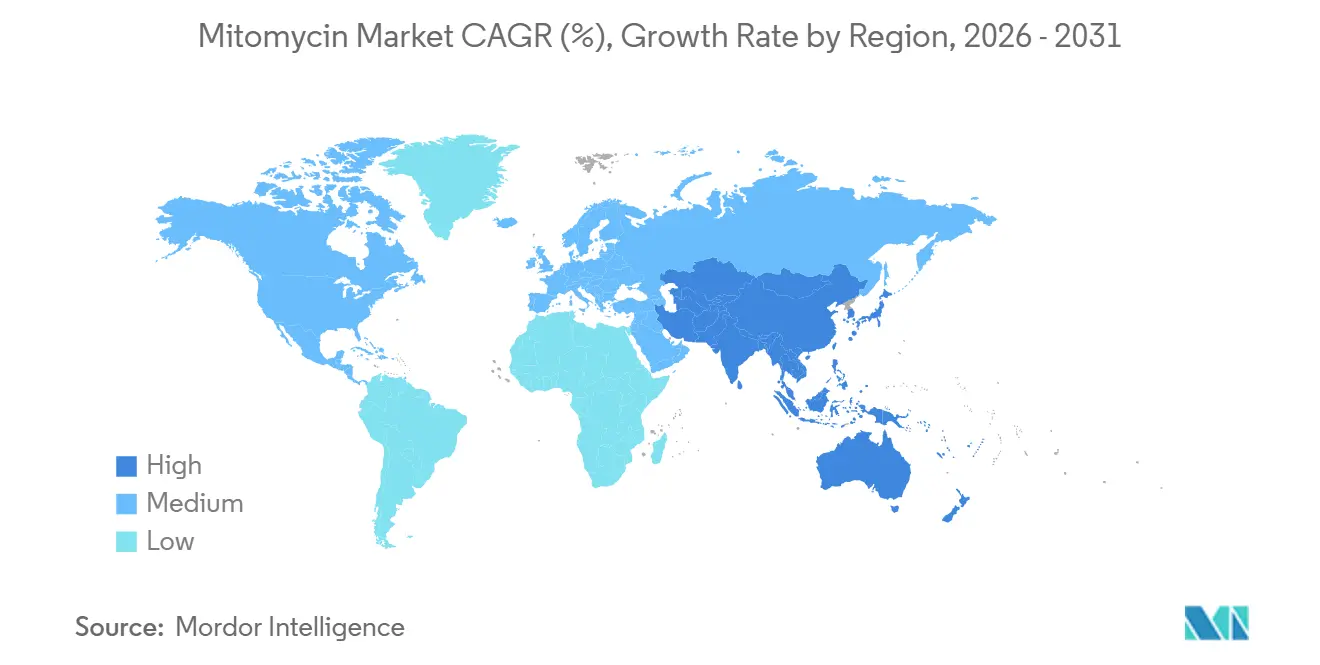
North America held 41.95% of the mitomycin market share in 2025, supported by two FDA-approved specialty formulations, established oncology reimbursement, and high bladder cancer prevalence. The United States recorded a bladder cancer prevalence of 0.101% in 2021, with 31 states reporting prevalence above 0.1%. ZUSDURI had 1,444 activated sites of care and generated USD 50.4 million in Q2 2026 revenue, while JELMYTO generated USD 94 million in 2025 and has 2026 revenue guidance of USD 97-101 million. Canada and Mexico use hospital-based injectable protocols, while Brazil and Argentina rely on public oncology programs and registered supply chains.
Europe is the second-largest regional market in the analysis. Germany, France, the United Kingdom, and Italy are high-volume oncology hubs with established non-muscle-invasive bladder cancer and glaucoma surgery protocols. The 2026 EAU guideline update added treatment tables for BCG-unresponsive tumors and a section on de-intensification for low-grade recurrent disease, supporting greater consideration of intravesical treatment options. The United Kingdom hosts the 25-site HIVEC-HEAT Phase 3 trial, while Spain and other countries retain conventional mitomycin C in public hospital oncology and urology formularies.
Asia-Pacific is forecast to grow at a CAGR of 10.67% through 2031. India supports production and consumption, with Intas Pharmaceuticals manufacturing Mutamycin for Accord BioPharma. Japan, Australia, South Korea, and other regional countries support demand through organ-preserving care, glaucoma surgery, and generic oncology procurement, while the Middle East and Africa offer potential through GCC procurement and South African public oncology formularies.

Competitive Landscape
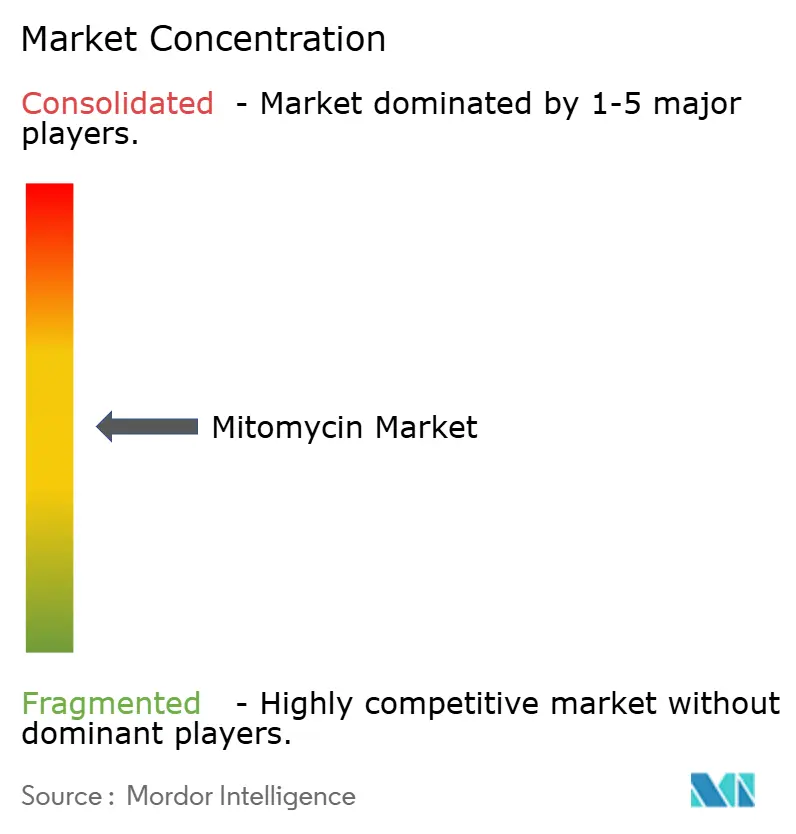
The mitomycin market comprises a broad generic injectable segment and a concentrated specialty formulation segment. Intas Pharmaceuticals Limited, Teva Pharmaceutical Industries Ltd., Alkem Laboratories Limited, Meitheal Pharmaceuticals, Inc., and UroGen Pharma Ltd. compete in the injectable product segment based on price, supply reliability, and regulatory compliance. Accord Healthcare’s planned April 2025 package insert update highlights the ongoing regulatory maintenance required to retain product access (FDA DailyMed). UroGen Pharma controls the specialty segment through RTGel formulations used in ZUSDURI and JELMYTO. JELMYTO is projected to generate USD 94 million in revenue in 2025, and the company has provided revenue guidance of USD 97–101 million for 2026.
UroGen is using product lifecycle development to strengthen its specialty position in the mitomycin market. The company has entered into a licensing and supply agreement with Medac for the lyophilized mitomycin formulation used in UGN-103. It plans to submit the UGN-103 NDA in August 2026, following Phase 3 UTOPIA results. A pending U.S. Patent and Trademark Office Notice of Allowance could extend patent protection for RTGel combined with lyophilized mitomycin through July 2044. UroGen’s anticipated June 2026 settlement with Teva would allow Teva to market a generic version of JELMYTO from September 15, 2030, subject to FDA approval. The company is also advancing UGN-104 as a potential successor product in its upper-tract program.
Medac GmbH is evaluating hyperthermic intravesical mitomycin in the HIVEC-HEAT study for patients with BCG-unresponsive, high-grade non-muscle-invasive bladder cancer. UroGen has also received IND acceptance for UGN-501, an oncolytic virus candidate combined with RTGel delivery for high-grade disease . In response to buyer concerns regarding supplier concentration, generic manufacturers are likely to prioritize diversified supply arrangements and multiple active pharmaceutical ingredient (API) sources. These strategies reinforce the contrast between the fragmented generic base and the concentrated specialty product segment in the mitomycin market.
Mitomycin Industry Leaders
Intas Pharmaceuticals Limited
Teva Pharmaceutical Industries Ltd.
Alkem Laboratories Limited
Meitheal Pharmaceuticals, Inc.
UroGen Pharma Ltd.
- *Disclaimer: Major Players sorted in no particular order

Recent Industry Developments
- August 2026: UroGen Pharma submitted an NDA for UGN-103 to the U.S. FDA, supported by Phase 3 data showing a 77.8% complete response rate at three months and a 94.5% six-month duration of response.
- September 2026: The American Urological Association and Society of Urologic Oncology issued a guideline amendment with 40 recommendations, supporting chemoablative therapies for selected patients with recurrent low-grade disease.
- June 2026: UroGen Pharma and Teva Pharmaceuticals settled JELMYTO patent litigation, allowing Teva to market a generic version from September 15, 2030, subject to FDA approval.


Global Mitomycin Market Report Scope
As per the scope of the report, mitomycin is a potent chemotherapy medication and antibiotic derived from the soil bacterium Streptomyces caespitosus. It works by attaching to and cross-linking DNA strands, which stops cells from copying their DNA and causes them to die.
The Mitomycin Market is segmented by product type, therapeutic area, end user, dosage form, and geography. By product type, the market includes mitomycin C for injection, mitomycin for intravesical solution, mitomycin for pyelocalyceal solution, and ophthalmic mitomycin kits. By therapeutic area, the market is segmented into oncology, urology, ophthalmology, and other surgical applications. By end user, the market is segmented into hospitals, specialty cancer centers, ambulatory surgery centers, ophthalmology clinics, cancer research institutes, and others. By dosage form, the market is segmented into intravenous, intravesical, topical, and others. By geography, the market is analyzed across North America, Europe, Asia-Pacific, the Middle East and Africa, and South America. The report also covers the estimated market sizes and trends for 17 countries across major regions globally. The report offers market sizes and forecasts in terms of value (USD) for the above segments.
| Mitomycin C for Injection |
| Mitomycin for Intravesical Solution |
| Mitomycin for Pyelocalyceal Solution |
| Ophthalmic Mitomycin Kits |
| Oncology |
| Urology |
| Ophthalmology |
| Other Surgical Applications |
| Hospitals |
| Specialty Cancer Centers |
| Ambulatory Surgery Centers |
| Ophthalmology Clinics |
| Cancer Research Institutes |
| Others |
| Intravenous |
| Intravesicles |
| Topical |
| Others |
| North America | United States |
| Canada | |
| Mexico | |
| Europe | Germany |
| United Kingdom | |
| France | |
| Italy | |
| Spain | |
| Rest of Europe | |
| Asia-Pacific | China |
| India | |
| Japan | |
| Australia | |
| South Korea | |
| Rest of Asia-Pacific | |
| Middle East and Africa | GCC |
| South Africa | |
| Rest of Middle East and Africa | |
| South America | Brazil |
| Argentina | |
| Rest of South America |
| By Product Type | Mitomycin C for Injection | |
| Mitomycin for Intravesical Solution | ||
| Mitomycin for Pyelocalyceal Solution | ||
| Ophthalmic Mitomycin Kits | ||
| By Therapeutic Area | Oncology | |
| Urology | ||
| Ophthalmology | ||
| Other Surgical Applications | ||
| By End User | Hospitals | |
| Specialty Cancer Centers | ||
| Ambulatory Surgery Centers | ||
| Ophthalmology Clinics | ||
| Cancer Research Institutes | ||
| Others | ||
| By Dosage Form | Intravenous | |
| Intravesicles | ||
| Topical | ||
| Others | ||
| By Geography | North America | United States |
| Canada | ||
| Mexico | ||
| Europe | Germany | |
| United Kingdom | ||
| France | ||
| Italy | ||
| Spain | ||
| Rest of Europe | ||
| Asia-Pacific | China | |
| India | ||
| Japan | ||
| Australia | ||
| South Korea | ||
| Rest of Asia-Pacific | ||
| Middle East and Africa | GCC | |
| South Africa | ||
| Rest of Middle East and Africa | ||
| South America | Brazil | |
| Argentina | ||
| Rest of South America | ||


Key Questions Answered in the Report
What is driving growth in the mitomycin market?
Growth is supported by sustained-release intravesical formulations, recurring non-muscle-invasive bladder cancer treatment needs, ophthalmic surgery use, and kidney-sparing treatment options.
What is the projected size of the mitomycin market by 2031?
The mitomycin market is projected to reach USD 318.24 million by 2031, from USD 214.59 million in 2026, at an 8.20% CAGR.
Which mitomycin product type is growing fastest?
Mitomycin for Intravesical Solution is forecast to grow at a 9.45% CAGR through 2031, supported by ZUSDURI and the UGN-103 development program.
Which therapeutic use is expanding most quickly?
Urology is forecast to grow at a 10.52% CAGR through 2031 as intravesical chemoablation options gain clinical and commercial support.
Which dosage form has the highest forecast growth?
Intravesical dosage forms are forecast to grow at a 12.30% CAGR through 2031, the highest rate among the supplied segment categories.
What limits wider use of mitomycin treatments?
Hazardous-drug handling needs, administration complexity, and competition from BCG, gemcitabine, combination therapies, and future generic products can limit adoption.
Page last updated on:





