
Market Overview
| Study Period | 2021 - 2031 |
|---|---|
| Forecast Data Period | 2026 - 2031 |
| Base Year Market Size (2025) | USD 630.21 Million |
| Market Size (2026) | USD 667.39 Million |
| Market Size (2031) | USD 889.43 Million |
| Growth Rate (2026 - 2031) | 5.90 % |
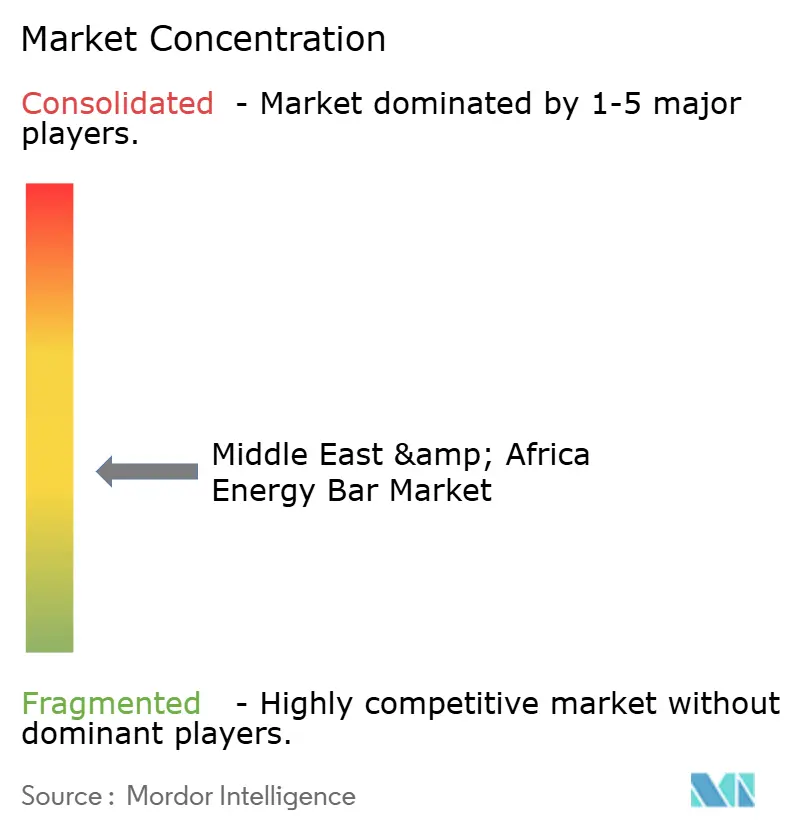
| Market Concentration | Medium |
Major Players *Disclaimer: Major Players sorted in no particular order Image © Mordor Intelligence. Reuse requires attribution under CC BY 4.0. | |
Middle East And Africa Energy Bar Market Analysis by Mordor Intelligence
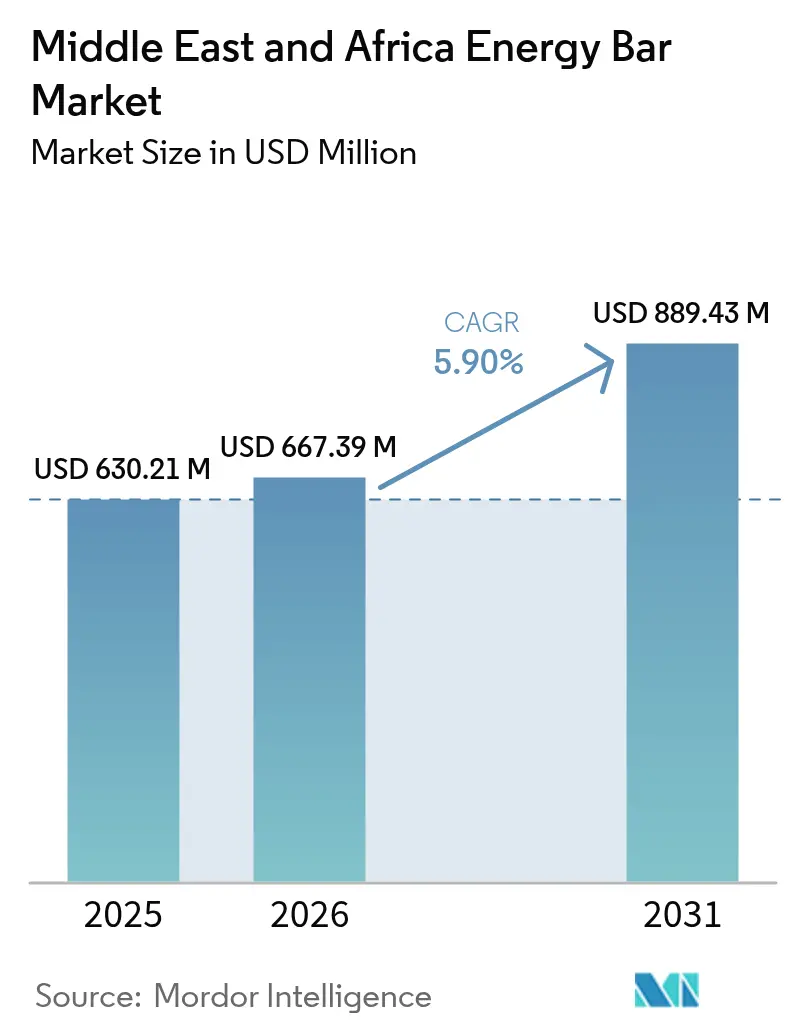
The Middle East and Africa energy bar market size in 2026 is estimated at USD 667.39 million, growing from 2025 value of USD 630.21 million with 2031 projections showing USD 889.43 million, growing at 5.90% CAGR over 2026-2031. This represents a CAGR of 6.21% during the forecast period. The market's growth is driven by several key factors reshaping consumer behavior. Increasing health and wellness awareness, spurred by rising incidences of lifestyle-related diseases such as obesity and diabetes, is encouraging a shift toward functional and nutrient-rich snacks like energy bars. Additionally, growing urbanization, the expansion of the middle class, and increasingly hectic lifestyles are boosting demand for convenient, on-the-go nutritional options that provide balanced energy and protein. The market is further influenced by global dietary trends and the rise of fitness-oriented cultures, as consumers increasingly seek products that align with active and health-conscious lifestyles.
Key Report Takeaways
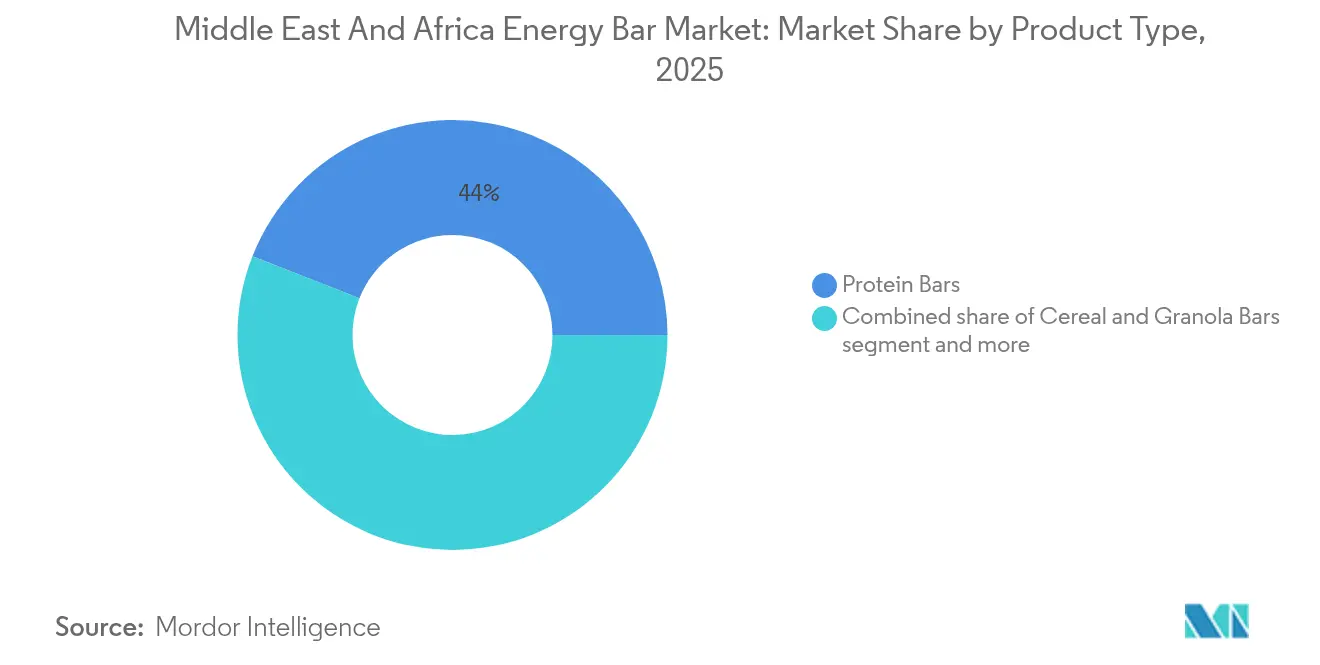
- By product type, protein bars led with 44.03% of the Middle East and Africa Energy Bar market share in 2025; meal-replacement bars are projected to expand at a 6.42% CAGR through 2031.
- By flavor profile, chocolate-based bars commanded 41.88% share of the Middle East and Africa Energy Bar market size in 2025, while fruit-based variants are advancing at a 6.85% CAGR through 2031.
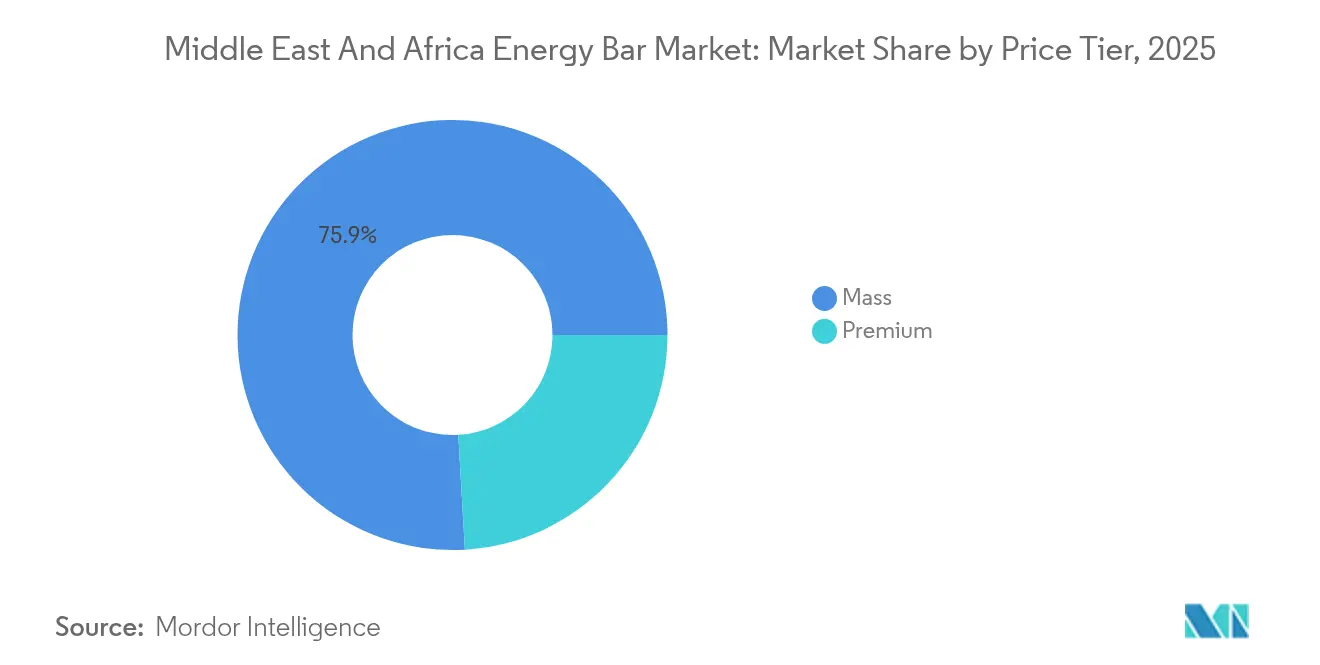
- By price tier, mass-market offerings held 75.92% volume in 2025; premium products are forecast to grow at a 6.55% CAGR through 2031.
- By distribution channel, supermarkets and hypermarkets accounted for 46.10% share in 2025; online retail stores are rising at an 7.72% CAGR through 2031.
- By geography, South Africa contributed 20.95% revenue in 2025, whereas the United Arab Emirates is poised for a 7.01% CAGR to 2031.
Note: Market size and forecast figures in this report are generated using Mordor Intelligence’s proprietary estimation framework, updated with the latest available data and insights as of 2026.
Market Trends and Insights
Drivers Impact Analysis of Middle East And Africa Energy Bar Market*
| Driver | (~) % Impact on CAGR Forecast | Geographic Relevance | Impact Timeline |
|---|---|---|---|
| Rising health and wellness awareness | +1.5% | Global, with peak intensity in GCC (United Arab Emirates, Saudi Arabia, Qatar) and South Africa | Medium term (2-4 years) |
| Influence of western dietary trends | +0.7% | GCC, South Africa, Turkey; limited penetration in North Africa and Sub-Saharan Africa | Medium term (2-4 years) |
| Increasing focus on fitness trends and sports nutrition | +1.2% | GCC core (United Arab Emirates, Saudi Arabia), South Africa, Turkey; spillover to Egypt, Morocco | Medium term (2-4 years) |
| Innovation in product formulations | +0.8% | Global, with localized flavor concentrated in Saudi Arabia, South Africa | Long term (≥ 4 years) |
| Rising digital and social media influence | +0.6% | GCC (99% United Arab Emirates, 93% Saudi internet penetration), South Africa, Egypt; emerging in Nigeria | Short term (≤ 2 years) |
| Shift toward convenient, on-the-go foods | +1.0% | Urban centers across MEA (Dubai, Riyadh, Johannesburg, Cairo, Istanbul, Lagos) | Short term (≤ 2 years) |
| Source: Mordor Intelligence | |||
Rising Health and Wellness Awareness
The increasing focus on health and wellness across the Middle East and Africa is a significant driver for the energy bar market. This trend is primarily fueled by rising concerns over lifestyle-related diseases, such as obesity, diabetes, and cardiovascular conditions. The region is witnessing a sharp increase in the prevalence of these health issues, encouraging consumers to make more informed dietary choices and prioritize the nutritional value of their snacks. For instance, the International Diabetes Federation estimates that the number of individuals with diabetes in Africa will grow by 142% between 2024 and 2050 [1]. Similarly, the Middle East and North Africa region is expected to see a 92% increase during the same period, underscoring a critical public health challenge. This heightened awareness, particularly among urban populations, is driving a shift toward healthier snack options, including protein bars, meal-replacement bars, and energy bars made with fruits or nuts, which offer functional and nutritious benefits.
Influence of western dietary trends
The increasing influence of Western dietary trends is a key factor driving consumer preferences and boosting the demand for energy bars in the Middle East and Africa (MEA). Globalization, exposure to Western media, international travel, and the presence of expatriate communities have familiarized consumers with global health and fitness cultures that emphasize functional nutrition, protein consumption, and convenient snacking options. Western dietary habits, which often focus on high-protein, low-sugar, and balanced macronutrient profiles, are encouraging a shift from traditional snacking practices to more health-oriented choices, such as protein bars, meal replacements, and energy bars enriched with vitamins and minerals. Furthermore, Western brands have established a strong presence in the region, introducing product innovations and marketing strategies that enhance consumer awareness and preference for energy bars as both performance aids and healthy snack options.
Increasing focus on fitness trends and sports nutrition
The growing emphasis on fitness trends and sports nutrition is a key driver of the energy bar market in the Middle East and Africa (MEA). This growth is supported by increasing health awareness and government initiatives promoting active lifestyles. For instance, in Abu Dhabi, the Department of Community Development reported a notable rise in physical activity levels, with 53% of consumers meeting the World Health Organization’s recommended physical activity guidelines in 2024 [2]. This increase in fitness participation reflects a broader regional trend, with urban populations engaging more in exercise, sports, and wellness activities. The rising number of gym memberships and the growing interest in activities such as running and cycling highlight the demand for convenient, functional nutrition products that support energy, recovery, and performance. Energy bars, particularly protein-rich and meal-replacement options, cater to these needs by offering balanced nutrition in portable formats suitable for consumption before, during, and after workouts.
Innovation in product formulations
Innovation in product formulations is a significant factor driving the growth of the energy bar market in the Middle East and Africa (MEA). Consumers are increasingly seeking snacks that offer variety, functionality, and enhanced nutritional benefits. In response, manufacturers are expanding their product portfolios to include energy bars tailored to specific dietary requirements, taste preferences, and health objectives. These products aim to combine indulgence with nutrition to appeal to a broader consumer base. For example, Be Kind, a prominent brand in Saudi Arabia, offers a variety of protein bars in flavors such as Hazelnut Dark Chocolate, Milk Chocolate Protein Bar, and Dark Chocolate with Nuts and Sea Salt. Each bar contains approximately 12 grams of protein, addressing consumer demand for both taste and muscle-repair benefits. This approach particularly resonates with fitness enthusiasts and busy urban consumers.
Restraints Impact Analysis of Middle East And Africa Energy Bar Market*
| Restraint | (~) % Impact on CAGR Forecast | Geographic Relevance | Impact Timeline |
|---|---|---|---|
| Preference for traditional snacks | -0.8% | North Africa (Egypt, Morocco), Sub-Saharan Africa (Nigeria, Kenya), rural GCC | Long term (≥ 4 years) |
| Low awareness in rural and semi-urban regions | -0.6% | Sub-Saharan Africa (60% rural population), Egypt, Morocco, Saudi interior regions | Medium term (2-4 years) |
| Limited product penetration in small retail outlets | -0.4% | Nigeria, Egypt, Morocco, rural South Africa | Medium term (2-4 years) |
| Concerns over artificial ingredients and additives | -0.3% | GCC (clean-label demand), South Africa, Turkey | Short term (≤ 2 years) |
| Source: Mordor Intelligence | |||
Low awareness in rural and semi-urban regions
A key challenge for the Middle East and Africa (MEA) energy bar market is the low level of awareness and limited consumer education regarding energy bars and functional nutrition in rural and semi-urban areas. While urban centers in countries such as South Africa, the United Arab Emirates, and Saudi Arabia are witnessing increasing demand driven by rising health consciousness and fitness trends, rural and less developed regions remain largely untapped. This is primarily due to a lack of familiarity with energy bars as a convenient and nutritious snack option. The situation is further exacerbated by the limited presence of modern retail formats, restricted availability of premium or specialized products, and an underdeveloped e-commerce infrastructure in these areas. Moreover, traditional dietary habits and preferences dominate in rural regions, where consumers often prefer locally sourced or culturally familiar snacks over packaged energy bars. Price sensitivity also poses a significant barrier, limiting the adoption of higher-priced, premium, or protein-enriched bars in these markets.
Preference for traditional snacks
The preference for traditional snacks in the Middle East and Africa presents a significant challenge to the growth of the energy bar market. Cultural eating habits in the region strongly favor locally produced traditional snacks such as dates, falafel, samosas, and various baked goods. These options are often perceived as more authentic, fresh, and satisfying compared to processed energy bars, which are sometimes associated with being overly processed or lacking in cultural relevance. Traditional snacks are deeply rooted in social and familial customs, making them a preferred choice for social gatherings, religious celebrations, and daily consumption. Additionally, these snacks are typically more affordable and widely accessible in both urban and rural areas, further strengthening consumer loyalty. This creates a considerable barrier for energy bar brands attempting to penetrate price-sensitive markets and establish a foothold in a region where traditional preferences dominate.
*Our forecasts treat driver/restraint impacts as directional, not additive. The impact forecasts reflect baseline growth, mix effects, and variable interactions.
Middle East And Africa Energy Bar Market Segment Analysis
By Product Type:
Protein Bars Lead, Meal Replacements AccelerateProtein-rich bars hold a significant 44.03% share of the Middle East and Africa energy bar market value in 2025, underscoring their market dominance. This strong position is driven by several interconnected factors that align with the changing lifestyles and dietary preferences of consumers in the region. The growing health and fitness awareness among urban populations is a key driver. As more individuals participate in gym workouts, sports, and outdoor activities, the demand for convenient, nutrient-dense snacks that aid muscle recovery and energy replenishment has risen. Protein bars, with their high protein content, low sugar options, and fortified formulations, effectively cater to this demand by providing a functional, on-the-go snack that supports the nutritional goals of health-conscious consumers.
Meal-replacement bars are among the fastest-growing segments in the Middle East and Africa energy bar market, projected to grow at a CAGR of 6.42% through 2031. This growth highlights their increasing appeal to health-conscious and time-constrained consumers. The rising demand for convenient, on-the-go nutrition among busy urban populations, including working professionals, students, and fitness enthusiasts, is a primary growth driver. These consumers often lack the time for full meals but seek balanced dietary options. Unlike traditional snack bars, meal-replacement bars are designed to provide a complete mix of macronutrients, such as protein, carbohydrates, and healthy fats, often enriched with vitamins and minerals. This makes them an attractive alternative for breakfast, lunch, or post-workout meals.

By Flavor Profile:
Chocolate Dominates, Fruit Gains GroundChocolate-based bars accounted for a significant 41.88% market share in 2025 within the Middle East and Africa energy bar market, reflecting their sustained popularity and strong consumer preference. This dominance is driven by a combination of factors, including taste preference, indulgence, and familiarity, as chocolate remains a universally favored flavor across various age groups and cultural contexts in the region. Additionally, chocolate-based bars often serve as an accessible entry point to functional nutrition, allowing consumers to benefit from protein, fiber, or vitamins without compromising on taste. This combination of health benefits and indulgence appeals to both fitness enthusiasts and general consumers seeking convenient and enjoyable snack options.
Fruit-based bars, while holding a smaller market share compared to chocolate-based bars, are projected to grow at a notable CAGR of 6.85% through 2031, indicating their rising popularity in the Middle East and Africa energy bar market. This growth is primarily fueled by increasing health awareness among consumers who prioritize snacks perceived as natural, wholesome, and minimally processed. Enriched with real fruit pieces, dried fruits, or fruit purees, fruit-based bars are positioned as a convenient source of vitamins, fiber, and antioxidants. They appeal to consumers focused on preventive health, weight management, and balanced nutrition. Their reputation as a healthier alternative to indulgent chocolate or sugary snacks resonates particularly well with fitness enthusiasts, urban professionals, and younger demographics seeking nutrient-dense, on-the-go options.
By Price Tier:
Mass Market Anchors, Premium OutpacesMass-market bars accounted for 75.92% of the volume in the Middle East and Africa energy bar market in 2025, highlighting their widespread adoption and accessibility across various consumer segments. This dominance is primarily attributed to their affordability, making them a preferred option for price-sensitive consumers, including students, working professionals, and middle-class urban populations seeking convenient nutrition at a reasonable cost. These bars benefit from extensive distribution networks, including supermarkets, hypermarkets, convenience stores, and increasingly through e-commerce platforms, ensuring availability in both urban and semi-urban areas. Furthermore, mass-market bars cater to general snacking needs rather than specific dietary requirements, enhancing their appeal to a broad demographic.
Premium bars in the Middle East and Africa energy bar market are projected to grow at a CAGR of 6.55% through 2031, driven by their increasing popularity among health-conscious, urban, and affluent consumers willing to pay more for high-quality, functional, and innovative products. This growth is fueled by rising awareness of nutrition and wellness, with consumers prioritizing ingredient quality, nutrient composition, and clean-label formulations alongside convenience. Premium bars often feature attributes such as high-protein content, low sugar, natural or organic ingredients, and specialized formulations, including vegan, gluten-free, keto-friendly, or fortified variants. These characteristics position premium bars as aspirational products that extend beyond basic snacking needs.
By Distribution Channel:
Supermarkets Anchor, Online SurgesSupermarkets and hypermarkets accounted for a significant 46.10% of the distribution share in 2025 within the Middle East and Africa energy bar market, establishing themselves as the largest and most influential sales channel in the region. This dominance is driven by factors such as extensive reach, organized retail infrastructure, and the ability to offer a wide range of products under one roof, catering to varied consumer preferences. These retail formats enhance visibility and accessibility for both mass-market and premium energy bar brands, enabling consumers to conveniently compare products, flavors, and nutritional profiles. Additionally, promotions, in-store sampling, and bundled offers further incentivize trial and repeat purchases.
Online retail stores are quickly emerging as a key growth channel for energy bars in the Middle East and Africa, fueled by increasing digital adoption and changing consumer shopping behaviors. For instance, in Saudi Arabia, internet penetration has reached approximately 99%, as reported by the Communications, Space & Technology Commission (CST), allowing a vast majority of the population to access online shopping platforms . The convenience of home delivery and access to a broader range of products, including protein bars, meal-replacement bars, chocolate-based, fruit-based, and premium variants, make online retail particularly appealing to busy urban consumers, especially younger and working demographics.
Geography Analysis
South Africa Energy Bar Market
In the Middle East and Africa, South Africa holds a significant position in the energy bar market, accounting for approximately 20.95% of the regional market share in 2025. This dominance is attributed to a well-developed fitness-nutrition culture and a strong demand for functional snacks. Factors such as a developed retail infrastructure, an urbanized population, and increasing health awareness contribute to the widespread adoption of energy bars, including both protein-rich and meal-replacement varieties. As one of the more developed markets in Africa, South Africa offers a stable consumer base familiar with Western-style convenience nutrition, supporting consistent demand and enabling manufacturers to justify broad distribution and product diversification.
United Arab Emirates Energy Bar Market
The United Arab Emirates is projected to grow at a compound annual growth rate (CAGR) of 7.01% in the energy bar segment through 2031. This growth is supported by government-led wellness and public health initiatives, such as the Dubai Fitness Challenge (DFC). The 2025 edition of the DFC introduced the "Fuel Your Challenge" nutrition initiative, emphasizing the importance of healthy eating alongside physical activity. These initiatives, coupled with a growing fitness culture, high living standards, and a large expatriate population receptive to global nutritional trends, position the United Arab Emirates as both a consumption and innovation hub for energy bars.
Turkey and Nigeria Energy Bar Market
Beyond established markets, emerging economies like Turkey and Nigeria present significant growth opportunities. Turkey's large young population and increasing urban active-lifestyle trends position it as a market where western-style convenience nutrition and health awareness are gaining traction, despite historically limited penetration. Similarly, Nigeria, with its sizable population and expanding urban middle class, shows strong long-term potential for energy bar adoption. While current adoption may be hindered by price sensitivity and distribution challenges, growing awareness of fitness, nutrition, and convenience snacking, along with exposure to global wellness trends, is expected to drive meaningful demand growth in these markets over the coming years.
Regulatory Landscape
Regulation for energy bars in MEA is shaped by GCC harmonization and country-level enforcement, with labeling and claims compliance acting as the main gatekeepers for packaged snack imports and local production. The GCC Standardization Organization (GSO) issued GSO 2406:2025 (approved April 22, 2025) and maintains labeling foundations such as GSO 9:2022/Amd1:2022 for prepackaged foods, which affects how ingredient lists, allergens, nutrition panels, and Arabic labeling are presented across GCC markets.
In Saudi Arabia, the Saudi Food and Drug Authority (SFDA) publishes and enforces approved technical regulations and import clearance requirements, which can influence product formulation, shelf-life management, and logistics for bars and sports-nutrition snacks. In the UAE, market entry is tied to product registration on the ZAD platform (National Food Accreditation and Registration System) under Ministerial Decree No. 239 of 2018, alongside conformity requirements managed by the Ministry of Industry and Advanced Technology (MOIAT) for regulated products. These steps add testing, documentation, and time-to-market considerations for brands expanding portfolios or adding new SKUs.
Competitive Landscape
The Middle East and Africa Energy Bar Market is moderately concentrated, with multinational companies such as General Mills Inc., Mondelēz International, Inc., Glanbia plc, and Mars, Incorporated dominating the market. These companies hold a significant market share due to their extensive product portfolios, efficient supply chains, and advanced technological capabilities. They utilize AI-driven demand forecasting to optimize inventory management across fragmented retail networks. Additionally, blockchain technology is employed to ensure halal compliance and transparent sourcing of premium ingredients, such as whey protein and nuts, which appeal to health-conscious expatriates and urban millennials, particularly in light of increasing obesity concerns.
Local players compete by adopting agile and culturally relevant marketing strategies. They often collaborate with Instagram influencers and regional fitness icons, as well as engage with WhatsApp community groups, to build trust in emerging markets like Kenya and Nigeria. These companies emphasize affordable, halal-certified products made with indigenous superfoods such as baobab and moringa. In markets like South Africa and the United Arab Emirates, local brands focus on cost-effective production and rapid distribution through modern trade and e-commerce channels. They target mass-tier segments while fostering customer loyalty through community events and subscription models, effectively countering the scale advantages of multinational corporations.
Emerging disruptors, particularly those specializing in plant-based protein and vegan energy bars, are reshaping the market landscape. These companies cater to the growing demand for sustainable and clean-label products driven by ethical consumerism and the prevalence of lactose intolerance. They collaborate with gym chains and online platforms to drive direct-to-consumer sales, offering adaptogen-infused and low-sugar options that perform well in premium market segments. Additionally, their sustainability initiatives, such as eco-friendly packaging, resonate with Africa's younger demographic, which is increasingly seeking alternatives to traditional whey-based energy bars.
Middle East And Africa Energy Bar Industry Leaders
-
General Mills Inc.
-
Mondelēz International, Inc. (Clif Bar)
-
Glanbia plc (Optimum Nutrition)
-
Mars, Incorporated (Be-Kind)
-
Simply Good Foods Company (Quest)
- *Disclaimer: Major Players sorted in no particular order
Middle East And Africa Energy Bar Market Companies Covered in this Report
- General Mills Inc.
- Mondel?z International, Inc. (Clif Bar)
- Glanbia plc (Optimum Nutrition)
- Mars, Incorporated (Be-Kind)
- Simply Good Foods Company (Quest)
- Post Holdings
- MAX SPORT s.r.o.
- FulFil
- Kellogg Company
- Abbott Nutrition
- Herbalife Ltd.
- Barebells Functional Foods
- Kayanee KSA
- Snaq Fabriq (Saudi)
- Optitect (UAE)
- Fade Fit
- Nutri-Go
- RichLife Multibar
- David Protein
- Matomani
Read Analysis of Middle East And Africa Energy Bar Companies
Market Opportunities and Future Outlook
Local manufacturing scale-up and food-security-aligned nutrition programs in the UAE create room for date-based and fortified bar formats serving both retail and institutional channels. In April 2026, Dubai announced a date nutrition bar factory designed to produce 150 million date-fortified food units annually, signaling high-volume capability for bar-type products built on local ingredients and aligned with malnutrition interventions. This structure can also support private-label and export-oriented runs from the UAE.
Free-zone production investments also support faster regional rollout across multiple snack categories, including energy and protein bars, by pairing capacity with logistics access. In January 2026, Solico Group opened its SoFood facility in Jebel Ali Free Zone (Jafza) with an AED 130 million investment and 40 tons per day capacity aimed at serving regional and international markets, providing a concrete base for co-manufacturing, line extensions, and quicker replenishment into GCC modern trade and e-commerce. Execution still depends on aligning pack claims and labeling with GSO-aligned requirements and national enforcement, including substantiation for functional descriptors and Arabic labeling, which raises the value of compliant reformulation, bilingual packaging workflows, and region-specific SKU architectures.
Recent Industry Developments in Middle East And Africa Energy Bar Market
- April 2026: A date nutrition bar factory was launched in Dubai with a stated production target of 150 million date-fortified food units annually. The launch expands regional capacity for bar-format nutrition products and strengthens the UAE position as a manufacturing and export base for functional snacks using locally available ingredients.
- January 2026: Solico Group opened its SoFood production facility in Jebel Ali Free Zone (Jafza), backed by an AED 130 million investment and designed for 40 tons per day of output. The facility supports faster regional supply for packaged foods and provides infrastructure that can be leveraged for bar production, including contract manufacturing and multi-SKU scaling for modern trade and online channels.
- April 2024: FULFIL Chocolate Protein Bars launched in South Africa through Spar Stores. The listing broadened access to protein-oriented bars in a key MEA market and reinforced modern retail as a primary route for premium and functional bar adoption.
Middle East And Africa Energy Bar Market Report Scope and Research Methodology
Market Definition and Coverage
For this study, the market is defined as the value of packaged energy bars sold for on-the-go nutrition and performance snacking across the Middle East and Africa, captured at the point of sale across retail and similar consumer channels.
Scope exclusions: This sizing excludes homemade bars and loose, unpackaged snack formats that are not sold as labeled energy bars.
Segments Covered in This Report
- By Product type
- Protein Bars
- Cereal and Granola Bars
- Meal-Replacement Bars
- Others
- By Flavor Profile
- Chocolate-based Bars
- Fruit-based bars
- Nut and Seed-based bars
- Other Flavors
- By Price Tier
- Mass
- Premium
- Distribution Channel
- Supermarket/Hypermarket
- Online Retail Store
- Convenience Store
- Other Distribution Channels
- By Geography
- South Africa
- Saudi Arabia
- United Arab Emirates
- Nigeria
- Egypt
- Morocco
- Turkey
- Rest of Middle East and Africa
Data Sources, Market Sizing, and Validation
Desk Research
Desk research was used to set the market boundaries, build country-level context, and prepare starting assumptions before speaking with industry participants. We referenced public sources such as national statistics offices and central bank releases for inflation and exchange rates, UN Comtrade for snack and confectionery related trade signals, World Bank indicators for income and urbanization patterns, and FAO data for key input commodities that influence bar pricing.
To shape channel and category understanding, we also reviewed company annual reports and investor presentations, retailer and distributor websites, and public press coverage on launches and pricing moves. In addition, a paid subscription for company financials and a shipment-level import/export database were used selectively to cross-check supplier activity and directional trade flows. This list is illustrative only, and other public sources were also used for data collection, validation, and clarification.
Primary Interviews and Surveys
Primary work focused on validating what is actually counted as an energy bar in MEA, then stress-testing the price and channel mix behind the model. We spoke with manufacturers, distributors, modern trade teams, and category managers. We also checked views with nutrition and fitness-focused sellers to confirm how demand is shifting across key MEA markets and within the wider rest-of-region coverage.
Distribution of primary research fieldwork respondents
| Company type | Respondent position |
|---|---|
| Top tier: 30% | CXOs: 14% |
| Mid tier: 51% | Functional/Unit leaders: 32% |
| Smaller Players: 19% | Managers: 54% |
Market-Sizing & Forecasting
The core model starts from a top-down demand pool build that is reconstructed using snack-bar category consumption signals, retail channel development, and country-level purchasing power movements. This pool is then translated into energy bar value using bar-specific penetration and price ladders. To keep totals realistic, we corroborated results with selective bottom-up approximations like sampled SKU price points, typical pack sizes, channel checks on velocity, and distributor feedback on volume ranges. Totals were adjusted only where the two views stayed consistently apart.
Key inputs that influenced the market math included average unit prices by channel, share of promotions in modern trade, shifts between single bars and multipacks, growth of online retail for sports and nutrition products, and local-currency inflation patterns that affect shelf pricing. For the forecast, scenario analysis was used around pricing and demand elasticity, supported by interview-based expectations on how quickly premium and functional claims spread into mainstream retail. Where bottom-up detail was thin for smaller countries, gap handling was done through proxying using similar income and channel structure markets, and then validating the direction with regional distributors.
Data Validation & Update Cycle
Validation was done through multiple checks so that one noisy data point does not drive the result. We compared the modeled output against independent signals like trade direction, category pricing moves, and channel expansion. Any large variance triggered a re-check of assumptions before sign-off.
Before publishing, the model and narratives go through stepwise analyst reviews, followed by targeted re-contacts if a country or channel looks out of line. Reports are refreshed annually, and interim updates are made when material events occur, such as sharp currency moves, major regulatory changes on labeling, or sudden price resets in modern trade. Right before delivery, a final analyst pass is completed so clients receive the latest updated view.
Mordor Intelligence's Middle East and Africa Energy Bar Market Size Measured Against Other Published Estimates
Published market sizes for MEA energy bars can look far apart even when they are talking about the same product, because boundaries and timing choices vary more than most readers expect. The biggest differences usually come from the base year selected, how local currency is converted into USD, and whether pricing is treated as a stable average or as a fast-moving mix that changes by channel.
In this study, the refresh cycle matters because a mid-year devaluation, a sudden promotion wave, or a price reset in supermarkets can change the USD value without any real change in bar consumption. For that reason, currency timing and ASP re-checks were updated close to release before being locked into the 2026 total used by Mordor Intelligence.
Benchmark comparison
| Source | Market Size | Gaps in Research Methodology |
|---|---|---|
| Mordor Intelligence | USD 667.39 M (2026) | |
| Global Consultancy A | USD 292.30 M (2023) | Uses a different base year and forecast window, and the segment framing appears to treat organic as the full category, which can understate conventional energy bars and shift the total versus a broader definition. |
| Regional Consultancy B | USD 514.95 M (2025) | Anchors sizing in 2025 with product-type emphasis, which can change what gets counted as an energy bar versus adjacent snack bars, and it may apply a different price build when promotions and channel mix change quickly. |
Overall, the spread is best explained by timing and scope choices rather than simple arithmetic. When the year, definition boundary, and price build are aligned to channel realities and then cross-checked with independent signals, the resulting market size becomes easier to trace and repeat for planning decisions.
Key Questions Answered in the Report
How large is the Middle East Africa Energy Bar market in 2026?
The market stands at USD 667.39 million and is forecast to climb to USD 889.43 million by 2031 at a 5.90% CAGR.
Which product type leads sales?
Protein bars hold the top spot with 44.03% share in 2025, benefiting from strong gym-channel presence.
Which flavor segment is growing fastest?
Fruit-based formulations are expected to grow at a 6.85% CAGR through 2031 as consumers seek clean-label, culturally familiar options.
Why are premium bars gaining traction?
Clean-label claims, halal certification, and sustainable packaging allow premium SKUs to grow at a 6.55% CAGR despite higher prices.