
Market Overview
| Study Period | 2021 - 2031 |
|---|---|
| Forecast Data Period | 2026 - 2031 |
| Base Year Market Size (2025) | USD 106.85 Million |
| Market Size (2026) | USD 114.71 Million |
| Market Size (2031) | USD 156.42 Million |
| Growth Rate (2026 - 2031) | 6.40 % |
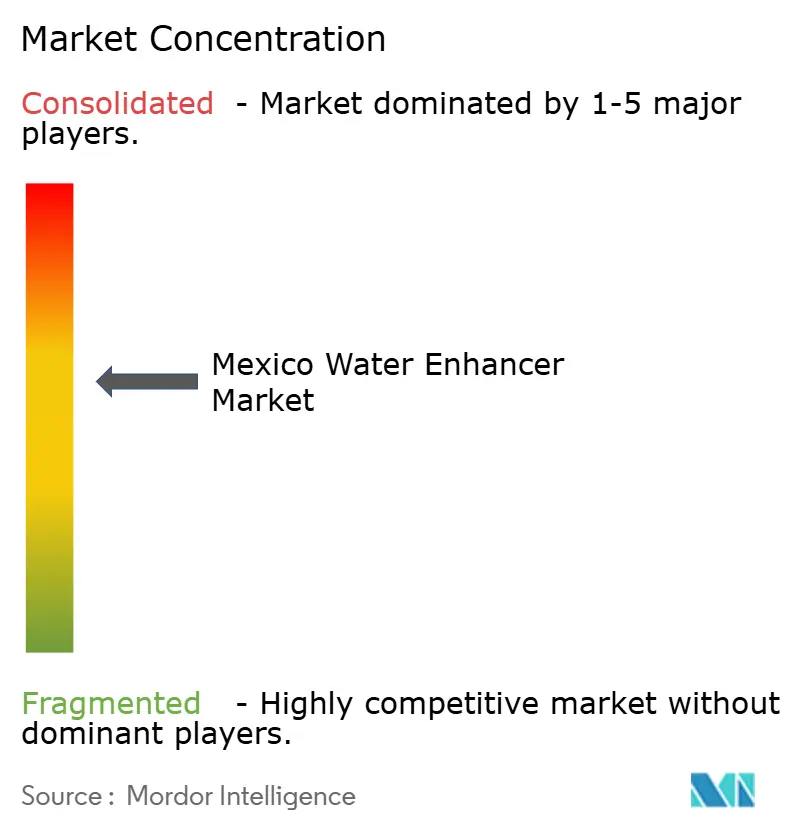
| Market Concentration | Medium |
Major Players
*Disclaimer: Major Players sorted in no particular order Image © Mordor Intelligence. Reuse requires attribution under CC BY 4.0. |
|
Mexico Water Enhancer Market Analysis by Mordor Intelligence
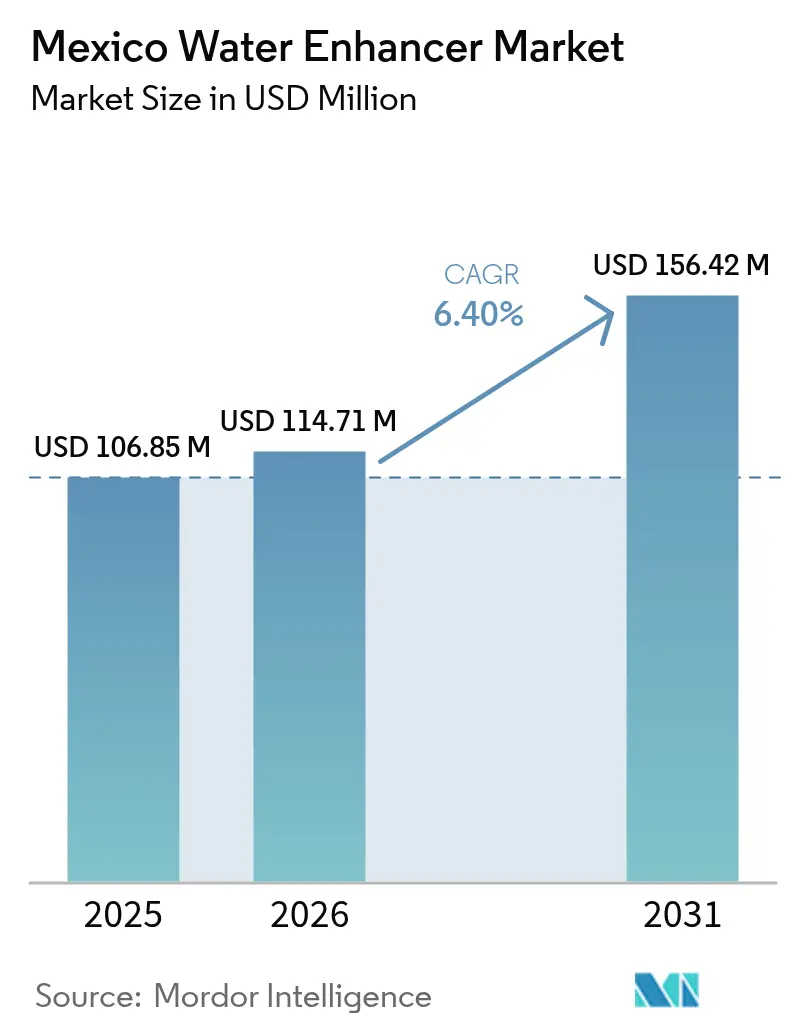
The Mexico Water Enhancer Market size is projected to be USD 106.85 million in 2025, USD 114.71 million in 2026, and reach USD 156.42 million by 2031, growing at a CAGR of 6.40% from 2026 to 2031. In key cities such as Mexico City, Guadalajara, and Monterrey, beverage purchasing habits are evolving due to factors like rising sugar taxes, the NOM-051 front-of-pack warning stamps, and an increasing urban preference for low-calorie hydration. Multinational beverage companies are responding by reformulating traditional soft drinks into zero-calorie versions. This shift not only promotes low-sugar options but also strengthens the Mexican water enhancer market, particularly in modern retail and e-commerce channels. As consumers prioritize functional benefits such as electrolytes, vitamins, and caffeine, concentrates are differentiating themselves from standard bottled water. Additionally, the use of natural sweeteners is helping products avoid warning labels and IEPS taxes. While competition in the market remains moderate, global players are capitalizing on their scale and distribution strengths, while local innovators are focusing on unique herbal flavors and direct-to-consumer strategies.
Key Report Takeaways
- By product type, Electrolyte-Enhanced formats captured 34.23% of Mexico water enhancer market share in 2025, and Herbal and Fruit Flavored variants are poised to grow at a 6.89% CAGR through 2031.
- By form, Liquid water enhancers led with 51.87% revenue share in 2025, while Powdered water enhancers are forecast to advance at a 7.12% CAGR to 2031.
- By distribution channel, Supermarkets and hypermarkets held 56.98% share of the Mexico water enhancer market size in 2025, and Online retail stores are set to register a 7.06% CAGR between 2026-2031.
- By geography, metropolitan Mexico City dominated with more than one-third of 2025 sales and is projected to retain leadership given modern retail penetration that exceeds 60%.
Note: Market size and forecast figures in this report are generated using Mordor Intelligence’s proprietary estimation framework, updated with the latest available data and insights as of 2026.
Mexico Water Enhancer Market Trends and Insights
Drivers Impact Analysis*
| Driver | (~) % Impact on CAGR Forecast | Geographic Relevance | Impact Timeline |
|---|---|---|---|
| Rising health and wellness focus among Mexican consumers | +1.2% | National, concentrated in Mexico City, Guadalajara, Monterrey metropolitan areas | Medium term (2-4 years) |
| Strong adoption of functional beverages supports the market | +1.0% | National, with early gains in urban centers and modern retail channels | Medium term (2-4 years) |
| Rising preference for natural ingredients | +0.9% | National, strongest in high-income urban segments | Medium term (2-4 years) |
| Hiking/outdoor recreation culture boosting lightweight hydration needs | +0.6% | Regional, concentrated in central highlands and northern states | Long term (≥ 4 years) |
| Sugar-sweetened beverage tax shifting demand to enhancers | +1.5% | National, immediate impact in modern retail and e-commerce | Short term (≤ 2 years) |
| Flavor innovation broadens appeal | +0.8% | National, with rapid adoption in convenience and online channels | Medium term (2-4 years) |
| Source: Mordor Intelligence | |||
Rising health and wellness focus among Mexican consumers
In Mexico, a staggering three out of four adults grapple with being classified as overweight or obese, and diabetes cases are on the rise. In 2024, the International Diabetes Federation reported a 16.4% prevalence of diabetes among Mexican adults[1]Source: International Diabetes Federation, "Mexico", idf.org. This alarming health scenario has spurred the Mexican government to advocate for dietary reforms, inadvertently boosting the water enhancers market. The Secretaría de Salud's 2025 Dietary Guidelines not only champion plain water over sugary drinks but also promote functional hydration products enriched with electrolytes and vitamins for the active populace. Such an official nod elevates water enhancers to a health-positive status, especially those crafted with natural sweeteners like stevia or monk fruit, steering clear of the NOM-051 warning labels. The alignment of public health campaigns, regulatory nudges, and a growing consumer appetite for functional hydration signals a robust, enduring trend in consumption patterns, transcending mere cyclical health fads.
Strong adoption of functional beverages supports the market
In Mexico, the functional beverage market is primarily driven by sports drinks, energy drinks, and fortified waters. Within this market, water enhancers hold a significant position by enabling consumers to personalize their hydration needs. These enhancers allow users to add specific functional benefits, such as electrolytes for recovery after physical activity, caffeine to enhance cognitive performance, or vitamins to strengthen immune health, all at a lower cost compared to ready-to-drink functional beverages. The proposed extension of the IEPS tax to oral rehydration salts and electrolyte drinks, if implemented, could remove the current price advantage enjoyed by products like Electrolit and Pedialyte. This change would likely push cost-conscious consumers toward untaxed water enhancers, which provide similar electrolyte benefits. Consequently, this regulatory shift highlights water enhancers as a more affordable and tax-efficient alternative to traditional functional beverages, further solidifying their role in the market.
Rising preference for natural ingredients
Mexican consumers are paying closer attention to ingredient lists. In the U.S., the absence of artificial sweeteners is highly valued by consumers, a preference reinforced by NOM-051's mandatory warnings on products containing such ingredients. This growing awareness has driven a shift in formulations toward natural alternatives like stevia, monk fruit, and allulose. Suppliers such as Cargill and ADM have introduced proprietary blends, including EverSweet and SweetRight Stevia Edgility, which address stevia's bitter aftertaste and improve solubility in concentrated liquid formats. PepsiCo's Gatorade Hydration Booster, launched in September 2024, highlights this trend. The powder features electrolytes derived from watermelon juice and sea salt, delivers 100% of the daily value for vitamins A, B3, B5, B6, and C, and excludes artificial flavors, sweeteners, and added colors. The alignment between natural ingredient preferences and COFEPRIS approvals creates a supportive environment for clean-label water enhancers, particularly those targeting health-conscious consumers willing to pay a premium for transparency.
Hiking and outdoor recreation culture boosting lightweight hydration needs
As domestic tourism rebounds, Mexico's national parks and protected areas—overseen by CONANP (Comisión Nacional de Áreas Naturales Protegidas), are witnessing a surge in visitors. Urban millennials and Gen Z, drawn to experiential wellness, are increasingly embracing hiking and outdoor activities. Water enhancers resonate with the outdoor ethos: a mere 10-gram sachet or 50-milliliter liquid concentrate can substitute a bulky 500-milliliter ready-to-drink bottle, lightening the load and curbing plastic waste. Bolstered by a strong tourism infrastructure, Mexico is experiencing a boom in hiking and adventure pursuits. In 2024, Mexico's Ministry of Tourism highlighted a significant arrival of 45.05 million international tourists[2]Source: Ministry of Tourism (Mexico), "International Traveler Surveys (EVI)", datatur.sectur.gob.mx. Meanwhile, Coca-Cola's patented fast-hydration electrolyte formulations, designed for swift sodium-glucose co-transport and rapid fluid uptake, spotlight the advanced technology now integral to portable hydration. This innovation is pivotal; outdoor enthusiasts value hydration efficacy, emphasizing absorption speed, electrolyte balance, and sustained energy, over mere flavor. With the rise of outdoor activities, heightened sustainability awareness, and advancements in hydration science, water enhancers are evolving beyond urban trends, becoming integral to lifestyle and identity.
Restraints Impact Analysis*
| Restraint | (~) % Impact on CAGR Forecast | Geographic Relevance | Impact Timeline |
|---|---|---|---|
| Safety concerns over artificial sweeteners and additives | -0.8% | National, amplified by NOM-051 labeling and social media discourse | Short term (≤ 2 years) |
| Limited consumer awareness in non-urban regions | -1.0% | Regional, concentrated in rural and peri-urban areas with traditional retail dominance | Long term (≥ 4 years) |
| Competition from traditional beverages | -0.7% | National, strongest in traditional retail and lower-income segments | Medium term (2-4 years) |
| Regulatory uncertainty for novel functional ingredients | -0.5% | National, affecting product launches and import approvals | Medium term (2-4 years) |
| Source: Mordor Intelligence | |||
Safety concerns over artificial sweeteners and additives
Health-conscious parents and wellness-oriented consumers have developed skepticism toward artificial sweeteners due to NOM-051's front-of-pack warning: "Contains sweeteners, not recommended for children". This labeling requirement, applicable to all sweeteners, from natural options like stevia to synthetic ones such as sucralose and acesulfame-K, has caused consumer confusion and reduced trials, particularly in households with children. COFEPRIS's increased oversight of dietary supplements, including on-site inspections and advertising monitoring, has raised compliance costs and delayed the market entry of new formulations. Manufacturers must verify that every additive is included on COFEPRIS's approved list; those not listed must navigate alternative regulatory pathways or reformulate their products. For water enhancer brands, this results in prolonged product development cycles, higher regulatory costs, and the risk of rejection or delays for new sweeteners or functional ingredients, threatening launch timelines and market competitiveness.
Limited consumer awareness in non-urban regions
Traditional retail formats, such as tiendas de abarrotes and mercados, dominate food and beverage sales in Mexico, particularly in rural and peri-urban areas. Water enhancers face challenges in these markets as they require consumer education on dosage, benefits, and usage occasions, which traditional retail formats are not equipped to provide. Additionally, cultural preferences for aguas frescas (fresh fruit waters) and refrescos (soft drinks) are deeply ingrained in non-urban regions, where water enhancers are often seen as unfamiliar or unnecessary. E-commerce has the potential to address this awareness gap through targeted digital marketing and subscription models, but its reach is largely limited to urban areas. Rural regions face infrastructure barriers, such as limited payment options and delivery logistics. Furthermore, brand growth is concentrated in metropolitan areas like Mexico City, Guadalajara, and Monterrey. This concentration restricts the addressable market and intensifies competition in urban channels, where brands compete for shelf space and invest heavily in promotional activities.
*Our forecasts treat driver/restraint impacts as directional, not additive. The impact forecasts reflect baseline growth, mix effects, and variable interactions.
Segment Analysis
By Product Type: Electrolyte Dominance Meets Botanical Disruption
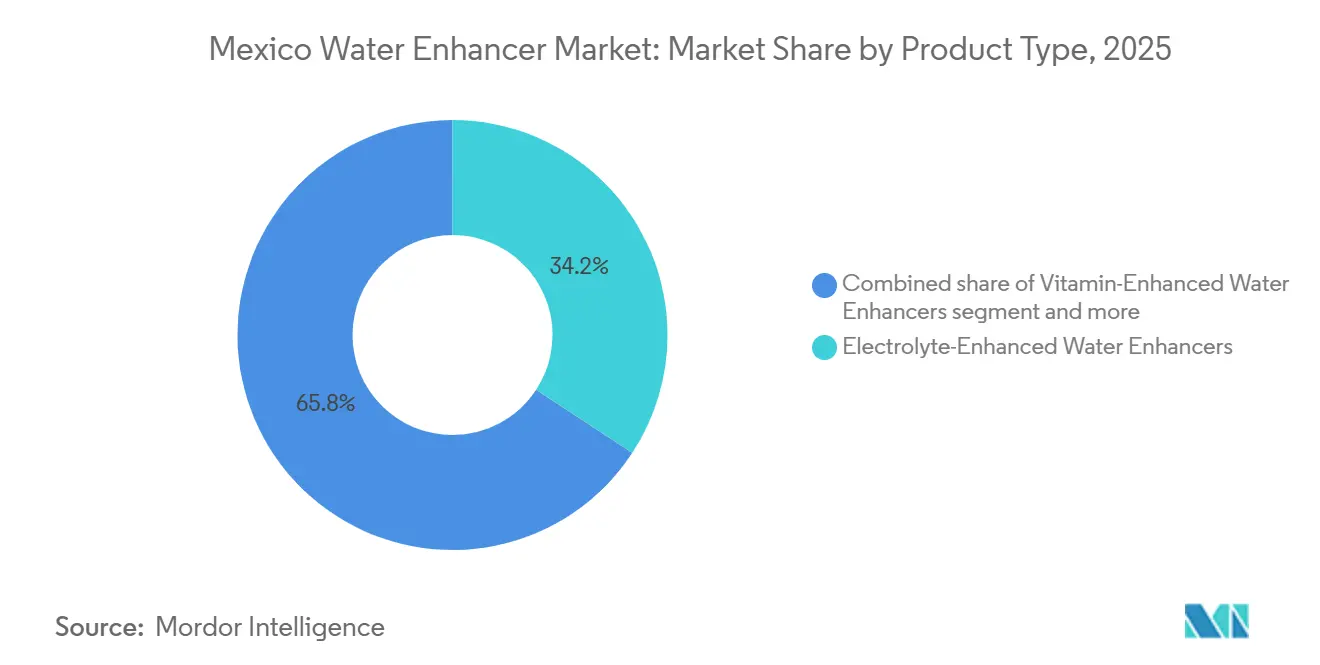
In 2025, Electrolyte-Enhanced formats accounted for 34.23% of Mexico's water enhancer market, highlighting their connection to the country's sports-drink trend and increasing gym culture. Meanwhile, herb- and fruit-flavored enhancers, particularly those featuring hibiscus, tamarind, and guava extracts, are expected to lead the market with a strong 6.89% CAGR. COFEPRIS’ approval of plant-based additives enables manufacturers to maintain cleaner labels and avoid warning stamps. Suppliers, such as Cargill, now provide stevia blends that resolve solubility challenges, achieving taste parity with traditional sugar-sweetened beverages. Additionally, millennials are attracted to premium narratives focused on botanical origins, supporting higher price points.
Demand for Vitamin-Enhanced and Caffeine-Infused variants continues to grow, driven by the popularity of functional beverages. Vitamin products meet recommended supplement intakes and emphasize immune health, while caffeine extracts compete with energy drinks while adhering to COFEPRIS regulations. The category's growth aligns with trends such as sugar tax increases, sports nutrition crossovers, and innovations like Coca-Cola’s patented sodium-glucose co-transport method, which enhances hydration speed. This diversification in product types not only protects brands from reliance on a single use-case but also expands their audience reach.



By Form: Liquid Convenience Versus Powder Economics
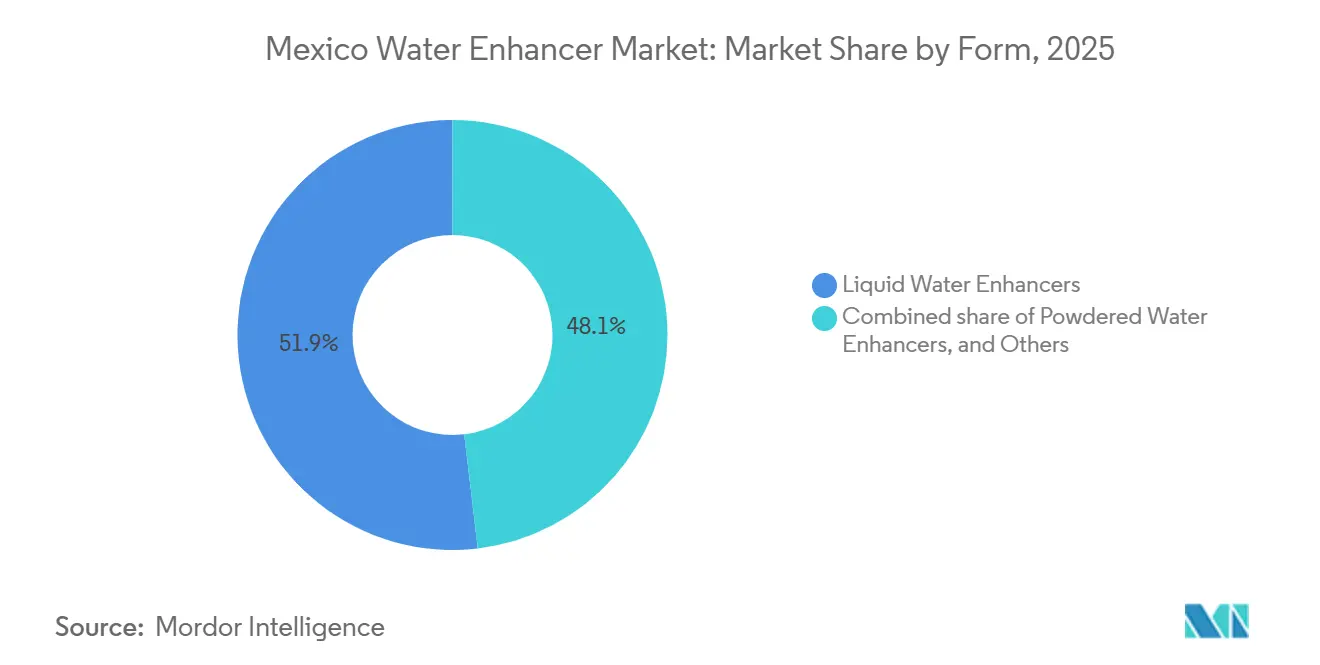
In 2025, liquid concentrates emerged as the leading segment in the market, contributing 51.87% of the total revenue. This dominance is primarily driven by the convenience offered by squeeze-bottle portability, which allows easy usage and the advantage of instant dissolution, making them highly user-friendly. Additionally, high sales volumes are supported by impulse purchases at convenience stores and the growing trend of same-day online orders, which cater to consumer demand for quick and accessible options. On the other hand, powders are projected to grow at a compound annual growth rate (CAGR) of 7.12%, owing to their cost-effectiveness and shipping efficiency. These attributes make powders particularly attractive to family households, where affordability and practicality are key considerations. Furthermore, the recent authorization of polyacrylic acid has enabled the development of smoother textures in powders, enhancing their appeal and positioning them as strong competitors to liquid concentrates. A notable example of this trend is Gatorade's Hydration Booster, which highlights a strategic shift among major players to tap into the growth potential of the powder segment.
Tablet and effervescent formats, while still niche, are gaining traction in specific use cases such as outdoor recreation, where factors like lightweight portability and extended shelf life are critical. Technological advancements, such as Coca-Cola's fast-hydration electrolyte complex, indicate the possibility of innovation within this segment. This technology could potentially be adapted to dissolvable tablets, thereby revitalizing the product pipeline and expanding the subcategory's appeal. As the Mexico water enhancer market continues to evolve, the choice of product form is expected to increasingly align with specific occasions, distribution channels, and pricing strategies, reflecting the diverse needs and preferences of consumers.
By Distribution Channel: Modern Retail Meets Digital Disruption
In 2025, supermarkets and hypermarkets accounted for a significant 56.98% market share, driven by promotions from Walmart, Soriana, and Chedraui that bundled enhancers with bottled water. Shelf space is increasingly competitive as zero-calorie sodas and functional ready-to-drink (RTD) beverages target the same consumer base. However, eye-level placements and in-store demonstrations continue to encourage product trials. Convenience stores like OXXO capitalize on their extensive 21,970-unit network to cater to on-the-go consumption. At the same time, pharmacies market enhancers as wellness products, displaying them alongside supplements.
Online retail is the fastest-growing channel, with a projected 7.06% CAGR through 2031. This growth is supported by rising mobile adoption and increasing internet penetration. According to INEGI's 2024 data, 95.5% of cellphone users in Mexico own smartphones, and 60.8% use these devices to access the internet[3]Source: INEGI, "Instituto Federal de Telecomunicaciones (IFT)", inegi.org. Digital storefronts enable features like auto-replenishment and direct brand storytelling, eliminating the need for slotting fees. Kraft Heinz’s recent launch on AB InBev’s BEES platform highlights how brands can digitally connect with one million mom-and-pop stores. Additionally, diverse payment options, particularly OXXO Pay, are driving order growth among cash-preferencing consumers. Other channels, such as gyms, corporate cafeterias, and vending machines, provide situational opportunities but remain fragmented.
Geography Analysis
Mexico is the exclusive focus of this market, showcasing a dual opportunity landscape within its borders. Major metropolitan areas, Mexico City, Guadalajara, and Monterrey, contribute the majority of market value. This is driven by higher disposable incomes, increased health awareness, and the presence of modern retail. These urban centers also serve as innovation hubs, where new flavors and formats are tested before nationwide launches. Additionally, the urban concentration of e-commerce infrastructure, offering same-day and next-day deliveries, enhances both trial and repeat purchases. This trend is particularly evident among millennials and Gen Z, who prioritize convenience and digital engagement.
In comparison, peri-urban and rural areas present a different picture: traditional retail dominates, awareness of water enhancers is low, and cultural preferences for aguas frescas and refrescos limit category growth. However, these regions represent the largest untapped potential. With dense populations and growing smartphone penetration, conditions are favorable for mobile-commerce-driven market entry. Therefore, the geographic opportunity is less about regional differences and more about strategic channel approaches: urban growth will be fueled by modern retail and e-commerce, while rural penetration will require partnerships with traditional retailers, mobile-commerce platforms, and community-based distribution models.
Mexico's regulatory framework, governed by COFEPRIS and NOM-051, applies uniformly across the country, simplifying compliance for market entrants. However, this also means that regulatory changes, such as tax increases or labeling mandates, impact all regions simultaneously. This regulatory consistency contrasts with the fragmented retail and consumer awareness landscape. As a result, brands should adopt a dual strategy: standardizing product formulations and labeling to achieve economies of scale, while tailoring marketing and distribution strategies to address regional consumption patterns and channel preferences.
Regulatory Landscape
Water enhancers marketed in Mexico as non-alcoholic beverage concentrates fall under COFEPRIS sanitary oversight, including the positive list framework for permitted additives and processing aids and the agreement determining allowed aditivos y coadyuvantes in foods, beverages, and dietary supplements. On-pack requirements anchored by NOM-051-SCFI/SSA1-2010 govern labeling, including front-of-pack warnings and ingredient disclosures that influence reformulation choices.
For concentrates and flavored beverage preparations, NOM-218-SSA1-2011 sets additional safety and sanitary specifications. The policy environment expanded in April 2024 with the Ley General de la Alimentacion Adecuada y Sostenible published in the Official Gazette, creating broader national food policy mandates and adding disclosure requirements related to genetically engineered ingredients. In December 2025, the Secretaria de Economia opened public consultation on PROY-NOM-051-SE/SSA1-2025 (changes to numeral 4.5.3), reinforcing that labeling requirements remain an active regulatory workstream that brands and importers monitor for packaging and claims updates.
Competitive Landscape
The Mexico Water Enhancer Market is moderately fragmented, with multinational beverage companies leveraging extensive bottling networks, strong brand equity, and reformulation agility to dominate mainstream segments. Meanwhile, niche players are focusing on premium and specialty markets through direct-to-consumer channels, pharmacy placements, and subscription models. Coca-Cola's patented fast-hydration electrolyte formulation, which optimizes sodium-glucose co-transport for rapid fluid absorption, highlights how established players are incorporating technical advancements into hydration products to protect margins and support premium pricing.
Strategic approaches are centered on three key areas: reformulating products to avoid NOM-051 warning labels and IEPS taxes, innovating flavors to drive consumer trials and premiumization, and utilizing omnichannel distribution to capture both impulse purchases at convenience stores and planned replenishment through e-commerce subscriptions. Opportunities remain in functional hydration tailored to specific needs, such as post-workout recovery, cognitive performance, and immune support, as well as in sustainable packaging formats like refillable concentrates and compostable sachets that appeal to environmentally conscious consumers.
Emerging disruptors include local Mexican brands that capitalize on cultural authenticity by incorporating regional botanicals and traditional flavors. These brands use direct-to-consumer models to bypass the slotting fees and promotional expenses associated with modern retail distribution. PepsiCo's partnership with GEPP demonstrates the role of technology in gaining market share, as their nationwide reformulation spans all package types and sales channels—a supply-chain and manufacturing achievement that smaller competitors struggle to replicate. COFEPRIS's regulatory framework, which includes on-site inspections, adverse-effect monitoring, and advertising oversight, imposes compliance costs that favor established players with dedicated regulatory teams. However, it also creates opportunities for brands that prioritize transparency and proactive engagement with regulators. As a result, the competitive landscape is defined by incumbents leveraging scale and distribution advantages, while niche players focus on functional innovation, clean-label positioning, and digital-first business models to capture high-value segments.
Mexico Water Enhancer Industry Leaders
-
Kraft Heinz Company
-
Nestle SA
-
The Coca-Cola Company
-
PepsiCo Inc.
-
Wisdom Natural Brands
- *Disclaimer: Major Players sorted in no particular order

Market Opportunities and Future Outlook
The strongest near-term whitespace centers on reformulated, clean-label water enhancers engineered to minimize NOM-051 front-of-pack warnings while still delivering functional benefits (electrolytes, vitamins, and caffeine) in convenient liquid and powder formats. Suppliers with beverage-application know-how for sweetener systems and functional blends provide a pathway for faster formulation cycles and compliant ingredient selection; for example, in June 2026 WIN Mexico highlighted scientific formulation support for beverage-oriented vitamin and mineral blends, aligning with the market move toward concentrated, functional hydration products that compete on portability and personalization rather than on ready-to-drink volume.
Channel and route-to-market execution remains a major lever for expanding penetration beyond metropolitan cores without taking on modern-trade slotting costs. The category benefits from digital and B2B platforms that connect branded products to fragmented traditional retail: Kraft Heinz's launch on AB InBev's BEES platform is a concrete example of how water enhancer brands can use digitized ordering to reach large networks of mom-and-pop outlets while supporting replenishment and subscription-style repeat purchases in urban e-commerce. Packaging and format innovation that improves value-per-ship (powders, sachets, and refill-style concentrates) supports both online economics and on-the-go use cases tied to outdoor recreation and convenience-led consumption.
Recent Industry Developments
- June 2026: The Kraft Heinz Company announced a new global operating structure effective July 1, 2026. The move centralizes brand and category execution across markets, enabling faster coordination of innovation and go-to-market programs for beverage mixes and enhancers sold through modern retail and e-commerce in Mexico.
- December 2025: The Secretaria de Economia opened public consultation on PROY-NOM-051-SE/SSA1-2025, changes to numeral 4.5.3, reinforcing labeling requirements as an active regulatory workstream that brands and importers monitor for packaging and claims updates.
- April 2024: The Ley General de la Alimentacion Adecuada y Sostenible was published in the Official Gazette, creating broader national food policy mandates and adding compliance attention on disclosures such as genetically engineered ingredient labeling.


Research Methodology Framework and Report Scope
Market Definition and Coverage
This market covers products bought in Mexico that are added to plain water to change taste and or add functional benefits, and they are typically used at home, work, or on the go in small servings.
Scope exclusions: Ready-to-drink flavored waters, sports drinks, and other finished beverages are excluded because they are consumed as beverages and not as add-ins.
Segmentation Overview
-
Product Type
- Vitamin-Enhanced Water Enhancers
- Electrolyte-Enhanced Water Enhancers
- Caffeine-Infused Water Enhancers
- Herbal and Fruit Flavored Water Enhancers
-
By Form
- Liquid Water Enhancers
- Powdered Water Enhancers
- Others
-
Distribution Channels
- Supermarkets/Hypermarkets
- Convenience Stores
- Pharmacy and Drug Store
- Online Retail Stores
- Other Distribution Channels
Data Sources, Market Sizing, and Validation
Desk Research
Desk work was used to build the starting map for demand, supply, and routes to market in Mexico, and then to sanity-check the model outputs. We leaned on public references such as Mexico trade and customs statistics, central bank and inflation series, and agriculture and food-related statistical releases, plus health and nutrition publications from official bodies. We also reviewed peer-reviewed articles on sweeteners and hydration behaviors, along with packaging and labeling regulations that shape product positioning.
In addition, we used company filings, investor materials, retailer category pages, and credible press to track launches, pricing direction, and channel expansion. Where helpful, paid subscriptions for company financials and intelligence, news and financials, and patent databases were used to speed up fact finding and reduce missed signals. These desk sources are illustrative only, and many other public and paid references were also checked for data collection, validation, and clarification.
Primary Interviews and Surveys
Primary work was used to test what we saw in public data and to fill gaps on mix, pricing, and channel dynamics for water enhancers across Mexico. We spoke with a mix of manufacturers, distributors, and retail-linked stakeholders, and we also included inputs from packaging and ingredient-side experts where it helped explain cost and formulation shifts. Since this is a country market, coverage was designed to reflect major consumption centers and the national retail footprint, and then assumptions were aligned to the most consistent themes we heard.
Distribution of primary research fieldwork respondents
| Company type | Respondent position |
|---|---|
| Top tier: 35% | CXOs: 14% |
| Mid tier: 50% | Functional/Unit leaders: 28% |
| Smaller Players: 15% | Managers: 58% |
Market-Sizing & Forecasting
Our sizing starts with a top-down demand pool build, where Mexico category value is reconstructed from consumption and channel signals, and then filtered to the portion that matches water enhancer formats. The totals are then checked with selective bottom-up approximations, such as sampled price points by form and channel multiplied by observed movement ranges, followed by distributor and retail checks to adjust for under-coverage.
Key inputs that shape the model include: format mix across liquid concentrates, powders, and tablets, average pack size and price-per-serving direction, modern trade versus convenience share shifts, online penetration changes, and ingredient cost pressure that can move shelf prices. Where volume data is available, it is used as a second lens so value growth is not overstated during price swings. Forecasting is done using scenario analysis supported by simple trend fitting, where drivers like real income, inflation, and channel expansion are translated into adoption and price progression, and then validated against what interviewees expect to hold over the next few years. If a channel or product type is not consistently visible in public sources, we use conservative proxy ratios from primary feedback and keep them stable until repeatable evidence suggests a change.
Data Validation & Update Cycle
Validation is handled through repeated cross-checks so the final numbers reflect more than one independent signal. We compare market totals against directional indicators like channel growth, visible price ladders, and reported category activity, and then we investigate outliers when a year-to-year change looks too sharp for the underlying drivers. Assumptions are reviewed by another analyst before sign-off, and we re-contact sources when a key variable (such as pricing or channel mix) creates a material variance.
The report is refreshed annually, and interim updates are made when major events can shift the market, such as tax changes, labeling enforcement, or a large wave of launches. Before delivery, a final pass is completed so clients receive the latest updated view rather than an older snapshot.
Mordor Intelligence's Mexico Water Enhancer Market Size Compared With Other Published Estimates
Published market values for this category can differ across sources because the product definition is not always the same, and because pricing and channel coverage are treated in different ways. Year selection also matters, since even a one-year shift can change results when inflation and pack-size changes are active.
Ready-to-drink flavored waters and sports drinks sit outside the definition used by Mordor Intelligence, which is one reason some broader beverage-enhancer style estimates land far above add-in-only totals. The other major drivers are how each publisher treats online sales coverage, how they convert currencies and timing of the exchange rate, and whether price-per-serving is updated using observed shelf prices or held flat over the forecast window.
Benchmark comparison
| Source | Market Size | Gaps in Research Methodology |
|---|---|---|
| Mordor Intelligence | USD 0.11 B (2025) | |
| Global Consultancy A | USD 0.11 B (2024) | Uses a different base year and a broader category framing where channel mapping and format cutoffs are not clearly stated, which can shift what is counted as an enhancer versus adjacent beverage products. |
| Industry Publisher B | USD 3.42 B (2025) | Likely folds in wider hydration and beverage buckets and applies high-growth assumptions with limited visibility on price-per-serving logic, making the value outcome sensitive to scope overlap and inflation-driven pricing. |
The table shows that the tightest agreement happens when the market is limited to true add-in products and when the year and pricing basis are clearly stated. By keeping the inputs tied to observable formats, channels, and price patterns, we end up with a number that clients can trace and refresh using the same repeatable steps.


Key Questions Answered in the Report
What value will the Mexico water enhancer market reach by 2031?
It is forecast to reach USD 156.42 million by 2031.
How fast is the Mexico water enhancer market growing?
The market is registering a 6.40% CAGR over 2026-2031.
Which product type holds the largest share?
Electrolyte-Enhanced formats led with 34.23% market share in 2025.
Which distribution channel is expanding the quickest?
Online retail stores are projected to grow at a 7.06% CAGR through 2031.
Page last updated on:





