
Medical Patient Financing Market Size and Share
Market Overview
| Study Period | 2020 - 2031 |
|---|---|
| Market Size (2026) | USD 22.20 Billion |
| Market Size (2031) | USD 28.5 Billion |
| Growth Rate (2026 - 2031) | 5.10 % |
| Fastest Growing Market | Asia-Pacific |
| Largest Market | North America |
| Market Concentration | Low |
Major Players *Disclaimer: Major Players sorted in no particular order Image © Mordor Intelligence. Reuse requires attribution under CC BY 4.0. | |
Medical Patient Financing Market Analysis by Mordor Intelligence
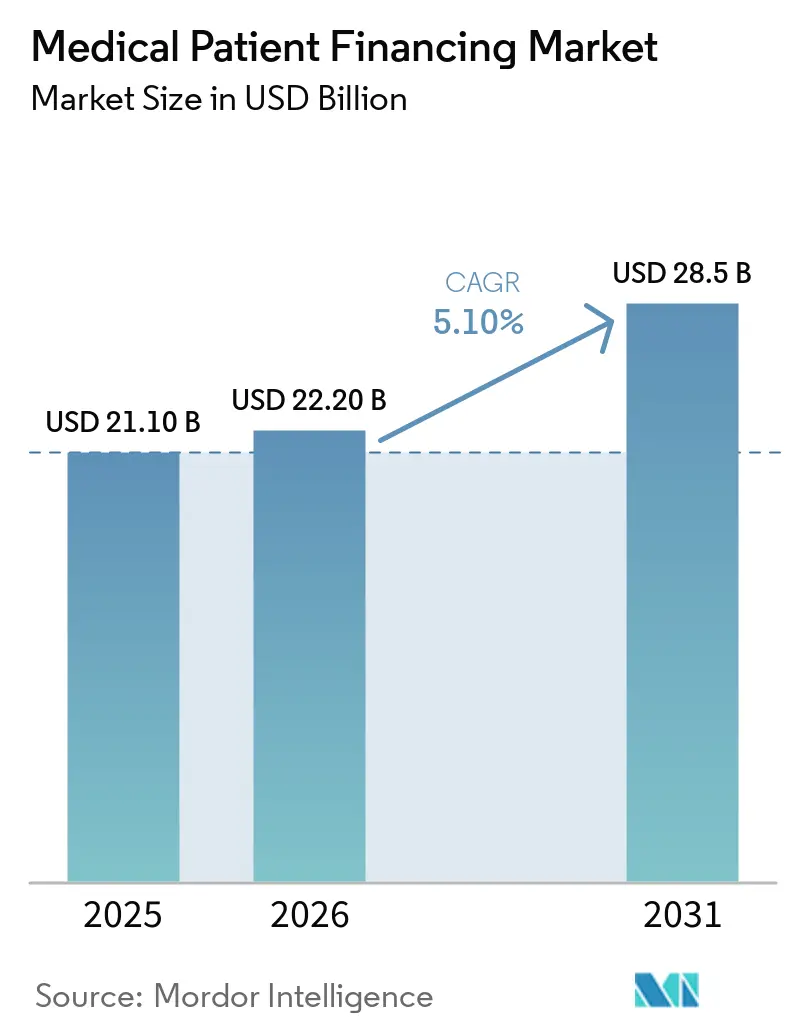
The Medical Patient Financing Market size is expected to increase from USD 21.10 billion in 2025 to USD 22.20 billion in 2026 and reach USD 28.5 billion by 2031, growing at a CAGR of 5.10% over 2026-2031.
The medical patient financing market is growing as deductibles and balances owed by insured patients make point-of-care payment arrangements necessary. The medical patient financing market also benefits when providers present financing before treatment instead of relying on conventional collections after billing. Digital payment systems are making these offers easier to use across specialty practices and independent providers. Competitive advantage increasingly depends on approval quality, workflow integration, clear terms, and regulatory controls. The medical patient financing market faces counterpressure from household debt, higher financing costs, and differing state requirements for medical credit products, making transparent repayment terms and careful affordability review important for providers and lenders.
Key Report Takeaways
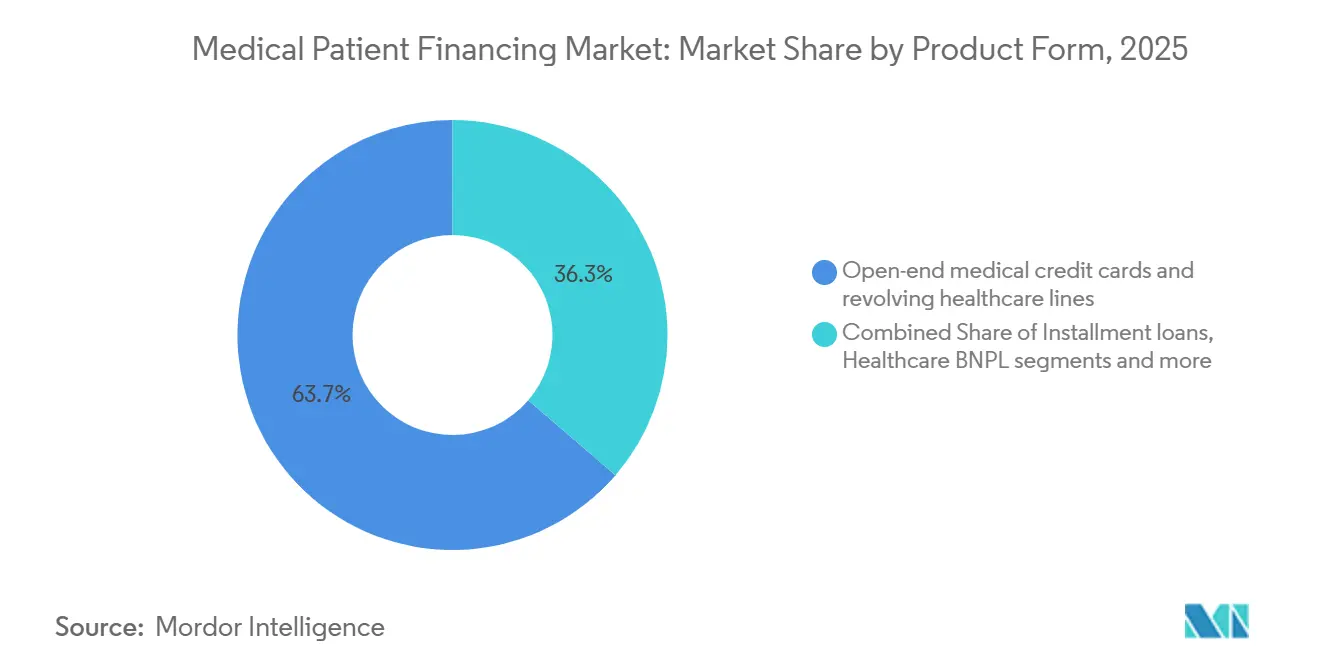
- By product form, open-end medical credit cards and revolving healthcare lines held 63.7% of the medical patient financing market share in 2025, while healthcare BNPL and short-pay point-of-care installments recorded the highest projected CAGR at 9.1% through 2031.
- By creditor, depository issuers held 72.1% of the medical patient financing market share in 2025, while non-depository licensed lenders recorded the highest projected CAGR at 7.8% through 2031.
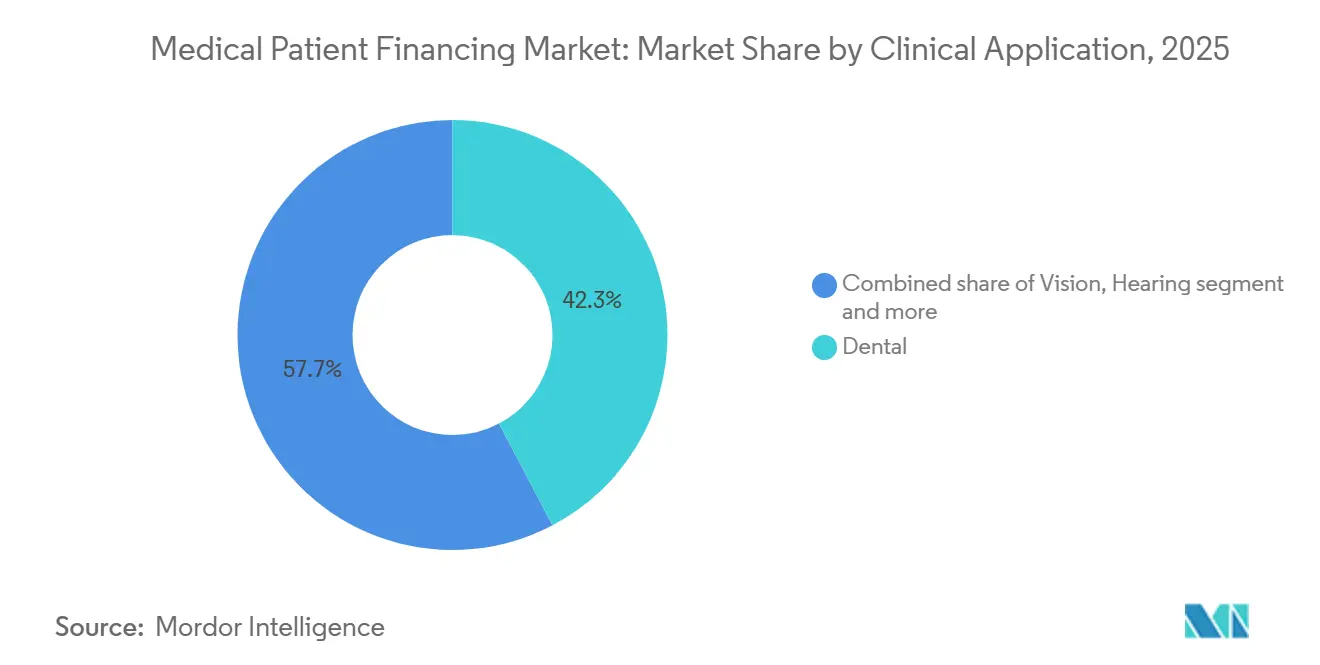
- By clinical application, dental procedures held 42.3% of the medical patient financing market share in 2025, while fertility and reproductive care recorded the highest projected CAGR at 8.2% through 2031.
- By site of care, dental practices and DSOs held 39.8% of the medical patient financing market share in 2025, while aesthetic, med-spa, and plastic surgery practices recorded the highest projected CAGR at 7.4% through 2031.
Note: Market size and forecast figures in this report are generated using Mordor Intelligence’s proprietary estimation framework, updated with the latest available data and insights as of January 2026.
Global Medical Patient Financing Market Trends and Insights
Drivers Impact Analysis*
| Driver | (~) % Impact on CAGR Forecast | Geographic Relevance | Impact Timeline |
|---|---|---|---|
| Rising Out-of-Pocket Healthcare Costs and Insurance Coverage Gaps | +1.5% | Global, with primary concentration in North America | Short term (≤ 2 years) |
| Increasing Provider Adoption of Point-of-Care Patient Financing | +0.9% | North America and Europe, with spillover to Asia-Pacific private-pay networks | Medium term (2-4 years) |
| Expansion of Elective and High Out-of-Pocket Medical Procedures | +0.8% | North America and Europe, with emerging signals in Asia-Pacific | Medium term (2-4 years) |
| Digitalization of Patient Payments and Financing Workflows | +0.7% | Global, with fastest uptake in North America and Asia-Pacific digital-first markets | Medium term (2-4 years) |
| Growing Demand for Flexible and Affordable Healthcare Payment Options | +0.5% | Global | Medium term (2-4 years) |
| Expansion of Private Healthcare and Self-Pay Treatment Across Emerging Markets | +0.4% | Asia-Pacific core, with spillover to the Middle East, Africa, and South America | Long-term (≥ 4 years) |
| Source: Mordor Intelligence | |||
Rising Out-of-Pocket Healthcare Costs and Insurance Coverage Gaps
Average single-coverage deductibles in employer-sponsored plans have risen substantially, meaning that patients receiving care early in the plan year can face a significant immediate out-of-pocket balance despite having health insurance. Federal Reserve survey data showed that many households could not cover a USD 400 emergency expense without borrowing. This makes installment financing relevant for routine treatment, not only major procedures, including dental services and other care with material patient responsibility. A 2026 study found that medical debt was associated with a 24.6 percentage-point increase in deferred dental care and a 17.6 percentage-point increase in deferred medical care[1]T. Sherry et al., “Medical Debt and Deferred Care for Physical Health, Mental Health, and Dental Needs Among U.S. Adults,” Journal of General Internal Medicine, springer.com.. Providers therefore have reason to offer payments that match household budgets before debt delays needed care, particularly when treatment can prevent later and more costly clinical needs.
Provider Adoption and Digital Payment Workflows
Providers are moving financing from back-office collection processes to treatment-plan discussions in the front office. This approach can help practices address self-pay balances before a patient leaves the care setting. Synchrony reported that 75% of consumers did not save in advance for dental procedures, while more than 1 in 4 delayed care because of cost. Stripe integrated CareCredit into eligible United States health and wellness payment flows in August 2026. Nextech also embedded Affirm installment financing in its specialty practice platform in April 2026. These integrations reduce operational friction and allow the medical patient financing market to reach providers without extensive manual setup, while keeping payment choices within the scheduling, billing, and checkout systems that staff already use.
Expansion of Elective and High Out-of-Pocket Medical Procedures
Elective services offer a clear financing use case because the patient usually knows the price before treatment. Fertility care illustrates the scale of this need, as an IVF cycle costs USD 12,000-30,000 and patients need 2.5 cycles on average. Only 25% of United States employers covered IVF in the supplied research base. This leaves patients with repeated and predictable payment obligations that can affect whether they start treatment, continue it, or delay it until funds become available. The medical patient financing market can support access when payments are offered alongside treatment planning and when patients can understand the full repayment commitment before selecting a care path. Demand may gradually shift toward employer benefits as larger employers increase fertility coverage, which could reduce reliance on direct consumer lending for some patients.
Private Healthcare Expansion and Flexible Payment Demand
Private healthcare networks and self-pay treatment are expanding the financing needs in emerging economies. The opportunity is strongest where public coverage excludes outpatient, dental, elective, or premium services. India’s PMJAY program covers inpatient care for more than 500 million people, but does not cover many outpatient and elective expenses. Digital payment adoption can make short-term installments familiar to patients before they use them for healthcare, especially where mobile payments are already a common retail payment method, giving the medical patient financing market a practical route to expand beyond traditional provider-led credit programs. The medical patient financing market can therefore expand through payment systems already used in retail settings, enabling healthcare providers to introduce payment choices through consumer interfaces that patients already recognize. Growth depends on responsible affordability assessments and lending structures that fit local regulations, since the same payment design may not be appropriate across countries with different consumer-credit protections.
Restraints Impact Analysis*
| Restraint | (~) % Impact on CAGR Forecast | Geographic Relevance | Impact Timeline |
|---|---|---|---|
| Consumer Over-Indebtedness and Credit Default Risk | -1% | Global, with highest exposure in North America and South America | Short term (≤ 2 years) |
| Increasing Regulatory Scrutiny of Consumer Healthcare Lending | -0.8% | North America and the European Union, with regulatory influence spreading to Asia-Pacific | Medium term (2-4 years) |
| High Financing Costs and Interest-Rate Sensitivity | -0.7% | North America and Europe | Medium term (2-4 years) |
| Fragmented Healthcare Billing and Payment Infrastructure | -0.5% | Global, with highest exposure in emerging markets and United States independent practices | Long-term (≥ 4 years) |
| Source: Mordor Intelligence | |||
Consumer Over-Indebtedness, Financing Costs, and Default Risk
KFF reported that millions of Americans carried substantial medical debt during the period. The CFPB estimated that 15 million Americans had a medical debt collection account on their credit report during its January 2025 rulemaking. These conditions heighten loss exposure when lenders expand eligibility to households with limited financial capacity. NBER research found that small medical debts were not meaningfully predictive of future defaults[2]National Bureau of Economic Research, “The Effects of Deleting Medical Debt from Credit Reports,” National Bureau of Economic Research, nber.org.. That result supports more careful underwriting, but it does not eliminate portfolio risk for lenders. Higher interest rates can also reduce demand for longer repayment terms and constrain affordability for larger balances, increasing the need to match product duration and payment size to a patient’s financial capacity.
Regulatory Scrutiny and Fragmented Billing Infrastructure
The CFPB reported consumer complaints involving deferred-interest representations in medical credit card programs. Illinois enacted the Dental Patient Protection Act in August 2024, limiting how dental providers can assist with credit applications and restricting certain deferred-interest enrollment practices[3]Illinois General Assembly, “Public Act 103-0682, Dental Patient Protection Act,” Illinois General Assembly, ilga.gov.. Different state rules increase compliance work for creditors that operate nationally. The Financial Conduct Authority confirmed that BNPL lending falls under Consumer Duty rules from July 15, 2026. Fragmented billing systems also make it harder for smaller providers to present a consistent payment option. The medical patient financing market must therefore link financing, billing, consent, and disclosures within workflows that providers can manage reliably, without placing complex compliance tasks on front-office teams.
*Our forecasts treat driver/restraint impacts as directional, not additive. The impact forecasts reflect baseline growth, mix effects, and variable interactions.
Segment Analysis
By Product Form: Credit Cards Lead While BNPL Expands
Open-end medical credit cards and revolving healthcare lines accounted for 63.7% of the medical patient financing market share by product form in 2025. Their lead reflects provider relationships developed across dental, vision, and specialty care networks, where staff are accustomed to discussing available credit alongside the treatment plan and anticipated patient responsibility. Their deferred-interest design also creates consumer concerns when a promotional balance is not repaid in time, especially when patients do not fully understand that interest may apply to the original purchase balance after the promotional period ends. The CFPB recorded complaints related to how deferred interest was represented in provider-distributed programs[4]Consumer Financial Protection Bureau, “Medical Debt Credit Reporting Rule,” Consumer Financial Protection Bureau, consumerfinance.gov.. Product providers must make repayment dates and potential interest costs clear at enrollment.
Healthcare BNPL and short-pay installments are projected to grow at a 9.1% CAGR through 2031. The medical patient financing market size for these products is expanding because patients expect transparent, fixed payment choices at checkout. Shorter repayment periods can serve lower-ticket procedures that did not previously justify revolving credit, helping providers offer a defined payment plan for costs that remain meaningful to a household but are below the typical balance for a long-term loan. Closed-end installment loans remain suitable for IVF, major dental work, and bariatric procedures with larger balances. Stripe’s CareCredit integration illustrates how financing can appear within standard digital payment flows. In Europe, Consumer Duty requirements will shape the affordability checks and disclosures used for short-term healthcare credit.



By Creditor: Depository Issuers Retain Scale While Specialists Gain Access
Depository issuers held 72.1% of the medical patient financing market share by creditor in 2025. Their position reflects lower funding costs, established compliance resources, and provider networks built over many years, giving large issuers the ability to support national programs and standardize operating processes across many participating practices. These issuers can offer programs across large dental and specialty networks. Their larger operating structures can also slow changes to product design and technology partnerships, particularly when each change requires review across legal, risk, operational, and provider-support functions. The medical patient financing market size is therefore seeing specialists compete through faster implementation and more tailored provider tools. Synchrony’s PRISM system evaluates up to 9,000 data attributes per application, including alternative financial data and payment behavior.
Non-depository licensed lenders are forecast to grow at a 7.8% CAGR through 2031. Specialist platforms can pursue new practice-management partnerships without the same internal review cycles associated with bank programs, an important advantage when providers want to introduce a financing choice quickly or tailor the offer to a particular specialty. Their model depends on maintaining loan quality while increasing access for patients with thin credit files. It is gaining share as dedicated lenders improve their digital experience and take more receivable risk from providers. The medical patient financing market share is increasingly shaped by lenders that can combine inclusive underwriting with clear risk controls, timely disclosures, and payment structures that providers can explain without creating patient confusion, particularly as financing moves closer to the consultation and payment stage.
By Clinical Application: Dental Provides Volume While Fertility Grows Faster
Dental procedures held 42.3% of the medical patient financing market share by clinical application in 2025. Restorations, implants, and orthodontics can create four-figure balances that standard dental coverage does not fully pay, so patients may need to consider monthly payments even when they have some form of dental insurance. This makes financing a common part of the treatment conversation in many practices, where staff need an option that can address different balance sizes and patient credit circumstances without delaying recommended care. CareCredit is embedded as a default financing tool across more than 2,500 orthodontic practices and 15,000 dental offices on Planet DDS platforms. This multi-lender approach keeps distribution broad in the medical patient financing market, even when major platforms have extensive provider relationships.
Fertility and reproductive care are projected to grow at an 8.2% CAGR through 2031. High IVF costs and the possibility of multiple treatment cycles create a predictable need for structured repayment, because a patient’s financial decision can extend across several clinical stages rather than a single scheduled procedure. Growing employer-sponsored fertility benefits may redirect a portion of demand toward employer benefit platforms. Vision, hearing, durable medical equipment, and hospital balances have different payment patterns and credit risks. Acute-care balances remain harder to assess because insurance adjudication and billing disputes can change the amount a patient ultimately owes.
By Site of Care: Dental DSOs Hold Volume While Aesthetic Practices Accelerate
Dental practices and DSOs held 39.8% of the medical patient financing market share by site of care in 2025. Their scale reflects frequent treatment needs and the consolidation of dental practices into larger groups, which allows centralized teams to negotiate with lenders and implement common payment procedures across several locations. Larger groups can deploy several financing partners across a broad patient base. This improves approval coverage while reducing reliance on one lender. The medical patient financing market size in dental care benefits from recurring procedures and predictable out-of-pocket balances, which make standardized payment terms easier for a provider to present across routine treatment categories. Physician offices, medical clinics, and ambulatory surgical centers also address a growing pool of self-pay balances.
Aesthetic, med-spa, and plastic surgery practices are forecast to grow at a 7.4% CAGR through 2031. These services are generally outside insurance reimbursement, so payment discussions take place during the initial consultation, before patients commit to an elective procedure, and while the full treatment cost is visible. Financing can affect treatment acceptance because the procedure price is usually known before care begins. Hospitals and health systems face a more complex mix of insured, Medicaid, and self-pay patients. They have often used resource arrangements that keep program costs lower and preserve broad eligibility. Optical and audiology sites are also suitable for standardized installment terms because corrective lenses and hearing instruments produce recurring patient balances.
Geography Analysis
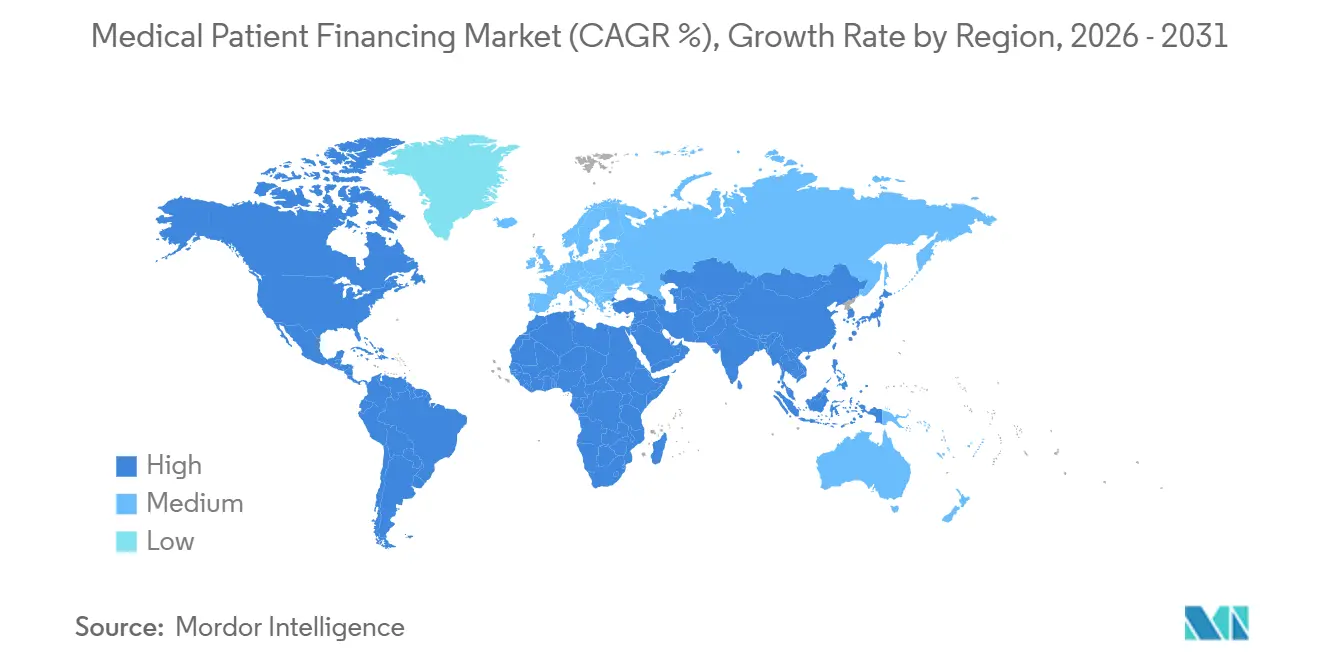
North America accounted for 87.6% of the medical patient financing market share in 2025. Regional revenue reflects high procedure costs, deductible exposure, and specialist creditor networks. Epic Research found that the self-pay share of emergency department encounters rose from 5.5% to 7.6% between early 2022 and mid-2026. The study covered more than 550 million encounters across 2,200 hospitals and 50,000 clinics. Canada’s financing need is concentrated in dental, vision, and pharmaceutical services, while Mexico’s private healthcare growth is centered in urban areas with less developed regulated credit.
Europe and South America hold smaller shares with different demand drivers. In the United Kingdom, demand is concentrated in dental, vision, elective cosmetic care, and private hospitals because the NHS covers much acute care. The FCA’s 2026 BNPL approach requires affordability assessments and will affect healthcare installment products. Germany, France, Italy, and Spain have universal systems where co-payments, elective upgrades, and waiting-list alternatives create financing opportunities. Brazil and Argentina support private healthcare demand, but interest-rate volatility can limit longer installments. In contrast, Saudi Arabia and the UAE support early-stage demand through premium private hospitals and medical tourism.
Asia-Pacific is forecast to grow at an 8.6% CAGR through 2031. The medical patient financing market size is supported by expanding private networks and digital financial services adoption in the region, with patient financing becoming more relevant where private providers require payment before or during treatment. India has a large financing gap for outpatient, dental, and elective care beyond the scope of its inpatient public coverage. Domestic platforms, including Arogya Finance, CarePal Money, and Zenifi/BharatX, are targeting this need. China is developing a policy that could enable private insurance participation in innovative medicines, while Indonesia, Vietnam, Thailand, and Malaysia show early healthcare BNPL potential through urban mobile payments.

Competitive Landscape
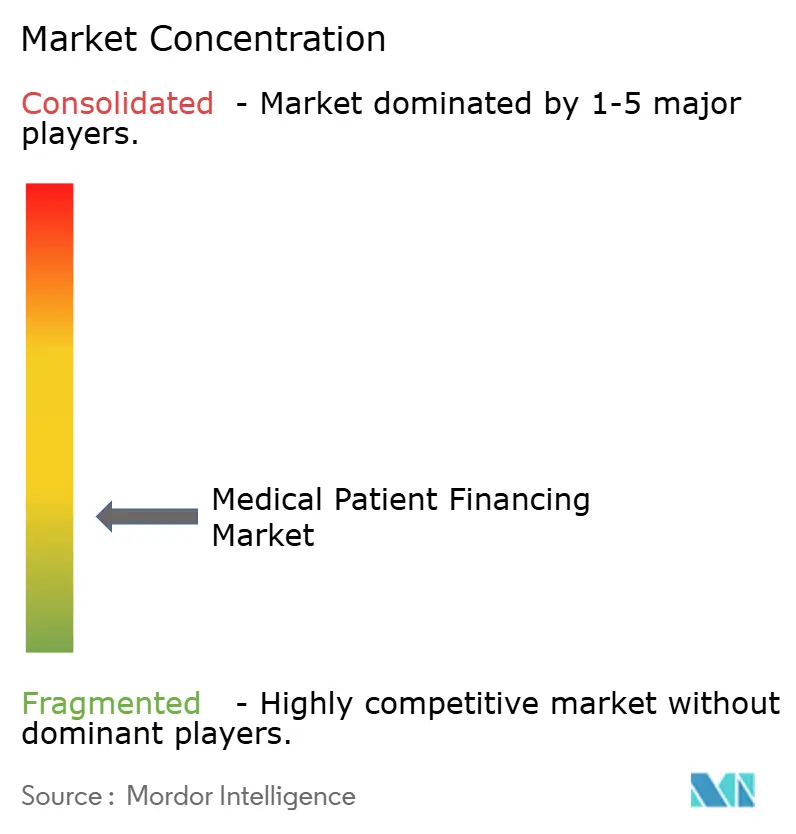
The medical patient financing market combines concentrated legacy revolving-credit distribution with a fragmented specialist lending field, creating a competitive environment in which established networks coexist with newer providers that focus on narrower clinical and software use cases. Leading issuers in medical credit card distribution include CareCredit and Synchrony, GreenSky and Goldman Sachs, and Comenity and Bread Financial. No single non-depository platform held more than 5% of the addressable provider base. In February 2026, Synchrony extended its position through Planet DDS integration across more than 2,500 orthodontic practices and 15,000 dental offices. Large issuers must continue improving their digital tools as specialists reduce the importance of traditional relationship-based distribution and make financing options available through software providers that already serve the practice, a shift that changes how providers compare lenders and introduce financial options to patients.
Technology is a central basis of competition in the medical patient financing market, because underwriting, patient communication, and payment completion now occur within connected digital workflows that can reduce delays between the clinical decision and the financing response. PRISM gives Synchrony a way to assess alternative financial data while serving patients who may have limited conventional credit histories. Stripe’s August 2026 integration with CareCredit is another move toward embedded payment and financing options. PayZen differentiates its model by purchasing patient receivables and assuming default risk, providing health systems with more predictable cash flow. NBER evidence on small medical debts supports consideration of underwriting methods beyond conventional medical-debt history. Creditors with adaptable controls may have an advantage as state rules become more varied.
Opportunity remains in ambulatory surgical centers and multispecialty physician groups that have growing self-pay balances without dental DSO financing infrastructure, where payment options may still be less visible during the treatment decision. The medical patient financing market also has room outside North America, where private-care costs may exceed patient liquidity. However, creditor supply is still limited, and digital consumer-credit channels are developing. Providers assess lenders on patient approval, repayment clarity, collection practices, and integration quality. Nonrecourse structures can appeal to health systems that want to remove receivable risk from their balance sheets. The specialist segment remains fragmented even as established issuers retain broad provider distribution.
Medical Patient Financing Industry Leaders
CareCredit
LendingClub Patient Solutions
GreenSky
ClearBalance Healthcare
PayZen
- *Disclaimer: Major Players sorted in no particular order

Recent Industry Developments
- August 2026: Stripe integrated CareCredit across eligible United States health and wellness businesses using Stripe Checkout and Stripe Payment Element, initially enabling standard CareCredit transactions and six-month promotional financing. The integration embeds healthcare consumer credit into the same digital flow used for standard payment processing, lowering financing deployment costs for independent practices and extending CareCredit distribution to practices that previously lacked dedicated financing staff.
- April 2026: Nextech embedded Affirm's fixed-payment, no-hidden-fee installment financing natively into its specialty practice management platform, enabling point-of-care lending within scheduling and billing workflows.
- December 2025: Bluefin expanded its Epic MyChart integration to support Health Savings Account (HSA) and Flexible Spending Account (FSA) card payments alongside credit cards, debit cards, and Automated Clearing House (ACH) payments, enabling omnichannel payment acceptance across MyChart, Willow Ambulatory, and Welcome Kiosk environments.
- November 2025: PCI Pal launched a secure payment integration connecting Epic EHR to its cloud-based omnichannel platform, enabling HIPAA- and PCI-compliant payment processing across phone, keypad, and digital channels within existing Epic provider workflows.


Global Medical Patient Financing Market Report Scope
The medical patient financing market refers to financial products and services that enable patients to pay for healthcare expenses through installment plans, medical loans, credit-based payment solutions, or other financing arrangements, reducing the need for immediate out-of-pocket payment for treatments and procedures.
The Medical Patient Financing Market is Segmented by Product Form (Open-End Medical Credit Cards and Revolving Healthcare Lines, and More), Creditor (Depository Issuers, and More), Clinical Application (Dental, Vision, and More), Site of Care (Hospitals, Physician Offices, and More), and Geography (North America, South America, Europe, Asia-Pacific, Middle East and Africa). The Market Forecasts are Provided in Terms of Value (USD).
| Open-End Medical Credit Cards and Revolving Healthcare Lines |
| Closed-End Medical Installment Loans |
| Healthcare BNPL/Short-Pay Point-of-Care Installment |
| Others |
| Depository Issuers |
| Non-Depository Licensed Lenders |
| Others |
| Dental |
| Vision/Optometry |
| Hearing/Audiology |
| Cosmetic Surgery/Medical Aesthetics |
| Fertility/Reproductive Care |
| Durable Medical Equipment and Devices |
| Hospital, Acute and Other Physician/Surgical OOP |
| Others |
| Hospitals and Health Systems |
| Physician Offices and Medical Clinics |
| Ambulatory Surgical Centers |
| Dental Practices and DSOs |
| Optical and Audiology Retail/Clinics |
| Aesthetic, Med-Spa and Plastic Surgery Practices |
| Other Sites |
| North America | United States |
| Canada | |
| Mexico | |
| South America | Brazil |
| Argentina | |
| Rest of South America | |
| Europe | United Kingdom |
| Germany | |
| France | |
| Italy | |
| Spain | |
| Rest of Europe | |
| Asia-Pacific | China |
| Japan | |
| India | |
| South Korea | |
| Australia | |
| Indonesia | |
| Thailand | |
| Malaysia | |
| Singapore | |
| Vietnam | |
| Rest of Asia-Pacific | |
| Middle East and Africa | Saudi Arabia |
| United Arab Emirates | |
| Turkey | |
| South Africa | |
| Egypt | |
| Rest of Middle East and Africa |
| By Product Form | Open-End Medical Credit Cards and Revolving Healthcare Lines | |
| Closed-End Medical Installment Loans | ||
| Healthcare BNPL/Short-Pay Point-of-Care Installment | ||
| Others | ||
| By Creditor | Depository Issuers | |
| Non-Depository Licensed Lenders | ||
| Others | ||
| By Clinical Application | Dental | |
| Vision/Optometry | ||
| Hearing/Audiology | ||
| Cosmetic Surgery/Medical Aesthetics | ||
| Fertility/Reproductive Care | ||
| Durable Medical Equipment and Devices | ||
| Hospital, Acute and Other Physician/Surgical OOP | ||
| Others | ||
| By Site of Care | Hospitals and Health Systems | |
| Physician Offices and Medical Clinics | ||
| Ambulatory Surgical Centers | ||
| Dental Practices and DSOs | ||
| Optical and Audiology Retail/Clinics | ||
| Aesthetic, Med-Spa and Plastic Surgery Practices | ||
| Other Sites | ||
| By Geography | North America | United States |
| Canada | ||
| Mexico | ||
| South America | Brazil | |
| Argentina | ||
| Rest of South America | ||
| Europe | United Kingdom | |
| Germany | ||
| France | ||
| Italy | ||
| Spain | ||
| Rest of Europe | ||
| Asia-Pacific | China | |
| Japan | ||
| India | ||
| South Korea | ||
| Australia | ||
| Indonesia | ||
| Thailand | ||
| Malaysia | ||
| Singapore | ||
| Vietnam | ||
| Rest of Asia-Pacific | ||
| Middle East and Africa | Saudi Arabia | |
| United Arab Emirates | ||
| Turkey | ||
| South Africa | ||
| Egypt | ||
| Rest of Middle East and Africa | ||


Key Questions Answered in the Report
What is driving medical patient financing demand?
Higher deductibles, uncovered treatment costs, and limited household capacity for unexpected bills are driving demand for payment plans in the medical patient financing market.
How large is medical patient financing in 2026?
The sector measures USD 22.2 billion in 2026 and is forecast to reach USD 28.5 billion by 2031 at a 5.1% CAGR.
Which product category is growing fastest?
Healthcare BNPL and short-pay installments are forecast to grow at a 9.1% CAGR through 2031.
Which clinical application uses financing most often?
Dental procedures held 42.3% of clinical application volume in 2025, supported by frequent out-of-pocket costs.
Which region is expanding fastest?
Asia-Pacific is forecast to expand at an 8.6% CAGR through 2031, supported by private healthcare growth and digital payments.
What are the main risks for lenders and providers?
Key risks include consumer debt, delinquency exposure, interest-rate sensitivity, and tighter rules for medical credit disclosures in the medical patient financing market.
Page last updated on:





