
Medical Mutual Insurance Market Size and Share
Market Overview
| Study Period | 2020 - 2031 |
|---|---|
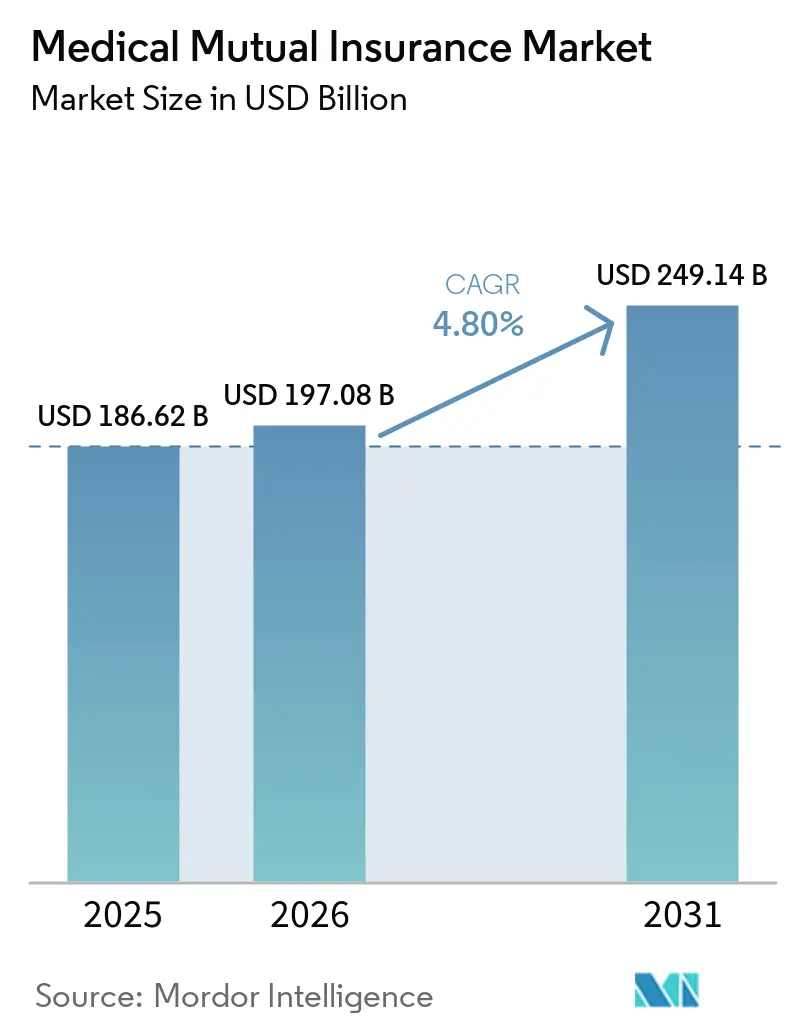
| Market Size (2026) | USD 197.08 Billion |
| Market Size (2031) | USD 249.14 Billion |
| Growth Rate (2026 - 2031) | 4.80 % |
| Fastest Growing Market | Asia-Pacific |
| Largest Market | Europe |
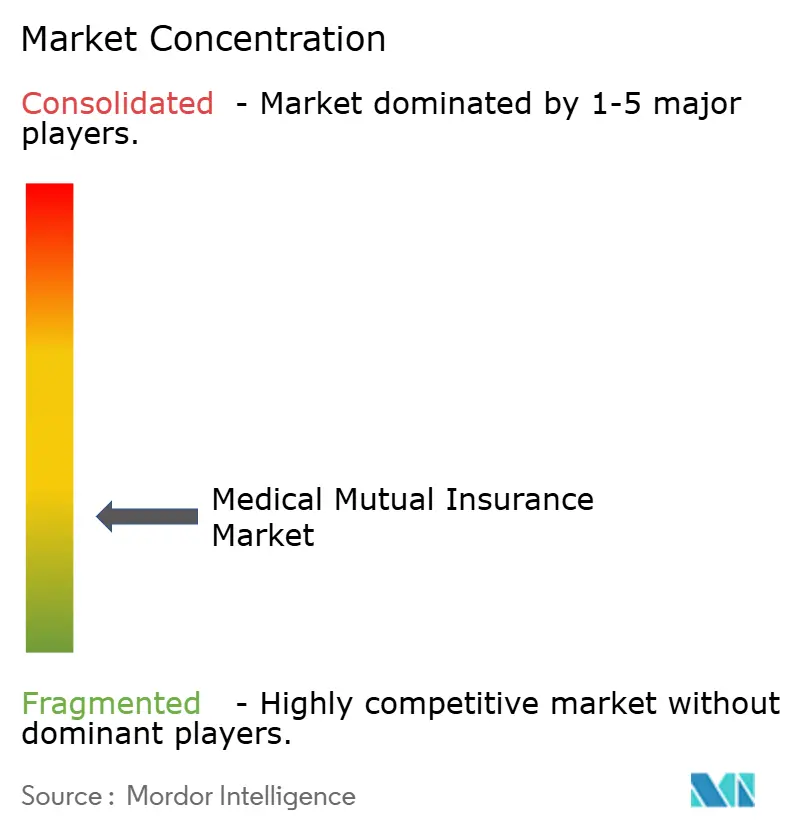
| Market Concentration | Low |
Major Players *Disclaimer: Major Players sorted in no particular order Image © Mordor Intelligence. Reuse requires attribution under CC BY 4.0. | |
Medical Mutual Insurance Market Analysis by Mordor Intelligence
The Medical Mutual Insurance Market size is expected to grow from USD 186.62 billion in 2025 to USD 197.08 billion in 2026 and is forecast to reach USD 249.14 billion by 2031 at 4.80% CAGR over 2026-2031.
Member-owned insurers continue to differentiate themselves by returning surplus to policyholder benefits rather than external shareholders. This governance approach supports retention where healthcare costs and access gaps are placing pressure on household budgets. Demand is also moving toward supplemental and fixed-benefit products as members seek clearer protection against hospital and disease-related expenses. Digital enrollment, preventive care services, and group-based arrangements are becoming important ways to reach members and manage costs. Medical cost inflation remains a material constraint because mutuals generally depend on retained surplus rather than new equity issuance for capital support.
Key Report Takeaways
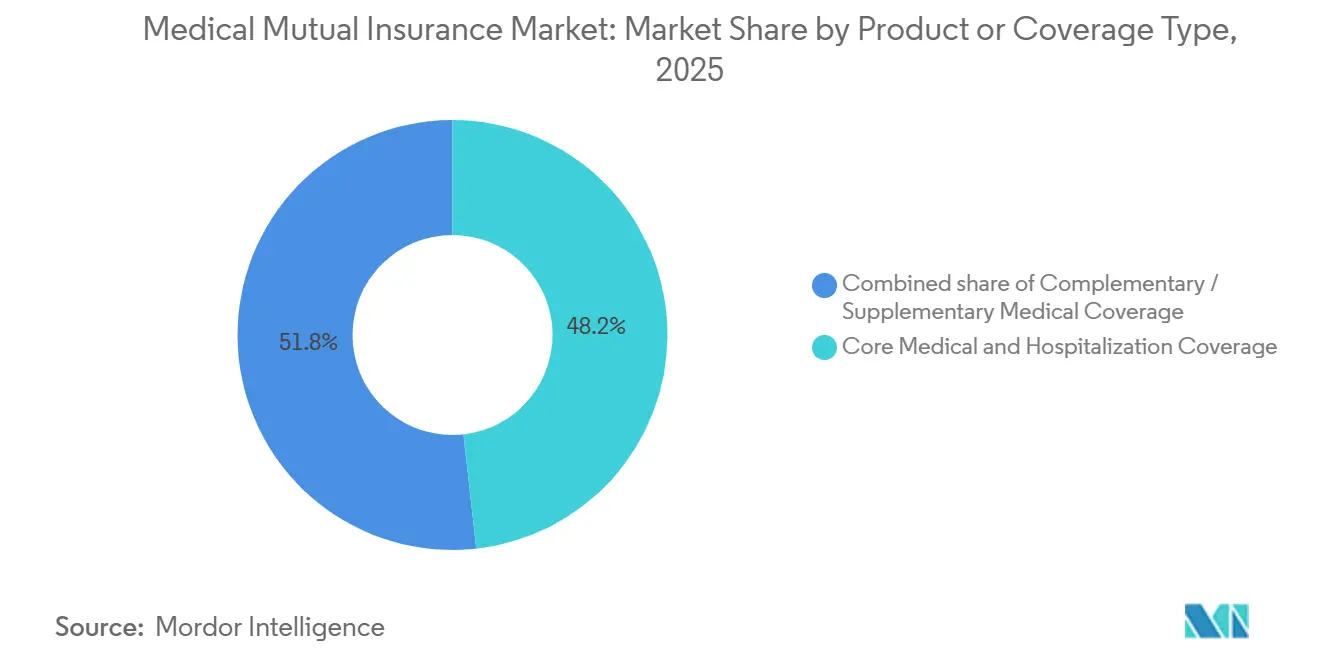
- By product/coverage type, core medical and hospitalization coverage captured 48.2% of the medical mutual insurance market share in 2025, while critical illness, specified disease, and other fixed-benefit coverage are projected to grow at a 6.8% CAGR through 2031.
- By benefit design, indemnity and expense-reimbursement plans held 48.4% of the medical mutual insurance market share in 2025, while hybrid designs are forecast to expand at a 6.5% CAGR through 2031.
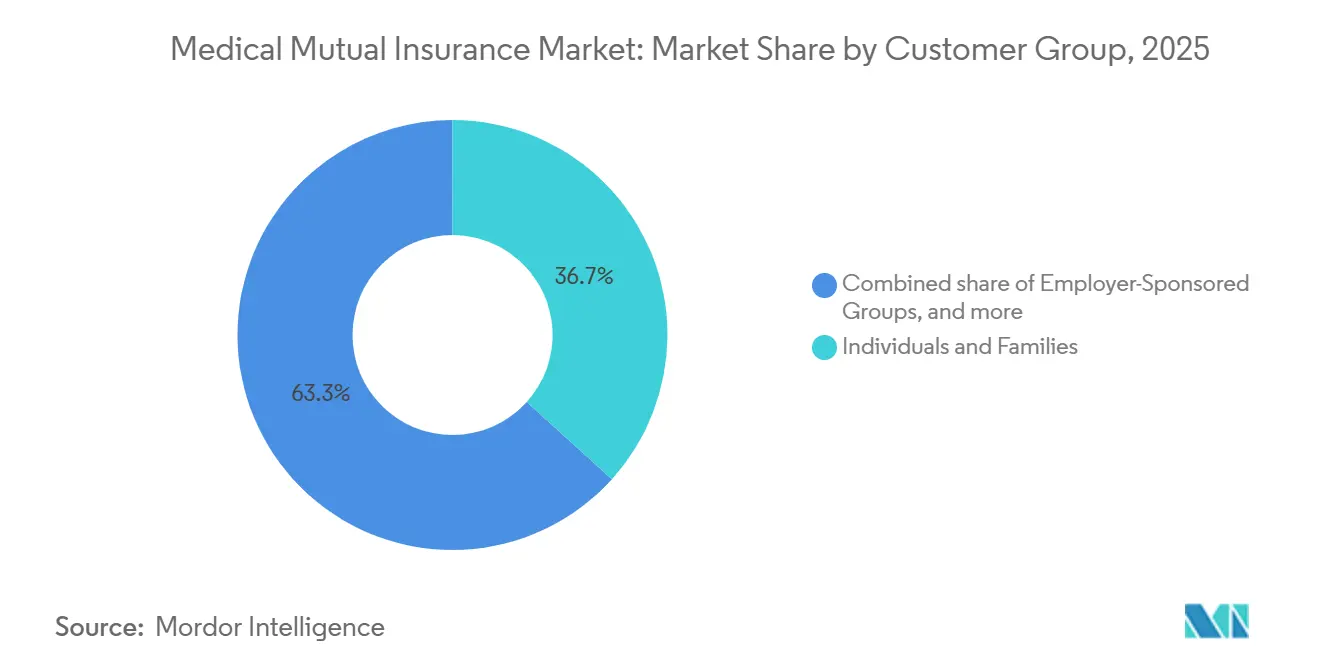
- By customer group, individuals and families accounted for 36.7% of the medical mutual insurance market share in 2025, while affinity, association, and professional groups are advancing at a 6.0% CAGR through 2031.
- By distribution model, direct-to-member channels held 32.9% of the medical mutual insurance market share in 2025, while pure digital and online aggregator channels are projected to grow at an 11.2% CAGR through 2031.
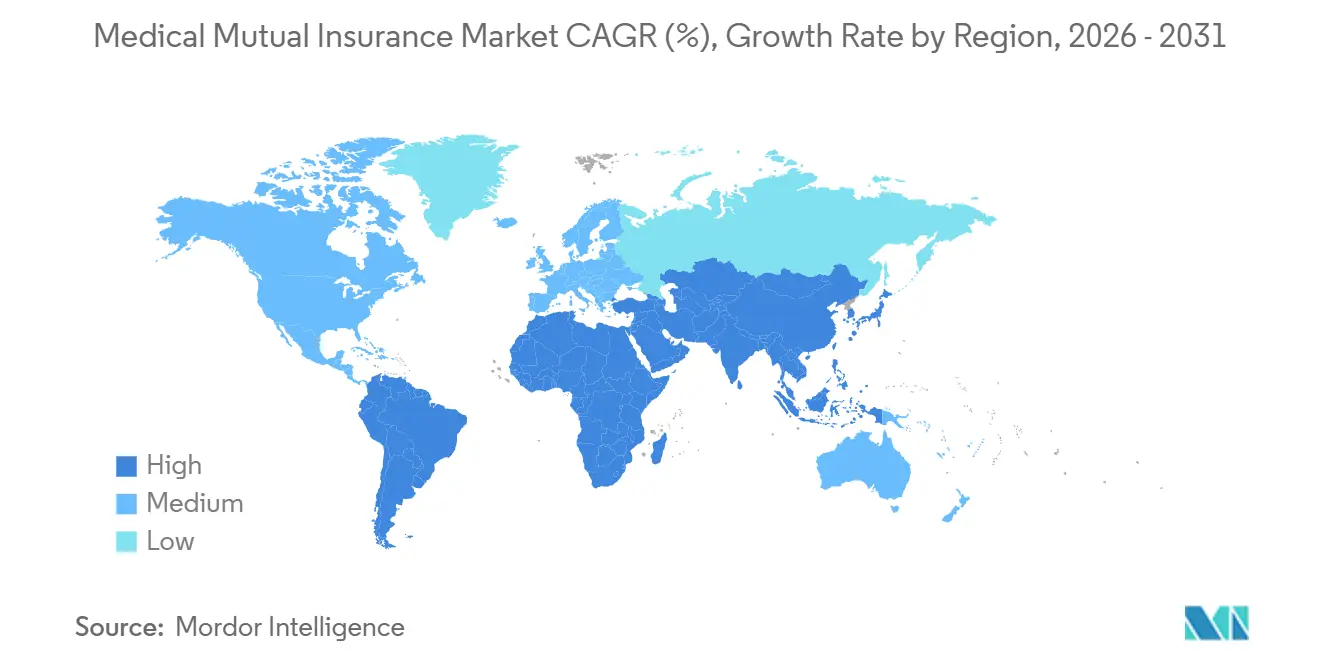
- By geography, Europe accounted for 58.32% of the medical mutual insurance market share in 2025, while Asia-Pacific is forecast to grow at a 7.27% CAGR through 2031.
Note: Market size and forecast figures in this report are generated using Mordor Intelligence’s proprietary estimation framework, updated with the latest available data and insights as of January 2026.
Market Trends and Insights
Drivers Impact Analysis of Medical Mutual Insurance Market*
| Driver | (~) % Impact on CAGR Forecast | Geographic Relevance | Impact Timeline |
|---|---|---|---|
| Collective and Member-Based Health Risk Pooling | +1.0% | Global, concentrated in Asia-Pacific and Sub-Saharan Africa | Medium term (2-4 years) |
| Member-Owned Governance and Policyholder Value | +0.8% | Europe, North America | Long term (≥ 4 years) |
| Employer, Professional, Affinity, and Community Coverage | +0.7% | North America, Europe, Asia-Pacific | Medium term (2-4 years) |
| Preventive Care, Wellness, and Integrated Health Services | +0.5% | North America, Europe | Short term (≤ 2 years) |
| Trusted and Participatory Insurance Models | +0.4% | Global | Long term (≥ 4 years) |
| Mutual Coverage in Underserved Insurance Markets | +0.6% | Asia-Pacific, Sub-Saharan Africa, South America | Long term (≥ 4 years) |
| Source: Mordor Intelligence | |||
Growing Demand for Collective and Member-Based Health Risk Pooling to Address Healthcare Protection Gaps
Rising healthcare costs and coverage gaps are supporting collective health financing models in developed and developing economies. The World Health Organization describes community-based health insurance as a voluntary prepayment approach that can reduce catastrophic out-of-pocket spending. The ICMIF Foundation reported that its programs issued 3.8 million policies in 2025 and protected 19 million lives across Kenya, Malawi, India, Sri Lanka, and the Philippines[1]ICMIF Foundation, “Impact Report Marks 10 Years of ICMIF Foundation Work Reaching Underserved Communities,” ICMIF Foundation, icmif.org. These structures can serve informal and self-employed workers who may not fit conventional individual insurance pricing. The medical mutual insurance market, therefore, benefits from community risk pooling, which offers a practical route into formal health protection. The same model can widen participation without requiring each member to bear the full cost of an individual risk profile, which is important where incomes are variable and health expenses can be sudden.
Member-Owned Governance Models Supporting Long-Term Policyholder Value Over Shareholder Returns
Member ownership can support a longer planning horizon because surpluses are retained for members rather than distributed to shareholders. AMICE states that mutual and cooperative insurers in Europe represent around one-third of insurance premiums and serve around 507 million members and policyholders. The European Commission identifies mutual benefit societies as member-based organizations that provide social protection and other services[2] European Commission Social Economy Gateway, “Mutual Benefit Societies,” European Commission Social Economy Gateway, europa.eu. This structure can help organizations manage claims volatility while preserving policyholder value over several reporting periods. It also gives the medical mutual insurance market a governance distinction that product design alone cannot replicate. Retention can improve when members see a direct connection between collective results and the value of their coverage.
Expansion of Employer, Professional, Affinity-Group, and Community-Based Health Coverage Schemes
Professional and affinity arrangements can add coverage where individual and small-employer channels are less efficient. USI Affinity and the American Society of Anesthesiologists launched an exclusive insurance program for ASA members in October 2025[3]American Society of Anesthesiologists, “USI Affinity and American Society of Anesthesiologists Launch Comprehensive Insurance Program for Anesthesiologists,” American Society of Anesthesiologists, asahq.org. The arrangement covered professional liability, employee benefits, and personal insurance from A-rated carriers. Employer-sponsored groups remain important for mutual administrators that provide stop-loss and specialized health coverage. Contribution income in affinity programs can follow association membership, which supports stable enrollment economics. This expansion gives the medical mutual insurance market access to identifiable member groups with specific coverage needs.
Growing Differentiation Through Preventive Care, Wellness, and Integrated Health-Service Offerings
Preventive care programs are becoming a cost-management tool rather than only a member benefit. Medical Mutual of Ohio provides its MedMutual WELL program to member groups, including health assessments, wearable-device integration, and preventive care reminders. MassMutual expanded its wellness offerings in May 2026 through the Living Well Rider, which includes cancer screening, genetic risk assessment, and mental health support for eligible policyowners. The Business Group on Health reported a projected 9% median healthcare cost trend increase for 2026[4]Business Group on Health, “2026 Employer Health Care Strategy Survey,” Business Group on Health, businessgrouphealth.org. Programs that encourage preventive care may help mutuals moderate utilization and support renewal decisions. These capabilities are becoming a relevant service distinction within the medical mutual insurance market.
Restraints Impact Analysis of Medical Mutual Insurance Market*
| Restraint | (~) % Impact on CAGR Forecast | Geographic Relevance | Impact Timeline |
|---|---|---|---|
| Limited External Equity for Expansion and Investment | -0.6% | Global | Long term (≥ 4 years) |
| Rising Medical Claims Costs and Utilization | -0.8% | North America, Europe | Short term (≤ 2 years) |
| Regulatory and Prudential Constraints on Mutual Ownership | -0.5% | Europe, North America | Medium term (2-4 years) |
| Administrative, Technology, and Network Scale Costs | -0.5% | Global | Medium term (2-4 years) |
| Source: Mordor Intelligence | |||
Limited Access to External Equity Capital for Large-Scale Expansion and Investment
Mutuals cannot issue shares to raise equity, which limits the pace of large investment programs. Their primary capital source is retained surplus, making claims shocks more consequential for expansion plans. This constraint can delay investments in technology, distribution infrastructure, and healthcare networks. Smaller community schemes also face limited premium volumes and more restricted access to reinsurance. These limitations are most visible when organizations must fund growth while maintaining prudential capital buffers. The medical mutual insurance market can therefore see different investment capacity between large established organizations and smaller local schemes.
Rising Medical Claims Costs and Utilization Pressuring Mutual Capital and Solvency Buffers
Medical cost growth continues to exceed premium growth in several mature insurance markets. The NAIC reported a 14.8% year-over-year increase in total United States hospital and medical expenses in 2025, reaching USD 1.19 trillion. The same report recorded an increase in the aggregate loss ratio from 89.0% to 90.3%. Higher utilization, medical inflation, and demographic aging make it harder to maintain contribution levels without affecting member affordability. Community schemes can face added pressure because solidarity-based contribution models adjust more slowly to rapid claims escalation. This cost environment requires careful pricing and benefit management across the medical mutual insurance market.
*Our forecasts treat driver/restraint impacts as directional, not additive. The impact forecasts reflect baseline growth, mix effects, and variable interactions.
Medical Mutual Insurance Market Segment Analysis
By Product/Coverage Type:
Core Coverage Anchors the Market as Critical Illness Products AccelerateCore and comprehensive medical and hospitalization coverage accounted for 48.2% of the medical mutual insurance market share in 2025. Its broad role in covering inpatient treatment makes it a foundational contributor to the overall medical mutual insurance market size, particularly where members supplement statutory health systems and need protection against hospital stays, specialist consultations, and follow-up care costs. In Asia-Pacific, inpatient protection can serve as the primary health safety net for lower-income enrollees with limited capacity to meet large hospital bills directly, particularly when public benefits do not fully cover admission, medicines, diagnostic services, or recovery-related expenses. Complementary and supplementary medical coverage extends protection between core hospital benefits and specialized care, helping members address gaps that a basic hospitalization plan may not cover across outpatient treatment, diagnostics, and follow-up support. Dental and vision products broaden the offering for members who want additional benefits without moving to a commercial insurer.
Critical illness, specified disease, and other fixed-benefit health coverage are forecast to grow at a 6.8% CAGR from 2026 to 2031. This segment can reduce claims administration complexity because payments are tied to defined conditions or events. Gen Re reported in March 2026 that standalone critical illness policies recorded their best sales volumes in at least a decade during 2025. More than two-thirds of carriers had revised plan terms during the previous two years to expand covered conditions, according to the supplied 2025 research. Fixed-benefit products can also support more standardized underwriting across member groups that are difficult to price individually, which is useful when a scheme serves diverse occupations, income levels, and health needs.


By Benefit Design:
Indemnity Plans Hold Majority Share While Hybrid Designs Signal a Structural ShiftIndemnity and expense-reimbursement plans held 48.4% of the medical mutual insurance market share in 2025. They remain the default design in mature mutual health systems where provider choice is an established member expectation and reimbursement has long been part of the benefit relationship. Their established role across these systems also makes them a significant component of the overall medical mutual insurance market size. Fixed-benefit and scheduled cash-payout plans offer predictable income support after hospitalization or diagnosis, which can help members meet nonmedical costs during a period away from work. These products are particularly relevant in Asia-Pacific markets where out-of-pocket expense buffers are limited, and a short disruption in earnings can create significant household pressure. Managed-care and network-based plans are also expanding, where mutuals have strong provider relationships and can direct care through agreed pathways, negotiated provider arrangements, and coordinated care processes that help limit avoidable spending.
Hybrid designs are projected to expand at a 6.5% CAGR between 2026 and 2031. They combine features of indemnity and network-based models, giving members more flexibility while supporting cost management. UnitedHealthcare reported that 1 in 3 United States employers offered copay-driven designs in 2026, compared with 10% in 2023. Employer benefit decisions indicate continued interest in cost-sharing structures that are clearer for plan members. Mutuals that incorporate hybrid options can respond to employer accounts facing regular repricing pressure while giving members a more understandable connection between provider choice, copayments, and coverage value.
By Customer Group:
Individuals and Families Drive Volume as Affinity Groups Lead GrowthIndividuals and families accounted for 36.7% of the medical mutual insurance market share in 2025. This position reflects the historical focus of mutual schemes on household coverage, particularly in European supplementary health systems, where the mutual relationship was built around household needs and recurring membership, allowing schemes to develop products that fit the routine health protection expectations of households. Employer-sponsored groups form an important part of the remaining base through self-insured plans and specialized coverage arrangements that require administration, stop-loss capacity, or targeted health benefits. Public-sector and institutional groups provide a relatively stable base linked to statutory benefit programs. Digital comparison channels may increase competitive pressure on individual and family products by emphasizing price over member benefits, service continuity, and the long-term value of retained surplus.
Affinity, association, and professional groups are forecast to grow at a 6.0% CAGR through 2031. The October 2025 ASA program illustrates how professional organizations can provide tailored insurance options through collective arrangements. These programs can improve retention because coverage participation is linked to association membership, creating a continuing relationship that does not depend solely on renewal marketing each year and reinforcing the practical value of the association relationship beyond a single insurance transaction. They can also offer a clearer value proposition for specialized professional cohorts. As these collective arrangements broaden participation beyond individual and employer-sponsored schemes, they can support expansion of the medical mutual insurance market size without relying only on individual customer acquisition.
By Distribution Model:
Direct-to-Member Leads by Share While Digital Aggregators Redefine Acquisition EconomicsDirect-to-member distribution held 32.9% of the medical mutual insurance market share in 2025. Branch networks, employer payroll deductions, and direct marketing have historically supported this channel, allowing mutuals to maintain direct contact with members throughout enrollment and renewal. Employer and institutional channels serve formal workforce enrollment needs, especially where benefit selection and contributions are organized through an employer or public body. Affinity and cooperative channels help organizations reach groups with an existing member relationship. Agents, brokers, and bancassurance remain relevant where members need advice or where local distribution relationships are established, particularly for policies that combine health protection with other insurance needs and require explanation of benefit conditions, exclusions, provider options, or contribution obligations.
Pure digital and online aggregator channels are forecast to grow at an 11.2% CAGR from 2026 to 2031, as more members compare, apply for, and renew health coverage online. Mutuals are developing their own digital channels to limit dependence on third-party platforms and retain direct member relationships. Their growth reflects a broader shift toward online health insurance shopping. Digital enrollment can widen reach among members who are not served by physical branches or group channels, while also shortening the time needed to compare options, submit information, and complete enrollment. However, aggregator-led distribution can encourage price-based switching and weaken the long-term retention model that supports mutual surplus. Mutuals are responding by building direct digital enrollment capabilities to reduce reliance on third-party channels and support the medical mutual insurance market size as member acquisition increasingly shifts online.
Geography Analysis
Europe Medical Mutual Insurance Market
Europe held 58.3% of the medical mutual insurance market share in 2025. AMICE reported that mutual and cooperative insurers represented around one-third of premiums written in the region and served around 507 million members and policyholders. France, Germany, and Switzerland anchor the region through long-standing mutual frameworks. Covéa, Groupe VYV, Aéma Groupe, Debeka Krankenversicherungsverein, SIGNAL IDUNA, Continentale, and Sygeforsikringen “danmark” illustrate the range of national organizations. Consolidation has created larger European-scale mutual organizations that compete directly with commercial insurers in several lines while maintaining a governance model based on member interests and collective results.
The Americas Medical Mutual Insurance Market
North America contributes a significant share through United States nonprofit health plans, mutual benefit associations, and regional cooperative schemes. The NAIC reported that United States health entities held USD 223.9 billion in capital and surplus in 2025, while aggregate adjusted operating cash flow was negative USD 3.4 billion. Medical Mutual of Ohio and HealthPartners demonstrate the depth of member-owned organizations with managed care or integrated care delivery capabilities. Canada's cooperative health financing models and Mexico's developing mutual segment broaden the regional footprint. Brazil's Unimed system and Argentina's emerging mutual health segment extend the model across South America.
APAC Medical Mutual Insurance Market
Asia-Pacific is projected to grow at a 7.3% CAGR from 2026 to 2031, the fastest rate among regions. Low formal insurance penetration and policy interest in community financing support this position. Japan contributes through Kokumin Kyosai, CO-OP Kyosai, and JA Kyosai or Zenkyoren, which are embedded in cooperative networks. The International Labour Organization documented case studies in Cambodia, Japan, and the Lao PDR, where mutual models are being incorporated into social health protection systems. As these models expand across underinsured populations, they can broaden the geographic contribution to the medical mutual insurance market size.

Competitive Landscape
The medical mutual insurance market is fragmented, with large national mutuals holding strong regional positions alongside many community and affinity schemes. Large organizations are investing in digital member engagement and underwriting tools, while smaller cooperatives are often prioritizing enrollment reach and regulatory engagement. ICMIF reported that two-thirds of mutual and cooperative insurers globally were using artificial intelligence in operations in 2024. Guidewire announced in July 2026 that Germania Mutual deployed ProNavigator AI for underwriting and claims teams. This move gives staff access to institutional knowledge and decision context for complex risk and claims scenarios.
Digital direct enrollment is a key opportunity for individual and affinity segments. Critical illness and supplemental health products also address mid-income members who may be underserved by public and commercial coverage. Cross-border portability can serve migrant and mobile workers. GACM reported a Solvency II ratio of 226% at the end of 2025, showing the capital strength that supports product and technology investment at larger mutuals. Smaller organizations may need to affiliate, specialize, or share operating capabilities to overcome scale constraints.
Guidewire also announced in June 2026 that Peel Mutual Insurance Company selected Guidewire Cloud to improve automation and produce real-time data insights. MassMutual's May 2026 Living Well Rider added preventive health services to eligible whole life policies without additional cost to policyowners. These actions show how larger mutual organizations are combining technology and health-service features in their member offers. The principal competitive risk comes from digital-first insurers and commercial carriers that can invest heavily in online enrollment and personalized benefits.
Medical Mutual Insurance Industry Leaders
Groupe VYV
MGEN
Medical Mutual of Ohio
HealthPartners
Mutual of Omaha
- *Disclaimer: Major Players sorted in no particular order
Medical Mutual Insurance Market Companies Covered in this Report
- Bupa
- Groupe VYV
- Aéma Groupe
- Groupe Mutuel
- Medical Mutual of Ohio
- HealthPartners
- Debeka Krankenversicherungsverein a.G.
- SIGNAL IDUNA Krankenversicherung a.G.
- Continentale Krankenversicherung a.G.
- Sygeforsikringen "danmark"
- Benenden Health
- Unimed
- Kokumin Kyosai co-op
- CO-OP Kyosai
- JA Kyosai / Zenkyoren
- Seguros Unimed
- Uplift Mutuals
- National Insurance VimoSEWA Cooperative Ltd.
- CARD Mutual Benefit Association
- Sanasa Insurance Company Ltd.

Recent Industry Developments in Medical Mutual Insurance Market
- July 2026: Germania Mutual Insurance deployed Guidewire's ProNavigator AI assistant across underwriting and claims teams, giving staff real-time access to institutional knowledge and decision context for complex risk and claims scenarios. This positions Germania Mutual among the early mutual adopters of embedded agentic AI in core insurance operations, signaling a competitive shift in how mutuals handle high-volume submission management.
- June 2026: Peel Mutual Insurance Company selected Guidewire Cloud across all lines of business to enhance AI-driven automation, optimize core insurance processes, and generate real-time data insights. NXT Level Technologies was named as the implementation partner for the full platform deployment.
- May 2026: MassMutual launched the Living Well Rider, automatically bundling multi-cancer early detection testing, genetic risk assessment, and mental health support tools into eligible whole life policies at no additional cost, a significant step in the convergence of life insurance and preventive health benefit design by a major United States mutual insurer.
- October 2025: USI Affinity and the American Society of Anesthesiologists launched a nationwide exclusive insurance program for ASA members, providing access to professional liability, employee benefits, and personal insurance from A-rated carriers.


Global Medical Mutual Insurance Market Report Scope
| Core / Comprehensive Medical & Hospitalization Coverage |
| Complementary / Supplementary Medical Coverage |
| Dental and Vision Coverage |
| Critical Illness, Specified Disease & Other Fixed-Benefit Health Coverage |
| Indemnity / Expense-Reimbursement Plans |
| Fixed-Benefit / Scheduled Cash-Payout Plans |
| Managed-Care / Network-Based Plans |
| Hybrid Designs |
| Individuals and Families |
| Employer-Sponsored Groups |
| Affinity, Association & Professional Groups |
| Public-Sector and Institutional Groups |
| Direct-to-Member Distribution |
| Employer and Institutional Distribution |
| Affinity, Association & Cooperative Channels |
| Intermediated Channels (Agents, Brokers, Bancassurance) |
| Pure Digital / Online Aggregator Channels |
| North America | United States |
| Canada | |
| Mexico | |
| South America | Brazil |
| Argentina | |
| Rest of South America | |
| Europe | United Kingdom |
| Germany | |
| France | |
| Italy | |
| Spain | |
| Rest of Europe | |
| Asia-Pacific | China |
| Japan | |
| India | |
| South Korea | |
| Australia | |
| Indonesia | |
| Thailand | |
| Malaysia | |
| Singapore | |
| Vietnam | |
| Rest of Asia-Pacific | |
| Middle East and Africa | Saudi Arabia |
| United Arab Emirates | |
| Turkey | |
| South Africa | |
| Egypt | |
| Rest of Middle East and Africa |
| By Product / Coverage Type | Core / Comprehensive Medical & Hospitalization Coverage | |
| Complementary / Supplementary Medical Coverage | ||
| Dental and Vision Coverage | ||
| Critical Illness, Specified Disease & Other Fixed-Benefit Health Coverage | ||
| By Benefit Design | Indemnity / Expense-Reimbursement Plans | |
| Fixed-Benefit / Scheduled Cash-Payout Plans | ||
| Managed-Care / Network-Based Plans | ||
| Hybrid Designs | ||
| By Customer Group | Individuals and Families | |
| Employer-Sponsored Groups | ||
| Affinity, Association & Professional Groups | ||
| Public-Sector and Institutional Groups | ||
| By Distribution Model | Direct-to-Member Distribution | |
| Employer and Institutional Distribution | ||
| Affinity, Association & Cooperative Channels | ||
| Intermediated Channels (Agents, Brokers, Bancassurance) | ||
| Pure Digital / Online Aggregator Channels | ||
| By Geography | North America | United States |
| Canada | ||
| Mexico | ||
| South America | Brazil | |
| Argentina | ||
| Rest of South America | ||
| Europe | United Kingdom | |
| Germany | ||
| France | ||
| Italy | ||
| Spain | ||
| Rest of Europe | ||
| Asia-Pacific | China | |
| Japan | ||
| India | ||
| South Korea | ||
| Australia | ||
| Indonesia | ||
| Thailand | ||
| Malaysia | ||
| Singapore | ||
| Vietnam | ||
| Rest of Asia-Pacific | ||
| Middle East and Africa | Saudi Arabia | |
| United Arab Emirates | ||
| Turkey | ||
| South Africa | ||
| Egypt | ||
| Rest of Middle East and Africa | ||


Key Questions Answered in the Report
What is the projected value of medical mutual insurance in 2031?
The medical mutual insurance market is projected to reach USD 249.1 billion by 2031, growing at a 4.8% CAGR from 2026, as member-owned insurers expand coverage and respond to rising demand for health protection. The projection reflects continued use of mutual structures for individual, group, and community health coverage.
Which product category is growing fastest through 2031?
Critical illness, specified disease, and other fixed-benefit health coverage is forecast to grow at a 6.8% CAGR from 2026 to 2031.
Which region has the largest share of medical mutual insurance?
Europe held 58.3% of the medical mutual insurance market share in 2025, supported by mature mutual frameworks, large member-owned insurers, and a well-established role for supplementary health protection. The region also has the largest concentration of established mutual governance and insurance capabilities in the supplied analysis.
Which region is expected to grow fastest?
Asia-Pacific is forecast to grow at a 7.3% CAGR through 2031, supported by low insurance penetration, large underserved populations, and policy interest in community financing arrangements. Cooperative structures in Japan and regional social protection initiatives further support this direction.
What distribution channel is expanding fastest?
Pure digital and online aggregator channels are forecast to grow at an 11.2% CAGR from 2026 to 2031, as more members compare, apply for, and renew health coverage online. Mutuals are developing their own digital channels to limit dependence on third-party platforms and retain direct member relationships.
What is the main challenge for mutual health insurers?
Rising medical claims costs can reduce solvency buffers because mutuals generally depend on retained surplus rather than external equity capital. The NAIC reported a 14.8% rise in total United States hospital and medical expenses in 2025, illustrating the scale of this pressure.
Page last updated on:





