
Market Overview
| Study Period | 2020 - 2031 |
|---|---|
| Forecast Data Period | 2026 - 2031 |
| Base Year Market Size (2025) | USD 148.06 Million |
| Market Size (2026) | USD 156.2 Million |
| Market Size (2031) | USD 204.13 Million |
| Growth Rate (2026 - 2031) | 5.50 % |
| Market Concentration | Medium |
Major Players *Disclaimer: Major Players sorted in no particular order Image © Mordor Intelligence. Reuse requires attribution under CC BY 4.0. | |
Indonesia Diabetes Care Devices Market Analysis by Mordor Intelligence
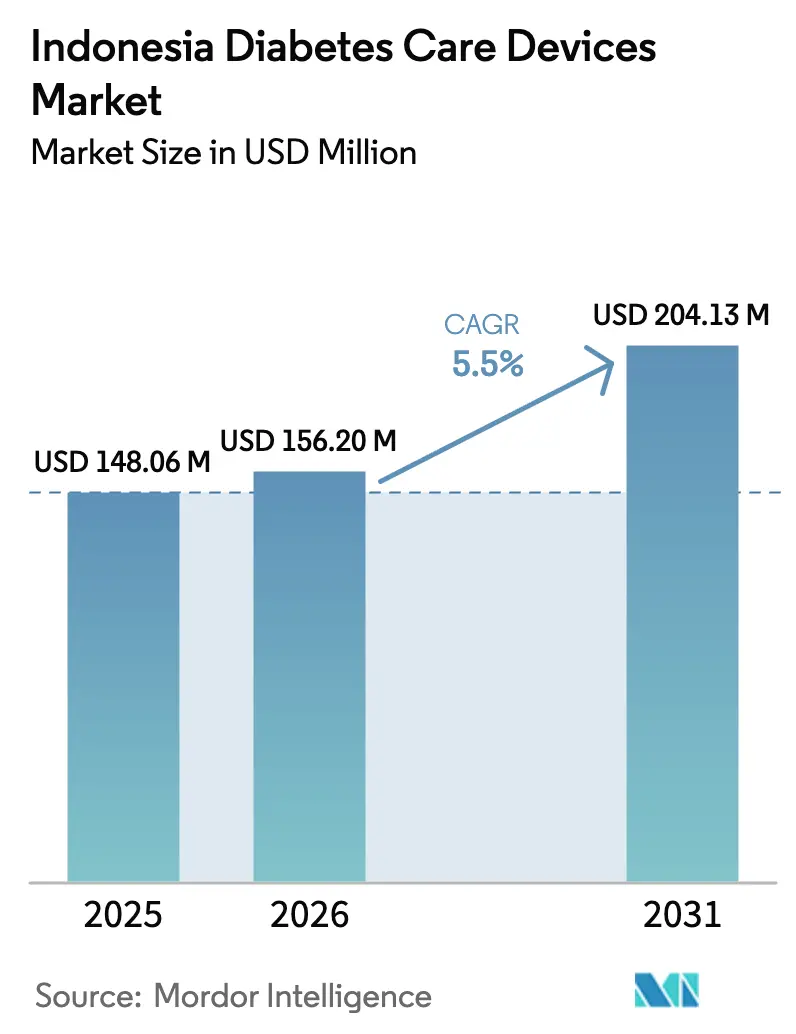
The Indonesia diabetes care devices market size was valued at USD 148.06 million in 2025 and estimated to grow from USD 156.2 million in 2026 to reach USD 204.13 million by 2031, at a CAGR of 5.50% during the forecast period (2026-2031). Demand accelerates as Indonesia registers 19.5 million diagnosed cases, a figure expected to climb to 28.5 million by 2045 [1]. Rising public-sector health spending, expanded BPJS Kesehatan reimbursement, and government screening programs are expanding patient access to monitoring and management technologies. Universal Health Coverage, coupled with stronger local-content mandates, is creating a dual pathway of import substitution and multinational partnerships that support device affordability and supply security. At the same time, growing consumer interest in proactive health tracking is pushing wearable glucose technologies into mainstream retail channels, offering new growth levers for manufacturers that can align with Indonesia’s price-sensitive yet digitally engaged population
Key Report Takeaways
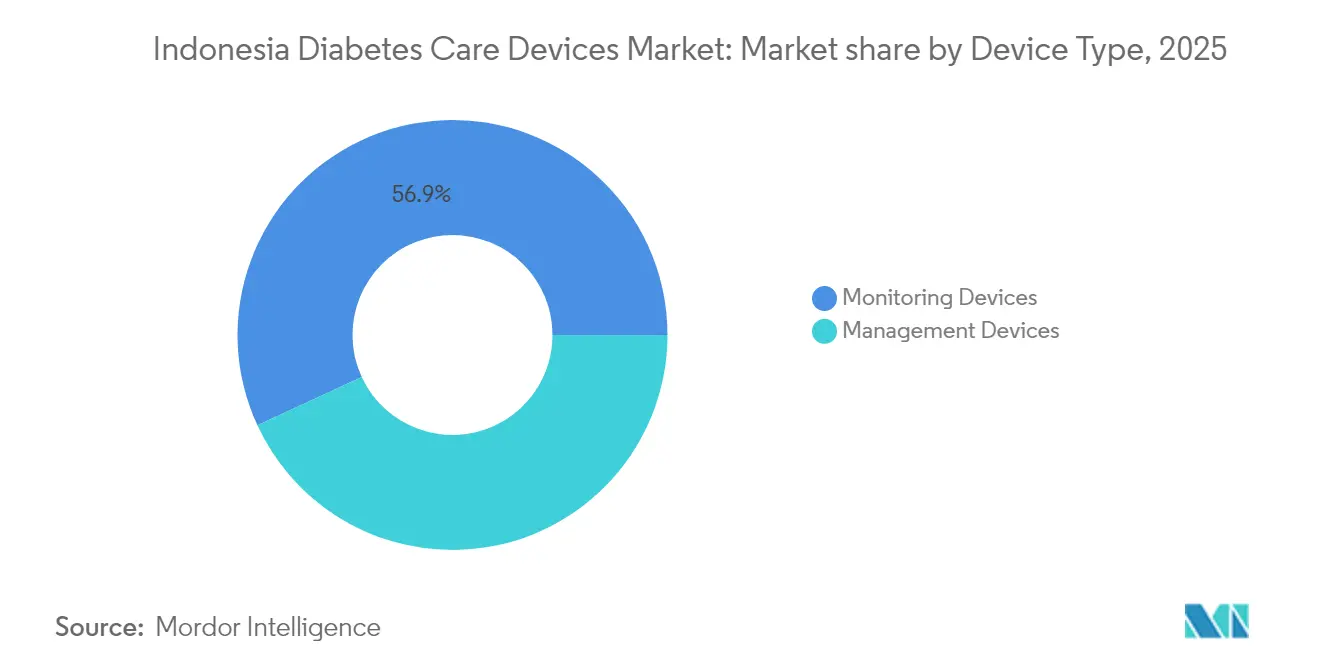
- By device type, Monitoring Devices accounted for 56.90% of the Indonesia diabetes care devices market share in 2025, while the Management Device is projected to expand at a 6.02% CAGR through 2031.
- By patient type, Type-2 diabetes accounted for 84.10% of the Indonesia diabetes care devices market share in 2025, while the Type-1 segment is projected to expand at a 6.95% CAGR through 2031.
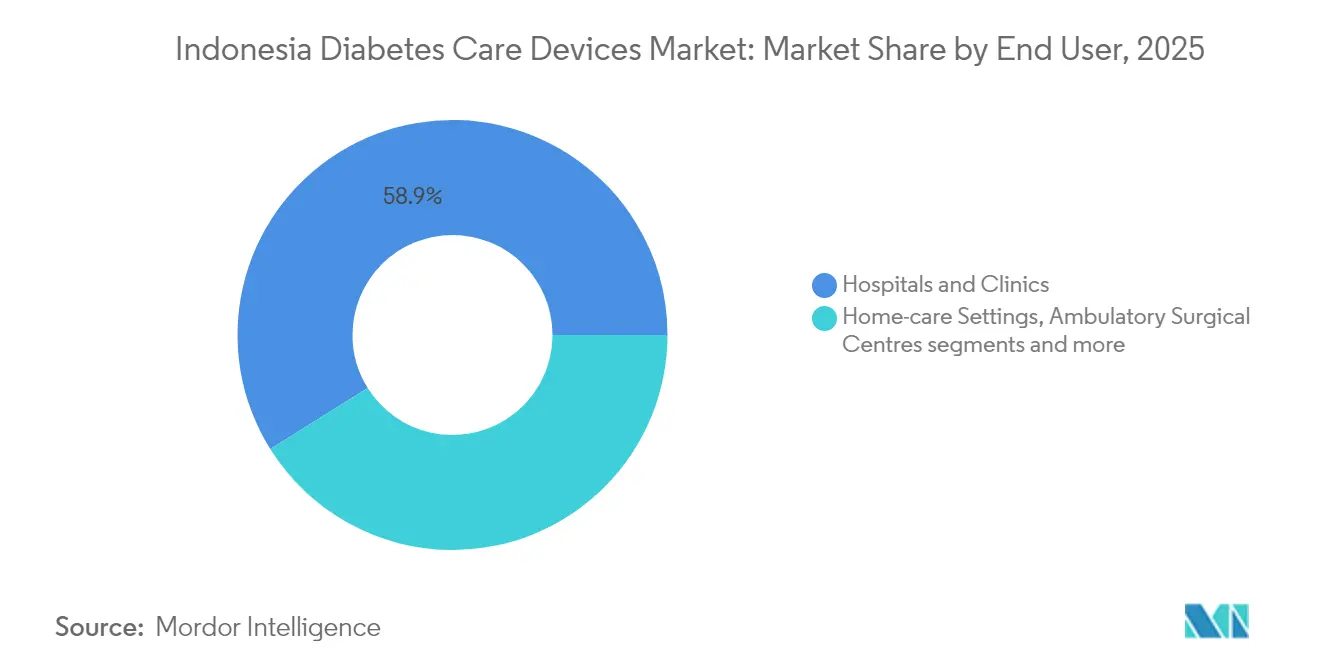
- By end user, hospitals and clinics held 58.90% share of the Indonesia diabetes care devices market size in 2025, whereas home-care settings are advancing at a 6.65% CAGR between 2026-2031.
Note: Market size and forecast figures in this report are generated using Mordor Intelligence’s proprietary estimation framework, updated with the latest available data and insights as of 2026.
Indonesia Diabetes Care Devices Market Trends and Insights
Drivers Impact Analysis*
| Driver | (~) % Impact on CAGR Forecast | Geographic Relevance | Impact Timeline |
|---|---|---|---|
| Rising diabetes prevalence & earlier diagnosis | +1.8% | National, concentrated in Java and urban centers | Medium term (2-4 years) |
| Expansion of BPJS national health insurance coverage | +1.2% | National, with stronger impact in rural areas | Long term (≥ 4 years) |
| Growing adoption of SMBG devices via awareness campaigns | +0.9% | National, with emphasis on Tier-2 and Tier-3 cities | Short term (≤ 2 years) |
| Shift to insulin-analog pens improving adherence | +0.7% | Urban centers, gradually expanding to rural areas | Medium term (2-4 years) |
| Local-content (TKDN) mandates spurring domestic production | +0.6% | National, with manufacturing hubs in Java | Long term (≥ 4 years) |
| Source: Mordor Intelligence | |||
Rising Diabetes Prevalence & Earlier Diagnosis
Indonesia ranks fifth globally for diabetes cases. IDF data show 19.5 million Indonesians living with diabetes in 2024, yet over 70% of cases were undiagnosed until recent screening initiatives[2]. Earlier detection programs in Java’s densely populated provinces are elevating demand for entry-level glucometers as well as next-generation continuous glucose monitors. As demographic ageing accelerates and lifestyles shift toward urban sedentary patterns, the Indonesia diabetes care devices market is likely to see sustained baseline growth in device volumes.
Expansion of BPJS National Health Insurance Coverage
BPJS Kesehatan now enrolls 98% of citizens and lists both Type-1 and Type-2 diabetes among its 144 reimbursable conditions. The abolition of inpatient class distinctions in 2025 further lowers out-of-pocket costs for glucose testing supplies. Reliable reimbursement is fostering broader distribution of test strips into rural clinics where private purchasing power remains limited.
Growing Adoption of SMBG Devices via Awareness Campaigns
Government free-screening drives under the “Cek Kesehatan Gratis” program emphasize routine blood glucose testing. Educational tools—such as game-based learning modules—have improved patient knowledge scores twofold and cut average blood glucose readings by nearly 73 mg/dL. Cheaper locally assembled meters and test strips are appearing in e-catalogs, meeting budget constraints while aligning with TKDN requirements.
Shift to Insulin-Analog Pens Improving Adherence
Clinical studies identify complex dosing regimens and cultural misperceptions as primary barriers to insulin use. Analog pens simplify administration, and local fill-finish tie-ups—Novo Nordisk with Bio Farma and PT Kalbe Farma’s Ezelin line—lower retail prices by shortening supply chains. Integration with Bluetooth-enabled CGM platforms is generating real-time feedback loops that sustain adherence gains and underpin growth in the Indonesia diabetes care devices market
Restraints Impact Analysis*
| Restraint | (~) % Impact on CAGR Forecast | Geographic Relevance | Impact Timeline |
|---|---|---|---|
| High cost of imported CGM & insulin pumps | -1.4% | National, more pronounced in rural and lower-income areas | Medium term (2-4 years) |
| Fragmented distribution & counterfeit strips | -0.8% | National, particularly affecting rural supply chains | Short term (≤ 2 years) |
| Source: Mordor Intelligence | |||
High Cost of Imported CGM & Insulin Pumps
Average per-capita diabetes spending is forecast to rise 33% from USD 323.8 in 2021 to USD 431.7 by 2045. Imported closed-loop pump systems retail well above annual median household healthcare budgets, constraining uptake to affluent urban cohorts. Although BPJS covers essential devices, reimbursement ceilings lag behind international list prices, limiting scale.
Fragmented Distribution & Counterfeit Strips
Indonesia’s maritime geography complicates cold-chain and quality assurance. Roche’s 2024 lawsuit revealed counterfeit Accu-Chek products stored in several e-commerce warehouses. Pharmacist shortages—121,000 practitioners versus the 251,000 required—reduce supervision, especially outside Java. CDAKB certification, mandatory from July 2024, aims to raise distribution standards, yet field enforcement across 17,000 islands remains resource-intensive.
*Our forecasts treat driver/restraint impacts as directional, not additive. The impact forecasts reflect baseline growth, mix effects, and variable interactions.
Segment Analysis
By Device Type: Management Devices Drive Innovation
The Indonesia diabetes care devices market continues to be anchored by self-monitoring blood glucose systems, yet software-enabled insulin delivery platforms are now the fastest-growing line. Test strips, lancets, and basic meters dominate unit volumes, serving millions of BPJS-covered patients who rely on routine finger-stick testing for glycemic control. Continuous glucose monitoring (CGM) adoption is advancing as domestic assemblers push prices down and health-app integration attracts younger users.
Management devices—including insulin pens, pumps, and jet injectors—are set for robust expansion throughout the forecast window. Local fill-finish capacity is lowering landed costs for analog insulin cartridges, while partnerships like Abbott-Medtronic bring automated basal-bolus algorithms to market. As reimbursement schedules are periodically revised, more sophisticated devices are expected to migrate from private specialty clinics into public tertiary hospitals, reinforcing the overall revenue mix of the Indonesia diabetes care devices market.

By Patient Type: Type-1 Growth Outpaces Prevalence
Type-2 patients constitute the broadest treatment base, propelled by lifestyle risk factors and ageing demographics. Universal coverage makes SMBG kits widely accessible, and public campaigns that target diet and exercise are expected to temper incident growth but will not materially shrink the addressable pool during the next decade. BPJS subsidies have also improved gestational diabetes management, an area gaining attention through expanded maternal-child health programs.
Type-1 diabetes represents a smaller cohort yet posts the highest incremental device spend per capita. Improved pediatric referral pathways and heightened clinician awareness reduced misdiagnosis cases in 2024, unveiling a latent user base for real-time glucose sensing and smart pumps. Dedicated Type-1 clinics in Jakarta and Surabaya are piloting closed-loop studies, results of which could accelerate premium-tier adoption across other urban centers. Growing parental acceptance of wearable technology is thus positioning the Indonesia diabetes care devices market for sustained high-value unit growth in this segment.
By End User: Home-Care Settings Gain Momentum
Hospitals and clinics remain the leading purchase points for meters, strips, and insulin supplies. Specialist endocrinology centers in Java drive early adoption of closed-loop systems and provide patient training modules that ensure safe device usage. Government stimulus, including infrastructure grants for regional hospitals, continues to widen institutional market depth.
Home-care, however, is registering the fastest CAGR as Indonesians gravitate toward self-management solutions. The “Cek Kesehatan Gratis” initiative is embedding screening stations in community venues, and telemedicine apps now deliver follow-up coaching to rural households. This digital pivot aligns with retail pharmacy expansion, where point-of-sale financing lowers upfront costs for starter kits. Integration of glucose data with national electronic medical records may further normalize at-home testing and therapy titration, broadening the distribution footprint of the Indonesia diabetes care devices market.
Geography Analysis
Java commands the lion’s share of national sales owing to its high population density, robust clinician base, and hospital network depth. Concentrated supply chains simplify distribution, allowing manufacturers to maintain tight inventory cycles and rapid device replacement programs. Urban consumers, familiar with wearable trackers, are piloting CGM adoption at a faster rate than the national average.
Sumatra and Kalimantan provide the next tier of opportunity. Rising household incomes and new provincial insurance top-ups are lifting demand for branded insulin pens. Government incentives to even out physician distribution—scholarships and rural service bonuses—are expected to improve patient education and bolster device adherence.
Eastern Indonesia, encompassing Maluku, Nusa Tenggara, and Papua, is under-penetrated yet offers long-run upside. Telehealth trials in these islands have demonstrated 18% mortality reductions for chronic disease patients engaging with mobile health platforms. As broadband connectivity expands and logistic nodes mature, the Indonesia diabetes care devices market will likely see a steeper diffusion curve for baseline monitoring kits, followed by gradual uptake of more advanced delivery devices
Competitive Landscape
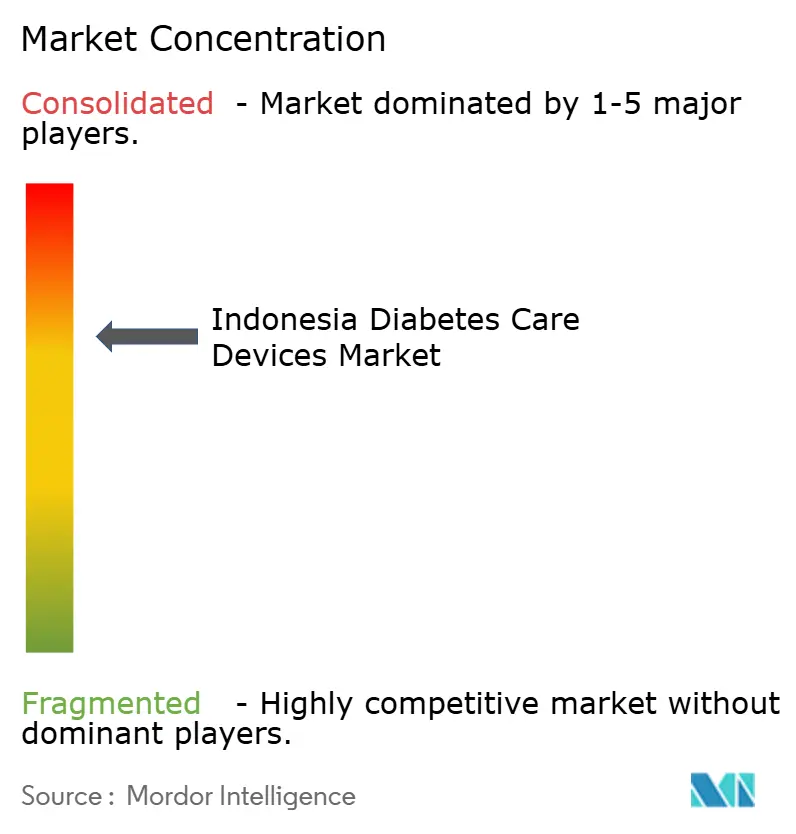
The competitive field is moderately fragmented and influenced by localization policy. Abbott, Roche, and Medtronic provide globally recognized platforms, but their import pricing faces mounting pressure from TKDN rules that encourage sub-assembly partnerships. Abbott’s FreeStyle Libre sensor line offers strong brand pull, and its integration agreement with Medtronic’s pumps positions both firms to shape premium therapy segments.
Local players, notably PT Kalbe Farma, leverage cost advantages and public-sector procurement preferences. Kalbe’s Ezelin insulin range meets localization thresholds and enjoys stable e-catalog visibility, driving broader geographic reach than many imported brands. Bio Farma’s tie-up with Novo Nordisk further signals foreign interest in local fill-finish models.
Distribution integrity remains a differentiator. Roche’s anti-counterfeit litigation underscores the reputational stakes, prompting multinationals to fortify track-and-trace systems and invest in accredited wholesalers. As digital health ecosystems mature, companies that bundle devices, data dashboards, and tele-consult modules may secure sustainable defensibility in the Indonesia diabetes care devices market.
Indonesia Diabetes Care Devices Industry Leaders
-
Medtronic
-
Roche
-
Novo Nordisk
-
Abbott
-
Dexcom
- *Disclaimer: Major Players sorted in no particular order
Market Opportunities and Future Outlook
Large-scale screening and chronic-care management programs are expanding the diagnosed and monitored population, which creates room for affordable monitoring kits and steady consumables demand through public channels. The national “Cek Kesehatan Gratis” program (launched January 2025) and BPJS Kesehatan’s chronic disease pathway (Prolanis) provide repeat touchpoints for routine glucose checks. IDF data showing a high undiagnosed share in 2024 supports continued demand for first-time SMBG initiation and repeat testing in primary care.
A second opportunity track is localization paired with stronger distribution integrity. Manufacturers that align assembly and packaging with TKDN requirements can also invest in anti-counterfeit controls to protect strip, lancet, and sensor volumes across e-commerce and wholesaler networks. With CDAKB certification becoming mandatory for device distributors in July 2024, accredited channels become more central to volume capture. In parallel, the Novo Nordisk and Bio Farma local packaging collaboration (MoU signed in July 2024) points to continued movement toward in-country capability, procurement eligibility, and supply continuity for diabetes management ecosystems that combine consumables, devices, and patient support.
Recent Industry Developments
- June 2026: Daewoong Pharmaceutical Indonesia announced the Indonesian launch of enavogliflozin, an SGLT-2 inhibitor, at PIT PERKENI 2026 in Bandung. The development broadens the diabetes treatment landscape and may shift monitoring and management demand as therapies are integrated into patient care. It also supports Daewoong's metabolic health portfolio in Indonesia and expands potential alignment with device-enabled management ecosystems.
- August 2025: Sinocare launched the 3in1 GCU M101 device in Jakarta, offering blood glucose, uric acid, and total cholesterol measurements. This adds multi-parameter point-of-care testing to the diabetes care devices market and can support more bundled monitoring offers. It also increases options for clinics and consumers, highlighting potential demand for connected device and analytics workflows.
- September 2024: LeaderMed Group and Combiphar formed a joint venture to conduct Phase 3 trials for LM-008 GLP-1 dual agonist in Indonesia. The move indicates active local diabetes therapy R&D and creates a pathway for potential future market entry with a new treatment option. It adds to the broader management options available in Indonesia and reinforces local R&D capabilities.
Research Methodology Framework and Report Scope
Market Definition and Coverage
For this report, the market covers diabetes care devices sold and used in Indonesia to monitor blood glucose and to support diabetes management in clinical and home settings, measured in revenue at the device and consumables level.
Scope exclusions: Services, mobile apps without a billable device, and general hospital equipment not used specifically for diabetes monitoring or delivery are not counted.
Segmentation Overview
- Monitoring Devices
- Self-monitoring Blood Glucose Devices
- Glucometer Devices
- Test Strips
- Lancets
- Continuous Blood Glucose Monitoring
- Sensors
- Durables
- Self-monitoring Blood Glucose Devices
- Management Devices
- Insulin Pump
- Insulin Pump Device
- Insulin Pump Reservoir
- Infusion Set
- Insulin Syringes
- Insulin Cartridges
- Disposable Pens
- Insulin Pump
Data Sources, Market Sizing, and Validation
Desk Research
Desk research was used to set the first boundaries of the market, and then to compile the practical data series needed to build assumptions that can be checked. We relied on public health and diabetes burden signals from sources such as the Indonesian Ministry of Health, the International Diabetes Federation, and the World Health Organization, which helped anchor the likely monitoring and treatment pool.
On the device side, we reviewed import and trade indicators from Statistics Indonesia (BPS) and UN Comtrade, alongside regulatory listings and notices from Indonesia's medical device regulator and related health agencies. We also used company annual reports, investor presentations, and reputable local and global press to understand portfolio mix, channel approach, and pricing direction. Where helpful, we supplemented this with a paid subscription for company financials and intelligence, and a patent database to confirm technology shifts (for example the move toward sensor-based monitoring). These are illustrative examples, and many other public documents and datasets were also reviewed for data collection, cross-checking, and clarification.
Primary Interviews and Surveys
Primary work focused on validating areas desk sources could not show clearly in Indonesia, mainly the mix of monitoring versus management devices, how often consumables are replaced, and which channels drive volumes. We spoke with a spread of stakeholders such as distributors, hospital procurement contacts, clinicians, diabetes educators, and pharmacy and retail channel participants, and used their feedback to refine adoption, pricing, and reimbursement assumptions across Indonesia.
Distribution of primary research fieldwork respondents
| Company type | Respondent position |
|---|---|
| Top tier: 27% | CXOs: 12% |
| Mid tier: 54% | Functional/Unit leaders: 33% |
| Smaller Players: 19% | Managers: 55% |
Market-Sizing & Forecasting
Sizing started with a top-down build that reconstructs served demand using diabetes prevalence and diagnosed share signals, and then translates that pool into device usage. Key inputs included the expected split of patients using self-monitoring, typical testing frequency and strip usage, penetration of continuous glucose monitoring, refill and replacement cycles, and the price corridor by channel (hospital, pharmacy, and e-commerce).
After forming the topline, we stress-tested results using selective bottom-up checks, mainly by rolling up a sample of supplier and distributor revenues, and by using sampled average selling prices multiplied by estimated unit volumes for core device-consumable combinations. When gaps appeared (for example, incomplete visibility on smaller importers or parallel channels), we applied conservative adjustment factors that were verified in follow-up discussions and aligned to the direction of observed trade flows.
For forecasting, we used scenario analysis supported by short ARIMA runs on the most stable value series, then aligned outputs to expert views on reimbursement access, consumer preference for home monitoring, and expected pricing movement. The forecast also reflected practical constraints such as affordability, public sector procurement timing, and the pace at which newer monitoring formats are adopted in the country.
Data Validation & Update Cycle
Model outputs were validated through several checks so that one data point did not determine the final number. We compared implied per-patient device and consumable spend against observed pricing and replacement cycles, and then checked whether the results aligned with channel signals such as trade direction and procurement patterns.
Before sign-off, anomalies were flagged and reviewed by another analyst, and large variances triggered re-checks of assumptions plus a re-contact loop with select interviewees. Reports are refreshed annually, with interim updates when material events occur, such as policy shifts, sharp currency moves, or major changes in device availability. Right before delivery, a final pass is completed so clients receive the most current view possible.
Mordor Intelligence's Indonesia Diabetes Care Devices Market Size Measured Against Other Published Estimates
Published values for this market can look different because counted items do not always match, and because each publisher selects its own base year, pricing logic, and channel coverage. Variations are also driven by how consumables are treated, since strips and sensors can be counted as part of the market or handled as a separate add-on.
Import and customs direction checks, together with patient pool validation from public diabetes burden sources, are used to keep Mordor Intelligence's estimate tied to devices actually sold into Indonesia through identifiable channels, rather than broad health spending proxies.
Benchmark comparison
| Source | Market Size | Gaps in Research Methodology |
|---|---|---|
| Mordor Intelligence | USD 148.06 M (2025) | |
| Regional Consultancy A | USD 134.00 M (2024) | Uses an earlier base year and appears to lean heavily on SMBG device sales without fully scaling recurring strip and sensor consumption across channels. |
| Trade Journal B | USD 140.04 M (2022) | Relies on older pricing and adoption assumptions, and does not clearly update for newer monitoring formats and recent reimbursement and procurement changes. |
The spread in the table is mostly explained by base year timing and how recurring consumables and newer monitoring formats are captured. By keeping the demand pool, usage frequency, and price-by-channel assumptions explicit, our model remains easy to audit and repeat when new public signals or interview inputs become available.
Key Questions Answered in the Report
What is the current size of the Indonesia diabetes care devices market?
The market is worth USD 156.2 million in 2026 and is forecast to reach USD 204.13 million by 2031.
How fast is the Indonesia diabetes care devices market expected to grow?
The market is projected to post a 5.50% CAGR over 2026-2031.
Which patient segment is expanding the quickest?
Type-1 diabetes shows the fastest growth, advancing at a 6.95% CAGR as early diagnosis rates improve.
Why are home-care devices gaining momentum?
Government screening programs, telemedicine adoption, and retail financing are making self-management tools more affordable and convenient for patients.
How do local-content rules affect foreign manufacturers?
TKDN requirements push multinationals to localize sub-assembly or packaging, prompting strategic partnerships that balance compliance with technology transfer.