
Immunology-oncology ELISA Kits Market Size and Share
Market Overview
| Study Period | 2020 - 2031 |
|---|---|
| Market Size (2026) | USD 10.97 Billion |
| Market Size (2031) | USD 13.28 Billion |
| Growth Rate (2026 - 2031) | 3.90 % |
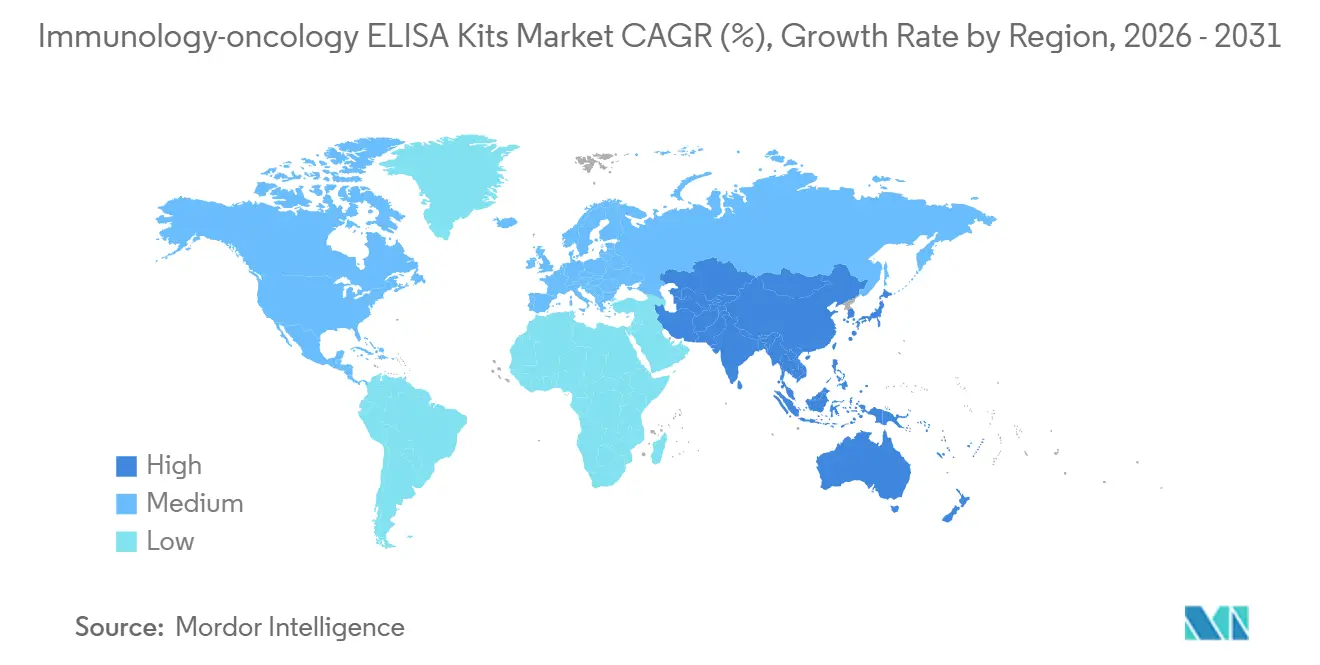
| Fastest Growing Market | Asia-Pacific |
| Largest Market | North America |
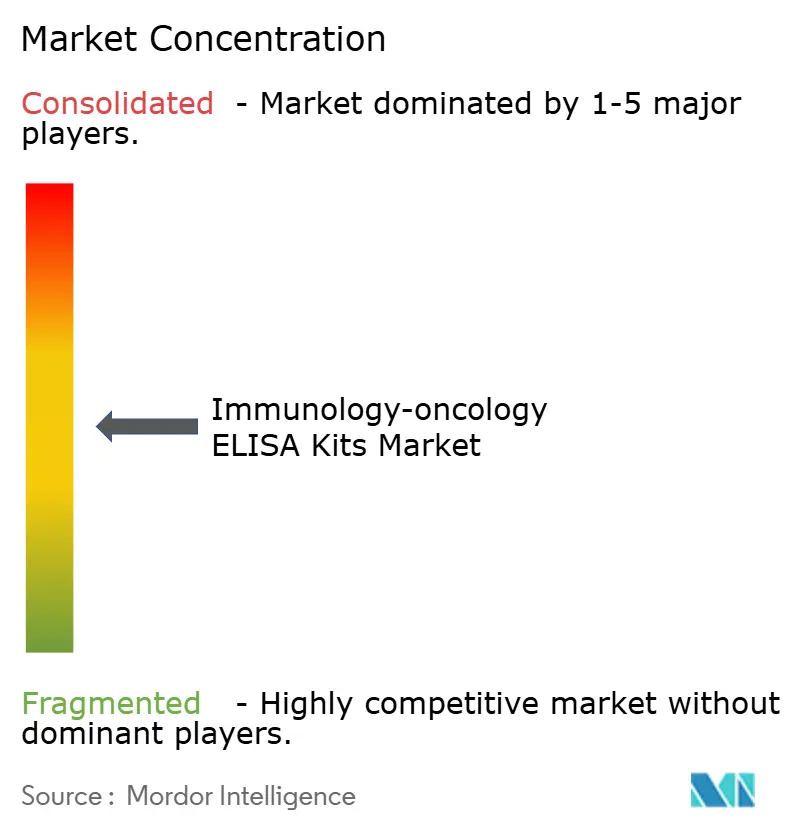
| Market Concentration | Medium |
Major Players *Disclaimer: Major Players sorted in no particular order Image © Mordor Intelligence. Reuse requires attribution under CC BY 4.0. | |
Immunology-oncology ELISA Kits Market Analysis by Mordor Intelligence
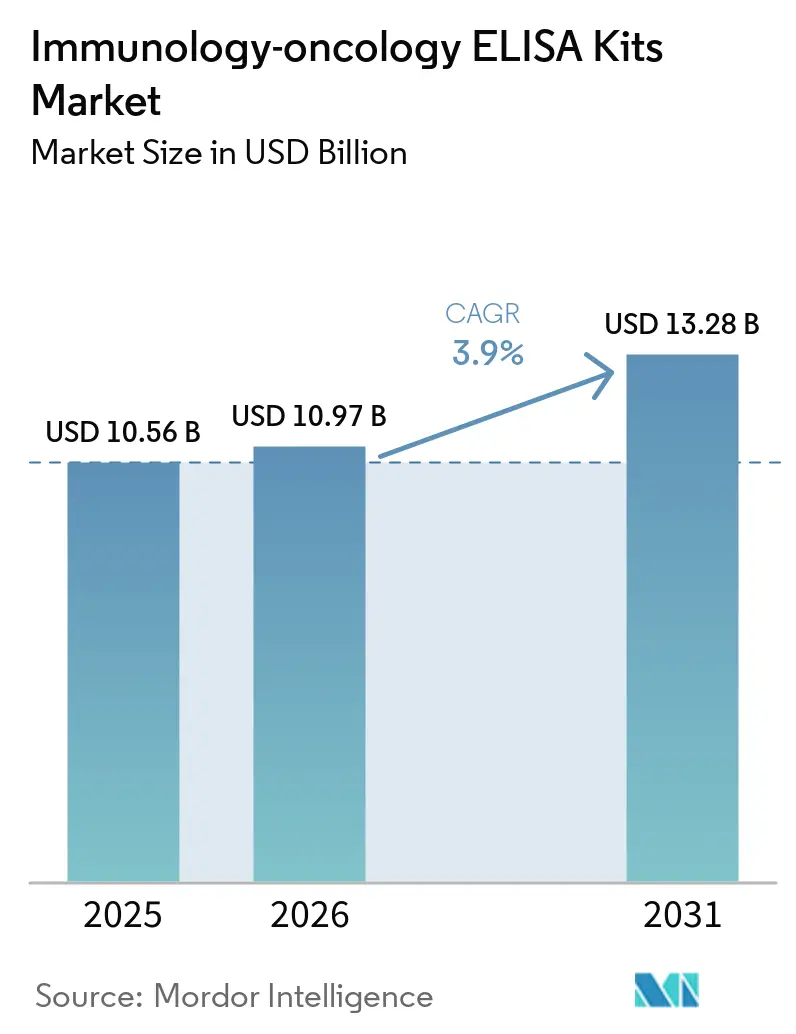
The Immunology-oncology ELISA Kits Market size is expected to grow from USD 10.56 billion in 2025 to USD 10.97 billion in 2026 and is forecast to reach USD 13.28 billion by 2031 at 3.9% CAGR over 2026-2031.
The expanding range of immune checkpoint therapies increased the need to measure soluble checkpoint proteins, cytokines, and tumor-associated antigens across research and clinical development. More than 25 anti-PD-1 and anti-PD-L1 agents have received global approval, while additional candidates remain in clinical development. A 2025 study of 675 cancer patients reported AUC values of 0.989 for sPD-1 in breast cancer and 0.843 for sPD-L1, supporting commercial ELISA kits for quantitative soluble biomarker measurement across tumor types.[1]N. E. Kushlinskii et al., “Assessing the Clinical Relevance of Soluble PD-1 and PD-L1: A Multi-Cohort Study Across Diverse Tumor Types and Prognostic Implications,” Biomedicines, mdpi.com. The immunology-oncology ELISA kits market benefited from pre-approval research demand, while clinical adoption depended on validated, reproducible assays and regulatory alignment on biomarker cutoff values.
Key Report Takeaways
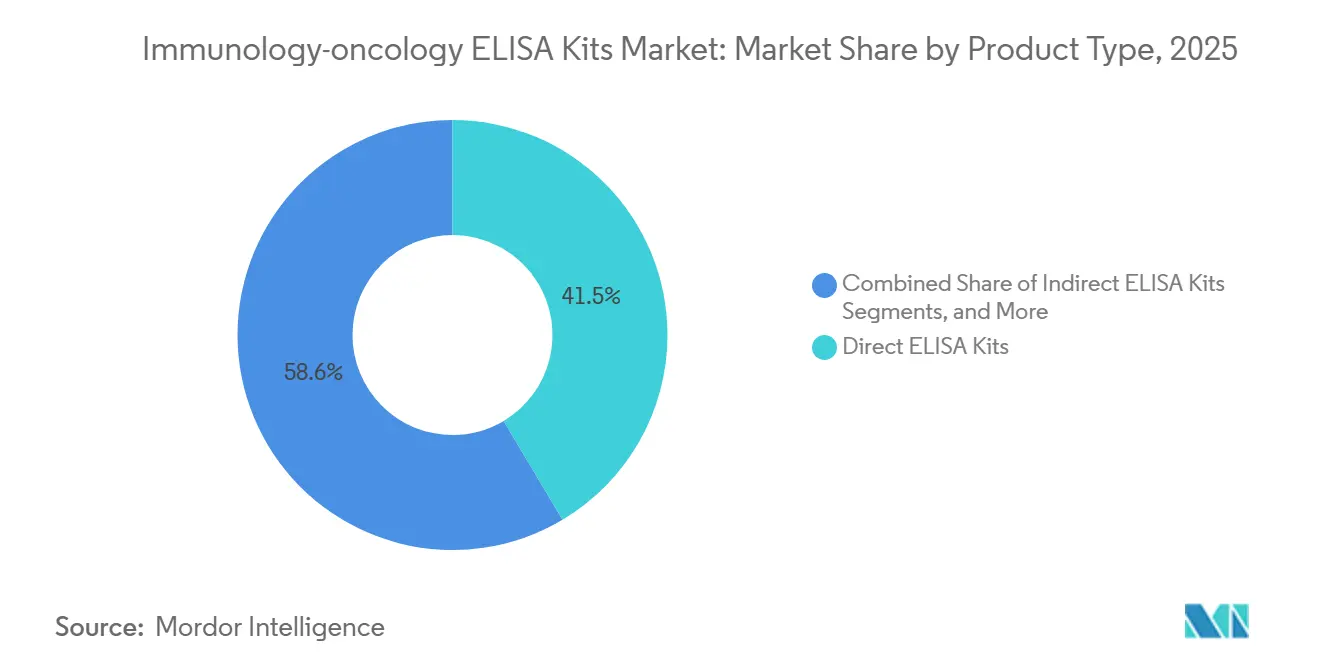
- By product type, direct ELISA Kits held 41.45% of the immunology-oncology ELISA kits market share in 2025, while indirect ELISA Kits are projected to grow at a 4.33% CAGR through 2031.
- By detection technology, colorimetric ELISA accounted for 36.76% of revenue in 2025, while chemiluminescent ELISA is projected to grow at a 4.76% CAGR through 2031.
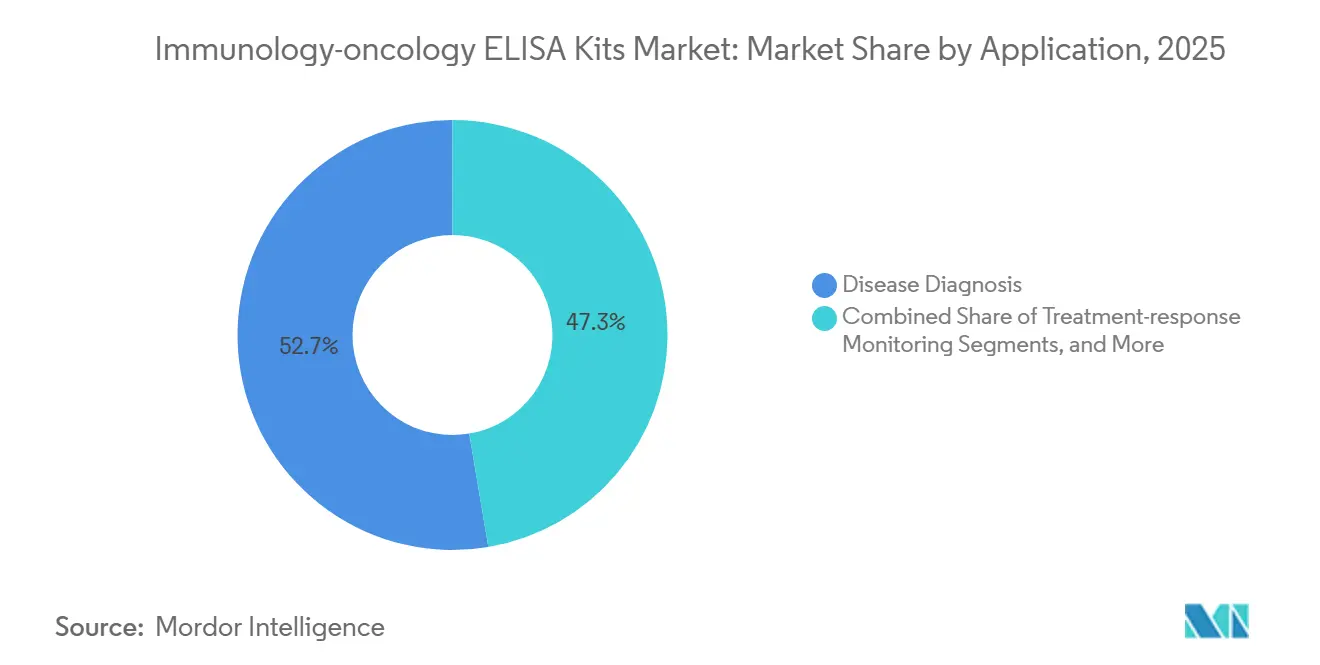
- By application, disease diagnosis represented 52.67% of revenue in 2025, while drug discovery and development is projected to grow at a 5.56% CAGR through 2031.
- By sample type, blood held 44.34% of revenue in 2025, while tissue is projected to grow at a 5.98% CAGR through 2031.
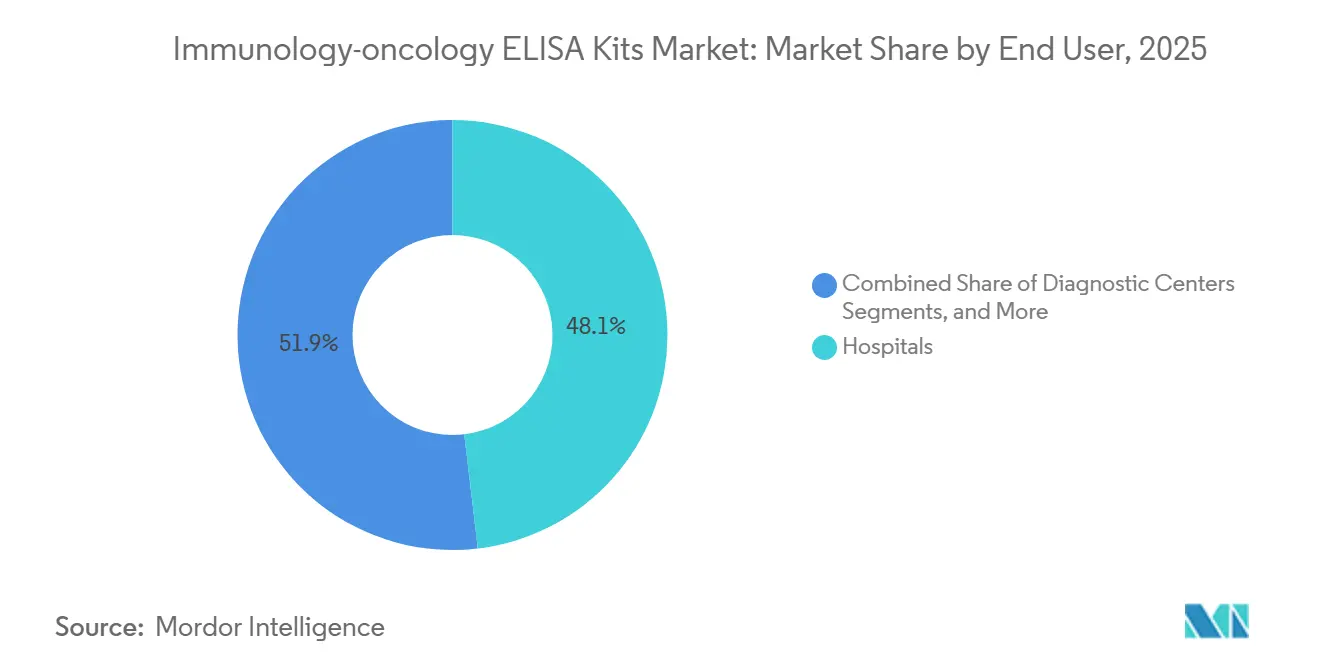
- By end user, hospitals accounted for 48.12% of revenue in 2025, while diagnostic centers are projected to grow at a 6.34% CAGR through 2031.
- By geography, North America held 40.35% of revenue in 2025, while Asia-Pacific is projected to grow at a 6.25% CAGR through 2031.
Note: Market size and forecast figures in this report are generated using Mordor Intelligence’s proprietary estimation framework, updated with the latest available data and insights as of January 2026.
Market Trends and Insights
Drivers Impact Analysis of Immunology-oncology ELISA Kits Market*
| DRIVER | (~) % IMPACT ON CAGR FORECAST | GEOGRAPHIC RELEVANCE | IMPACT TIMELINE |
|---|---|---|---|
| Expansion of immune-checkpoint inhibitor development | +1.0% | Global, concentrated in North America and Europe | Medium term (2-4 years) |
| Growth in companion-diagnostic and biomarker validation programs | +0.9% | North America and Europe, with early gains in Japan and South Korea | Medium term (2-4 years) |
| Rising demand for quantitative tumor-microenvironment profiling | +0.7% | Global, with highest intensity in North America | Long term (≥ 4 years) |
| Increasing oncology clinical-trial activity in asia-pacific | +0.6% | Asia-Pacific, especially China, India, Japan, and South Korea | Medium term (2-4 years) |
| Greater use of soluble immune biomarkers for longitudinal treatment monitoring | +0.5% | Global, with near-term traction in North America and Europe | Short term (≤ 2 years) |
| Reusable standard curves and workflow familiarity in resource-constrained laboratories | +0.3% | Asia-Pacific, Middle East and Africa, and South America | Long term (≥ 4 years) |
| Source: Mordor Intelligence | |||
Immune-Checkpoint Inhibitor Development Broadens the Assay Target Universe
The immunology-oncology ELISA kits market is supported by an immunotherapy pipeline extending beyond PD-1 and CTLA-4 to include LAG-3, TIM-3, and TIGIT. These targets require dedicated soluble protein measurement methods for pharmacodynamic monitoring and translational biomarker research. A 2025 metastatic melanoma study evaluated 7 soluble immune-checkpoint proteins, including sPD-1, sPD-L1, sLAG-3, and sCTLA-4, in 110 patients using commercial ELISA kits, highlighting the value of multi-marker liquid-biopsy panels.[2]A. Azzariti et al., “Developing a Risk Score Using Liquid Biopsy Biomarkers for Selecting Immunotherapy Responders and Stratifying Disease Progression Risk in Metastatic Melanoma Patients,” Journal of Experimental & Clinical Cancer Research, link.springer.com. Emerging targets can create separate assay categories before related therapies receive regulatory approval, supporting recurring kit demand across clinical research programs.
Companion-Diagnostic and Biomarker Validation Programs Drive Clinical-Grade Kit Adoption
Companion-diagnostic programs require quantitative evidence, increasing the use of validated assay platforms during biomarker development. ELISA kits are commonly used for early biomarker validation before tissue-based diagnostic workflows are finalized. In March 2026, Agilent received its 8th FDA companion diagnostic indication for PD-L1 IHC 22C3 pharmDx for esophageal or gastroesophageal junction carcinoma patients eligible for pembrolizumab.[3]Unraveling Tumor Cell-Tumor Microenvironment Crosstalk Through Antibody Array Technologies,” International Journal of Oncology, doi.org. This trend supported demand for clinical-grade ELISA kits with clear performance specifications, reproducible results, and stable supply across study sites.
Quantitative Tumor-Microenvironment Profiling Elevates Assay Sensitivity Requirements
Tumor-microenvironment research is shifting toward repeated profiling of cytokines and checkpoint proteins, requiring the detection of low-abundance analytes in complex samples. A 2025 review found that antibody-array studies could identify altered checkpoint signaling below 10 pg/mL. Chemiluminescent and fluorescent ELISA formats provide the required analytical sensitivity, driving demand for platforms with wider dynamic ranges. The 4.76% CAGR forecast for chemiluminescent ELISA reflected this shift toward higher-performance assays and reduced repeat testing.
Asia-Pacific Clinical-Trial Expansion Creates Sustained Institutional Procurement
Asia-Pacific is gaining importance in the immunology-oncology ELISA kits market as oncology trial activity has increased across China, India, Japan, and South Korea. China’s tier-one cancer centers expanded biomarker research and local manufacturing capacity, while Japan’s accelerated review pathways and India’s growing contract research organization base supported assay demand. In May 2026, AstraZeneca and Roche Diagnostics Asia Pacific announced a 3-year memorandum of understanding to advance digital and companion-diagnostic programs across Asia-Pacific, prioritizing validated PD-L1, HER2, and antibody-drug conjugate biomarker assays. This activity supported demand for research and clinical-grade assays, particularly among laboratories requiring regulatory documentation, familiar ELISA workflows, and reusable standard curves.
Restraints Impact Analysis of Immunology-oncology ELISA Kits Market*
| RESTRAINT | (~) % IMPACT ON CAGR FORECAST | GEOGRAPHIC RELEVANCE | IMPACT TIMELINE |
|---|---|---|---|
| Lack of harmonized soluble pd-1 and PD-L1 cutoffs | -0.5% | Global, with greatest relevance in North America and Europe | Medium term (2-4 years) |
| Competition from multiplex, flow-based, and molecular platforms | -0.6% | North America and Europe, with emerging relevance in Asia-Pacific | Short term (≤ 2 years) |
| Cold-chain and shelf-life constraints for distributed testing | -0.3% | Middle East and Africa, South America, and rural Asia-Pacific | Long term (≥ 4 years) |
| Limited clinical validation of blood-based ELISA biomarkers for treatment selection | -0.4% | Global | Long term (≥ 4 years) |
| Source: Mordor Intelligence | |||
Absence of Standardized PD-1/PD-L1 Cutoffs Restricts Clinical Decision-Making
The lack of standardized reference ranges for soluble PD-1 and PD-L1 limited the clinical utility of accurate ELISA results. A 2025 study in advanced non-small cell lung cancer reported a hazard ratio of 2.10 for reduced overall survival associated with pretreatment sPD-L1 among pembrolizumab-treated patients. However, the absence of common clinical cutoffs prevented consistent interpretation across institutions and kept much of the testing in research-use-only settings. This gap constrained IVD-grade product adoption, despite their higher revenue per test than research-use alternatives. Interlaboratory studies and alignment on sample handling, calibration, and reporting were required to ensure comparable results. National metrology organizations could support ISO-aligned harmonization, but no consensus had been reached for soluble checkpoint analytes. Consequently, the immunology-oncology ELISA kits market grew through research use, while clinical adoption developed more slowly. Clear clinical thresholds would make routine testing demand more predictable and increase the value of validated kits for diagnostic centers and hospitals.
Multiplex and Molecular Platforms Compress ELISA’s Share in High-Resource Settings
Multiplex, flow-based, and molecular platforms compete with ELISA in well-funded reference laboratories that require broad biomarker panels from a single sample. The 2025 AACR Annual Meeting included a RADIOHEAD cohort study using nELISA plasma profiling in checkpoint inhibitor patients, described as the largest plasma proteomics analysis of this patient group to date. These platforms can measure hundreds of biomarkers from one plasma aliquot, supporting discovery-stage research, particularly in North American and European laboratories with larger budgets. However, multiplex discovery studies can lead to single-analyte ELISA testing for focused validation and clinical translation, while ELISA remains relevant for targeted, familiar, and reproducible testing; cold-chain requirements and shelf-life limitations also restrict access in rural Asia-Pacific, South America, and parts of the Middle East and Africa.
*Our forecasts treat driver/restraint impacts as directional, not additive. The impact forecasts reflect baseline growth, mix effects, and variable interactions.
Immunology-oncology ELISA Kits Market Segment Analysis
By Product Type:
Direct Kits Retain Operational Leadership While Indirect Kits Gain UseDirect ELISA kits held 41.45% of global revenue in 2025. Their single-antibody format reduces procedural steps and limits cross-reactivity risks in serum and plasma workflows. This simplicity supports high-volume hospital laboratories that rely on standardized procedures and consistent sample handling. Indirect ELISA kits are forecast to grow at a CAGR of 4.33% through 2031, supported by signal amplification for low-abundance targets, including sPD-L1, sLAG-3, and sTIM-3.
The Others category includes sandwich and competitive ELISA formats for cytokine quantification and competitive inhibition assays. These formats support applications where analyte concentrations exceed standard calibration limits. In 2025, a study used Proteintech Human PD-1 and PD-L1 sandwich ELISA kits in 55 patients with advanced non-small cell lung cancer receiving pembrolizumab. The kits demonstrated intra-assay coefficients of variation below 7.8% and detection ranges of 0.156-10 ng/mL, reflecting the precision required in clinical research.



By Detection Technology:
Colorimetric Methods Support Volume While Chemiluminescence AdvancesColorimetric ELISA held 36.76% of detection-technology revenue in 2025. The format is compatible with standard 96-well plate readers and familiar laboratory procedures. Its lower cost supports high-throughput screening and laboratories with varying resource levels, particularly in the Asia-Pacific and South America. Chemiluminescent ELISA is forecast to grow at a CAGR of 4.76% through 2031, driven by demand for low-concentration checkpoint protein measurement and immunotherapy monitoring.
Abcam launched SimpleStep Ignite ELISA in April 2026 as a chemiluminescent platform that delivers results in 55 minutes. The company stated that the platform provides 50-fold greater sensitivity and up to a 35-fold wider dynamic range than traditional colorimetric ELISAs. Stricter documentation and performance requirements under the In Vitro Diagnostic Regulation are supporting upgrades to higher-specification systems, although cost and installed equipment continue to sustain demand for colorimetric ELISA.
By Application:
Disease Diagnosis Holds the Largest Position While Drug Development Grows FasterDisease diagnosis accounted for 52.67% of the immunology-oncology ELISA kits market size in 2025. Hospital oncology departments use ELISA panels to quantify soluble biomarkers in newly diagnosed cancer patients, including in pre-immunotherapy workups in some settings. Treatment-response monitoring generates recurring demand, while clinical research uses research-use-only kits. Drug discovery and development is forecast to grow at a CAGR of 5.56% through 2031, driven by early screening, pharmacokinetic bridging assays, and immunogenicity assessments.
Bio-Rad expanded its anti-idiotypic antibody pairs for pharmacokinetic bridging ELISAs in April 2026. The expansion covered tremelimumab, an anti-CTLA-4 therapy; elotuzumab, an anti-SLAMF7 therapy; and isatuximab, an anti-CD38 therapy. The company also added reagents for four other immunotherapy biologics and an anti-Fc mutation antibody panel for YTE-modified IgG1 therapeutics. These reagents support free-drug measurement and standardized pharmacokinetic monitoring across drug development studies.
By Sample Type:
Blood Remains Central to Monitoring While Tissue Work ExpandsBlood held 44.34% of sample-type revenue in 2025. Blood-based testing supports serial collection without additional tissue-sampling burden on patients. Laboratories use serum to measure soluble checkpoint proteins and EDTA plasma to assess circulating cytokine profiles. Tissue is forecast to grow at a CAGR of 5.98% through 2031, driven by tumor-microenvironment profiling using tumor lysates, cell-culture supernatants, and tissue homogenates.
A 2025 Communications Biology study used Invitrogen ELISA kits to measure IFN-γ and Granzyme B in breast cancer patient-derived scaffold co-cultures containing autologous T cells. The study demonstrated the value of protein-level measurements in reconstructed ex vivo tumor-microenvironment models. Tissue samples present higher matrix-interference risks and require broader dynamic ranges and validated dilution linearity. Blood remains important for repeat monitoring, while tissue supports analysis of local immune activity in the tumor environment.
By End User:
Hospitals Hold the Largest Position While Diagnostic Centers ExpandHospitals accounted for 48.12% of end-user revenue in 2025, supported by high testing volumes and procurement contracts across oncology departments, biobanks, and laboratory services. Pharmaceutical and biotechnology companies purchase kits for preclinical biomarker research and clinical studies, while academic and government research institutes support demand through investigator-led trials. Diagnostic centers are forecast to grow at a CAGR of 6.34% through 2031 as repeat immunotherapy monitoring becomes more decentralized.
Revvity’s EUROIMMUN unveiled the IDS i20 in May 2025 as a CE-marked and FDA-listed automated chemiluminescence immunoassay platform. The system runs 20 analytes across six diagnostic specialties simultaneously. Diagnostic centers can reduce cost per test through consolidated and automated workflows. Hospital laboratories may adopt these systems more gradually because of broader and less predictable testing requirements, while pharmaceutical companies and research institutes continue to require specialized assay support.
Geography Analysis
North America Immunology-oncology ELISA Kits Market
North America held a 40.35% share of the immunology-oncology ELISA kits market in 2025. The region benefits from extensive oncology trials, pharmaceutical research expenditure, and companion diagnostic activity, led by the United States and supported by Canadian academic cancer centers and biobank programs. FDA requirements for validated data in investigational new drug-enabling studies support demand for high-specification kits and create entry barriers for suppliers with consistent lot-to-lot performance. In April 2026, Labcorp launched an FDA-approved companion diagnostic for ovarian cancer to identify patients eligible for KEYTRUDA, marking the first immuno-oncology approval for this indication.
Europe Immunology-oncology ELISA Kits Market
Europe remains a substantial and stable market for immunology-oncology ELISA kits, with Germany, the United Kingdom, and France accounting for a significant share of regional procurement. The In Vitro Diagnostic Regulation increases performance and documentation requirements for IVD products through 2025 and 2026, encouraging laboratories to transition to CE-marked alternatives. This trend consolidates procurement among suppliers with strong compliance documentation and consistent performance data. Italy, Spain, Nordic countries, and Eastern European countries support demand through oncology biomarker studies, expanding immunoassay infrastructure, and ISO 15189-accredited laboratory quality systems.
APAC, MEA and South America Immunology-oncology ELISA Kits Market
Asia-Pacific is forecast to grow at a CAGR of 6.25% through 2031, driven by the expansion of China’s tier-one cancer centers and growing regional manufacturing capacity. Japan’s PMDA accelerated review pathways, and India’s CDSCO alignment with the FDA and EMA companion diagnostic validation practices support biomarker-led therapy programs. Demand in the Middle East and Africa is concentrated in Gulf Cooperation Council tertiary hospitals and selected South African oncology centers, while Brazil and Argentina lead the South American market. Cold-chain constraints, institutional funding cycles, and foreign-exchange volatility may moderate growth outside major regional centers.

Competitive Landscape
The immunology-oncology ELISA kits market has a moderately consolidated upper tier. Thermo Fisher Scientific, Bio-Rad Laboratories, Bio-Techne Corporation, including R&D Systems and Novus Biologicals, and Abcam, a Danaher company, hold significant positions through broad kit portfolios. Their distribution capabilities and recombinant antibody platforms support reliable supply and lot-to-lot consistency. Regional and specialty suppliers compete on target specificity, pricing, and speed to market for emerging analytes. Some specialty providers introduced kits for niche checkpoint targets 12-18 months ahead of larger companies. Market leadership varies by product, detection technology, and geography, sustaining pricing pressure and product launches.
Abcam launched SimpleStep Ignite ELISA in April 2026, featuring a 55-minute workflow, 50-fold greater sensitivity, and up to a 35-fold wider dynamic range than traditional colorimetric ELISAs. The launch reflects supplier competition through high-sensitivity chemiluminescent platforms. Tecan acquired manufacturing assets from Cisbio Bioassays SAS, a Revvity subsidiary, in April 2025, including the CGA-ELISA-NG CE IVD kit for neuroendocrine tumor detection and progression monitoring. Bio-Rad broadened its drug-monitoring reagent range for several immunotherapy biologics in April 2026 to support pharmaceutical users requiring validation for individual drug molecules.
Clinical-grade measurement of soluble checkpoint biomarkers remains the most open competitive area. No IVD-cleared kit in a major jurisdiction supports routine standalone sPD-L1 or sPD-1 treatment selection. Companies compete on assay sensitivity, workflow time, target coverage, and reproducibility, while larger suppliers leverage cold-chain networks and smaller firms focus on specialized biomarker niches. The balance between broad portfolios and specialized performance remains central to competition.
Immunology-oncology ELISA Kits Industry Leaders
Abcam plc
Bio-Techne Corporation
Merck KGaA
Becton, Dickinson and Company
Bio-Rad Laboratories, Inc.
- *Disclaimer: Major Players sorted in no particular order
Immunology-oncology ELISA Kits Market Companies Covered in this Report
- Abcam
- Arigo Biolaboratories Corp.
- Assay Genie
- Aviva Systems Biology Corporation
- Beckton Dickinson
- Bio-Rad Laboratories
- Bio-Techne
- Boster Biological Technology Co., Ltd.
- Cell Signaling Technology
- Creative Diagnostics
- CUSABIO Technology LLC
- Danaher
- Enzo Biochem, Inc.
- LifeSpan BioSciences, Inc.
- Merck
- OriGene Technologies
- Proteintech Group, Inc.
- RayBiotech Life, Inc.
- Reddot Biotech
- Revvity, Inc.
- Sino Biological, Inc.
- Thermo Fisher Scientific

Recent Industry Developments in Immunology-oncology ELISA Kits Market
- July 2026: Revvity expanded its immunoassay portfolio with 46 kits targeting 35 oncology and inflammation markers, including AlphaLISA SureFire Ultra Multiplex Biotin-Free formats for high-throughput cancer drug discovery studies.
- April 2026: Abcam, a Danaher company, launched SimpleStep Ignite ELISA, offering 50-fold higher sensitivity, a 35-fold wider dynamic range, and 55-minute results for low-abundance checkpoint protein detection.
- April 2026: Bio-Rad Laboratories expanded its anti-idiotypic antibody portfolio for multiple immunotherapy biologics and introduced an anti-Fc mutation panel for YTE-modified IgG1 therapeutics, supporting pharmacokinetic ELISAs.
- August 2025: Revvity launched pHSense reagents, a time-resolved fluorescence platform for high-throughput monitoring of antibody, antibody-drug conjugate, and GPCR internalization in drug development workflows.


Global Immunology-oncology ELISA Kits Market Report Scope
As per the scope of the report, immunology-oncology ELISA kits are specialized laboratory assay tools used to detect and measure specific immune system and cancer-related proteins, such as immune checkpoint markers and cytokines, in biological samples.
The immuno-oncology ELISA kits market is segmented by product type, detection technology, application, sample type, end user, and geography. By product type, the market includes direct ELISA kits, indirect ELISA kits, and other ELISA kits. By detection technology, the market is segmented into colorimetric ELISA, fluorescent ELISA, chemiluminescent ELISA, and other detection technologies. By application, the market is categorized into disease diagnosis, treatment response monitoring, drug discovery and development, clinical research, and other applications. By sample type, the market is segmented into blood, tissue, and serum. By end user, the market includes hospitals, diagnostic centers, pharmaceutical and biotechnology companies, academic and government research institutes, and other end users. By geography, the market is analyzed across North America, Europe, Asia-Pacific, the Middle East and Africa, and South America. The report also covers the estimated market sizes and trends for 17 countries across major regions globally. The report offers the market sizes and forecasts in terms of value (USD) for the above segments.
| Direct ELISA Kits |
| Indirect ELISA Kits |
| Others |
| Colorimetric ELISA |
| Fluorescent ELISA |
| Chemiluminescent ELISA |
| others |
| Disease Diagnosis |
| Treatment-response Monitoring |
| Drug Discovery and Development |
| Clinical Research |
| Others |
| Blood |
| Tissue |
| Serum |
| Hospitals |
| Diagnostic Centers |
| Pharmaceutical and Biotechnology Companies |
| Academic and Government Research Institutes |
| Others |
| North America | United States |
| Canada | |
| Mexico | |
| Europe | Germany |
| United Kingdom | |
| France | |
| Italy | |
| Spain | |
| Rest of Europe | |
| Asia-Pacific | China |
| India | |
| Japan | |
| Australia | |
| South Korea | |
| Rest of Asia-Pacific | |
| Middle East and Africa | GCC |
| South Africa | |
| Rest of Middle East and Africa | |
| South America | Brazil |
| Argentina | |
| Rest of South America |
| By Product Type | Direct ELISA Kits | |
| Indirect ELISA Kits | ||
| Others | ||
| By Detection Technology | Colorimetric ELISA | |
| Fluorescent ELISA | ||
| Chemiluminescent ELISA | ||
| others | ||
| By Application | Disease Diagnosis | |
| Treatment-response Monitoring | ||
| Drug Discovery and Development | ||
| Clinical Research | ||
| Others | ||
| By Sample Type | Blood | |
| Tissue | ||
| Serum | ||
| By End User | Hospitals | |
| Diagnostic Centers | ||
| Pharmaceutical and Biotechnology Companies | ||
| Academic and Government Research Institutes | ||
| Others | ||
| By Geography | North America | United States |
| Canada | ||
| Mexico | ||
| Europe | Germany | |
| United Kingdom | ||
| France | ||
| Italy | ||
| Spain | ||
| Rest of Europe | ||
| Asia-Pacific | China | |
| India | ||
| Japan | ||
| Australia | ||
| South Korea | ||
| Rest of Asia-Pacific | ||
| Middle East and Africa | GCC | |
| South Africa | ||
| Rest of Middle East and Africa | ||
| South America | Brazil | |
| Argentina | ||
| Rest of South America | ||


Key Questions Answered in the Report
What is driving demand for immunology-oncology ELISA kits?
Growing immune-checkpoint therapy pipelines and demand for soluble biomarker measurement support use in research, validation, and treatment-monitoring workflows.
What is the projected growth rate through 2031?
The immunology-oncology ELISA kits market is forecast to grow at a 3.90% CAGR from 2026 to 2031, reaching USD 13.28 billion.
Which ELISA format is growing fastest?
Chemiluminescent ELISA is forecast to grow at a 4.76% CAGR through 2031 because it can measure low-abundance checkpoint proteins.
Which application accounts for the largest revenue share?
Disease Diagnosis accounted for 52.67% of revenue in 2025, supported by soluble biomarker testing in oncology workflows.
Why are diagnostic centers becoming more important?
Diagnostic Centers are forecast to grow at a 6.34% CAGR through 2031 as repeat immunotherapy monitoring moves toward specialized, automated laboratories.
What limits routine clinical use of soluble PD-1 and PD-L1 testing?
The lack of harmonized clinical cutoffs makes it difficult to compare results across institutions or use them consistently for treatment decisions.
Page last updated on:





