
Healthcare CDMO Market Size and Share
Market Overview
| Study Period | 2020 - 2031 |
|---|---|
| Market Size (2026) | USD 363.21 Billion |
| Market Size (2031) | USD 576.26 Billion |
| Growth Rate (2026 - 2031) | 9.66 % |
| Fastest Growing Market | North America |
| Largest Market | Asia Pacific |
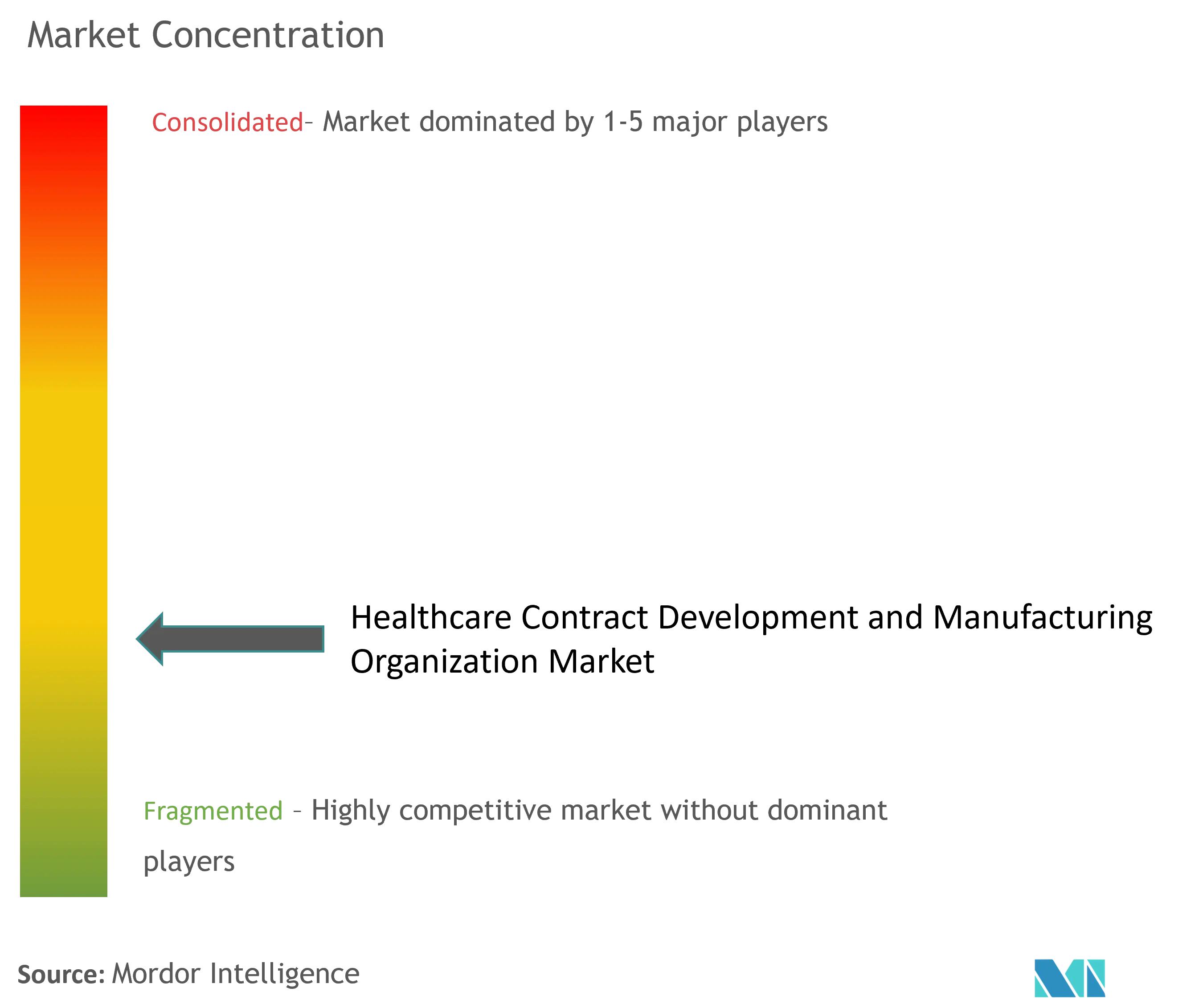
| Market Concentration | Medium |
Major Players *Disclaimer: Major Players sorted in no particular order Image © Mordor Intelligence. Reuse requires attribution under CC BY 4.0. | |
Healthcare CDMO Market Analysis by Mordor Intelligence
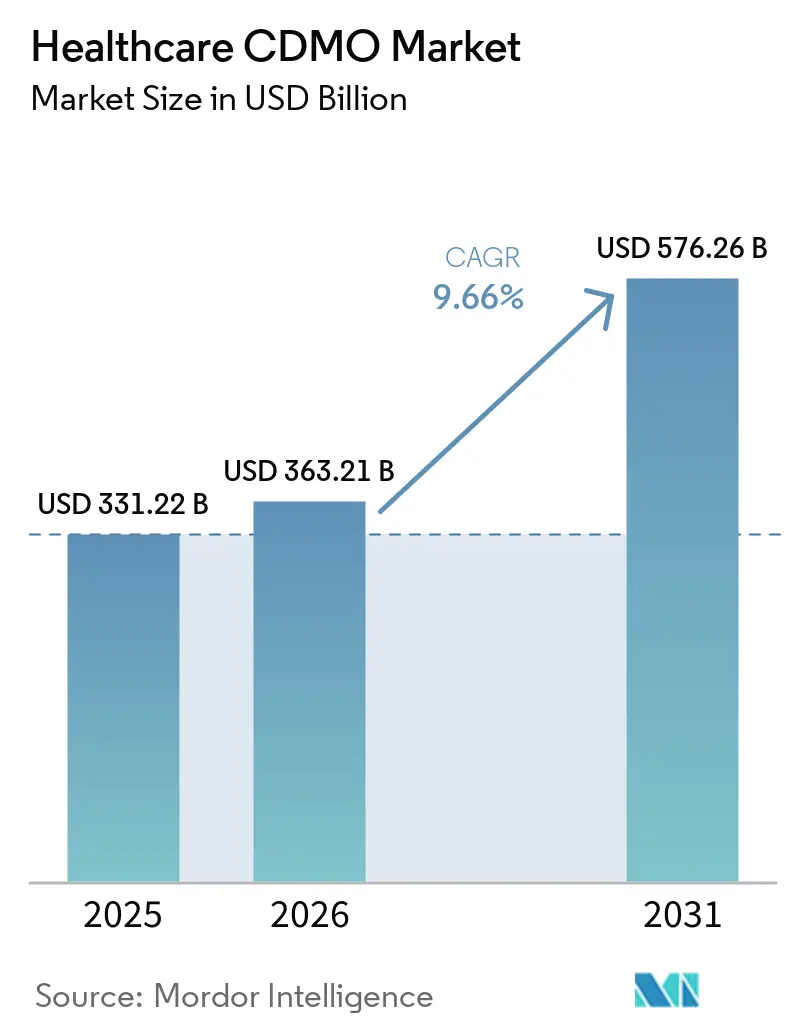
Healthcare CDMO Market size in 2026 is estimated at USD 363.21 billion, growing from 2025 value of USD 331.22 billion with 2031 projections showing USD 576.26 billion, growing at 9.66% CAGR over 2026-2031.
This expansion underscores how biopharmaceutical companies are reallocating capital toward discovery while leaning on external partners for highly specialized production. Sustained demand for large-molecule treatments, steady regulatory endorsement of advanced manufacturing, and the widening gap between in-house capabilities and next-generation process requirements together fuel outsourcing momentum. Leading CDMOs have responded by scaling single-use and continuous platforms, embedding artificial intelligence in tech-transfer workflows, and widening late-stage support services that dovetail with accelerated approval pathways. Rapid geographic diversification of good manufacturing practice (GMP) capacity—most visibly across emerging Asia—adds a cost-efficient supply option yet reshapes the risk calculus for capacity planning. Competitive dynamics are moving from price-driven bidding toward platform differentiation, with integrated biologics and cell-therapy solutions commanding premium valuations.
Key Report Takeaways
- By service type, Contract Manufacturing led with 73.45% healthcare contract development and manufacturing organization market share in 2025; Contract Development is projected to expand at a 10.44% CAGR through 2031.
- By development phase, Commercial and Post-Approval accounted for 39.35% of the healthcare contract development and manufacturing organization market size in 2025 and Phase I is advancing at a 10.78% CAGR through 2031.
- By therapeutic area, oncology captured 34.41% share of the healthcare contract development and manufacturing organization market size in 2025 while neurology and CNS is forecast to record an 11.04% CAGR to 2031.
- By end user, Big Pharmaceutical companies held 53.10% of healthcare contract development and manufacturing organization market share in 2025; Emerging and Virtual Biotech firms are projected to grow at 11.33% CAGR between 2026 and 2031.
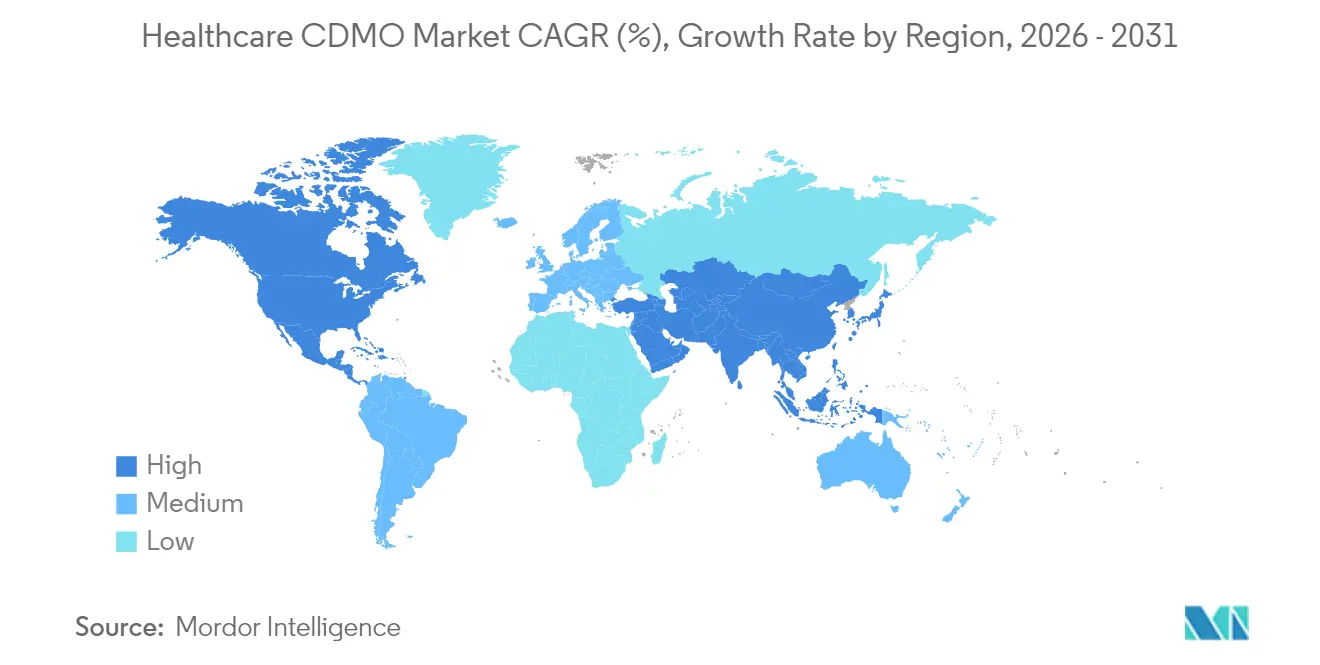
- By geography, North America commanded 41.75% share of the healthcare contract development and manufacturing organization market size in 2025 whereas Asia-Pacific is positioned to register an 11.57% CAGR through 2031.
Note: Market size and forecast figures in this report are generated using Mordor Intelligence’s proprietary estimation framework, updated with the latest available data and insights as of 2026.
Market Trends and Insights
Drivers Impact Analysis of Healthcare CDMO Market*
| Driver | (~) % Impact on CAGR Forecast | Geographic Relevance | Impact Timeline |
|---|---|---|---|
| Mainstream outsourcing to focus on core competencies | +1.8% | Global, with strongest adoption in North America & Europe | Medium term (2-4 years) |
| Growth in biologics & advanced therapies | +1.2% | Global, concentrated in US, EU, and emerging Asia-Pacific | Long term (≥ 4 years) |
| Increasing molecule complexity demanding end-to-end CDMOs | +0.9% | North America & EU core, expanding to APAC | Medium term (2-4 years) |
| AI-driven process optimization slashing tech-transfer timelines | +0.7% | Global, with early adoption in developed markets | Short term (≤ 2 years) |
| Single-use & continuous manufacturing boosting agile mid-tier CDMOs | +0.6% | Global, particularly benefiting Asia-Pacific facilities | Medium term (2-4 years) |
| Government incentives for GMP capacity across emerging Asia | +0.4% | Asia-Pacific core, with spillover to MEA | Long term (≥ 4 years) |
| Source: Mordor Intelligence | |||
Mainstream Outsourcing to Focus on Core Competencies
Rising research intensity and finite internal resources have pushed 86.9% of originators to outsource at least one manufacturing activity. Portfolio simplification enables sponsors to redeploy capital toward discovery while transferring fixed-asset risk to capable partners. Lonza’s USD 1.2 billion Vacaville acquisition, paired with the sale of its capsules unit, exemplifies the pivot toward high-value biologics focus. Large pharma is simultaneously divesting small-molecule plants, redirecting attention to first-in-class biologics and mRNA platforms. CDMOs benefit through multiyear master service agreements that underpin utilization planning and unlock cross-selling for analytical, regulatory, and fill-finish add-ons.
Growth in Biologics & Advanced Therapies
Monoclonal antibodies, antibody-drug conjugates (ADCs), cell, and gene therapies require cleanroom designs, containment protocols, and supply-chain orchestration few originators deem economical in-house. The FDA’s Advanced Manufacturing Technologies Designation Program finalized in 2025 further encourages novel production models, reducing approval risk for CDMOs that deploy innovative equipment. Capital intensity for viral vector suites and segregated high-potency lines drives sponsors to partner earlier, often during pre-clinical formulation. As commercial approvals of CAR-T and gene-edited products climb, so does demand for small-lot, just-in-time manufacturing and end-to-end logistics solutions that preserve cell viability.
Increasing Molecule Complexity Demanding End-to-End CDMOs
Combination products such as ADCs integrate biologic and chemical supply chains within one release specification, heightening the value of vertically integrated partners. AGC Biologics’ Proveo platform unites antibody expression, payload synthesis, conjugation, and aseptic fill-finish under a single quality system, shrinking timeline from DNA to commercial lot to 15 months. Sponsors avoid duplicated validation and mitigate regulatory questions on split-site control. Similar integrated offerings are proliferating across oligonucleotides, lipid nanoparticles, and viral vectors, strengthening switching costs and reinforcing the premium for full-scope CDMOs.
AI-Driven Process Optimization Slashing Tech-Transfer Timelines
Artificial intelligence models now interrogate multivariate datasets from upstream and downstream runs to predict optimal parameter sets in silico. The FDA announced forthcoming guidance to clarify expectations for AI-enabled process control, giving early adopters a compliance roadmap. Lonza’s collaboration with IBM leverages digital twins that iterate design-of-experiments virtually, cutting scale-up cycles by 30% and reducing material consumption. Predictive maintenance also drops unplanned downtime, lifting available capacity without new brick-and-mortar spend. Data governance and validation of self-learning algorithms remain challenges yet do not outweigh the competitive edge from reduced transfer times.
Restraints Impact Analysis of Healthcare CDMO Market*
| Restraint | (~) % Impact on CAGR Forecast | Geographic Relevance | Impact Timeline |
|---|---|---|---|
| Capacity constraints & long CDMO lead-times | -0.6% | Global, most acute in specialized biologics manufacturing | Short term (≤ 2 years) |
| Stringent compliance / audit failures | -0.4% | Global, with heightened scrutiny in US and EU markets | Medium term (2-4 years) |
| Sustainability mandates raising green-capex | -0.3% | Europe & North America core, expanding globally | Long term (≥ 4 years) |
| Talent gaps in high-potency API engineering | -0.2% | Global, particularly acute in emerging APAC markets | Medium term (2-4 years) |
| Source: Mordor Intelligence | |||
Capacity Constraints & Long CDMO Lead-Times
Even aggressive expansion has not fully met the surge in biologics outsourcing. Allocation windows for specialized ADC suites run 24–36 months, forcing sponsors to secure slots before Phase I readouts. Daiichi Sankyo’s USD 1 billion German ADC plant and AstraZeneca’s USD 1.5 billion project in Singapore will relieve pressure only from 2028 onward. The mismatch elevates negotiation leverage of integrated CDMOs and increases reservation fees, yet also spurs clients to pursue dual-sourcing or retain pilot capacity to protect timelines.
Stringent Compliance / Audit Failures
Regulators issued a flurry of warning letters in 2024–2025 touching sterile controls, data integrity, and quality management. Carve-outs show that remediation averages USD 14.8 million, not counting revenue loss. Heightened inspection frequency, including remote audits, adds to overhead for multi-site CDMOs juggling divergent client dossiers. Failures lead to supply interruptions that tarnish both sponsor timelines and CDMO credibility. Providers therefore invest heavily in quality-by-design, electronic batch records, and continuous monitoring systems to stay inspection-ready.
*Our forecasts treat driver/restraint impacts as directional, not additive. The impact forecasts reflect baseline growth, mix effects, and variable interactions.
Healthcare CDMO Market Segment Analysis
By Service Type:
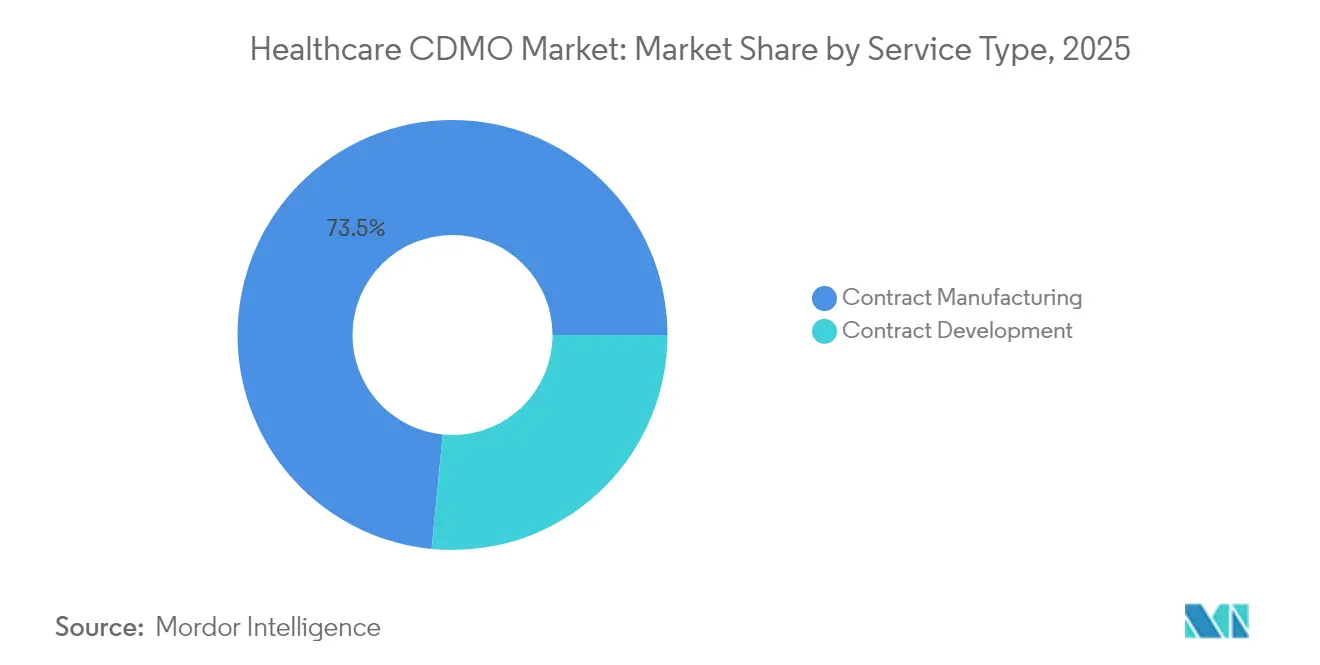
Manufacturing Dominance Faces Development DisruptionContract Manufacturing held 73.45% of healthcare contract development and manufacturing organization market share in 2025 because large pharma historically retained formulation expertise while outsourcing volume production. The sub-segment spans small-molecule APIs, monoclonal antibody titers exceeding 15,000 L, and sterile injectables, each carrying distinct margin profiles. Demand for high-potency and cytotoxic suites pushes average selling price upward and commands multi-year take-or-pay agreements. In contrast, commoditized oral solids see price compression but still underpin line utilization.
Contract Development is forecast to post a 10.44% CAGR, reflecting earlier third-party involvement in pre-formulation, process characterization, and regulatory dossier assembly by healthcare contract manufacturing organization providers. Sponsors favor a single knowledge continuum from laboratory to commercial scale, which reduces validation repetition and eases change-control filings. The healthcare contract development and manufacturing organization market therefore sees hybrid contracts where a development retainer rolls into commercial supply options, aligning incentives for rapid technology transfer. As ADCs, vector-based vaccines, and personalized therapies proliferate, process knowledge becomes inseparable from late-stage manufacturing, blurring traditional boundaries between development and production services.

By Development Phase:
Commercial Stability Meets Early-Stage AccelerationCommercial and Post-Approval programs represented 39.35% of healthcare contract development and manufacturing organization market size in 2025, anchoring predictable revenue streams tied to approved molecules. Lifecyle-management activities such as formulation optimization or new dosage strengths sustain volumes beyond patent expiry. Price ceilings exist, yet high-margin biologics continue to offset commoditized mature brands.
Phase I work is expected to climb at 10.78% CAGR to 2031 as emerging modalities require specialized toxicology batches and flexible cleanrooms. Sponsors engage CDMOs before first-in-human dosing to hedge internal skill gaps around viral vector cGMP or mRNA encapsulation. Earlier engagement yields longer total contract duration and often positions the same partner for later commercial supply, enlarging the addressable healthcare contract development and manufacturing organization market size over the product life cycle. Phase II and III volumes grow steadily but face scheduling volatility tied to clinical success, prompting CDMOs to diversify client rosters to balance attrition risk.
By Therapeutic Area:
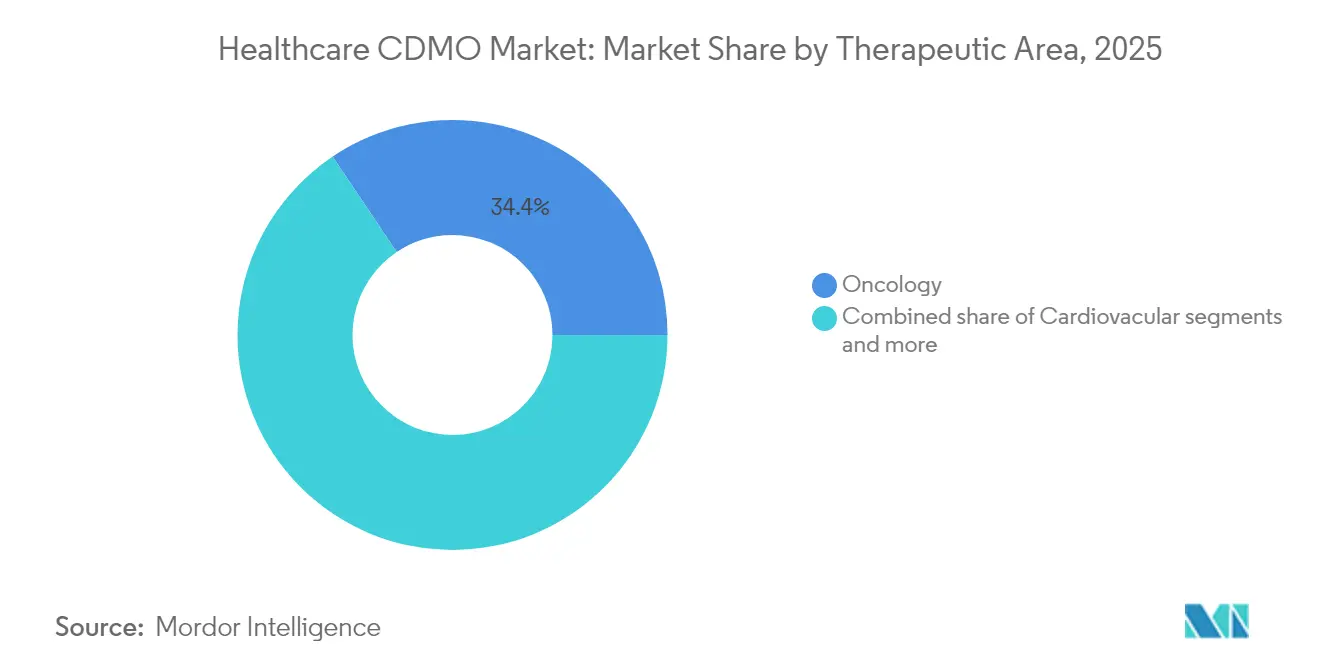
Oncology Leadership Challenged by CNS InnovationOncology treatments captured 34.41% of healthcare contract development and manufacturing organization market share in 2025 because ADCs, cytotoxic payloads, and autologous cell therapies require sophisticated containment, segregated HVAC, and operator protection. Complex conjugation workflows drive premium pricing and high capital barriers, locking in clients for multiyear supply deals.
Neurology and CNS pipelines are projected to expand at 11.04% CAGR, outpacing oncology as disease-modifying therapies for Alzheimer’s and Parkinson’s advance. Blood-brain barrier penetration technologies demand nano-emulsion and lipid nanoparticle expertise that few originators possess internally. Cardiovascular, metabolic, and infectious disease programs remain steady contributors, while rare disease portfolios need agile micro-batch capability. The resulting therapeutic diversity encourages CDMOs to adopt modular suites able to switch between modalities without lengthy requalification, strengthening competitiveness in the healthcare contract development and manufacturing organization market.
By End User:
Big Pharma Stability Meets Biotech DynamismLarge Pharmaceutical companies supplied 53.10% of 2025 revenue, offering sizeable volume commitments that justify multi-reactor expansions and specialized biologics lines. These sponsors emphasize quality track record and global supply continuity, favoring CDMOs with harmonized multi-site capabilities.
Emerging and Virtual Biotech firms, though smaller in spending power, generate the fastest revenue lift at an 11.33% CAGR. Their asset-light model outsources nearly every manufacturing step, demanding integrated regulatory, CMC, and logistics support. CDMOs respond with accelerator programs, dedicated project management, and shared risk-reward fee structures. Generics manufacturers remain volume drivers but operate on thinner margins, encouraging process efficiency investments. Academic and non-profit entities sustain pre-clinical demand, especially in orphan disease and pandemic-preparedness grants, broadening the client mix within the healthcare contract development and manufacturing organization market.
Geography Analysis
North America Healthcare CDMO Market
North America held 41.75% of 2025 revenue, anchored by FDA familiarity, established cold-chain logistics, and concentrated sponsor headquarters. Recent capacity announcements in Syracuse and Kentucky target high-potency and sterile injectables, reflecting the region’s pivot to complex biologics rather than cost-sensitive APIs. Despite rising labor and utility costs, proximity to innovation hubs and seasoned regulatory talent keeps first-in-human and launch production onshore.
APAC Healthcare CDMO Market
Asia-Pacific is set to post an 11.57% CAGR to 2031, driven by scale-up grants in China, Singapore, and South Korea. Government incentives lower capital hurdles for GMP suites, while competitive wages widen the cost differential with trans-Atlantic peers. Samsung Biologics added 360,000 L of capacity across Plants 4 and 5 and secured a USD 1.4 billion multi-product deal in early 2025. The region’s challenge remains regulatory harmonization, yet recent alignment with ICH guidelines has improved sponsor confidence.
EMEA and South America Healthcare CDMO Market
Europe occupies a middle ground, pairing stringent quality culture with attractive R&D tax frameworks. Switzerland, Ireland, and Germany dominate high-value biologics, exemplified by Lonza’s ADC expansion in Visp. Eastern European sites cater to oral dose and sterile packaging at competitive rates. South America and Middle East & Africa still represent single-digit shares but win investment as part of geopolitical diversification and pandemic supply-chain resilience strategies.
Regulatory Landscape
Regulation for healthcare CDMOs is anchored in global GMP and inspection regimes, with heightened attention on sterile controls, data integrity, and quality management following increased inspection actions across 2024-2025. In March 2026, the FDA issued draft guidance on responding to Form 483 observations, pushing more systematic, risk-based investigations and corrective actions. For multi-site CDMOs, this can increase compliance costs and extend remediation timelines.
Policy initiatives are also reshaping registration, traceability, and supply-chain visibility requirements that directly affect outsourced networks. In July 2026, the FDA proposed a rule to modernize drug manufacturing registration and listing, including a pathway intended to better fit distributed manufacturing models and align foreign API facility registration requirements with PREVENT Pandemics Act-driven supply-chain transparency. In Europe, the EMA is advancing updates to its GMP framework, including work to revise Annex 15 on qualification and validation, and a 2026-2028 GMDP work plan that prioritizes updates to foundational GMP guidance, reinforcing expectations for supplier qualification and validation across complex, multi-vendor manufacturing chains.
Value Chain Analysis
The healthcare CDMO value chain begins with sponsors defining CMC strategy and outsourcing scope, then progresses through raw material and starting-material sourcing (including high-potency inputs, biologics media/resins, and specialized primary packaging), process and analytical development, and GMP manufacturing of drug substance and drug product. Downstream steps include fill-finish, labeling and packaging, serialization, quality release, and distribution, with cold-chain logistics and chain-of-custody controls becoming more prominent for biologics and advanced therapies.
Quality and regulatory governance sit across every handoff, so documentation, supplier qualification, and inspection readiness operate as value-chain enablers rather than back-office functions. EMA expectations for marketing authorization holders to maintain supply-chain documentation back to active substance starting materials, verified on a risk basis, increase the operational burden on both sponsors and CDMOs to maintain auditable supplier maps and change-control discipline. At the system level, EU supply-chain monitoring initiatives (including the EMA-led MSSG approach using SPOR/OMS master data and MAH inputs) highlight the growing role of data infrastructure in tracking vulnerabilities, which supports demand for CDMOs that can provide transparent, standardized records across multi-site manufacturing and testing networks.
Competitive Landscape
The healthcare contract development and manufacturing organization market remains moderately fragmented, yet megadeals are accelerating consolidation. Novo Holdings closed a USD 16.5 billion Catalent purchase in December 2024[1], vaulting the investor into pole position for integrated biologics. Agilent’s USD 925 million BIOVECTRA buyout adds North American viral-vector capacity[2].
Scale, technology breadth, and regulatory reputation now underpin competitive leverage. Lonza, Thermo Fisher, and Samsung Biologics exceed USD 2.5 billion each in CDMO revenues, enabling continuous investment in high-throughput development labs and digital infrastructure. Mid-tier specialists differentiate through deep modality focus such as HPAPI synthesis or plasmid DNA, often partnering with logistics providers for full-chain solutions. AI adoption marks an emerging divide: early movers integrate predictive analytics into MES platforms to improve release times, while laggards risk being relegated to price-taker roles.
Future white-space opportunities include personalized vaccine manufacturing, CRISPR-based gene editing, and combination device-drug production where current capacity lags sponsor pipelines. Regulatory programs that expedite review of advanced platforms could allow nimble entrants to leapfrog scale incumbents if they prove compliance readiness. Overall, competitive intensity is shifting from capacity availability to capability differentiation within the healthcare contract development and manufacturing organization market.
Healthcare CDMO Industry Leaders
-
Catalent Inc.
-
Lonza
-
Recipharm AB
-
Thermo Fisher Scientific, Inc
-
Labcorp Drug Development
- *Disclaimer: Major Players sorted in no particular order
Healthcare CDMO Market Companies Covered in this Report
- Catalent
- Lonza Group
- Thermo Fisher Scientific
- Samsung Biologics Co., Ltd.
- WuXi AppTec Co., Ltd.
- FUJIFILM
- Baxter
- Cambrex
- PCI Pharma Services (PCI Services LLC)
- Recipharm
- AGC Inc.
- Jubilant Pharmova Limited
- Piramal Pharma Limited
- Abbvie
- C.H. Boehringer Sohn AG & Co. KG (Boehringer Ingelheim)
- Vetter Pharma-Fertigung GmbH & Co. KG
- Delpharm SAS
- Fareva S.A.
- Siegfried Holding AG
Market Opportunities and Future Outlook
Regulatory modernization and supply-chain resilience programs are creating whitespace for CDMOs that can operationalize distributed and multi-site manufacturing with strong data governance. The FDA's July 2026 proposed modernization of drug manufacturing registration and listing, including an approach intended to reduce administrative friction for distributed manufacturing, supports CDMO investment in hub-and-spoke operating models that coordinate development, clinical supply, and commercial production across multiple registered locations.
In Europe, opportunities are concentrated around compliance-led differentiation and critical-medicine continuity. The EMA's 2026-2028 GMDP work plan and the ongoing revision work for GMP guidance (including Annex 15) raise the bar for validation, qualification, and supplier oversight across complex supply chains. MSSG work to identify vulnerabilities in supply chains for critical medicines, supported by SPOR master data and MAH-provided information, increases the value of CDMOs that can offer traceable supplier qualification packages, rapid tech transfers, and resilient second-source configurations for sterile injectables and biologics, where outsourcing dependence and regulatory concentration risk are most visible.
Recent Industry Developments in Healthcare CDMO Market
- July 2026: Catalent and Nanoscope Therapeutics expand partnership to support late-phase development and commercial supply of the gene therapy MCO-010, including commercial packaging validation. The collaboration aligns with growing demand for externalized supply in late stage gene therapies and complex packaging workflows. The arrangement reinforces Catalent’s integrated late-phase and commercial supply capabilities in gene-therapy CDMO services.
- July 2026: Codis to acquire Catalent’s Nottingham (UK) facility to create Europe’s leading end-to-end spray-dry capability and enhance OS development and small-scale manufacturing. The acquisition expands Europe-wide spray drying and oral solid dose development capacity. It also increases Codis’ end-to-end manufacturing footprint, enabling a broader CDMO service scope in Europe.
- June 2026: Lonza expands payload-linker manufacturing capacity at its Visp, Switzerland site to support ADC market demand, with operations expected in 2028. The expansion targets rising demand for ADC payload linker components and related manufacturing know how. It positions Lonza to capture ADC capacity needs and strengthen platform capabilities.
Healthcare CDMO Market Report Scope and Research Methodology
Market Definition and Coverage
This market covers outsourced development, scale-up, and manufacturing services delivered to healthcare product companies, where a third party is paid to develop processes, produce intermediates, and manufacture final products under regulated quality systems.
Scope exclusions: We exclude in-house manufacturing done fully within brand owner facilities, and we also exclude pure distribution services that do not involve development or manufacturing work.
Segments Covered in This Report
- By Service Type
- Contract Development
- Pre-formulation & Formulation Development
- Process Development & Optimisation
- Analytical, Stability & Release Testing
- Contract Manufacturing
- API Manufacturing
- Small-molecule APIs
- Monoclonal Antibodies
- Large-molecule / Biologic APIs
- Recombinant Proteins
- Small-molecule APIs
- Finished Dosage Formulation
- Vaccines
- Oral Solids (Tablets, Capsules)
- Cell & Gene Therapies
- Sterile Injectables / Fill-Finish
- Topicals & Semi-solids
- Other Dosage Forms
- Packaging & Serialization Services
- Medical Devices
- Class I
- Class II
- Class III
- API Manufacturing
- Contract Development
- By Therapeutic Area
- Oncology
- Cardiovascular
- Infectious Diseases
- Neurology / CNS
- Auto-immune & Inflammatory
- Metabolic Disorders (Diabetes, Obesity)
- Rare & Orphan Diseases
- Other Therapeutic Areas
- By Development Phase
- Pre-clinical
- Phase I
- Phase II
- Phase III
- Commercial / Post-Approval
- By End User
- Big / Large Pharmaceutical Companies
- Emerging & Virtual Biotech Firms
- Generic Drug Manufacturers
- Medical-Device & Combination-Product Firms
- Academic, Government & Non-Profit Sponsors
- By Geography
- North America
- United States
- Canada
- Mexico
- Europe
- Germany
- United Kingdom
- France
- Italy
- Spain
- Rest of Europe
- Asia-Pacific
- China
- India
- Japan
- South Korea
- Australia
- Rest of Asia-Pacific
- South America
- Brazil
- Argentina
- Rest of South America
- Middle East and Africa
- GCC
- South Africa
- Rest of Middle East and Africa
- North America
Data Sources, Market Sizing, and Validation
Desk Research
Desk research is used to build the initial market structure and set starting assumptions before calling experts. In practice, we rely on public regulatory sources such as FDA databases and inspection updates, along with EMA and ICH guidance, and macro series from World Bank and OECD to normalize country level output and pricing conditions.
To shape the demand side, we review sources like ClinicalTrials.gov for trial activity by phase, USP and peer reviewed journals for manufacturing and quality trends, and trade data published through official customs statistics for selected inputs when those datasets are a useful signal. Company annual reports, investor presentations, and reputable press are also reviewed to track outsourcing intensity, capacity additions, and changes in service mix over time. Paid subscriptions are used in a limited way for company financials and intelligence, news and financials screening, and patent databases, so timeline and investment signals can be checked consistently. The desk sources listed here are illustrative only, and we referred to many other public documents during data collection, cross-checks, and clarification.
Primary Interviews and Surveys
Primary interviews are used to pressure test the desk assumptions and then refine service scope, pricing logic, and regional splits. We speak with a mix of service providers, procurement and outsourcing leaders from sponsor companies, and quality and operations roles, and we confirm how demand shifts across clinical and commercial needs across key regions.
Distribution of primary research fieldwork respondents
| Company type | Respondent position | Region |
|---|---|---|
| Top tier: 30% | CXOs: 15% | APAC: 42% |
| Mid tier: 51% | Functional/Unit leaders: 28% | EMEA: 36% |
| Smaller Players: 19% | Managers: 57% | Americas: 22% |
Market-Sizing & Forecasting
Sizing starts with a top-down build where development and manufacturing outsourcing spend is reconstructed using a demand pool view by region. We then allocate that structure into service mix across development phases and manufacturing needs. After the structure is in place, we corroborate totals using selective bottom-up checks, including sampled revenue benchmarks from service providers, channel feedback on capacity utilization, and an ASP times volume sense-check for common work packages.
Key inputs used in the model include clinical trial starts by phase (as a lead indicator for development and early manufacturing work), regulatory and quality compliance intensity (which affects outsourcing reliance), capacity expansion and utilization trends, changes in molecule complexity (which shifts service mix and pricing), and region level production economics and FX timing. If a service area has thin public disclosure, we set ranges based on expert input and then tighten them with cross-questions across respondent groups.
Forecasting uses scenario analysis supported by expert consensus on pipeline progression, outsourcing penetration, and pricing progression for specialized services. Final numbers are adjusted only when the model output and interview feedback move in the same direction, so the results remain explainable and repeatable with limited inputs.
Data Validation & Update Cycle
Validation is done through triangulation across three layers: desk indicators, interview feedback, and internal consistency checks across regions and service lines. Analysts compare outputs with independent signals such as trial activity trends, public capacity announcements, and sponsor outsourcing commentary, and then review anomalies until a clear reason is documented.
Before sign-off, the model is reviewed in multiple steps to keep assumptions, units, and currency conversions consistent across the time series. If a major variance is found, experts are re-contacted to confirm whether the change is structural or temporary. Reports are refreshed annually, with interim updates for material events, and a final pre-delivery pass so clients receive the latest updated view.
Mordor Intelligence's Healthcare Contract Development and Manufacturing Organization Market Estimate Compared With Other Published Estimates
Published market sizes for healthcare CDMOs often do not match because each publisher uses a different mix of services, end markets, and timing for the base year. Differences also appear when pricing is treated differently for development work versus commercial manufacturing, and when regional currency handling is not aligned.
The biggest gap driver is whether the estimate counts medical-device contract manufacturing and related services alongside pharmaceutical and biotech work. In that case, Mordor Intelligence treats the market as a combined healthcare CDMO pool that includes both contract development and contract manufacturing under a single value model.
Benchmark comparison
| Source | Market Size | Gaps in Research Methodology |
|---|---|---|
| Mordor Intelligence | USD 331.22 B (2025) | |
| Trade Journal A | USD 274.43 B (2024) | Uses an earlier base year and tends to reflect a narrower billable scope for healthcare services, which can undercount device related outsourcing and some late stage manufacturing value. |
| Industry Publisher B | USD 136.60 B (2024) | Frames the market as a pharmaceutical CDMO total with defined service buckets, which can leave out broader healthcare manufacturing services and also applies a different base year and growth window. |
The spread across the three figures mainly comes from scope choices and the year used for normalization, not from a single math error. Where service coverage is clearly stated and checked against demand signals like trial activity, capacity additions, and region level pricing, the final market value stays traceable to a few repeatable steps.
Key Questions Answered in the Report
How large is global CDMO revenue today?
The healthcare contract development and manufacturing organization market reached USD 363.21 billion in 2026 and is forecast to surpass USD 576.26 billion by 2031.
Which service category is expanding fastest?
Contract Development is the fastest-growing service line, set to rise at a 10.44% CAGR as sponsors engage CDMOs earlier for process development and regulatory support.
Why are ADCs important for outsourcing partners?
ADC production combines biologic expression, potent payload synthesis, conjugation, and aseptic fill-finish, creating manufacturing complexity that favors integrated CDMOs with end-to-end capabilities.
Which geographic region offers the quickest growth outlook?
Asia-Pacific is projected to grow at 11.57% CAGR through 2031 due to government incentives, cost advantages, and rising local biologics demand.
What role does artificial intelligence play in modern CDMOs?
AI augments process design, real-time control, and predictive maintenance, enabling transfers that finish months sooner while improving batch consistency and regulatory compliance.
Are capacity constraints easing soon?
Additional biologics plants are underway, yet many will not be fully online until 2028-2029, so tight capacity for high-potency and vector products is expected to persist in the near term.