
Glycoprotein Market Size and Share
Market Overview
| Study Period | 2020 - 2031 |
|---|---|
| Market Size (2026) | USD 0.67 Billion |
| Market Size (2031) | USD 0.81 Billion |
| Growth Rate (2026 - 2031) | 3.75 % |
| Fastest Growing Market | Asia-Pacific |
| Largest Market | North America |
| Market Concentration | Medium |
Major Players *Disclaimer: Major Players sorted in no particular order Image © Mordor Intelligence. Reuse requires attribution under CC BY 4.0. | |
Glycoprotein Market Analysis by Mordor Intelligence
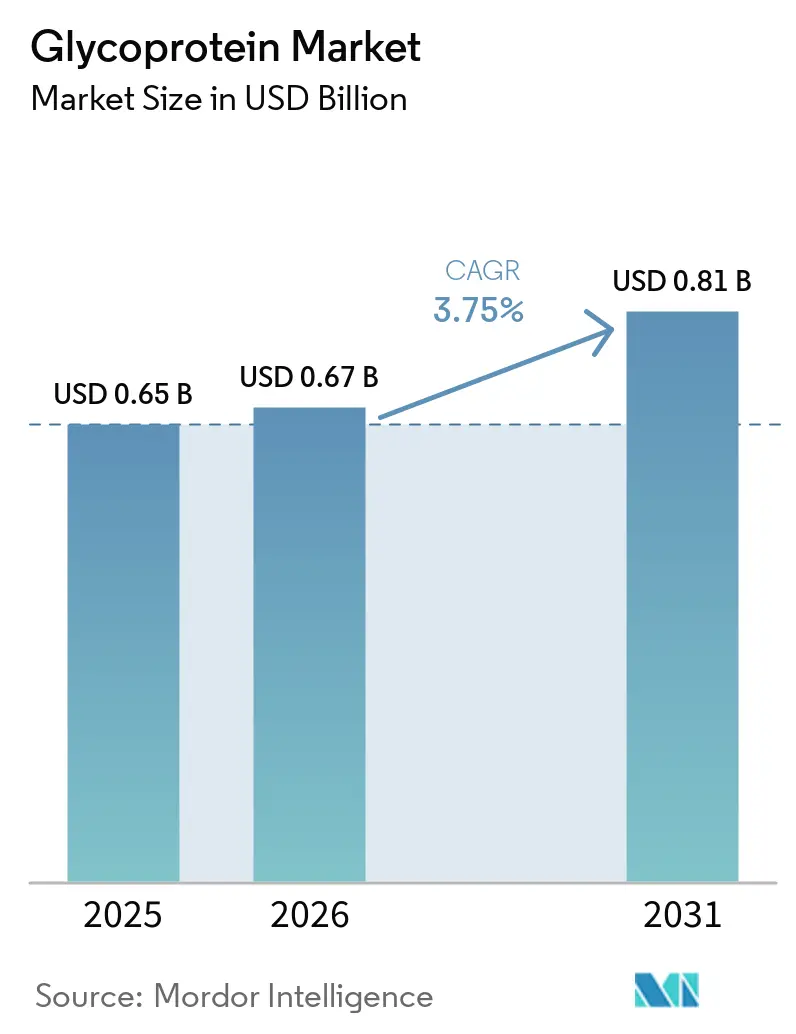
The Glycoprotein Market size is expected to grow from USD 0.65 billion in 2025 to USD 0.67 billion in 2026 and is forecast to reach USD 0.81 billion by 2031 at 3.75% CAGR over 2026-2031.
Therapeutic and diagnostic applications, along with bioprocessing efforts, are driving demand in the glycoprotein market. Glycan complexity is now recognized as a critical product quality attribute rather than a technical challenge. The biologics pipeline predominantly focuses on monoclonal antibodies, Fc-fusion proteins, glycoprotein vaccines, and antibody-drug conjugates, which require more stringent glycan characterization compared to traditional small-molecule therapies. Expenditures in the glycoprotein market are closely tied to filing activities, release testing, and manufacturing readiness, providing the market with a stable foundation compared to short-cycle research purchases.
Key Report Takeaways
- By product type, recombinant glycoproteins held a 45.60% share in 2025, while synthetic and semi-synthetic glycoproteins are projected to grow at a 4.10% CAGR through 2031.
- By glycosylation type, N-linked glycoproteins accounted for 48.75% in 2025, while O-linked glycoproteins are expected to record the highest growth at a 4.45% CAGR through 2031.
- By application, therapeutics accounted for 56.45% of the glycoprotein market size in 2025, while diagnostics is projected to expand at a 4.90% CAGR through 2031.
- By end user, pharmaceutical and biotechnology companies held 52.66% of the market in 2025, while CROs and CDMOs are projected to advance at a 3.96% CAGR through 2031.
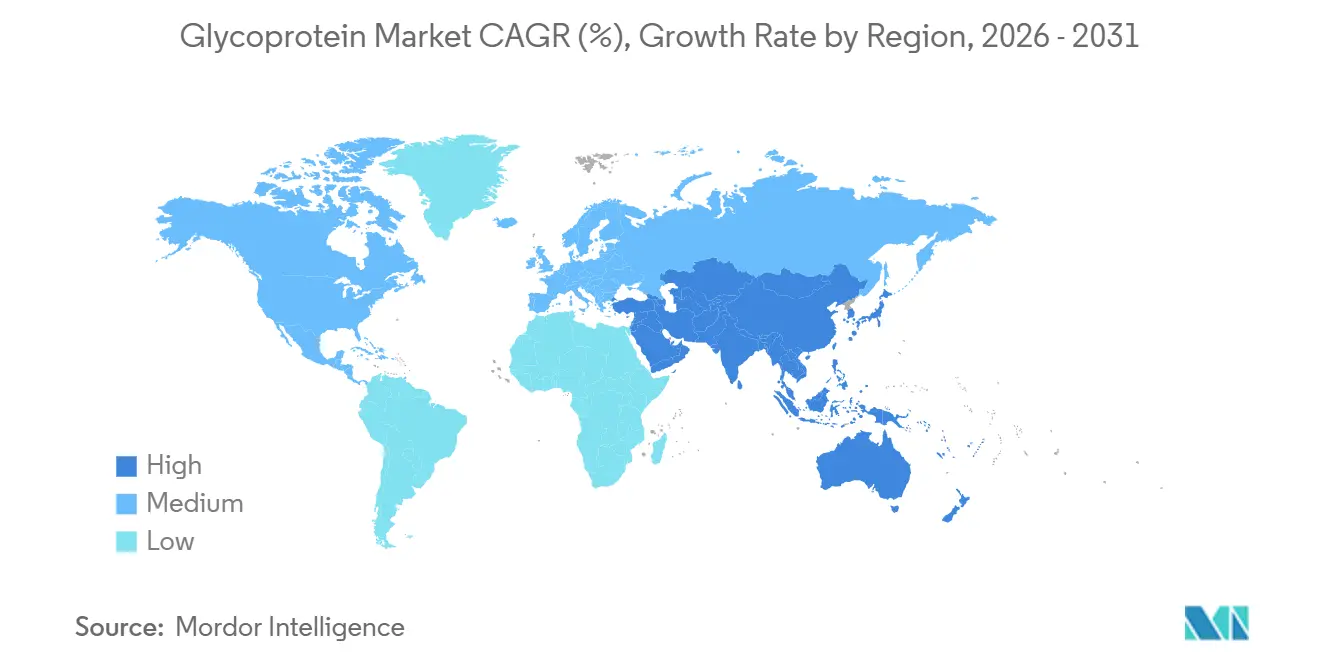
- By geography, North America held 41.61% of the glycoprotein market share in 2025, while Asia-Pacific is projected to grow at a 4.20% CAGR through 2031.
Note: Market size and forecast figures in this report are generated using Mordor Intelligence’s proprietary estimation framework, updated with the latest available data and insights as of January 2026.
Market Trends and Insights
Drivers Impact Analysis of Glycoprotein Market*
| DRIVER | (~) % IMPACT ON CAGR FORECAST | GEOGRAPHIC RELEVANCE | IMPACT TIMELINE |
|---|---|---|---|
| Expanding mAb, Fc-fusion, and vaccine glycoprotein demand | +1.4% | Global | Short term (≤ 2 years) |
| Rising chronic-disease burden driving glycoprotein therapeutics and biomarkers | +0.8% | Global | Medium term (2-4 years) |
| Advances in glycoengineering and high-resolution glycan analytics | +0.6% | North America, Europe, early adoption APAC | Medium term (2-4 years) |
| Precision-medicine biomarker discovery in glycoproteomics | +0.4% | North America, Europe, growing APAC | Long term (≥ 4 years) |
| Adoption of real-time glycosylation PAT and MAM workflows | +0.3% | Global biomanufacturing hubs | Medium term (2-4 years) |
| Commercialization of glycoproteomic liquid-biopsy assays | +0.2% | North America, Europe, initial APAC | Long term (≥ 4 years) |
| Source: Mordor Intelligence | |||
Expanding mAb, Fc-fusion, and Vaccine Glycoprotein Demand Fuels Near-term Growth
Monoclonal antibodies, Fc-fusion proteins, vaccines, and glycan-directed antibody-drug conjugates are driving demand in the glycoprotein market. These formats rely on stringent glycan structure control during development and release testing. Fc-glycan-specific antibody-drug conjugates are advancing in clinical trials, with candidates like JSKN003 and IBI343 showcasing the progress of glycan-linked targeting beyond discovery stages. This therapeutic momentum boosts demand for engineered upstream inputs, purification workflows, and downstream characterization services, broadening the market's revenue base.
Rising Chronic-disease Burden Accelerates Glycoprotein Therapeutic and Biomarker Adoption
The increasing prevalence of chronic and non-communicable diseases is amplifying demand for glycoprotein-based therapies, including enzyme replacement products, glycoprotein hormone analogs, and immune-targeting biologics, all dependent on specific glycan profiles for optimal function. Diagnostics are also gaining importance as glycoprotein alterations are recognized as significant disease indicators. A preclinical DGlyTAC study highlighted anti-tumor effects from removing N-glycans from PD-L1, suggesting a novel treatment approach distinct from traditional checkpoint inhibition. Such findings enhance the market's commercial potential, expanding beyond reference biologics replacement to new oncology programs targeting larger patient demographics.[1]
Advances in Glycoengineering and High-resolution Glycan Analytics Reshape the Production Frontier
Glycoengineering is evolving from an optimization step to a critical product design tool in the glycoprotein market. Developers are leveraging glycan control to enhance efficacy, comparability, and manufacturing consistency. A 2025 study demonstrated gram-scale synthesis of β-L-carbafucose and nearly complete de-fucosylation in 10-liter CHO bioreactors without compromising cell growth, supporting scalable afucosylation in enhanced-ADCC biologics.[2] Another study reported over 95% conversion to uniform N-glycan structures via the GLYCO-BUILD enzymatic pipeline, addressing key quality-control challenges for biosimilar manufacturers. On the analytics front, a 10-minute glycan characterization method for the BioAccord system significantly reduces turnaround times for routine release and characterization tasks.[3]
Precision-medicine Biomarker Discovery in Glycoproteomics Unlocks Long-term Diagnostic Revenue
Glycoproteomics is nearing clinical adoption with diagnostic signatures, creating a sustained demand stream for the glycoprotein market beyond therapeutic manufacturing. An ovarian cancer serum glycoproteomics panel achieved 86.7% sensitivity and specificity in validation, while a colorectal cancer glycopeptide classifier recorded an AUC of 0.96 with 89.8% sensitivity. The GlycoPro platform processed 384 serum samples daily from a 2 µL input volume, achieving an AUC of 0.89 for breast cancer detection. These advancements indicate that glycoproteomic assays are transitioning from research-stage innovations to routine workflows in reference laboratories and specialized diagnostic environments. This shift highlights diagnostic demand as a distinct commercial driver with its own adoption trajectory.
Restraints Impact Analysis of Glycoprotein Market*
| RESTRAINT | (~) % IMPACT ON CAGR FORECAST | GEOGRAPHIC RELEVANCE | IMPACT TIMELINE |
|---|---|---|---|
| High production and purification cost | -0.6% | Global, acute in APAC and MEA | Short term (≤ 2 years) |
| Glycosylation heterogeneity and reproducibility complexity | -0.4% | Global, acute in biosimilar hubs | Medium term (2-4 years) |
| Stricter Biosimilar Comparability and Glycan Characterization Burden | -0.7% | Global, acute in APAC and MEA | Short term (≤ 2 years) |
| Limited Glycan Reference Standards and Cross-Lab Harmonization | -0.5% | Global, acute in biosimilar hubs | Medium term (2-4 years) |
| Source: Mordor Intelligence | |||
High Production and Purification Costs Constrain Market Expansion
Production costs pose a significant challenge in the glycoprotein market, particularly for companies in price-sensitive environments or those scaling new programs without substantial financial backing. A study by Sartorius and Sanofi highlighted that membrane-based downstream processing costs EUR 35 per gram (USD 40.60) compared to EUR 65 per gram (USD 75.39) for resin-based chromatography, with a 29-fold throughput improvement. However, adoption remains concentrated in larger, well-funded facilities. Regulatory requirements further escalate costs, as ICH-aligned practices and FDA guidelines demand extensive characterization packages covering glycan structure, comparability, and process consistency during scale-up. These costs disproportionately impact smaller biosimilar developers and emerging-market CDMOs, slowing capacity expansion despite favorable demand conditions.
Glycosylation Heterogeneity Complicates Biosimilar Development and Approval
Glycosylation microheterogeneity remains a critical challenge in the glycoprotein market, as a single product lot can exhibit numerous glycoform variants, complicating batch-to-batch consistency. A 2026 study found drift in 17 of 39 glycan peaks for trastuzumab and 25 of 38 peaks for adalimumab, highlighting the narrow comparability window in biosimilar development.[4] This variability increases analytical requirements and extends development timelines in complex product categories. While process media additives like manganese, uridine, and galactose show potential in aligning glycan profiles with reference standards, scaling from bench settings to commercial bioreactors introduces variability risks. These technical challenges continue to limit faster participation by smaller biosimilar developers in the glycoprotein market.
*Our forecasts treat driver/restraint impacts as directional, not additive. The impact forecasts reflect baseline growth, mix effects, and variable interactions.
Glycoprotein Market Segment Analysis
By Product Type:
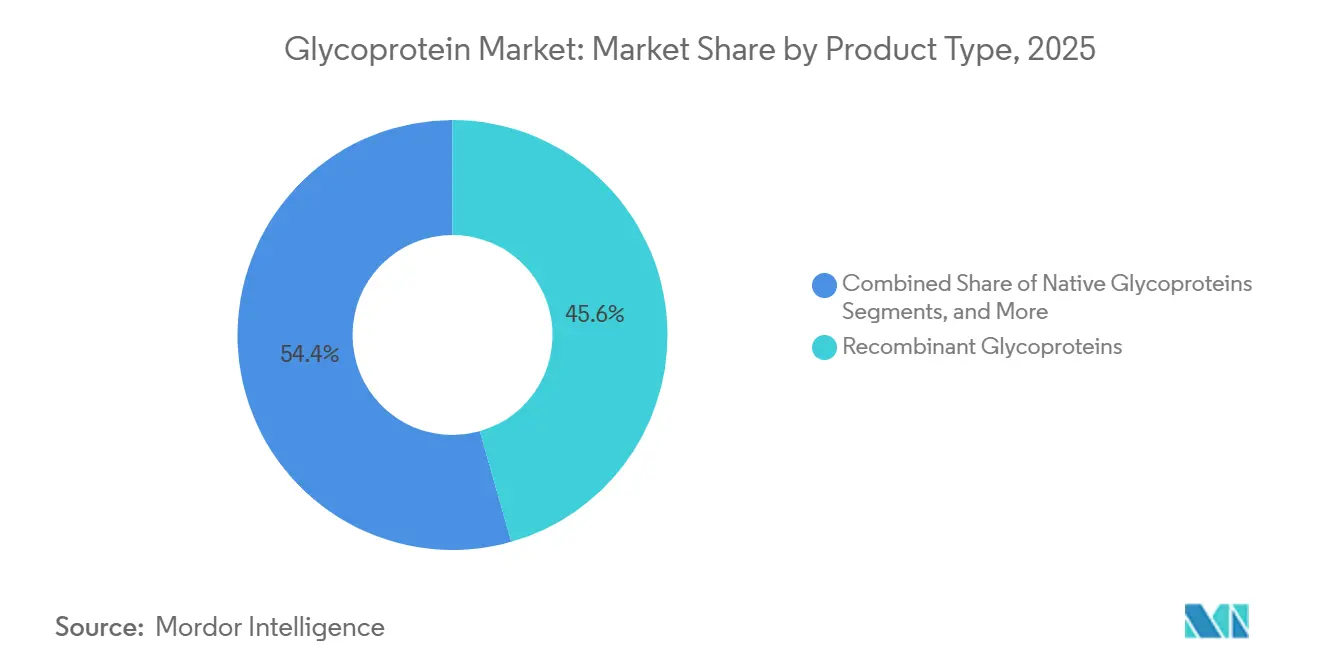
Recombinant Formats Anchor Near-term Revenue, Synthesis Gains GroundIn 2025, recombinant glycoproteins held 45.60% of the glycoprotein market share, driven by established CHO-cell infrastructure and the reliance of most approved biologics on recombinant production routes. Native glycoproteins remain relevant in analytical standards and early research but have a smaller and fragmented demand base compared to recombinant formats. Recombinant products dominate near-term revenue, particularly in regulated therapeutic manufacturing, which requires repeat purchasing and qualification work.
Synthetic and semi-synthetic glycoproteins are projected to grow at a 4.10% CAGR from 2026 to 2031, making them the fastest-growing product type. Advancements in glycoengineering, such as the use of DmPglB in E. coli and plant N-glycan remodeling, are reducing reliance on capital-intensive mammalian systems and diversifying the production base.

By Glycosylation Type:
N-linked Dominance Masks O-linked Diagnostic UpswingN-linked glycoproteins accounted for 48.75% of the market share in 2025, driven by their critical role in IgG monoclonal antibodies for function, release testing, and comparability assessments. Their dominance is reinforced by their inclusion in quality documentation for numerous marketed biologics and regulatory submissions.
O-linked glycoproteins are expected to grow at a 4.45% CAGR from 2026 to 2031, making them the fastest-growing glycosylation class. Laboratories are increasingly adopting workflows that map post-translational modifications beyond N-glycan profiles, driving demand for instruments and software capable of characterizing multiple glycan classes in regulated workflows.
By Application:
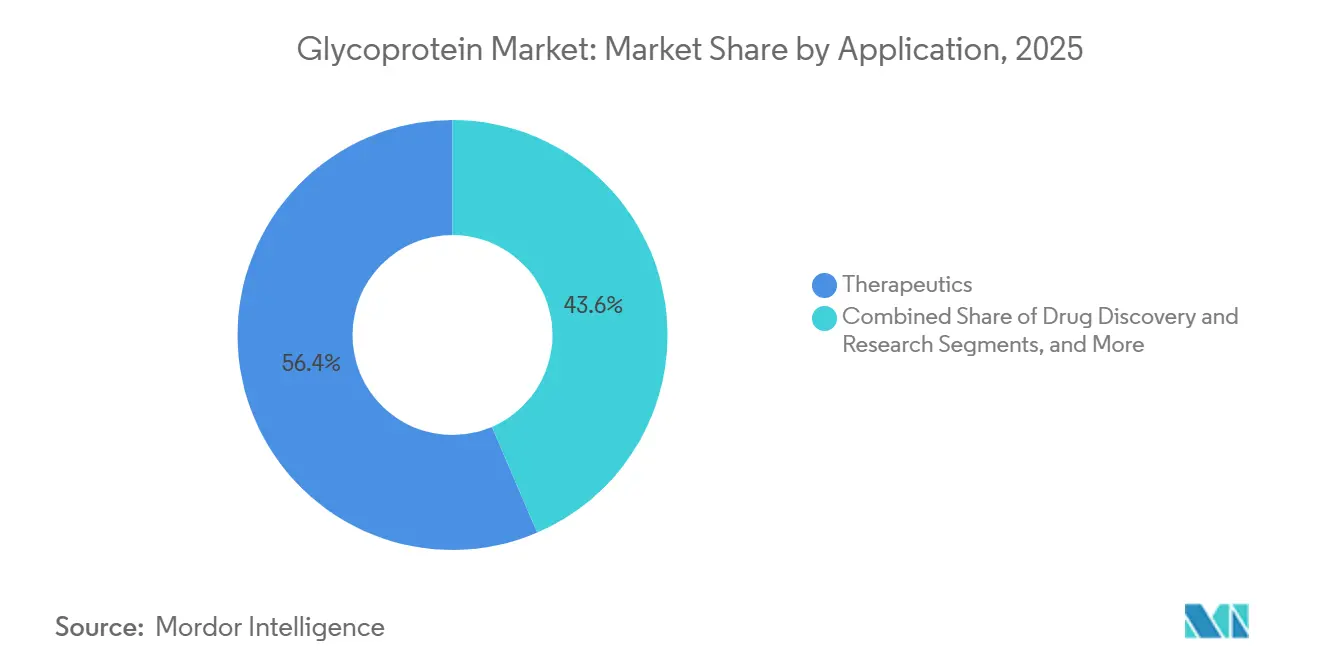
Therapeutics Leads, Diagnostics Accelerates on Liquid-biopsy ValidationTherapeutics represented 56.45% of the glycoprotein market in 2025, reflecting the importance of glycan-controlled biologics in development, manufacturing, and lifecycle management. By May 2025, 209 Biologics License Applications with glycan characterization data were approved, with 95 including glycan assays in drug substance release testing.
Diagnostics is projected to grow at a 4.90% CAGR from 2026 to 2031, making it the fastest-growing application. Glycoprotein-based diagnostics, such as urinary extracellular vesicle N-glycomics panels and free-glycan markers, are advancing toward deployment in clinical settings.
By End User:
Pharma/Biotech Dominates as CROs and CDMOs Gain Strategic LeveragePharmaceutical and biotechnology companies accounted for 52.66% of the end-user segment in 2025, reflecting their dual role as consumers and financiers of glycoprotein products and analytical infrastructure. Their dominance is tied to control over product pipelines, release standards, regulatory submissions, and validation programs.
CROs and CDMOs are projected to grow at a 3.96% CAGR from 2026 to 2031, making them the fastest-growing end-user group. Their growth is driven by the outsourcing of glycan analytics, method development, and glycoengineering, as companies aim to reduce fixed costs. The industry's long-term potential lies in the convergence of hospital diagnostics, sponsor outsourcing, and discovery pipelines, fostering standardized clinical glycoproteomics workflows.
Geography Analysis
North America Glycoprotein Market
In 2025, North America accounted for 41.61% of the glycoprotein market, driven by strong biologics manufacturing, a significant CRO presence, and a large base of analytical instrument suppliers. The FDA's biosimilar comparability guidance mandates glycan assessments using at least 10 reference product lots, making glycan analytics infrastructure a critical investment. In 2026, Thermo Fisher validated continuous Raman process analytical technology in monoclonal antibody bioreactors, achieving a 10% titer increase and a 60% reduction in glycation. These advancements highlight North America's leadership, supported by product demand and advanced manufacturing capabilities.
APAC Glycoprotein Market
Asia-Pacific is projected to grow at a 4.20% CAGR from 2026 to 2031, making it the fastest-growing region in the glycoprotein market. Sartorius reported a 9.0% growth in bioprocess revenue in Asia/Pacific in 2025, reflecting increased investment in equipment and process infrastructure. This growth indicates the region's shift toward a broader manufacturing and analytics base, beyond low-cost production.
EMEA and South America Glycoprotein Market
In 2025, Europe, the Middle East and Africa, and South America collectively held the remaining glycoprotein market share, with Europe leading due to its established biosimilar and analytical compliance ecosystem. Europe's expertise in comparability and glycan fingerprinting ensures steady demand across development and lifecycle management. The Middle East and Africa are in early development stages, with selective healthcare investments supporting diagnostic and specialty biologics capabilities. South America is also in its early stages, with academic and public research initiatives building a foundation for future glycoproteomics and biosimilar activities.
Competitive Landscape
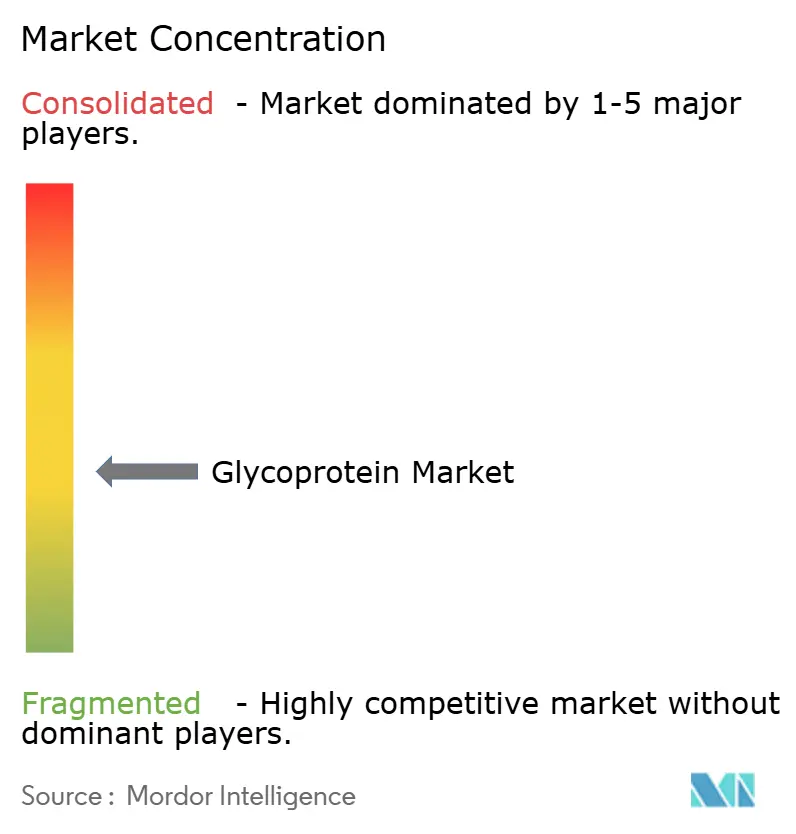
The glycoprotein market is moderately fragmented across three primary layers: analytical instrument and software vendors, bioprocessing and upstream supply vendors, and research-grade glycoprotein and reagent suppliers. This structure drives competition, as no single entity controls the entire workflow from upstream control to downstream characterization and analytics. Key players include Waters, Thermo Fisher Scientific, Bruker, Agilent Technologies, Shimadzu, Sartorius, Cytiva, Abcam, GenScript, Bio-Techne, Creative Biolabs, and CD BioGlyco. While the market remains fragmented, certain niches are consolidating around platform depth and regulatory readiness.
Strategic differentiation in the glycoprotein market increasingly focuses on workflow integration rather than standalone instrument performance. Thermo Fisher validated continuous Raman process analytical technology for commercial upstream monoclonal antibody production in 2026, demonstrating tighter integration of instruments and process control.
The glycoprotein market faces two key gaps: the lack of standardized glycan reference materials with stronger inter-laboratory traceability and the need for automated glycoproteomics workflows suitable for clinical labs without specialized staffing. These gaps hinder broader adoption despite advancements in assay performance and clinical evidence. Competitive advantages are increasingly shaped by proprietary conjugation chemistry, method software, and data interpretation tools, making it difficult for customers to switch once workflows are validated. While no single company dominates, the market is shifting towards platform competition, where integrated analytical capabilities outweigh individual instrument specifications.
Glycoprotein Industry Leaders
-
Abcam plc
-
Bio-Techne Corporation
-
Agilent Technologies
-
Danaher Corporation (Cytiva)
-
Merck KGaA
- *Disclaimer: Major Players sorted in no particular order
Glycoprotein Market Companies Covered in this Report
- Abcam
- Acro Biosystems
- Agilent Technologies
- Bio-Rad Laboratories
- Bio-Techne
- Bruker
- CD BioGlyco
- Creative Biolabs
- Creative Diagnostics
- Danaher
- Genscript
- Merck
- Polysciences, Inc.
- Promega
- Revvity
- Sartorius
- Shimadzu
- Takara Bio
- Thermo Fisher Scientific
- Waters Corporation
Recent Industry Developments in Glycoprotein Market
- April 2026: Thermo Fisher Scientific validated continuous Raman process analytical technology for upstream mAb bioreactors at a commercial scale, achieving a 10% titer increase and a 60% glycation reduction, setting a new standard for inline glycosylation monitoring in biologics manufacturing.
- February 2026: Bruker launched the timsOmni mass spectrometer with integrated GlycoScape eXd software, offering a unified platform for glycoproteomic data acquisition and visualization, enhancing large-scale biopharma characterization workflows.
- January 2026: Waters Corporation introduced a 10-minute BioAccord glycan characterization method, significantly reducing analytical turnaround time for routine glycan release testing in regulated manufacturing environments.
- November 2025: China recorded 103 license-out transactions worth USD 92 billion in the first nine months of the year, with ADCs (15%) and bispecifics (12%) leading modalities, reflecting increased glycoprotein-engineering investments by Chinese biopharmaceutical companies.
Global Glycoprotein Market Report Scope
As per the scope of the market, a glycoprotein is a molecule composed of a protein bonded to one or more carbohydrate (glycan) chains. These complex molecules are formed through a process called glycosylation, where sugar groups are attached to specific amino acids.
The glycoprotein market is segmented by product type, glycosylation type, application, end-user, and geography. By product type, the market includes recombinant glycoproteins, native glycoproteins, and synthetic & semi-synthetic glycoproteins. By glycosylation type, the market is segmented into N-linked glycoproteins, O-linked glycoproteins, and mixed & rare glycosylation types. By application, the market is categorized into therapeutics, diagnostics, and drug discovery & research. By end-user, the market is segmented into pharmaceutical & biotechnology companies, academic & research institutes, CROs & CDMOs, and hospitals & diagnostic laboratories. By geography, the market is analyzed across North America, Europe, Asia-Pacific, the Middle East & Africa, and South America. The report also covers the estimated market sizes and trends for 17 countries across major regions globally. The report offers the market sizes and forecasts in terms of value (USD) for the above segments.
Segmentation Overview
| Recombinant Glycoproteins |
| Native Glycoproteins |
| Synthetic and Semi-synthetic Glycoproteins |
| N-linked Glycoproteins |
| O-linked Glycoproteins |
| Mixed and Rare Glycosylation Types |
| Therapeutics |
| Diagnostics |
| Drug Discovery and Research |
| Pharmaceutical and Biotechnology Companies |
| Academic and Research Institutes |
| CROs and CDMOs |
| Hospitals and Diagnostic Laboratories |
| North America | United States |
| Canada | |
| Mexico | |
| Europe | Germany |
| United Kingdom | |
| France | |
| Italy | |
| Spain | |
| Rest of Europe | |
| Asia-Pacific | China |
| India | |
| Japan | |
| South Korea | |
| Australia | |
| Rest of Asia-Pacific | |
| Middle East and Africa | GCC |
| South Africa | |
| Rest of Middle East and Africa | |
| South America | Brazil |
| Argentina | |
| Rest of South America |
| By Product Type | Recombinant Glycoproteins | |
| Native Glycoproteins | ||
| Synthetic and Semi-synthetic Glycoproteins | ||
| By Glycosylation Type | N-linked Glycoproteins | |
| O-linked Glycoproteins | ||
| Mixed and Rare Glycosylation Types | ||
| By Application | Therapeutics | |
| Diagnostics | ||
| Drug Discovery and Research | ||
| By End User | Pharmaceutical and Biotechnology Companies | |
| Academic and Research Institutes | ||
| CROs and CDMOs | ||
| Hospitals and Diagnostic Laboratories | ||
| By Geography | North America | United States |
| Canada | ||
| Mexico | ||
| Europe | Germany | |
| United Kingdom | ||
| France | ||
| Italy | ||
| Spain | ||
| Rest of Europe | ||
| Asia-Pacific | China | |
| India | ||
| Japan | ||
| South Korea | ||
| Australia | ||
| Rest of Asia-Pacific | ||
| Middle East and Africa | GCC | |
| South Africa | ||
| Rest of Middle East and Africa | ||
| South America | Brazil | |
| Argentina | ||
| Rest of South America | ||
Key Questions Answered in the Report
What is the current outlook for glycoprotein demand through 2031?
The glycoprotein market is valued at USD 0.67 billion in 2026 and is forecast to reach USD 0.81 billion by 2031 at a 3.75% CAGR, supported by therapeutic, diagnostic, and bioprocessing demand.
Which application generates the highest revenue in glycoprotein-related business?
Therapeutics led with 56.45% in 2025, supported by the large number of biologics programs that require glycan characterization in development and release testing.
Which application is growing fastest in glycoprotein use?
Diagnostics is projected to grow at a 4.90% CAGR through 2031, supported by liquid-biopsy and glycoproteomics studies that reported strong AUC, sensitivity, and specificity results.
Which product type leads current revenue and which one is expanding faster?
Recombinant glycoproteins led with 45.60% in 2025, while synthetic and semi-synthetic glycoproteins are forecast to grow faster at a 4.10% CAGR through 2031.
Which region leads today and which region is expanding fastest?
North America held 41.61% in 2025 because of its strong biologics and analytics base, while Asia-Pacific is expected to expand fastest at a 4.20% CAGR through 2031.
What are the main risks for companies operating in this space?
The main constraints are still high production and purification cost, plus glycosylation heterogeneity that complicates comparability, raises analytical burden, and slows biosimilar development.