
Market Overview
| Study Period | 2020 - 2031 |
|---|---|
| Market Size (2026) | USD 7.34 Billion |
| Market Size (2031) | USD 10.09 Billion |
| Growth Rate (2026 - 2031) | 6.57 % |
| Fastest Growing Market | Asia-Pacific |
| Largest Market | North America |
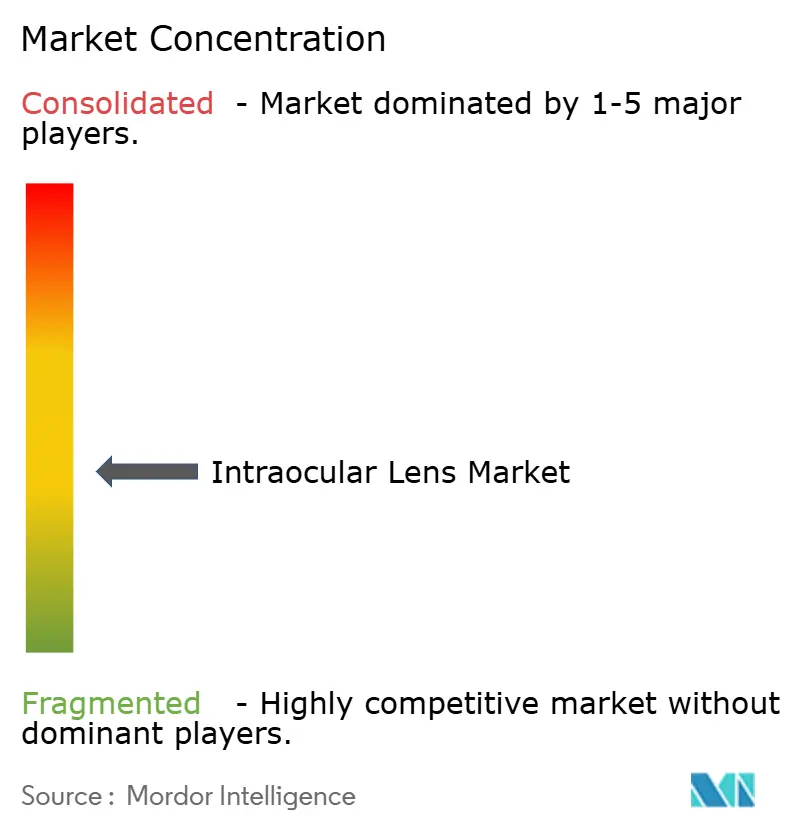
| Market Concentration | Medium |
Major Players *Disclaimer: Major Players sorted in no particular order Image © Mordor Intelligence. Reuse requires attribution under CC BY 4.0. | |
Intraocular Lens Market Analysis by Mordor Intelligence
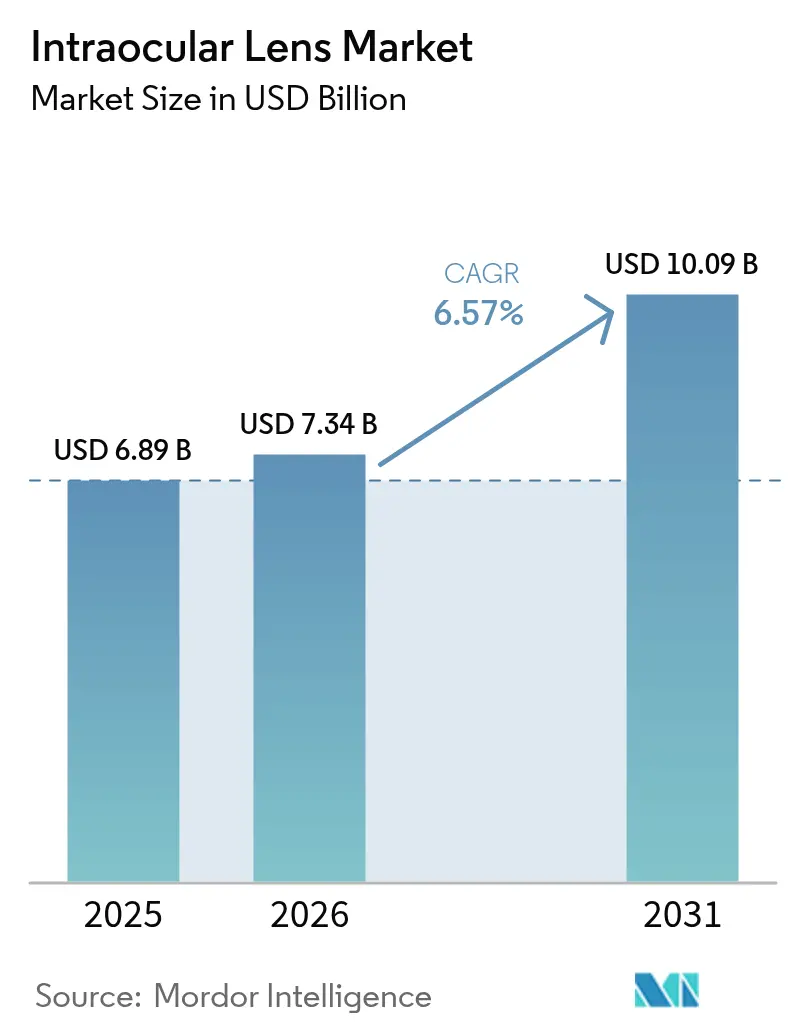
The Intraocular Lens Market size was valued at USD 6.89 billion in 2025 and is estimated to grow from USD 7.34 billion in 2026 to reach USD 10.09 billion by 2031, at a CAGR of 6.57% during the forecast period (2026-2031).
The baseline expansion is fueled by an aging population that increases cataract incidence, while premium presbyopia-correcting designs and light-adjustable technologies drive step-ups in average selling price. Surgeon confidence in toric calculators and extended-depth-of-focus optics continues to rise, encouraging broader adoption beyond traditional early adopters. Market access, however, is uneven: high out-of-pocket costs curb premium penetration in publicly funded systems, whereas bundled cataract-refractive packages in private ambulatory centers accelerate elective uptake. Technology cycles are compressing as AI-driven lens geometry optimization shortens the interval between design iterations. Parallel progress in single-use, pre-loaded delivery systems meets operating-room throughput goals but raises sustainability concerns in regions with stringent plastic regulations.
Key Report Takeaways
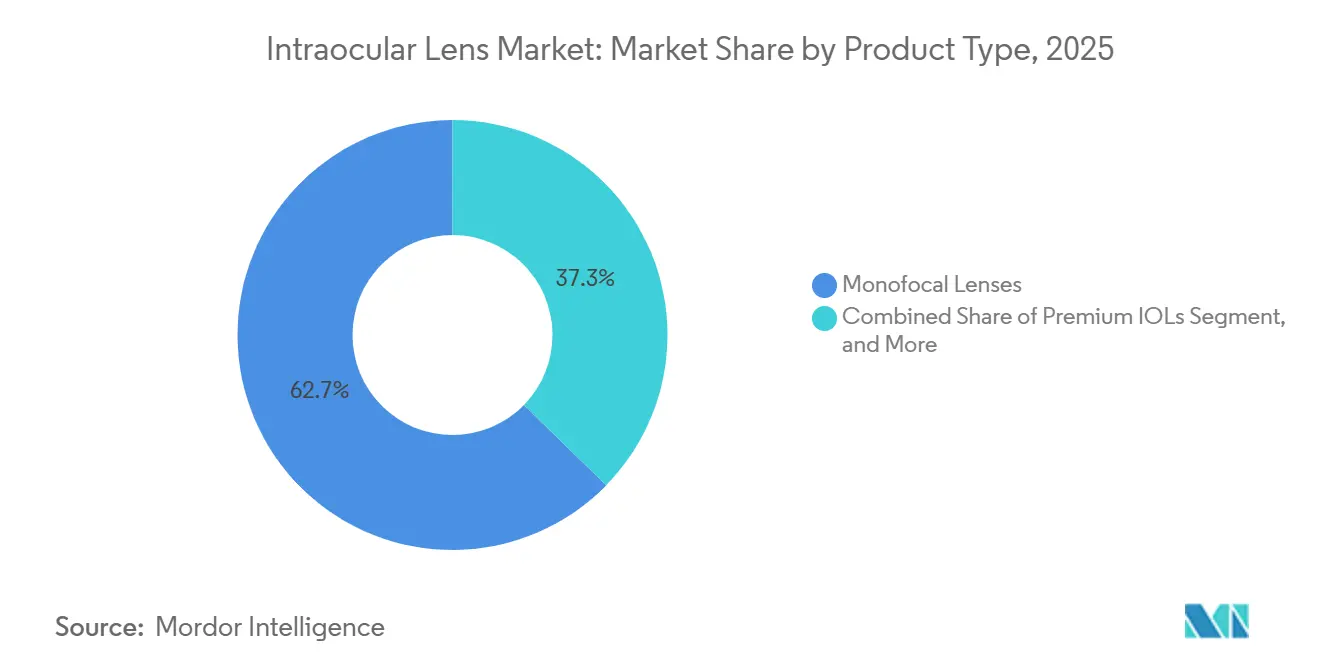
- By product type, monofocal lenses accounted for 62.68% of the intraocular lens market share in 2025; premium IOLs are projected to grow at a 7.16% CAGR through 2031.
- By material, hydrophobic acrylic accounted for 45.02% of the intraocular lens market in 2025, while silicone lenses led growth at a 7.05% CAGR through 2031.
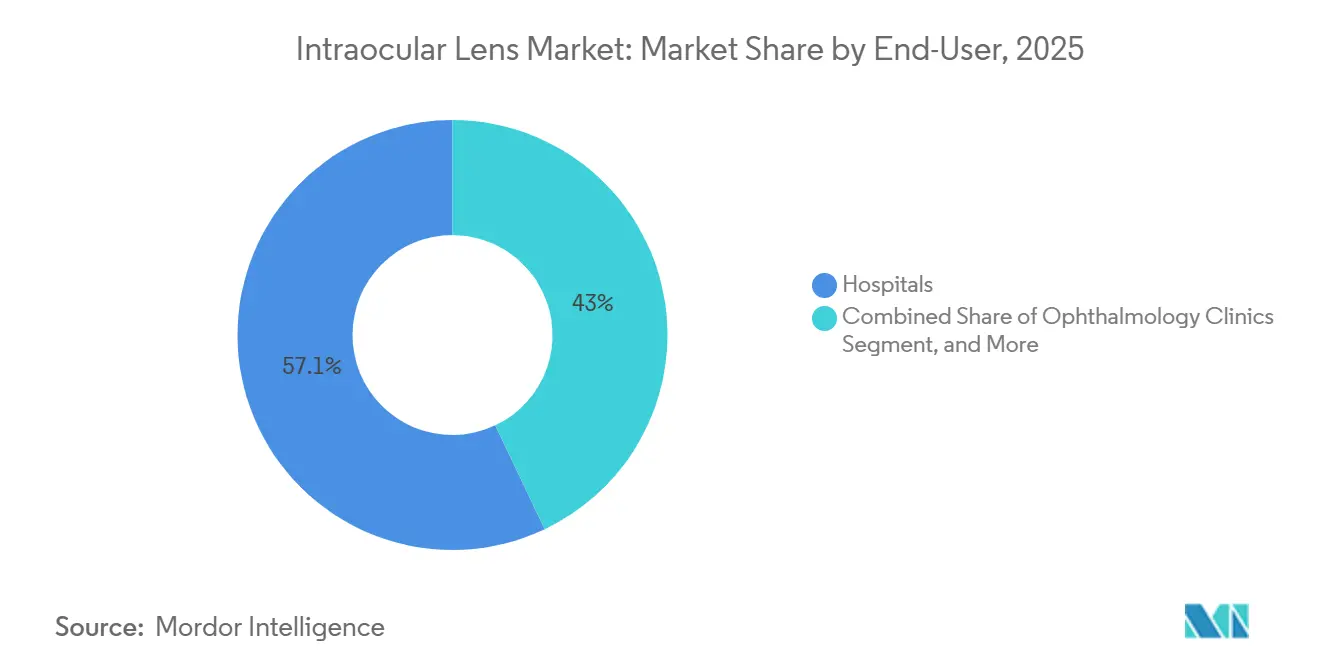
- By end user, hospitals captured 57.05% revenue in 2025, whereas ophthalmology clinics posted the fastest 7.02% CAGR through 2031.
- By application, cataract surgery accounted for 76.61% of the intraocular lens market size in 2025, and corneal-disorder use cases are advancing at a 6.95% CAGR.
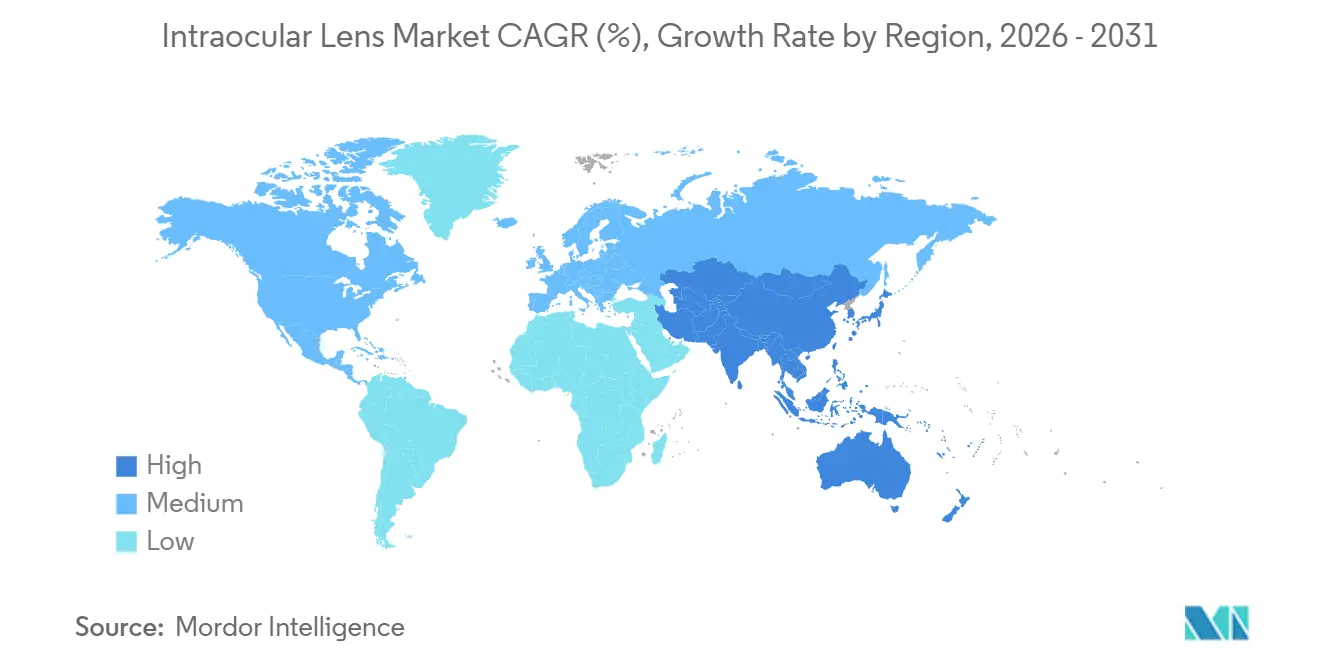
- By geography, North America led with a 41.76% share in 2025, yet Asia-Pacific expanded at a 7.22% CAGR to 2031.
Note: Market size and forecast figures in this report are generated using Mordor Intelligence’s proprietary estimation framework, updated with the latest available data and insights as of 2026.
Market Trends and Insights
Drivers Impact Analysis of Intraocular Lens Market*
| DRIVER | (~) % IMPACT ON CAGR FORECAST | GEOGRAPHIC RELEVANCE | IMPACT TIMELINE |
|---|---|---|---|
| Aging-linked rise in global cataract procedures | +1.8% | Global, concentrated in Asia-Pacific and Europe | Long term (≥ 4 years) |
| Surge in adoption of premium presbyopia-correcting IOLs | +1.5% | North America, Europe, urban Asia-Pacific | Medium term (2–4 years) |
| Rapid product cycles: light-adjustable and AI-designed lenses | +1.0% | North America, Western Europe | Medium term (2–4 years) |
| Growth of refractive lens exchange in the 40–60 age cohort | +0.9% | North America, Europe, high-income Asia-Pacific | Short term (≤ 2 years) |
| Medical-tourism hubs lowering procedure cost | +0.7% | India, Thailand, Singapore | Medium term (2–4 years) |
| Pre-loaded single-use systems easing operating-room bottlenecks | +0.6% | Global, early uptake in North America and Europe | Short term (≤ 2 years) |
| Source: Mordor Intelligence | |||
Aging-Linked Rise in Global Cataract Procedures
Cataract incidence parallels population longevity. Individuals over 80 have a 70% likelihood of developing lenticular opacity, and many expect high-quality vision for continued digital engagement and later-life employment. Ambulatory surgery centers already log cataract as their largest case type, representing 19% of ASC volume in 2024.[1] Capacity pressure in Asia-Pacific magnifies because demographic aging outpaces clinic build-out, so providers increasingly adopt high-throughput models that pair phaco units with preloaded lens systems. China performs over 4 million cataract surgeries annually, yet surgical coverage in rural areas remains below 50%. In Japan, with its aging population, the health ministry reports a steady increase in cataract admissions, driving higher per-capita usage of IOLs. The Aravind network in India exemplifies a high-volume, cost-effective surgical model. However, India's national surgical rate is only 6,000 per million, significantly below the 10,000 benchmark. This underscores a major opportunity to address access gaps through mobile eye camps and tele-ophthalmology.
Surge in Adoption of Premium Presbyopia-Correcting IOLs
Premium penetration rose from 15.5% in 2019 to 18.5% in 2021 despite reimbursement gaps. Light-adjustable optics let surgeons refine power post-op, shrinking the risk of residual refractive error. Alcon holds more than 60% of this segment on the strength of PanOptix and Vivity families. Enhanced monofocal designs such as Tecnis Eyhance extend depth without the photic issues of diffractive rings, broadening eligibility for patients wary of halo or glare. Patients are increasingly perceiving cataract surgery as a refractive procedure. A 2024 meta-analysis revealed that enhanced monofocal lenses outperformed standard designs, boosting intermediate acuity by 0.2 logMAR. In 2025, toric models captured nearly 30% of the premium market share, driven by calculators achieving sub-0.25 D accuracy.[2] However, affordability remains a dividing factor: while urban patients readily invest in upgrades, their rural counterparts often settle for basic implants. Demonstrating long-term cost benefits could encourage payers to expand their coverage.
Rapid Product Cycles: Light-Adjustable and AI-Designed Lenses
RxSight’s lens, cleared by FDA, offers power adjustments up to 3.50 D using UV modulation, while Rayner’s AI-optimized spiral-pattern optic maintains contrast and curbs glare. The FDA-qualified AIOLIS patient-reported-outcome metric accelerates clinical evaluation, shortening R&D time lines for premium concepts.[3]
Alcon and Carl Zeiss are developing machine-learning models that tailor aspheric profiles to match corneal topography, eyeing a commercial launch in the next two years. As commercial life spans shrink, manufacturers are increasingly pressured to invest in continuous R&D and maintain nimble regulatory submissions.
Growth of Refractive Lens Exchange in the 40-60 Age Cohort
EUROQUO reporting shows lens exchange accounts for 80% of refractive surgery, fueled by presbyopes who view surgery as a lifelong vision upgrade.[4] Office-based suites handled 2.2% of United States cataract volume in Q1 2023, pointing to cost savings and patient comfort as catalysts for broader adoption.
Restraints Impact Analysis of Intraocular Lens Market*
| RESTRAINT | (~) % IMPACT ON CAGR FORECAST | GEOGRAPHIC RELEVANCE | IMPACT TIMELINE |
|---|---|---|---|
| High out-of-pocket cost and patchy reimbursement | −0.8% | Global; acute in North America and Europe | Medium term (2–4 years) |
| Post-operative dysphotopsia concerns | −0.5% | Global, especially in developed markets | Short term (≤ 2 years) |
| Supply-chain dependence on specialty hydrophobic acrylics | −0.3% | Global; resin production centered in U.S., Europe, Japan | Medium term (2–4 years) |
| Sustainability pressures on single-use plastics | −0.2% | Europe, spillover to North America | Long term (≥ 4 years) |
| Source: Mordor Intelligence | |||
High out-of-pocket cost and uneven reimbursement for premium IOLs
Patients often pay USD 1,500-3,000 per eye because CMS lists no New Technology IOL codes, creating a two-tier access model. The financial load includes diagnostic aberrometry and follow-up adjustments, deterring price-sensitive candidates. International travel can lower the bill, yet quality assurance varies across facilities. CMS restricts payments to standard monofocal lenses, placing the financial burden of premium surcharges squarely on patients. This policy is mirrored in both Germany and the United Kingdom. In response, manufacturers present cost-utility data highlighting diminished reliance on spectacles. Yet, payers maintain a conservative approach, limiting access predominantly to wealthier segments.
Post-Operative Dysphotopsia Concerns Limiting Surgeon Uptake
Meta-analyses link trifocal optics to halos that curb patient satisfaction. The AIOLIS tool shows dysphotopsia drives most complaints, and lens exchanges increase cost and risk. New refractive-segmented optics, such as the enVista Envy, claim 86% low-disturbance rates, easing surgeon apprehension. A 2024 review found that 15%-20% of multifocal recipients reported glare or halos, with up to 3% undergoing explantation.[5] Non-diffractive EDOF models, such as Tecnis Symfony and Vivity, lower incidence but do not eradicate it. Cautious practitioners therefore default to monofocals for risk-averse patients.
*Our forecasts treat driver/restraint impacts as directional, not additive. The impact forecasts reflect baseline growth, mix effects, and variable interactions.
Intraocular Lens Market Segment Analysis
By Product Type:
Monofocals Anchor Volume, Premiums Drive MarginMonofocal lenses retained volume leadership with 62.68% intraocular lens market share in 2025. Premium categories, spanning trifocal, toric, EDOF, and accommodating designs, post a 7.16% CAGR that surpasses baseline cataract growth. Demand stems from patients who prioritize uncorrected near vision and from surgeons promoting refractive outcomes as part of cataract management. Multifocal options like PanOptix yield high spectacle independence and fewer halos than early bifocal models. Toric monofocals correct up to 4 D of corneal cylinder and have become routine in eyes with ≥1 D astigmatism. EDOF optics, such as Tecnis Symfony, trade some near acuity for reduced photic side effects, fitting patients skeptical about diffractive rings. Accommodating prototypes including Juvene target ≥3.5 D amplitude, aiming to replicate physiologic focus change, a milestone market observers expect to unlock accelerated premium conversion.
Surgical centers bundle presbyopia-correcting lenses with femtosecond-assisted capsulotomy to enhance centration, while topographers refine pre-op planning for toric axis alignment. Clinicians report that post-refractive-surgery patients often prefer premium solutions because light-adjustable technology can fine-tune residual error. The premium tier extends revenue per procedure, helping clinics offset reimbursement headwinds and encouraging investment in advanced diagnostics.

By Material:
Hydrophobic Acrylics Lead, Silicone Gains on FoldabilityHydrophobic acrylic posted a 45.02% 2025 share and underpins most premium optics due to low PCO. Silicone is resurging at 7.05% CAGR because its high elasticity suits 2.0 mm micro-incisions, reducing surgically induced astigmatism. Newer silicone optics incorporate UV-blocking chromophores and can accept post-implant femtosecond power refinement. Hydrophilic acrylic now represents 28.90% of units, rehabilitated by cross-linked polymers and anti-calc coatings that preserve clarity in diabetic vitreous environments. PMMA use declines except in trauma cases that benefit from rigid stability.
Material research focuses on reducing posterior capsule opacification through edge-design micro-texturing and exploring bioresorbable haptics that vanish after capsular fibrosis secures the optic. Suppliers stress the need for dual sourcing of raw monomers because pandemic disruptions revealed dependency risks in hydrophobic acrylic chains.
By End-User:
Hospitals Dominate, Clinics AccelerateHospitals comprised 57.05% of revenue in 2025, retaining complex comorbidity cases. Ophthalmology clinics and ambulatory surgery centers are expanding at a 7.02% CAGR as payors tilt toward bundled outpatient payments. Clinics combine diagnostics, surgery, and follow-up in a single visit cycle, thereby shortening the time to treatment. Office-based suites, now 2.15% of United States volume, appeal to surgeons seeking scheduling control and to patients who prefer familiar environments. Self-pay RLE patients show high net promoter scores when surgery occurs in physician-owned suites, supporting word-of-mouth expansion. Insurers examine bundled-payment pilots that could accelerate the shift by aligning facility and professional fees.
The migration amplifies demand for compact phaco platforms and sterile-packaged IOL cartridges that fit smaller procedure rooms. Equipment vendors now supply modular cabinets with laminar airflow and digital microscopes suited to clinic retrofits.
By Application:
Cataract Dominates, Corneal Disorders EmergeCataract accounts for 76.61% of application revenue and will stay the bedrock segment through 2031. Refractive lens exchange for presbyopia grows fastest in premium ASP terms. Phakic IOLs addressing high myopia and ectasia log 6.95% CAGR, led by STAAR Surgical’s EVO platform. Combined collagen cross-linking and toric IOL implantation restores functional acuity in 94% of treated eyes. Presbyopia correction is broadened by the IC-8 Apthera pinhole optic, which masks higher-order aberrations. Surgeons treating Fuchs dystrophy coordinate DMEK with lens implantation, illustrating a trend toward combined anterior segment procedures.
AI-driven calculators merge tomographic and axial length data to model the effective lens position more accurately in irregular corneas, thereby reducing postoperative surprises. These tools reinforce the surgeon's willingness to expand the indications for premium lenses in complex eyes that were once considered marginal candidates.
Geography Analysis
North America Intraocular Lens Market
North America led the intraocular lens market in 2025, accounting for 41.76% of revenue, as Medicare covers baseline cataract surgery and patients can self-fund upgrades. Premium penetration in the United States exceeds 21.80%, and ophthalmology practices deploy heavy advertising to attract RLE candidates.
APAC Intraocular Lens Market
Asia-Pacific records the fastest CAGR of 7.22% due to demographic aging, expanding middle-class spending power, and thriving medical tourism clusters. Thailand and Singapore package premium IOL surgery with three-day recovery stays, drawing inbound volumes that lift average selling prices. China continues to scale cataract capacity, yet premium uptake remains below 9.75%, signaling sizable headroom for growth once income and reimbursement levels rise. India’s high-volume hubs replicate the Aravind model, combining efficiency with modular pricing, bringing premium adoption within reach for urban consumers.
Europe Intraocular Lens Market
Europe features mature reimbursement but strong sustainability norms. Regulators encourage the use of reduced-plastic delivery systems, prompting lens makers to trial bio-derived cartridge polymers. Germany and Spain report premium penetration near 19.70%, while the United Kingdom remains conservative amid National Health Service budget constraints. CE-marked launches such as Clareon Vivity in 2025 broaden surgeons' presbyopia-correction options.
MEA and South America Intraocular Lens Market
The Middle East and Africa expand from a lower base as public-private partnerships build specialty eye hospitals in Gulf states and North Africa. Wealthy patients often fly to Europe or Asia for premium surgery, but new centers in Dubai and Riyadh aim to reverse the outbound flow. South America benefits from price arbitrage by North American consumers; Brazil’s private insurers now reimburse specific EDOF lenses, boosting regional demand.
Regulatory Landscape
Intraocular lenses (IOLs) are regulated as high-risk implantable medical devices in major markets, which sets expectations for clinical evidence and quality-system controls for global launches. In the United States, the FDA regulates IOLs under 21 CFR 886.3600 as Class III devices that require Premarket Approval (PMA), and it recognizes the ISO 11979 series as consensus standards for conformity claims. This includes ISO 11979-2 (3rd edition, 2024-10), with a transition period that allows declarations to the 2014-08 edition until July 4, 2027.
In Europe, MDR (EU) 2017/745 drives deeper technical documentation, traceability, and post-market surveillance obligations for implantable devices, and implementation updates continue to affect approval throughput and portfolio planning. In March 2026, the European Commission adopted Delegated Regulation C(2026) 1809 to update the list of Class IIb implantable devices eligible for exemptions from certain notified body technical-documentation assessments. Global convergence efforts also moved forward in February 2026 when the International Medical Device Regulators Forum (IMDRF) published its Playbook for Medical Device Regulatory Reliance Programs (IMDRF/GRRP WG/N89), outlining pathways for regulators to leverage trusted partners work to streamline reviews.
Competitive Landscape
Market concentration is moderate, with technology leadership rather than price defining share. Alcon sustains more than 60% premium-segment revenue through PanOptix, Vivity, and the new 94%-light-utilization PanOptix Pro. Its AutonoMe preloaded driver embeds into efficiency narratives for high-volume clinics. Johnson & Johnson Vision’s TECNIS Odyssey touts low-light contrast gains, positioning the firm as the main challenger. Carl Zeiss Meditec integrates IOLs with diagnostic biometers and femtosecond platforms, locking in ecosystem advantages.
Strategic M&A shapes portfolios. Alcon’s Lensar acquisition strengthens femtosecond guidance, while Carl Zeiss Meditec bought DORC to add retina and cornea tools, enabling full anterior-posterior offerings. Bausch + Lomb secured FDA clearance for the enVista Envy in 2024, betting on glistening-free optics that mitigate dysphotopsia. Start-ups pursue shape-changing, accommodating prototypes or post-implant adjustments. RxSight expanded the number of US centers certified for its light-adjustment station, and Perfect Lens advances femtosecond index shaping that tunes in situ power. Suppliers hedge raw-material risk by near-shoring polymer production in the Americas and Europe.
Value-chain alliances emerge as diagnostics companies partner with lens makers to embed cloud-based nomograms that update with real-world outcomes. Hospitals and payers evaluate outcome-based contracts that tie lens reimbursement to spectacle-free rates at three months, a model that could rewrite competitive yardsticks.
Intraocular Lens Industry Leaders
-
Hoya Corporation
-
Eyekon Medical
-
Carl Zeiss Ag
-
Alcon Inc.
-
Bausch Health Companies Inc.
- *Disclaimer: Major Players sorted in no particular order
Intraocular Lens Market Companies Covered in this Report
- Alcon
- Johnson & Johnson
- Bausch + Lomb Corp.
- Carl Zeiss
- Hoya Corp.
- Staar Surgical Co.
- Rayner Group
- HumanOptics Holding AG
- Lenstec
- PhysIOL (BVI)
- Ophtec BV
- SAV-IOL SA
- Aurolab
- Medicontur Medical Engineering
- Santen Pharmaceutical Co.
- Biotech Healthcare
- EyeKon Medical
- Rodenstock Group
- Visioncare Ophthalmic Technologies
- Hanita Lenses
Market Opportunities and Future Outlook
Capacity build-out and supply resilience are increasingly visible areas of whitespace. Manufacturers are adding regional manufacturing and supporting utilities to secure hydrophobic acrylic production and meet throughput needs linked to preloaded delivery workflows. In March 2026, Rayner completed an expansion of its Worthing, UK, production facility that doubled annual capacity to 4 million IOLs. Alcon also disclosed manufacturing-side investments in 2026, including authorization of a new purified water system at its Huntington North site (March 2026) and an announced USD 81 million expansion adding 65,000 square feet at its Lesage, West Virginia facility (April 2026) to increase production capacity for vision correction products including IOLs. Together, these actions point to a stronger emphasis on near-shoring and continuity planning in a market that has highlighted dependence on specialty hydrophobic acrylic inputs.
On the product side, the clearest near-term opportunities are in premium upgrades that target two adoption frictions, dysphotopsia complaints and uneven reimbursement for premium lenses. Manufacturers are placing more emphasis on non-diffractive, refractive extended-depth-of-focus (EDOF) approaches and design optimization, including Johnson & Johnson Surgical Vision publishing clinical outcomes in February 2026 for TECNIS PureSee EDoF (a fully refractive design with a posterior surface power gradient). Separately, ZEISS Medical Technology initiated early-access clinical trials in June 2026 for the AT LUCIA toric 721P across six European countries, expanding the pool of toric and presbyopia-correcting options under the MDR environment and reinforcing Europe as a proving ground for new premium optics ahead of broader rollouts.
Recent Industry Developments in Intraocular Lens Market
- June 2026: Carl Zeiss Meditec reported successful early clinical implantations of the ZEISS AT LUCIA toric 721P intraocular lens, which is CE marked, as part of its 2026 rollout activities. The update points to ongoing premium-product development in toric correction and reinforces ZEISS positioning in Europe alongside its diagnostic and surgical ecosystem.
- April 2026: Alcon announced the U.S. launch of Clareon TruPlus enhanced design monofocal and toric IOLs at the ASCRS 2026 Annual Meeting. By extending the enhanced monofocal value proposition into both spherical and toric variants, the launch targets higher-volume cataract settings where surgeons focus on predictable outcomes and workflow efficiency.
- March 2025: Alcon secured CE Mark approval and commercialized Clareon Vivity in Europe. The expansion of a non-diffractive extended-range option under the Clareon platform broadened presbyopia-correcting choices for European surgeons working within MDR-driven evidence and documentation requirements.
Intraocular Lens Market Report Scope and Research Methodology
Market Definition and Coverage
This market covers the value of intraocular lenses sold for implantation in the eye, mainly during cataract surgery, and it is measured as manufacturer level revenue across major regions.
Scope exclusions: This sizing does not count cataract surgery services, diagnostic visits, surgical consumables, or capital equipment used in operating rooms.
Segments Covered in This Report
- By Product Type
- Monofocal IOL
- Premium IOL
- Multifocal
- Toric
- Accommodating
- Phakic Intraocular Lens (PIOL)
- Others
- By Material
- Hydrophobic Acrylic
- Hydrophilic Acrylic
- Silicone
- Polymethyl-methacrylate (PMMA)
- Others
- By End User
- Hospitals
- Ambulatory Surgery Centers
- Ophthalmology Clinics
- Others
- By Application
- Cataract
- Presbyopia
- Corneal Disorders
- Others
- By Geography
- North America
- United States
- Canada
- Mexico
- Europe
- Germany
- United Kingdom
- France
- Italy
- Spain
- Rest of Europe
- Asia-Pacific
- China
- Japan
- India
- Australia
- South Korea
- Rest of Asia-Pacific
- Middle East and Africa
- GCC
- South Africa
- Rest of Middle East and Africa
- South America
- Brazil
- Argentina
- Rest of South America
- North America
Data Sources, Market Sizing, and Validation
Desk Research
Desk work starts with building the demand and procedure backbone for intraocular lenses, and then matching it with what suppliers can reasonably ship into each geography. Public health and demographic datasets are used to map cataract burden and the age structure that drives procedure volumes, which are later converted into lens unit demand.
We review sources such as the World Health Organization, the World Bank, OECD health statistics, national health ministries and statistical offices, and selected peer reviewed ophthalmology journals for surgery rates, cataract prevalence, and treatment patterns. This is complemented with company annual reports, investor decks, regulatory and reimbursement notes published by public bodies, and trade and customs releases where available. For consistency checks, we also refer to paid subscriptions focused on company financials and intelligence, patent databases, and shipment level import-export data in countries where trade coding is usable. These examples are not exhaustive, and other public documents were also reviewed for data collection, validation, and clarification.
Primary Interviews and Surveys
Primary discussions are used to pressure test what desk sources cannot fully explain, especially the premium versus standard mix, pricing movement, and the speed at which new lens designs get adopted in hospitals and ambulatory settings. We speak with manufacturers, distributors, ophthalmic surgeons, and procurement stakeholders across APAC, EMEA, and the Americas, so the same assumptions are checked across different operating models and reimbursement environments.
Distribution of primary research fieldwork respondents
| Company type | Respondent position | Region |
|---|---|---|
| Top tier: 27% | CXOs: 15% | APAC: 48% |
| Mid tier: 58% | Functional/Unit leaders: 30% | EMEA: 33% |
| Smaller Players: 15% | Managers: 55% | Americas: 19% |
Market-Sizing & Forecasting
The core model uses a top-down logic where cataract surgery volumes and treated patient pools are reconstructed by country, then translated into intraocular lens units through lens per procedure assumptions and bilateral surgery patterns. To keep totals realistic, we corroborate the outcome with selective bottom-up approximations, including sampling average selling price by lens category and combining it with plausible unit ranges from supplier and channel checks.
Key inputs include cataract procedure rates, the share of procedures using monofocal versus premium lenses, tender and reimbursement signals that affect product mix, average selling prices by lens type and region, and import dependency for markets that rely on cross-border supply. When information is missing for smaller countries, we handle gaps with proxy indicators such as population above age 60, historical growth in ophthalmic surgeries, and nearest market pricing bands, and then adjust based on expert feedback.
For forecasting, we rely on scenario analysis supported by multivariate regression, where procedure growth, aging trends, healthcare spend direction, and premium adoption are the main explanatory variables. Assumptions are finalized only after they align with what field experts consider feasible for near-term capacity and patient throughput.
Data Validation & Update Cycle
Outputs are validated in several steps so the final number is not driven by a single data series. We compare modeled values with independent signals such as reported cataract surgery counts, trade flows in key importing countries, and the implied price per lens once revenue is divided by estimated units.
If a country result looks off, it is rechecked for currency conversion timing, outlier pricing, and mix assumptions, and the analyst recontacts sources when a deviation cannot be explained with public data. A second analyst reviews the workbook logic and the final narrative before sign off. Reports are refreshed annually, and interim updates are made when material events occur, after which a fresh pre-delivery pass is done so clients receive the latest view.
Mordor Intelligence's Global Intra Ocular Lens Market Size Compared With Other Published Estimates
Published market values for intraocular lenses do not always match, even when they sound like they cover the same products, because the build-up logic and timing choices vary across publishers. Common reasons include different base years, whether pricing is treated as ex factory or closer to hospital purchasing, and how quickly premium lens adoption is assumed to move.
In our case, the annual refresh cycle, consistent currency conversion timing, and repeated checks between implied ASP and procedure driven unit demand are the parts that keep the 2025 number stable across regions, and this is where Mordor Intelligence differs most from less frequently updated estimates.
Benchmark comparison
| Source | Market Size | Gaps in Research Methodology |
|---|---|---|
| Mordor Intelligence | USD 6.89 B (2025) | |
| Global Consultancy A | USD 5.14 B (2025) | Uses a narrower pricing basis and may treat premium lenses conservatively, which can pull down blended ASP versus a mix calibrated to procedure settings. |
| Industry Publisher B | USD 4.71 B (2024) | Anchors the series on an earlier base year and a lower growth profile, and the estimate appears less sensitive to premium mix shifts and currency year effects. |
The spread in the table is largely explained by timing and by what is assumed for blended ASP, which is heavily influenced by premium share in developed markets. When procedure volumes, mix, and price logic are kept explicit and cross checked, the resulting market size becomes easier to reproduce and simpler to defend in planning discussions.
Key Questions Answered in the Report
What is the current value of the intraocular lens market?
The intraocular lens market stands at USD 7.34 billion in 2026 and is projected to reach USD 10.09 billion by 2031.
Which region is growing fastest for intraocular lenses?
Asia-Pacific posts the highest 7.22% CAGR, driven by aging populations and robust medical-tourism networks.
How quickly are premium IOLs expanding?
Premium lenses grow at 7.16% CAGR, outpacing monofocal options as patients seek spectacle independence.
Which material leads lens production today?
Hydrophobic acrylic holds 45.02% share, though silicone alternatives show the fastest 7.05% growth.
Why do some surgeons hesitate to adopt premium IOLs?
High out-of-pocket costs and concerns about dysphotopsia limit uptake despite clear visual benefits.
Who dominates the premium intraocular lens segment?
Alcon controls more than 60.00% of global premium-segment revenue on the strength of PanOptix and Vivity offerings.