
Gastrointestinal Cancer Drugs Market Size and Share
Market Overview
| Study Period | 2020 - 2031 |
|---|---|
| Market Size (2026) | USD 24.18 Billion |
| Market Size (2031) | USD 30.13 Billion |
| Growth Rate (2026 - 2031) | 4.50 % |
| Fastest Growing Market | Asia-Pacific |
| Largest Market | North America |
| Market Concentration | Medium |
Major Players *Disclaimer: Major Players sorted in no particular order Image © Mordor Intelligence. Reuse requires attribution under CC BY 4.0. | |
Gastrointestinal Cancer Drugs Market Analysis by Mordor Intelligence
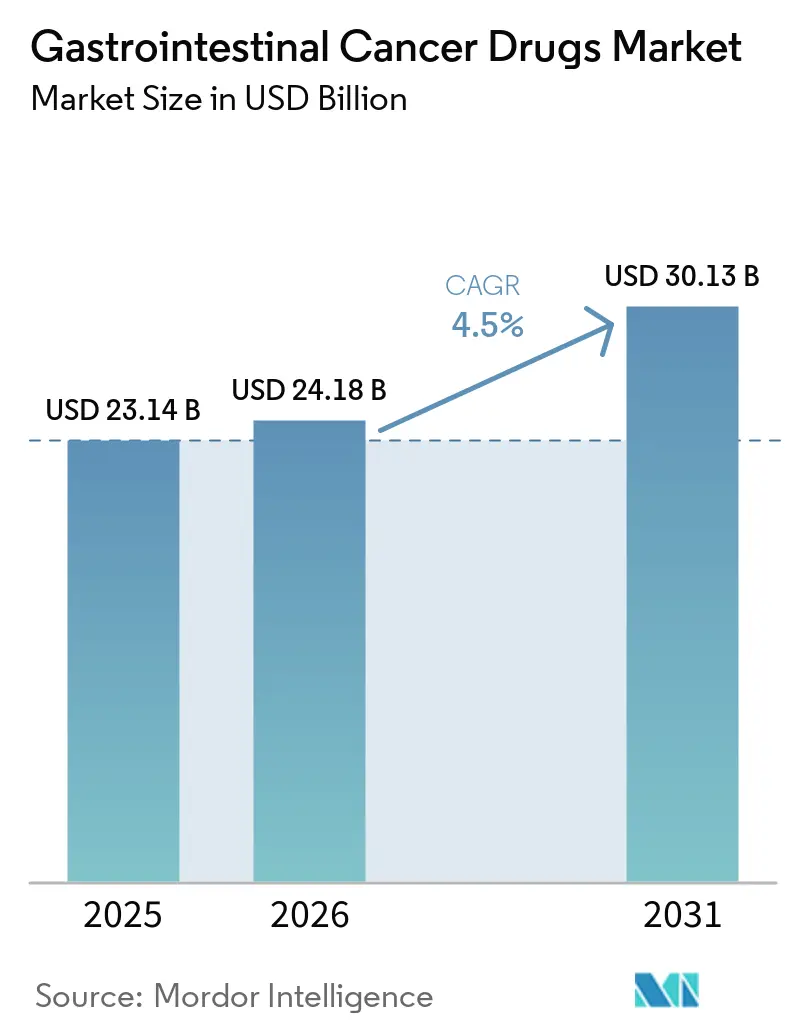
The Gastrointestinal Cancer Drugs Market size was valued at USD 23.14 billion in 2025 and is estimated to grow from USD 24.18 billion in 2026 to reach USD 30.13 billion by 2031, at a CAGR of 4.5% during the forecast period (2026-2031).
The global burden of gastrointestinal cancers supports market growth, with these cancers accounting for one in four cancer cases and one in three cancer-related deaths, representing 4.8 million new cases and 3.4 million deaths annually. Global gastrointestinal cancer incidence is projected to reach 9.06 million cases by 2050, an 85% increase from 2022, while deaths are projected to rise by 93%. Regulatory approvals are shifting treatment from broad chemotherapy toward biomarker-selected therapies, increasing demand for diagnostic testing, treatment monitoring, and specialized care. However, reimbursement pressures and biosimilar competition continue to constrain net prices, particularly in Europe and Asia.
Key Report Takeaways
- By cancer type, colorectal cancer held 34.22% of the gastrointestinal cancer drugs market share in 2025, while pancreatic cancer is projected to grow at a 5.36% CAGR through 2031.
- By application, oncology departments accounted for 68.76% of the gastrointestinal cancer drugs market size in 2025, while radiology is projected to expand at a 6.33% CAGR through 2031.
- By therapy, immunotherapy held 58.60% of the gastrointestinal cancer drugs market share in 2025, while targeted therapy is projected to grow at a 6.56% CAGR through 2031.
- By end user, hospitals held 53.56% of revenue in 2025, while Ambulatory Surgical Centers are projected to grow at a 5.77% CAGR through 2031.
- By geography, North America held 39.44% revenue share in 2025, while Asia-Pacific is projected to grow at a 6.98% CAGR through 2031.
Note: Market size and forecast figures in this report are generated using Mordor Intelligence’s proprietary estimation framework, updated with the latest available data and insights as of January 2026.
Global Gastrointestinal Cancer Drugs Market Trends and Insights
Drivers Impact Analysis*
| DRIVER | (~) % IMPACT ON CAGR FORECAST | GEOGRAPHIC RELEVANCE | IMPACT TIMELINE |
|---|---|---|---|
| Precision oncology and biomarker-based treatment | +1.4% | Global, strongest in North America and Western Europe | Medium term (2-4 years) |
| First line immunotherapy combination use | +1.2% | Global, with the highest revenue impact in North America and East Asia | Short term (≤ 2 years) |
| Rising gastrointestinal cancer burden and earlier diagnosis | +0.9% | Global, with the greatest volume growth in Asia-Pacific, the Middle East and Africa, and South America | Long term (≥ 4 years) |
| Wider companion diagnostic use | +0.5% | North America and Europe, with expanding use in the Asia-Pacific | Medium term (2-4 years) |
| Perioperative and adjuvant drug treatment | +0.7% | Global, with early adoption in Europe and North America | Medium term (2-4 years) |
| Regional oncology biologics manufacturing | +0.3% | Asia-Pacific, with spillover into Middle East and Africa | Long term (≥ 4 years) |
| Source: Mordor Intelligence | |||
Precision Oncology and Biomarker Defined Treatment Adoption
The gastrointestinal cancer drugs market is increasingly driven by biomarker-based treatment decisions rather than tumor location alone. Colorectal, gastric, and pancreatic cancer care uses KRAS G12C, BRAF V600E, HER2, CLDN18.2, MSI-H/dMMR, MET amplification, and NRG1 fusions. Commercially relevant targets have nearly tripled since 2020. Patients can transition to another biomarker-eligible regimen after disease progression, extending treatment across multiple lines of care. In 2026, the FDA approved Guardant360 CDx as a companion diagnostic for the BRAFTOVI combination in BRAF V600E-mutant metastatic colorectal cancer, supporting liquid biopsy adoption and testing access in community oncology settings.
First Line Immunotherapy Combination Expansion
First-line checkpoint inhibitor combinations are replacing chemotherapy alone across several gastrointestinal cancers. In March 2025, the FDA approved pembrolizumab with trastuzumab and platinum-based chemotherapy for HER2-positive gastric or gastroesophageal junction adenocarcinoma with PD-L1 CPS of 1 or higher. In April 2025, nivolumab plus ipilimumab received regular approval for first-line MSI-H/dMMR unresectable or metastatic colorectal cancer. These regimens require biomarker testing at the start of care and can extend maintenance treatment for 24 months or longer. The FDA approval of the Idylla CDx MSI Test for nivolumab in dMMR colorectal cancer also supported an automated workflow with results in under three hours.
Rising Gastrointestinal Cancer Burden and Earlier Diagnosis
The growing disease burden provides sustained demand for the gastrointestinal cancer drugs market. Pancreatic cancer incidence is projected to increase by 95% by 2050, the fastest increase among gastrointestinal cancer types.[1]International Agency for Research on Cancer, “Global Burden of Gastrointestinal Cancers,” Cancer Today, iarc.who.int Colorectal cancer deaths are projected to increase by 103%, making it the largest contributor to future gastrointestinal cancer deaths in absolute terms. Population aging, obesity, and sedentary lifestyles are increasing the treatment-eligible population. In the United States, colorectal screening eligibility was extended to age 45, potentially increasing stage II and III diagnoses where adjuvant treatment is relevant. Africa is projected to record a 157% increase in incidence and a 160% increase in gastrointestinal cancer deaths by 2050, despite limited oncology care capacity.
Perioperative and Adjuvant Drug Treatment
Treatment before and after surgery is expanding the role of systemic medicines beyond metastatic disease. In 2026, the European Union approved durvalumab with FLOT perioperative chemotherapy for resectable stage II to IVA gastric and gastroesophageal junction cancer. The FDA approved the same treatment setting in November 2025. These regimens can introduce 12 to 24 months of treatment around surgery for patients who previously received surgery and chemotherapy. In August 2026, Chugai Pharmaceutical submitted a Japanese application for atezolizumab as adjuvant treatment for MSI-H/dMMR stage III colon cancer, based on the ATOMIC trial. Broader perioperative treatment use also favors hospitals and integrated oncology networks that coordinate surgery, diagnostics, infusion care, and follow-up.
Restraints Impact Analysis*
| RESTRAINT | (~) % IMPACT ON CAGR FORECAST | GEOGRAPHIC RELEVANCE | IMPACT TIMELINE |
|---|---|---|---|
| Cost and reimbursement barriers for biomarker-selected regimens | -1.0% | Global, with the highest impact in middle-income markets and European price-controlled systems | Medium term (2-4 years) |
| Biosimilar, generic, and mandatory price reduction pressure | -0.8% | Europe, Japan, and China, with a growing impact in South America | Short term (≤ 2 years) |
| Limited testing, infusion, and cell therapy capacity | -0.4% | Middle East and Africa, South America, and lower-income Asia-Pacific markets | Long term (≥ 4 years) |
| Manufacturing, cold chain, and injectable supply vulnerability | -0.3% | Global, with the highest exposure for single-source biologics | Short term (≤ 2 years) |
| Source: Mordor Intelligence | |||
Cost and Reimbursement Friction for Biomarker Selected Regimens
Biomarker-selected combinations are among the highest-cost treatment options in gastrointestinal oncology. First-line treatment for HER2-positive gastric adenocarcinoma can combine HER2-targeted therapy, PD-1 or PD-L1 inhibition, and chemotherapy. Health technology assessment bodies assess these combinations against incremental survival gains, which may be measured in weeks rather than months. In several European countries, reimbursement for medicines does not always cover companion diagnostics, discouraging testing and limiting biomarker-eligible prescribing. China’s 2025 National Reimbursement Drug List process included several gastrointestinal cancer biologics and required price cuts of 40% to 60% for inclusion.[2]China National Healthcare Security Administration, “2025 National Reimbursement Drug List Adjustment Application Materials,” China National Healthcare Security Administration, nhsa.gov.cn Wider coverage can improve access, but lower prices can reduce manufacturer margins and favor domestic products with lower starting prices.
Biosimilar, Generic, and Mandatory Price Reduction Pressure
Trastuzumab, bevacizumab, and cetuximab have long been core biologics in gastrointestinal cancer care, but biosimilar competition is reducing branded revenue in Europe, Japan, and China. In June 2026, Roche received IVDR approval for the VENTANA MMR RxDx Panel for companion diagnostic use across colorectal and gastric cancers, including pembrolizumab-related indications. The approval supports consistent testing and clarifies testing requirements for future competing products. Japan approved sotorasib plus panitumumab for KRAS G12C colorectal cancer in September 2025.
*Our forecasts treat driver/restraint impacts as directional, not additive. The impact forecasts reflect baseline growth, mix effects, and variable interactions.
Segment Analysis
By Cancer Type: Colorectal Cancer Leads While Pancreatic Cancer Expands
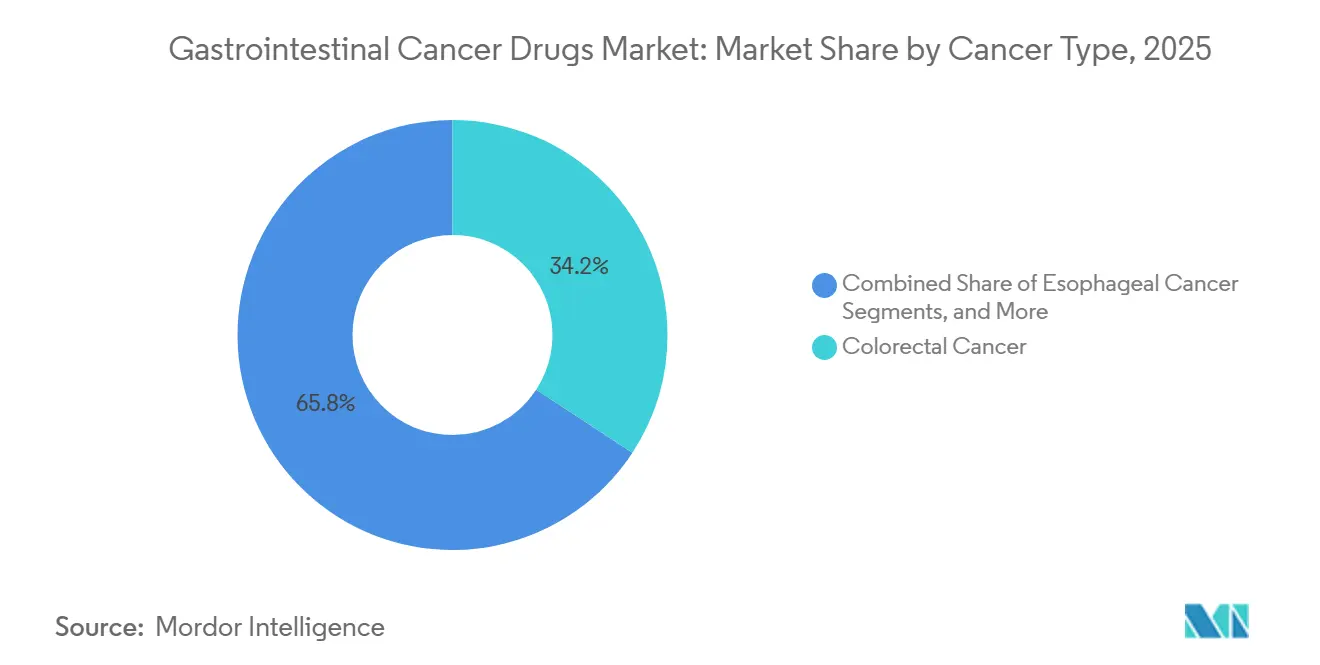
Colorectal cancer held 34.22% of the gastrointestinal cancer drugs market share in 2025, supported by established treatment pathways across biomarker-defined groups, including MSI-H/dMMR, BRAF V600E, KRAS G12C, and HER2-amplified disease. Gastric, gastroesophageal junction, and esophageal cancers formed the next-largest group, with treatment use increasing following HER2-directed and PD-1 inhibitor approvals in 2025 and 2026. Pancreatic cancer is the fastest-growing category, with the segment projected to grow at a 5.36% CAGR through 2031. In August 2026, the FDA is expected to approve daraxonrasib for metastatic pancreatic adenocarcinoma after prior systemic therapy or for patients unable to receive multi-agent chemotherapy. The Phase III RASolute 302 trial showed a 60% reduction in the risk of death versus chemotherapy.
Daraxonrasib is expected to become the first targeted RAS inhibitor approved for pancreatic cancer, expanding targeted therapy in an indication previously dominated by chemotherapy. Merus received FDA accelerated approval for zenocutuzumab in NRG1 fusion-positive pancreatic adenocarcinoma in December 2024. In May 2026, the FDA expanded the use of zenocutuzumab to NRG1 fusion-positive cholangiocarcinoma following prior systemic therapy. Liver, anal, and other gastrointestinal cancers retain smaller shares but have approved systemic treatment options.



By Application: Oncology Departments Remain Central While Radiology Expands
Oncology departments accounted for 68.76% of gastrointestinal cancer drug spending in 2025, reflecting the use of infusion-based immunotherapy and chemotherapy in established oncology settings. Radiology and nuclear medicine are projected to grow at a 6.33% CAGR through 2031, the fastest rate across the application segment. Radioligand therapies require specialized administration environments beyond standard infusion services. These therapies require radiation safety certification, shielded preparation areas, and waste-disposal procedures subject to nuclear regulations. Such requirements limit early expansion to centers with established infrastructure. The other application category, including supportive care drugs, dose-limiting agents, and radiation-sensitizing compounds, retains a comparatively stable share.
The gastrointestinal cancer drugs market is adding distribution, training, and access requirements as radioligand programs advance. Manufacturers need programs tailored to nuclear medicine settings rather than only infusion centers. Approved radioligand approaches in neuroendocrine tumors provide a foundation for future expansion across other gastrointestinal malignancies. Investigational programs could increase radiology activity as additional indications receive regulatory clearance. The FDA’s accelerated review pathways for breakthrough-designated radioligand therapies can reduce the time from clinical results to adoption in care settings. However, specialized infrastructure remains a practical constraint on near-term patient volumes.
By Therapy: Immunotherapy Leads While Targeted Therapy Gains Use
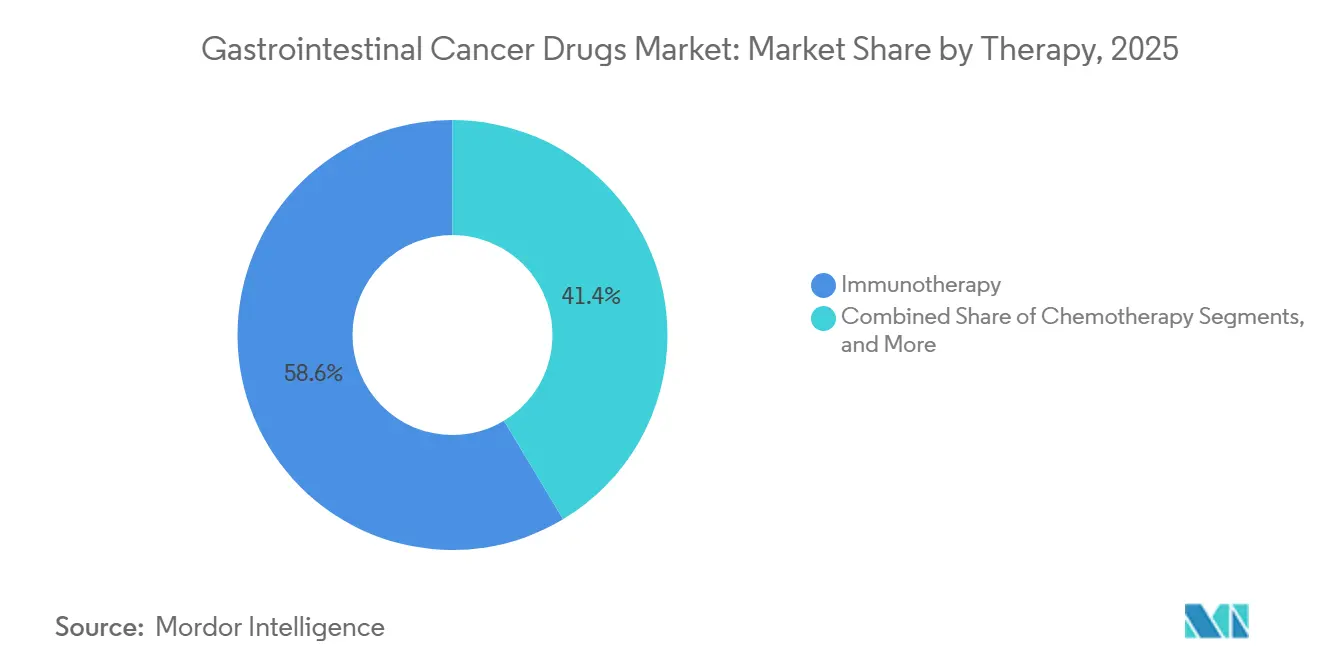
Immunotherapy held 58.60% of the gastrointestinal cancer drugs market share in 2025. Its broad use reflects checkpoint inhibitor approvals across gastric, colorectal, esophageal, and hepatocellular carcinoma. These therapies are used as first-line treatments, in combination with chemotherapy or HER2-targeted medicines, before surgery, during surgery, and after surgery. Targeted therapy is projected to grow at a 6.56% CAGR through 2031, making it the fastest-growing therapy type. Approvals in 2025 and 2026 expanded the molecular subgroups eligible for targeted treatment. The FDA approved sotorasib with panitumumab for chemorefractory KRAS G12C-mutated metastatic colorectal cancer in January 2025 and granted full approval to the BRAFTOVI combination for first-line BRAF V600E metastatic colorectal cancer in 2026.
In August 2026, the FDA is expected to approve zanidatamab with tislelizumab and fluoropyrimidine- or platinum-based chemotherapy for first-line HER2-positive advanced gastroesophageal adenocarcinoma. During the same month, Daraxonrasib is expected to create a targeted treatment option for RAS-mutant pancreatic cancer. Companion diagnostic co-approval requirements make diagnostic capacity critical to treatment initiation. Chemotherapy retains a substantial role in combination regimens, although its standalone role is declining. Cellular therapy, tumor-infiltrating lymphocyte therapy, and radioligand therapy remain small categories, but late-stage Phase III data could support broader use. Hormone therapy remains a limited option for rare hormonally responsive gastrointestinal tumors.
By End User: Hospitals Lead While Ambulatory Centers Grow
Hospitals held 53.56% of gastrointestinal cancer drug revenue in 2025. They maintain an advantage in administering complex intravenous regimens, including anti-PD-1 combinations, antibody-drug conjugate infusions, and radioligand treatments. These medicines may require multi-hour administration and clinical monitoring. Oncology clinics are the second-largest end-user group, providing community infusion and oral chemotherapy services. Ambulatory Surgical Centers are projected to grow at a 5.77% CAGR through 2031. Their expansion follows the increasing use of oral targeted therapies, including daraxonrasib, sotorasib, encorafenib, and cabozantinib.
Providers can initiate and manage these therapies in ambulatory settings with periodic monitoring. Cancer research institutes represent a smaller but important part of the gastrointestinal cancer drugs market, serving as key sites for clinical trial treatment, early-access programs, and expanded-access protocols. Oral therapies are shifting care from infusion centers toward ambulatory and pharmacy-based dispensing channels. This shift can reduce follow-up visits compared with infusion-based treatment while increasing the importance of adherence monitoring. Manufacturers are responding through patient support programs and digital health partnerships. Ambulatory and outpatient pharmacy settings may reduce total care costs, even when oral medicines have higher list prices.
Geography Analysis
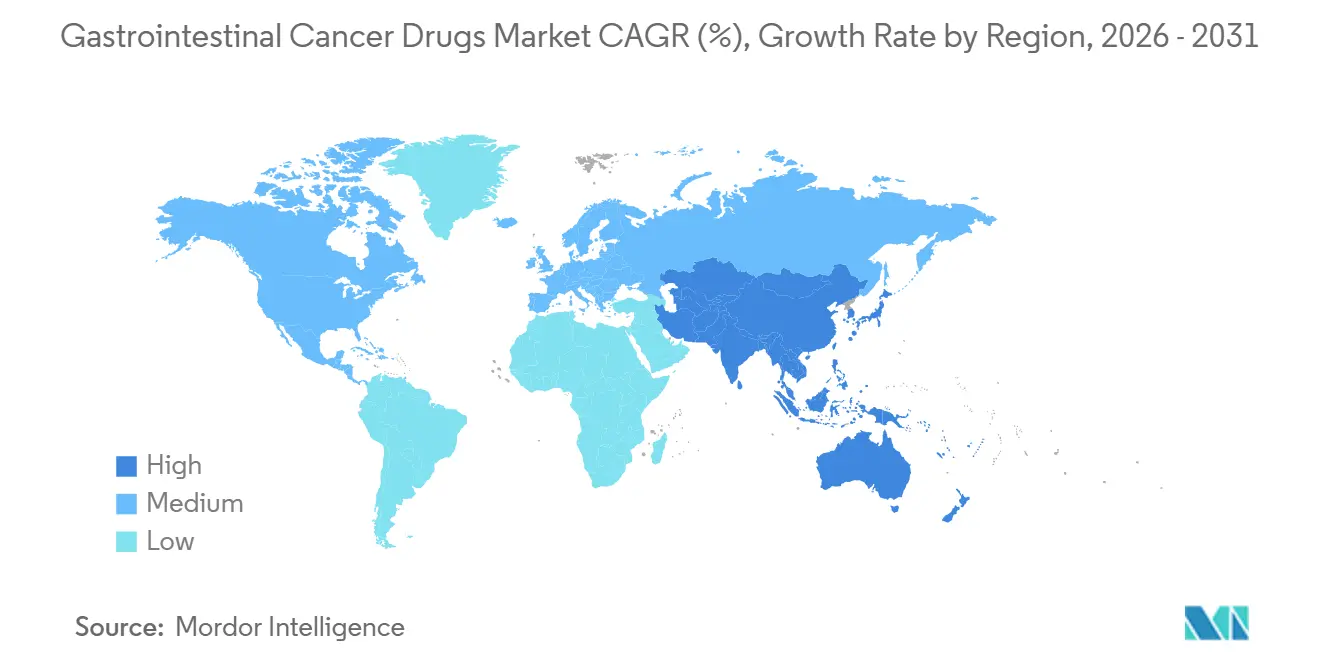
North America held a 39.44% share of the gastrointestinal cancer drugs market in 2025. The region benefited from more than 10 FDA clearances for gastrointestinal cancer therapies between January 2025 and August 2026. The United States led the region due to higher drug prices, stronger biomarker testing rates, and formulary systems that rapidly cover new approvals. Canada and Mexico held smaller but growing positions, while the Inflation Reduction Act price negotiation framework may pressure U.S. pricing advantages as eligible oncology medicines reach nine years after approval.
Europe held a significant market share, led by Germany, France, the United Kingdom, Italy, and Spain. The EU IVDR framework increased compliance requirements and concentrated companion diagnostic activity among larger certified suppliers. Roche’s VENTANA MMR RxDx Panel received IVDR approval in June 2026 for several gastrointestinal cancer indications. The European approval of durvalumab with FLOT added a perioperative treatment option for resectable gastric and gastroesophageal junction cancer, although health technology assessment decisions may delay access in Germany and France.
Asia-Pacific is projected to expand at a CAGR of 6.98% through 2031, making it the fastest-growing geographic segment. Rising cancer incidence, investments in domestic biologics production, and faster regulatory reviews support growth. China approved VYLOY for CLDN18.2-positive gastric cancer in January 2025 and Enhertu for second-line HER2-positive gastric cancer in January 2026. Japan approved sotorasib with panitumumab in September 2025 and updated the Enhertu label in March 2026. The Middle East and Africa and South America remain smaller contributors, although Africa’s projected 157% increase in cancer incidence indicates long-term potential.

Competitive Landscape
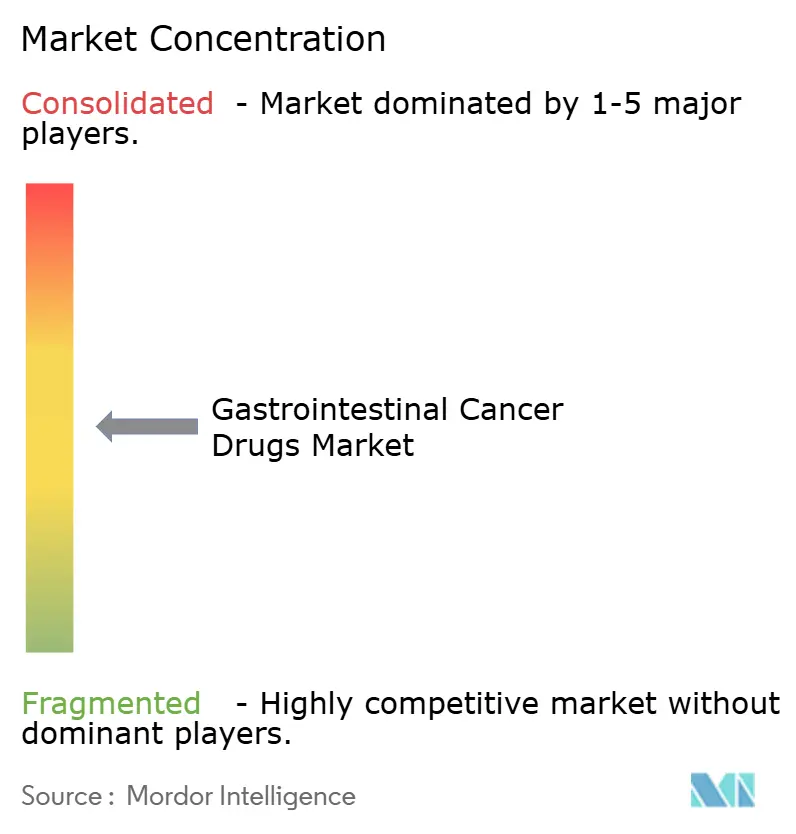
The gastrointestinal cancer drugs market is moderately consolidated among leading companies. F. Hoffmann-La Roche, Merck & Co., Bristol-Myers Squibb, AstraZeneca, and Eli Lilly through trastuzumab deruxtecan co-development hold leading positions in checkpoint inhibitor and HER2-directed treatment. Smaller companies are strengthening their positions through therapies targeting specific biomarker groups. CLDN18.2-positive gastric cancer remains a key competitive area, with Astellas holding the only globally approved CLDN18.2 monoclonal antibody, VYLOY.
In July 2026, AstraZeneca reported that sonesitatug vedotin demonstrated a statistically significant and clinically meaningful improvement in overall survival in the Phase III CLARITY-Gastric01 trial. AstraZeneca intends to pursue global regulatory approval for the CLDN18.2-targeted antibody-drug conjugate. Innovent and Keymed Biosciences also have CLDN18.2-directed antibody-drug conjugate and bispecific programs. Companies are increasingly filing patents for specific biomarker and medicine combinations, raising barriers for follow-on products and increasing the value of diagnostic partnerships and combination trial data.
Revolution Medicines held a first-mover position in RAS-targeted pancreatic cancer following the 2026 daraxonrasib approval. Competing RAS inhibitor and combination programs could reshape this area between 2028 and 2030. MSS/pMMR colorectal cancer remains a major unmet need because checkpoint inhibitors have limited effectiveness in this group, which represents 85% of metastatic colorectal cancer cases in the supplied analysis. Bispecific T-cell engagers, tumor-infiltrating lymphocyte therapy, and microbiome-modulating agents are under evaluation in Phase II and early Phase III programs.
Gastrointestinal Cancer Drugs Industry Leaders
Novartis AG
Merck & Co., Inc.
AstraZeneca PLC
Pfizer Inc.
Eli Lilly and Company
- *Disclaimer: Major Players sorted in no particular order

Recent Industry Developments
- August 2026: The U.S. FDA approved daraxonrasib for metastatic pancreatic adenocarcinoma after prior systemic therapy or for patients ineligible for multiagent chemotherapy, following a 60% reduction in mortality risk versus chemotherapy in the Phase III RASolute 302 trial.
- August 2026: The FDA approved zanidatamab-hrii with tislelizumab-jsgr and fluoropyrimidine- or platinum-based chemotherapy as a first-line treatment for HER2-positive unresectable locally advanced or metastatic gastric, gastroesophageal junction, or esophageal adenocarcinoma.
- July 2026: AstraZeneca reported that sonesitatug vedotin delivered statistically significant and clinically meaningful overall survival benefits in the Phase III CLARITY-Gastric01 trial for second-line and later CLDN18.2-positive advanced gastric and gastroesophageal junction cancer.
- June 2026: Roche received European Union IVDR label expansions for its VENTANA MMR RxDx Panel, enabling mismatch repair testing and pembrolizumab companion diagnostic use across colorectal, gastric, small intestine, and biliary tract cancers.
- May 2026: The FDA granted accelerated approval to zenocutuzumab-zbco for adults with advanced, unresectable, or metastatic NRG1 fusion-positive cholangiocarcinoma following prior systemic therapy, expanding Merus’s gastrointestinal oncology presence into biliary cancer.


Global Gastrointestinal Cancer Drugs Market Report Scope
As per the scope of the report, Gastrointestinal (GI) cancer drugs are medications used to destroy cancer cells, stop them from dividing, or target specific proteins and immune pathways involved in cancers of the digestive system.
The gastrointestinal cancer drugs market is segmented by cancer type, application, therapy, end user, and geography. By cancer type, the market is segmented into colorectal cancer, gastric and gastroesophageal junction cancer, esophageal cancer, pancreatic cancer, liver cancer, biliary tract cancer, anal cancer, and other cancers. By application, the market is segmented into oncology, radiology, and others. By therapy, the market is segmented into chemotherapy, immunotherapy, targeted therapy, hormone therapy, radioligand therapy, cellular and tumor-infiltrating lymphocyte (TIL) therapy, and others. By end user, the market is segmented into hospitals, oncology clinics, ambulatory surgical centers, cancer research institutes, and others. By geography, the market is analyzed across North America, Europe, Asia-Pacific, the Middle East and Africa, and South America. The report also covers the estimated market sizes and trends for 17 countries across major regions globally. The report offers market sizes and forecasts in terms of value (USD) for the above segments.
| Colorectal Cancer |
| Gastric and Gastroesophageal Junction Cancer |
| Esophageal Cancer |
| Pancreatic Cancer |
| Liver Cancer |
| Biliary Tract Cancer |
| Anal Cancer |
| Other Cancers |
| Oncology |
| Radiology |
| Others |
| Chemotherapy |
| Immunotherapy |
| Targeted Therapy |
| Hormone Therapy |
| Radioligand Therapy |
| Cellular and TIL Therapy |
| Others |
| Hospitals |
| Oncology Clinics |
| Ambulatory Surgical Centers |
| Cancer Research Institutes |
| Others |
| North America | United States |
| Canada | |
| Mexico | |
| Europe | Germany |
| United Kingdom | |
| France | |
| Italy | |
| Spain | |
| Rest of Europe | |
| Asia-Pacific | China |
| India | |
| Japan | |
| Australia | |
| South Korea | |
| Rest of Asia-Pacific | |
| Middle East and Africa | GCC |
| South Africa | |
| Rest of Middle East and Africa | |
| South America | Brazil |
| Argentina | |
| Rest of South America |
| By Cancer Type | Colorectal Cancer | |
| Gastric and Gastroesophageal Junction Cancer | ||
| Esophageal Cancer | ||
| Pancreatic Cancer | ||
| Liver Cancer | ||
| Biliary Tract Cancer | ||
| Anal Cancer | ||
| Other Cancers | ||
| By Application | Oncology | |
| Radiology | ||
| Others | ||
| By Therapy | Chemotherapy | |
| Immunotherapy | ||
| Targeted Therapy | ||
| Hormone Therapy | ||
| Radioligand Therapy | ||
| Cellular and TIL Therapy | ||
| Others | ||
| By End User | Hospitals | |
| Oncology Clinics | ||
| Ambulatory Surgical Centers | ||
| Cancer Research Institutes | ||
| Others | ||
| By Geography | North America | United States |
| Canada | ||
| Mexico | ||
| Europe | Germany | |
| United Kingdom | ||
| France | ||
| Italy | ||
| Spain | ||
| Rest of Europe | ||
| Asia-Pacific | China | |
| India | ||
| Japan | ||
| Australia | ||
| South Korea | ||
| Rest of Asia-Pacific | ||
| Middle East and Africa | GCC | |
| South Africa | ||
| Rest of Middle East and Africa | ||
| South America | Brazil | |
| Argentina | ||
| Rest of South America | ||


Key Questions Answered in the Report
What is the size of the gastrointestinal cancer drugs market in 2026?
The gastrointestinal cancer drugs market size is USD 24.18 billion in 2026 and is projected to reach USD 30.13 billion by 2031 at a 4.50% CAGR.
Which gastrointestinal cancer type is growing fastest?
Pancreatic cancer is the fastest-growing category within the gastrointestinal cancer drugs market, with a 5.36% CAGR through 2031.
Which therapy type has the largest share in gastrointestinal cancer treatment?
Immunotherapy held 58.60% of revenue in the gastrointestinal cancer drugs market in 2025, while targeted therapy is projected to grow at a 6.56% CAGR.
Why are biomarker tests important for gastrointestinal cancer treatment?
In the gastrointestinal cancer drugs market, biomarker tests identify patients who may benefit from medicines targeting KRAS G12C, BRAF V600E, HER2, CLDN18.2, MSI-H/dMMR, and NRG1 fusions.
Which region is growing fastest for gastrointestinal cancer drugs?
Asia-Pacific is the fastest-growing region in the gastrointestinal cancer drugs market, at a projected 6.98% CAGR through 2031.
What limits access to advanced gastrointestinal cancer medicines?
The gastrointestinal cancer drugs market faces access limits from high treatment costs, diagnostic reimbursement gaps, biosimilar competition, and limited care infrastructure.
Page last updated on:





