
Female Sexual Dysfunction Treatment Market Size and Share
Market Overview
| Study Period | 2019 - 2030 |
|---|---|
| Market Size (2025) | USD 549.80 Million |
| Market Size (2030) | USD 947.60 Million |
| Growth Rate (2025 - 2030) | 11.50 % |
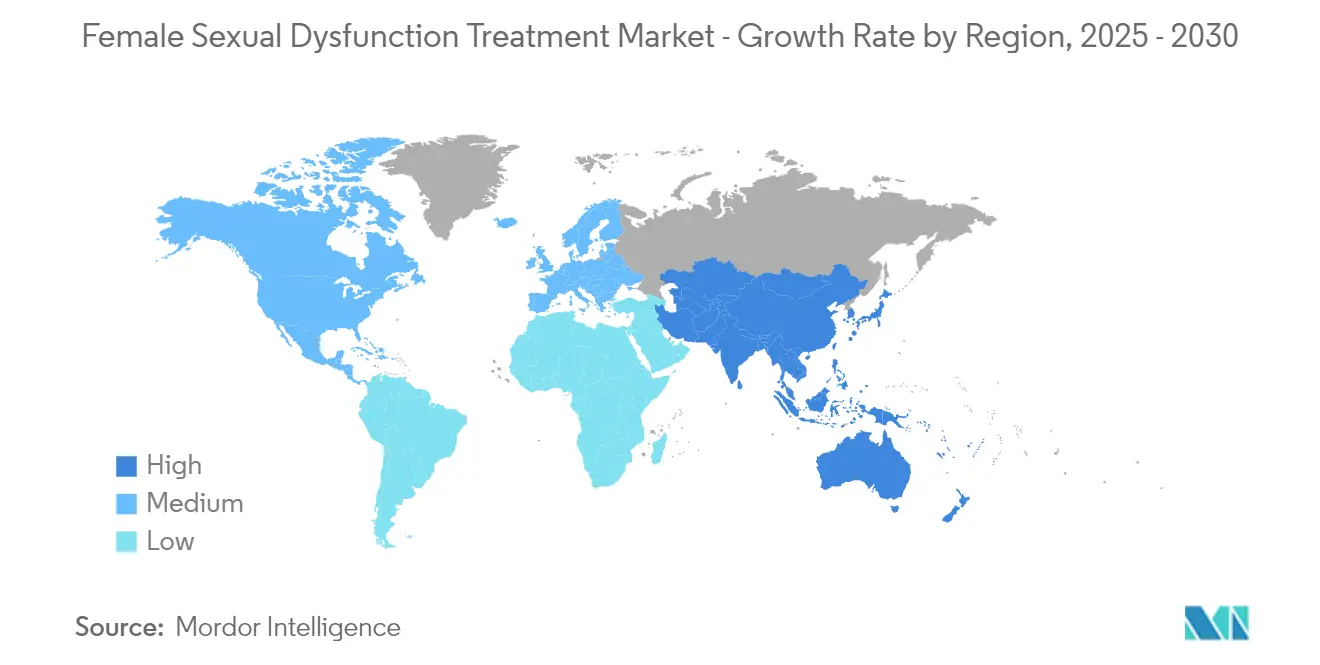
| Fastest Growing Market | Asia Pacific |
| Largest Market | North America |
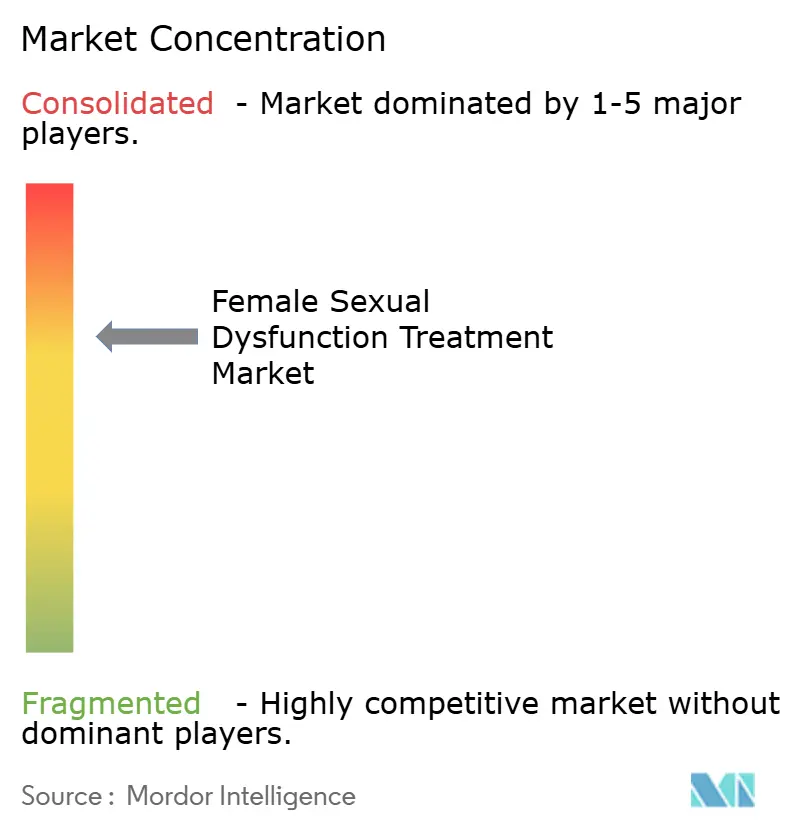
| Market Concentration | Medium |
Major Players *Disclaimer: Major Players sorted in no particular order Image © Mordor Intelligence. Reuse requires attribution under CC BY 4.0. | |
Female Sexual Dysfunction Treatment Market Analysis by Mordor Intelligence
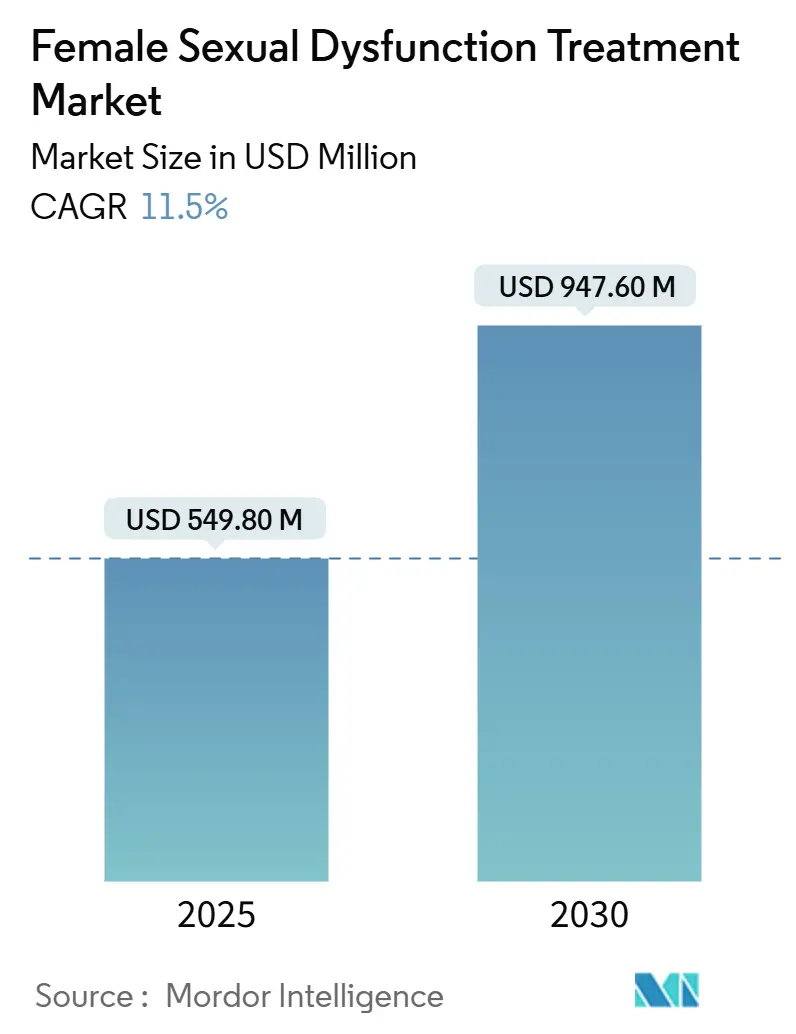
The Female Sexual Dysfunction Treatment Market size is estimated at USD 549.80 million in 2025, and is expected to reach USD 947.60 million by 2030, at a CAGR of 11.5% during the forecast period (2025-2030).
Female Sexual Dysfunction Treatment Market Overview
The female sexual dysfunction treatment landscape is experiencing significant transformation driven by shifting healthcare priorities and evolving treatment paradigms. For instance, according to the article published in the Health Science Reports Journal in August 2023, sexual dysfunction is one of the most common problems in postmenopausal women that affect their lives, highlighting the substantial unmet medical need in this therapeutic area. The integration of digital health solutions and telemedicine platforms has revolutionized patient access to treatment, with several major healthcare providers implementing specialized virtual consultation programs for sexual health concerns. Additionally, the emergence of personalized medicine approaches has led to more tailored therapeutic strategies, considering individual patient profiles and specific symptom manifestations.
The industry has witnessed a notable shift toward comprehensive treatment approaches that combine pharmacological interventions with psychological support and lifestyle modifications. Women with various chronic conditions show significantly higher prevalence of sexual dysfunction. For instance, according to the article published in the Journal of Diabetes & Metabolic Disorders in July 2023, the prevalence of sexual dysfunction in postmenopausal women with metabolic syndrome was 49.8% globally. This has prompted healthcare providers to adopt more holistic treatment strategies that address both the physical and psychological aspects of the condition. The market has also seen increased collaboration between pharmaceutical companies and mental health providers to develop integrated treatment protocols.
The regulatory environment has become increasingly supportive of innovation in this therapeutic area, with several regulatory bodies implementing specialized review pathways for female sexual health treatments. Multiple research institutions received substantial funding for clinical trials investigating new therapeutic approaches globally. For instance, in May 2024, United State government announced a request for USD 12 billion in funding to advance research on women's health. This initiative aims to address critical gaps in understanding and treating conditions that disproportionately affect women, including female sexual dysfunction (FSD). The proposed funding is expected to drive innovation and development in the female sexual dysfunction treatment market by fostering research and development activities, encouraging pharmaceutical advancements, and improving access to effective treatments. This move underscores the growing recognition of women's health as a priority area, which could significantly impact the market during the forecast period. The industry has also witnessed increased collaboration between academic institutions and pharmaceutical companies, resulting in accelerated development timelines for new therapeutic options.
Global Female Sexual Dysfunction Treatment Market Trends and Insights
Increasing Prevalence of Female Sexual Dysfunction
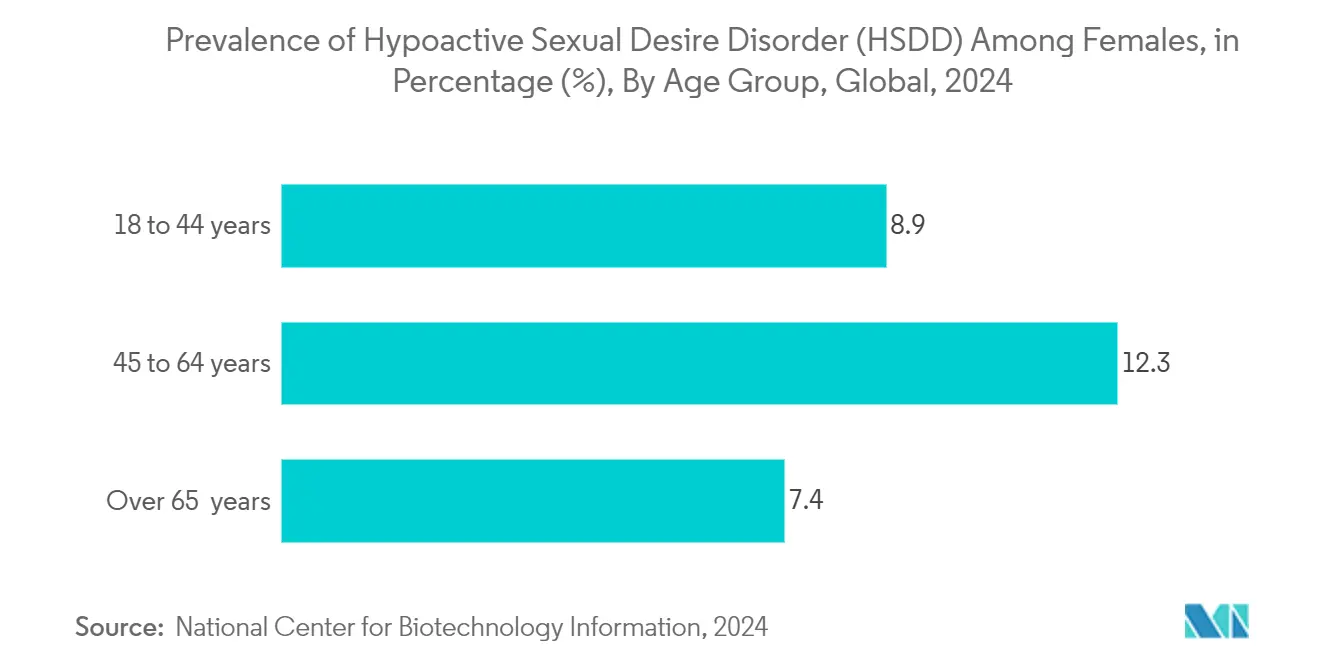
The rising prevalence of female sexual dysfunction (FSD) represents a significant healthcare concern, with recent studies indicating alarming rates across different demographics. For instance, according to the article published in the Journal of Clinical Medicine in January 2023, the prevalence of FSD among sexually active women is between 30% and 50%, significantly impacting their physical and psychological health.
The surge in gynaecological conditions has become a major contributing factor to the increasing prevalence of FSD. For instance, according to the data published by the StatPearls in January 2025, genitourinary syndrome of menopause affects approximately 27.0% to 84.0% of post-menopausal women, leading to various sexual health complications. The rising incidence of conditions such as vulvovaginal atrophy infections, vaginismus, and the increased consumption of medications like antidepressants and anti-hypertensive drugs among post-menopausal women has further contributed to the growing prevalence of sexual dysfunction, creating a pressing need for effective treatment solutions.


Rising Adoption of Hormonal and Non-Hormonal Therapies
The adoption of hormonal and non-hormonal therapies has witnessed significant growth, driven by increasing recognition of their effectiveness in treating various forms of female sexual dysfunction. Local estrogen therapies (LET) in various forms, including conjugated estrogen creams, vaginal tablets, and other delivery methods, have gained substantial traction due to their proven efficacy in addressing symptoms such as vaginal dryness, decreased blood flow, and reduced sensation in vaginal tissues. The increasing preference for these therapies is supported by their demonstrated ability to improve lubrication, enhance blood flow, and restore sensation in vaginal tissues among sexually distressed patients.
The market has also witnessed a notable shift toward non-hormonal treatment options, particularly among women seeking alternatives with fewer systemic effects. This trend is driven by the growing emphasis on personalized treatment approaches and the development of innovative non-hormonal solutions that address specific aspects of sexual dysfunction. Healthcare professionals are increasingly adopting a comprehensive treatment approach, combining both hormonal and non-hormonal therapies based on individual patient needs, medical history, and specific symptoms, leading to improved treatment outcomes and patient satisfaction rates.
Enhanced Awareness and Supportive Government Initiatives
The increasing awareness of female sexual health issues and supportive government initiatives have become crucial drivers in the market's development. Healthcare organizations and advocacy groups are implementing comprehensive awareness campaigns to educate women about sexual health issues and available treatment options. For instance, in October 2024, United Nations Population Fund (UNFPA) unveiled the WomenX Collective, a pioneering initiative set to revolutionize women's health on a global scale. Launched at the World Health Summit 2024 in Berlin, Germany the programme provides cutting-edge health solutions to marginalized communities, especially in low- and middle-income nations. The WomenX Collective, through its network of global hubs, aims to bridge the gap between advanced technologies and local communities, prioritizing reproductive and maternal health for women and girls. This initiative is expected to drive advancements in the female sexual dysfunction treatment market by fostering innovation in women's health solutions and addressing critical gaps in healthcare access, particularly in underserved regions.
Furthermore, Government bodies and healthcare organizations are also increasingly implementing supportive policies and initiatives to improve access to female sexual health treatments. These initiatives include the development of specialized sexual health clinics, integration of sexual health services into primary healthcare systems, and implementation of educational programs for healthcare providers. The support extends to research funding and regulatory frameworks that facilitate the development and approval of new treatments. Additionally, healthcare systems are working to reduce stigma and barriers to treatment through improved insurance coverage and accessibility to specialized care, creating a more supportive environment for women seeking treatment for sexual dysfunction.
Female Sexual Dysfunction Treatment Market Drug Type Segment Analysis
Estrogen Therapy Segment in Female Sexual Dysfunction Treatment Market
Estrogen therapy maintains its dominant position in the female sexual dysfunction treatment market, commanding approximately 35% of the market share in 2024. This segment's leadership is primarily attributed to the well-established safety profile and extensive clinical evidence supporting its efficacy in treating various aspects of female sexual dysfunction. Healthcare providers consistently prescribe estrogen therapy due to its comprehensive approach in addressing multiple symptoms, particularly in post-menopausal women. The segment's strength is further reinforced by the availability of various administration routes, including oral, topical, and vaginal applications, providing flexibility in treatment options. Additionally, the presence of multiple established manufacturers and generic alternatives has improved accessibility and affordability. The segment's robust reimbursement coverage and integration into standard treatment protocols have also contributed to its market leadership. Recent technological advancements in drug delivery systems have enhanced patient compliance and treatment outcomes, further solidifying its market position.
Bremelanotide Segment in Female Sexual Dysfunction Treatment Market
The Bremelanotide segment emerges as the fastest-growing category in the market, projected to achieve a remarkable CAGR of 12.0% from 2025 to 2030. This impressive growth trajectory is driven by increasing recognition of its unique mechanism of action in treating hypoactive sexual desire disorder (HSDD). The segment's expansion is supported by positive patient outcomes, convenient administration protocols, and growing physician acceptance. Recent clinical studies demonstrating superior efficacy in specific patient populations have contributed to its rapid adoption. The segment benefits from extensive marketing initiatives and educational programs aimed at both healthcare providers and patients. Innovative patient support programs and improved access through specialized distribution networks have further accelerated market penetration. Additionally, ongoing research into expanded indications and combination therapies presents significant growth opportunities. The segment's growth is also bolstered by strategic partnerships between manufacturers and healthcare providers, ensuring broader market reach and enhanced patient access.
Female Sexual Dysfunction Treatment Market Disease Segment Analysis
HSDD Segment in Female Sexual Dysfunction Treatment Market
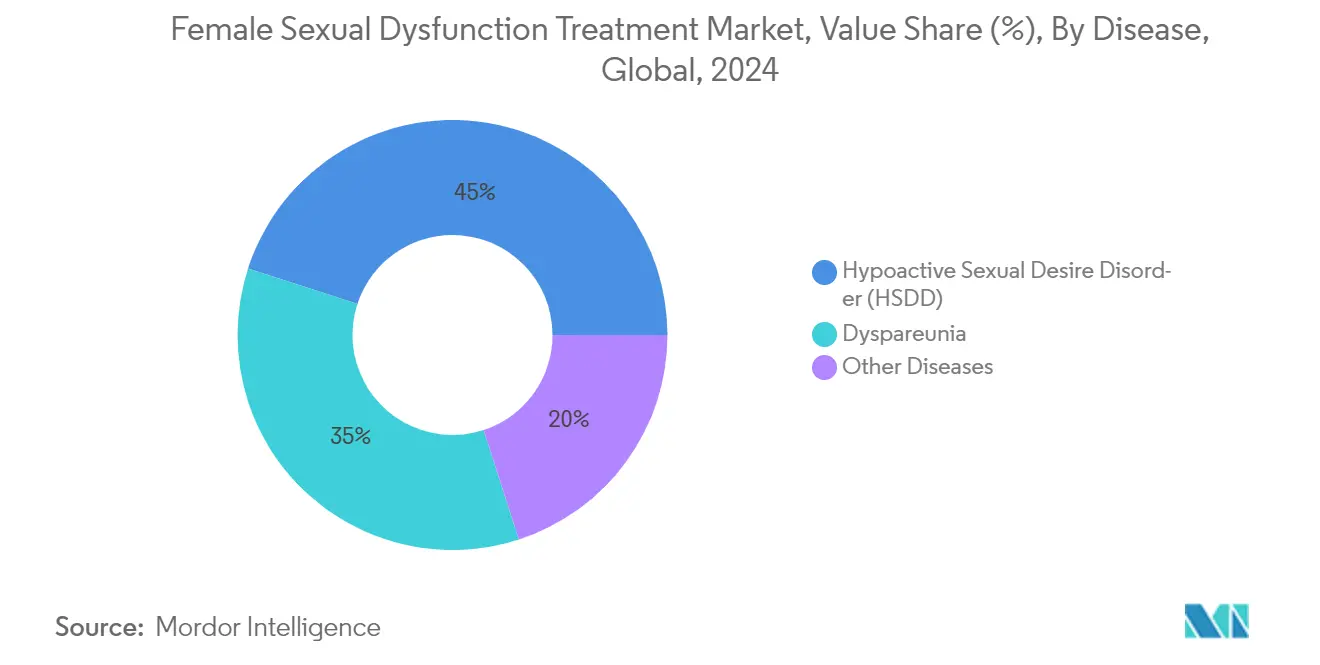
Hypoactive Sexual Desire Disorder (HSDD) emerges as the dominant segment in the female sexual dysfunction treatment market, commanding approximately 45% of the market share in 2024. This substantial market position is primarily attributed to the high prevalence of HSDD among women globally and the availability of FDA-approved treatments specifically targeting this condition. The segment's leadership is further strengthened by increased awareness among healthcare providers and patients, leading to higher diagnosis rates. The introduction of novel therapeutic options and improved diagnostic criteria has significantly contributed to the segment's market dominance. Additionally, enhanced insurance coverage and reimbursement policies for HSDD treatments have made these therapies more accessible to patients. The segment also benefits from robust support from healthcare organizations and advocacy groups, promoting better understanding and treatment of the condition.
Dyspareunia Segment in Female Sexual Dysfunction Treatment Market
The Dyspareunia segment is projected to exhibit the highest growth rate in the female sexual dysfunction treatment market. This remarkable growth trajectory is driven by increasing awareness about painful intercourse conditions and the development of more effective treatment options. The segment's expansion is further supported by technological advancements in diagnostic tools and therapeutic approaches, enabling more accurate diagnosis and targeted treatment strategies. Rising healthcare expenditure and improving healthcare infrastructure in developing regions are contributing to the segment's rapid growth. The introduction of innovative drug delivery systems and combination therapies has enhanced treatment outcomes, making interventions more appealing to both healthcare providers and patients. Additionally, the growing focus on women's sexual health and wellness has created a more conducive environment for seeking treatment for dyspareunia.
Female Sexual Dysfunction Treatment Market Route of Administration Segment Analysis
Oral Segment in Female Sexual Dysfunction Treatment Market
The oral route of administration segment maintains its dominant position in the female sexual dysfunction treatment market, commanding approximately 58% of the market share in 2024. This substantial market presence is primarily attributed to the widespread acceptance of oral medications like Flibanserin and Ospemifene among both healthcare providers and patients. The segment's leadership is further strengthened by factors such as convenient dosing schedules, established distribution networks, and patient preference for non-invasive treatment options. Healthcare professionals consistently prescribe oral medications as the first-line treatment option, particularly for conditions like hypoactive sexual desire disorder (HSDD). The segment's robust performance is also supported by extensive research and development initiatives focusing on novel oral formulations and improved bioavailability. Additionally, the increasing availability of these medications through various distribution channels, including online pharmacies, continues to drive segment growth.
Parenteral Segment in Female Sexual Dysfunction Treatment Market
The parenteral route of administration segment is emerging as the fastest-growing segment in the female sexual dysfunction treatment market, projected to expand at a CAGR of 12.5% from 2025 to 2030. This remarkable growth trajectory is primarily driven by the introduction of innovative injectable treatments like Bremelanotide, which offers rapid onset of action and improved efficacy. The segment's acceleration is further supported by increasing patient acceptance of injectable treatments, particularly among those who have shown limited response to oral medications. Technological advancements in delivery systems and the development of long-acting formulations are contributing to the segment's expansion. Healthcare providers are increasingly recommending parenteral treatments due to their precise dosing capabilities and better bioavailability compared to other routes of administration. The segment's growth is also bolstered by strategic partnerships between pharmaceutical companies focusing on developing novel injectable therapies.
Female Sexual Dysfunction Treatment Market Distribution Channel Segment Analysis
Drug Stores/Retail Pharmacies Segment in Female Sexual Dysfunction Treatment Market
Drug stores and retail pharmacies currently dominate the female sexual dysfunction treatment market, commanding approximately 45% of the market share in 2024. This segment's prominence is primarily attributed to the widespread accessibility and established infrastructure of retail pharmacies across both urban and rural areas. The preference for retail pharmacies is further strengthened by the personal consultation opportunities and immediate availability of prescribed medications. Patient privacy concerns and the ability to maintain discretion during purchases have significantly contributed to this segment's leadership position. Additionally, the integration of medication therapy management services and the availability of trained healthcare professionals in retail settings has enhanced the segment's value proposition. The segment has also benefited from strategic partnerships between major pharmacy chains and healthcare providers, enabling better patient care coordination and medication adherence monitoring.
Online Pharmacies Segment in Female Sexual Dysfunction Treatment Market
The online pharmacies segment is emerging as the fastest-growing distribution channel in the female sexual dysfunction treatment market. This remarkable growth is driven by increasing digital healthcare adoption and the inherent privacy advantages of online purchasing. The segment's expansion is further accelerated by the integration of telemedicine services, enabling remote consultations and prescription fulfillment. Enhanced user interfaces, discrete packaging, and door-step delivery options have made online pharmacies particularly attractive to patients seeking confidentiality. The segment has also benefited from technological advancements in prescription verification systems and secure payment gateways. Moreover, the convenience of automatic refills, medication reminders, and 24/7 accessibility has strengthened the appeal of online pharmacies among working professionals and tech-savvy consumers.
Female Sexual Dysfunction Treatment Market Geography Segment Analysis
Female Sexual Dysfunction Treatment Market in North America
North America maintains its dominant position in the global female sexual dysfunction treatment market, commanding approximately 65.0% of the market share in 2024. This leadership position is attributed to the region's advanced healthcare infrastructure, particularly in the United States and Canada, which provides comprehensive diagnostic and treatment facilities for female sexual dysfunction. The presence of major pharmaceutical companies and research institutions has fostered continuous innovation in treatment options. The region's robust reimbursement policies and increased awareness about female sexual health among healthcare providers and patients have significantly contributed to market growth. Additionally, the strong presence of specialized women's health clinics and sexual health specialists has improved access to treatment. The region's proactive approach to clinical trials and drug development, coupled with favorable regulatory frameworks, has created an environment conducive to market expansion. Furthermore, the increasing adoption of novel therapeutic approaches and rising investment in research and development activities continue to strengthen North America's market position.
Female Sexual Dysfunction Treatment Market in Europe
The European female sexual dysfunction treatment market has demonstrated robust growth. The market's expansion is driven by the region's comprehensive healthcare systems, particularly in countries like Germany, France, and the United Kingdom. The European market benefits from strong government support for women's health initiatives and increasing awareness about female sexual health issues. The region's healthcare infrastructure emphasizes integrated care approaches, combining medical treatments with psychological support services. European healthcare providers have been particularly successful in implementing patient-centric treatment approaches, considering both physiological and psychological aspects of female sexual dysfunction. The presence of established pharmaceutical companies and research institutions has facilitated continuous innovation in treatment methodologies. Additionally, the region's progressive stance on sexual health education and reduced stigma around sexual health issues has created a more open environment for seeking treatment. The market also benefits from strong collaboration between healthcare providers, research institutions, and pharmaceutical companies.
Female Sexual Dysfunction Treatment Market in Asia-Pacific
The Asia-Pacific female sexual dysfunction treatment market is positioned for exceptional growth. The region's market dynamics are shaped by rapidly evolving healthcare infrastructure and increasing awareness about women's health issues. Countries like Japan, China, and South Korea are leading the way with advanced medical facilities and growing investment in healthcare technology. The region's large patient pool and increasing healthcare expenditure create significant market opportunities. Cultural shifts towards more open discussions about sexual health, particularly in urban areas, are contributing to market expansion. The integration of traditional medicine practices with modern treatment approaches provides unique therapeutic options for patients. Rising disposable income and improving access to healthcare services in emerging economies are driving market growth. Additionally, the increasing presence of international pharmaceutical companies and growing local manufacturing capabilities are strengthening the region's market position. The market also benefits from government initiatives aimed at improving women's healthcare services and increasing awareness about sexual health issues.
Female Sexual Dysfunction Treatment Market in Middle East and Africa
The Middle East and Africa region presents unique opportunities in the female sexual dysfunction treatment market, characterized by rapidly evolving healthcare infrastructure and increasing focus on women's health issues. The market is driven by significant healthcare reforms in Gulf Cooperation Council (GCC) countries, which are investing heavily in modern healthcare facilities and services. The region is witnessing a gradual shift in cultural perspectives regarding women's health issues, leading to increased acceptance of treatment seeking behavior. Private healthcare sector expansion, particularly in urban areas, is improving access to specialized treatment options. The market benefits from increasing awareness about female sexual health issues among healthcare providers and patients. Growing medical tourism in countries like the UAE and Saudi Arabia is contributing to market development by attracting patients from neighboring regions. The market is also supported by improving healthcare insurance coverage and government initiatives aimed at enhancing women's healthcare services. Additionally, partnerships with international healthcare providers and pharmaceutical companies are facilitating knowledge transfer and access to advanced treatment options.
Female Sexual Dysfunction Treatment Market in South America
The South American female sexual dysfunction treatment market is experiencing significant transformation driven by improving healthcare infrastructure and increasing awareness about women's health issues. The region's market is characterized by growing accessibility to advanced treatment options and rising healthcare expenditure. Brazil is leading the regional market with its expanding healthcare facilities and increasing focus on women's health services. The market benefits from growing partnerships between local healthcare providers and international pharmaceutical companies, facilitating access to innovative treatments. Rising awareness about sexual health issues and decreasing social stigma are encouraging more women to seek treatment. The region's healthcare systems are increasingly incorporating comprehensive approaches to female sexual health, combining medical treatments with psychological support. Additionally, the growing presence of specialized women's health clinics and increasing number of healthcare professionals specializing in sexual health are contributing to market development. The market also benefits from improving insurance coverage and healthcare policies supporting women's health initiatives.
Competitive Landscape
Top Companies in Female Sexual Dysfunction Treatment Market
The female sexual dysfunction treatment market is led by prominent players including Pfizer Inc., Duchesnay Pharmaceutical Group Inc., Mayne Pharma Group Limited, PALATIN, Sprout Pharmaceuticals Inc., Millicent Pharma Ltd., Cipla Limited, Freya Pharma Solutions, GSK plc, and Lawley Pharmaceuticals Pty Ltd. These companies are focusing on several key strategic initiatives to maintain their market positions. Product innovation remains at the forefront, with companies investing heavily in research and development to introduce novel therapies and treatment options. Operational agility has become crucial, with companies streamlining their supply chains and distribution networks to ensure consistent product availability. Strategic partnerships and collaborations with research institutions and healthcare providers have emerged as a common trend to enhance product development capabilities. Geographic expansion, particularly in emerging markets, continues to be a key focus area as companies aim to tap into underserved populations and increase their global footprint.
Market Structure Shows Balanced Competitive Dynamics
The female sexual dysfunction treatment market exhibits a balanced competitive structure with both global pharmaceutical conglomerates and specialized players maintaining significant market presence. Global players leverage their extensive research capabilities, established distribution networks, and strong financial resources to maintain market leadership, while specialized companies focus on niche therapeutic areas and innovative treatment approaches. The market demonstrates moderate consolidation, with larger players controlling substantial market share while leaving room for specialized players to thrive in specific therapeutic segments.
The industry has witnessed strategic mergers and acquisitions aimed at portfolio expansion and technological capability enhancement. Companies are increasingly pursuing vertical integration strategies to strengthen their market position and control various aspects of the value chain. Regional players are forming strategic alliances with global companies to expand their geographical presence and enhance their technological capabilities. The competitive landscape is further shaped by increasing investments in research and development, with companies focusing on developing novel treatment options and improving existing therapies.
Innovation and Adaptation Drive Future Success
Success in the female sexual dysfunction treatment market increasingly depends on companies' ability to innovate while maintaining regulatory compliance and market accessibility. Incumbent players must focus on continuous product innovation, investment in clinical trials, and development of comprehensive treatment solutions that address multiple aspects of female sexual dysfunction. Building strong relationships with healthcare providers, maintaining robust distribution networks, and ensuring competitive pricing strategies are crucial for maintaining market share. Companies must also adapt to changing healthcare policies and regulations while maintaining high quality standards and patient safety protocols.
For emerging players and contenders, differentiation through specialized therapeutic approaches and targeted treatment solutions offers a pathway to market success. Focus on underserved patient segments, development of novel drug delivery systems, and strategic partnerships with established players can help gain market traction. Companies must also consider the increasing influence of digital health solutions and telemedicine in treatment delivery. Understanding and adapting to regional healthcare systems, reimbursement policies, and cultural sensitivities around female sexual health will be crucial for long-term success. The ability to navigate regulatory requirements while maintaining cost-effectiveness will remain a critical factor in determining market success.
Female Sexual Dysfunction Treatment Industry Leaders
Pfizer, Inc.
Duchesnay Pharmaceutical Group Inc.
Mayne Pharma Group Limited
Sprout Pharmaceuticals Inc.
PALATIN
- *Disclaimer: Major Players sorted in no particular order

Recent Industry Developments
- December 2024: Daré Bioscience, Inc. initiated Phase 3 clinical trials for Sildenafil Cream, 3.6%, aimed at treating Female Sexual Arousal Disorder (FSAD). This development marks a significant step in addressing an unmet need in the treatment of FSAD, a condition that affects a substantial number of women globally. The advancement of this product into Phase 3 trials is expected to drive innovation and growth in the female sexual dysfunction treatment market, as it highlights the increasing focus on developing effective therapeutic solutions for such conditions
- August 2023: PALATIN announced a strategic partnership with UpScriptHealth to provide telemedicine services for pharmaceutical and medical technology companies. Through this agreement, Vyleesi will be made available to patients through women's telehealth platform
- January 2023: Mayne Pharma Group Limited completed an exclusive product licensing transaction with TherapeuticsMD, Inc., securing a portfolio of three patent-protected novel women's health products, including IMVEXXY


Global Female Sexual Dysfunction Treatment Market Report Scope
As per the scope of the report, female sexual dysfunction treatment aims to enhance sexual desire, arousal, or satisfaction through pharmacological interventions, addressing underlying hormonal, psychological, or physiological issues. Examples include hormonal therapies, such as estrogen or testosterone, and non-hormonal options like flibanserin and bremelanotide.
The female sexual dysfunction treatment market is segmented by drug type, disease, route of administration, distribution channel, and geography. By drug type, the market is segmented into Flibanserin, Bremelanotide, Ospemifene, Estrogen Therapy, and other drug types. By disease, the market is segmented into hypoactive sexual desire disorder (HSDD), dyspareunia, and other diseases. By route of administration, the market is segmented into oral, parenteral, and topical. By distribution channel, the market is segmented into hospital pharmacies, drug stores/retail pharmacies, and online pharmacies. The report also covers the market size and forecasts for the Atelocollagen market in 17 countries across major regions. For each segment, the market sizing and forecasts have been done on the basis of value (USD).
| Flibanserin |
| Bremelanotide |
| Ospemifene |
| Estrogen Therapy |
| Other Drug Types |
| Hypoactive Sexual Desire Disorder (HSDD) |
| Dyspareunia |
| Other Diseases |
| Oral |
| Parenteral |
| Topical |
| Hospital Pharmacies |
| Drug Stores/Retail Pharmacies |
| Online Pharmacies |
| North America | United States |
| Canada | |
| Mexico | |
| Europe | Germany |
| United Kingdom | |
| France | |
| Italy | |
| Spain | |
| Rest of Europe | |
| Asia-Pacific | China |
| Japan | |
| India | |
| Australia | |
| South Korea | |
| Rest of Asia-Pacific | |
| Middle East and Africa | GCC |
| South Africa | |
| Rest of Middle East and Africa | |
| South America | Brazil |
| Argentina | |
| Rest of South America |
| By Drug Type | Flibanserin | |
| Bremelanotide | ||
| Ospemifene | ||
| Estrogen Therapy | ||
| Other Drug Types | ||
| By Disease | Hypoactive Sexual Desire Disorder (HSDD) | |
| Dyspareunia | ||
| Other Diseases | ||
| By Route of Administration | Oral | |
| Parenteral | ||
| Topical | ||
| By Distribution Channel | Hospital Pharmacies | |
| Drug Stores/Retail Pharmacies | ||
| Online Pharmacies | ||
| Geography | North America | United States |
| Canada | ||
| Mexico | ||
| Europe | Germany | |
| United Kingdom | ||
| France | ||
| Italy | ||
| Spain | ||
| Rest of Europe | ||
| Asia-Pacific | China | |
| Japan | ||
| India | ||
| Australia | ||
| South Korea | ||
| Rest of Asia-Pacific | ||
| Middle East and Africa | GCC | |
| South Africa | ||
| Rest of Middle East and Africa | ||
| South America | Brazil | |
| Argentina | ||
| Rest of South America | ||


Key Questions Answered in the Report
How big is the Female Sexual Dysfunction Treatment Market?
The Female Sexual Dysfunction Treatment Market size is expected to reach USD 549.80 million in 2025 and grow at a CAGR of 11.5% to reach USD 947.60 million by 2030.
What is the current Female Sexual Dysfunction Treatment Market size?
In 2025, the Female Sexual Dysfunction Treatment Market size is expected to reach USD 549.80 million.
Which is the fastest growing region in Female Sexual Dysfunction Treatment Market?
Asia Pacific is estimated to grow at the highest CAGR over the forecast period (2025-2030).
Which region has the biggest share in Female Sexual Dysfunction Treatment Market?
In 2025, the North America accounts for the largest market share in Female Sexual Dysfunction Treatment Market.
What years does this Female Sexual Dysfunction Treatment Market cover, and what was the market size in 2024?
In 2024, the Female Sexual Dysfunction Treatment Market size was estimated at USD 486.57 million. The report covers the Female Sexual Dysfunction Treatment Market historical market size for years: 2019, 2020, 2021, 2022, 2023 and 2024. The report also forecasts the Female Sexual Dysfunction Treatment Market size for years: 2025, 2026, 2027, 2028, 2029 and 2030.
Page last updated on:


 Your data is secure and never sold or shared.


